Azorius Player Ace's Journey to Chiba

Note: This article was translated from Chinese by AI and may contain errors. Read the original Chinese version.
Introduction
Hi everyone, I’m 啓恩 aka Ace. I’m very happy to have gone abroad to play Magic with cephille and our friends, heading to Japan for Magic Spotlight: Final Fantasy. Getting to play my beloved Azorius Control at this big event and finishing 11-3-1 is the result of everyone practicing and discussing the build together. Besides deck choice, this article focuses on the tournament report and my preparation notes, and I hope it lets everyone experience, or relive, a large Asian event that has been a long time coming.
Deck Choice
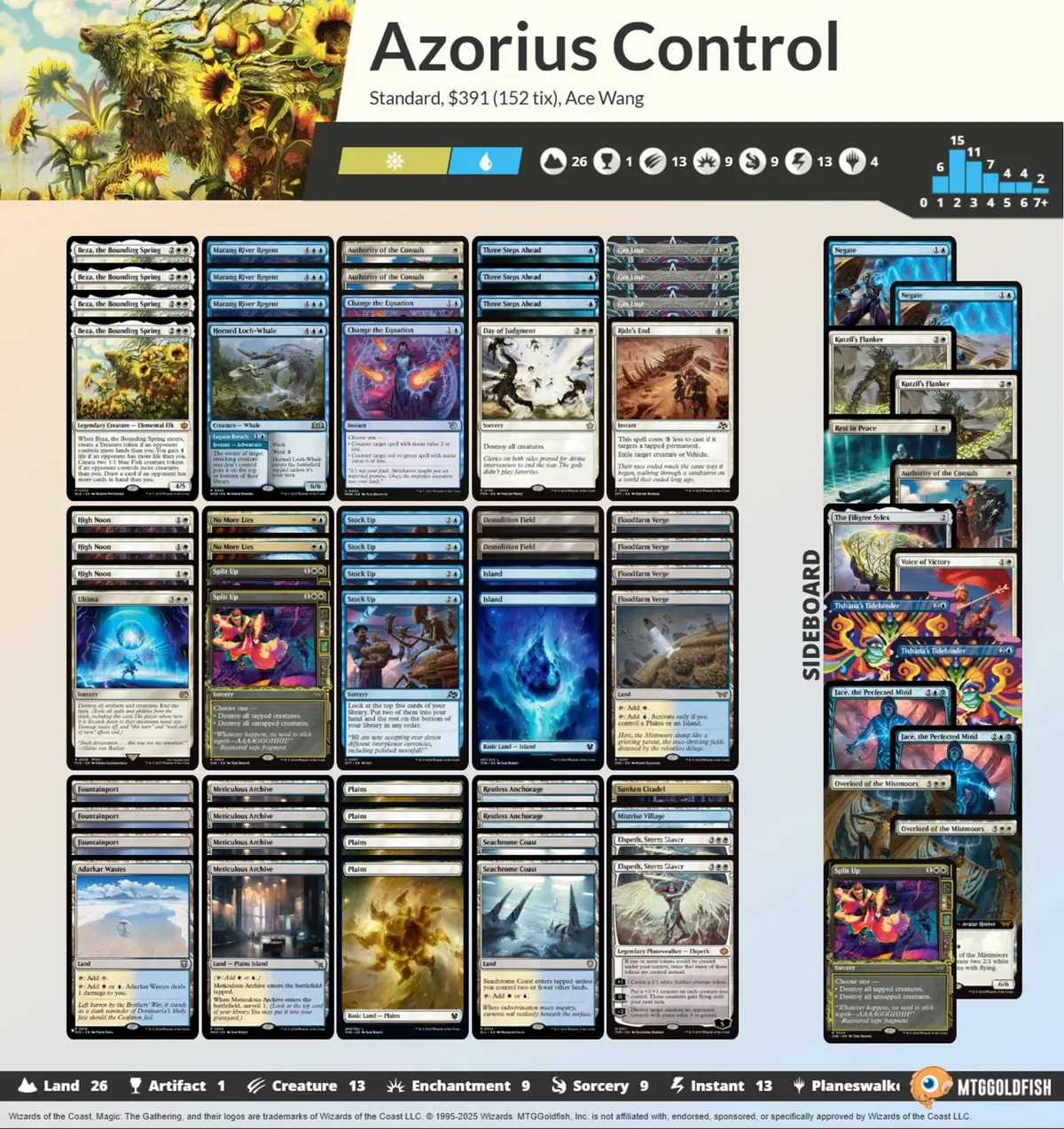
As an Azorius player, after playing 7 rounds of Omniscience at MIT#9 and pulling off the combo fewer than 5 times, I had no idea what deck to play. Then I saw Chiyou pilot UW Control into the top 8 with a perfect record, and I went back to study Standard UW Control builds. Many of the concepts I also learned from the article on the Guildmages’ Forum. Choosing UW Control is mostly a personal obsession: I want to pick the deck I like at a big event and challenge the mainstream (even if I fall over on Day 1, I can still go to the Pioneer Challenge and play Teferi, Hero of Dominaria). So you’ll see many pre-sideboard builds aimed at the pre-ban environment. Here is a brief share of my understanding of some single-card choices.
Main Deck Configuration
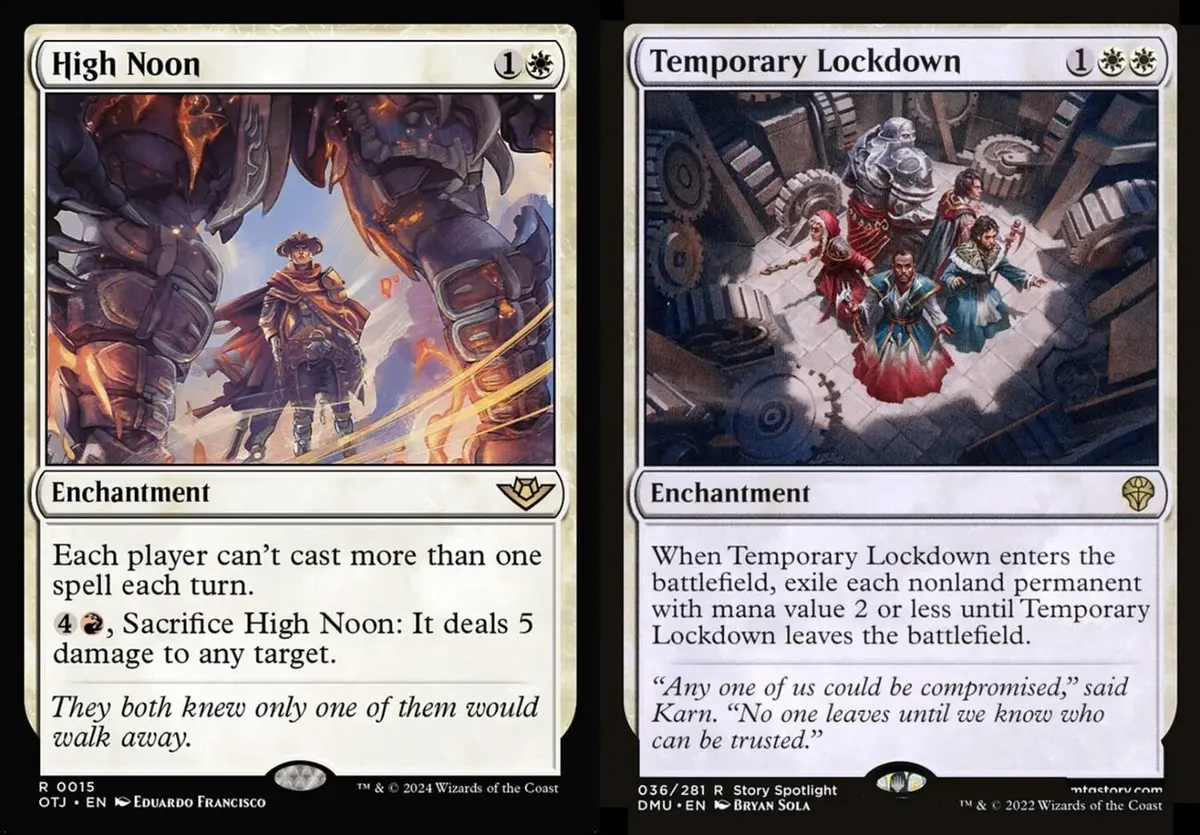
High Noon vs Temporary Lockdown
The Pro Tour Final Fantasy before Grand Prix Chiba had already told us that Izzet Prowess is the dominant deck of the current environment. After FF’s release it also gained a top-tier three-mana card, Vivi Ornitier (Vivi from here on), which can deal 15 or more damage in a single turn on its own, even without slamming a Cutter. Temporary Lockdown (Lockdown from here on) can no longer reliably keep the whole prowess family down, and I really dislike the feeling when Lockdown gets bounced.
High Noon not only locks down Cori-Steel Cutter and Vivi, it also forces Azorius Omniscience, the second most played deck at the PT, to deal with High Noon first in game 1 before it can make the combo. It’s a single card that targets 60% of matchups, so I ended up playing 3 main deck, and completely gave up on Lockdown in both main deck and sideboard, since it would be crushed by High Noon.
Authority of the Consuls + Split Up
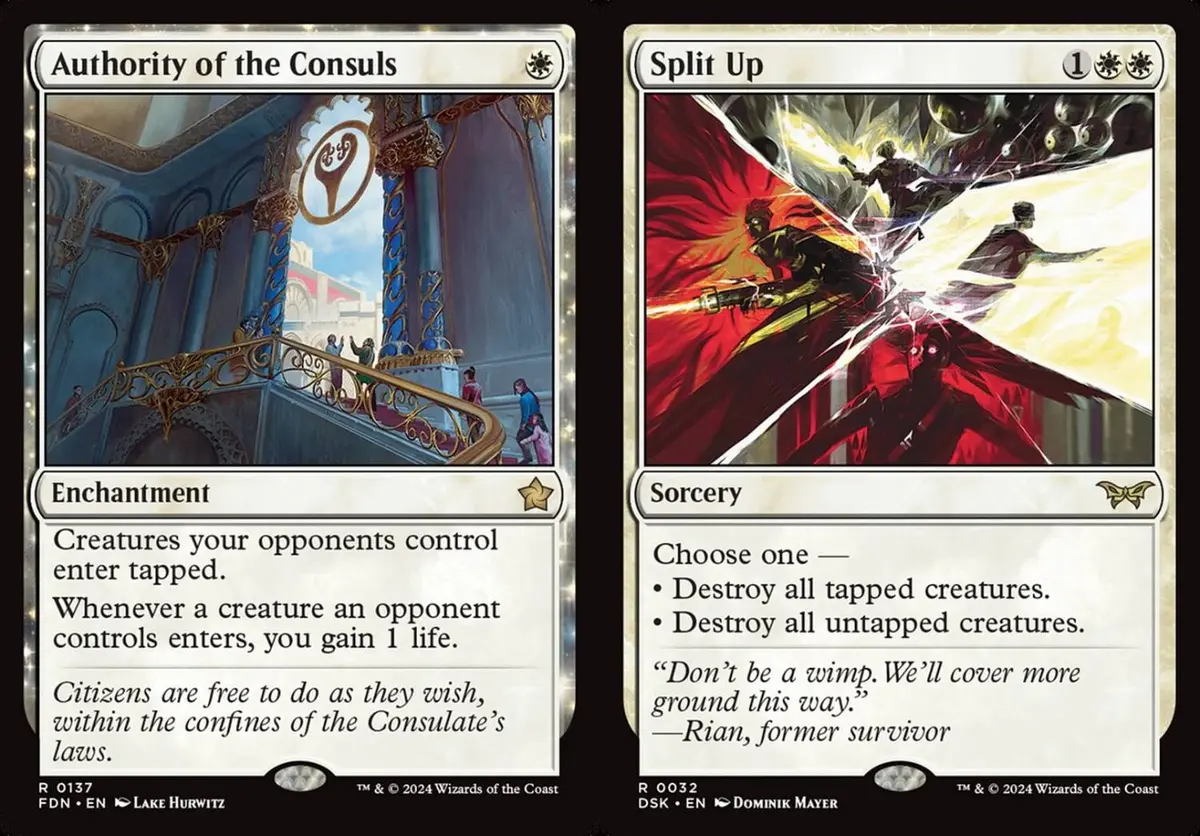
Having decided to give up Lockdown, at a big event after the mouse deck (Mono-red aggro) took the title, you still need good cheap sweepers. So I put 2 Split Up in the main deck in place of the three-mana sweeper, along with Authority of the Consuls at 2 main and 1 sideboard. In many of my matches in Chiba, Authority really did exert authority-like influence.
Ultima
Although a five-mana sweeper was somewhat slow in that environment, it reliably keeps Izzet Cutter decks from coming back, so I included one. Especially with 3 High Noon escorting the build, we have the capital to head toward turn five. In actual play I used Ultima several times to sweep two or more Cutters, leaving opponents unable to get back up.

The rest of the spot removal and win conditions are much the same as Chiyou’s understanding, so please see his article.
Lands
The basic configuration is no different from most UW Control decks, so I won’t belabor it. Below I share the land designs that are somewhat different.
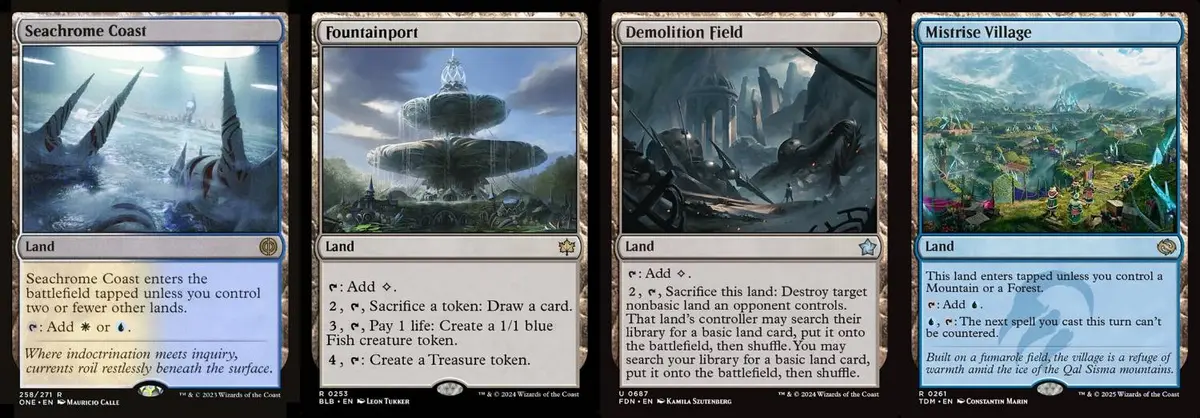
2 Seachrome Coast
To better support Authority of the Consuls, there are 11 lands that can produce white on turn one. Adding 2 fast lands to a control build is for that 77.8% chance of white on turn one.
3 Fountainport + 2 Demolition Field
A two-color control deck lets us include powerful utility lands: Fountainport, and Demolition Field to deal with troublesome manlands and opponents’ utility lands like Rockface Village. Most people choose a 4+2 build, but since we have high requirements for white on turn one, I swapped one Fountainport for a Plains.
1 Mistrise Village
This is the biggest difference between my lands and the UW Control lists on MTGGoldfish: one anti-counter land. It effectively targets blue opponents: against Omniscience and the mirror it ensures a threat or removal spell resolves, and against Izzet Cutter it makes sure the sweeper definitely takes something with it (TTABE a banned card, you can have it).
I’ll also mention an interaction I found when playing the UW mirror: in main phase one, we can use Sunken Citadel to make two blue mana, one blue to play the manland, and the other to activate the anti-counter land. After attacking, casting the first threat in main phase two still won’t get countered, because it is worded “The ==next spell you cast this turn== can’t be countered.” In a real match I handled it this way and successfully baited an opponent’s Three Steps Ahead (sorry, you didn’t think three steps ahead), letting Elspeth, Storm Slayer land safely. (And then it got politely shown out by Get Lost 😭)
Sideboard Configuration
- 1 Authority of the Consuls - A tool against aggro, wonderful together with Split Up.
- 1 Split Up - Unlike Lockdown, besides aggro it is also a sweeper that can put up a fight against black midrange matchups.
- 1 The Filigree Sylex - Handles tokens effectively against Izzet prowess, and in red aggro matchups it can come in to replace High Noon, giving us more diverse ways to deal with the board.
- 1 Voice of Victory - Inspired by Clark Shih, it was originally sitting in my Omniscience sideboard. But combined with High Noon, we can cast two spells while the opponent can only cast one, effectively limiting Omniscience’s actions while also putting pressure on the board; against Dimir midrange, an unfavorable matchup, it more effectively disrupts tempo, and the post-ban environment further confirmed this guess.
- 1 Rest in Peace - Because Abhorrent Oculus decks have become rarer, I only kept 1 slot for ongoing graveyard hate. I originally ran Ghost Vacuum, but in a Challenge I played against a Japanese opponent on Izzet Vivi Cauldron, and when we practiced and chatted after the match, I found that RIP wiping the whole graveyard is harder for Cauldron to handle.
- 2 Kutzil’s Flanker - The creature can’t be hit by Spell Pierce, flash makes it more flexible, and the choose-one toolbox lets you pick life gain, scry, or graveyard hate as the situation calls for, and when needed it can jump out as a big kitty after a sweep in the mirror. With all these advantages and no pressing need for ongoing graveyard hate in this environment, I chose to use it against graveyard-based decks.
- 2 Negate - A simple, brute-force noncreature counterspell.
- 2 Jace, the Perfected Mind - A strong finisher for long games; all in against Omniscience, four-color Zur, and the mirror.
- 2 Tishana’s Tidebinder - A good helper against Stormchaser’s Talent, Cutter, Kaito, Bane of Nightmares, and Agatha’s Soul Cauldron. In the post-ban environment I even want to go 2 main and 2 sideboard (a counterspell that can’t be Spell Pierced is a good counterspell).
- 2 Overlord of the Mistmoors - In long games or matchups with many fliers, Overlord of the Mistmoors applies pressure and blocks, and its synergy with Elspeth is also a headache for opponents.
Classic Match Review
What I share next are thoughts and practical experience drawn from the mainstream matchups I faced in the four Chiba Challenges and two days of the Spotlight main event. If you have different ideas, feel free to discuss:
Izzet Prowess
Game plan:
Use High Noon to shut down the opponent’s burst potential, use your life total as a resource to trade for openings, and seize gaps to attack and end the game quickly. You don’t want to see Izzet Prowess holding 7 cards in the very late game.
Sideboard plan:
- In:
1 The Filigree Sylex
2 Tishana’s Tidebinder
2 Overlord of the Mistmoors - Out:
2 Elspeth, Storm Slayer
3 Three Steps Ahead
Reason for the swap:
According to the game plan, against prowess we are the ones applying proactive pressure, so we take out what the opponent’s Spell Pierce and Negate can handle and bring in creature threats to provide board presence. At the same time I think just the 2 main deck copies of Authority are right here: I want a little life gain but don’t need to draw too many late that do nothing for the board. Authority on the battlefield also helps clear the way, letting a row of tokens lie there and watch Beza stroll over and beat them up.
Case study 1:
I was quite satisfied with my Day 1 Round 2 match in the main event. Both sides were patient and careful: after I resolved the first High Noon, the opponent steadily drew cards looking for a bounce spell, and when I saw the opponent slam a Cutter on their own turn while holding mana, I played the second High Noon and we exchanged a smile. He then switched to filtering patiently to keep building resources, and finally, when I resolved Marang River Regent and was ready to finish next turn, he hit me with three bounce spells at once. Luckily he had no pump spell in hand, and I held on at 3 life and won!
Case study 2:
Most matches against Izzet were narrow wins with my life total in single digits. But… in my Day 1 Round 9 match, because of back-to-back High Noons, the opponent’s face got worse and worse, and in the end I won both games at a full 20 life… I never imagined I could shut out Izzet Prowess.
Mono-red Aggro
Game plan:
You can see from the build that we take Mono-red very seriously (and the build is really aimed at it): four copies of the legendary creature Beza plus two Authority of the Consuls can gain a lot of life and keep our life total above the safe line. When the game goes to the mid-to-late stage, that is the moment we take over.
Sideboard plan:
- In:
1 Authority of the Consuls
1 Split Up
1 The Filigree Sylex - Out:
3 High Noon
Reason for the swap:
Red aggro doesn’t rely on chaining spells. It can steadily whittle down our life total one spell per turn, so High Noon isn’t a great single card here. So I swapped them all for small sweepers and one more Authority to get through the early game safely.
Case study:
Across the four Chiba Challenges plus the main event, I faced 10 red-based aggro matches in total (8 mono-red, 1 red-black Throw, 1 red-white), and lost only two, and I won a game in both of those. That proves this build is quite favored against red aggro. (In the Throw match I really did run into a situation where I was on the draw, played one tapped land, and was dead 🤡)
Azorius Omniscience
Game plan:
After using High Noon to shut down the combo, apply pressure appropriately. Anyway, the opponent is a deck that can’t deal with the board
Sideboard plan:
In:
1 Voice of Victory
1 Rest in Peace
2 Kutzil’s Flanker
2 Negate
2 Jace, the Perfected Mind
2 Overlord of the MistmoorsOut:
2 Beza, the Bounding Spring
2 Change the Equation
2 Split Up
2 Authority of the Consuls
1 Ride’s End
1 Horned Loch-Whale
Reason for the swap:
The Omniscience sideboard plan turns into a creature strategy: rather than relying entirely on the Omniscience combo, we punch straight ahead with Overlord, so I still keep two sweepers. Basically the opponent will still draw and filter a lot, so Jace can end the game faster. If Omniscience is already in the opponent’s graveyard, as long as we have the mana to interact, we can bring Jace in early and -2 to draw cards, building resources while also possibly dealing with the finisher, and then focus on the board.
For the other tournament details, feel free to savor them at 艾斯的棋牌雜談. (?)
Tournament Notes
This build was actually the result of discussing with friends at the MTG Test House arranged by cephille the day before submitting the decklist. Special thanks to cephille, Clark Shih, and Weihow for sorting out my thoughts with me and trading different perspectives; thanks to Chiyou for sharing his various build experiments and experience on MO in the group chat. The moment each slot was settled felt like puzzle pieces being filled in one by one; the shape of the matchups gradually became clear, the mist of the future gently cleared, and I quietly waited, carrying the will of Azorius, to set right a sea of crimson in the tournament hall.
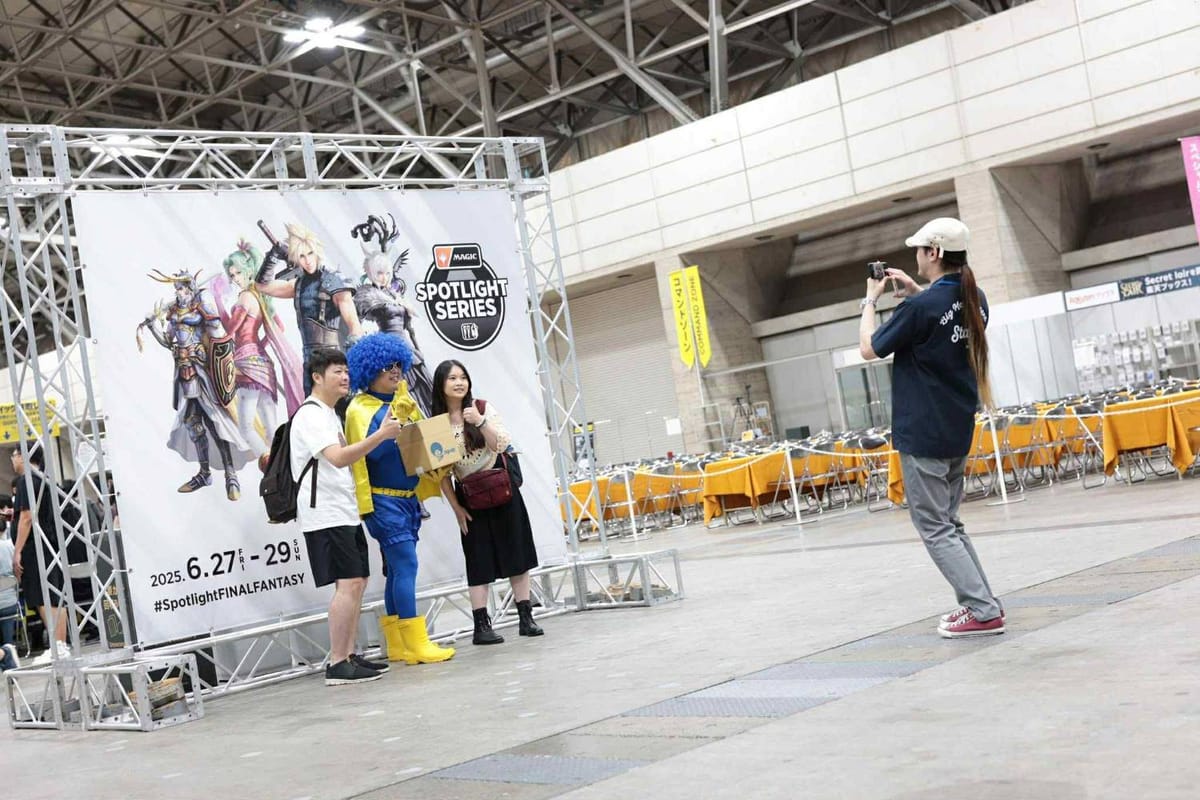
The day before the main event, Chennel, sertyple, and I decided to go to the venue first to play a Challenge and get used to the big-event atmosphere and our brand-new decks (we all made choices completely different from MIT#9). Walking into a large tournament venue for the first time, the wide view, the endless rows of seats, the blooming variety of merchandise, the strange and wonderful booths… it shook this country bumpkin: how wonderful that Magic got me into a place like this.
When the first Challenge round began, I met a Japanese player on Izzet Prowess, and his “お願いします (please treat me well)” connected my thoughts with the me sitting at the board. What a courteous country. As a UW Control matchup, many Taiwanese friends in the same hall had already finished their matches early and gone off to browse the nearby booths, while I was left at the table with the result still undecided. After winning both games at single-digit life, I chatted briefly with my opponent and exchanged contacts with him, and we kept asking after each other’s results all the way through Day 2 of the main event. Different countries, different languages, but the same passion for Magic and the same longing for competition. In every seat in the hall, there is a spotlight shining on the aspirations we want to realize.
Another moment I long for in preparing for Magic tournaments: a group of friends preparing the sideboard guide together before the event. We always say we’ll sleep early, and then look back and it’s the dead of night: because we want to make the best choice in each matchup, charting our own course among limited sideboard options. In the vast sea of the tournament hall, one person’s strength is ultimately limited; friends who are good at different deck styles discussing together are like stars in different directions, letting me be sure I’m sailing the right way.
(Over the three days of the event, I stayed almost from opening to closing every day, my blood sugar held up by adrenaline into the night and then taken over by late-night snacks. There was actually a small incident on decklist submission day: I had promised to lend cards to sertyple for the main event. After handing in the decklist right at the deadline and returning to the lodging, I flipped through six card boxes and couldn’t find a single copy. Three Steps Ahead had not thought three steps ahead and stumbled at this step… Luckily, 20 minutes later, Chennel pulled the needed card out of his Jeskai Oculus, ending this emotional roller coaster. Sure enough, when you go out you still have to rely on friends… 😶🌫️)
Conclusion
Since returning to the game in 2023, this year is when I started to get seriously into tournaments: I began watching matches and overseas articles, and joined different communities to discuss builds. In April I decided to go to GP Chiba and rallied my friends, and I was lucky to meet a group of people while practicing at 平方, which eased much of my nervousness before going abroad.
After MIT#9, I was actually a little worried about my performance at this event, so I shifted my mindset to making friends through cards abroad, wanting to experience playing slowly against opponents with a control deck. I never expected to achieve the boast I made on camera in front of 張任 before the main event Day 1: “8-2-0, and on to Day 2”. The journey was incredible, and it let me face UW Control with more confidence.
While writing this article, I flipped through the life-total scoresheet that records everything, like replaying the game record after a shogi match, my soul pulled back to the main event table, squarely facing my own mistakes. As a shogi teacher, I’d like to share with all the players striving in the world of Magic a quote from the Japanese shogi master “Yoshiharu Habu”: 『“There are always mistakes in a game. In a shogi position, it often happens that even after thinking for a long time you cannot find an answer to which move is best… Even when a game is played reasonably well, there must be somewhere you ‘carelessly made a mistake’, or in review you think ‘why didn’t I think of this move’. If I don’t think about this part, my growth as a player stops right there, so I always hold the thought that ‘there is still a lot to do’. The way to improve and grow is to make mistakes gradually decrease.” 』The balance between pursuing and demanding perhaps is a lifelong lesson for us.
As long as we are still traveling through the spacetime of Magic, we will meet one day and ignite each other’s sparks. I look forward to meeting everyone again in the ideal white and obsessive blue spacetime, sharing our own journeys and stories.
- Title
- Azorius Player Ace's Journey to Chiba
- Author
- Ace
- Created at
- July 16, 2025
- License
- This work is licensed under CC BY-NC-SA 4.0 .