Aetherdrift Standard First Look

Note: This article was translated from Chinese by AI and may contain errors. Read the original Chinese version.
Deck Introductions
Mono Green Ramp
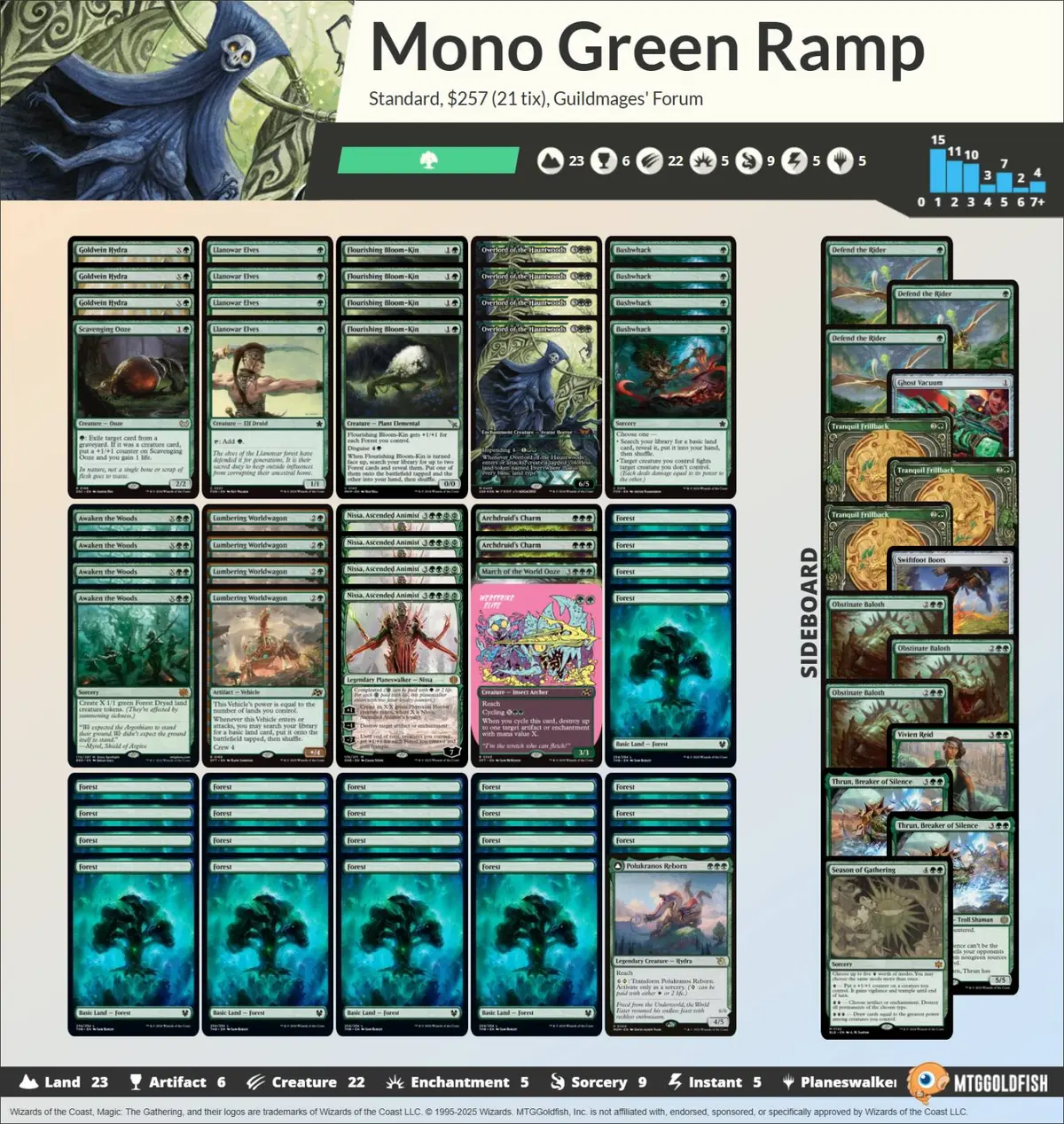
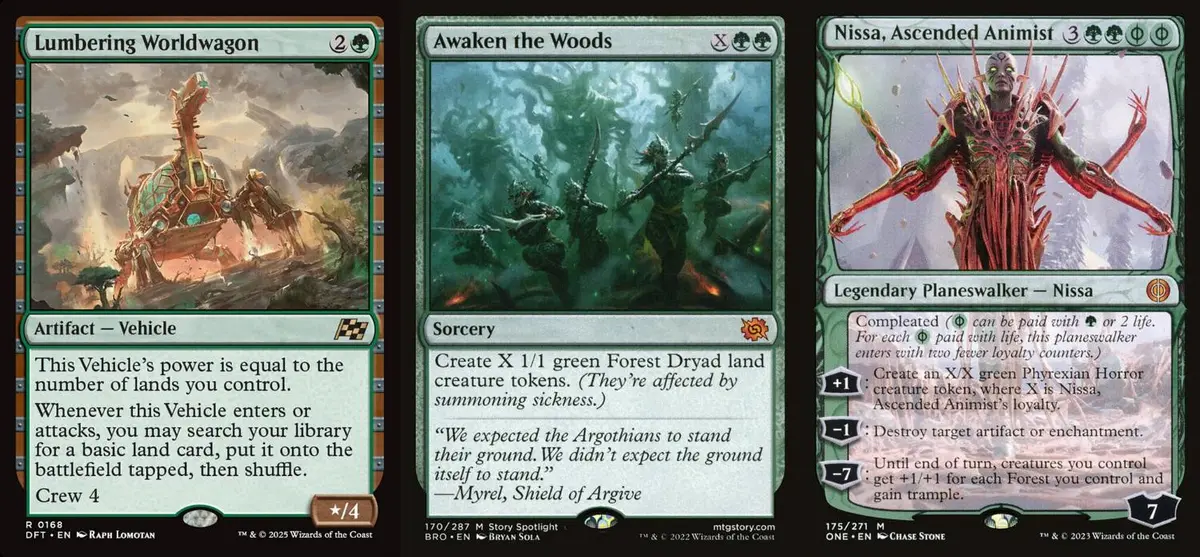
This deck embraces the full Mono-Green aesthetic: ramp into big creatures and beat down. Lumbering Worldwagon and Overlord of the Hauntwoods both provide board presence while quickly raising your Forest count, and Awaken the Woods snowballs further and sets up a defense. As long as you have enough creatures and Forests on the battlefield, a single [-7] from Nissa, Ascended Animist ends the game on the spot.
Mono Green Dinosaur
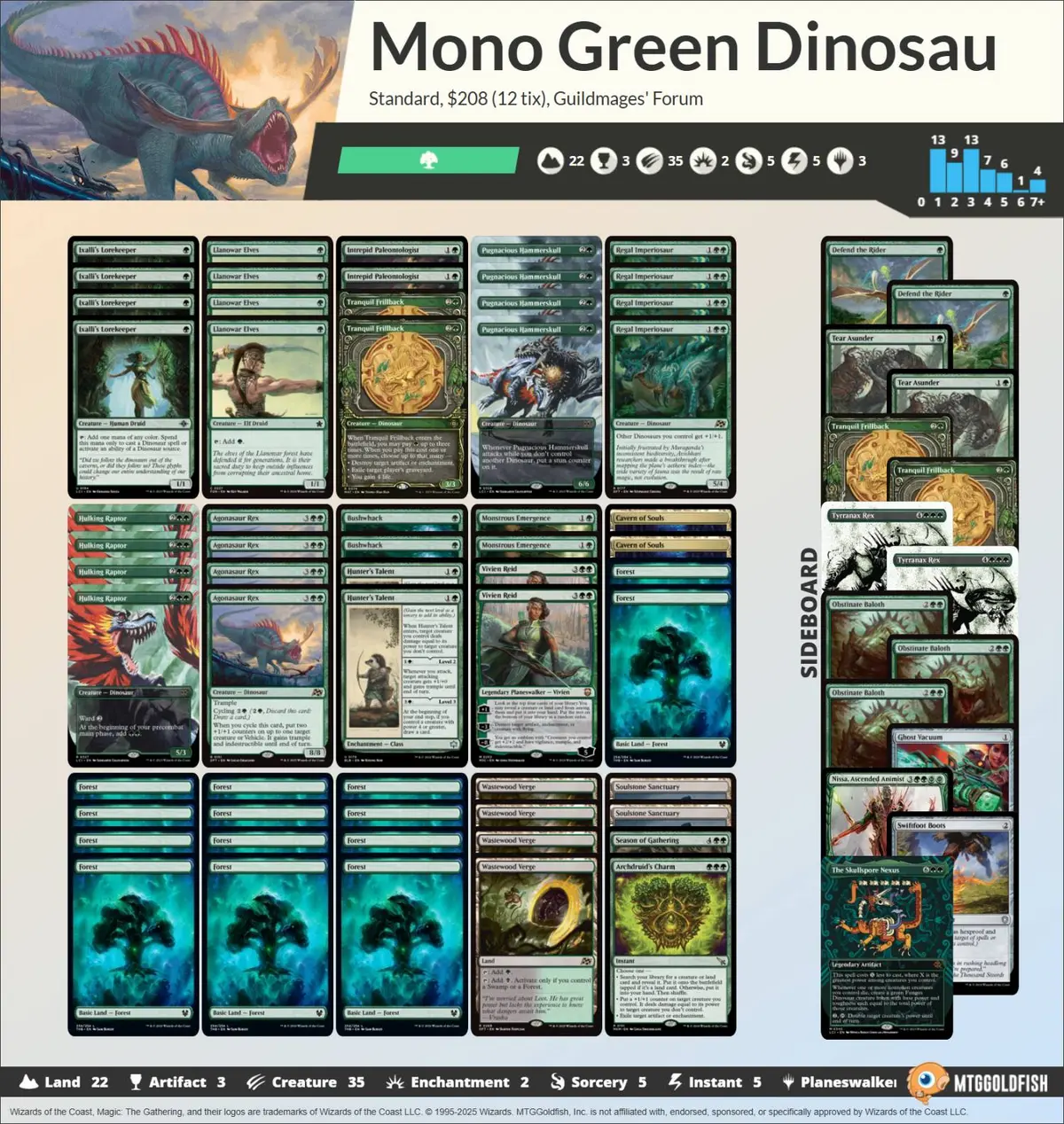
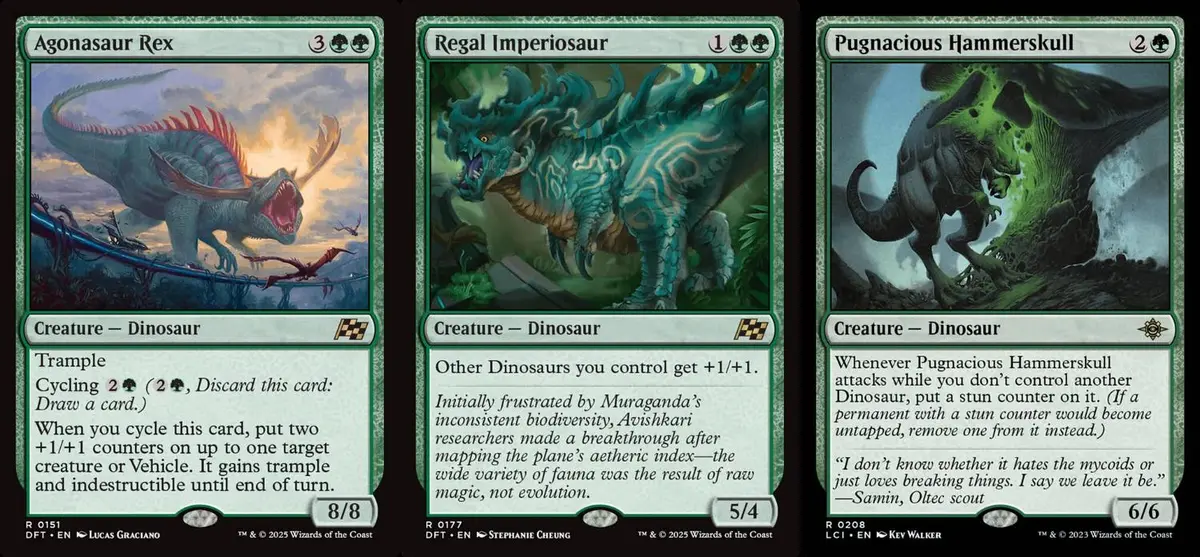
The biggest advantage Dinosaurs have over other green decks is the second set of one-mana ramp creatures, Ixalli’s Lorekeeper. The awkward part before was that, while jumping from one mana to a three-mana Dinosaur is powerful, good three-drop Dinosaurs were scarce, basically just Pugnacious Hammerskull (Tranquil Frillback is a three-mana creature card, but not really a three-drop for curve purposes). Now that Regal Imperiosaur fills the slot with a simple, brutal three-mana beater, the Dinosaur curve is finally complete.
As for those four Wastewood Verge, what are they for? They are a small bonus that powers up the sideboard Tear Asunder. It costs nothing, and gives a few more color-fixing opportunities anyway.
Gruul Dinosaur
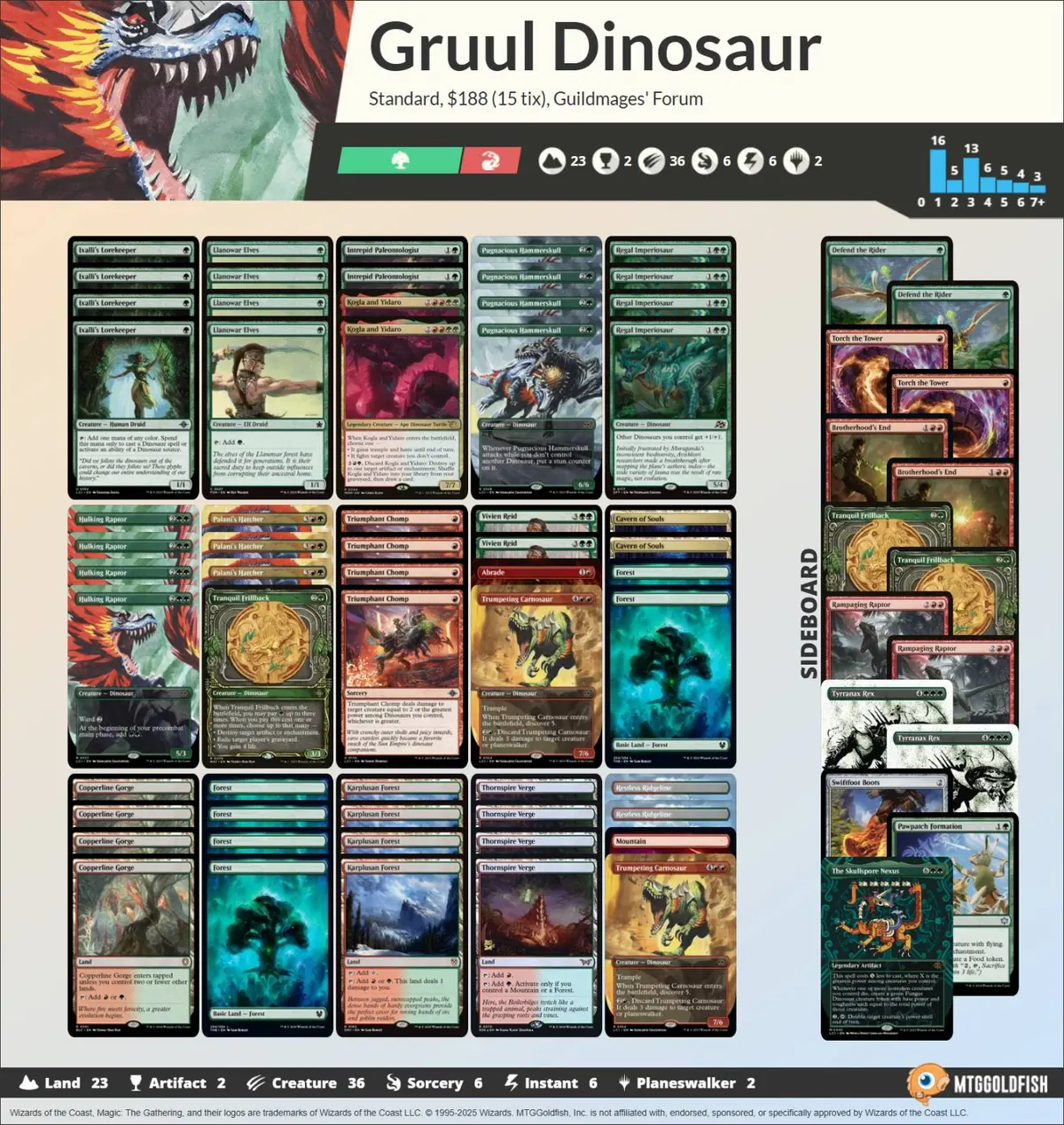
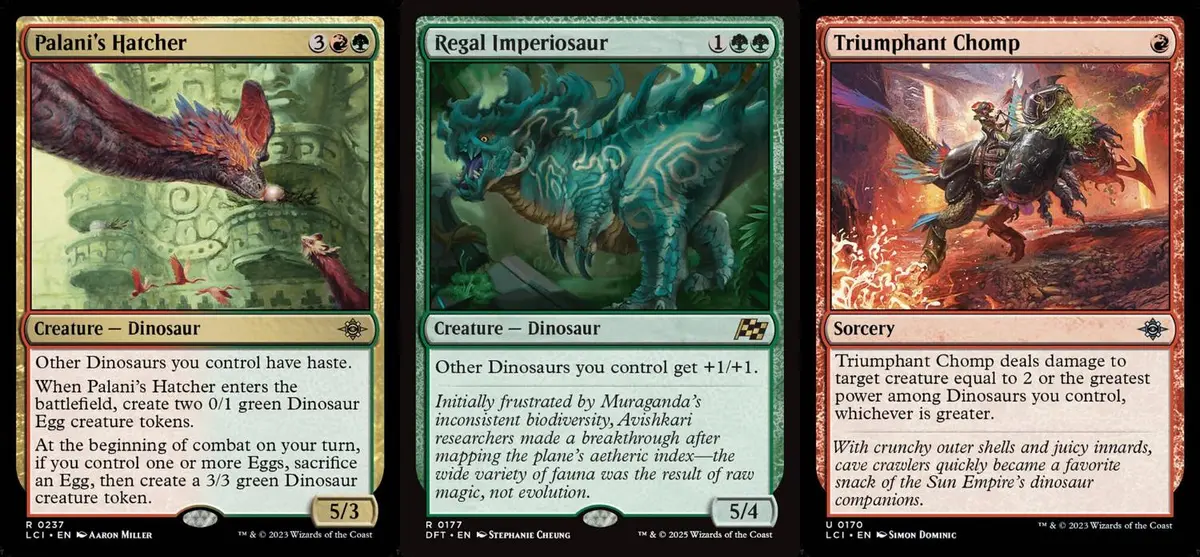
Dinosaurs can fill out a complete creature curve with green alone, so naturally there is room to expand into other colors. After all, Red-Green is the color pair LCI designated for Dinosaurs, and you can find more red Dinosaur signature cards. Simply splashing black or white for stronger removal is also an option.
Gruul Midrange
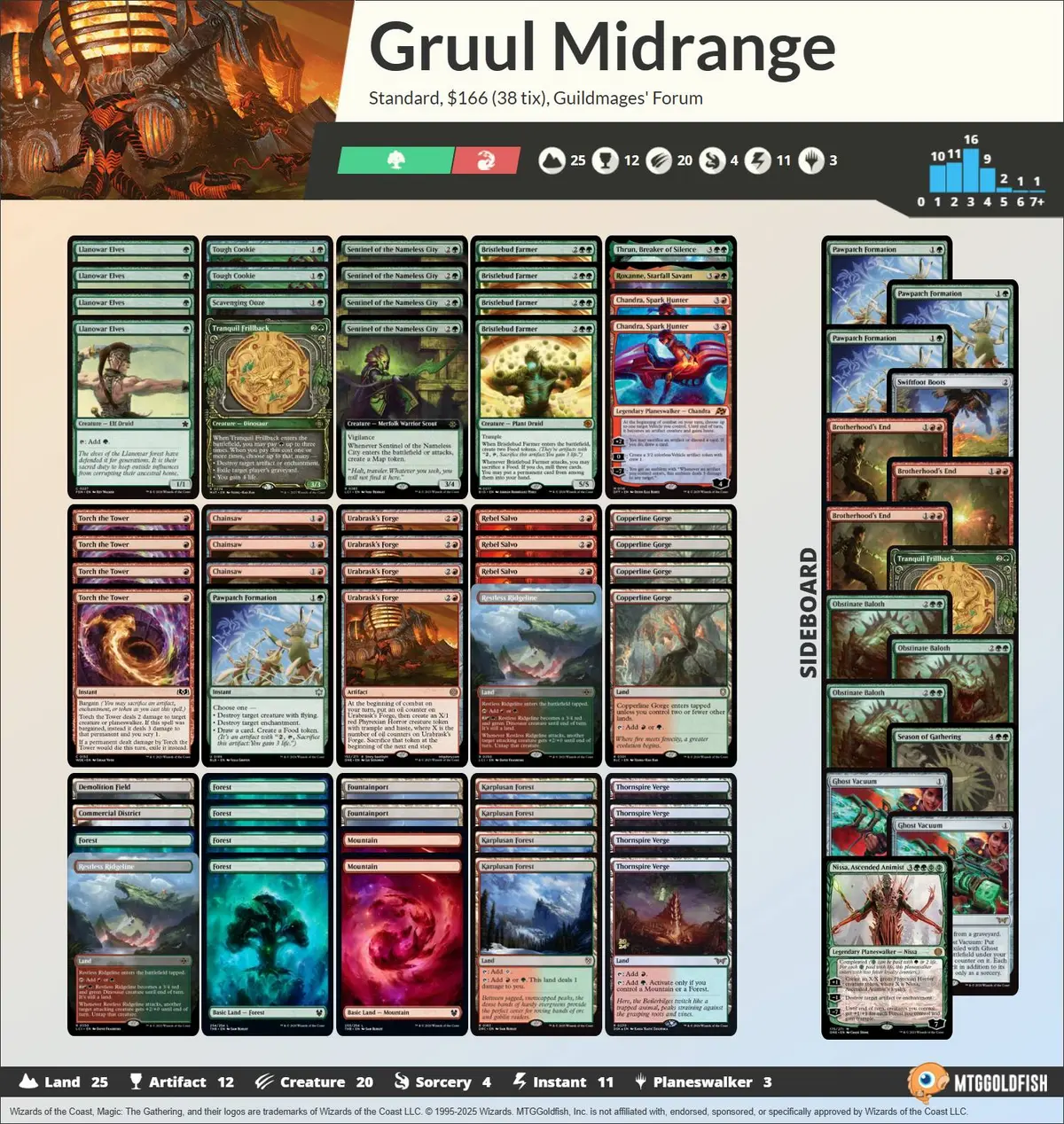
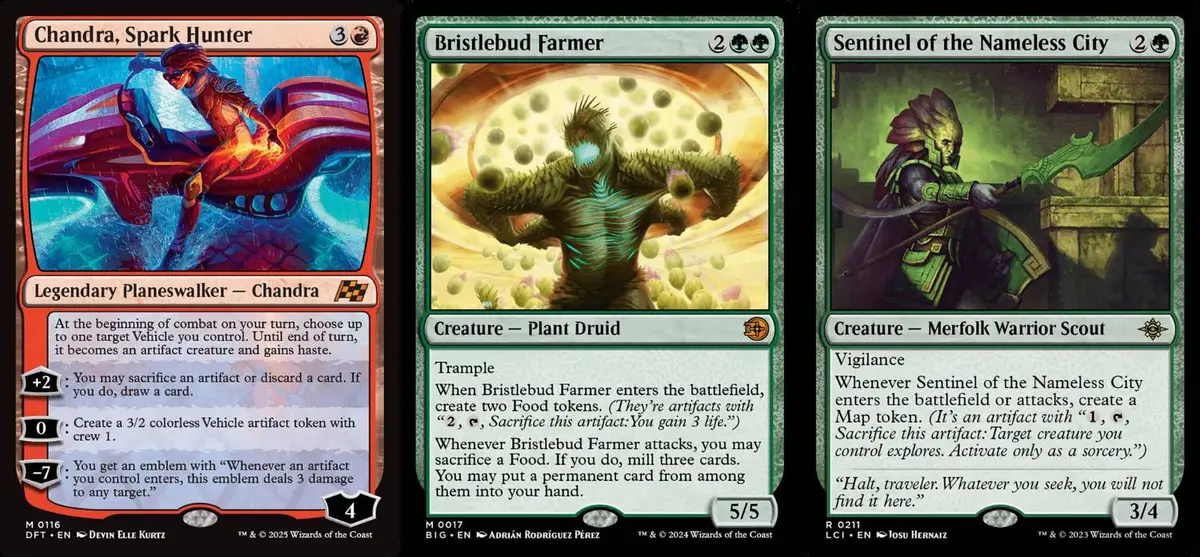
These days green creatures are all very good at making artifact tokens. In the past, the most you could do was feed them to Torch the Tower for a bit of extra value, but now Chandra, Spark Hunter can convert them into a more direct card-advantage resource.
Gruul Delirium
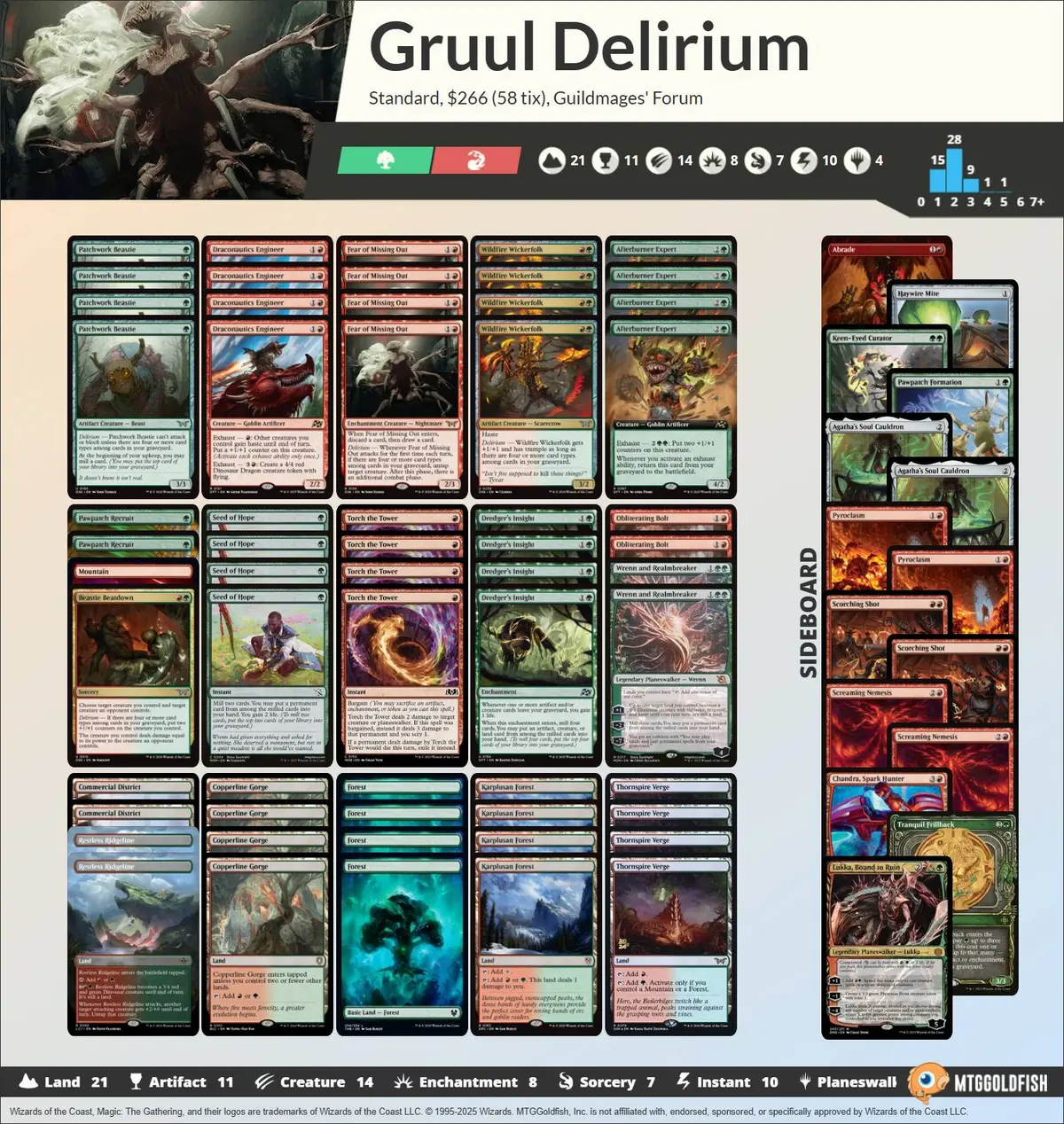
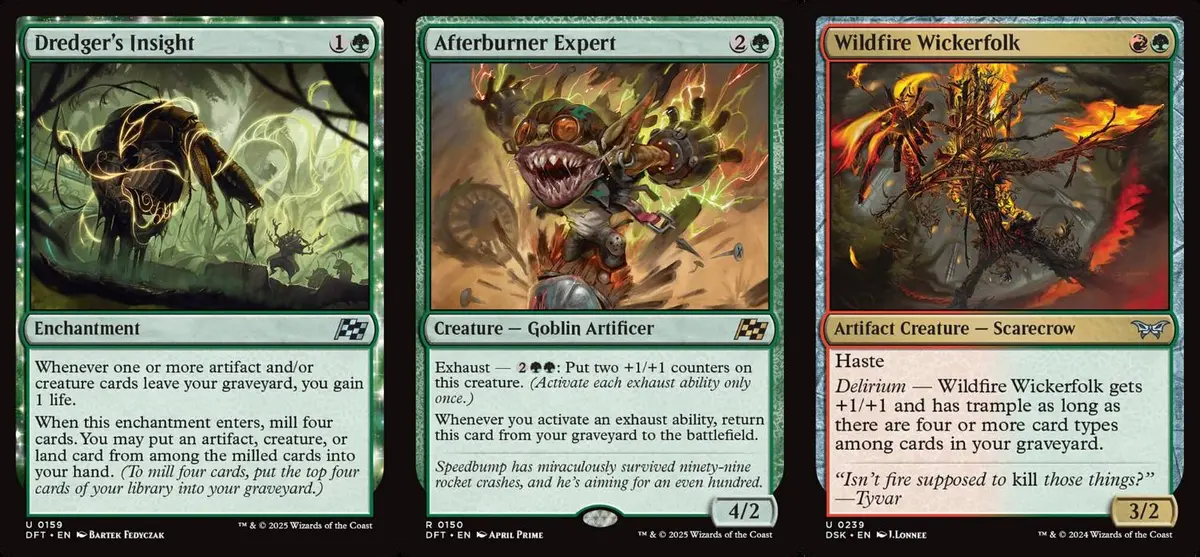
Afterburner Expert almost single-handedly holds up the Exhaust strategy. It’s a solid high-power attacker on its own, and the fact that after exhausting once it can return from the graveyard to the battlefield with no drawback gives it terrifying staying power. Draconautics Engineer is excellent by itself, and additionally provides a cheap Exhaust recursion point. Also, when you activate Draconautics Engineer’s first Exhaust ability, Afterburner Expert’s return trigger resolves first, and only then does the Exhaust ability resolve to give all your teammates haste. This lets the returned Afterburner Expert rush out together with the rest. You’ll see these two show up again and again in other decks later, as if glued together.
Back to the deck itself: because Afterburner Expert can come back from the graveyard, decks that can fill the graveyard make better use of it. Gruul Delirium is exactly that kind of graveyard-filling aggressive deck.
Mono Red Goblin
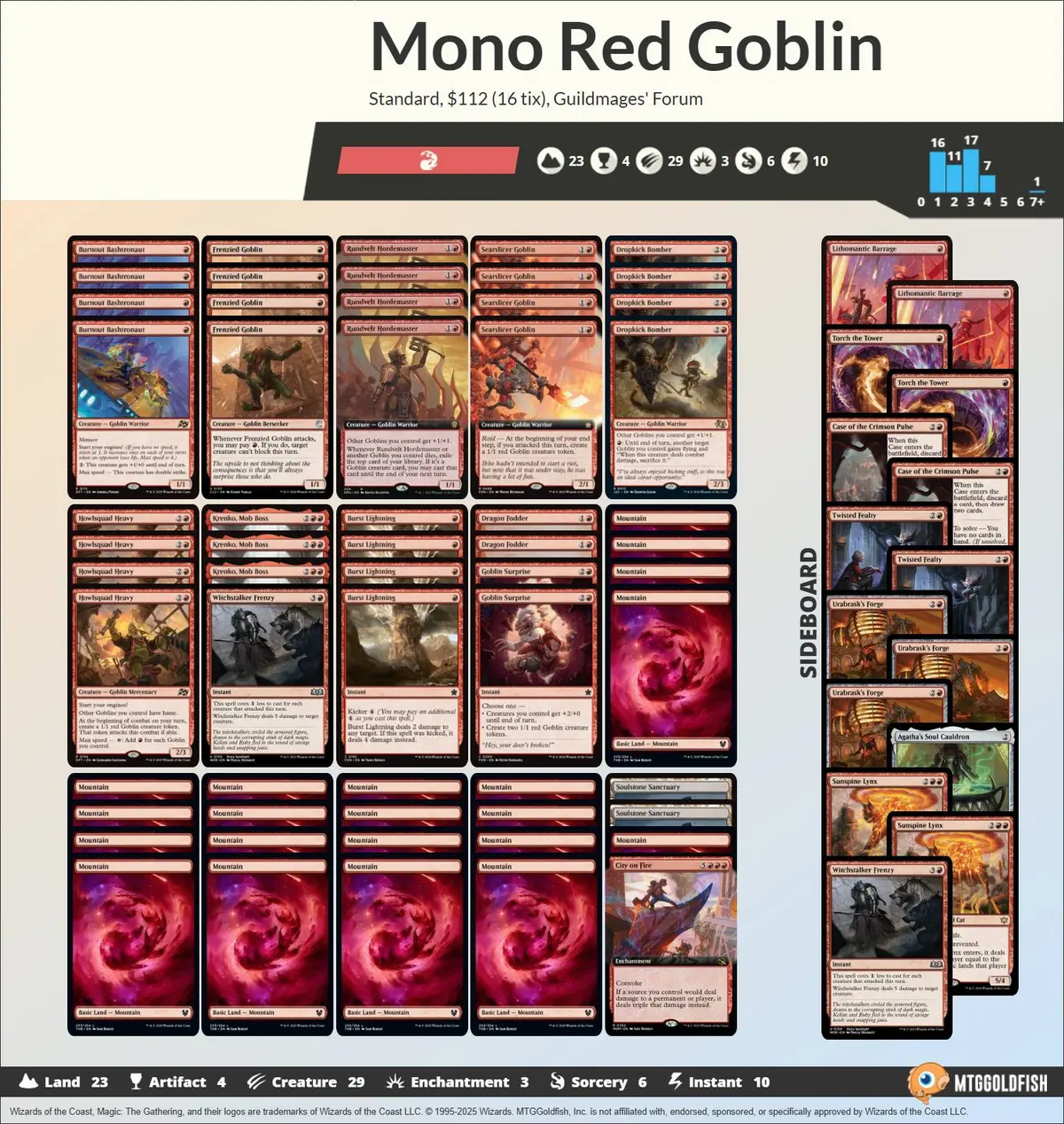
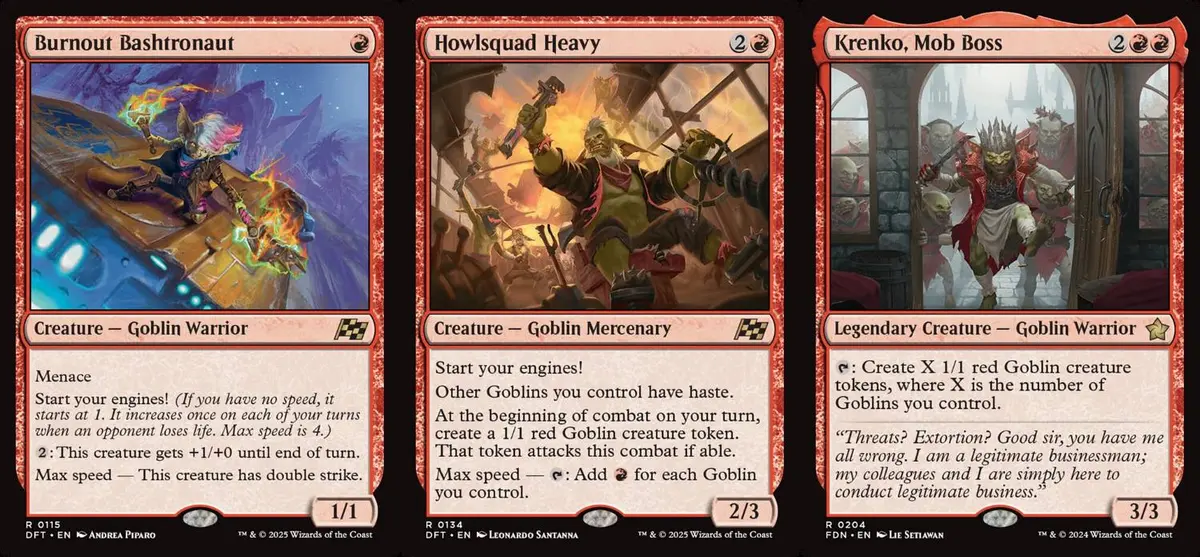
It looks like Wizards really wants to push the Goblin tribe lately. You can almost build the whole deck from just the two newest sets, and there are so many quality three-drops that the former war god Squee, Dubious Monarch can’t find a slot. Because I liked the efficient board development and mana production of Howlsquad Heavy + Krenko, Mob Boss, I also experimentally included one City on Fire to play as an ultimate.
Gruul Goblin
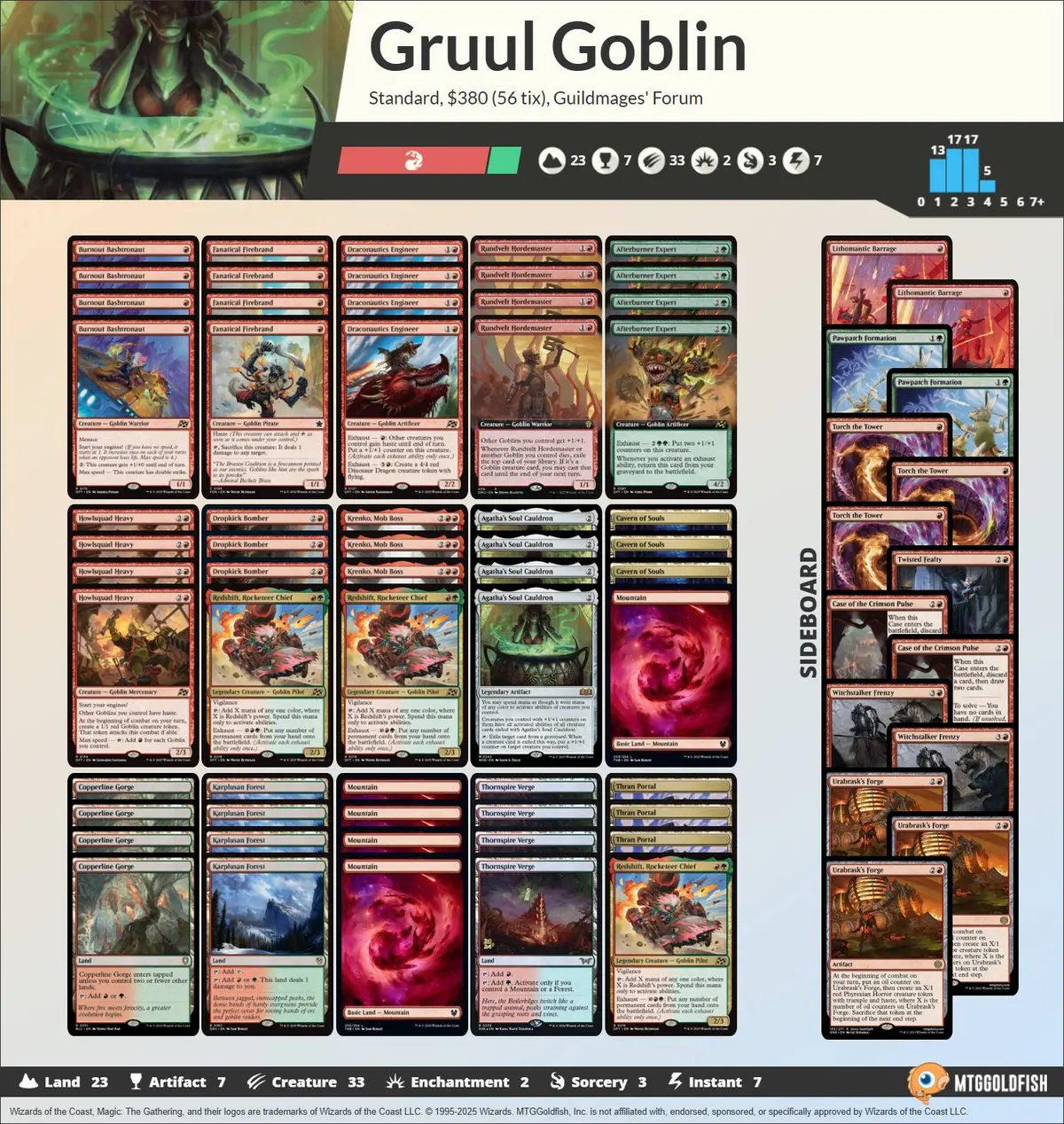
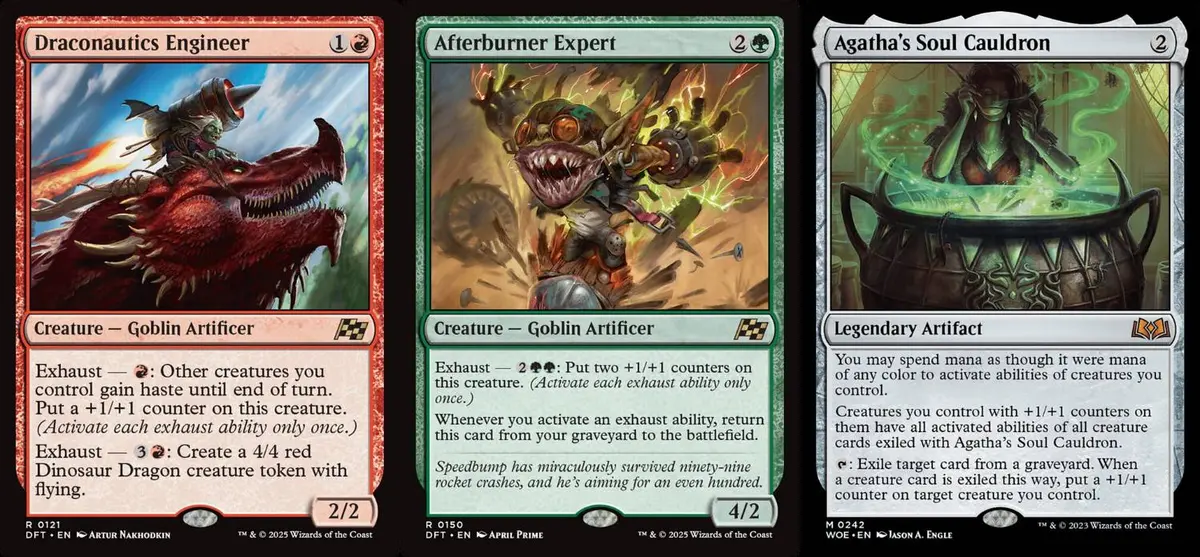
The Draconautics Engineer + Afterburner Expert Exhaust aggro package is back again! In this set, Red-Green Exhaust is almost tied to Goblins, and since it reuses the Exhaust package, Agatha’s Soul Cauldron shows up again too.
Compared with the Mono Red list above, this one plays more aggressively: it keeps making threats to suppress the board, and for removal it relies on attacks forcing the opponent into creature trades.
Redshift Combo
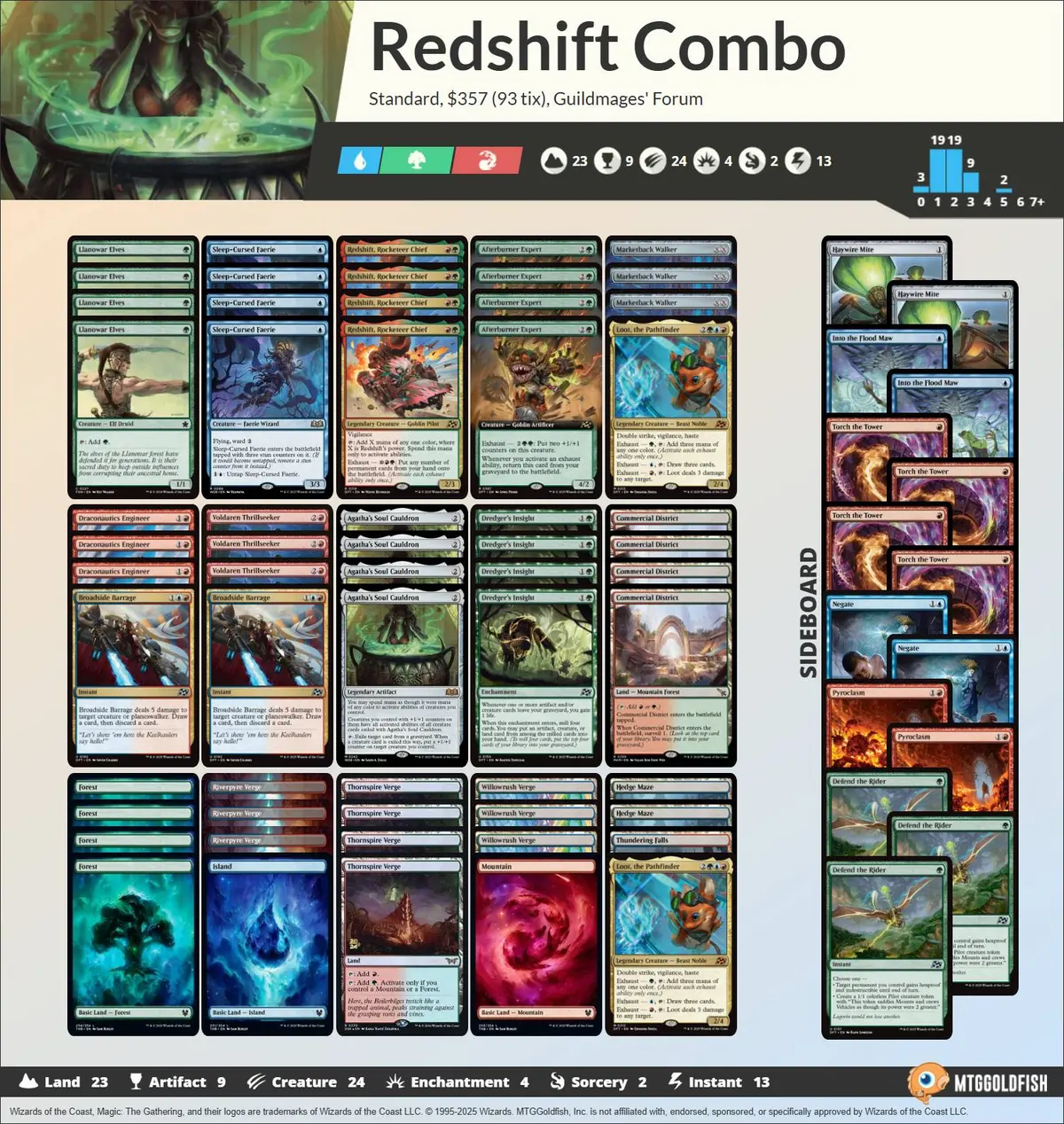
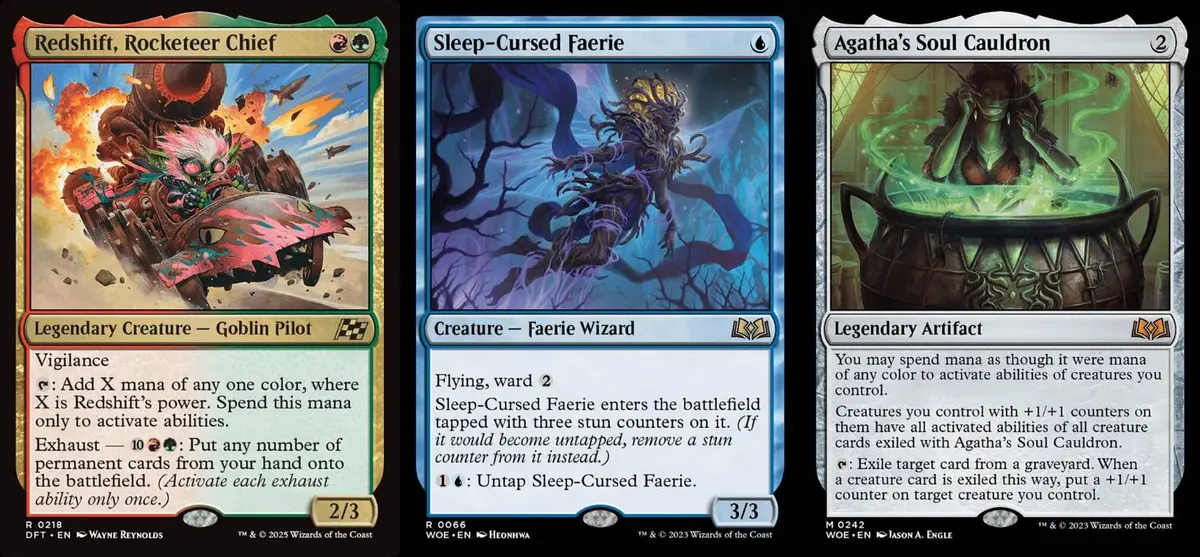
Yes, it’s Agatha’s Soul Cauldron Exhaust time again, this time in a combo build. Agatha’s Soul Cauldron + Redshift, Rocketeer Chief + Sleep-Cursed Faerie can turn any creature with power 3 or greater into an infinite mana source usable only for activated abilities. If Marketback Walker is also around, you can convert that infinite mana into an infinitely, controllably growing creature. Even if you can’t get through in combat, you can use Voldaren Thrillseeker to hit them in the face directly for the win (but if Marketback Walker itself is the one on the battlefield and you want to Fling yourself to kill someone, remember to keep its size within what your own library can handle). Creatures led by Draconautics Engineer + Afterburner Expert provide frontal combat ability, giving the deck a midrange mode so it doesn’t rely entirely on the combo to win.
Selesnya Gearhulk
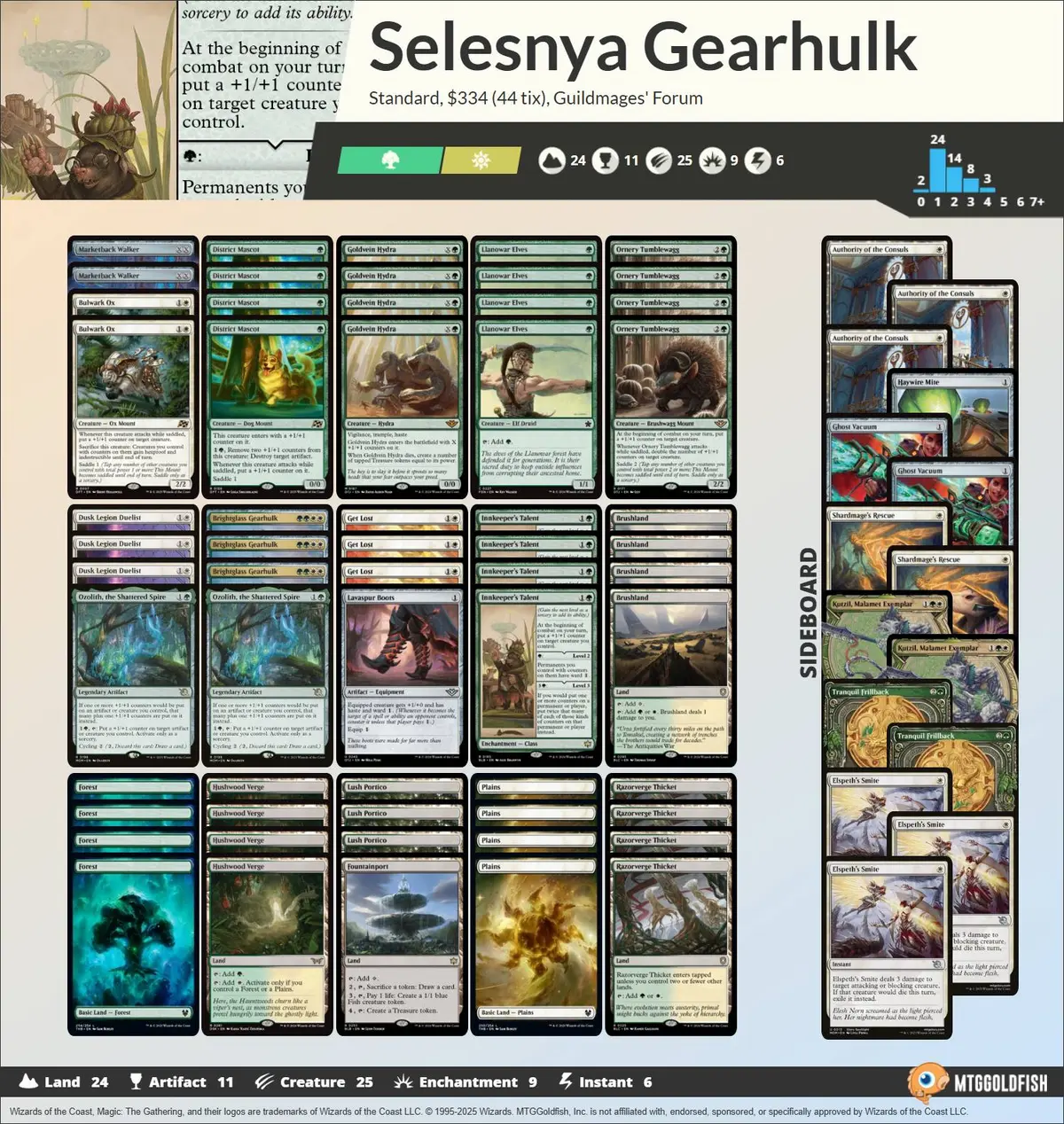
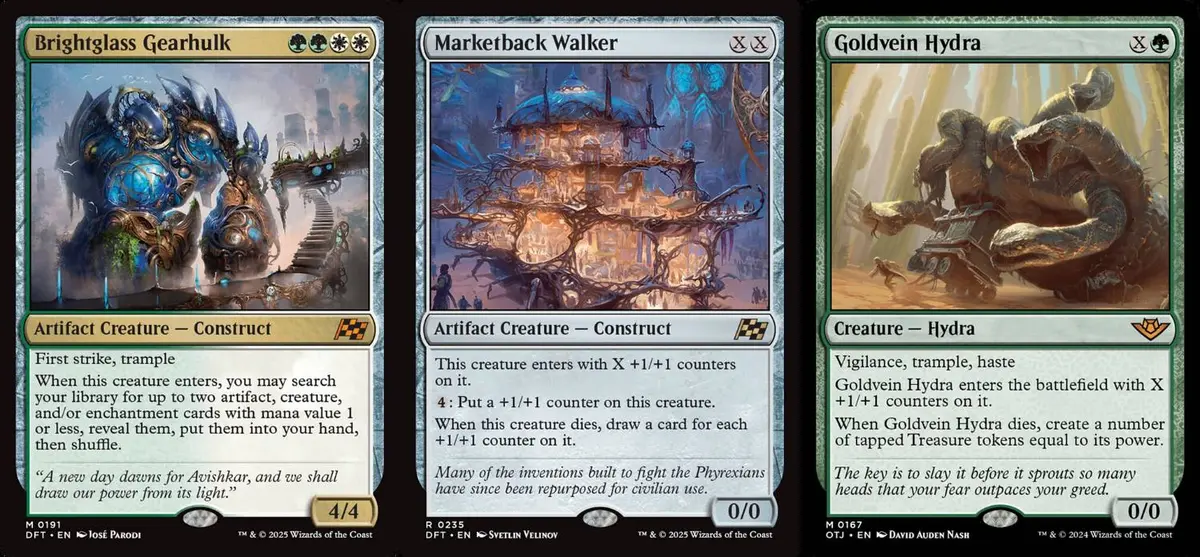
Brightglass Gearhulk, as one of the first preview cards of the set, has always drawn plenty of discussion, such as finding Urza’s Saga + Amulet of Vigor in Modern. In Standard, though, what it can find looks a bit awkward. A deck that truly packs in one-drop creatures may squeeze its curve so tight there’s no room for four-drops. There are plenty of good one-mana artifacts and enchantments, but many of them are support pieces, and there aren’t that many slots available in the deck (especially in the main deck).
After looking around, using X-cost creatures to adjust the curve seems more reasonable. Those creatures all have +1/+1 counter abilities, which is exactly the specialty of the Green-White color pair, so it naturally turned into a Selesnya counters deck (it almost changed jobs a second time into Selesnya Mounts). The sideboard also holds quite a few one-mana answers as a toolbox for Brightglass Gearhulk. Perhaps the ability to reliably find sideboard cards in post-board games will make it look even better than in game one.
Selesnya Vehicle Mount
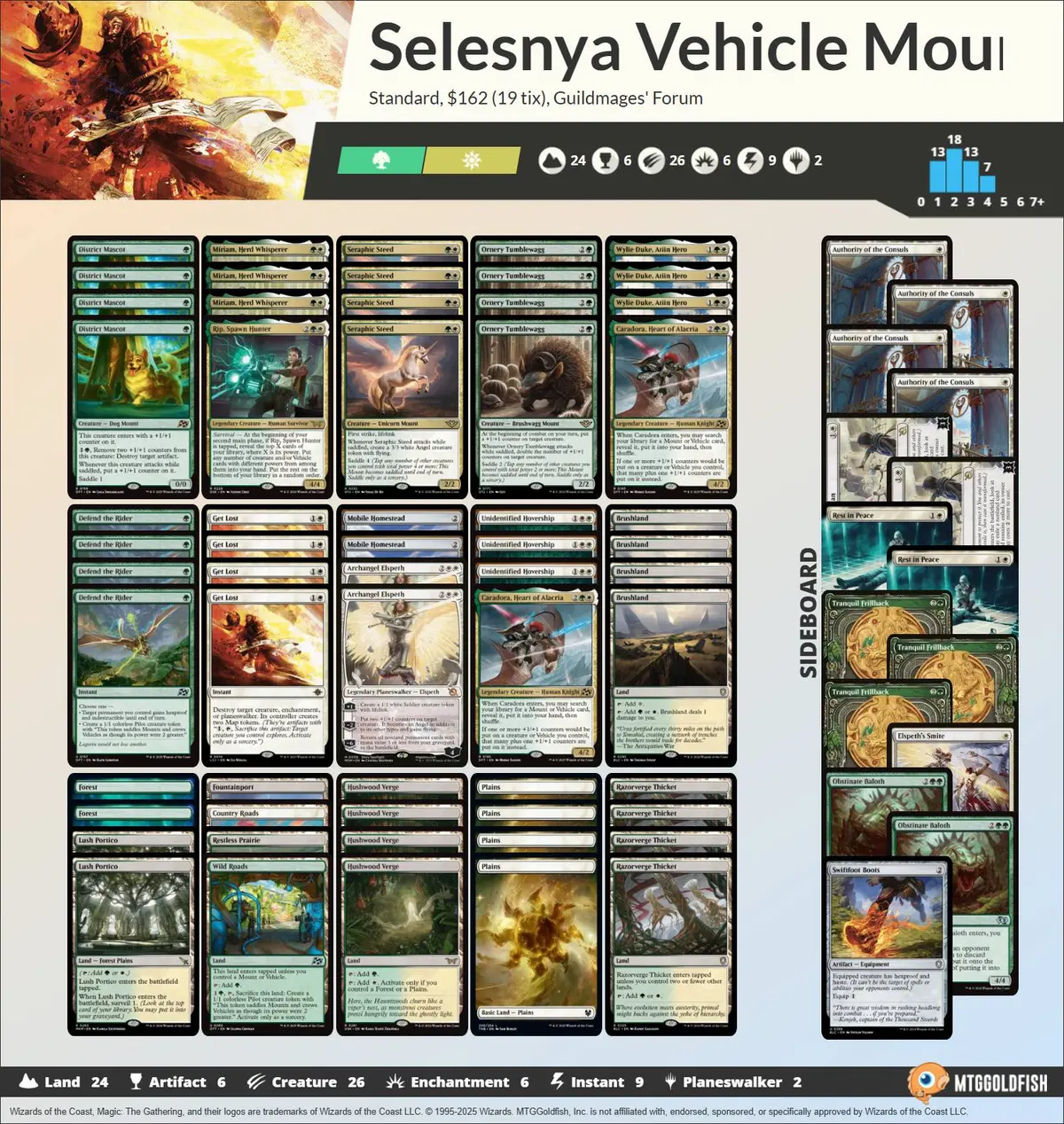
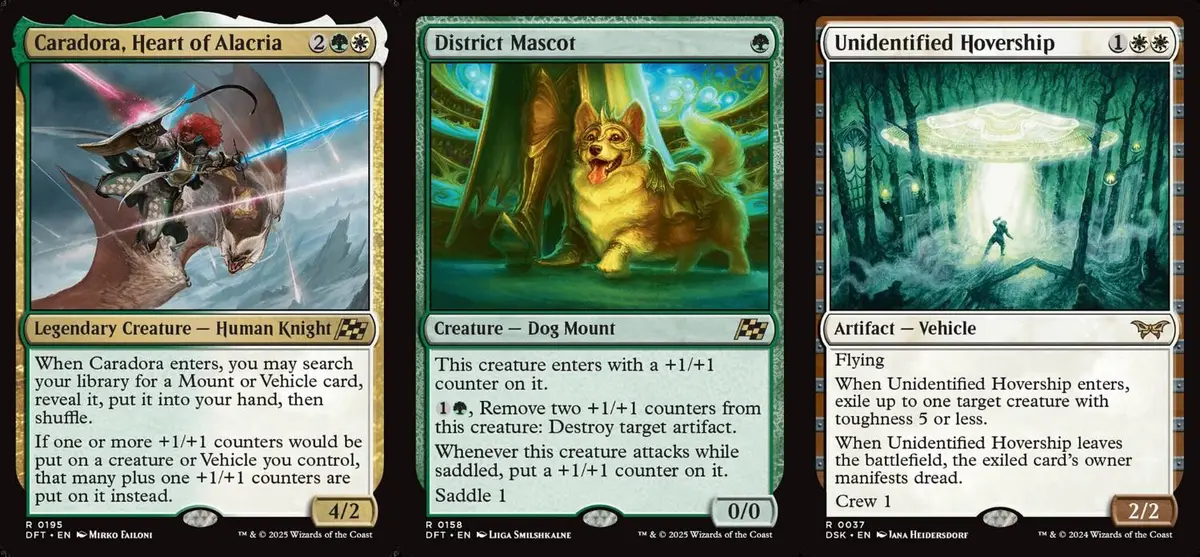
Since we mentioned Selesnya Mounts, let’s do a real Selesnya Mount theme deck! Back when Mounts first appeared in OTJ, they were already bundled with Vehicles as a combined theme. The new cards this time continue that design thinking, which solves the earlier problem of not having enough theme cards and having to force all sorts of single cards in to make up the numbers.
Izzet Vehicle Pirate
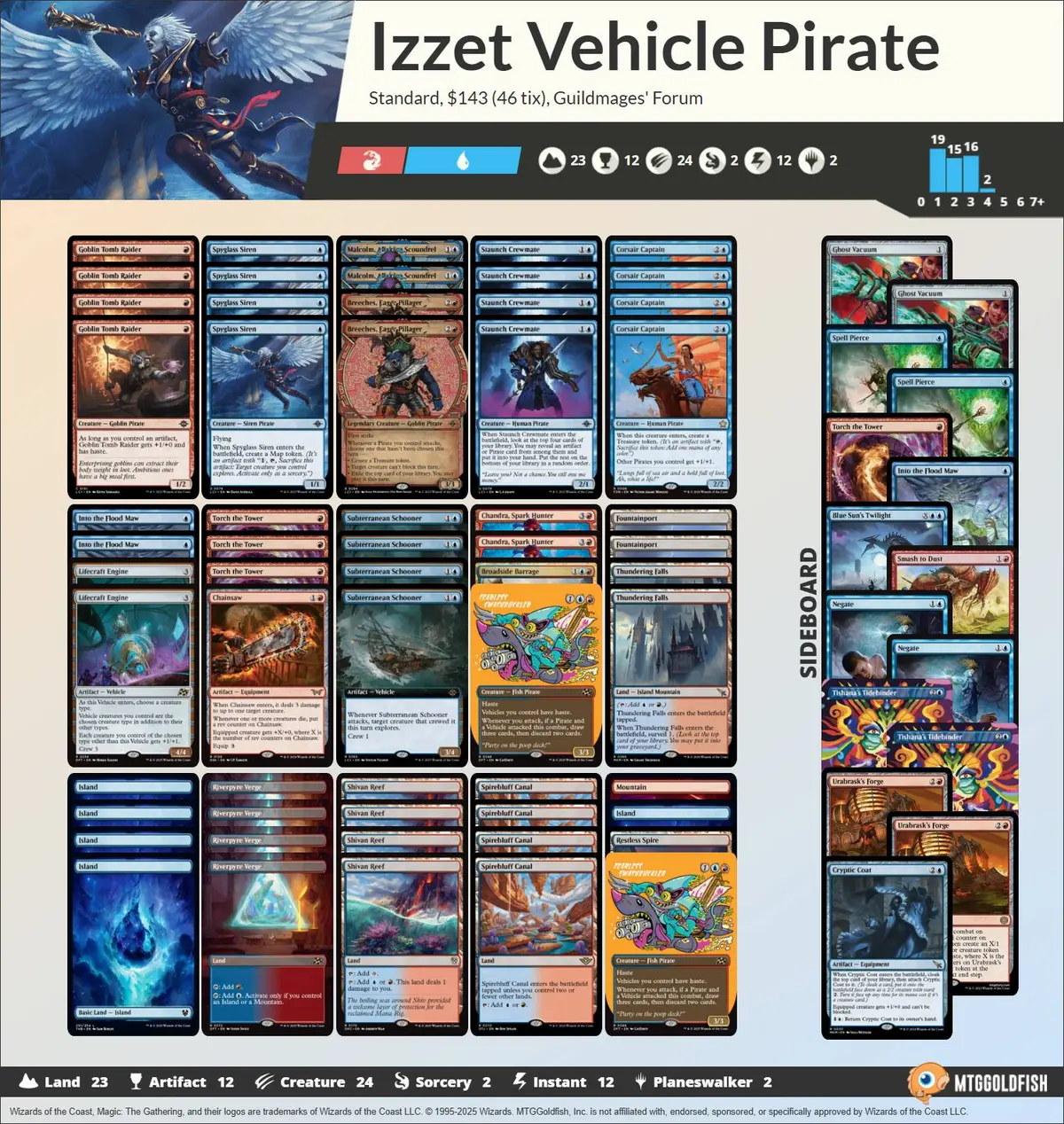
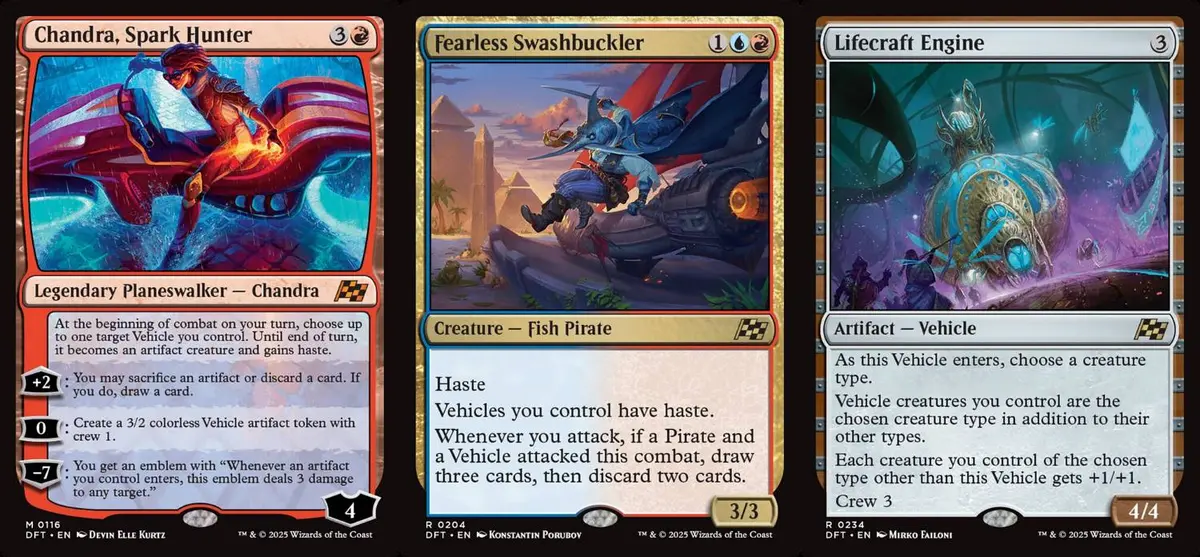
LCI’s Pirates were designed with quite a few artifact synergies, which works very well with Chandra, Spark Hunter. Lifecraft Engine, which is both a Vehicle and a tribal bonus, naturally went into the deck too.
There is one genuinely awkward point in this build, though. Among Vehicles, Subterranean Schooner is still basically the strongest single card, but its value only shows when crewed, so the Vehicle synergy of Chandra, Spark Hunter is hard to show off with it. Forcing a pairing just for Chandra would put the cart before the horse, so in the end single-card value came first.
Izzet Discard Aggro
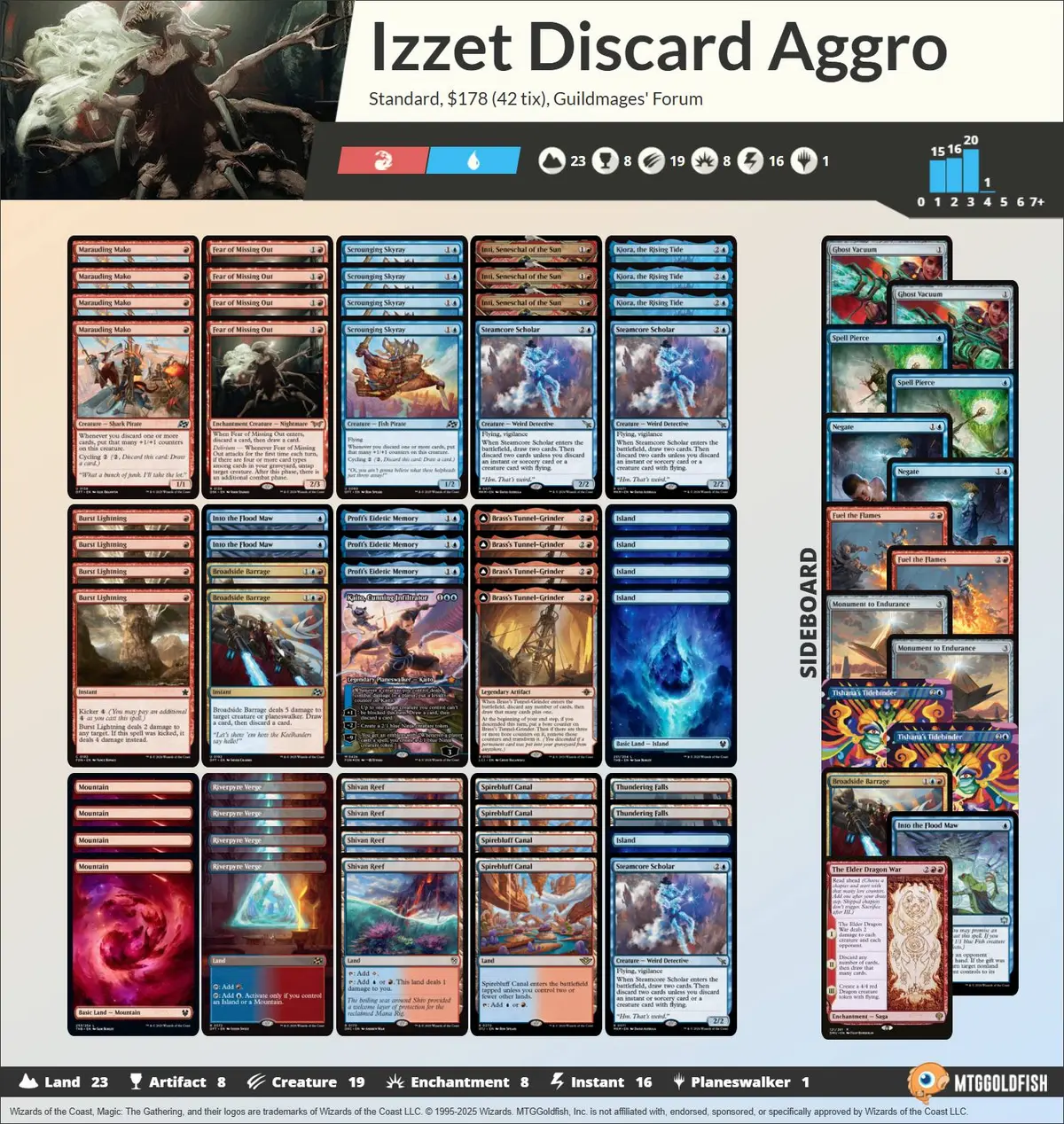
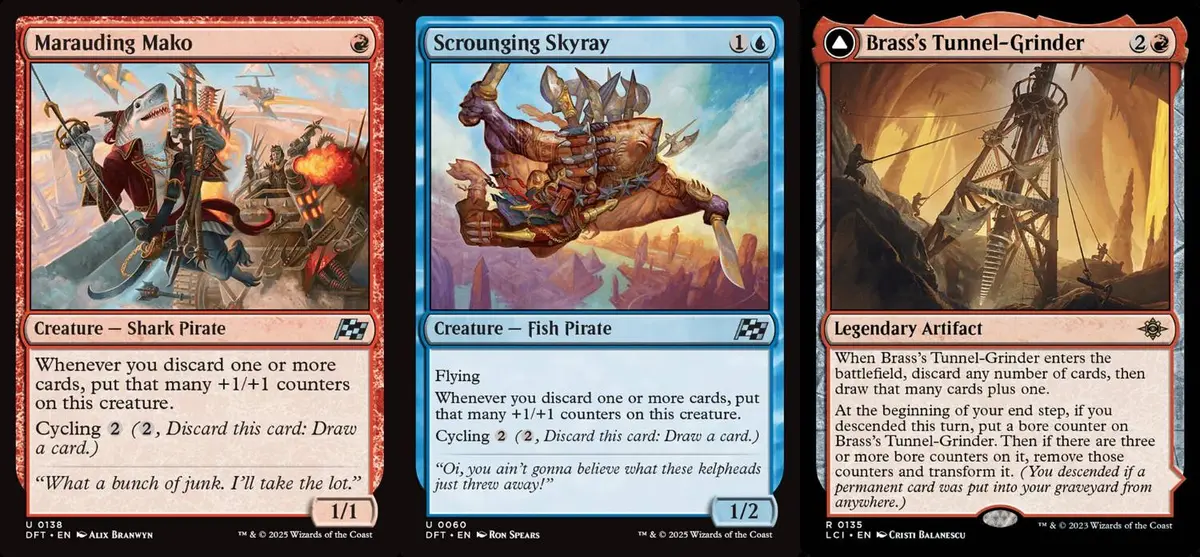
The discard triggers in this set each trigger once per discarded card. If you can guarantee frequent triggers, Marauding Mako and Scrounging Skyray grow at a very impressive rate. Standard also has no shortage of fast looting sources like Kiora, the Rising Tide and Brass’s Tunnel-Grinder // Tecutlan, the Searing Rift. Since drawing and discarding are about equally strong here, you can also look forward to the bonus from Proft’s Eidetic Memory. As for Monument to Endurance, although it is also a powerful payoff for discarding, it doesn’t quite match this deck’s intended rhythm of deploying damage sources quickly, so it went to the sideboard as a Plan B win condition that goes around creature removal.
Rakdos Discard
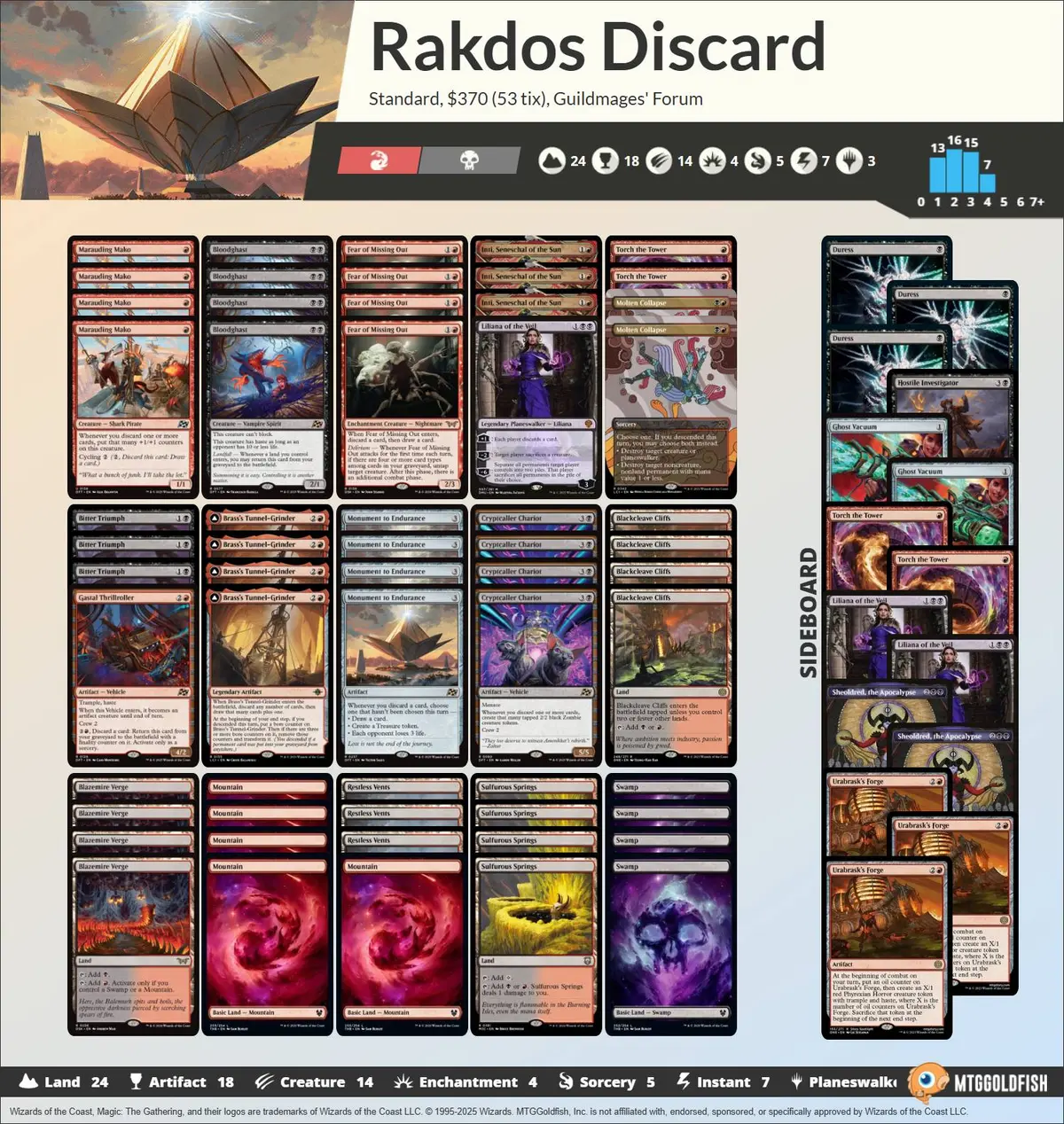
Note: Thanks to Uncle Yorion 約力昂大叔 for the new Standard build he came up with on his fan page!
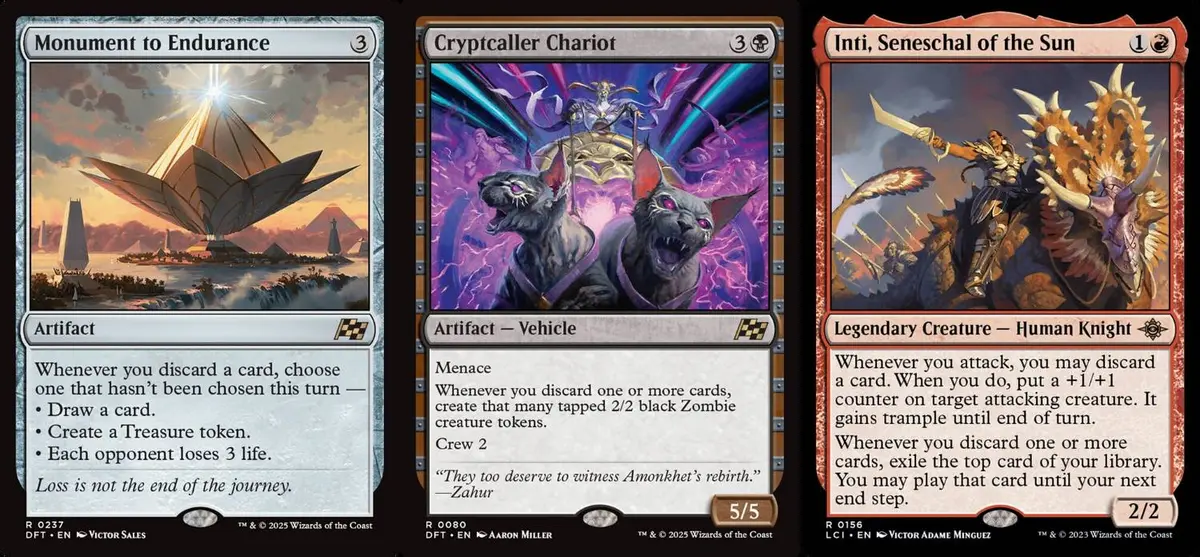
Compared with the deck above, the biggest difference is that black adds Cryptcaller Chariot. The curve is higher overall, so it can’t match Izzet Discard’s high early-game burst ceiling, but its staying power in a long game is steadier.
Rakdos Engine Lizard
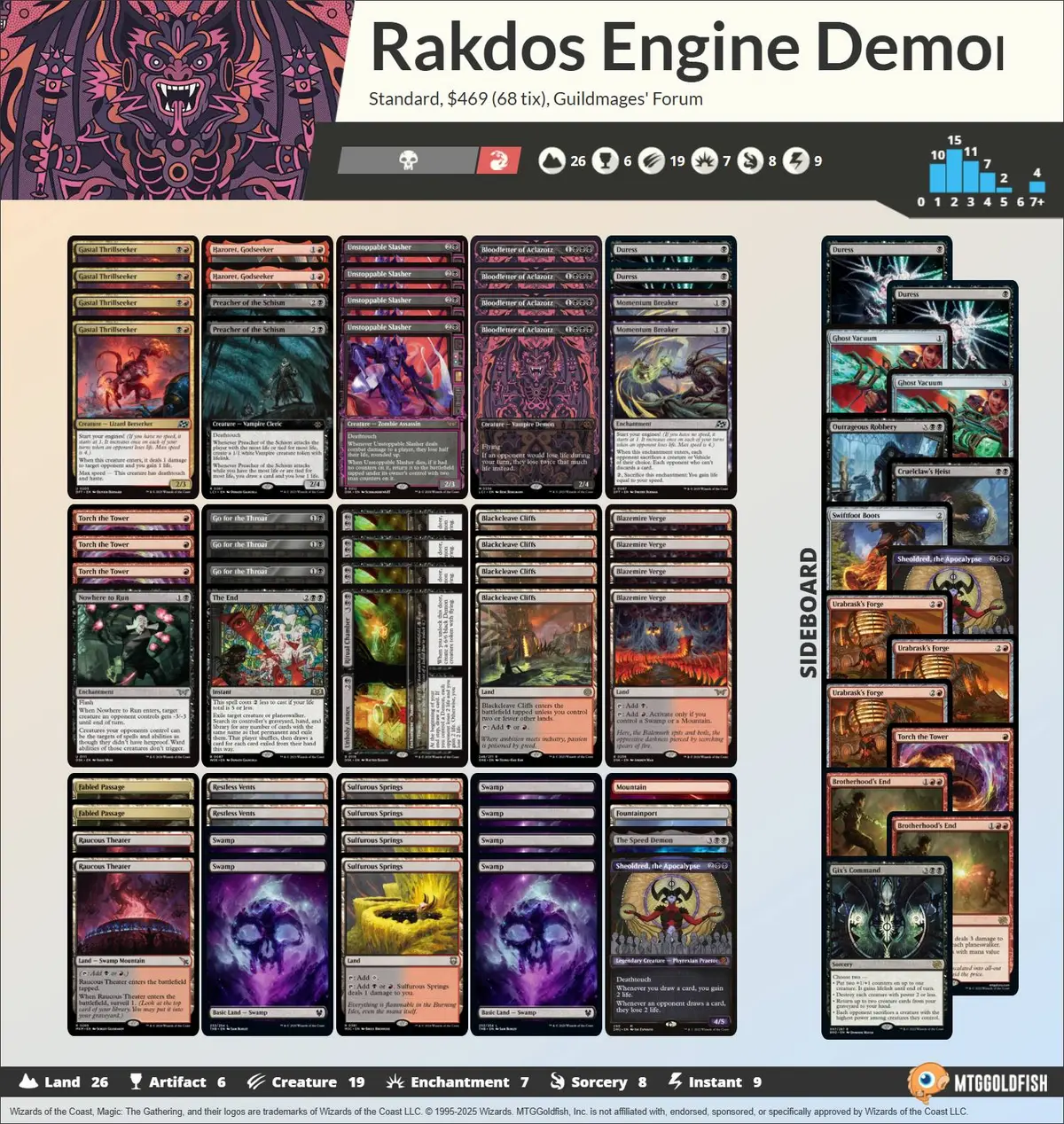
The Unholy Annex // Ritual Chamber shell gains a new friend in The Speed Demon. If you haven’t reached max speed yet when the end step trigger happens, you can order the stack yourself: resolve Unholy Annex // Ritual Chamber’s drain and draw first to trigger the speed increase, and then resolve The Speed Demon’s draw-and-lose-life.
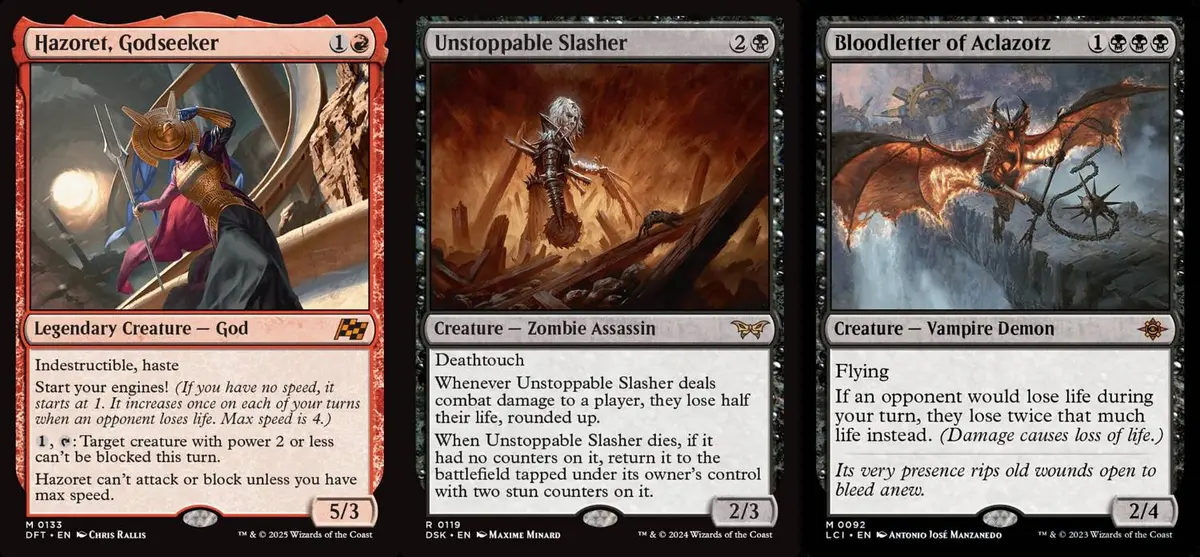
Of course, you don’t want to wait until you play The Speed Demon on turn 5 to Start Your Engines, so you still need some suitable sources of starting your engines early. Gastal Thrillseeker and Momentum Breaker are fairly standard curve-fillers that are easy to understand, but things get interesting when we look at Hazoret, Godseeker. Besides starting your engines itself, it can give a creature with power 2 or less “can’t be blocked”, and Unstoppable Slasher and Bloodletter of Aclazotz both fit that condition. This is exactly one of the well-known companion combos of the Unholy Annex // Ritual Chamber shell, and now Unstoppable Slasher is truly unstoppable.
Rakdos Outlaw
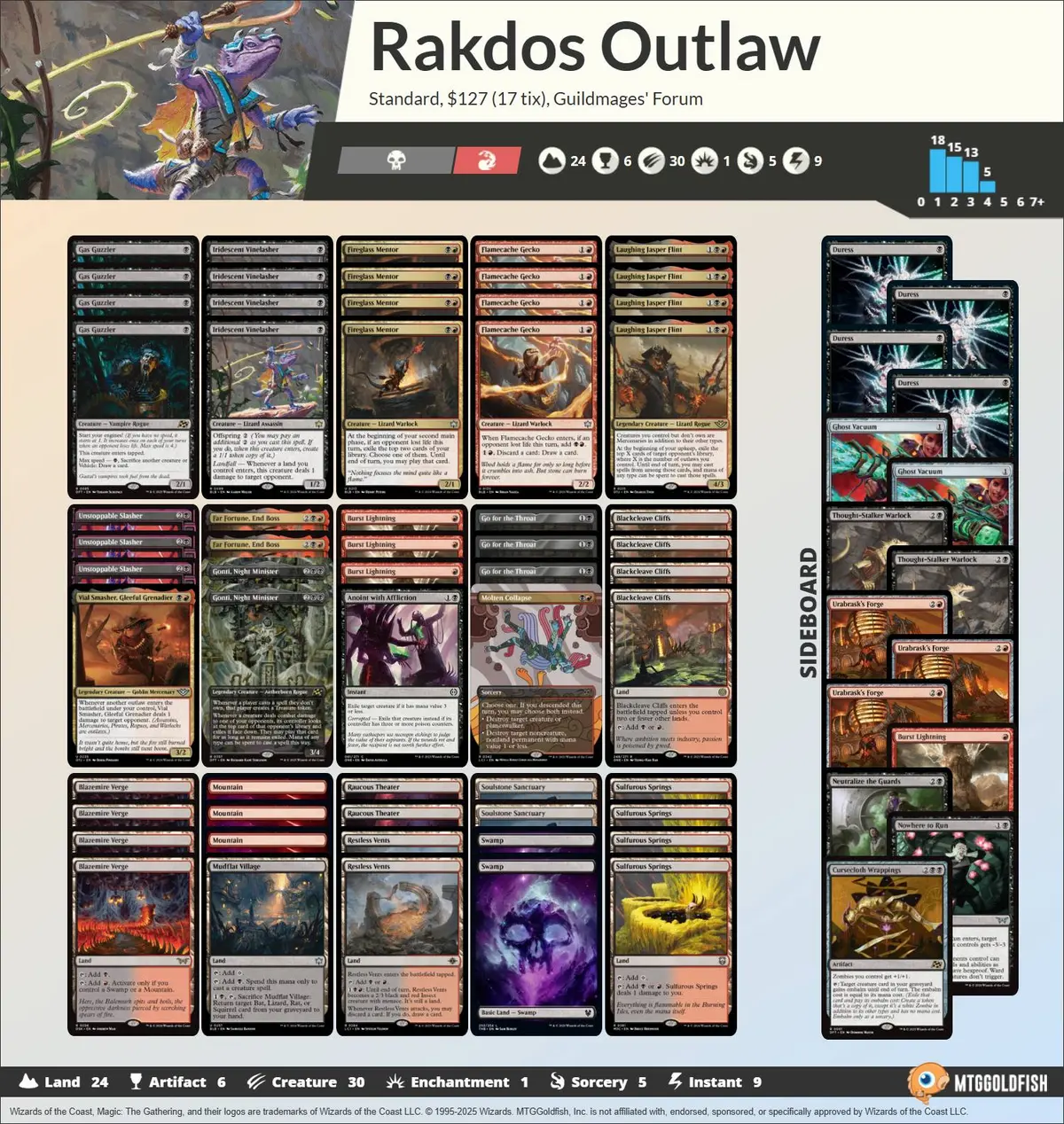
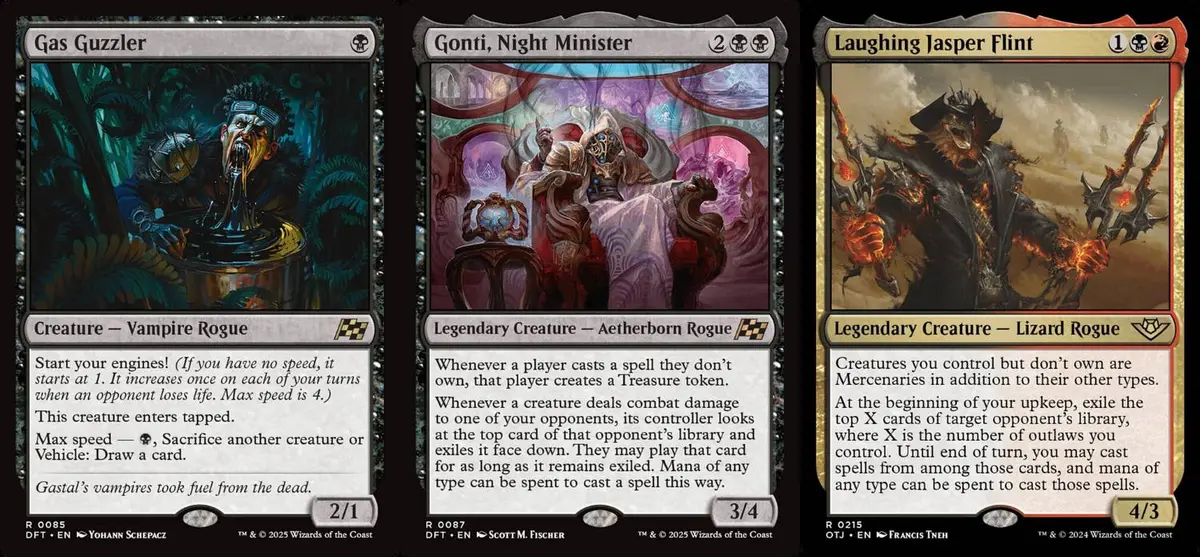
It’s about 87% similar to the old Rakdos Lizards, but it drops the Lizard-centered theme in favor of an Outlaw theme with a wider pool of usable creatures, so it can use more powerful single cards. The most interesting part of this deck is the pairing of Laughing Jasper Flint + Gonti, Night Minister, which earns a pile of resources while never leaving you short of mana.
Rakdos Sacrifice
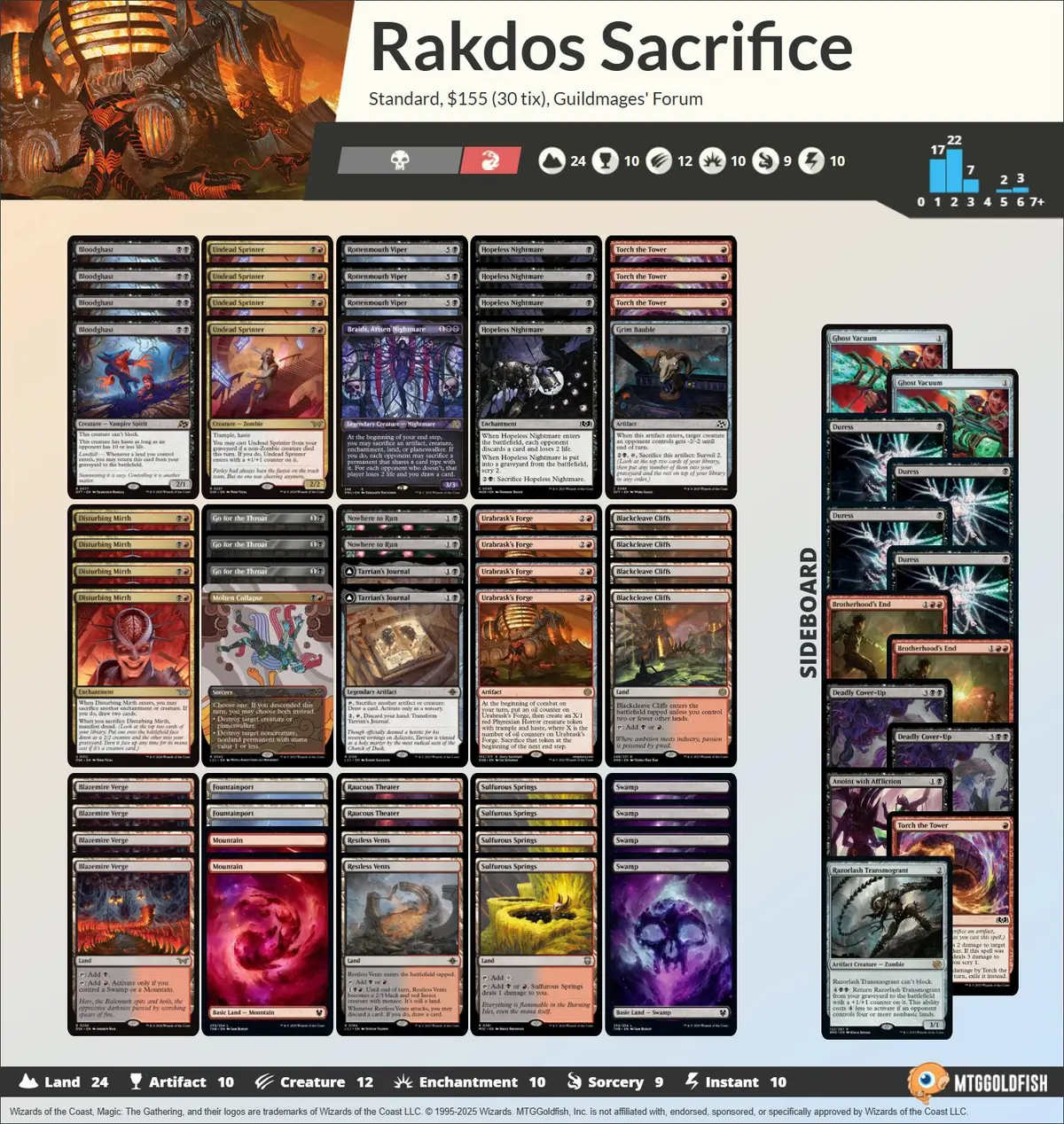
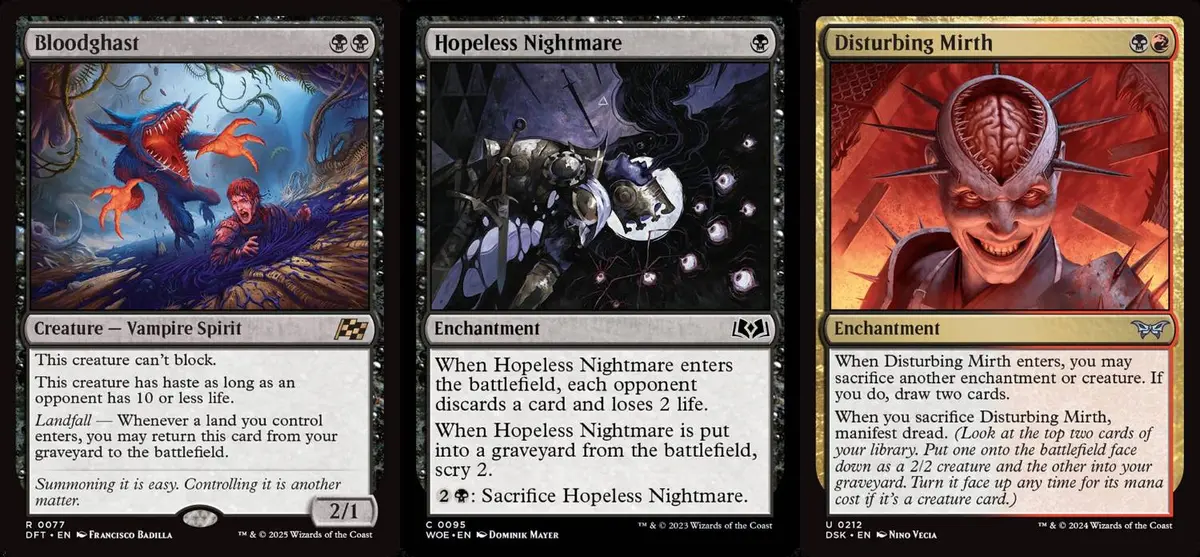
A creature like Bloodghast, which can repeatedly crawl back onto the battlefield after dying, is the fertilizer a sacrifice deck most wants to see.
Boros Aggro
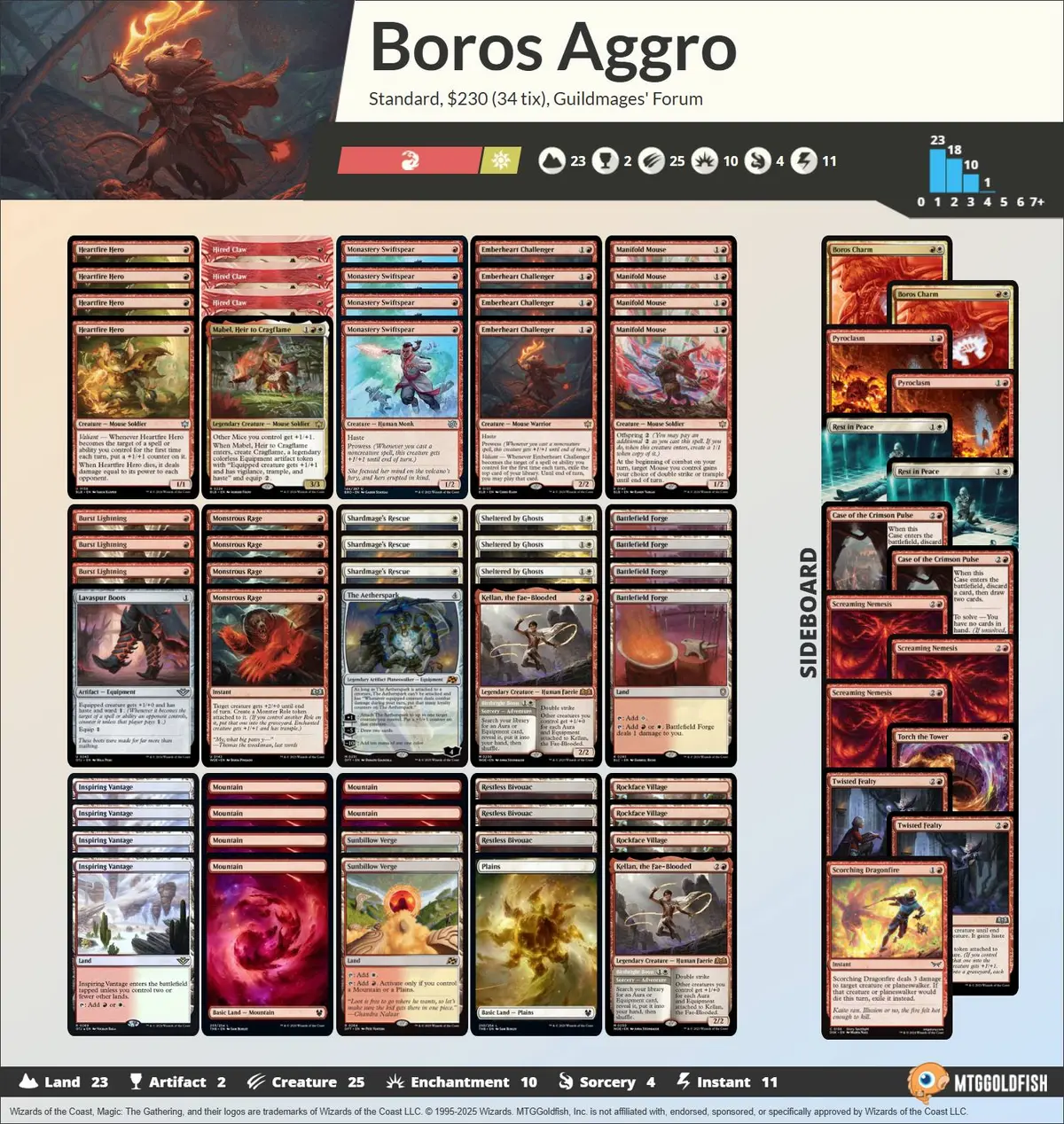
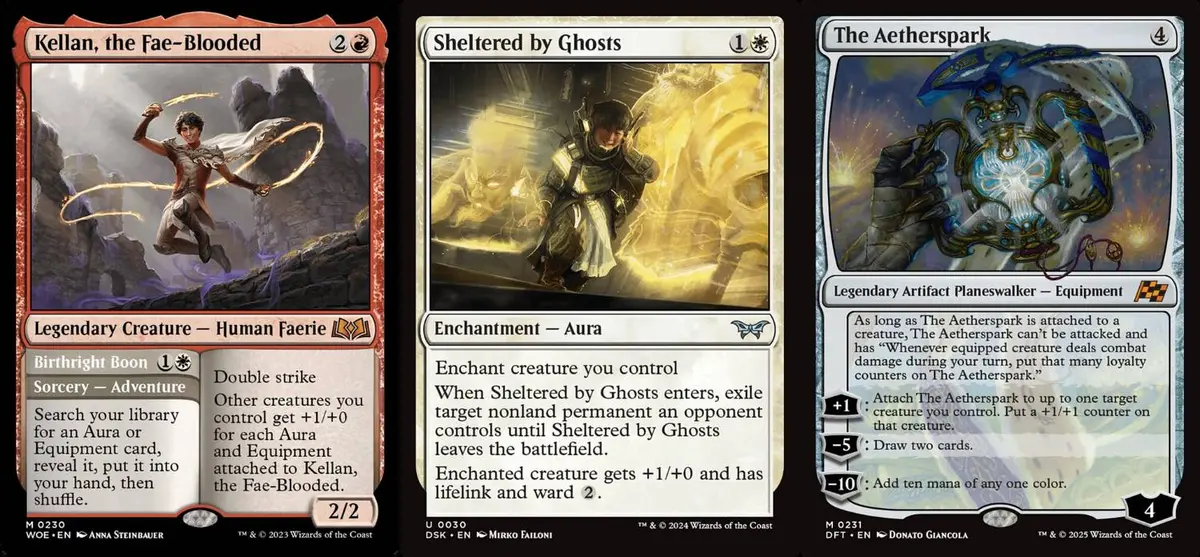
The foundation is the Boros Mice structure, but it uses the Adventure toolbox of Kellan, the Fae-Blooded // Birthright Boon, and also tests how The Aetherspark performs.
Azorius Mill Control
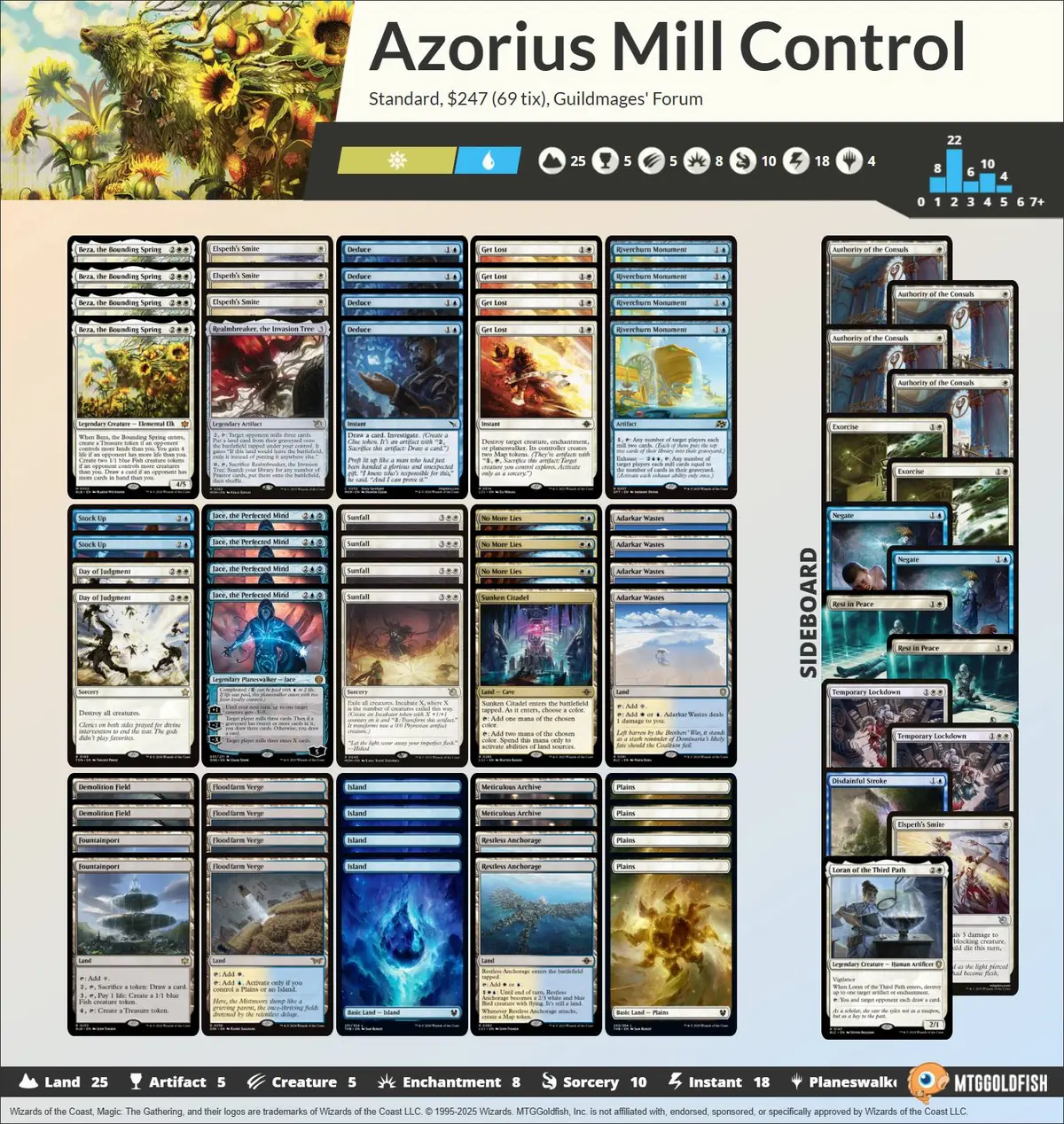
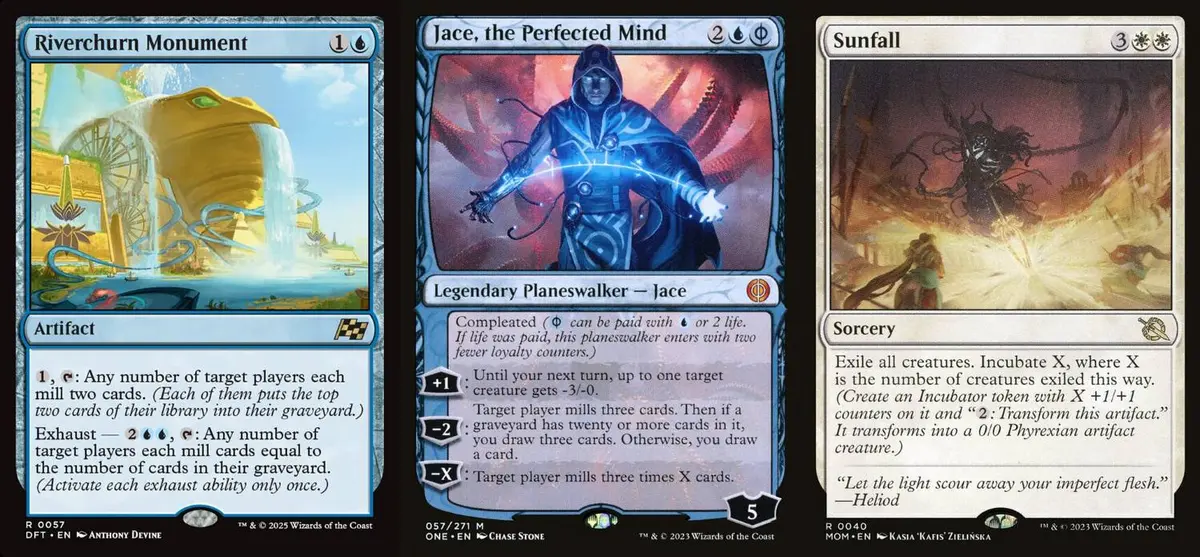
Although this is a blue control deck, it has all but given up on counterspells. Its wins basically come from the Riverchurn Monument + Jace, the Perfected Mind mill package. Few cards in the current Standard can answer a mill strategy from the defensive side, so apart from counterspells, the only answer is basically racing. In the past, Jace, the Perfected Mind alone could already end a game, but it still demanded that you stabilize the board. Now that Riverchurn Monument is added, you have more capital to race. Against midrange or slower opponents, one or two sweepers might stall their offense and let you go straight into your own lethal rhythm. What’s left is figuring out how to survive against aggro decks, and white was chosen precisely for the excellent anti-aggro ability of Beza, the Bounding Spring and Authority of the Consuls.
Azorius Repurposing Bay
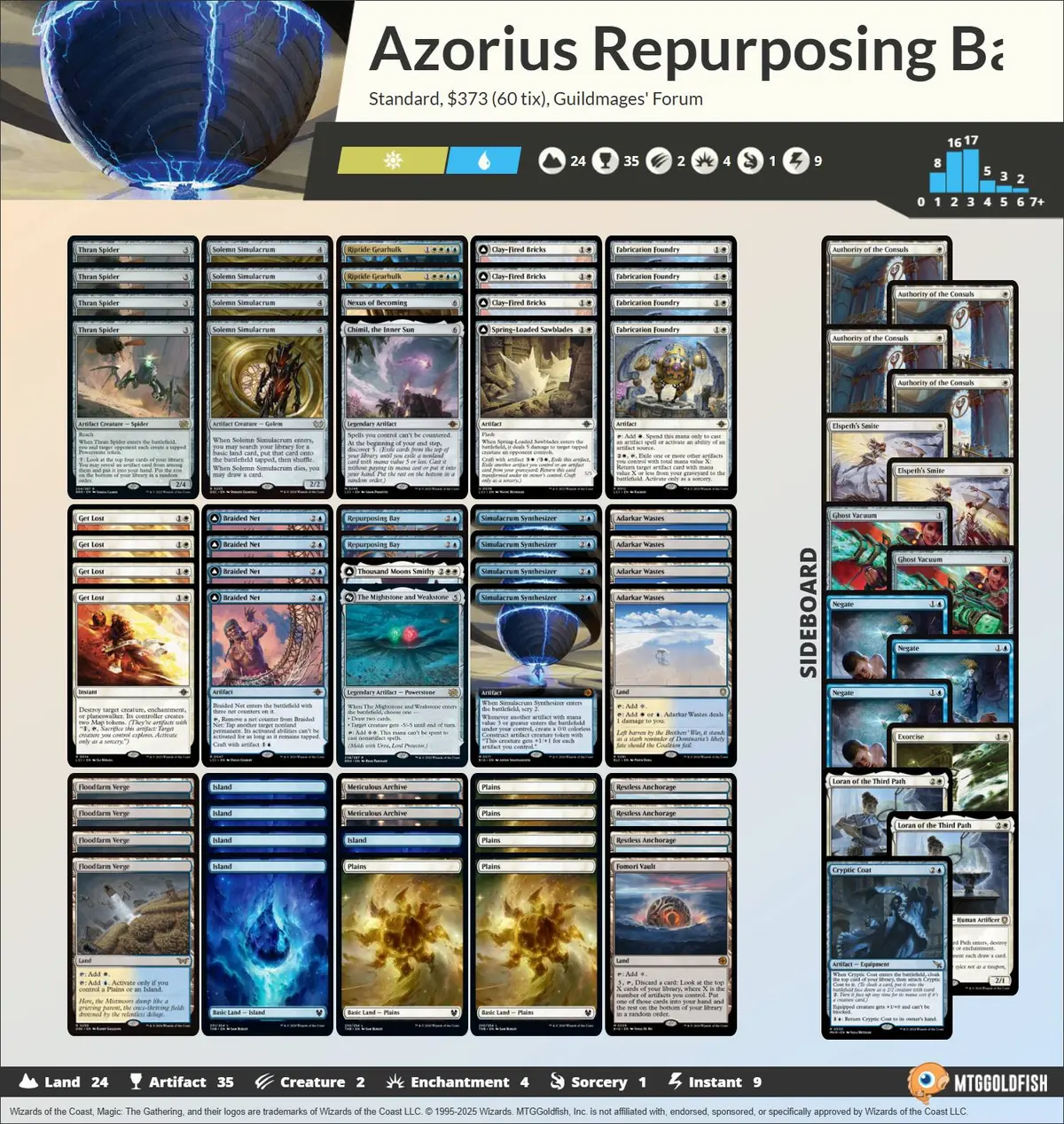
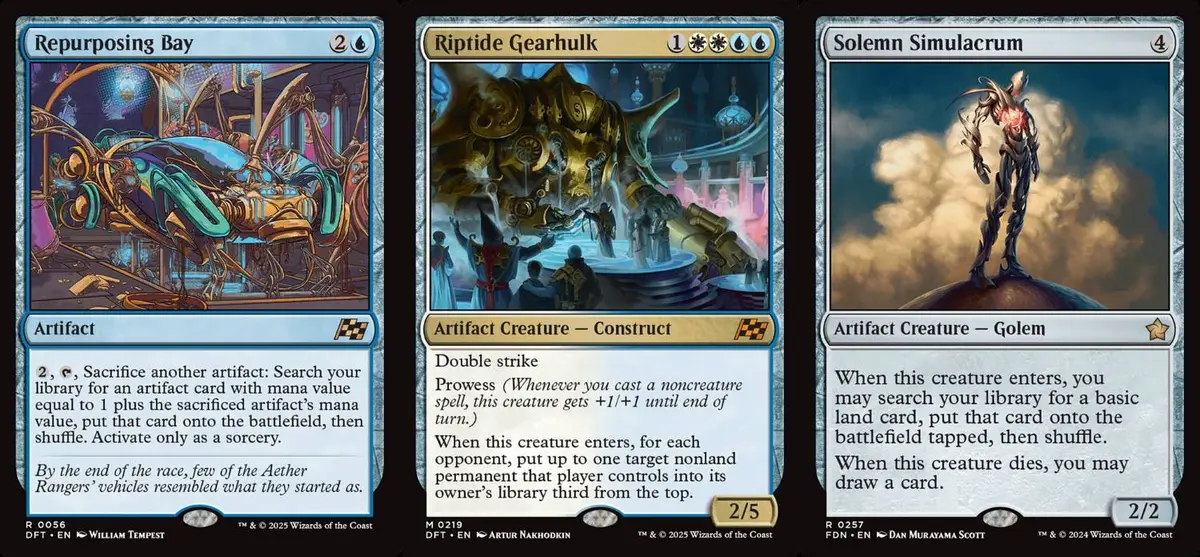
It largely follows the earlier artifact ramp, resource-generating approach, using Repurposing Bay to strengthen resource generation and operational flexibility.
Azorius Affinity
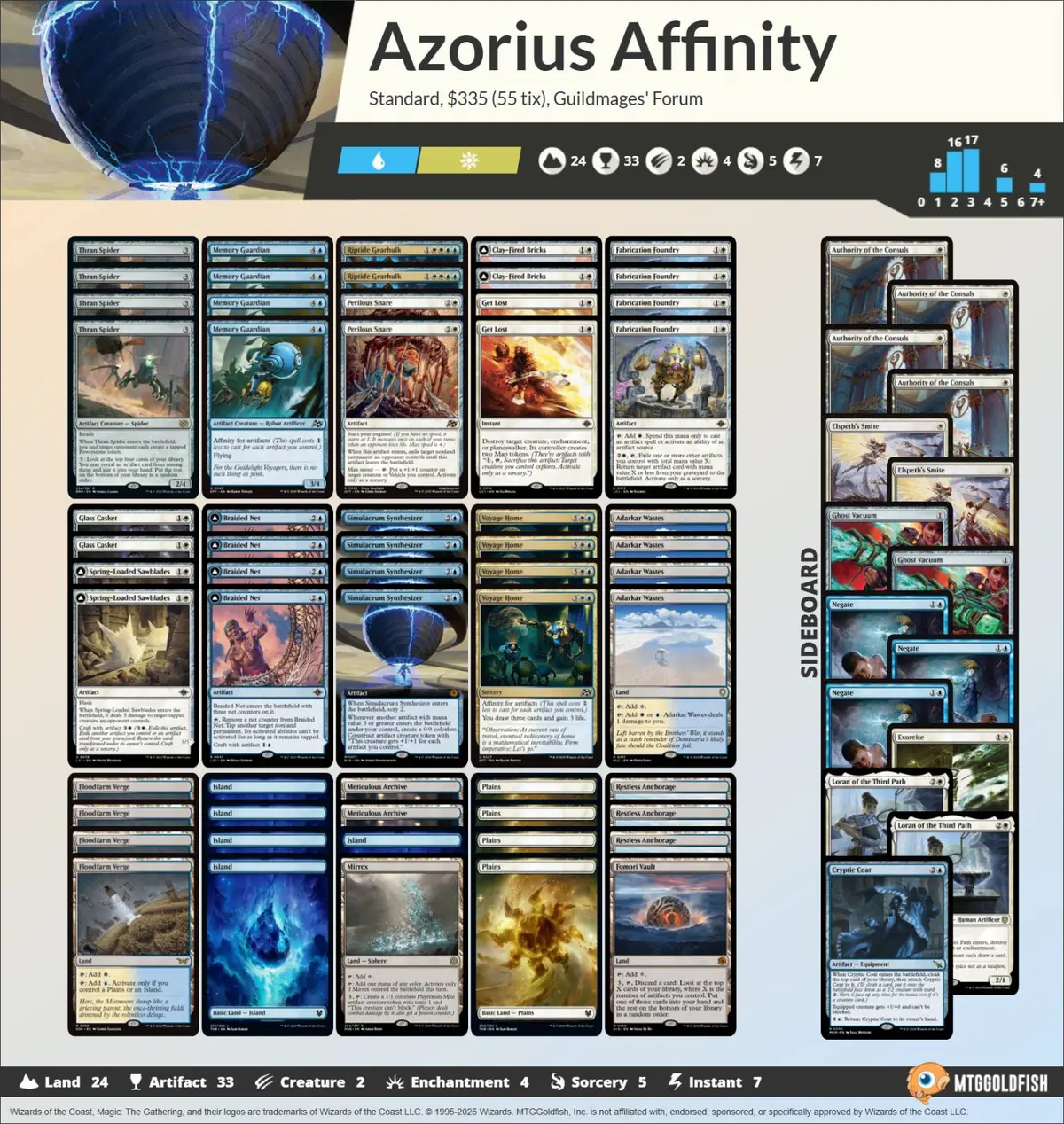
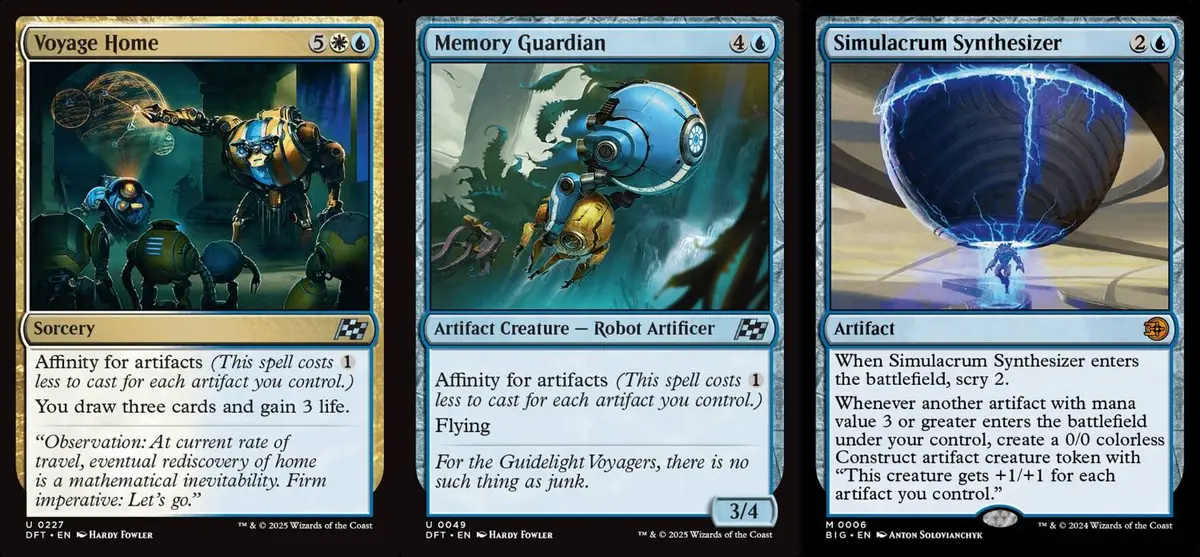
The new Affinity for Artifacts cards this time, Voyage Home and Memory Guardian, are both straightforwardly good. Although the existing artifact decks already had strong card-advantage tools like Braided Net // Braided Quipu and Mazemind Tome, they demand more mana and are easier to break through because of tempo gaps. On that point, Voyage Home refills your hand and restores life more promptly, which improves the tempo weakness to a degree. Memory Guardian is a 5-mana artifact creature with 4 toughness, which lets it dodge a bunch of common removal, and thanks to Affinity’s cost reduction it usually effectively costs just 1 mana. This gives Simulacrum Synthesizer more chances to flood the board quickly in a single turn.
But because of the Affinity, the deck also needs more artifacts on the battlefield than before. For cheap removal, for example, it plays more restrictive removal like Glass Casket, and there’s no room to mindlessly fill the deck with Get Lost first like before.
Dimir Artifact
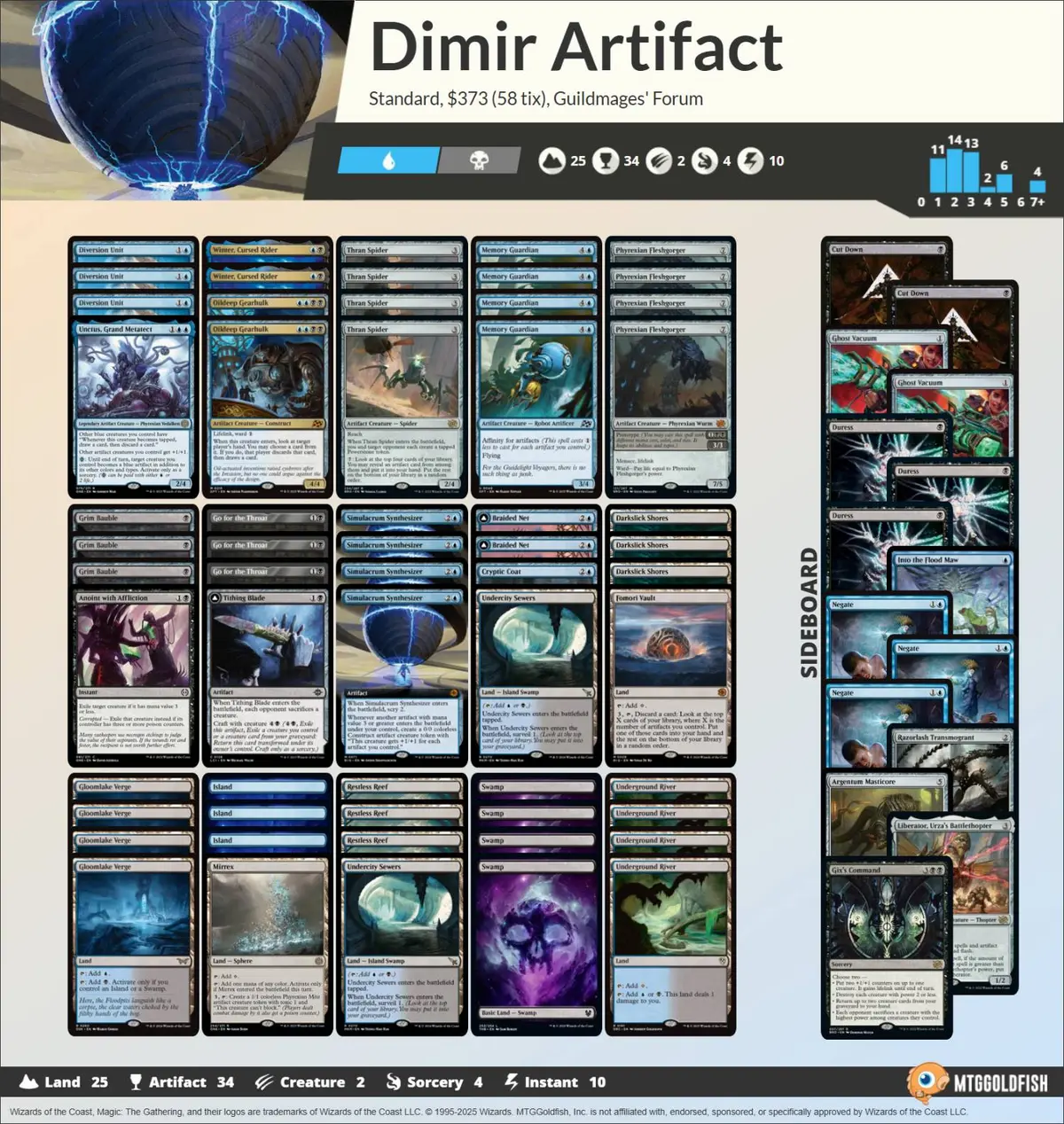
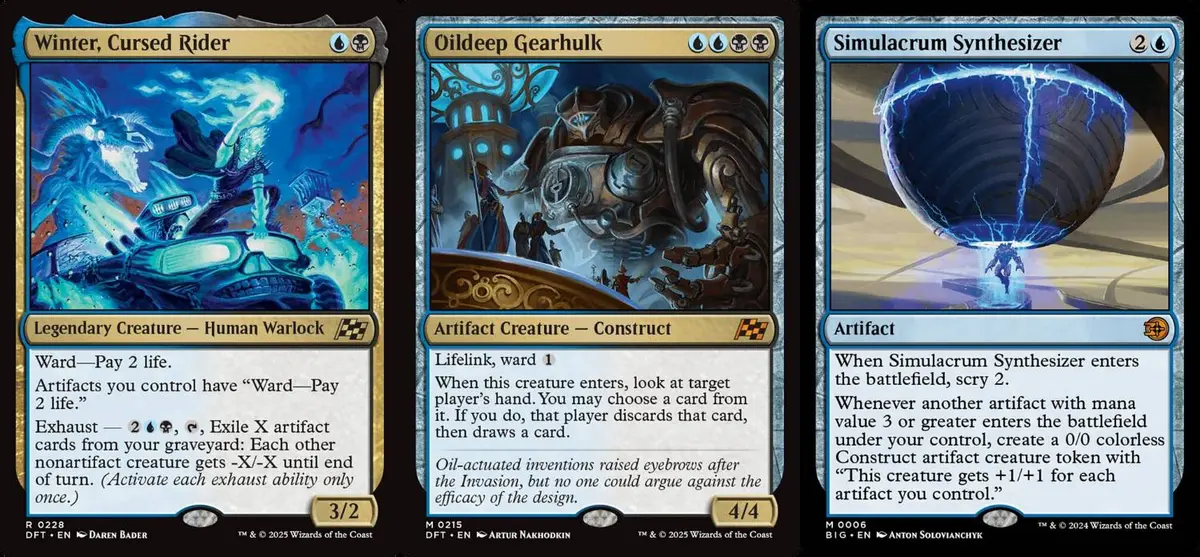
This build starts from Winter, Cursed Rider. Every artifact has ward-pay-2-life, which sounds fierce, but if you spend the early game laying down non-threatening artifacts like the two decks above, never mind how much pressure that 2 life gives. It’s hard to say whether the opponent even has a way to target your pile of noncreature artifacts and trigger ward. So you have to raise the number of artifact creatures and build in a traditional creature-midrange structure. That also gives Oildeep Gearhulk, which has nearly become a meme card, a little work, and lets us try the new two-mana flyer Diversion Unit along the way.
Incidentally, although the ward life-loss chain of Winter + Phyrexian Fleshgorger can be fierce in some life-total-trading matchups, as soon as the opponent plays a Nowhere to Run, Winter becomes almost a joke.
Golgari Insidious Roots
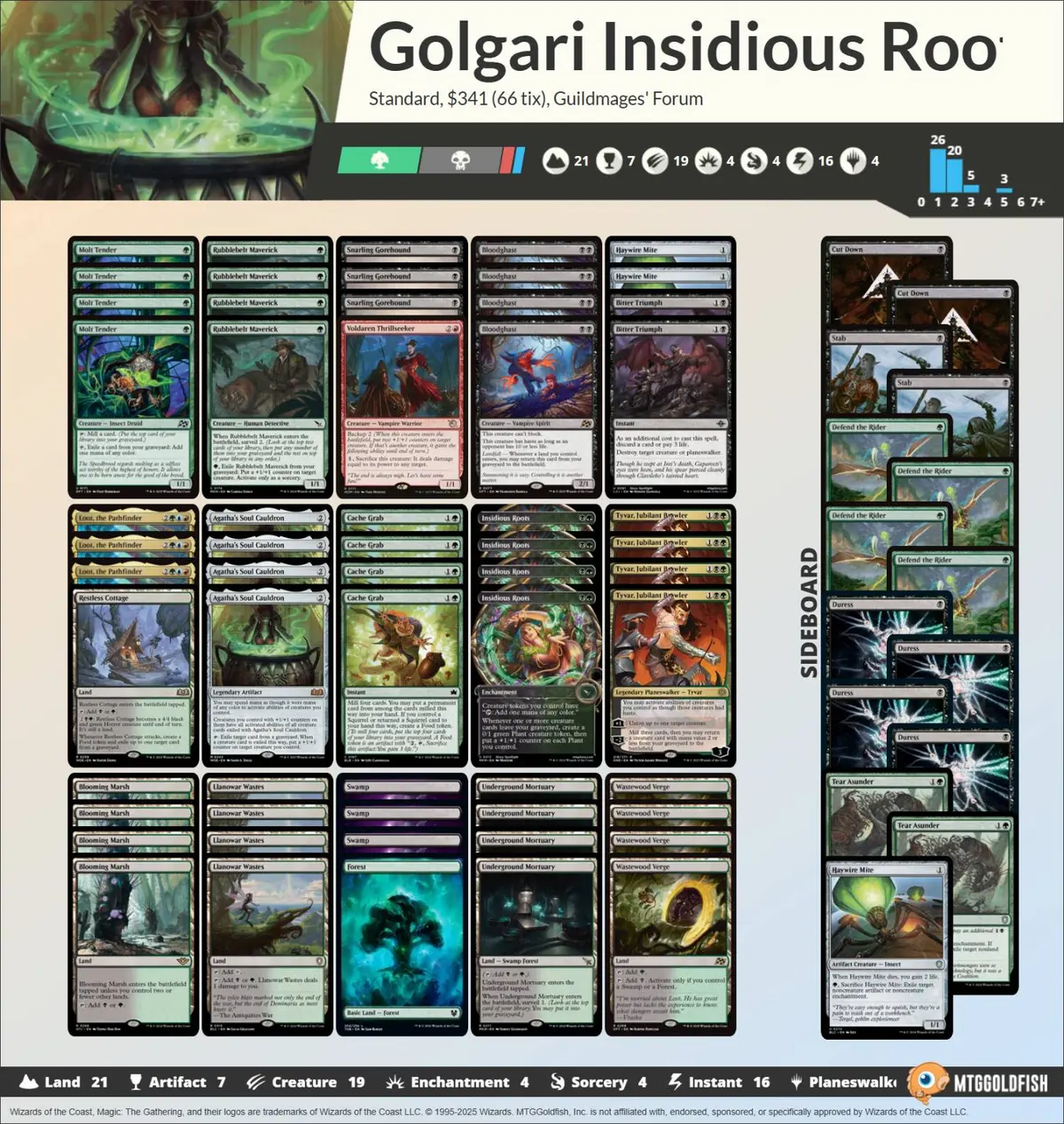
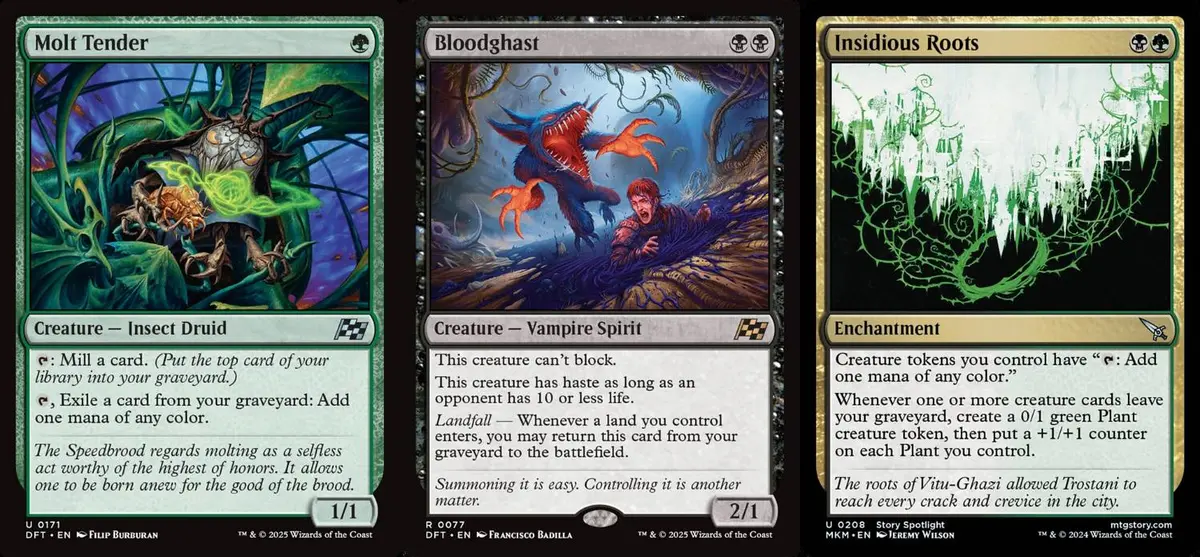
Molt Tender provides graveyard filling, graveyard removal, and ramp all in one card, which makes it a perfect fit for an Insidious Roots deck, and Bloodghast makes the graveyard filling pay off even more.
The deck’s other theme is the Agatha’s Soul Cauldron shell. Agatha’s Soul Cauldron and Insidious Roots complement each other: Insidious Roots supplies plenty of creatures with +1/+1 counters for the Cauldron, and the Cauldron supplies a trigger source for exiling from the graveyard. After eating Loot, the Pathfinder and Voldaren Thrillseeker, you can use their abilities for all kinds of fancy plays. For example, when Tyvar, Jubilant Brawler is on the battlefield, your creatures can activate abilities as though they had haste, so the plants produced by Insidious Roots can tap for one mana on the turn they enter. If the Cauldron has already eaten Voldaren Thrillseeker, you can use that one mana to Fling it at the opponent, and Loot, the Pathfinder’s ability works the same way.
Because both Agatha’s Soul Cauldron and Insidious Roots come with some color-fixing ability, plus Molt Tender as a source of mana of any color, you don’t need to worry about color screw even though the deck has no red or blue lands.
Mono Blue Merfolk
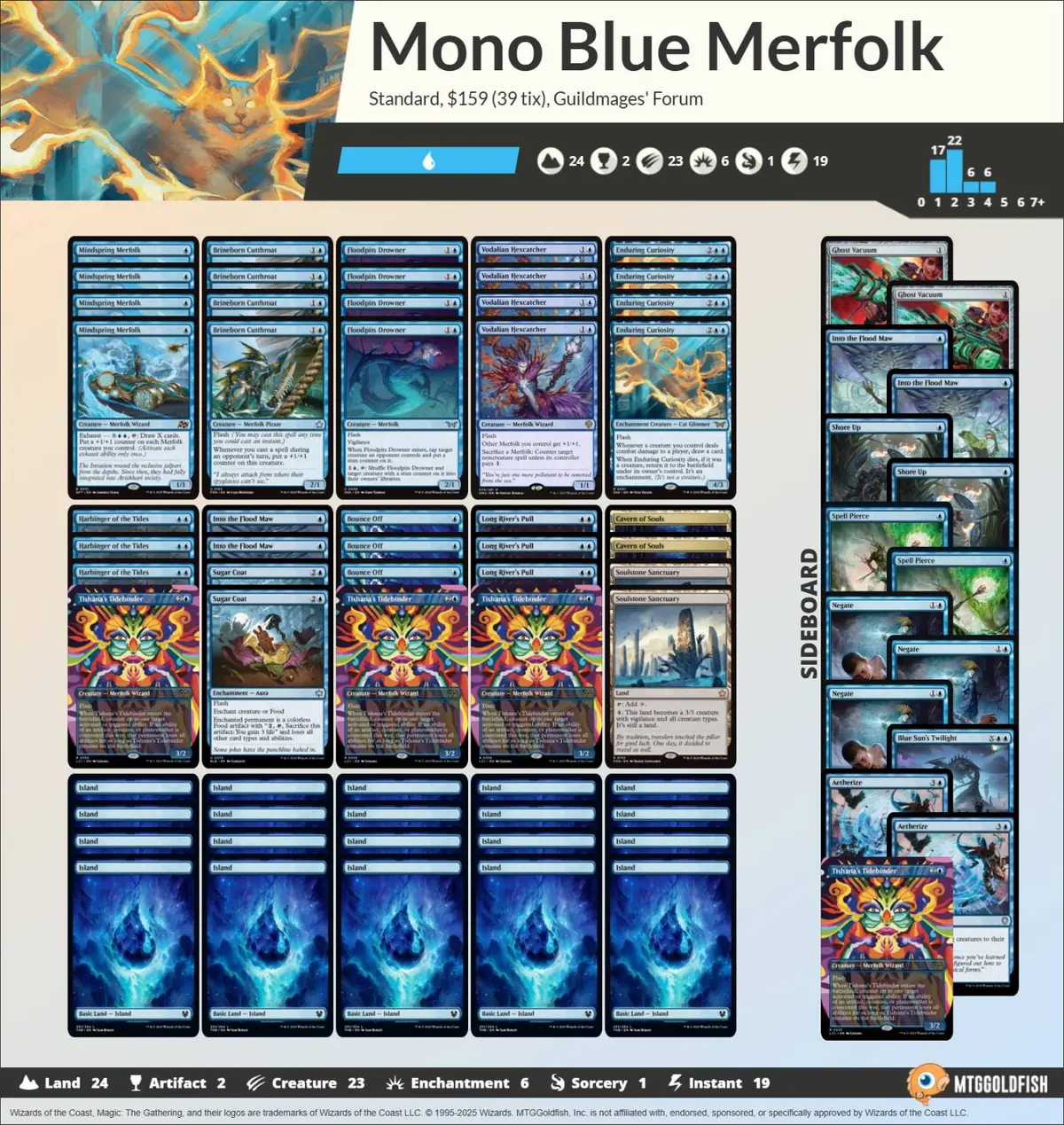
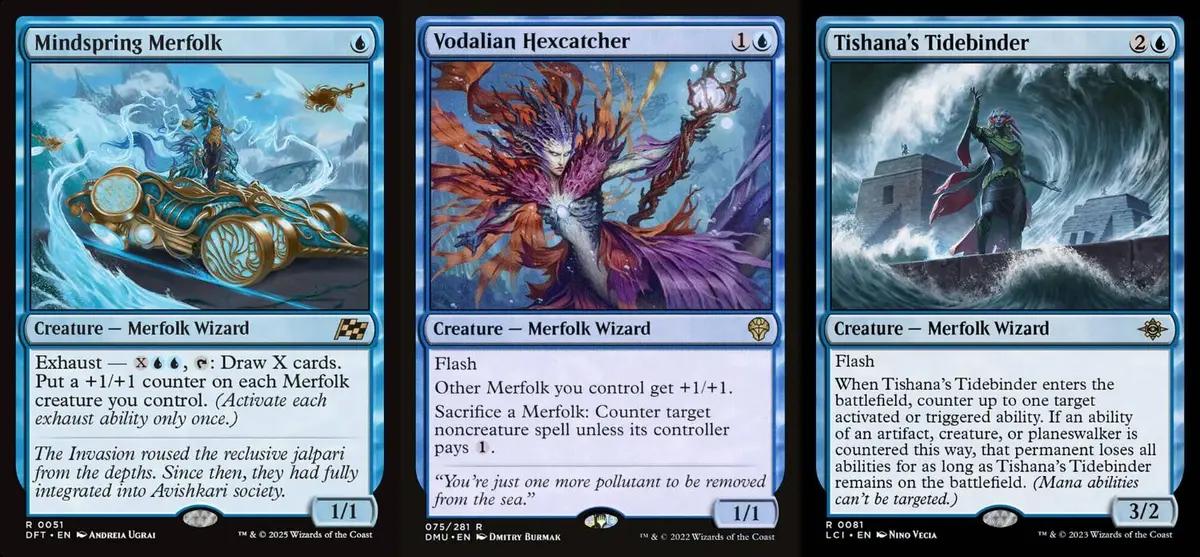
Mindspring Merfolk’s Exhaust is rare: it doesn’t just put a +1/+1 counter on itself, but on all of your Merfolk. However, it is the only Merfolk in the DFT set, so this text is a bit comical in Limited, and it needs a proper tribal build to reach its intended strength. Conveniently, the Merfolk in the current Standard card pool also lack a good curve of one-mana blue creatures, and instant-speed draw plus pump suits blue’s draw-go tempo approach better.
Orzhov Ketramose
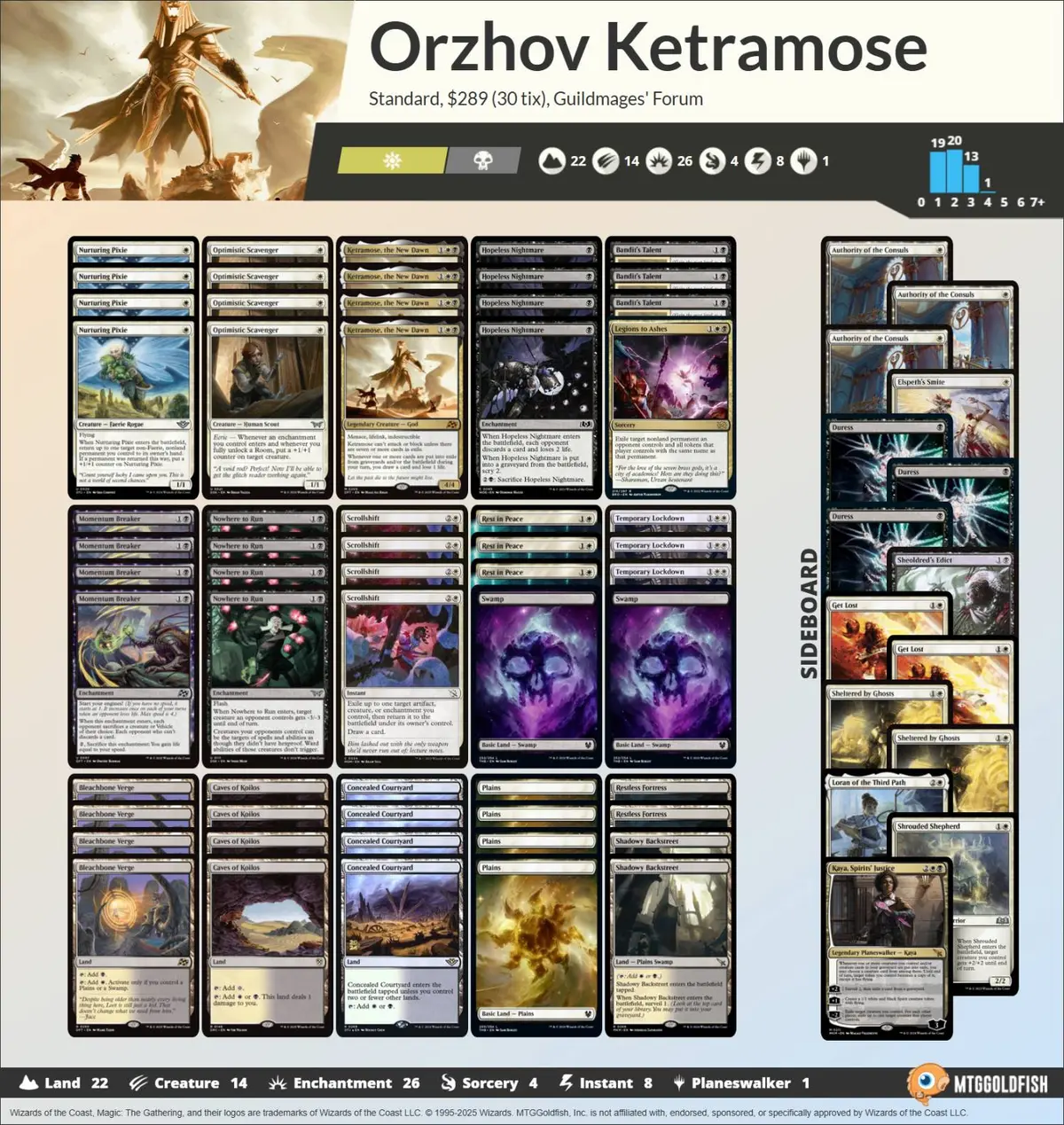
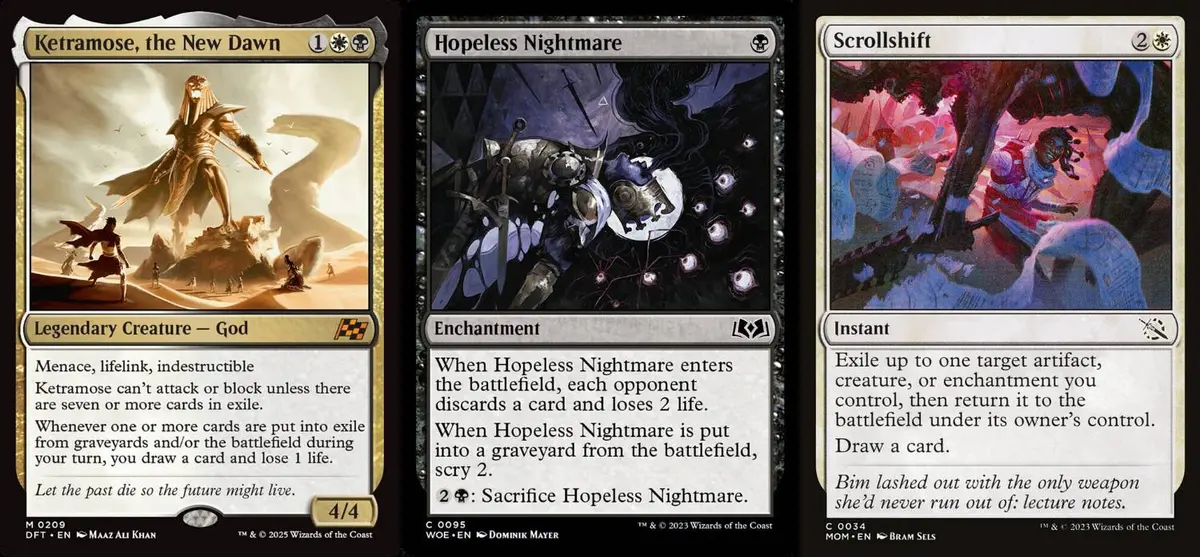
The new Orzhov god Ketramose, the New Dawn was also a heavily discussed card during previews (though the discussion focused on its pairing with Psychic Frog in Modern). This build mixes in an enchantment aggro theme led by Optimistic Scavenger and Hopeless Nightmare, and ties the two themes together with Scrollshift. The main deck includes Rest in Peace to strengthen exiling, so it can trigger Ketramose’s draw ability more often. Also, many recent decks have at least some graveyard usage or death triggers, so Rest in Peace isn’t a completely dead card when Ketramose isn’t around.
Simic Turtle
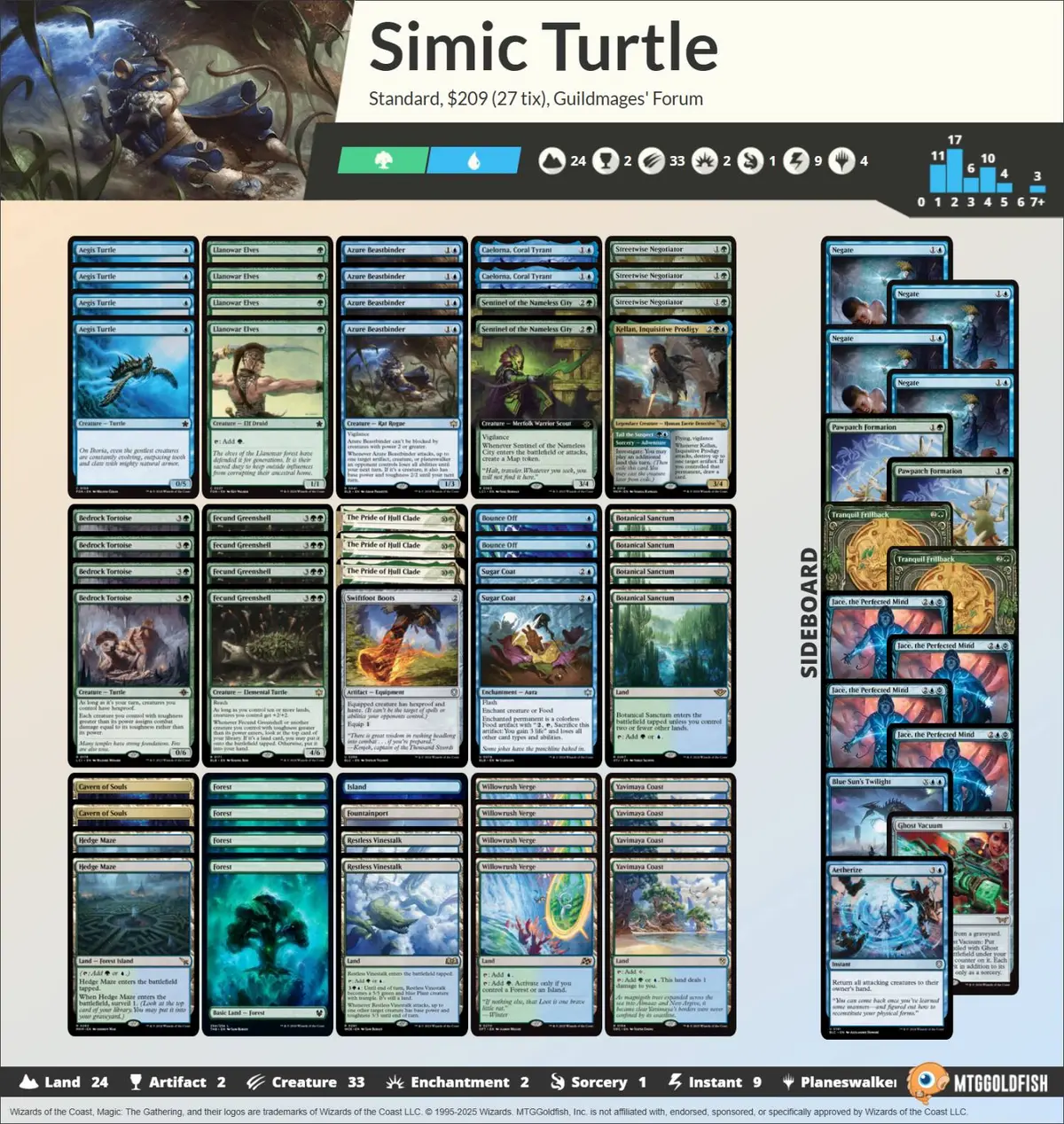
A super let-loose deck. Although it’s named Turtle, it isn’t really a pure tribal deck; Turtles just happen to make up a fair share. The key card of this build isn’t even a Turtle, but a 0/8 legendary vanilla, Caelorna, Coral Tyrant. The deck’s main damage comes from the toughness-based damage of Bedrock Tortoise and Streetwise Negotiator. Azure Beastbinder provides the precious board disruption in Simic, and since every creature in the deck has more toughness than power, it maximizes the card-advantage ability of Fecund Greenshell.
Against control or removal-heavy opponents, where our few attackers are easily dealt with but the opponent’s offense isn’t strong either, try stalling in post-board games with a pile of big-butt creatures and mill the opponent out directly with Jace, the Perfected Mind.
As a reminder, although The Pride of Hull Clade lets Defenders attack as though they didn’t have defender, it is not the common toughness-based damage effect.
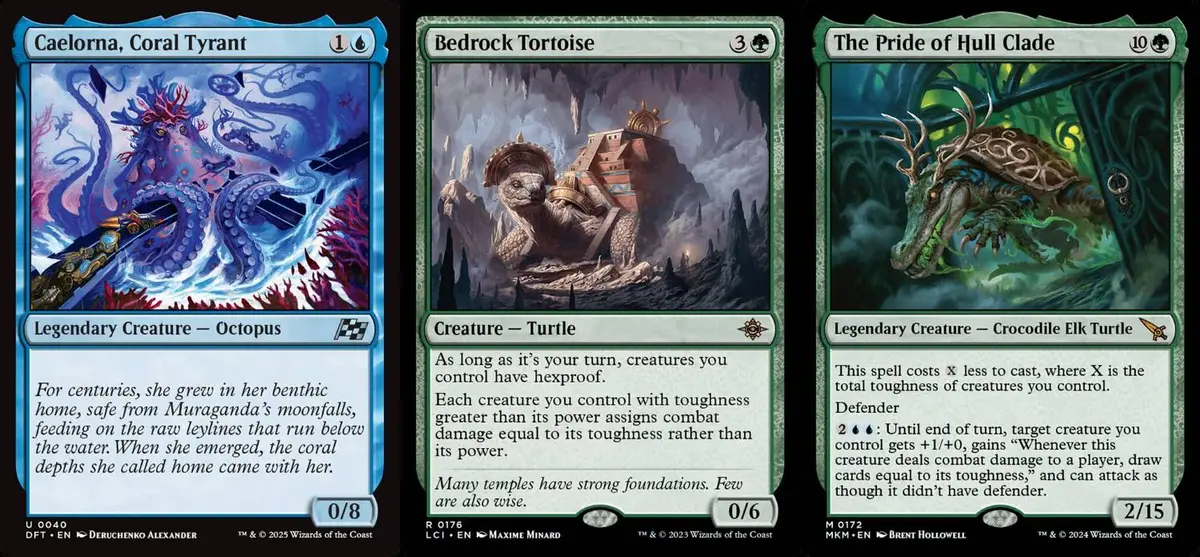
Note: Building a Turtle deck is partly a joke. Mainly I wanted to give the 0/8 octopus a chance to shine. The prototype of this deck is another Simic midrange deck built around Fecund Greenshell; click here for the decklist link.
Golgari Insect
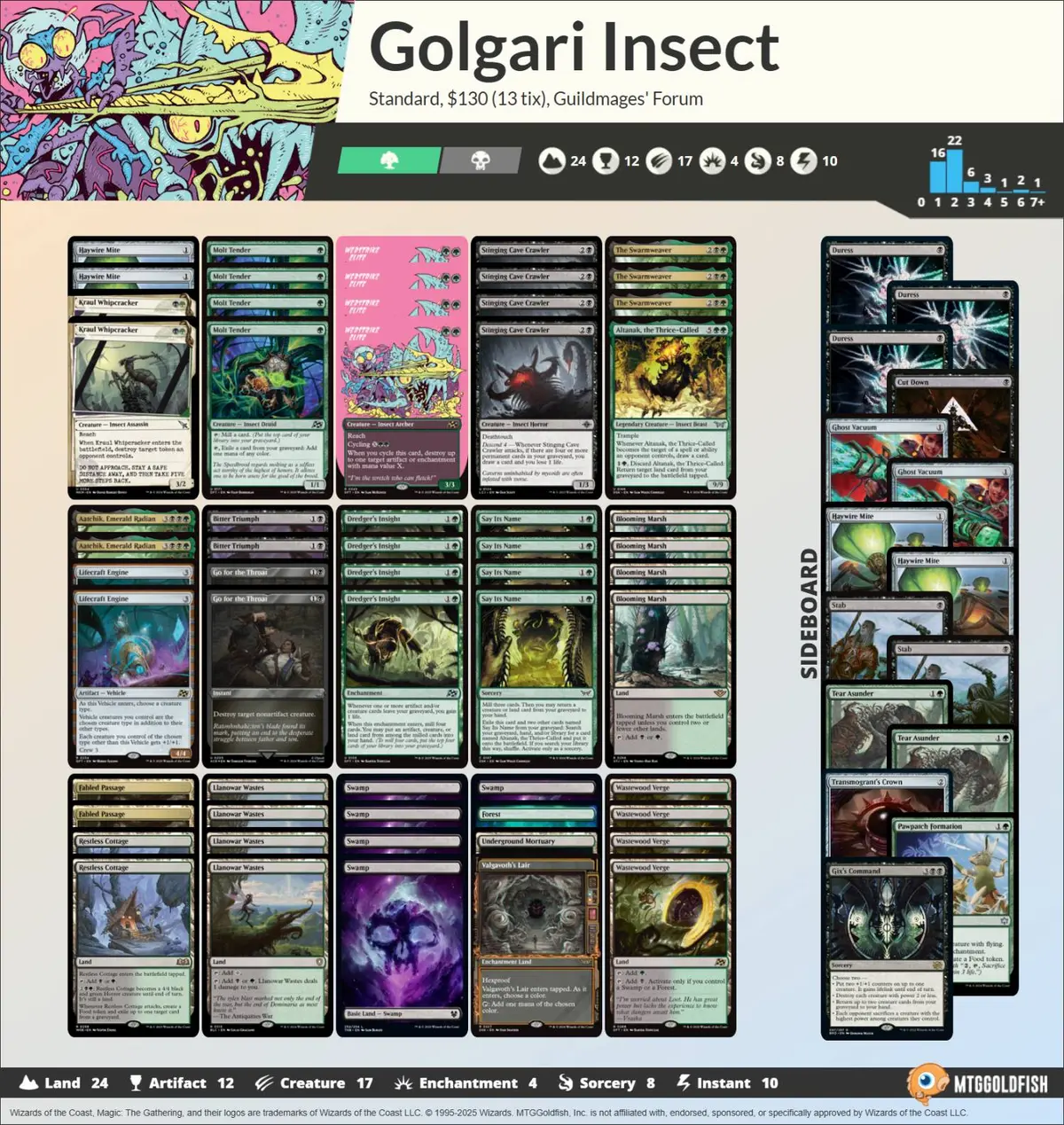
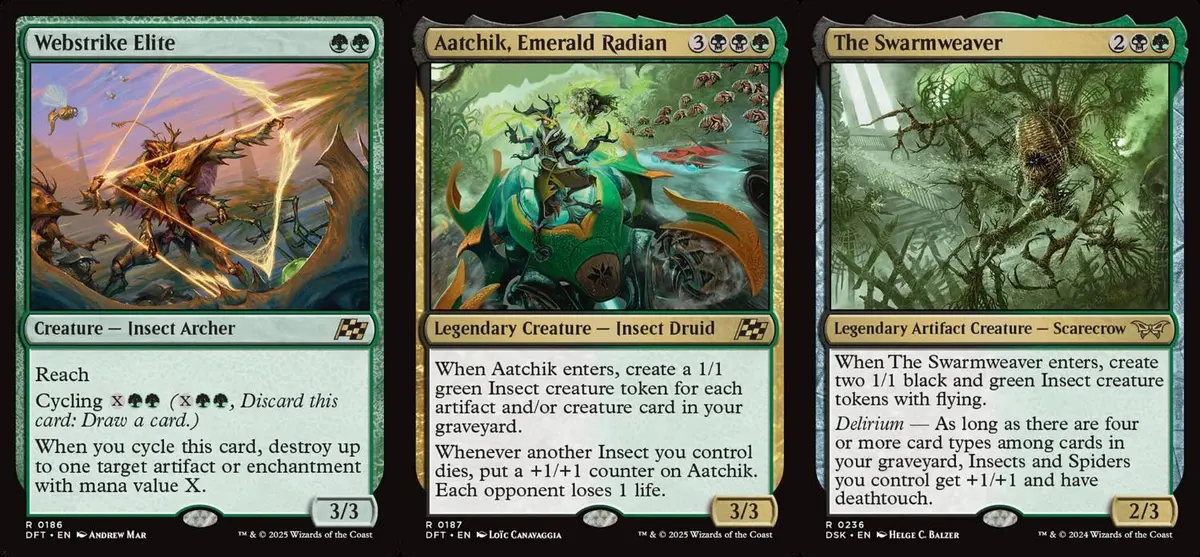
The second entry in the series of weird tribal decks. Insects can surprisingly make a tribal deck now. Although there aren’t many usable single cards, many of the payoff cards are built on filling the graveyard, so the deck still runs with a certain systematic logic.
Conclusion
With the single cards from Aetherdrift added, new ideas such as Izzet Discard Aggro and all kinds of Vehicle decks, and even existing Azorius artifacts, Golgari Insidious Roots, and Cauldron decks have all gotten new toys. Some tribes have also taken shape under the old card framework thanks to key single cards. This Standard first look is only a starting point, so let’s keep using our imagination and iterate forward!
- Title
- Aetherdrift Standard First Look
- Author
- Jru
- Created at
- February 17, 2025
- License
- This work is licensed under CC BY-NC-SA 4.0 .