Duskmourn (DSK) Limited Guide: Red

Note: This article was translated from Chinese by AI and may contain errors. Read the original Chinese version.
Duskmourn: House of Horror (DSK) holds its prerelease events on September 20, 2024, and officially launches a week later on September 27, 2024. Want to know more about how each card rates in Limited and how to use it? Then check out this series of DSK Limited guides!
- For the mechanics, see this article: Duskmourn Mechanics Explained
- For a first look at the Limited archetypes, see this article: Duskmourn Limited Preliminary Look
Grading Scale
5.0: Always take it
4.5: Always take it if you are in the right colors
4.0: Worth a first pick
3.5: Strong enough, but not necessarily a first pick
3.0: Above average (you will really want it in your final deck)
2.5: Average, maybe around the 6th or 7th pick in a draft
2.0 to 1.0: Below average (you would rather not play it than play it)
0.5 to 0.0: Unplayable (basically never play it; it will only help you lose)
Card Ratings

Score: 2.5
Comment: Can be used to fix your colors and enable delirium, and it’s a decent threat in the late game too.

Score: 3.0
Comment: Even at four mana to deal 5 damage it’s well worth playing, but sacrificing an enchantment is a rather steep cost, so I recommend just treating it as a four-mana spell on the curve. Changing “dies” to “exile” can occasionally wreck your opponent’s game plan.

Score: 2.5
Comment: Same as above. The cost of sacrificing an enchantment/creature is not small, and if you can’t do it, the ETB body fails to make the grade.

Score: 3.0
Comment: Dealing 3 on entering is already strong, and it can still make an impact in the late game. Never mind the body itself: every creature has a chance to become a high-power threat.
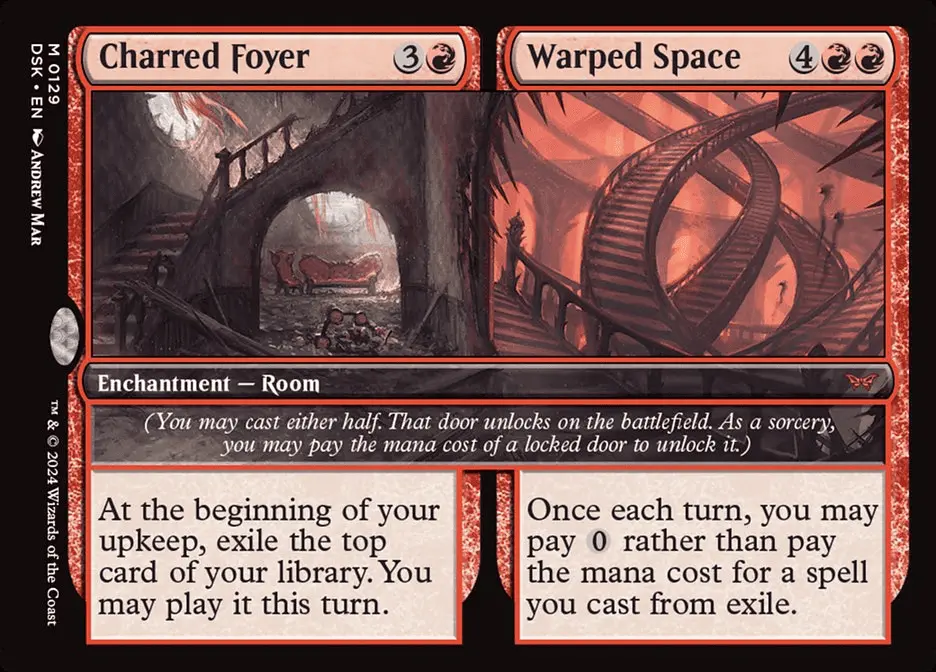
Score: 2.0
Comment: It earns value too slowly, and it isn’t even guaranteed to earn you cards.

Score: 2.5
Comment: A great creature to sacrifice, and it has a chance to bring resources back.

Score: 2.0
Comment: Passing with nothing on turn four is a weakness. Copying two or more spells is a big gain, but given that much of this set’s removal comes as enchantments, you may not have that many instants / sorceries to use it on.
Author’s extra comment:
Score: 3.0
Comment: The team’s average score is 2.0, but I think its value is higher and it deserves a 3.0. The drawback can basically be ignored in Limited, and you start profiting as soon as you copy a spell twice.

Score: 3.0
Comment: Great body, has evasion, and can refill your resources. Everything red wants is on this creature.

Score: 3.5
Comment: The ability is ferocious. Whether or not it gets removed, it deals a huge amount of damage, and when it dies it even returns to the battlefield, making it harder to remove.

Score: 2.0
Comment: 2 toughness isn’t great, but its upside is solid trading ability. To me it feels a bit like a fight, except your opponent chooses what it fights.

Score: 3.0
Comment: It’s a dual type, so it helps enable delirium, and the payoff once you reach delirium is frighteningly high.

Score: 3.5
Comment: It improves both the speed and the consistency of delirium, and the extra combat phase after reaching delirium is a powerful ability that can easily win the game.
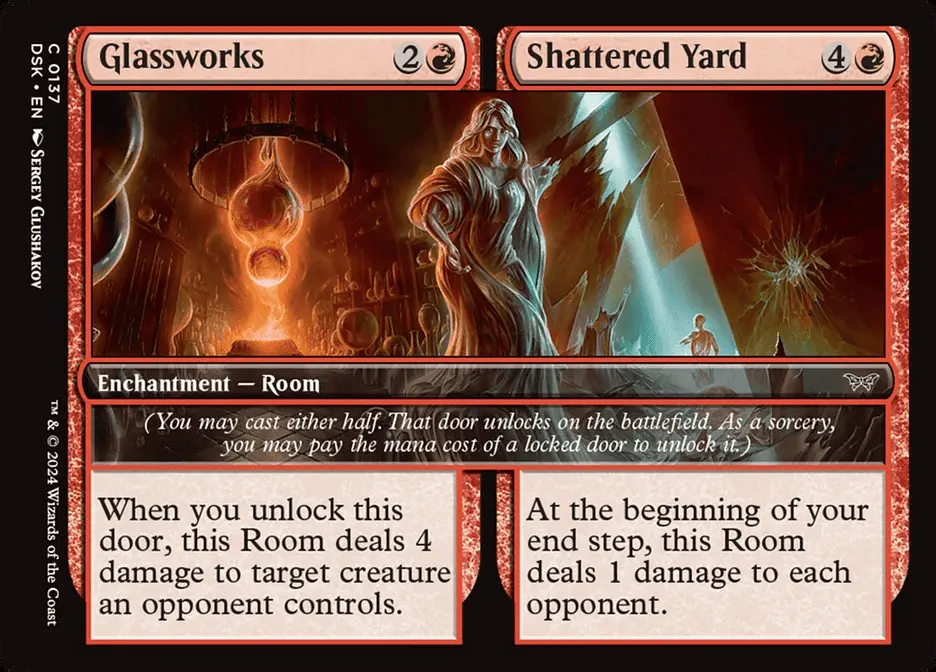
Score: 3.0
Comment: A sorcery-speed burn spell for 4, and once the other half unlocks in later turns, it becomes a clock your opponent cannot ignore.

Score: 2.5
Comment: Rummaging matters more in this set than usual (for delirium), but it’s a pity that this one’s damage can’t hit creatures.

Score: 3.0
Comment: Early on it’s a vanilla body, but in the mid to late game it transforms into a high-power attacker with built-in evasion, putting heavy pressure on your opponent without needing to force delirium.

Score: 2.0
Comment: The high cost is a real flaw, but it has a chance to earn resources. If your deck will go long, consider picking up one.

Score: 2.5
Comment: Without an enchantment to pair it with, the body only barely meets the bar, but even then it has a chance to get a two-for-one. A card that costs you tempo but pays off richly.

Score: 3.0
Comment: Beyond enabling delirium, simply cycling away one card from your hand each turn already makes this a passable card.

Score: 0.5
Comment: A card that has been played to the point of breaking in constructed formats, but is completely unplayable in Limited.

Score: 3.0
Comment: Note that its ability triggers without it having to attack. Combined with excellent defense, it’s a powerful creature that does both offense and defense.

Score: 3.0
Comment: You can pair it with creatures that have enter-the-battlefield abilities to farm their abilities repeatedly, or attack more aggressively, since if it gets blocked you can just exile it and recast it. But don’t forget that the effect only lasts for this turn, so keep your mana up and use it after the combat phase!

Score: 5.0
Comment: Inferno Titan ! If you cast it with impending 4, you have to wait until turn eight for it to become a creature, so casting it for six mana will generally be more threatening.
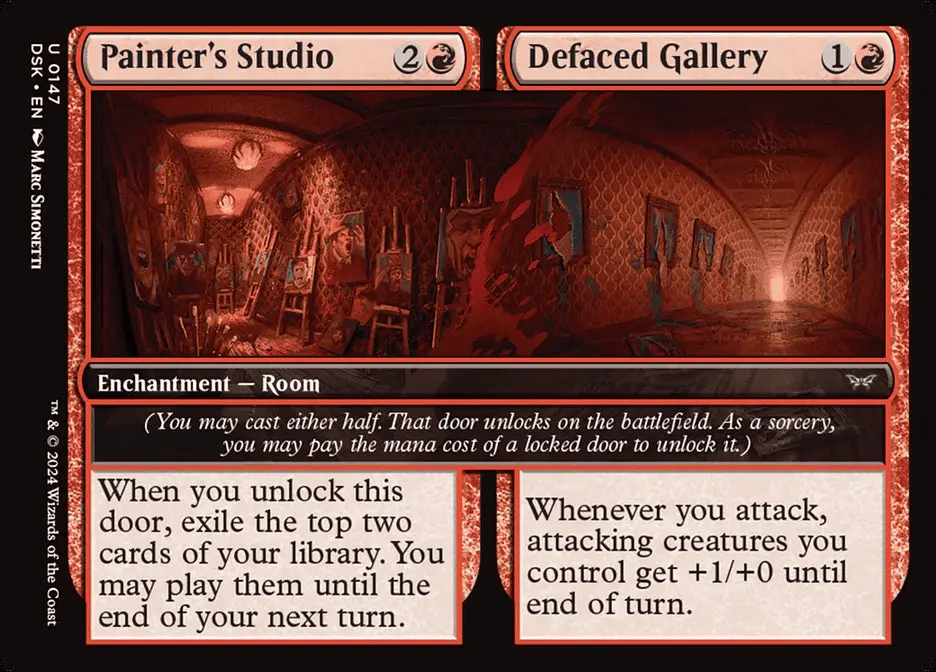
Score: 3.5
Comment: The board damage provided by the right side is considerable, and the left room provides resources. It’s the card an aggro deck that goes wide most wants to see.

Score: 2.5
Comment: The dual type helps enable delirium, it produces a Treasure when it dies to let you ramp, and the three power gives you the means to trade up.

Score: 2.0
Comment: It conflicts with most red game plans, but if you’re playing a slow deck, you will definitely want multiple copies.

Score: 3.0
Comment: It works very well with manifest dread: give it “can’t be blocked” first, then flip it face up after it connects for damage your opponent never saw coming.

Score: 2.5
Comment: Consider it only if your deck has enough Rooms; otherwise one point of power has a negligible effect on the board.

Score: 3.0
Comment: A two-for-one ability is always good in Limited! And four toughness is a sweet spot in this environment, dodging a lot of burn.

Score: 3.5
Comment: The color requirement is heavy but the card’s merits outweigh its flaws. The ability slowly kills your opponent, and first strike on your own turn keeps you from losing ground in early trades.

Score: 2.5
Comment: At first glance it looks a bit like Diversion Specialist, both being high-power creatures that also refill resources, but for decks that attack proactively, the reach ability is a bit of a letdown.

Score: 4.0
Comment: Its value as removal that can hit multiple creatures alone earns a high score. There are plenty of red burn spells in this set, and once you meet the delirium condition, it transforms them into something qualitatively better.

Score: 3.0
Comment: Dealing 3 at instant speed for two mana already gives you a reason to play it in your deck, not to mention the strategic value of changing “dies” to “exile”.

Score: 4.5
Comment: Boros Reckoner is back too! Just treat the life gain as free; there’s no Food to eat in this set. You can also consider adding power to your opponent’s creature when it gets blocked, for a bank-shot kind of effect.
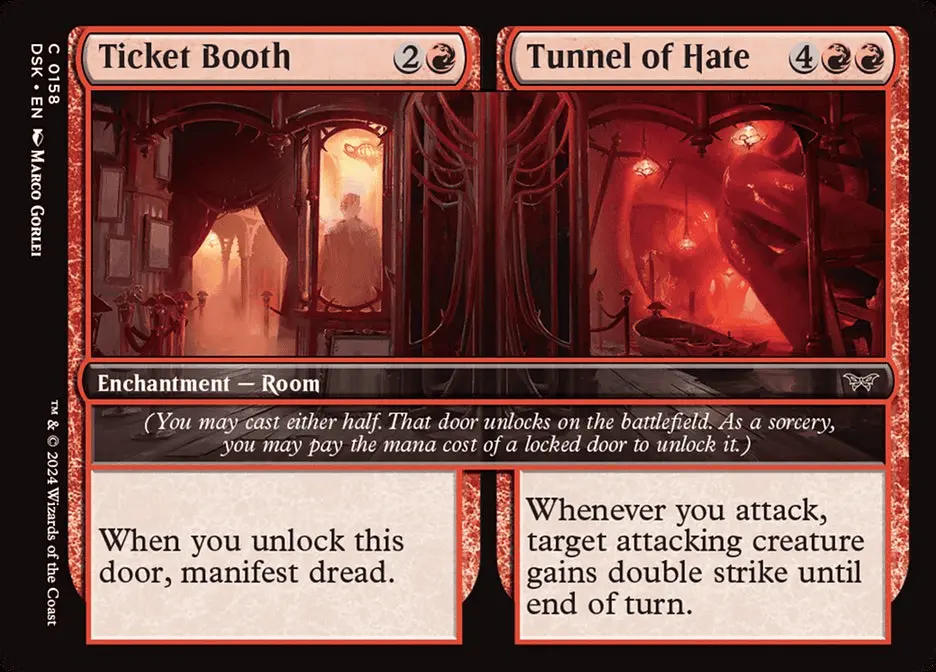
Score: 2.0
Comment: Paying three for a 2/2 costs too much tempo, and while the effect on the right side is powerful, it costs quite a lot.

Score: 2.0
Comment: It’s a shame that it can’t hit the creature you most want to remove. It’s only good when your opponent has a creature of similar size on the board, and it’s especially awkward when your opponent has only a single creature.

Score: 2.5
Comment: A great combat trick that guarantees damage next turn even if the creature dies. It’s also a good card for enabling delirium.

Score: 3.0
Comment: Most of its value comes from the second mode, but the first and third are actually pretty good too. It’s a targeted-hate card worth playing in your main deck.

Score: 2.5
Comment: Colors other than black lack good sacrifice sources, so it will perform very well in a red-black deck.

Score: 2.5
Comment: This set has manifest dread to trigger its pump ability frequently, making it very strong on offense.

Score: 2.0
Comment: It adds too little power, which greatly reduces its flexibility, and you won’t want to use it at all before reaching delirium.

Score: 3.5
Comment: After a sweep it can refill the resources you lost, but the downside is also obvious: it’s a headache if the target creature gets removed in response.
Conclusion
Compared with the heavily tribal themes of Bloomburrow, in this set single-card strength matters somewhat more than color-pair themes in Limited. Staying flexible and always being ready to switch or jump colors will be a very important lesson for Duskmourn drafts.
- Title
- Duskmourn (DSK) Limited Guide: Red
- Author
- GY_Player
- Created at
- September 19, 2024
- License
- This work is licensed under CC BY-NC-SA 4.0 .