A First Look at Duskmourn Standard

Note: This article was translated from Chinese by AI and may contain errors. Read the original Chinese version.
Deck Introductions
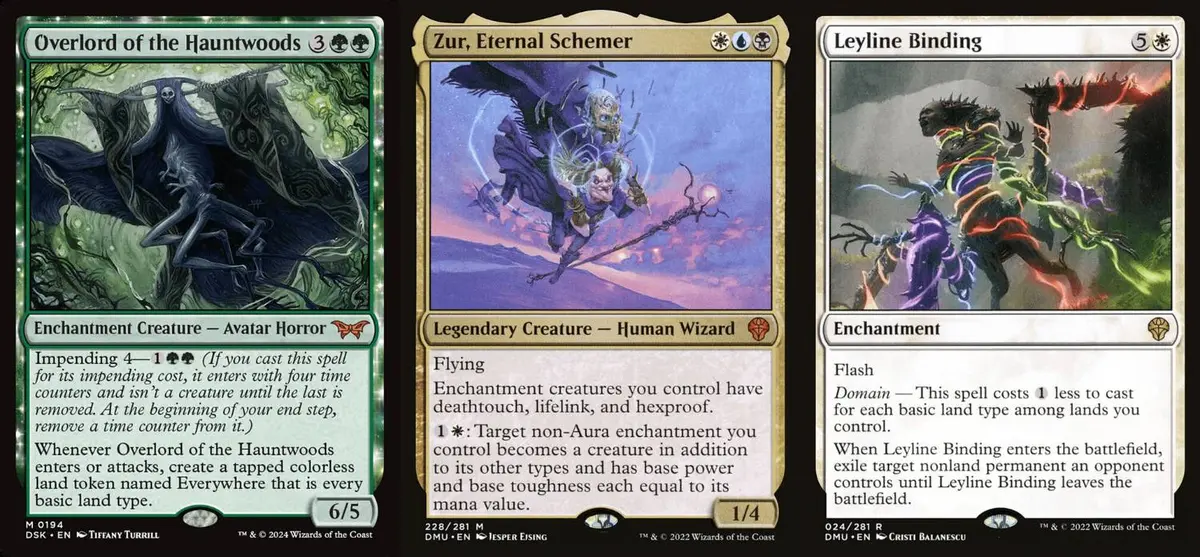
Zur Domain
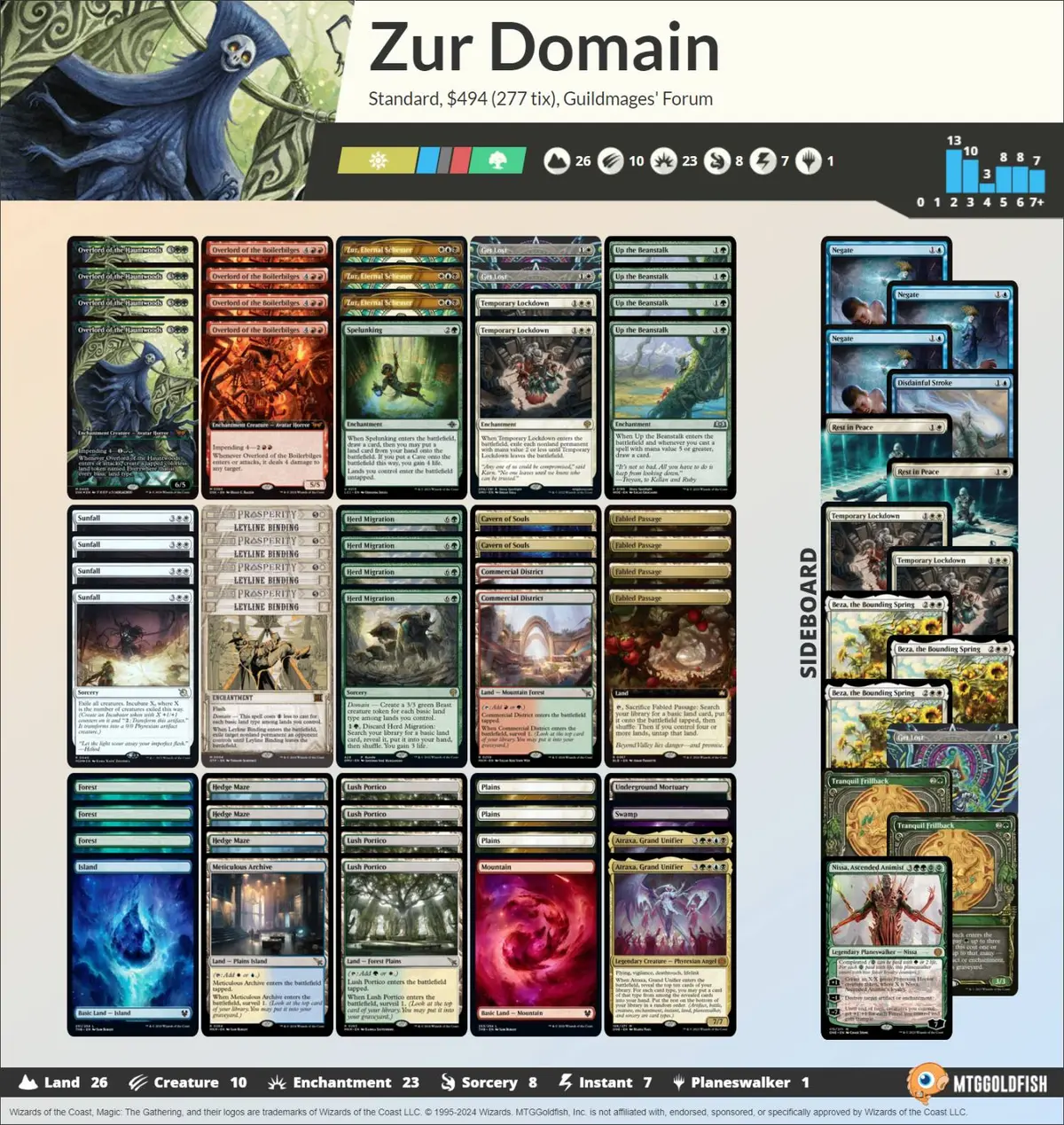
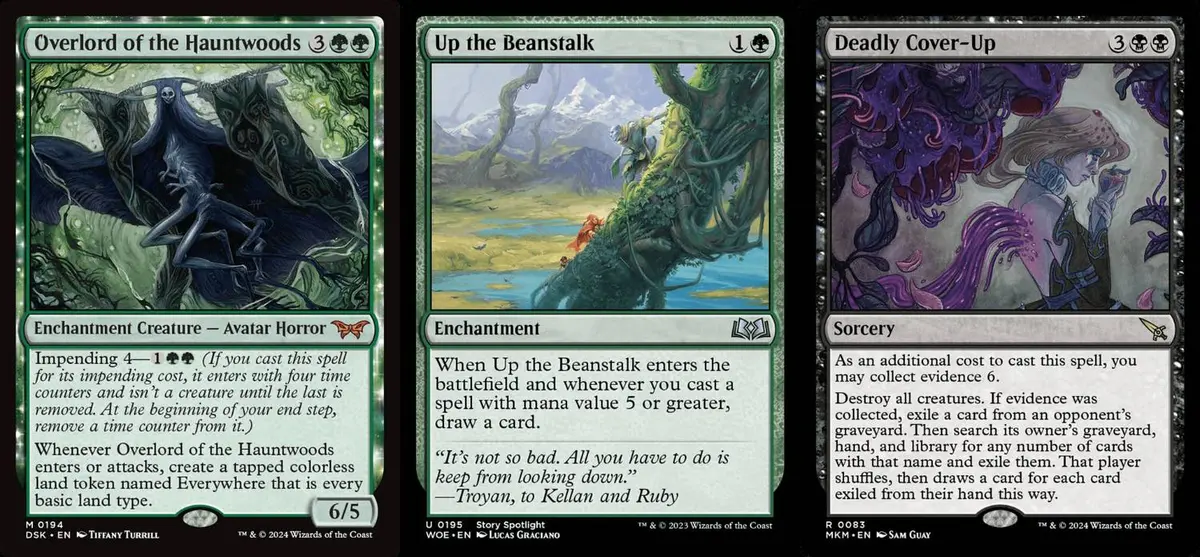
The Overlords’ impending is an alternative cost. It only changes what you pay to cast the spell and does not change the spell’s own mana value, so when you impend Overlord of the Hauntwoods for 3 or Overlord of the Boilerbilges for 4, Up the Beanstalk can still draw a card.
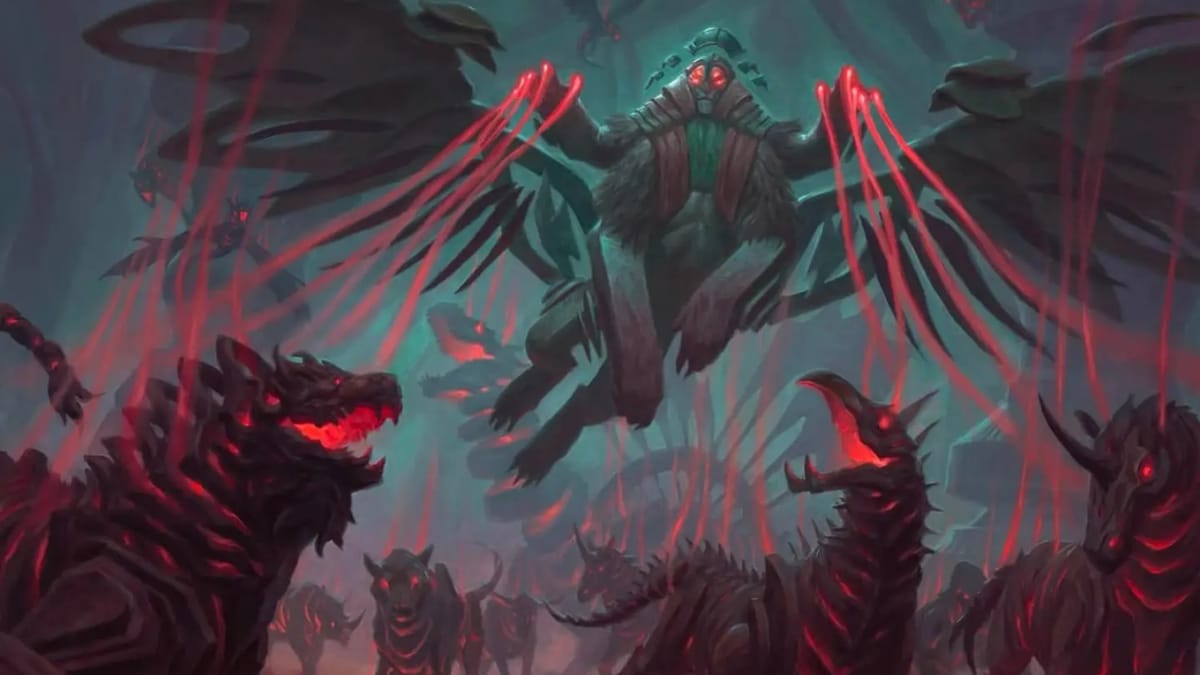
The token lands made by Overlord of the Hauntwoods have every basic land type, so a single card unlocks Domain. It doesn’t matter that an impending Overlord isn’t a creature, because Zur, the Eternal Schemer can turn them straight into creatures to start beating down.
This time I tried swapping Archangel of Wrath for Overlord of the Boilerbilges, which pairs better with both Beanstalk and Zur. Zur can give lifelink to the enchantment creatures, which also fills the life-gain job originally handled by Archangel of Wrath.
Mono White Token
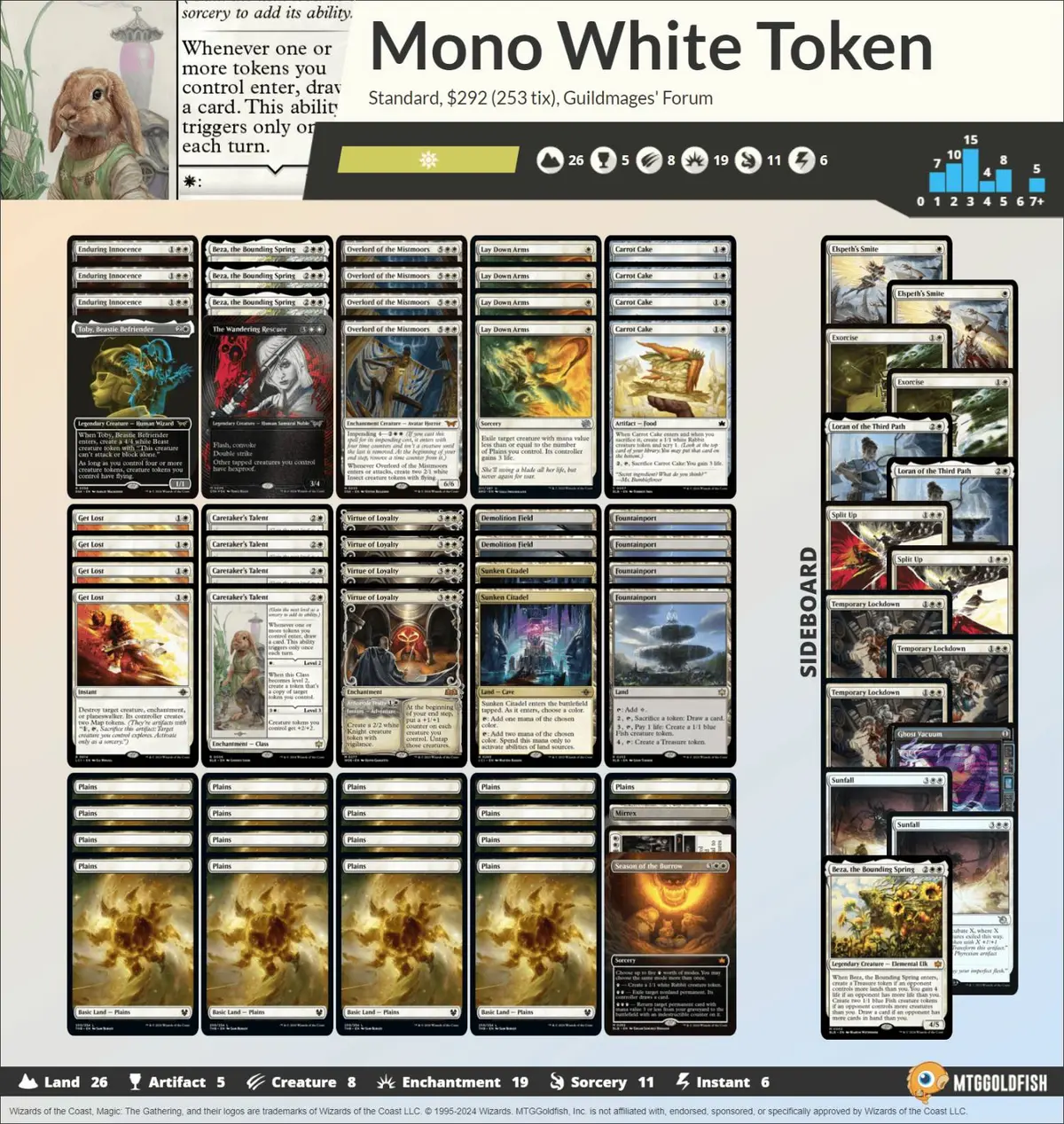
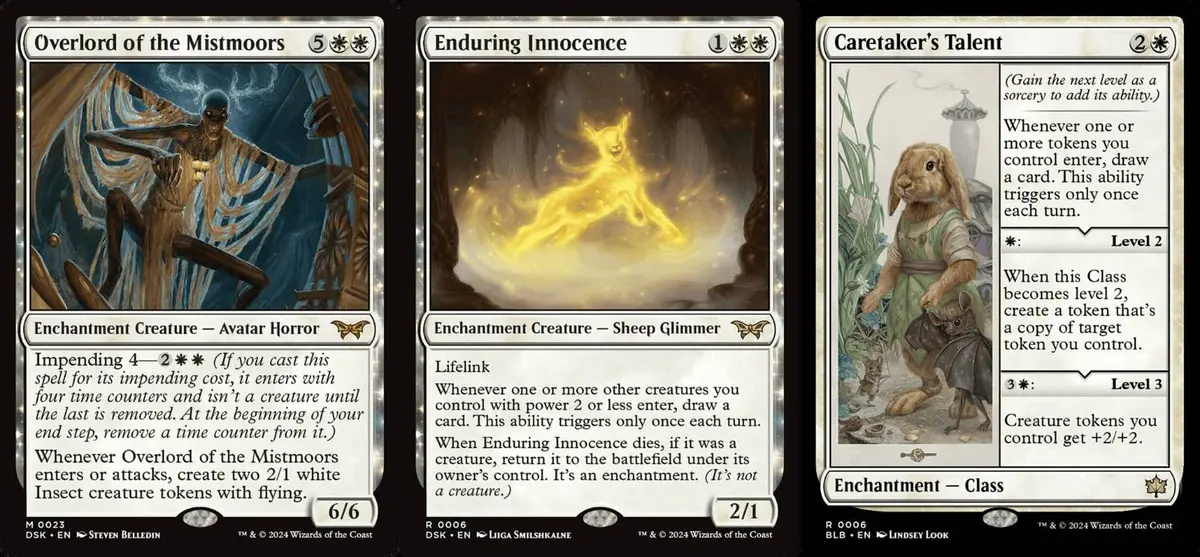
Since Caretaker’s Talent was born, white has suddenly replaced blue as the color most associated with drawing cards. Enduring Innocence keeps strengthening the existing mode of operation, and Overlord of the Mistmoors provides another trigger source for the draw engine, though which is better, it or Archangel Elspeth, remains for time to prove.
Also, white-based token control may be the best workplace for The Wandering Rescuer. Traditional convoke aggro is full of small individual creatures not worth protecting, and has no tempo to spare for flashing in a convoke creature to protect them. Ordinary midrange creatures are valuable enough, but may not have the mana to flash her in. So a token control deck that often stands behind a row of creatures without attacking aggressively is actually where the Rescuer shines. Suddenly flashing in a 3/4 double striker can easily make the opponent’s attacking creatures hit a wall.
Mono Black Aggro
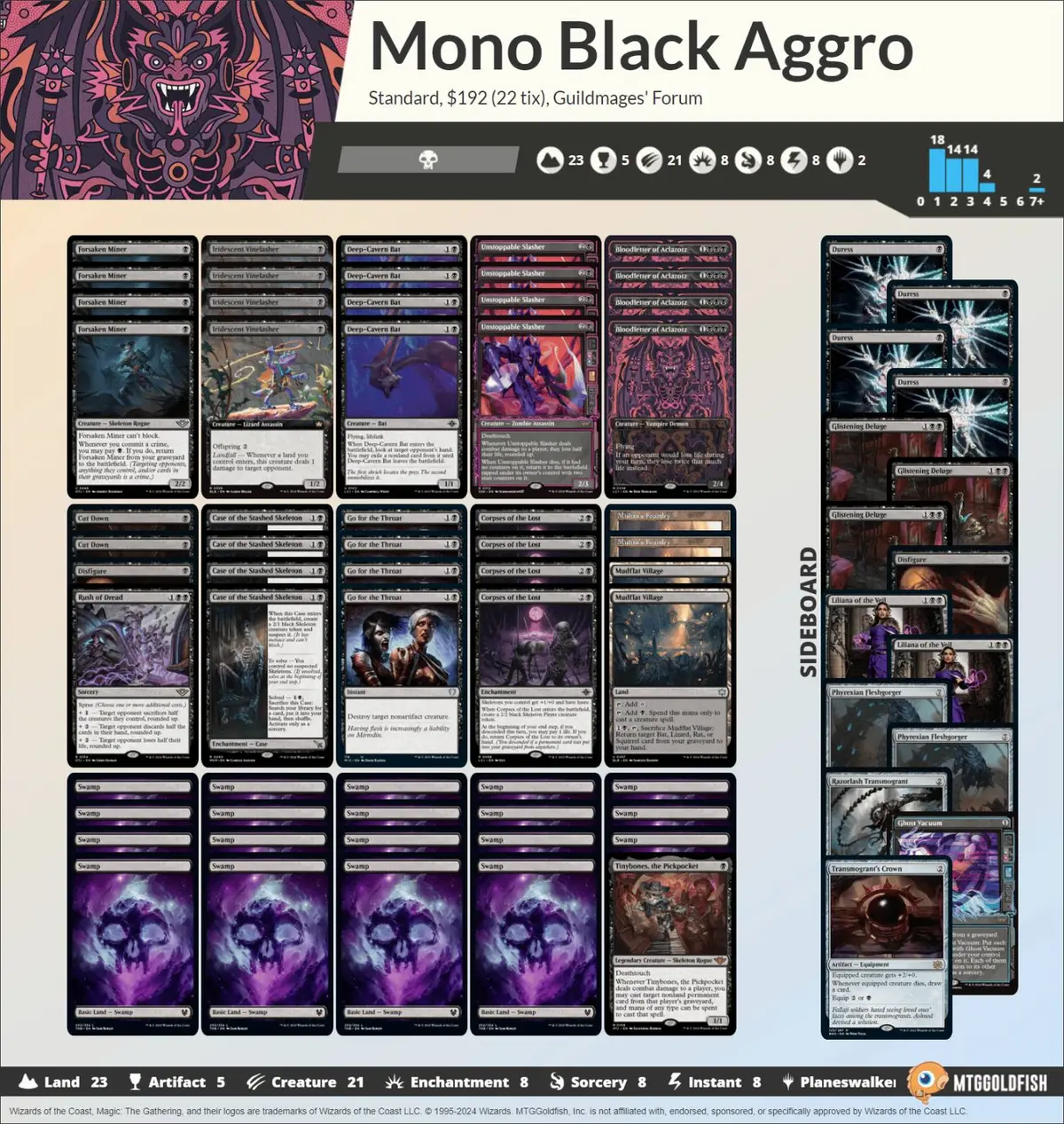
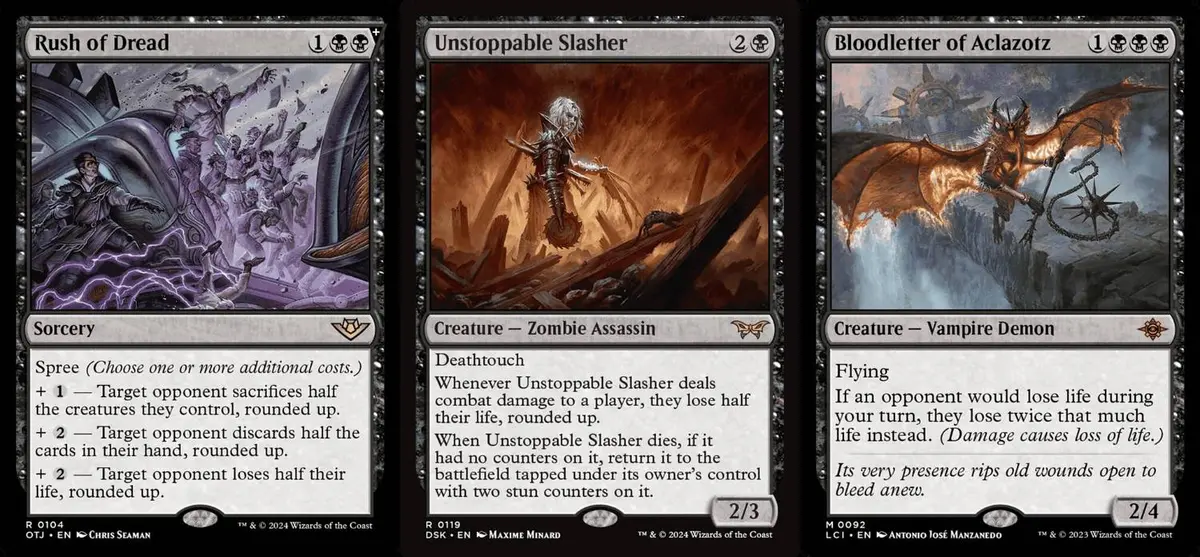
Deck summary: your opponent asks you to pay twice half your life total ❤️
A turn-three Unstoppable Slasher into a turn-four Bloodletter of Aclazotz is a beautiful curve. However, contrary to its name, Unstoppable Slasher is actually very easy to block, so there’s no need to run it as a dedicated combo piece. Just treat it as a Plan B bolted onto a life-grabbing aggressive deck. When every attacker puts heavy pressure on the opponent to deal with, you can force the opponent into unfavorable trades until they run out of resources, or crush them in one go on the tempo side. Treating Unstoppable Slasher as a high-power attacker with multiple lives works better.
Mono Red Aggro
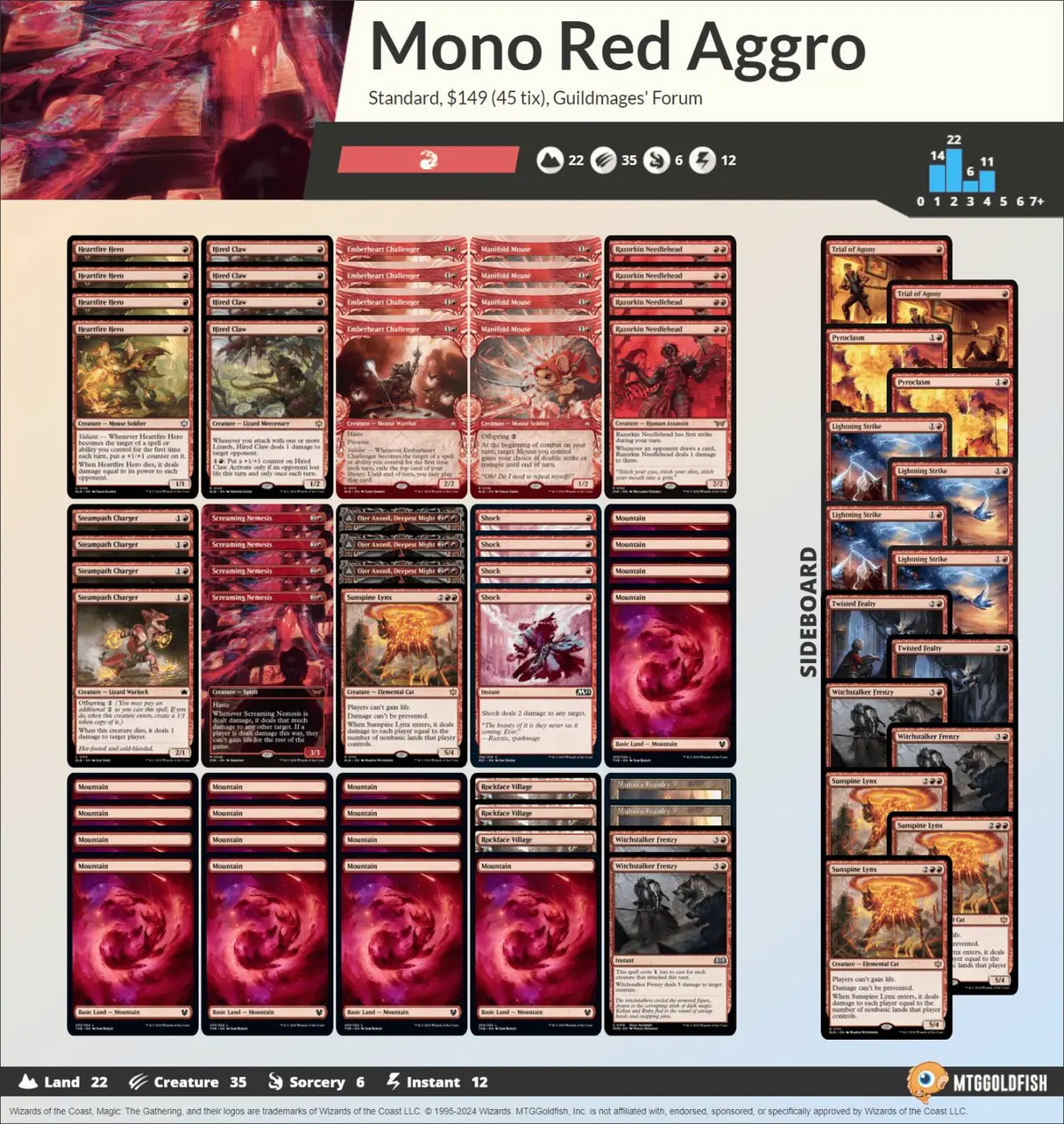
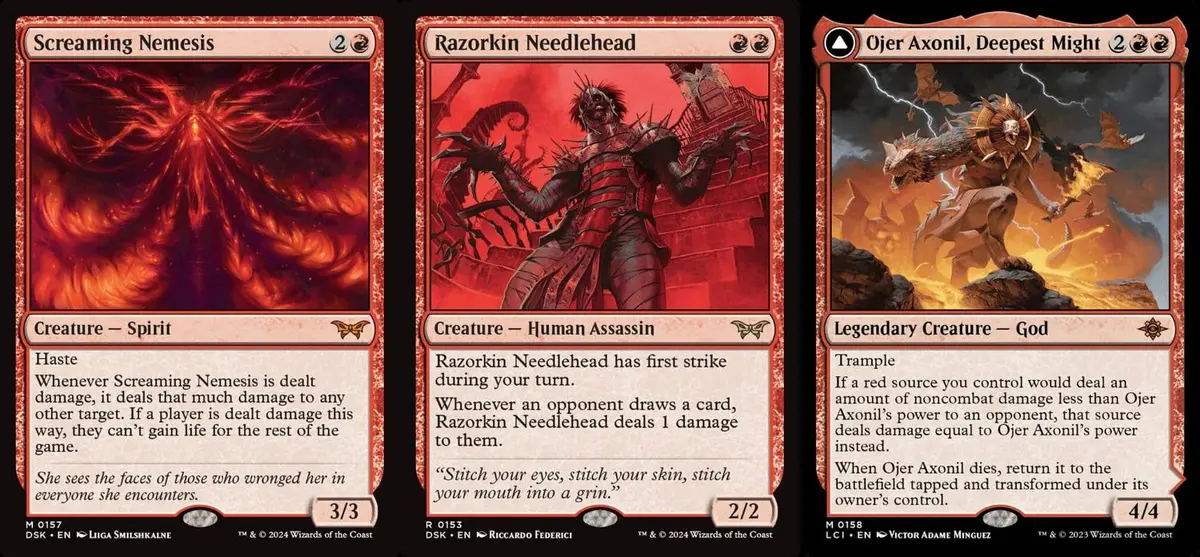
Compared with regular red aggro, this leans slightly toward the midrange side. The core of the deck is built on the life-loss ability of Ojer Axonil, Deepest Might // Temple of Power, so it prioritizes attackers that can deal noncombat damage. Razorkin Needlehead is like a weakened version of Sheoldred, the Apocalypse, and Screaming Nemesis’s “can’t gain life for the rest of the game” is too busted. You can even trigger it by hitting yourself with a Shock.
Mono Red Leyline Valiant (Leyline RDW)
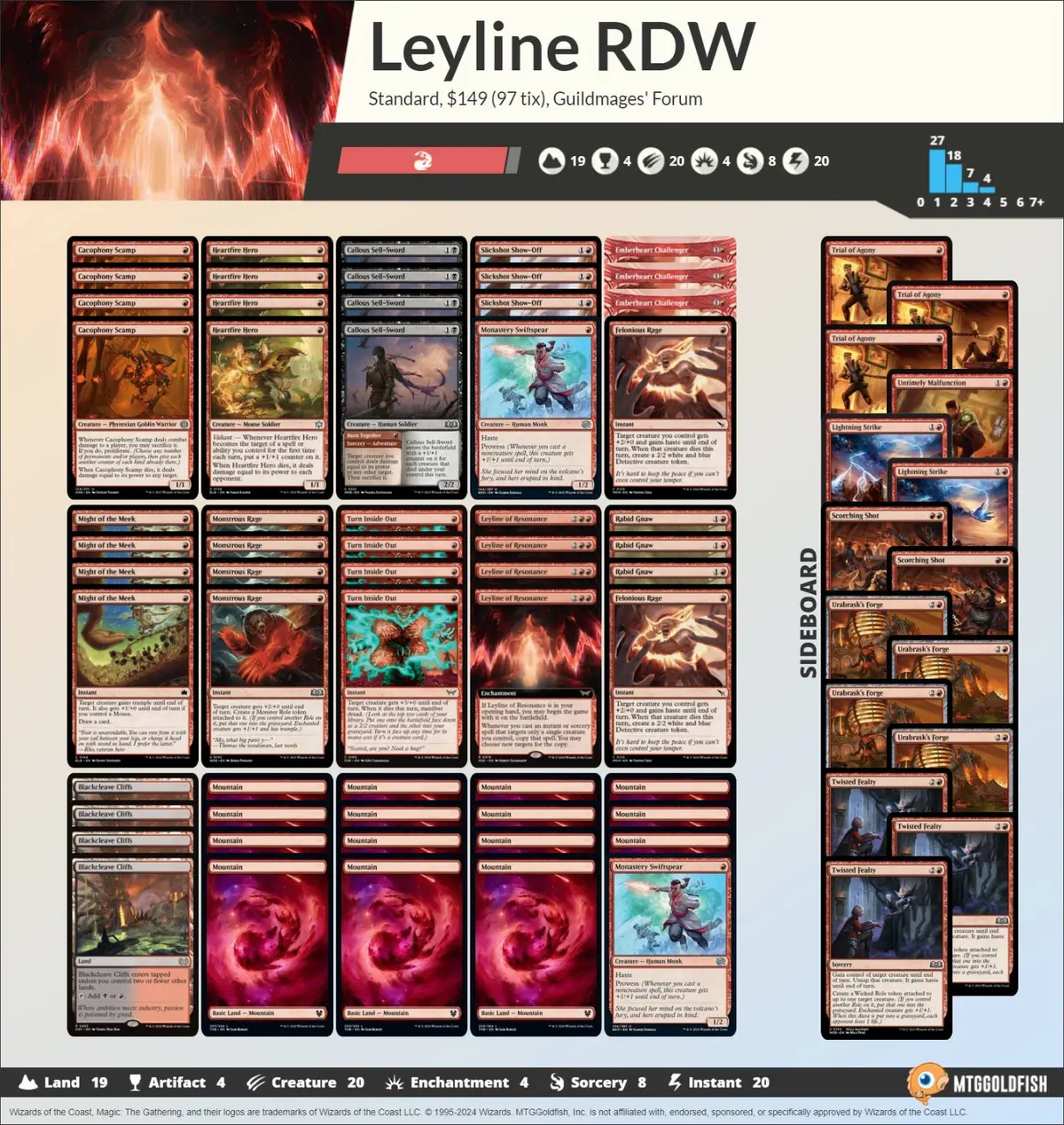
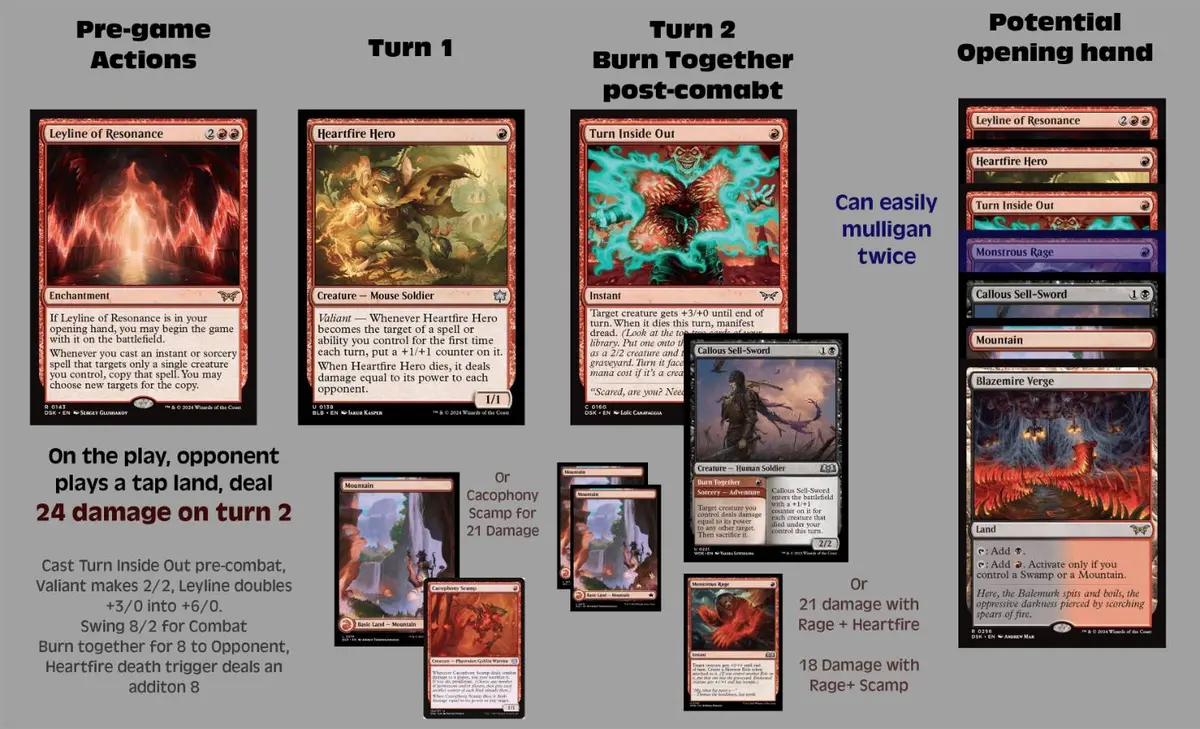
The new red Leyline (Leyline of Resonance) brings a very high ceiling for a turn-two kill. The deck works like this:
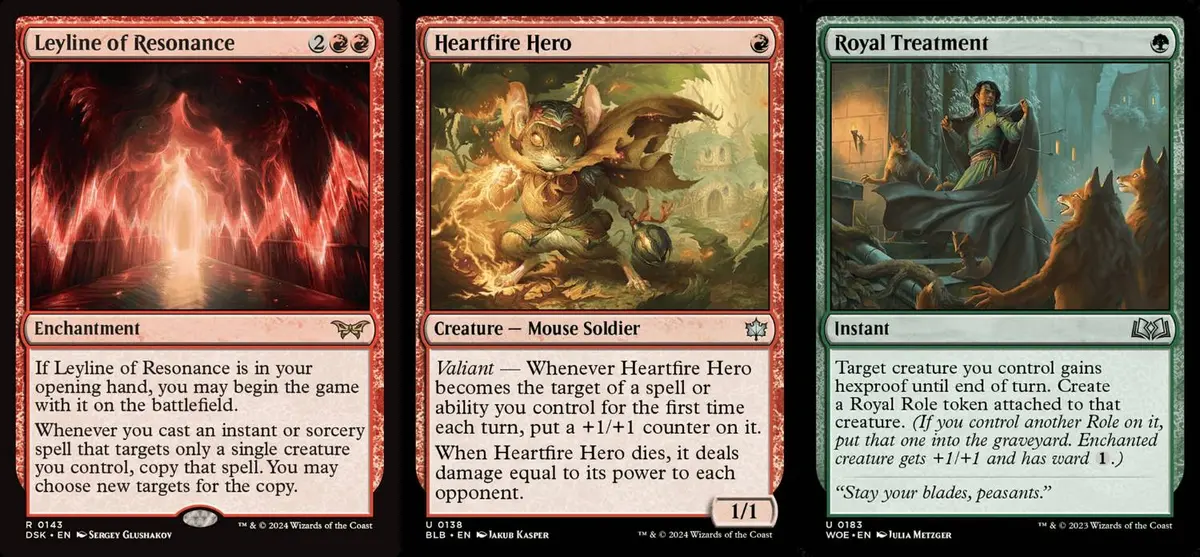
Open with the red Leyline, play Heartfire Hero or Cacophony Scamp on turn one, and on turn two use Turn Inside Out to pump it. With the Leyline’s bonus it can reach 7 power as a starting point (if it’s Heartfire Hero, casting Monstrous Rage works too, and counting the extra valiant trigger it can also reach 7 power). After landing one hit, use the adventure of Callous Sell-Sword // Burn Together to throw it at the opponent. Since these one-drop creatures also deal damage equal to their power when they die, you can deal 7×3=21 damage by turn two.
This is the deck’s highest-ceiling scenario, but even without drawing that perfectly, there is a chance to beat the opponent down to the point of being practically dead, or to find a window a few turns later for a one-shot headshot.
With this deck’s curve and mana base, the Leyline is nearly a dead card if you don’t draw it in your opening hand, and the valiant/heroic archetype is inherently a deck that eats up cards in hand, so the card loss after an aggressive mulligan is very painful. So when I first looked at it in the previews I didn’t pay much attention, but after going back and doing the math I started to feel something was off… This is closer to a combo than to aggro. Even after an aggressive mulligan, you can still find an opening hand with a high enough payoff to go for the kill, so how red Leyline decks will affect the metagame is something I’m very worried about.
Gruul Leyline Valiant
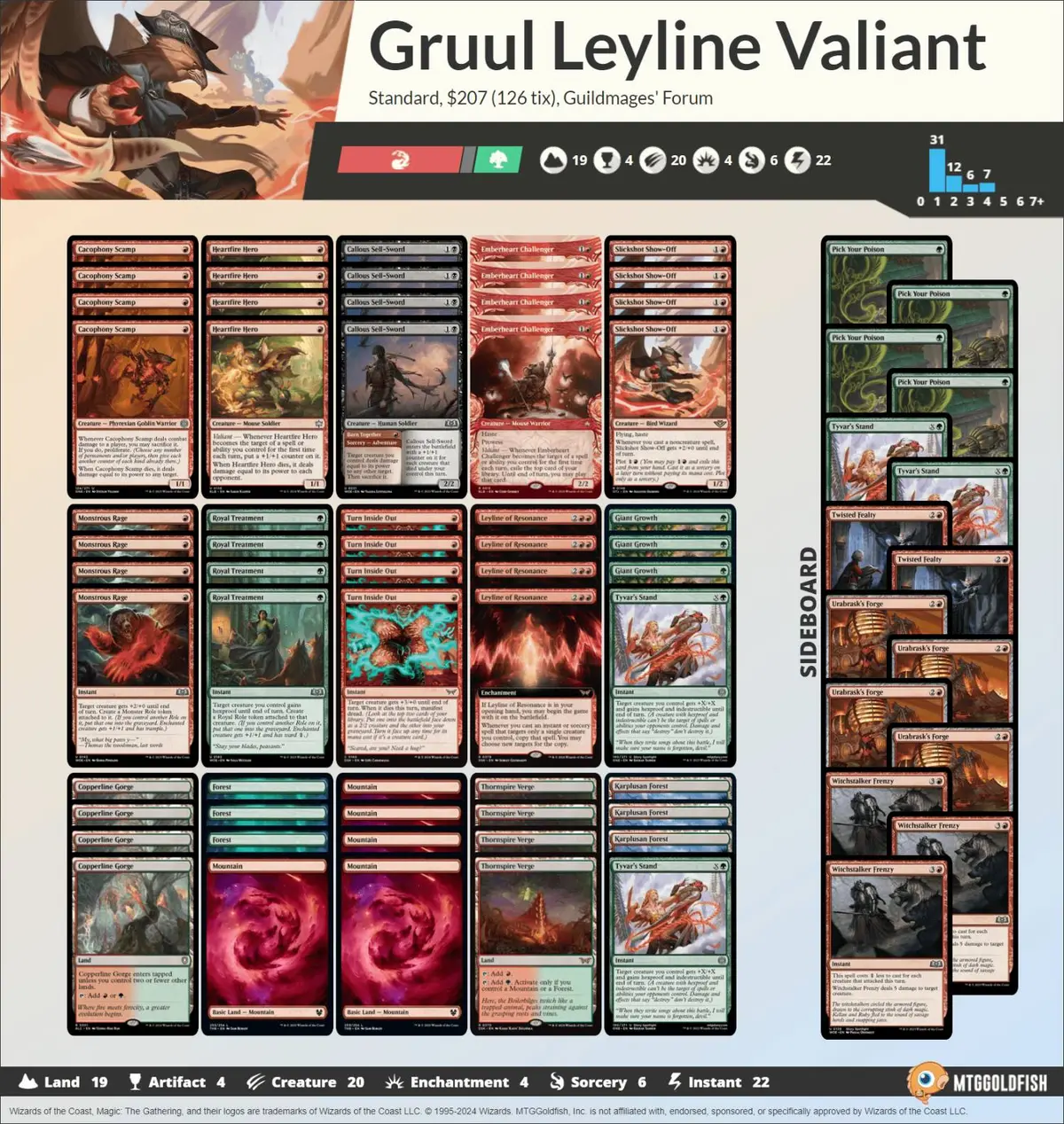
Similar to mono red valiant, green is added for protection spells and Giant Growth.
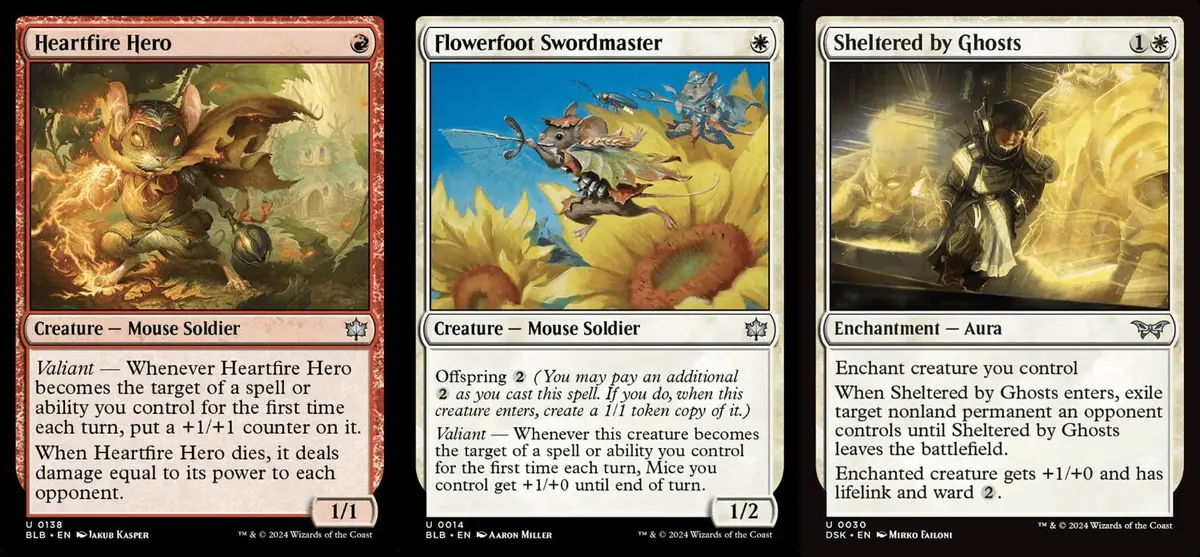
Boros Mouse
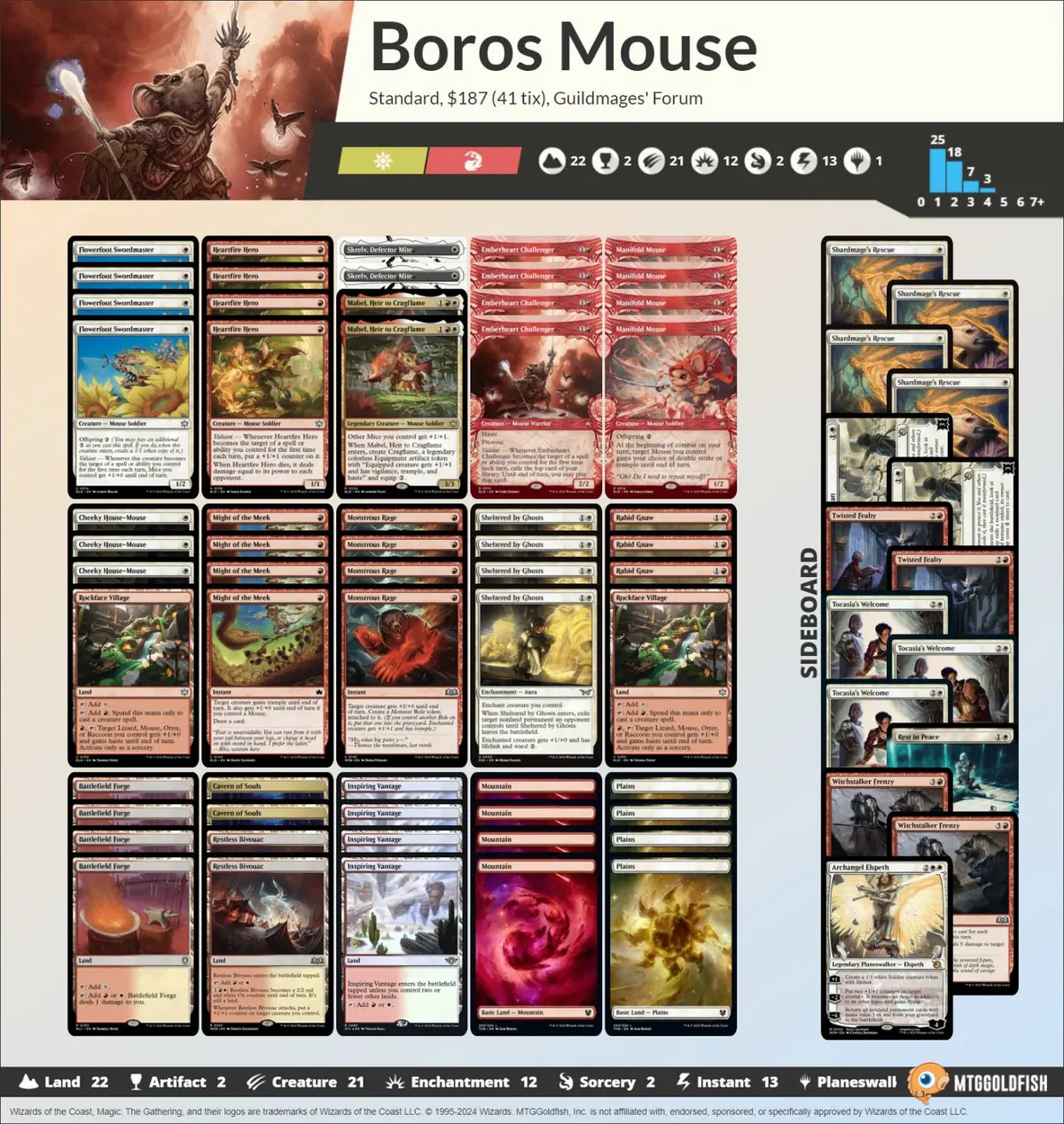
Although Mouse decks built around valiant are certainly a natural pair with the red Leyline, constantly going all-in on a Leyline gets a bit tiresome, so let’s look at the traditional, stability-oriented way of playing! Sheltered by Ghosts is not only removal that can trigger valiant, but also a pretty efficient buff for your own creatures. In particular, what’s the deal with giving ward 2 for 2 mana? For an aggro deck’s tempo it’s practically no different from hexproof.
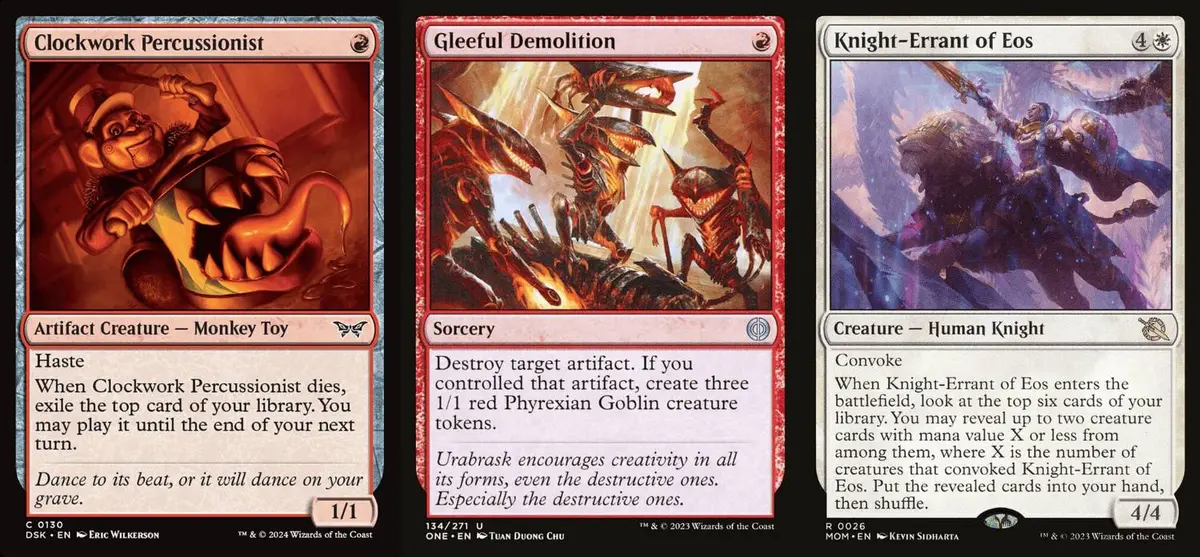
Boros Convoke
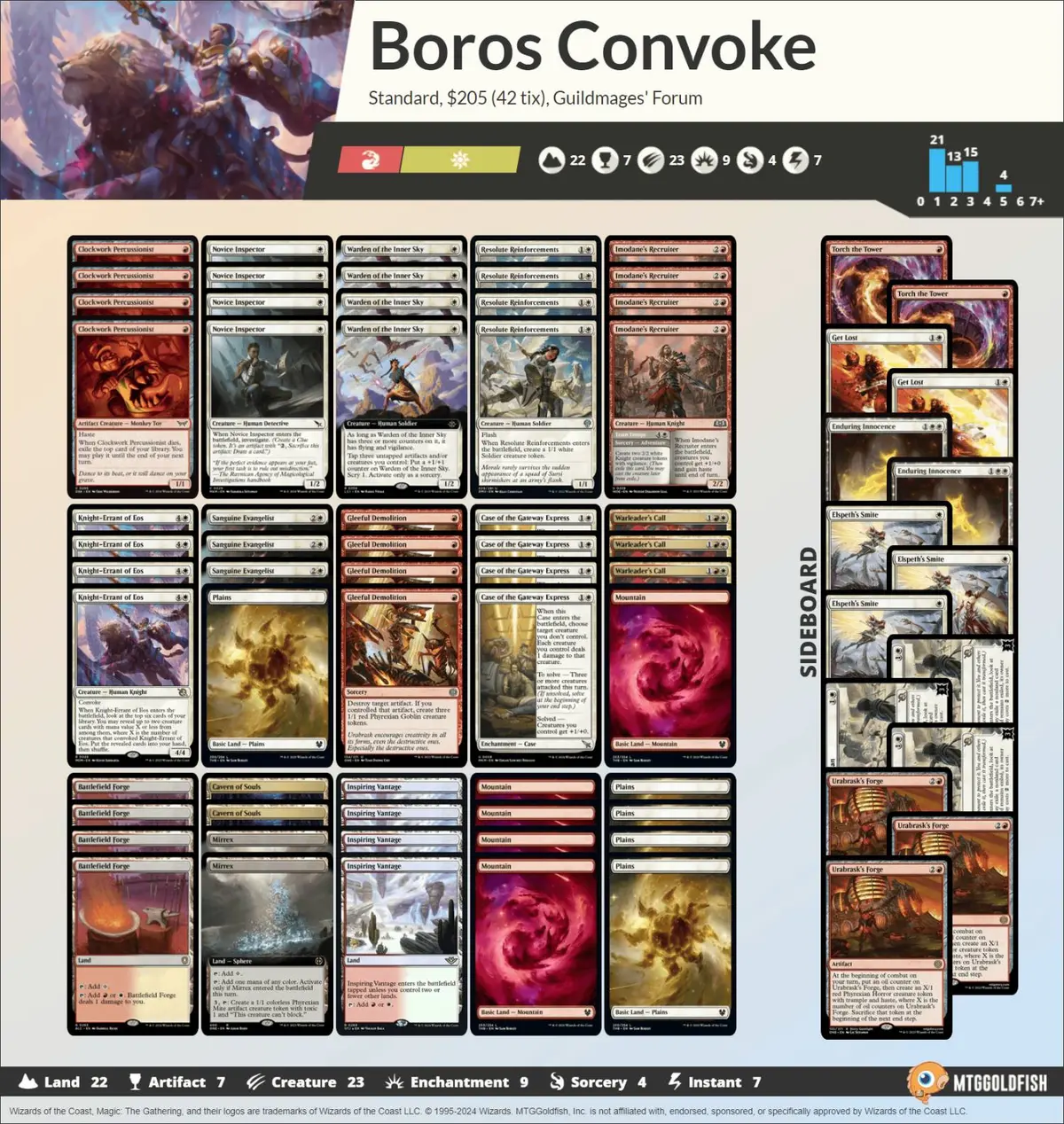
The one-drop artifact slot that gets smashed by Gleeful Demolition is handed to the new card Clockwork Percussionist, which has a chance to earn a card back after being sacrificed.
Gruul Storm
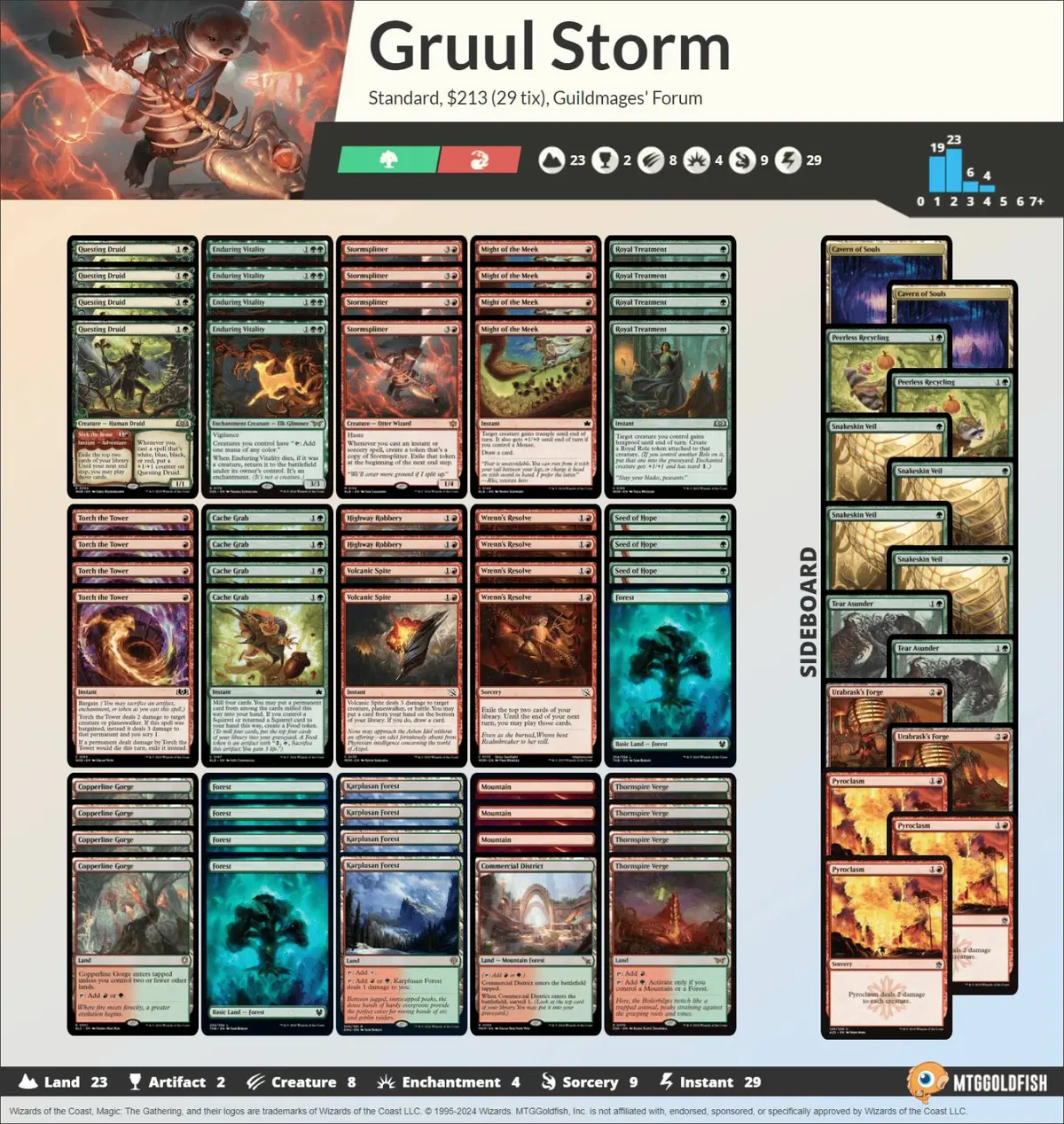
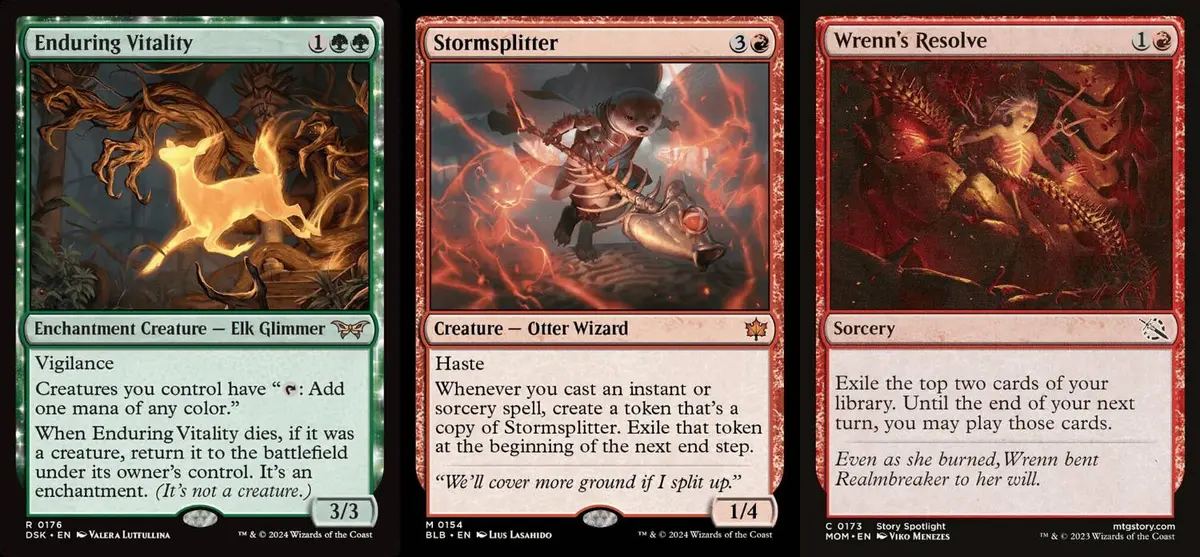
With Enduring Vitality around, Stormsplitter and its tokens can produce mana the turn they enter, which solves the hardest problem for storm-style decks, the mana source problem. All that’s left is to loot like crazy. Also, Enduring Vitality turns into an enchantment that stays on the battlefield after it dies, so it’s hard to clean up completely, and as long as Stormsplitter lands successfully you can use instant-speed filtering to go off, so the opponent’s removal supposedly can’t keep up. You can also try splashing blue to become Temur, which lets you use stronger filtering spells such as Sleight of Hand.
Selesnya Mount
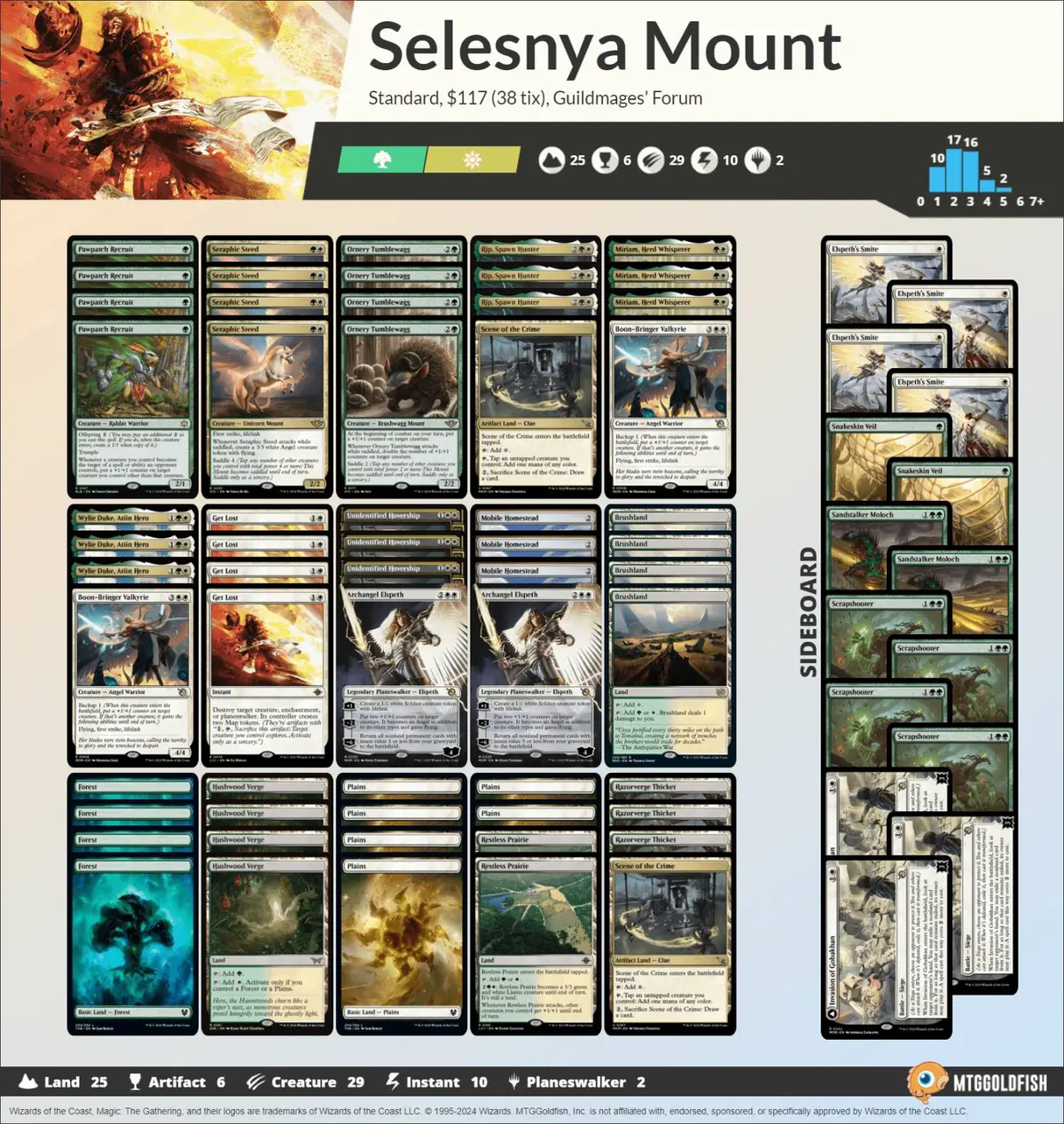
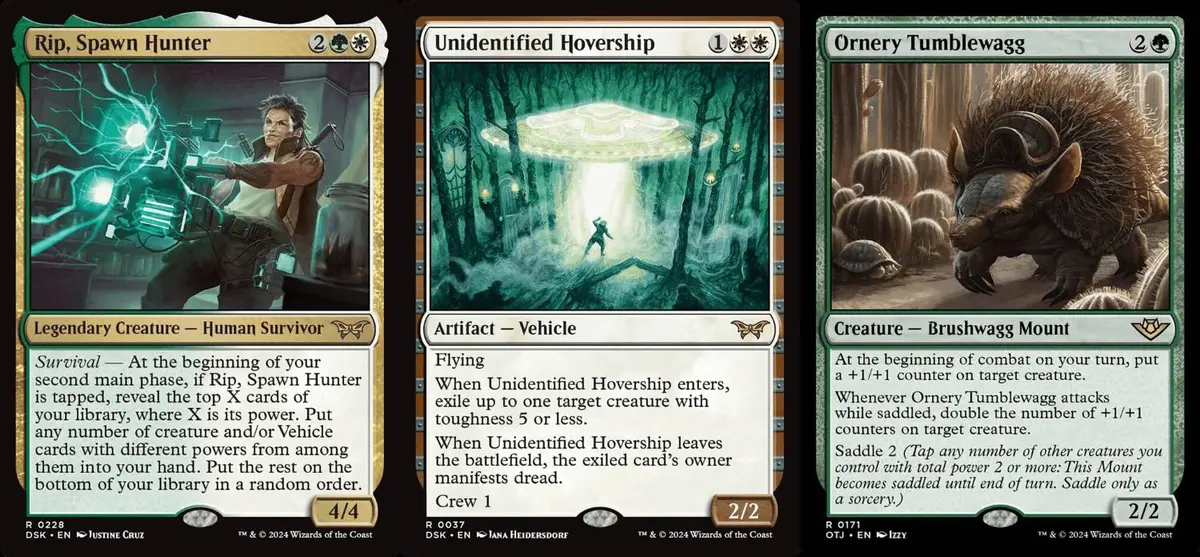
The survival ability is naturally a great fit with Mounts and Vehicles. Rip, Spawn Hunter doesn’t even pretend, writing the Vehicle support right into its own card-advantage ability. This set also adds a new Vehicle that works on both offense and defense, Unidentified Hovership, which solves the old problem of this kind of deck having every role slot too tightly packed.
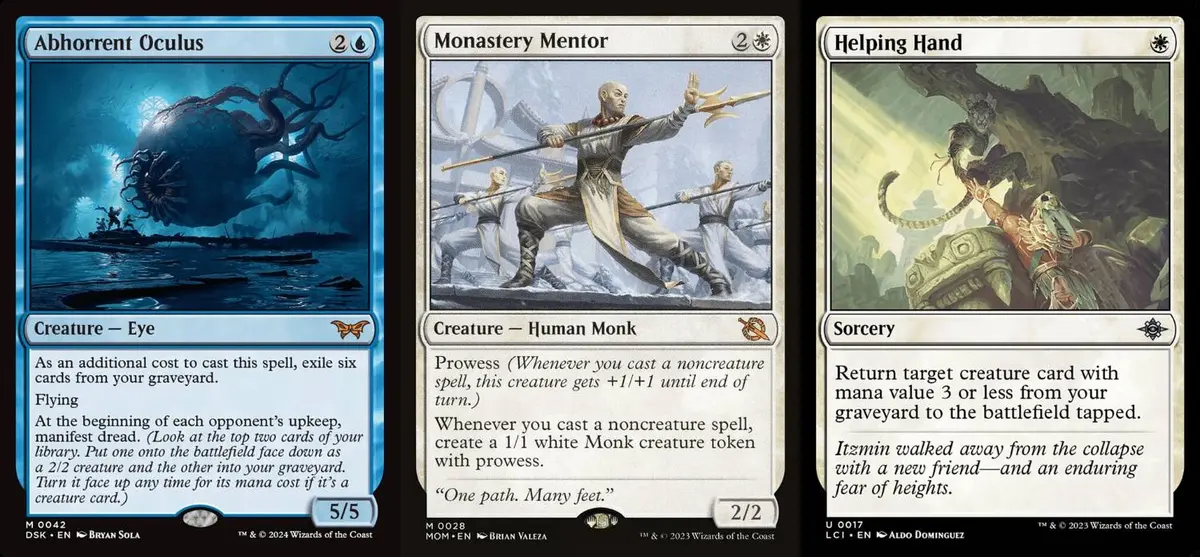
Azorius Mentor
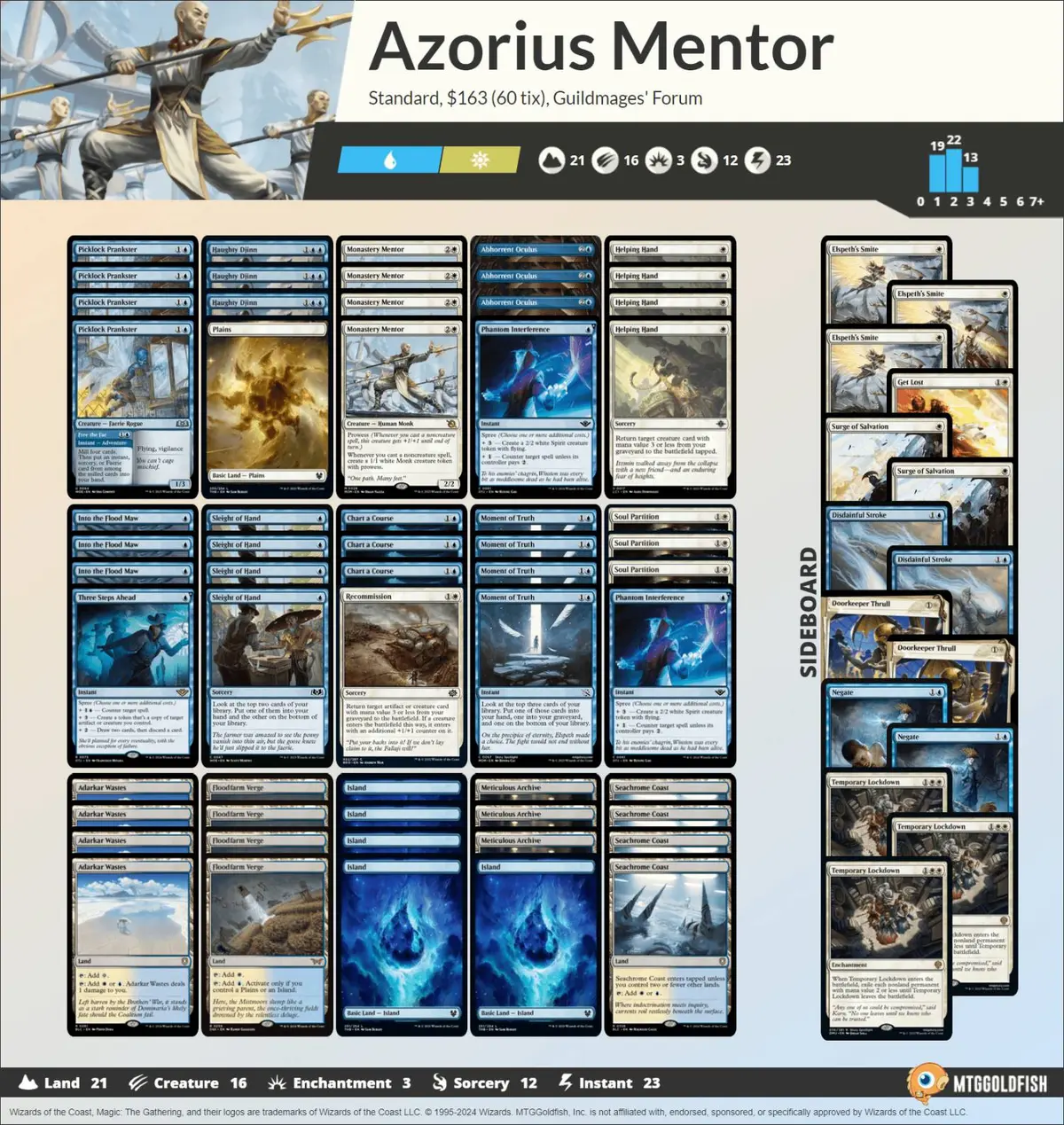
The exile-six-cards part of Abhorrent Oculus is an additional cost paid when casting it, so if you dig it straight onto the battlefield you don’t have to care about that cost at all. Even if you want to cast it normally, it isn’t a problem in a Mentor deck with plenty of self-mill.
Azorius Tempo
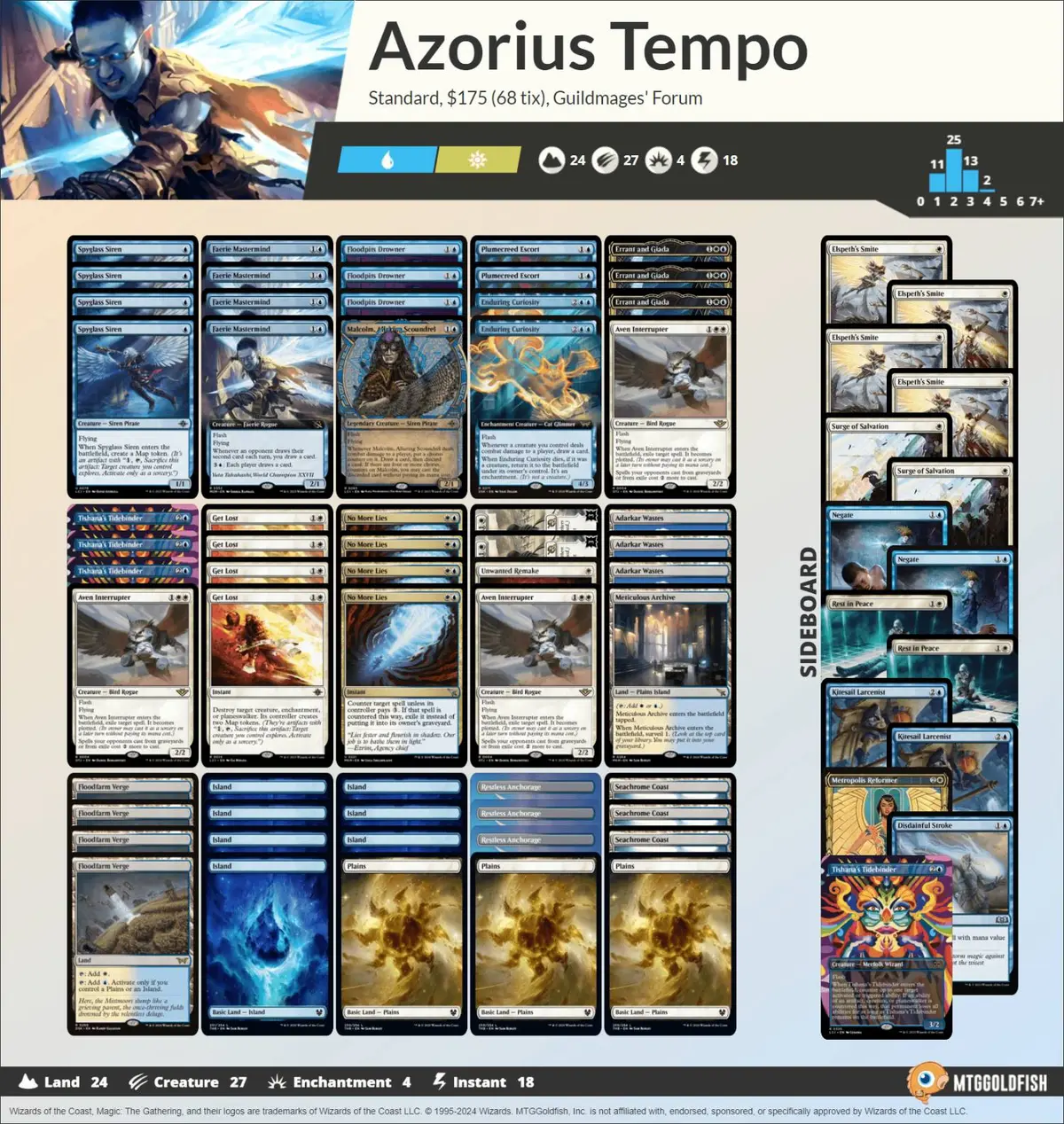
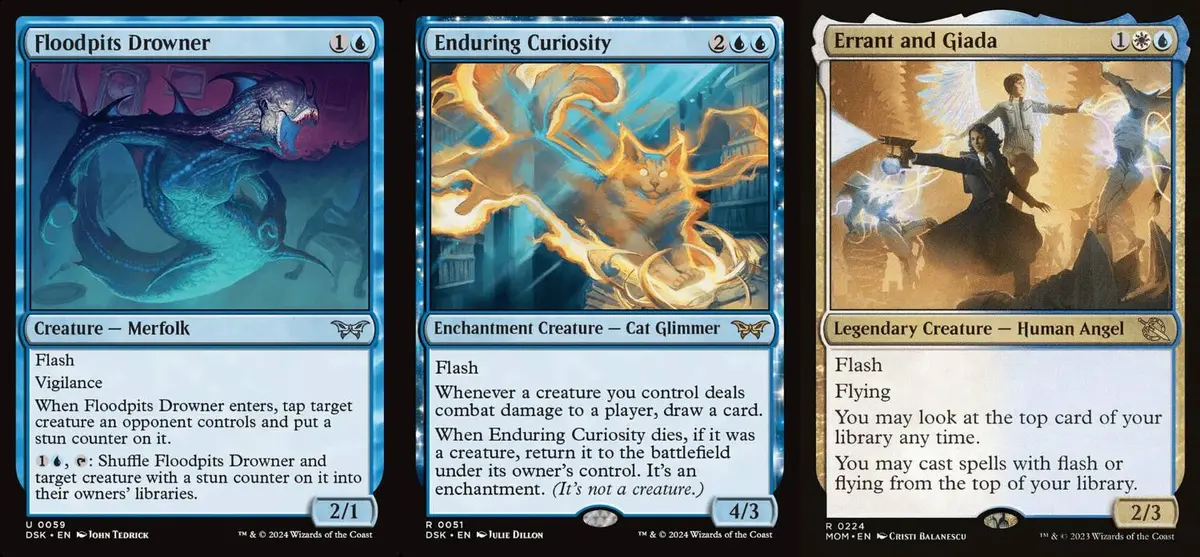
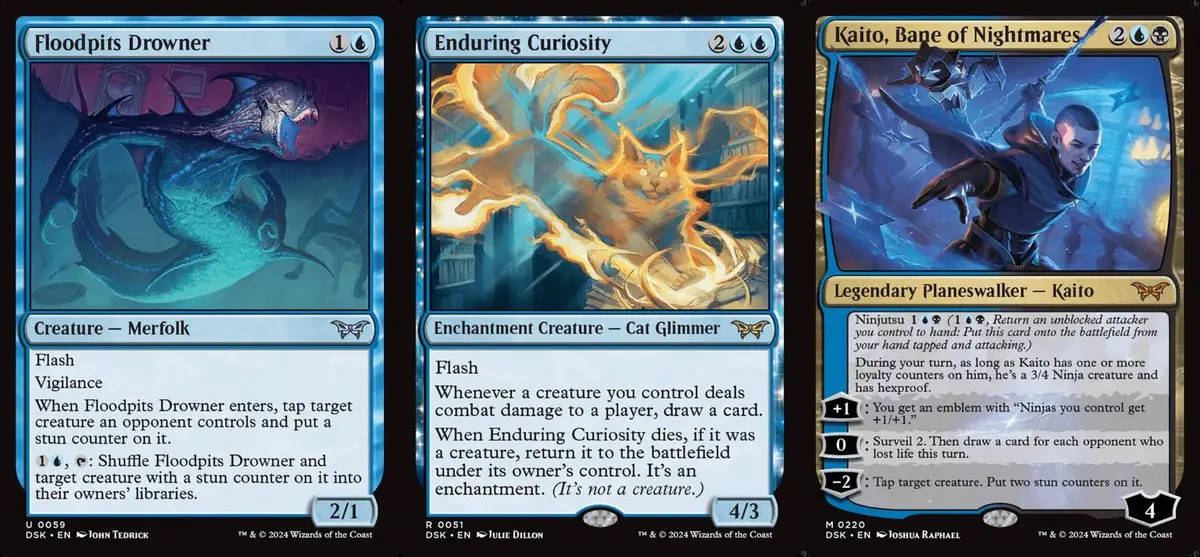
A draw-go tempo deck built around Errant and Giada. Tempo attackers in the white-blue color pair have always had good evasion, and you can look forward to the expected card advantage of Enduring Curiosity. The ETB of Floodpits Drowner can act as pseudo-removal on the tempo side, and of course, if you want, it has a chance to become real removal too.
Dimir Midrange
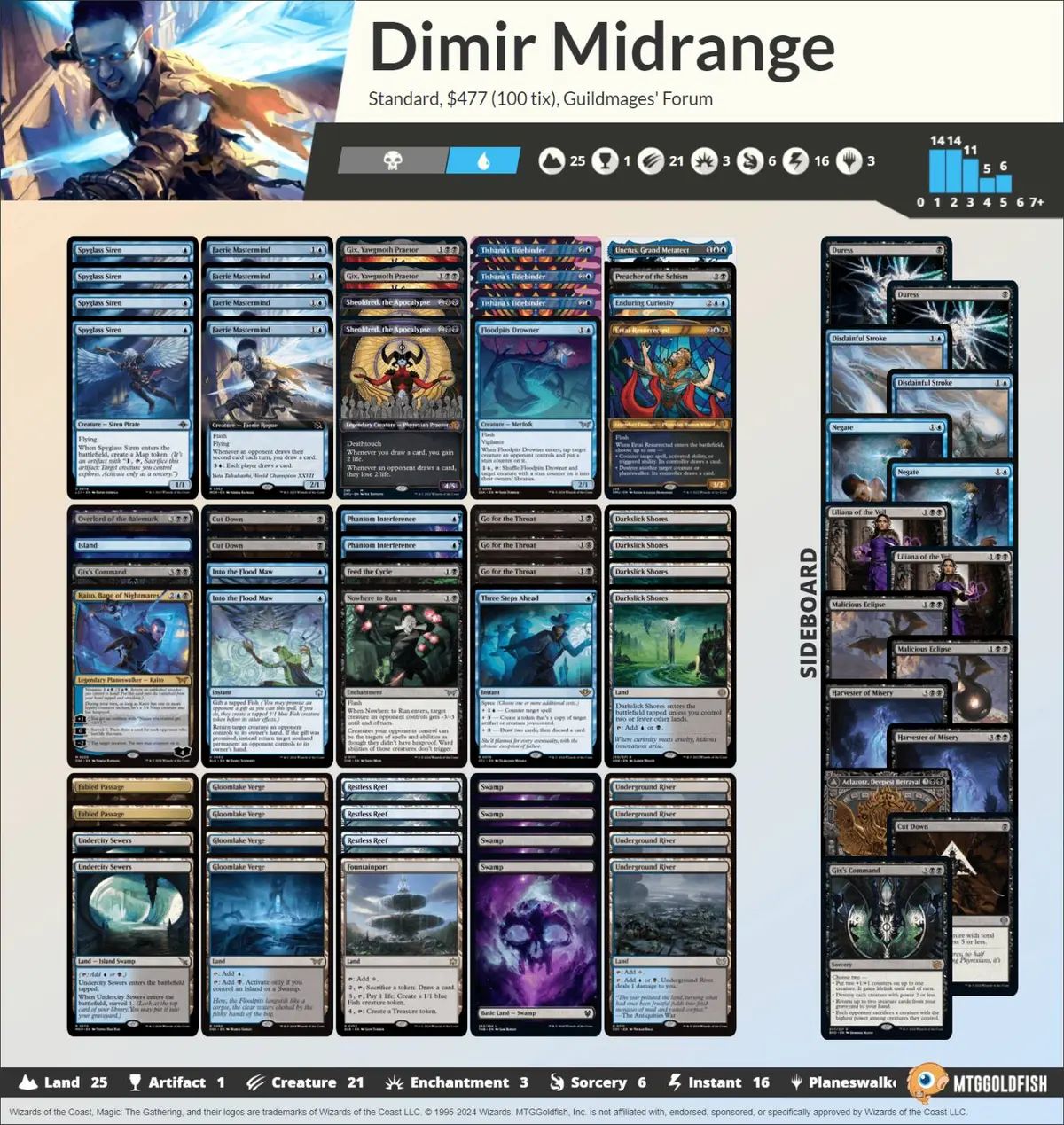
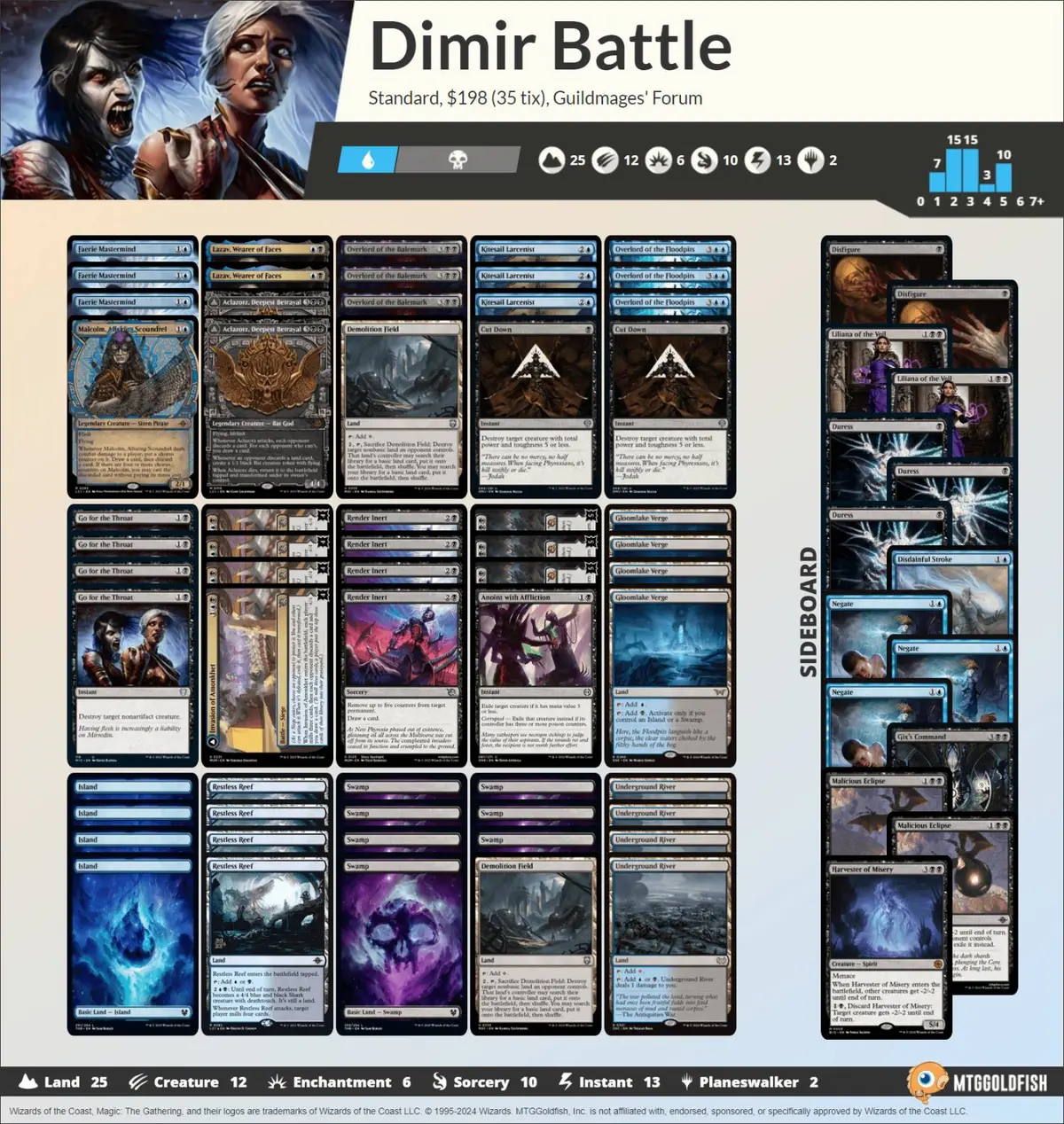
For the new Standard’s Dimir Midrange, the individual cards we tried are Enduring Curiosity, Overlord of the Balemurk, Kaito, Bane of Nightmares, and Floodpits Drowner. We also added one Nowhere to Run to fill the removal slot. For lands, we added Gloomlake Verge, and used two Undercity Sewers, two Fabled Passage, 1 Island, and 4 Swamps to make sure Gloomlake Verge can produce black.
Worth mentioning is the addition of two copies of BLB’s one-mana bounce spell Into the Flood Maw, which gives us more confidence to maneuver against the turn-two kill ceiling of the emerging Mono Red Leyline Valiant. When everyone is happily pumping their creatures, that’s when the bounce should come out! And against the artifacts/enchantments that are very hard for Dimir to deal with, sometimes gifting the opponent a Fish to buy breathing room is also quite key in some matchups.
Another change worth mentioning is the removal of the two-mana Deep-Cavern Bat. With Pyroclasm reprinted in DSK, I don’t want to lose to a one-for-many sweep against red-based decks.
Dimir Battle
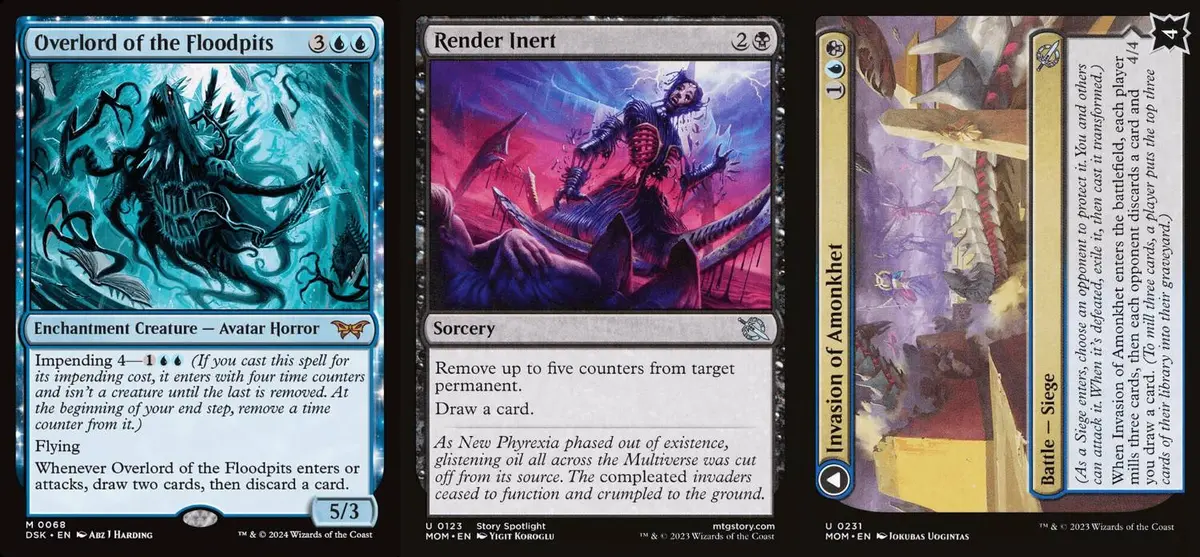
Render Inert: it makes an impending Overlord into a creature, so is this rendering inert or rendering active?
In the past, playing a Battle deck meant worrying that when you didn’t draw a Battle, Render Inert was a dead card, or an ultra-inefficient 3-mana sorcery-speed cantrip filter. Now that Overlords have been added, from a probability standpoint you shouldn’t need to worry about Render Inert getting stuck in hand.
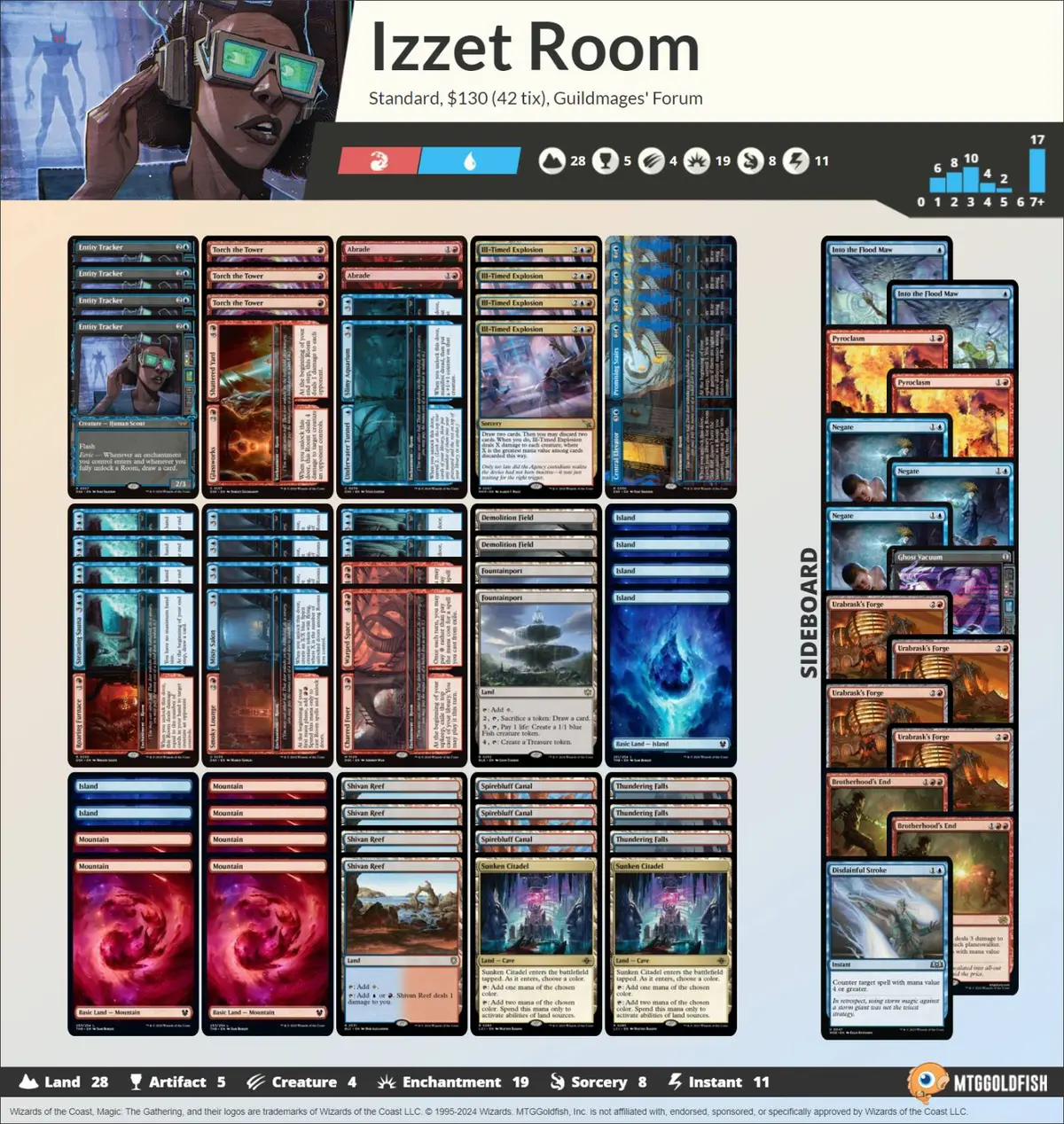
Izzet Control
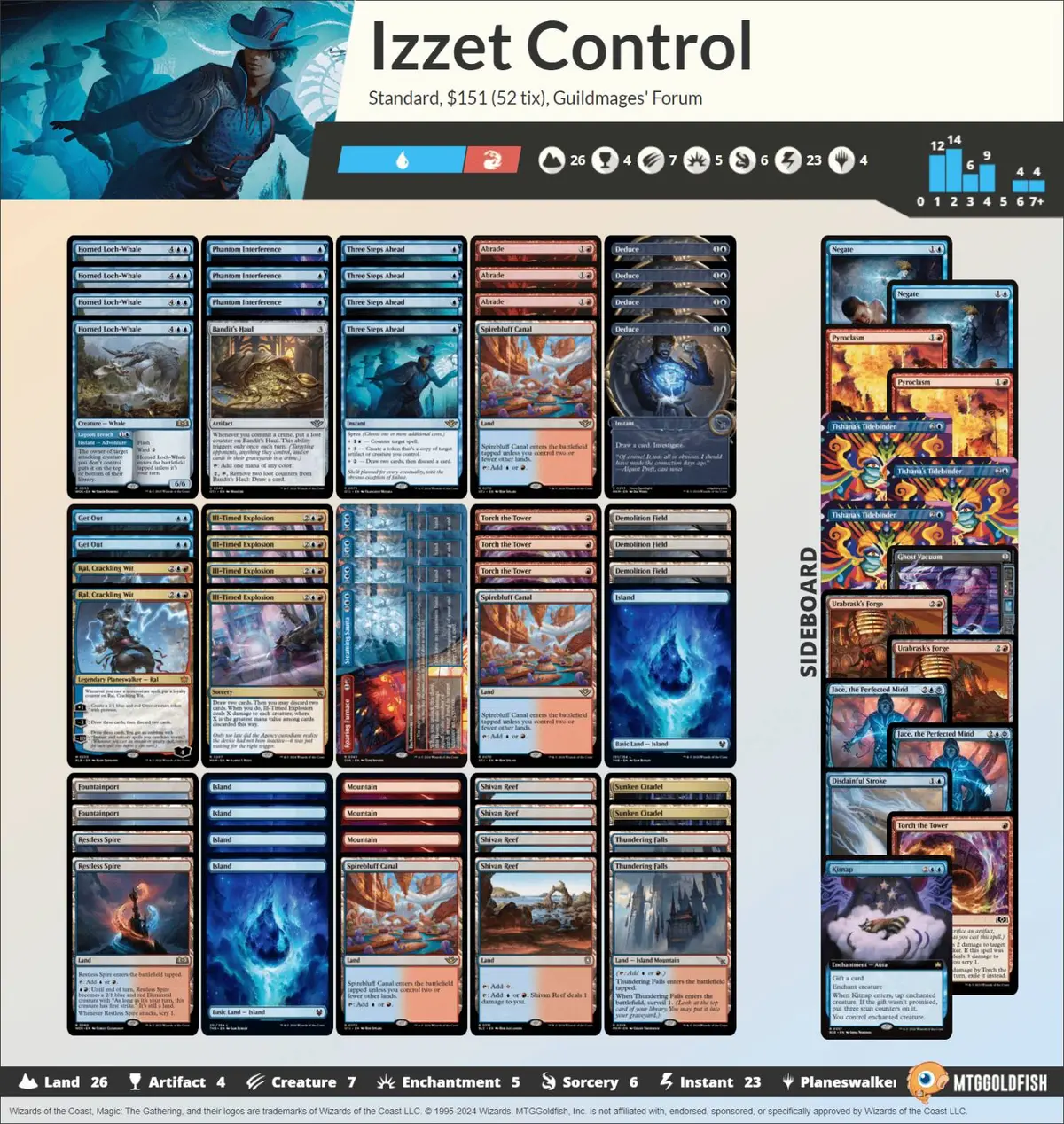
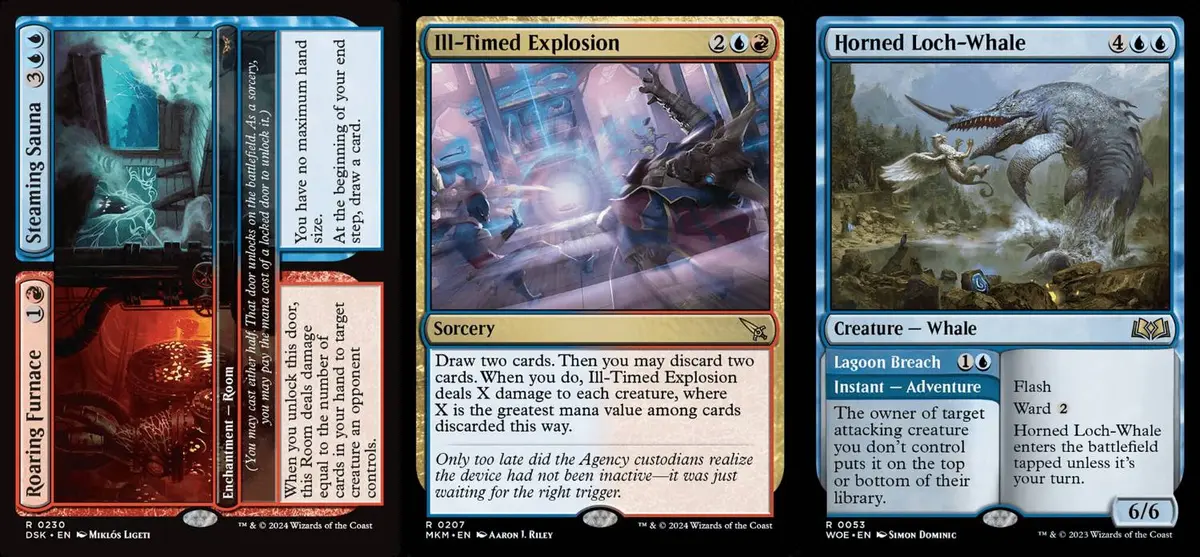
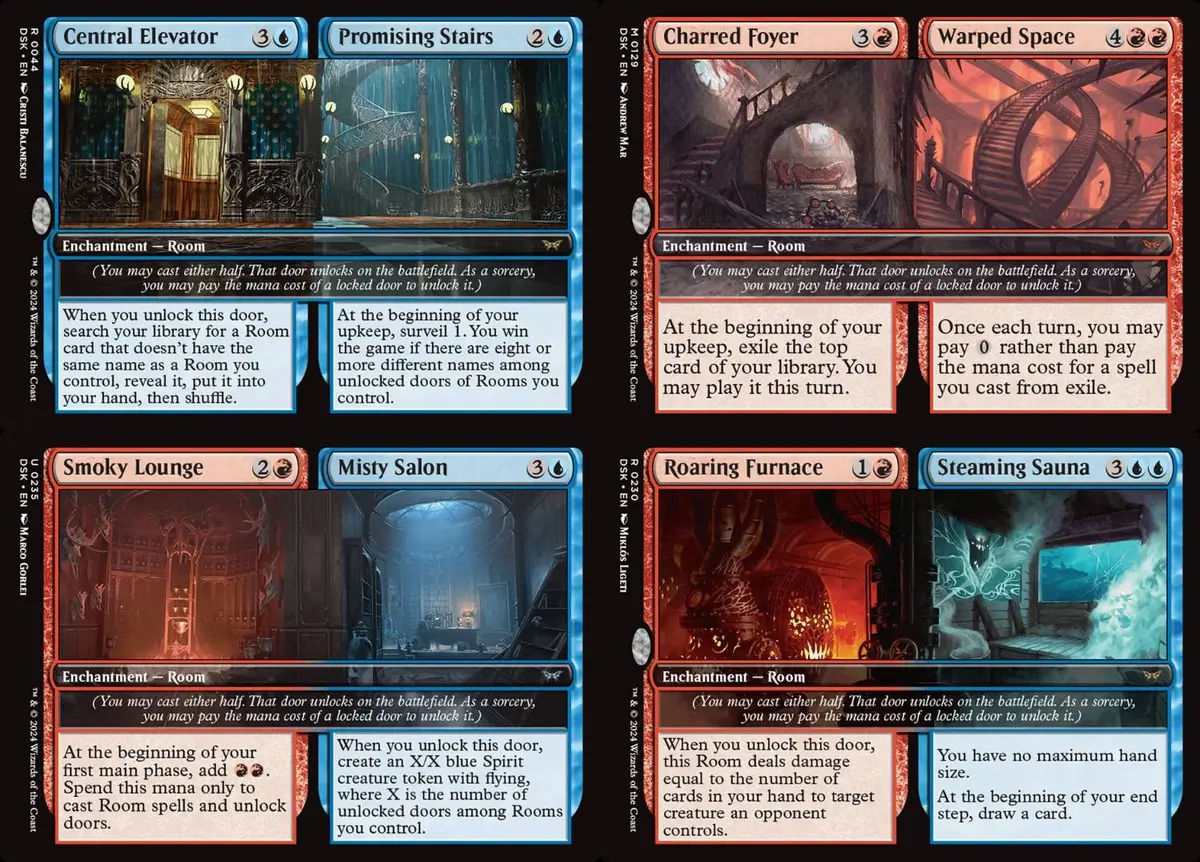
Roaring Furnace // Steaming Sauna combines long-range removal and card advantage in one card, and as a split-cost card its mana value characteristics can also raise the range ceiling of Ill-Timed Explosion. I hope it can revive pure red-blue control, which has been in decline for a long time.
Golgari Control
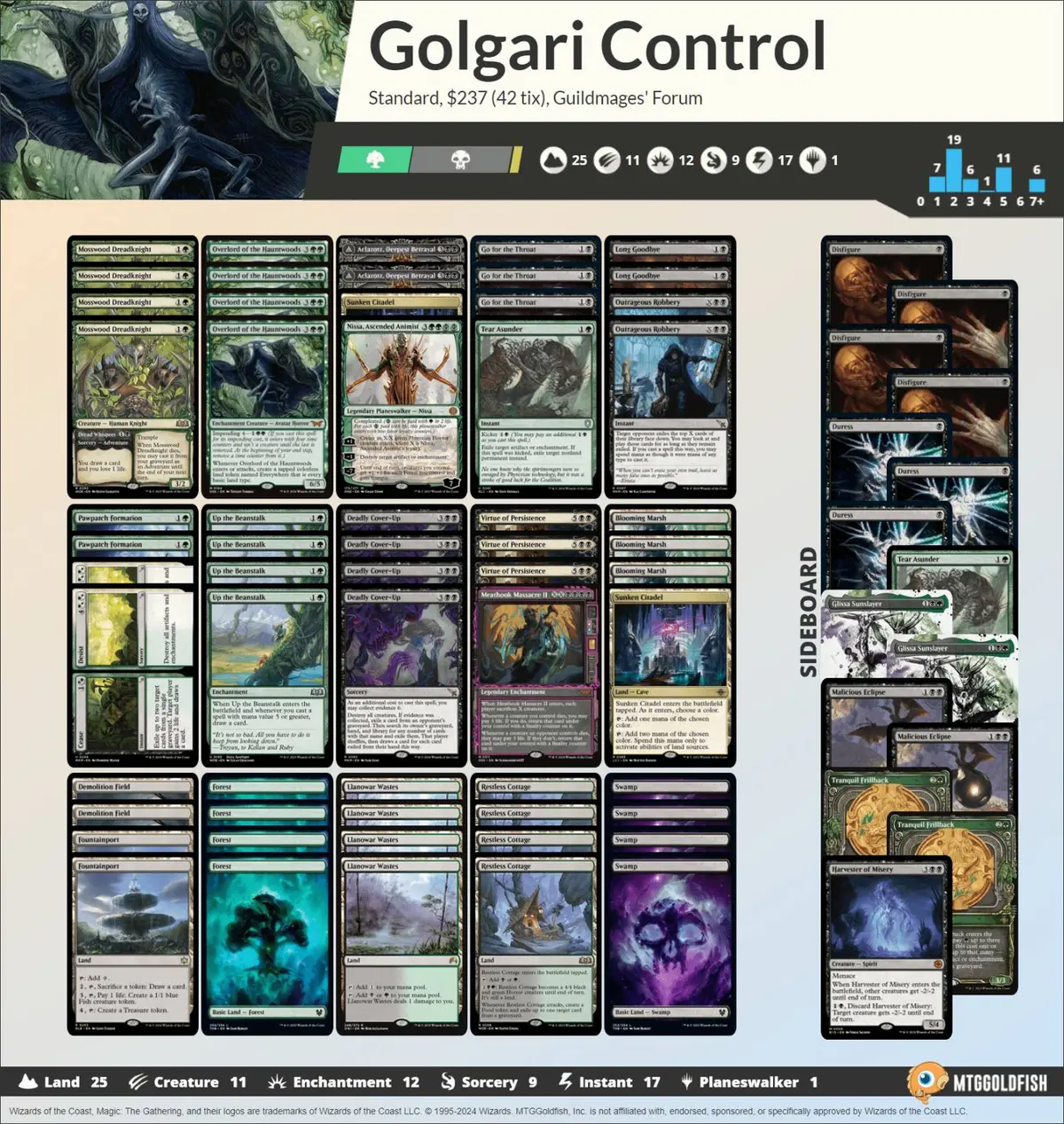
These days blue is long past being synonymous with card advantage. If you put in the effort, every color pair can find a corresponding card advantage engine. When it comes to green, Up the Beanstalk is certainly the top seat: turn-two Beanstalk + turn-three impending green Overlord to ramp + turn-four a 5-mana sweeper or a powerful board developer to keep drawing cards. Doesn’t that feel great?
Golgari Obliterator
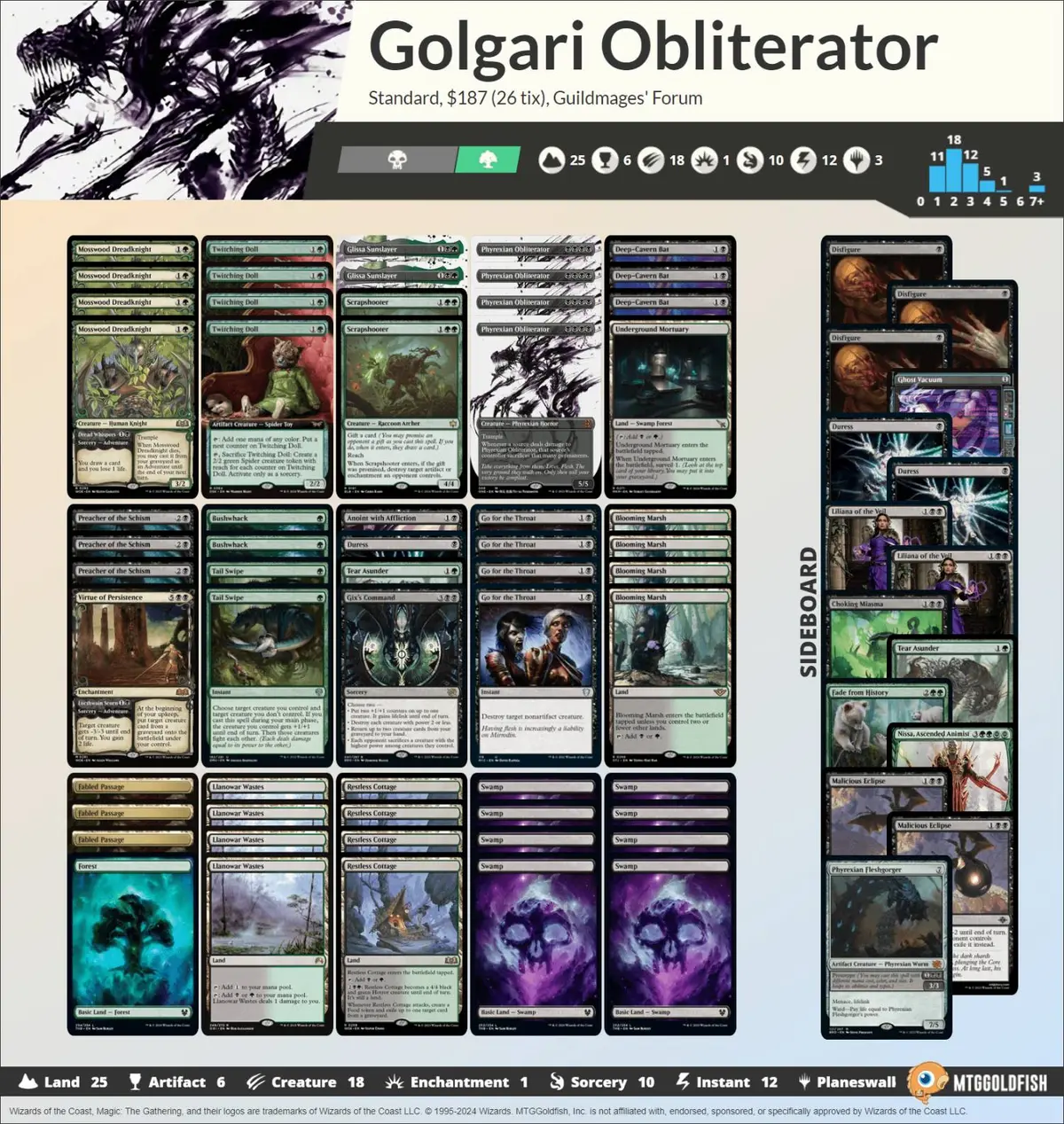
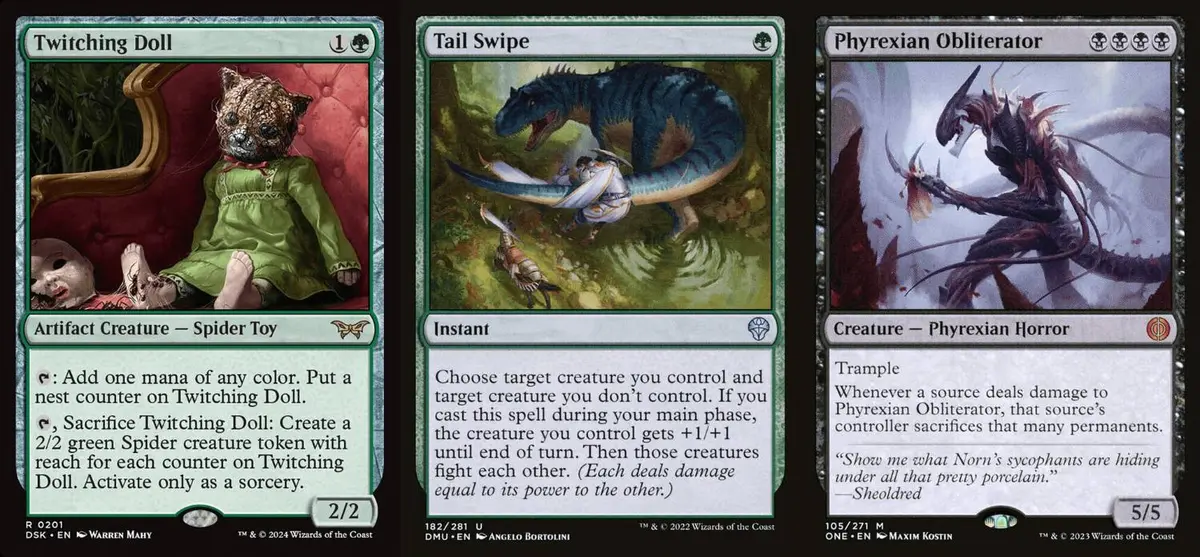
The origin of this deck came from when Screaming Nemesis was previewed. At that time the red Leyline hadn’t been previewed yet, and Screaming Nemesis became public enemy number one in my mind. After much thought I decided to simply bring back the Phyrexian Obliterator deck to trade damage with these red aggro players. However, the fixing lands’ ability to enter untapped is now much worse than in the time of my past article, so I had to add 2-mana mana dorks to improve fixing and acceleration, and the new card Twitching Doll happens to be a new innovation among 2-mana mana dorks.
Golgari Insidious Roots
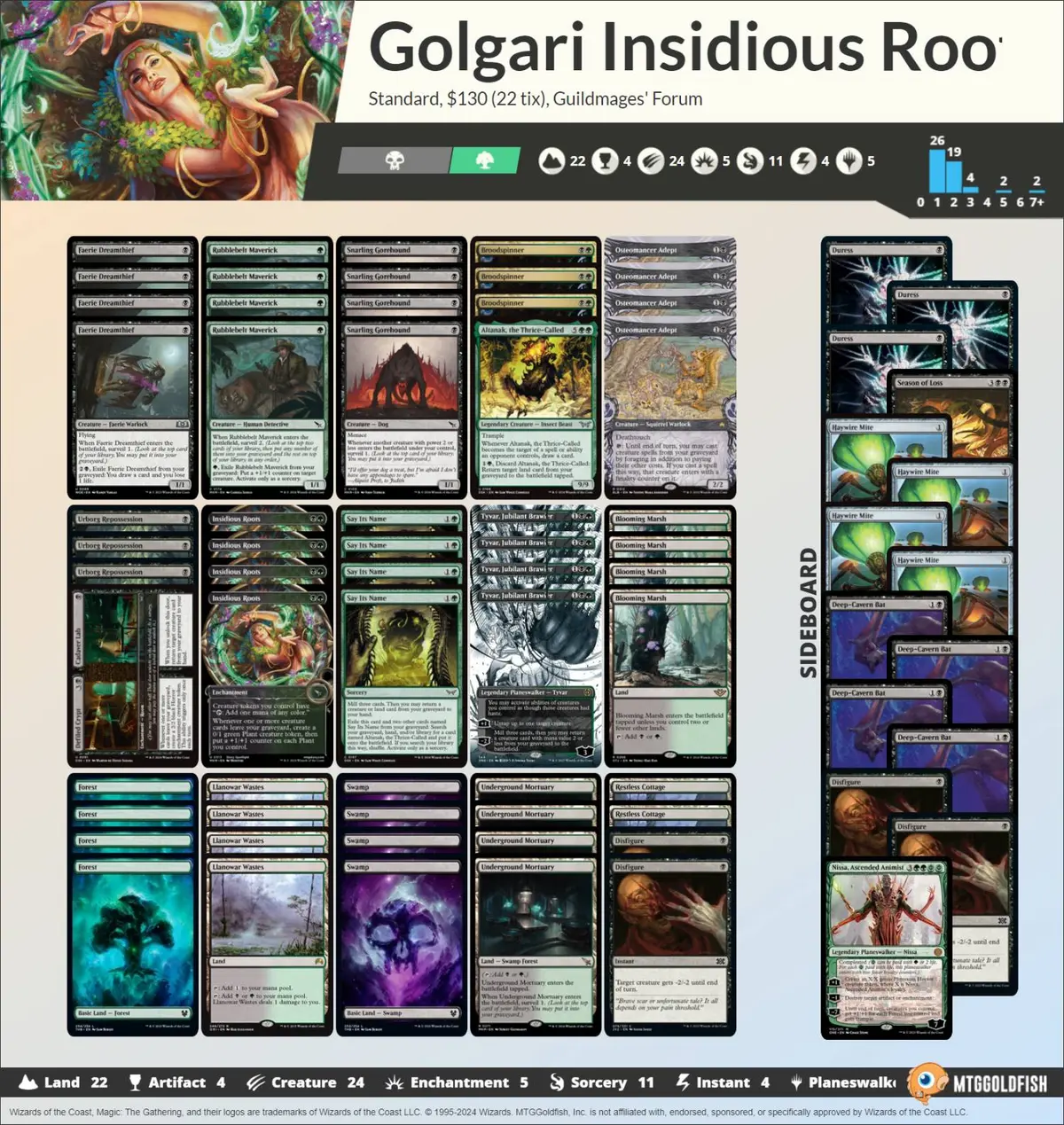
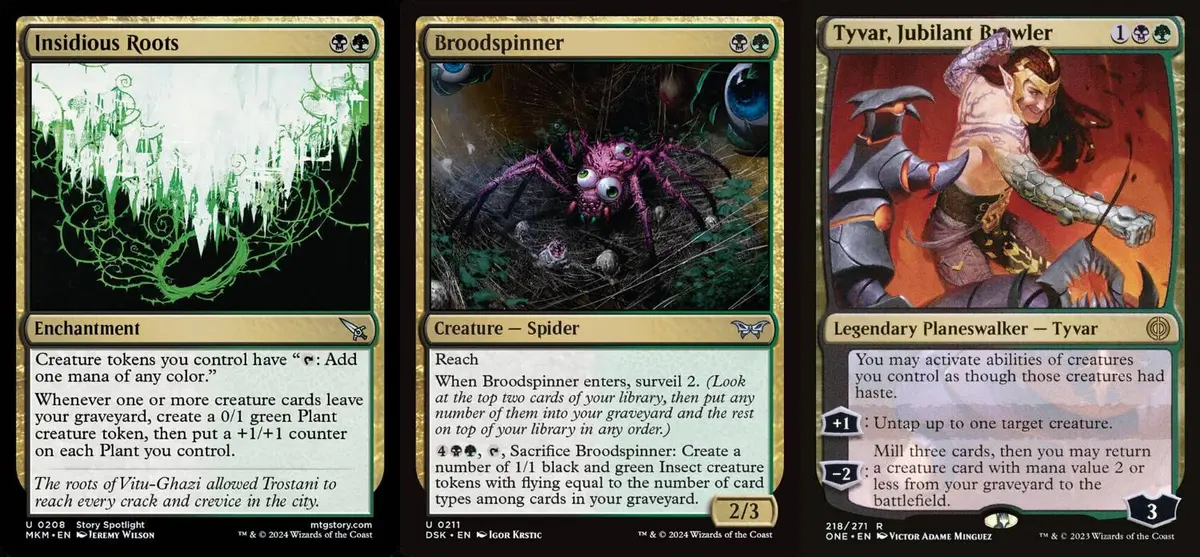
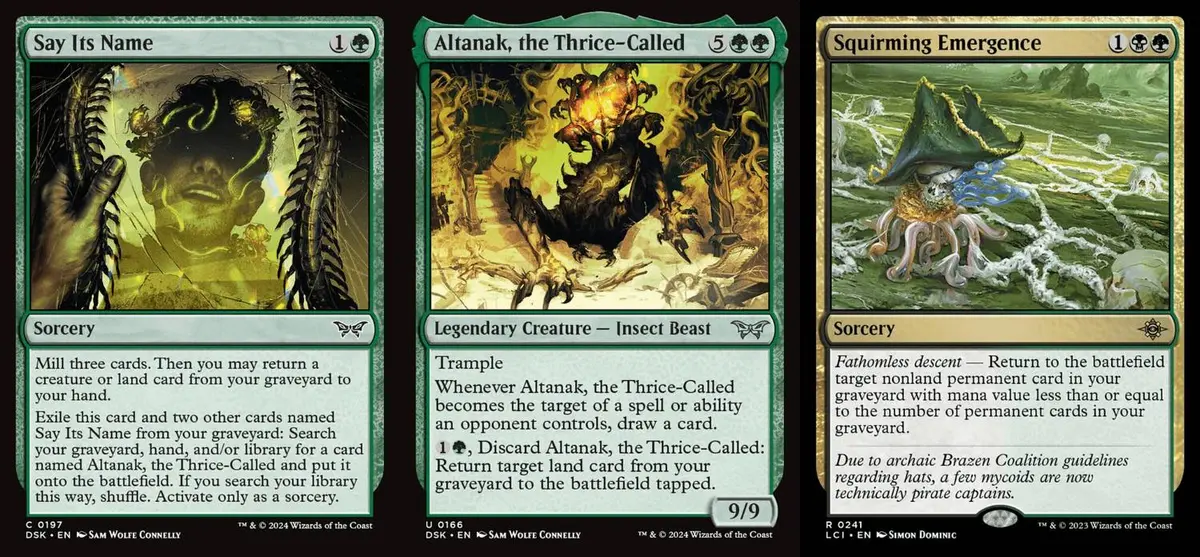
As a graveyard set, Insidious Roots naturally gets support cards easily. The small package of Say Its Name + Altanak, the Thrice-Called is very interesting. It costs very little to put into a build, and Say Its Name itself fits the operation of Insidious Roots very well. Broodspinner also provides a new option for filling the graveyard + finding a payoff. A 2-mana activated-ability creature really has “Tyvar’s good friend” written all over its face.
Rakdos Sacrifice
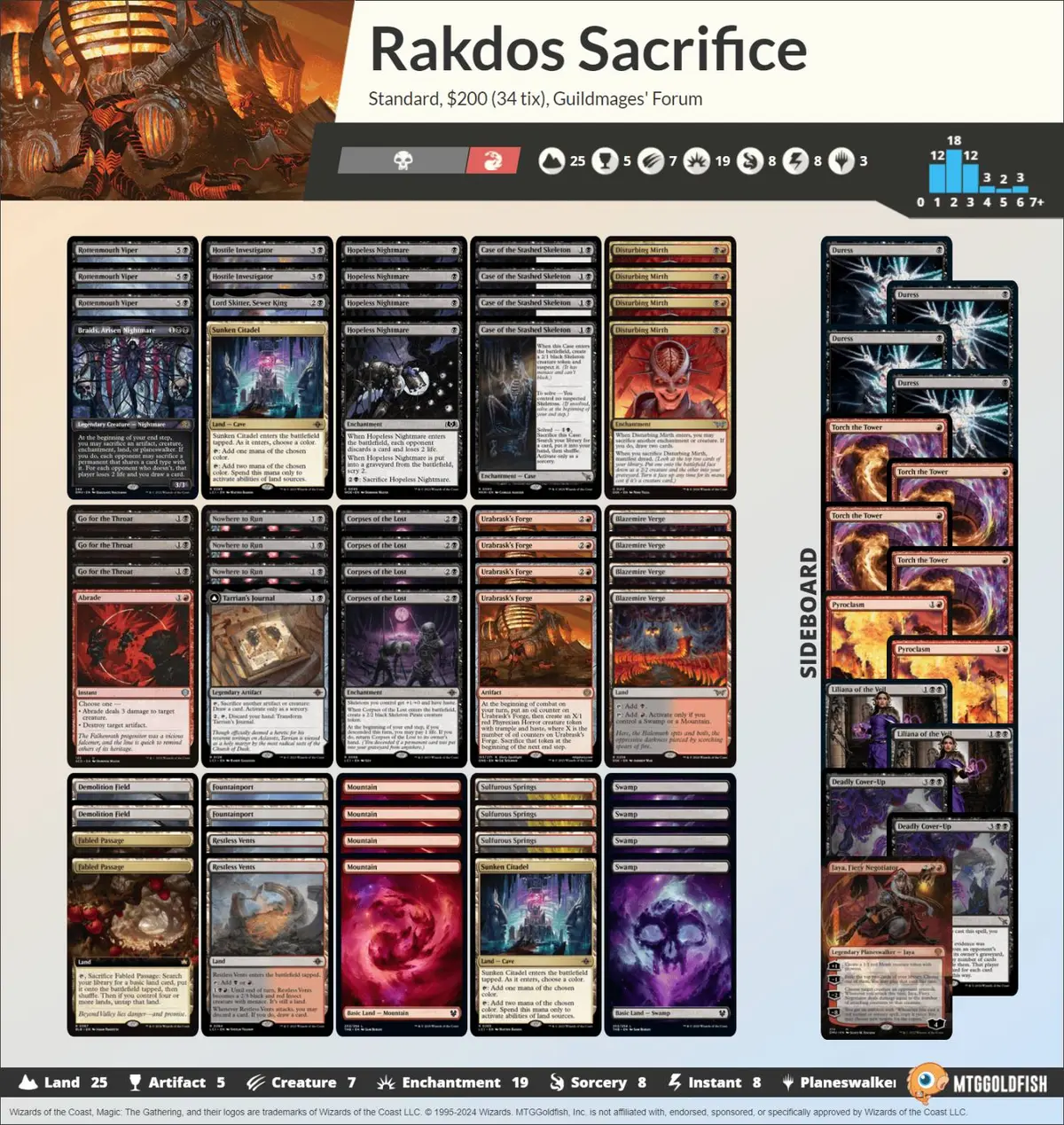
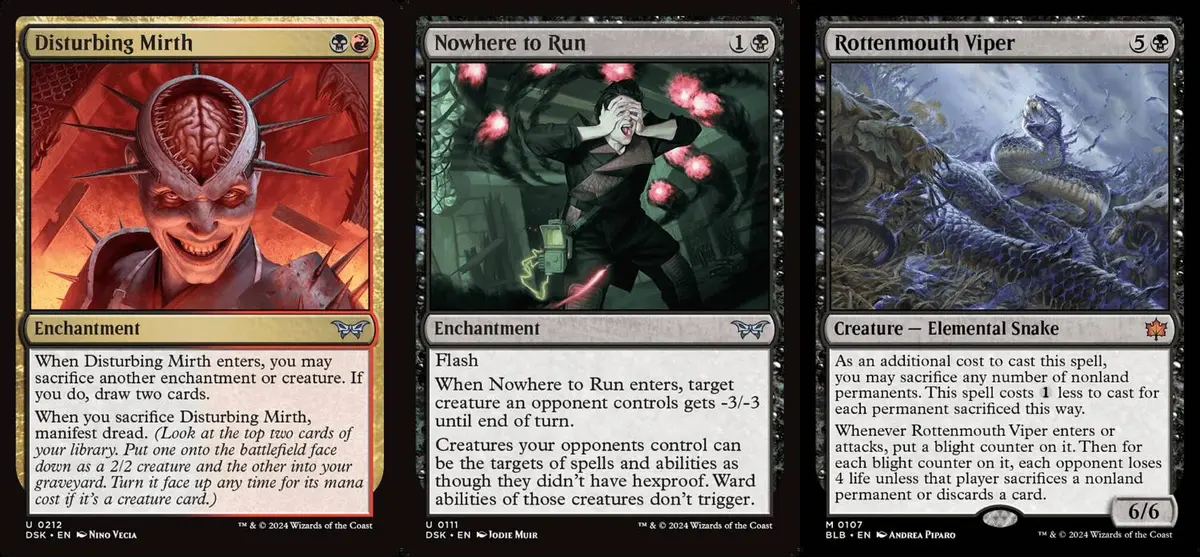
Put in sacrifice engines and sacrifice fodder in proportion, and a deck is done~ Although there was already Tithing Blade // Consuming Sepulcher as permanent-based removal, after Graveyard Trespasser // Graveyard Glutton and Raffine, Scheming Seer rotated out, the answers for sacrifice decks got a bit awkward. The instant-speed -3/-3 of Nowhere to Run is much better (and even removes ward more efficiently). Although the overall idea is a resource war based on the sacrifice archetype, Urabrask’s Forge has always been a deadly thing on the offensive end, and the skeleton package of Case of the Stashed Skeleton + Corpses of the Lost for a life-grabbing tempo plan is actually not bad either. Lots of sacrifices also easily trigger the graveyard-fill of Corpses of the Lost, so overall it may play more like an aggressive deck that keeps refilling its hand.
Rakdos Reanimator
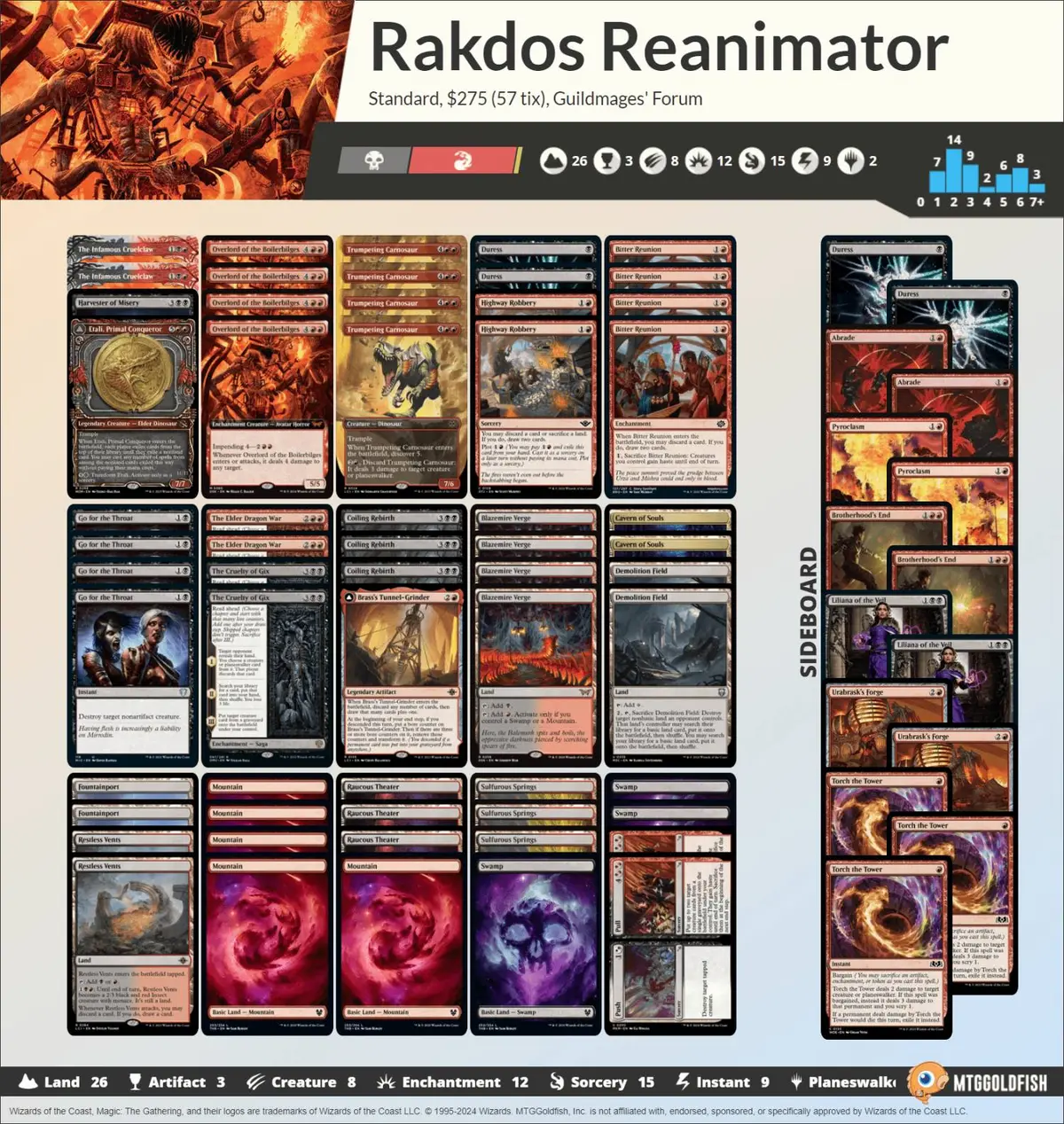
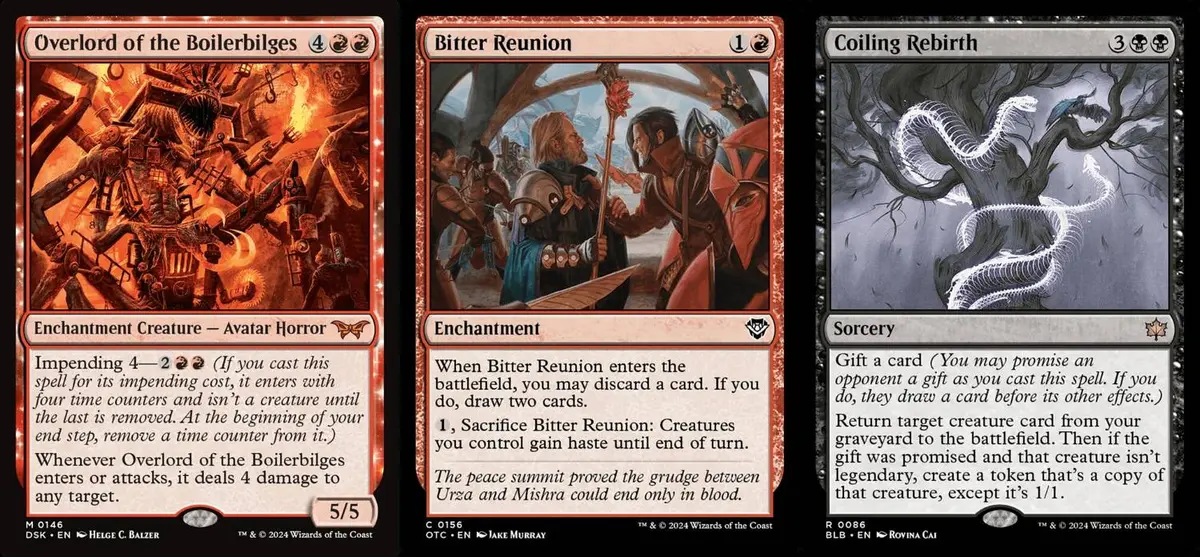
Powerful ETB creatures like Overlord of the Boilerbilges and Trumpeting Carnosaur have always been good targets for reanimator decks, and cheap removal options also keep them from getting stuck in hand easily. Because they aren’t legendary, they’re also suited to Coiling Rebirth for even more outrageous boards.
If you reanimate Overlord of the Boilerbilges while Bitter Reunion is on the battlefield, or put it onto the battlefield with Push // Pull, it can attack immediately, suddenly making multiple burn shots dealing 4 to any target in a single turn. Most opponents should feel enormous pressure.
Sultai Reanimator
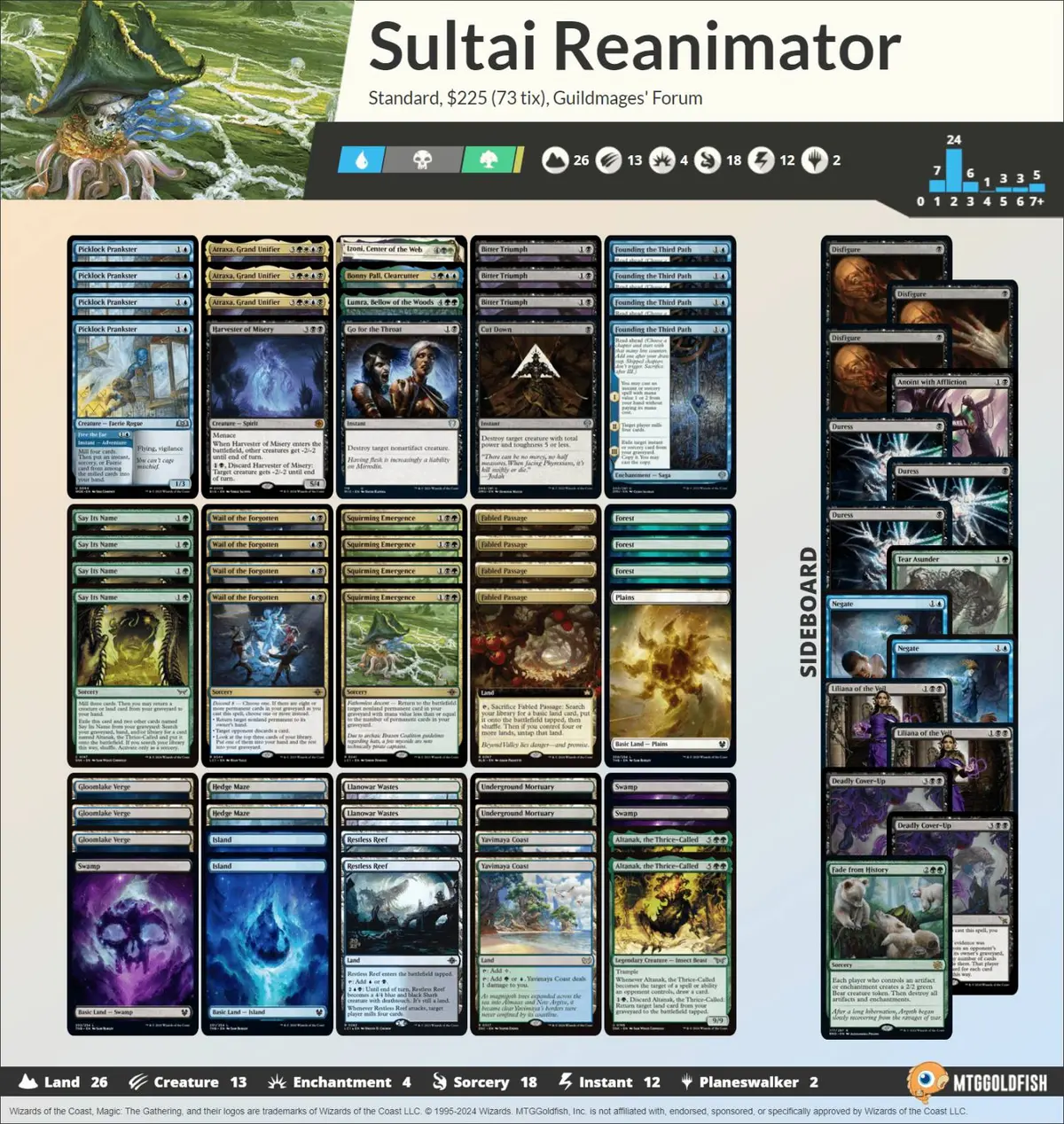
A classic Squirming Emergence build, likewise using Say Its Name + Altanak, the Thrice-Called to reinforce the existing reanimator archetype.
Temur Overlord
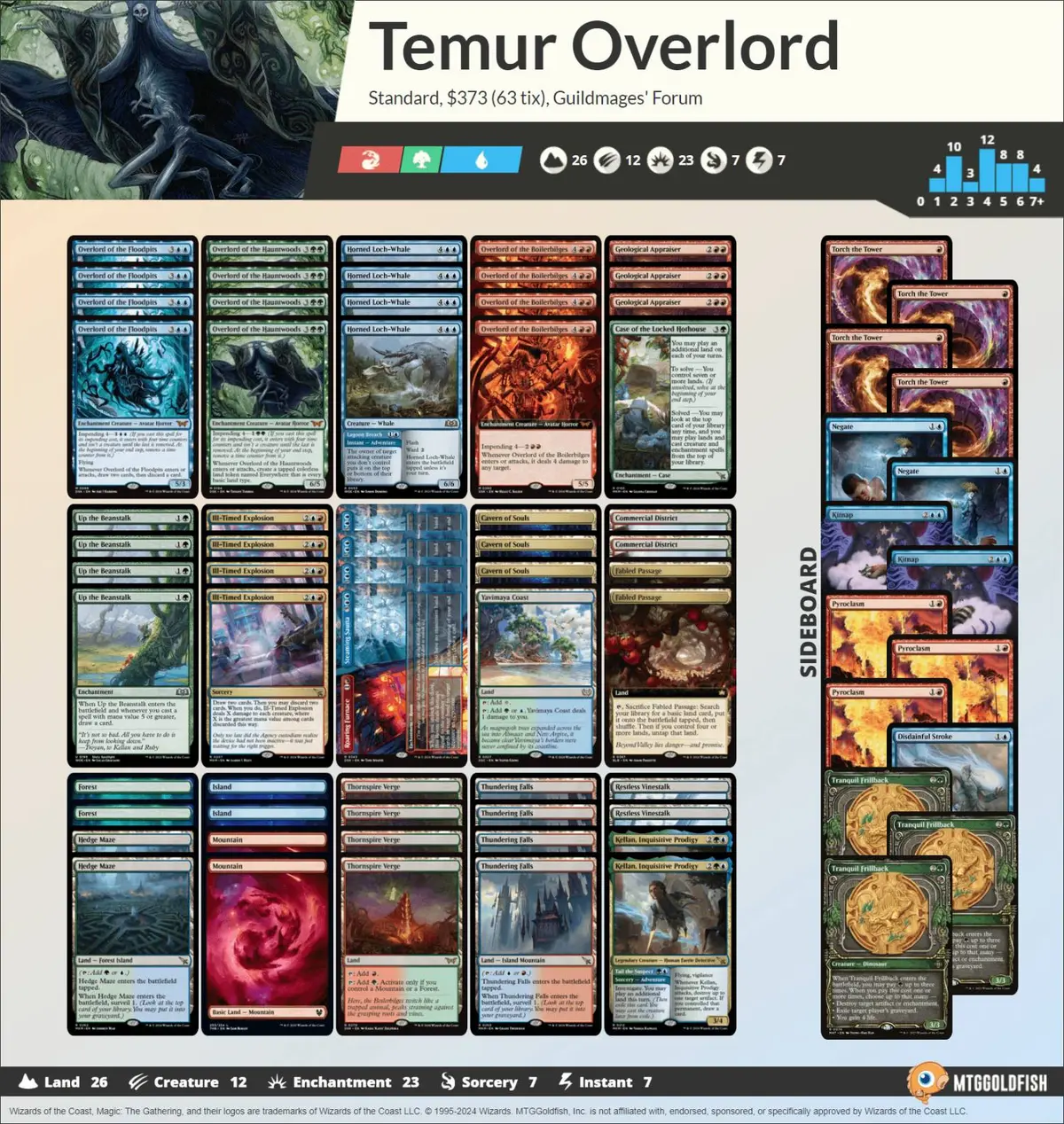
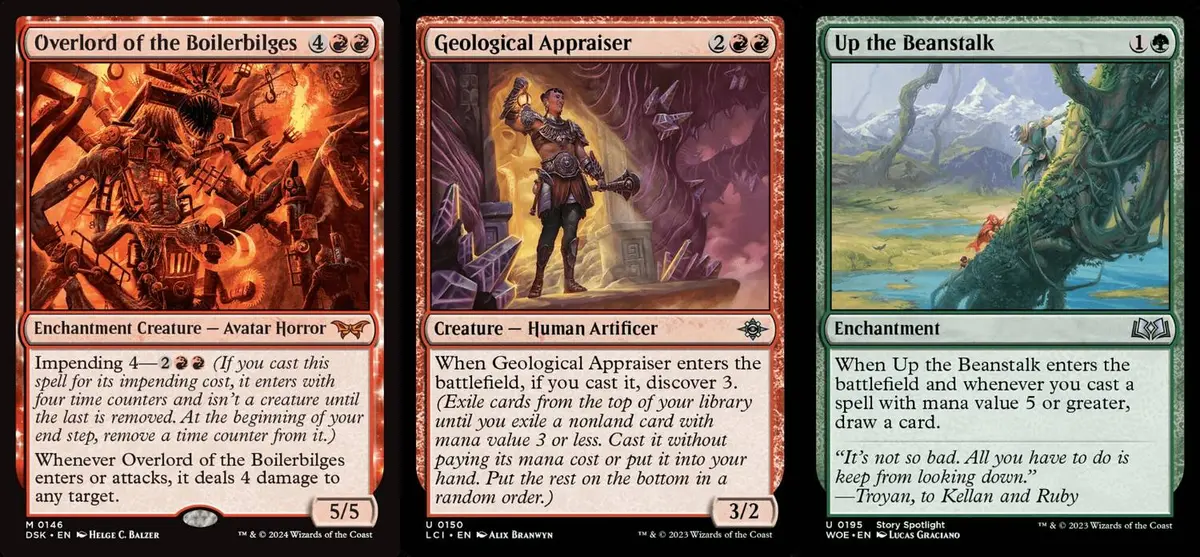
There is a deck that works like this: an ability flips cards from the library until it finds a spell with mana value less than or equal to X and casts it for free. The only legal target in the deck is the card-advantage engine Up the Beanstalk, and the rest of the cards use split cards, adventure cards, alternative costs, and other single cards to make high-cost cards that still have something to do on the low end of the curve. One of them, a red creature with an alternative cost, deals 4 damage when it enters the battlefield.
That’s right, this is the new Standard Overlord deck. Modern’s Cascade Beanstalk Fury or whatever is all an illusion.
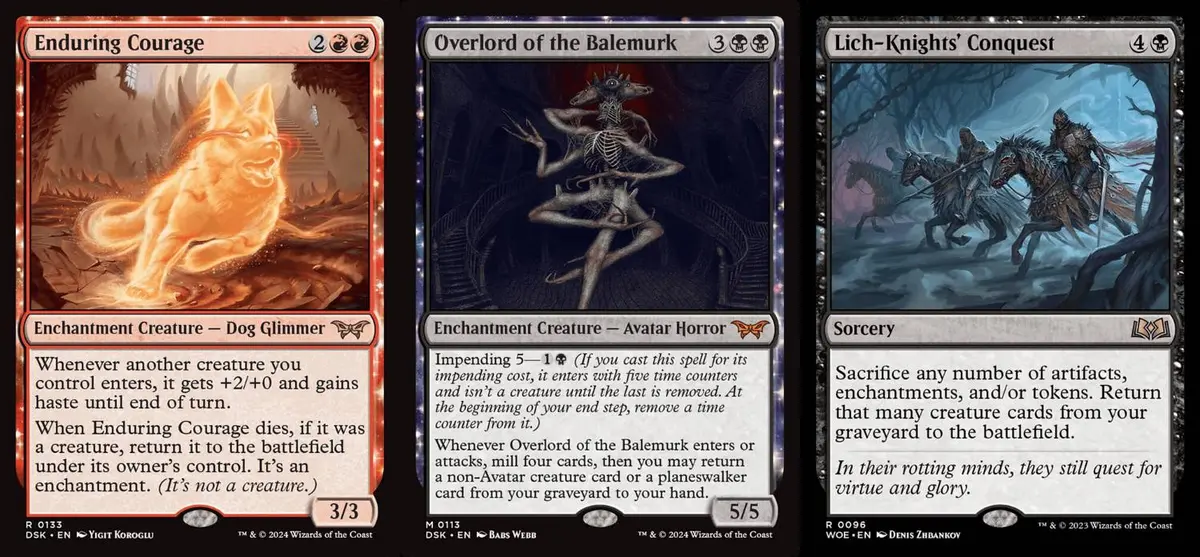
Jund Lich-Knights’ Conquest
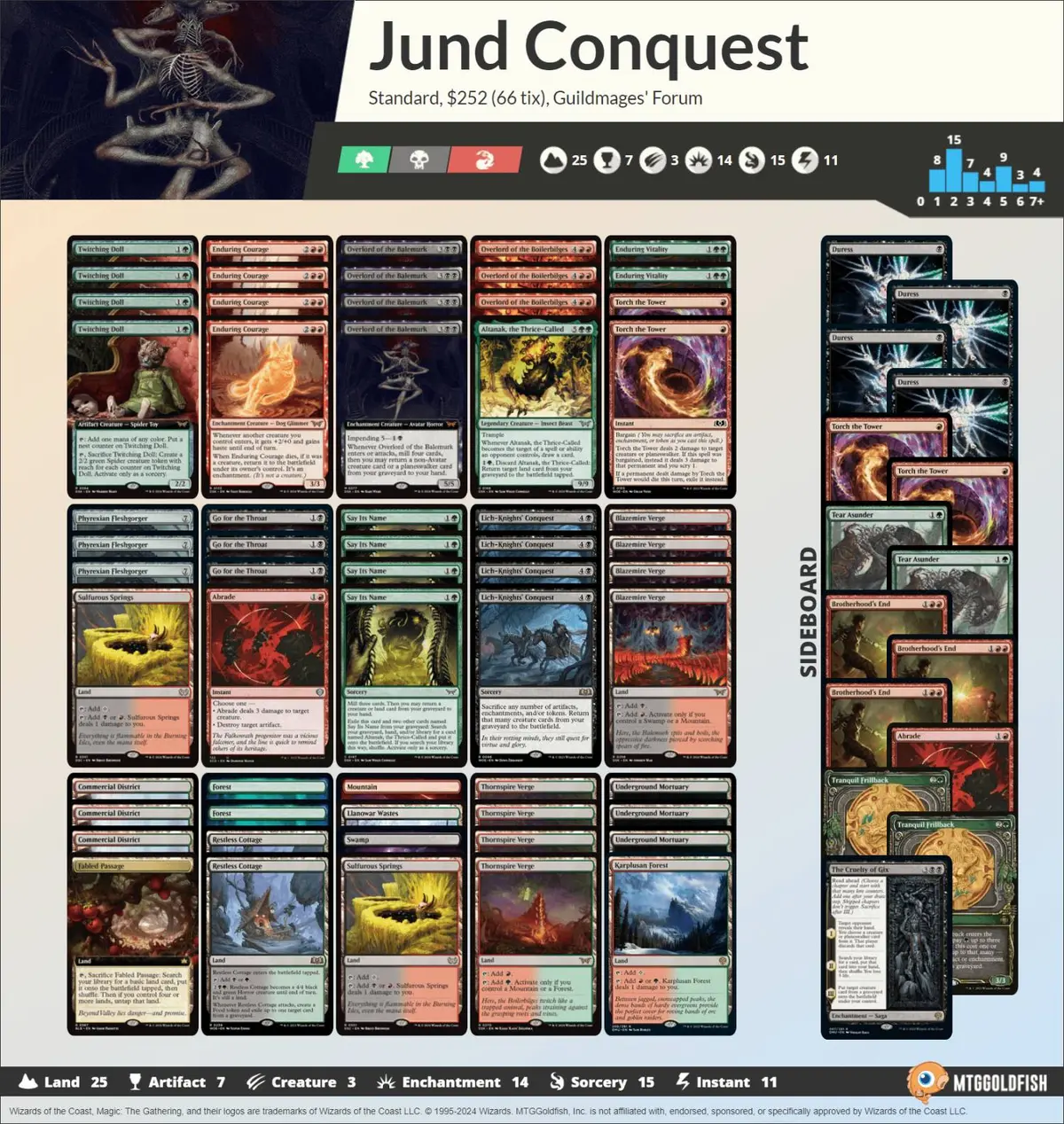
Going-wild deck 1.
Lich-Knights’ Conquest: Sacrifice any number of artifacts, enchantments, and/or tokens. Return that many creature cards from your graveyard to the battlefield.
In practice, it can at least sacrifice all the artifacts and enchantments on your battlefield and immediately bring them back, achieving an effect like Cloudshift. That is, you can re-enter all your Enduring creatures and Overlords, even if they are currently noncreature. Of course, it’s even better if there are other good options in the graveyard. Enduring Courage can give the entering creatures +2/+0 and haste, even if they enter at the same time, so you can reanimate a whole bunch of creatures and rush out together.
Izzet Rooms
Going-wild deck 2.
It’s rare to get an alternate win condition with this much flavor, and it would be a real shame not to give it some page space. But I have to admit that this deck is mainly for the meme, and in actual play it may not keep up with the mainstream tempo of the metagame.
Conclusion
From my personal understanding of the matchups, I actually think the boost Duskmourn gave to red aggro archetypes is very dangerous…
The first thing previewed was Screaming Nemesis. This card nearly single-handedly overturns the traditional answers to red aggro, namely life gain and creature blocking, and it is also a fast haste attacker with good tempo, so I deeply doubt whether this card exceeds what Standard can bear. But then the previews produced a red Leyline deck that kills you on turn two, and the topic of Screaming Nemesis was set aside for the time being.
In my eyes, the red Leyline archetype of aggro (or should I say combo?) is a hypothetical enemy that deserves special respect in the early metagame. The way to respect it is also simple: in sideboard games, have at least 4 one-mana removal spells in your deck, and if the metagame develops too extremely, even 6 is reasonable (of course, some decks with especially tight slots may find it hard to do this, so do what you can). Only one-mana removal can protect you from being killed in a single turn when you are on the draw. But the red Leyline aggro deck, a single-minded deck that bets on its ceiling, also has obvious weaknesses: once the first wave of attacks is cut off, it may struggle to give strong enough pressure again. So I predict red Leyline aggro will be very popular at first, even squeezing the survival space of a large number of decks, and every deck will be forced to bring plenty of one-mana removal to deal with this problem. But after being fully respected by the metagame, its momentum will gradually fade, and it won’t have monopoly-level dominance over the metagame, with traditional red aggro archetypes rising again. As for what to do about the Screaming Nemesis problem by then… leave it to future me.
- Title
- A First Look at Duskmourn Standard
- Author
- Jru
- Created at
- September 25, 2024
- License
- This work is licensed under CC BY-NC-SA 4.0 .