A First Look at Foundations Standard



Note: This article was translated from Chinese by AI and may contain errors. Read the original Chinese version.
Introduction
Welcome to our usual first look at the new Standard card pool. Foundations (FDN) is a very unusual set, and I suspect many of you still can’t make sense of its product lineup: which cards are legal in Standard? Which ones can you open in booster packs? And how long will this set stay Standard-legal?
So before we get into the decks, let’s talk about the set itself.
The Foundations Card Pool
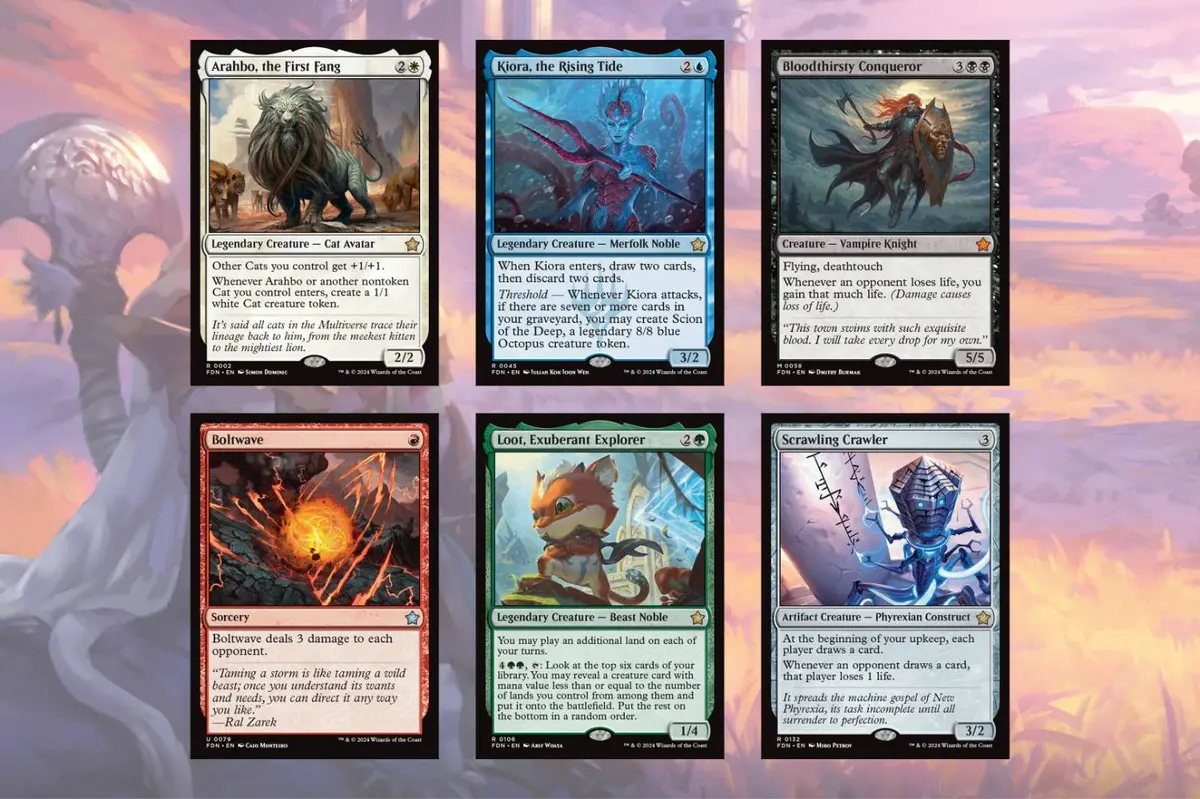
The Foundations card pool consists of the following three products:
- Regular booster packs
- Beginner Box
- Starter Collection
Regular booster packs are the ones we crack every day, and they make up the entire Limited card pool. The other two are extra products, but they still count as part of the FDN set, so those cards enter Standard as well.
The general rule is to check a card’s set symbol and set code (the three-letter abbreviation in the bottom left corner). If the set symbol and code say FDN, the card is Standard-legal.
To check the complete FDN card pool, see: FDN full card list.
Foundations Rotation
According to the current announcements, FDN cards will stay legal in Standard until 2029.
Combat Rules Change
Starting with FDN, the combat phase gets a major rules change. Previously, after blockers were declared in the declare blockers step, if there were multiple blockers you had to immediately “order the blockers” for damage assignment. That process is gone: players no longer declare any damage assignment order, and can divide damage freely when damage is dealt. For more details on the combat rules, see the article: Turn Structure Explained.
Deck Introductions
4 Colors Gates
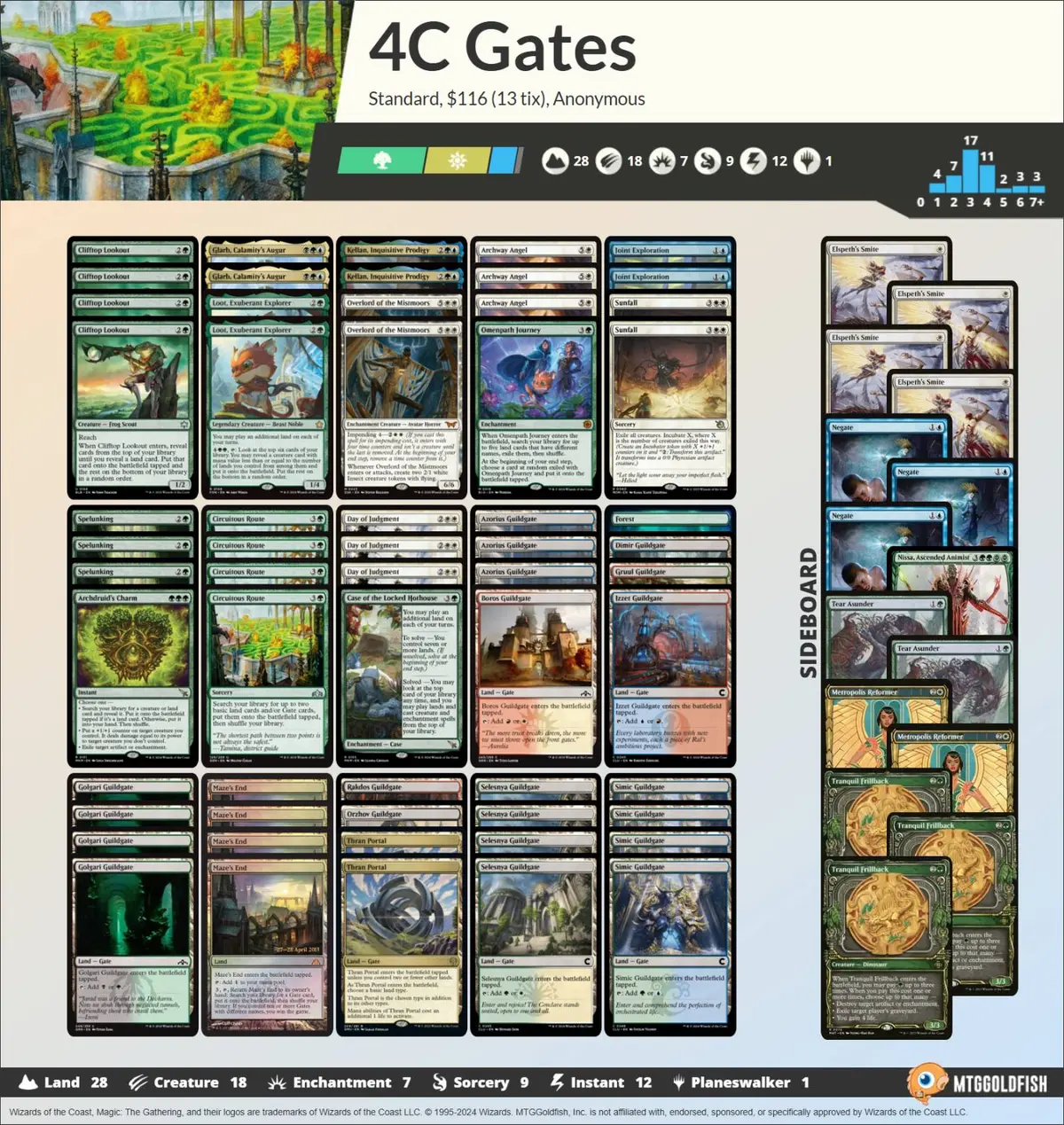
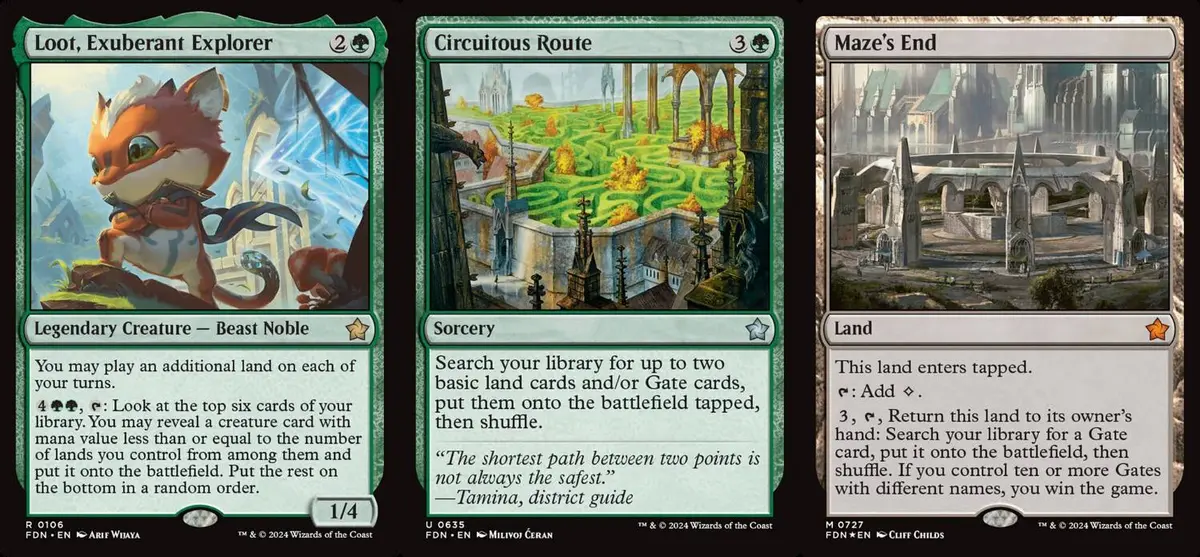
Maze’s End is back! This deck comes from 約力昂大叔 Uncle Yorin and was tweaked slightly by the GF team. Let Loot, Exuberant Explorer and Glarb, Calamity’s Augur help you play a pile of lands, gain a ton of life with Archway Angel, hold the board together with sweepers, and then run the maze for a surprise win!
Don’t forget that Standard has an 11th Gate, too: Thran Portal can make your maze run much smoother. It is an early-game land that plays almost like a fast land, though tapping it for mana costs 1 life. Since this deck is designed to start going off around turn three or four, a Gate that comes down on time matters a lot. Recommended for control players who like to win in unusual ways!
At its core this is Bant Gates control. Black is only there to add Glarb, Calamity’s Augur and the boosted mode of Tear Asunder.
Golgari Elvish Snowball
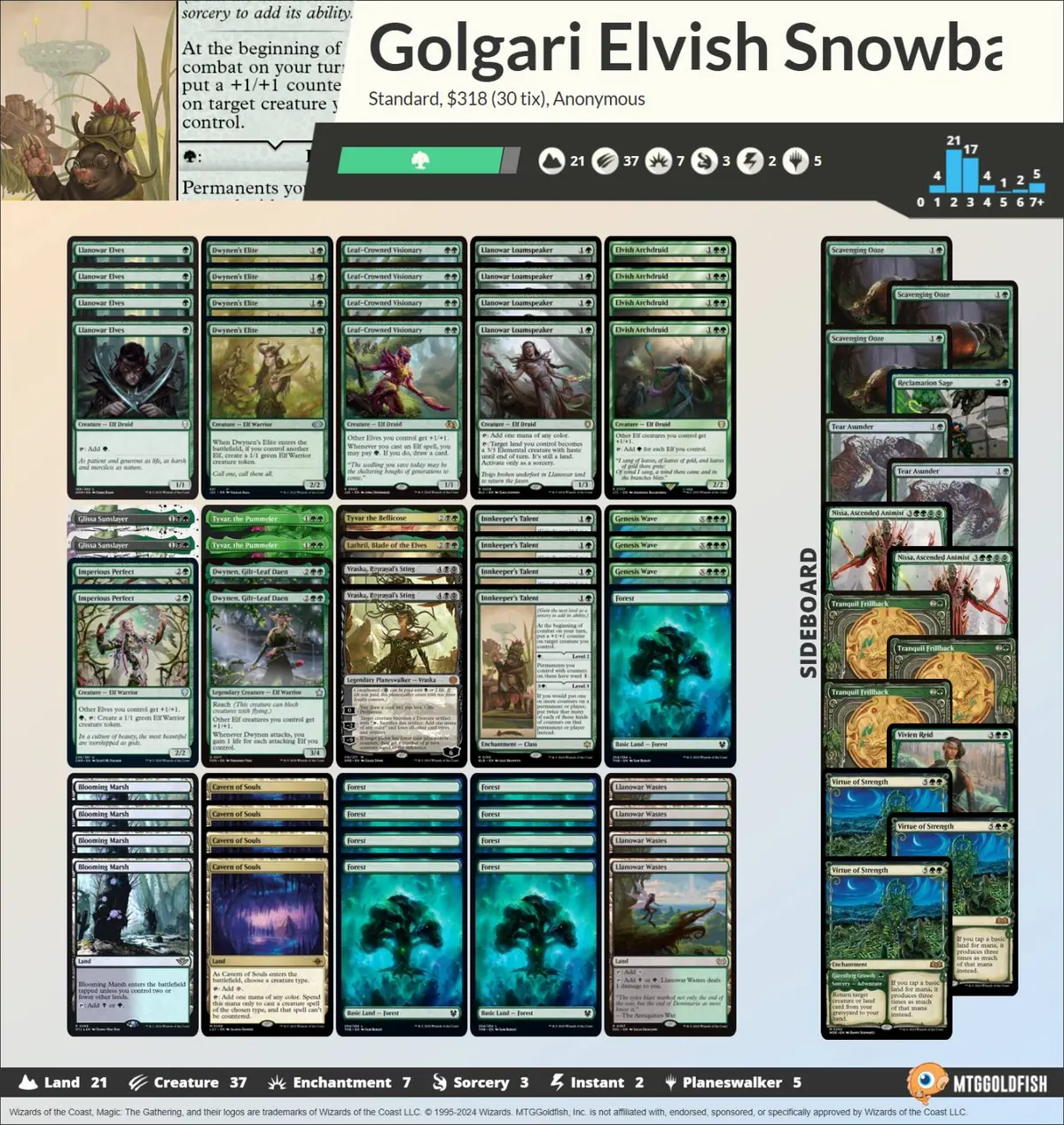
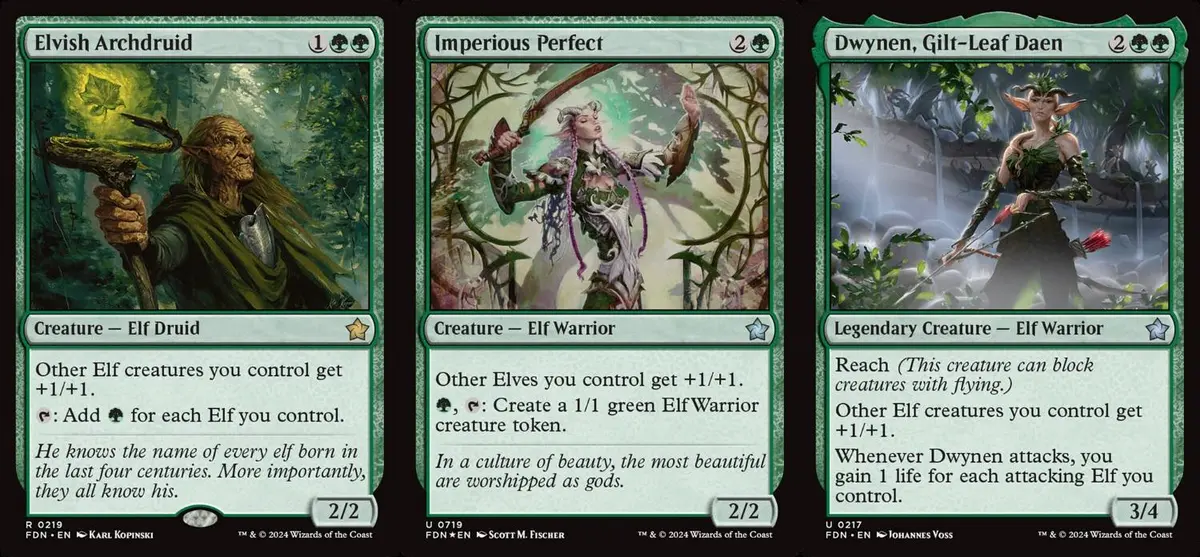
FDN pushes the Elf tribe hard. Besides Llanowar Elves, this list runs all four Elf lords available in Standard (Elvish Archdruid, Imperious Perfect, Dwynen, Gilt-Leaf Daen, and DMU’s Leaf-Crowned Visionary), then throws in the strong legendary Elves such as Glissa Sunslayer, Lathril, Blade of the Elves, Tyvar the Pummeler, and Tyvar the Bellicose. Since Elves should make plenty of mana, the reprinted Genesis Wave goes in too. On the green side, Innkeeper’s Talent fits the deck very well, and while we’re at it, why not add Vraska, Betrayal’s Sting for an instant-win combo?
For lands, apart from the full four Cavern of Souls, there is still some room for fine-tuning. The one-drop slot is also a bit thin with only four Llanowar Elves, but if you manage to jump from one to three and then from three to infinite, the snowball starts rolling very quickly… right?
That said, this version still has a few problems that today’s Standard card pool can’t fix well:
- No second one-drop mana dork. Elvish Mystic is a real loss;
- No two-drop like Elvish Warmaster that steadily produces more Elves;
- No big flexible payoff like Chord of Calling to find the key creature.
Treat this build as a basic prototype for everyone to keep brewing with. Maybe future sets will fill in these missing pieces!
Finally, here is a midrange Golgari Elves version. With a mana dork on turn one, Glissa Sunslayer on turn two, and Lathril, Blade of the Elves or Wilt-Leaf Liege on turn three, the attacking tempo is already strong enough! Using Llanowar Elves as the starting point for a green-based midrange ramp plan may well perform better than the clunky pure-Elf approach!
Golgari Elves midrange decklist
Golgari Demons
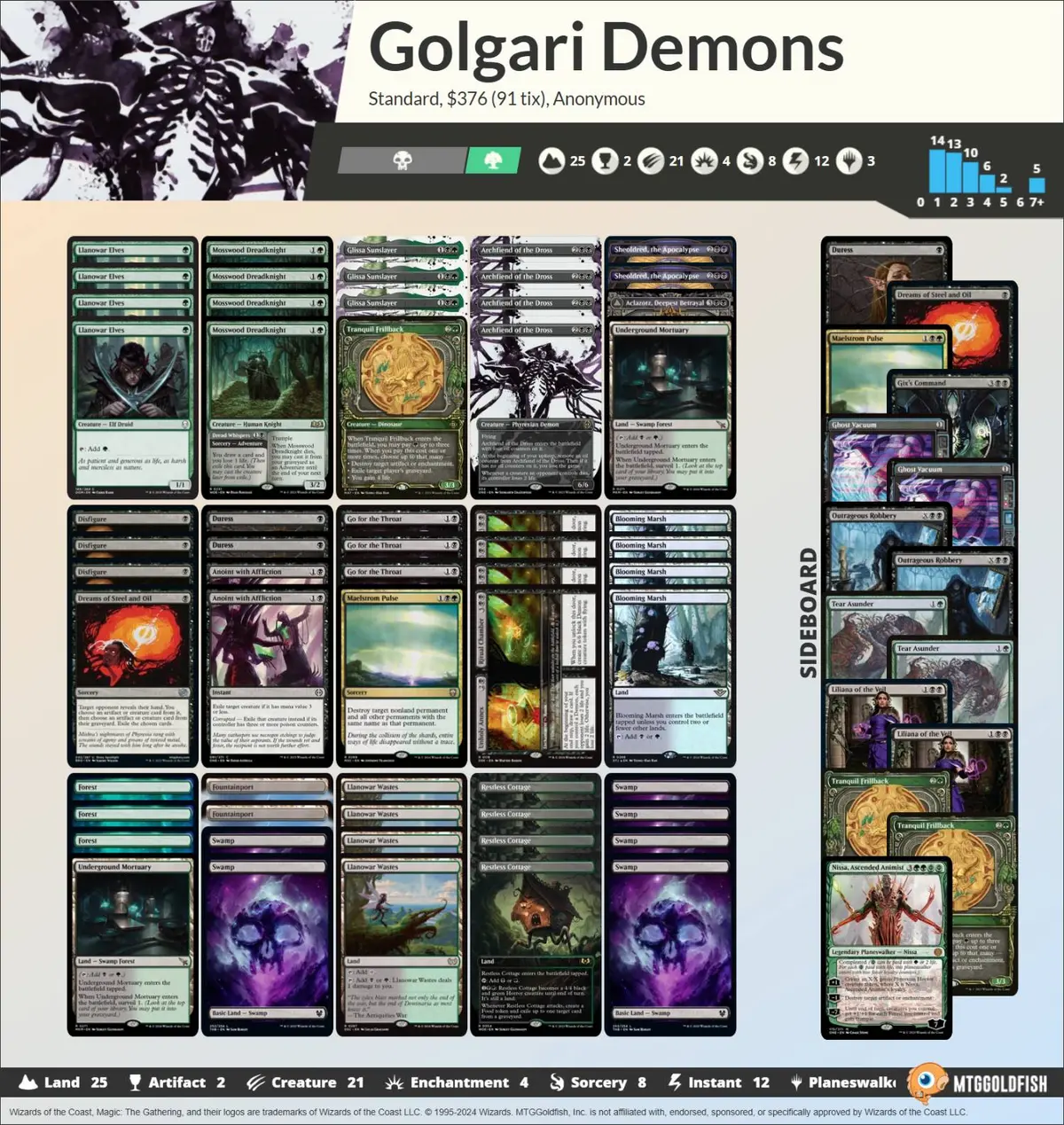
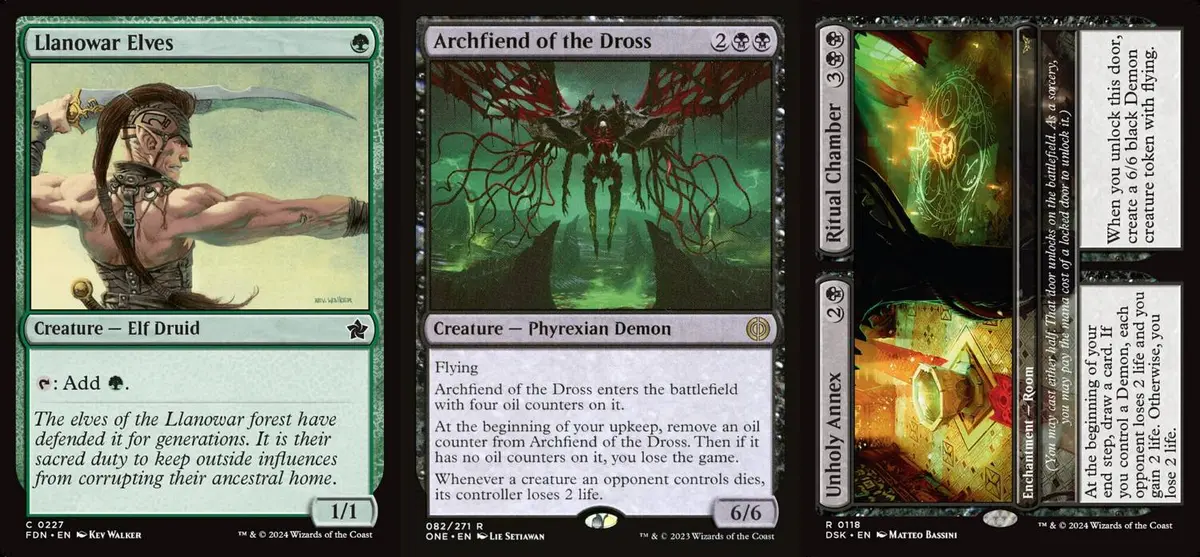
Llanowar Elves will drive green-based midrange forward at full speed! The Demon midrange deck used to have poor tempo, but with a one-mana dork it takes a qualitative leap! Picture this: dork on turn one, Unholy Annex // Ritual Chamber on turn two, Archfiend of the Dross on turn three, and on turn four you unlock the five-mana Room to make a 6/6 Demon! Even if you get disrupted along the way, you still fall into the midrange rhythm Demons love. Highly recommended for players who already started trying Demons in the previous Standard!
Rakdos Demon
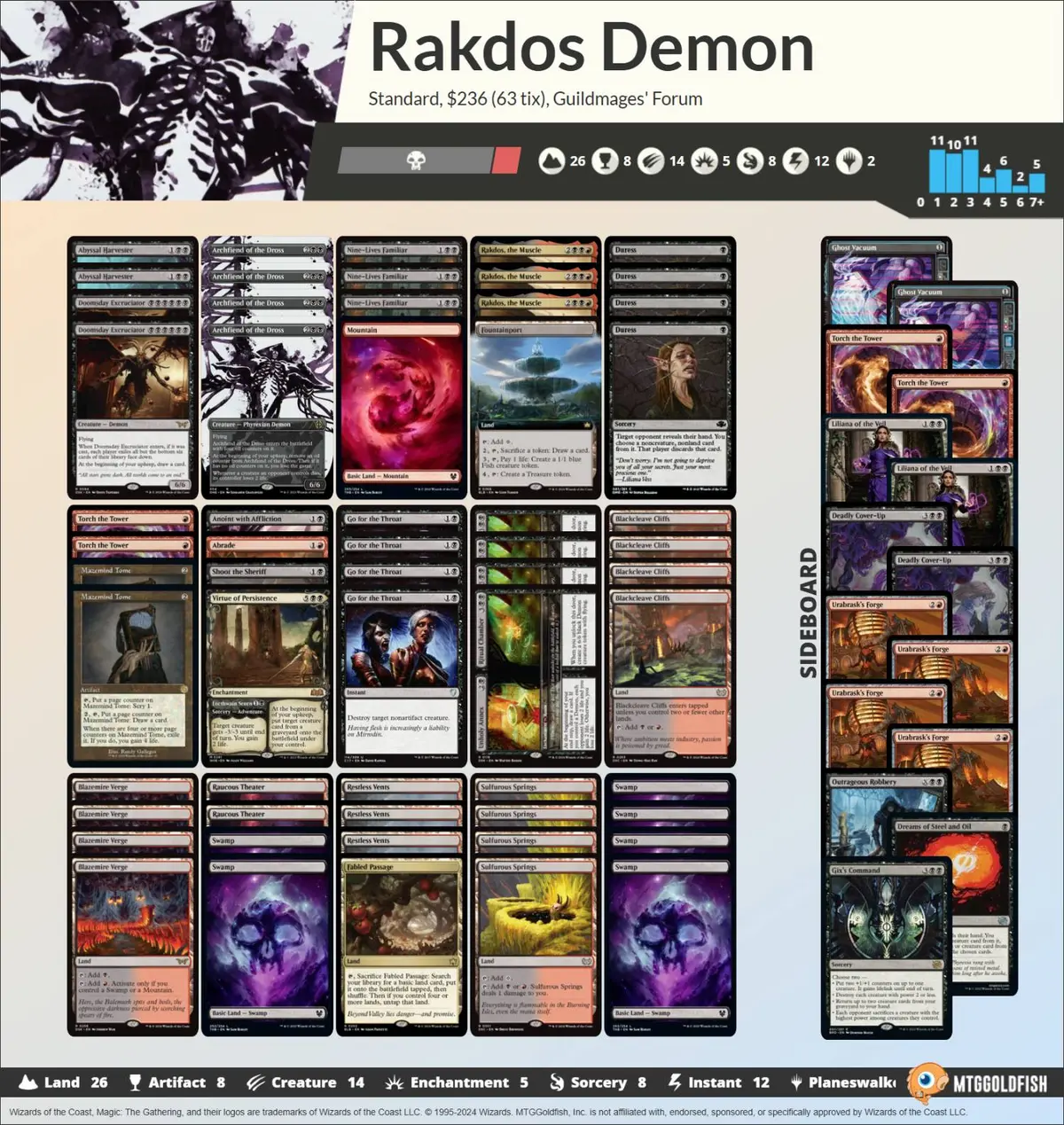
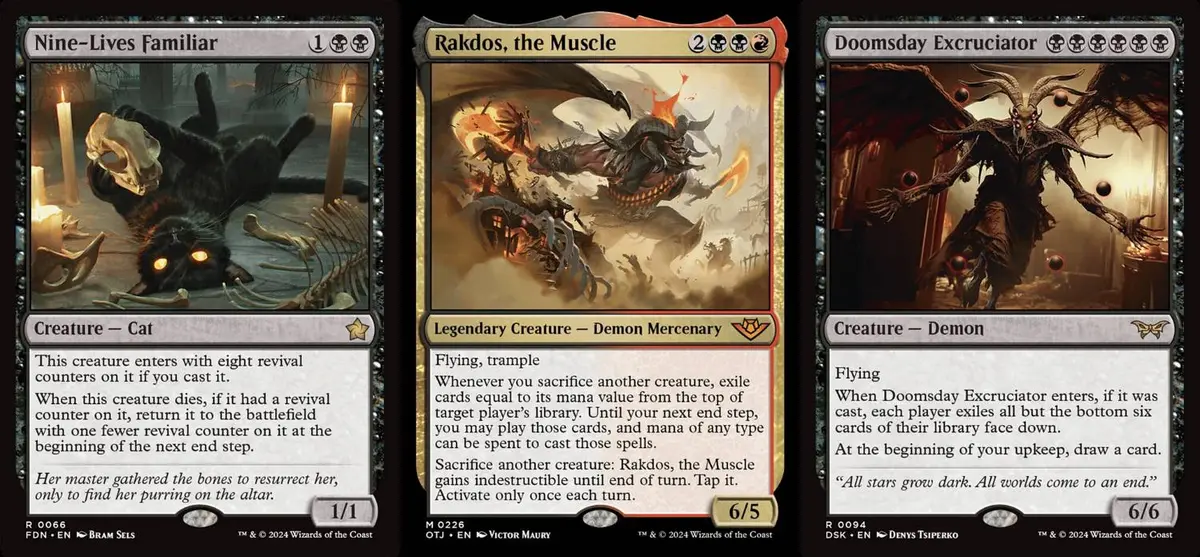
Another variant of the Unholy Annex // Ritual Chamber Demon shell. Rakdos, the Muscle + Doomsday Excruciator make an instant-win combo, and on top of that we tried adding Nine-Lives Familiar. This nine-lived kitty paired with Rakdos is also a real pain: it can repeatedly attack the opponent’s library while drawing you cards, and it isn’t easy to kill. Also, since this Demon deck’s explosive turn comes a bit slowly, the nine-lives cat might buy you time in the early game.
Rakdos Lizard
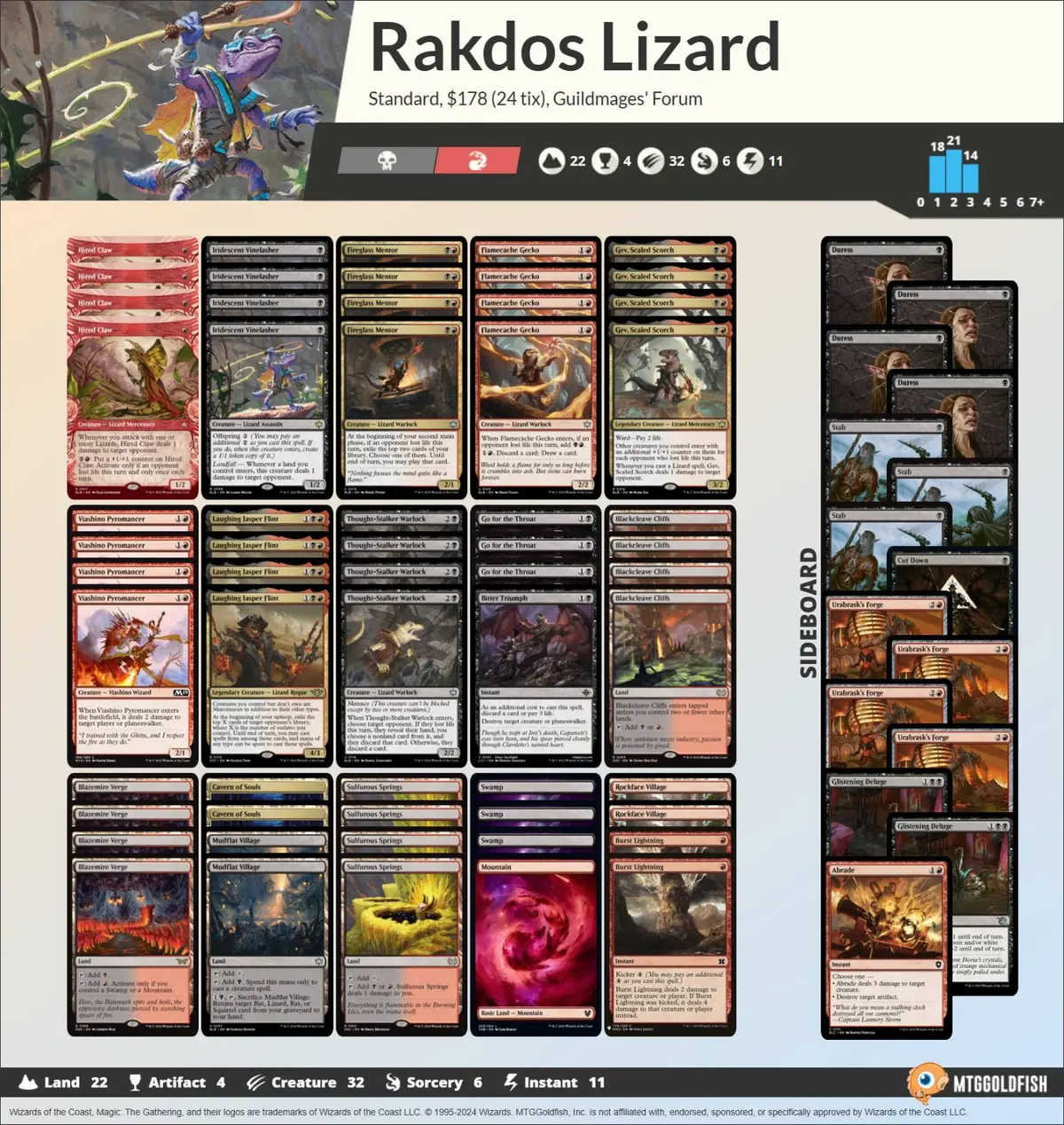
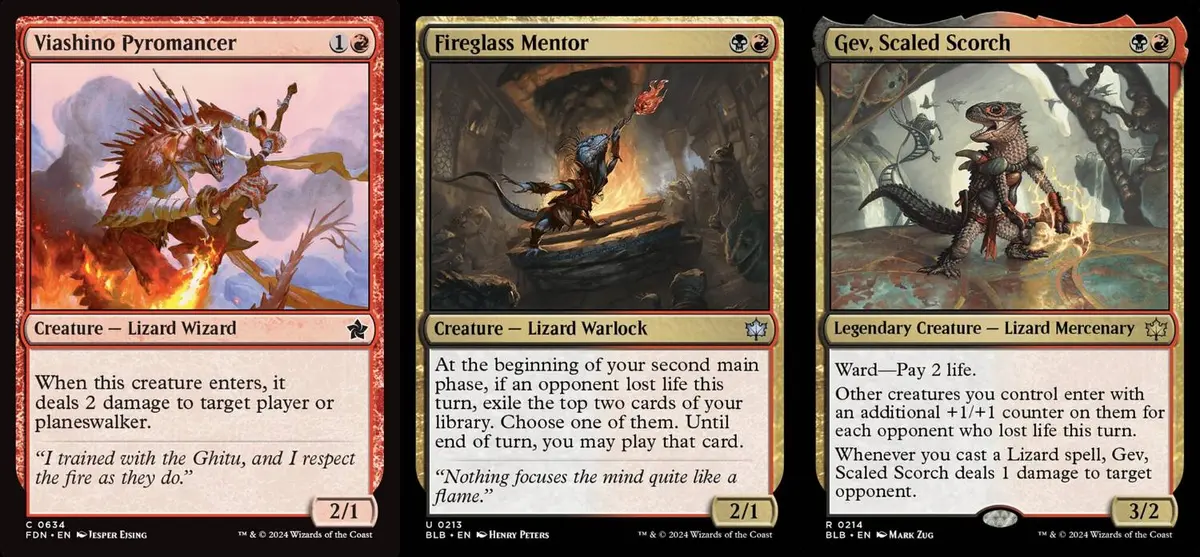
The real change to this deck is one extra creature, Viashino Pyromancer. The Lizard deck was missing a good two-drop curve, so some people used things like Deep-Cavern Bat to fill the curve. Now it gets a strong two-drop outright, and dealing damage to the opponent is exactly what Lizards need most. Just note that this Viashino is not an Outlaw, so don’t miscount when you use Laughing Jasper Flint to exile cards from the opponent’s library.
PS: Viashino Pyromancer really used to be a Viashino, but the Viashino creature type has now been unified into Lizard.
Gruul Dinosaur
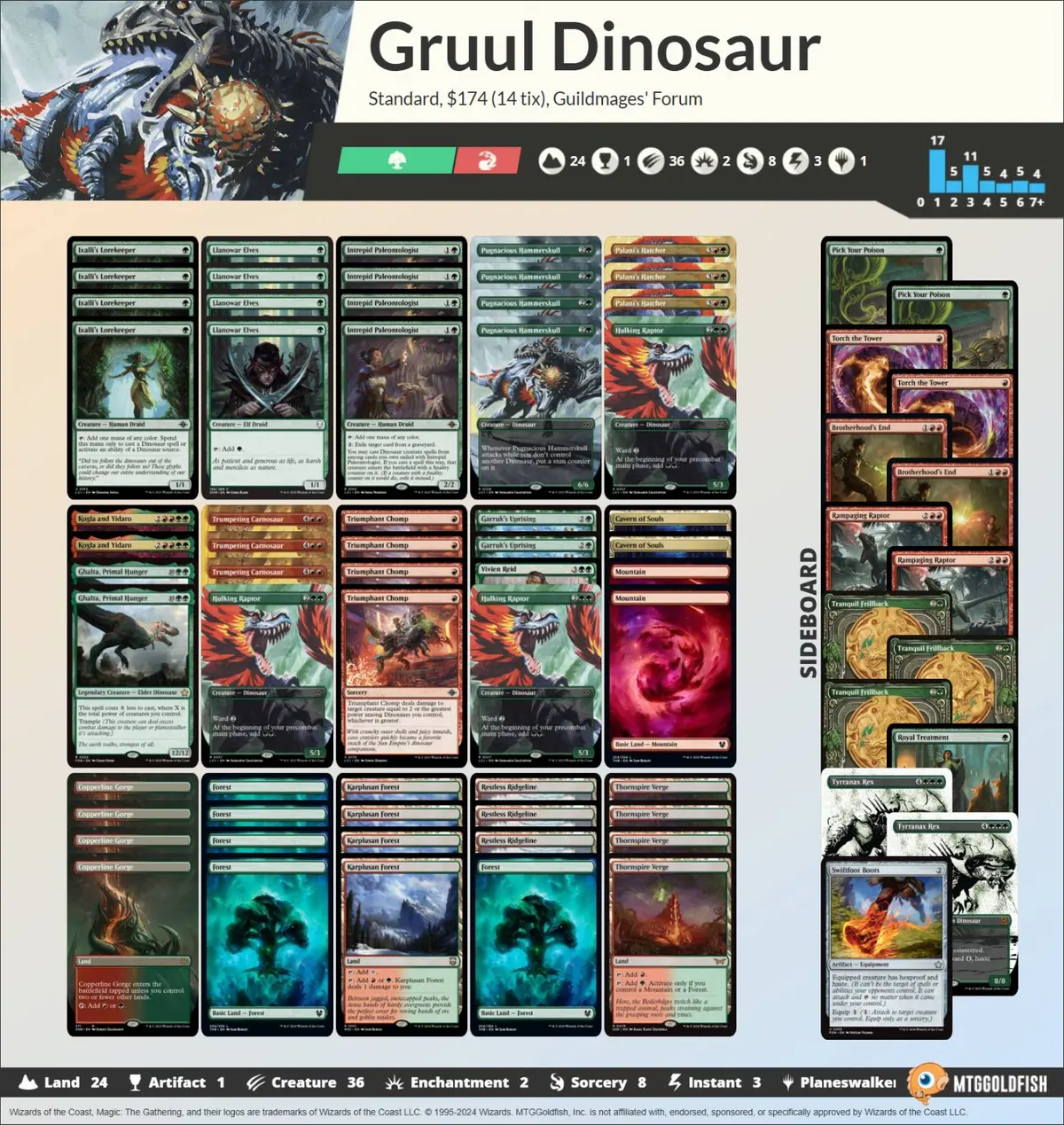
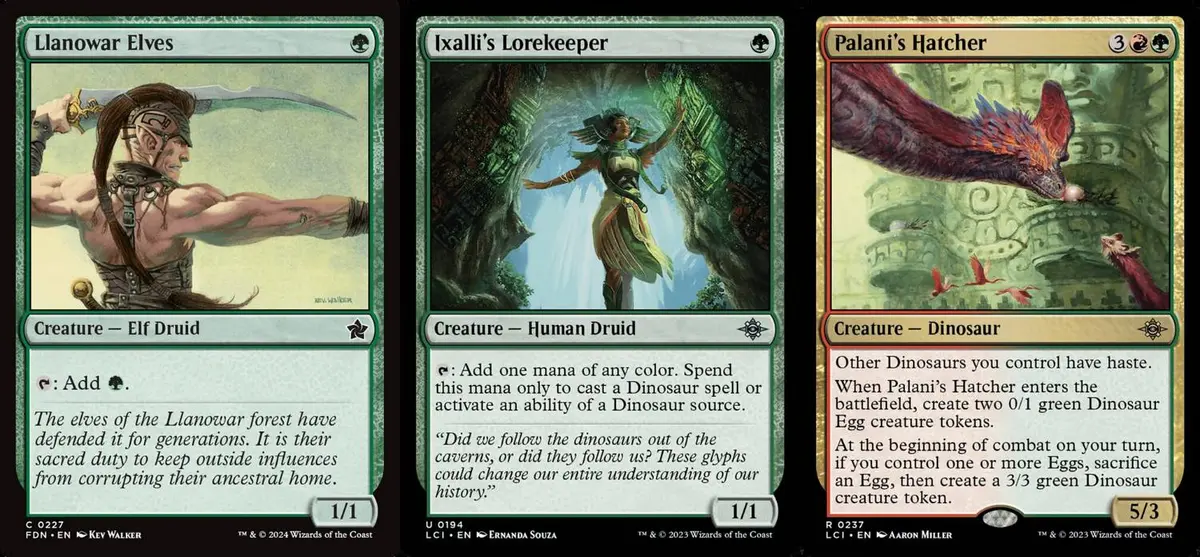
Llanowar Elves, come help Ixalli’s Lorekeeper share the workload. With only one playset of one-drop mana dorks the consistency is a bit shaky, but with two playsets the odds of having one in your opening hand are high enough.
Izzet Pirate
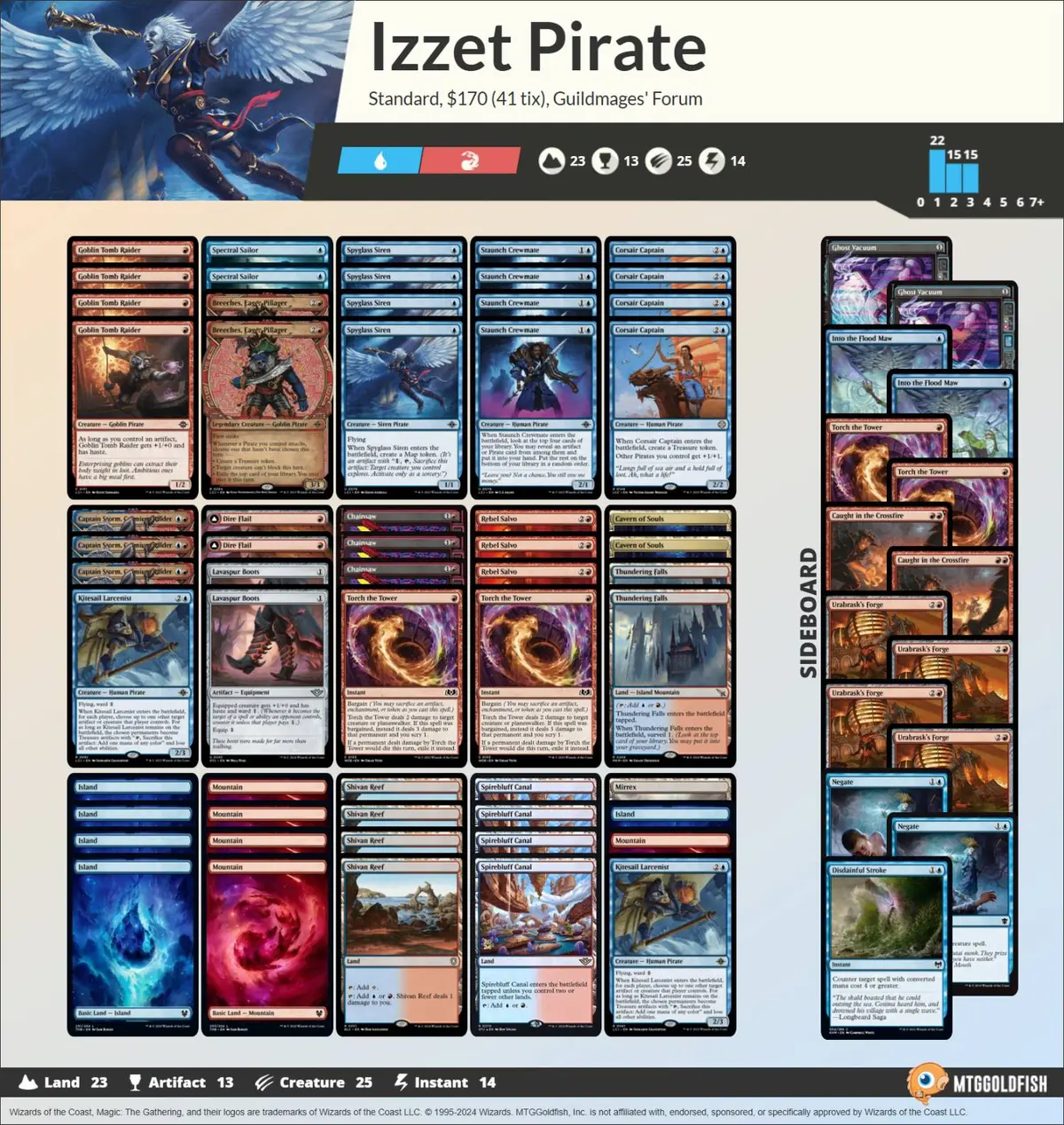
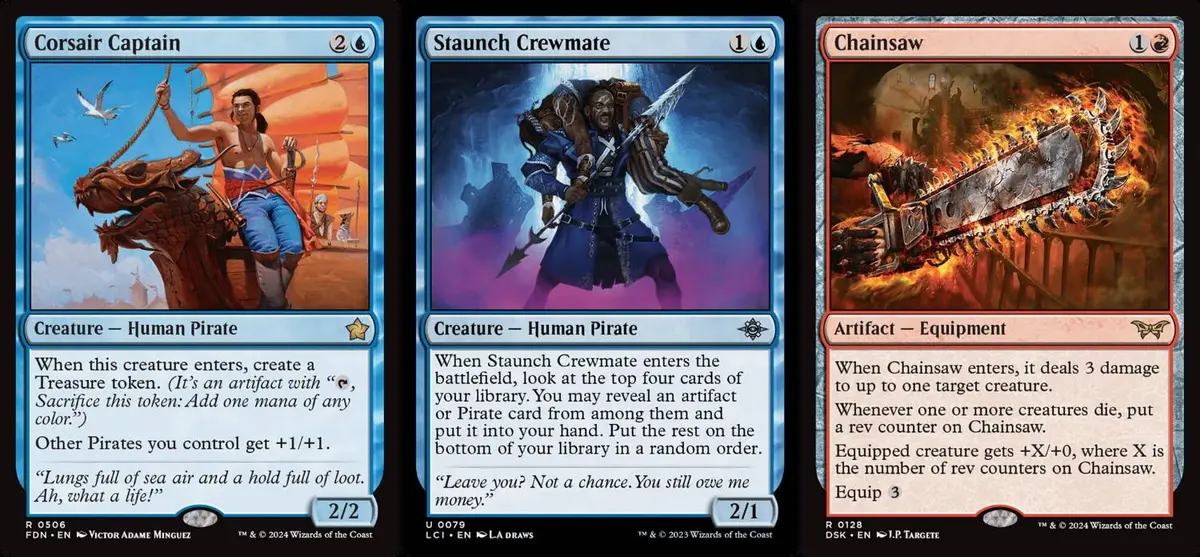
Pirates also got a reprinted lord this time, Corsair Captain. Making a Treasure on ETB fits well with the Pirates’ artifact subtheme, but it can’t be denied that its body is feeble and it lacks evasion, so it’s hard to say whether it can actually rescue the Pirate tribe.
Mono Blue Merfolk
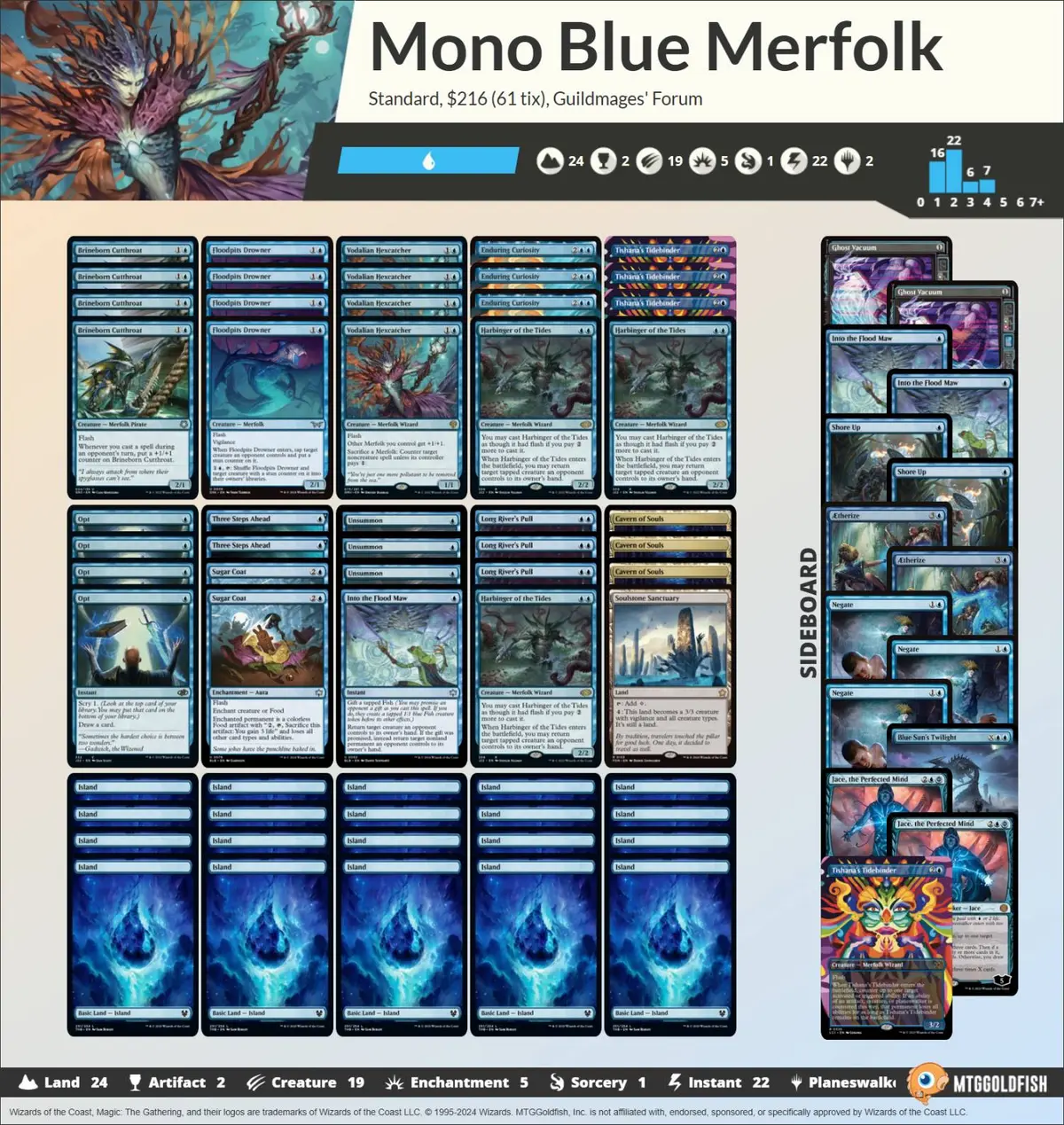
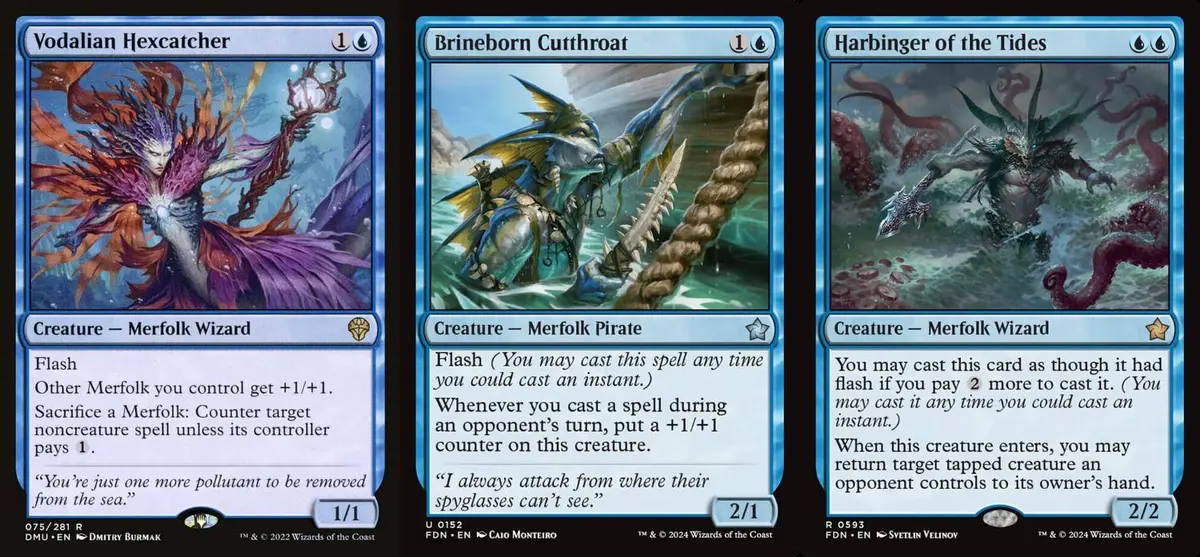
Although all of the Merfolk’s new support comes from reprints, those reprints are just plain useful. This Merfolk deck emphasizes its Draw-Go ability to maximize the firepower of Brineborn Cutthroat, which also lets mono blue’s strength with counterspells play out more easily.
Mono Red Goblin
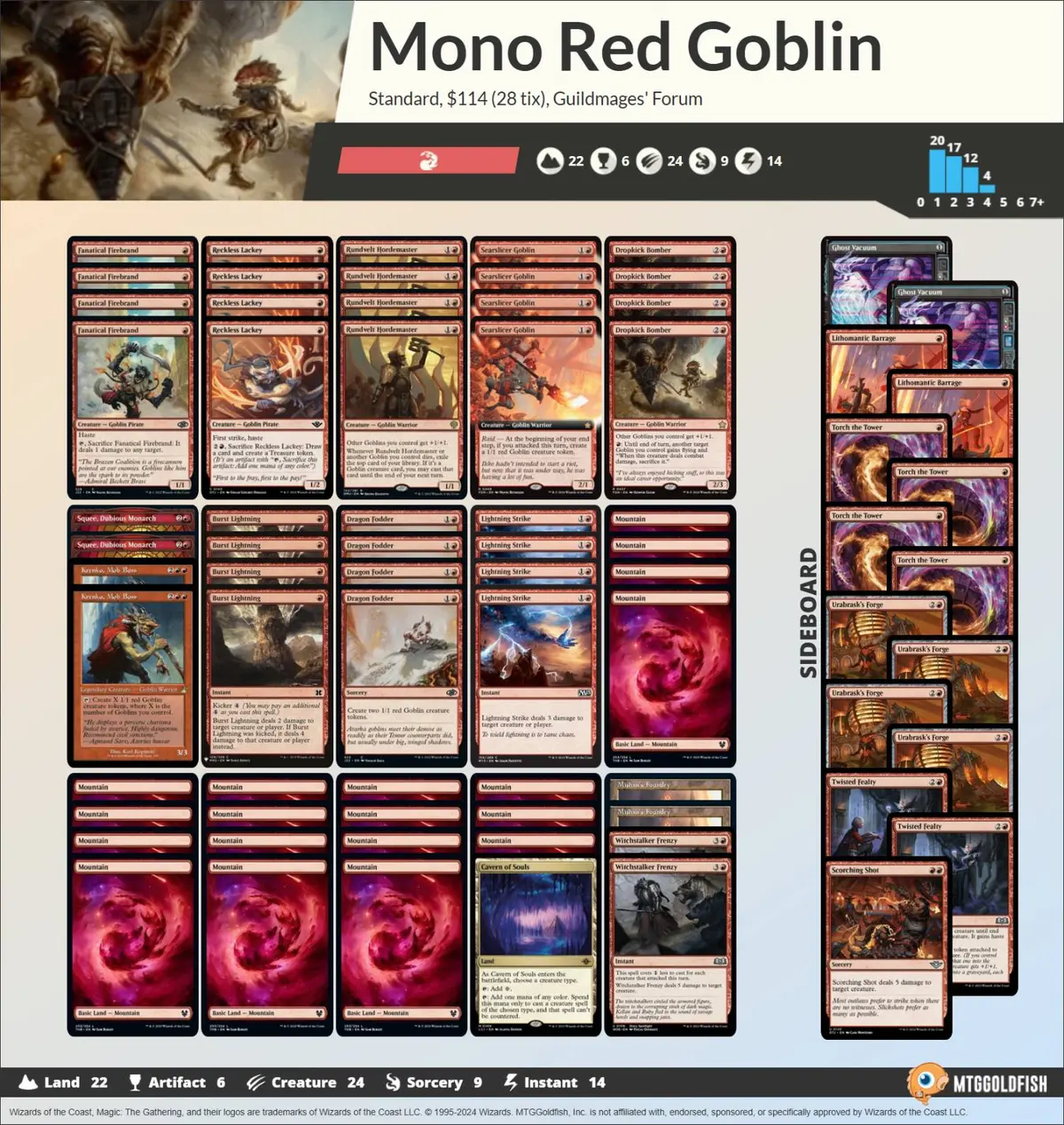
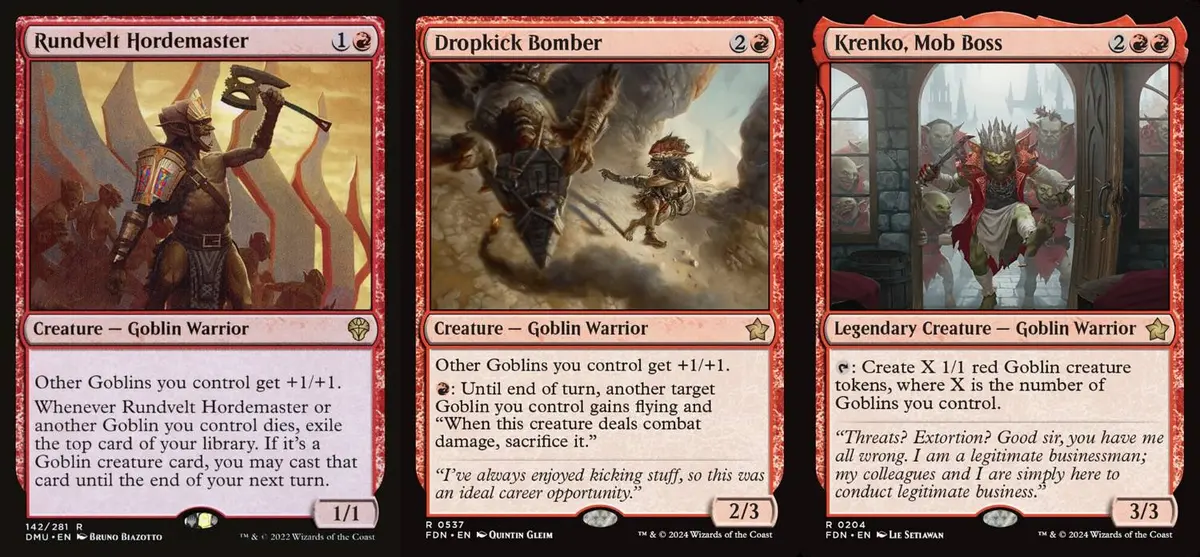
Goblins are treated quite well this time too, picking up the new cards Searslicer Goblin and Dropkick Bomber, which strengthen the go-wide ability further. On top of that, the star Goblin (Commander) king Krenko, Mob Boss is back as well. The author actually wanted to squeeze in Impact Tremors to boost the out-of-nowhere burst damage, but there is really no room for it right now.
Mono Black Skeleton
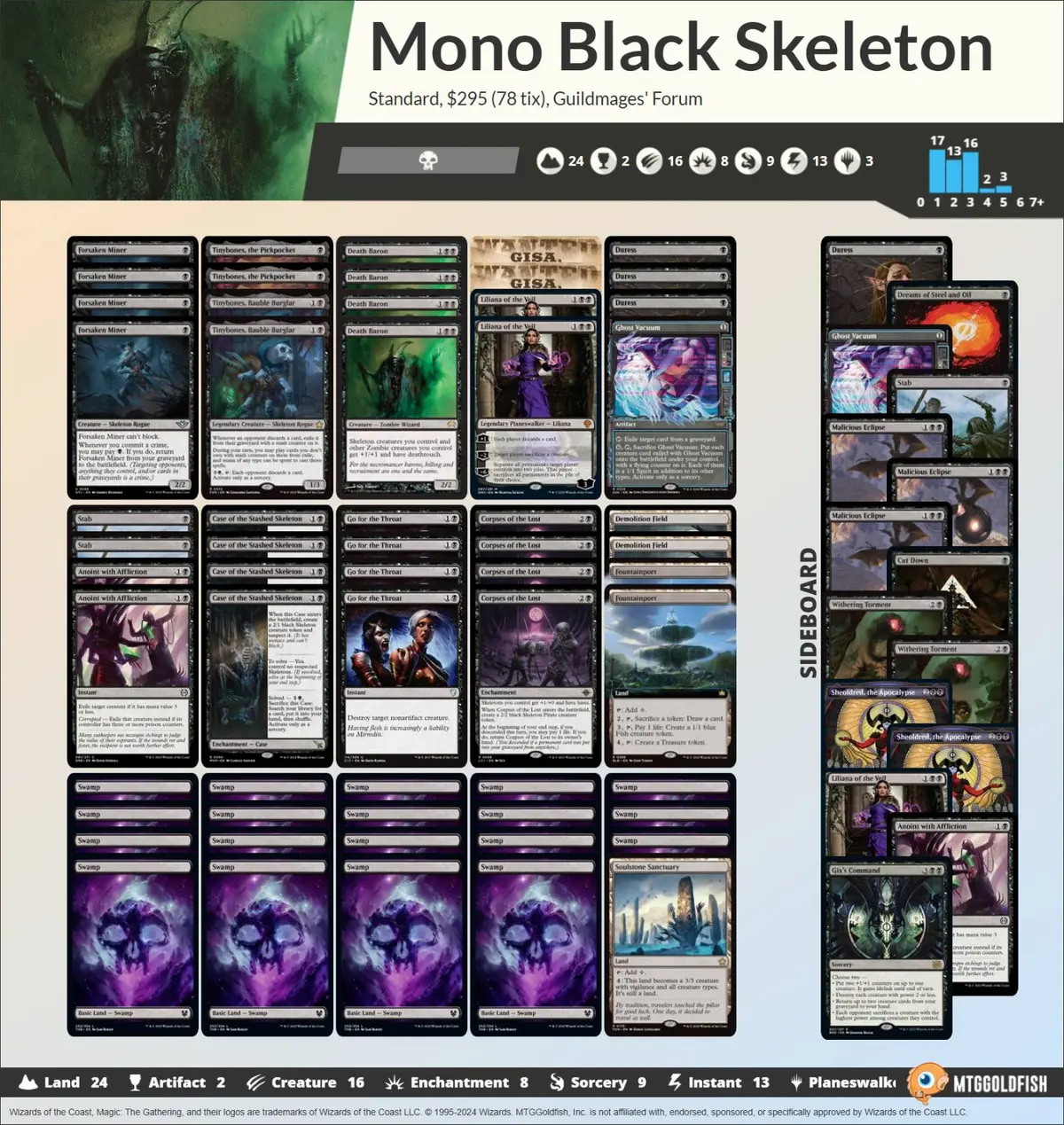
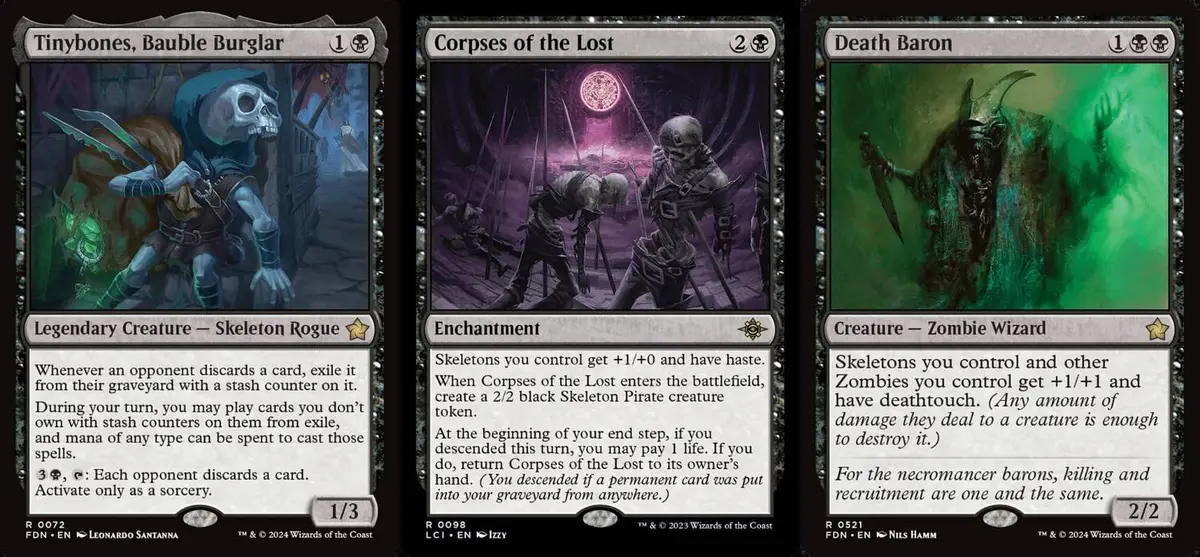
The Skeleton deck actually gets very little support this time, but it at least fills out the creature curve to a usable count. Tinybones, Bauble Burglar might let you gain a bit of value while disrupting the opponent’s hand, slightly improving the deck’s staying power, but mainly it is just a usable two-drop. At three mana we get the reprinted lord Death Baron. As a regular tribal lord there’s not much to complain about, but note that it is itself a Zombie; it merely pumps Skeletons.
Selesnya Angels
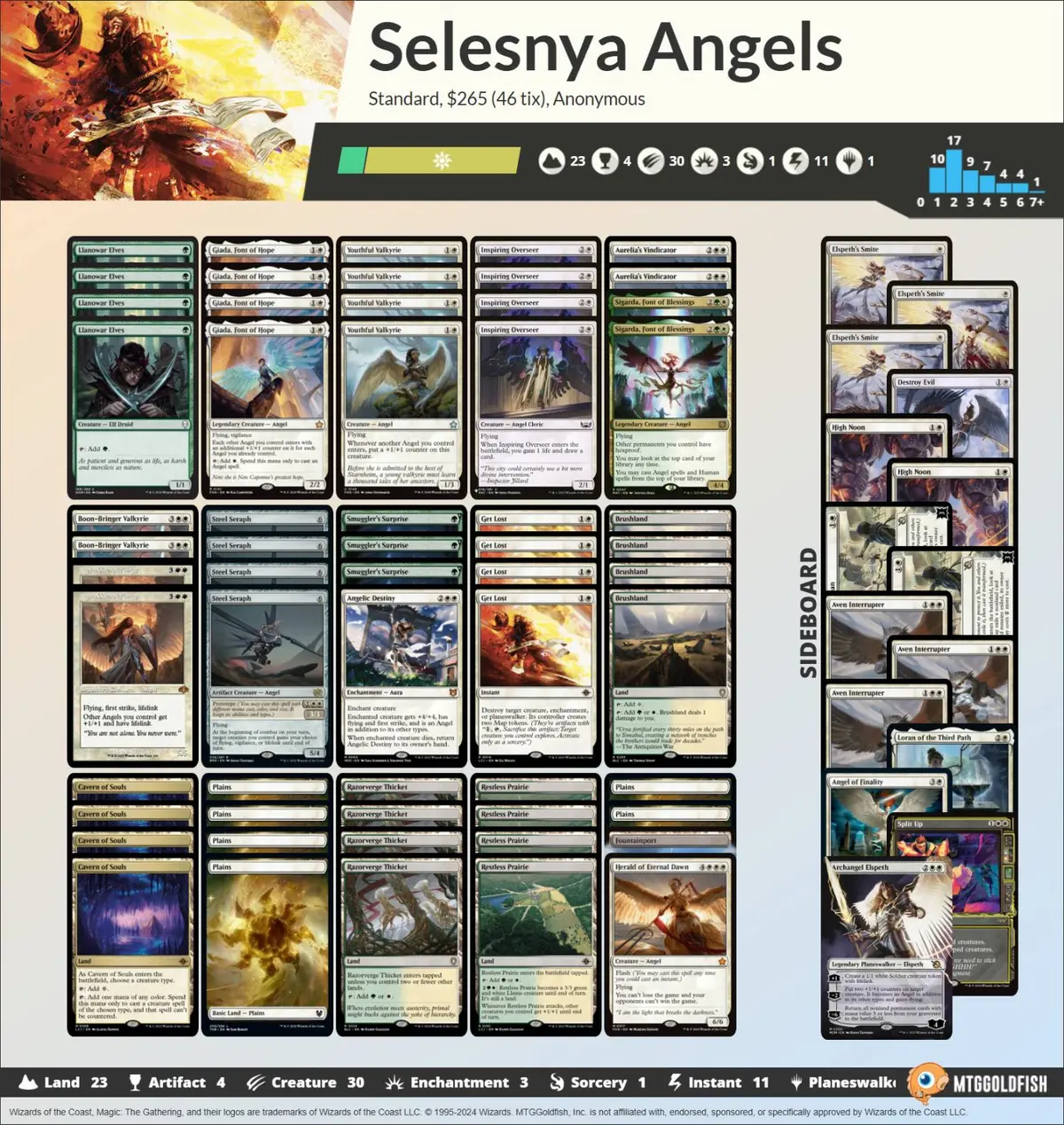
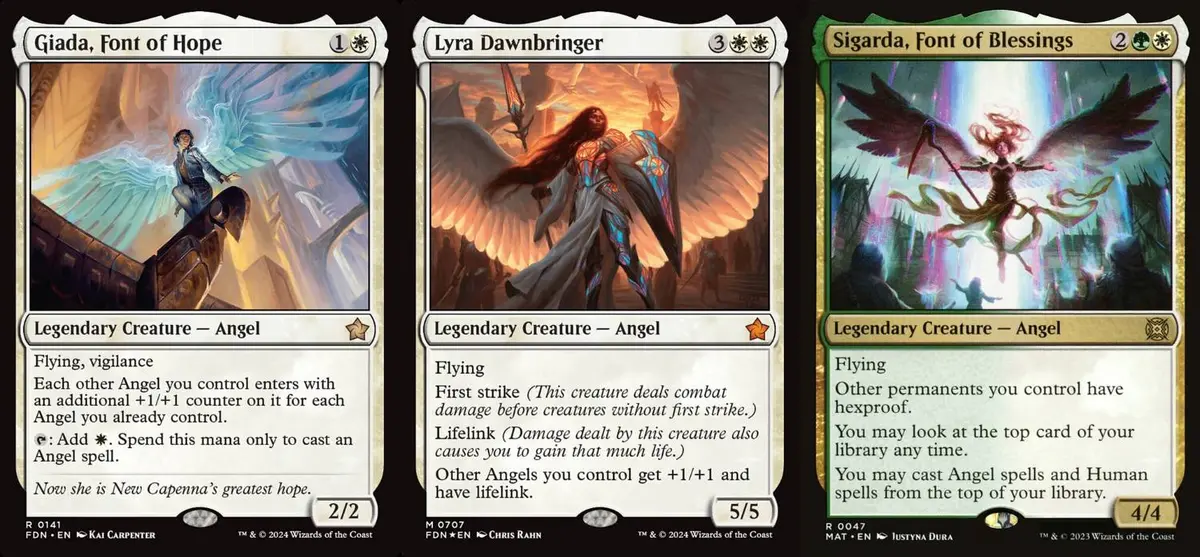
FDN added a large amount of Angel material, so it would be unfair not to give this theme some space. But even with Giada, Font of Hope returning, it still can’t change the generally clunky design of the Angel tribe (low-cost creatures that both fly and fight would be too strong, hence the limitation). Llanowar Elves happens to fit in as the missing piece. A tribal deck with eight acceleration sources has already proven workable in Pioneer Selesnya Angels, so the slightly slower Standard should be worth a try too!
The Herald of Eternal Dawn and Angelic Destiny in the main deck are there to highlight the Angel support FDN brings. You don’t have to use them when building; feel free to add whichever Angel ladies you like!
If you really want to use Angelic Destiny, it might be a nice way to break through on offense in a white-based token deck. As long as you stick it on successfully, it can keep eating up the opponent’s removal, or speed up your clock!
Selesnya Cat
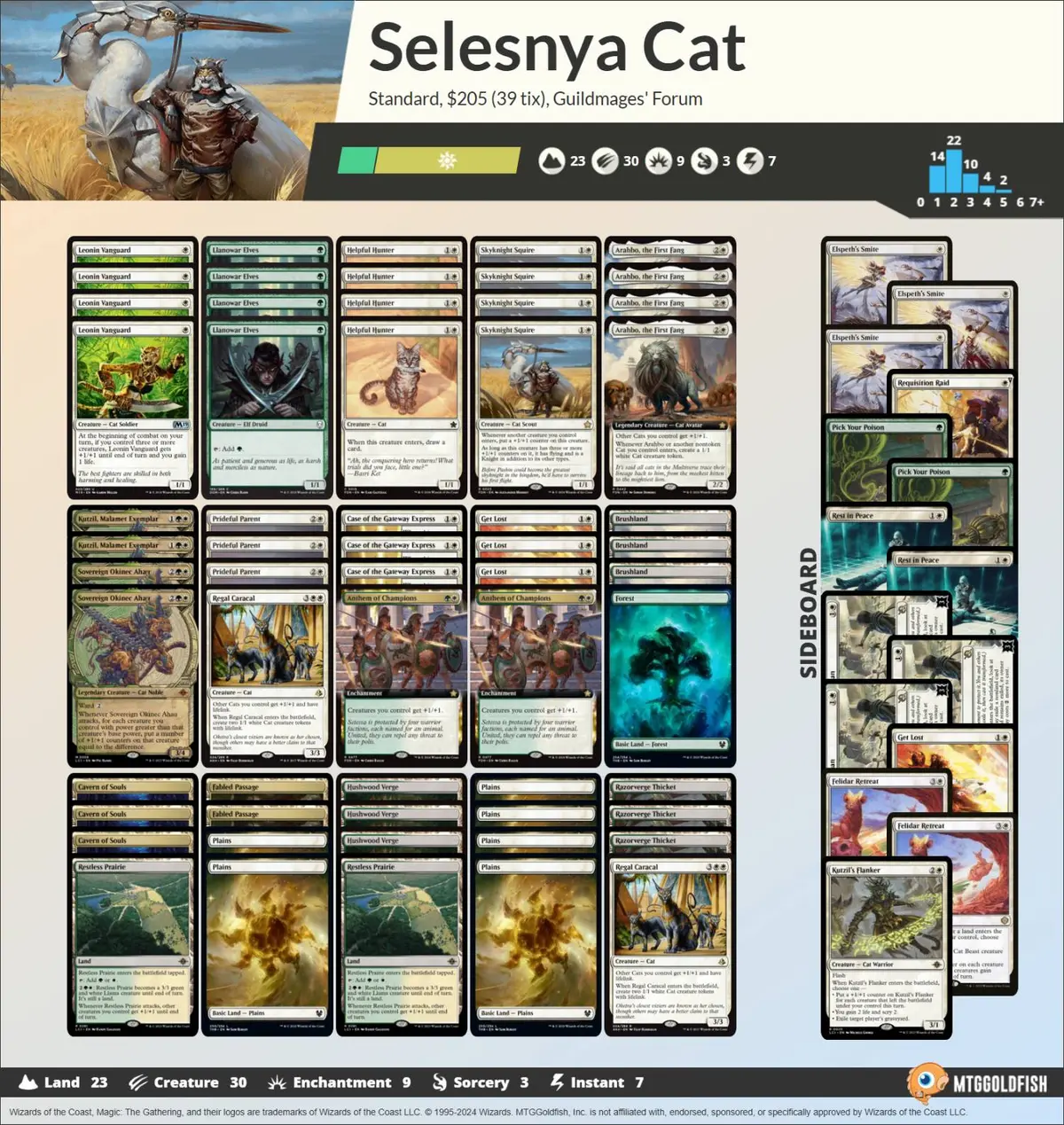
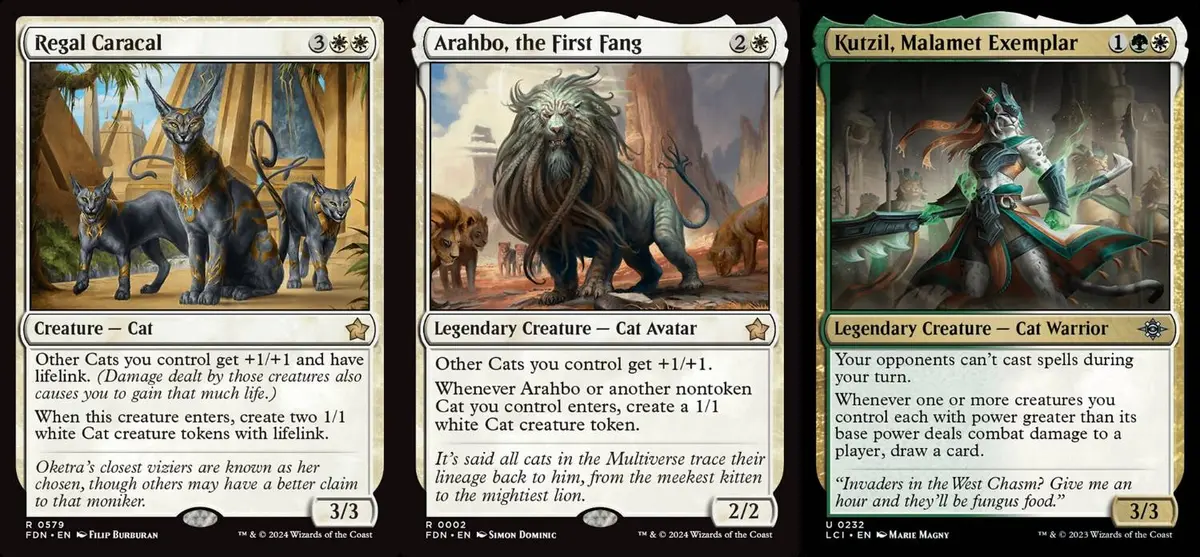
Cats are another tribe this set pushes hard. The support isn’t quite as outrageous as for Elves, but it did print what the author considers the most sincere lord this time: Arahbo, the First Fang. It also reprinted the old single-card powerhouse Regal Caracal. With more lord effects and self-growing Cats around, LCI’s Kutzil, Malamet Exemplar and Sovereign Okinec Ahau also become much more useful.
Orzhov Bat
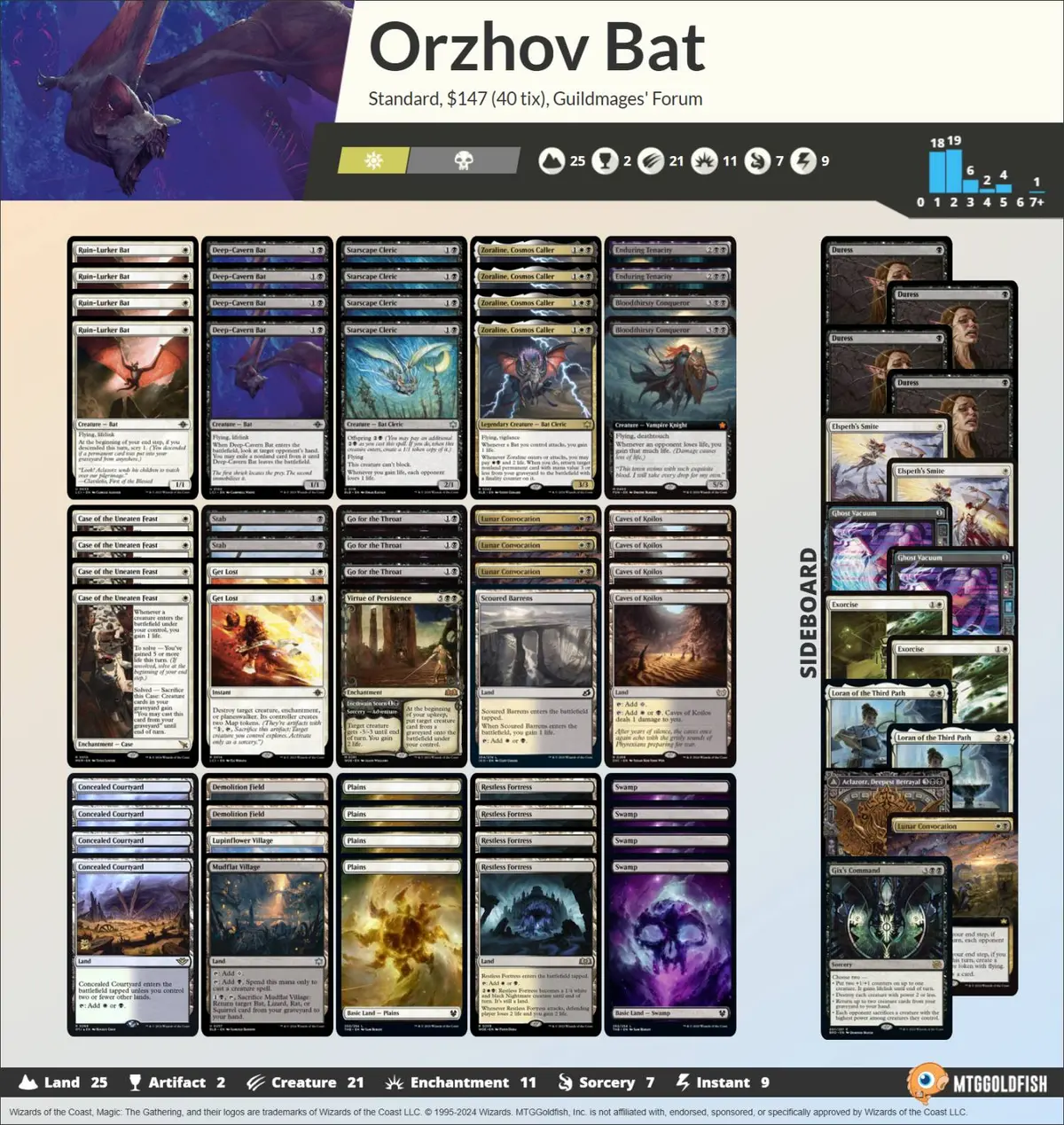
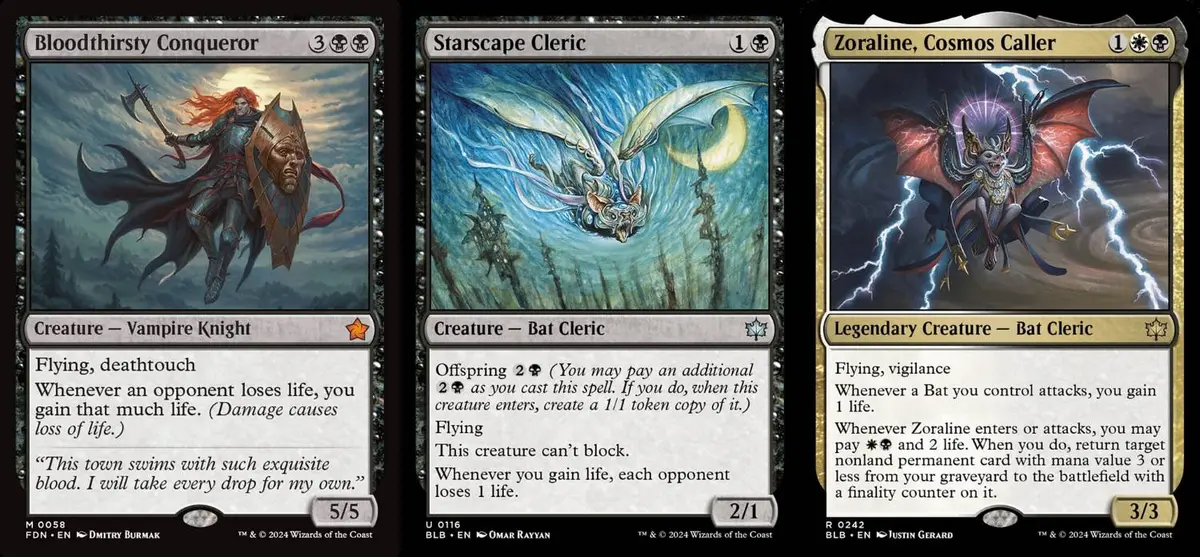
On top of the existing Bat shell we add an infinite combo. As long as you have Starscape Cleric or Enduring Tenacity on the battlefield together with a Bloodthirsty Conqueror, you get an infinite life gain / life loss combo, and even on their own these pieces fit the deck well.
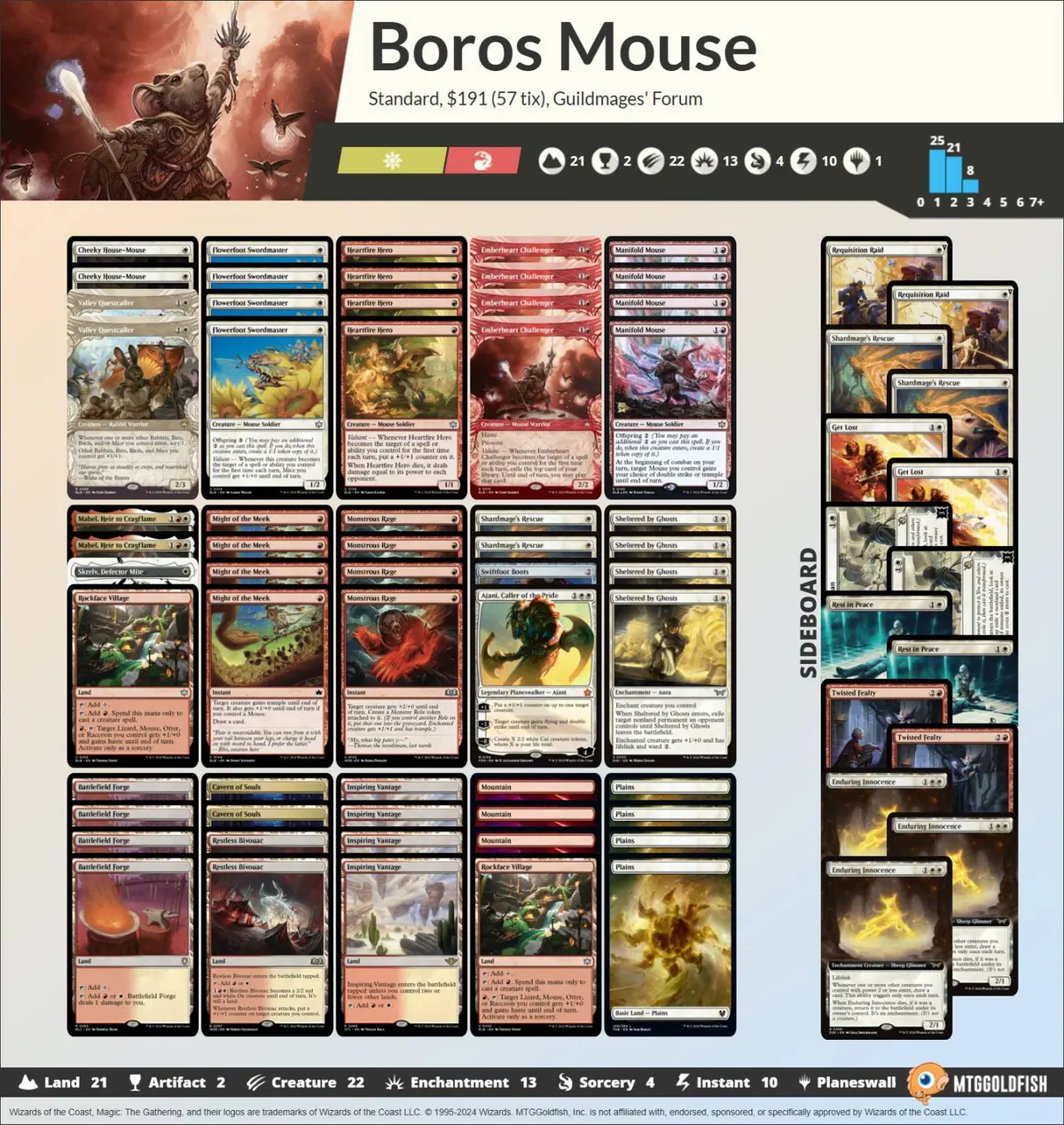
Boros Mouse
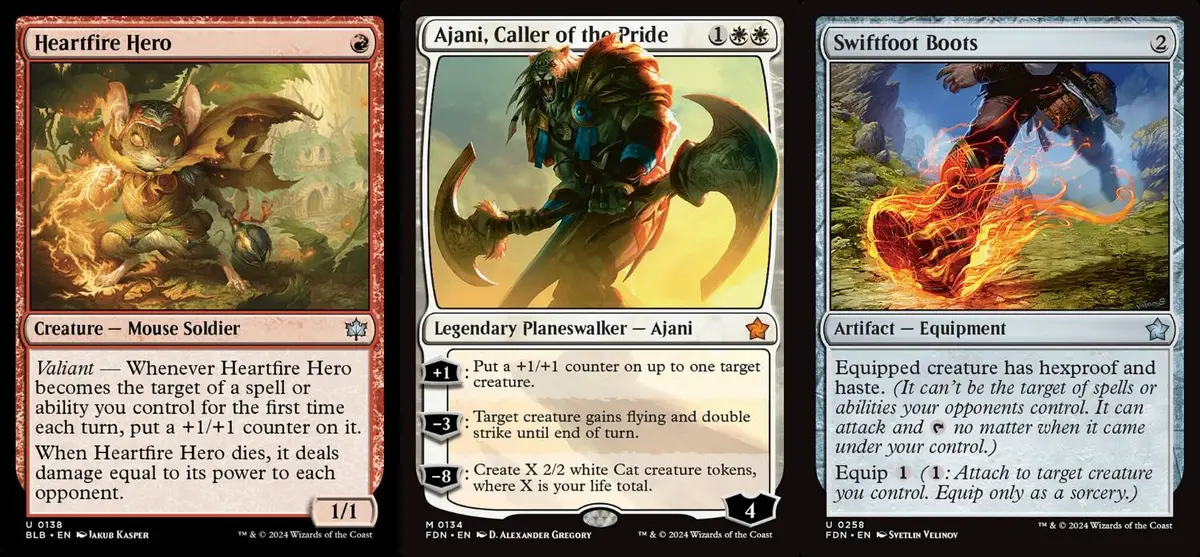
So why does this set have a lifegain theme and a cat theme, yet instead of reprinting Ajani, Strength of the Pride, Ajani got printed as Ajani, Caller of the Pride…?
This guy has a cat’s face but looks like a custom-made tool for the Mouse deck, so into the Mouse deck he goes. Whether you use [+1] or [-3], it triggers valiant. We also added a Swiftfoot Boots to see if it can solve the Valiant decks’ fear of having their creatures killed.
Boros Burn
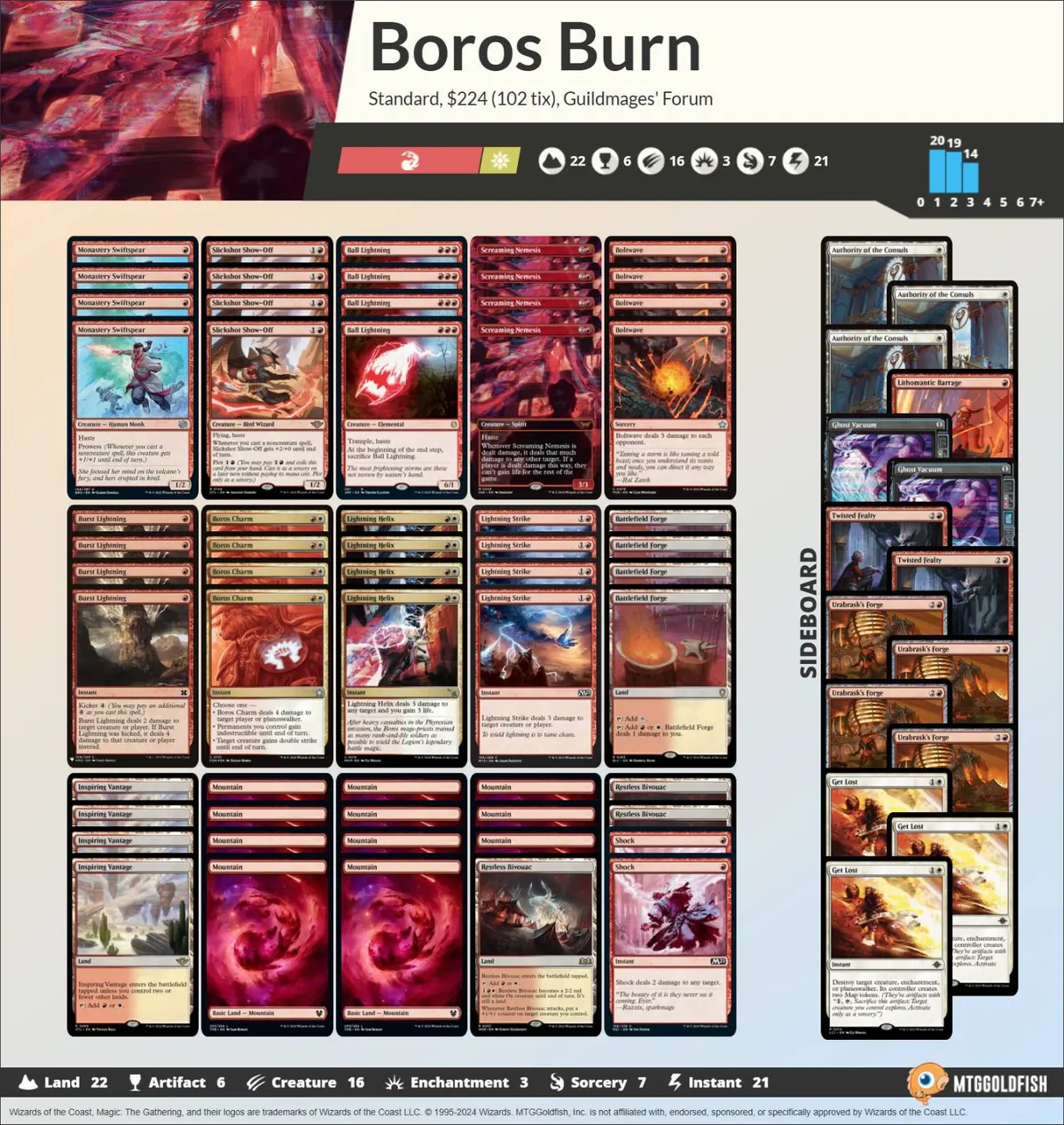
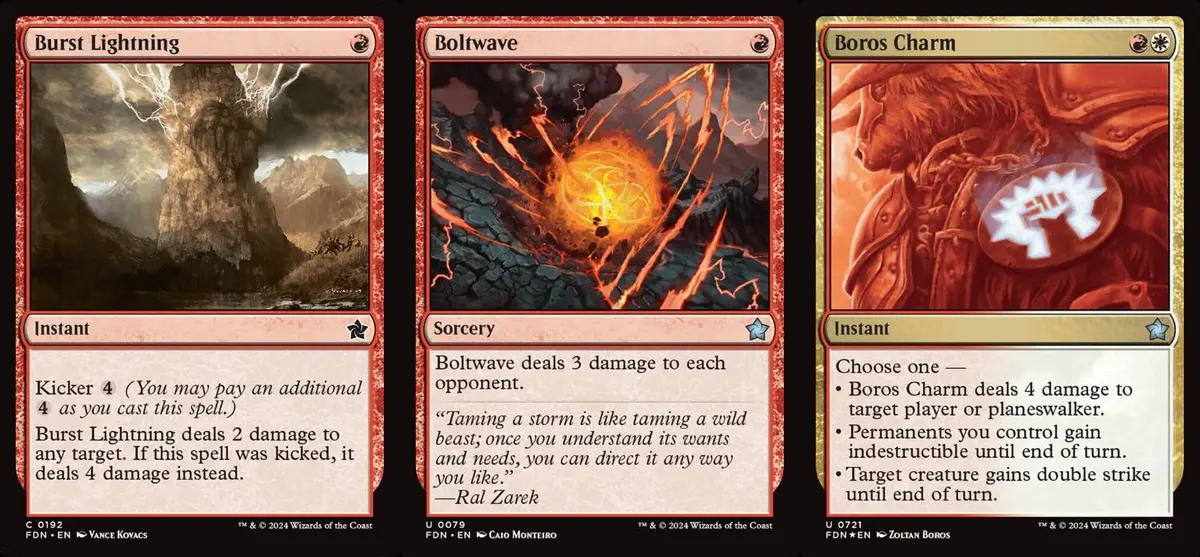
This time we got Boltwave, Burst Lightning, and Boros Charm, three efficient burn spells in one go. Ball Lightning is a creature, but it is essentially no different from a one-shot burn spell. (If you wanted, you could also fit in a Viashino Pyromancer, but there are already so many good cards that I don’t know what to cut.)
In the past, you could fight burn with lifelink creatures or other lifegain sources and survive until the burn ran out of ammunition. However, DSK printed Screaming Nemesis, which stops the opponent from gaining life for the whole game, and you can trigger it with any burn spell of your own.
Honestly, the author really wonders whether Boros Burn will exceed what the current Standard can handle. Unlike Leyline of Resonance red aggro, which has a very high ceiling but crashes as soon as it eats a removal spell, Boros Burn is both highly efficient and hard to stop, and the main-deck threats alone can answer the answers. Sure, this set also printed hate cards against aggro and burn like Authority of the Consuls and Crystal Barricade, but outside of respecting red aggro their general usefulness is actually terrible, so it’s hard to say whether you can find enough slots just to respect red aggro.
Ojer Axonil Burn
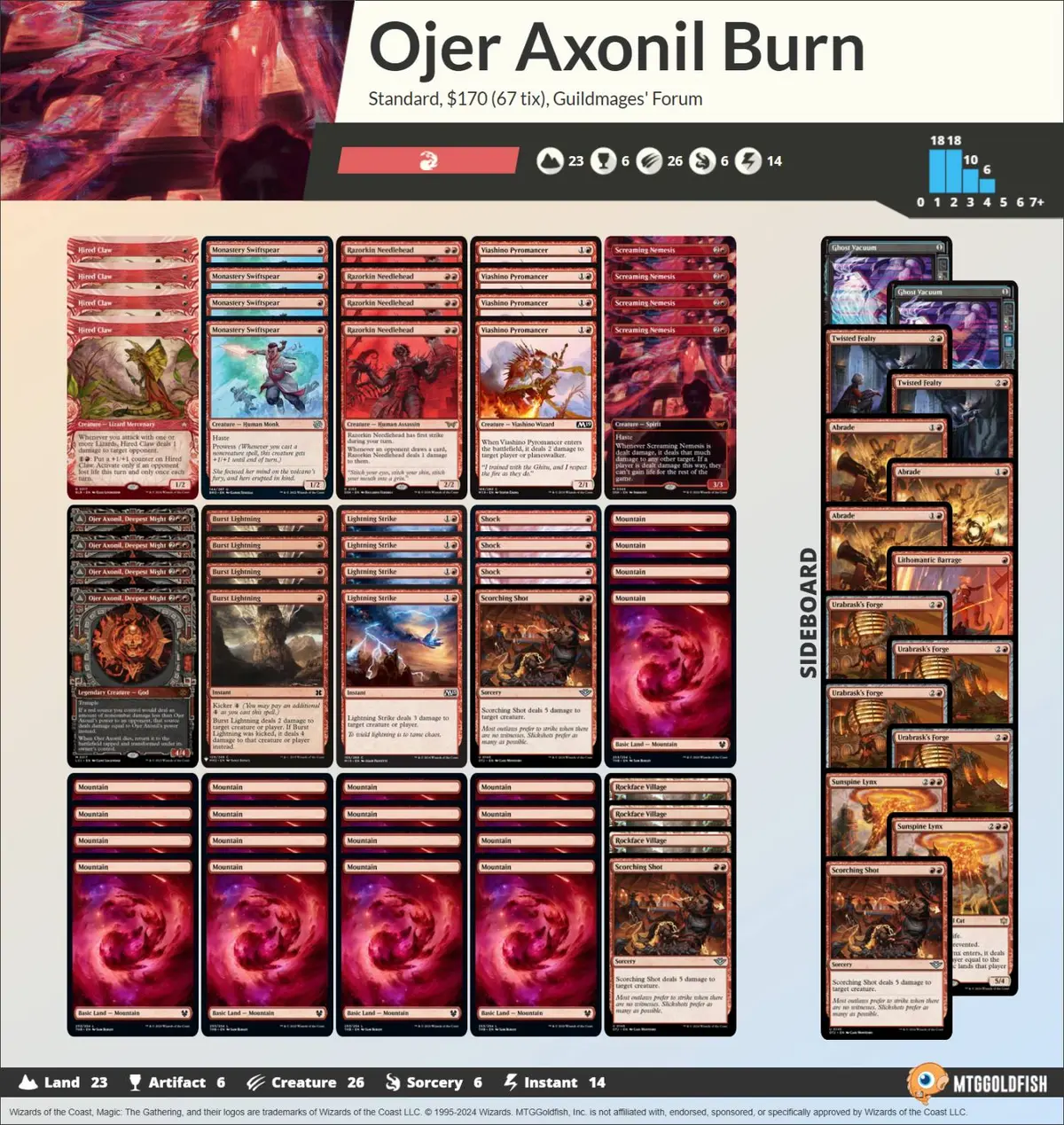
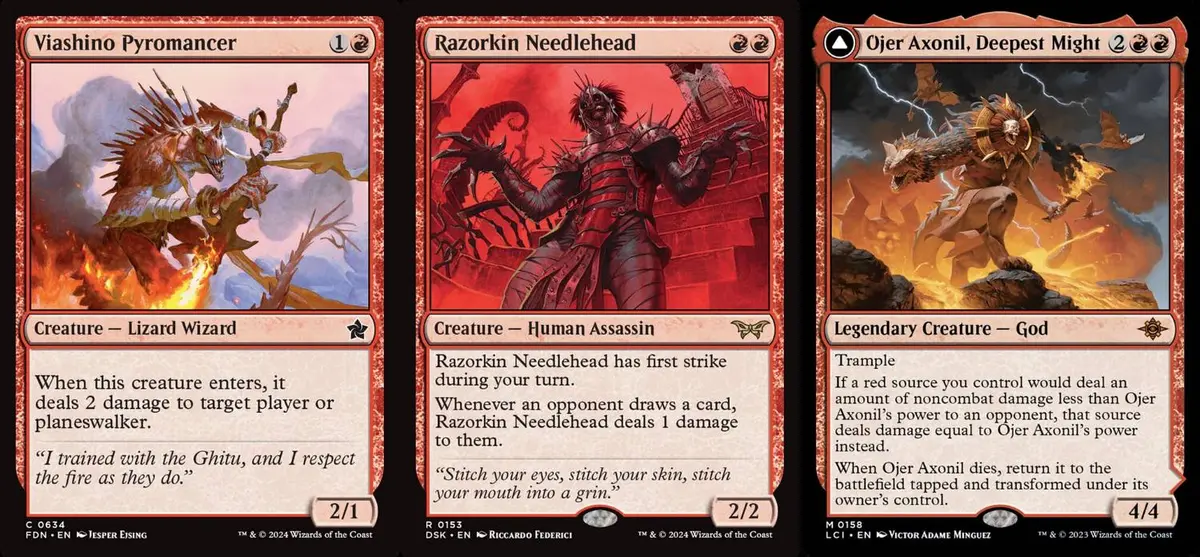
Last set, the combination of Razorkin Needlehead + Ojer Axonil, Deepest Might // Temple of Power sparked quite a bit of discussion (and card price swings). But when you actually try to build around it, you find the number of usable support cards awkward, so you always end up mixing in odd things to fill the count, which turns the theme into a mess. This time, adding Viashino Pyromancer and Burst Lightning finally gets the on-theme cards up to a sufficient number.
Mono White Gain Life
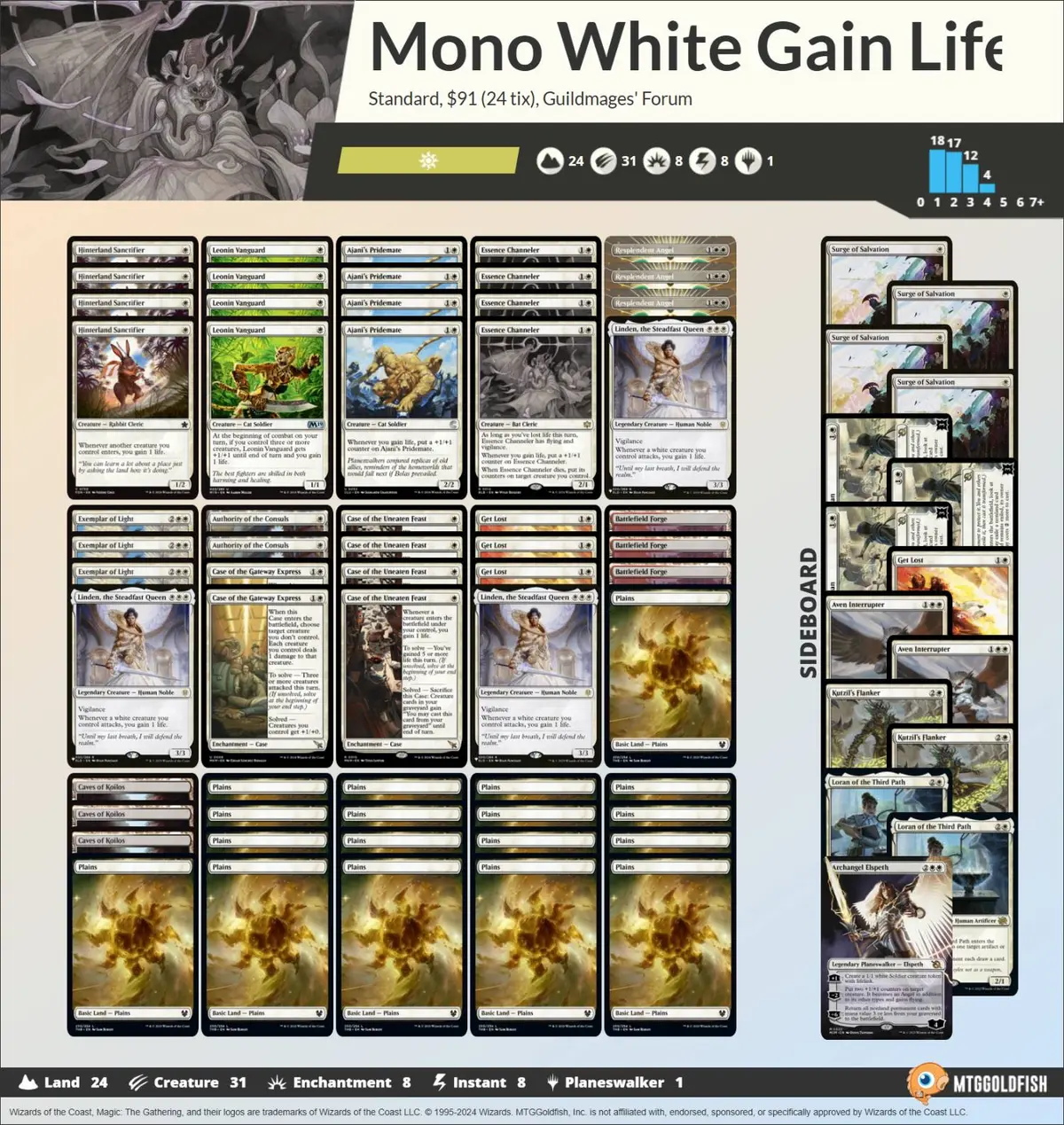
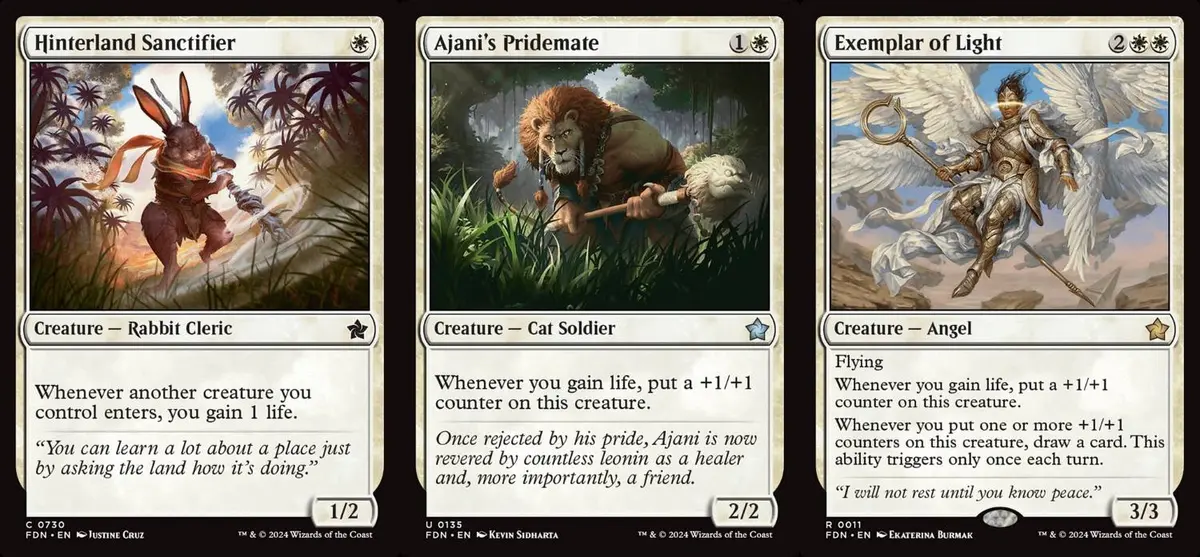
An aggro lifegain deck. Triggering lifegain frequently quickly powers up Ajani’s Pridemate, Essence Channeler, and Exemplar of Light (which can even draw cards), and it also easily meets the condition for Resplendent Angel to make an Angel token. The reason for playing painlands is to give Essence Channeler flying + vigilance. As for leaving out Leyline of Hope, it is a bit too Win More: when you’re ahead you seem to win without it, when you’re behind it does nothing, and what I care about is the number of lifegain triggers, so a larger amount per trigger matters much less.
This is also one of the few decks that can reasonably main-deck Authority of the Consuls. It not only buys aggro tempo in creature combat, it also triggers lifegain more often, which helps build your board. Most importantly, it lets you show red aggro full respect ❤️ Since red aggro’s Screaming Nemesis only needs to resolve one instance of ability damage to shut this deck down completely, the sideboard runs a full four Surge of Salvation as that respect. It is also a good protection spell in ordinary removal-heavy matchups (for pure protection Crystal Barricade is stronger, but it fits the deck’s tempo less well).
PS: Hinterland Sanctifier is a new card, but it is not in the regular booster pack pool; it is printed in the Starter Collection instead.
Mono Green Aggro
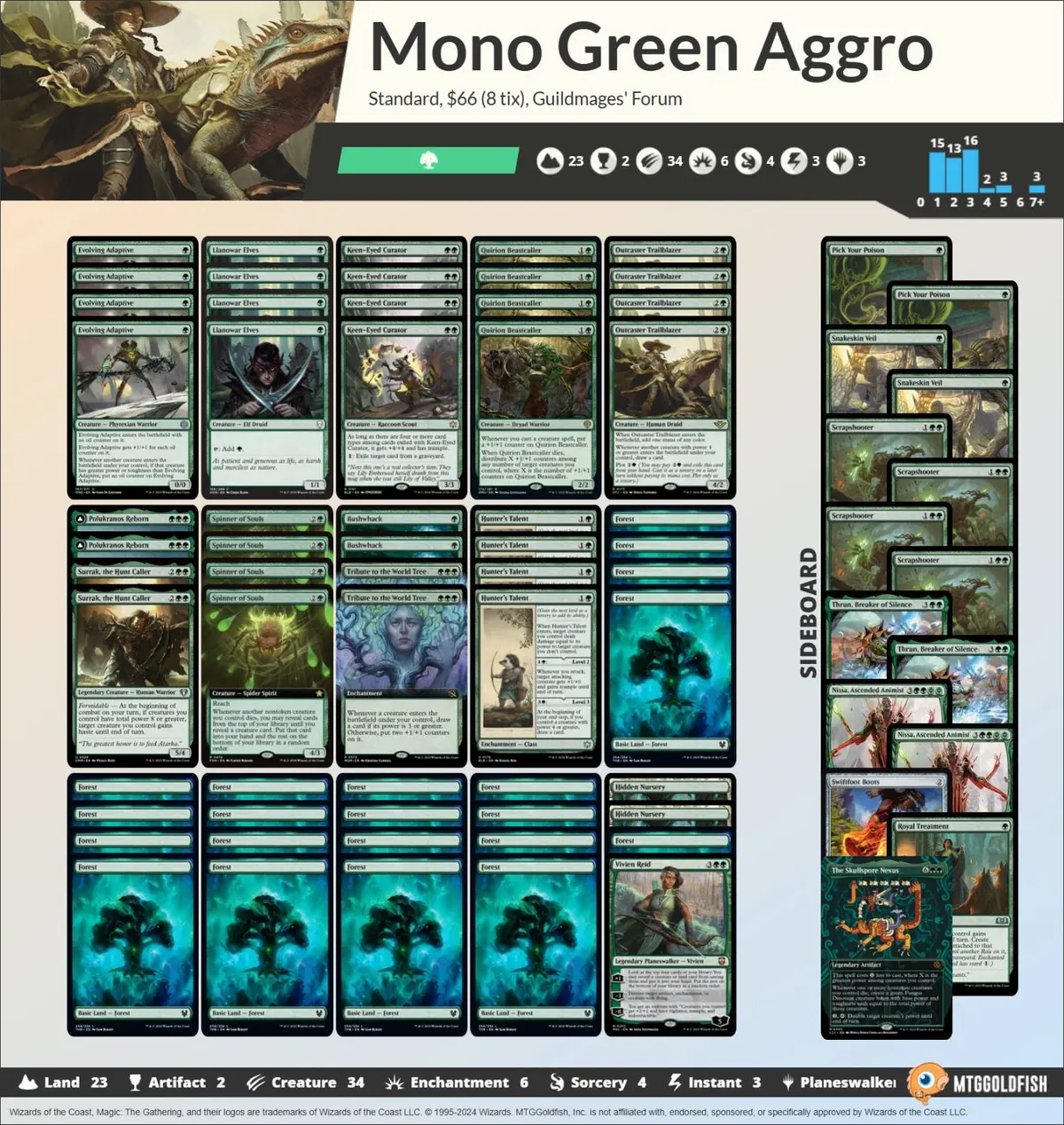
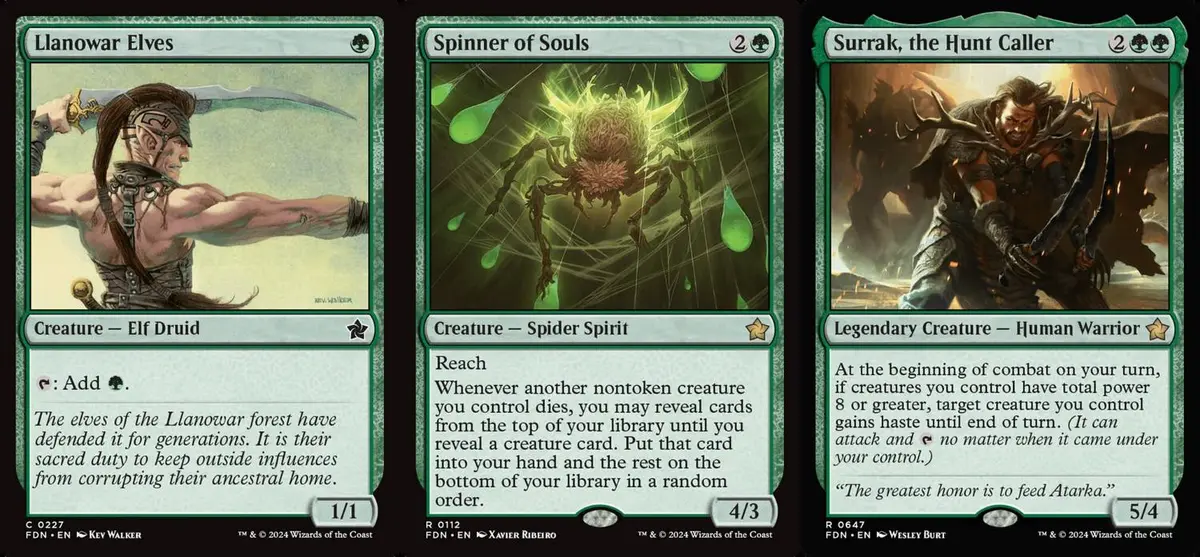
Green’s very orthodox big-fist style of play.
Mono Blue Tempo
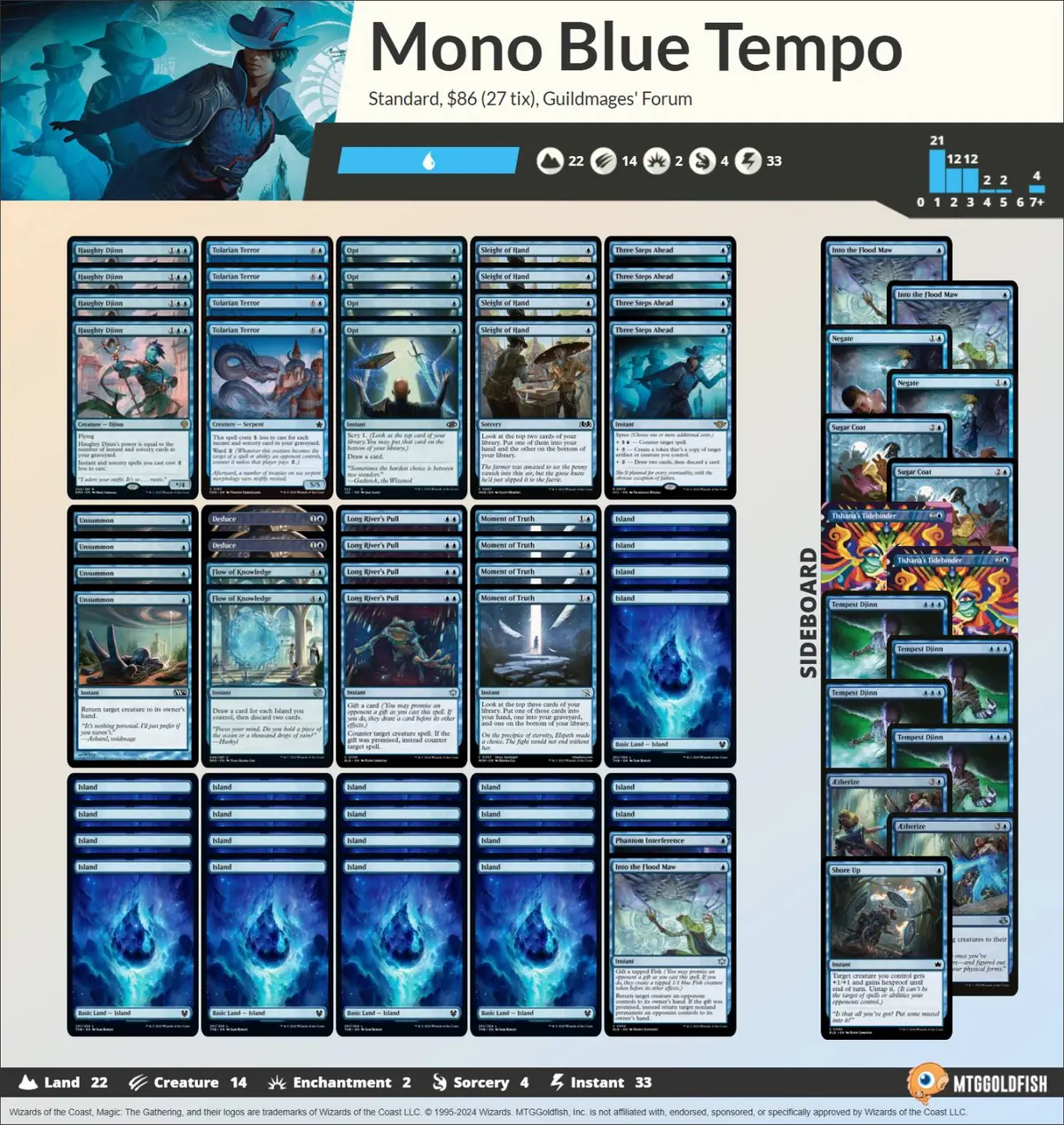
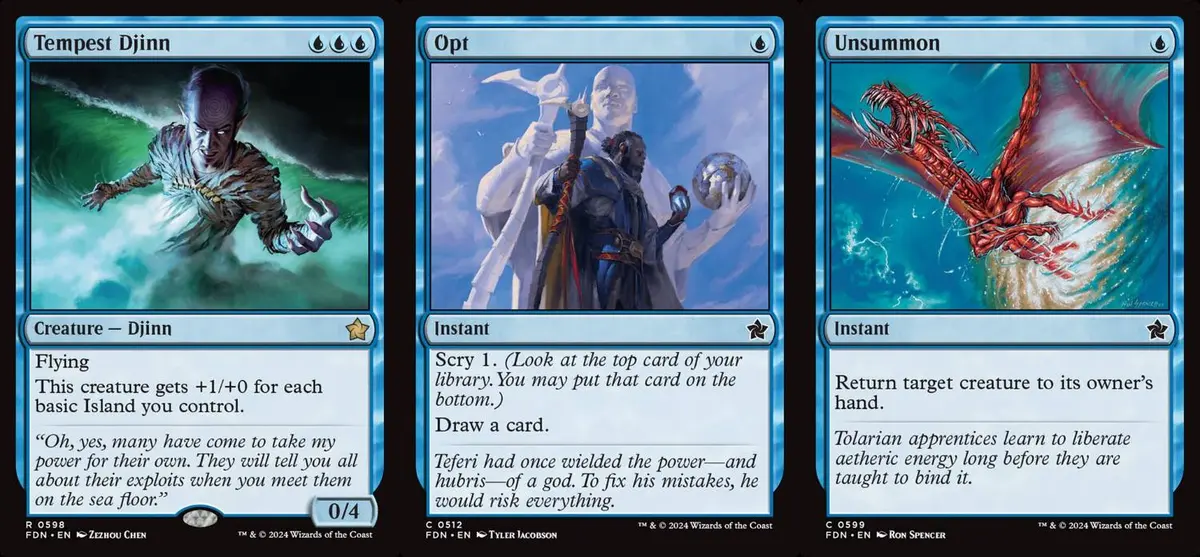
This is basically a remake of the blue tempo deck from before the last Standard rotation. Thanks to the reprints of Opt and Unsummon, it regains a one-mana filtering spell and a bounce spell that can save your own creatures. Tempest Djinn is currently in the sideboard as a Plan B win condition for when the graveyard gets hated out. In the main deck, the original Haughty Djinn is more efficient. Although the current list is a full set of Tolarian Terror, it and Eddymurk Crab can be freely swapped to adjust ratios, and each has its pros and cons.
Azorius Flash
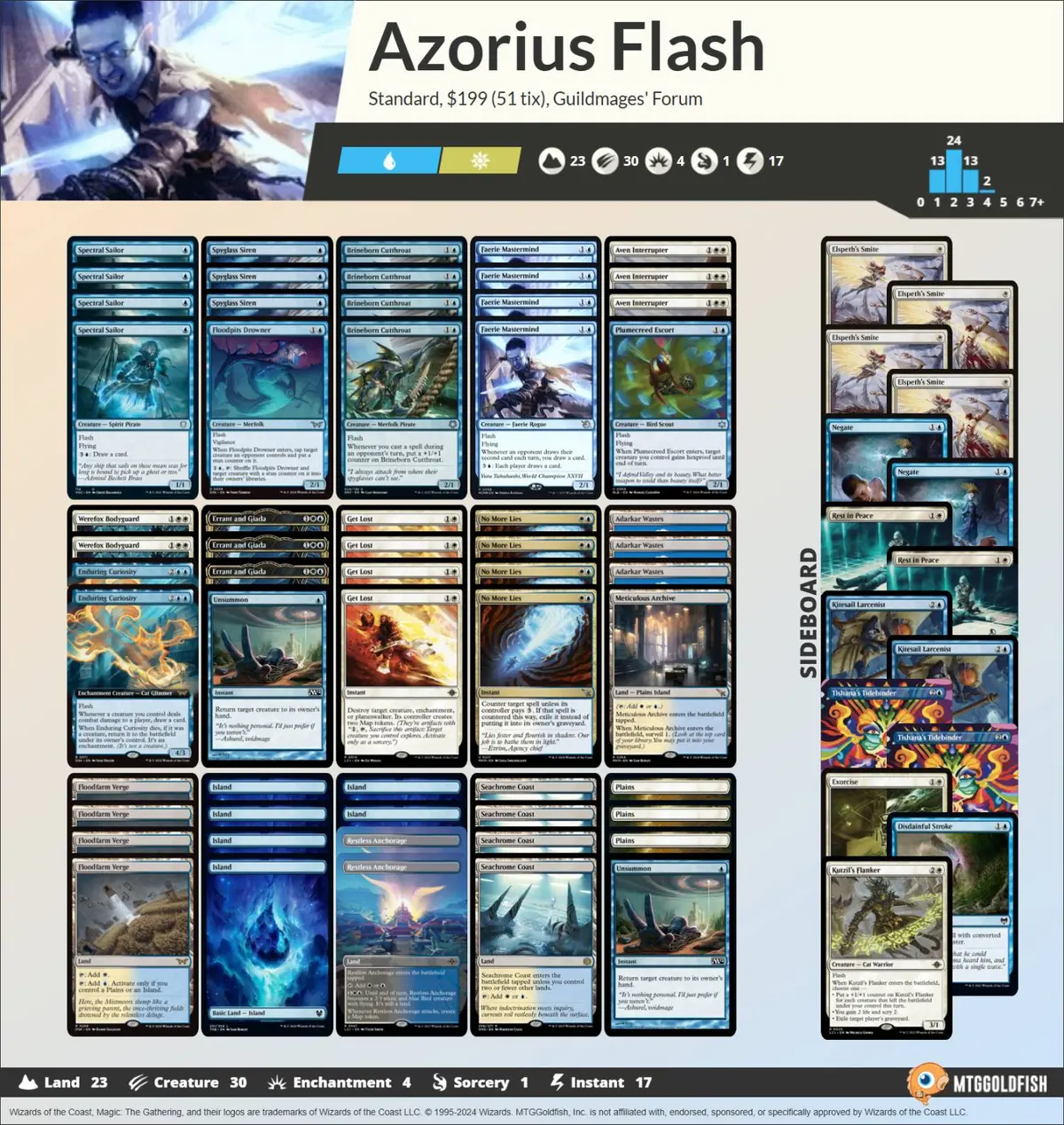
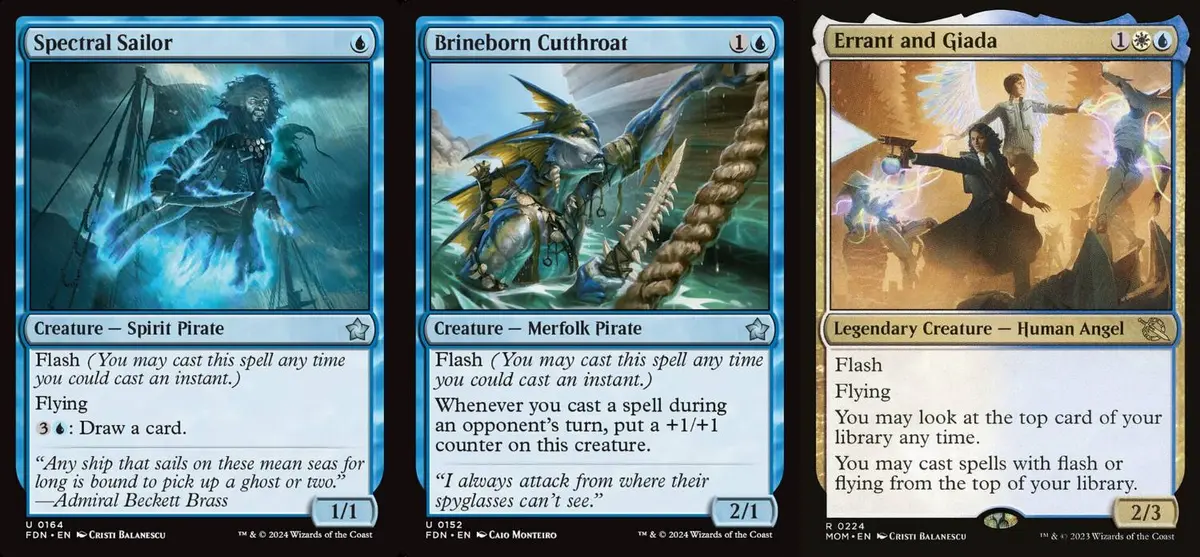
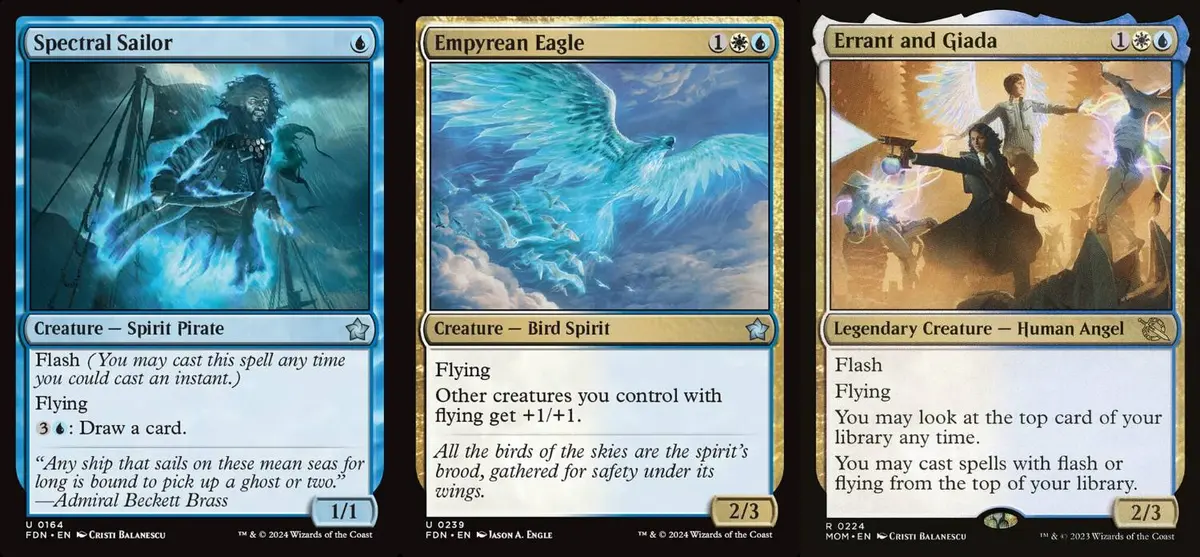
Haven’t I been writing an Errant and Giada deck in every set’s first look lately? XD
Thanks to the reprints of Spectral Sailor and Brineborn Cutthroat, the Draw-Go shell is now much more complete.
Azorius Flying
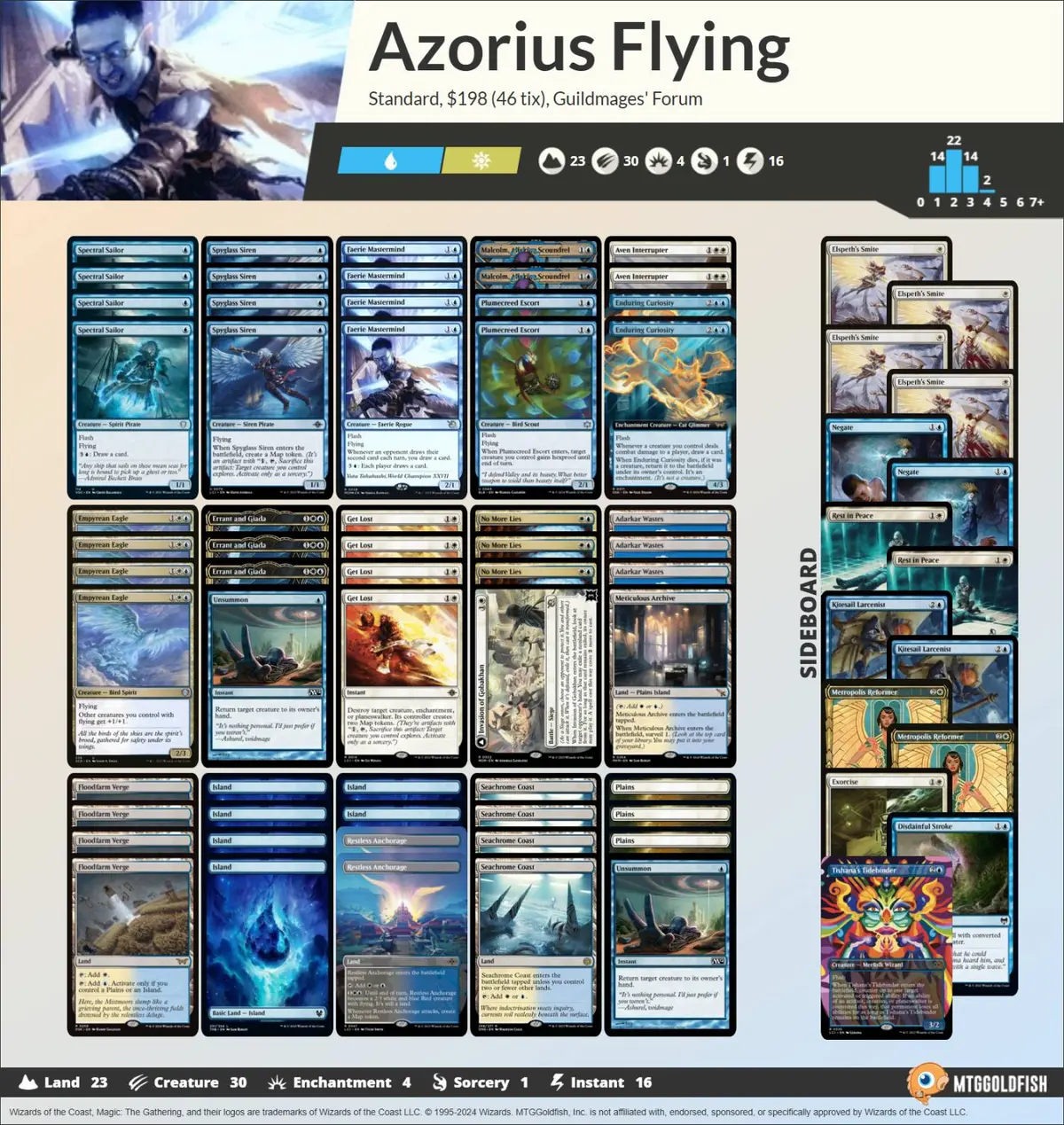
It’s 87% the same as the deck above, but the emphasis shifts from Draw-Go disruption to the lord-style pumping ability of Empyrean Eagle.
Azorius Reanimator
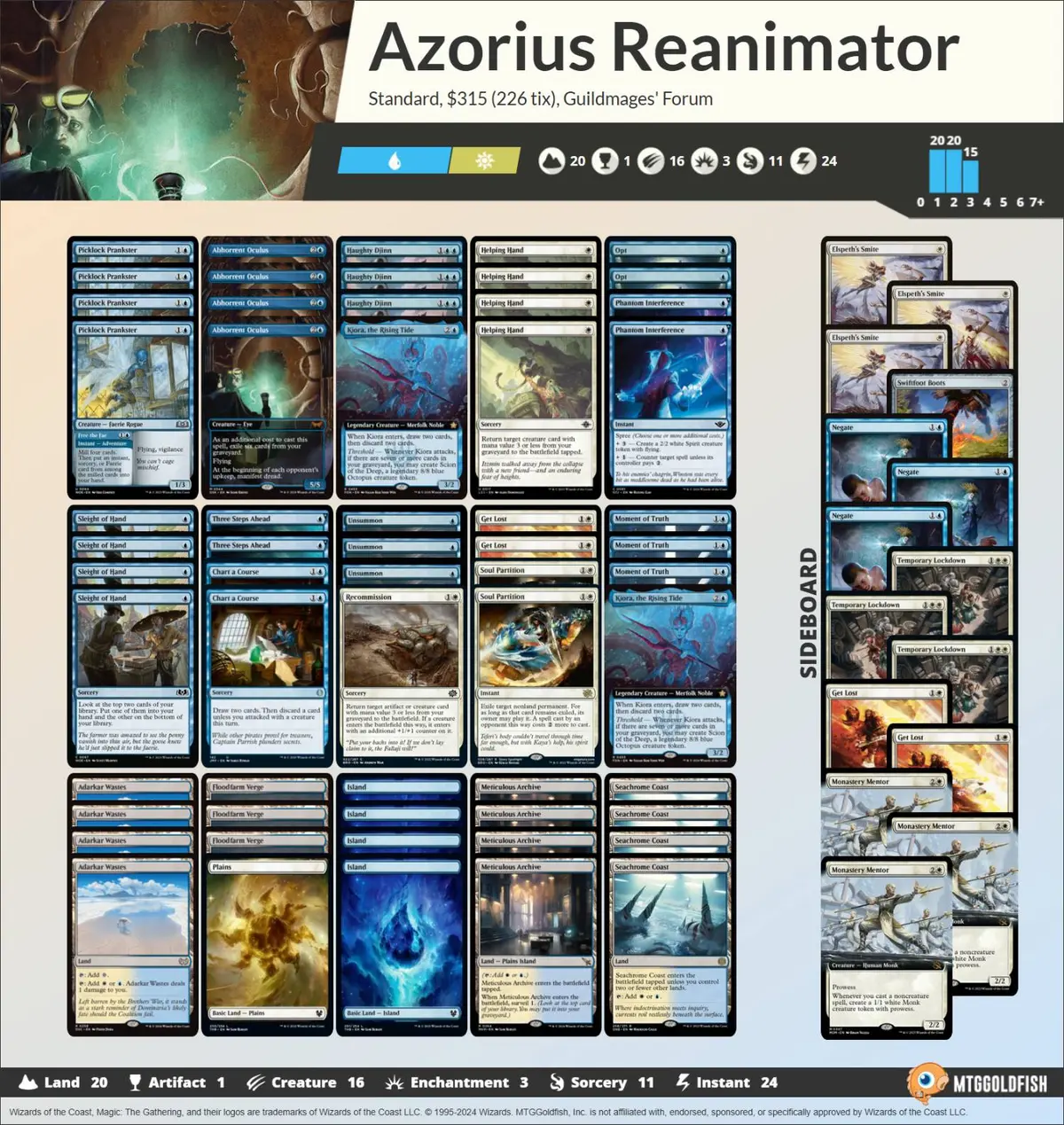
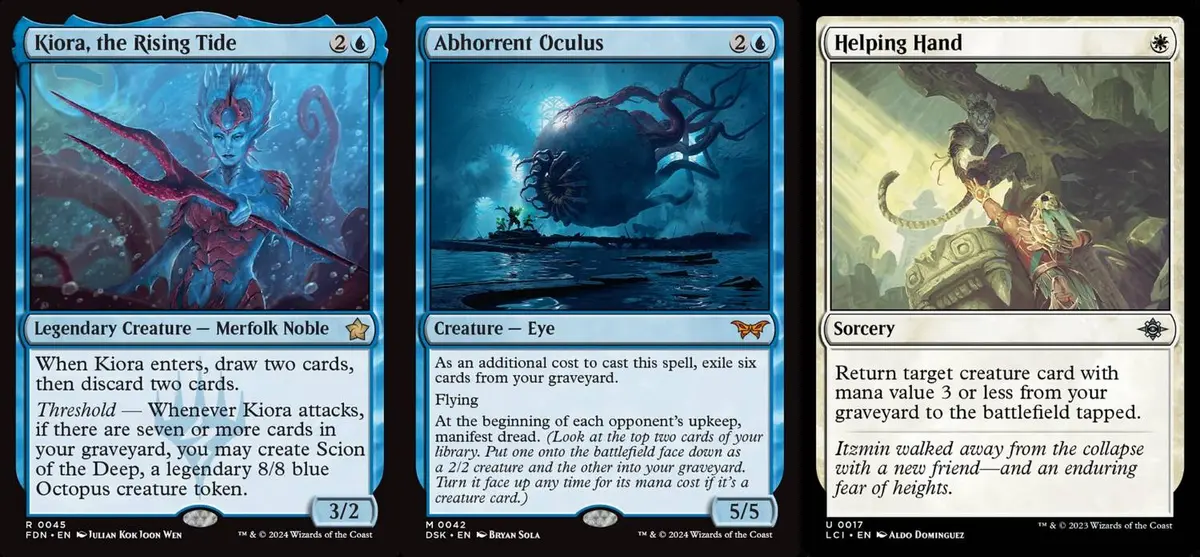
We add Kiora, the Rising Tide to the existing Azorius Reanimator shell. Its proactive draw-and-discard helps the deck run, and it is also a good reanimation target; the threshold is barely a restriction for this deck.
Mono White Token
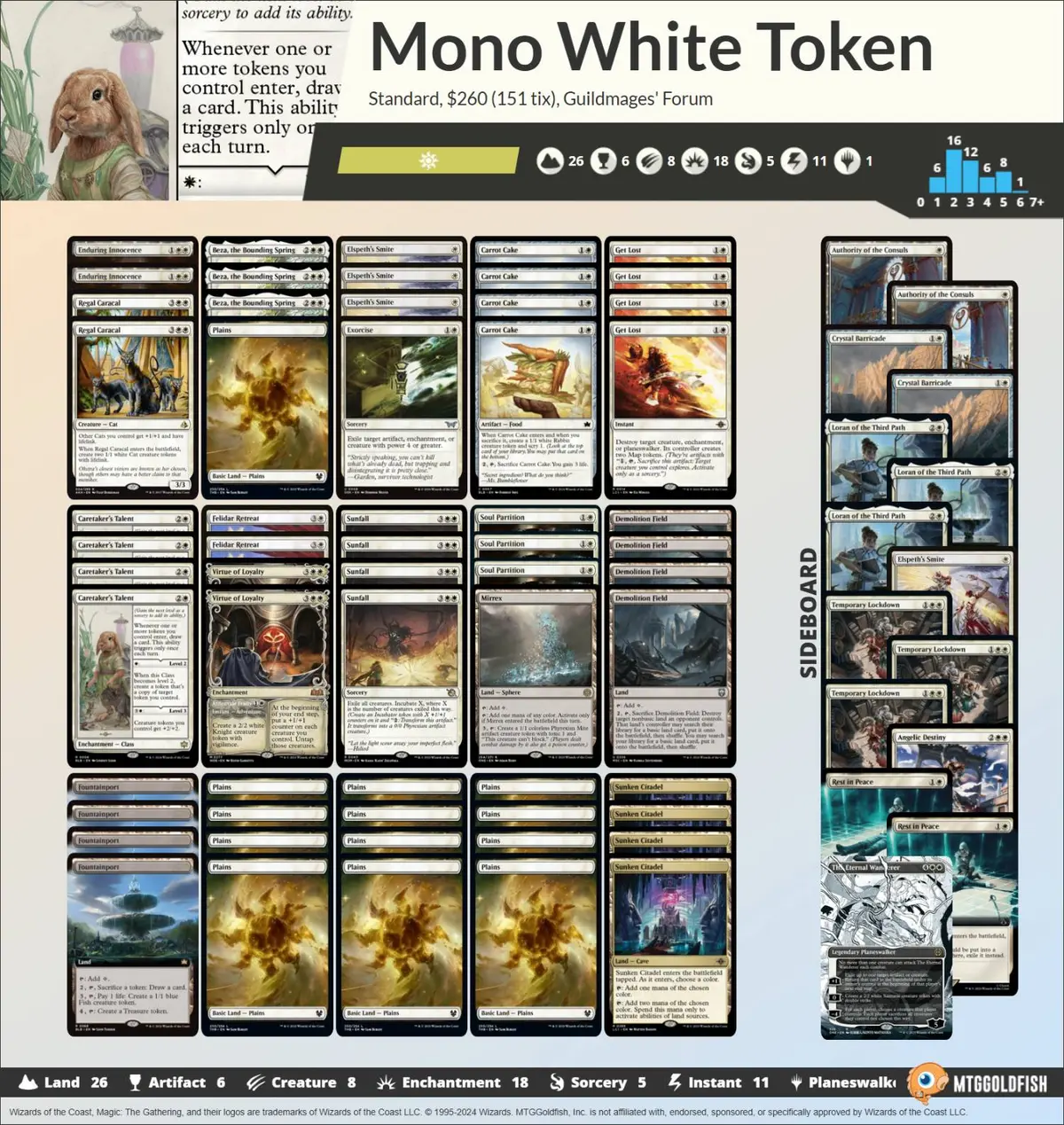
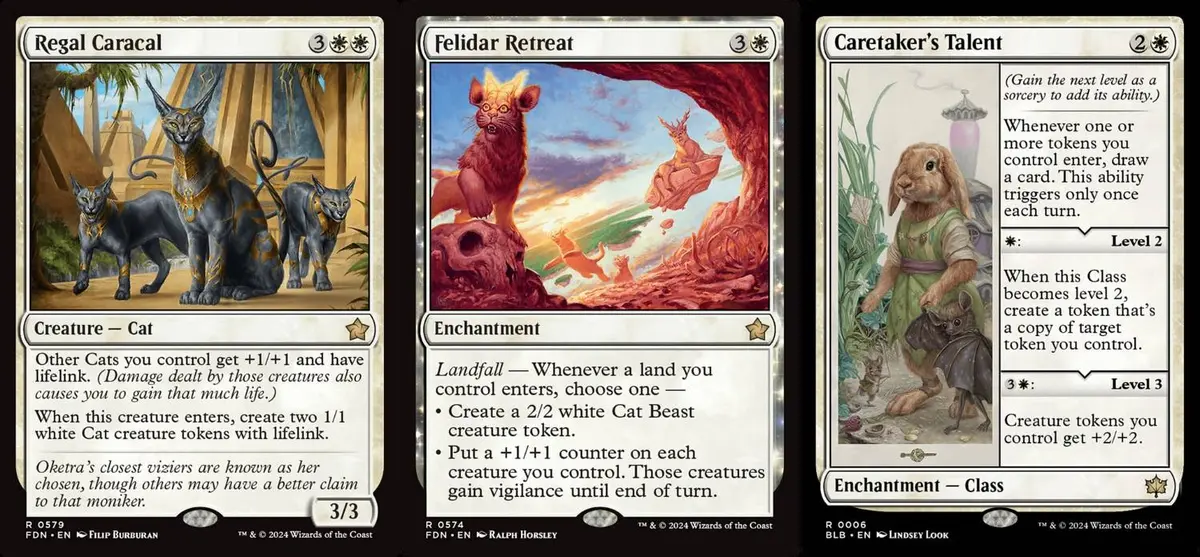
The reprinted Cat token package, Felidar Retreat and Regal Caracal, serve as the new token sources. Although the deck is mono white, it runs so many utility lands that Lay Down Arms risks getting stuck in hand, so we didn’t use it.
Orzhov Token
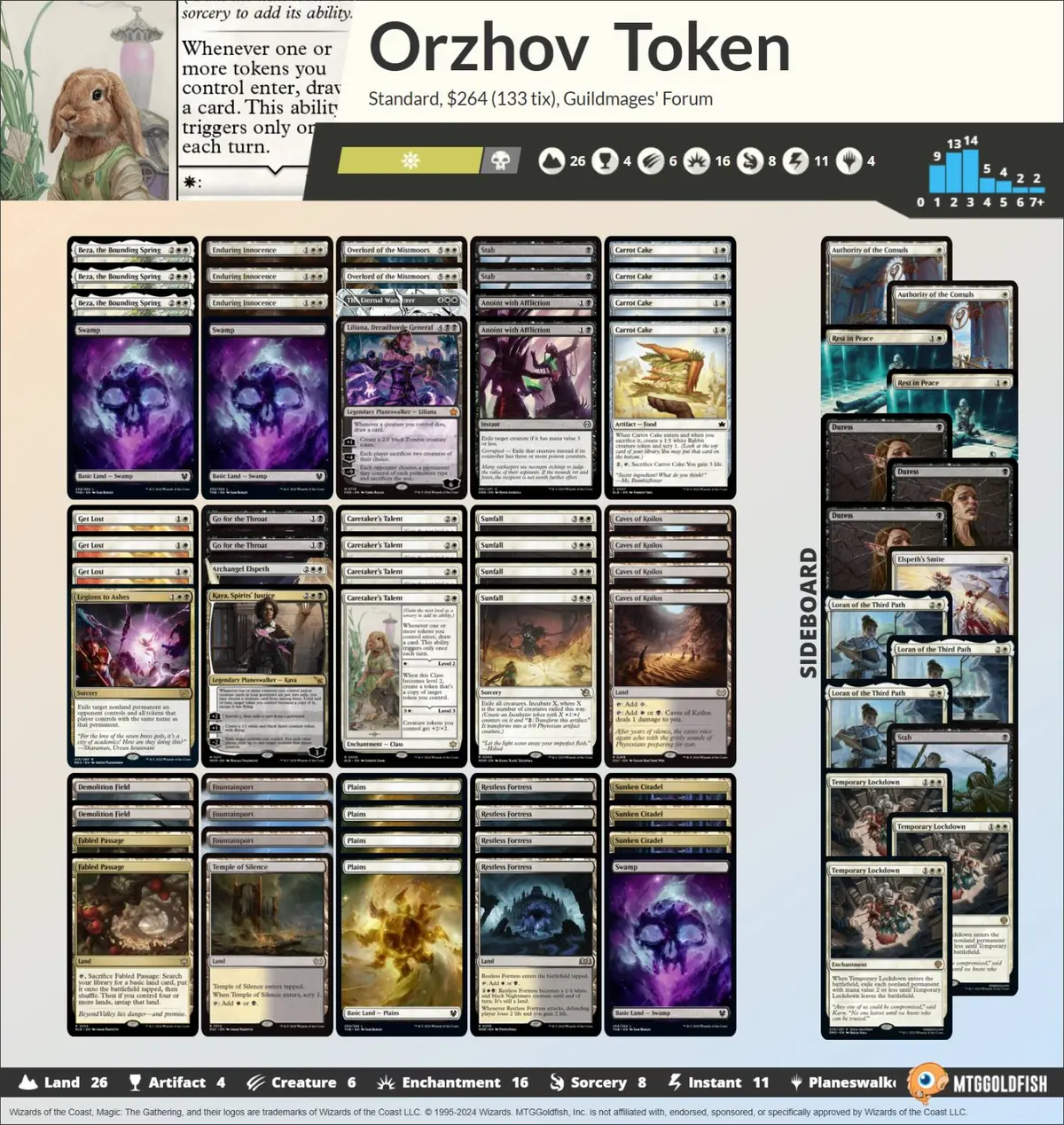
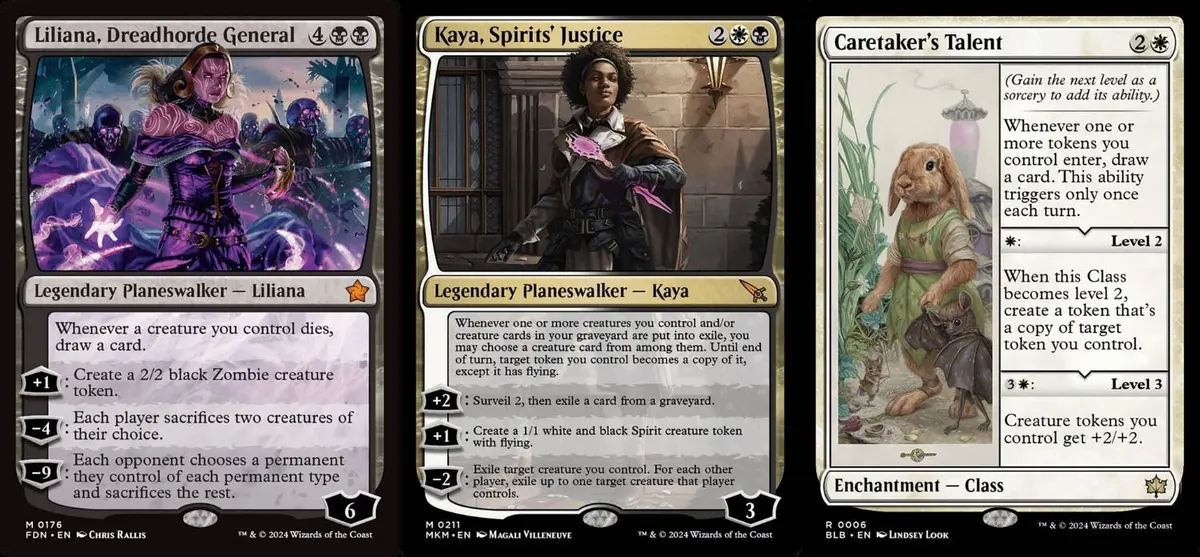
I hear Liliana, Dreadhorde General, you make 2/2 Zombie tokens, right? Then come join the token shell of Caretaker’s Talent + Enduring Innocence and get to work!
Rakdos Draw Killer
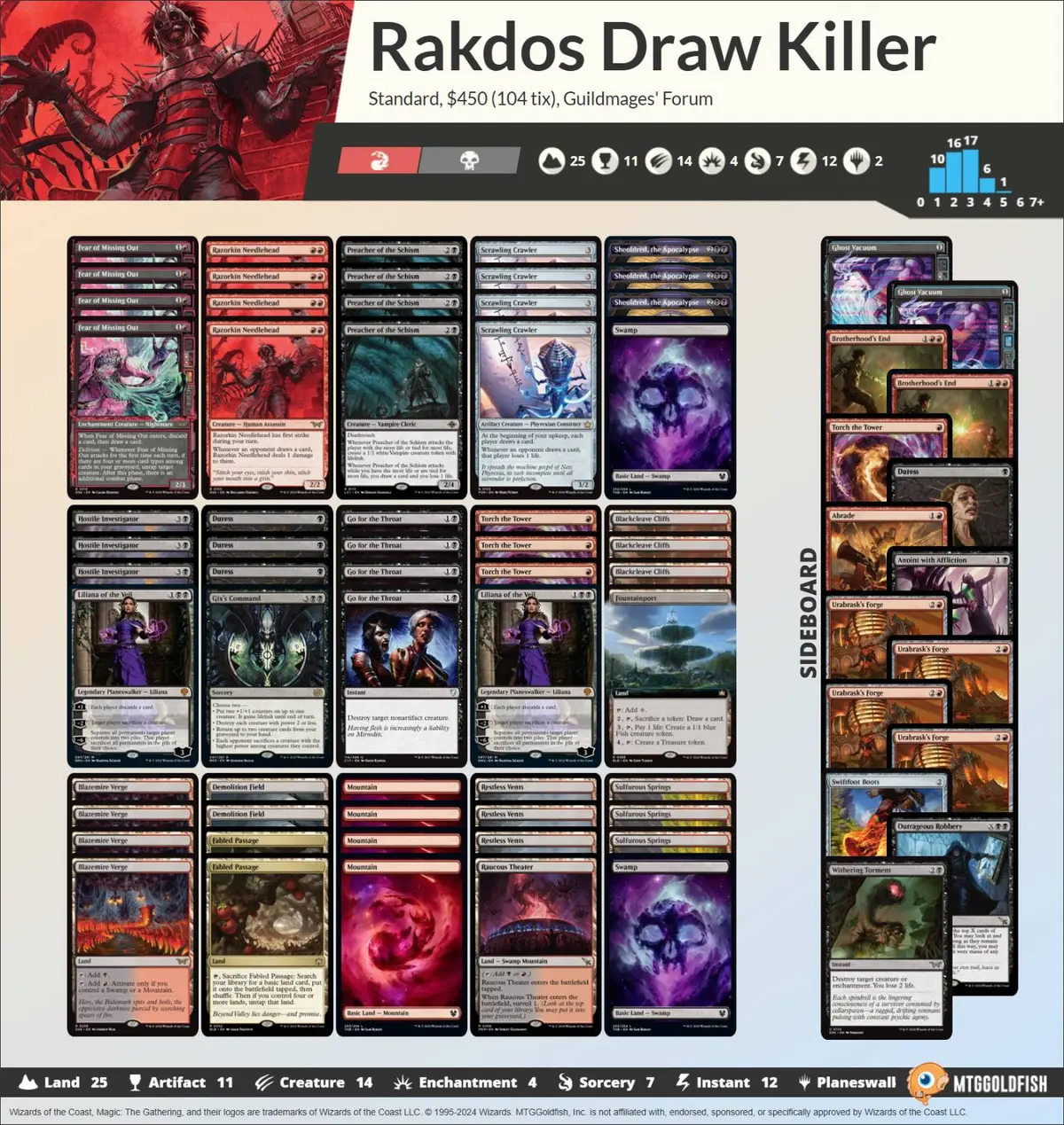
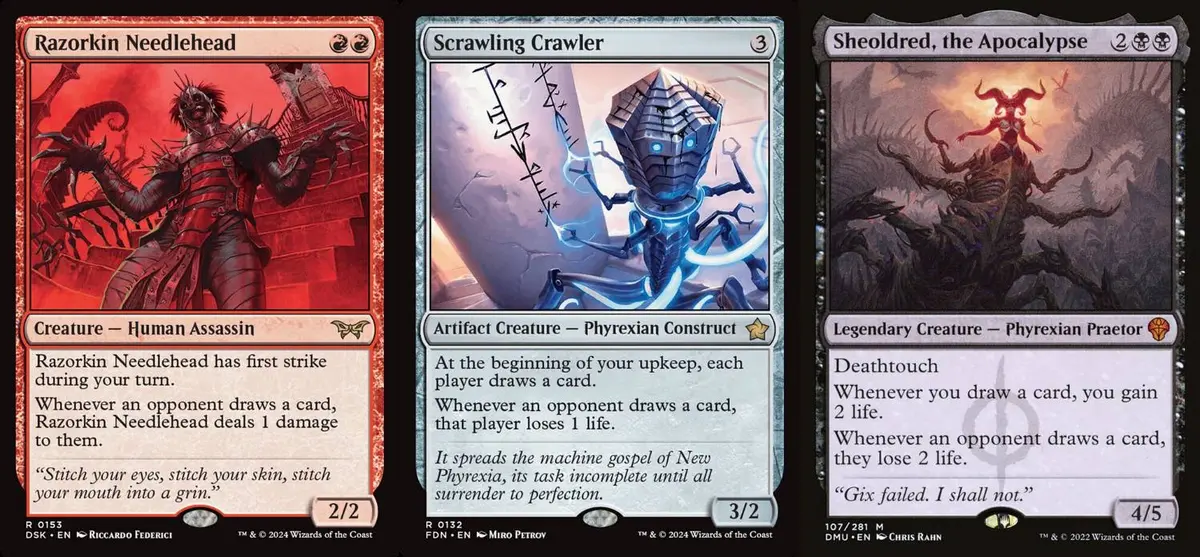
Razorkin Needlehead + Scrawling Crawler + Sheoldred, the Apocalypse: the three musketeers of draw punishers are all assembled. The other four-drop creature is Hostile Investigator, chosen because the extra discard raises the opponent’s need to draw cards. Swapping the other three-drop slot, Preacher of the Schism, directly for Unstoppable Slasher is also perfectly fine. After that change you could even consider merging it into the Demon shell, since the Demon deck and the draw-killer trio take up roughly half of the creature slots each.
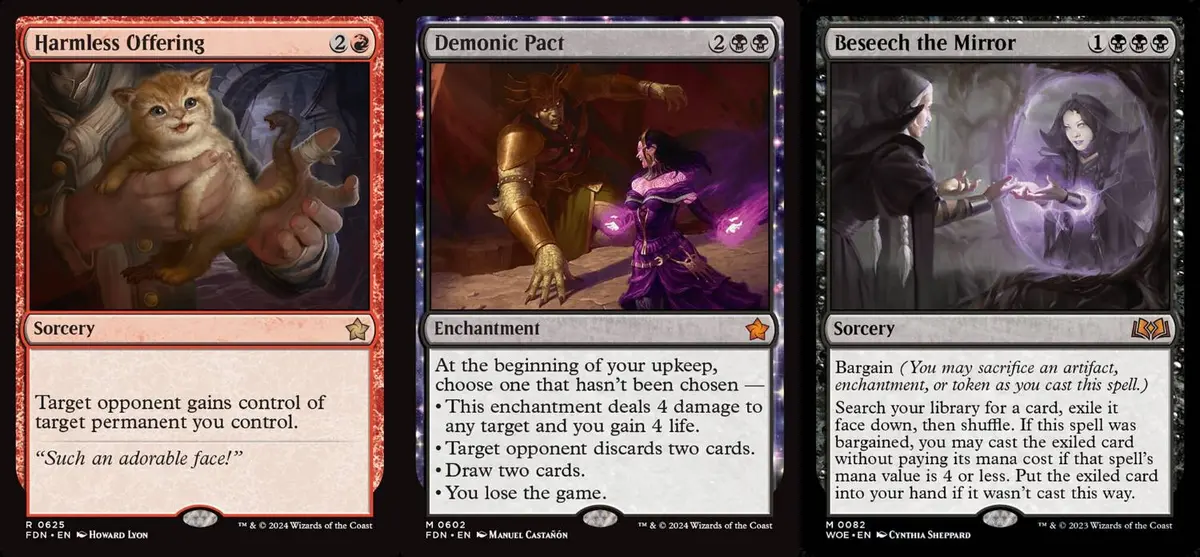
Rakdos Demonic Pact
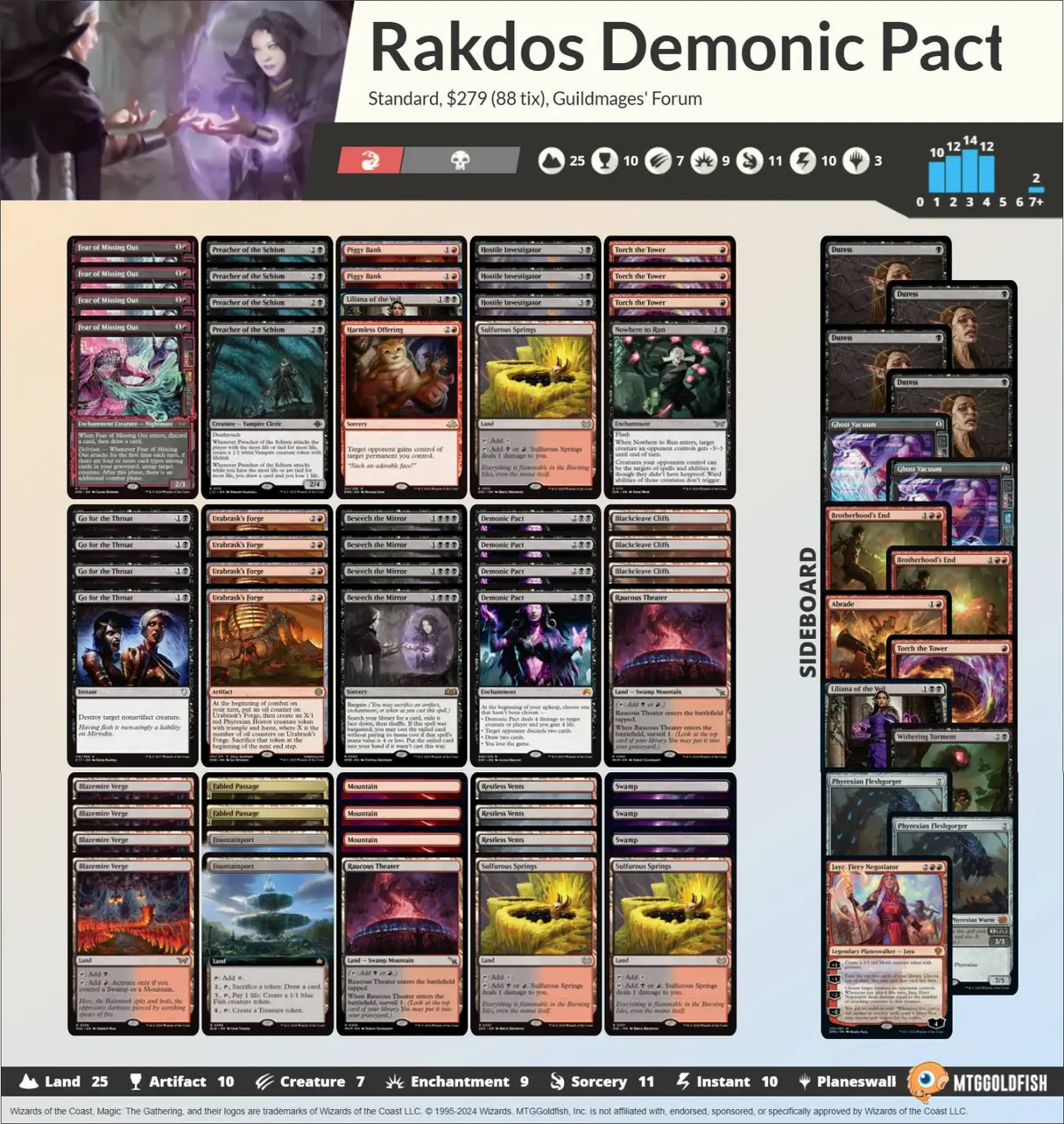
When FDN was previewed, Demonic Pact & Harmless Offering were shown on the same screen, and everyone burst out laughing; the intent was far too obvious. Although this combo really is a viable way to win, its requirements are still steep. We don’t recommend building the deck around winning with this combo. Instead, focus on Demonic Pact’s own powerful ability to generate resources. The game plan is still a normal midrange resource battle, and you don’t need to think about how to successfully hand a Demonic Pact that has run through all three modes to the opponent with Harmless Offering. You just need to make sure you don’t get killed by Demonic Pact.
Unlike in 2016, when this combo first appeared, there are now so many ways to sacrifice your own enchantment that you couldn’t fit them all in one deck. Here the author went for WOE’s bargain ability. Because sacrificing an enchantment is a cost, not an effect, no matter whether your spell is cast successfully, you can at least be sure you won’t be killed by Demonic Pact. I especially want to stress the pairing with Beseech the Mirror: it not only helps you shed Demonic Pact, it can also eat other fodder to enable Harmless Offering and send the Demonic Pact away. Eating one Demonic Pact to find a new Demonic Pact is also a valid play. Thanks to Beseech the Mirror, we only need to play a single Harmless Offering to make the combo viable enough. As for the other bargain spell, Torch the Tower, it is the kind of one-mana removal a normal red deck should be running anyway, so putting it in costs nothing; we just need to make sure the deck has enough bargain fodder.
Dimir Amonkhet
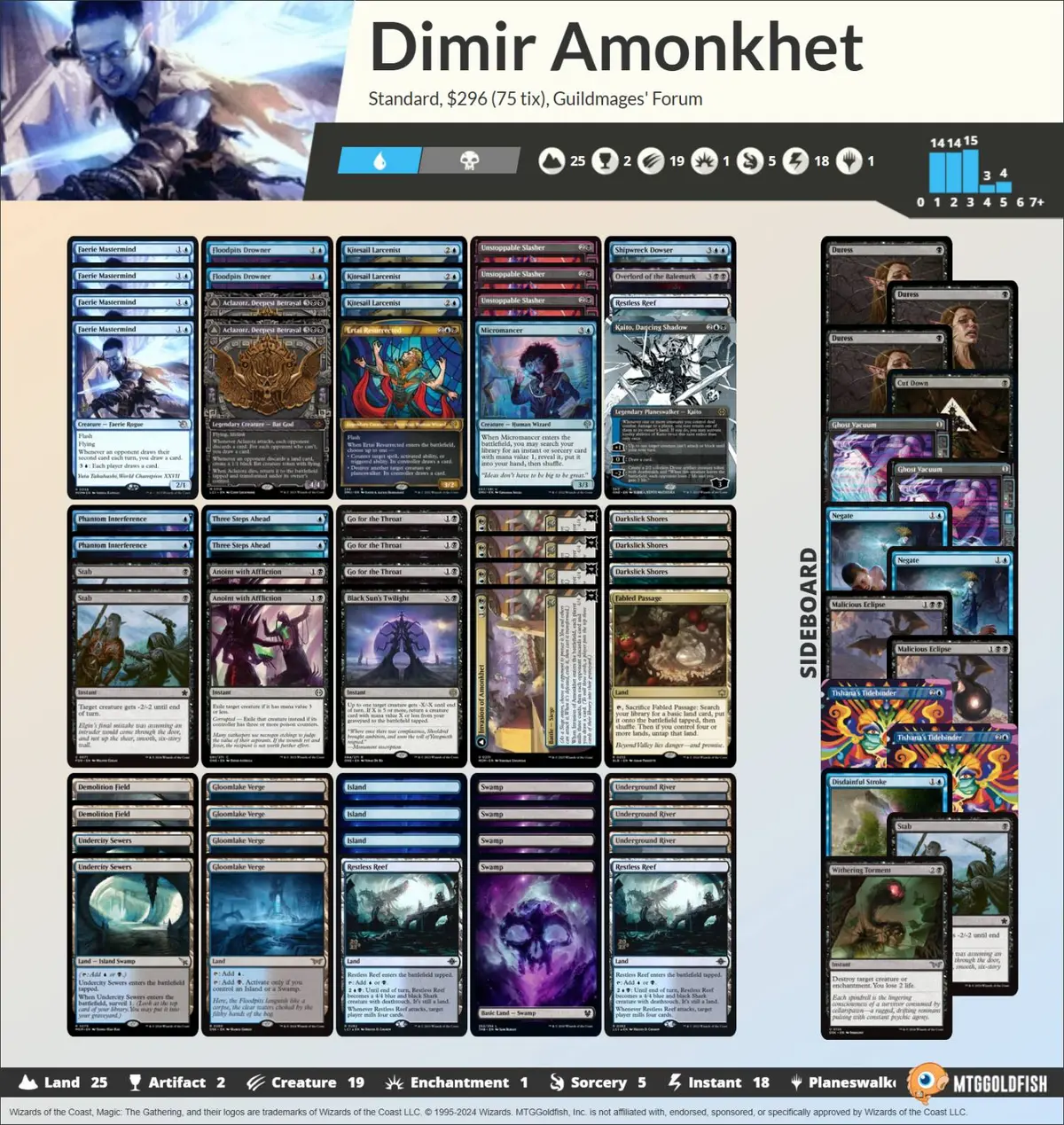
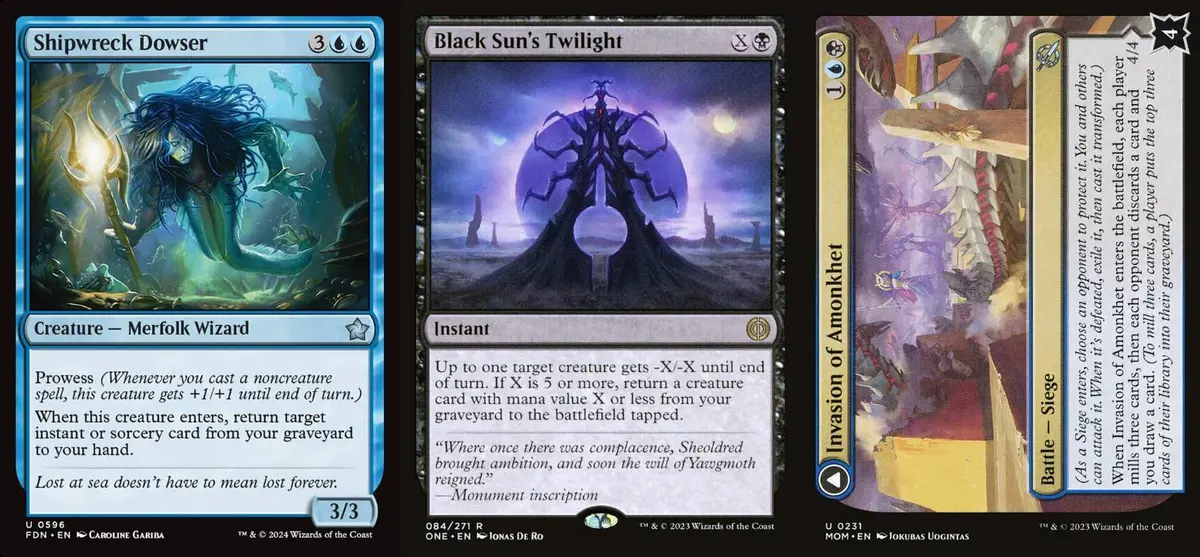
Nothing new here, just the revival of useful old cards. Shipwreck Dowser & Black Sun’s Twilight each fit our game plan of generating ETB value, and once you have both, they become an annoying repeatable removal-and-recursion engine.
Dimir Mill
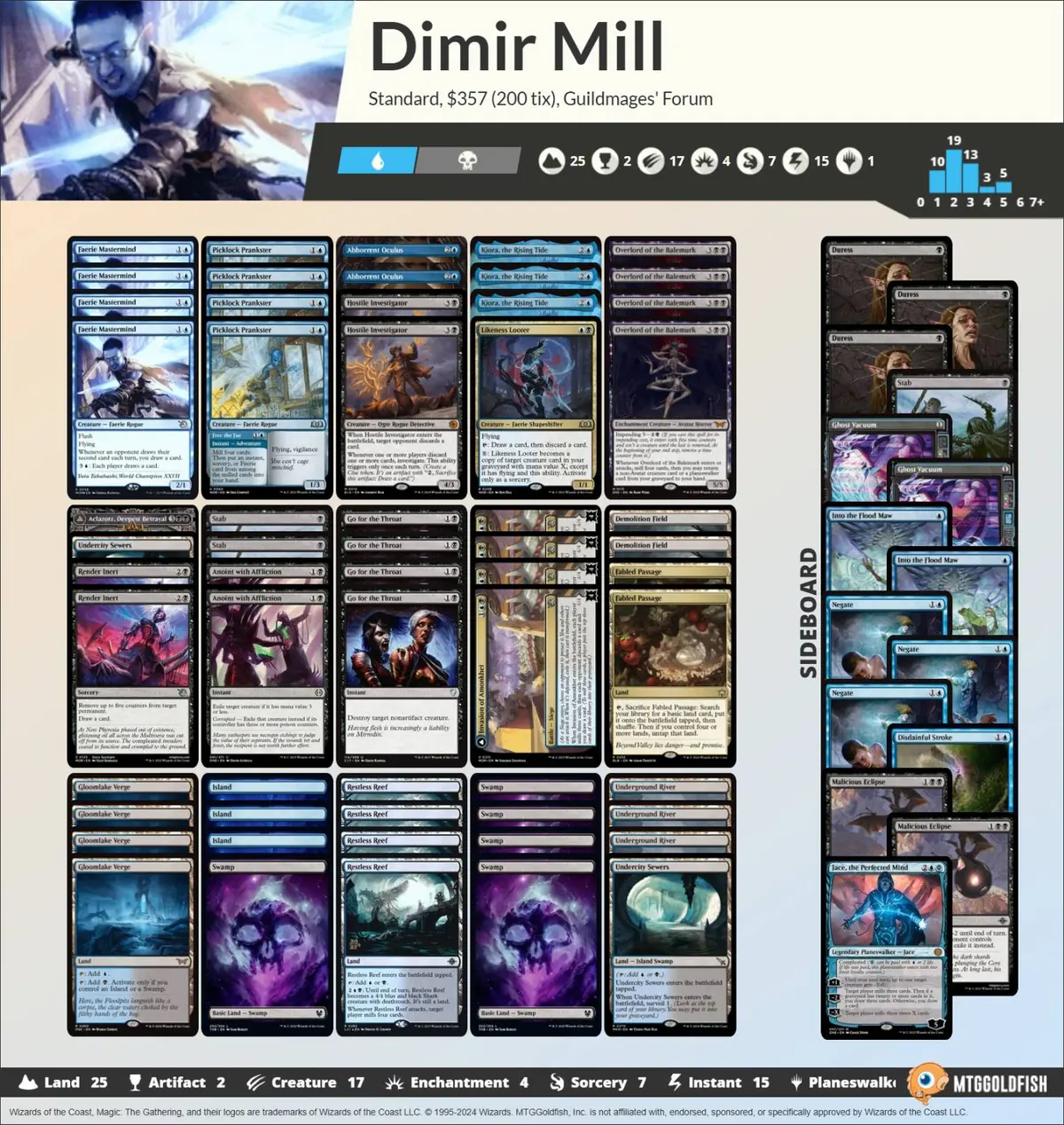
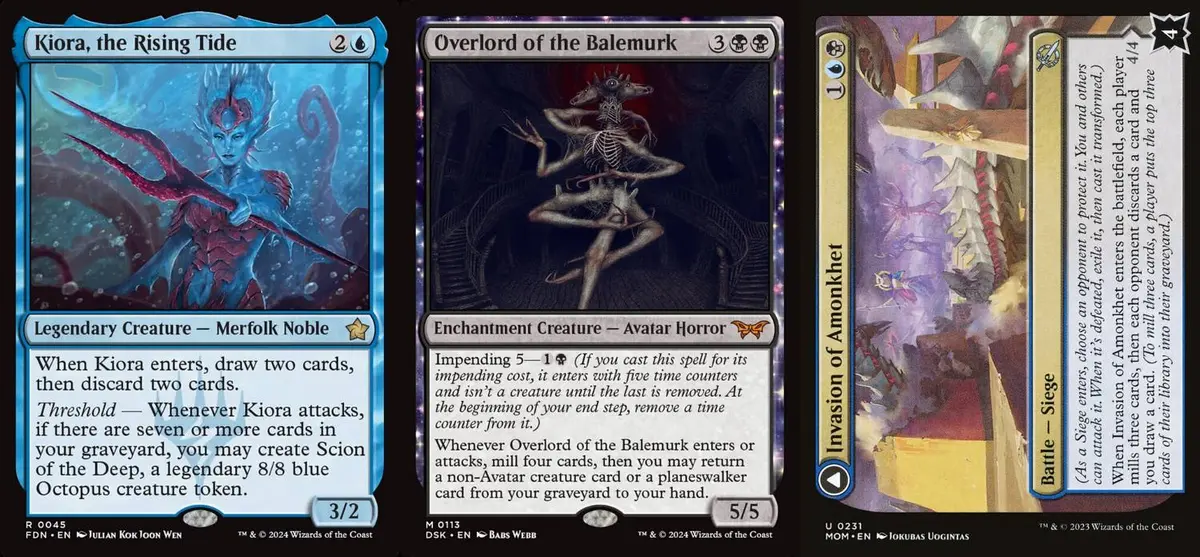
Overlord of the Balemurk & Invasion of Amonkhet // Lazotep Convert are already great at filling the graveyard, so helping Kiora, the Rising Tide reach threshold is no trouble at all. And since the deck is so good at filling the graveyard, Abhorrent Oculus naturally gets a slice of the pie.
Dimir Kaito
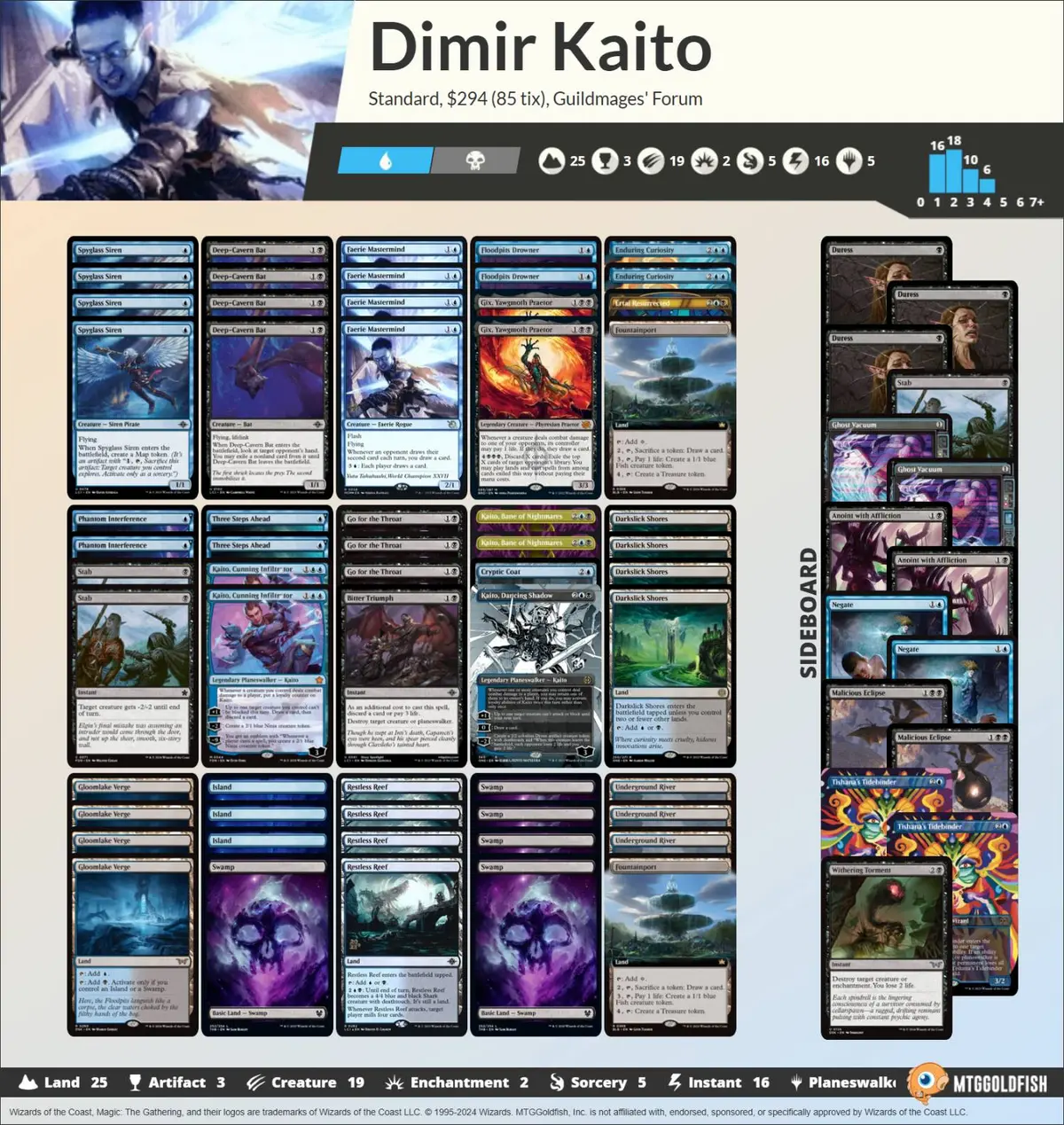
Assemble! The Kaito family reunion!
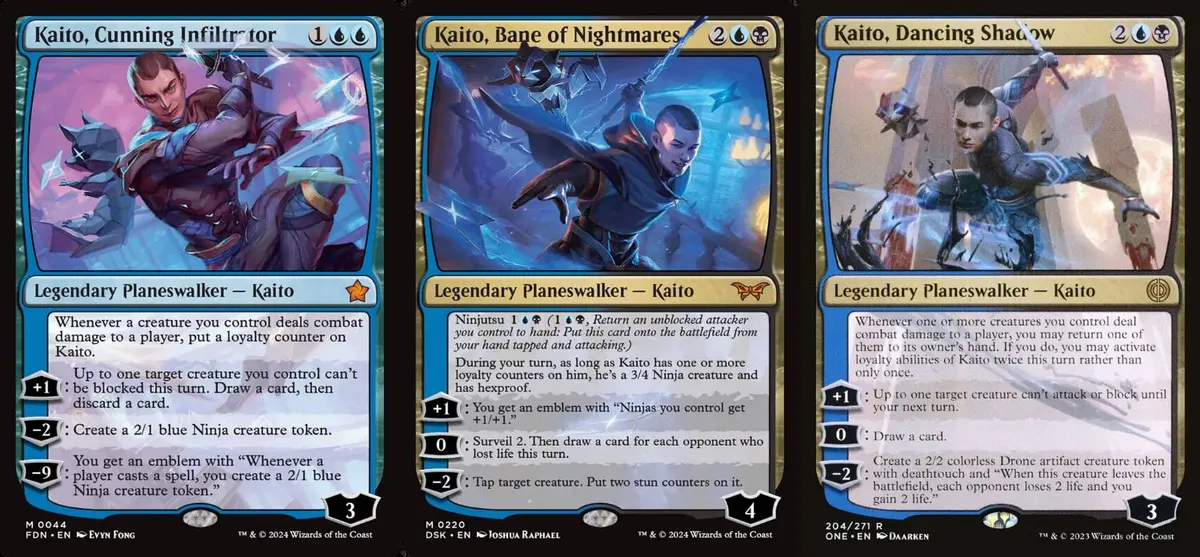
All three Kaitos pair well with high-evasion Dimir tempo creatures. That is what Dimir does best, so they slot naturally into a traditional Dimir tempo structure.
By the way, the new Kaito, Cunning Infiltrator actually pairs quite well with Unstoppable Slasher too. With Kaito’s [+1], it really is an “Unstoppable” Slasher.
Rakdos Control
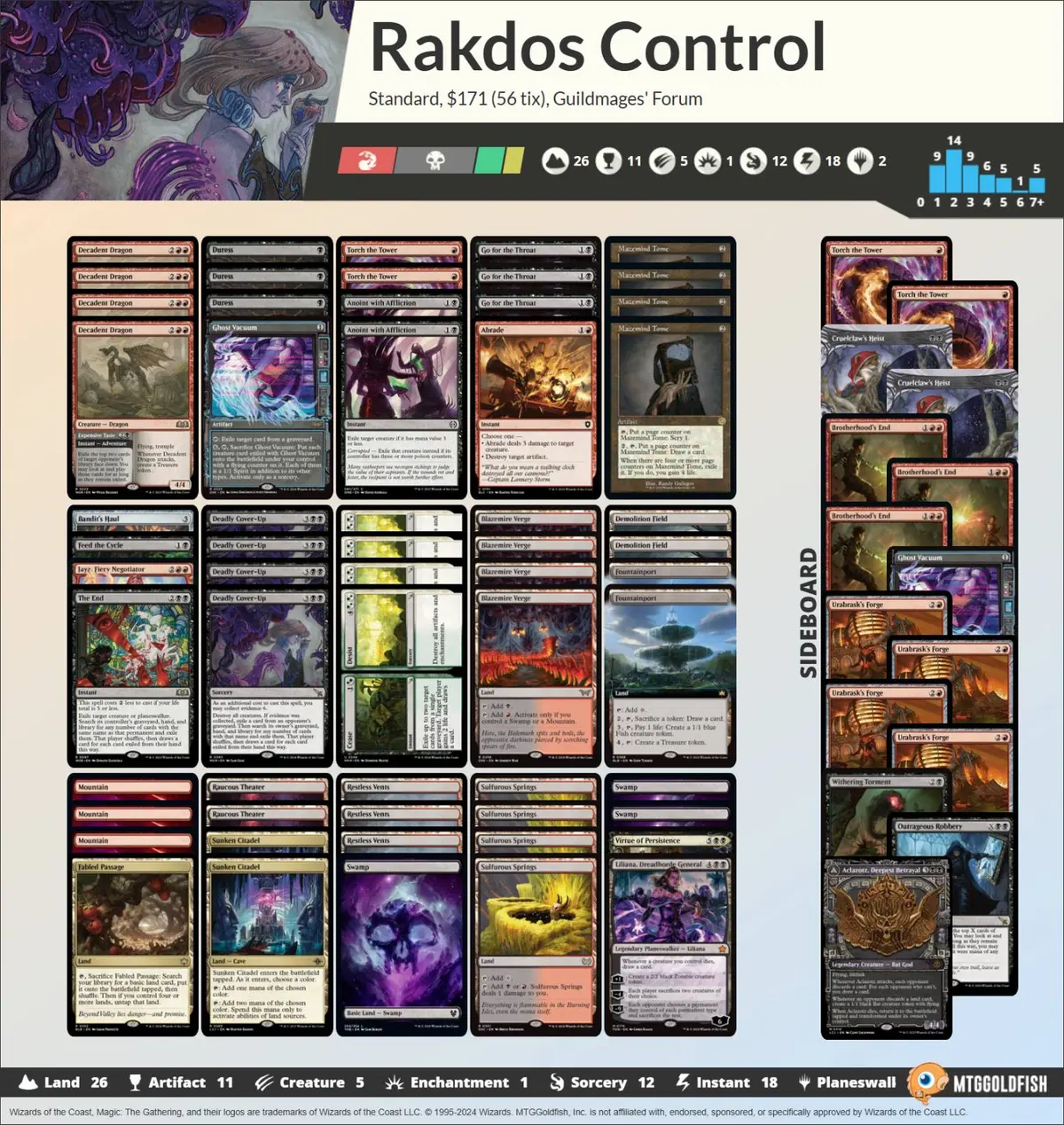
Mazemind Tome makes the author’s top 10 favorite single cards in Standard history. Back then, I relied on Mazemind Tome’s powerful card advantage to build quite a few non-blue control decks (the final form at the time was Jund Control). But now white has Caretaker’s Talent + Enduring Innocence, two even more powerful resource engines that are answered by almost the same removal, so if you want to restore Mazemind Tome to its former glory, you should prefer color combinations that avoid white (artifact themes aside).
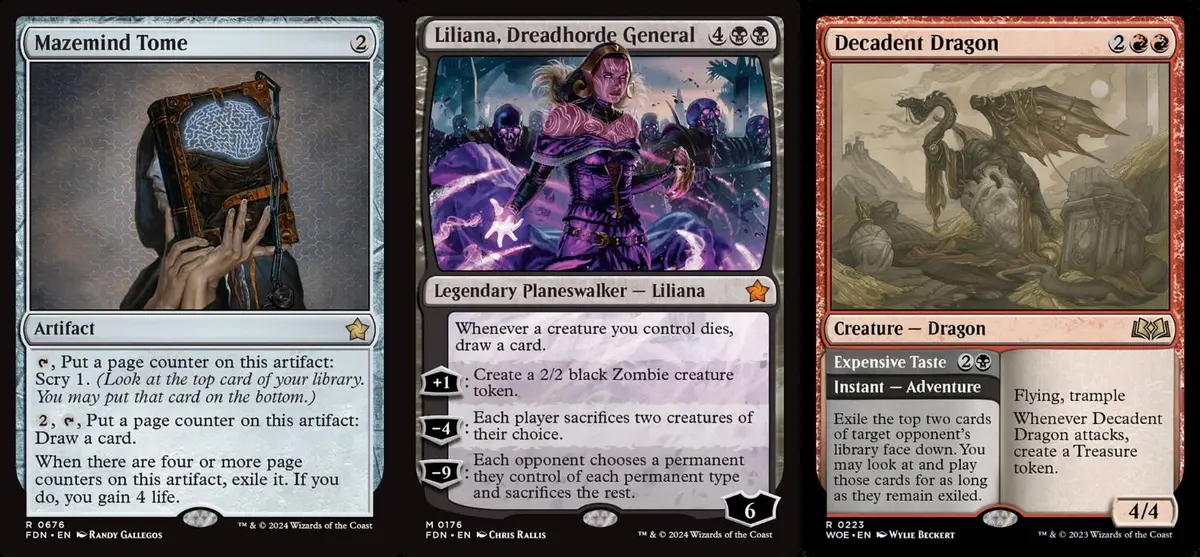
Azorius Control
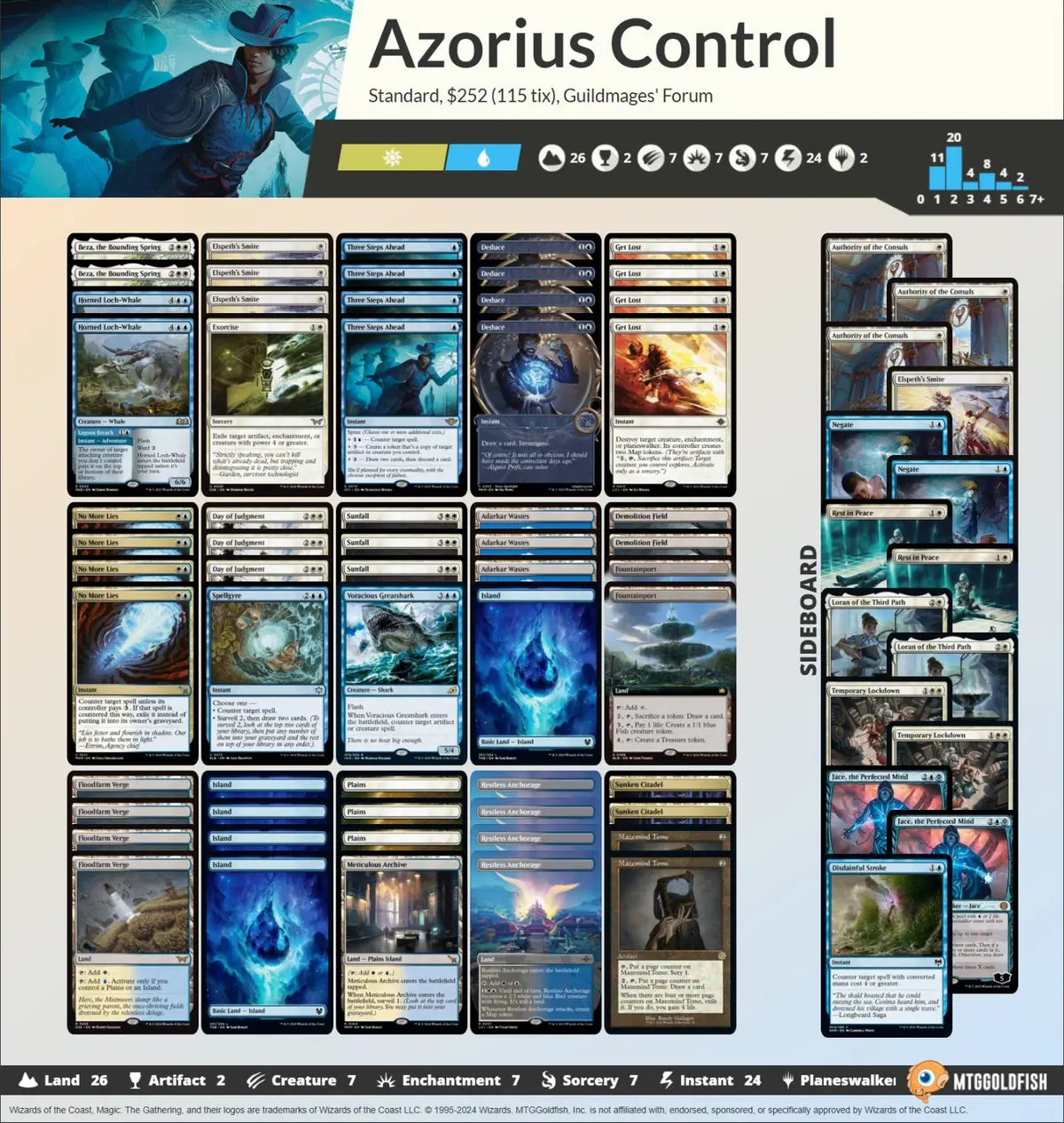
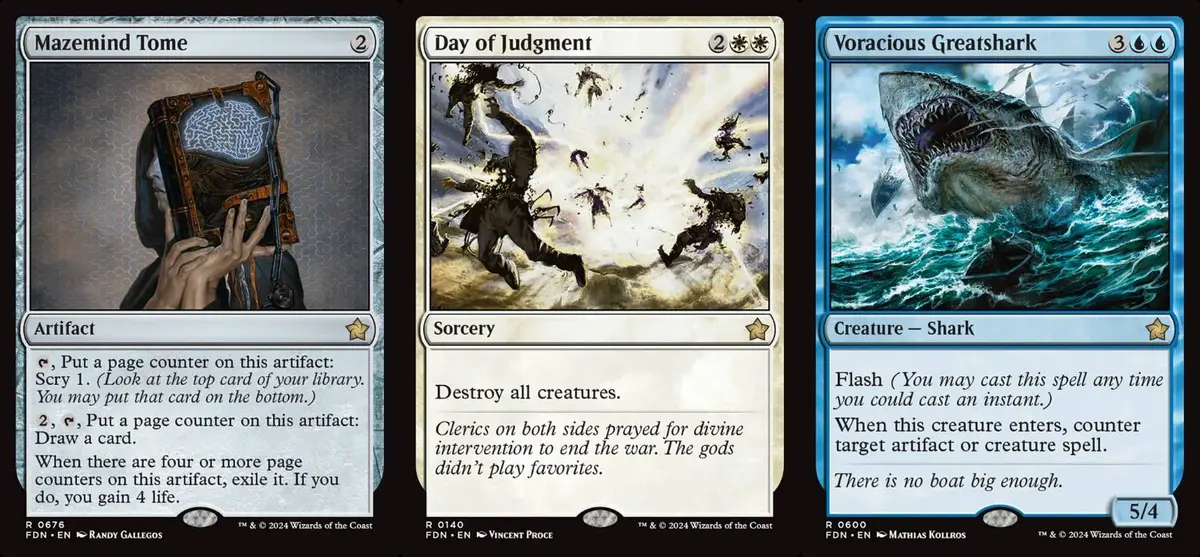
As mentioned above, thanks to the powerful card advantage of Caretaker’s Talent + Enduring Innocence, control decks lately have been monopolized by token shells, so let’s try building a traditional Azorius Draw-Go control deck anyway. But it can’t be denied that Mazemind Tome just can’t keep up with those two white enchantments in resources or tempo; its only advantage is that it works as a single card, without spending extra slots on support.
Dimir Control
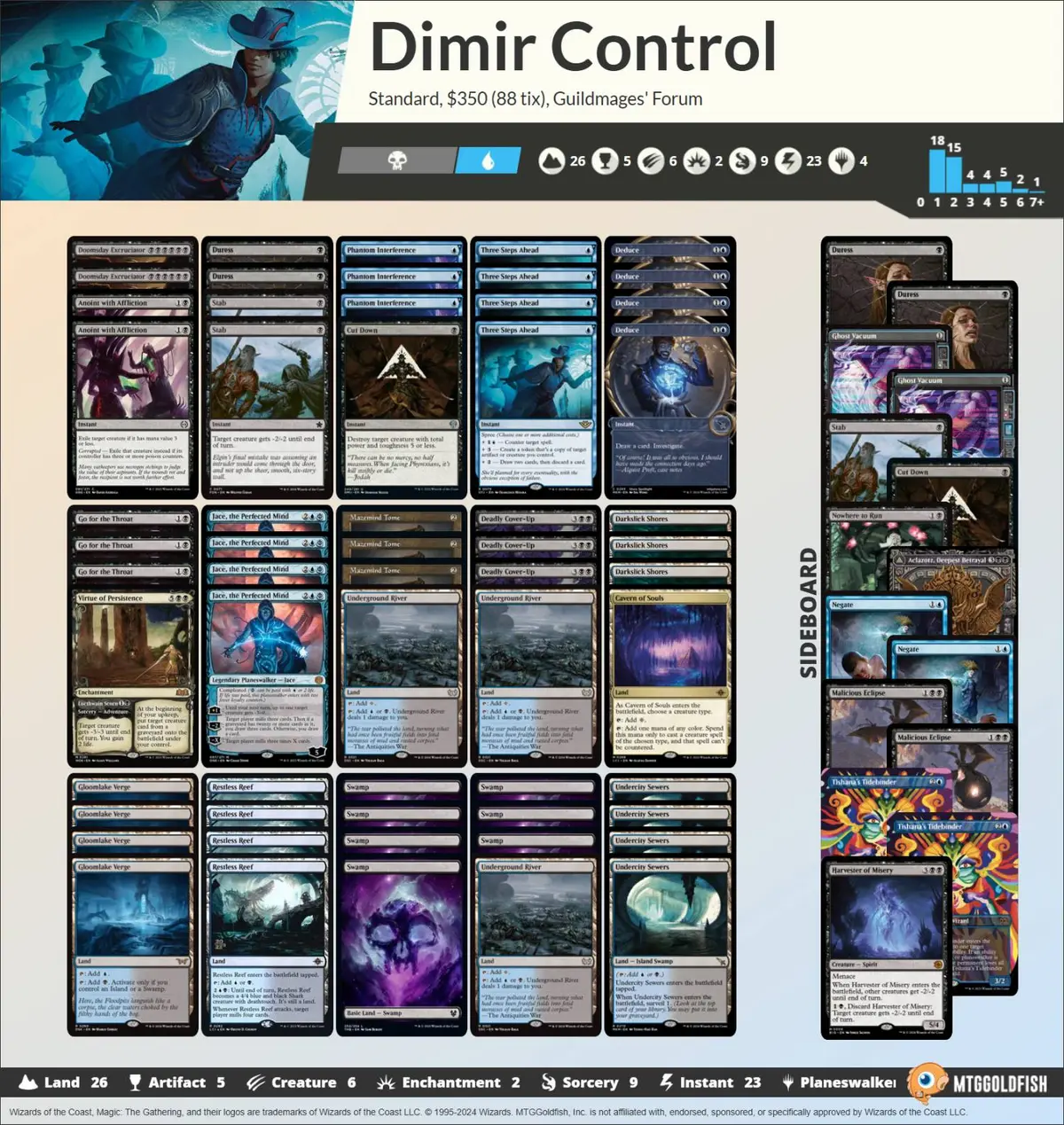
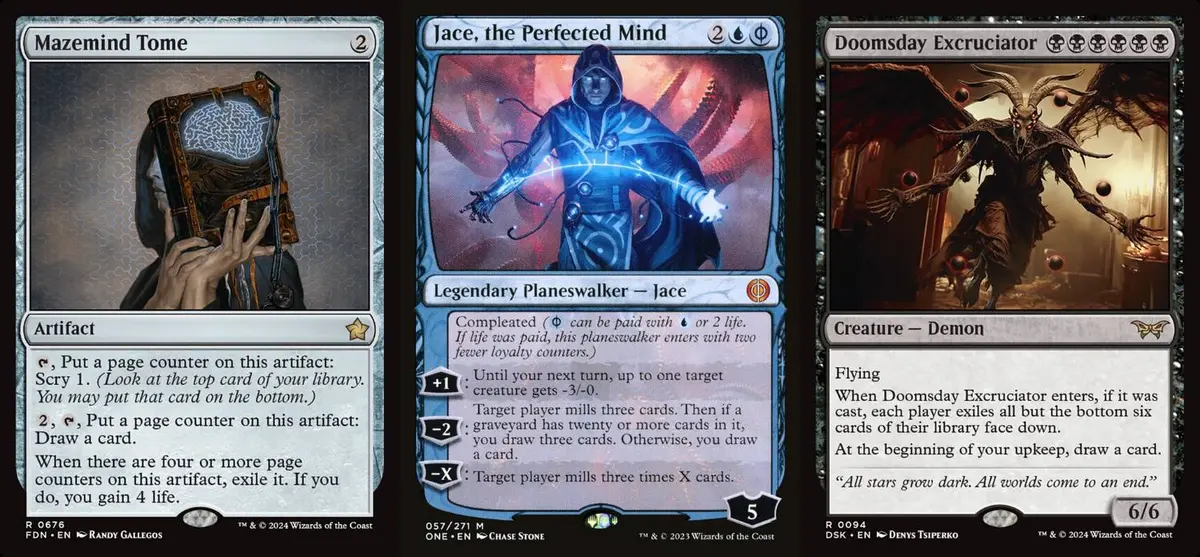
The core is the Jace, the Perfected Mind + Doomsday Excruciator combo control deck that already existed last set (although in many games Perfected Jace alone seems to win it, and the Demon is just a cheeky way to raise the ceiling), with Mazemind Tome added to strengthen resource staying power.
Boros Equipment
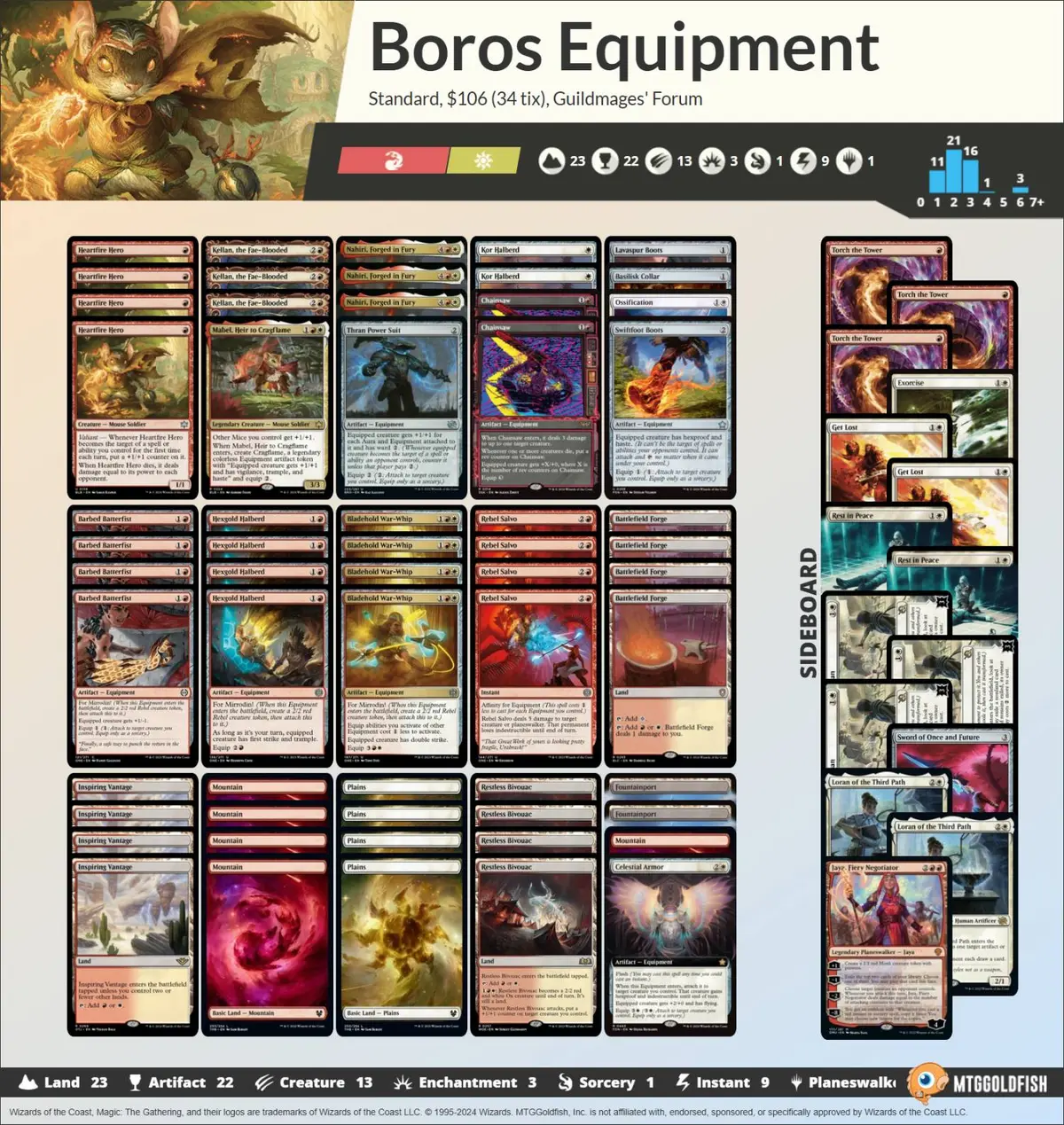
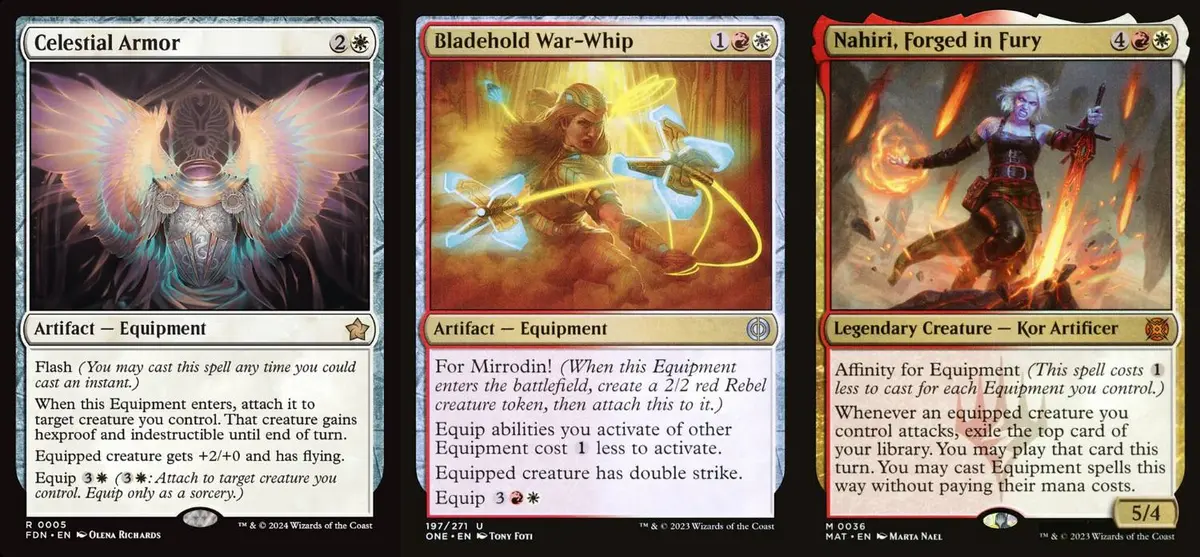
It’s actually funny: this deck was originally built starting from Leyline Axe, but after putting it together it became the first card cut. Leyline effects fundamentally amplify luck variance, and unlike Leyline of Resonance, which can produce a turn-two kill ceiling, even if you hit the Leyline Axe in your opening hand, you won’t be using it until several turns later. You’re better off switching back to normal one-mana equipment to keep your tempo smooth.
By the way, Fervent Champion himself, Javier Dominguez, won the World Championship again this year. If Fervent Champion comes back into Standard, then Leyline Axe would have a strong enough incentive to be played.
Sultai Soul Cauldron
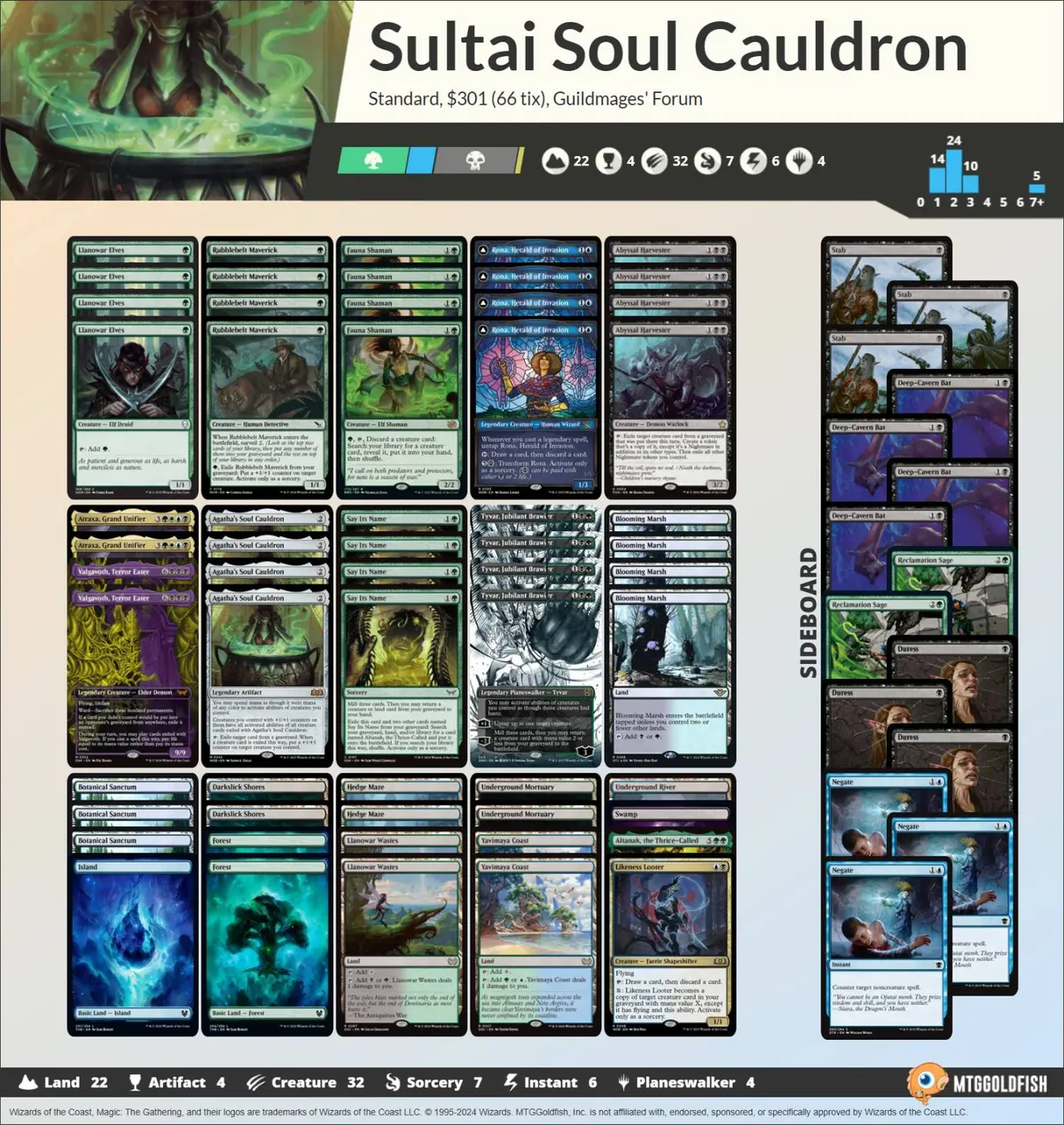
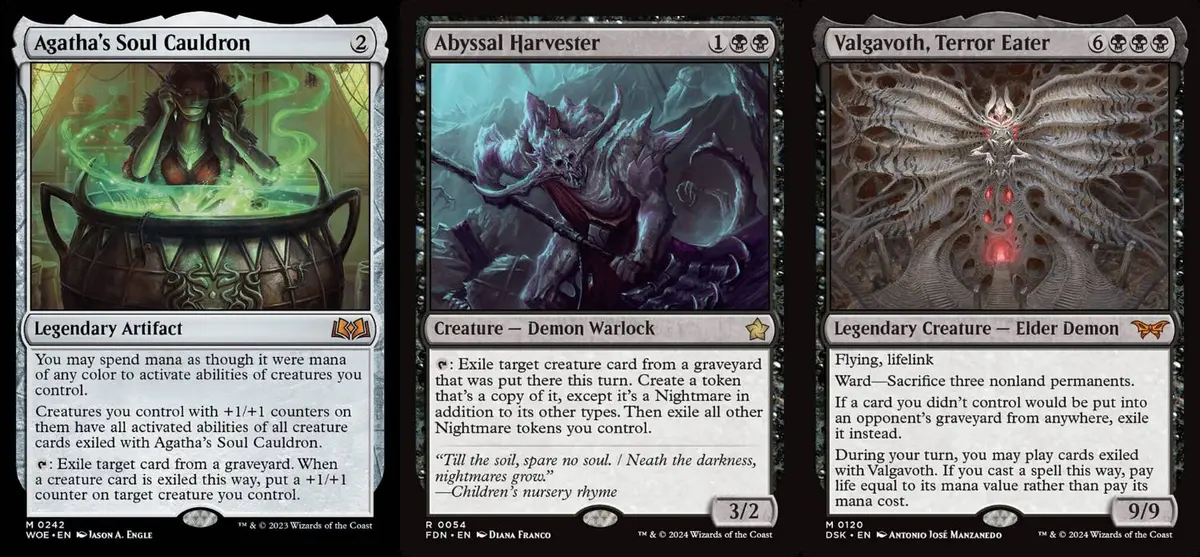
Use Fauna Shaman, Rona, Herald of Invasion // Rona, Tolarian Obliterator, Likeness Looter, or other self-mill methods to put your chosen finisher in the graveyard, then use Abyssal Harvester to create a token copy. All of these are creature activated abilities, so Agatha’s Soul Cauldron & Tyvar, Jubilant Brawler can help the deck run.
Mono Blue Artifact
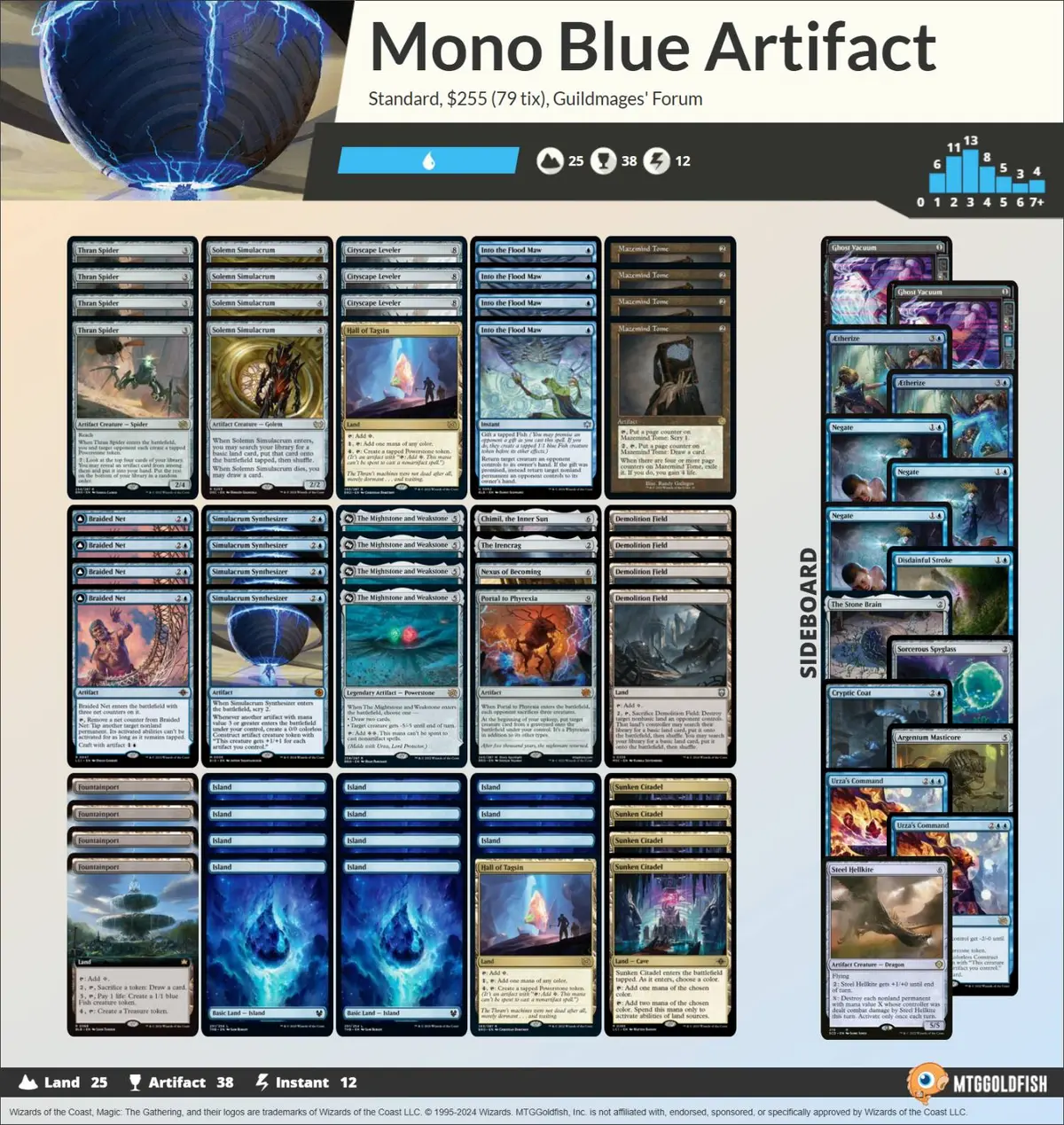
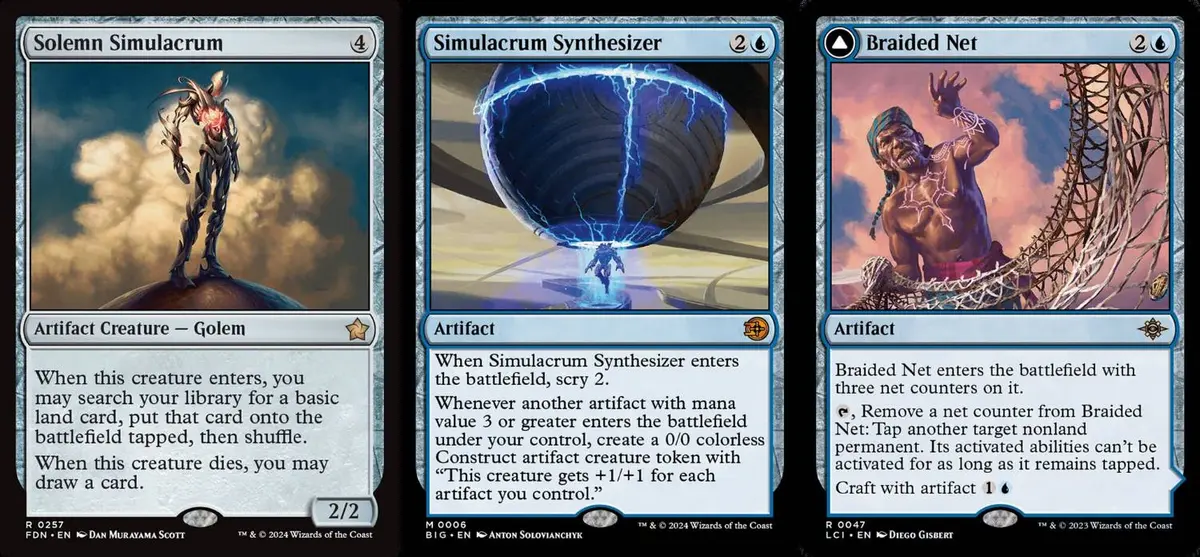
A deck where I let myself off the leash. After Solemn Simulacrum was reprinted, you get itchy to build a deck with it, but traditional Ramp decks are already very complete now. In acceleration speed, a four-mana Solemn Simulacrum certainly can’t compete, and in resources, Up the Beanstalk draws more satisfyingly, so it had to find another way out. Looking around, it seems only an artifact theme gives Solemn Simulacrum room to shine: at least it works with plenty of artifacts, and there are clear post-Ramp end targets like Cityscape Leveler and Portal to Phyrexia. As for why not build Izzet or Azorius and instead pick mono blue? It’s purely because I wanted to test the possibilities of a single color. If you want to play it safe, I still recommend building a normal Azorius or Izzet deck and mixing in quality cheap removal.
- Title
- A First Look at Foundations Standard
- Author
- Jru, cephille, JerobaMTG
- Created at
- November 11, 2024
- License
- This work is licensed under CC BY-NC-SA 4.0 .