
Taiwan Black Bear's Debut at MIT#9: White-Blue Control
Note: This article was translated from Chinese by AI and may contain errors. Read the original Chinese version.
An Unfamiliar Player?
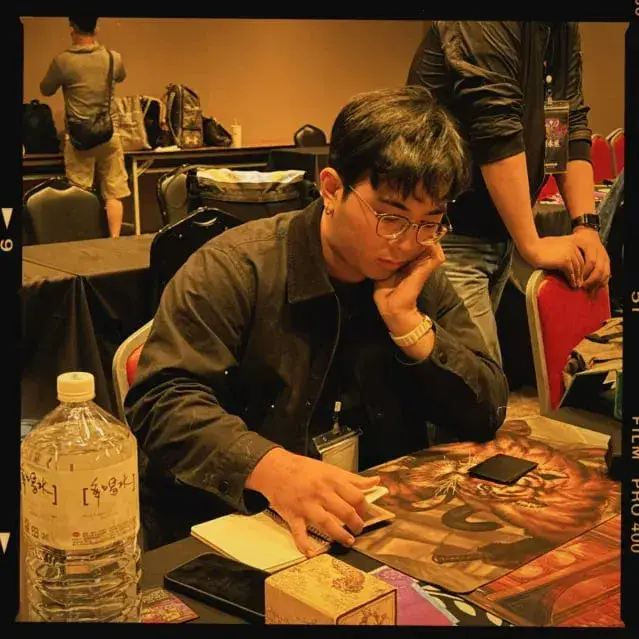
I’m Taiwan Black Bear, aka Chiyou, aka Standard Player Ramblings. I think this is probably the first time most of you have seen me at a tournament, and when people find out my age, most players look surprised. But I was introduced to MTG from a very young age, around second or third grade of elementary school, when the set was Scars of Mirrodin (SOM). Back then I just played randomly, grabbing a pile of commons to build completely unreasonable decks. After a break, I came back and started playing seriously in 2022, when Kamigawa: Neon Dynasty (NEO) came out.
At that time I happened to try MTGA, played a lot of Standard there as a newcomer, and almost reached the top fifty, and later I switched to MO for practice. Because of school, I haven’t had much time to come out and play in tournaments, so people may be a bit unfamiliar with me, but I’ve actually been practicing on MO for a long time and have gotten decent results there.
Making the top eight this time really feels unbelievable. At first I hadn’t even thought about playing the main event; it was cephille who told me in early April that there was an MIT main event on 5/17~18, and that even without a qualification I could try the LCQ (Last Chance Qualifier). He has helped me a lot, both with playing and with things outside of playing, and I’m truly grateful to him for getting me to the top eight, and for inviting me to write this article.
Why Choose MO for Practice?
The reason I chose MO for practice is that, aside from the interface being really awful to use, everything else is a plus. For example: there’s a trading system, there are prizes in both Leagues and Challenges, and the competition is relatively strong there. These factors make me feel MO is the most efficient place to practice. With paper, you first have to collect all the cards, and the Taiwan market is very small so I often can’t get the cards I want, and store weekly events only play three rounds, which is inconvenient for me since I usually have to commute.
MTGA, on the other hand, has competition that’s too weak for my taste, and the rankings for all formats are calculated together, which makes it hard to tell players apart.
But Let Me Also Talk About MO’s Downsides
- Entry costs money (MO’s currency is called tix), and 1 tix is about US$1 (I’ll talk about the detailed economics another time)
- Interface problems and server lag
- The total number of players is smaller than MTGA
- The timing of big events is generally unfriendly to Asian players
- Following from entry costing money, if your skill isn’t good enough and your win rate is below 50%, you’re basically giving away money. But for me this is both a downside and an upside: knowing this is exactly what gave me the motivation to get stronger.
My practice on MO was just playing League over and over, building a feel for the game through volume and understanding how each deck works.
How Did I Decide to Use White-Blue Control in the End?
The statistics course I took this semester made me realize the importance of data, so I used Notion to build my own database. Only with real data can I make relatively objective judgments, rather than falling into the fallacy of feeling (for example, choosing a really bad deck or misjudging favorable and unfavorable matchups)
Choosing White-Blue Control was actually quite unexpected. I returned to Standard in April when I went to play at 平方 with cephille, who lent me Dimir midrange, and I went 3-0 with it. So I went home and built one on MO right away and did well, but considering he would probably be playing Dimir too, I ruled it out. After that, TDM was released and Izzet Prowess reached the top, but because Cori-Steel Cutter was too expensive and I didn’t want to play such a mainstream deck, I scrolled down MTGGoldfish’s metagame page, found White-Blue Control, and built it to practice with an “I’ll give it a try” attitude.
But the problems I ran into at that time were: my win rate against Jeskai Control and Abhorrent Oculus was terrible, but against Cutter it was great, with an 80% win rate. Overall, though, the win rate wasn’t really pretty, landing at around 53%. So I tried other decks along the way, such as Oculus and Jeskai Control mentioned above, but after trying them I felt Oculus didn’t fit my playstyle, and Jeskai Control felt awkward to play, so I switched back to White-Blue Control and started trying all kinds of different builds.
Main Deck Configuration
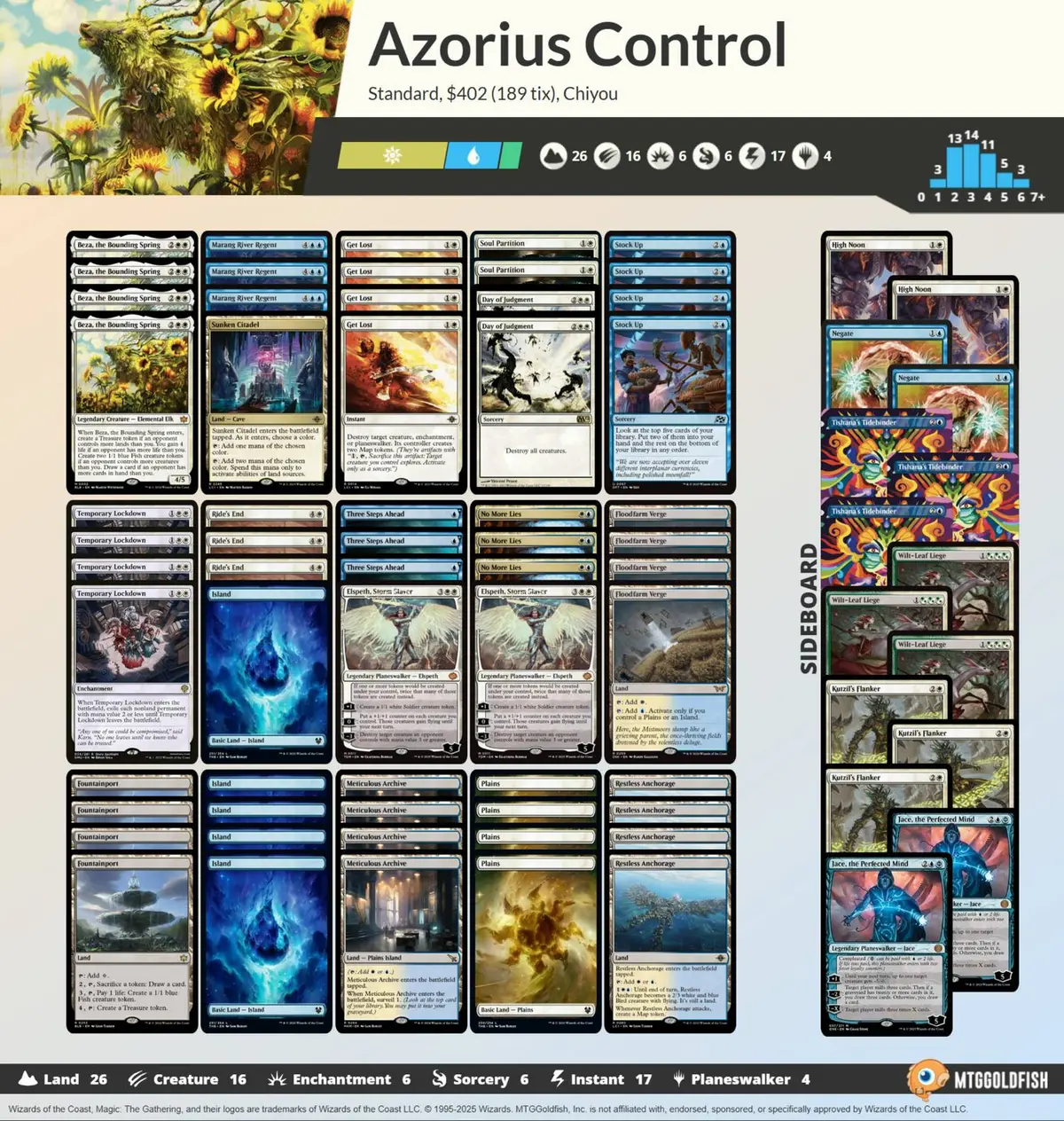
I kept testing Horned Loch-Whale (the Whale) 🆚 Marang River Regent (the Blue Dragon), which of Sunfall 🆚 Day of Judgment was better, and whether Elspeth, Storm Slayer (Elspeth) and Jace, the Perfected Mind (Jace) were worth playing at all. I also tried builds without Temporary Lockdown and with High Noon in the main deck. After these experiments, and after working out the right strategies against Omniscience once it rose, I decided to enter with this configuration.
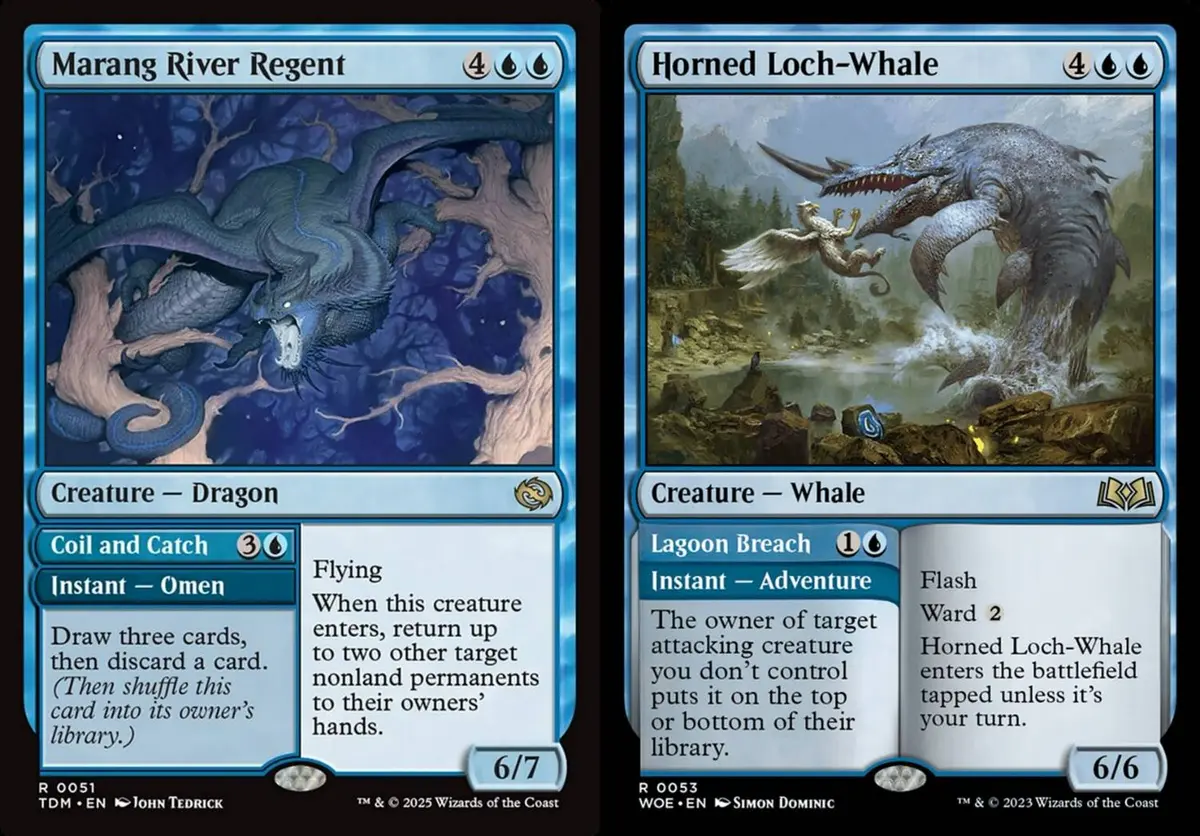
In the end I still think Marang River Regent is better than the Whale. Although the Whale’s Adventure can serve as an early play, when cast as a creature the Dragon is much stronger: bouncing two things and leaving a 6/7 on the battlefield can often save your life, and the omen’s draw three, discard one is also great looting.
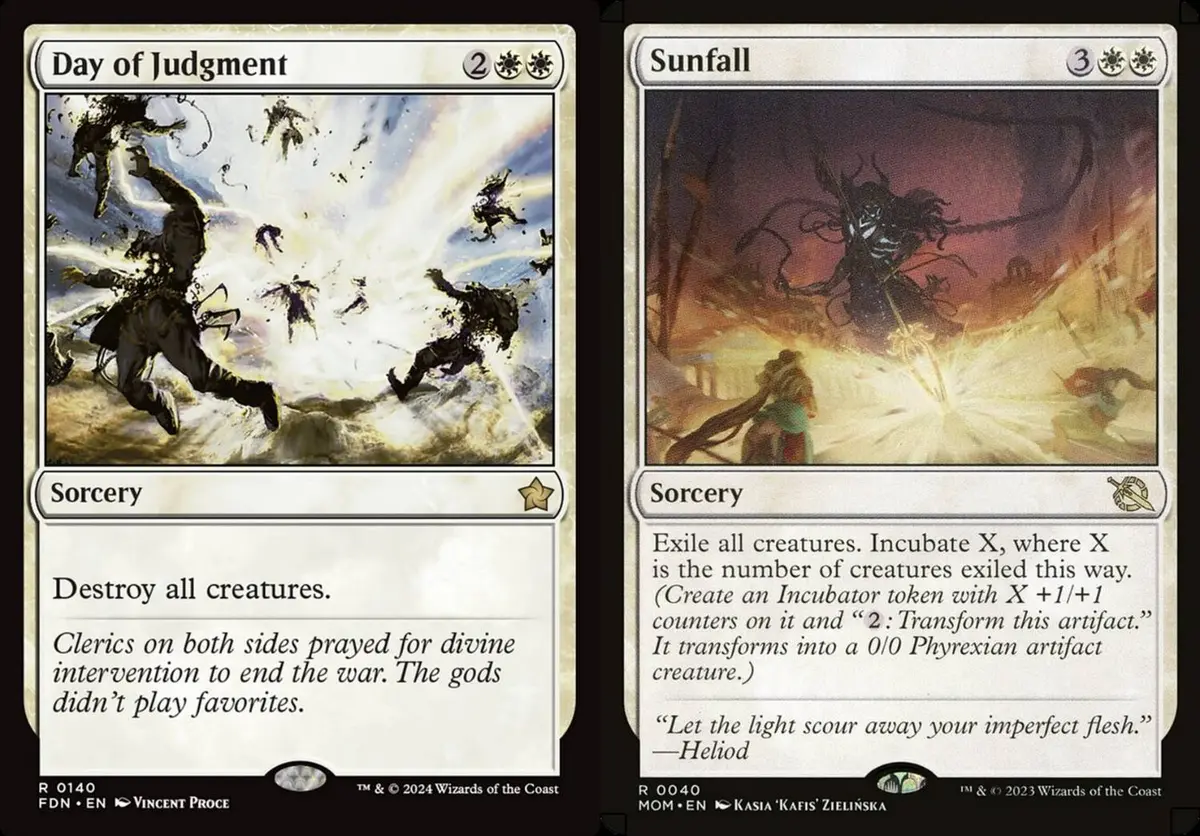
Day of Judgment, being a turn faster, is still much better than Sunfall. Although Sunfall exiling creatures and incubating X is strong, most of the time you need to sweep the board on time on turn four.

I chose Ride’s End over Elspeth’s Smite because I feel Ride’s End is more versatile: Smite has trouble killing Izzet Prowess creatures, and End isn’t limited to attacking creatures. If worse comes to worst it can be a five-mana kill spell, whereas too often Smite just sits in hand as a dead card.

Later I found that Elspeth is actually very strong. The [+1], together with the two tokens made by her passive effect, makes good blockers when the opponent has no flyers, and when both boards are empty she is also a very fast finisher. The [-3] kills creatures with mana value three or more, which can often save your life, and if the opponent can’t successfully remove her, next turn Beza, the Bounding Spring has a chance to make four Fish at once, and combined with the [+0] counter-placing you can build a very strong board right away. In addition, her passive, doubling tokens, works with Fountainport and Restless Anchorage to earn even more resources.

I play Soul Partition because I saw that the first-place White-Blue Control at a Mo Challenge ran it, and his explanation was that it’s one of the ways to answer Kaito, Bane of Nightmares.

One of white’s best removal spells; it can deal with almost anything, though sometimes giving the opponent two Map tokens becomes a problem.

The best card-draw spell in the format. Just about every deck that plays blue should run it; looking at five cards also lets me, as the control deck, find the cards I need in time.

A three-mana counterspell, but in this overly fast environment it can sometimes feel clunky. Its Spree ability is where the value is, though: at five mana you can choose to counter a spell and also draw two and discard two, so you can loot while countering the opponent’s most valuable threat. The key to using this card well is actually the copy mode: copying Beza or the Blue Dragon brings huge value, but be careful that the opponent doesn’t use an instant-speed removal spell to leave it without a target.

Most of the time the best four-drop for tempo. Usually it’s hard to end up with fewer cards in hand than the opponent, and the same goes for lands, so what you can trigger is gaining four life and making two Fish tokens. Having gained four life and with three creatures on the battlefield after casting it, the pressure is much lower.

A huge weapon against today’s low-cost decks, but those decks usually have answers to this card by now, such as Into The Flood Maw in Izzet Prowess and Loran of the Third Path in White-Black Pixie, so pay attention to when you use it.
Land Configuration

Only one, to make the utility lands run more smoothly.

Surveil lands should definitely be a full four. Here’s a fun story: originally I didn’t have a single surveil land. The day before the tournament cephille lent me two, and then on the day I played in the LCQ, a mysterious person lent me two more (he hoped I’d keep his identity secret).

I run four, but you can play 3~4 depending on personal preference.
Although it’s a tapped land, it can sometimes serve as a win condition. When it attacks it makes a Map, which works nicely with Fountainport, and it can also be a blocker when necessary.

A full four.
One of the good reasons to choose White-Blue Control over Jeskai is that two colors are more stable than three, so you can include one of the best lands in the format without worrying much about color screw. Tapping for three to make a Fish often helps block a lethal hit; tapping for two lets you sacrifice a Map, a Fish made by Beza, or a Treasure to draw cards; and tapping for four to make a Treasure often plays a big role in long games where every point of mana matters.
Sideboard Choices

In the sideboard, High Noon should be a card with relatively high versatility. I actually wanted to play three but only had two. I bring it in against Pixie, Izzet Prowess, and Omniscience.

Flanker is used against Oculus and Omniscience, and in control mirrors it’s a flash creature that applies pressure.
I chose this card as my main graveyard hate because of the flexibility of flash and because it’s a creature itself. Two of its three enters-the-battlefield modes are excellent: exile target player’s graveyard, or scry 2 and gain two life. Although Rest in Peace (RIP) is great at turning cards going to the graveyard into exile, enchantments are relatively easy to remove. If you play it early, even if the opponent can’t remove it, they have a chance to go to another plan; for example, if the Omniscience player sees you play RIP, they might just switch to a midrange plan.
And in control mirrors, this card can find the cards you need through its scry ability, and its 3/1 body can also quickly put pressure on the opponent’s life total.
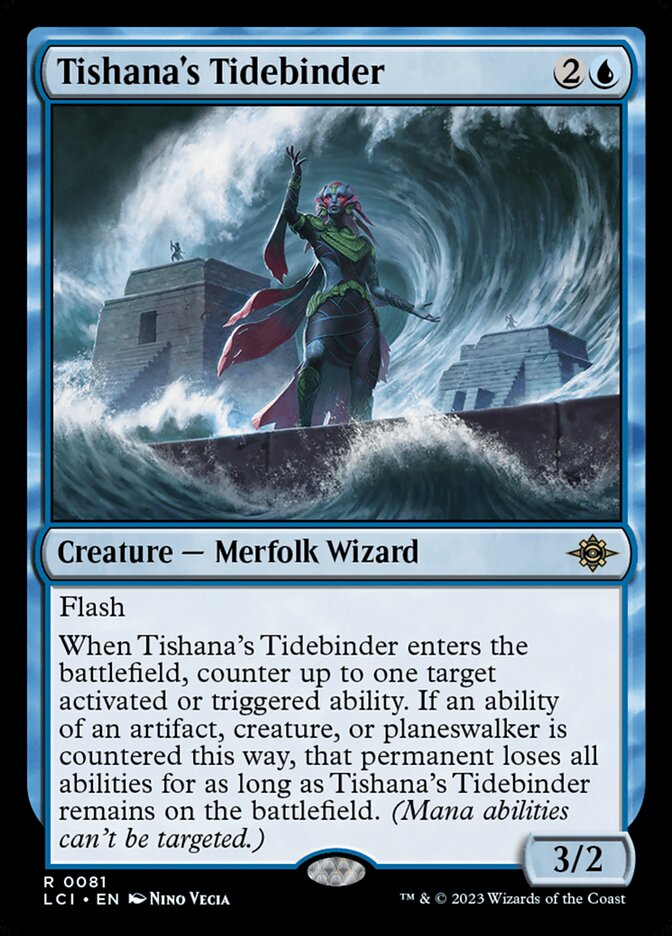
Tidebinder can counter Cutter, Talent level-ups, and various planeswalkers.

Useful against many decks that are mainly non-creature cards. Having only a single blue as its colored requirement makes it more flexible, and from the past to now it’s been a very plain but very useful counterspell.

Specifically for White-Black Pixie and Esper Pixie. When the opponent casts Hopeless Nightmare on turn one, discard this card, and they’ll experience what a truly more hopeless nightmare is.

A good finisher against Omniscience, Overlords, and control decks, but against Omniscience be careful about when you activate the [-2] and [-X] mill abilities, to avoid milling Omniscience into their graveyard for them.
Sideboarding Strategy
Omniscience
| Side Out | Side In |
|---|---|
| -4 Temporary Lockdown | +2 Jace, the Perfected Mind |
| -3 Ride's End | +3 Kutzil's Flanker |
| -2 Beza, the Bounding Spring | +2 Negate |
| +2 High Noon |
- Lockdown comes out because there are basically no targets; the opponent doesn’t attack much, so Ride’s End is also pretty useless, and the opponent’s Voice of Victory
 can’t be removed with End on their turn; as for Beza, it’s basically hard to earn resources with, and being a legendary creature makes it too clunky.
- Jace is one of the win conditions. Because games often drag into the very late game, and Omniscience has plenty of looting and graveyard filling, you should hold it in hand and wait for the right moment to activate [-X] and mill the opponent’s whole library in one go to win. Flanker is basically an instant-speed graveyard exile plus a creature. The opponent often uses Mistrise Village
 to make Abuelo's Awakening
 uncounterable, and at that point you can use Flanker to kill them by surprise. High Noon is there because Omniscience, as a combo, wants to finish everything in one turn; although it’s not the best way to hate on it, only being able to cast one spell per turn troubles the opponent.
Izzet Prowess
| Side Out | Side In |
|---|---|
| -2 Elspeth, Storm Slayer | +2 Tishana's Tidebinder |
| -2 Three Steps Ahead | +2 High Noon |
The main deck is already considered a good matchup, so there isn’t actually much to bring in from the sideboard.
4C Overlords
| Side Out | Side In |
|---|---|
| -4 Temporary Lockdown | +2 Jace, the Perfected Mind |
| -3 Ride's End | +2 Negate |
| +3 Tishana's Tidebinder |
Lockdown has no targets except Up the Beanstalk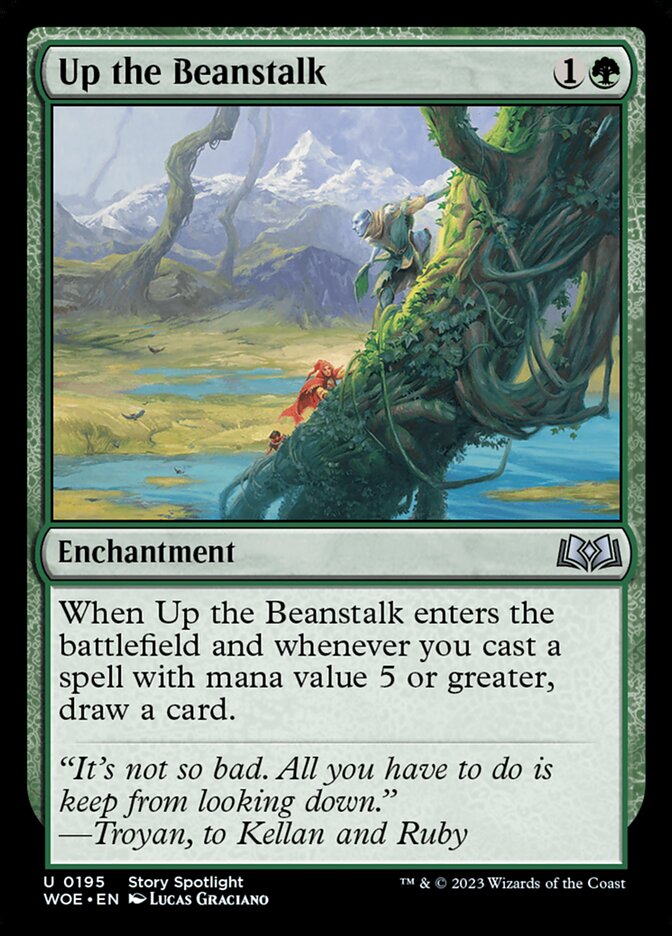 , and Ride’s End isn’t a good choice when the Overlords’ creatures all have attack triggers; it often leads to losing cards, and the opponent doesn’t play many creatures early, so it often gets stuck in hand.
Jace is again a win condition, but unlike against Omniscience, Jace can be cast early and use the -2 as a card advantage tool, because the opponent’s best answer is Leyline Binding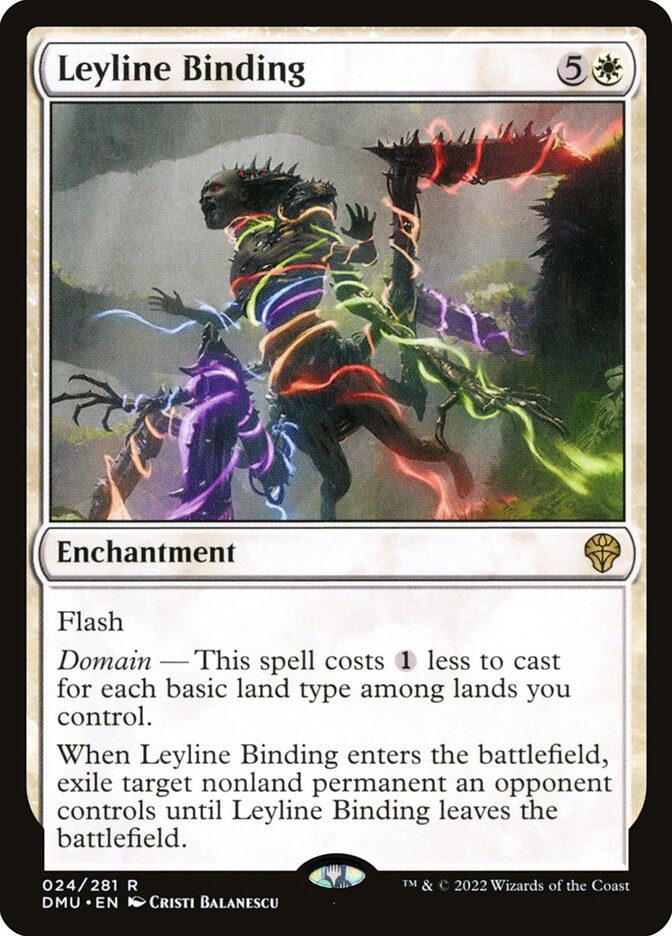 , and we have four Get Lost and three Marang River Regent to take the suppressed Jace back and use him again, or we can use [-X] with X=4, then bounce Jace with the Blue Dragon for a fast kill.
Negate is for the non-creature spells the opponent brings in from the sideboard.
Tidebinder can counter the enters-the-battlefield triggers of many Overlord decks, and the best target is Atraxa, Grand Unifier .
White-Black Blink
| Side Out | Side In |
|---|---|
| -3 Temporary Lockdown | +3 Wilt-Leaf Liege |
| -3 Ride's End | +3 Tishana's Tidebinder |
A recently rising deck that uses Lockdown to suppress its own permanents and then returns them to gain resources, so Lockdown is not a very good way to deal with this deck. The opponent has too many enters-the-battlefield triggers, and if it gets removed we basically lose, a risk we can’t afford. But apart from Wilt-Leaf Liege, none of the sideboard cards were brought in specifically to target this deck.
For the last slots you can choose between High Noon and Negate. The reason I hesitate about High Noon is that the opponent actually has a midrange plan they can go to, and they could just play around it. However, I haven’t practiced this matchup as much as the others, so if you have different ideas, feel free to discuss them with me.
Some Tips for Playing White-Blue Control
My confidence in this list came from my prediction of the field: Izzet Prowess would certainly be the most common deck, Omniscience would increase because it had been performing well at that time, the hard-to-beat Dimir and Oculus would decrease because there was so much Izzet Prowess, and red aggro would disappear from the field (which is also why I didn’t play Authority of the Consuls). With these predictions, the two biggest expected opponents were Omniscience and Izzet Prowess. Early on, with a small sample size, my win rate against Omniscience was actually terrible, but after learning how to handle their plan, my win rate improved a lot.
White-Blue Control is really a difficult deck, so let me share some thoughts on piloting it.
- You can hardly accept a mulligan. In my opinion, for control, as long as you have lands and cards that can do something on turns two or three, you can keep. Unlike other decks that might only need two lands + two key cards to function, the most important thing for control is to keep making land drops, and missing one land at a critical moment is extremely fatal. So the only situations where I mulligan are: no lands, no early interaction, or when I want to mulligan aggressively in sideboard games. But I don’t think that’s a good approach: even if a control deck has the cards that target the opponent, having fewer cards in hand because of the mulligan means it can’t control the board anymore.
- Control doesn’t mean you have to lock the opponent out; the win condition is very important. Once the board is under control and you’re sure the opponent can’t turn things around in a single turn, you should land a threat and put pressure on the opponent’s life total. This is especially important in paper tournaments, because of the 50-minute time limit. In the Izzet Prowess matchup, when the opponent has no Cutter on the battlefield and one or two cards left in hand, I may choose to cast the Blue Dragon to bounce the opponent’s tokens and start racing them. The Dragon only needs four turns to kill the opponent, and the opponent has no way to deal with it except bounce, but specifically you still have to judge based on the board at the time.
- Know the opponent’s deck plan and take precautions. For example, against Omniscience, you’d rather pass the turn than spend your mana and important counterspells on the opponent’s looting cards; you should spend them on card-advantage spells like Stock Up, or when the opponent is trying to dig Omniscience back. Because this deck has only seven counterspells, the timing of each one is important. But against creature-based midrange/aggro decks, you should use counterspells early to disrupt the opponent’s tempo and avoid being killed early, and then clear the board in an instant with Temporary Lockdown or Day of Judgment.
Conclusion
In short, this deck has no absolutely bad matchups in most games, so it relies heavily on the skill of the pilot, and without realizing it my practice reached the astonishing number of two hundred games in two months, so I have a high level of mastery of this deck. Although in the week of the tournament I had thoughts of jumping ship to Omniscience, I felt that practicing a deck to tournament level in less than a week was still too difficult, so I stuck with the most stable and familiar deck. I’m very glad I made the right choice. Even though nobody was optimistic about this deck, and even I once wanted to give up, in the end it was still adequate practice that produced results. At this MIT I also met many people, and through my unique deck choice I let everyone see me. Thank you to everyone who helped me or gave me encouragement.
- Title
- Taiwan Black Bear's Debut at MIT#9: White-Blue Control
- Author
- Chiyou
- Created at
- May 30, 2025
- License
- This work is licensed under CC BY-NC-SA 4.0 .