Fun Combos on the Road of Magic

Note: This article was translated from Chinese by AI and may contain errors. Read the original Chinese version.
Introduction
Hi, I’m T1BloodMoon. As a card game enthusiast, I played Freeze Mage and Quest Mage in Hearthstone, and Insect Witch and Magic-Item Shop Wizard in Shadowverse. Loving every kind of combo, I have also played many combo decks on the road of Magic. Whether it’s a turn-one kill or a deck that uses several cards together to produce huge resources or damage, I enjoy talking about them all. This time I want to share the various combo decks I have played in the past and look back at some fun card interactions. The focus is on how each deck operates, so I won’t go into decklists. Alright, let’s begin.
You don’t need to concede, because you’ve already lost. Reporting the result: 2:0
Standard: Mono-Blue Release to the Wind combo, Kethis, the Hidden Hand
Pioneer: Neoform Boros Lorehold Dragon, Unctus infinite untap combo, Storm Herald, Mono-Red
Modern: Landless Belcher, Landless Graveyard
Legacy: One-Land Belcher
Standard
Mono-Blue Release to the Wind Combo (2018)

The core is the interaction between Release to the Wind and Naru Meha, Master Wizard to achieve infinite casting, then using Drowned Secrets for infinite mill. The early game is control and filtering, a quite simple and brutal deck.
Kethis, the Hidden Hand (2019)
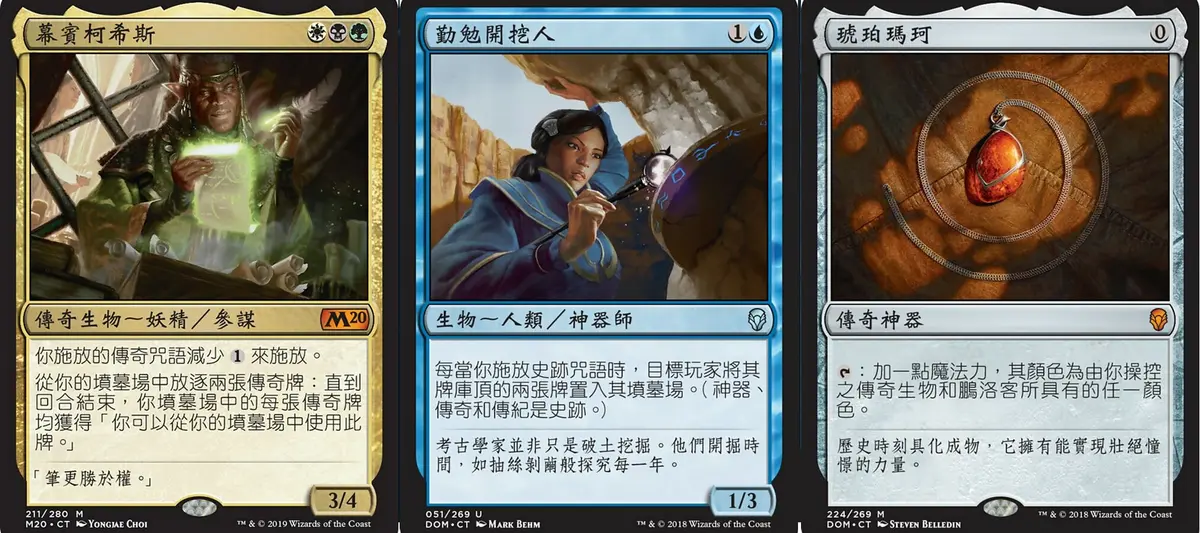
Kethis, the Hidden Hand is a card banned in both Pioneer and Explorer. The author only played it in Standard, and it was banned not long after the Pioneer format launched. The core is the interaction between Kethis, the Hidden Hand and Diligent Excavator: by constantly casting Mox Amber and Fblthp, the Lost, you first self-mill to build the graveyard and draw and filter cards, and in the late game the finisher can be milling the opponent or winning by casting Jace, Wielder of Mysteries. Because it assembled the combo so consistently, it was all the rage in tournaments before rotating out. Pioneer’s card pool is bigger and has the cheaper Hope of Ghirapur, so it became a deck we can only reminisce about, and it probably won’t be unbanned.
Pioneer
Neoform Boros Lorehold Dragon (2021)
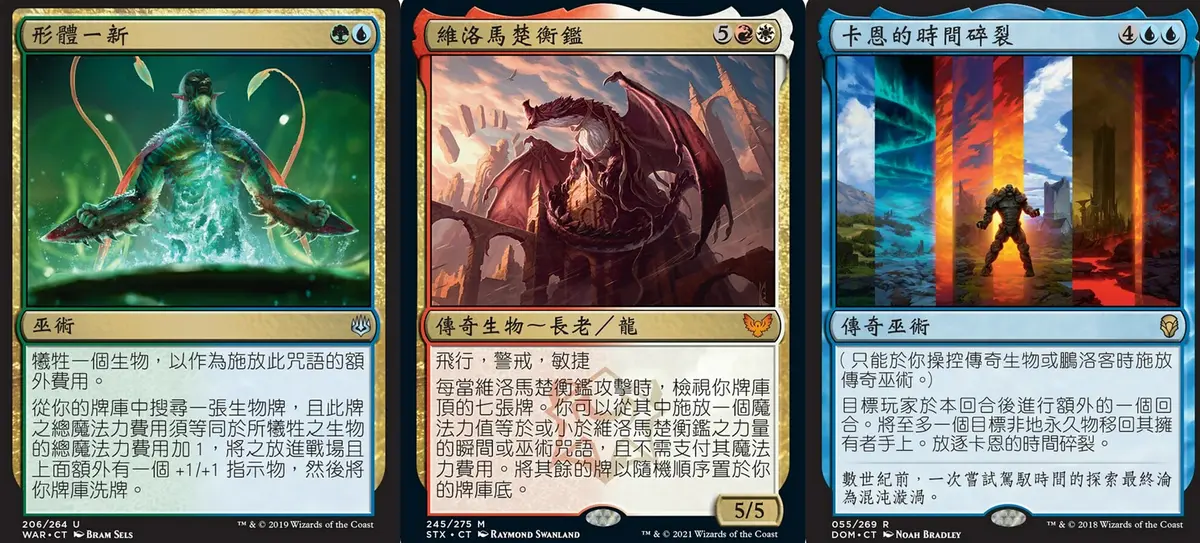
Speaking of Pioneer Neoform, the more common use is turning it into Atraxa, Grand Unifier to earn lots of resources, but there is actually another, more interesting axis that fetches a creature that ends the game once it enters: Velomachus Lorehold. Neoform makes it a 6/6, and the goal is to arrange the top of the library with surveil beforehand, attack, then cast Karn’s Temporal Sundering or Part the Waterveil to take infinite turns and kill the opponent. When I played it, I also added Invoke Calamity to avoid hands getting stuck, increasing the chance of successfully getting an extra turn, and the +1/+1 counter provided by Neoform happens to let you cast a six-mana spell. I have to say the original designer of this deck who thought of it is really impressive. I also played it at a MITQ, but the deck didn’t back me up that day lol, I looked at eleven cards and not one extra turn Orz
Unctus Infinite Untap Combo (2023)
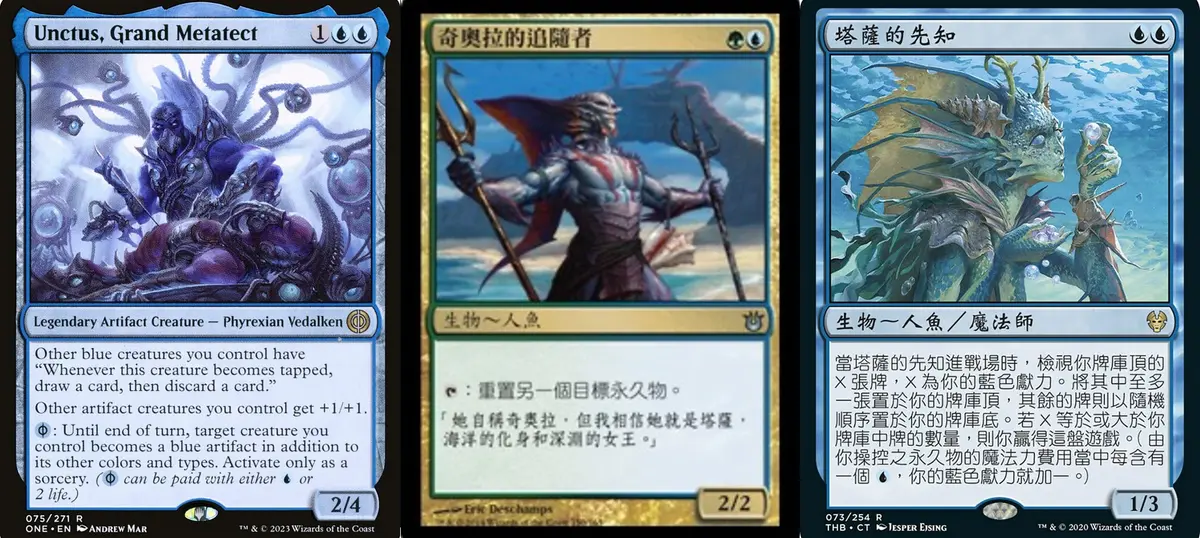
The key card is Unctus, Grand Metatect: whenever another blue creature becomes tapped, loot. Together with cards like Kiora’s Follower, Kelpie Guide, or the newest MKM card Forensic Researcher, they untap each other for infinite draws, and finally you win by finding Thassa’s Oracle with Chord of Calling or casting it directly.
Storm Herald (2020)
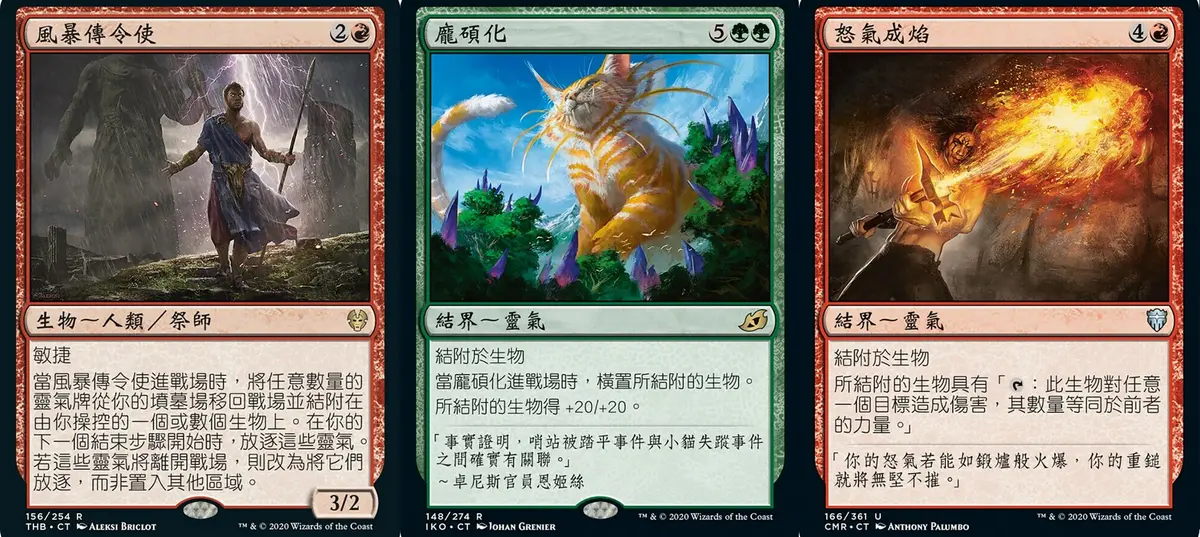
Storm Herald from THB and the cute cat Colossification from IKO: the author played it in Standard for a while, but because Colossification taps the enchanted creature when it enters, the kill could only come from throw-style effects. Later a player built a Herald deck in Pioneer that additionally used Burning Anger. The sequence is that Herald returns both Colossification and Burning Anger to the battlefield attached to one creature, then in response to the tap ability, you activate the effect granted by Burning Anger to deal damage equal to its power directly to a player. The strength of this combo is that Herald’s Aura-returning effect has no targets, so the opponent can’t respond to which Auras I return or what I attach them to when it resolves. As long as any creature is still alive on the battlefield (it doesn’t have to be Herald itself), I can attach everything to it, and by then it is too late for the opponent to respond by killing that creature, because after Burning Anger’s effect is on the stack, the game uses the creature’s last known information when it dies, so the damage is still enough. Besides graveyard hate, the only two ways to respond are killing every creature on the battlefield when Herald’s effect triggers, or responding to the activation by removing Colossification to reduce its toughness (but that also requires that only one Colossification came back).
Mono-Red (2020)
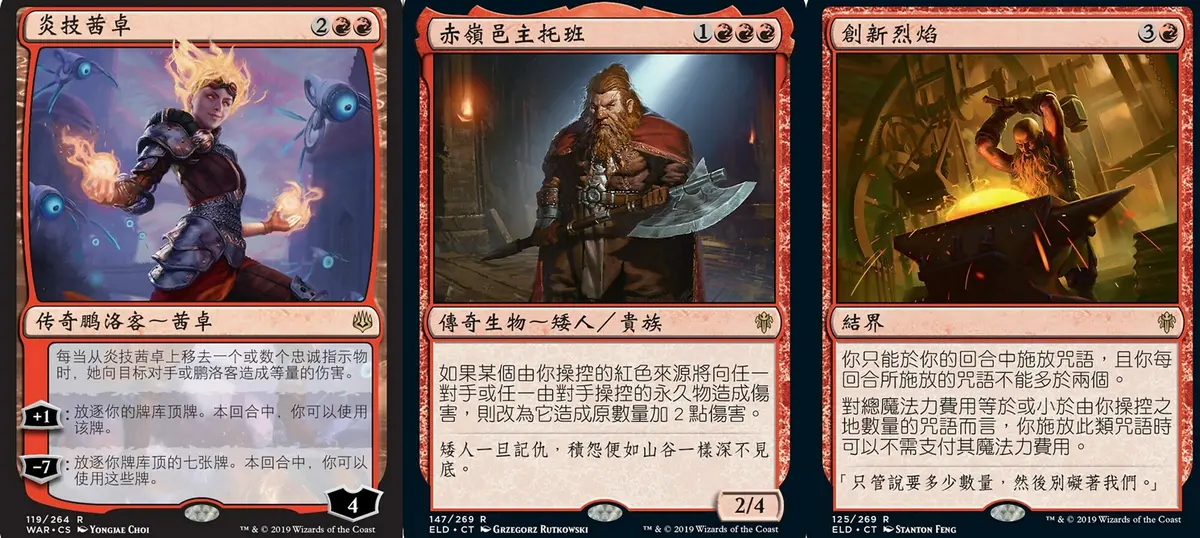
Original pilot’s detailed deck article
This is the only deck I need to post a decklist for. It is the amazing deck that made the Top 8 of the 2020 Nagoya Pioneer GP. The original pilot also wrote an article introducing how the deck works, with a sideboard guide, which I have linked above. The author copied it exactly and played Pioneer with it for a while, and never lost to the then-dominant Dimir Inverter (Thassa’s Oracle) deck. The whole deck is highly targeted (two main-deck Scavenger Grounds plus four Ramunap Ruins, with four Thought-Knot Seer as disruption), and he never lost to that deck at the GP either.
Next, a few notable card interactions in this deck:
Mutavault
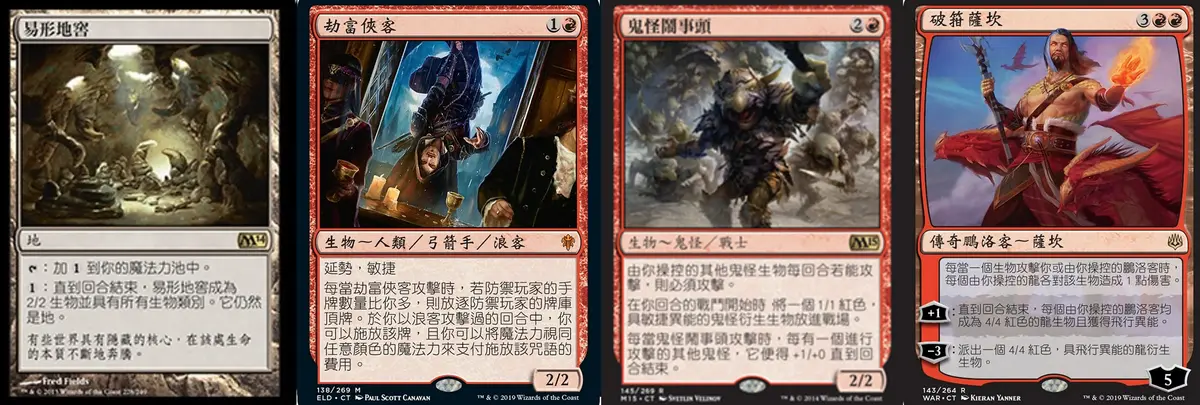
In this deck, Mutavault makes full use of the “all creature types” line. When your Robber of the Rich stole a card but couldn’t stay on the battlefield itself, you can later attack with Mutavault to keep casting the cards you stole. When your Goblin Rabblemaster attacks, you can also attack with Mutavault to help increase Rabblemaster’s damage. Most celebrated of all: when you or your planeswalker is attacked, Sarkhan the Masterless’s passive triggers, and in response you animate all your Mutavaults (you can make mana to animate them yourself), and then Sarkhan’s passive resolves, and the opponent’s creatures may all be dead.
Heart of Kiran
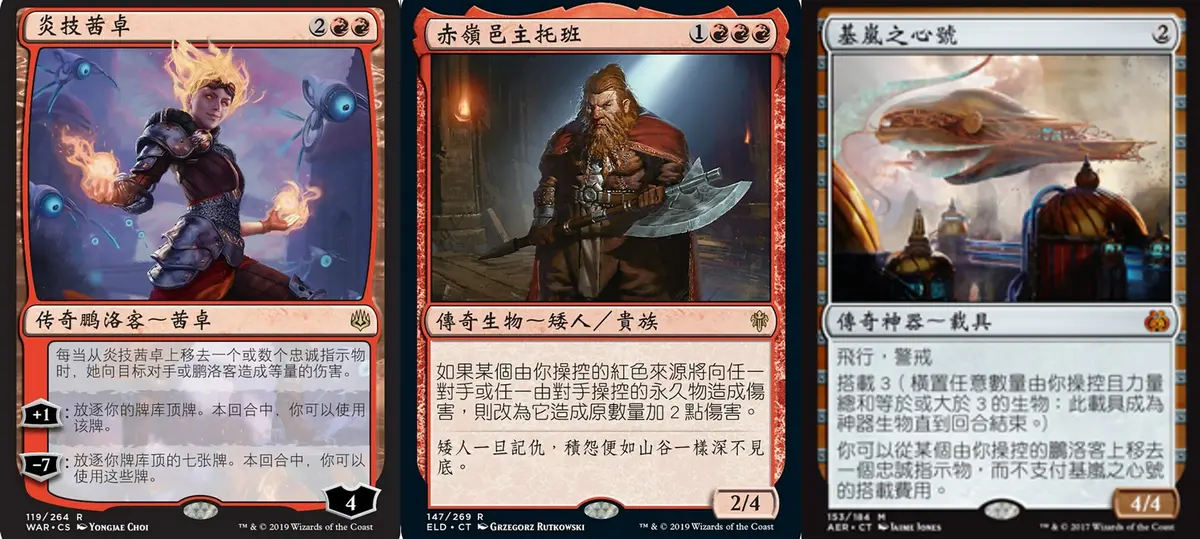
Heart of Kiran has a super high-damage combo in this deck that many people didn’t realize could be done, and by the time they noticed they were already dead. When Chandra, Fire Artisan is on the battlefield, you can use Heart of Kiran’s crew ability to remove loyalty from Chandra. Chandra’s passive then triggers and hits the opponent for one, and when the opponent wants to kill Chandra, you can remove all the counters one at a time and throw everything at the opponent’s face. If Torbran, Thane of Red Fell is also on the battlefield, each loyalty counter removed deals three, and Chandra usually enters with +1 for five counters, so the damage is fifteen, which is terrifying.
Modern
The cards released in ZNR with a spell on the front and a land on the back brought entirely new decks to Modern, especially the five mythic lands that can enter untapped by paying life:
- Sea Gate Restoration // Sea Gate, Reborn
- Agadeem’s Awakening // Agadeem, the Undercrypt
- Shatterskull Smashing // Shatterskull, the Hammer Pass
- Emeria’s Call // Emeria, Shattered Skyclave
- Turntimber Symbiosis // Turntimber, Serpentine Wood
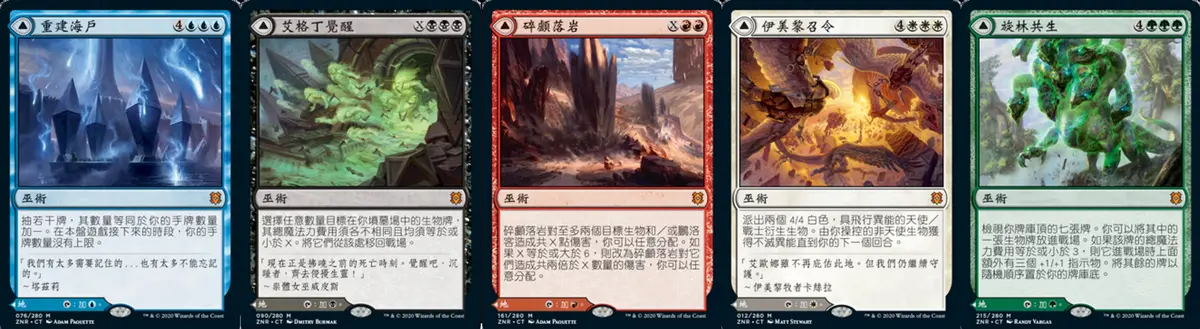
They let the two decks I introduce next avoid the problem of lands entering tapped and falling a turn behind. Both decks play these double-faced cards so that certain triggers see the entire deck as having no lands and thus achieve the combo.
Landless Graveyard (2020)
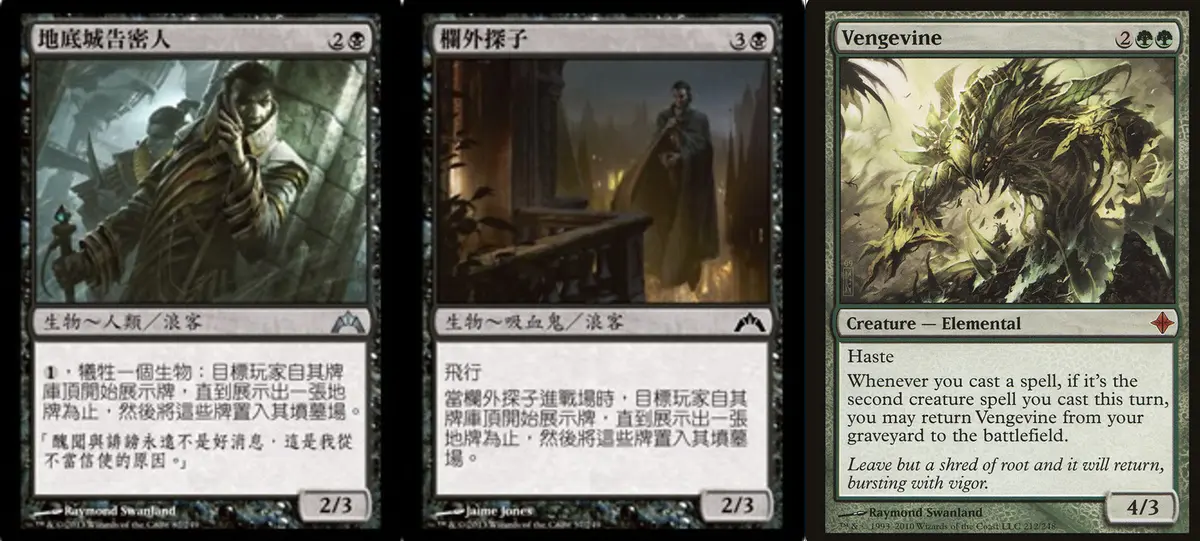
The core is two creatures, Undercity Informer and Balustrade Spy. Use Pentad Prism, black-producing talismans, or Simian Spirit Guide to quickly reach four mana, cast and activate one of the two creatures to mill your entire library into the graveyard, and then the trigger order is:
- Four Creeping Chill hit the graveyard and trigger, draining 12
- Narcomoeba is milled into the graveyard and triggers, returning to the battlefield
- All Sword of the Meek see Narcomoeba enter, trigger to return to the battlefield, and attach to Narcomoeba
- Exile three artifacts from the graveyard to return Salvage Titan to hand
- Sacrifice three artifacts, usually the three Swords (if short, top up with the mana artifacts from earlier), and cast Salvage Titan from hand
- Casting the second creature spell returns all Vengevine in the graveyard to the battlefield, and attacking for 16, plus the earlier 12 life drained, is lethal.
Extra step: if any cards are stuck in your hand during the above, you can use the activated ability of Phantasmagorian in the graveyard to discard them all to the graveyard (except Narcomoeba, and be careful that the Swords must be discarded before Narcomoeba enters).
The sideboard usually has Goblin Charbelcher or Thassa’s Oracle as a backup plan. A quite fun extreme low-turn kill deck.
Landless Belcher (2020)
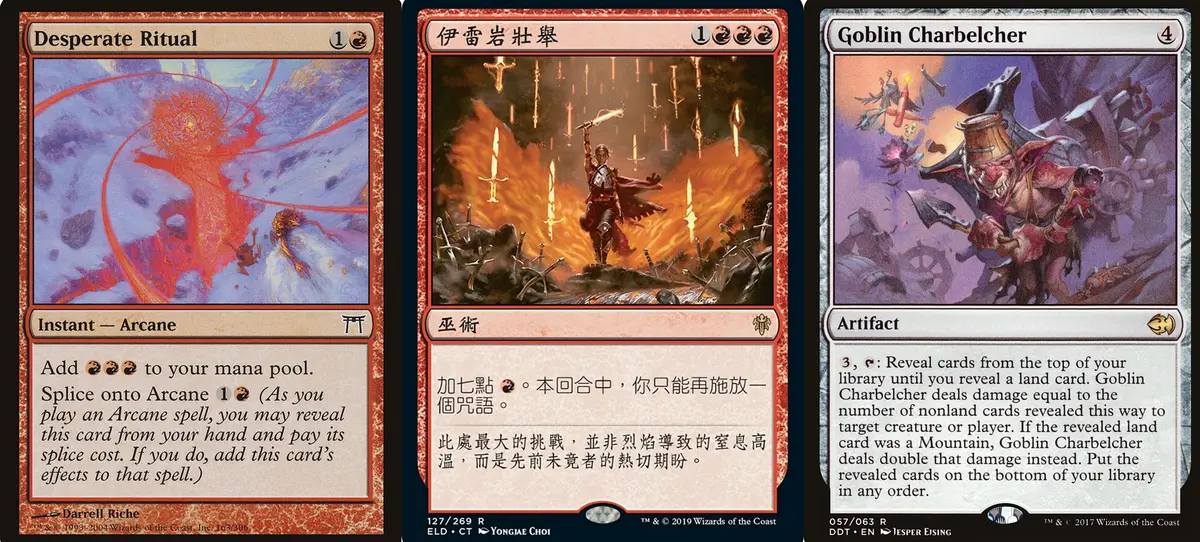
We just mentioned Goblin Charbelcher, and there is actually another deck built around Goblin Charbelcher. Using the deck’s mana-boosting methods, like Simian Spirit Guide, Desperate Ritual, and Pyretic Ritual, quickly reach four mana and cast Irencrag Feat, which makes seven mana to cast Goblin Charbelcher and activate it. The special build makes Belcher see the deck as having no lands, so it deals as much damage to the opponent’s face as the number of cards it reveals, which feels fantastic.
What I just described is a relatively lucky opening hand. The author has had seven turn-one kills that gave the opponent no turn, but someone always says Belcher is only four copies, so isn’t it even more luck-dependent than Landless Graveyard? This is where I must mention a very special card in the deck: Recross the Paths

This card’s effect is to reveal cards from the library until a land is revealed, put that land onto the battlefield, and put the rest on the bottom of the library in any order. Then both players reveal the top card of their libraries and compare mana values, and if my mana value is higher, Recross the Paths returns to hand, and then both players may decide whether the top card goes to the bottom of the library. The key is that the card is worded as “any order”. According to the card’s Q&A, when you reveal your entire deck without finding a land, you can arrange the whole library in whatever order you want and then compare. It is plainly telling you that it wants to cheat in broad daylight. The usual order is Reforge the Soul on top, followed by seven cards:
- A mana-boosting method (usually Simian Spirit Guide is best because it can’t be countered)
- Irencrag Feat (if you can reach seven mana through other cards you can skip Feat, since casting Belcher after Feat can’t be protected from counterspells)
- Goblin Charbelcher
- The remaining slots for counter protection (such as Pact of Negation or Veil of Summer)
After comparing, choose to keep it on top of the library (usually a five-drop wins the comparison in Modern, and Recross the Paths returns to hand). If the opponent doesn’t kill you next turn, after drawing, reveal and miracle-cast Reforge the Soul from the top of the library to draw seven new cards, then play out your whole hand and win.
If Belcher gets targeted, the sideboard backup plan is Empty the Warrens.
By the way, this deck’s main deck had four Blood Moon and four Chalice of the Void, and I loved it. Then it got a cut: the Guide was banned.
Legacy
One-Land Belcher (2019)
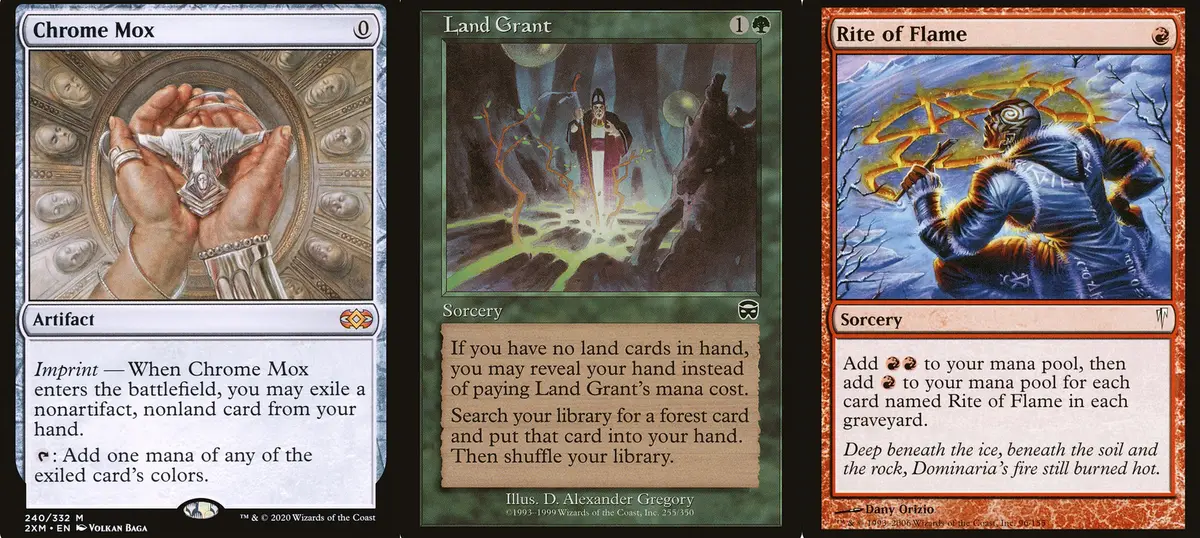
With the Guide banned, the odds of Modern Belcher going off became much lower, and just then a store was promoting Legacy, so I turned Modern Belcher into the Legacy one-land version. In the build, the activation point usually needs at least one red mana, and the deck has no ZNR lands at all, but there are still plenty of ways:
- Simian Spirit Guide, Chrome Mox, Lotus Petal, or Land Grant to find the one Taiga or Stomping Ground to make one red
- Elvish Spirit Guide for one green, or Land Grant to find Taiga or Stomping Ground, then cast Tinder Wall and sacrifice it for red
After producing red, you can use Rite of Flame, Desperate Ritual, and Seething Song to jump to seven mana to cast Belcher, or jump to four mana, cast Belcher, and then pay the three-mana activation with Lion’s Eye Diamond (activating it discards your whole hand, so it can’t be used to cast spells and can only pay for activated abilities).
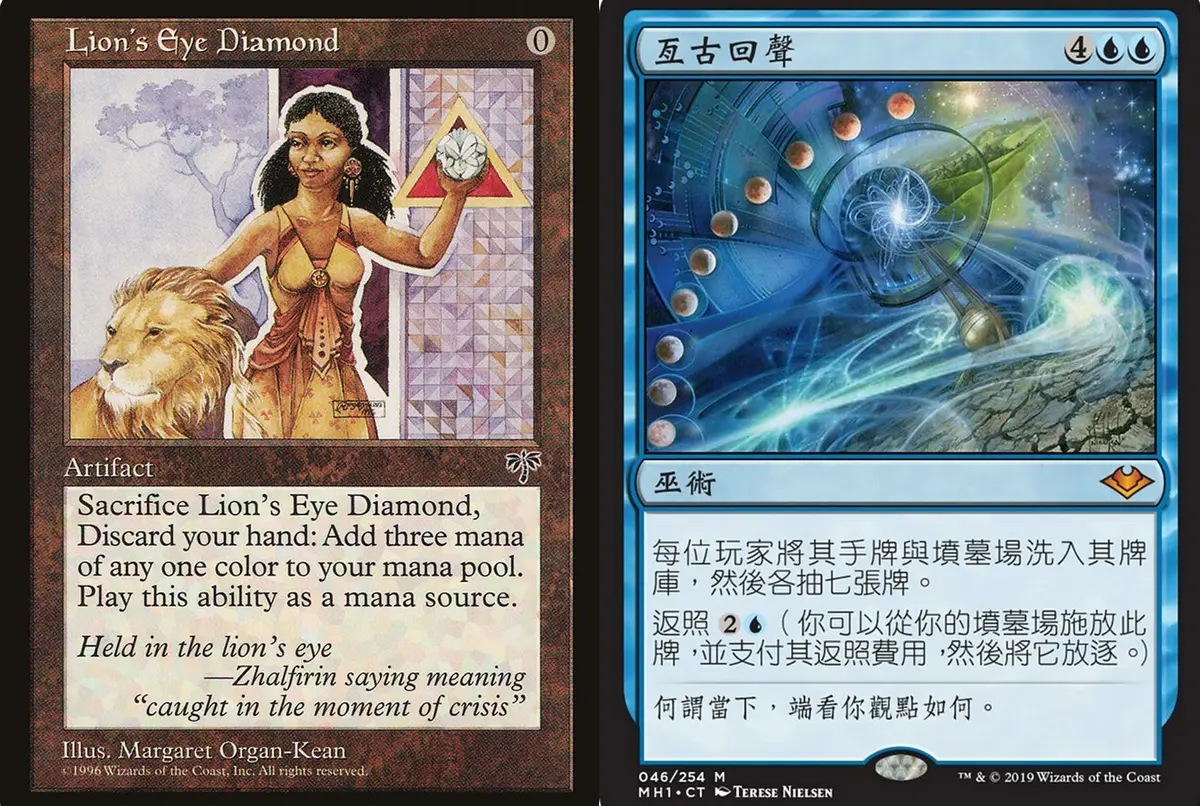
Another key point of playing Lion’s Eye Diamond in this deck is that you can swap your hand or go to Plan B. If you have Echo of Eons in hand or graveyard, first produce all the mana your opening hand can make, then activate Lion’s Eye Diamond to discard your hand for three blue mana, cast Echo of Eons from the graveyard to draw seven new cards. The mana you saved earlier usually lets your new seven cards keep adding mana and raising the storm count, and you can use it to cast Empty the Warrens, which the main deck also runs three of.
The Legacy version’s Belcher ceiling is very high. As long as the opponent has no free counterspell (like Force of Negation or Force of Will), the chance of completing it is very high. My main deck also had four Chancellor of the Annex, and the sideboard had four Xantid Swarm as counter-protection disruption. Against the then-strong white Lands deck it was extremely favorable, since they would be dead before getting to use even a single white mana.
Conclusion
Looking back at the combo decks I have played, it really is quite interesting, from high-damage kills to rules-based wins. I have to admit that because Magic is interactive, achieving a combo is a bit harder than in other games, but it is exactly this interaction that makes Magic so fun, and I hope to meet more combo decks in the future.
- Title
- Fun Combos on the Road of Magic
- Author
- T1BloodMoon
- Created at
- May 29, 2024
- License
- This work is licensed under CC BY-NC-SA 4.0 .