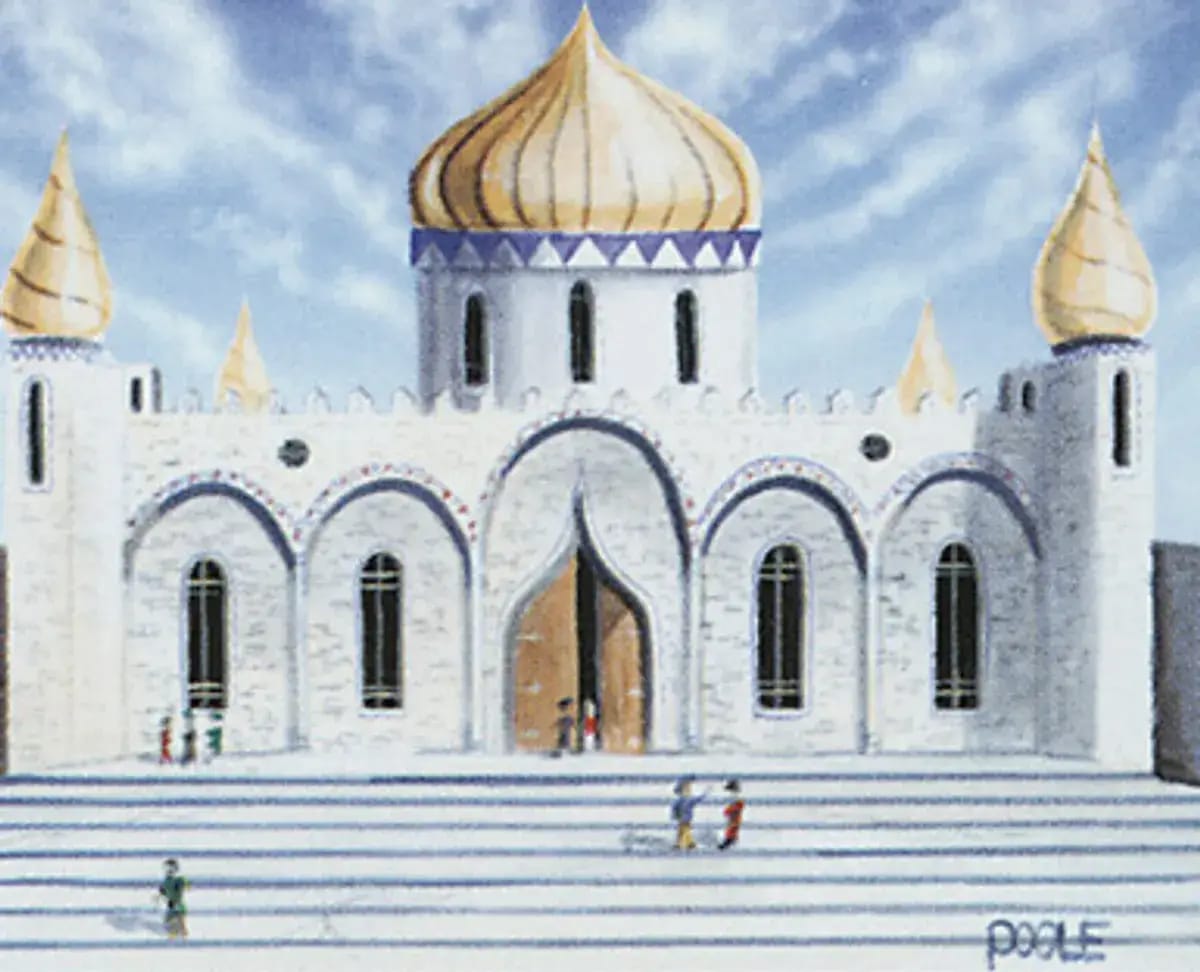
Interview — Dominaria Library

Note: This article was translated from Chinese by AI and may contain errors. Read the original Chinese version.
In the far-off plane of Dominaria stands the Library of Alexandria, holding endless knowledge. In Taiwan, too, there is a learned player who has poured his passion into bringing us many wonderful Magic stories. Today we are delighted to interview Alan, founder of Dominaria Library.
Let’s get started
Q1: Before we begin, congratulations on your Facebook page passing 2,000 followers! Why did you found Dominaria Library, and why that name? What does the name have to do with your MTG journey?
A: Thank you. I came to Magic through Urza’s Saga (USG) in 1998, when my cousin got me into the game. I have always been interested in Magic’s story, and I always wanted a place where I could easily read Magic’s background story in Chinese. Someone had made one before, but it was either incomplete or hadn’t been updated in a long timeNote 1. Since nobody was stepping up to take it over, I decided to do it myself. I started with a Facebook page, “Dominaria Library”, in 2017, but it sat idle for a long time. In June 2021, a post introducing the Urza’s Saga story was shared by Magic’s official page and attracted a lot of attention, and that gave me the idea of building a website, since a site can hold much more text and makes it easier to search past articles. I built it with WordPress, figuring everything out from scratch. It took about a month, and the site officially launched in July 2022.
As for the name: when you think of a place that stores stories, you naturally think of a “library”, right? And “Dominaria” is Magic’s world and also where my own Magic journey began. In terms of keywords, “Magic: The Gathering Library” might have been more direct, but I also had to consider English names and domain names, and something like “MTG Library” was already taken, so I settled for second best.
Q2: Why did you choose to approach things from the angle of the MTG story? Compared with Magic’s excellent gameplay, what about its story style resonates with you?
A: As I said, I like Magic’s background story, and Magic’s story can’t be separated from its art and gameplay. Frankly, purely as a story, Magic is not the best out there. Its charm lies less in the main-line novels than in its worldbuilding. Most Magic cards make you curious:
“What is the story behind this person, event, or thing?”
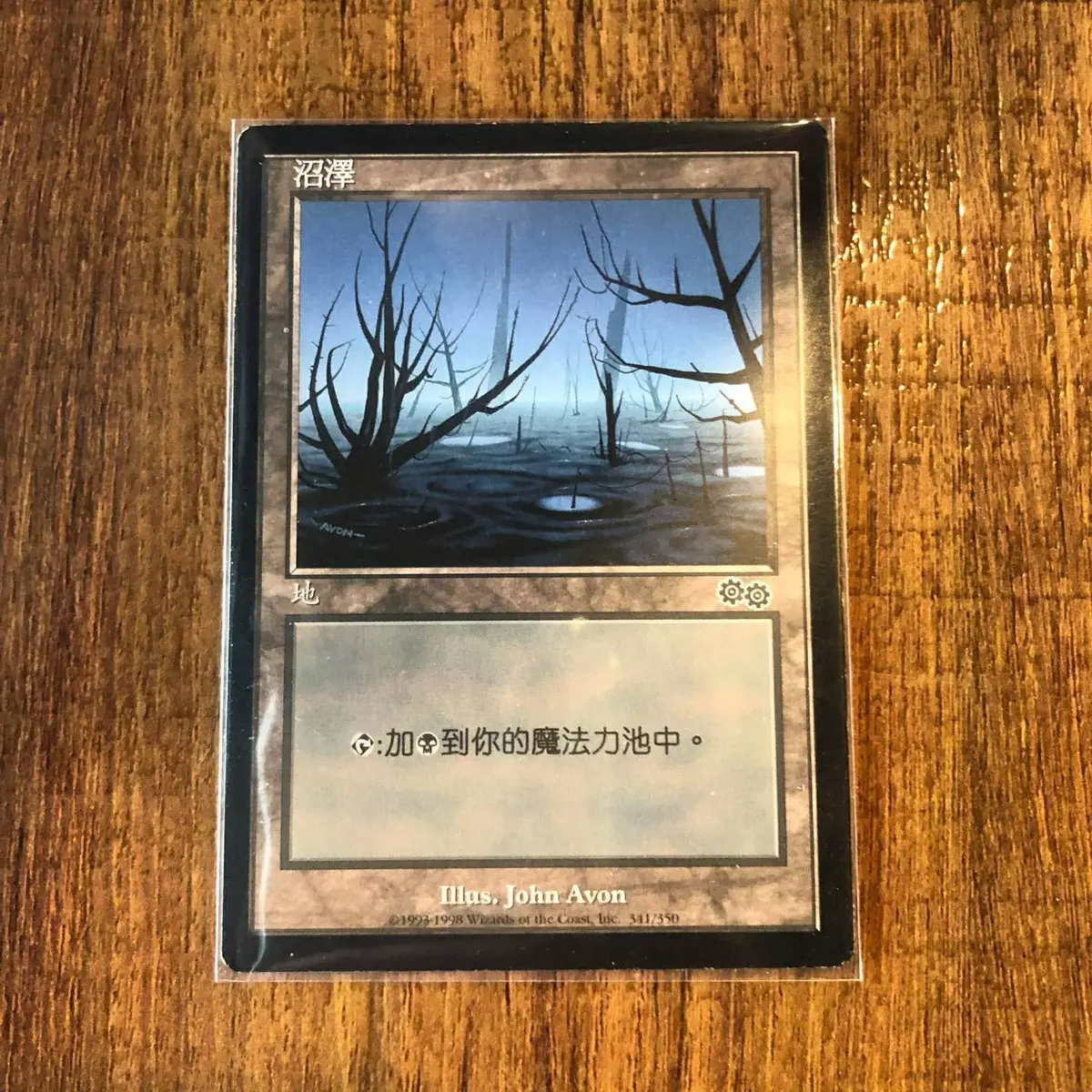
I think that is its greatest charm. A very simple example: early basic lands had the text “Add … to your mana pool”, and I couldn’t help imagining what a “mana pool” actually was. A real pool? Or an abstract concept? Sadly, basic lands from Mercadian Masques (MMQ) onward no longer print that line, and I feel something of the flavor was lost. Things like that. It is exactly these details that make Magic more appealing.
Q3: Among all the stories in Magic’s history, is there a set or a time period that moves you the most?
A: My first product was the Fifth Edition (5ED) starter deck (75 cards), released in 1997. I think most players feel the deepest attachment to the first product they ever bought. I still remember that this deck had Colossus of Sardia and Craw Giant, two creatures with big power and toughness that I regarded as my aces, though I later learned they are actually hard to use. The Tempest and Urza’s Saga starter decks were also on sale at the time, and I picked them up soon after and mixed them all together.
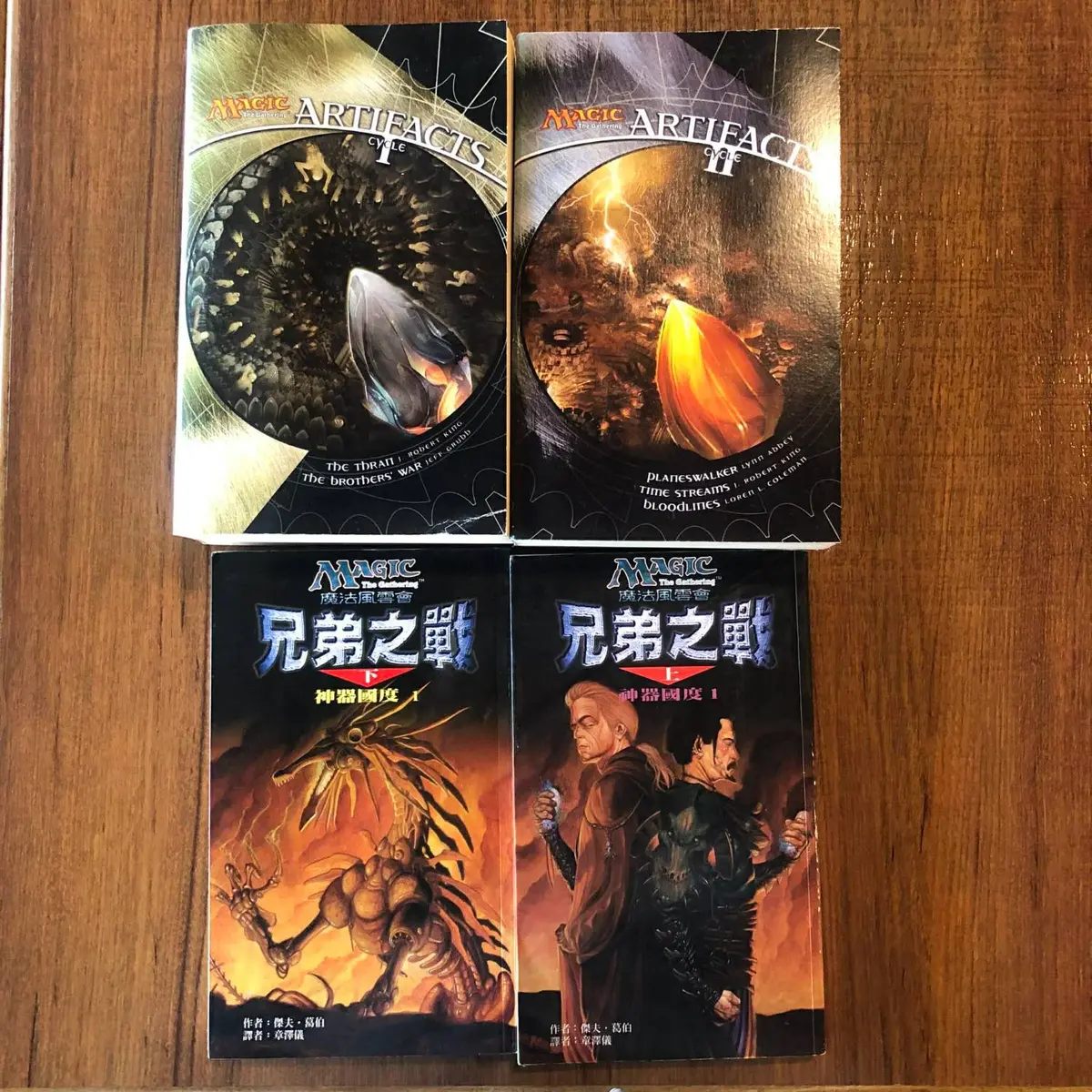
As for the story that moved me most, it is the Weatherlight Saga from 1996 to 2001, especially The Brothers’ War, which is effectively its prequel. I have always thought The Brothers’ War is the best Magic story. Even if you have never heard of the game, you can read the novel on its own without any problem. Jeff Grubb’s novel of the same name is truly an irreplaceable masterpiece, and a rare one with a Chinese translation. I have to thank the publisher Sharp Point Press and its editors for bringing it over back then. So when Wizards decided a few years ago to remake the whole story as a card product, I was absolutely thrilled. The art has more modern styling and can no longer be called an authentic recreation, but it did restore the complete story, and being able to see a Brothers’ War set in my lifetime leaves me with no regrets.
Q4: In your view, which card has the best flavor text, or the best pairing of flavor and card?
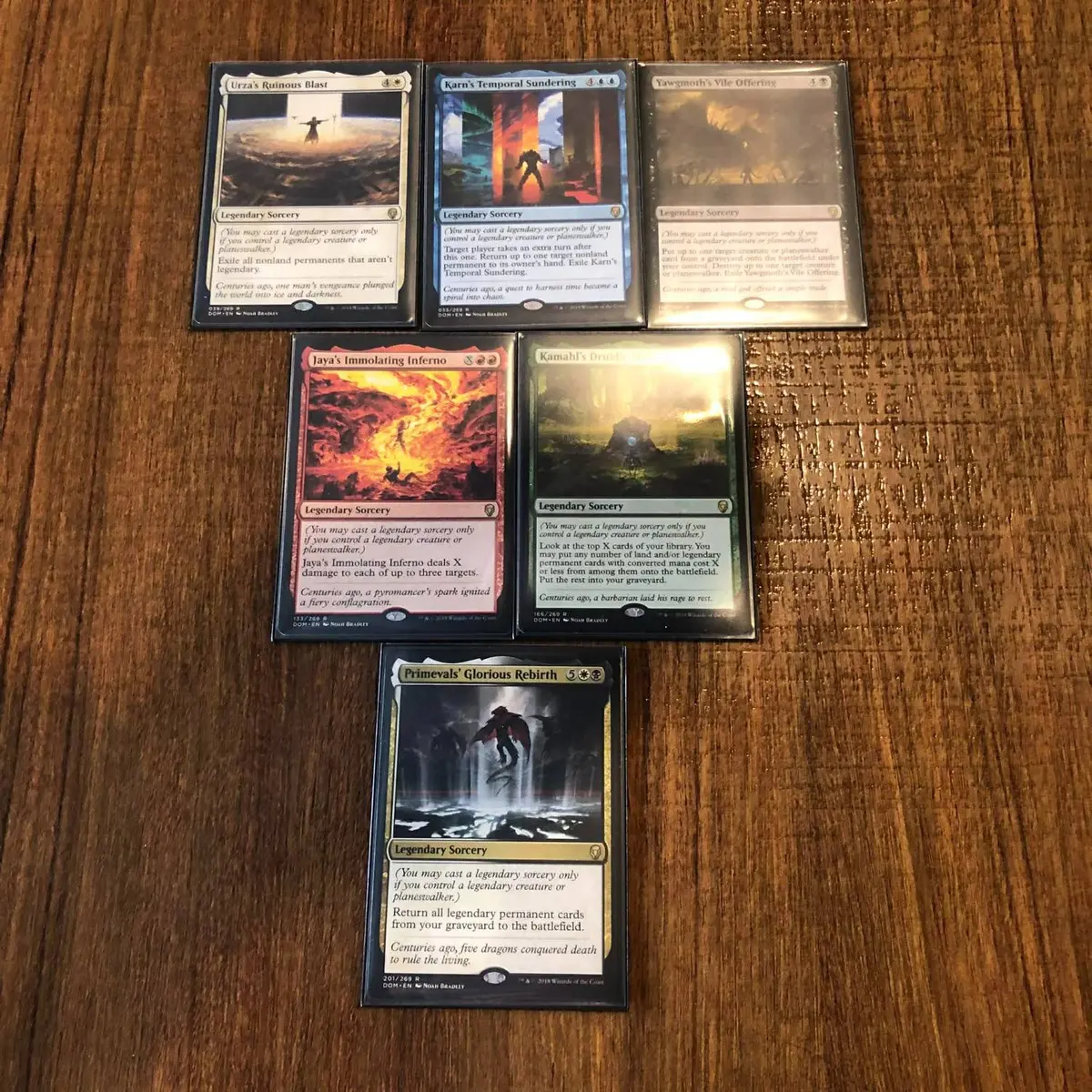
A: That is a hard question. If I had to pick, I would choose the six legendary sorceries of Dominaria (DOM). These six cards depict six major events in Dominaria’s history, and their names, rules, illustrations, and flavor text all have a strong epic feel. Even the rule that you can only cast them while you control a legendary creature is interesting.
As a heavy Vorthos player, I also like cards that tell their story through mechanics. My favorite example is Rescue from the Underworld from Theros (THS). It uses game mechanics to tell a small story perfectly. It isn’t a strong card, but the flavor is off the charts.

Q5: Running a website is always hard work. Could you share some of the bitter and sweet moments along the way? Were there any classic turning points you could tell readers about?
A: It all began with the Urza’s Saga story summary on the Dominaria Library fan page. The attention it got made me decide to build the website, and completing the classic Weatherlight Saga was the first milestone when the site started. Frankly, I went in with a “one-year trial” mindset and planned to quit if the response was lukewarm (the most important reason being that the site’s various fees were discounted in the first year). After the Weatherlight Saga ended, I wasn’t sure what to do next, so I first organized some planeswalker stories and important events. Then Dominaria United (DMU) and The Brothers’ War (BRO) came out one after another, and out of my love for the Brothers’ War story I wrote a series of detailed feature articles. After that I was basically chasing the background story of the newest set, and in the gaps I covered important figures and events in Magic’s history. After a year, the response was far warmer than I expected, far beyond my original goal of “500 fans”, and that made me decide to keep going.
In September 2023, on the eve of Wilds of Eldraine (WOE), the site reached another turning point. Because the story of the previous set, Throne of Eldraine (ELD), existed only as a paid e-book, many Chinese-speaking players had only a vague grasp of the plot, so I decided to be the first in the Chinese community to do this. After organizing the Throne of Eldraine story, I began to want to fill in the main-line stories of all the older sets, and that became the site’s main focus for the next two years.
The milestone I set at the time was to provide the main-line background story of every expansion. Magic has been around since 1993, more than 30 years, with over 100 expansions. Not every set has a main-line story, but the number is still considerable. With my limited resources I didn’t know if I could finish, and I wasn’t sure I could keep writing forever, so I hoped to finish in a short time. I also put some pressure on myself. To fill this huge pit, I spent nearly all my free time over the past two years reading, organizing material, and writing, with no time left to play. Running between catching up on old stories and following new ones has truly been exhausting, but seeing readers keep reading and the numbers steadily grow tells me it has all been worth it.
Q6: Since founding Dominaria Library, the way you look at things must have changed. What mainly brings you joy in running the site now? And on the Facebook page, have you noticed any interesting phenomena among readers or the community?
A: The joy comes from having people read what I write. Knowing that there are players who like the story, meeting their needs (I hope to be that player myselfNote 2), and even receiving lots of positive feedback. I play less now, but I’ve come to realize there are more players interested in the background story than I imagined, and that gives my work meaning and makes the creative process less lonely (a creator’s biggest fear is that nobody reads what they write). I’m also glad to see partners like 南極熊 and 維特拉工坊 promoting the story in their own ways.
On the other hand, I’ve noticed an interesting phenomenon. Although players often grumble about the official direction or the story, behind that attitude of “complaining while playing” there is actually a deep love for the game. When expressing my own views I tend to stay reserved and avoid heated, emotional remarks, hoping to keep the community’s discussion environment relatively pure.
Q7: Could you briefly describe the nature of your job and what it means to you? Also, how do you divide your spare time between the website and the fan page?
A: I used to work in media and marketing. I left not long ago because of personal plans, and this gap has actually let me put all my energy into writing and running the site. The experience I built up in the workplace has become a solid backing for running the site. From building the site to content operations and marketing, I used almost everything I had learned. Before I left that job, all my spare time went to researching sources and writing drafts, so I had almost no leisure time.
Q8: We at Guildmages’ Forum are “peers” of yours and would love to exchange ideas through this interview, so the next few questions focus on running the site and the page. First, the art design of the Dominaria Library website has repeatedly amazed me! Do you have a relevant background?
A: I did put some effort into the brand’s visual presentation, but I have no formal art training. I learned it all while working. I’ve also taken part in founding brands, and several places I worked had professional artists, from whom I could pick up some knowledge and techniques. The rest is looking and doing a lot.
Q9: Last year I saw a post of yours that used 2D pixel-art Ajani and Chandra to demonstrate the flow of the game, and I thought, “This is amazing! If it were made into a game I’d buy it!” Besides Magic, did 1990s pixel games influence you? And what details did you pay special attention to in making the website’s art so outstanding?
A: I’m very happy with that piece myself. It was a collaboration with 睿卡潮玩, though the set we were promoting then was Foundations (FDN). Since Final Fantasy (FIN) was about to launch, and its previewed cards were attracting many non-Magic players, I wanted to take advantage of that: we already know what FF characters look like entering Magic, so could we do the reverse?
I was born just after the Famicom (Nintendo’s NES) came out and grew up in a 2D pixel game environment. People around my age who grew up playing video games naturally have a special feeling for pixel art (especially Magic players, whose average age is higher). I’m not good at drawing (pure hand-drawing and graphic design are two different things), but this opportunity gave me stronger motivation to try. Once I actually started, it turned out to be less difficult than I imagined: I roughed out five characters in only half a day, then spent two or three more days revising, so it went quite smoothly. In the details, every image I design considers color palette, typeface, and layout, and I make sure it looks its best on all kinds of devices.
A post published on the Dominaria Library fan page on April 16, 2025, with 2D pixel-art Magic story characters demonstrating the flow of the game, including the basic rules and key knowledge. It is well worth a look for new players, and veterans will smile knowingly too.
Q10: On the fan page side, there is always a big gap in reach between memes and long-form posts on Facebook… (laughs). How do you keep your balance mentally?
A: I think of what I do as infrastructure, so I’m very clear about my position. Infrastructure itself can never generate much buzz, but every advanced creation has to start from a solid foundation. I started the community purely as a channel for “promotion” with no thought of profit. Because it’s a pure interest, and a traffic gap between the two is only natural, there is no question of losing my balance. Sharing memes or custom cards is more of a pastime between articles, something I post on a whim to lift my mood.
Q11: Now some questions about Dominaria Library’s main business, translation. To translate MTG stories, you need to gather English texts scattered everywhere, distill their essence, and present them to readers as long fan page posts or more detailed site articles. This can’t be easy and takes a great deal of effort and time. Do you have any tricks that make this less of a burden?
A: On the MTG Wiki, many fans have compiled catalogs of story sources, so all I need to do is track down the actual texts, which saves a lot of time. For material that only appeared online and has since vanished, I rely on the Wayback MachineNote 3. As for reading afterwards and finding the cards that correspond to the plot, that I can only do myself. I also keep two sets of notes while reading a story: one records important detailsNote 4, and the other is a quick outline of the story, so I can pick up from them when I write the draft.
Q12: As far as I know, Wizards of the Coast Taiwan hasn’t updated anything since EOE. For later sets without official translations (such as TLA and ECL), how do you get the information? Do you have any special considerations when choosing names?
A: MTGso has taken over the card translation work, and they also built a database together with 大學院廢墟. Card translations from Bloomburrow (BLB) onward can all be found there. Even the official Simplified Chinese side posts its translated card lists on the Simplified Chinese Magic official site, so it can be regarded as semi-official. Some players in China and I have also noticed that the content and style of the translations are very close to earlier Chinese translations, so there may still be official Simplified Chinese staff doing this work behind the scenesNote 5.
Q13: Now that AI is widespread, how do you work with it in translation? Do you have any personal principles in translation that you could share?
A: I mainly use it in two places. The first is translating proper nouns. For example, the names of Mirrodin’s five sunsNote 6 came from AI suggestions. The second is when I have questions about plot points or narration. For instance, in Lorwyn Eclipsed (ECL), four students at Strixhaven, where Liliana teaches, go missing, and after investigation it is surmised that they went to Lorwyn. Liliana, who has lost her planeswalker spark, wants to ask Ajani to help find them but can’t bring herself to ask, and instead sarcastically teases Ajani for being a planeswalker. Ajani asks Liliana whether she wants her pride or her students, and Liliana answers that she wants her studentsNote 7. Honestly, when I first read this passage, I felt something was missing from their conversation, and I couldn’t understand why Ajani suddenly brought up “pride”, so I discussed it with AI to better understand the characters’ state of mind. For me, I only use AI as an advisor and never let it write directly. Partly because writing it myself is faster, and partly to reduce friction in the process and any change in style.
Q14: Now to the final part of the interview, to help readers know you better. How do you balance life, work, and creation? And how does your family feel about what you do?
A: My family actually doesn’t know I’m doing this, and the number of relatives and friends who know can be counted on one hand, so I have always toiled quietly alone, bearing the joys and hardships by myself. The upside is that I can focus on creating; the downside is having nobody to share with or get advice from (luckily AI tools can partly make up for that). I spent too much time writing last year, so this year I should slow down. New stories will still be updated promptly, but old stories will be filled in more slowly.Note 8
Q15: Could you talk about how today’s Magic differs from the past?
A: The difference is that there are now too many products, and the art direction is different from back then. And Universe Beyond tie-in products have come out in large numbers in recent years, the variety of cards keeps getting more complex, and prices have risen sharply, which really makes it a burden in both time and money.
Q16: How do you usually play MTG? Do you bring in background story when you play, like “Horde Magic”, which you introduced on your page? Could you share your experience with the variant formats you’ve taken part in?
A: I like all kinds of variant formats, and the thing I’m least interested in is actually the most typical one-on-one competitive play. After playing one-on-one competitive for a long time, you realize one thing: out of the tens of thousands of cards Magic has printed, only a few can make it into competitive formats. For competitive players, cards that can’t be used in tournaments are all junk, but change the format and junk cards can become bombs. The classic example is the Commander staple Rhystic Study. So I became keen on digging up all kinds of variant formats, hoping to find a use for my collection. I’ve always wanted to try one centered on the background story, combining Commander with “Archenemy”: for example, using Weatherlight crew members (Gerrard Capashen, Captain Sisay, and so on) as commanders to fight together against someone like Volrath the Fallen, but finding interested players is far from easy. I should also mention that one of my goals in starting the fan page was to let players who understand the story find like-minded players to play with. I haven’t reached that step yet, but when the time is right I will push story-based variant formats in this direction.
So something like Horde Magic, which I introduced on my page before, is a compromise that only needs two people to start. I’ve also tried things like Planechase and Explorers of Ixalan, both sold officially before, or fun formats like Dandân. I also play Cube and Jumpstart, and have built a Lord of the Rings cube and a Final Fantasy Jumpstart. My opponent is usually my cousin. For Cube, we generally use the “Winston Draft” that Magic’s creator Richard Garfield designed himself for two players. I’m also interested in the Battle Box, which has drawn players’ attention over the past two years, and I’m considering building one with Final Fantasy cards.Note 9
Q17: Throughout this interview, I’ve noticed your cousin has played a very important role in your Magic career. Would you like to share more memories of him, and what Magic means to the two of you now that you’re grown up?

A: My cousin was my most important opponent when I first started. We share interests, and I interacted with him more than with other relatives. Although we are both Magic players, there is a big difference between us. I’m a typical Vorthos, and he leans toward Spike (the competitive type). But he doesn’t blindly chase the highest-win-rate meta decks. He tends to add elements he likes to higher-win-rate decks and tries to beat opponents in tournaments with decks that have this personal touch. So he doesn’t like the clearly casual Commander, and isn’t that interested in Magic’s story.
We both left Magic for several years. During that time he quit almost completely, while I occasionally kept an eye on new Magic news. I came back to the Magic world after entering the workforce, and a few years later pulled him back in too. By then we were no longer students and met much less often, but whenever we met we always played (occasionally other board games). Sometimes it’s a two-player sealed of a new set, sometimes a variant format I prepared (there he accommodates me), or decks we built ourselves (Standard or Modern, where I accommodate him). Magic is now an important way for us to maintain our bond. When we meet we usually play first and catch up afterwards. Sometimes when you meet a relative or friend you haven’t seen for a long time, you don’t know what to say at first, and playing a game is a great way to warm things up. The upcoming Teenage Mutant Ninja Turtles (TMT) set has a special multiplayer co-op product, and I plan to collect one and play it with him then.
Q18: As a “Vorthos” type of player, which card would you pick to represent yourself?

A: The lazy answer is Vorthos, Steward of Myth, since it is the very embodiment of a Vorthos player. Another answer is Captain Sisay, who can find legendary cards in your library. I too dig up legendary people, events, and things from Magic’s vast story database and tell stories centered on them, so what I do is much like what Captain Sisay does.

Q19: Finally, how would you describe what Magic is to you?
A: Magic has become part of my life. It has accompanied me for more than half my life, and it’s hard to imagine life without it. I once thought about selling some old cards, but in the end I decided not to. I want to keep them as proof of a stretch of my life’s journey.
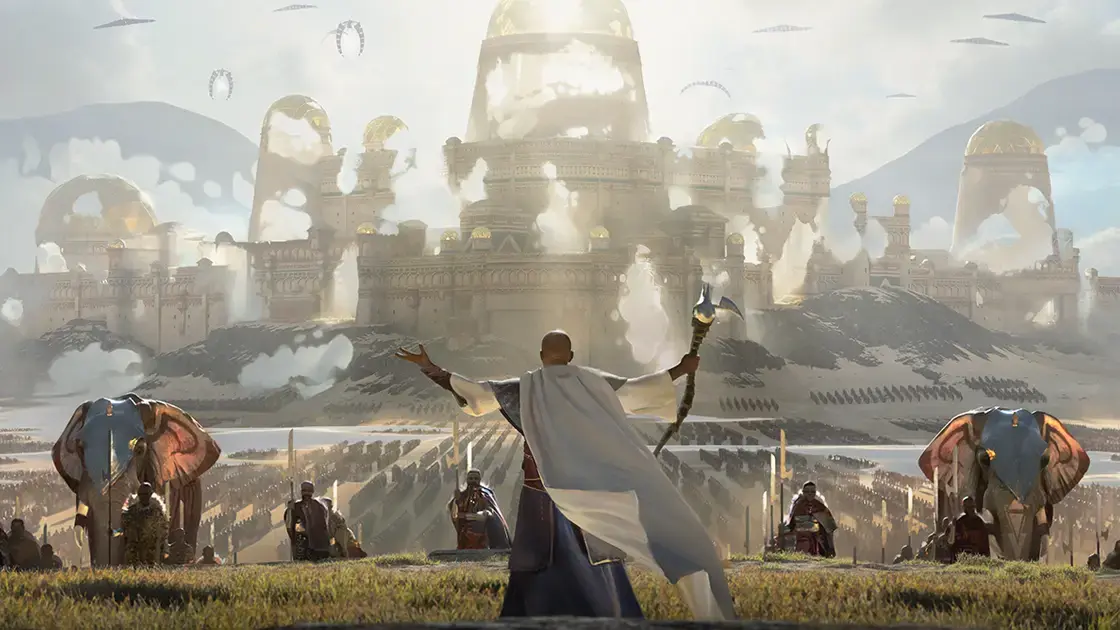
The War of Lost Realms: The Dominarian Coalition vs. Phyrexia in the “Great Campaign”
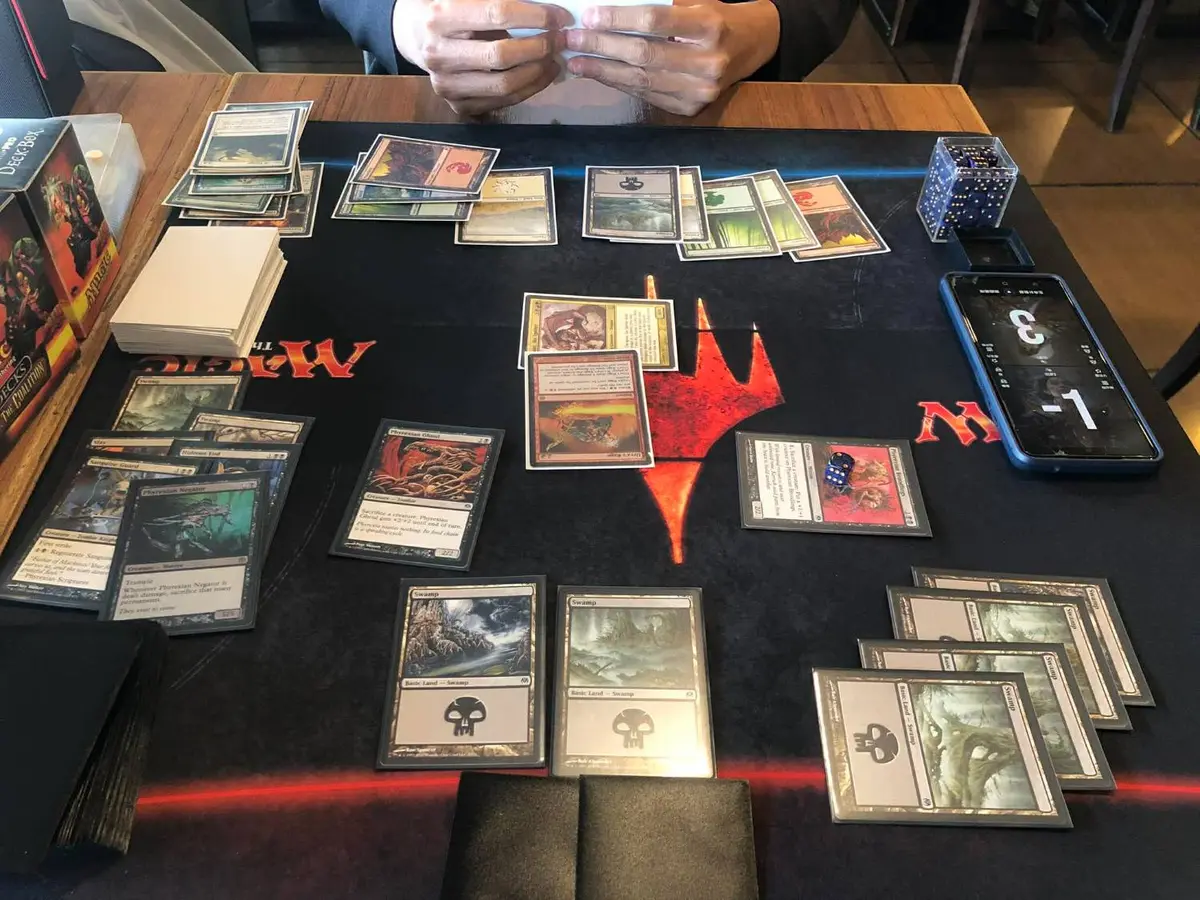
After the interview, Alan brought out his treasured Duel Decks: Phyrexia vs. The Coalition, and we replayed the story of the Invasion (INV) block from 2000 on the spot. Leading the Phyrexian army (the “Phyrexians” below) was cephille, who won the roll and went first, while Alan led the “Coalition.”
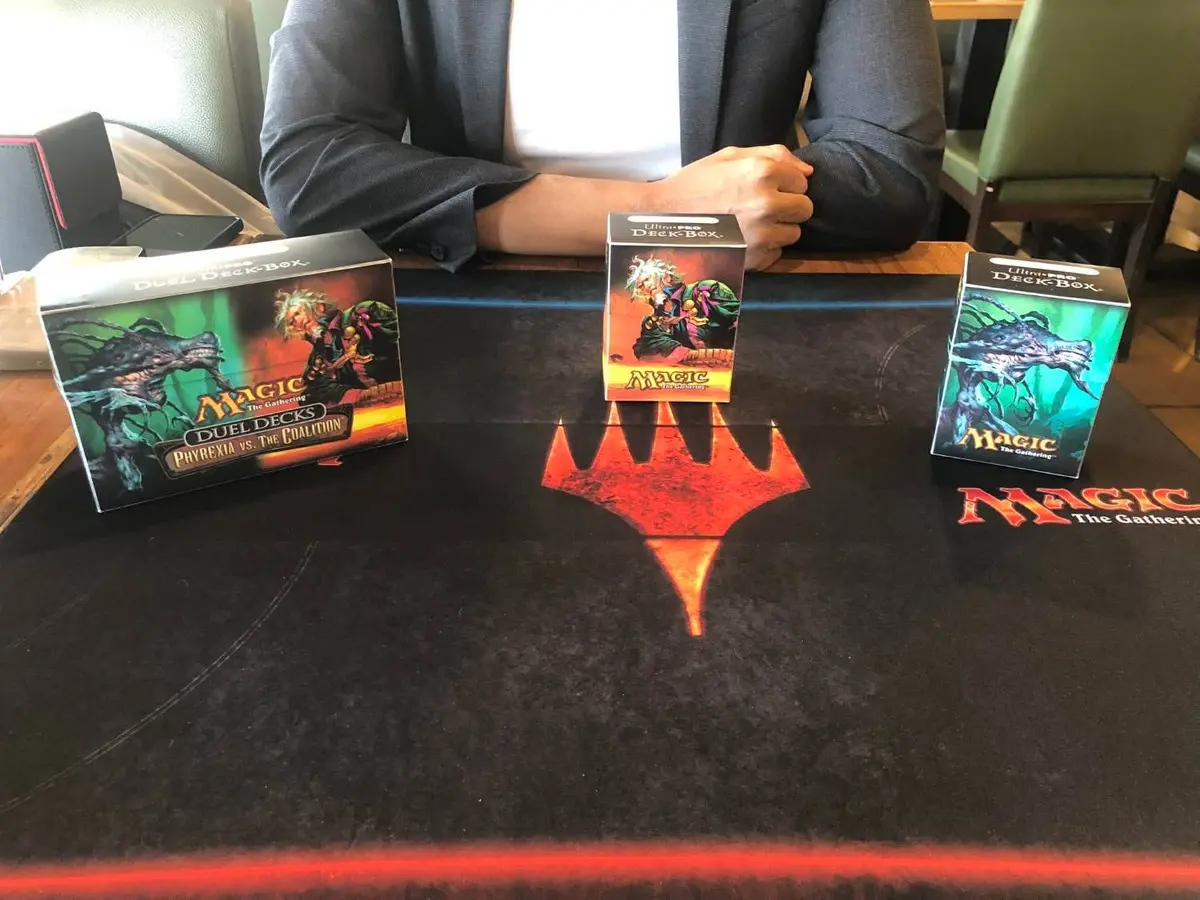
On turn one the Phyrexians played a Swamp and passed. The Coalition leader kindly pointed out that if you have it in hand, you can play Dark Ritual into Phyrexian Negator on turn one (that’s how it was played back then), but there wasn’t one. On turn three the Phyrexians called out the Negator right on schedule, and the Coalition Harrowed to reach all four colors, getting fully set up to cast the full-powered domain spells next turn. After the Negator attacked, the Phyrexians were stuck on three lands and passed. On turn four the Coalition used Allied Strategies to draw five cards at once, but with a maximum hand size of seven, discarded two lands at end of turn. Looks like a hand full of goodies!
On turn five, the Negator kept attacking, pushing the Coalition’s life down to 10, and the Phyrexians played a land and passed. The Coalition summoned a kicked Thornscape Battlemage, pointing its 2 damage at the Negator. The Phyrexians sacrificed two Swamps as the price, and used the 2 black mana tapped from them beforehand to Slay the Battlemage. The Coalition then slammed down Nomadic Elf as a blocker, only to have it hit by Hideous End the next turn and lose 2 life, and the Negator’s third attack dropped the Coalition to 3. At the moment of desperation, the Coalition’s dawn finally broke: Darigaaz, the Igniter arrived with the might of world-devouring flame!
With the Dragon Legend on the board, the Negator couldn’t attack. Without removal to clear the way, the Phyrexians could only summon creatures like Sanguine Guard and Phyrexian Broodlings one after another, hoping to finish the low-life opponent with board pressure.
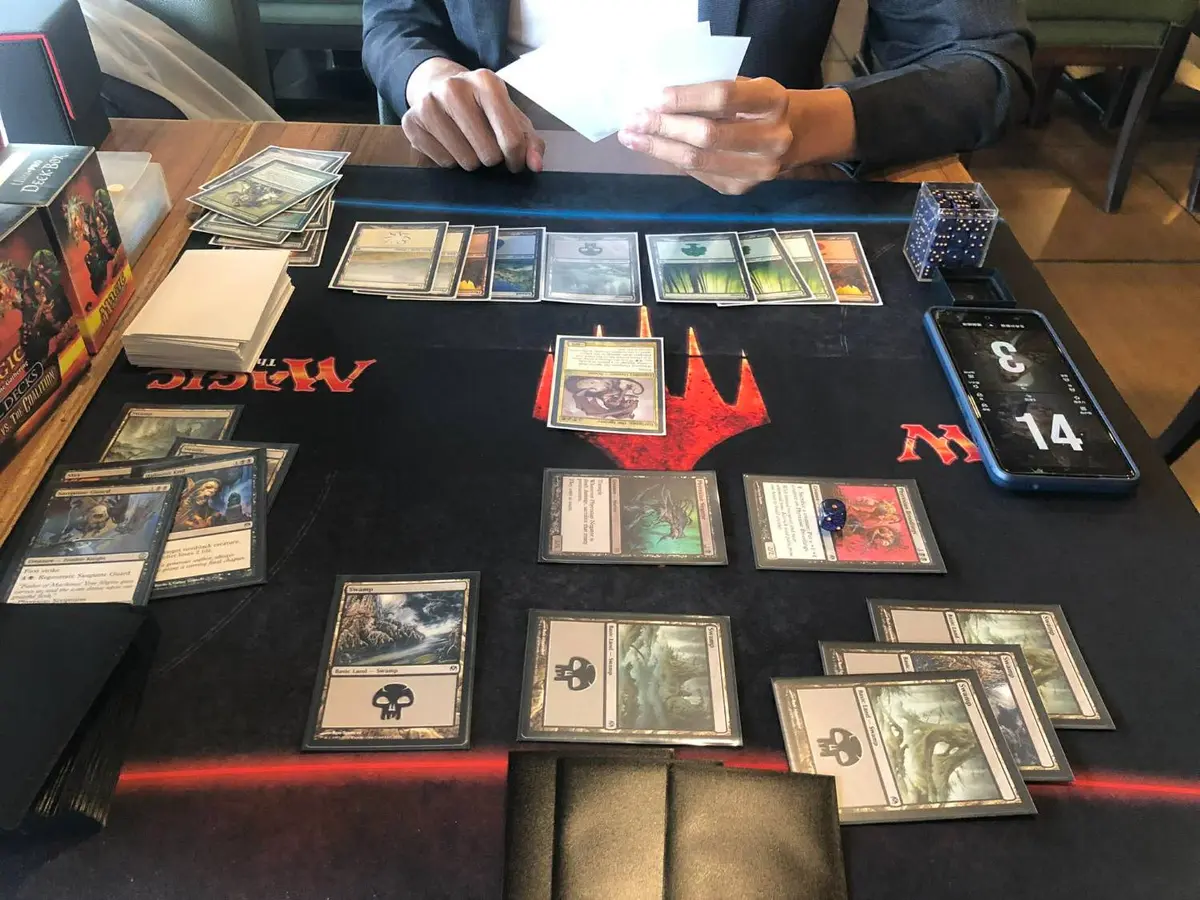
But the Coalition’s morale soared after the Dragon Legend’s arrival. After the dragon held the fort steadily for a turn, the Coalition immediately switched from defense to offense and launched a fierce aerial assault. The Negator’s fourth attack ran into Treva’s Charm and could only become fertilizer for the Broodlings, but the 4/4 Broodlings’ offensive was neutralized by a Narrow Escape. In the end, Urza’s Rage off the top of the library decided the victory! The Coalition has once again protected the peace of Dominaria!!!
Note 1: At present there is no person or group in the Chinese community continuing this work. The former “Cardwalker” was archived in 2020, “魔導公會” can no longer be reached, and the story translations of “Aero 的軍事咖啡館” stopped at fragments of Scars of Mirrodin. In the Simplified Chinese sphere, “博識都”, enthusiastically run by 巴林的斷杖, also shut down in 2022.
Note 2: Researching stories always yields unexpected finds. Alan joked that he once read in a short story how Teferi boldly proposed to Jhoira right in front of Karn. For him, hidden details like this are a precious reward of reading; for a listener like me, getting an unexpected peek at this bit of gossip is thanks to the library’s hard work digging through the sources, letting me “reap the benefits” and enjoy the fun (and the shock XD).
Note 3: When speaking about material lost from the internet, Dominaria Library particularly stressed the accuracy of translated proper nouns. Some can be found directly on Chinese-language cards, but some may exist only in a post on the official website. For example, in the Time Spiral story, Venser, before he became a planeswalker, built a tool called the “Ambulator”, and its Chinese translation survives only on the old Magic official website, dug up with the Wayback Machine. For more about the Ambulator, readers are welcome to read “Crisis of the Time Rifts: The Story of Time Spiral (Part 2)”.
Note 4: Important details such as a character’s appearance, hobbies, and even accessories. Take Sorin Markov: his sword has a name, but it appears only in one novel. For a deeper look at Sorin, readers are welcome to read “Planeswalker Profiles: Sorin Markov”.
Note 5: Sadly, on the Traditional Chinese side, the Magic Traditional Chinese card lookup site remains un-updated and in limbo.
Note 6: Namely Bringer (white sun), Eye of Doom (blue sun), Ingle (black sun), Sky Tyrant (red sun), and Lyese (green sun). Readers interested in the green sun’s story in more depth are welcome to read “Fate of the Metal Plane: The Story of Fifth Dawn”.
Note 7: For richer detail on Liliana’s change of heart and the story of Lorwyn Eclipsed, readers are welcome to read “Return of the Lost Lord | The Story of Lorwyn Eclipsed (Part 1)”. The article also includes the full novel text translated by 南極熊, which is excellent!
Note 8: The Dominaria Library website now has a small-donation page. He is very grateful for his supporters and hopes to keep repaying their kindness, but what one person can do is limited. Let this interview help promote it: if you also recognize his efforts on Magic stories, you can choose to donate small amounts regularly, or if you’d like to take part, feel free to message his fan page directly.
Note 9: Alan’s knowledge of unusual formats is astonishing. That day he even demonstrated a “Dandân” deck he brought himself. Besides winning by attacking with Dandân, players must also play a series of mind games over the “choice” of the top card of the library, which opened my eyes. I very much look forward to him continuing to bring readers more exciting special formats in the future!
- Title
- Interview — Dominaria Library
- Author
- cephille
- Created at
- March 1, 2026
- License
- This work is licensed under CC BY-NC-SA 4.0 .
Related Articles
World Championship Player Interview: MIT Round 12 Champion, Second Interview with SamuelChang
November 5, 2026

World Championship Player Interview: MIT Round 11 Champion Lee Shi Tian
November 5, 2026

World Championship Player Interview: MIT Season 10 Champion 許碩恩
November 5, 2026

World Championship Player Interview: MIT Round 9 Champion Samuel Yeh
December 2, 2025