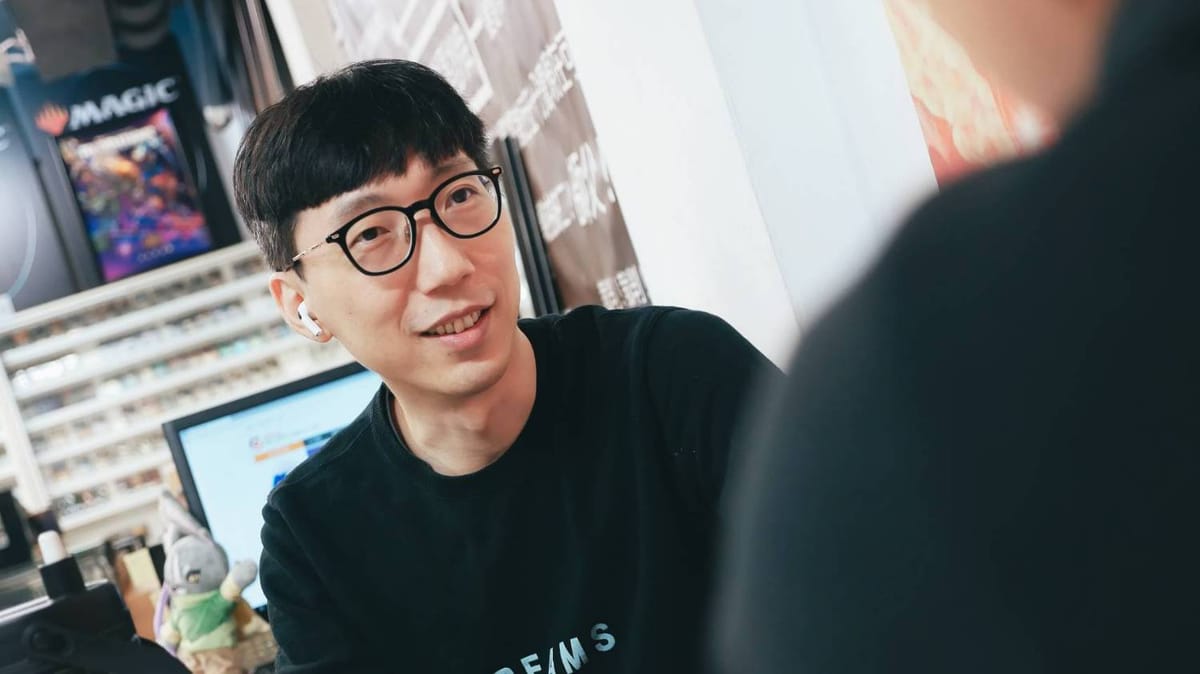
Taiwanese Player Interview: Kuo Tzu-Ching (郭子敬)
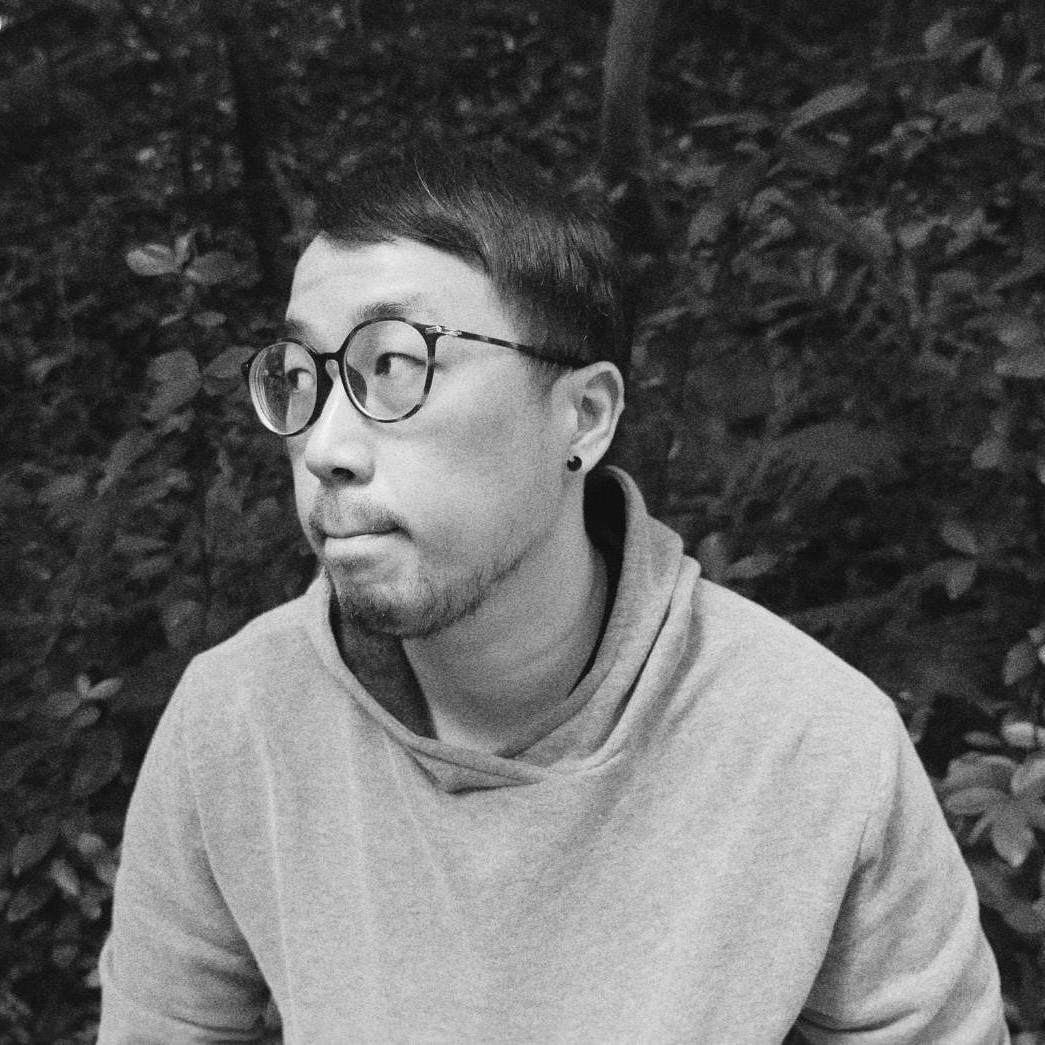

Note: This article was translated from Chinese by AI and may contain errors. Read the original Chinese version.
Let’s get started!
‘captain of Taiwan’s 2012 World Magic Cup champion team,’ ‘founder of 遊戲平方,’ ‘record holder for the most Pro Tour appearances, the most Grand Prix top 8s, and the most Taiwan championships in the history of Taiwanese Magic’… With so many titles and identities, they are still only our limited knowledge of Kuo Tzu-Ching. Today, besides being the Watcher behind the counter, he still has immense passion for Magic, along with unique insights and angles of approach.
Q1: We are delighted to have the chance to invite you. Could you briefly introduce your history with Magic, and roughly when you got into it? And what was the biggest reason you agreed to this interview?
A: The main reason I agreed to the interview is that I want to support your team’s efforts to promote Magic.
My playing career can be divided into three stages. First, I started playing Magic: The Gathering in 1996, when the environment was probably Alliances? Until 2008, I mainly played for fun with a few friends, took part in tournaments in Taiwan, and occasionally went abroad for GPs (when I was young, I couldn’t go to the US because of budget, and Japan was where I had more chances to go). If I was lucky enough to earn a qualification, I would challenge the World Championship or a PT.
After 2008 came the second stage: I officially started doing this as a profession. Playing full-time means playing cards from the moment you wake up until you go to sleep. Back then, I would definitely go to every GP in Asia that I could attend, and over this period I played in almost every GP, PT, and World Championship I could go to. The longest trip was five consecutive weeks outside Taiwan: I think it started on the East Coast of North America, then in the second week I went to Quebec, Canada for a GP, doubled back to Japan for a GP, then flew to France and Utrecht in the Netherlands for one GP each. That trip spanned three continents and three kinds of time zone changes, and it was probably in pursuit of Pro Points. A similar pattern continued all the way until I opened the store in 2015 and retired.
As for what led me to play full-time in 2008: I did my military service rather late, and after being discharged I didn’t find a job right away, and friends around me started telling me: “If you do really well, they’ll cover your flight and hotel plus an appearance fee, and prize money is counted separately.” That’s how it all began. I never imagined it would be so incredibly hard XD. After all, those conditions only come with very good results, and the reality was that often I could barely afford a plane ticket. I was lucky: the first GP I tried after 2008 I made top 8, but that prize money roughly paid for just my next plane ticket, and then at the next GP I reached top 4, which gave me the confidence to keep walking this path. Of course, looking back over a seven- or eight-year full-time career, the moments I lost were certainly more than the moments I won.
The third stage began after I opened the store in 2015, and up to today in 2025, I have only played in the last Pro Tour before the pandemic.
Q2: We invite you to recall from the early days of getting into Magic. Before heading to world-level events, were there any events or people that left a particularly deep impression?
A: The most memorable was a certain year’s Nationals. After finishing day one, I went to dinner with friends, and after eating we split up and went home, but that night I started vomiting, having diarrhea, and running a fever. At the time I didn’t realize what was happening and thought it was just ordinary gastroenteritis…
On the second day I still went to the tournament, and as soon as I entered the venue I saw someone lying on a table; people nearby told me he had food poisoning, and only then did I realize I had food poisoning too. No wonder I felt so extremely unwell that I threw up even when drinking water. Before I finished speaking I rushed to the restroom, and it was absolutely brutal.
There was a hospital right across from the venue; after the first game my friend lost, and he immediately switched to checking into the hospital system XD, but I was still obsessed with the tournament and kept gritting my teeth to preserve my chance of making top 8. People around me kept saying: “You play super slowly, are you going to faint in a moment?” I don’t know whether it was a joke or meant seriously. In one match before the top 8 I finally didn’t play out the whole time, and I rushed to the hospital to ask whether there was any emergency treatment. The hospital said I should be put on an IV drip and admitted right away, because it had been going on for a while and was actually fairly dangerous, but I said no, because I still had things to do, and under my insistence they gave me an anti-vomiting shot first. As I recall I did make top 8, but I played it out to the full time and lost narrowly, and after losing, of course I was content to go lie in the hospital.
Looking back now, that “want to win” feeling was truly absurd. If you ever encounter a similar situation, I hope everyone takes care of their body first and goes to the hospital immediately; life is definitely more important than any tournament.
As for people, of course my mind holds many memories of past opponents and friends, but those may be too distant for new readers, with stories and environments somewhat out of touch with today, so the ones I’d like to share in this section are mid-generation and new-generation players, and I’ll keep the old-timers in my heart.
The new player who left a deep impression on me recently is probably 黃韋皓. Around the eighth Championship, he would come to 遊戲平方 to practice and play events, so I had the chance to observe 韋皓’s qualities: his obsession with winning is very similar to my mindset when I was young. Through 韋皓, I’m reminded of a saying I have always believed: “Top 8 is skill; a championship needs a bit of luck.”
In recent MIT events, a few players have made top 8 four times: michaelchen, 許碩恩, and 林政勳, and of course the champions, runners-up, and third places of each edition have all realized their dreams. I’m very glad that all kinds of strong players have appeared at MIT, becoming goals for the new generation of players to chase.

Memories of the early days of getting into the game are very pure for everyone; whatever format you were passionate about and however deeply you were involved, Magic: The Gathering and the fun things around it have brought us many smiles.
Q3: During your career as a player, what were the ecosystem and community experience of Taiwanese Magic like at the time? Are there any obvious differences compared with today? Were there any people or things that left a deep impression?
A: There are more choices now, both in games and in the amount of information, which actually makes it harder to choose and focus, and easier to get distracted. The past era was simpler: we only had this to play, and it was fun, so we just kept playing smoothly and kept investing in it, and if you could stay patient and keep playing and improving, your feelings toward the game were actually always changing. The atmosphere in the past was indeed much more “romantic” than recently, and if you want to climb higher in the world of Magic, perhaps today’s players need to add a bit of “courage to chase dreams.” It’s simply that times have changed too quickly, and each generation’s advantages and blind spots are different.
Also, there is a person who left a very deep impression on me. I remember when I had just started playing Magic in my second and third years of high school, there was an exceptionally talented “strongest elementary schooler”; he was only in fourth grade then, and made Nationals top 8 before I did. When he took second place at the 2000 Nationals, I finished ninth.
After 2002 he temporarily left the Magic scene, until he suddenly appeared in 2012 asking everyone how they were doing. Hearing that we were preparing for a GP, he, who hadn’t played Magic for ten years, joined our practice just like that, got back into Magic, and went abroad with us to play the GP. Although he hadn’t played cards in ten years, after a few weeks of practice he got into form immediately, and showed his strength as soon as he returned to the Magic scene: in fifteen matches he went ten wins and five draws (not losing a single one), one win short of top 8. His story has always stayed with me; after that GP he faded out of the Magic scene again.
Before the big-data era, my logic for choosing decks was mainly to observe and pick the strongest deck, and even if it was the kind of deck that certain archetypes targeted, I personally preferred to play the deck that was inherently strongest. I know I’m not someone who is good at building decks; at that time some players in Taiwan would devote themselves to brewing and testing, and I would then understand and practice according to the results everyone arrived at. I sometimes joked to friends: “You can give me whatever to play, and I’ll take care of practicing until I win.”
Q4: In the course of challenging world-level events many times, is there a highlight moment, or several, that you could share with readers? What is the biggest difference between playing world-level events and playing casually every day?
A: As for the difference between the World Championship and everyday play, I think the biggest key is willpower. Sometimes after losing a match you feel “forget it,” but a truly strong player can grit their teeth and persevere, never letting the thought “I lost, so forget it” in.
The most unforgettable was the Avacyn Restored Pro Tour. I started 1-4 and was almost eliminated on day one; frankly, my mood at that point was already dead ash, but holding to the attitude of “keep playing as long as you haven’t lost for good,” I won three in a row at the end of day one and narrowly squeezed into day two. Then on day two I won eight in a row, finishing in tenth place, and turned the situation around to become the Asia region representative and Taiwan captain, and also reached Platinum level in the Pro Players Club, which is the “flights and hotel plus appearance fee” I mentioned earlier (such conditions no longer exist today), with the support of Wizards of the Coast; otherwise I would probably have chosen to retire that year. For me, Avacyn Restored was truly an environment full of miracles.
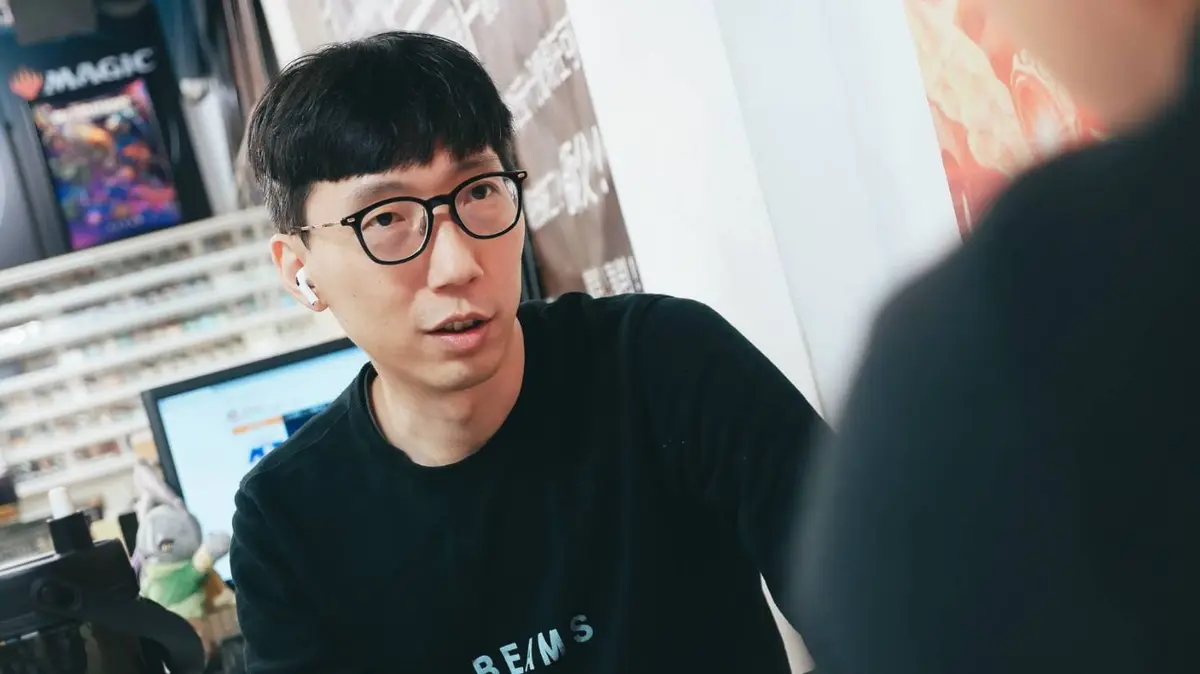
Of course, once you choose to go all in, Magic: The Gathering also brings players considerable competitive psychological pressure. We were fortunate to hear Boss Kuo share many details about playing and his past campaigns
so the smiles are a little fewer than before.
Q5: Among your opponents and comrades back then, is anyone still active on the tournament scene today? Is there any player, or several, you feel are worth mentioning?
A: Among my comrades, one still playing is 李詩天, but compared with today’s mid- and new-generation players, he may not be as dedicated as before, and everyone else has their own work and family to look after.
In the past, when information circulated less, the concept of a secret weapon was more important than it is now, so Asian players more often closed the doors to practice and discuss before events, and in those processes 李詩天 was a comrade who took part many times with me. After being sponsored by mtgmintcard, he also began a run of repeated top 8s starting at Pro Tour Return to Ravnica (RTR), truly impressive outrageous. 李詩天 is a player who can achieve results at the PT with self-built decks that win by surprise; for example, one time we all mocked his Jeskai Ascendancy choice, and yet he used that deck to make top 8.
As for players of my generation, those still going abroad to play events include 永銘 and 丈丈, among a few others, who are all still working hard on the international stage.
Q6: Regarding the deep exchanges with others during your playing days, and even friendships that last to this day, on a sentimental level, is there anything about these “friendships” and the experience Magic itself has given you that you’d like to share with readers? And has your outlook changed significantly because of any of these elements?
A: Looking back, when you lose you need comfort and support, and when you win you need someone to share it with; only then do these things feel meaningful. Having friends who understand the language of Magic is very important; relatives and friends met at other stages of life all find it hard to fully understand the joy and lows of playing.
The friends made through playing cards are absolutely real, and are one of the most precious things I have gained from Magic.
Q7: Thank you for sharing your answers about the tournament scene. The following questions will gradually bring in some aspects of life. During your time playing Magic, how did your family and work support and influence you?
A: Normal family and friends should choose not to support it XD. Hoping that family and friends understand your special choice right away would be a kind of “demand” on them. Frankly, in the early days I chose “not to say my choice at first,” because I felt that rather than letting them worry that “I’m doing something strange,” it was better to let them think “I’m not doing anything.”
Looking back on my life so far, though, my family’s attitude toward my relationship with Magic: The Gathering has been to not object and not impose too many limits, and for me that is the support that lets me chase my dream.
In my view, to focus on doing one thing well, you inevitably have to face, sacrifice, or adjust some things, such as your family’s lack of understanding and instability in work and finances, and these all take time to overcome. But what carried me forward was that feeling inside of “I really want to win,” because this game is just so much fun.
Q8: In 2015 you founded 遊戲平方, changing from retired player to card shop owner. In that process, was there an event that made you determined to do this, and how do you feel looking back now?
A: After winning the World Cup Champion title in 2012, I of course kept working on championships and Pro Points at other events. My personal goal was to win a GP or make PT top 8. Between 2012 and 2014 there were probably two or three PT events where I had some chance, but I lost several in a row at the end and missed the goal by a single match each time.
At the 2014 Portland PT, I was in a very good position with four rounds left, and at the crucial moment at the first table, my opponent was the American player William Jensen, and I lost to him, and William Jensen made it in; the next match I lost to Yuuki Ichikawa, and Yuuki Ichikawa made it too (the situation in that match was pretty outrageous: I drew six or seven mana dorks, and each one that came out was killed by a topdecked removal spell from my opponent; Yuuki Ichikawa and I were both stuck, unable to reach four mana. In that matchup, whoever landed Polukranos, World Eater first would win, and of course Yuuki Ichikawa drew the land first and did it); the next player had a chance to make top 8 and asked me to concede, but I of course still had to play, and with my momentum gone I lost too; the last player, who could jump up one level in Pro Points with a win, also asked me to concede, and I still played, and still lost. All four players got the result they wanted, and at that moment I felt very discouraged, thinking maybe I really wasn’t strong enough, and so I shouldn’t waste any more time, because I had already invested so long, and perhaps I had to respect this outcome: others are better, so let others keep playing, and maybe this no longer belonged to me.
Looking back, the pressure I was under was truly huge. Because I had already had the honor of being World Cup Champion, there was an even greater expectation to post good results afterward. Add to that growing older, long-term jet lag from flying, and feeling that I could not so easily maintain top form, and as various aspects of real life came into my thoughts, I gradually lost that purest, most reckless desire to win that I had at the start. And before that tournament, I had set myself the condition that unless I reached the goal, I would retire, so this story led me to the third stage of my career: founding 遊戲平方, but that “want to win” feeling inside never went away; in the end I only changed stages and tracks.
Q9: As a card shop owner, your feelings must be very different from when you were a player, especially regarding the things you need to pay attention to. Could you talk about the differences and how you keep your balance?
A: After the 2014 Portland PT, my good friends kept encouraging me pestering me endlessly, tossing me some decks and inviting me to go to Asian events, so the opening of 遊戲平方 was pushed back another year XD.
As a player, I only had to focus on my own results; now I care more about whether more people are joining this circle.
On the store side, what I care about most is whether the players playing in the store and the customers are all being taken care of. If you need open seats, you must never get so happy playing that you don’t notice XD
For me, as a card shop owner who can occasionally still be a player, the switch between roles doesn’t really create contradictions or conflicts, and striking the right mindset has become very natural and habitual.
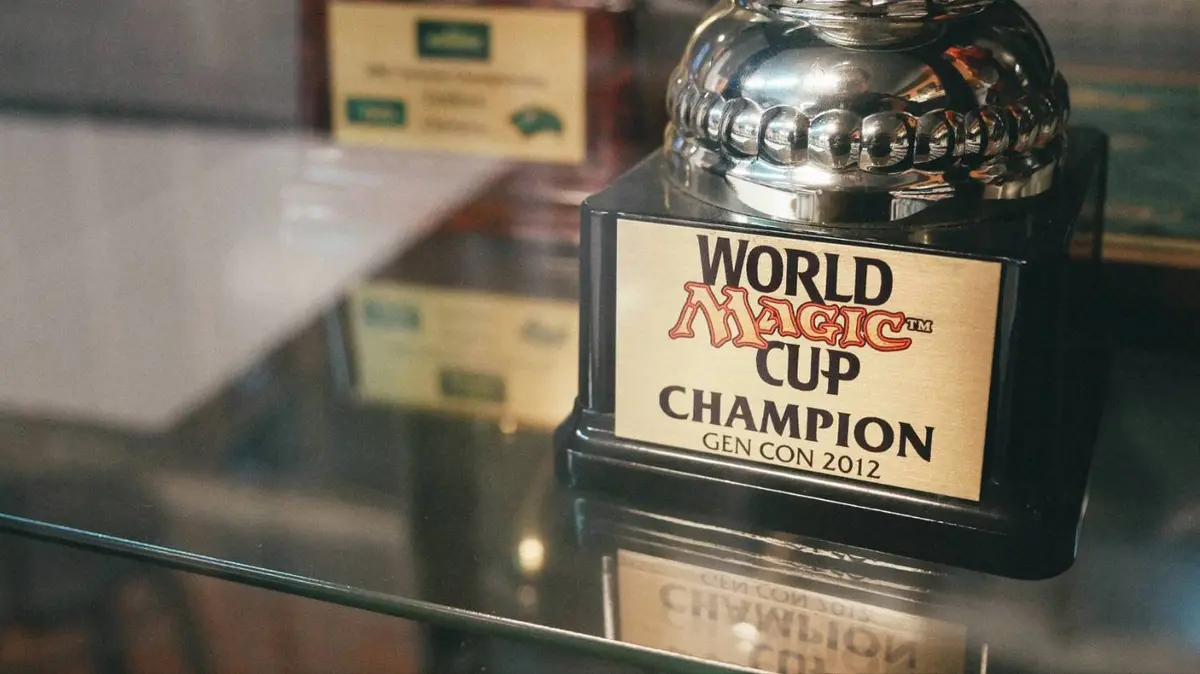
The glass cabinets at 遊戲平方 display quite a few trophies, which I consider a combined result of Boss Kuo’s identities as a player, competitor, and shop owner. I’m glad Taiwan has a senior player with such rich experience and thinking, who has also found a way to strike a balance in switching between identities and moods.
I believe 遊戲平方 will continue to support the depth and breadth of Magic in the future; whether you are a beginner or a veteran, you are welcome to bring your questions to the counter and chat with Boss Kuo for a bit when he isn’t busy.
Q10: As the organizer of the Taiwan Championship (Magic in Taiwan, MIT) and its qualifiers, from hosting this series of events over the years, are there any major differences between what you’ve observed and felt and your perspective when you competed as a player? And are there any items or features you hope to bring in or strengthen in the future?
A: As an organizer, I personally have no time to play. Rather than caring about my own results, I care about whether more people are playing. Frankly, before running an event I am always on edge, without a moment of relaxation, and only after the event starts, seeing everyone play, can I relax and enjoy it a bit.
And seeing the players at the venue, who come from all over Taiwan with different everyday identities and jobs yet enter the world of Magic with the same dedication, always makes the organizers happy and fulfilled.
After running so many events, every one is actually as nerve-racking as the first, and we always hope that all the activities and every detail will be perfect and smooth.
The experiences and gains beyond winning and losing are also something we organizers have always wanted to try and strengthen. Through the experience of each run, we try to understand the thoughts and needs of all types of players as much as we can.
Q11: At the recently concluded MIT#8, over the two days, the side events looked more diverse than in the past. What feedback have you received? Will more different formats be added in the future?
A: It still depends on the level of player participation. We might consider adding something like team events, but we are still working it out, and we will mainly think about and develop things with fun as the first priority.
For the Sealed prize tournament, the player feedback we have received so far is fairly good, so in theory you can expect it to keep being held for players who like to play Limited on the first day of MIT.
Q12: This question is somewhat related to our site. When looking up past material from the Traditional Chinese Magic community, we found that 遊戲平方’s official site also had a series of column articles. Looking at it now, it exactly fills the gap left after the two major Traditional Chinese Magic platforms of 2014, Cardwalker and Mystic Zone, stopped updating, and we are grateful that you did this back then. Could you talk about how the column came about? Could you share your thoughts on running the column at that time?
A: At the time I felt there should be somewhere for the Magic community to learn what was happening at home and abroad, but most of the earlier sites had stopped operating, so 遊戲平方 did it for a while, though later we found that for reasons like not enough manpower and a busy store, we gradually couldn’t update in time XD.
Q13: We all know that an important factor that makes Magic: The Gathering fun is the “people” who take part. Do you feel the atmosphere of the Taiwanese Magic community now shows signs of improving compared with the past year or two? And what might the key factors be?
A: In my view, one key point should be whether players who have gone abroad to compete are willing to share information and lead domestic players to keep chasing their dreams, which has a chance to increase more players’ willingness to invest in Magic. And those who win also need to be seen by everyone, with a bit more pure recognition.
Q14: Regarding the development of Magic in Taiwan and the continued improvement and consolidation of the community atmosphere, is there anything you would like to take on yourself, or appeal for?
A: What I can do is limited. My daily routine is, when I’m in the store, discussing and sharing some playing ideas and mainstream decks, playing a few games occasionally, and running the official events I take on with care. If I really have to appeal for something, I hope everyone takes part more in local communities and store events; that is the most precious part of Magic.
As for the essence of Magic: The Gathering, I would share this: it is a complex game, but its fun also comes from that complexity; once you are immersed, you never get tired of it, and it’s also unlikely that someone can never beat someone else, since the meta is fluid and decks have some degree of matchups against each other.
I think the game’s R&D is very careful in designing mechanics and abilities, so every Sealed and Standard experience is unique and full of interaction, and you could even say you are playing a different game each time with the same rules, though all of this is within the framework of Magic: The Gathering; perhaps this is “This is Magic”?
Q15: From player to owner, and from owner to organizer. For the second-to-last question, we still want to ask about your plans to challenge the world again as a player. I believe many people look forward to seeing you active in world events again! And also to making your dream of winning a PT or GP-level event come true! What are your recent thoughts on playing games?
A: See you at the June GP in Japan, at the Spotlight event!
(I’ll try my best, I should be able to…)
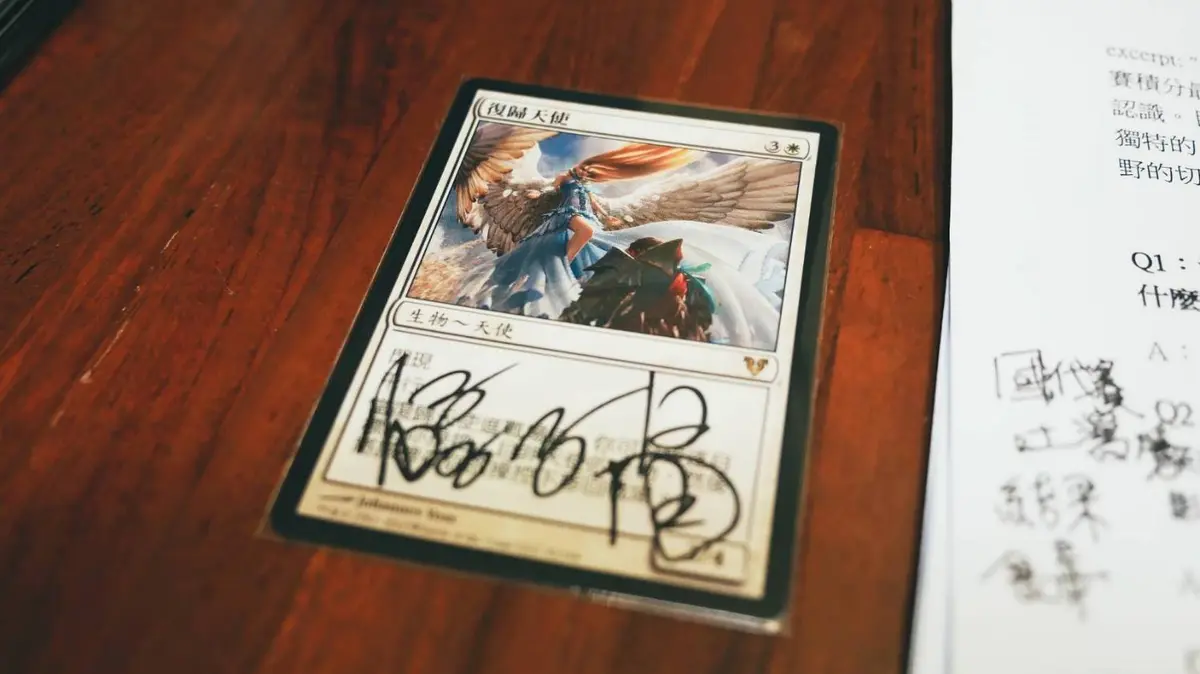
I once asked Boss Kuo to sign a Restoration Angel; Restoration Angel is the signature card of Boss Kuo’s achievements in 2012.
I imagine this card echoes something again in 2025. Whatever our roles and however we enjoy it, we will keep walking within the framework of Magic: The Gathering, and gain more support from the community and from one another.
Q16: Last of all, allow us to end with this old question: how would you describe what Magic: The Gathering means to you?
A: It connects my interests, friendships, travel, work, and dreams, and runs through my life; it is the most fun game in the world!
- Title
- Taiwanese Player Interview: Kuo Tzu-Ching (郭子敬)
- Author
- faintmama, cephille
- Created at
- April 3, 2025
- License
- This work is licensed under CC BY-NC-SA 4.0 .
Related Articles
World Championship Player Interview: MIT Round 12 Champion, Second Interview with SamuelChang
November 5, 2026
World Championship Player Interview: MIT Round 11 Champion Lee Shi Tian
November 5, 2026
World Championship Player Interview: MIT Season 10 Champion 許碩恩
November 5, 2026
Interview — Dominaria Library
March 1, 2026