The Lost Caverns of Ixalan Standard Preliminary



Note: This article was translated from Chinese by AI and may contain errors. Read the original Chinese version.
Before We Start
The most exciting part of a new set release is brewing new decks. What kind of fresh blood can The Lost Caverns of Ixalan inject into Standard this time? Let’s brainstorm a bit and look at the new set’s Standard builds!
Deck Introductions
Quintorius Adventures
Quintorius Adventures decklist link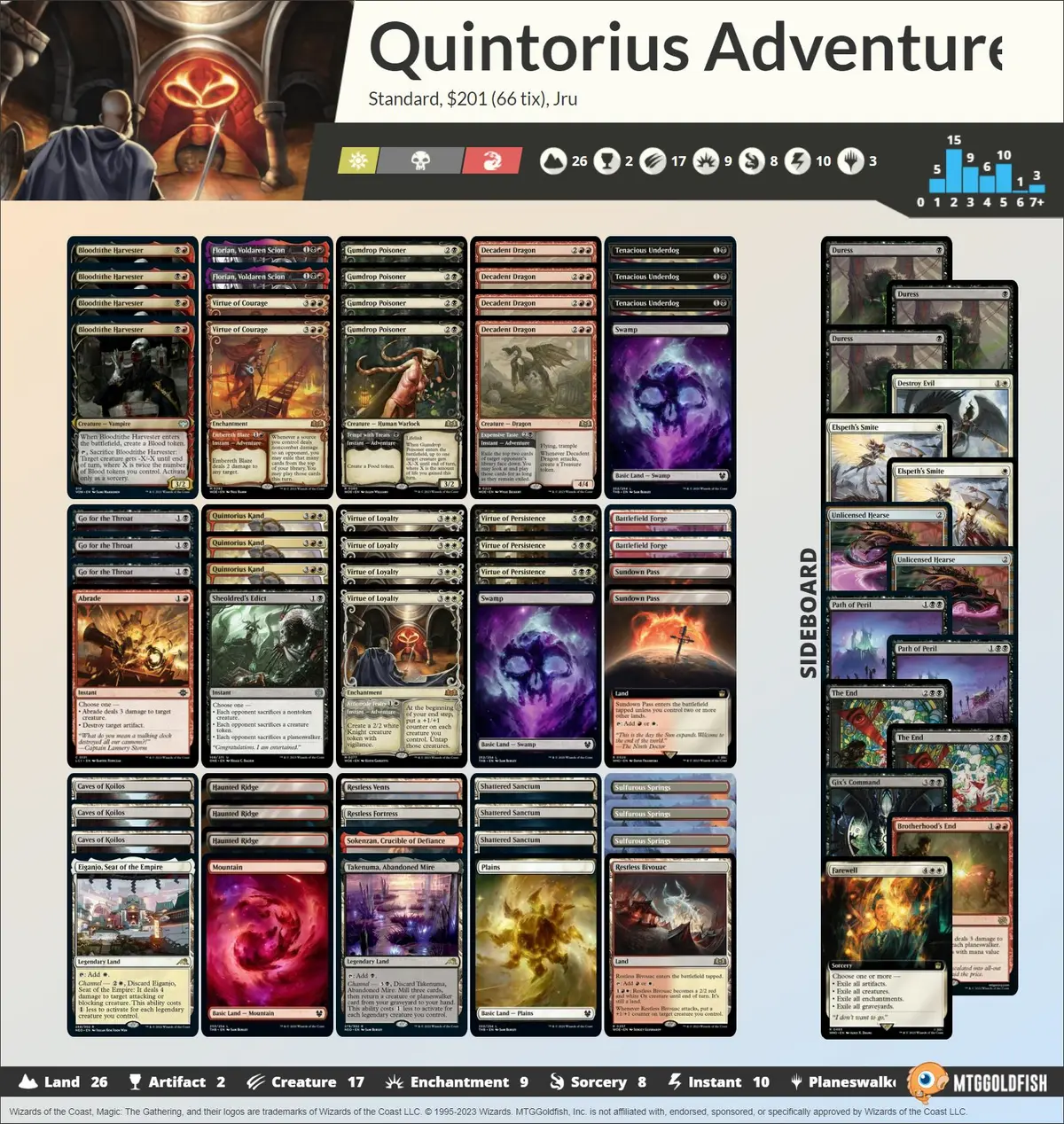
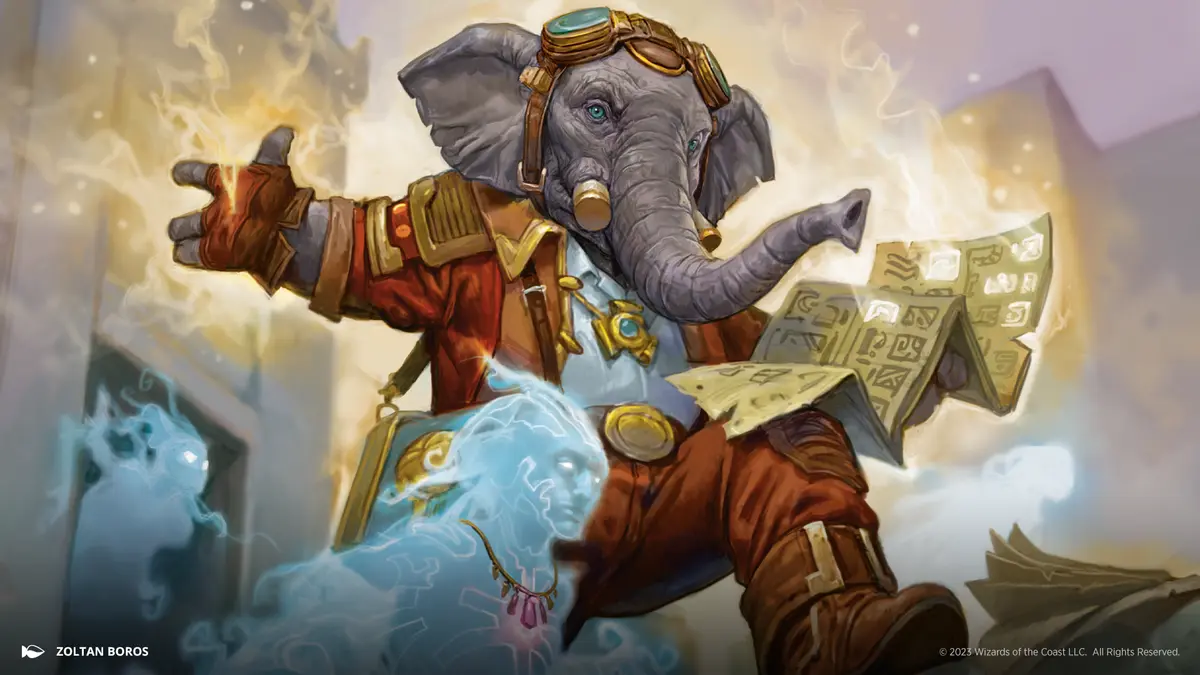
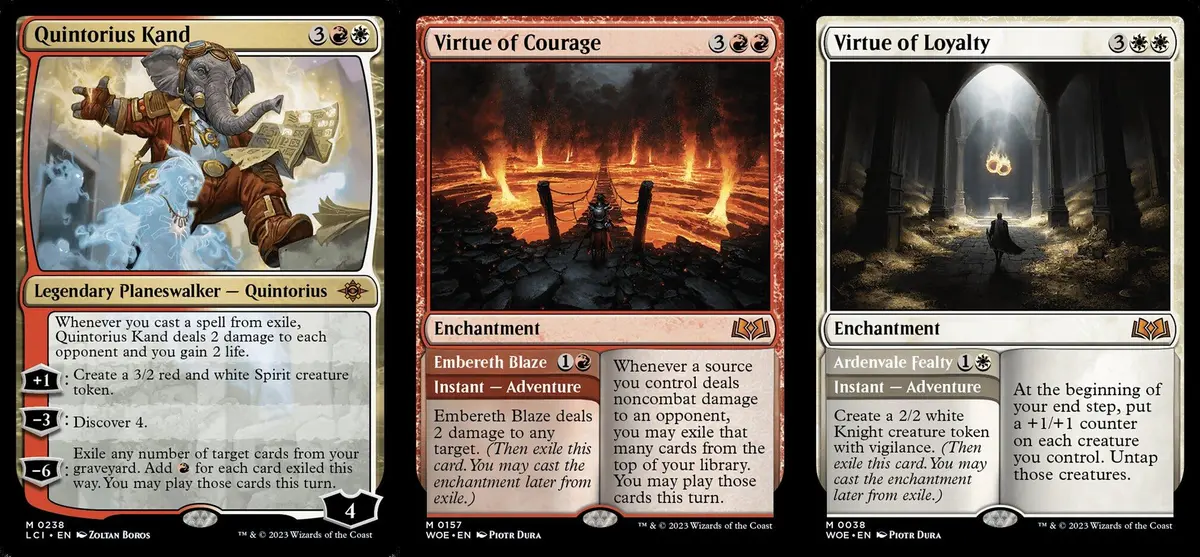
A build centered on the triggered ability of Quintorius Kand. Its ability to drain two life whenever you cast a spell from exile pairs well with Adventure. Adventure is already a powerful ability on its own, and picking quality cards from it ensures the deck’s stability, so the deck has enough ability to function even when Quintorius isn’t on the battlefield. Also, Virtue of Courage // Embereth Blaze and Quintorius can give each other feedback, but since the pairing is quite restrictive, I didn’t dare play many and still built the deck mainly around generically useful cards.
Rakdos Reanimator
Rakdos Reanimator decklist link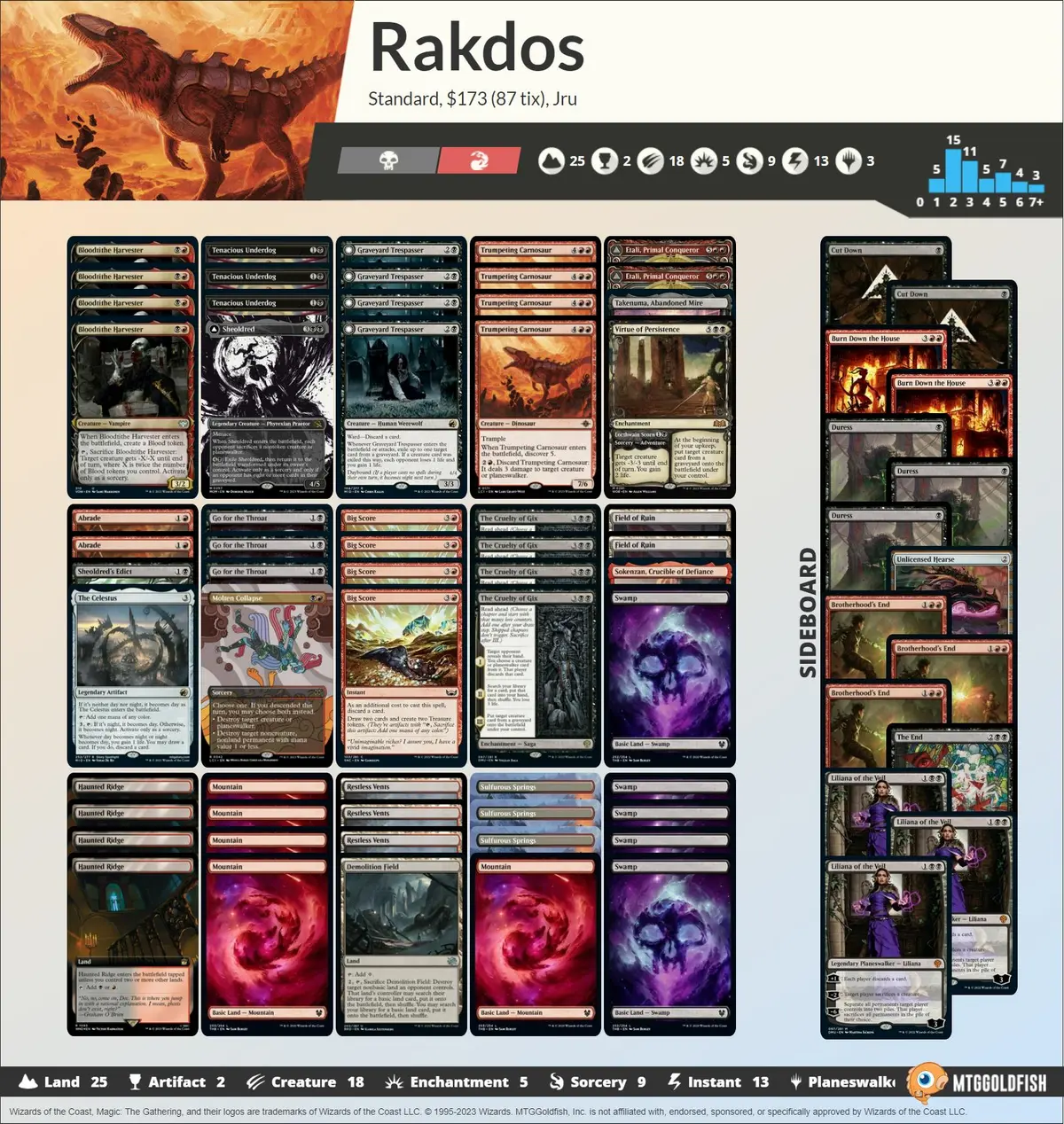
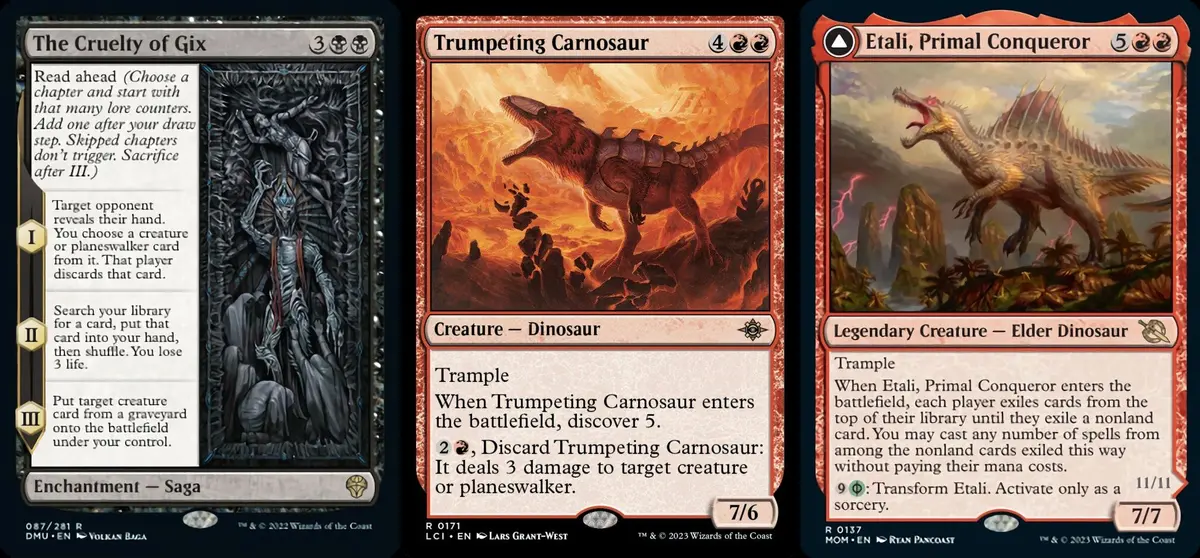
Trumpeting Carnosaur’s channel-like ability is not only removal but also a way to actively fill the graveyard, and combined with its own powerful enter-the-battlefield ability, it practically has “reanimation target” written on its face. Here I chose The Cruelty of Gix as the main reanimation method, along with discard outlets such as the blood token from Bloodtithe Harvester and Big Score, plus the best reanimation target, Etali, Primal Conqueror // Etali, Primal Sickness, and added some Tenacious Underdog, which makes good discard fodder and smooths out the early curve, to come together as this Rakdos Reanimator. Because this deck has some acceleration, you don’t always have to insist on reanimating; gathering enough mana to cast things straight is also viable. If you want a higher ceiling, you can also consider adding Breach the Multiverse, and The Elder Dragon War, which packs removal, loot, and damage into one card, is also a decent smoothing component.
Dimir Midrange
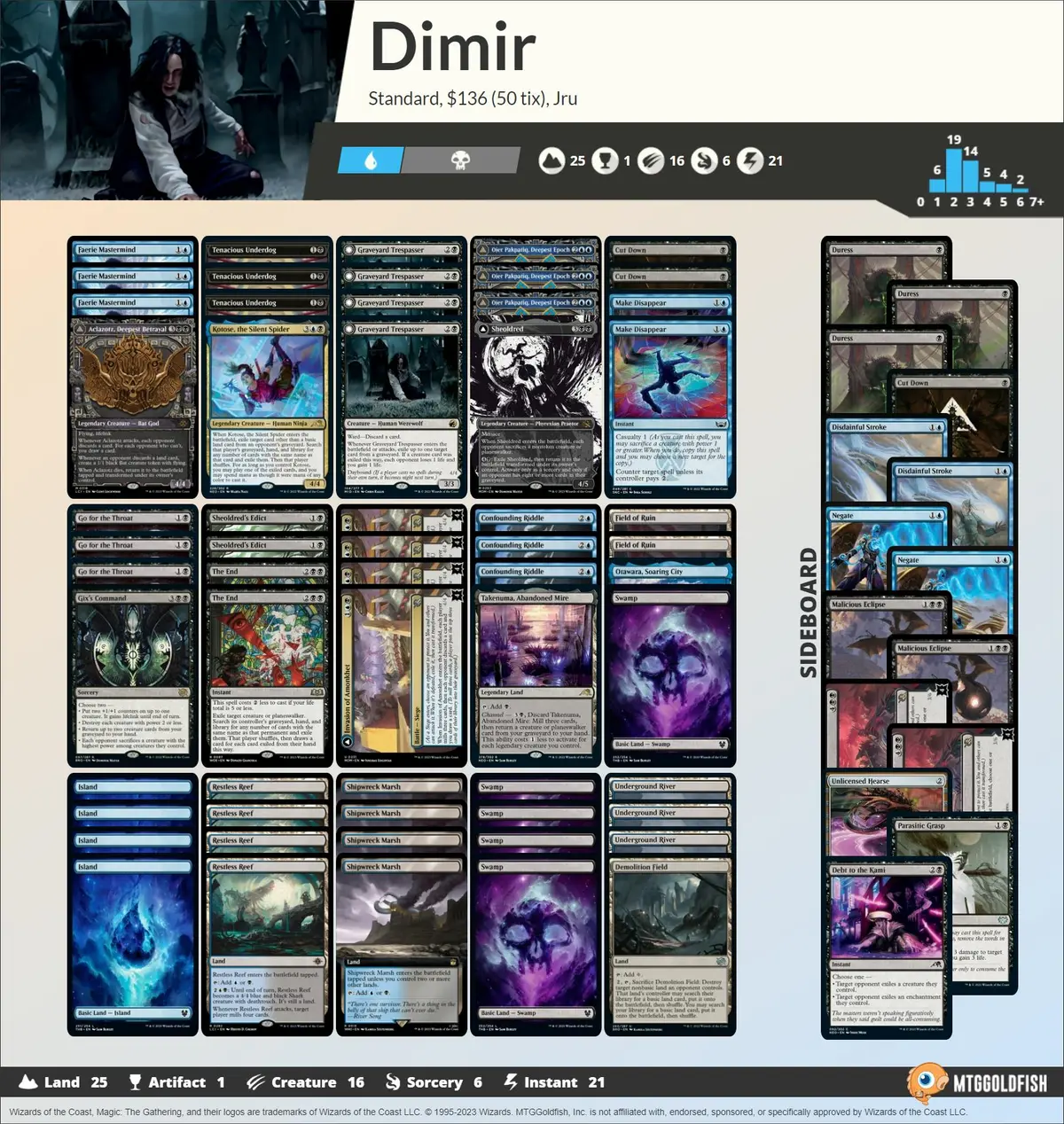
The gods of this set all have the ability to “return to the battlefield transformed when they die” (whether they are currently front-side or back-side), and the back side of Invasion of Amonkhet // Lazotep Convert is “enters as a copy of any creature in a graveyard”. That means if your Invasion of Amonkhet chooses to enter as a copy of one of this set’s gods when it transforms, no matter how it dies, it can come back as a copy of the god again. To break this cycle, the opponent has to find a way to exile the god from the graveyard, or use removal like exile effects that don’t put it in the graveyard. Because I wanted to get as much value as possible from Ojer Pakpatiq, Deepest Epoch // Temple of Cyclical Time (the blue god), the spells chosen are, wherever possible, instants suited to Rebound.
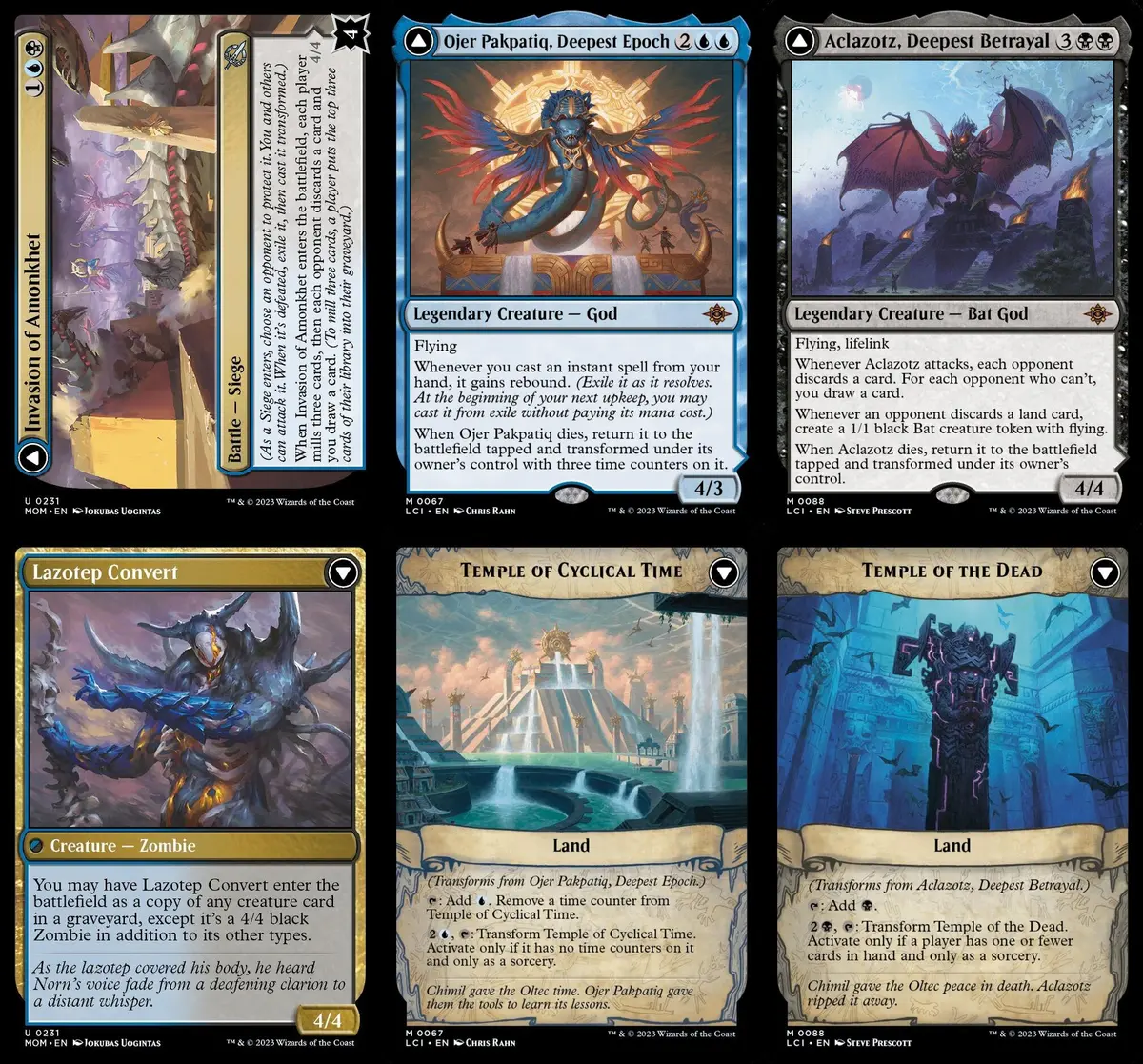
For more on the rules of double-faced cards, see this article: Transforming Double-Faced Cards and Copy Effects
Grixis Midrange
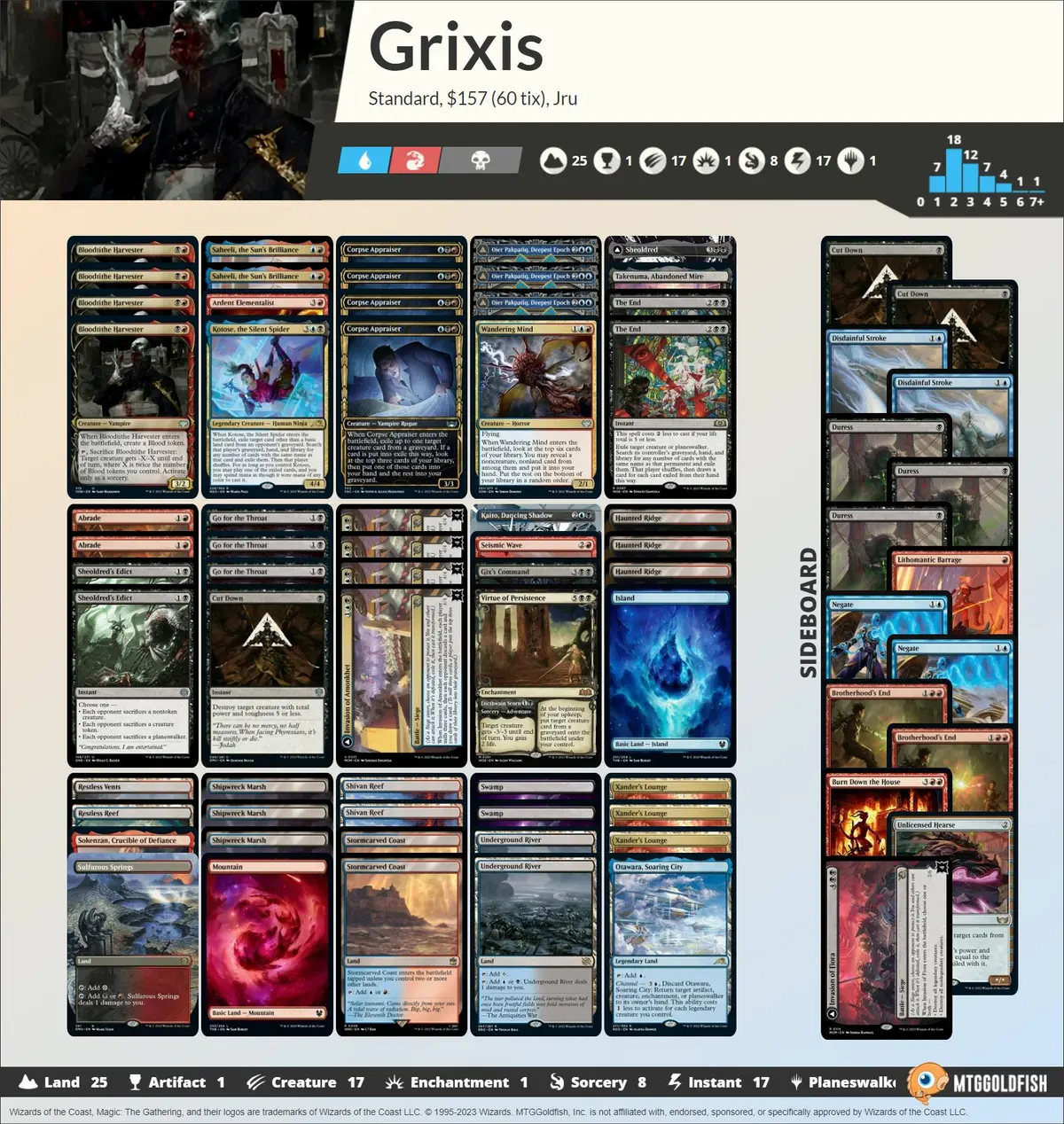
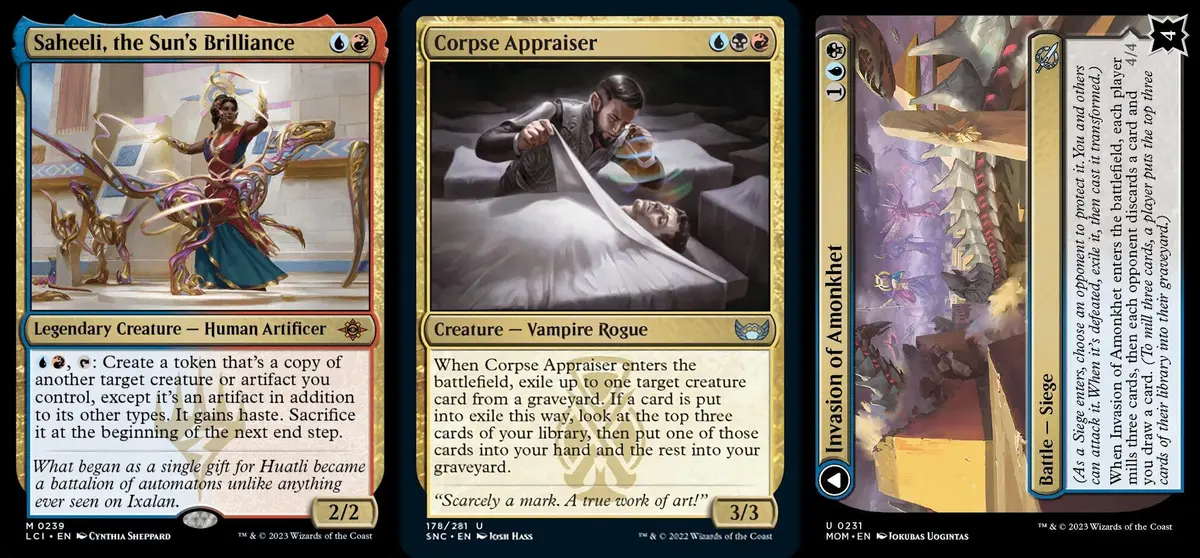
A remodel of the Dimir Midrange above, keeping the theme of pairing Invasion of Amonkhet // Lazotep Convert with the gods. Because it adds red, it can use Grixis’s signature card-advantage creature Corpse Appraiser as well as Saheeli, the Sun’s Brilliance, which is practically a reincarnation of Fable of the Mirror-Breaker // Reflection of Kiki-Jiki, and creature choices are likewise based on making the best use of ETBs.
Grixis Self-Mill
Grixis Self-Mill decklist link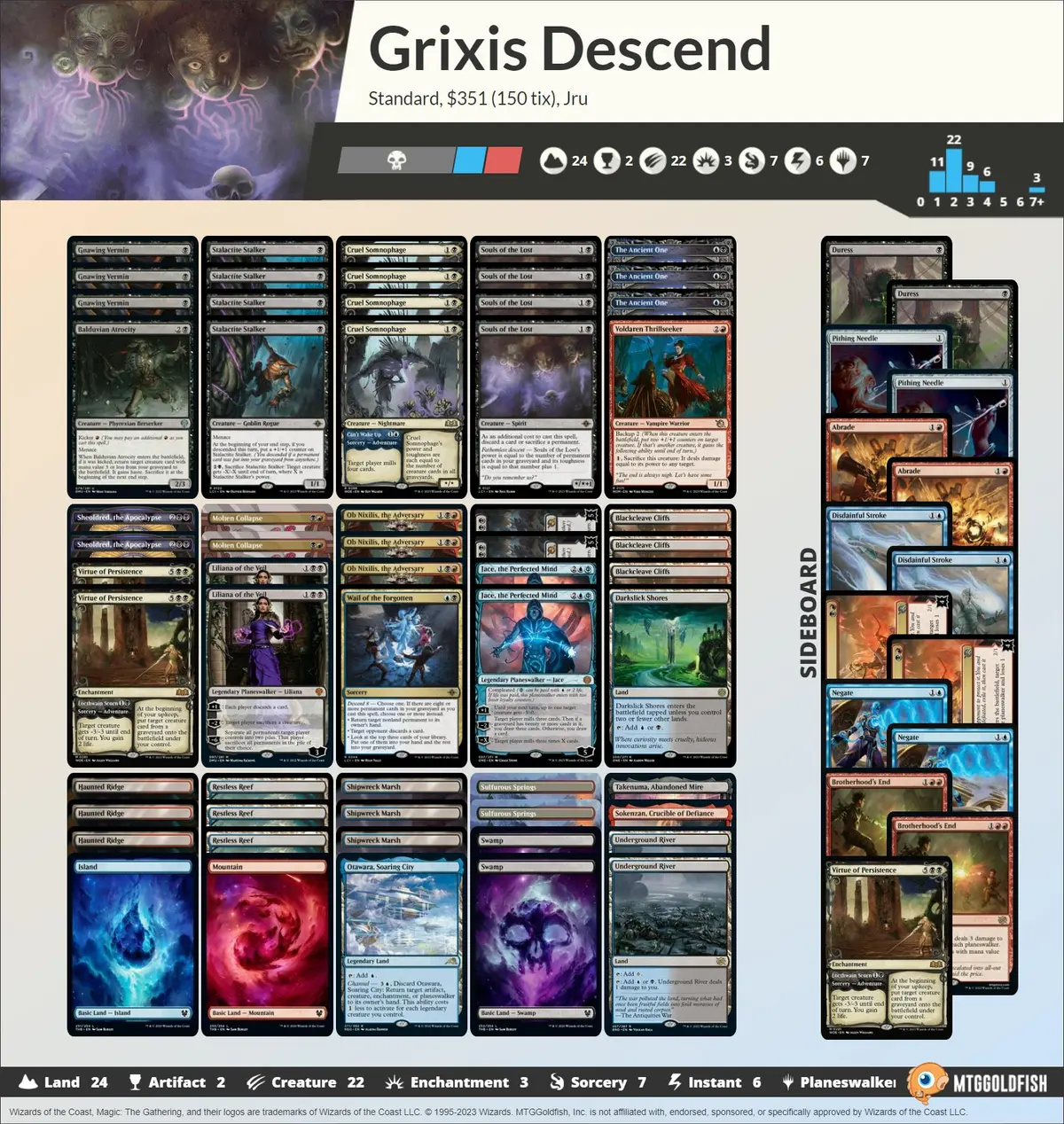
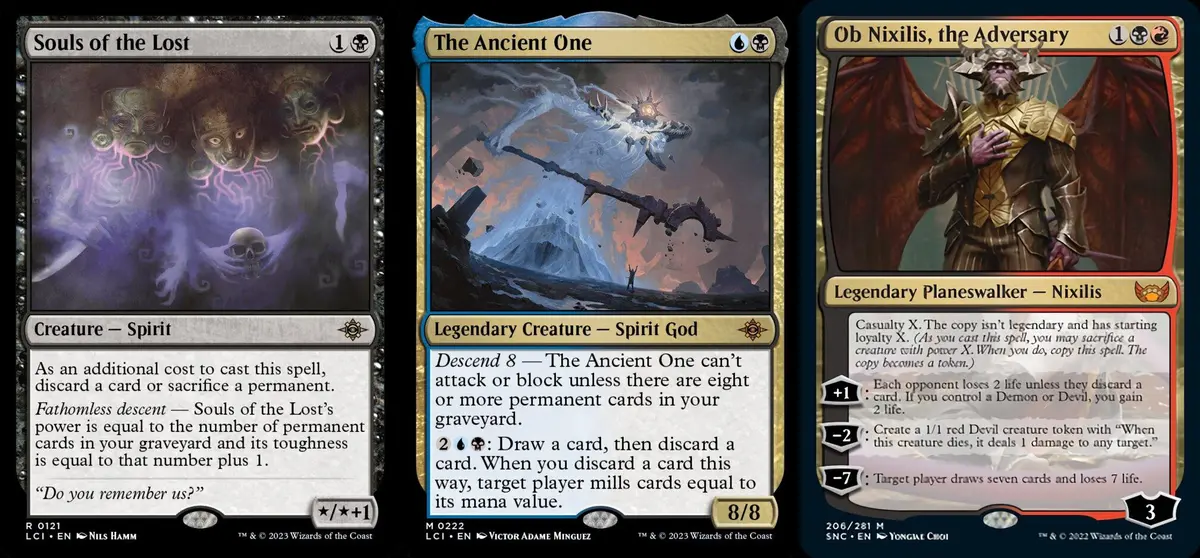
The Ancient One has an 8/8 body for two mana, but it won’t necessarily be able to meet the conditions to attack and block, so what do you do? Ob Nixilis, the Adversary finds it delicious: after casualty 8, even using the -7 ultimate leaves some left over. Of course, you can’t treat The Ancient One purely as fodder; being able to take part in combat is still ideal. This deck strengthens its self-mill ability to pile up the graveyard, aiming to quickly turn The Ancient One, Souls of the Lost, and Cruel Somnophage // Can’t Wake Up into qualified, powerful threats.
Golgari Beanstalk Festival
Golgari Beanstalk Festival decklist link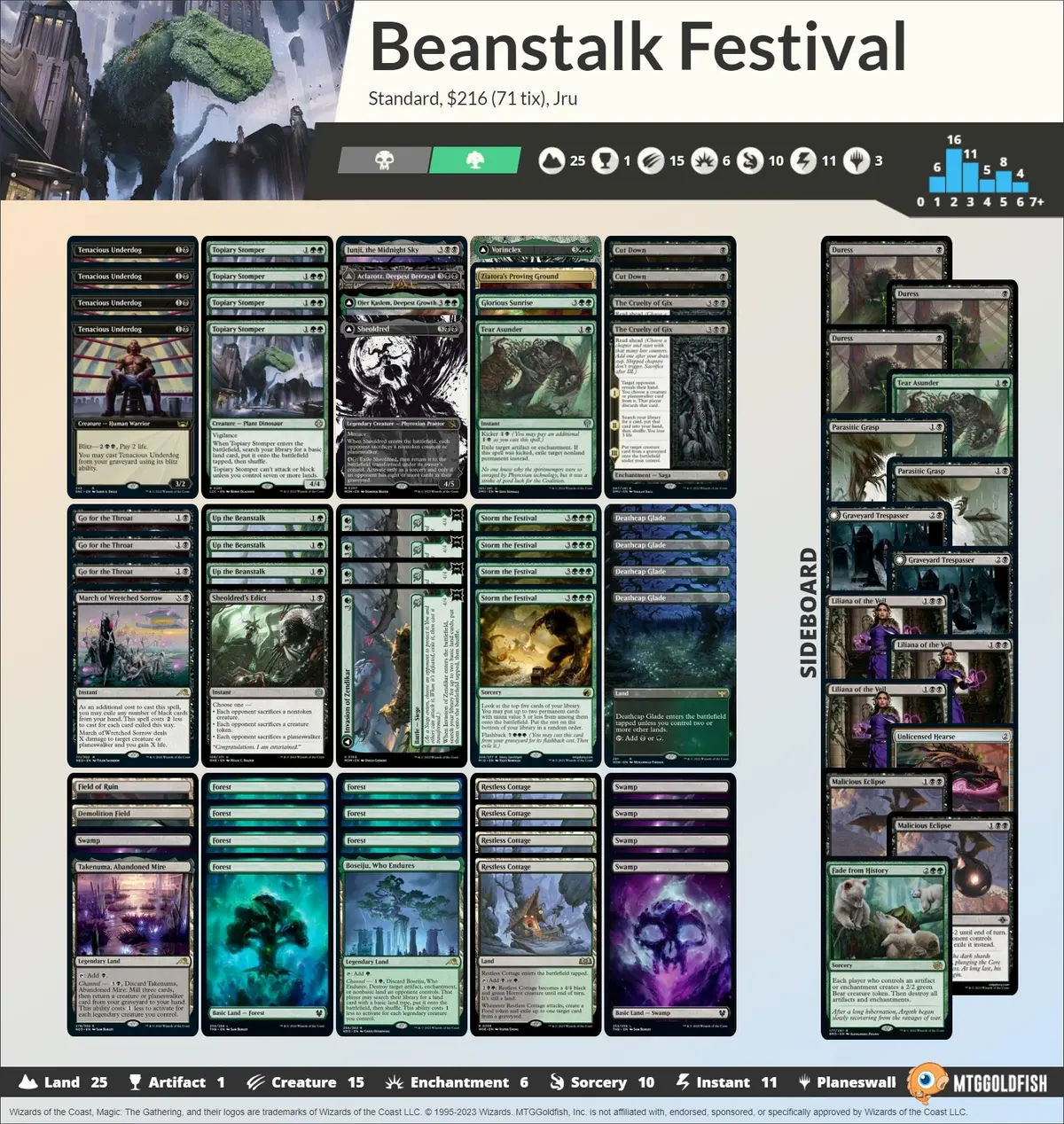
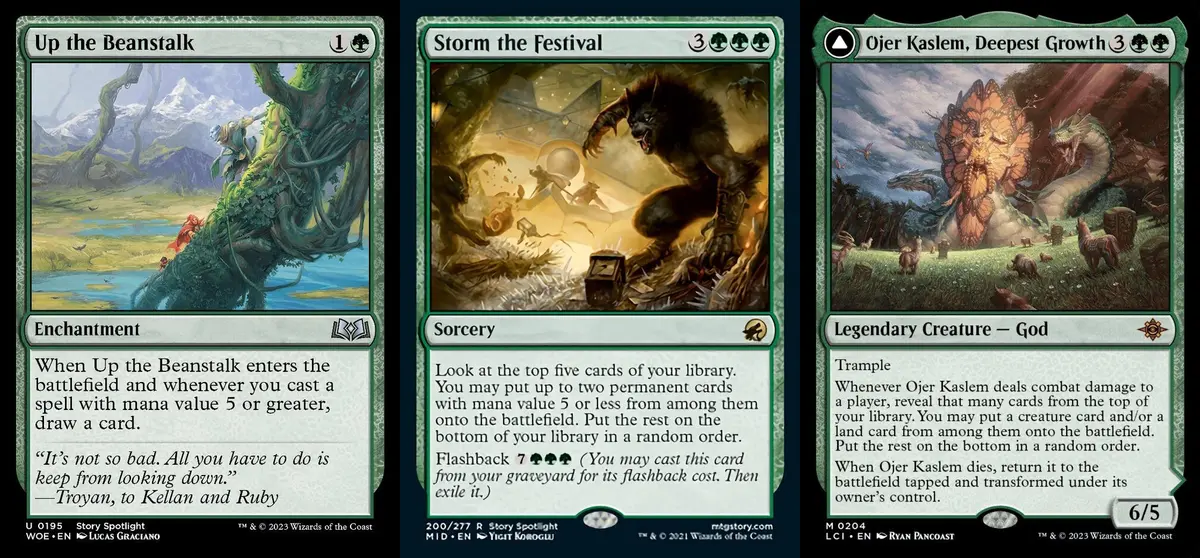
Up the Beanstalk and Storm the Festival are both easy to profit from and fun to play, so how to choose? I want them all!
The overlap between the two is five mana, so naturally the deck maximizes the density of powerful five-mana permanents. With a curve this clunky, you can’t just rely on slowly playing lands normally; you need some ramp. Here I used the classic acceleration package of Topiary Stomper and Invasion of Zendikar // Awakened Skyclave, with the two-drop slot filled by Tenacious Underdog; its cheap, strong trading ability and its resilience to dying suit it to carrying us through the early game. Although Mosswood Dreadknight // Dread Whispers is a quality Golgari two-drop, getting value out of it tends toward using Adventure on turn two to lose life and draw cards, which leaves your own board empty and easily puts you in a life-total crisis. The creature curve of this deck differs from a typical Golgari deck, with a fairly large gap in the early game, so it’s better for creatures to take the field as early as possible, and in this respect Tenacious Underdog does a much better job.
If you think the legendary creatures at five mana, the main force of this deck, cost too much, Workshop Warchief is a decent budget replacement, and in some matchups it even performs better than the current list. Also note that Up the Beanstalk draws a card when you cast a spell with mana value 5 or greater; putting a five-mana permanent onto the battlefield with Storm the Festival will not trigger Up the Beanstalk’s draw ability.
Golgari Fight Rigging
Golgari Fight Rigging decklist link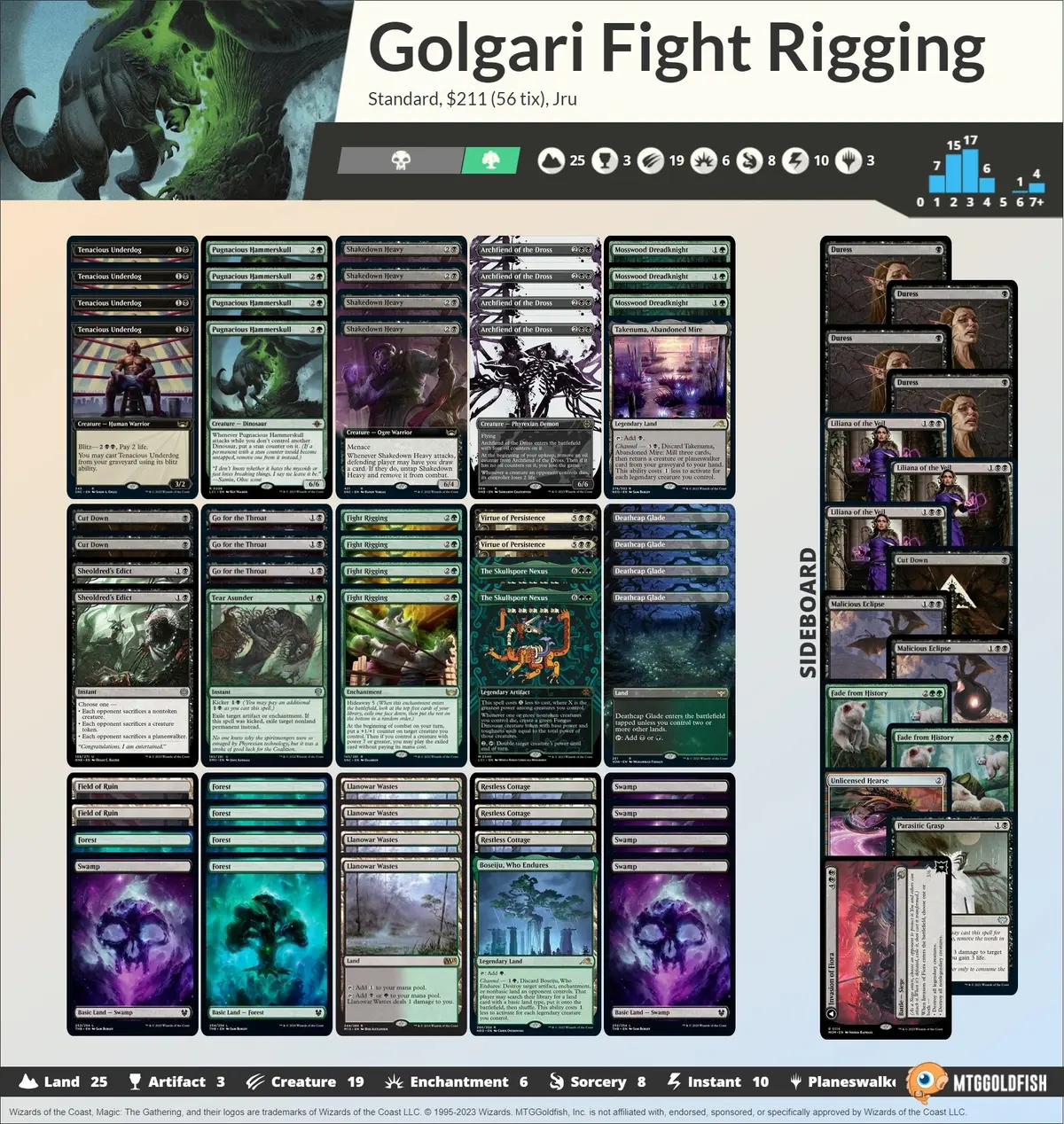
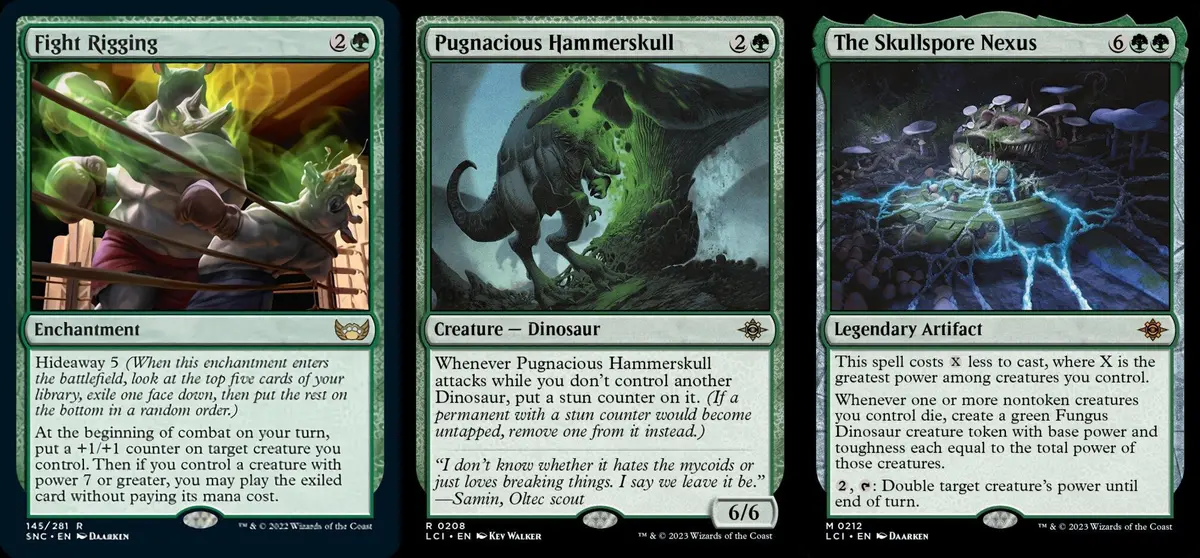
Pugnacious Hammerskull is a green three-mana 6/6, simply a perfect match for Fight Rigging. Together with the existing Shakedown Heavy and Archfiend of the Dross, Golgari now has 12 creatures with 6 power at four mana or less. Admittedly, Fight Rigging is a strategy that in theory the opponent can hold down if they have removal, but when the density of triggered damage gets this high, the pressure on the opponent is considerable too, and missing removal even once can mean instant death.
For the top-end payoffs, I currently use The Skullspore Nexus and Virtue of Persistence // Locthwain Scorn. The Skullspore Nexus fits the high-power creature approach very well, and the tokens it makes have the Dinosaur type, which also helps Pugnacious Hammerskull avoid its drawback; Virtue of Persistence raises the deck’s stability through its cheap Adventure. In addition, Nissa, Ascended Animist, with its flexible casting cost, is a stable, good option too, and if you want a higher burst ceiling, you can consider Tyrranax Rex.
Golgari Bargain
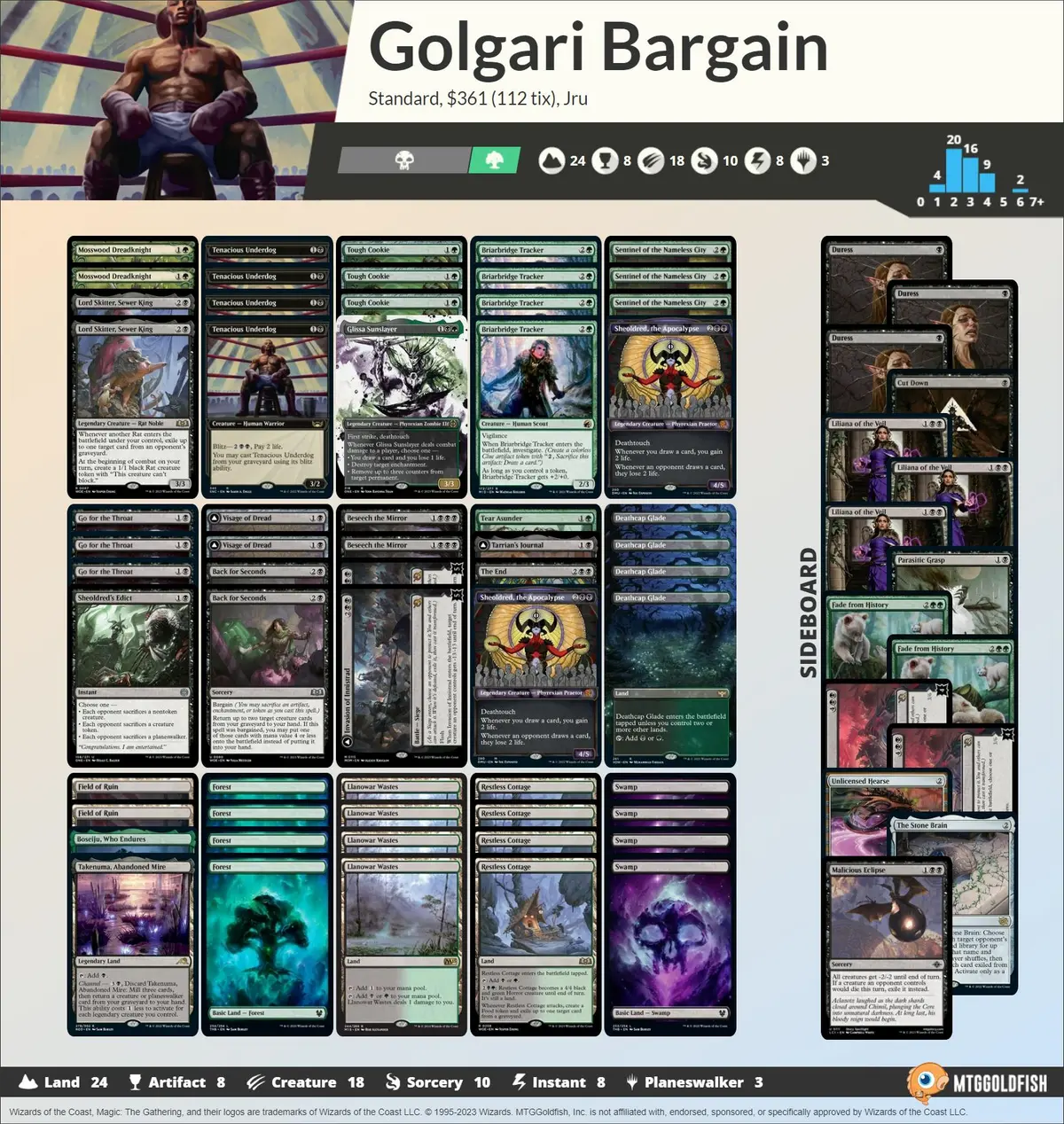
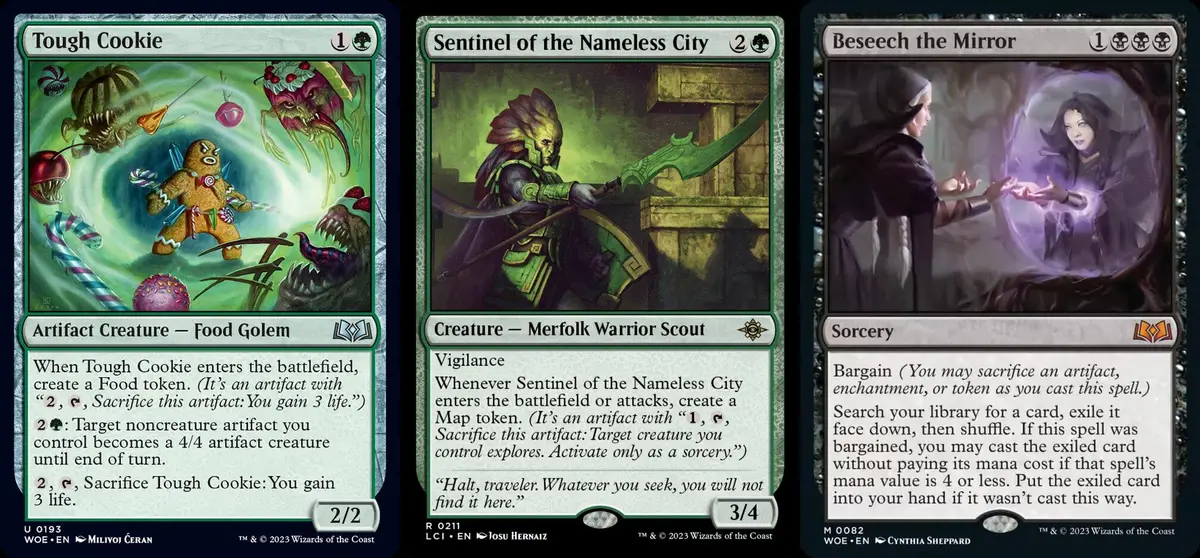
The Lost Caverns of Ixalan is essentially an artifact metagame too, with a great many artifact producers and outlets. This deck uses lots of damage sources that can produce artifacts or creature tokens, converting them into combat power through Tough Cookie, or using them as fodder for Tarrian’s Journal // The Tomb of Aclazotz, Back for Seconds, and Beseech the Mirror to keep the resource engine running; artifacts like Visage of Dread // Dread Osseosaur that just sit on the battlefield after their ETB is used can gain extra value this way, by being “re-employed”.
Orzhov Bargain
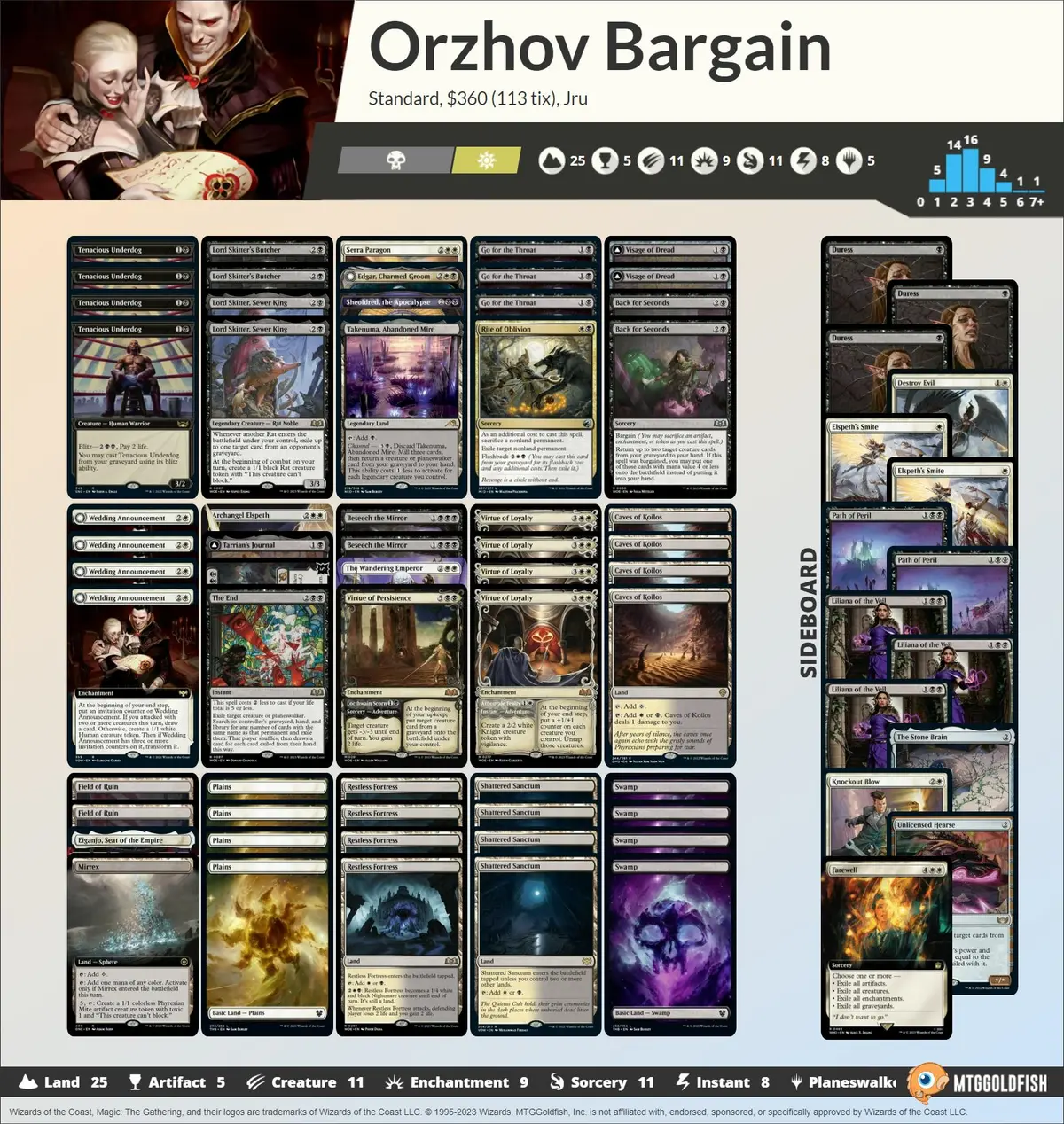
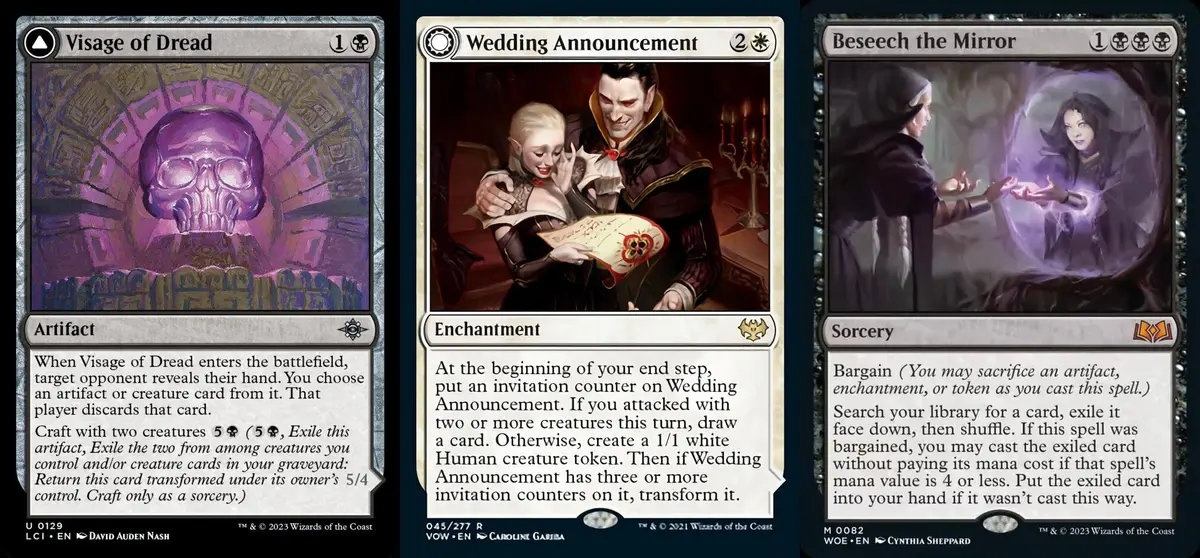
The concept is very close to the Golgari deck above, but here the ability to go wide is emphasized more; compared with the above approach of using Tough Cookie to convert into extra threats, it is closer to a traditional midrange deck using sacrifice as a resource engine. Beseech the Mirror is thoroughly turned into a toolbox here, and the four-drops in Orzhov are very comprehensive, with top-tier options for threats, removal, and card advantage. Readers can also adjust the toolbox’s contents to taste, or even add more copies of Beseech the Mirror.
Azorius Flash
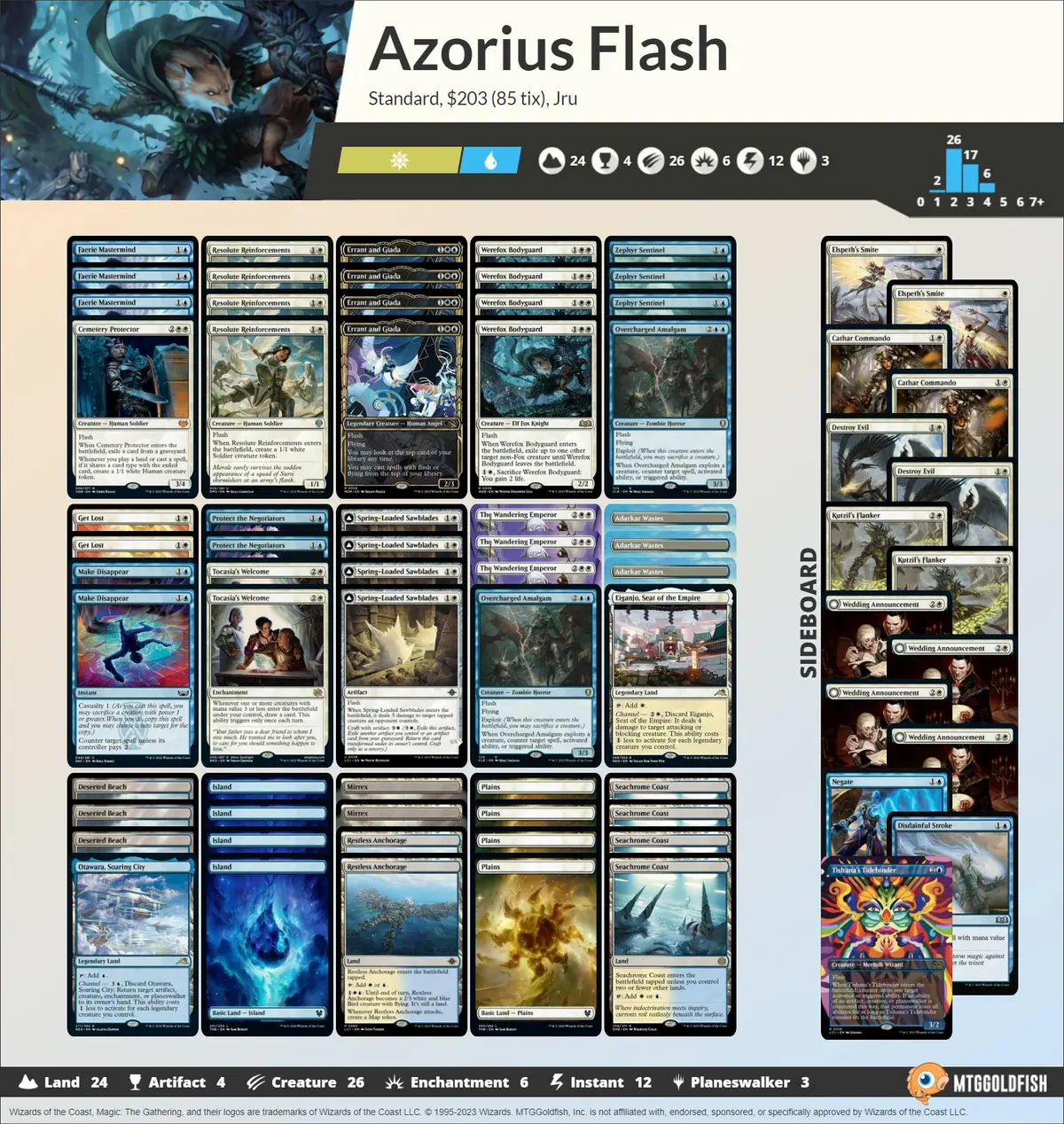
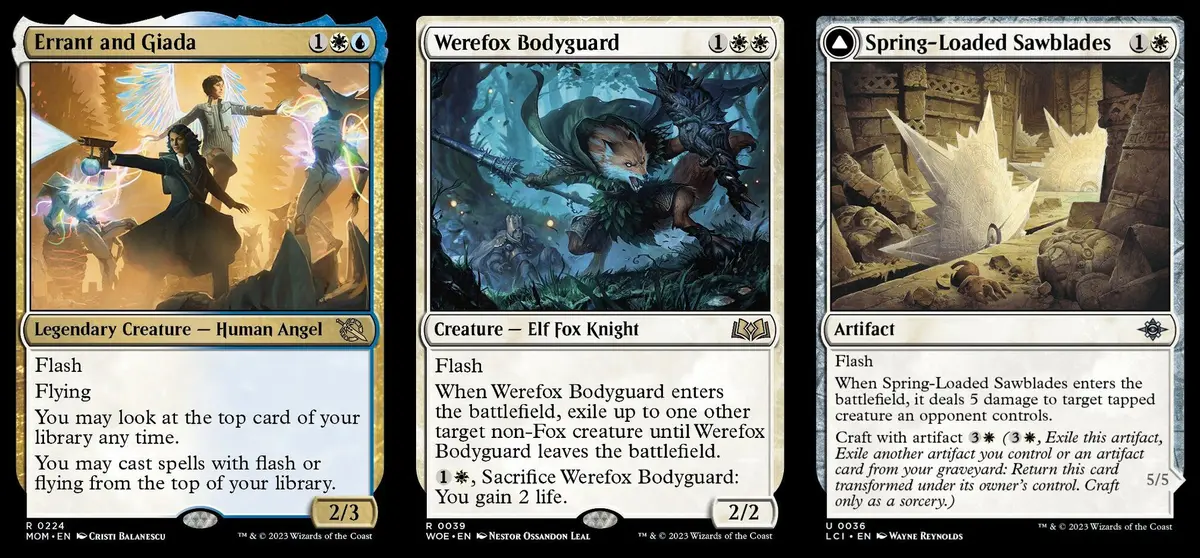
Errant and Giada has always been a core component of a tempo-oriented Draw-Go approach that appeals to me, but the most obvious problem when a deck tries to use it to the fullest is “not enough cheap removal”. Werefox Bodyguard from Wilds of Eldraine greatly improved that, and this set finally supplies the last unremarkable piece of this approach: Spring-Loaded Sawblades // Bladewheel Chariot. Although it’s conditional removal, compared with being limited to attacking creatures, tapped creatures are a fairly loose condition in most situations, and with a range of 5 damage there’s nothing to complain about. Also, crafting with artifacts is possible: besides eating another Sawblades, Restless Anchorage and Mirrex can also produce artifact tokens. Of course, at this deck’s tempo, crafting is a very inefficient action and won’t be your main game plan; it’s just a bonus option to play with occasionally.
Looking closely at this deck’s list, you can see that Soldier-related cards make up a sizable share, so you might also consider building more in the Soldier direction and switching some lands to Fortified Beachhead to raise threat output.
Azorius Control
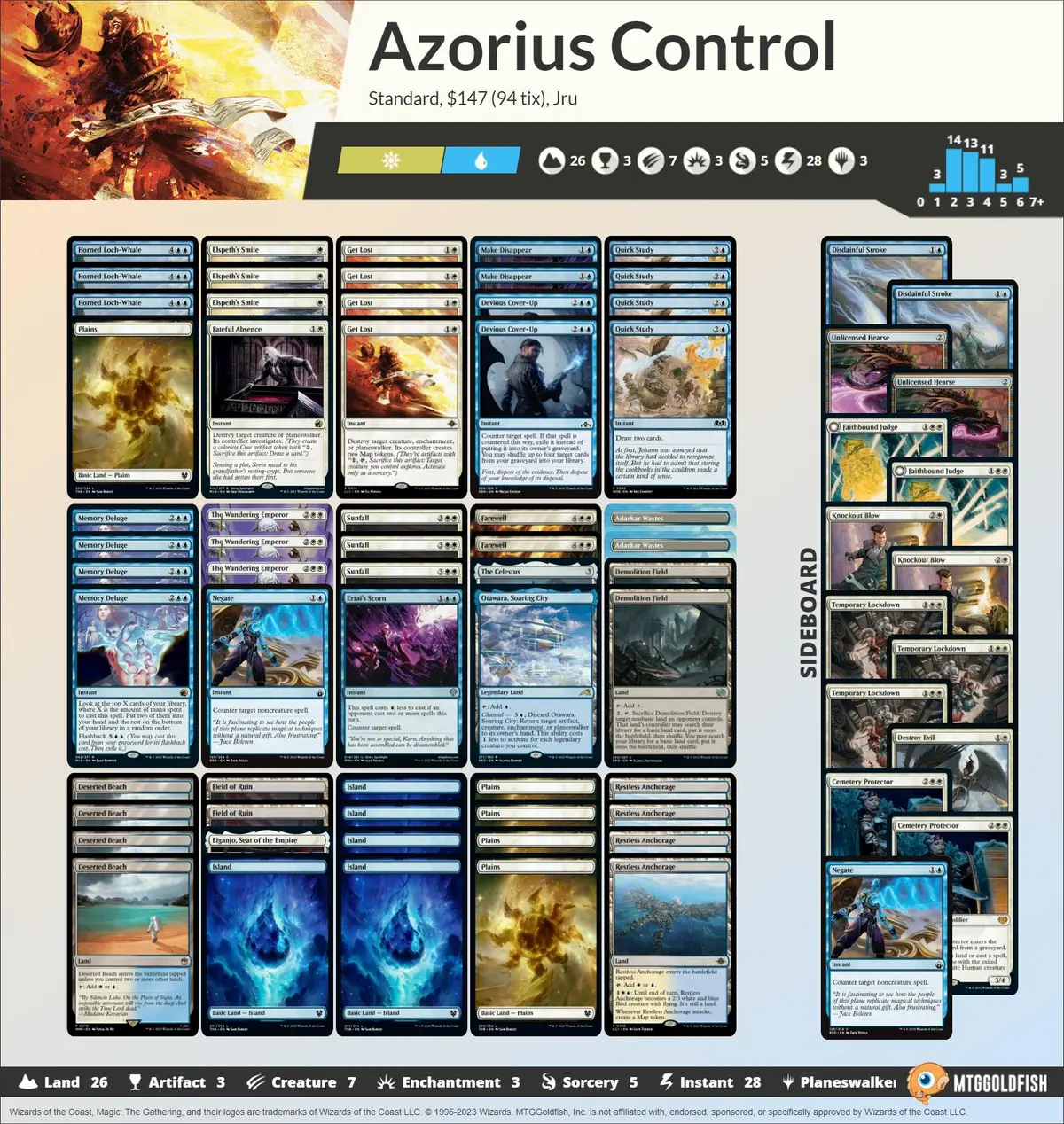
The Lost Caverns of Ixalan is an extremely unfriendly set for Azorius Control. Cavern of Souls raises resistance to counterspells, and Kutzil, Malamet Exemplar and Scytheclaw Raptor are outright displays of malice toward control; in particular, Azorius’s cheap removal is relatively weak, and a high proportion of the more efficient, side-effect-free removal conditions itself on “attacking creatures”, so once these two creatures arrive, half of the existing removal suite collapses.
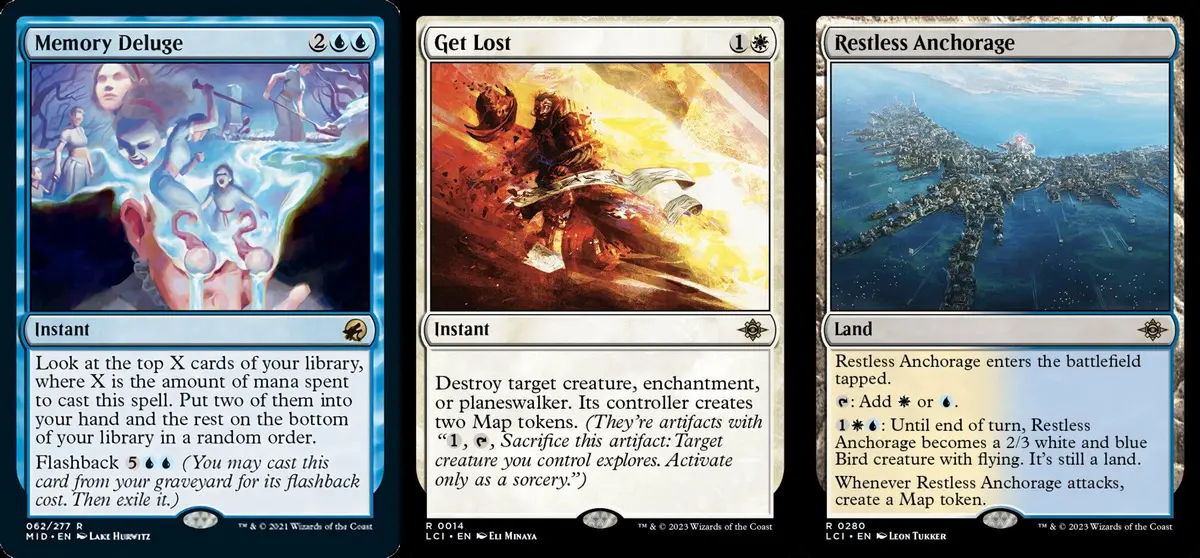
Fortunately, such traditional control is already quite rare these days, so even though such efficient hate cards came out, I expect their usage in the metagame won’t be too large, and this set also gave Azorius Control two very key reinforcements: the transforming land Restless Anchorage and the clean removal Get Lost. With a transforming land, you effectively add 4 finishers, so some of the existing finisher slots can be swapped for more spells. The side effect of Get Lost giving the opponent two Maps is terrifying in Limited, but in Constructed it isn’t much of a problem; Maps’ activation being limited to sorcery speed makes the opponent’s actions easier to predict, and compared with the Clue from Fateful Absence, which may directly draw an extra threat, exploring is also less likely to give the opponent an extra threat.
This deck is adjusted from the existing list; because of the control-hate cards above, the removal ratio was adjusted. For the original list and explanation, see this article: Standard Deck Recommendation: Classic Azorius Control.
Red God Aggro
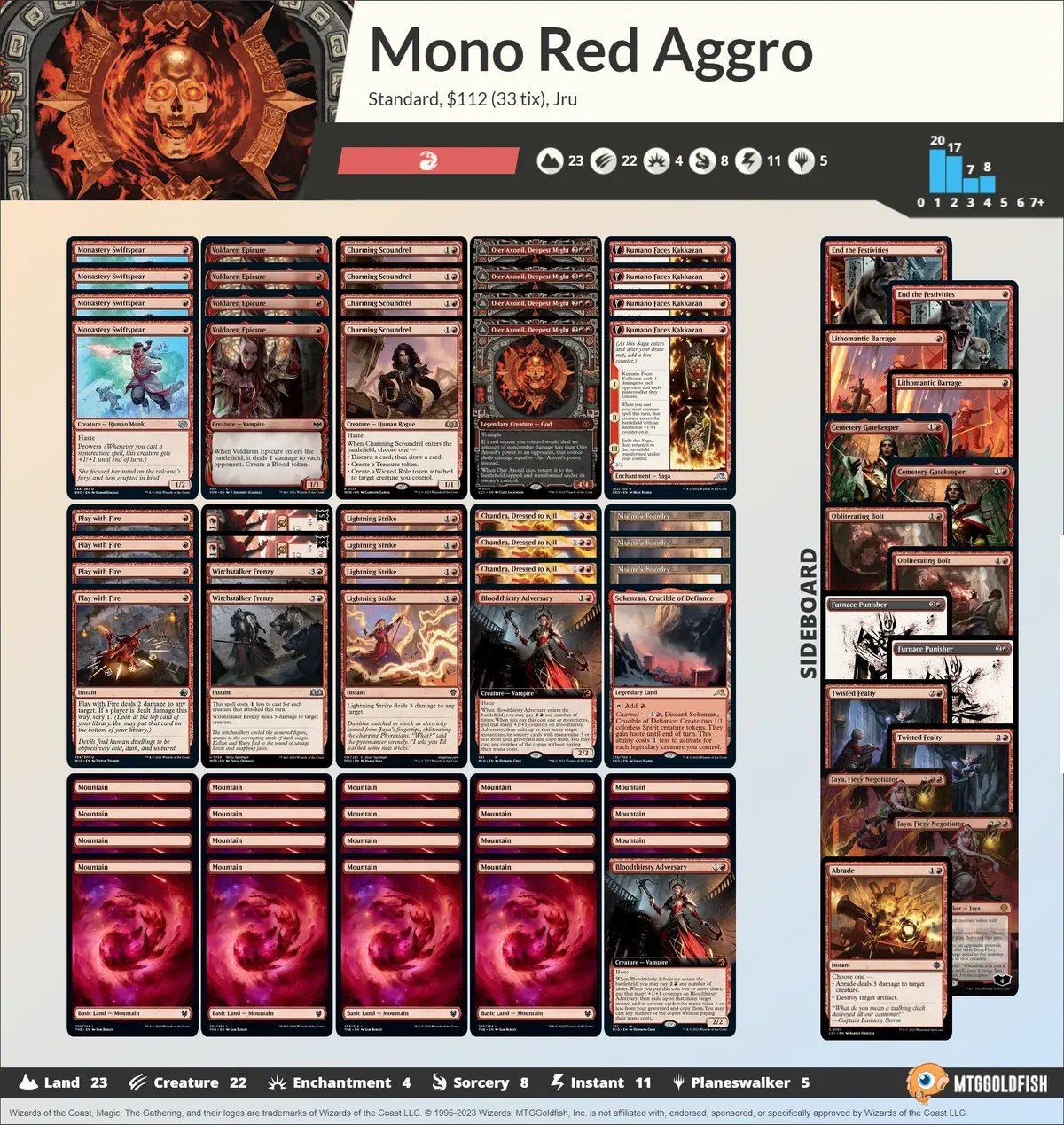
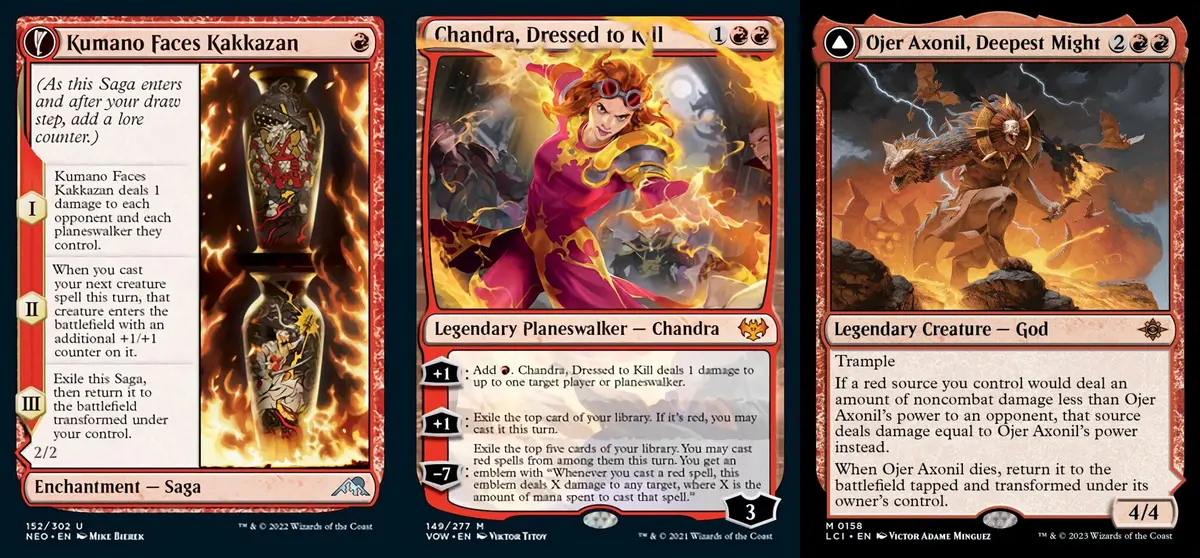
A red aggro deck with Ojer Axonil, Deepest Might // Temple of Power as its selling point. To make the most of the new red god, the ratio of burn was greatly increased, and Chandra, Dressed to Kill, which can keep dealing damage, is also used as a main piece.
Mono-Red Midrange
Mono-Red Midrange decklist link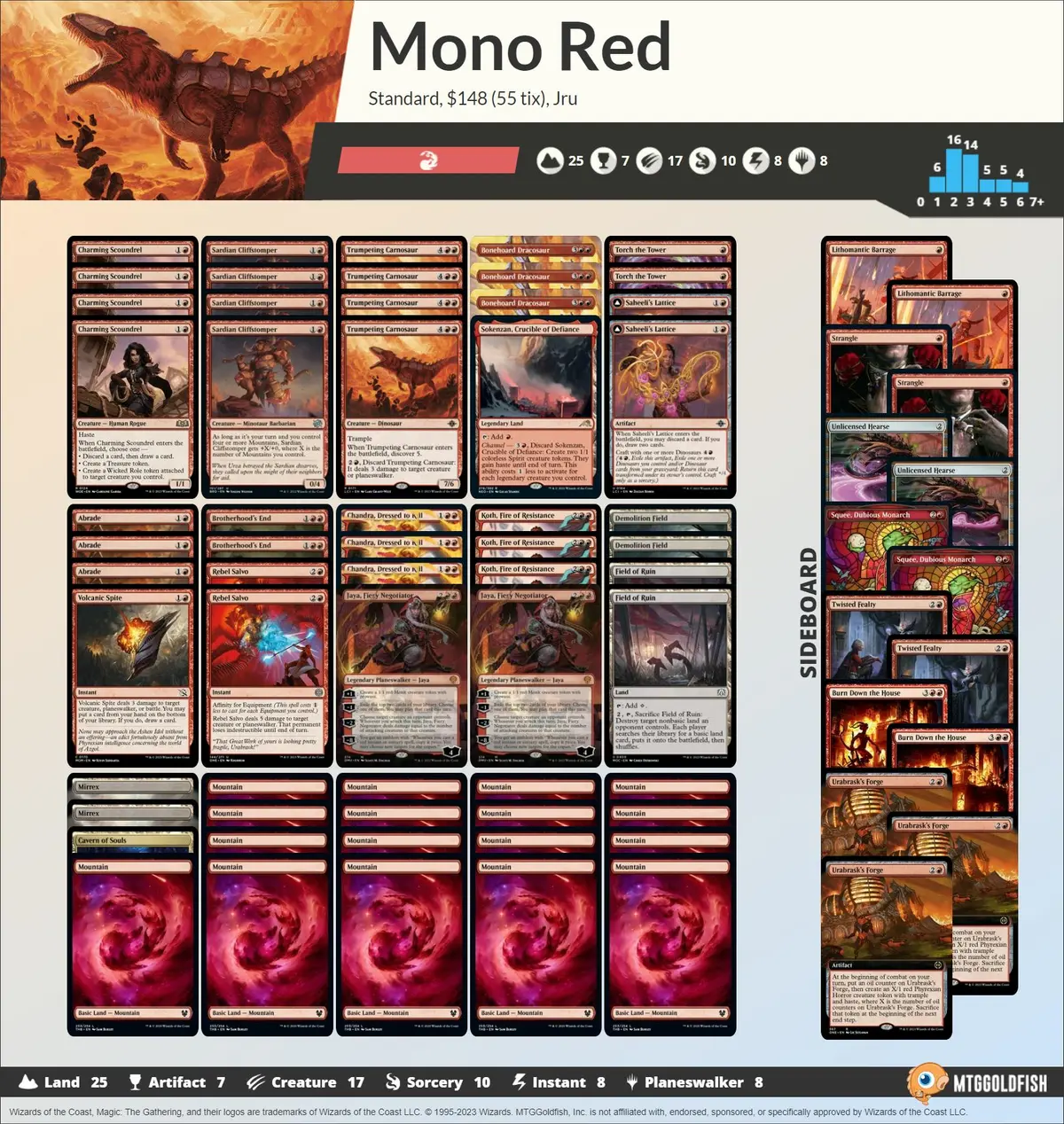
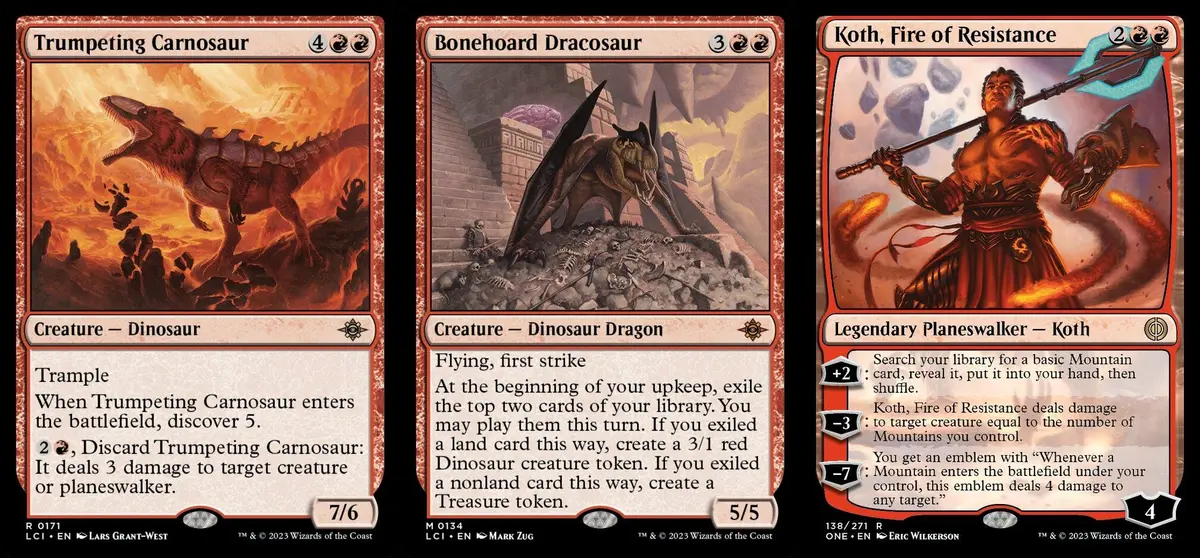
Standard already had cards like Chandra, Dressed to Kill and Koth, Fire of Resistance that encourage you to develop a resource-oriented mono-red deck, and this set gave red two quality creatures, Trumpeting Carnosaur and Bonehoard Dracosaur, with a significant boost in resources, removal, and threat output. Since both happen to be Dinosaurs, I also included one Cavern of Souls for slight resistance to counterspells, though Cavern of Souls isn’t essential and swapping it for other lands is fine. However, the range ceiling of mono-red’s removal is ultimately a weak point, and if you want to shore that up, you can consider swapping in a few Karn’s Sylex from the sideboard.
Gruul Caves
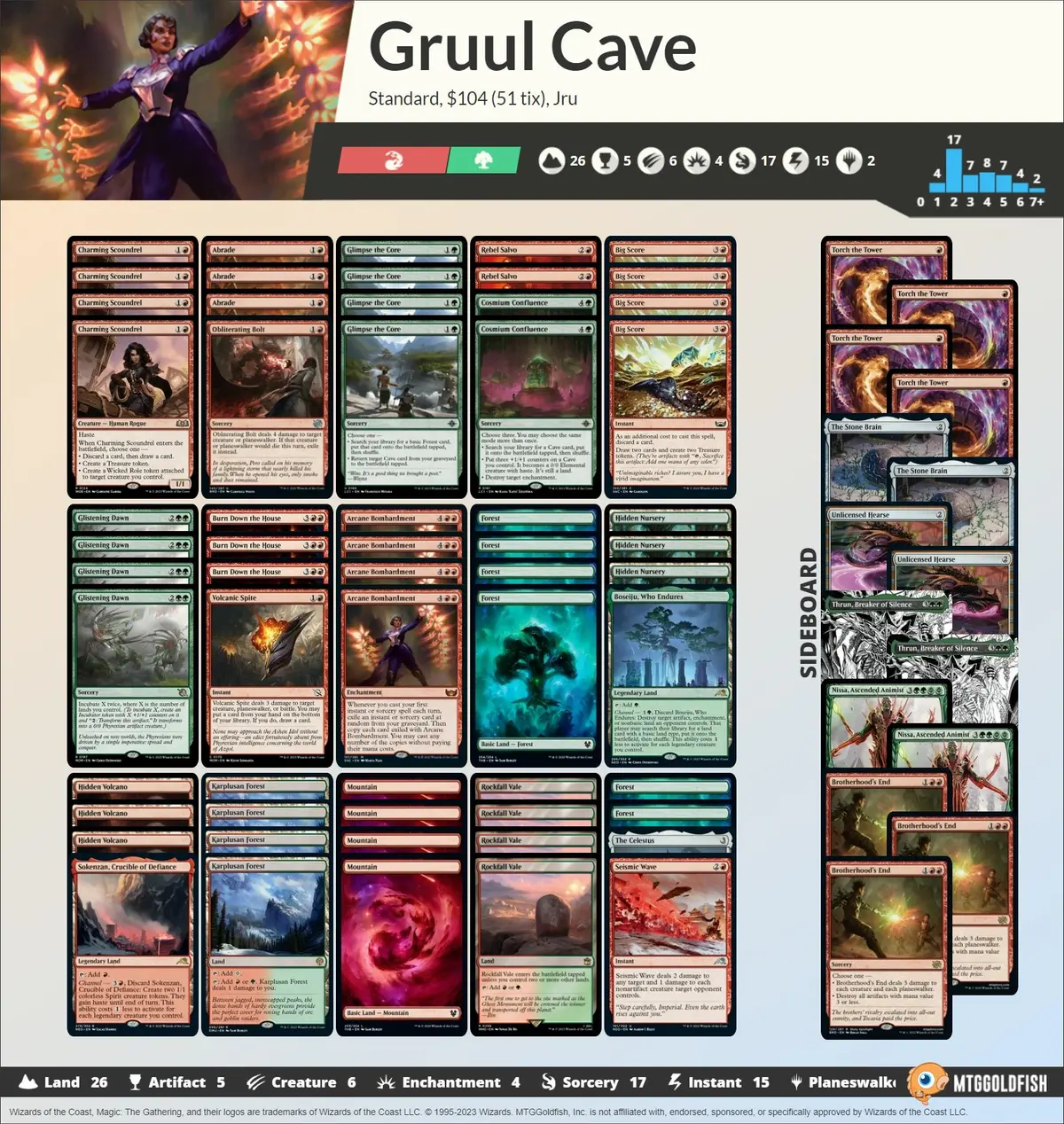
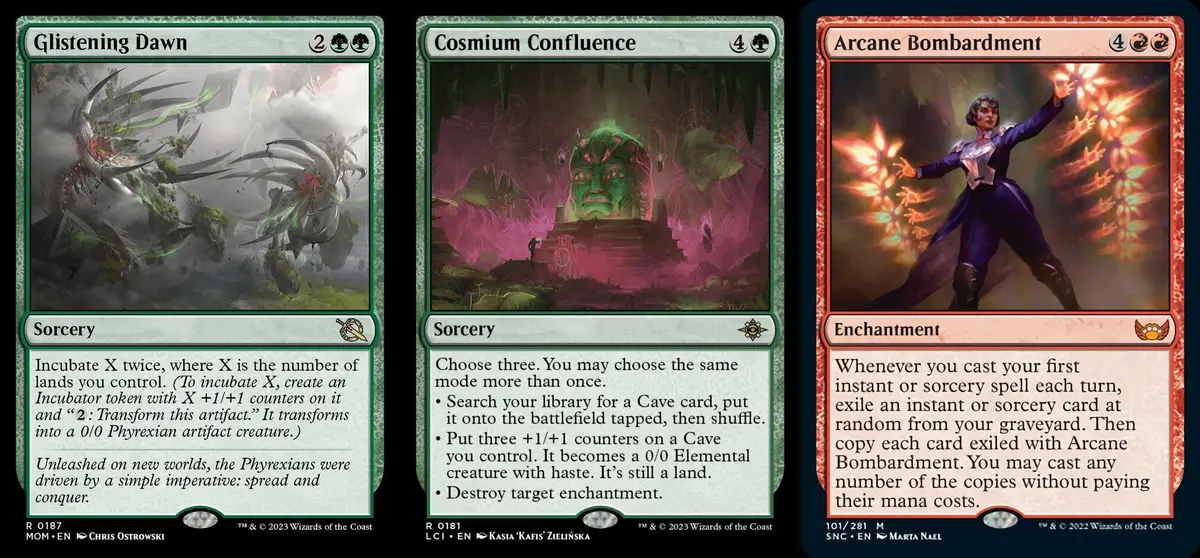
Although Caves are one of The Lost Caverns of Ixalan’s headline mechanics, honestly both quality and quantity are quite lacking, with no payoff big enough to make you want to run an entire deck around Caves. So the solution here is to pick the better Cave-supporting cards and build a deck suited to run them. The card I fancied here is Cosmium Confluence, which can ramp or immediately create a large threat, and the Cave it finds can later be turned back into resources, making it a fairly efficient card. Conveniently, among land-related sorceries there is another card that can create a powerful threat, Glistening Dawn, while Arcane Bombardment ties together the deck’s approach: survive the early game through removal, looting, and acceleration, then use Glistening Dawn, Cosmium Confluence, and Burn Down the House as board-settling tools and finishers. These big plays are all instants/sorceries, so Arcane Bombardment can reuse them over and over.
Selesnya Ozolith
Selesnya Ozolith decklist link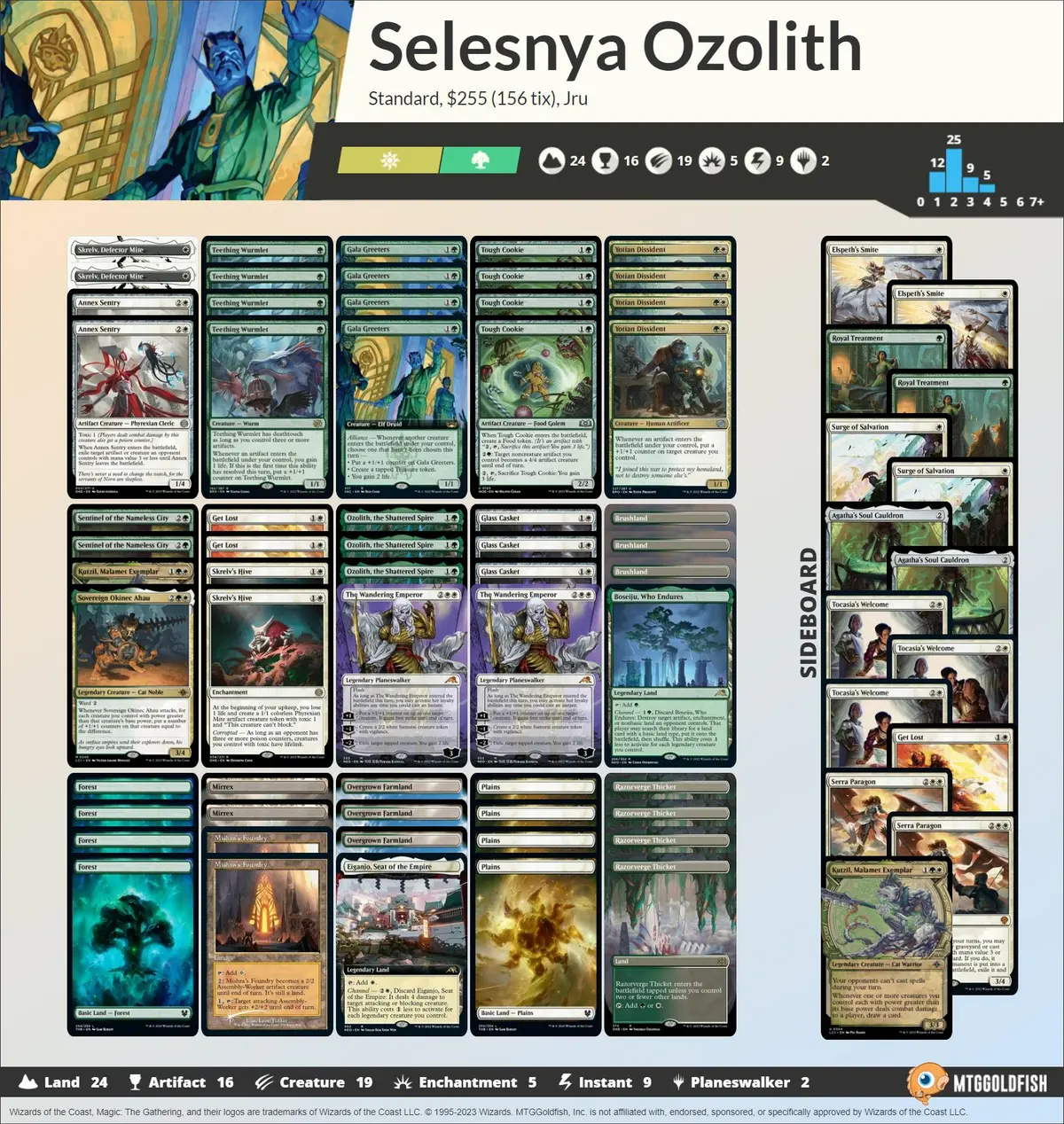
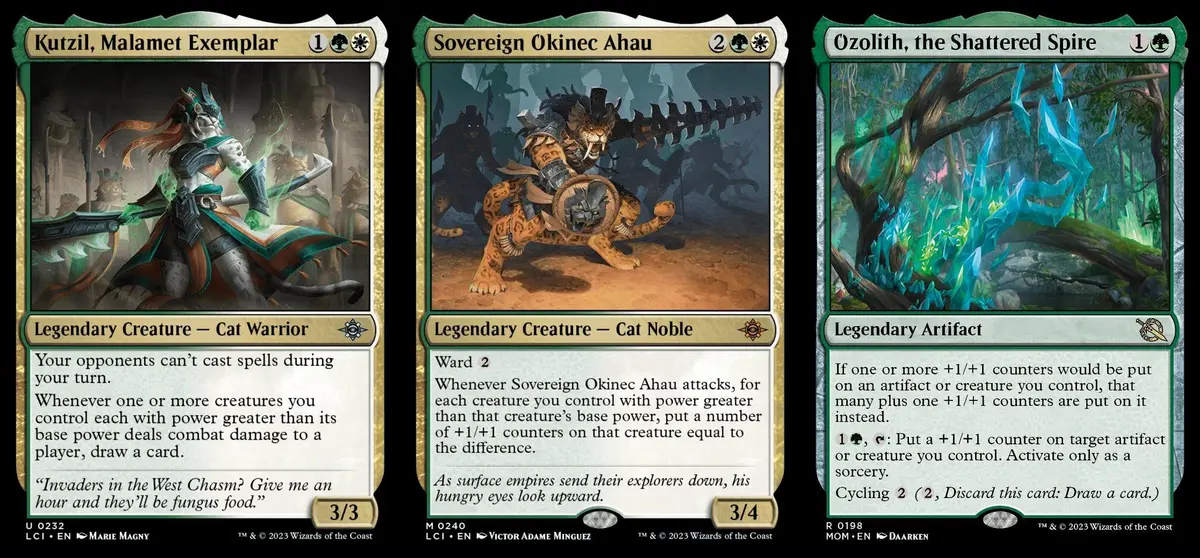
The deck’s main body follows the approach of artifact-Hardened Scales. What this kind of deck fears most is going for a big play, pumping up the attacker like mad, and having it killed instantly by the opponent; in fact, even the activation of Ozolith, the Shattered Spire is at sorcery speed. The protection of Kutzil, Malamet Exemplar is undoubtedly top tier in this respect: the opponent cannot even cast spells on your turn, and creatures in the Hardened Scales approach will undoubtedly be bigger than their base size, which also readily triggers the pump-payoff abilities of Kutzil and Sovereign Okinec Ahau. However, since the skeleton of this deck is artifact-Hardened Scales aggro, its tolerance for non-artifact mid-to-high-cost curve cards is limited, so it currently uses them only in small numbers, and whether the count can be raised still has to be proven by testing.
Simic Merfolk
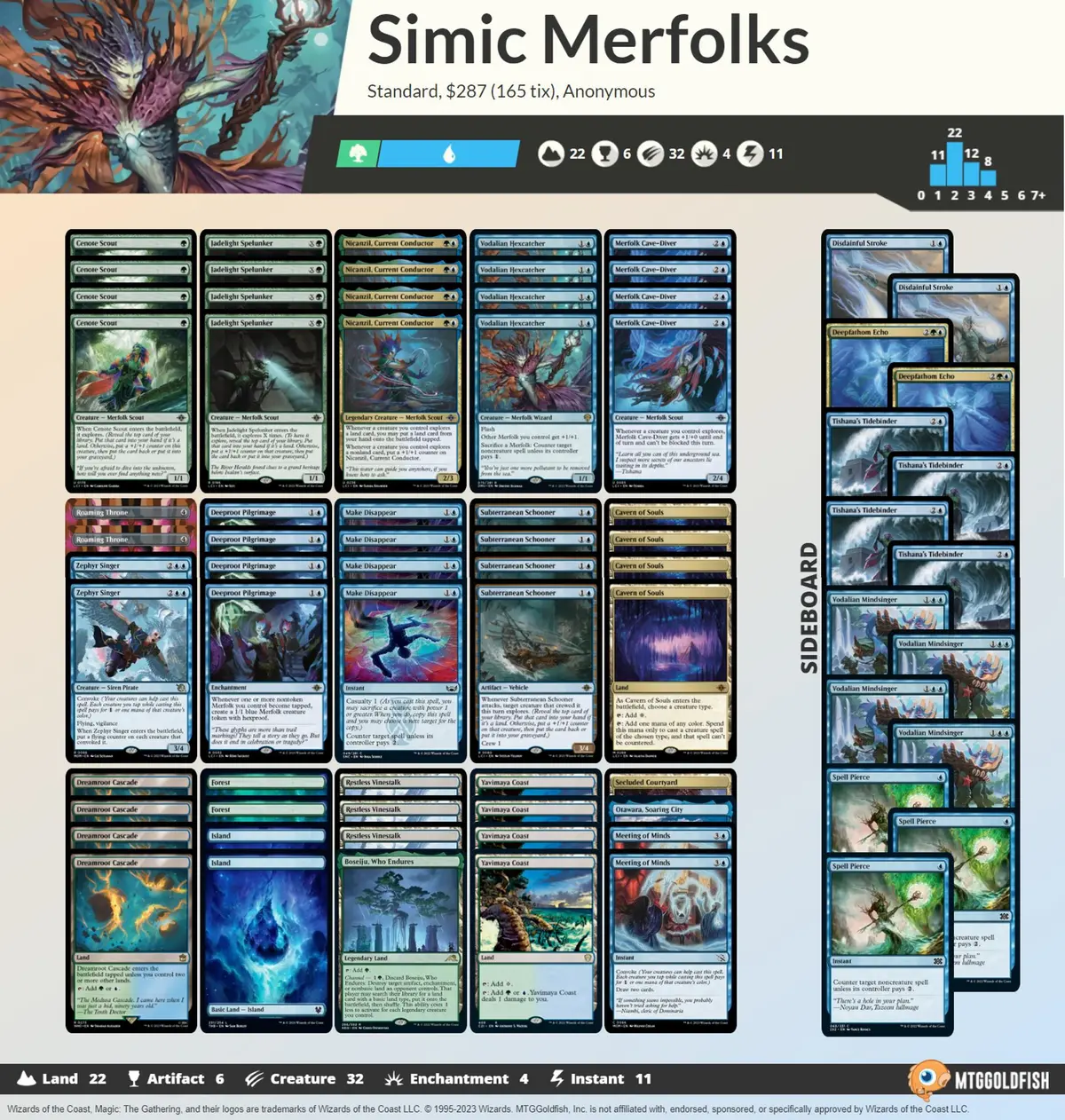
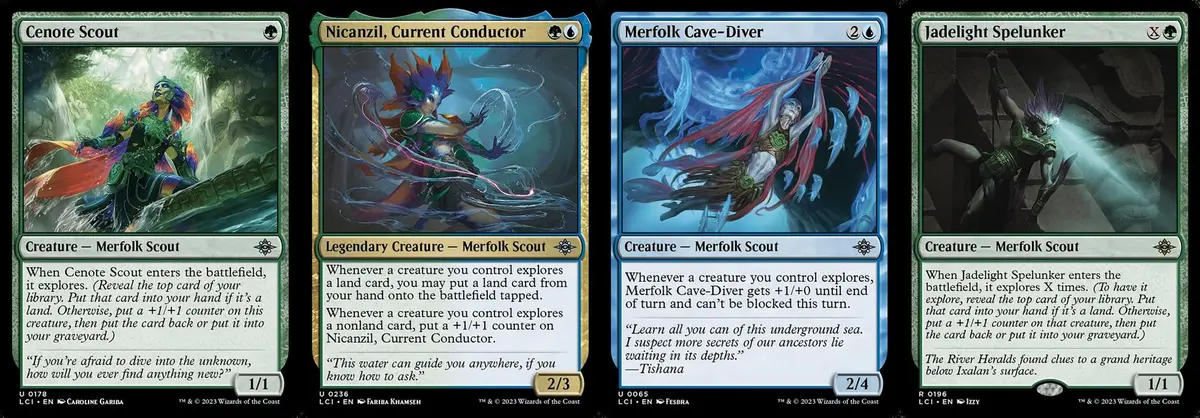
Since I just mentioned Cavern of Souls, I can’t skip the tribal deck strengthened by this Cavern of Souls reprint: yes, Merfolk are back. This time Ixalan filled in Merfolk at every point on the mana curve in Standard, from the one-drop Cenote Scout, to the two-mana legendary creature at the core of the explore theme, Nicanzil, Current Conductor, as well as Merfolk Cave-Diver, which gains evasion when exploring, and Jadelight Spelunker, which explores as many times as you like, as the core creature group; for the four-drop slot, I tried Roaming Throne to try to double every Merfolk’s enter-the-battlefield or triggered ability. In addition, this build also tries Deeproot Pilgrimage to put out an endless stream of 1/1 hexproof Merfolk tokens, then pairs it with DMU’s Vodalian Hexcatcher to fill the Merfolk lord slot, whose ability lets your surplus mid-to-late-game Merfolk tokens become an annoying Force Spike when the opponent resolves a noncreature threat; it is worth noting that the text on the enchantment Deeproot Pilgrimage says the token-creating effect triggers whenever one or more non-token Merfolk become tapped, which opens up many plays in Standard: besides the obvious creatures tapping to attack, you can also crew Vehicles, or use MOM cards with convoke to make your creatures lie down voluntarily. For the Vehicle slot, this deck uses Subterranean Schooner; besides crewing 1 to trigger the enchantment’s token effect, it also lets the creature that crews it explore whenever the Vehicle attacks, again echoing the deck’s other theme. On the convoke side, it uses two blue convoke cards, Zephyr Singer and Meeting of Minds. Zephyr Singer lets a Merfolk that grew huge but would be stopped by the opponent’s ground creatures, or a Merfolk made by Deeproot Pilgrimage, get a flying counter after convoking to gain evasion; or use Meeting of Minds to draw two at instant speed and earn another Merfolk token if the enchantment is on the battlefield.
Finally, since this deck is a go-wide tribal deck, it still fears sweepers like Sunfall, so in the flex slots I first put four Make Disappear as disruption. For lands, because there are plenty of explore sources, I only put in 22 lands for now, and when Nicanzil, Current Conductor is on the battlefield, each time you explore into a land you can put it onto the battlefield to ramp instead; with few high-cost cards in the curve, the build is designed by default to function with two or more lands in the opening hand. Of course, this is only a preliminary prototype, and the actual strength and fine-tuning still depend on players testing it!
Mono-White Angels
Mono-White Angels decklist link
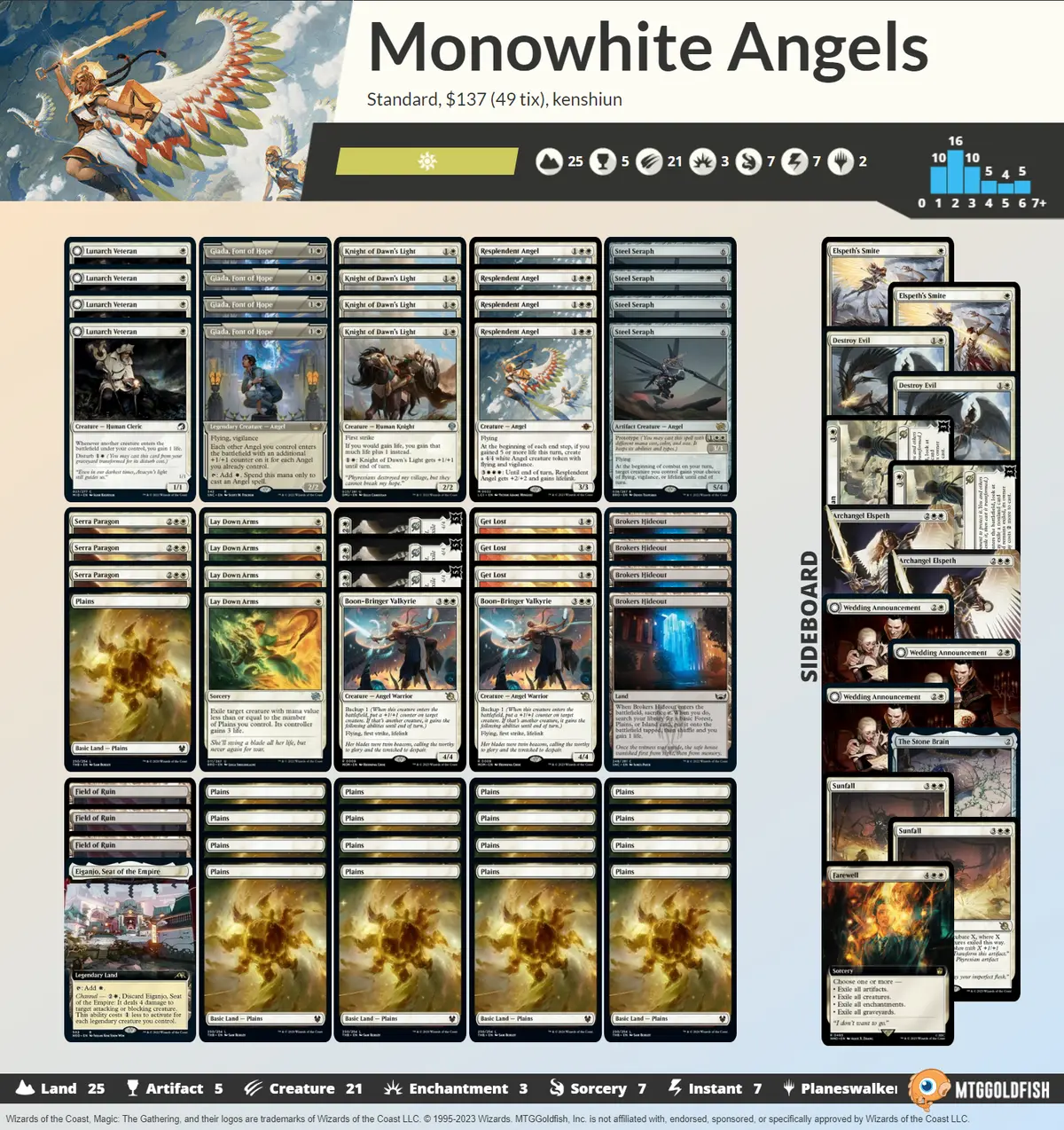
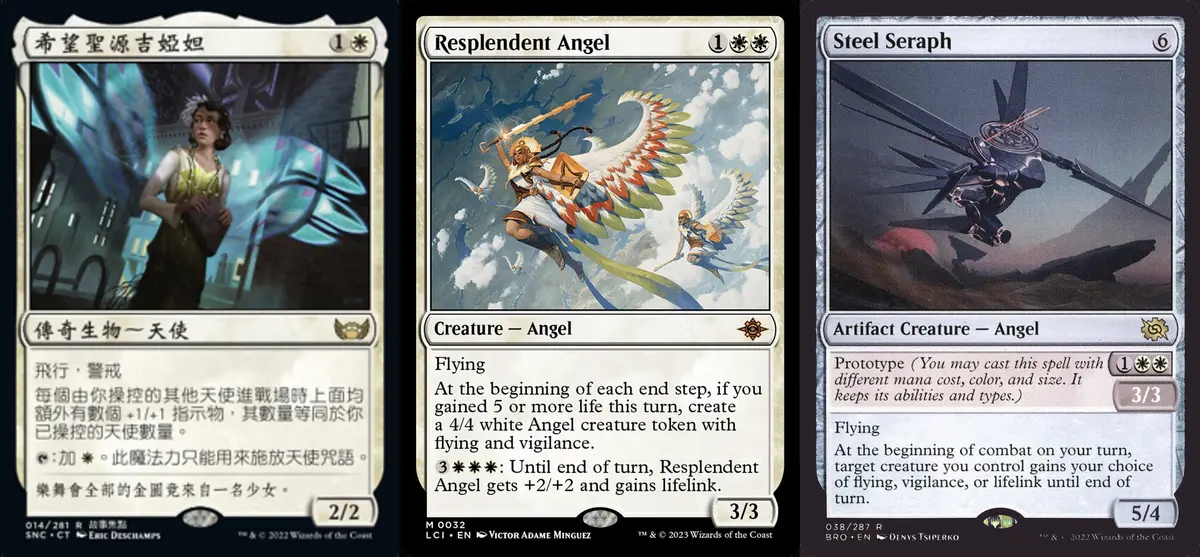
For some reason, Resplendent Angel, reprinted in The Lost Caverns of Ixalan, gave the Standard Angels deck its core champion. Built on a mono-white midrange base of Lay Down Arms and Serra Paragon, it combines Angel lifegain pieces such as Giada, Font of Hope, Steel Seraph, Boon-Bringer Valkyrie, and Lunarch Veteran, and experimentally adds Knight of Dawn’s Light and Invasion of Dominaria to reinforce the life-recovery effects.
Gruul Dinosaurs
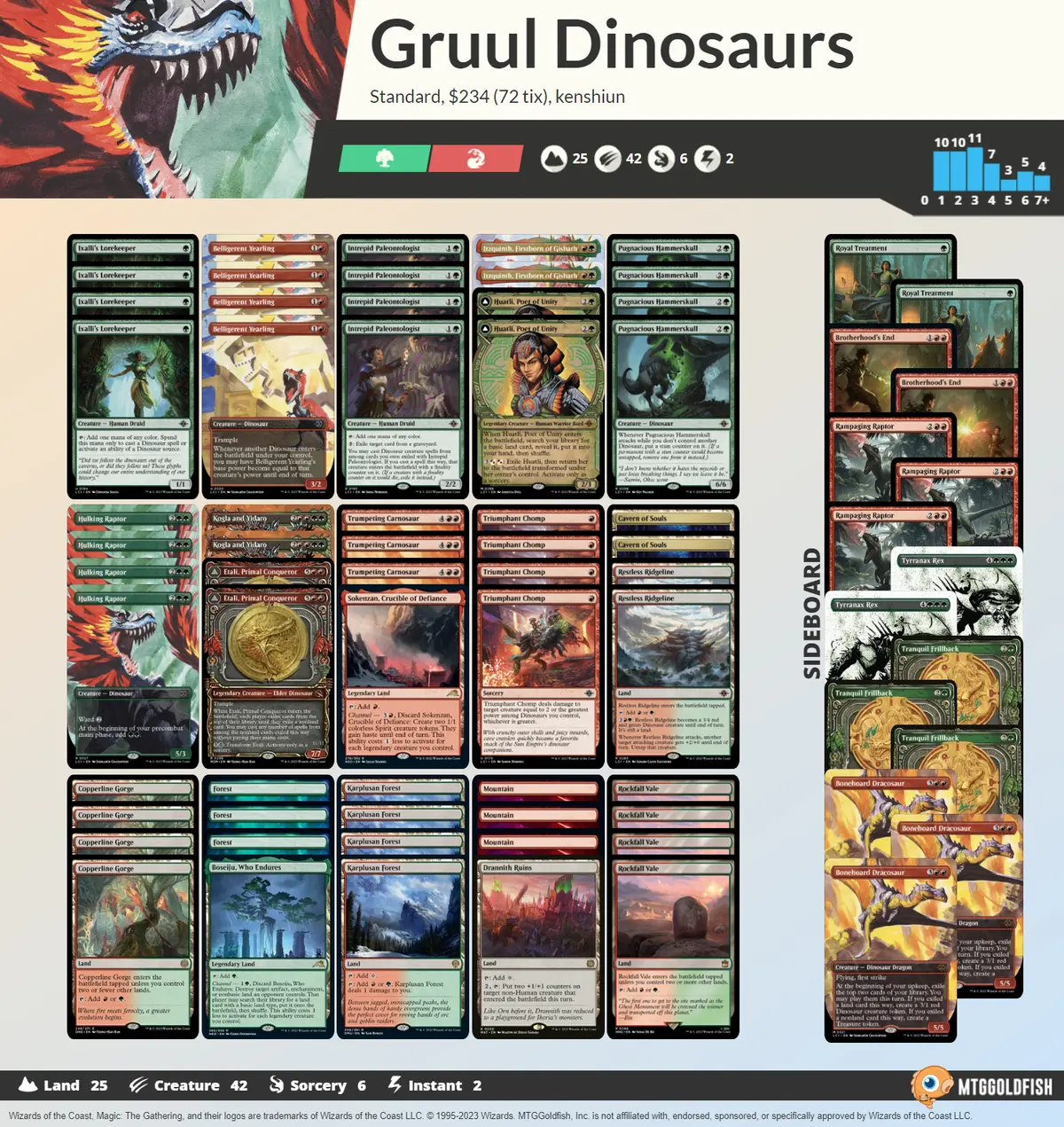
Please see another article on Guildmages’ Forum: Savage Stomp: Standard Gruul Dinosaurs
Enjoy the Brand-New Standard!
This article aims to offer fresh ideas for Standard, and the decks listed give priority to archetypes that are hard to see in the current mtggoldfish meta statistics. If readers aren’t interested in any archetype in the current Standard environment, I hope this article can help you find a deck you like, or give you some fresh inspiration. If you feel any details in the lists are unreasonable or can be optimized further, boldly try innovating! Whether developing a new deck or continuously refining the details, it is one of the joys of Constructed.
- Title
- The Lost Caverns of Ixalan Standard Preliminary
- Author
- cephille, Jru, JerobaMTG
- Created at
- November 23, 2023
- License
- This work is licensed under CC BY-NC-SA 4.0 .