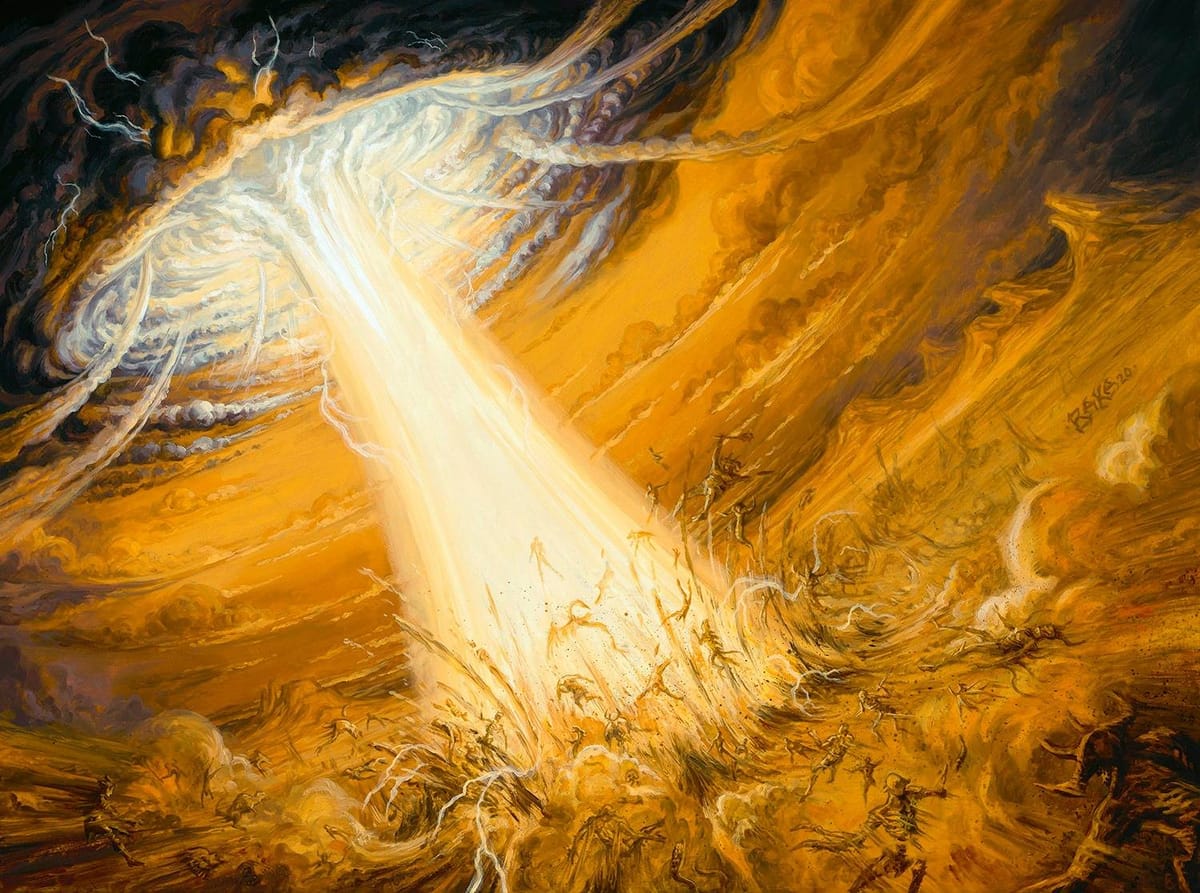
Article Translation — Reid Duke's "Level One": Board Sweepers

Note: This article was translated from Chinese by AI and may contain errors. Read the original Chinese version.
Note 1: This is a translated article. The actual author is Magic: The Gathering Hall of Fame player and Channel Fireball member Reid Duke, and the copyright belongs to Wizards of the Coast. Although the authors field lists me, in this series it only indicates the translator; I would not dare take credit for another’s work.
Note 2: This article and the following articles in the series were translated from the original using Gemini 3 Pro and then polished. Every article includes a link to the original, and readers are very welcome to read the original on the official website!
Note 3: Since the originals were published more than ten years ago, the translator will, where appropriate, add annotations explaining how the situation at the time of translation differs from the original.
Article Translation — “Level One”: Board Sweepers
Wizards column: Feature
Date: June 22, 2015
Author: Reid Duke
In Level One I usually avoid discussing individual cards. However, some categories of cards are so important, powerful, and iconic that even a basic strategy guide would feel incomplete without mentioning them. Today we will look at board sweepers. At the end, I will also preview a powerful and exciting new card from Magic Origins!
A board sweeper is a card that can destroy multiple creatures at once. They are also called wraths, named after their oldest and most iconic ancestor.

Wrath of God is very simple (even if its impact on the game is not, its wording certainly is), but board sweepers come in many different forms. Many board sweepers are symmetric, like Wrath of God; some are not, such as In Garruk’s Wake; some are conditional, such as Seismic Rupture; and some destroy more than just creatures, such as Perilous Vault. Whether you are playing them or playing against them, it is important to understand all of these subtle differences between board sweepers.
Board Sweepers are Format Defining
“Format defining” is a heavy phrase. For a card to be format defining, it is not enough for it to be powerful, or to be widely played in many different decks. It means that most or all of the decks in the format are shaped by its existence. Board sweepers have great format-defining potential.
When learning a new format, one of the first things you need to learn is which board sweepers the format has. This will affect how you build your deck and how you play your games. Some limited formats have few or no board sweepers at all. Great! You can play normally and focus on developing your side of the battlefield. At other times, you need to be much more careful.

Take Dragons of Tarkir as an example. It has Seismic Rupture among its uncommons, which means you will not see it every match, or even every draft, but you should not be surprised by it either. It is a conditional board sweeper, so you can make some small adjustments to reduce your vulnerability to it. If most of the creatures in a green-red deck have toughness 3 or greater, it can make good use of Seismic Rupture. A blue-red deck with very few creatures, or with mostly flying creatures, can also make good use of it. Other red decks can simply put Seismic Rupture in the sideboard to use against opponents who are especially vulnerable to it. If the deck you drafted would be utterly destroyed by Seismic Rupture, that is a weakness you should be aware of.
Fate Reforged, meanwhile, has Crux of Fate among its rares. Technically, Crux of Fate is also conditional, but in many cases it destroys every creature on the battlefield anyway; it is hard to adjust your deck to be resilient against Crux of Fate. However, since it is a rare, in Limited you usually do not need to worry about Crux of Fate unless you are sure your opponent really has it.

In constructed, being aware of board sweepers is even more important, because anyone who wants to use them can do so. In the current StandardNote 1, you should be aware that most control decks will play a copy of Ugin, the Spirit Dragon or Crux of Fate. You should also know that Drown in Sorrow is a common sideboard option. In addition, when you cast multiple creatures with the same name, you must realize that this leaves you vulnerable to Bile Blight.
When you build your deck, if a popular board sweeper poses a threat to you, you should brainstorm solutions. For example, some mono-red decks switch to creatures with dash to beat Drown in Sorrow. Nearly every Green Devotion deck includes Whisperwood Elemental as insurance against End Hostilities.
While playing a game, you should weigh the risk and reward of overextending (casting more creatures onto the battlefield) and exposing yourself to a potential board sweeper.
When to put Board Sweepers in Your Deck
Board sweepers are very powerful in both constructed and limited. In limited, however, because the power level is lower and every deck plays a healthy number of creatures, board sweepers are usually bombs. No matter how many creatures you are using, or how aggressive your deck is, you should include a card like Crux of Fate. In fact, having control of an effect that can break a stalemate puts you at a huge advantage no matter how you look at it. If you expect to cast Crux of Fate soon, you can choose not to overextend (keeping a few creatures in your hand). If you can win without it, you can also choose not to cast it at all!
Less powerful board sweepers such as Seismic Rupture require more deliberation. If they fit your deck and/or the format is right, they can be powerful main deck choices (the faster the environment and the more small creatures there are, the stronger Seismic Rupture is). They are almost always excellent sideboard cards.
Control Decks
In constructed, board sweepers work best in control decks. Control decks value card advantage and want the game to go long. Board sweepers serve both goals. Perhaps most importantly, control decks usually play few creatures themselves, so an effect that looks “symmetric” is not symmetric at all!
Creature Decks
Sometimes the environment is also right for creature decks to use board sweepers. However, doing so costs much more than it does for control decks.
Board sweepers require you to build your game plan around them. When you are trying to play a normal game and fight a fair fight, they are not especially helpful. Consider this example:
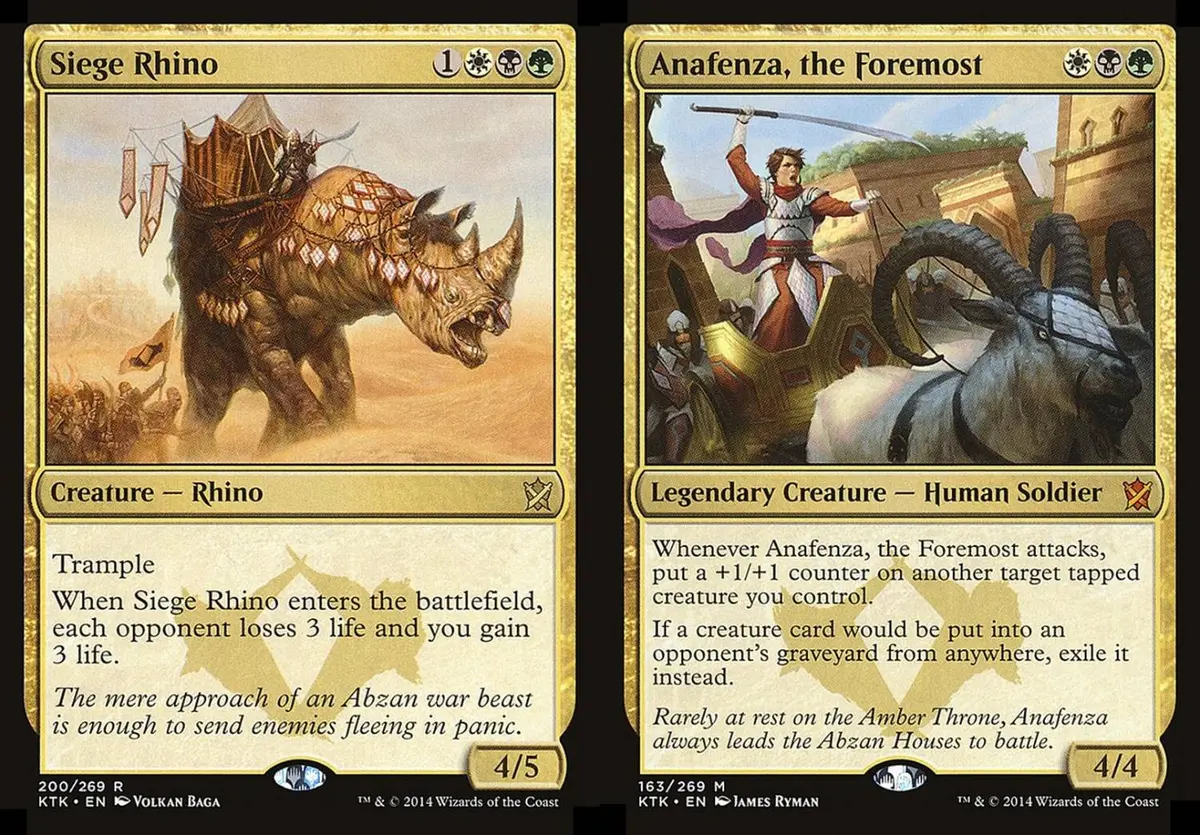
You are on the play in an Abzan mirrorNote 2. On turn four, there are no creatures on the battlefield, and you have Siege Rhino and Crux of Fate in your hand. What do you do? If you do nothing, you are not using Siege Rhino to its full potential. But if you choose to develop your board (cast a creature), you may not get the most out of Crux of Fate.
Say you cast Siege Rhino (and you should). Now your opponent casts a Siege Rhino of their own. What now? Casting Crux of Fate would have a completely symmetric effect and not accomplish much, so say you choose to hold back. Now your opponent casts Anafenza, the Foremost. Now you can make a two-for-two trade (trading Crux of Fate and your Siege Rhino for their Siege Rhino and Anafenza, the Foremost). That is a decent trade, but not an exciting one, and your removal spell feels expensive and clunky. You could hold on and hope your opponent keeps overextending with a third creature, but what if they do not play any more creatures? Or what if they instead kill your Siege Rhino and deal more damage than you expected?
I find this kind of situation extremely common. In the Abzan mirror, Crux of Fate is not a bad card; you can almost always find a use for it. However, it is also somewhat unreliable. Go back to the start of this game and swap Crux of Fate for Hero’s Downfall… and the game plan becomes much simpler. You cast Rhino, Downfall your opponent’s Rhino, and start swinging!
In short, spot removal spells usually fit a creature deck’s plan better than board sweepers. However, if there is a matchup (think Green Devotion) or a specific card (think Wingmate Roc) that really makes you need a board sweeper, then the option is certainly there.
Main deck or Sideboard?
It is easier to put board sweepers in the sideboard than in the main deck. They are outstanding in certain matchups (creature decks) but terrible in others (control decks).
Ironically, though, board sweepers are far stronger as main deck cards than as sideboard cards. A surprising number of Game 1 results come down to: “If Player A draws a sweeper, they win; otherwise, Player B takes the game.”
There are two reasons for this. First, before sideboarding, creature decks usually lack the tools needed to “play around” board sweepers. If a deck is designed to develop its board and attack, it may be very good at executing that game plan, but its ability to adapt beyond it is relatively limited.
Second, before sideboarding, control (or midrange) decks often do not have enough spot removal to stably beat a creature deck. To dismantle Green Devotion or mono-red in Game 1, a large number of removal spells must be committed, leaving almost no room for anything else. Against decks that do not win through creaturesNote 3, they will have too many dead cards in hand!
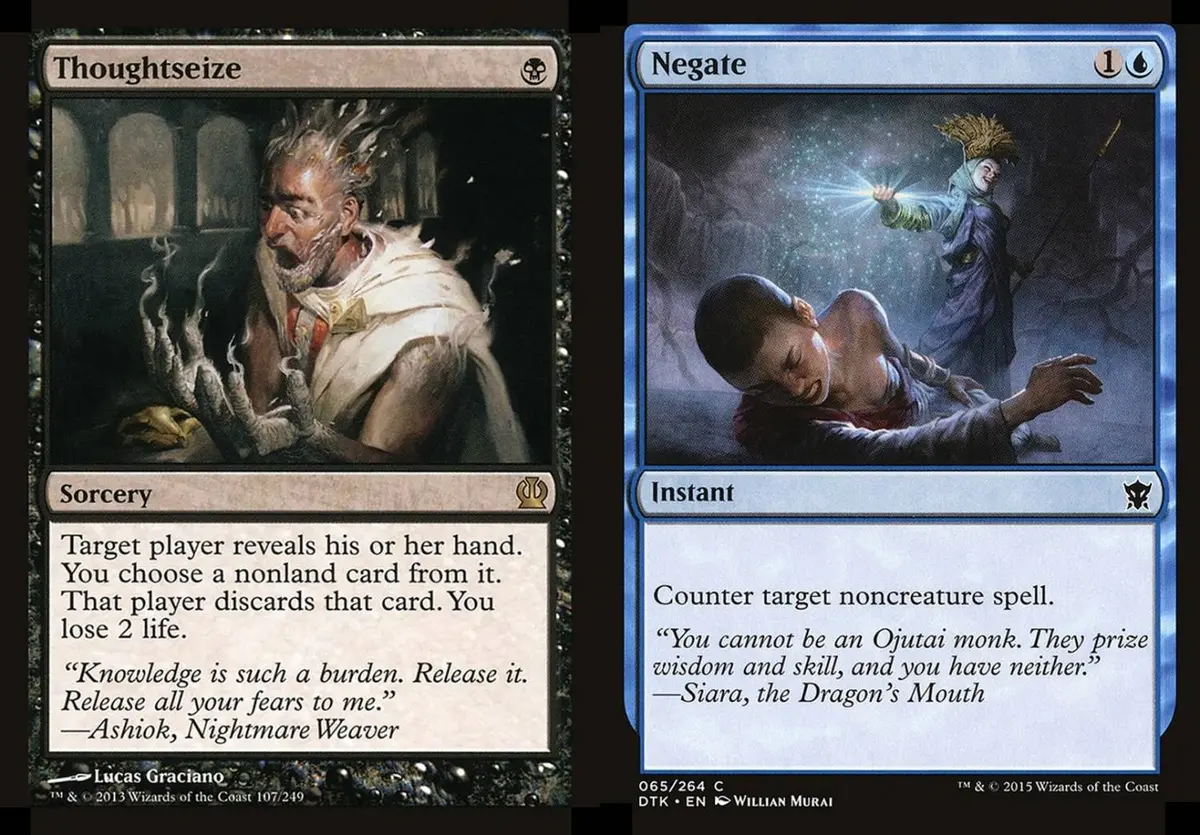
For these reasons, Game 1 often turns into a standoff of “do you have the board sweeper?”, and that is when board sweepers are at their most powerful. After sideboarding, the shape of the match changes. Creature decks know they must be ready for board sweepers in the sideboarded games, so they adjust their game plan. They use planeswalkers, dash creatures, or whatever sweeper-resistant tools they can muster to diversify their threats. Sometimes they even bring in cards that can counter sweepers, such as Thoughtseize or Negate.
Control or midrange decks will bring in every removal spell and defensive measure they can. Now the plan becomes “kill them one at a time” as quickly as possible. Creature decks no longer get the chance to flood the board. Board sweepers may still be effective, but they are no longer the core game plan.
Therefore, if you decide to put unconditional board sweepers in your deck (such as End Hostilities, Crux of Fate, and the like), they can reach their greatest potential in the main deck. Conditional board sweepers like Drown in Sorrow remain excellent as sideboard cards, because they are extremely effective in the specific matchups where you need them.

Today’s preview card is a brand-new board sweeper from Magic Origins! Languish straddles the line between conditional and unconditional board sweepers. For only four mana, it is significantly cheaper than End Hostilities and Crux of Fate. Together, these two traits make Languish an incredibly exciting card in the new Standard. It will very likely prove to be format defining!
Languish sweeps away all small creatures (even those with regenerate or indestructible), but lets creatures with toughness 5 or greater survive. This is very convenient for black creature decks, because Siege Rhino, Tasigur, the Golden Fang, Dragonlord Silumgar, and Silumgar, the Drifting Death can all survive it. You can easily design your own deck to be resilient against Languish and thereby maximize this symmetric effect.
On the four-mana curve, Languish is fast enough to save you from Red weenie decks and Goblin Rabblemaster. However, it is also powerful enough to stay strong late in the game, handling threats like Thunderbreak Regent and Dragonlord Ojutai.
I do not know whether Languish will completely replace Drown in Sorrow and Crux of Fate, but it will certainly earn a place alongside them. With so many board sweepers available, you can pick the one that best suits your needs. Making your deck as resilient as possible against the various board sweepers in Standard will be a challenge. For those who can handle it well, however, the rewards will be very rich!
Note 1: This refers to the 2013-2015 Standard seasons, whose legal sets ran from Theros to Dragons of Tarkir, 7 sets in total.
Note 2: For an Abzan midrange decklist, see the earlier article — “Article Translation — Reid Duke’s “Level One”: Midrange Decks” — though some of the cards used in Reid Duke’s example differ slightly.
Note 3: This further explains the risk of “dead cards”. In control mirrors, against combo, or against midrange decks built around non-creature threats such as planeswalkers, too much spot removal will leave you on the back foot in Game 1. The value of main-decking board sweepers is that they maintain pressure on creature decks using relatively few card slots, which frees up valuable main deck space for key cards that answer other threats, ensuring your deck is more resilient against the metagame.
- Title
- Article Translation — Reid Duke's "Level One": Board Sweepers
- Author
- cephille
- Created at
- April 7, 2026
- Updated at
- April 7, 2026
- License
- This work is licensed under CC BY-NC-SA 4.0 .
Related Articles
Article Translation — Reid Duke's "Level One": Choosing Your Deck
August 17, 2026

Article Translation: Reid Duke's "Level One": Sequencing
July 24, 2026
Article Translation: Reid Duke's "Level One": Playing in a Grand Prix: Part I
June 13, 2026
Article Translation: Reid Duke's "Level One": Midrange Decks
March 25, 2026