
Translated Article — Reid Duke's "Level One": The Full Course & Glossary of Terms

Note: This article was translated from Chinese by AI and may contain errors. Read the original Chinese version.
Foreword
Over the history of Magic: The Gathering, many great players have written column articles, and some have even collected them into books. The best known of these is probably Reid Duke’s collection of 45 column articles, published on the Wizards of the Coast website in late 2015: “Level One: The Full Course” (hereafter “Level One”).
For the past ten years I have reread these articles whenever I had time, and every reading brought a fresh insight. I wanted to make these classic articles easier for Magic players in the Traditional Chinese-speaking community to reach, and that is how this translation project came about. A classic is a classic because its knowledge stays fresh, even in today’s age of inflated card power.
Note 1: This is a translated article. The actual author is Magic: The Gathering Hall of Famer and Channel Fireball member Reid Duke, and the copyright of the article belongs to Wizards of the Coast. Although the authors field lists me, in this series I serve only as the translator, and I would not dream of taking credit for someone else’s work.
Note 2: This article and the follow-up articles in the series are translated from the original and then polished using Gemini 3 Pro. Every article includes a link to the original, and readers are very welcome to read the original on the official website!
Note 3: Since the original articles were published more than ten years ago, the translator will, where appropriate, add annotations explaining situations that differ between the original text and the time of translation.
Article Translation — “Level One”: The Full Course
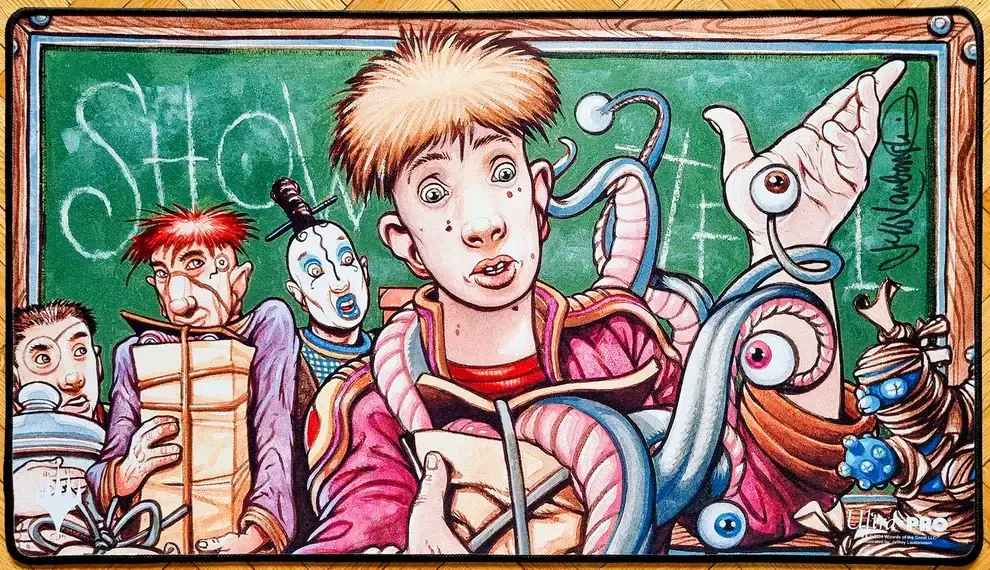
Wizards of the Coast column: Feature
Date: October 5, 2015
Author: Reid Duke
Professor Reid Duke has announced that class is dismissed. The “Level One” column has come to a close for now. Professor Duke has finished writing his entire syllabus, guiding you on how to raise your game in Magic: The Gathering.
However, we know that not everyone joined the class in August 2014, when Professor Duke first took attendance. More than a year later, many of you still want to improve as players.
So, for everyone who wants to sharpen their skills or learn more about Magic: The Gathering, we have put together this complete course syllabus. Please read from the top in order, because Reid designed these articles so that you progress step by step, mastering one concept at a time. If you are already a veteran student, you are also free to pick any topic you want to review. There is always more to learn from one of the most talented players in the world.
I. The Basics
II. Concepts of Gameplay — Part 1
The first 7 articles already have official Traditional Chinese translations, so I won’t embarrass myself by redoing them. I am only providing links for readers to review. My translations will begin with article 8 — Aggro Decks.
To view articles on the official website that have been translated before in Traditional Chinese, remember to change your language preference to “Traditional Chinese” at the very bottom of the page, then click the article link again.
III. Deck Archetypes
IV. Concepts of Gameplay — Part 2
- Board Sweepers
- Permission Spells
- “Creature” Lands
- Symmetric Effects
- Threats and Answers
- Inevitability
- Role Assignment
- Damage Racing
- Mulligans
- Sequencing
- Play or Draw
V. Concepts of Gameplay — Part 3
- Investment
- Line-Up Theory
- Playing From Ahead, Playing From Behind
- Going Through the Motions
- Mulligans Part III: Constructed
- Playing Safe and Playing Scared
- When to Cast Your Spells
- Flexibility
VI. Limited
- Sealed Deck
- The Basics of Booster Draft
- Sideboarding in Limited
- Signals in Booster Draft
- Booster Draft, Part 3
- Draft Walkthrough
- Mulligans Part II: Limited
VII. Deck Construction
- Building a Mana Base
- An Introduction to the Popular Constructed Formats
- The Sideboard
- Sideboard Plans
- Choosing Your Deck
- The Metagame
VIII. Others
Article Translation — Glossary of Terms

Wizards of the Coast column: Feature
Date: September 21, 2015
Author: Reid Duke
After running the “Level One” column for more than a year, we have discussed dozens of important concepts. We have also explained many terms that may feel unfamiliar to new players but are essential for anyone who wants to understand Magic: The Gathering strategy and theory in depth.
Below is the glossary from “Level One,” meant as a reference whenever you run into an unfamiliar term, not only while reading “Level One” but throughout the wider world of competitive Magic: The Gathering. For further reading, almost every entry includes a link leading you to an article related to or discussing that term.
The English original includes links to the corresponding articles, but this Chinese translation does not have corresponding links yet. Once all the articles have been translated, we will edit this article again and add links to the corresponding Chinese translations.
Glossary of Terms
- Adaptability: The ability to attack or defend as the situation demands.
- Advantage: Having more resources than your opponent, or any favorable position relative to your opponent.
- Aggro: (Short for “Aggressive.”) Aggro decks (also called “beatdown”) use tempo to gain an advantage by casting creatures quickly and attacking.
- Archetype: Any recurring strategy with multiple possible variations.
- Blank: “Blank a card.” To turn one of your opponent’s cards into a dead card.
- Board Stall: A situation where the battlefield is filled with creatures and neither player can attack profitably. (Also called “Creature Stall.”)
- Board Sweepers: Cards that can destroy multiple creatures at once. (Also called “Wraths.”)
- Bomb: A card so powerful that it can often win the game by itself. (This term is more common in Limited than in Constructed.)
- Bottleneck: A limiting factor. A “mana bottleneck” means having more to do than you have mana to do it with.
- Bounce: Returning a card to its owner’s hand.
- Burn: Spells that can deal damage to creatures and/or players. Burn is a hallmark of red, and an example of “reach.” (Also called “Direct Damage.”)
- Card Advantage: Any process by which a player effectively gains more cards than the opponent.
- Card Quality: The ability of your cards to affect the outcome of the game.
- Card Quantity: The total number of cards you have available to use.
- Chump Block: Blocking with a creature to protect your life total, even though only your creature dies in the exchange.
- Combat Trick: An instant-speed spell that can strengthen or protect your creatures in combat (or otherwise create a favorable board state for you).
- Consistency: Resilience against mistakes. A deck is consistent if it has a low failure rate and functions at a reasonable level in a relatively high percentage of games.
- Constructed: In Constructed events, you bring a deck of at least 60 cards from home. Examples: Standard, Modern, Legacy.
- Control: Control decks focus on shutting down the opponent and winning the game later, at an opportune moment.
- Counterdraft: Spending a pick in a draft to take a card so that nobody else can have it.
- Creature Land: A land that has the ability to become a creature.
- Critical Mass: The power of some strategies grows rapidly as more cards contribute to the strategy. For such strategies, critical mass is the threshold at which the strategy can successfully work.
- Damage Race: When neither player has firm control of the game and both are trying to win before the other does. (Also called “racing.”)
- Dead Card: A card that has no ability to affect the game.
- Deck Yourself: To run out of cards in your library and lose the game.
- Diversifying: Deliberately choosing a variety of different cards, rather than using all the same card, to accomplish a task. You might diversify for flexibility, unpredictability, or to attack from multiple angles.
- Dodge: “Dodge an effect.” To create a situation where part of a spell or ability cannot affect you.
- Early Stage: The first part of the game, when tempo is the primary consideration.
- Elephant Method: Write out ideal, realistic lists for every matchup, then try to add the unique cards from those lists up to at most 75 cards, before deciding on the specific 60 cards of your main deck and the specific 15 cards of your sideboard.
- Evasion: Flying or any other ability that makes a creature difficult to block.
- Filler: Cards that make up the bulk of a deck but are not exciting. Used more often in Limited than in Constructed.
- Flexible: The quality of being useful in a variety of situations. A flexible card can be used in different ways and provides some degree of help in a relatively high percentage of the games in which you draw it.
- Focus: (1) The most important skill in Magic: The Gathering: staying in the match and reducing distractions. (2) The opposite of a “balanced deck”; a focused deck is centered on a specific strategy.
- Format: The rules of a tournament or competitive level that dictate which cards you may use.
- Format-Defining: If most or all of the popular decks in a format have evolved around the existence of a certain card, that card is format-defining.
- Going Through the Motions: Treating every decision, even the smallest, with extreme care and precision.
- Hate Cards: Individual cards that are extremely effective at beating a specific deck, color, or strategy.
- High-Impact Card: The opposite of a “low-impact card.” A card with relatively large potential to affect the outcome of the game.
- Incidental: Produced indirectly, or secondary to another effect. Example: “incidental card advantage.”
- Inevitability: Describes when, if the game went on indefinitely, one player would effectively have secured the eventual win even though they have not won yet.
- Initiative: The player with the initiative sets the pace of the game and forces the opponent to react. The more proactive player will have the initiative.
- Investment: Putting resources in up front, expecting to profit from them later in the game.
- Late Stage: The last part of the game, when tempo is no longer the main consideration and card advantage becomes the focus.
- Limited: In Limited, you open fresh packs at the start of the event and must build your deck on the spot. Examples: Sealed, booster draft.
- Line-Up Theory: Teaches how to pick the right tool for a specific job. “Whole deck vs. whole deck” line-up theory looks at the overall matchup; “hand vs. hand” line-up theory focuses on the exchange of resources between the cards both players have drawn in a specific game.
See also the entry for Metagame. Line-up theory is not an easy concept to grasp, so here are a few examples:
- Whole deck vs. whole deck: In an aggro vs. control matchup, for example, the aggro deck needs to bring the opponent’s life total down to lethal range as quickly as possible and finish the game with burn or creatures; the control deck, conversely, needs to slow down its own life loss as much as possible and take over the game with sweepers, permission spells, and spot removal.
- Hand vs. hand: Against a creature-based aggro deck full of creatures costing two or less, Path of Peril is an excellent sweeper; when the opponent has an artifact or enchantment that would be very troublesome once it resolves, a permission spell like Annul can stop it; and when the opponent has a high-cost, non-Outlaw creature threat, Shoot the Sheriff is excellent spot removal.
- Linear Strategy: A strategy that focuses entirely on one goal or theme.
- Main Deck: Your primary deck (usually 40 or 60 cards), which is the same at the start of every game.
- Mana Base: The lands in your deck and any additional ways of producing mana.
- Mana Curve: The balance among the cards of different mana costs in your deck.
- Mana Efficiency: (1) The output ratio between the mana invested and the impact produced. To pursue maximum efficiency, choose the option that uses the least mana for each task. (2) Minimizing idle and wasted mana as much as possible on each of your turns.
- Mana Fixing: Lands or other cards that can produce (directly or indirectly) more than one color of mana.
- Mana Flooded: When you draw far more lands than you need.
- Mana Hosed: When you draw fewer lands than you need.
- Mana Sink: A card that can make use of extra mana.
- Metagame: The strategic game outside the match. It covers all the decisions, resources, and information that matter to Magic: The Gathering competition (but not the rules of the game).
Players anticipate and prepare for the current mainstream trends. In Constructed, that means preparation such as which deck to choose, how to build the sideboard, and how to handle specific situations; in Limited, it means identifying the speed of the format, key cards, powerful individual cards, favored archetypes, and the matchups between archetypes.
- Midrange: Midrange decks are designed with both offense and defense in mind, and have the ability to adapt to whatever situation they face.
- Mill: Putting cards directly from the library into the graveyard.
- Modal Spell: A spell that requires you to choose a mode when you cast it. Example: Abzan Charm.
- Netdecking: Copying a deck list from the internet.
- Open Color: In booster draft, a color that is not being heavily taken by the players on either side of you.
- Out: A card or situation that must come up for you to win.
- Overdrafted: When too many players at the draft table are pursuing the same color or archetype, that color or archetype is overdrafted.
Overdrafting leaves that color or archetype short of resources, makes the lane extremely crowded, and greatly lowers how complete the players’ draft decks turn out.
- Permission Spells: Spells that can counter other spells on the stack. (Also called “counters” or “counterspells.”)
- Power: How good a deck or card is without considering the format or metagame. (Also called “raw power” or “power level.”)
- Predicting the Metagame: Thinking ahead about what kinds of decks your opponents are likely to bring to the tournament.
- Priority: Having priority means it is your turn to act, whether that is to do something or to do nothing.
- Proactive: When you are proactive, you are trying to advance your own game plan.
- Pushing a Tempo Advantage: Converting a lead on the board into other forms of tangible advantage.
To help readers understand, here is the typical flow of “pushing an advantage”:
Step A: You have a tempo advantage (you have more creatures than your opponent).
Step B: You push (Pushing) this advantage (keep declaring attacks).
Step C: You leverage (Leveraging) the advantage:- The opponent doesn’t want to lose life / lose the game → they chump block → you gain card advantage.
- The opponent doesn’t block / has no creatures to block with → their life total drops → you gain a lethal-range advantage, and their later attacks and defenses become more constrained.
- Reach: (1) The ability of an aggro deck to deal the remaining damage and finish the game against an opponent already in lethal range, even after it has lost its early tempo advantage (for example, through burn or evasive creatures). (2) The ability to block creatures with flying.
- Reactive: When you are reactive, you are defending and trying to answer your opponent’s threats.
- Sequencing: (1) The order and manner in which you take actions over the course of the game. (2) The order and manner in which you take actions within a turn.
- Sideboard: After the first game of a match, players may swap any number of cards from their sideboard to make their deck better suited to winning the next game. In Constructed, the sideboard may not exceed 15 cards.
In Limited, all the cards in your pool that are not used in the main deck are your sideboard.
- Signals: In booster draft, the cards you take and pass, the cards your neighbors take, and the cards they leave behind all provide information about which color pairs are open.
- Situational: A situational card needs specific circumstances to work at its best. The opposite of flexible.
- Slowroll: Deliberately holding back the winning card in your hand instead of playing it right away when the game is already decided. Malicious slowrolling is considered unsportsmanlike, but staying careful on the final turns of a game to make sure nothing goes wrong is a wise and reasonable strategy.
- Splashing: Building a deck around a main color while adding another color without becoming heavily dependent on it. Usually your deck contains only a very small number of “splash cards.”
- Spot Removal: A spell with a specific target that can remove a single enemy creature.
- Stack: The zone where spells and abilities wait to resolve. Normally, both players have a chance to respond to a spell on the stack.
- Staying Open: In booster draft, waiting until you have had time to read the signals before deciding on your colors.
- Symmetric Effect: The part of a spell or ability that affects both players in the same way.
- Synergy: Cards that work especially well together.
- Tempo: Board advantage. It is a resource formed by the relative strength of both players’ permanents. The contest between the two players over tempo dominates the “pace” of the whole game.
- Tier System: A method in booster draft for grouping the cards you see and weighing their relative strength.
- Transformational Sideboard: A sideboard plan that lets you adopt a strategy completely different from your main deck.
In competitive Magic: The Gathering matches with hidden deck lists, a transformational sideboard can be a good strategy; in matches with open deck lists, it is not really necessary.
- Turning the Corner: Shifting the focus of your game plan from defense to offense.
- “Two-to-Five Lands Strategy”: A basic mulligan strategy that tells you to keep your hand if you have two to five lands, and to mulligan if you have zero, one, six, or seven lands.
- Versatile: Having diverse uses and being able to handle a wide range of matchup situations.
- Virtual Card Advantage: As opposed to “Technical Card Advantage,” which simply counts cards. Not every card in a game is worth the same, and certain key cards often influence the game far more than others.
- Win Condition: The threat, combo, or situation that ends the game. Usually used for control decks.
The term players more commonly hear is Win Con, the shortened form of Win Condition.
- Zero-Sum Game: A game between two opponents in which the result is one winner (who takes everything) and one loser (who gets nothing). For our purposes, competitive Magic: The Gathering matches are a zero-sum game. (Also called a “strictly competitive game.”)
- Title
- Translated Article — Reid Duke's "Level One": The Full Course & Glossary of Terms
- Author
- cephille
- Created at
- February 3, 2026
- License
- This work is licensed under CC BY-NC-SA 4.0 .
Related Articles
Article Translation — Reid Duke's "Level One": Choosing Your Deck
August 17, 2026

Article Translation: Reid Duke's "Level One": Sequencing
July 24, 2026
Article Translation: Reid Duke's "Level One": Playing in a Grand Prix: Part I
June 13, 2026

Article Translation — Reid Duke's "Level One": Board Sweepers
April 7, 2026