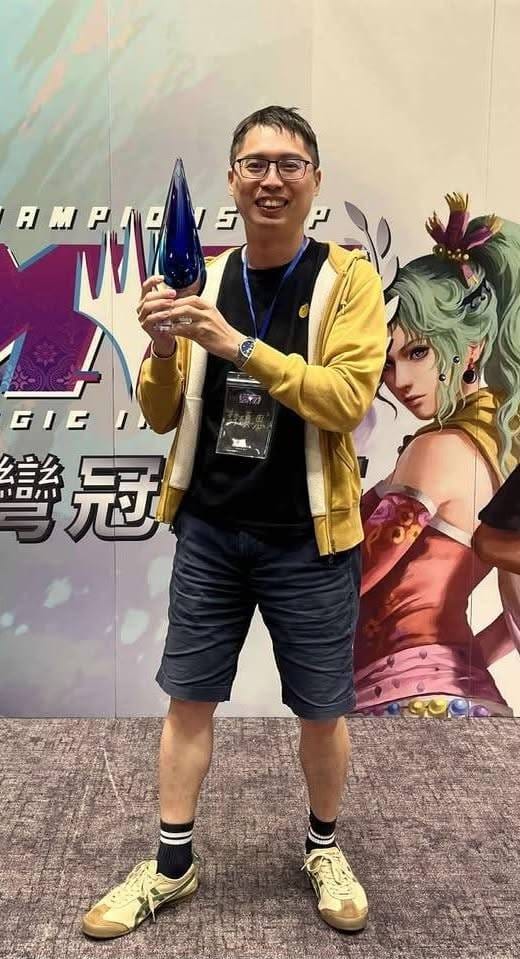
World Championship Player Interview: MIT Season 2 Champion 林承翰
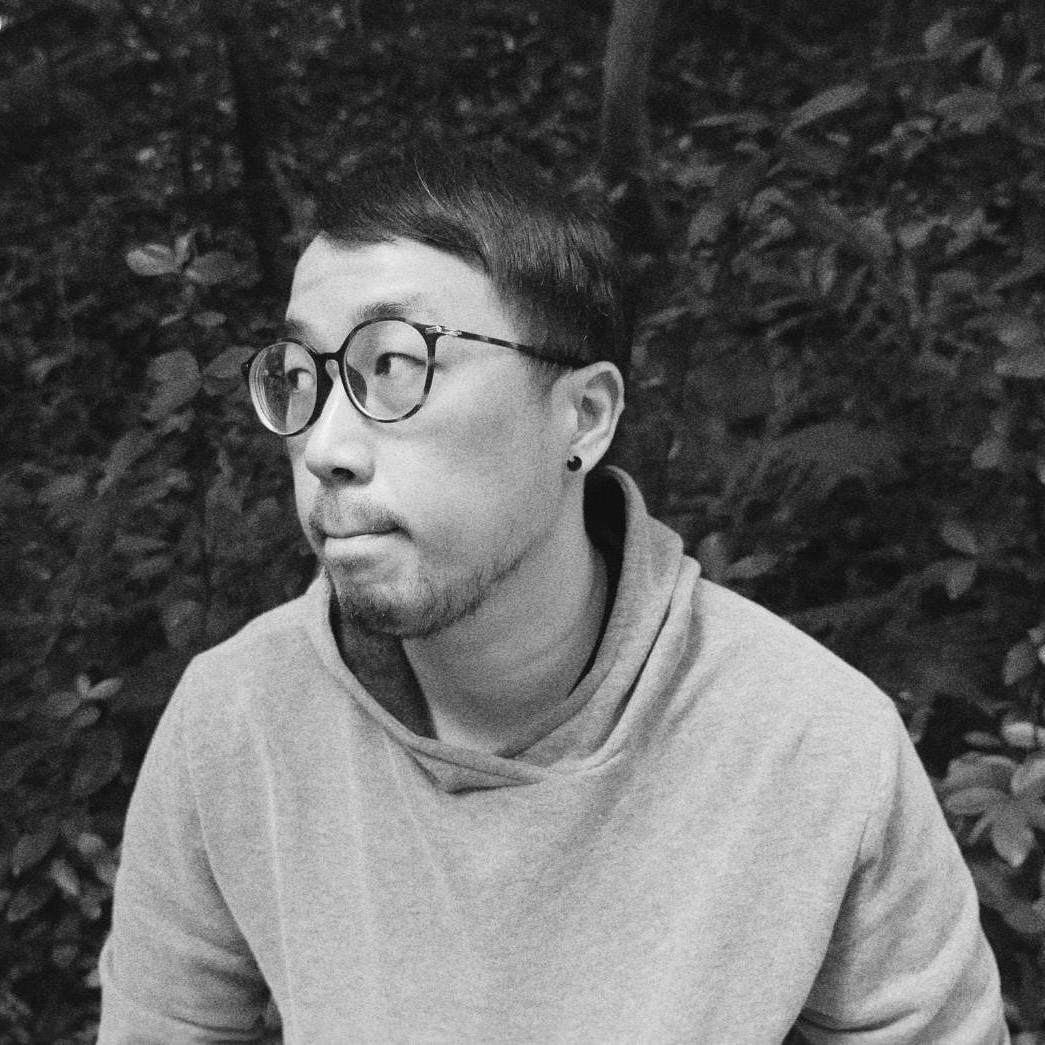

Note: This article was translated from Chinese by AI and may contain errors. Read the original Chinese version.
Let’s get started!
The 2024 World Championship has come to a close. In 2023, the year Guildmages’ Forum was founded, three players also stood on the world stage. Let’s go back in time and keep inviting those players to share what they saw and heard back then, and talk about how Magic: The Gathering and the community have changed over the past year or so.
Q1: First, congratulations on qualifying for the 2023 World Championship! Let’s go back to the MIT Championship. How did you feel in that final deciding match?
A: My opponent then was 永銘, and my mindset was more like enjoying the game, because my only expectation was the PT (Pro Tour). Whenever I faced a senior player I had never beaten, I usually went in with learning mattering more than winning.
But there was another side to it: I felt that only by beating my seniors could I surpass myself. They are the benchmarks in my heart and also my idols, and I saw them as symbols I had to defeat in the process of surpassing myself.
My feelings had more than one side. Looking back, I probably also really wanted to beat 永銘, to prove that I could go even further.
Q2: What deck did you play, and why did you choose it?
A: Azorius Soldiers. This was a deck I developed on my own.
In the metagame at the time, I thought counterspells were extremely strong. Whether it was Esper Legends, Grixis midrange, or mono-white midrange… each of them had expensive spells worth casting on curve without leaving mana up (single cards that widen the card or resource gap, such as Corpse Appraiser, The Wandering Emperor, Depopulate, and Raffine, Scheming Seer. The payoff is so big that it is worth the player taking the risk of casting them on curve and giving up playing around things). But over-relying on sweepers means being broken through by cards played afterward, so I chose to keep developing a deck with aggro as its base.
However, the original version of Azorius Soldiers had a fatal problem: it could hardly beat Grixis midrange, and solving that was the most important thing.
I found that Harbin, Vanguard Aviator could end the game instantly, Fortified Beachhead also provided a great manabase, Eiganjo, Seat of the Empire and Otawara, Soaring City could act as spells to solve the flood problem (drawing too many lands later), and Protect the Negotiators could make Soldiers and give Skystrike Officer a source of card draw afterward. Skystrike Officer is arguably the core of this deck. Simply put, the whole deck is about assembling five Soldiers and countering one of the opponent’s spells cast with all their mana, so that Harbin, Vanguard Aviator can push through all at once.
As for Azorius Soldiers, besides understanding it more deeply myself, I also respected my own instincts, choosing a deck I wanted to play and was emotionally invested in, and raising my mastery of it as much as possible.
Q3: Every player has surely been inspired by someone along the way. Do you remember the origin of your first contact with this game? How did you meet Magic: The Gathering?
A: For this question I have to start with another game: Hearthstone. I used to reach the top 200 in Hearthstone quite easily. I heard that Hearthstone’s origins lie in Magic: The Gathering, so I made up my mind to be brave and try it.
The real reason I got into it was when 遊戲平方 had just opened, it held a Hearthstone Fireside Gathering. The task was to defeat opponents to earn coins within four hours. I gathered enough coins to reach the final in about an hour and a half or two hours, and then lost only to Boss 郭. The more I thought about it, the less I could accept it, so I kept going back to challenge him. I vaguely remember he was playing Doomhammer Shaman and Frost Mage. Anyway, I kept playing until I lost all my coins and still couldn’t beat him, trapped in a cycle of earning coins and losing coins.
While wondering how this person could be so good, I began to lean toward playing Magic: The Gathering, thinking I would surely meet even more strong opponents there.
Q4: Do that excitement and emotion still exist? Can you talk about how Magic: The Gathering today differs from the past?
A: I think they still exist. My wish to challenge a strong opponent was fulfilled at the last MIT, Season 7, but only halfway: I faced 李詩天 and didn’t win, which means there is still a long way to go.
But I feel that still having a road to walk is the happiest thing. Having opponents you need to give everything to beat, or even people you can’t beat no matter how hard you try at this stage, are all worth challenging.
There are now many competitors in the TCG market, and the foot traffic is actually quite different from before, especially with the Chinese version cancelled, which has raised the entry barrier very high.
In Magic today, if you practice a meta deck well you have a pretty good chance of winning, so I think guiding new players to build meta decks is a good thing; it lets them slowly build confidence. The old way of slowly building a deck through draft was, to me, too slow and too agonizing, and I don’t think it is necessarily a good way.
In the current competitive environment, I think only players seeking a challenge are likely to enter Constructed. Otherwise there are too many competing games, and Magic is not a TCG with a price advantage. Although the arrival of competitors has reduced the number of new players, it has also clearly defined what kind of card game Magic is and what kind of players it has.
Q5: The driving force behind greatness is often purer and more childish than we imagine. Magic: The Gathering is a card game, and cards extend our will and imagination. Simply put, opening packs is just so fun and exciting. What is the most important card to you? Please share your bond with it.
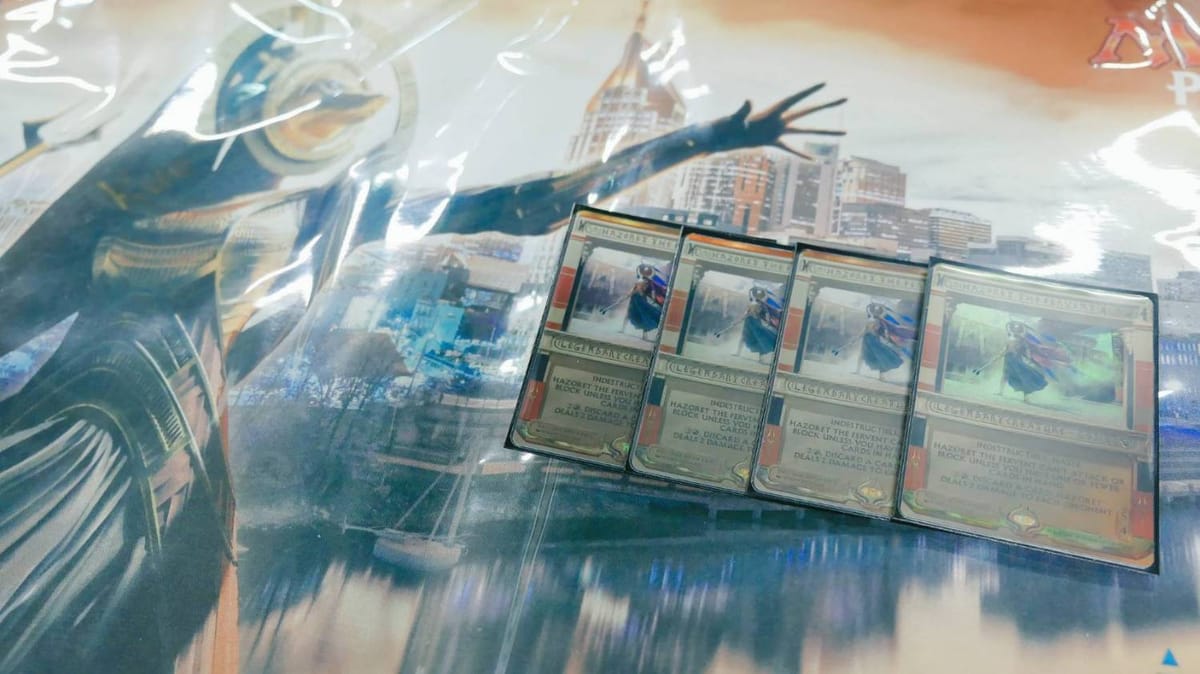
A: Hazoret the Fervent.
It was my ace right when I first achieved success in competitive play. The longer I played, the more this card reminded me to keep the passion I had when I first achieved that success. It also carries memories of watching the Pro Tour top 4, when I remember watching 任穎津 vs. Paulo Vitor Damo da Rosa together with Boss 郭.
Over time, Hazoret really became the Hazoret in my heart. A product of fictional storytelling made physical through paper cards, ultimately representing a belief. I find this evolution rather romantic.
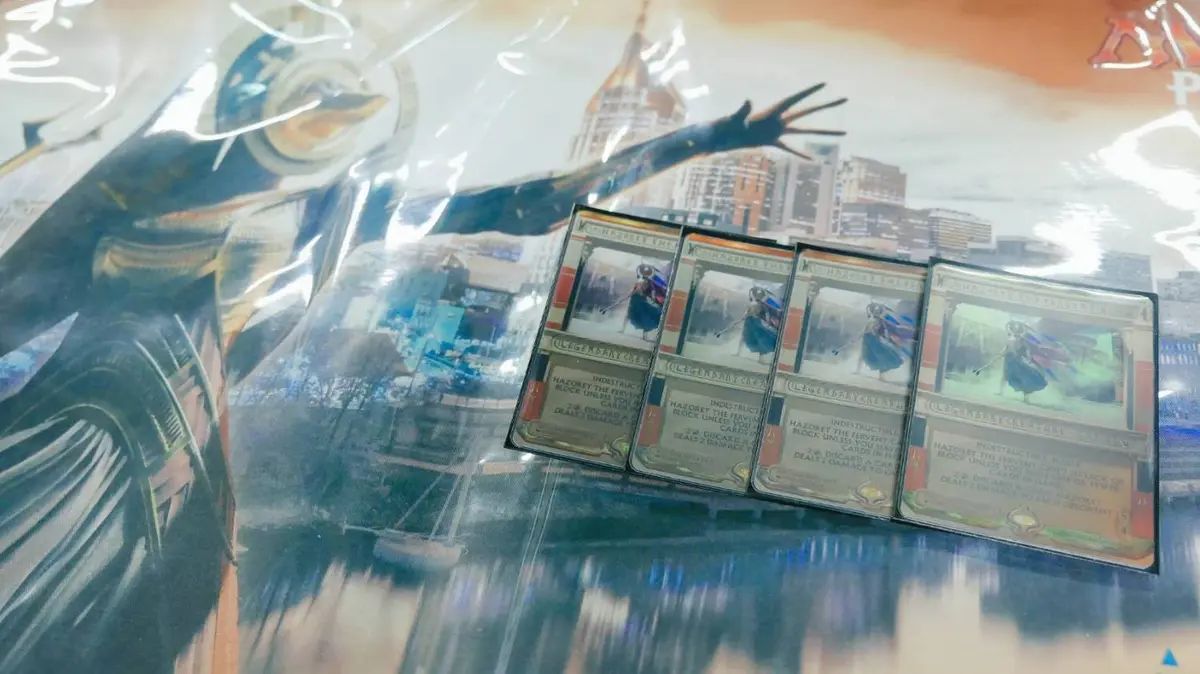
A card and a playmat carrying many of 承翰’s memories.
A fictional story not only becomes physical, but players can revisit their original intention through the object. Magic: The Gathering truly leaves indelible footprints in our hearts.
Q6: On the first and second days of the 2023 World Championship, there were three rounds of Wilds of Eldraine draft and four rounds of Standard respectively. Please share with readers which formats you personally like and are good at, and roughly what your preparation plan was.
A: I was writing my thesis then and had not planned to go at all. Thanks to 永銘 and everyone who kept encouraging me to take the challenge.
In July and August I played an MITQ at ALG. I remember I used Azorius Lotus Field that day, and afterward many people came to talk with me and encouraged me to try the World Championship. Honestly, at that moment I had neither the energy nor the confidence to go. Thank you all for the encouragement. Actually, in several rounds that day I played for so long that I really needed the bathroom… Thank you for encouraging my heart and also torturing my bladder.
Back to the point. Because it was too rushed, every night I just opened a Discord stream for 韓勤曜 (owner of 幻想遊戲世界) to watch me play Limited, listen to his insights on off-beat color combinations, and get scolded by him from time to time. Finally, thanks also to 及人 and SamuelChang for rescuing my Limited. I was so nervous that I was still looking at pick order recommendations right before entering the venue.
For Standard, I had considered going all in on Dimir Faeries, but it performed badly, so badly that I felt it was unplayable. For the next nineteen days, I stared at the screen sixteen or seventeen hours a day. The most maddening part of that period: I would wake up and my ranking had dropped, and after dropping, the decks I faced were not the ones I wanted to face, and I still had to win. It felt awful, an anxious sense that time was running out but I couldn’t use it effectively.
Thanks also to michaelchen for lending a hand and preparing Standard with me, which led me to choose Esper midrange. But I think Esper midrange was not quite a perfect score. Looking back, I regret not choosing Azorius Soldiers; my confidence in myself was not yet firm enough then.
As for the World Championship, I actually made quite a few mistakes on day 1, and I still clearly felt nervous all the way through day 2.
As for the format I’m good at, it’s whatever the season’s MIT format is… You work hard and analyze the metagame for results, and once it’s over you have to move on to the next season. Honestly, I don’t have time to care whether I like the format.
Q7: What type of player do you think you are? What kind of game plan are you better at? Is there a simple but classic turn you can share with readers?
A: I’d say I’m a theory type. By the traditional classification, decks are roughly aggro, midrange, control, and combo, but that doesn’t seem to fully capture a player’s nature.
I try to understand each deck’s game plan, and from that arrive at a deck I want to play. This deck may not be a meta deck. If the meta is black midrange, I rarely play it, because I understand black midrange less and find it hard to gain an advantage with it.
I’m better at decks with a single game plan, meaning strongly synergistic ones, because that helps me focus my thinking and I’m less likely to misplay. But within the framework of a single game plan, I like it even more if I can flexibly change strategy. Taking Modern as an example, Goblin Charbelcher has a single game plan but cannot shift to other strategies, so I wouldn’t choose it; Eldrazi Blade can switch to a midrange strategy when its combo is targeted, which I think is great.
Another example: against Smallpox, the normal combo plan doesn’t work, so in the sideboarded games I cut mana dorks and lands, turning the game plan into aggro and winning by topdecking cards of consistent strength, especially since my deck has Basking Broodscale. That’s roughly how my thinking goes.
Editor’s note: A brief personal remark: 承翰 really is a passionate and considerate player. The reason Smallpox comes up in this answer is that the first game between the interviewer and 承翰 was a Smallpox deck against Mono-Green Eldrazi Combo.
I didn’t expect 承翰 to remember, and to explain it in a way the interviewer could easily understand. Looking back, it was a very pleasant and fulfilling exchangeof hurting each other.
Q8: I’ve always been curious that competitive players surely have their own particular habits at the table. Can you share something beyond “cards”? Do you have any near-superstitious habits? Or little tricks to hint at or mislead opponents?
A: For important tournaments, I use my Hazoret playmat, and on top of that I put a large number of “waifu” cards in my deck box, along with a large number of omamori and amulets.
Last time at MIT, when my deck box was being checked, the judge asked me whether I was performing a ritual…
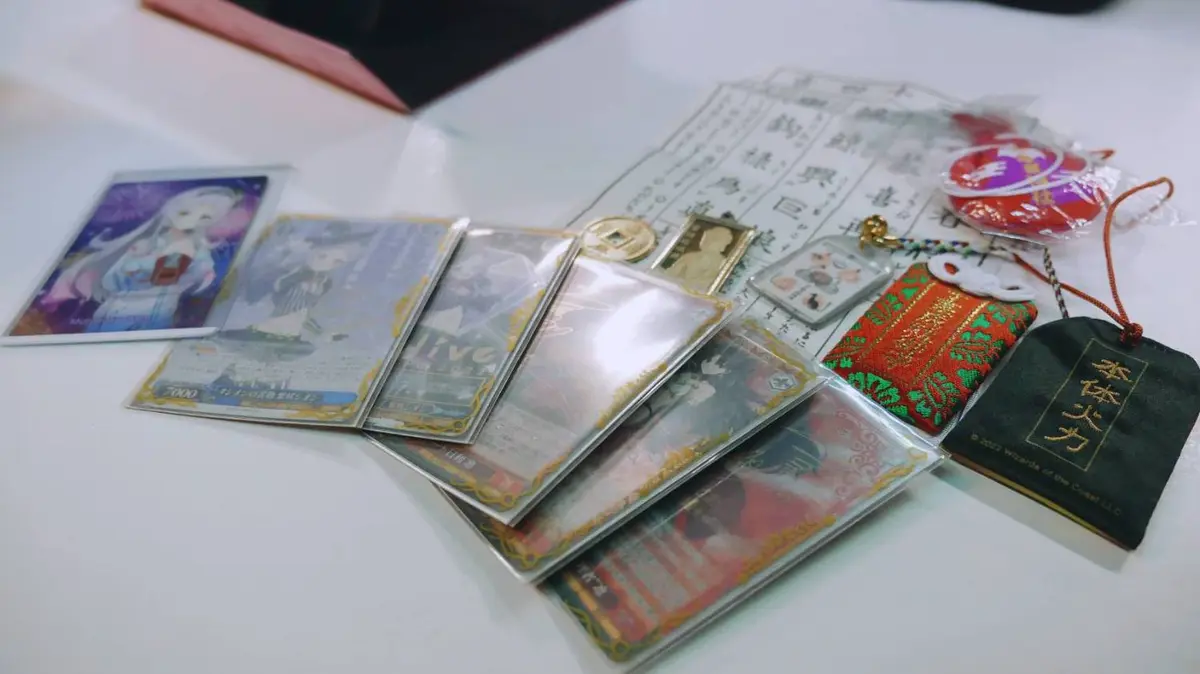
Keep it up 承翰, collect one more. Your waifu count is about to rival the legendary Wei Xiaobao’s.
Q9: Competitive-level events always go through multiple rounds of qualifying, at least a full day of continuous play. A great player needs correct concepts, focused spirit, and abundant stamina… Which trait do you think makes you stand out?
A: Of the factors above, physical strength is surely the weakest link… I’ve paid more attention to my diet and sleep than before.
I think the most key personal factor is probably being able to sense the winning picture the opponent wants, so that I can think from their perspective and do things they don’t want to happen. Simply put, I can guess their hand from how they play, and then, using their perspective as a reference, fine-tune the plan I want to push.
Q10: Though the player is the one standing on the stage, the team, family, and friends around the player surely take part as well. Have you had any memorable support or arguments in life? How did you eventually resolve them?
A: My parents gave me a lot of money and told me to go play the World Championship. Thanks to them for their support.
I often hold things in until the last moment before letting on what I want to do. My parents sometimes ask whether my cards are strong enough, and if I lose they tell me to go buy stronger cards, but I say my cards are already strong enough, and they say then there’s no way around it, I’m just bad.
That said, it wasn’t like this at first. I don’t know when it started, but my parents’ opposition turned into support. Perhaps time is the best lubricant for all kinds of relationships, letting people think differently about them?
Perhaps they saw my persistence with these pieces of paper. Anyway, I was truly lucky to be supported by my parents, and to have them see this hobby of mine as more than just something within the frame of the word “childish.” They even encouraged me to not work and focus on playing cards if I wanted to. I think most parents probably couldn’t say something like that. I was deeply moved at that moment. In the instant of being acknowledged, it felt as if all the conflicts I had with my parents in my youth were untied.
These are thanks I find hard to say out loud. As long as my parents don’t see this, I want to take this chance to solemnly thank them.
Q11: Can you name three players who influenced you, and talk about what you learned from them?
A: Three slots are a bit too few. Too many people have influenced me along the way. If I can only pick one to talk about, it would definitely be 郭子敬, Boss 郭. Without Boss 郭, there would be no me today. At first Boss 郭 only taught me “cards,” but unknowingly, under his teaching I also became a better person, both at the table and in life. I can guarantee that without meeting Boss 郭, I would not have improved this much, might not be known in this game, and certainly would not have had the chance to play in MIT. It’s like having an older brother guiding me in my youth. In many moments when I wanted to give up, slack off, or blame opponents or teammates, it was thanks to Boss 郭’s guidance and support that I could express myself and gradually mature, although Boss 郭 always says I’m still a kid…
The second is 少凡. We met at the table, and even after he stopped playing cards, he was still willing to go to MITQs and to Vegas with me. As a peer, I think he has always been more mature than me. Even so, he says he envies me. I don’t fully understand what this mutual envy is, but anyway I’m grateful to him for constantly putting up with my bluntness. Especially when we played cards in the past, I was often harsh and condescending, and I find it incredible that he could accept and understand me like that.
He can always give me the help I need most in places I hadn’t thought of. For example, when we went to Vegas, many people were actually lukewarm about it (of course because I announced it in such a rush that almost nobody could keep up). 少凡 doesn’t even have holidays off, yet he deliberately cleared his busy work and added a lot of expenses to go to the US together and act as my babysitter. Without him, I might not even have made it into day 2.
When it was confirmed that I had made day 2, I was a bit dazed, and I silently fist-bumped 少凡 without saying thank you on the spot. I hope he will be less busy later and play cards with everyone again. If Boss 郭 is the benefactor who made me better, 少凡 is the good friend who brought me warmth and taught me how to give.
The third, I think, is everyone who will be around me in the future.
That sounds sentimental, but after so many seasons, everyone’s life plans keep moving forward and everyone has their own things to be busy with. At different stages, I believe I will meet people who bring me tremendous growth, and perhaps those who have always been by my side will make me realize some important things.
I feel I can no longer rank priorities intuitively, so I want to leave this open-ended for me and everyone. You are all welcome to take part in my future. Whether in the present, past, or future, we gather together and play cards, quietly changing each other’s lives beyond the table. Please allow me to be sentimental: if there were no space limit, I could thank everyone around me one by one. Every person willing to interact with me, I see the sparkle they bring me. But I lack the ability to fully convey what that light looks like; I quietly keep it all in my heart. I am truly grateful to everyone who tolerates such a strange me.
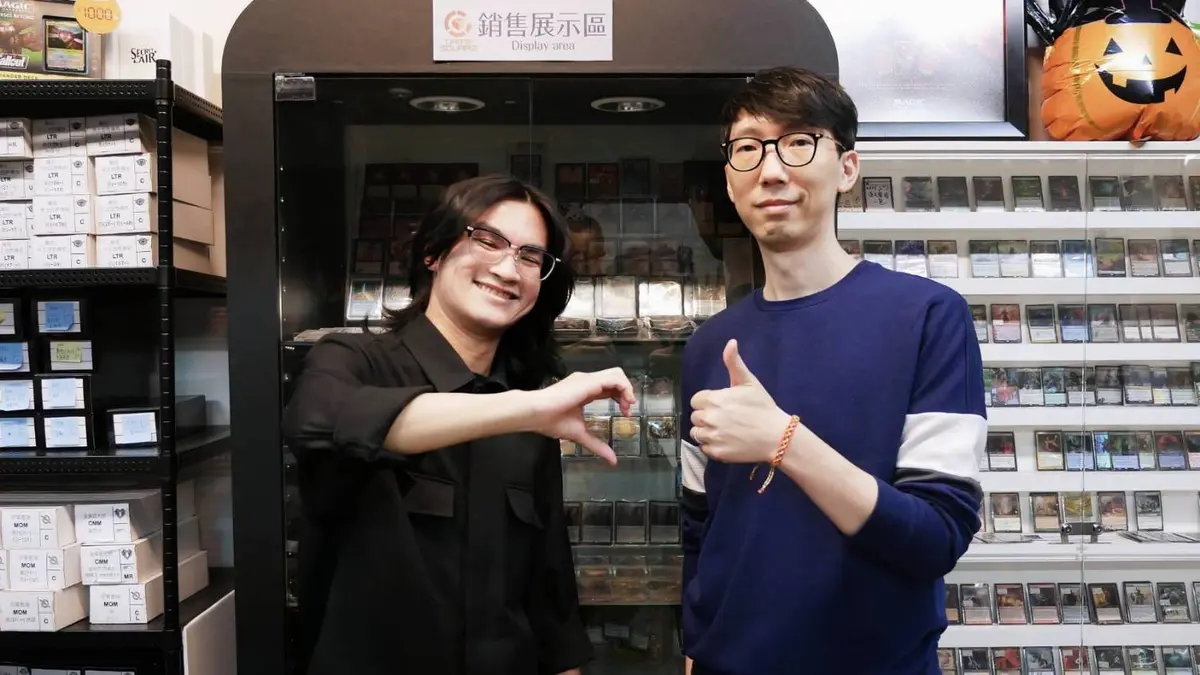
(Staged dialogue) I’m not making a heart sign with you, okay.
Since we happened to interview 承翰 at 遊戲平方, amid cheering from the younger crowd we took this rare group photo with Boss 郭子敬. We thank and look forward to both of them continuing to open new horizons for Taiwanese players. We truly feel the Magic community is getting better.
Q12: As a competitive player, what is the most valuable advice you have received?
A: This was something Boss 郭 said: “Know that in places you cannot see, others are working hard too.”
The reason for this line is that once at an FNM I lost to 澤皓 and was too upset, thinking my deck was already strong and I hadn’t misplayed, so what right did 澤皓 have to beat me?
At that moment I only cared that I hadn’t reached my goal, but from Boss 郭’s viewpoint, I was being unfair and arrogant toward 澤皓. What right did he have to win this game and still be treated badly? Didn’t he have his own thinking while playing, his own ideas when building the deck?
That is indeed the case. Although this game has little new player traffic, new players who gradually surpass veterans are also appearing, like Jeff’s Dimir deck, 澤皓’s black decks, and 耕綸’s understanding of the metagame and card choices. For example, the red-green Eldrazi 耕綸 chose last season and the Lotus Field in the final, I felt his understanding was spot on. Those are proof of the effort and hard work they put in. If I focused only on my own effort and thought I was more qualified to win, then I shouldn’t have beaten michaelchen, 永銘, 丈丈, or 及人, who worked harder and put in more, either. Even SamuelChang, who is usually happy-go-lucky, is extremely immersed when playing cards and often plays to the max, and 尚峰 even runs MTGO and MTGA at the same time, alternating between them. Back then I just felt bitter that my effort went unrewarded, and consoled myself by denying others’ effort.
However, returning to the past year or two, I think the cohesion of the northern Taiwan Magic community has improved a lot, the atmosphere of exchange has become friendlier and more frequent, and this change has definitely helped overall strength.
Q13: This is a card game with great depth but also relatively hard to pick up. If you were to briefly introduce the charm of Magic: The Gathering, how would you describe it to a newcomer?
A: The biggest charm is challenging the world.
Compared with other TCGs in the world, MTG offers much broader opportunities to challenge the world, covering almost all regions. The only ones comparable are PTCG and Yu-Gi-Oh!, but those two are more regionally defined and rarely offer chances to travel abroad frequently.
Q14: Many people describe you as a player who is very strict with yourself and practices a huge amount. Can you share how you prepare for tournaments and what your personal goals in this game are?
My goals are of course to surpass my own mentor, to strive for the world, and for a professional-level championship, but the road is still very, very long.
But the good thing about this game is that, unlike the physical demands on athletes, even at 35 or 45, as long as I stay healthy and focused, I still have the qualification to challenge for a world championship. Although this may be an achievement I never reach in my lifetime, I feel that things that would get you laughed at if you said them are exactly the goals you should spend your life to reach.
Each time I prepare for a tournament, it takes about three to four weeks. For a regional championship, usually my lazy friends only start asking what to play two weeks out. About four weeks out I pick a deck to study, and then I track decks, looking at what is in the lists that put up results, to deeply understand the differences between sideboard and main deck composition. If the lands are not formulaic, tuning the manabase is also important. Then I add my own ideas and put them into practice, because I feel that public lists may not be the best, and there are surely more people who copy lists than people who build them. But as someone who builds with their brain, even if I may fail for a long time before finding the key sense, I feel that once I develop a nose for the meta, I can certainly seize the initiative.
Perhaps for a regional championship, copying a list is enough to win, but I think scaling up to Pro Tours and Worlds, you can’t win a championship on the basis of a stock list. So improving on mainstream builds, having thoughtful sideboards, and even creating a brand-new archetype is my top priority. Although recently in the finals I often put in too much ineffective time because of this and ended up choosing a not-so-good deck, I feel I must get over this wall.
The next step is, when there are two weeks left and everyone has their decks ready, I start practicing against as many different archetypes as possible. Since I mostly play combo and tempo decks, I proactively ask to play directly with the sideboard. I want to practice targeting the sideboard plan, which is also the advantage of choosing a deck with a main plan in practice: in main-deck games you always have a very reliable line of thinking to lean on, and sideboarded games are an extension of that thinking, adding cards against being hated out or researching ways to play around hate. With more attempts you can improve a lot.
In the final week, I predict the meta based on the results of the big tournaments and then decide whether to change decks. Some friends start hiding their tech, but I don’t. I feel everyone going abroad is part of the same team, and sharing resources and discussing with each other is what gives us the capital to fight foreign players. But I also respect the feeling of wanting to hide tech; they have a stronger desire to win, and I have no right to blame them.
Finally, the last day or two before is for relaxing and getting a good night’s sleep. Both times I made top 8 I had slept a full seven hours, and otherwise it was only a bit over four hours of sleep. I think that is the decisive difference, so now I try to keep a normal schedule, which gives me a better chance of keeping a high level of performance. This is what I’m focusing on improving at the moment.
After arriving at the venue, I try to remind myself that being nervous doesn’t help in the tournament. Even so, I still feel pressure in game 1 of every MIT. Frankly, the title of MIT Season 2 champion also forces me, to some extent, to play under pressure, and I inevitably think about how others see me.
Q15 (asked by cephille): We played against each other in MIT Season #1 two years ago, and now I notice a clear change in your play style. Beyond the mastery that practice brings, it seems more like a change in mindset. Can you tell us what you have realized about Magic: The Gathering in the year or two since MIT started?
A: As I said above, I did go through a period where I often felt very bitter because I put in effort without getting the results I hoped for.
Looking back, that unbalanced mindset showed up in a few past matches. For example, how I spoke to 盈孝 in two matches, and my negative behavior toward 澤皓… These things were all concentrated in MITQ season 1, and I think I adjusted after that. I want to thank several players for their tolerance, and even for treating these things with a “no friendship without a fight” attitude. This also taught me that if I meet a player who is dejected after a match in the future, I should choose to be considerate and understand my opponent.
As for the flaw of emotional ups and downs, it is easily exposed when the desire to win is strong. After all, I really did invest a lot, and at first I couldn’t fully hide my inner disappointment. But everyone has times of bad luck, differences in form, and poorly chosen decks… The causes of failure are often complex. My current thinking is to enjoy the game as best I can. Of course, sometimes when emotions surge I still want to be childish and build weird decks to experience weird luck, but I feel that after venting emotions, I should reflect on myself.
In other players’ eyes, they may see me as crazy, but I think I’m doing my best to balance myself between emotion and improvement, which is the issue I focus on most at present.
I feel I have been playing for a long time now, and through the high-density preparation process, I gain new understanding every season. Although I had a great start, winning MIT right when I first entered, after playing for so long I haven’t been able to surpass my self from back then. In season 3 I tried to win back-to-back titles again; in season 4 I gave myself a Jeskai Ascendancy dream; in season 5 I wanted to trust Yawgmoth, who had always been with me; in season 6 I chose Nissa combo, wanting to end a midrange-dominated environment; in season 7 I chose tree combo, because I felt this combo was far more fun than I had imagined.
I have always wanted to break today’s midrange-dominated Magic. I feel that if I keep playing the same archetype with the same logic, my horizons will shrink, and I also wanted to look for a distinctive breakthrough. So far it hasn’t had much effect, and it isn’t necessarily the right route.
However, when I choose decks this way, I feel these cards easily bring adjustments to how I play, and I’m happy about the person I am then. This is the key to my enjoyment of the game. Without these parts, I’m afraid I would fall into a cycle of caring only about winning and losing, and novel experiences push me to keep creating decks.
I feel it is important to find the right way to get along with everyone, especially when you need to discuss, find errors, and review. If we’re willing, we can always find gentle ways to treat each other. Now I more often admit mistakes openly. Asking others to be strict with me is just because it’s my nature, because I really hope to see new perspectives. But for other people, being publicly corrected may be embarrassing, so now I tend to ask the person why they thought that way, what the reason was, what result playing it that way would cause, what cards the opponent might have, their tendencies… We can find that there are very, very many factors that lead to winning or losing, usually not definable by an arbitrary single sentence. I want to discuss with people, but at certain moments I also stay silent, because I haven’t thought through how to say it, or I’m worried whether what I’d say is correct.
This personality may also show in how I play. In the past I could play cards without hesitation because I believed there was only one best answer, but now I may think more deeply, because I feel the so-called best answer is embodied in the moment, and not everything has just one truth. Sometimes I also play strangely in practice, because I want to see whether unconventional plays can create new possibilities.
That’s roughly what I’ve realized and how I’ve changed over the past year or two.
Q16 (asked by faintmama): Walking the long road of a card-playing career, I believe noise sometimes sprouts in one’s head. I’d like to ask how you usually sort out your thoughts. Can negative emotions be successfully turned into positive motivation? And how important are fellow players in this process?
A: There is a lot of noise. As I said above, I often felt angry because effort and reward weren’t equal, there were phases of a strong desire to win, and when I handled relationships badly I also felt very uncomfortable and pained. But again I want to thank Boss 郭: all along, whenever something came up, I’d go to him to talk it out and sort out my thoughts.
Negative emotions can of course turn positive, but they’re like caffeine or a stimulant, a double-edged sword. Used well, they lift you up; used badly, they do great psychological damage. I think you have to spend more time with yourself, because I’m a very impulsive and aggressive person, and when emotions surge I often hurt my friends. Usually a deep conversation with myself greatly eases negative emotions.
Of course, beyond myself, fellow players matter even more, whether encouraging each other during tournaments or keeping company in daily life. I quite like this atmosphere of mutual help. 逸賢, 安得, and 冰諦 drive us to tournaments farther away, and I’m very grateful to them. Eating and chatting together often eases how bad I feel about losing a match.
Seeing friends do well is actually a different kind of satisfaction, and my mindset now differs a bit from before. After Worlds, I found that the Japanese players are exceptionally united. Whatever conflicts they’ve had internally, once they arrive at the venue they can sort out their feelings and come together, pursuing victory both in and out of matches and supporting each other in pursuit of glory. This is very different from players of other nationalities.
Competing abroad is actually quite lonely. Abroad I sat around a small table with 丈丈 and 俊廷, and it’s hard to describe the feeling at that time.
I think I like meeting evenly matched opponents. This may somewhat conflict with pursuing victory itself, but from a broad perspective, this kind of high-level match is the key to improving. I think the biggest difference between online and offline is that you can practice a specific matchup heavily, test the various sideboard strategies, think about new possibilities, and also roll back to a position in question, describe each other’s mental thoughts, or try to guess each other’s hands and check whether you guessed right. These details are hard to achieve on MTGA and MTGO, so I feel having fellow players (I prefer to call them friends and partners) is very lucky and happy; they are already the foundation of my life.
Q17: I believe we are all players who love Magic, with deep passion for this game, but have also felt some disappointment. If possible, is there anything you would like to try to change, whether in the game itself or in community interaction? And how do you think we can get more new players to join this game?
A: Bluntly, someone needs to put up results.
Taiwanese people are a bit more utilitarian; if someone puts up results, naturally people will play. I think more important than cultivating newcomers is that those who put up results shouldn’t be stingy and hold back, but try to lead the rest to improve together, and the result of everyone exchanging and learning from trial and error is collective improvement. In fact, the situation in recent years has gotten much better; maybe there are fewer players and they’re older, so everyone is more mature and cherishes the community.
I just want to be a player purely focused on gameplay. What I want to change is probably to take better care of my body. I want to play even longer. Limited imagination, stable play, deck-building ability… all of these take time to accumulate, and I think there is still a lot to learn.
Focusing on playing better is the only original intention of mine that has not changed.
Q18: Last of all, how would you describe what Magic: The Gathering is to you?
A: I feel a game is like life, with ups and downs and with failures.
In fact, until the very last draw of a game there’s still a chance; if you lose this game there are two more, lose a game and there are two more games, lose a match and there’s the next match, lose a season and there’s the next season, which means we have many futures left to challenge.
Enjoy the process, and enjoy the hard-won partners and results. I like a line from Hikaru no Go: “Connecting the distant past and the future.” I think the fact that we can play cards together now, with a shared goal to strive for, is just like this line: on the road to the “Hand of God,” there will surely be stronger newcomers and undefeated seniors worth learning from and challenging, and I think that is the moment life gives off light.
Whatever job we do and whatever life we live, we share something in common because of this, and that commonality has depth, worth coming together for. That coming together is an entwining along life’s road, each a cause for the other. Perhaps in the end of a story only oneself remains, but what I want to say is that even if only one person is left at the end, these memories of interacting with each other are part of forming a new self, and they are precious.
- Title
- World Championship Player Interview: MIT Season 2 Champion 林承翰
- Author
- faintmama, cephille, ZHAN
- Created at
- January 25, 2025
- License
- This work is licensed under CC BY-NC-SA 4.0 .
Related Articles
World Championship Player Interview: MIT Round 12 Champion, Second Interview with SamuelChang
November 5, 2026
World Championship Player Interview: MIT Round 11 Champion Lee Shi Tian
November 5, 2026
World Championship Player Interview: MIT Season 10 Champion 許碩恩
November 5, 2026

Interview — Dominaria Library
March 1, 2026