
Worlds Player Interview: MIT 5th Champion 葉永丞 (David Yeh)


Note: This article was translated from Chinese by AI and may contain errors. Read the original Chinese version.
Let’s get started!
On the day of the interview, the two of us first played in a DSK Limited MITQ with David Yeh at 桃園一刻館, and we were lucky enough to both make the top eight and play a timed draft and then ascended one after another orz. During the matches, we had already vaguely sensed that David Yeh has a temperament different from other players. So, let’s get into the content of the interview!
Q1: First of all, congratulations on qualifying for this Worlds! Let’s go back to the scene of the MIT 5 championship. How did you feel being in the final decisive stretch?
A: In the top eight I played against Selesnya Heliod-Ballista. I hadn’t written down beforehand how to board in and out for that matchup, so I was a bit panicked, and I figure it wasn’t a great matchup either. Luckily, being ranked first I got to play first, and I drew well too, so landing the Rhino on time plus disruption got me through. In game 3, 愛晨 mulliganed three times, and I felt a little bad for him.
In the top four I faced MIT#2 champion 林承翰, who was playing a very practiced Golgari Yawgmoth. I’d seen a few guides on how the Yawgmoth deck runs and roughly knew how to board, and in game 1 I was again on the play and drew well, so landing the Rhino with disruption on time got me through. In game 3 he drew a lot of mana dorks and lands, so he got stuck and didn’t run smoothly, and I chose to go around with fliers and play slowly. The match felt a bit strange, but luckily the result was good.
In the finals I faced Mono-Black Vault. I roughly knew how to handle it, but fortunately we didn’t have to play~
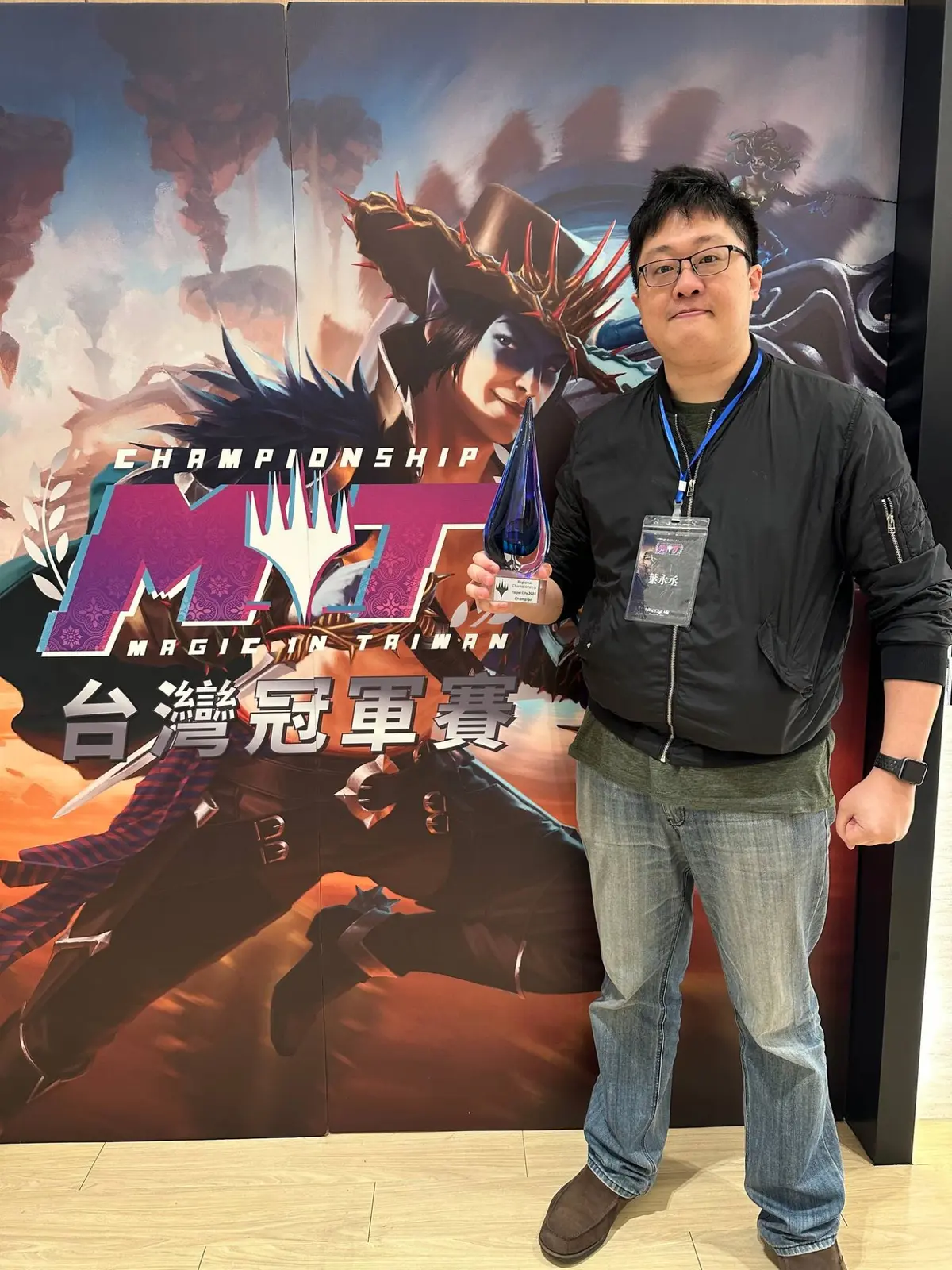
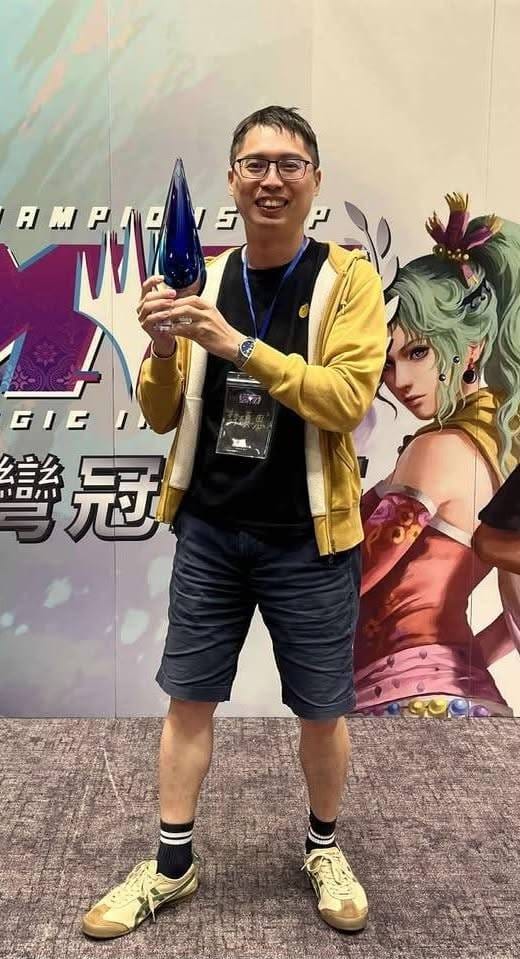
Here’s the classic photo from championship day~
Q2: Why did you choose the Rhino deck back then?
A: There are too many Modern decks to cover every base, so I just filter out the noise and focus on doing my own thing.
I think Rhinos is an easy-to-pick-up deck with enough power, suitable for dad-type players who don’t have time to practice much. Lórien Revealed and Tishana’s Tidebinder really boosted this deck a lot. Although with Fury banned it’s harder to deal with go-wide decks of Humans, Goblins, Elves, Merfolk, Infect, and so on, Scam and four-color decks are also harder-pressed to beat Rhinos without Fury, so it has pros and cons. My other considerations were already covered in my earlier article
, so I won’t repeat them here~
A murmur from David: Rhinos, banned twice, is already nearly extinct XD
Q3: Every player must have been inspired by someone as they improved. Do you remember the starting point of how you got into this game? Under what circumstances did you first encounter Magic: The Gathering?
A: When I was in my second year at 高師大附中, it should have been the Odyssey and Onslaught environment. MIT#1 champion 李俊廷 gave me a Naya Astral Slide deck. Even without any rares, I could create a lot of advantage with Astral Slide, Lightning Rift, Cartographer, and lots of cycling cards. Maybe because of that, I began to love decks that draw cards and win on card advantage. I remember that year’s world champion deck was white-green Astral Slide, and Plow Under was just too good.
Editor’s note: Let me explain for readers how the Astral Slide combo that David mentioned works. This deck includes lots of cycling cards that debuted in the Onslaught (ONS) set, such as Secluded Steppe, Tranquil Thicket, Akroma’s Vengeance, Renewed Faith, as well as Decree of Justice added later in the Scourge (SCG) set, and the main source of damage, Eternal Dragon. Whenever we cycle these cards, we can pay an extra {1} to have Lightning Rift deal 2 damage to any target, triggering Astral Slide to cloudshift Cartographer and fetch back lands with cycling from the graveyard, earning a huge resource advantage.
After Fifth Dawn (5DN) printed Eternal Witness, this line of thinking dropped the less stable Cartographer and Lightning Rift pairing and switched to a two-color white-green build, which became the deck that won the 2004 World Championship. And Plow Under with Eternal Witness can bounce all of the opponent’s lands away, which is just too good!
Q4: Is that excitement and emotion still there? Can you talk about how Magic today differs from the past?
A: Spells used to be stronger and creatures weaker. Back then, a one-mana red 2/1 Goblin definitely had a drawback; now look at how outrageous Ragavan, Nimble Pilferer is. Or look at how Masticore used to be expensive and good, while the Masticores printed afterward are never played. If you took Steel Hellkite back in time 20 years, it could probably sell for two thousand too.
Nowadays there’s a lot of interaction on the table, with every color having creatures, Vehicles, Equipment, and planeswalkers fighting over attack and defense, so it’s more like playing a board game, and the new mulligan also reduces the risk of land screw.
Q5: The driving force behind greatness is often purer and more childish than we imagine. Magic: The Gathering is a card game, and cards extend our will and imagination. Simply put, cracking packs is just so much fun and so exciting. What is the most important card to you? Please share your bond with it.
A: For the most important one, of course it’s Crashing Footfalls. It earned me my qualification for a big tournament. Tishana’s Tidebinder is also important: besides being useful in Modern at MIT, at the Seattle Pro Tour I also relied on it to keep going and win a PTQ.
Q6: At Worlds, Day 1 and Day 2 will feature three rounds of Duskmourn draft and four rounds of Standard respectively. Please share with readers which formats you personally like and are good at, and how you prepared this time.
A: I like Modern and Limited. In college, my best Limited result was third place in Taiwan. This time, Standard and draft can both be practiced on MTGA. Although it’s still different from MO, since I can’t often go to the card shop right now, being able to practice Standard matches with friends at home is already very convenient. For Limited, I study set card reviews from your site and from ChannelFireball, and analyses like 17lands.
Q7: What type of player do you consider yourself to be? Which type of game plan are you better at? Is there a simple but classic turn that comes to mind that you could share with readers?
A: I like midrange/control decks and don’t like all-in aggro/combo decks, especially in open-decklist tournaments, where after seeing the opponent’s deck, a midrange deck that knows whether to keep an aggressive or a defensive opening hand should be the best.
Q8: I’ve always been curious that competitive players surely have their own particular habits at the table. Could you share something beyond the “cards”? Do you have any near-superstitious habits? Or little tricks for hinting at or misleading your opponent?
A: I think being able to see the clock and the judge when I look up is quite important, and I try to do that when picking a seat. Another thing is to play a few more lands: I’d rather draw three lands and topdeck out of it than get stuck on lands for three turns and be done.
Q9: Competitive-level events always go through multiple preliminary rounds, at least a full day of continuous play. A good player must combine correct concepts, focused spirit, and ample stamina… Which trait do you think made you stand out this time?
A: I eat chocolate and bananas and drink coffee to stay hyped, avoid starches because they make me sleepy, don’t drink soda because it saps your energy, and definitely don’t drink milk tea because it’ll milk-tea me into the ground. Also, watch out for the Special Grade Cursed Spirit 廖宜楠 aka TOT.
Q10: Although it’s the player standing on the stage, the team, family, and friends around the player surely take part too. Have you experienced any memorable support or arguments in your life? And how were they finally resolved?
A: I definitely have to thank my wife for her support. During our school years, probably every Magic player argued with family, hahaha. After having kids of my own, I could better appreciate how my parents felt back then: just don’t get so absorbed in play that you lose your ambition. This game has a very low return on investment. Do what you should, studying and finding a job, and the rest, leisure time and money within reason, is all fine. I teach my own kids the same.
Q11: Can you name three players who have influenced you, and tell us what you learned from them?
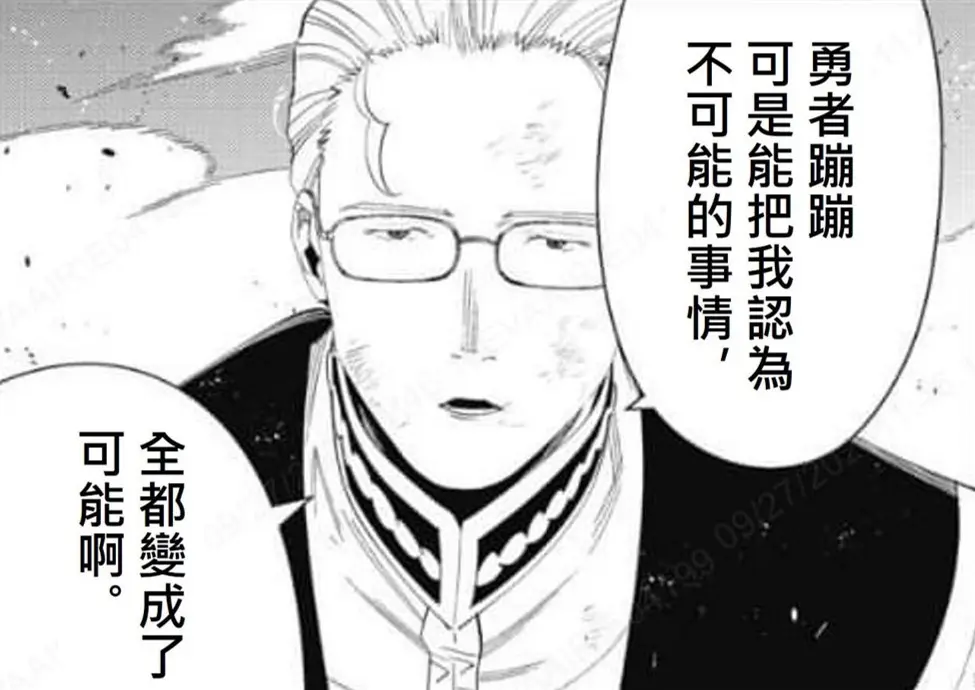
A: In my student days, 李俊廷, 蘇昱禎, and 黃永銘 were all strong players from the south, and I learned quite a lot about constructed and Limited from them. 吳俊賢 aka 瓜瓜 (owner of CardMaster) I met while studying in the north. He worked very hard to promote this game, whether running tournaments, building websites, or even getting us to write Chinese promotional articles. The last one is 陳柏宏 aka 蹦蹦 aka Jund Uncle’s Daily Life. He’s the one who made me believe a dad-type player can still win big tournaments. The hero 蹦蹦 turned everything I thought impossible into possible! He’s my Himmel!
Q12: As a competitive player, a full-time worker, and a father of three children, how do you balance time for family, work, practice, and tournaments? How do you allocate among the three?
A: Family and work come first, of course. I talk with my family in advance, and I get out once a month to play a tournament; the rest of the time I read articles and practice on MTGA, and maybe when the kids grow up we can play together.
Q13: As a competitive player, what is the most valuable advice you’ve ever received?
A: This game has a very low return on investment. You can practice for a year and still die to land screw, or die to an opponent who drops a pile of bombs. Just keep a calm mind; what’s meant to be yours will eventually come to you, like how I’ve played for 20 years. Lots of practice can certainly improve your sensitivity to the meta, correct sideboarding, mulligan timing, the information passed by the players to your left and right in draft, and so on, but family, school, work, and health come first in everything, so never put the cart before the horse. This sounds a lot like a cliché, and the old me never imagined the current me would say this, but that’s how it is.
Q14 (impromptu question from cephille): The Mystic Zone that you and your friends founded between 2012 and 2014 brought Taiwanese players a lot of important MTG information, including to me, a little newbie at the time. As a veteran, do you have any thoughts you’d be willing to offer us? Thank you very much!
A: The site is still there, so everyone can go check out Mystic Zone.
That was right around the time of the Taipei GP, and 瓜老闆 wanted to push Traditional Chinese Magic hard. At first it was 陳亮 aka REX who came to find me, and then we found many old and new friends, and together we wrote Limited, constructed, commander, and other articles. During that period we were always busy translating good articles from overseas, creating commander content, and traveling all over the north and south to make tournament reports. Looking back ten years ago, what I miss most is still the tournament reports, and I occasionally still go back to the site to look at the matches and top ten strongest cards from back then. Ten years have passed, and social media is different now. There are no big events like the GP, and many new card games have appeared, so there should be far fewer Magic players in Taiwan. You’ve worked really hard promoting it so devotedly!
Q15 (impromptu question from faintmama): When we played together today, I noticed that you’re a very approachable player, generous in sharing your own insights and happy to listen to others’ opinions. I could almost picture you and your friends exchanging ideas and continuing to get stronger. Could you analyze the relationship between your personality and your career as a player?
A: When I was young, especially as a student, of course I cared a lot about winning and losing, and I treated others in a more domineering way than I do now. After growing up, I let go of that outlook somewhat.
For example, when I go out to tournaments now, I always think about being nicer to friends and opponents, at least giving myself a chance to broaden friendships, which is probably also a habit I developed from running the website. Once I enter the tournament hall now, I first greet quite a few people, whether it’s 郭子敬 the shop owner, the judges, or players. Personally I don’t think there’s any need to face others with a confrontational attitude.
This attitude makes it easier to get advice from others, and that advice may spark better ideas in me, so influencing each other positively is, I think, much better than fighting alone.
Editor’s note: David’s insight is very infectious, and it reminds us of the Ubuntu culture mentioned in the DSK Sealed Review. David may well be the player who best embodies this spirit in this land.
Q16: This is a deep card game, but also relatively hard to get into. If you had to briefly introduce the charm of Magic: The Gathering, how would you describe it to a newcomer?
A: This game is already 30 years old. Unlike many card games, it’s full of interaction, and being able to do things on your opponent’s turn makes a huge difference. It’s just wonderful. In addition, its Limited is full of variables, which truly no other game can match. The best-of-three system with sideboarding is also something many games don’t have, and its subtle details are super fun. Taiwanese people are afraid of losing out, love to haggle, and love to calculate, so this game is very well suited to Taiwanese people (thumbs up).
Q17: Finally, how would you describe what Magic: The Gathering means to you?
A: It’s not just a card game, it’s more like a social medium. Through this game I’ve met good friends from all walks of life, and these friendships have continued without interruption for twenty years. Because of it, I’ve also had the chance to travel the world competing and become a more mature person.
- Title
- Worlds Player Interview: MIT 5th Champion 葉永丞 (David Yeh)
- Author
- faintmama, cephille
- Created at
- October 15, 2024
- License
- This work is licensed under CC BY-NC-SA 4.0 .
Related Articles
World Championship Player Interview: MIT Round 12 Champion, Second Interview with SamuelChang
November 5, 2026
World Championship Player Interview: MIT Round 11 Champion Lee Shi Tian
November 5, 2026
World Championship Player Interview: MIT Season 10 Champion 許碩恩
November 5, 2026
Interview — Dominaria Library
March 1, 2026