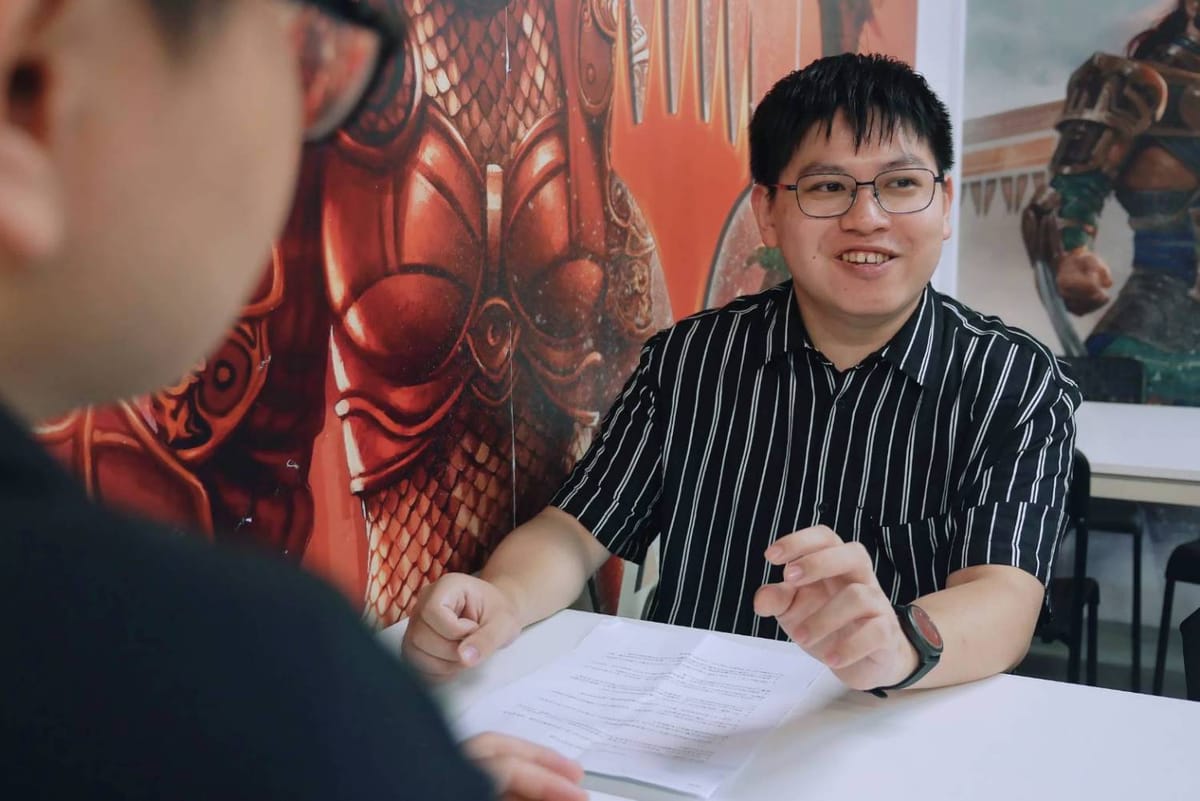
Worlds Player Interview: MIT 7th Champion michaelchen

Note: This article was translated from Chinese by AI and may contain errors. Read the original Chinese version.
Let’s get started!
I haven’t been playing Magic: The Gathering for very long. When I first got into Standard at the end of last year, I became interested in black-red, and I happened to come across a build that broadened my horizons, designed by michaelchen. We weren’t in the same group chat back then, but that’s how I learned there was another black-red enthusiast in Taipei.
Later, we got to exchange ideas beat each other up at events a few times and gradually got to know each other better, and this time we finally had the chance to sit down for a deep conversation. michaelchen’s road in Magic is very special and exceptionally brave, and I hope this interview can serve as a reference for our readers. I’m also really looking forward to hearing michaelchen share his experiences after Worlds. I wish him the best in enjoying the journey ahead!
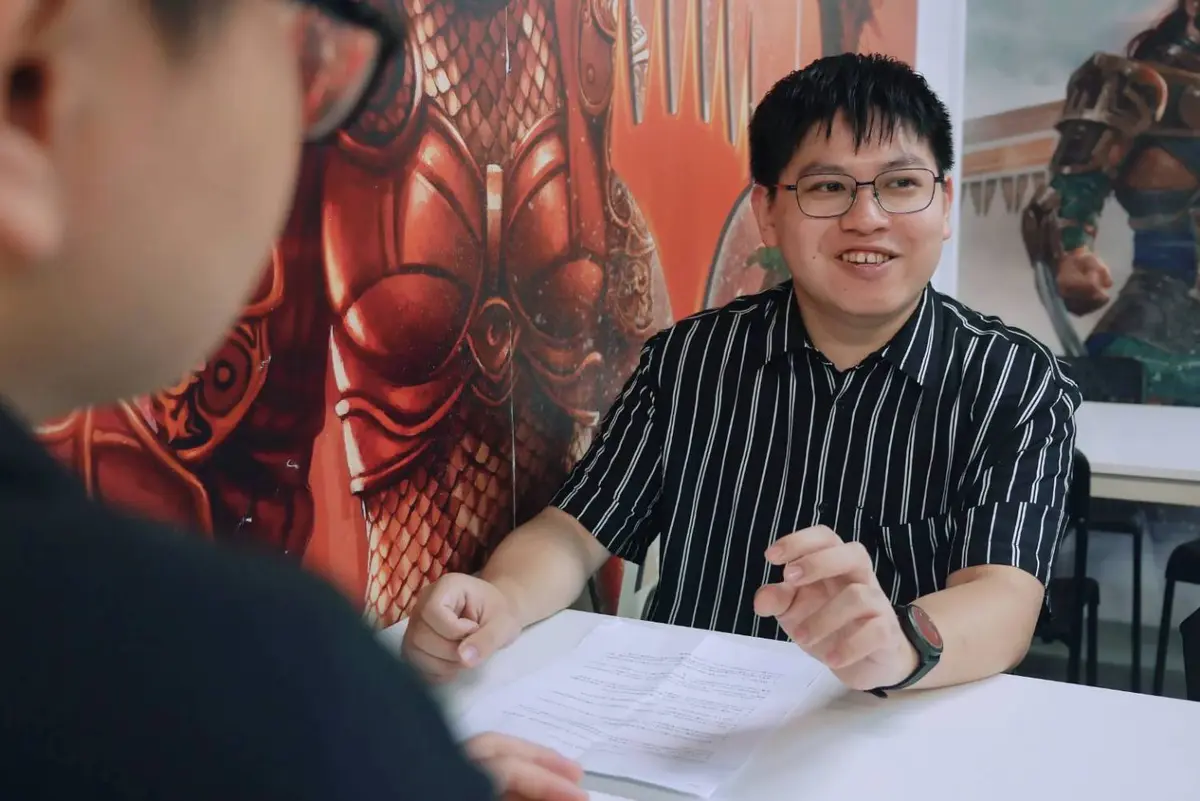
The interview begins! A red player naturally has to sit next to Chandra.
Q1: First of all, congratulations to michaelchen on qualifying for Worlds! Let’s go back to the scene of the 7th MIT Championship. How did you feel being in the final decisive stretch?
A: The 7th MIT Championship was actually not the period when I had prepared most intensively, so my mindset at the time was mainly to do what I could, believe in myself, and leave no regrets. Compared with the past, there was more of an element of hoping to enjoy the tournament.
Compared with myself in earlier seasons, my drive to win was relatively strong in the past, but it actually put me in an unhealthy mental state. In preparing for one season’s MIT, I spent a whole month glued to MO. As soon as I woke up I was practicing, and I played MO even while eating and sleeping, and I made the top eight of a Standard Challenge. I felt I was well prepared, but at the MIT Championship I made mistakes out of nervousness and got eliminated early. That experience made me realize something was off with my mindset, so I changed the way I prepared so that I wouldn’t fall into anxiety about gains and losses.
(Addition from michaelchen: After going through that failure, I also stayed away from Magic: The Gathering for a short while. But after getting enough rest, a game this fun still draws players back onto the tournament track, to keep digging into it and enjoy it in a different way.)
As for what impressed me most at the 7th MIT Championship, it was the opening hand of the last game. My hand was short on lands, but it had Extinction Event, the most critical card of that matchup, along with spot removal and Fable of the Mirror-Breaker. In the end I trusted the bet I had chosen and kept the hand. The point is not to have regrets. Of course this decision isn’t necessarily completely right, but even if the choice was wrong, it was my own choice.
Q2: What deck did you play at the time, and why did you choose it?
A: The deck I chose was Black-Red Midrange (Demons). If I remember correctly, the week before the 7th MIT Championship happened to be the finals in Japan, and what I took away from the Japanese event was that Unholy Annex // Ritual Chamber is an insanely strong card.
The mainstream at the time was still mono-black, but I started to notice people mixing in red for Fable of the Mirror-Breaker. That seemed like a perfectly logical development to me; after all, putting strong cards together with strong cards should make something even stronger, XD, and at that moment I felt I had to choose the strongest cards.
Another reason I chose black-red midrange is that, from experience, I feel I’m better at midrange decks. I’ve played a great many midrange decks in Standard in the past, and I think my understanding of resource trading is better than the average player’s.
The tournament format had just changed, and the 7th MIT Championship was also being run with open decklists. Personally, I think that gives midrange decks a considerable advantage, because you can adjust your opening strategy based on what you see, and especially because a good midrange deck has both an offensive side and a defensive side.
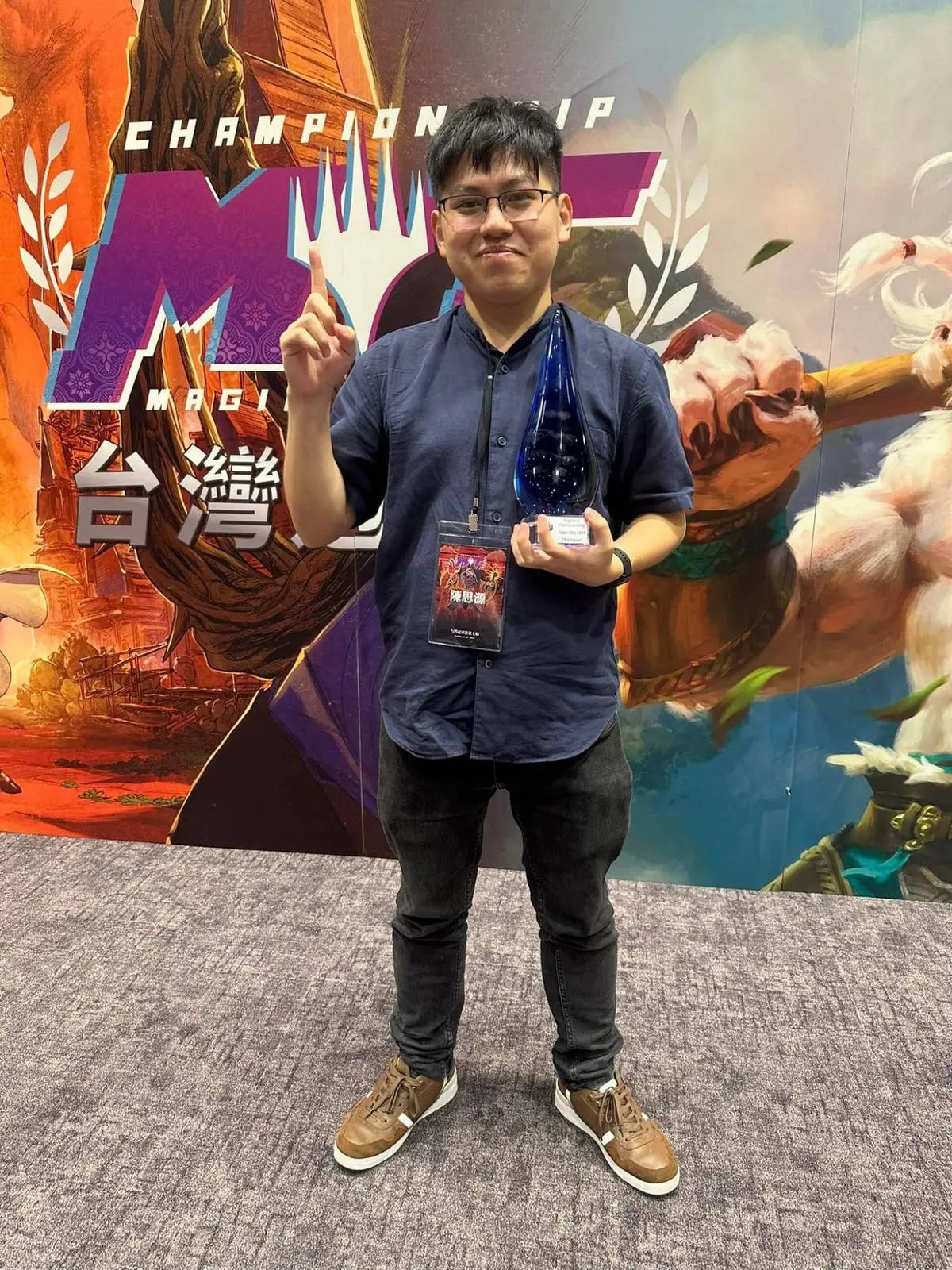
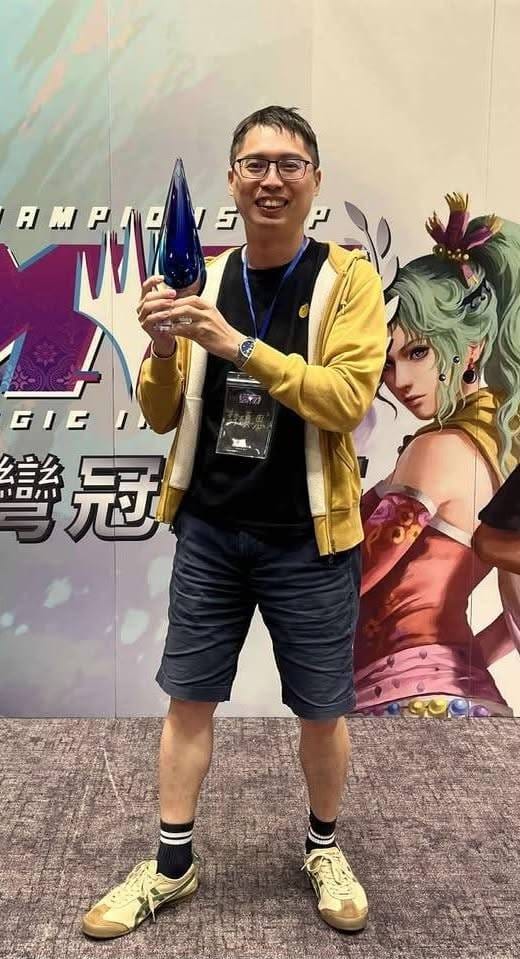
Black is strong, red is cool, mix them together and you get the MIT 7th champion!
Q3: Everyone has been inspired by someone along the way as they improve. Do you remember the starting point of how you got into this game? Under what circumstances did you first encounter Magic: The Gathering?
A: Everyone along the way inspired me to some extent. Even if what they showed me wasn’t always good, it’s through accumulating experience that I became who I am now.
I ran into a Magic: The Gathering booth at an anime convention and was simply drawn over to play XD (probably around the time of Battle for Zendikar and Oath of the Gatewatch). I also happened to meet an enthusiastic demo staffer who even gave me a deck after I finished playing, and that’s how I got hooked.
Q4: Is that excitement and emotion still there? Can you talk about how Magic today differs from the past?
A: I don’t think my love for Magic will fade in the short term. Of course, as I get older, my long-term life may not always let me stay as invested as I am now. In any case, I still love this game very much.
I’d say my passion for Magic will never fade. As for changes in the environment, apart from a bit of a gap when Traditional Chinese cards had just disappeared, I don’t find the other changes very noticeable.
Q5: The driving force behind greatness is often purer and more childish than we imagine. For example, cracking packs is just so much fun and so exciting. So what is the most important card to you? Please share your bond with it.
A: Mayael the Anima, I think. She’s been my main commander from way back until now. As the deck has kept changing, from the original aggressive combo build to the current big-fun build, I enjoy the process more than chasing rankings, and she represents my journey and state of mind in playing this game.
Q6: Please share with readers which formats you personally like and are good at, and roughly how you’ll prepare for this Worlds.
A: Standard and Pioneer. I think these two formats are fairer than the others (though it might be a bit different recently), with more resource trading, which is also what I’m good at. Personally I don’t like free spells much; in formats with free spells I tend to overthink and make misplays.
Nowadays I don’t practice or play in tournaments as often as before, but in exchange there’s more thinking. When it comes to reviewing games, I focus more on finding the crux of why I won or why I lost, which matters a bit more than people imagine. Of course, I’m not saying practice itself isn’t important, only that elements like ideas, concepts, and what you gain from the games are the most important things. I try to set luck aside, find the parts I need to review, and reduce mistakes that could happen in the future, and I think that’s a way for every player to get stronger.
I’m going to this Worlds from the perspective of enjoying the game; having fun matters most. For draft practice I’ll follow along on Arena, and for constructed I’ll discuss with the teammates I’ll be traveling with, then look for decks I have more of a bond with.
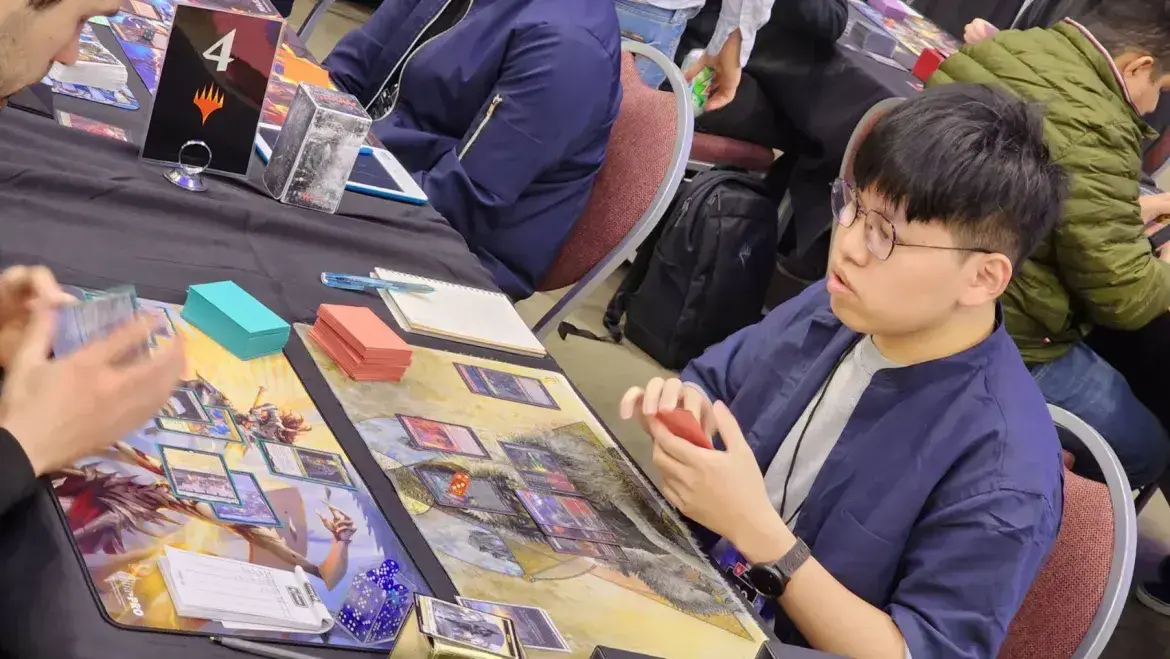
A photo of michaelchen battling at Pro Tour March of the Machine. Here’s to michaelchen shining at this Worlds too and enjoying every moment.
Q7: I’ve always been curious that competitive players surely have their own particular habits at the table. Could you share something beyond the “cards”? Do you have any near-superstitious habits? Or little tricks for hinting at or misleading your opponent?
A: I usually drink an energy drink before a tournament, whether Red Bull or Monster, because I think the first five rounds of a Swiss event are the most important. If I make the top eight I’ll have another can; if I don’t, I can go have a nice meal XD.
Also, I think the Magic gods can get angry. If you don’t truly want to win, they won’t let you win. You usually realize this when you misplay and get punished for it XD.
Q8: Competitive-level events always go through multiple preliminary rounds, at least a full day of continuous play. A good player must combine correct concepts, focused spirit, and ample stamina… Which trait do you think is the key to your standing out?
A: A healthy mindset, I think (michaelchen modestly says he’s just a scrub with nothing to lose XD).
Being able to believe in every one of your choices and carry your plan through to the end. Enjoying the tournament and learning from it; sometimes the point isn’t winning or losing, but what you gain.
Mistakes and misplays usually just make you feel pain, and I think it’s when you feel real pain that memory anchors form, so I think experiencing pain is a normal, unavoidable part of competing. After a tournament, the habit of rethinking all the possibilities may also be one of the big keys to how I gradually got myself in order. Sometimes in the moment you only see two options, A and B, when there are actually four options, A, B, C, and D. More important than judging right or wrong is finding all the possibilities.
Q9: Although it’s the player standing on the stage, the team, family, and friends around the player surely take part too. Have you experienced any memorable support or arguments in your life? And how were they finally resolved?
A: I once thought about heading down the path of a professional player, but my family was extremely opposed. I believe most Asian families would be the same; they don’t want their children to walk a narrow road, and that’s normal. Still, I think everyone has their own dream, and if possible, you should take your fate into your own hands. My results may not be the best, but if I could do it over, I think I’d still choose to give it another go.
Q10: Can you name three players who have influenced you, and tell us what you learned from them?
A: There are really many players who have helped me, so I can only list a few here.
On the Limited side, 大葉 (owner of 魔窟) helped me enormously. The high-intensity training in draft gave me a solid foundation in Limited and a good sense of life-total attack-and-defense trades.
On the constructed side, there used to be a player called 陳亮. His understanding of the Magic meta benefited me greatly. In his eyes, a tournament wasn’t just a tournament; it had many more tiny details.
For in-game concepts, I have to mention 郭老闆 of 遊戲平方. 郭老闆 is very good at analyzing board states and at mind games. He’s shared many situations verbally, and I learned a lot from his choices at critical moments.
Q11: Besides being a Magic player, you were also once a card shop clerk. Do the two have any influence on or spark with each other?
A: Although I’m no longer a card shop clerk, I’m still passionate about promoting this game. If there’s a chance, I’ll still take part in events of all sizes and teach, for a simple reason: I truly love this game.
Rather than saying the two influence each other, I’d say I’ve always just been burning my own spark XD.
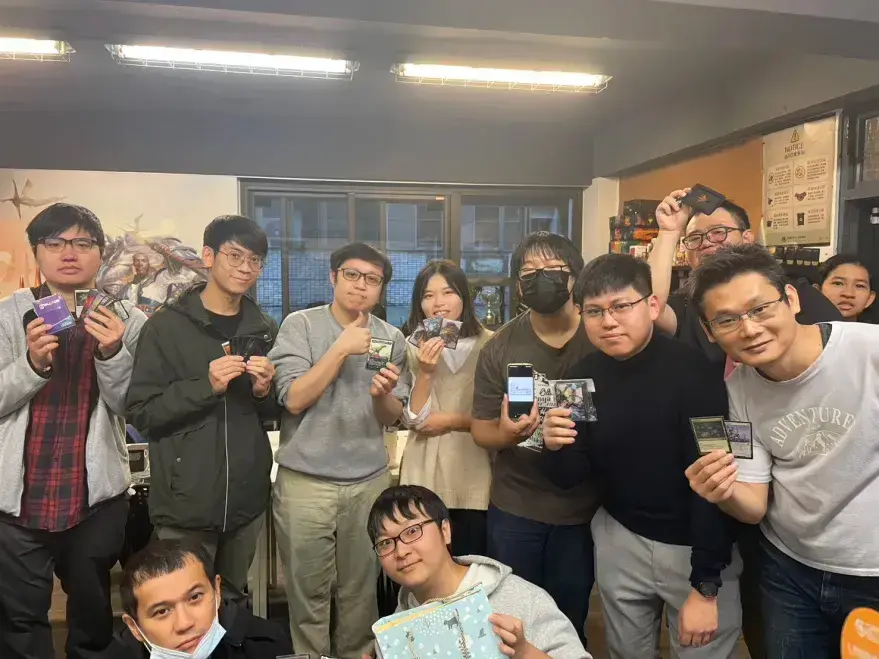
michaelchen with his friends from 遊戲平方. Quite a few of these players are still active at tournaments of all kinds, continuing to enjoy the deep charm of Magic: The Gathering.
Q12: As a competitive player, what is the most valuable advice you’ve ever received?
A: “Choose what you love, and love what you choose.” And “Think before you move; think first, then act.”
Q13: This is a deep TCG, but also relatively hard to get into. If you had to briefly introduce the charm of Magic: The Gathering, how would you describe it to a newcomer?
A: It’s a game that’s easy to learn and hard to master, but it’s precisely because it has so many complex and interesting mechanics that it feels so fun the M in MTG stands for masochist.
Q14 (question from faintmama): In northern Taiwan there are actually a few black-red enthusiasts scattered across various communities, and I’m one of them. This shared fondness has quietly and gradually brought us closer, and we’re even in the same group chat now. Could you tell us what you think about red and black?
A: Red is usually the more proactive, more direct color. Rather than taking pressure, I prefer putting pressure on my opponent in a game, tending to throw the problem to the opponent and create pressure on their life total it’s the color that strikes right at the soul.
Black is good at disrupting the opponent’s game plan, especially hand disruption. Combined, the two give double pressure and slowly crush the opponent.
Q15 (question from faintmama): Although I’m a player who loves playing homebrew decks, on the competitive stage I also often see michaelchen bringing out decks fewer people choose and usually getting good results. What’s your main focus when choosing a deck? Preference or power? And how does michaelchen usually gauge whether a deck is viable?
A: I treat it as a kind of challenge. If I can win with a deck I really like, in some sense it means I’ve truly improved and gotten stronger. But getting back to basics, a constructed deck must go through constant tuning before it reaches the level of being ready for the tournament stage.
Usually when I see an interesting archetype I want to try it, though it also has to fit the type of deck I like, and I try to tune the deck so it can fight the mainstream.
I feel players nowadays don’t dare to experiment like this, because it’s easier to fall behind the environment. But new mainstream decks are born precisely from others constantly experimenting, and I feel you shouldn’t give up on innovation because of a loss or two in a tournament. It’s a pity that I don’t have much time to play that way now.
Q16: Could you introduce your journey playing Magic: The Gathering? What format did you start with, and what made you join the competitive level?
A: I started playing Standard as soon as I got into the game. Personally I have a rather strong drive to win, and since I’d put in the effort I wanted something in return, and I simply didn’t want to lose every match, so naturally I headed down the competitive player route.
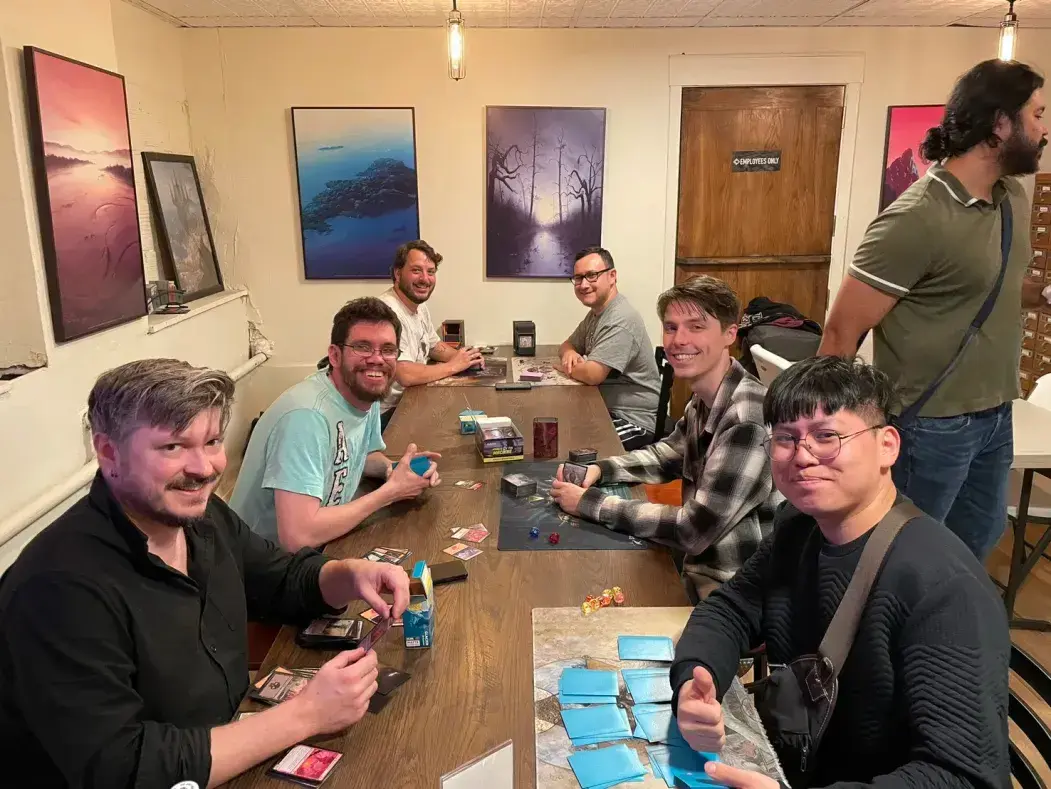
A record of michaelchen practicing at a local card shop before Pro Tour March of the Machine. Passion led michaelchen all the way onto the world stage, where he made friends with fellow players of different cultures and temperaments.
Q17: Finally, how would you describe what Magic: The Gathering means to you?
A: I’ve been playing this game for ten years, and I’ll turn thirty next year, which means this game takes up a third of my life. To me, Magic represents my youth.
I’ve met a lot of friends, and a lot has happened, leaving many memories, with both joy and sadness. It’s like a puzzle that can never be fully solved, and whenever I play it brings me new surprises. I hope I can keep playing forever.
- Title
- Worlds Player Interview: MIT 7th Champion michaelchen
- Author
- faintmama
- Created at
- December 1, 2025
- License
- This work is licensed under CC BY-NC-SA 4.0 .
Related Articles
World Championship Player Interview: MIT Round 12 Champion, Second Interview with SamuelChang
November 5, 2026
World Championship Player Interview: MIT Round 11 Champion Lee Shi Tian
November 5, 2026
World Championship Player Interview: MIT Season 10 Champion 許碩恩
November 5, 2026

Interview — Dominaria Library
March 1, 2026