
World Championship Player Interview: MIT Round 9 Champion Samuel Yeh
Note: This article was translated from Chinese by AI and may contain errors. Read the original Chinese version.
Let’s get started!
The Bird God descends once more!
Thanks to SamuelChang for what he shared this year at 魔風集會所; I believe everyone gained something from how he prepares for tournaments and the logic behind how he picks decks. Beyond his written content, I’ve also always been deeply impressed by SamuelChang as a player. In several matches against him, I could clearly feel how exquisite his understanding and interpretation of details was. This formidable player sometimes posts funny everyday stories on his fan page 鳥不喇基, yet often transforms into a war demon once he sits down at the table. What does this man of many sides really think about Magic: The Gathering?
I was fortunate to have competed in the tournaments where SamuelChang is active! Now let’s take a deeper look at his thinking and his life.
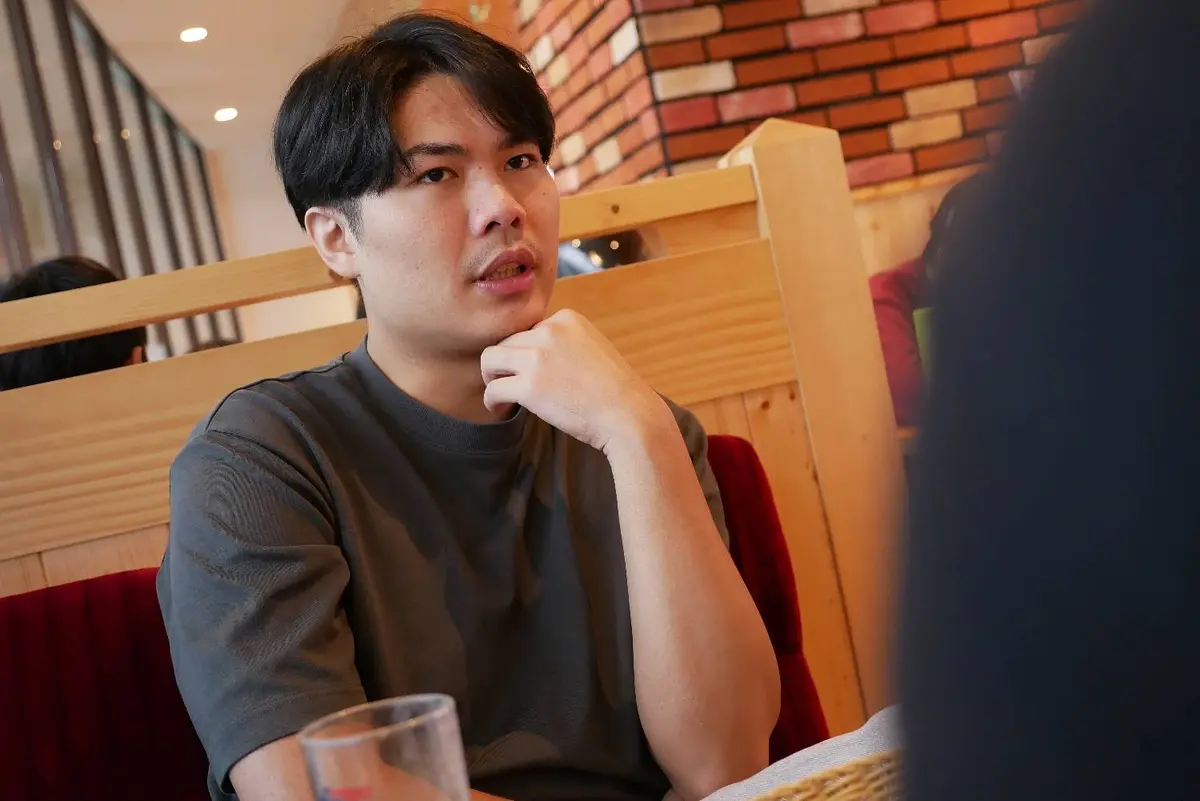
Many thanks to SamuelChang for taking the interview despite being short on sleep
still handsome. Besides the originally planned content, we also took the chance to chat about all sorts of topics, from Magic to life.
Q1: Before we begin, I’d like to congratulate SamuelChang on qualifying for the World Championship! Let’s go back to the scene of the MIT Round 9 Championship first. How did you feel in that final decisive stage?
A: In the top 4, my match ended earlier, so I took the chance to go watch the other side, the match between 博源 and Rich 郭沐儒. While watching I had a feeling: their decks should both be hard to play against me, so at the time I thought I had a bigger edge in the matchups. Facing 博源 in the finals, I actually got a bit tired from that mindset; after all, I had already played nine rounds of Constructed, and my stamina dips a little by the end. My computing power is probably lower than before and I didn’t calculate everything perfectly, but luckily the deck was strong enough, and my big-picture sense and experience are probably a bit better than before.
Before the MIT Round 9 Championship, I mostly treated the tournament with a calm mind, thinking, as long as I keep participating, maybe one day I’ll naturally take first place?
I used to have the habit of always sleeping well before a big tournament, because I once won an event after sleeping well, so subconsciously I cared about it more; but for the MIT Round 9 Championship I didn’t push myself especially hard, and rested close to three or four in the morning, a bit too excited to sleep. When I got up I felt a little tired, but I told myself to relax and not to care too much, after all, I’d already done everything I could.
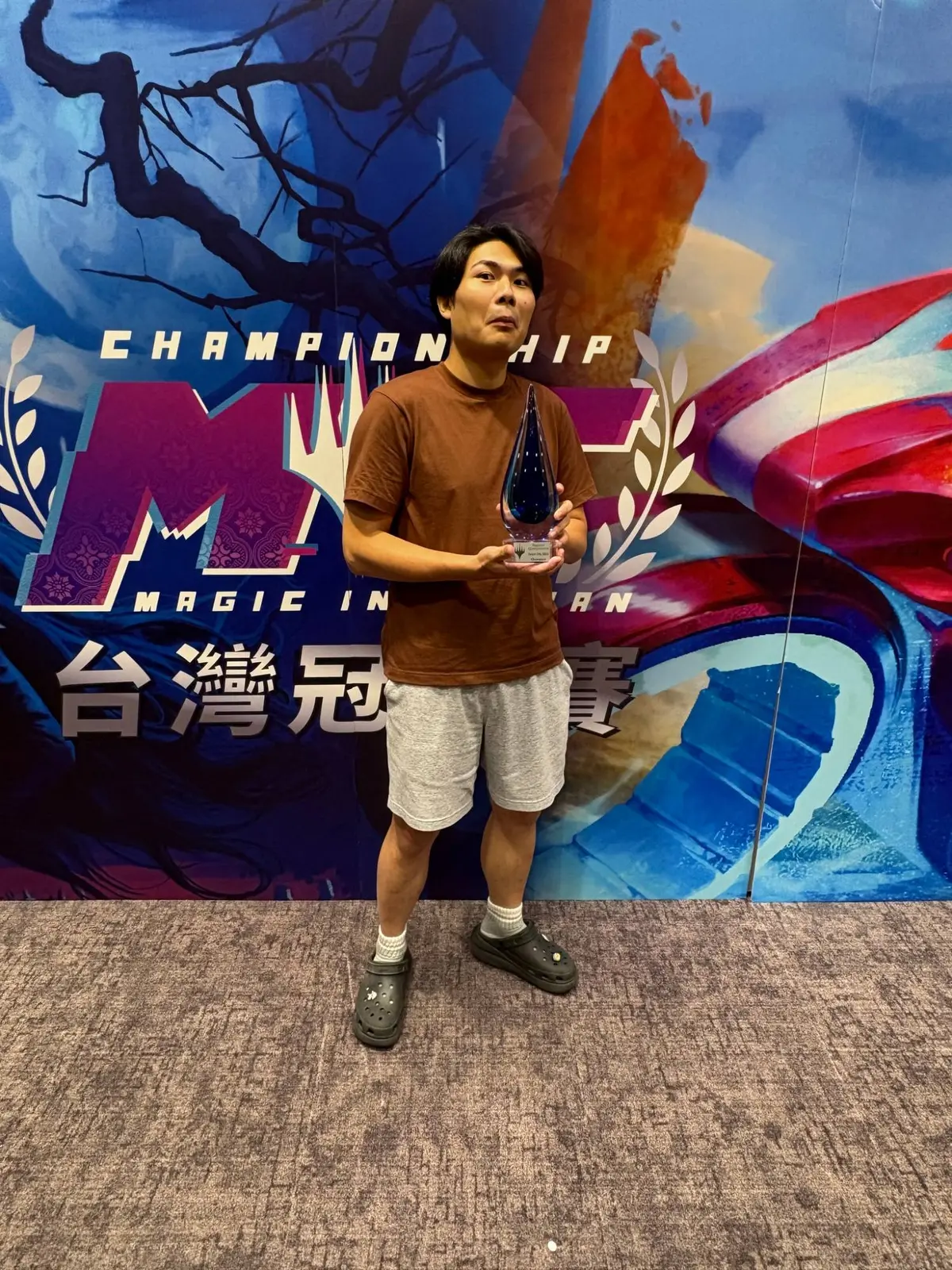
All in all, congratulations to SamuelChang on lifting the MIT Round 9 championship ⊙⊙
For that nickname we can’t mention, please head over to 鳥不喇基 yourselves.
Q2: What deck did you play at the time? Why did you choose this deck?
A: Izzet Prowess. My goal is to find a deck that wins.
As for deck building, early on I was like everyone else, mostly copying the meta decklists, but later I came to prefer building my own decks. It’s not because the building process makes me happy; it’s fun, but also a bit painful, and people who’ve been through it will probably understand the real appeal. Building a deck that can win isn’t easy; it takes repeated testing and a correct mathematical foundation. Doing so costs a player a great deal of time early on, because each time a single card changes, the lands likely have to change with it, and you go through countless calculations before the build is finished.
During my school years, and when I went to Barcelona for the Pro Tour, I happened to meet some strong card players from China. For the Izzet Prowess build at the MIT Round 9 Championship, they helped me settle the main deck’s sixty cards.
(For SamuelChang’s preparation process and thoughts on the MIT Round 9 Championship, see the article SamuelChang’s MIT#9 Review)
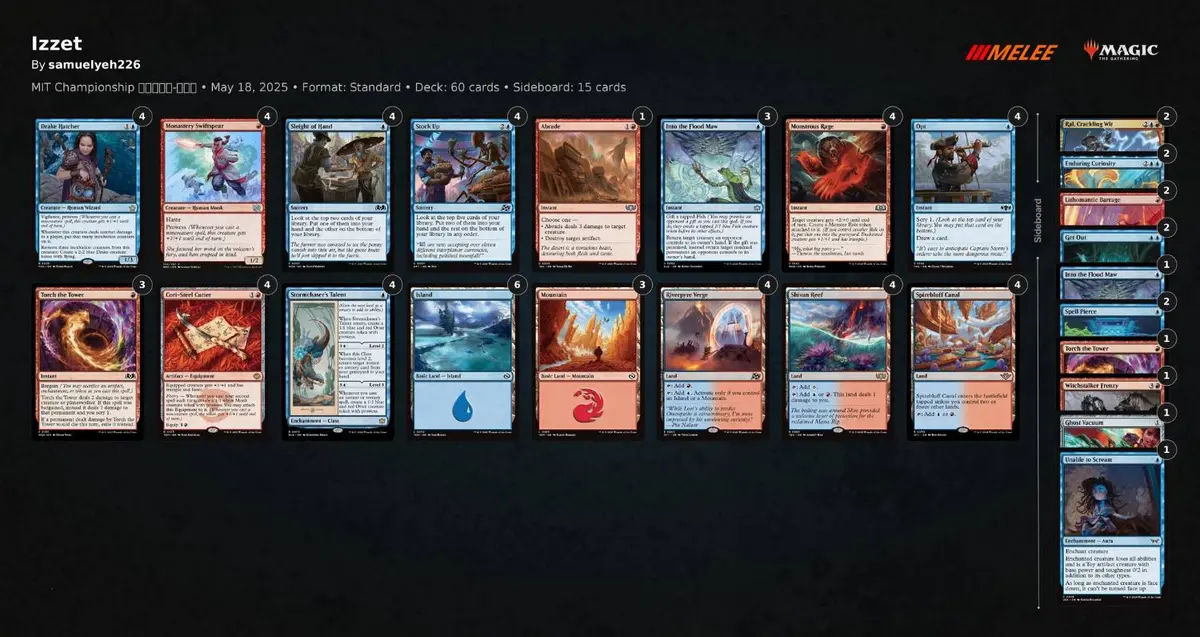
First, here is a simple copy of SamuelChang’s decklist from the MIT Round 9 Championship. Before finishing this article, you may want to look over this build yourself and guess at SamuelChang’s thinking at the time
especially that Get Out in the sideboard.
Q3: Everyone who improves has surely been inspired by someone. Do you still remember the origin of your first contact with this game? Under what circumstances did you meet Magic: The Gathering?
A: When I was in high school, the first card game I touched was Yu-Gi-Oh!, then the World of Warcraft TCG, which I played for a year or two. Along the way I won a Chinese national championship, an Australia-New Zealand championship, and also won all of Shanghai’s festival tournaments (similar to Magic’s store championships), and I found it fun to earn pocket money this way. At that time I hadn’t touched Magic: The Gathering at all, but egged on by people around me, I often spent my tournament prize money on cracking Magic packs.
As for the real process of getting into Magic: The Gathering, to some extent I have to thank Mr. 任建明 and 瓜瓜 (the owner of CardMaster). I used to come back to Taiwan on holidays now and then, and when I had nothing to do, 瓜瓜 invited me to play a tournament and Mr. 任建明 lent me a Delver deck; that was my first time in a competitive-level Magic event. Thanks to that experience, I was able to join the big Magic family.
At the time my grasp of the scope of public information was already decent, but in terms of the randomness of non-public information, I wasn’t yet at my current level of understanding.
I learned many concepts from 郭老闆 and watched a lot of his brilliant mind games; 老許 was a player who drafted extremely well at the old CardMaster, and they rarely misplay within the scope of public information, which I think is the basic condition for being a great player; there was also another CardMaster player, 水母, who was probably also among the strongest drafters at the time, roughly on the same level as 郭老闆.
Q4: Is that excitement and emotion still there? Could you talk about how Magic today differs from the past?
A: Tournaments have their own fun and cracking packs has its own fun, and the two are completely different. On the pack-cracking side, I quite miss some of the experiences from before.
On the tournament side, the atmosphere today is really much better. There was a time when you had to watch out for whether the opponent would pull some weird move; today’s players are by and large good, and the community is good too. To some extent we have the pandemic period to thank for that.
Today’s players don’t get as many chances at Limited as before, and I personally think Limited experience greatly affects one’s understanding of the board in Constructed. I’ll bring this up again later in the interview, and it’s something I currently find a bit of a pity.
Q5: The driving force behind greatness is often purer and more childish than imagined. For example, cracking packs is just so much fun and so exciting. What is the most important card to you? Please share your bond with it.
A: A few interesting things I can share.
The first card I ever opened in my life was Master Transmuter. My friend in Shanghai saw it and shouted that he wanted it, so I sold it to him cheaply, and when I went back and looked it up, I found it could sell for two or three hundred RMB…
The second involves Return to Ravnica, a set I drafted a great many times and cracked quite a lot of packs of, XD. One time while chatting with people at a card shop, I suddenly had a hunch and told those around me that I felt I’d open a foil Deathrite Shaman today. I grabbed a random pack and opened it, and a foil Deathrite Shaman really did appear; the whole room screamed. It left a deep impression on me, and then I gave it as a birthday gift to the friend who had bought the Master Transmuter back then…
(Though that friend later gave SamuelChang a foil Liliana of the Veil in return XD)
A group of friends once also gave me a Jace, the Mind Sculptor so I could play Standard, and two weeks later it was banned…
I have no special feelings for specific cards, but I have a deeper impression of memories and stories.
Q6: Please share with readers which formats you personally like and are good at. When facing a big tournament, what preparation process or tricks do you usually have?
A: The key is still: how much you can do in the time you have. I usually start preparing consciously about two weeks before a big tournament. It also starts with gathering information; I look at content on X and MtgGoldfish.
As for formats I’m good at, I’d mention Limited; if I practice, I’m much stronger than in Constructed. After all I have more experience there, because I went crazy playing in university, and could even play three Friday Night events in one night.
I think Magic’s attack and defense is a very artistic thing: hand the same situation to different people, and there may be a 60% to 70% chance of different lines of play, and different lines completely affect the result. For example, if I have a 2/2 creature and the opponent has a 2/3, and I have no trick in hand, should I attack? It comes down to whether I can still win the game if I don’t make this attack, and if I choose to attack, how do I make the opponent realize I might have a trick? These high-level mind games and concepts of attack and defense can in fact all be learned and honed through Limited. Sometimes accidentally ending up with weaker cards may instead be a chance to gain experience, because players have to rack their brains over how to squeeze through a narrow gap to victory, and the moment you realize certain techniques, you improve from then on.
Practice intensity for non-Standard formats is weaker. Before this year’s Pro Tour EOE, I didn’t even think I was good at Modern, because Modern’s card pool is a bit too deep for me, and for players who build their own decks, the mana base is even more complicated; only this time did I finally work out some insights.
As for tournaments, I personally always say an old line: do what we can, and leave the rest to luck. However, everyone’s understanding of “do what we can” differs. To me, the main question is how badly you want to win. Can you give up all other leisure activities and time? Do you occasionally have an argument with your partner because of it? Do you even study Magic a bit while eating? Well, my personal interests happen to all be related to card games, and I especially love Magic: The Gathering, so I can reasonably bear this kind of preparation process.
I personally pursue effective practice; as for what effective practice is, it’s actually different for everyone. Some people suit practicing in paper, some online. Early on I preferred practicing online, finding it saved time, but recent tournaments lean toward openlist, so if you can find someone of similar skill to practice paper matches with, that’s quite good.
If I could recommend one thing to newcomers, I’d say: after losing a match, take every chance you can to review it; especially since the atmosphere in our circle has recently been very good, you can also try discussing various details with your opponent after the match.
As for overseas events, I consider my English neither good nor bad, but I can’t go to the venue many days early for a Testing House, since life has work and other everyday trivia, and Magic really can’t take up all my time.
Regarding SamuelChang’s preparation process, I’d again invite readers who haven’t read it to refer to the article SamuelChang’s MIT#9 Review XD.
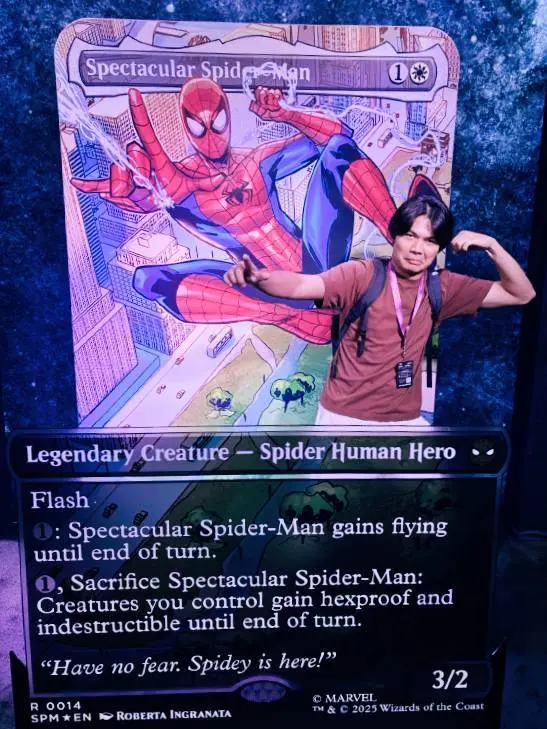
SamuelChang, who recently achieved a ten-win “continue” run at the Pro Tour, will also attend Magic World Championship 31 starting in a few days. Wishing him even greater results, bringing back more exciting stories for us, and a good time enjoying another Magic journey.
Q7: What type of player do you consider yourself to be? What kind of game plan are you better at?
A: I don’t reject any type of deck, but if I had to say, I probably like aggro less, because my grasp of mirror matches is low and the luck factor is higher than in other types.
I think great players and great matches are all built on fully understanding the game plan: for example, when playing a control deck, counter the opponent’s key spells, then resolve your own threat to win. But beyond that, many decks’ game plans have to change from match to match, and sometimes, if nobody reminds them, players easily fail to realize the crux of their problem. Not everyone can fully recognize the core objective, and that is actually the most important thing.
Q8: I’ve always been curious that competitive players surely have their own distinctive habits at the table. Could you share the parts beyond “cards”? Do you have any near-superstitious habits?
A: I used to have a small superstition: after losing a game, go to the restroom to shake off the bad luck (郭老闆 taught me XD), until last year I found it seemed useless, and I broke this superstition myself.
As for the tournament itself, I’ve always hoped everyone takes the tournament seriously, and I look forward to meeting highly competitive matches. Some situations can’t be won without taking them seriously, and at those moments I naturally enter a state of very focused attention.
Q9: Competitive-level events always go through multiple rounds of preliminaries, at least a full day of continuous matches. An excellent player must combine correct concepts, focused spirit, and abundant stamina… Which quality do you consider the key to standing out?
A: A good deck; understanding the game plan in every match; and also my understanding of how some decks stack up against each other differs somewhat from other players’.
The way of playing Openlist is different from usual: if the normal game plan can’t win, you should switch to a different game plan. For example, against the black-white Self-Bounce deck of the time, if I play a creature for them to kill, then play another creature and let them bounce an Aura to kill me again, playing that way is definitely wrong and I have to change my approach. Early on I wouldn’t cast creatures, just land, land, land, so the opponent could only hold Nowhere to Run in hand; you need this understanding to win that matchup. Sometimes these things can also be learned from overseas players’ guides.
I recommend everyone look at game theory in economics. Try to find versions with as little math modeling as possible; after all, playing cards is about thinking what the opponent will think, and also how the opponent guesses at your thinking, and there are several layers of relationships worth considering.
Q10: Although the player is the one on the stage, the team, family, and friends around the player surely take part too. Have you encountered any memorable support or arguments in life? How were they eventually resolved?
A: I’m quite grateful to my girlfriend for accepting my lifestyle.
I used to attend Soochow University, where a senior I’d met in my World of Warcraft card game days invited me to join the bridge club. Later, in our discussions about “psychic bids” in bridge, we couldn’t reach a consensus on the concept for a while. The senior cared more about small-probability events in the current hand, while I focused on long-term win rate.
This senior later joined Magic: The Gathering too. Since I keep my championship trophy in CardMaster’s display case, when I run into him playing there lately, I tell him: “I won’t argue with you about bridge, but on Magic you always have to listen to me.” He says OK, no problem XD.
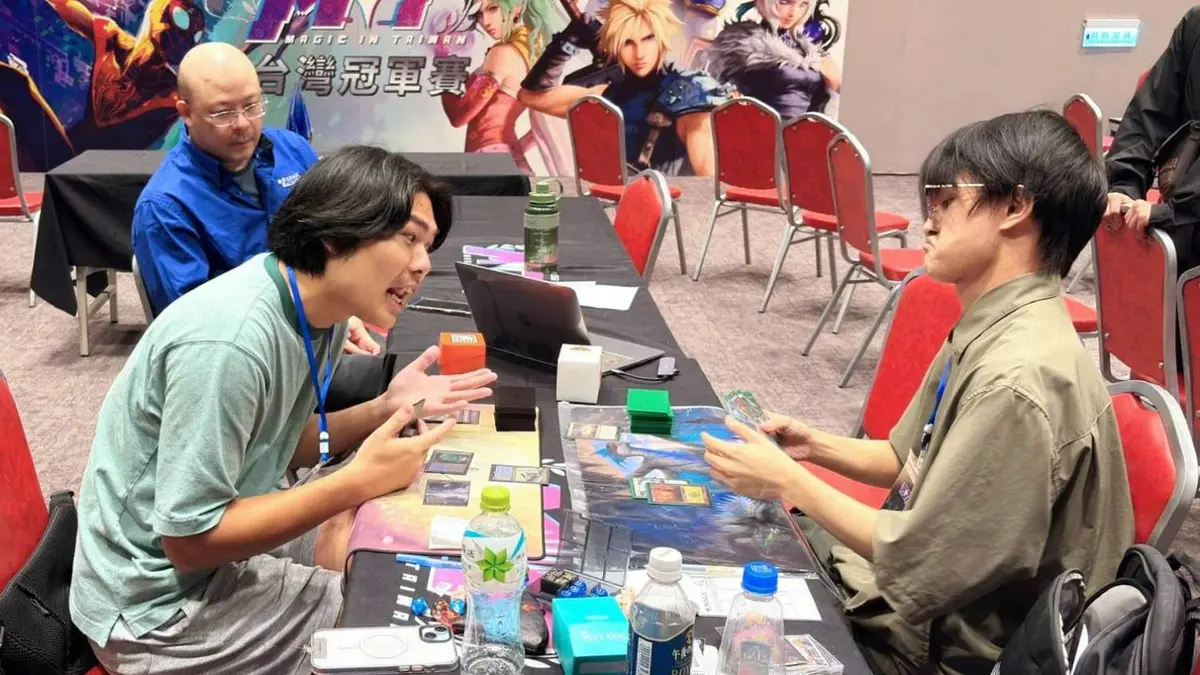
Although this is a photo from the MIT Round 10 Championship, SamuelChang and his comrade 承翰 both advanced to the top 4 again and played a match that was exciting in every sense. According to SamuelChang, 承翰 is the Taiwanese player who gives him the most stimulating discussion and feedback, and I believe everyone will continue to see them active in the future.
Q11: Could you list a few players who have influenced you, and tell us what you learned from them?
A: Here I’d still like to mention 郭老闆.
I once saw an opponent of 郭老闆 with a Chandra, Torch of Defiance that could activate its -7 ultimate, with loyalty at exactly seven, meaning that activating the -7 ultimate directly would send it straight to the graveyard. At that time, 郭老闆 had two cards in hand: one was a Torrential Gearhulk the opponent had seen, and the other was a Disallow the opponent hadn’t seen. Before the opponent made their decision, 郭老闆 deliberately made the opponent aware once more of the Torrential Gearhulk in hand, and the opponent was lured into choosing to use Chandra, Torch of Defiance’s -7 ultimate directly, intending to win the match outright, and 郭老闆 was thus able to respond with Disallow and turn that match around.
Through his own actions, 郭老闆 turned a 5% win rate into a win rate above 90%.
Another time, 郭老闆 was playing a final at 貓腳印 - 桃園店 against his hapless opponent; 郭老闆 was playing mono-white aggro and the opponent was playing Esper Control. One game went on for ages. 郭老闆 very patiently used up all of the opponent’s answers, and only then slowly pushed through with small creatures to take that match. I believe the line 郭老闆 chose was the only route that could win that match, and his thinking truly amazes me.
Sometimes a match has only a 5% win rate, and I believe a player must fight for that five percent.
Q12: This is a TCG with great depth but also relatively hard to get into. If you were to briefly introduce the charm of Magic: The Gathering, how would you describe it to newcomers?
A: I think it depends first on each newcomer’s situation, and only then can I recommend a form that suits them. You may need a bit of a masochistic streak XD, a brain that wears well, the ability to enjoy the process of improving through matches, and an understanding that losing is normal.
This is how I feel about playing cards, and Magic: The Gathering especially: being able to play a losing position into a win, having that possibility while being full of uncertainty, is called playing cards; anything else is just playing chess.
Q13: Lastly, please describe what Magic: The Gathering is to you.
A: This is the same as the words left after the MIT Round 9 Championship: “Play games, make friends, see the world.”
Making friends is the element I think is most important. Because of Magic: The Gathering, I’ve been able to practice all three of these things.
- Title
- World Championship Player Interview: MIT Round 9 Champion Samuel Yeh
- Author
- faintmama
- Created at
- December 2, 2025
- License
- This work is licensed under CC BY-NC-SA 4.0 .
Related Articles

World Championship Player Interview: MIT Round 12 Champion, Second Interview with SamuelChang
November 5, 2026

World Championship Player Interview: MIT Round 11 Champion Lee Shi Tian
November 5, 2026
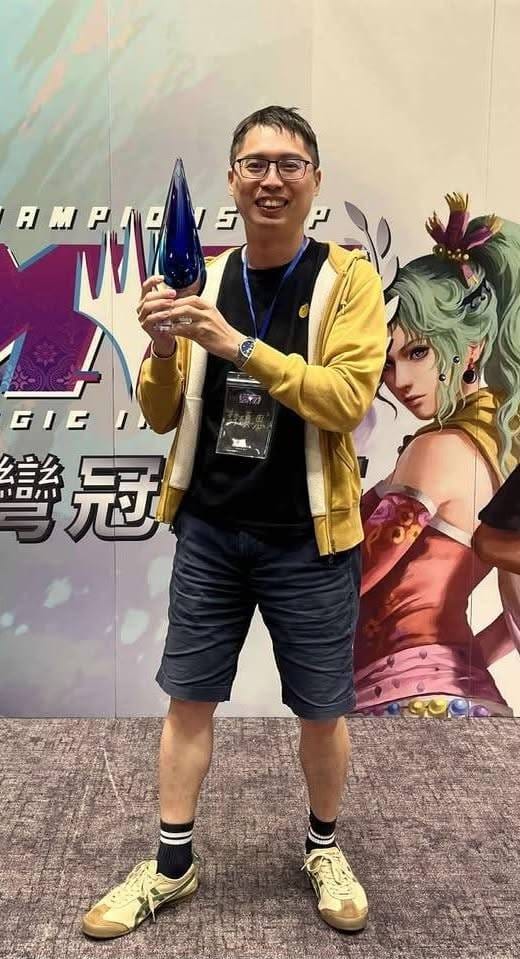
World Championship Player Interview: MIT Season 10 Champion 許碩恩
November 5, 2026

Interview — Dominaria Library
March 1, 2026