
A First Look at Murders at Karlov Manor Standard

Note: This article was translated from Chinese by AI and may contain errors. Read the original Chinese version.
Before We Start
It’s time again for the most exciting brainstorming session of every set. Let’s see what changes MKM can bring to Standard!
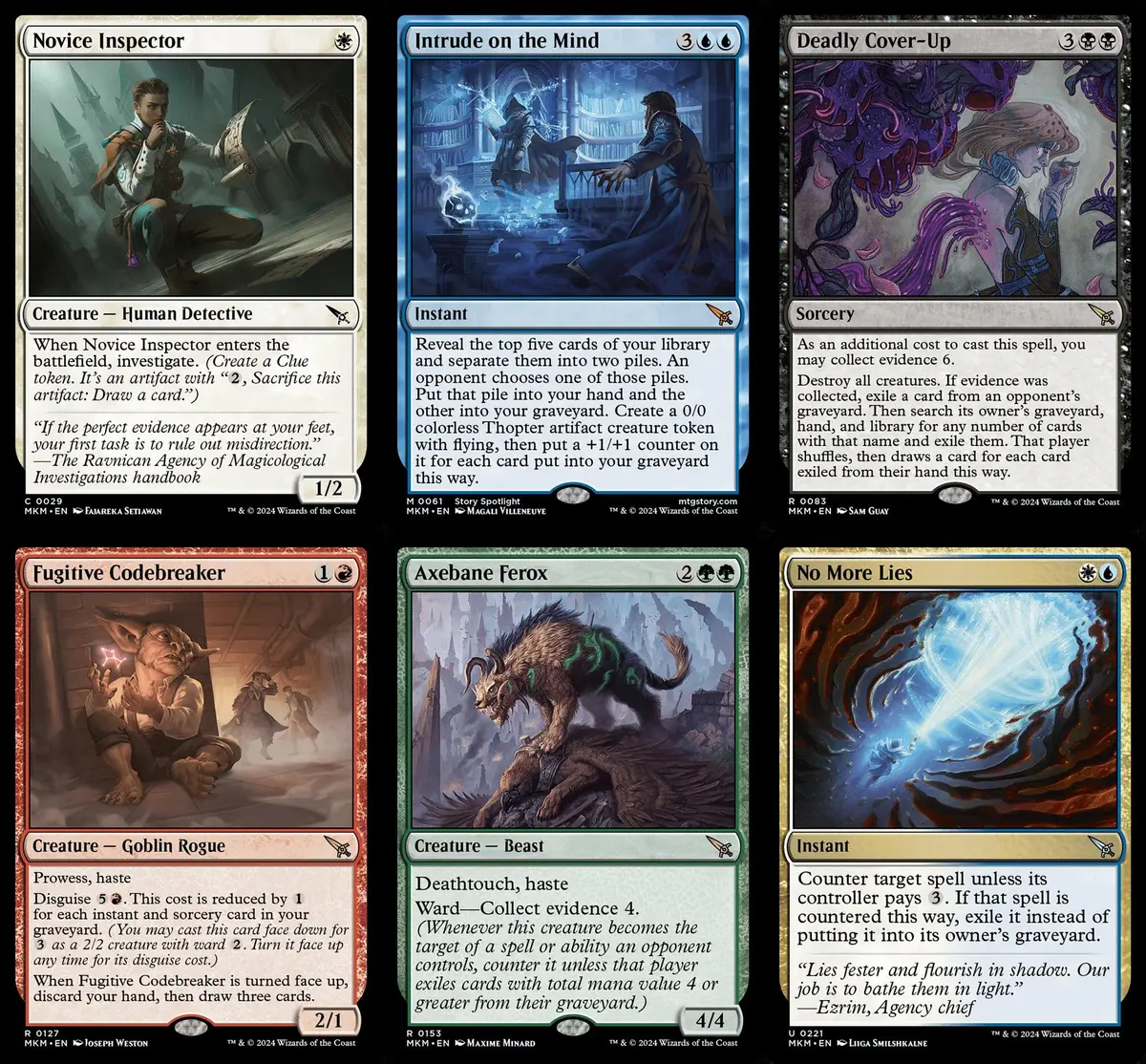
Deck Introductions
Grixis Evidence
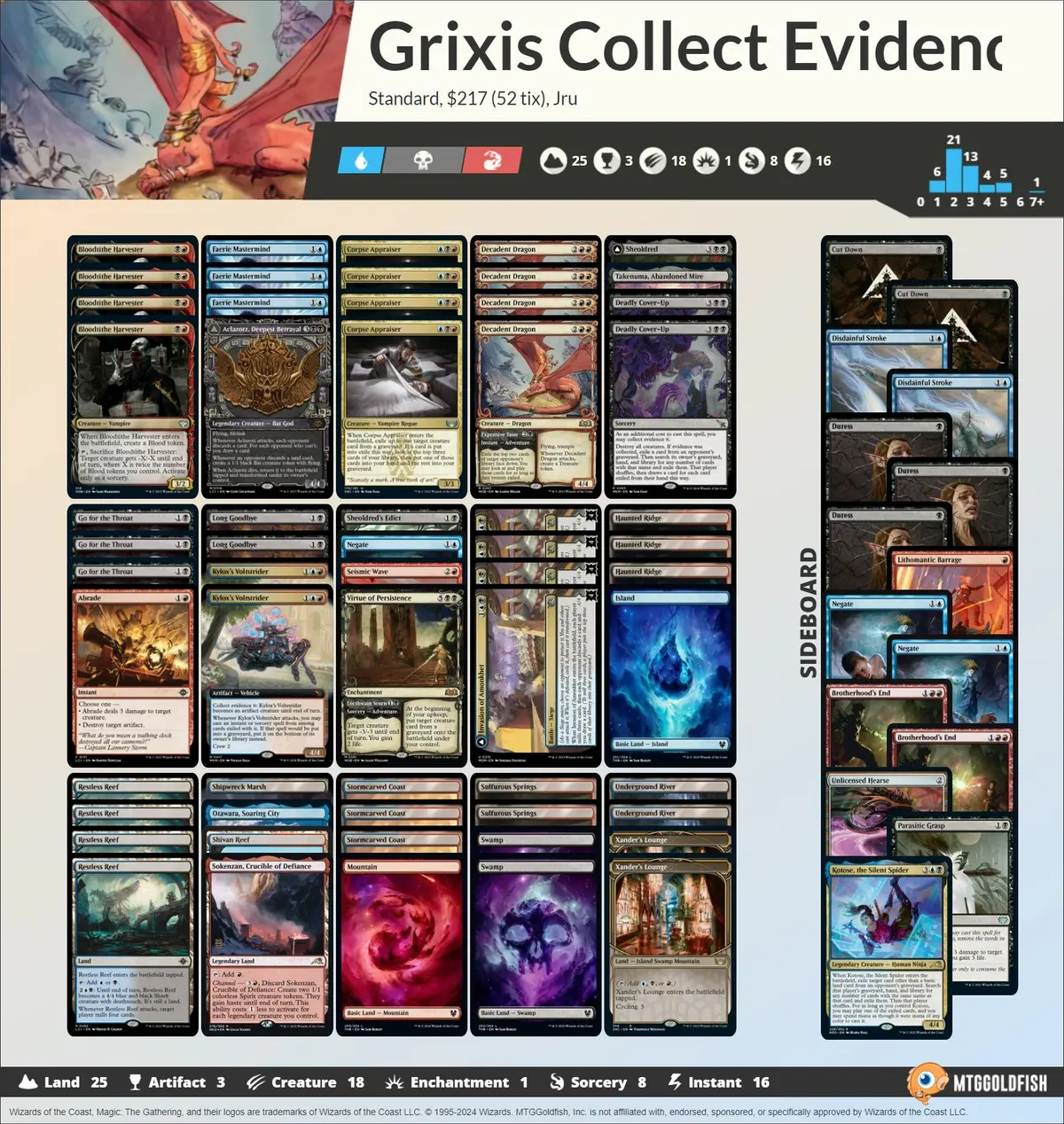
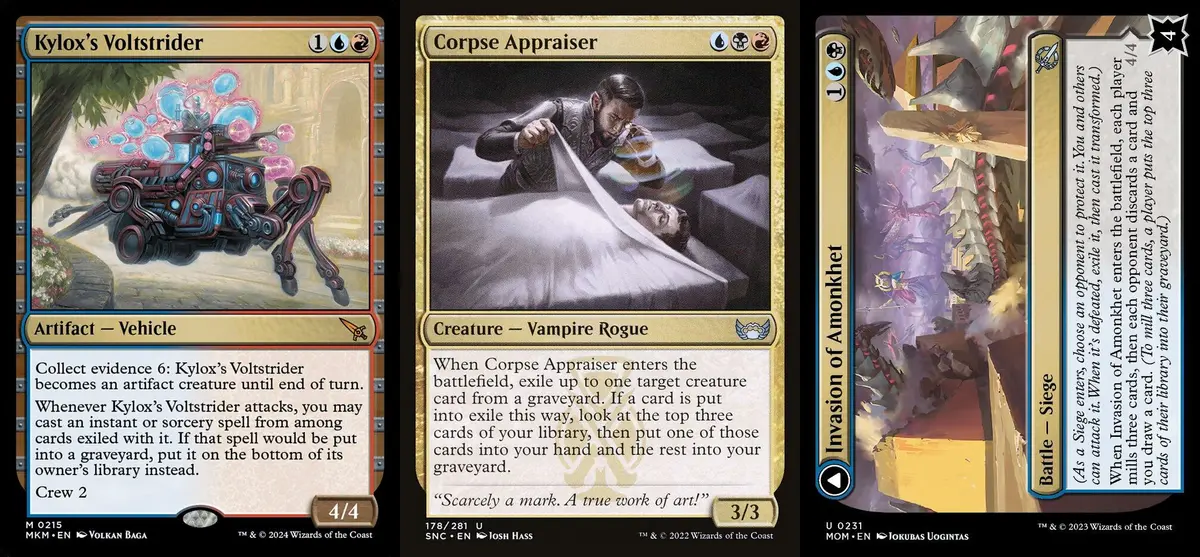
The resource-battle engine of Corpse Appraiser+Invasion of Amonkhet // Lazotep Convert has always been a deck foundation the author loves, and this set’s new card Kylox’s Voltstrider fits into this system perfectly. Corpse Appraiser and Invasion of Amonkhet fill the graveyard and provide fodder for collecting evidence, and Kylox’s Voltstrider, as a Vehicle, has decent survivability, and its power is exactly 4, so it can take down an Invasion of Amonkhet in a single hit. In addition, another new evidence sweeper, Deadly Cover-Up, can’t be overlooked either; it patches the old weakness of the Grixis Amonkhet shell, which struggled against opponents going wide.
Grixis Thief
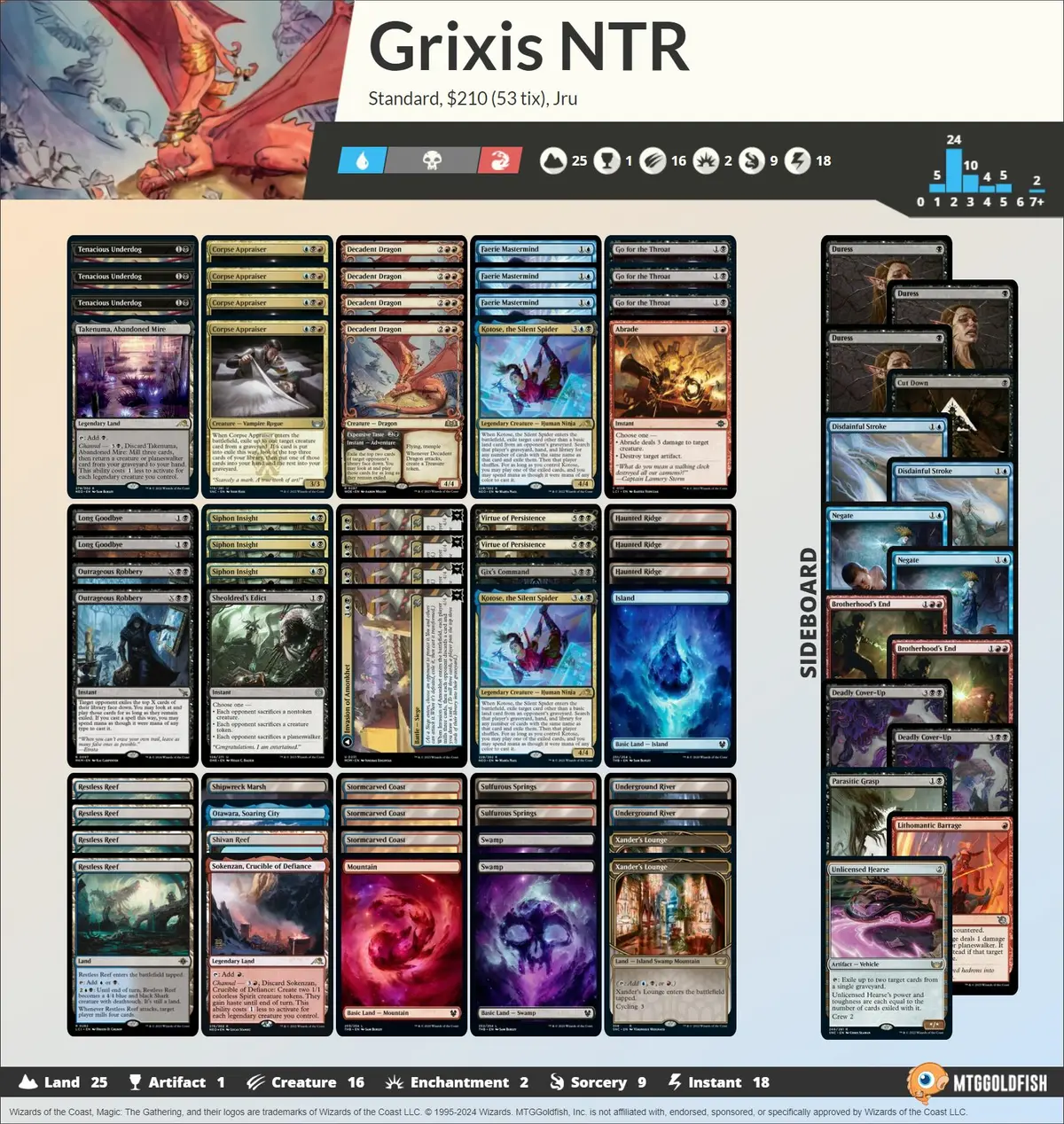
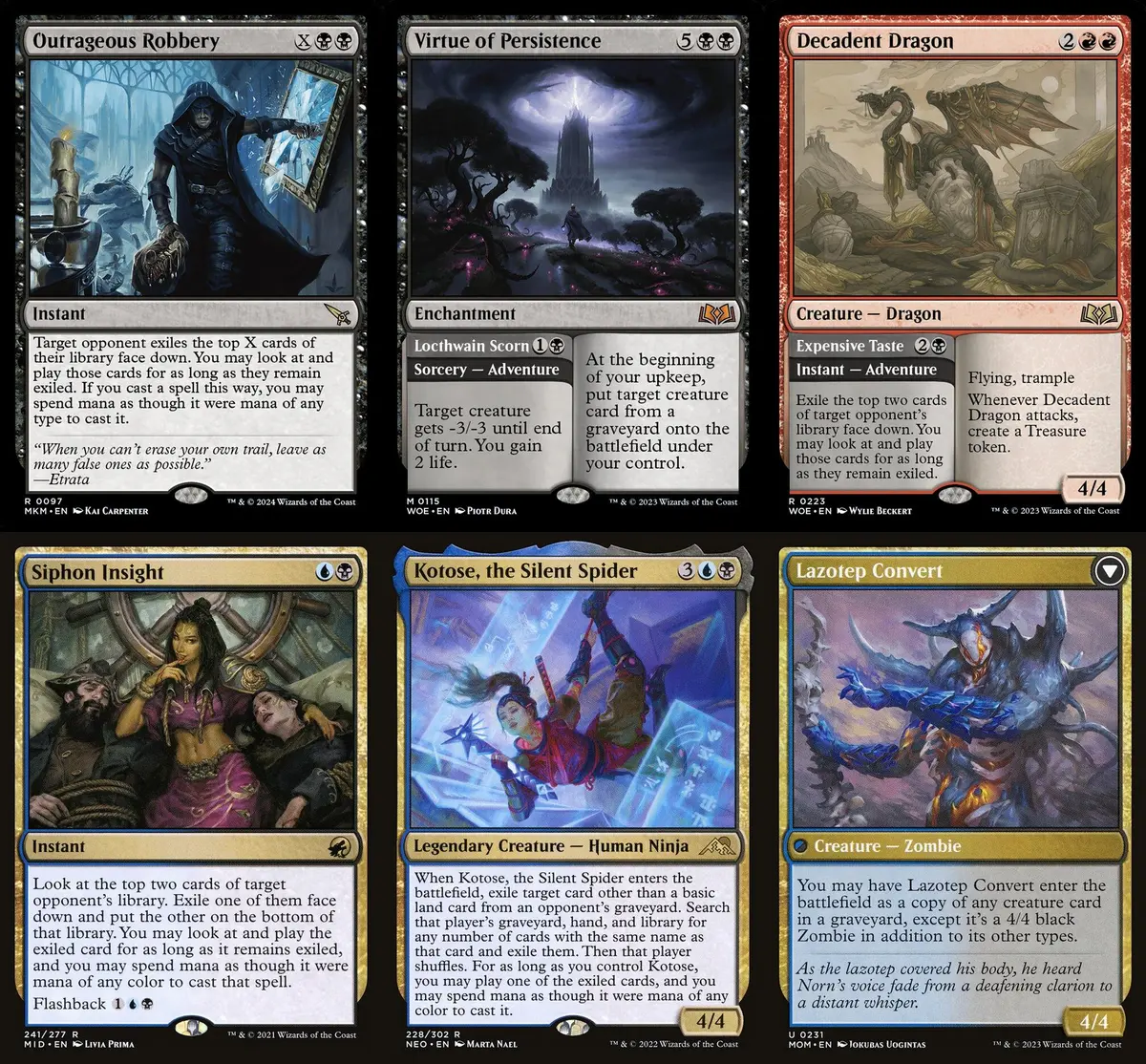
Outrageous Robbery is the author’s personal favorite new card of this set. It is essentially a draw-X spell, except you draw from the opponent’s library. Since we’re already going to steal from the opponent’s library, we might as well focus on stealing from the opponent even more ❤️
Siphon Insight & Decadent Dragon // Expensive Taste can likewise borrow from the opponent’s library, Virtue of Persistence // Locthwain Scorn borrows from the opponent’s graveyard while doubling as removal, and Invasion of Amonkhet // Lazotep Convert, although it doesn’t really take the opponent’s cards, can also make good use of the opponent’s graveyard resources. Kotose, the Silent Spider borrows cards from the opponent’s graveyard and snips the owner’s brain along the way, and as a four-power creature with an ETB ability it also pairs well with Invasion of Amonkhet. Also, after playing a game with this deck, remember to count whether the thickness of your own deck has increased, especially when the opponent’s deck is the same as yours.
Focusing on stealing from the opponent is also a kind of devotion, right?
Dimir Amonkhet Flyers
Dimir Amonkhet Flyers decklist link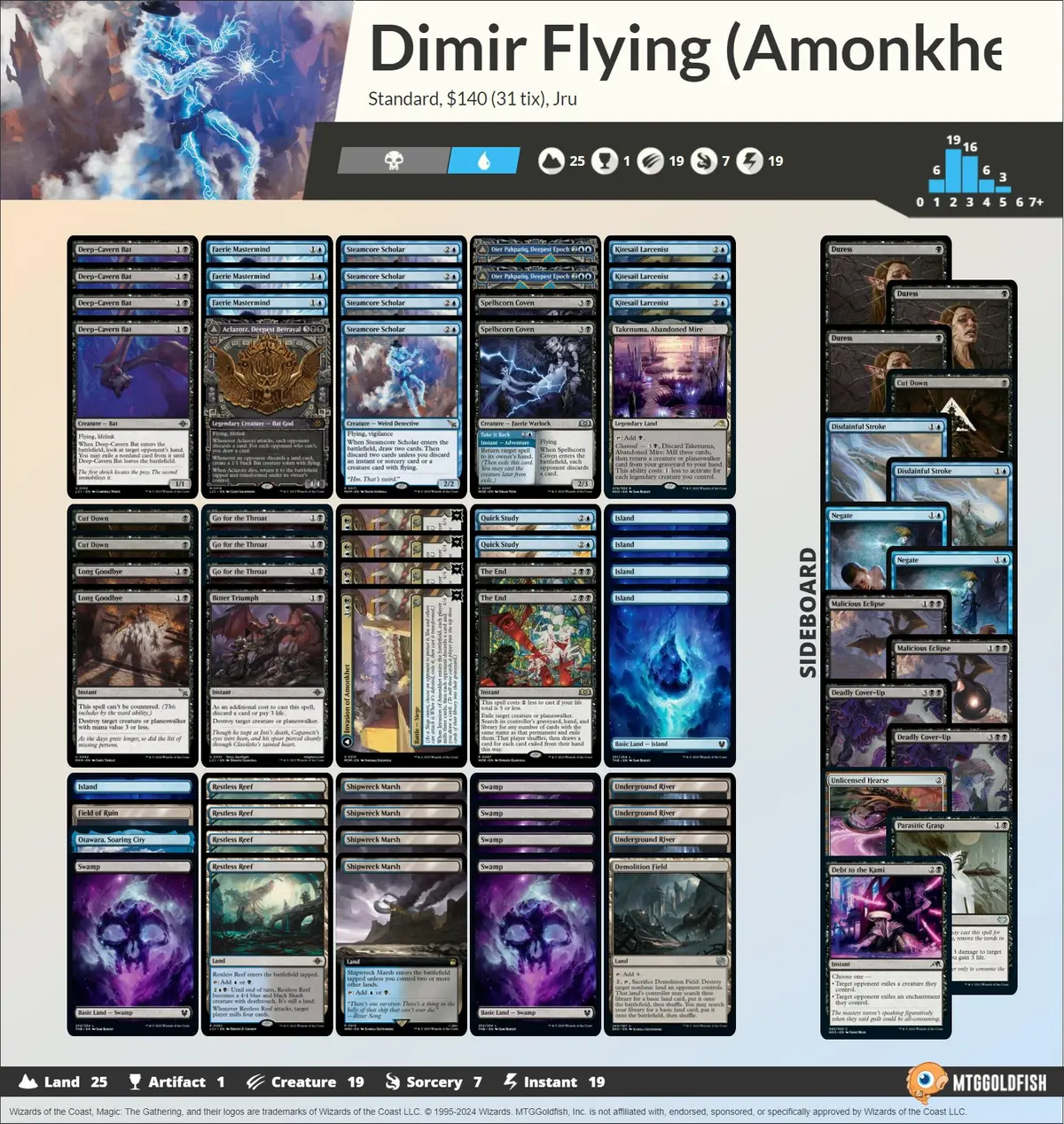
To make good use of Invasion of Amonkhet // Lazotep Convert, the most intuitive point is to use creatures with ETB abilities or evasion as much as possible. Dimir has never lacked evasion, but it has been rather weak on the ETB side, which also made it hard for Invasion of Amonkhet to immediately generate resources after transforming.
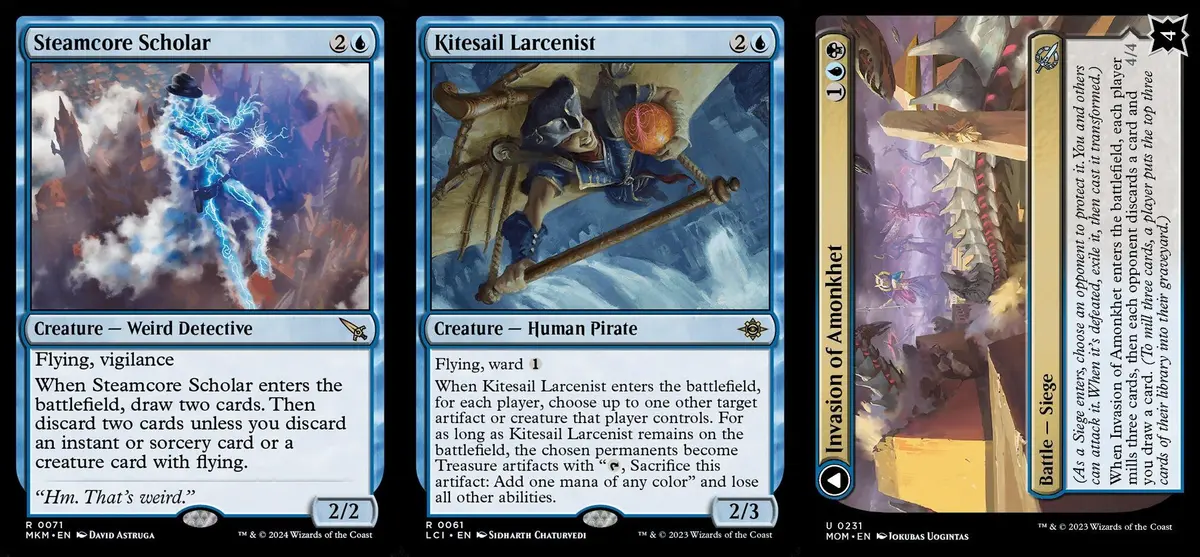
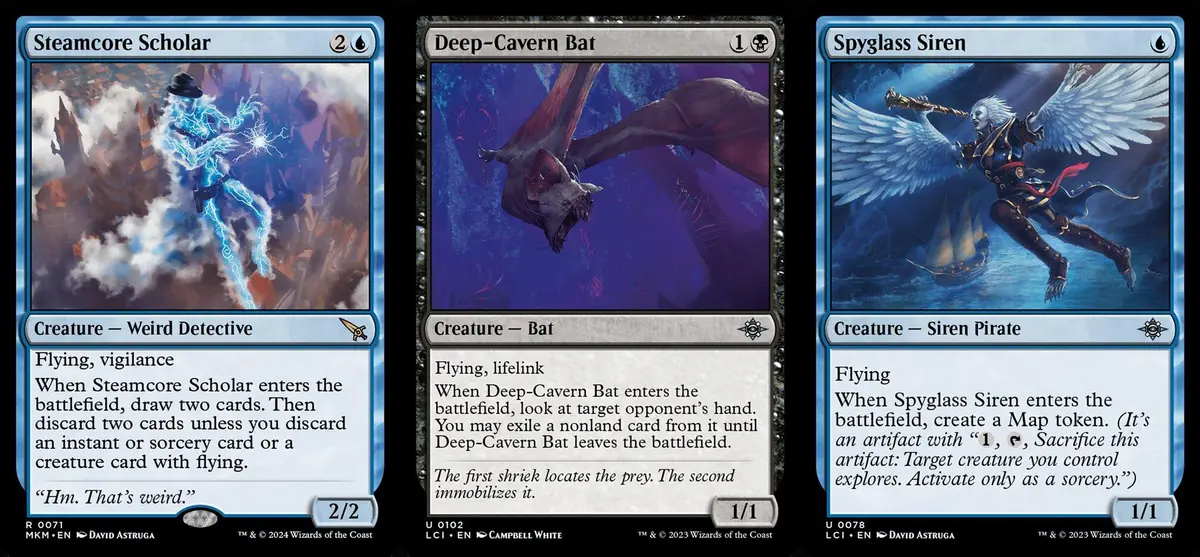
This set provides a new creature, Steamcore Scholar, which perfectly meets all the needs of Invasion of Amonkhet’s teammates. All the creatures in the deck are flyers, and all the spells other than Invasion of Amonkhet are instants or sorceries. Steamcore Scholar’s ETB reliably draws two and discards one for value, and the discard options include LCI’s two blue-black gods (Ojer Pakpatiq, Deepest Epoch // Temple of Cyclical Time & Aclazotz, Deepest Betrayal // Temple of the Dead). Although LCI’s gods have strong synergy with Invasion of Amonkhet, they turn into lands that stay on the battlefield when they die normally, so to copy them Invasion of Amonkhet often could only rely on self-mill or discarding them as the cast cost of Bitter Triumph. Now Steamcore Scholar, as the glue connecting everything, makes the whole deck run more flexibly.
Dimir Tempo Flyers
Dimir Tempo Flyers decklist link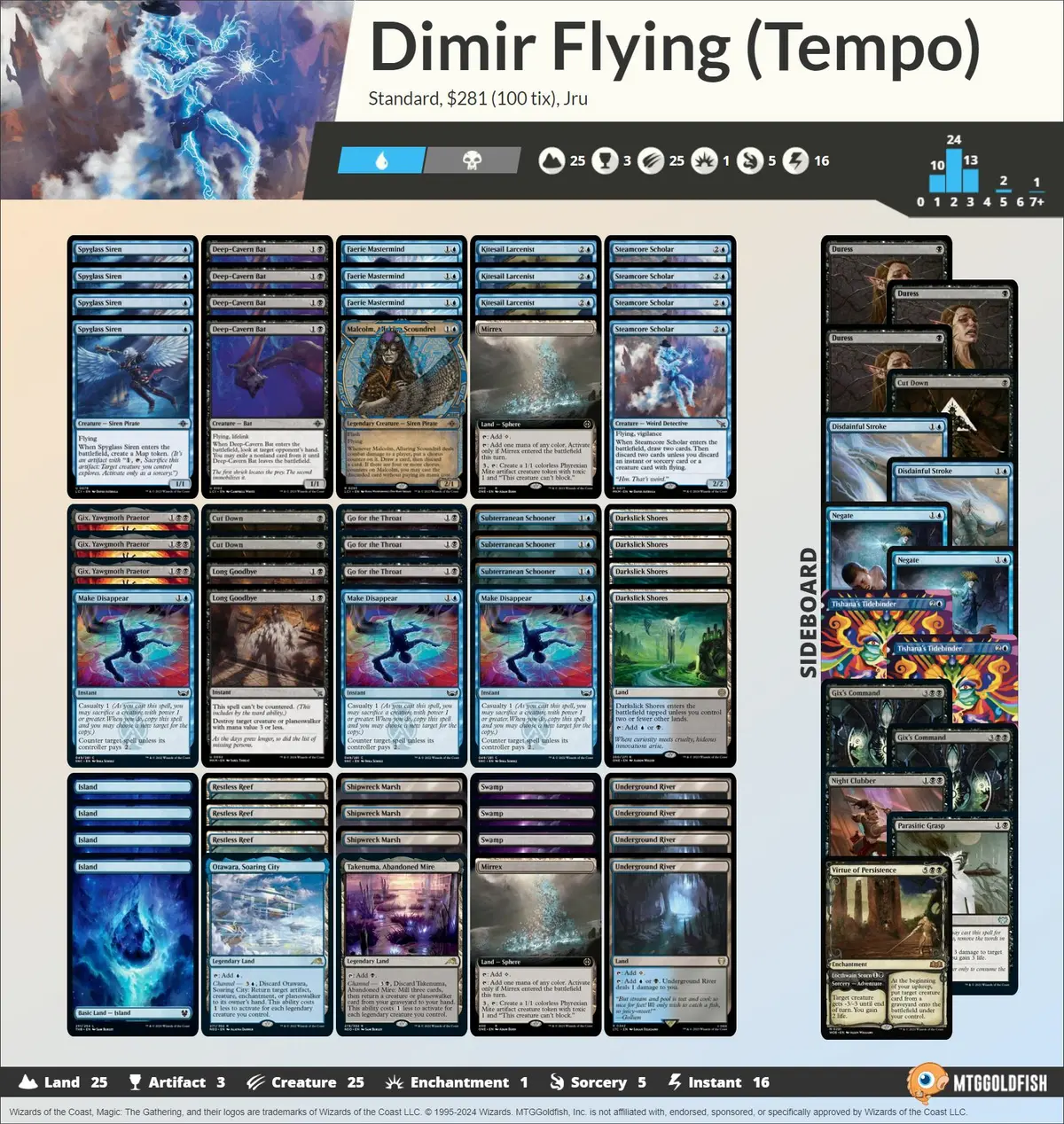
When you saw Deep-Cavern Bat & Faerie Mastermind above, someone was probably wondering why I didn’t put in Gix, Yawgmoth Praetor. The answer is simple: the Invasion of Amonkhet deck above is, after all, a resource-battle-oriented mid/slow deck, and besides, Gix’s ability doesn’t trigger when you attack a battle. If you want to play Gix, you should obediently go the tempo-oriented route.
This Dimir Tempo Flyers deck is a variant of the existing Dimir tempo deck. To satisfy the fodder condition of Steamcore Scholar, it uses flyers as much as possible. The most notable change is that Preacher of the Schism was swapped for Kitesail Larcenist. Kitesail Larcenist has its own advantages: a flyer that comes with pseudo-removal on entering is actually painful for the opponent to deal with in tempo matchups, and a large number of flyers also guarantees successful attacks against the opponent, raising the expected card advantage from Gix.
Izzet Artifact Aggro
Izzet Artifact Aggro decklist link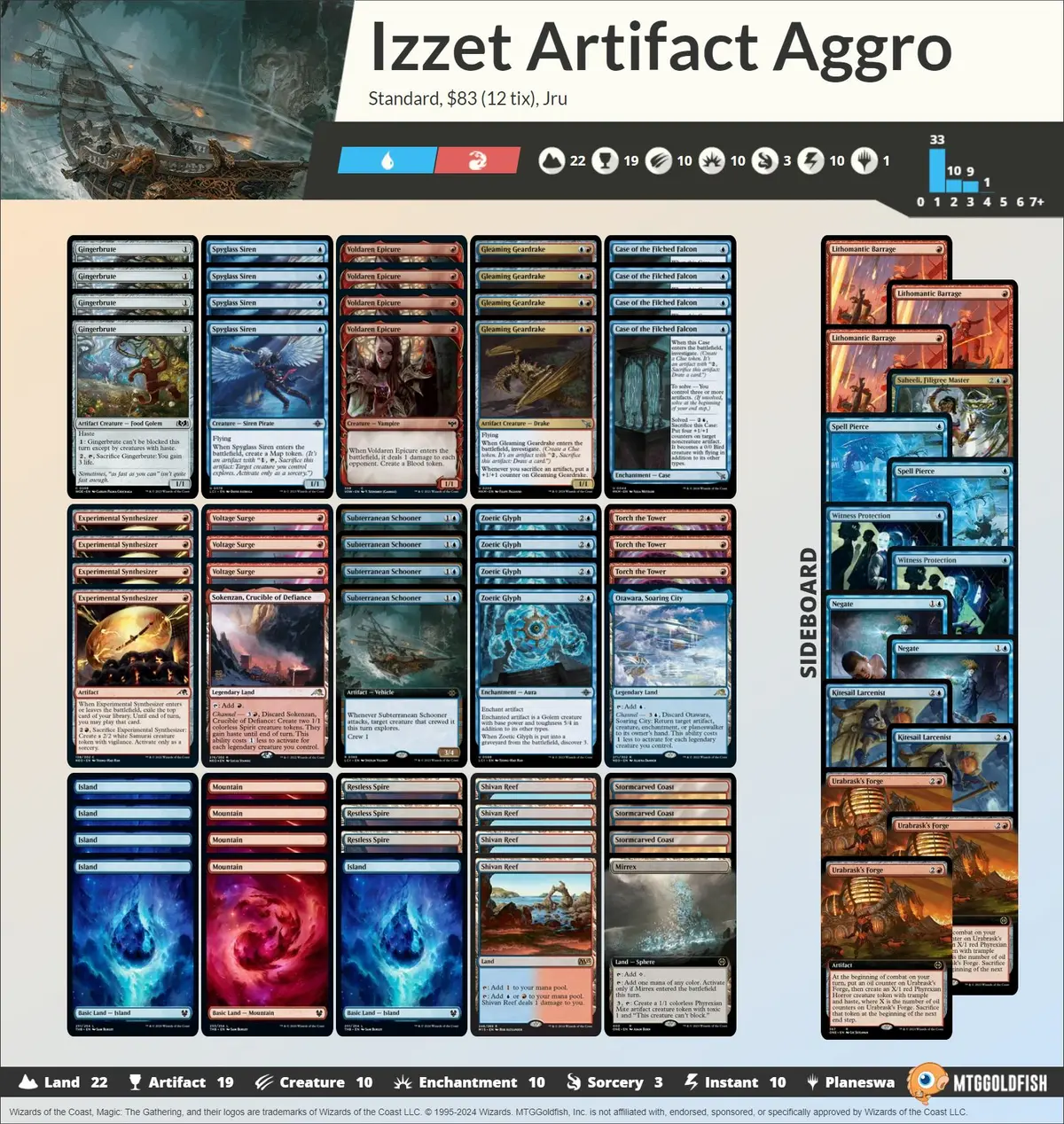
If you ask which mechanic in MKM has the biggest impact on Standard, rather than the pile of new keywords, the Clue and artifact support is the plain but powerful winner.
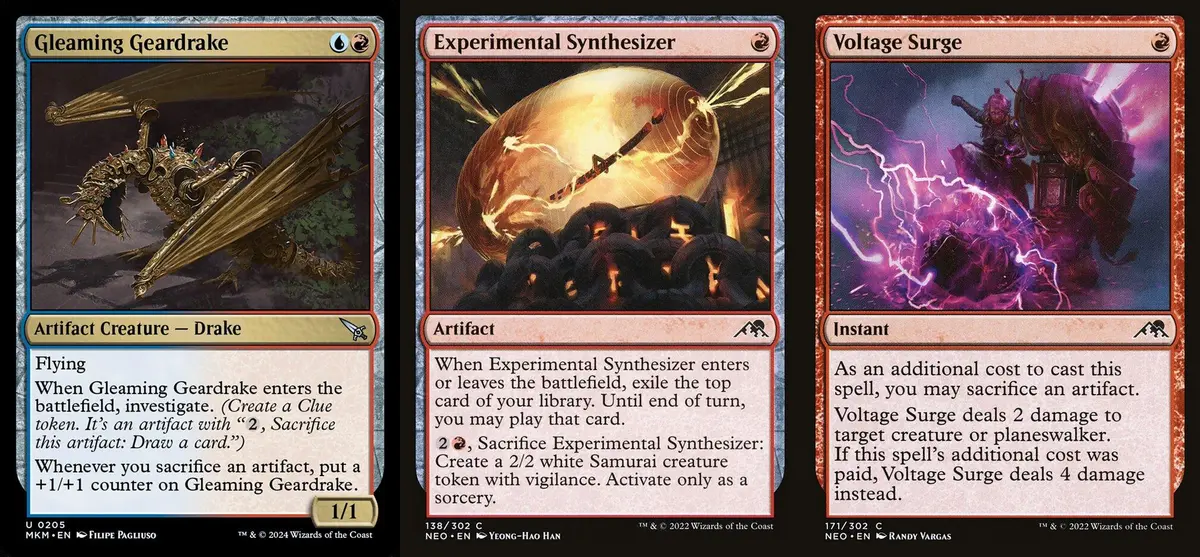
Gleaming Geardrake, a two-mana 1/1 artifact flyer that comes with a Clue on entering, is already eye-catching on its own, and it can even grow when you sacrifice artifacts (don’t forget the Map from Spyglass Siren and the Blood token from Voldaren Epicure). Besides their original uses, these artifacts can also become fodder for Torch the Tower & Voltage Surge to extend their reach.
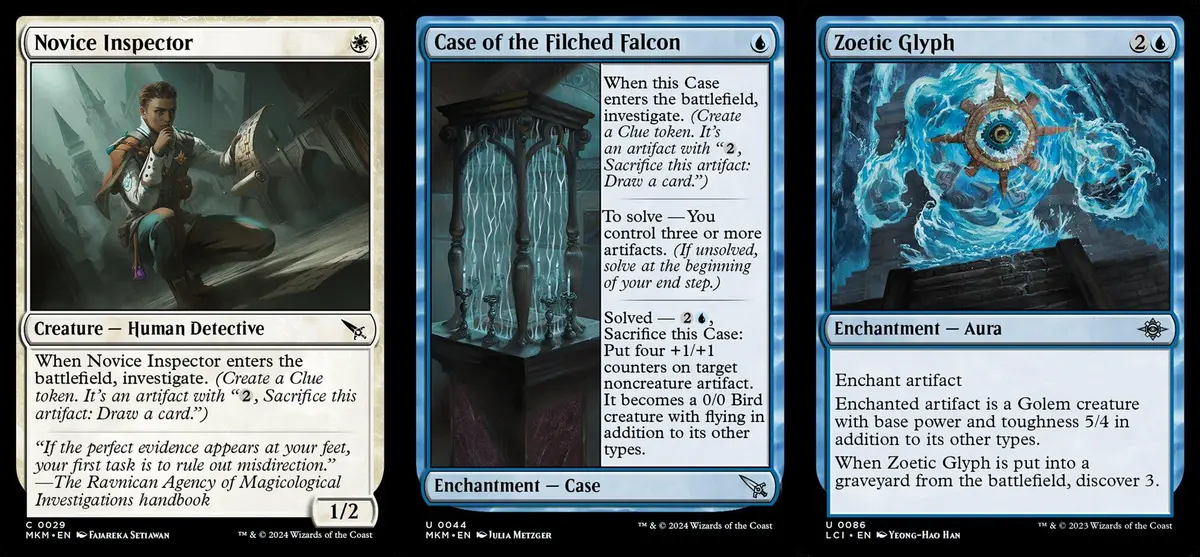
In addition, Case of the Filched Falcon is another big gift from MKM to the blue artifact axis. It comes with a Clue and adds another dimension of artifact usage, turning artifacts into attackers, and together with LCI’s Zoetic Glyph, these artifact tokens have very rich uses. Also note that the +1/+1 counters from Case of the Filched Falcon can only be put on noncreature artifacts, so don’t think about using it to pump Gingerbrute.
Azorius Artifact Aggro
Azorius Artifact Aggro decklist link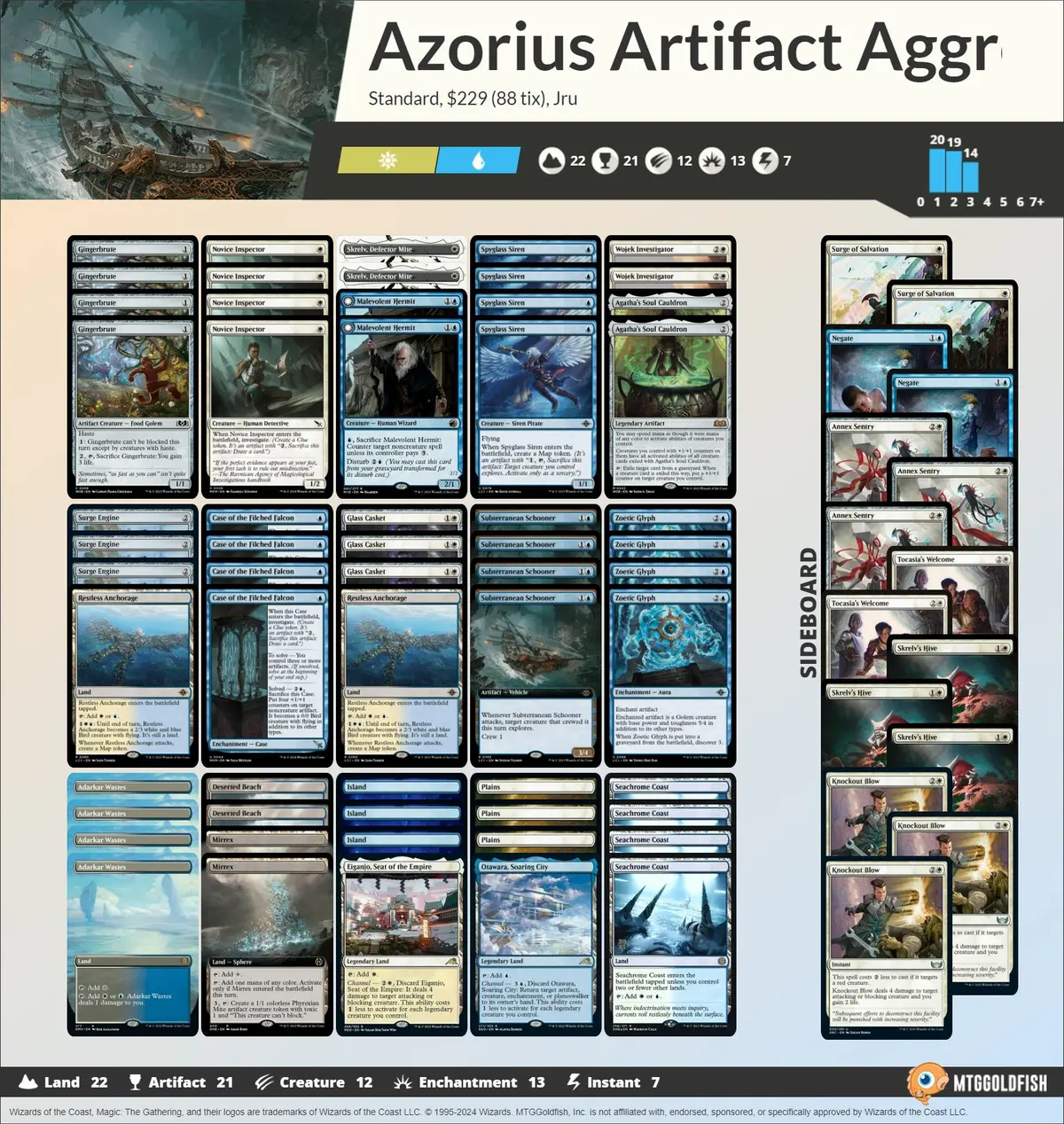
Thraben Inspector has been reborn in this set as Novice Inspector. Remember this guy, because from here on you will keep seeing him.
(By the way, the author is glad his creature type isn’t a straight copy of Thraben Inspector’s Soldier but Detective instead. I really don’t want to face an Azorius Soldier deck in Standard and see this guy added to the opponent’s one-drop curve.)
Similar to the application in the Izzet Artifact Aggro deck above, as a creature that comes with an artifact token on entering, it works well with Case of the Filched Falcon & Zoetic Glyph, and later it can also serve as the pilot for Subterranean Schooner (just like the Thraben Inspector that drove Smuggler’s Copter back in the day). The author originally also considered putting Michiko’s Reign of Truth // Portrait of Michiko in the build to raise the explosiveness, but later realized that this might lead to too many non-threat cards and hurt consistency, so the current list doesn’t use it. Still, it really is a big feature of the white artifact axis, and it’s a bit of a pity not to use it, so interested readers can try adjusting the ratios and putting it back in.
Bant Artifacts
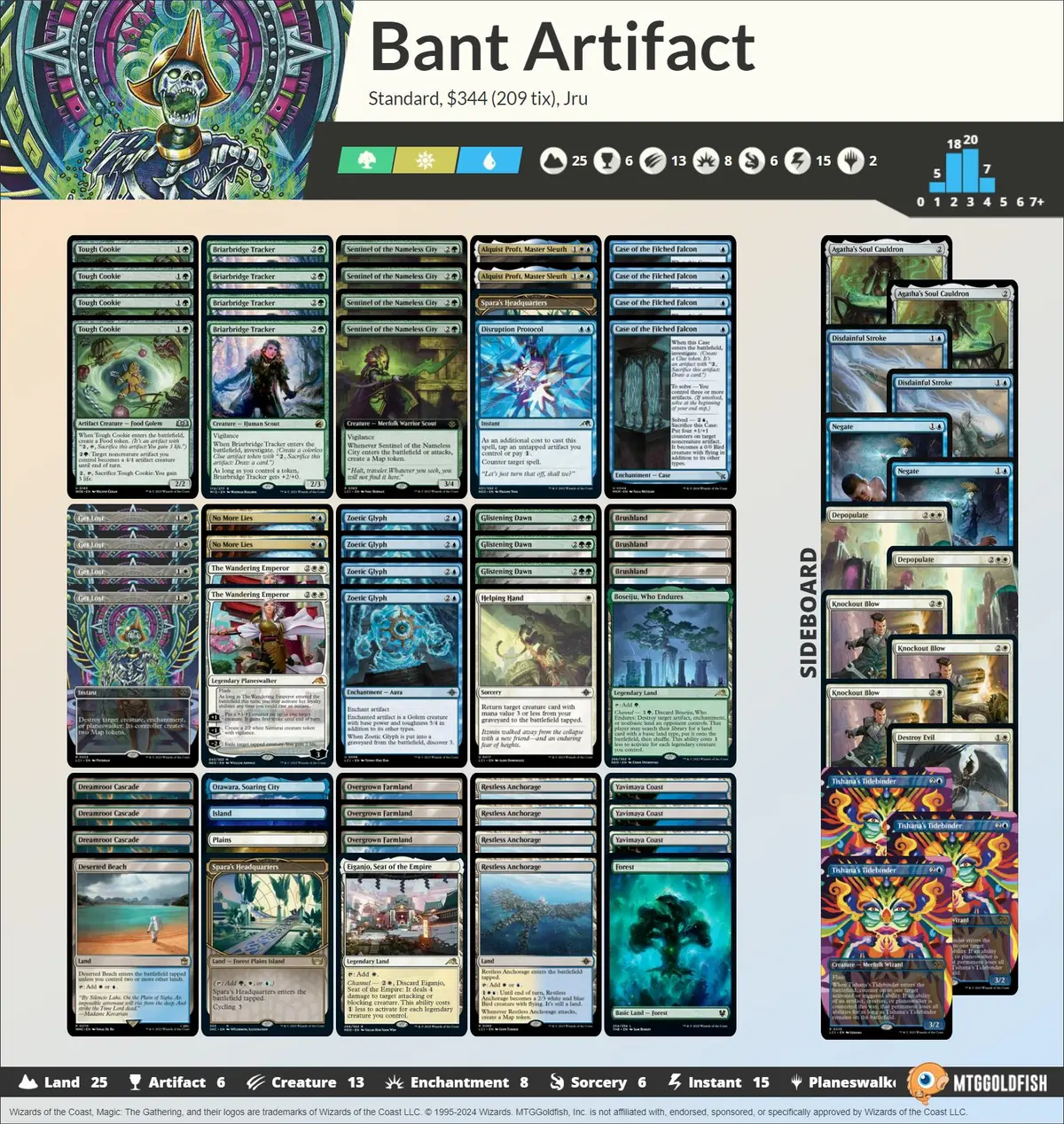
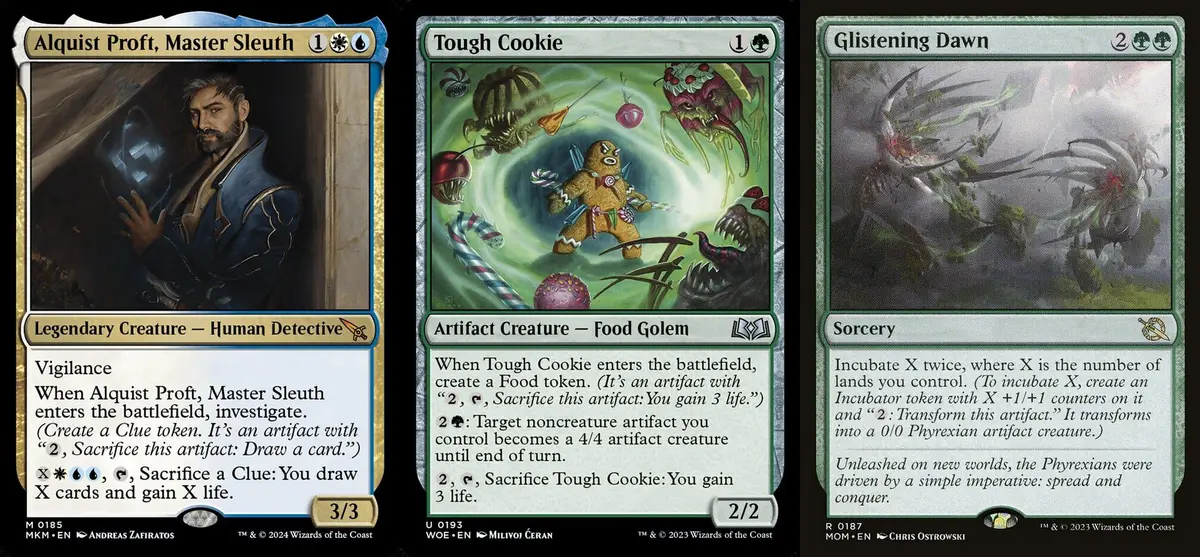
It is again the artifact-to-creature package of Case of the Filched Falcon & Zoetic Glyph, but this time it is changed to a more midrange resource-battle style. Tough Cookie is itself an artifact provider and also an outlet that converts artifacts into win points, and the artifact providers change from fast-tempo creatures to midrange creatures that are good at resource trading. The vigilance trio of Alquist Proft, Master Sleuth + Briarbridge Tracker + Sentinel of the Nameless City, besides providing artifacts, also fully shows respect for The Wandering Emperor.
Another feature of this deck is the use of Glistening Dawn as an extra source of artifact attackers. Since it is written as putting X +1/+1 counters on an artifact, if you turn it into a creature with Case of the Filched Falcon / Zoetic Glyph / Tough Cookie, it instantly becomes a huge attacker.
Esper Detectives
Esper Detectives decklist link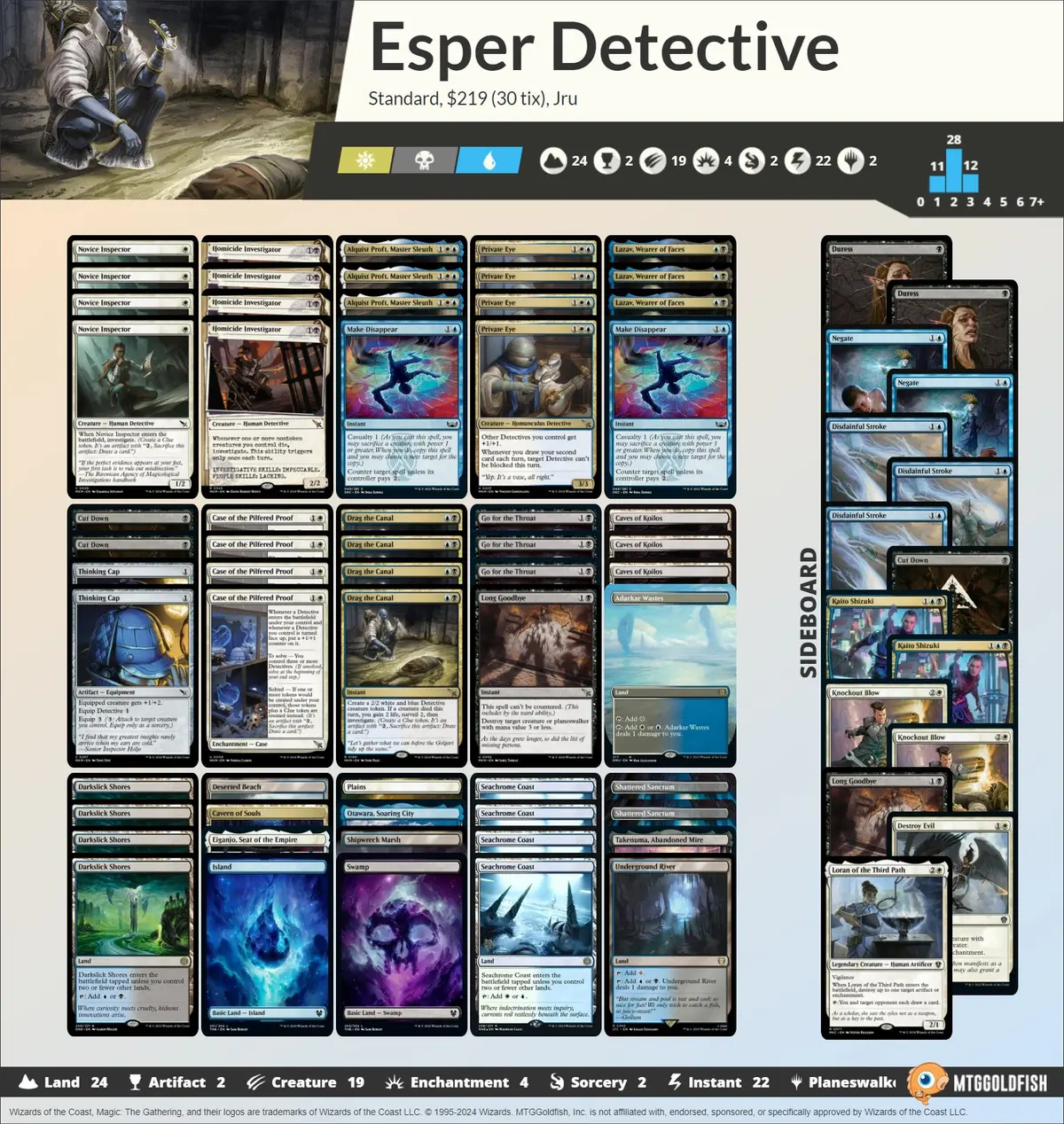
This is the official designated tribal deck of the set. It isn’t as vicious as the Soldiers back in the day, but it is still quite generous.
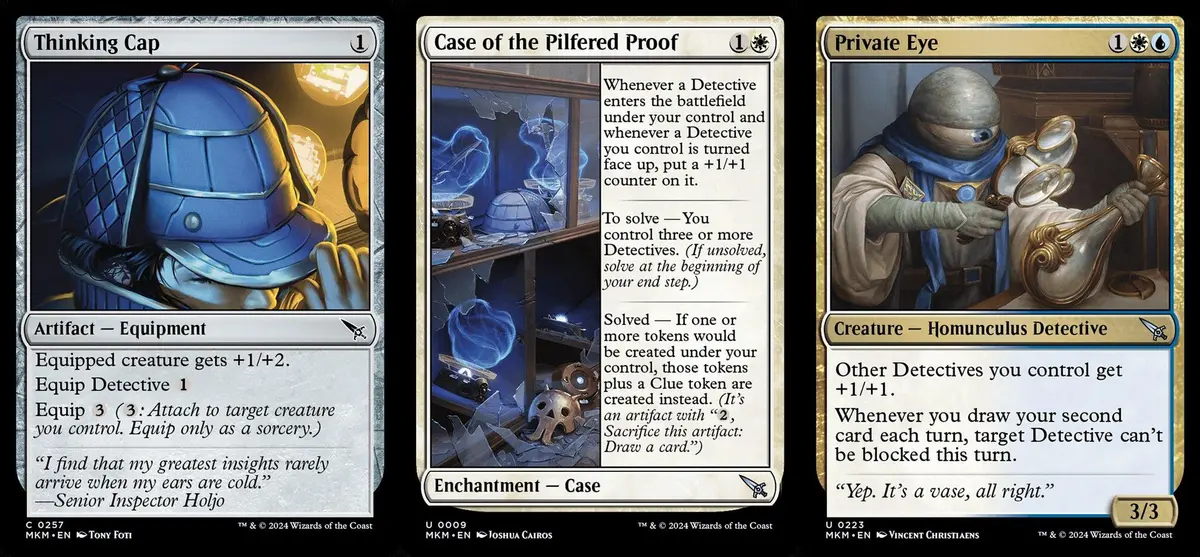
This time there is only one traditional tribal lord, Private Eye; instead there are a lot of tribal-specific support cards. The current example list uses Thinking Cap and Case of the Pilfered Proof, following the traditional tribal power-boost approach, aiming to showcase the features of cards that reward the tribe.
Another feature of Detectives is Clues. The current list still treats Clues as plain card-draw points; only Alquist Proft, Master Sleuth & Lazav, Wearer of Faces have extra ways to use Clues. The Case of the Filched Falcon & Zoetic Glyph I’ve introduced several times above would also be a nice pairing, but a build like that is very likely to shift from a Detective theme to an artifact theme, ending up as the Bant Artifacts deck above in a different color.
Dimir Control
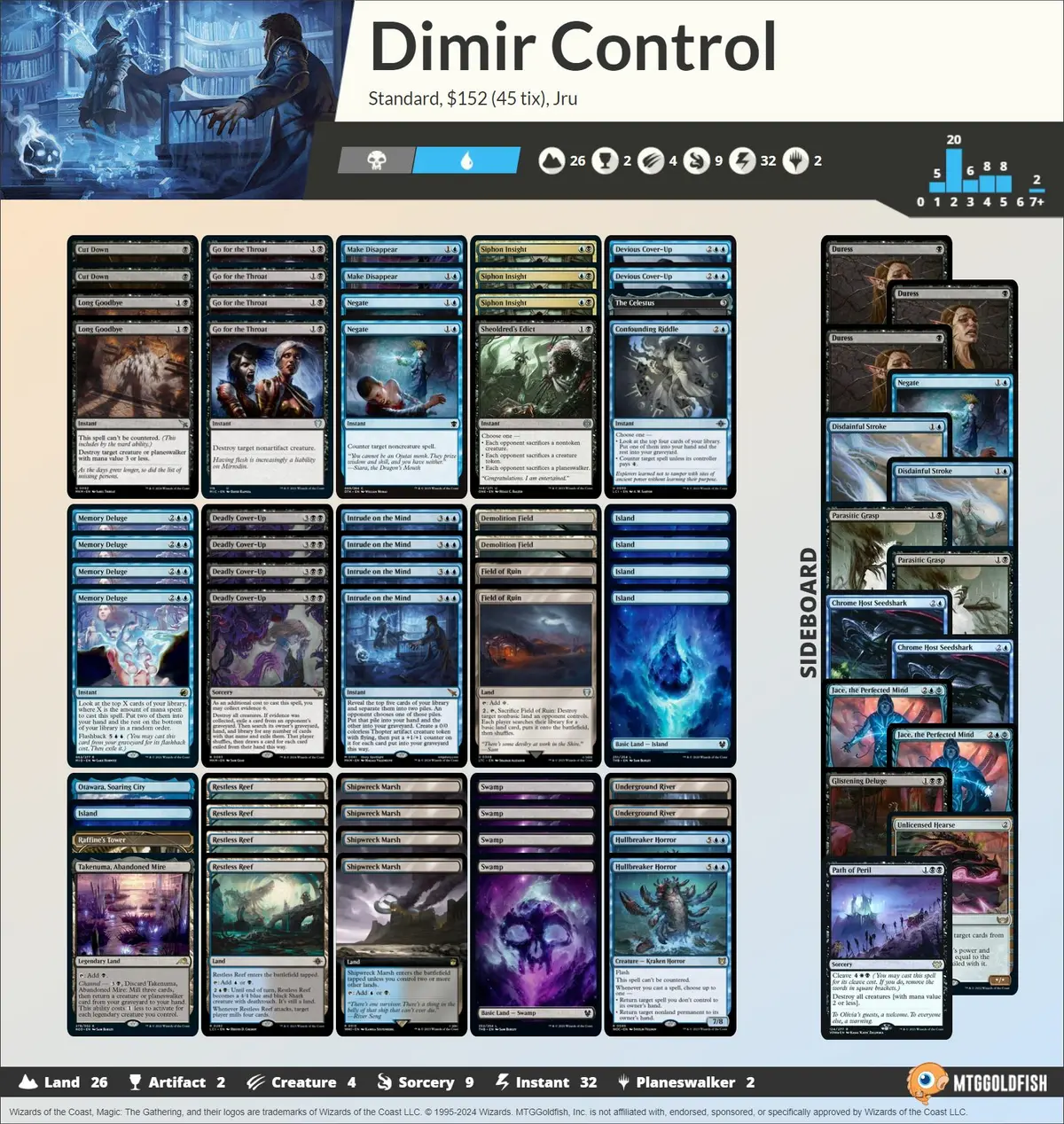
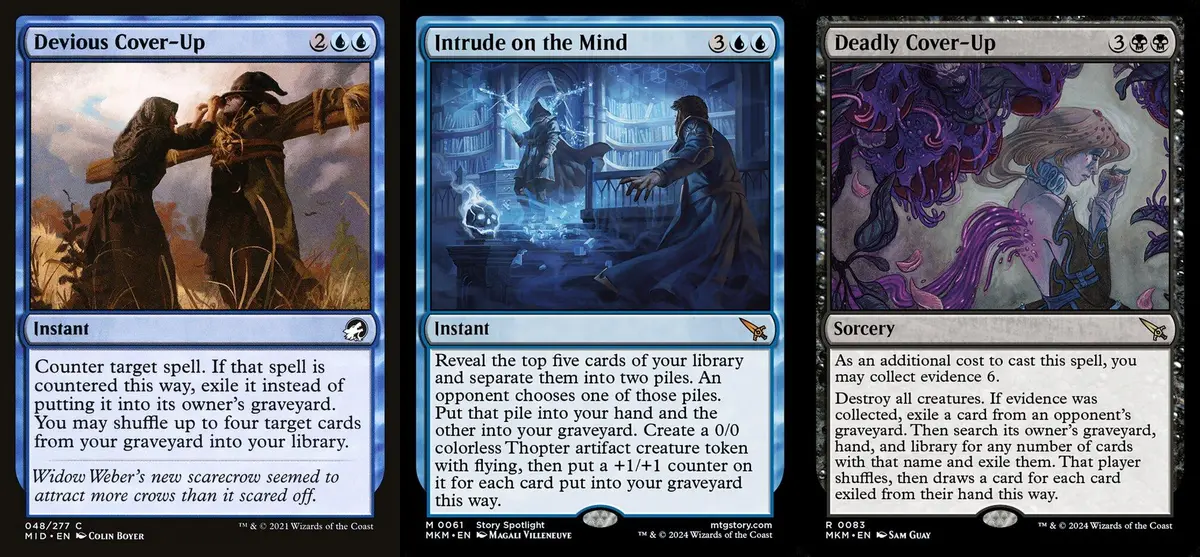
If last set Get Lost patched Azorius control’s weakness in instant-speed spot removal, this time it is the reverse: Deadly Cover-Up patches Dimir control’s weakness in sweepers. Before the MKM update, the only true black sweeper in Standard was the six-mana Invasion of Fiora // Marchesa, Resolute Monarch. Although its extra upside as a battle is very high, from a removal standpoint, having to wait until six mana to sweep is simply too dangerous, and as for the other cheaper sweepers, most have obvious reach limits that let creatures slip through easily. Deadly Cover-Up is not just a five-mana true sweeper; its bonus is also very practical: you can pick the most troublesome card from the opponent’s graveyard and exile it without targeting, which reduces the pressure for the rest of the game. More importantly, you can confirm the opponent’s deck and hand information, which greatly improves the accuracy of decisions for a control deck that keeps planning its interaction.
Another boost for control in this set is Intrude on the Mind, an instant that replenishes your hand and creates a creature in one card. Although the opponent gets some choice, you come out ahead either way.
Azorius Control
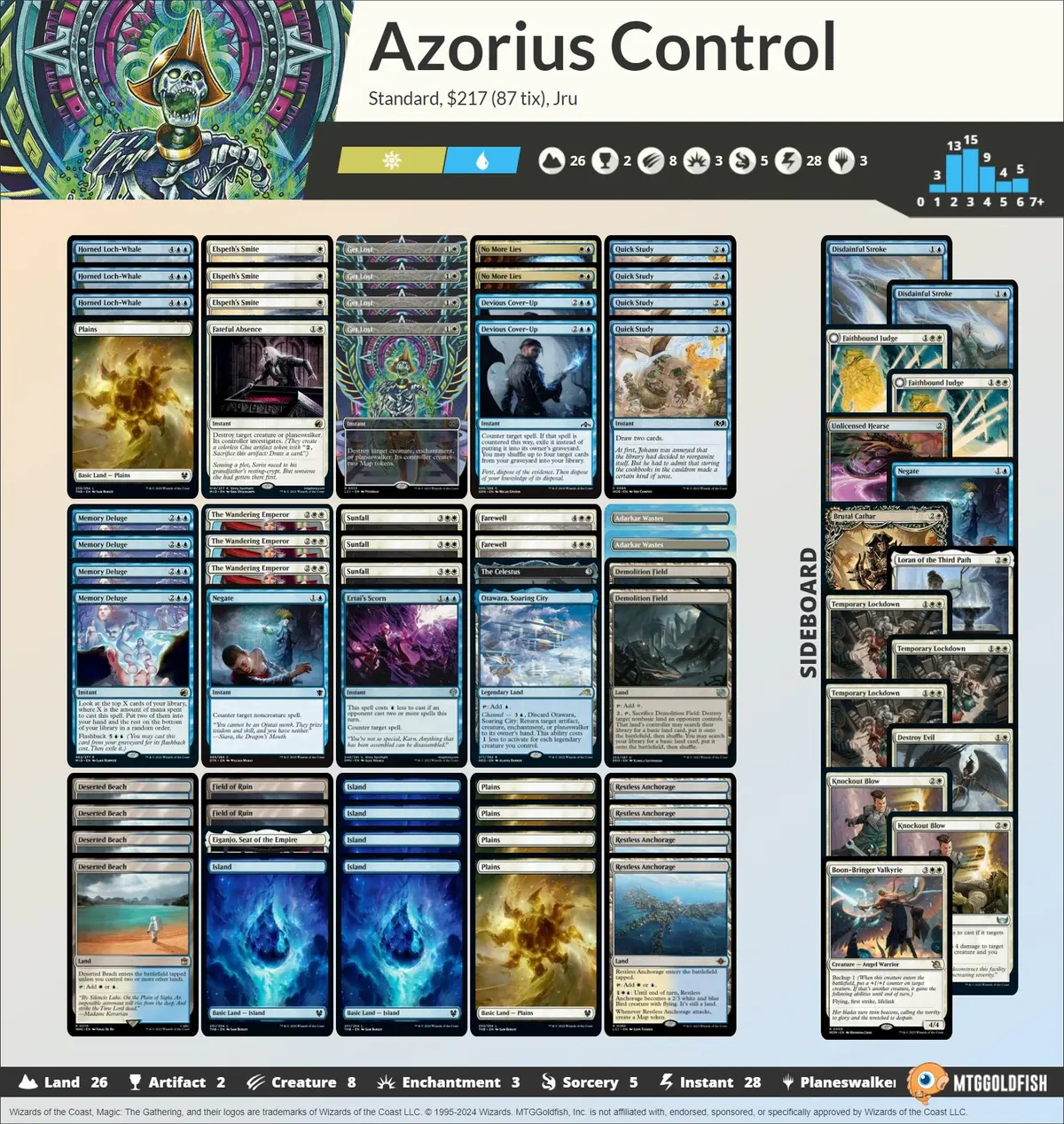
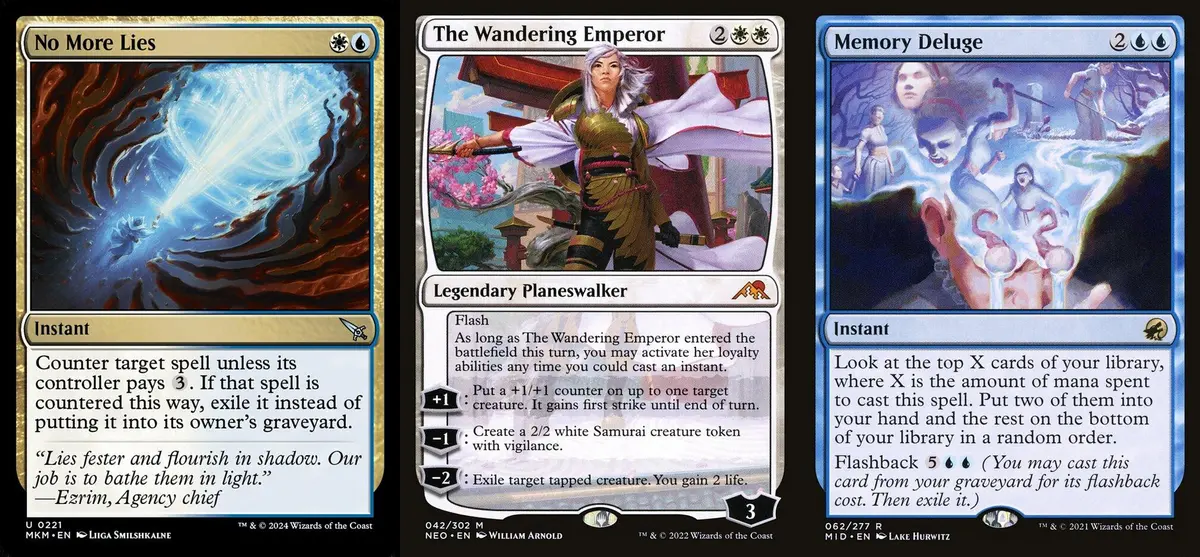
Actually this set doesn’t bring much substantive change for Azorius control; it’s just that the two-mana unconditional counterspell changes from Make Disappear to No More Lies, an upgraded Mana Leak. After all, for control it is still a bit hard to make use of casualty in the early and mid game, and most of the time No More Lies’ disruption is overall better than Make Disappear’s. The exile property of the counter occasionally works wonders against cards that can be reused from the graveyard, like Dennick, Pious Apprentice // Dennick, Pious Apparition. The only problem is a higher risk of color screw, especially since the list has a total of four Field of Ruin & Demolition Field, so on turn two there is a small chance of color screw, but overall the risk is acceptable, and the extra benefit from No More Lies is still far higher than the risk.
Izzet Arcane Bombardment
Izzet Arcane Bombardment decklist link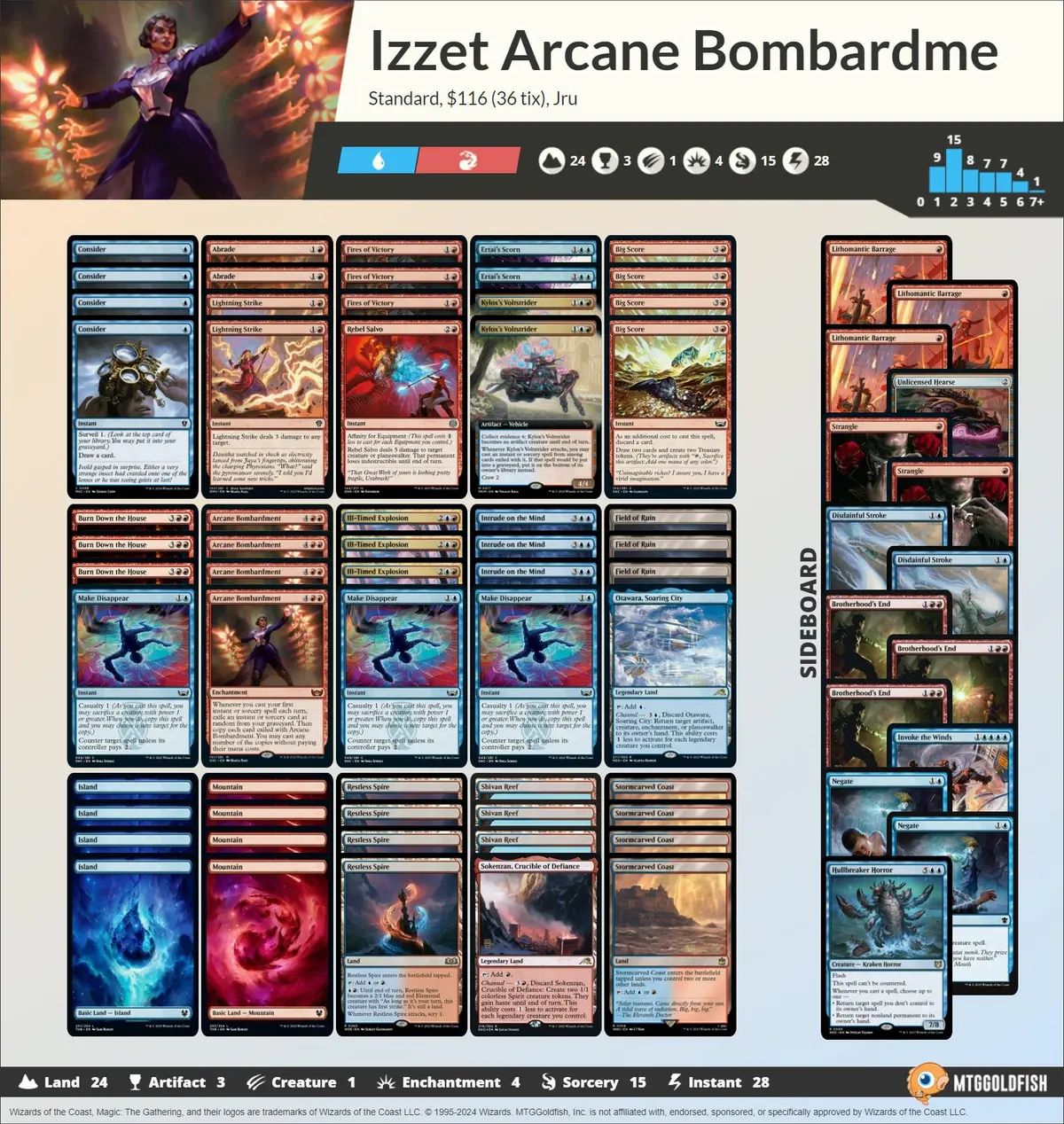
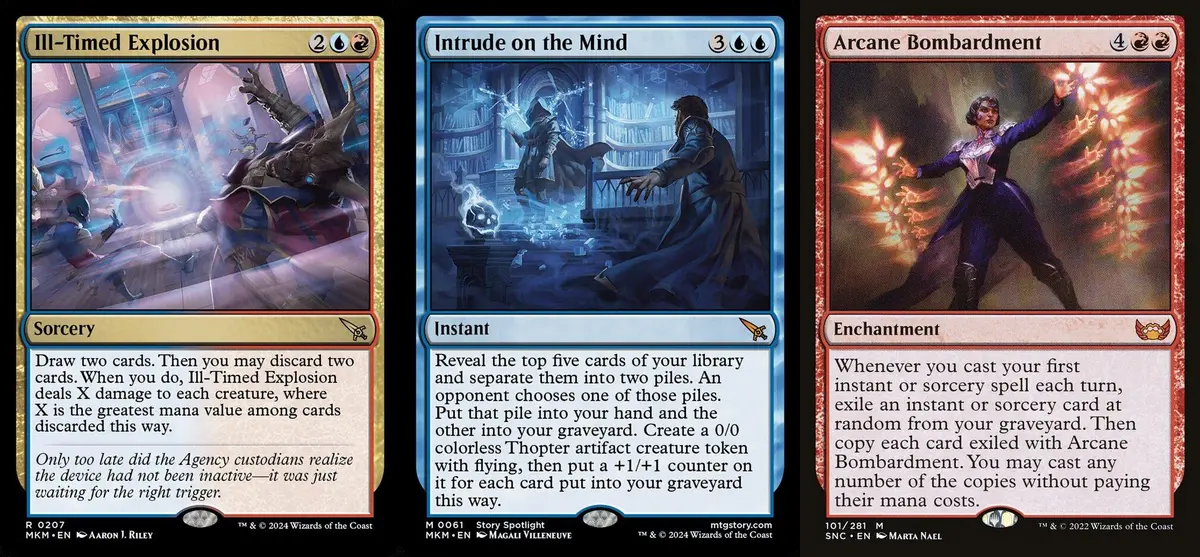
The key to building an Arcane Bombardment deck is how to design your win conditions as instants and sorceries as well. Going a step further, you want the cards exiled by Arcane Bombardment, whether in active or passive situations, to be effective cards that can be cast, not dead cards that can’t be used.
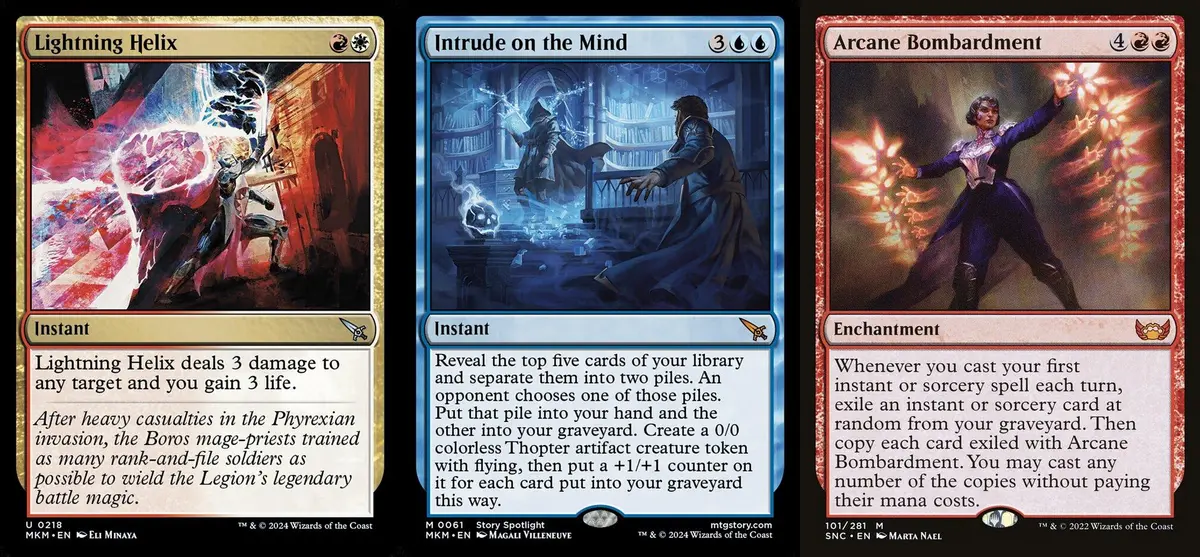
The most traditional answer is Burn Down the House, and now Intrude on the Mind strengthens the win plan again while fitting the game plan. The flexibility of Ill-Timed Explosion, either pure card draw or loot then sweep, is also what Arcane Bombardment is hoping for. Kylox’s Voltstrider is the last piece of the whole deck: it is a standalone Plan B that can fight independently without Arcane Bombardment, and it can also assist Arcane Bombardment by exiling the cards you don’t want Bombardment to hit first, raising the chance that Arcane Bombardment hits the good cards you want.
Boros Arcane Bombardment
Boros Arcane Bombardment decklist link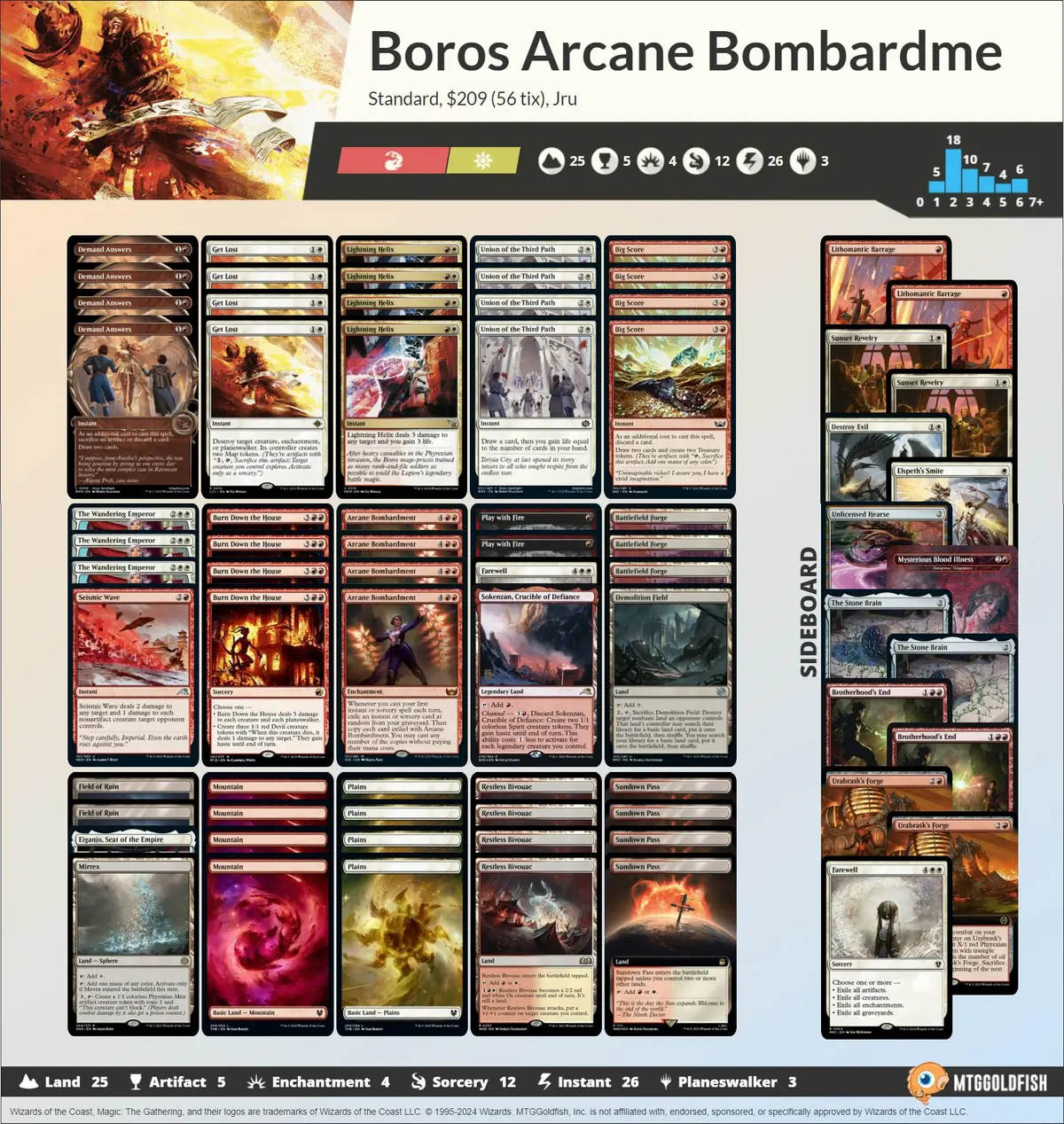
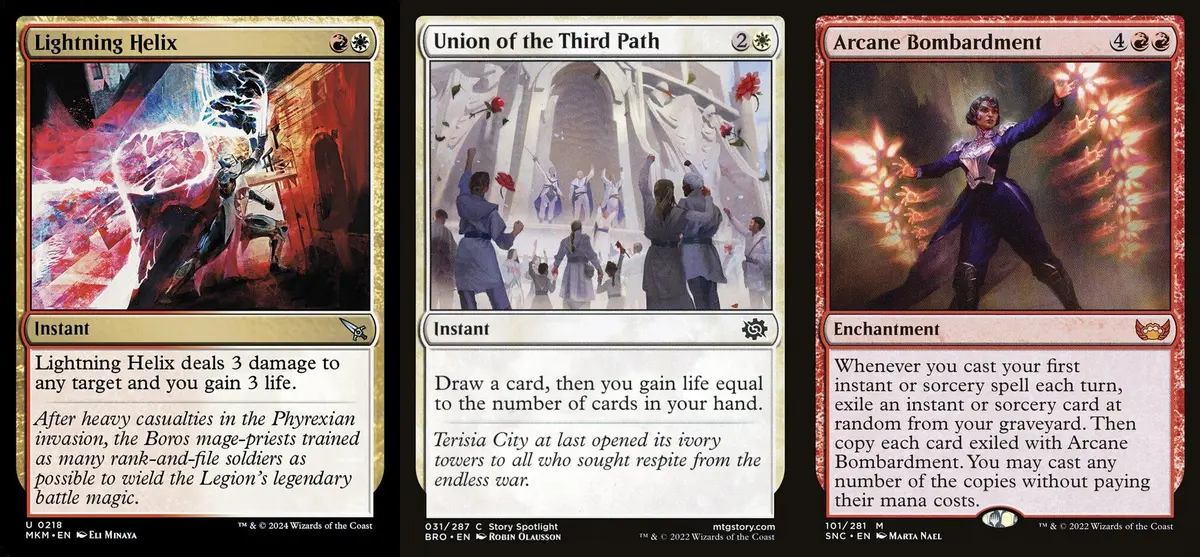
As for two-mana burn, compared with Lightning Strike, Lightning Helix is definitely more attractive. Starting from that, I turned the deck above into a Boros version.
Jeskai Arcane Bombardment
Jeskai Arcane Bombardment decklist link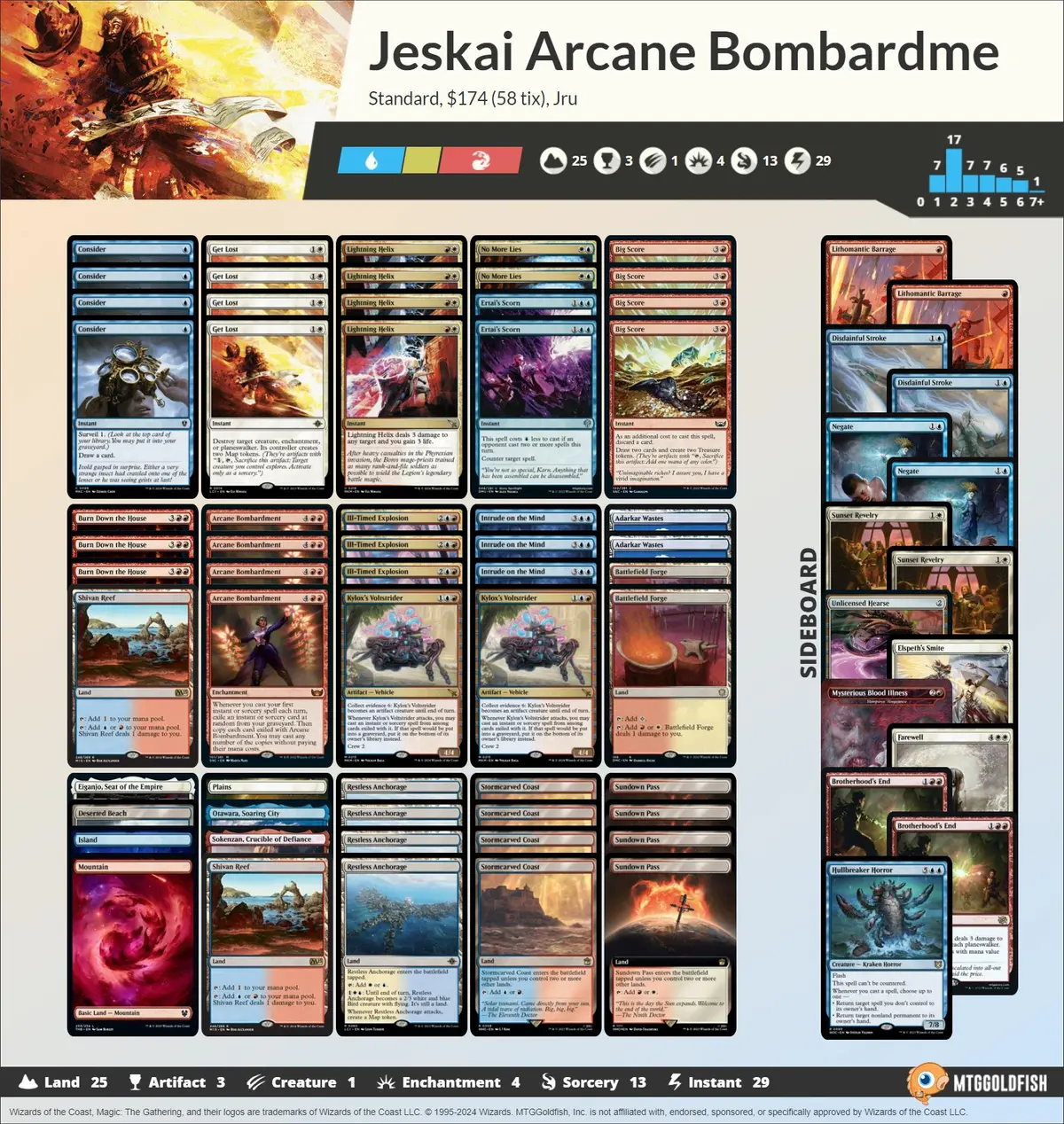
Since we already have both the Izzet and Boros versions, and the two work on the same logic, why not merge them?
Mono White Humans
Mono White Humans decklist link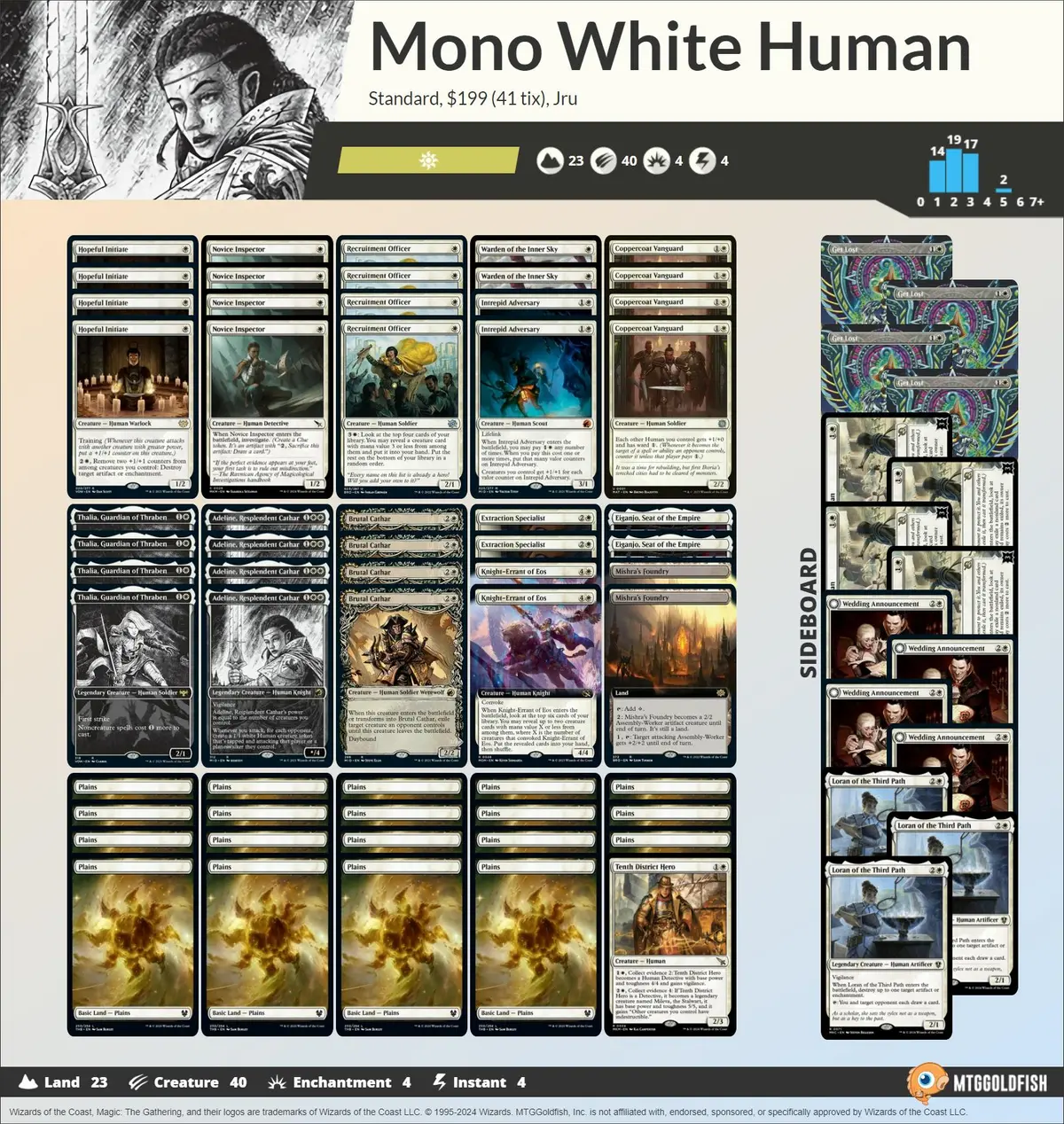
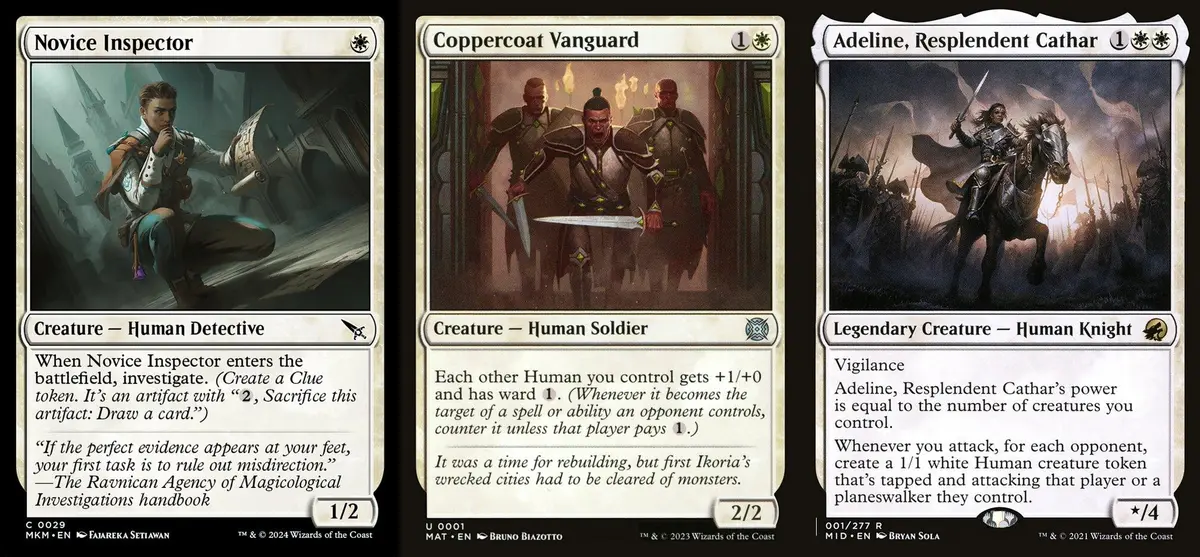
If you’ve ever been beaten up in Shadows over Innistrad by a mono white Humans deck using Thraben Inspector, you know what a great one-drop Novice Inspector is.
Mono Red Prowess
Mono Red Prowess decklist link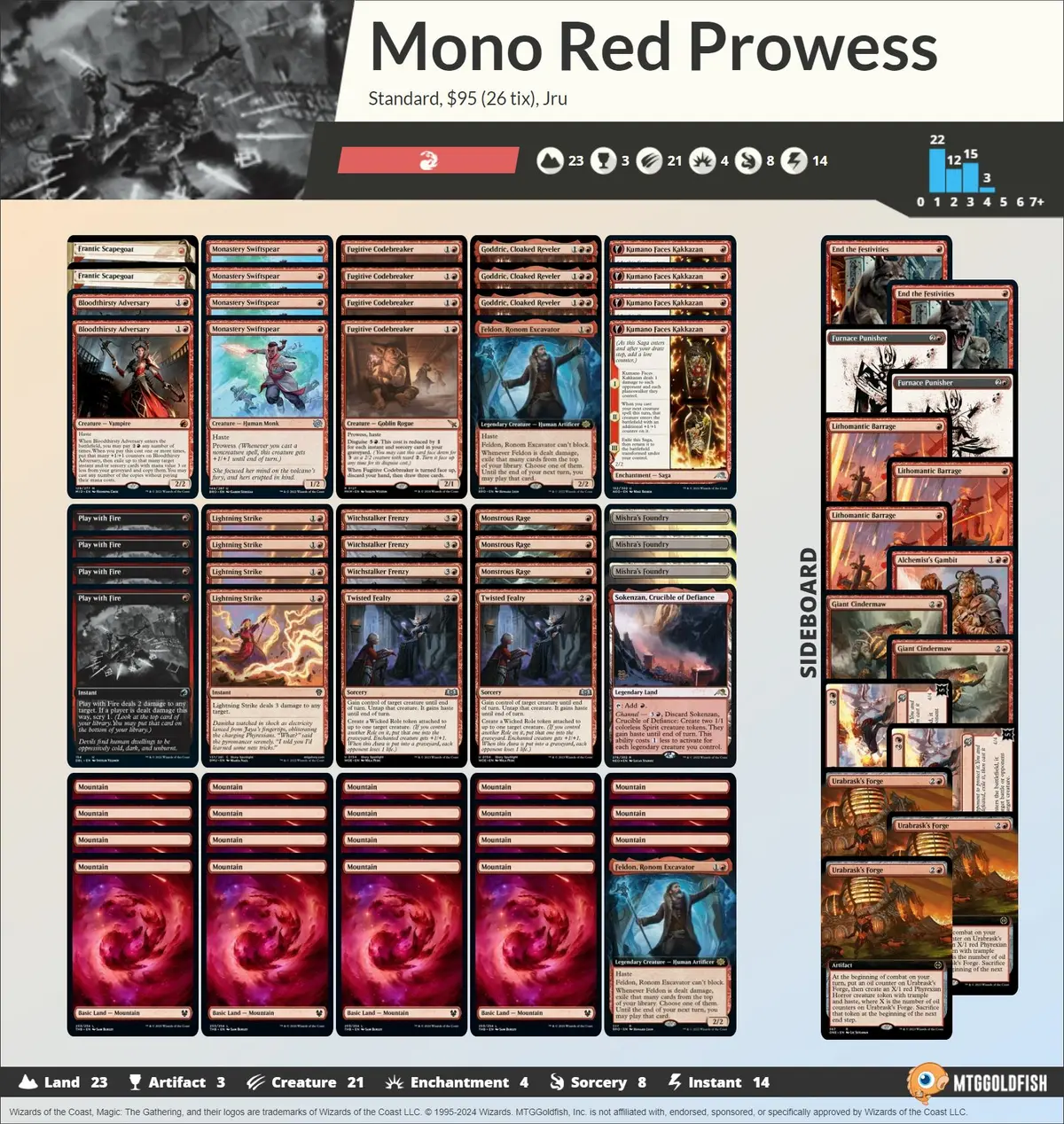
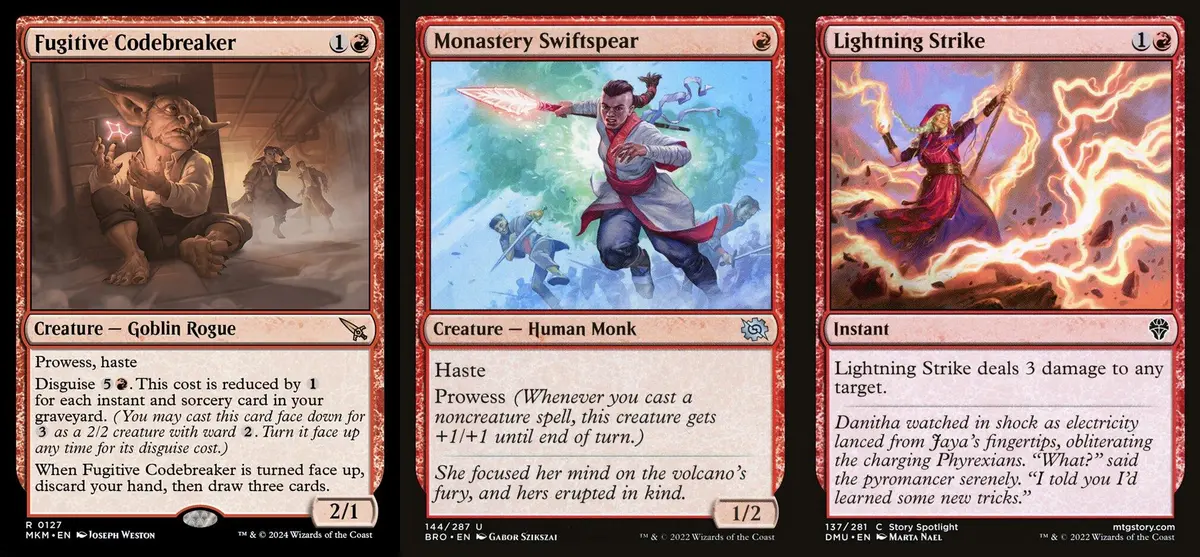
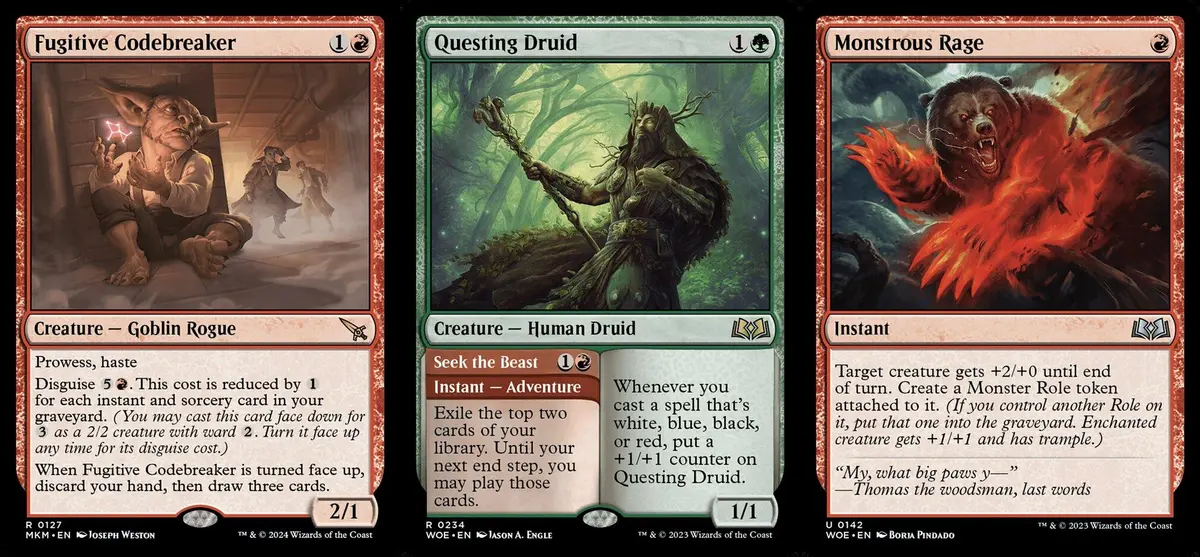
Fugitive Codebreaker is without a doubt the MVP of this set’s red aggro base decks. A two-mana 2/1 with haste and prowess is already undeniably strong, and it also has an upside of drawing three cards, and the threshold for that upside is actually not high. In practice, red aggro is often just one step away from crushing the opponent, only to run out of ammunition itself and let the opponent stabilize the defense, and Fugitive Codebreaker may be able to supply that last bit of firepower, all as an extra flexible option when you already have enough fast damage sources.
A similar case is Bedlam Reveler, which has the same cost-reduction condition and can discard your whole hand to draw three. Even if Fugitive Codebreaker is in your opening hand, as a two-mana haste prowess attacker it can simply be played on curve, and its damage is top-tier. In contrast, Bedlam Reveler is a dead card in your opening hand and only gets a chance to reach its ceiling in the mid to late game, and if your graveyard is targeted, it may be a dead card until the end of the game.
In addition, although it isn’t used in the author’s example list, Case of the Crimson Pulse is also a sideboard card the author is very bullish on for red aggro.
Gruul Prowess
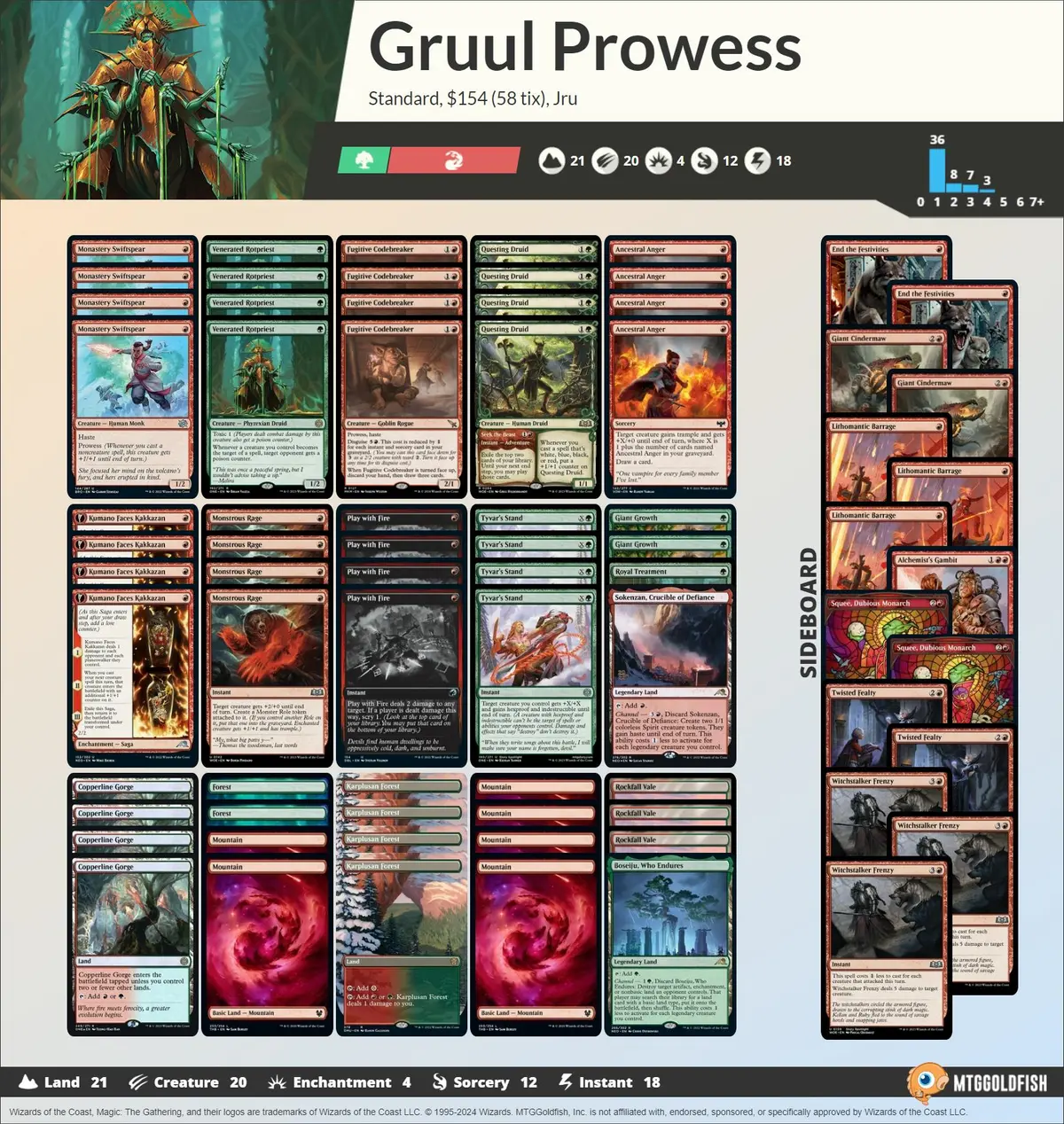
Although this deck is called prowess, it is really half prowess and half heroic. It is likewise built on the boost from Fugitive Codebreaker. In green it uses Questing Druid // Seek the Beast, which provides both a card-draw point and a fast-growing attacker. Since there are lots of spells that target your own creatures, it also includes Venerated Rotpriest as a one-mana attacker. Venerated Rotpriest’s poison ability can be a Plan B win condition: even if the opponent finds a way to protect their life total, they won’t necessarily be able to stop the accumulation of poison counters. The protection spells green provides are also a feature that mono red builds can’t imitate.
Boros Heroic
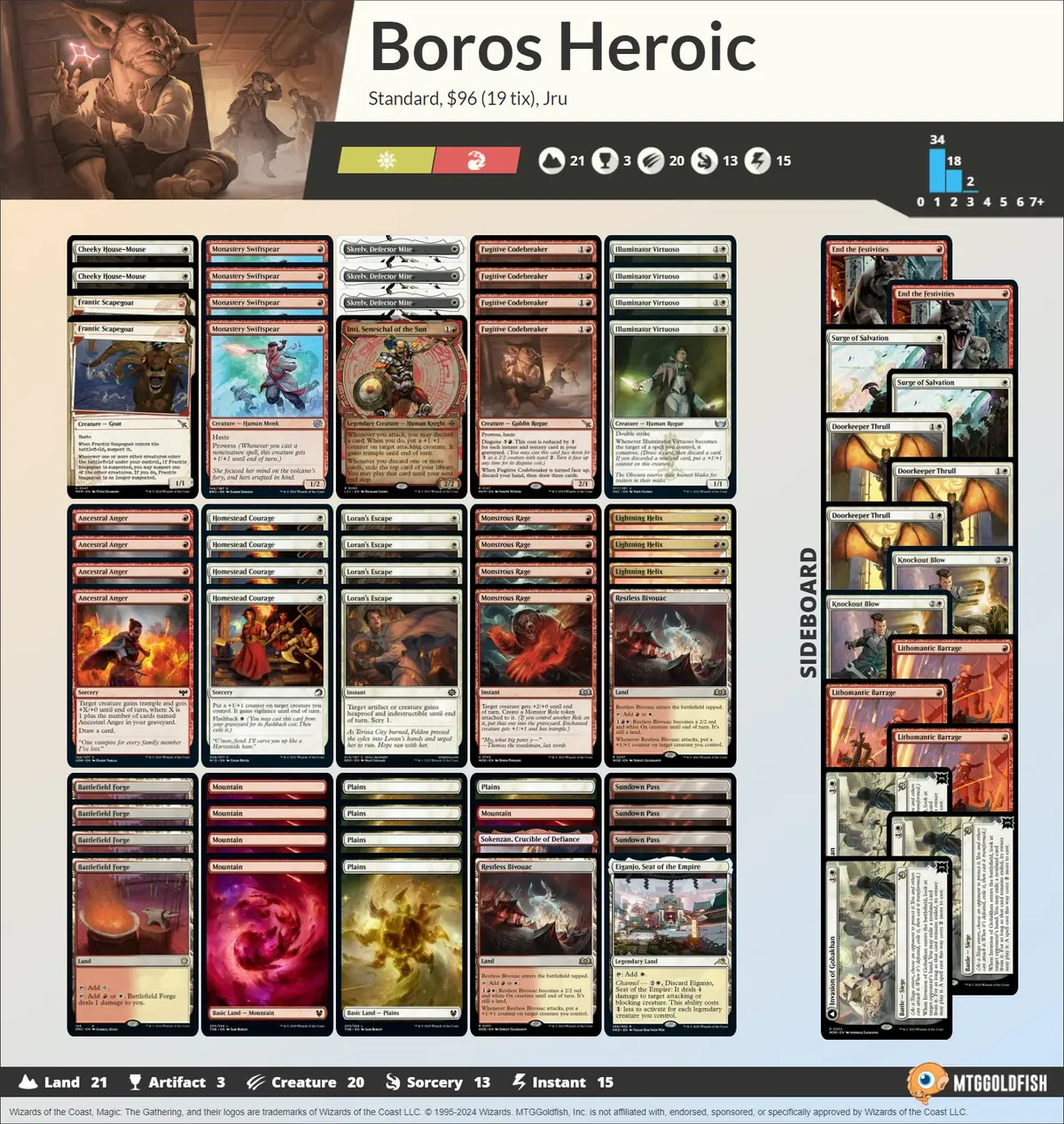
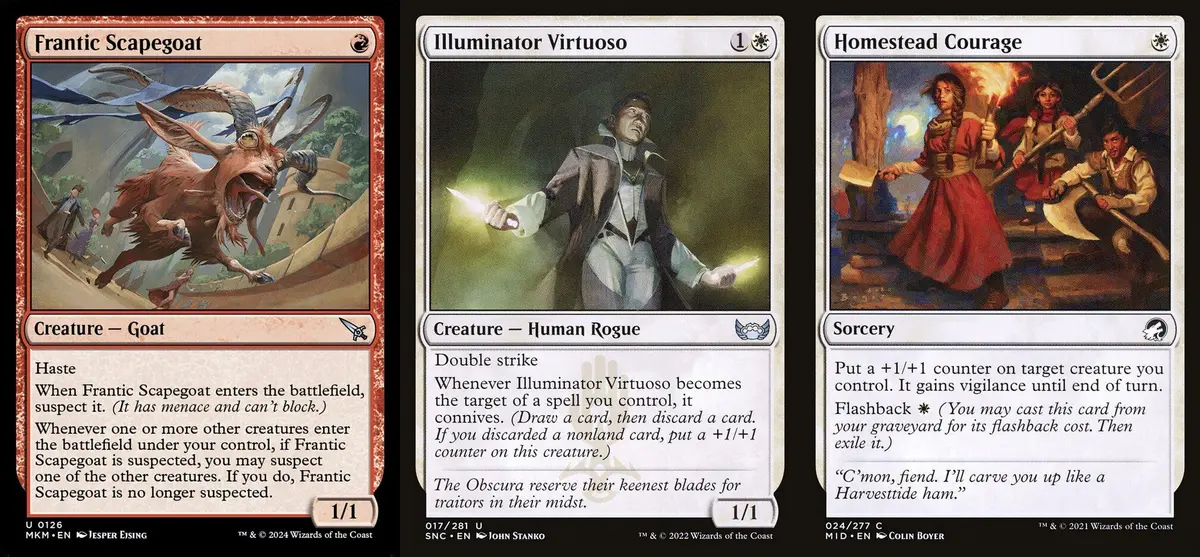
Since we’ve brought up heroic, let’s look at orthodox heroic! In terms of its own ability to race, Frantic Scapegoat certainly can’t compare with Phoenix Chick, but its value is that it can give menace to the main damage-dealing creatures that follow, and heroic creatures are exactly that kind of structure. Because the deck’s curve is low and proactive enough, Inti, Seneschal of the Sun can use its ability more reliably, and the main damage dealer Illuminator Virtuoso can proactively loot with connive, raising the chance of drawing cards. The reprinted Lightning Helix strengthens the ability to finish and to win the life-total race.
Since almost none of the creatures in the whole deck have ETBs, and the only ETB trigger source is the relatively unnecessary Frantic Scapegoat, the sideboard includes Doorkeeper Thrull. I believe many decks that rely on creature or artifact ETBs to run will get a splitting headache when they see it.
Boros Convoke
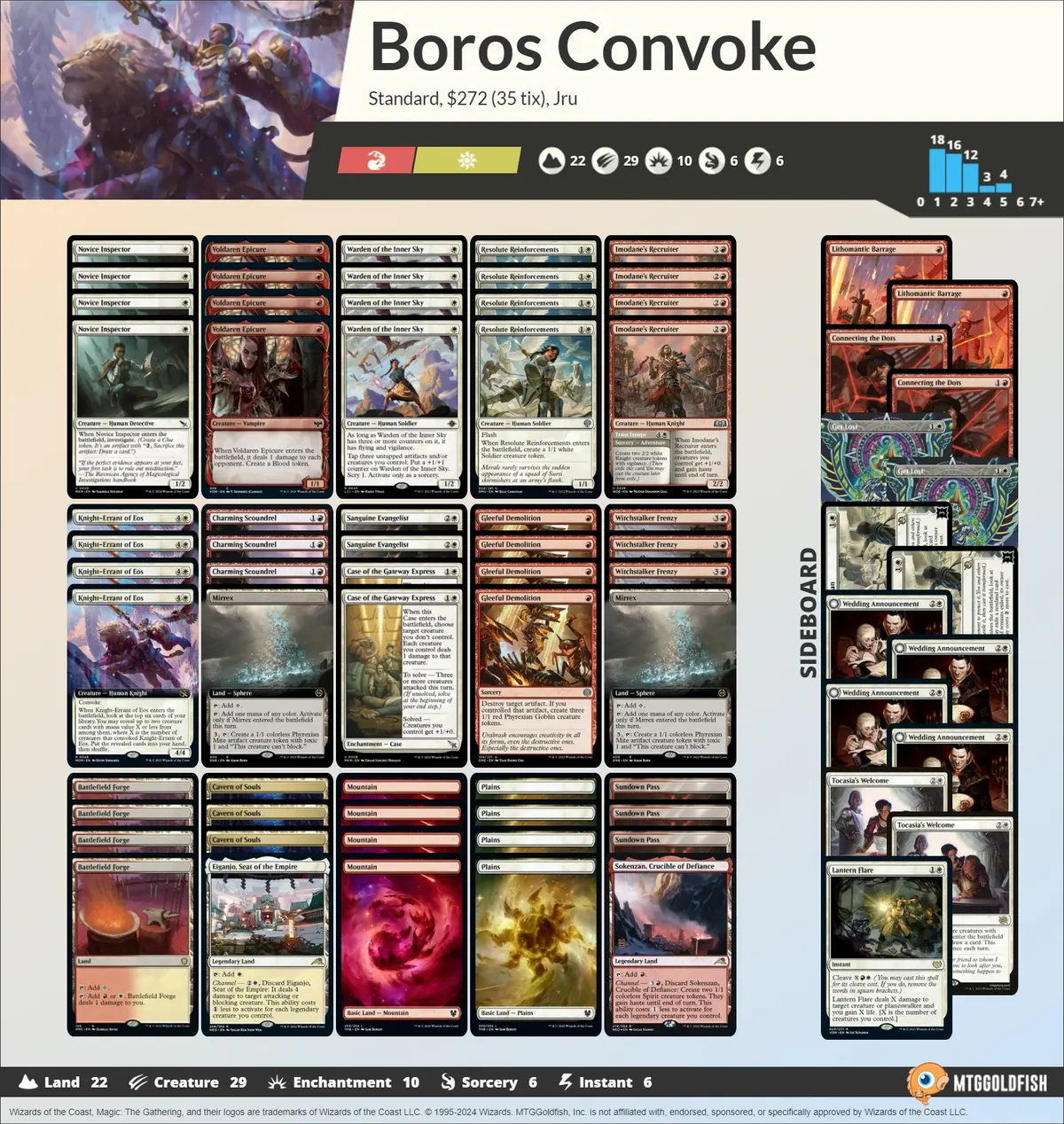
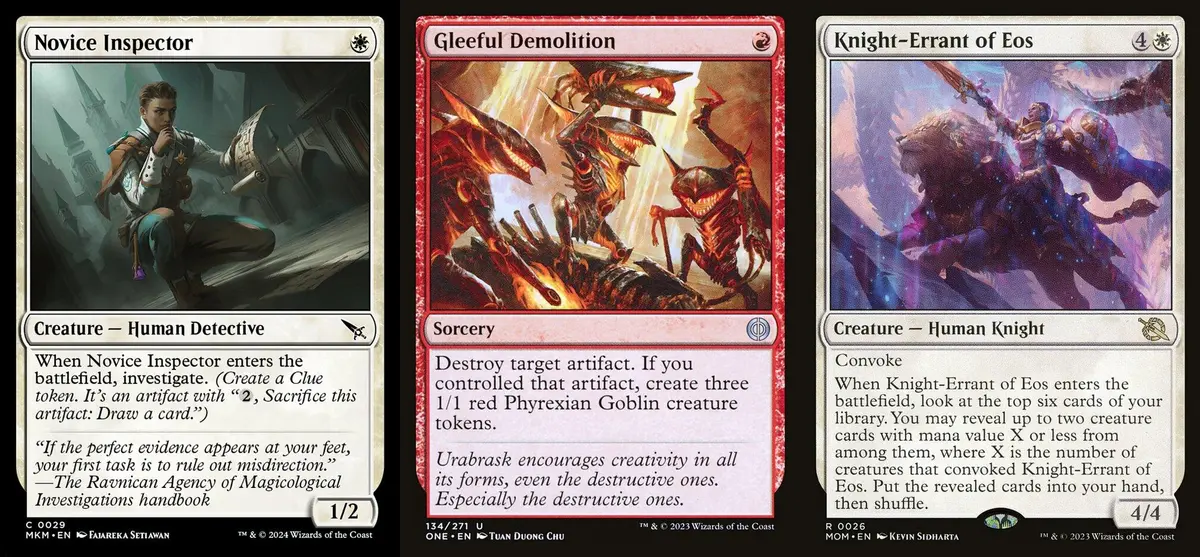
The one-drop creature + artifact nature of Novice Inspector is exactly what Boros Convoke wants, and Voldaren Epicure gets another quality coworker. The ceiling is a one-drop creature plus an artifact token on turn one, then on turn two use one mana for Gleeful Demolition to smash that artifact and make 3 creature tokens, and the remaining one mana plus the 4 creatures on the battlefield are exactly enough to convoke out Knight-Errant of Eos. Novice Inspector even has the right creature type to be cast with Cavern of Souls, easing the difficulty of fixing colors.
Case of the Gateway Express gives go-wide decks a new removal option. With convoke’s board-building ability, Case of the Gateway Express can normally reach the range of an equivalent kill spell, and the follow-up benefit is quite considerable: the +1/+0 for all creatures easily puts the opponent on a deadline instantly. The sideboard card Connecting the Dots is a new attempt at staying power.
Naya Tokens
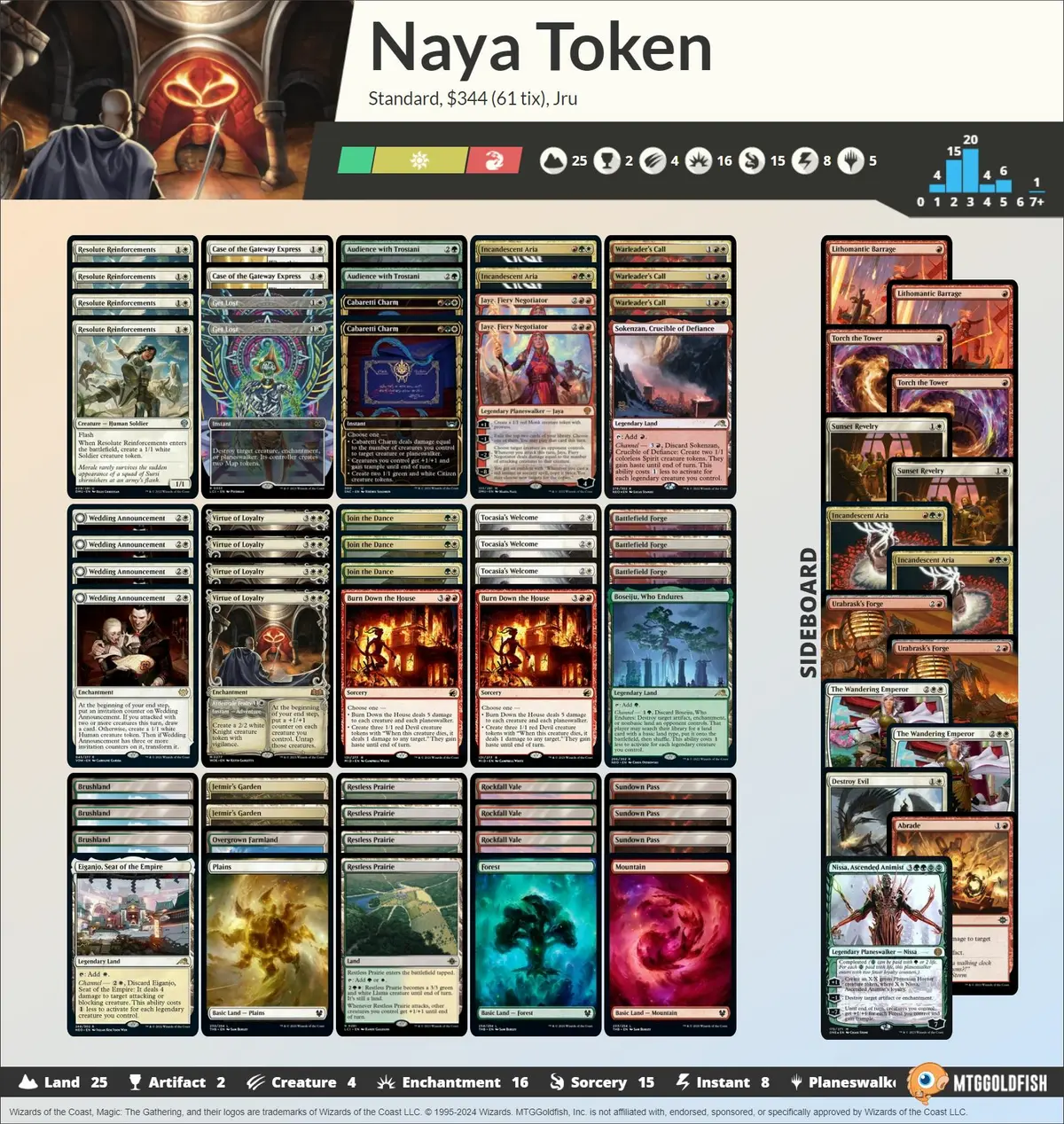
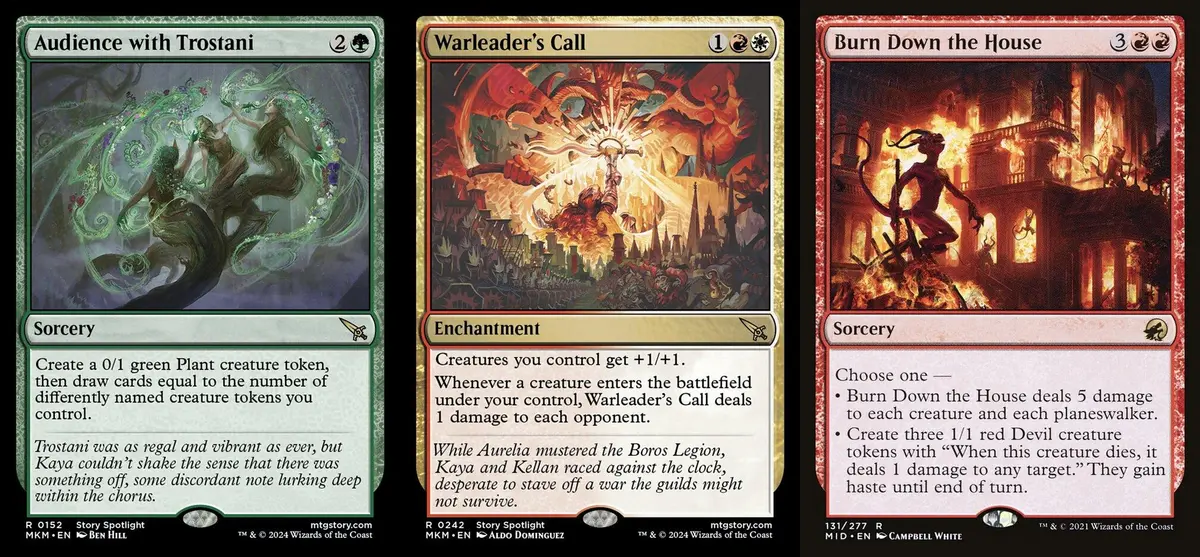
I believe there’s no need to explain how powerful Wedding Announcement // Wedding Festivity & Virtue of Loyalty // Ardenvale Fealty are. This set’s token decks also gained many pleasant surprises: Audience with Trostani provides a brand-new large-scale card-draw method, and Warleader’s Call is not only more anthem effects but also another win condition for an out-of-nowhere burst kill, and paired with Burn Down the House it is simply marvelous.
Mono Black Sacrifice
Mono Black Sacrifice decklist link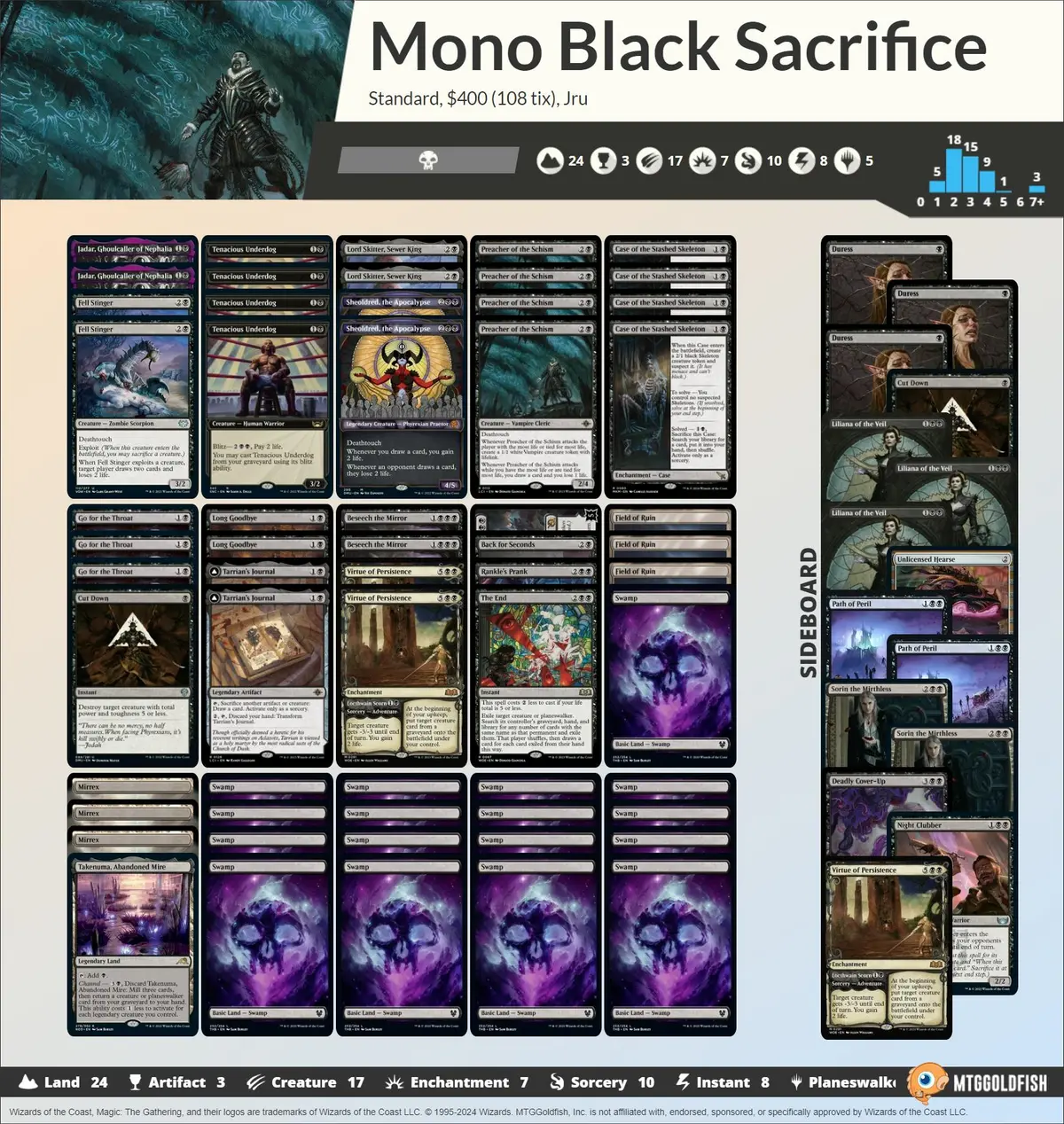
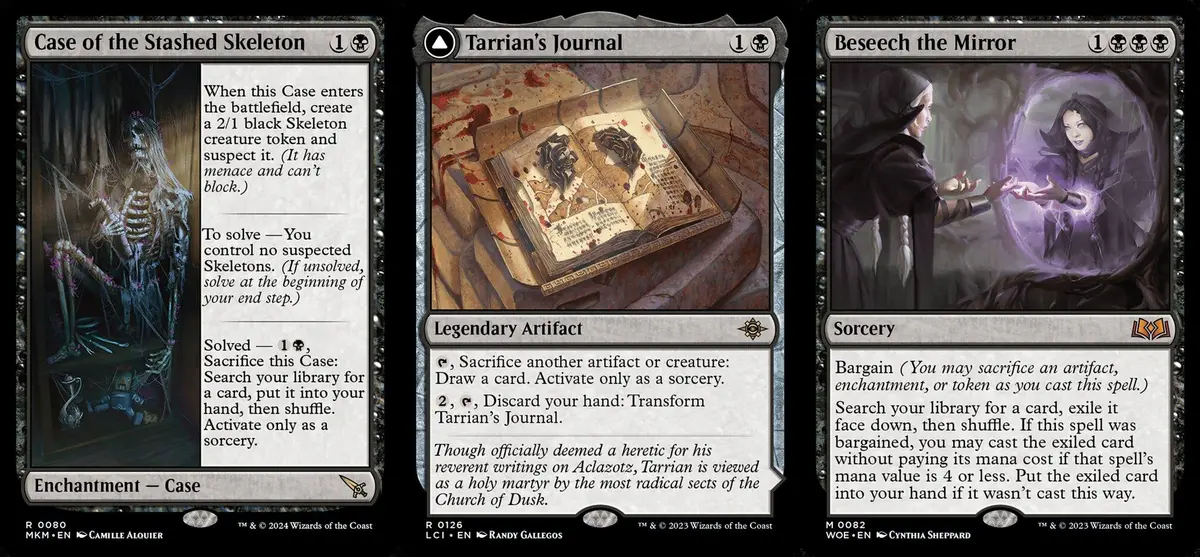
Case of the Stashed Skeleton was probably one of the cards with relatively high discussion during the early preview period of this set. Its built-in tutor ability is one reason, but more often people were discussing how to translate its solve condition… The solve condition of Case of the Stashed Skeleton is “You don’t control a suspected Skeleton”, which means the case is solved once you kill the suspect. Starting from that, the most intuitive approach is a sacrifice-themed deck.
Since this is a sacrifice deck, Deep-Cavern Bat naturally doesn’t fit very well, because you never want to send it off to die. Except for the supreme four-drop at the top of the curve, Sheoldred, the Apocalypse, all the other creatures (including Case of the Stashed Skeleton, which is positioned as a two-drop creature on the curve) are either fodder producers or consumers. Tarrian’s Journal // The Tomb of Aclazotz can constantly convert creatures into resources, and paired with Jadar, Ghoulcaller of Nephalia & Lord Skitter, Sewer King, which produce tokens every turn, it’s an all-you-can-eat buffet. Although Tenacious Underdog’s blitz continually costs life and mana to convert into resources, it can also put attack pressure on the opponent at the same time. In terms of card advantage per single turn it is faster, and more importantly it is harder to stop. Also, the suspected Skeleton and the tokens produced by Jadar & Lord Skitter, Sewer King can’t block, so you need a creature that can trade on the blocking side, or you’ll too easily be raced and burst down by the opponent.
Another source of token consumers is the bargain ability. This deck uses Back for Seconds & Beseech the Mirror. I must emphasize Beseech the Mirror: it can fetch various toolbox cards of which you play only a few copies with different functions, increasing the deck’s flexibility to respond, and together with the solved Case of the Stashed Skeleton, this deck has a surprising number of universal tutors, rare in Standard.
Golgari Aggro
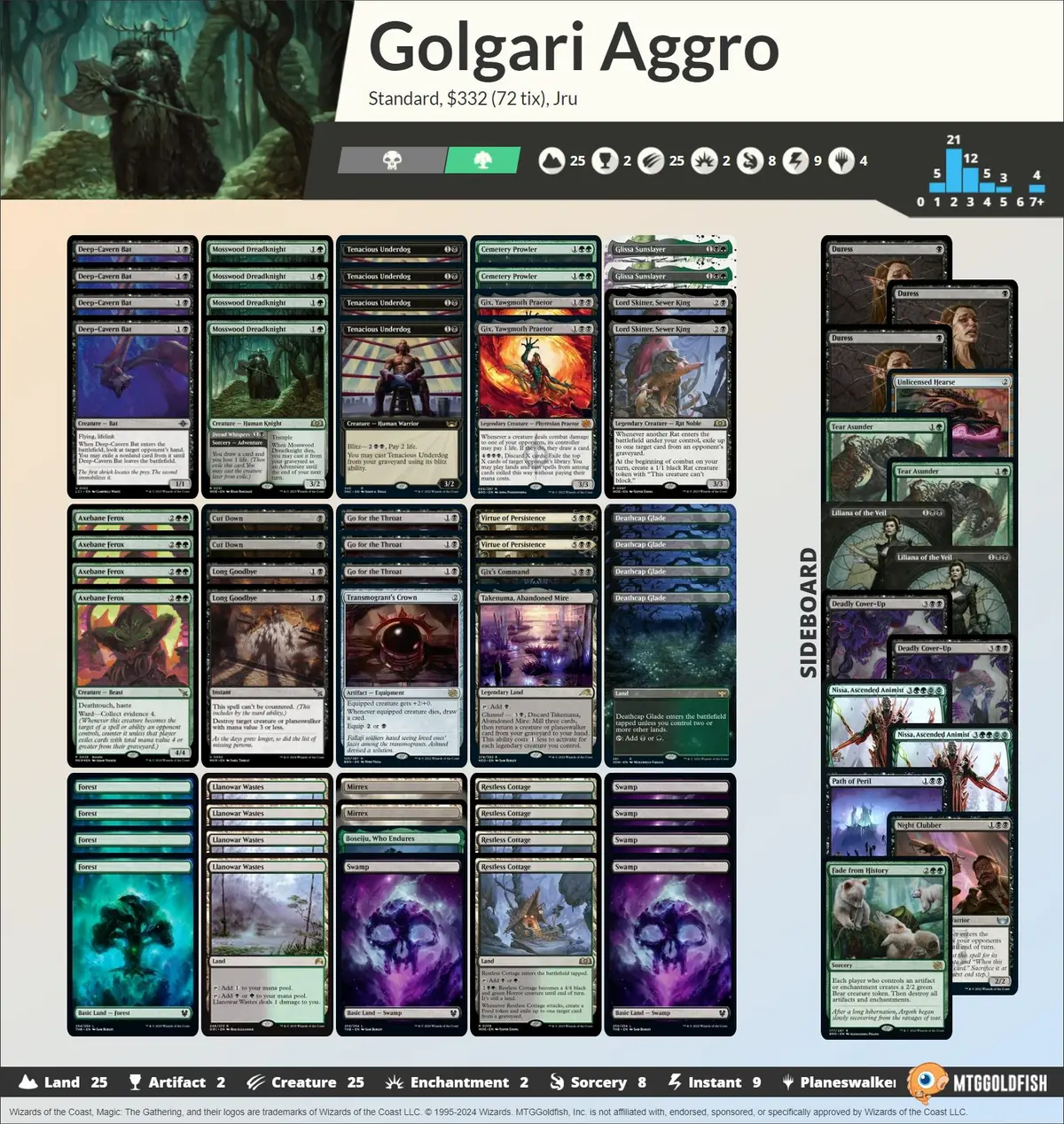
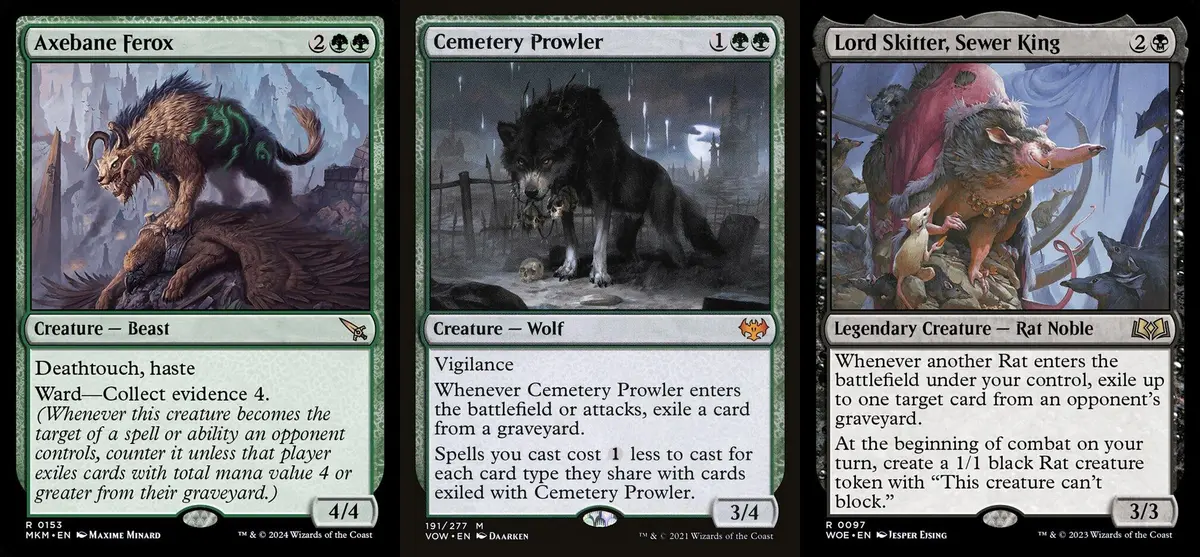
An aggressive build that switches the four-drop slot to the new card Axebane Ferox. The three-drops Lord Skitter, Sewer King & Cemetery Prowler can remove cards from the opponent’s graveyard, making it harder for the opponent to pay Axebane Ferox’s ward cost. In addition, the author had previously been using a Golgari midrange deck with Cemetery Prowler, and this wolf’s cost reduction is actually much more useful than it looks, often helping me make an incredible turn in a single turn.
Orzhov Midrange
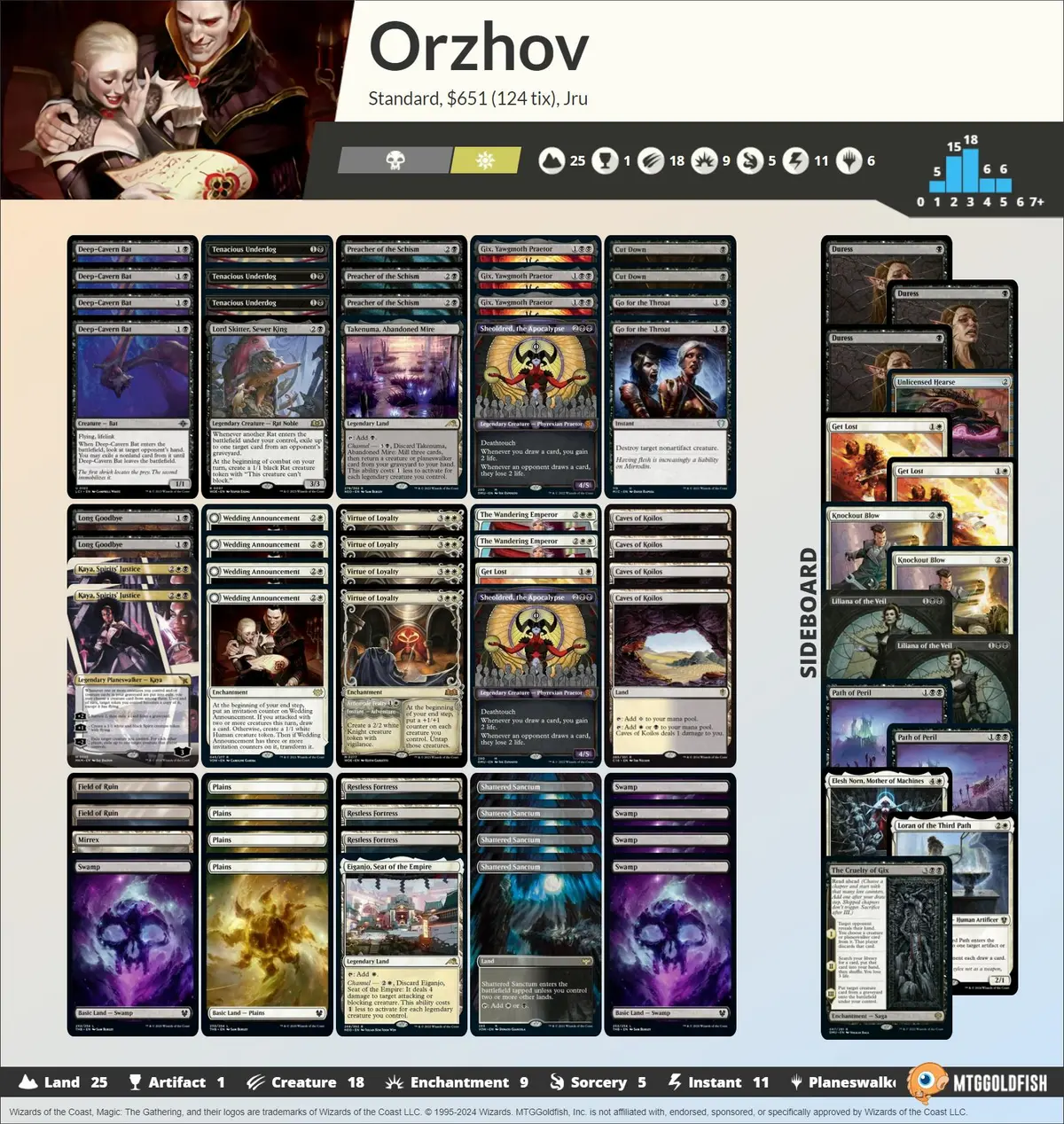
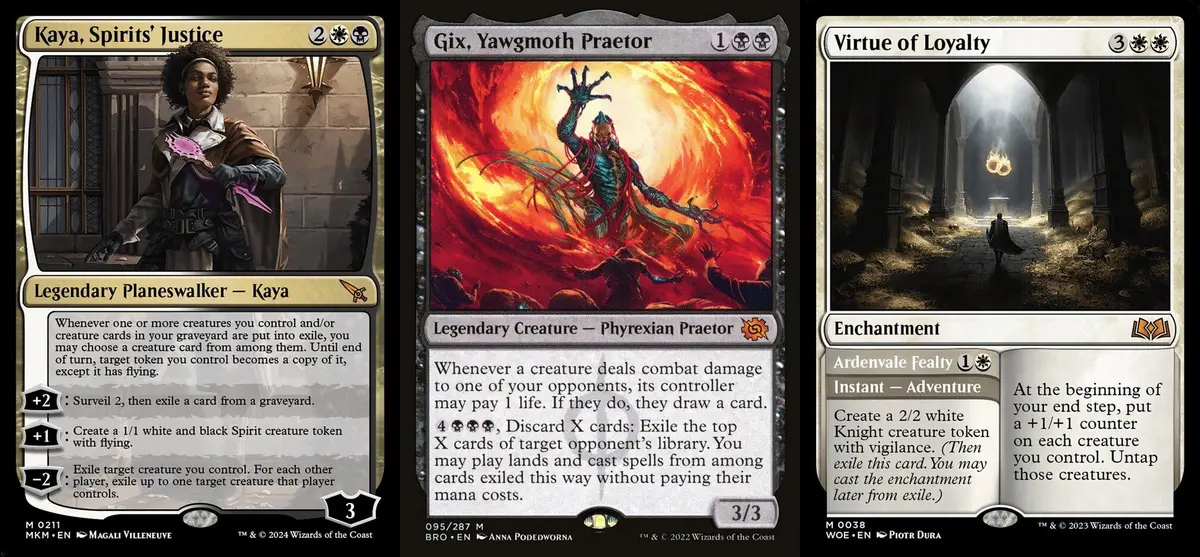
The static ability of Kaya, Spirits’ Justice may seem silly, like it goes in a big circle without saying what it’s doing, but if you don’t judge her by the static ability with preconceptions, and go back to look at her loyalty abilities as a planeswalker, you will find that apart from the low starting loyalty, they are actually pretty good. For a four-mana planeswalker, making a 1/1 flying creature token as the +1 is actually quite impressive, and the other ability, surveil 2 then an untargeted graveyard hate effect, is also very useful (remember that it can get around the graveyard protection of Dennick, Pious Apprentice // Dennick, Pious Apparition), and it gives +2, which to some extent makes up for the shortfall of the low starting loyalty.
Also, thinking about it carefully, you’ll find that the Orzhov color pair has an overflowing number of useful token-making cards. Besides the flying tokens it makes itself, there are The Wandering Emperor, Wedding Announcement // Wedding Festivity, Virtue of Loyalty // Ardenvale Fealty, Lord Skitter, Sewer King, and a host of other good cards. Token-related effects aren’t that hard to use. In addition, the biggest problem with Gix, Yawgmoth Praetor & Preacher of the Schism, these two top-tier three-drops, is that they generate cards by attacking rather than by ETB. Although the ceiling is extremely high, they are more easily pinned down by removal. Now, with Kaya, Spirits’ Justice, you can use her static ability and +2 to effectively give these creatures a one-time resurrection, putting stronger pressure on the opponent on offense.
Rakdos Reanimator
Rakdos Reanimator decklist link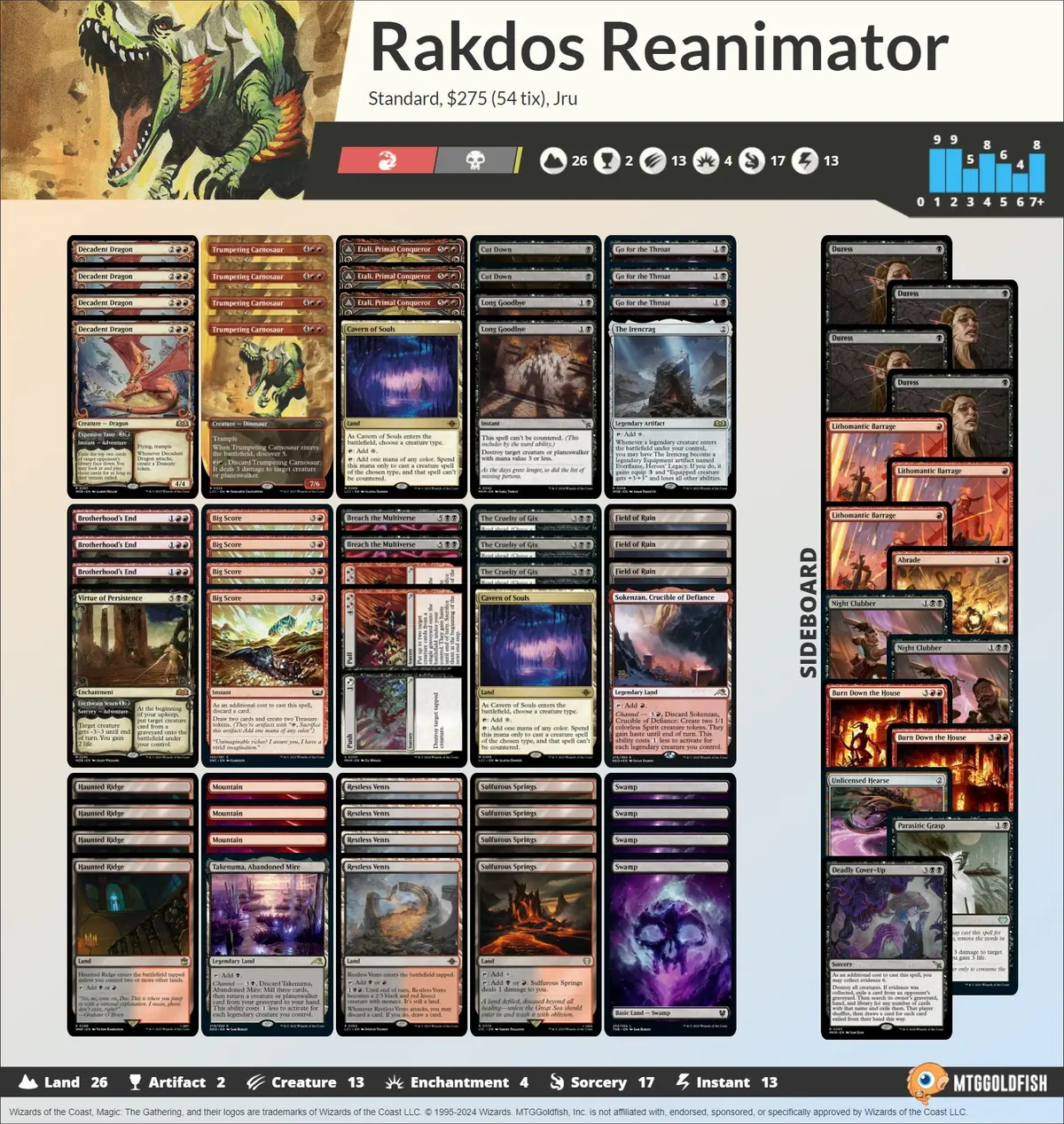
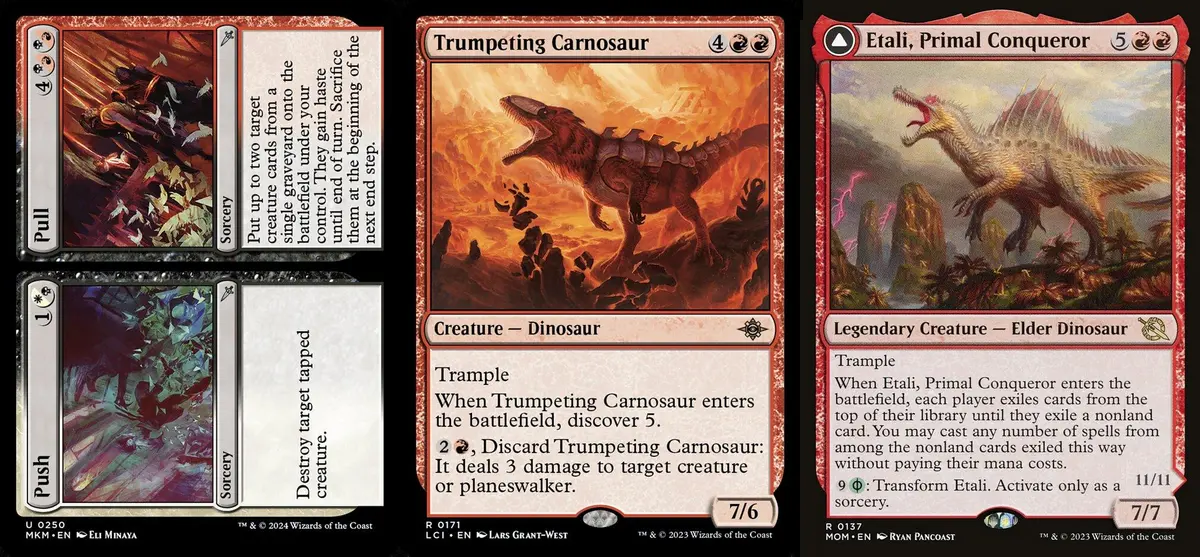
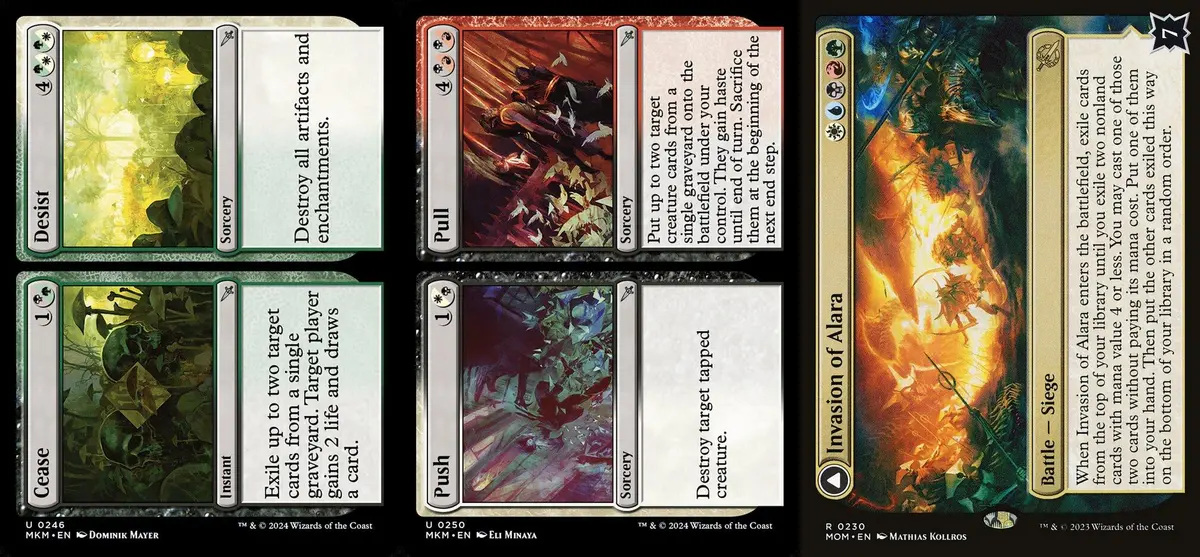
Although compared with the old Standard it only added one Push // Pull, it raised both the floor and ceiling of the deck by a notch. The highlight is without doubt the right half, Pull, which is a match made in heaven with the powerful ETB abilities of Trumpeting Carnosaur & Etali, Primal Conqueror // Etali, Primal Sickness. Although there is the side effect of having to sacrifice these creatures at end of turn, getting punched by two of these big guys together, plus the resources they bring when they enter, is probably enough to beat the opponent to death.
However, the current Standard has no shortage of powerful reanimation spells, and there are only so many slots for high-cost reanimation cards, so the right half, Pull, is only the icing on the cake. What really sets this card apart is the seemingly somewhat inefficient removal on the left, Push. Although it really can’t be called powerful as removal, and in a black color-pair deck that has the best instant-speed removal it even seems too inefficient, it is an extra low-cost removal option that comes on the premise that your finishing power is unchanged. It can reduce the chance of drawing too many high-cost cards in your opening hand and getting killed before you can do anything, increasing the deck’s flexibility and consistency.
Boros Reanimator
Boros Reanimator decklist link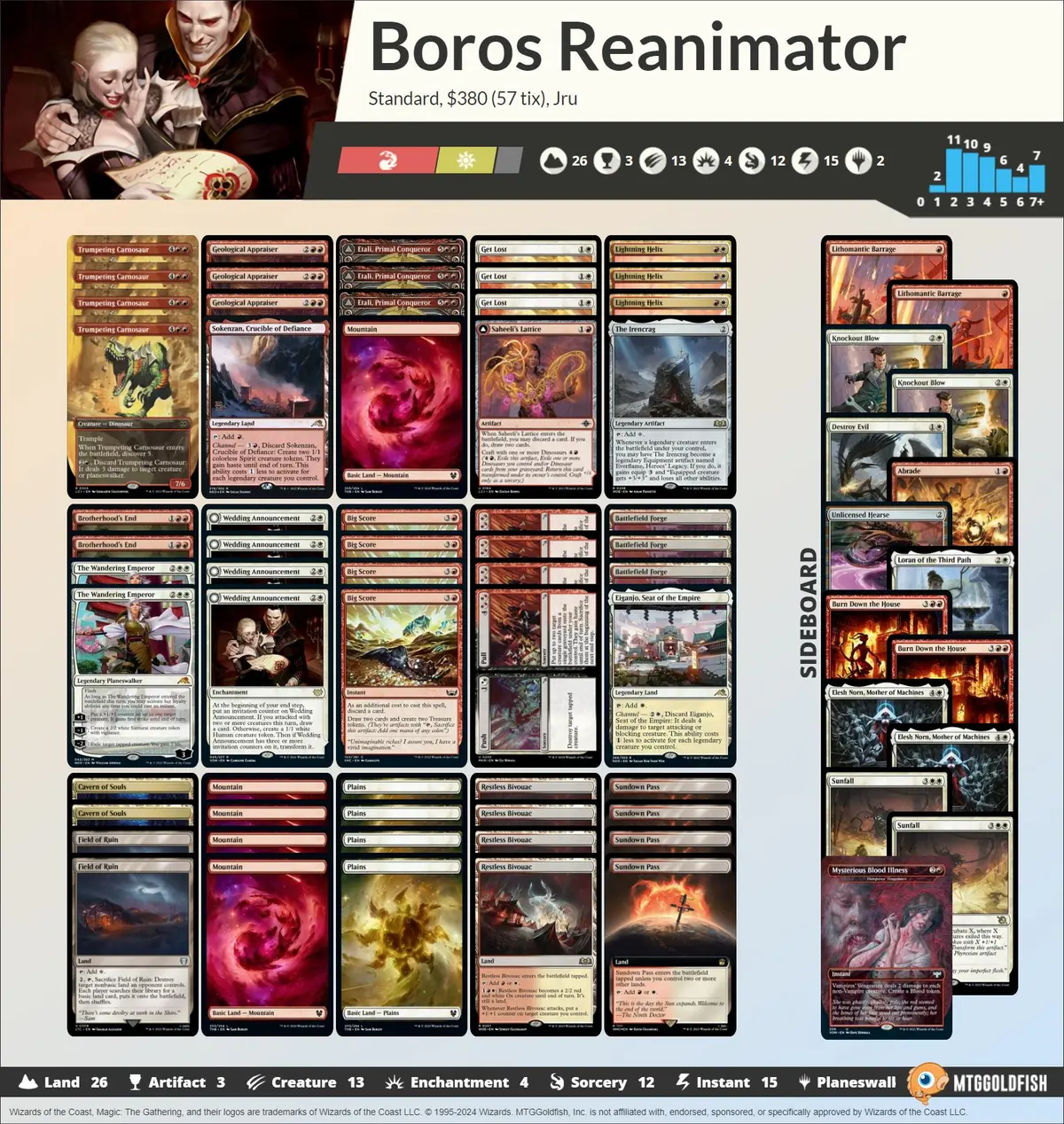
Because of its hybrid mana, Push // Pull is equally usable in the Boros color pair, and as long as the color pair includes red you can keep pairing it with Trumpeting Carnosaur & Etali, Primal Conqueror // Etali, Primal Sickness, so compared with the traditional Rakdos, this set gives reanimator a new Boros color-pair option.
Five-Color Angels
Five-Color Angels decklist link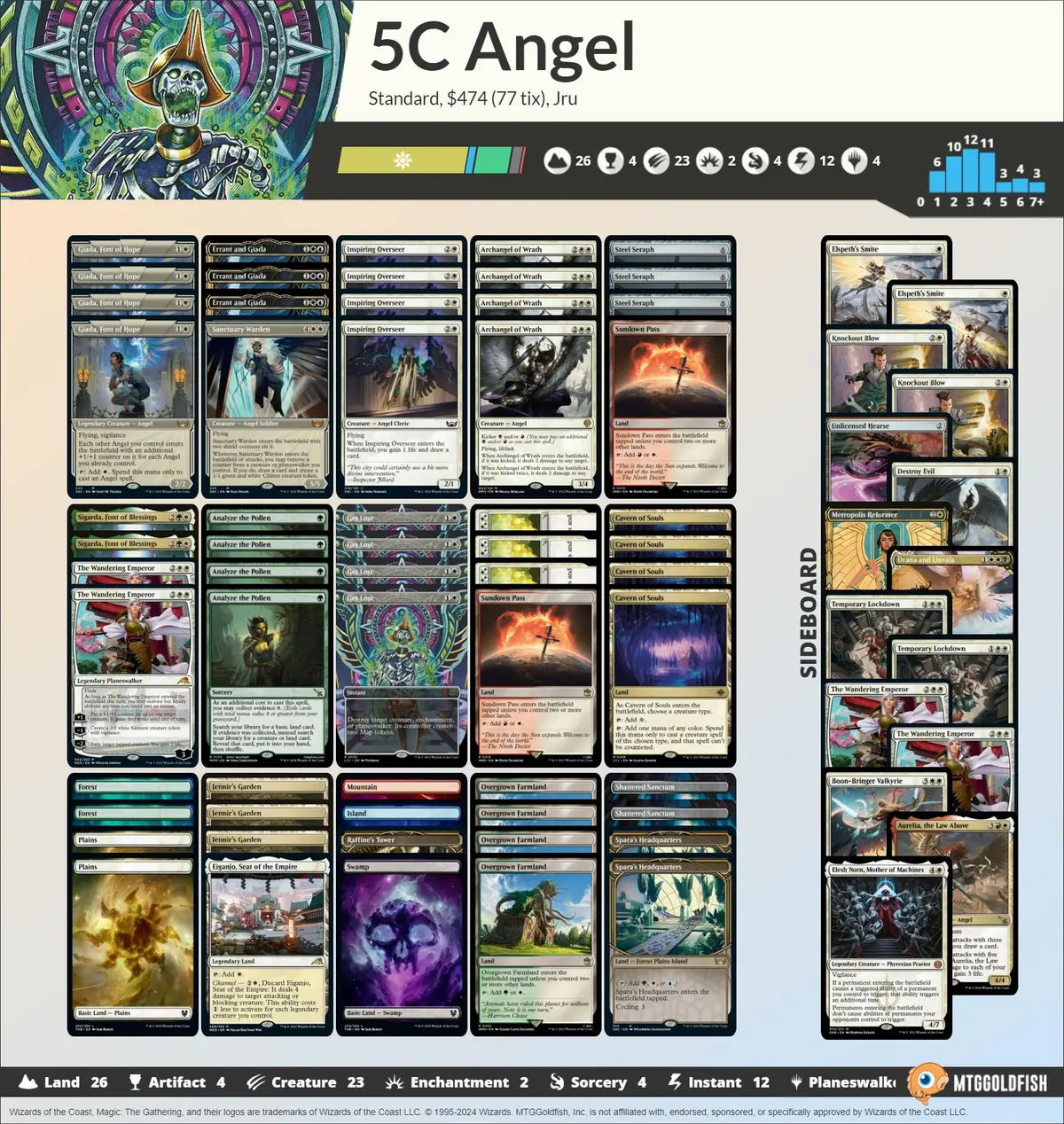
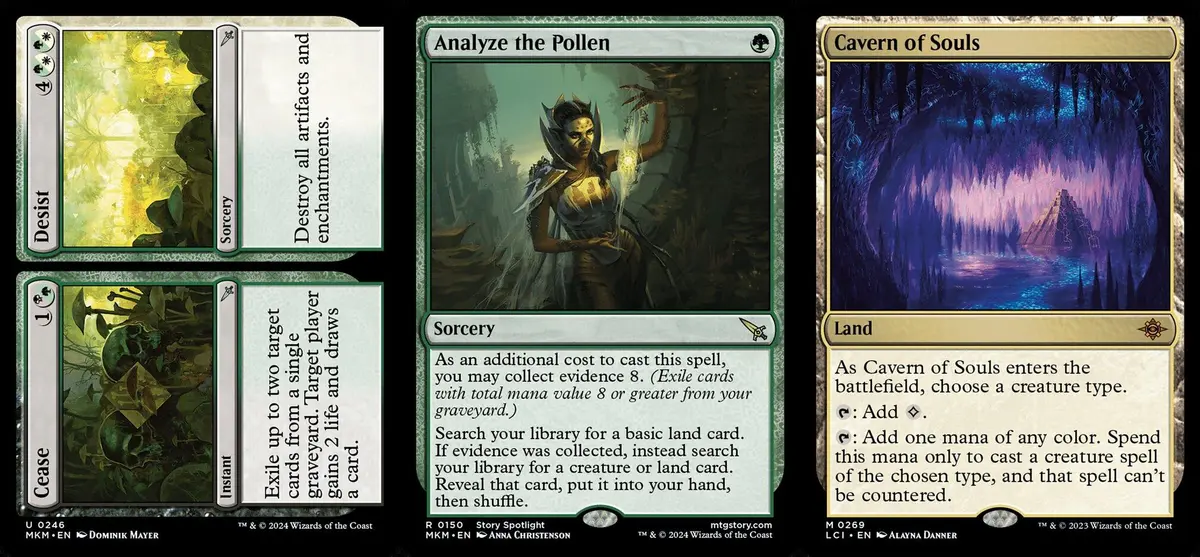
This deck really lets itself off the leash a bit. The starting point actually has nothing to do with Angels; the focus is the little package of Analyze the Pollen & Cease // Desist. The left half of Cease // Desist, Cease, provides a new instant-speed looting option for non-blue decks, and its bonus graveyard hate and lifegain are also very useful in today’s environment. The right half, Desist, is a freebie, since artifacts and enchantments still make up a not-small share of the meta and there’s some chance to use it. While this card is in the graveyard it counts as an eight-mana card, which exactly meets the evidence-collecting condition of Analyze the Pollen, upgrading Analyze the Pollen into a quality tutor with one card. However, when I tried to apply this package to builds, I found it more or less awkward; most of the time I couldn’t see the necessity of forcing these cards in. In the end I summarized several preconditions for using this package:
- The deck is slow-paced, so it has the leisure to slowly use these loots and tutors
- The deck is three or more colors and has a high need to find specific utility lands or creatures, so Analyze the Pollen can show its value
- The looting source shouldn’t rely on blue cards; competing with blue at looting is really not practical
- The mid-to-late curve is heavy, but there are few playable cards early, so these two cards can reasonably fill the gap
- It can’t be a Domain deck; forcing this into Domain wouldn’t be stronger than existing builds
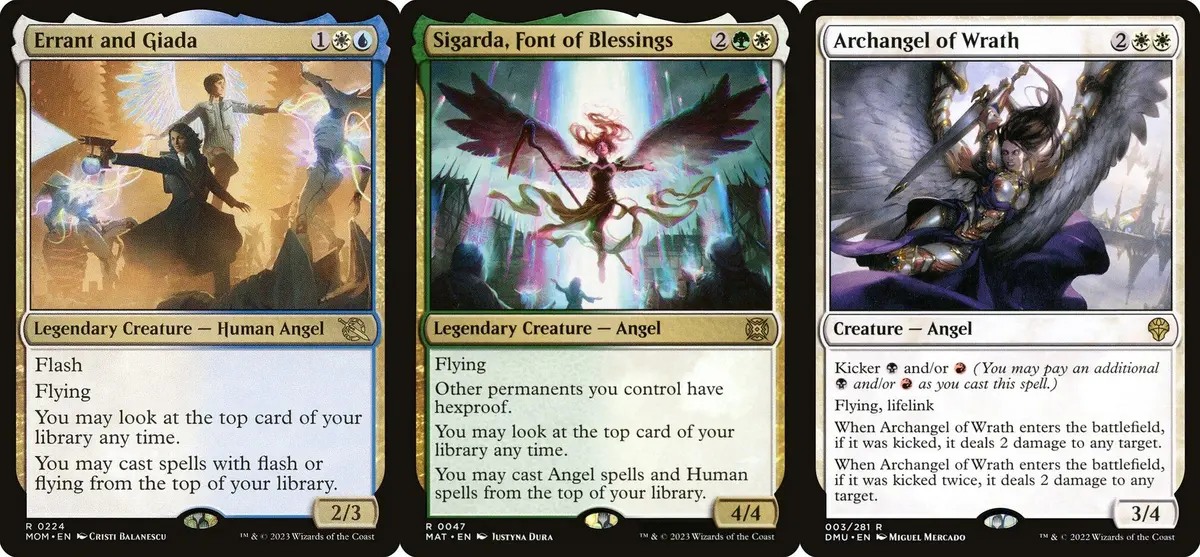
After thinking it over, I found that multicolor Angels fit these conditions surprisingly well. As a tribal deck, Angels have a relatively heavy curve, and the only creature at two mana or less is Giada, Font of Hope. There are plenty of quality Angels above that, but they are often white plus another color, and if I greedily go “I want all of them”, the demand for fixing and Cavern of Souls will be extremely high. Also, while there is no lack of removal at two mana or less, looting is relatively scarce (Reckoner Bankbuster is banned, and Spirited Companion & Ambitious Farmhand // Seasoned Cathar meet the condition, but without Wedding Announcement // Wedding Festivity to go with them they are a bit weak as standalone cards), and Cease fills exactly that functional gap.
Alara Raccoons
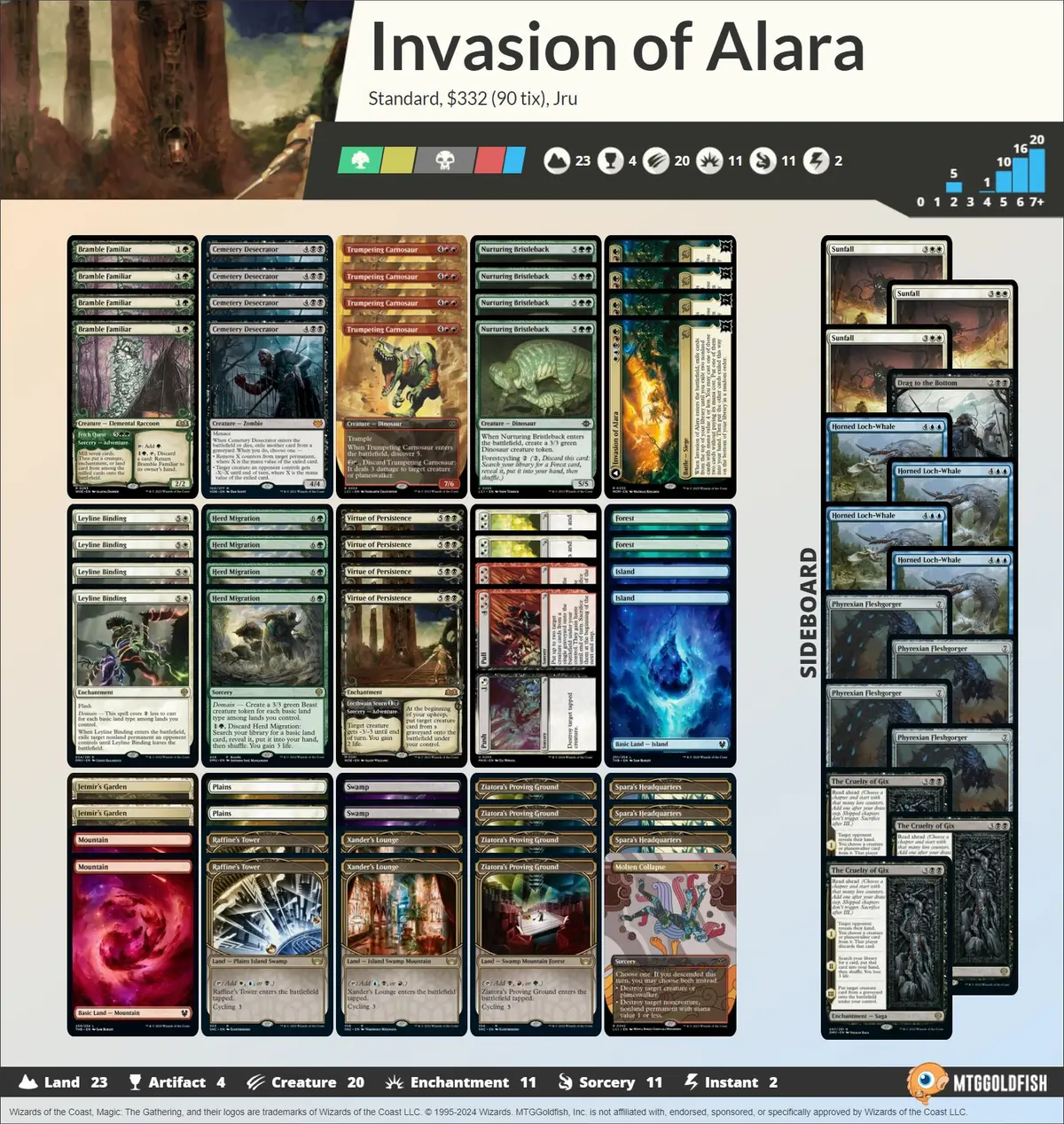
Because of how mana value is calculated for split cards, Cease // Desist & Push // Pull pairing with cascade decks is already an old trick. These two cards serve as the two-mana looting and removal on the curve, enriching the early-game flexibility of the Invasion of Alara // Awaken the Maelstrom deck.
Enjoy the Brand-New Standard!
The Standard brewing at the start of a set is always the most exciting moment for the author, since you can freely explore brand-new deckbuilding space. At the end, the author would like to share a little of his own mindset on deckbuilding:
I personally believe deckbuilding is a process of trial and error. If you have any idea, try it out from all angles in everyday practice, and don’t be afraid that the deck you build won’t be strong enough. Few people have a final version the instant they build a deck; continuously fine-tuning based on test results is routine. For the several Standard decks the author often plays, although the main deck rarely changes now, the sideboard is still adjusted regularly. What’s more, the environment is usually dynamic, and there isn’t necessarily a “final version” that works forever.
Of course, it has also happened that after testing I found the foundation of my current deck was flawed and ended up scrapping the whole thing. But being able to analyze where the working logic of your deck went wrong is itself training for your own abilities. After all, wanting to build and test it in the first place means you felt at the time that this deck was viable, and being able to logically identify exactly where the problem lies now means you have grown.
So when trying out builds, just let go and test! Real play will prove whether your idea works, and whatever the result, you will gain something.
If what’s stopping you from trying is the cost of building, as long as you make sure the list in your mind is something you will eventually be able to afford, using proxies for testing is also an option. Just note that proxies are, after all, temporary, only a transition before you realize the finished deck or for stress-testing against hypothetical opponents. Please don’t proxy a deck you have no ability to build at all.
- Title
- A First Look at Murders at Karlov Manor Standard
- Author
- Jru
- Created at
- February 9, 2024
- License
- This work is licensed under CC BY-NC-SA 4.0 .