Murders at Karlov Manor (MKM) Limited Overview — White

Note: This article was translated from Chinese by AI and may contain errors. Read the original Chinese version.
Murders at Karlov Manor (MKM) holds its prerelease events on February 2, 2024, and launches officially a week later on February 9, 2024. Want to know more about single-card Limited ratings and some potentially fun synergies? Then check out this series of MKM Limited overviews!
For the mechanics, see this article: Murders at Karlov Manor Mechanics Explained
Rating Scale
5.0: Unconditional must-pick
4.0: First-pick value
3.5: Strong enough but not necessarily a first pick
3.0: Above average (you will very much want it in your final deck)
2.5: Average, maybe around the 6th or 7th pick of a draft
2.0 to 1.0: Below average (you would rather not play it than play it)
0.5 to 0.0: Unplayable (basically don’t play it, it will only help you lose)
White
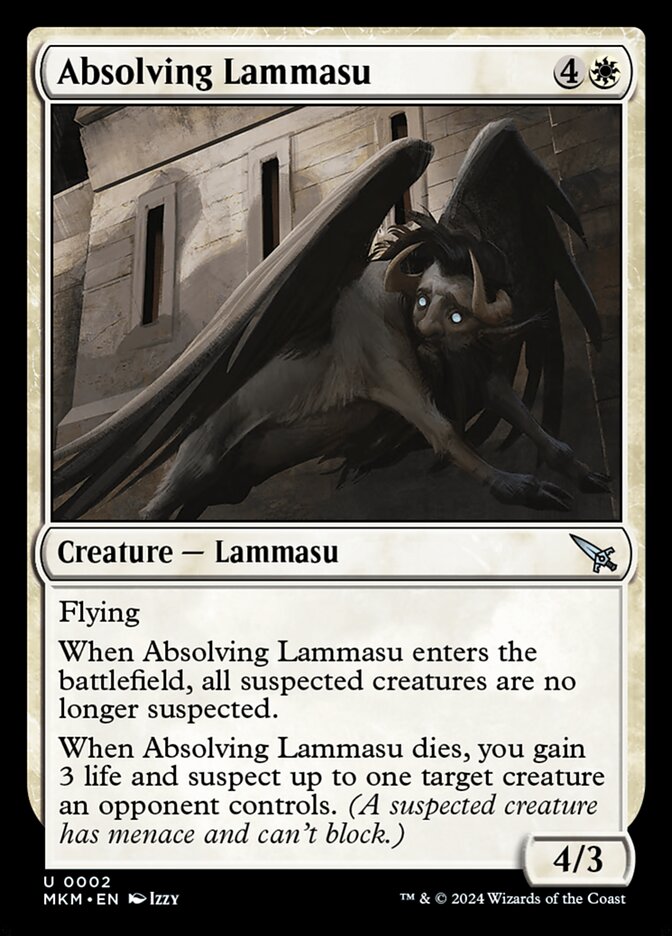
Jru: 2.5
For a flier, a 4/3 body for five mana is middling. Whether the enters ability that removes suspicion is good or bad is hard to say, and depends on whether your game plan is more proactive or reactive. Suspect is essentially an ability that strongly encourages both sides to attack. When you are behind on tempo or want to lengthen the game, this enters ability may be a lifeline, but if your game plan is more aggressive, or you even have other suspect cards of your own, it may be like dropping a rock on your own foot. So depending on your game plan, this card’s score may swing by ±0.5.
Either way, its death ability is unquestionably beneficial. The suspect when it dies is under your control, and you can decide based on the board whether to suspect the opponent’s creature.
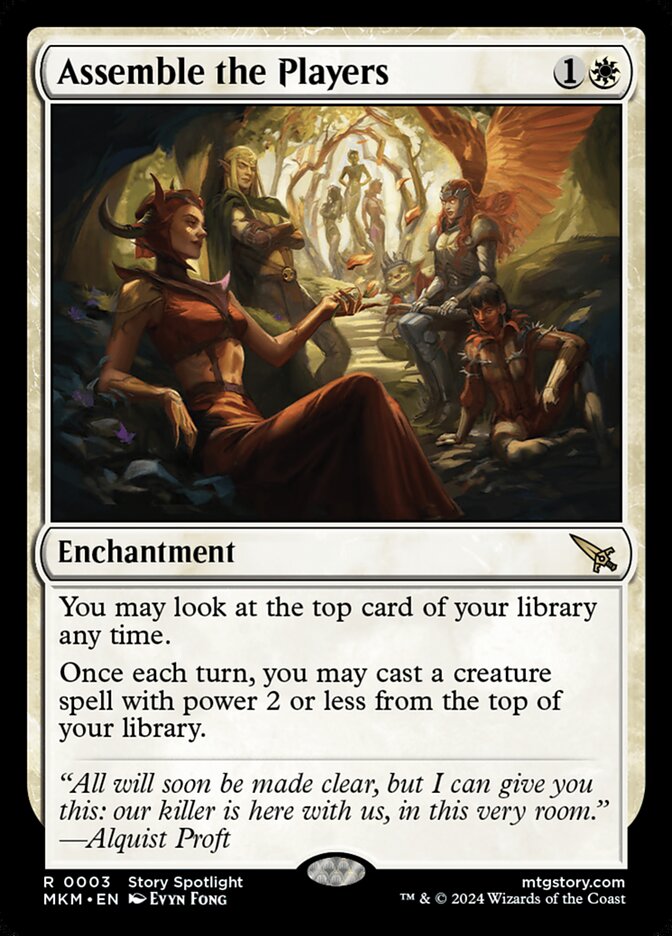
Jru: 4.0
The simplest way to figure out how many points Assemble the Players is worth is to ask how many cards you can expect it to earn you. The first is tempo-losing card filtering, the second is already a gain, though if you care more about tempo cost you can call it even, and everything from the third on is pure profit.
This set has 139 creature cards in total, of which 65 have power 2 or less, 47% of the total. I believe this number is much higher than many people imagine, caused by the large number of low-power, high-toughness creatures in this set.
But that is not the full range of this card’s benefit. Read the condition on Assemble the Players closely: it checks the characteristics of the spell, not the characteristics of the card. When a spell is cast face down with this set’s Disguise ability, the face-down characteristics replace the original ones, and those face-down characteristics are a 2/2 creature, which satisfies Assemble the Players’ condition. That means you can use Assemble the Players’ ability to cast a Disguise spell face down from the top of your library, even if the front of that card is a creature with power greater than 2, or not even a creature at all (for example Branch of Vitu-Ghazi). For a similar effect, see how Void Winnower stops the opponent from casting Morph spells.
Jru: 5.0
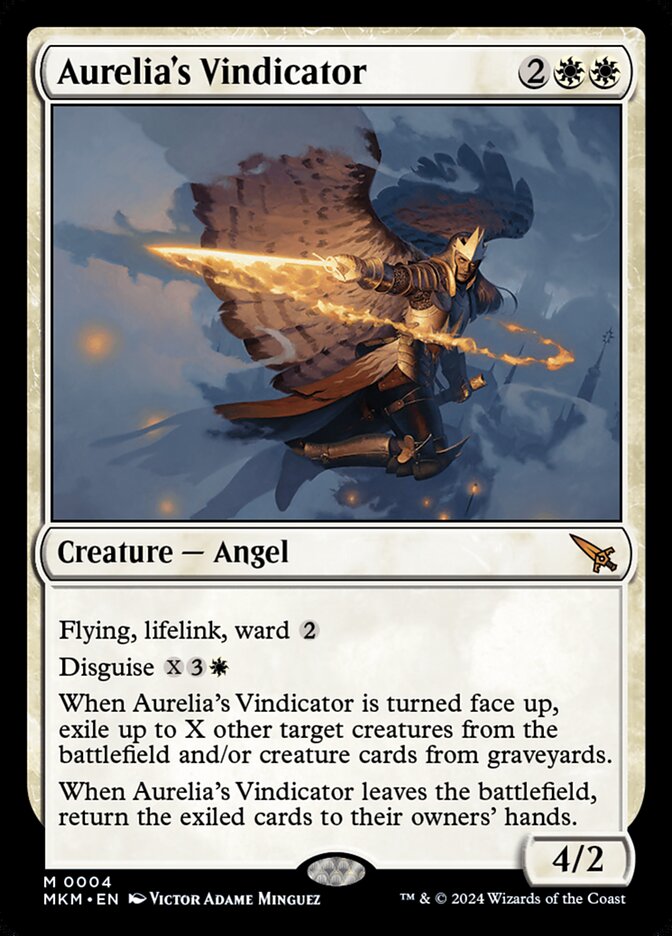
The spiritual successor to Angel of Serenity. Even just cast normally it is a powerful flying attacker, and while the 4/2 body is easier to kill, ward 2 makes up for that to a degree. What’s more, if you got it by turning it face up from Disguise, you may come out way ahead on cards, and getting back even two cards counts as pure profit.
But treating it merely as a card-drawing machine with a leaves-the-battlefield trigger would sell it short. The highest ceiling of Aurelia’s Vindicator is to clear the opponent’s entire board and then go all in to hit them in the face. Even if the opponent manages to remove this creature immediately, those cards only return to their hand rather than the battlefield, and the opponent still has to spend mana to slam the creatures back down, which in most cases is too slow to rebuild the defense.
There is one more rules detail to add about Aurelia’s Vindicator:
Its turn-face-up ability and its leaves-the-battlefield ability are two separate triggered abilities. You can respond to your own turn-face-up trigger by getting it off the battlefield some other way (for example sacrificing it to Agency Coroner). Then the leaves-the-battlefield ability goes on the stack and resolves first, but at that point no cards have been exiled by Aurelia’s Vindicator, so no cards are returned to any player’s hand. Afterward the turn-face-up ability resolves and exiles X targets, and because the Aurelia’s Vindicator that could bring those cards back is already gone, those exiled cards are stuck in exile forever.
Jru: 2.0
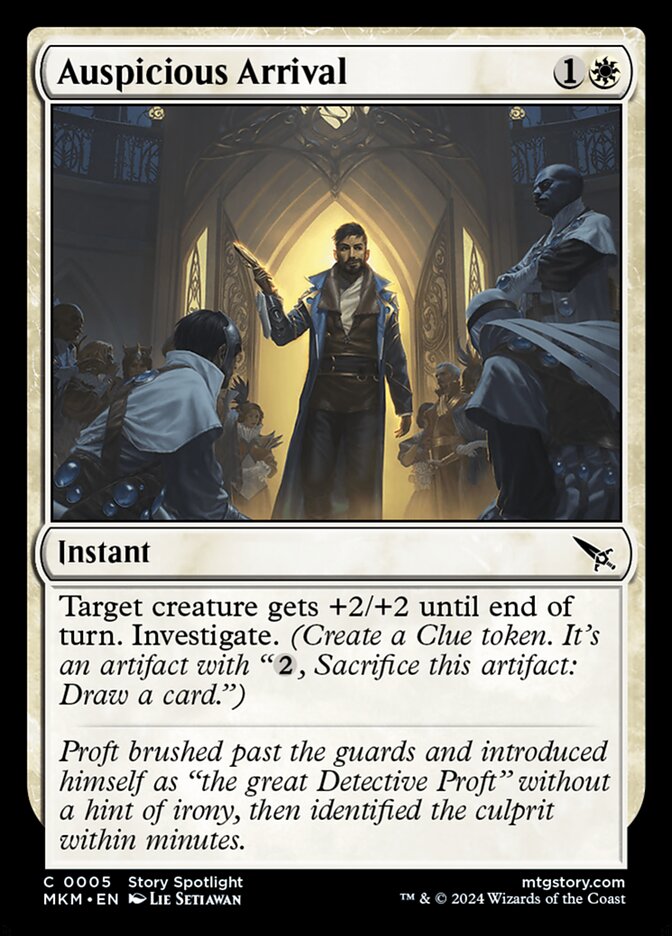
Passable as a combat trick that may earn you a card, but a combat trick always carries the risk of being responded to for a two-for-one. Using it on a Disguise creature with ward 2 reduces some of that risk.
Jru: 2.5
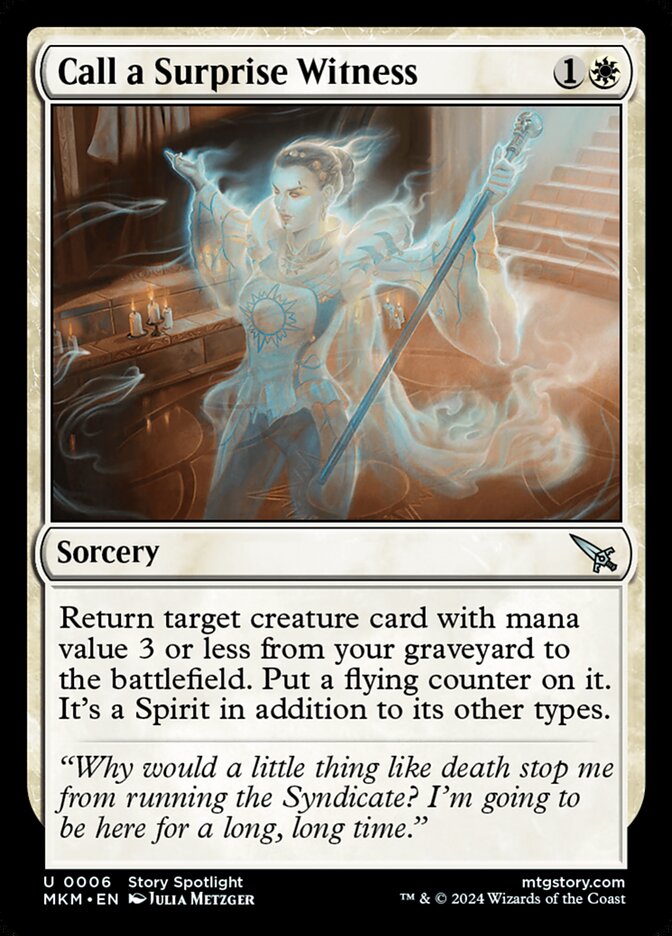
White two-mana cards that dig for three-drops are showing up more and more lately, and the extra flying counter is a decent boost. If your build has important two- or three-mana creatures, consider including this one.
Jru: Non-Case theme: 1.5 / Case theme: 3.5
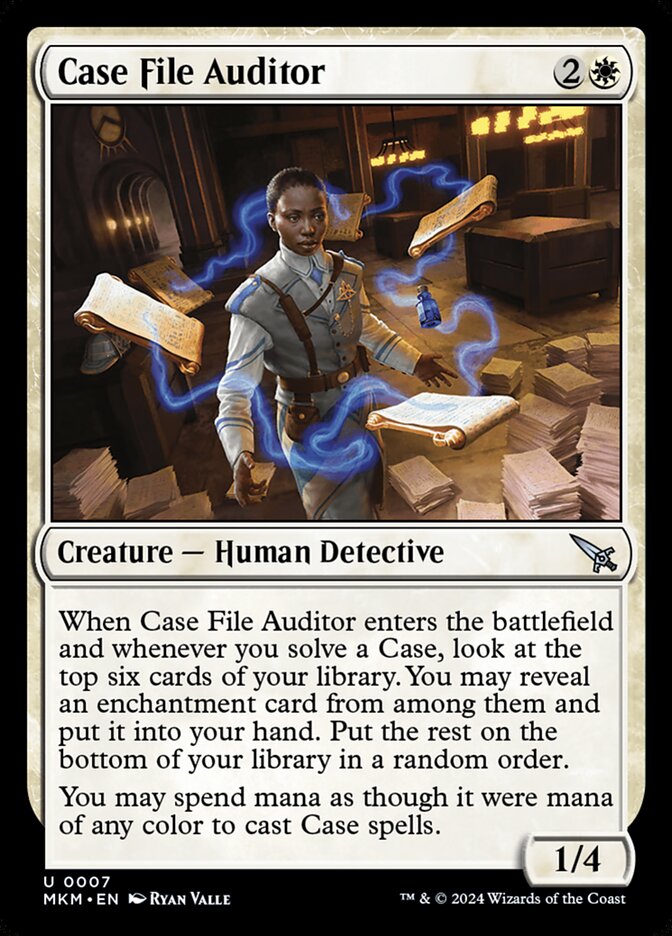
Look at six and take one is very deep, and it is not limited to Cases, since any enchantment can be taken, but you still need enough Cases for this card to be sufficiently well incentivized. When you don’t have enough enchantments, she is just a three-mana 1/4 vanilla creature. Even if you don’t have many Cases, you should have at least a certain number of enchantment cards, so she has a reasonable chance of earning at least one card when she enters.
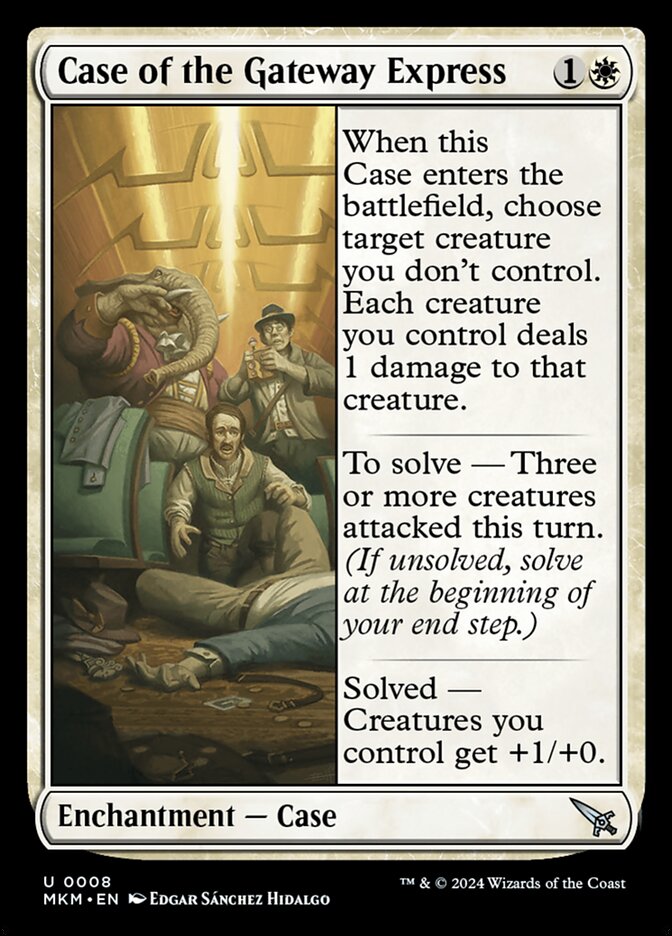
Jru: 3.5
The enters ability is removal with a range limit, but in Limited that is mostly good enough. Also note the wording: “each creature you control deals 1 damage to it”, so if any of your creatures have effects tied to dealing damage, such as deathtouch or lifelink, they all apply.
The solve condition is not hard to meet in Limited, especially since this set also has suspect, which raises your creatures’ survival rate after attacking, and the ability after solving is plain and simply useful.
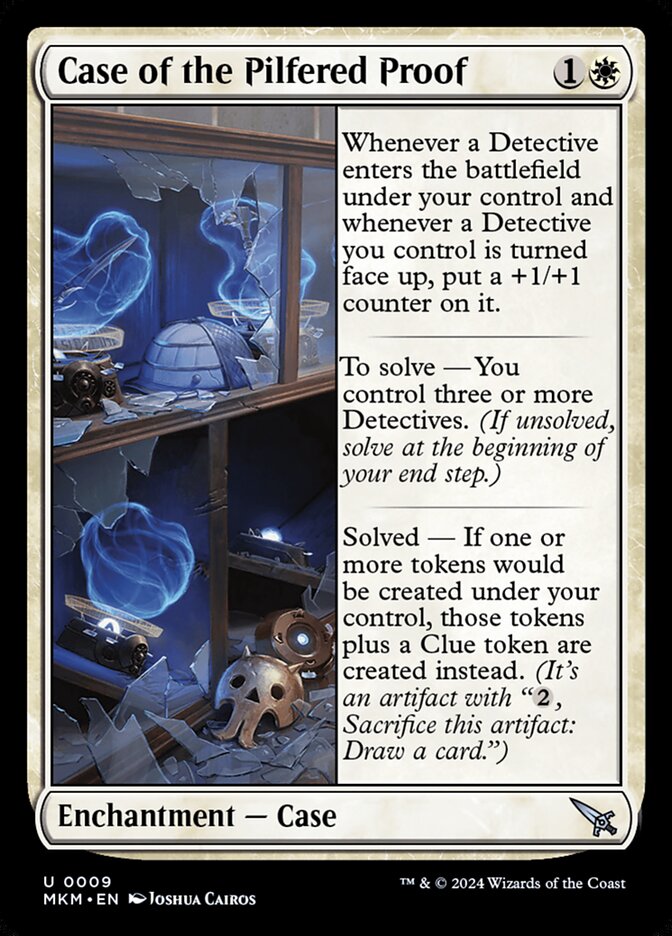
Jru: 2.5
Of the 139 creature cards in this set, 46 are Detectives, almost exactly a third, a number even higher than most tribal environments, so tribal-payoff cards for Detectives in this set tend to get bigger score boosts than in a normal environment.
Putting +1/+1 counters and making Clues are both intuitively beneficial, and in a Detective environment you can look forward to the ceiling. Of course this card’s performance is somewhat unstable, with issues of sequencing and the number of Detectives. In a sealed pool, if you want to use this card, remember to check the number of Detective cards and token-making abilities in your pool. In a draft it can be a key card for a Detective plan.
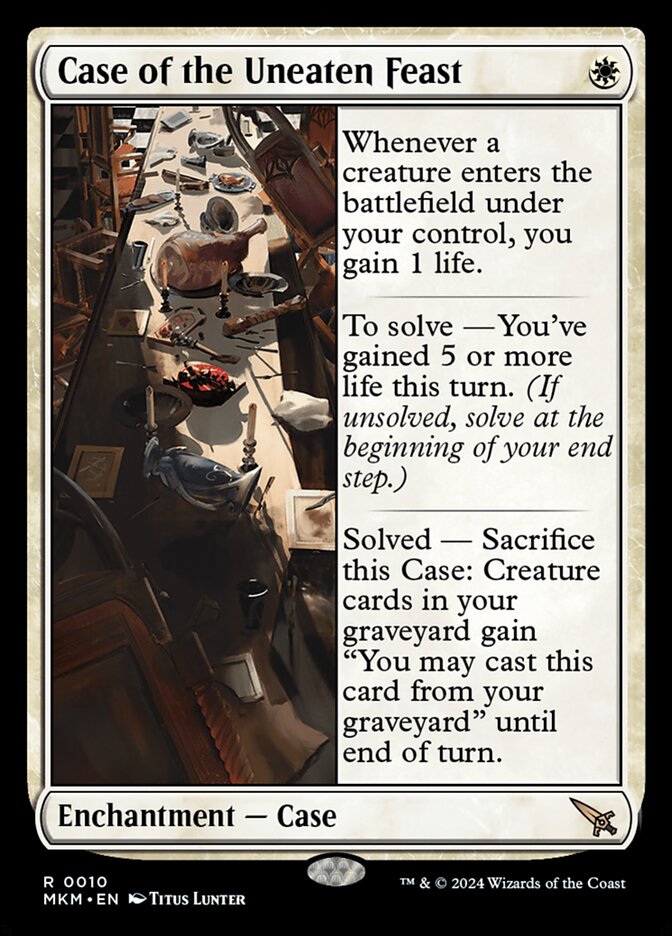
Jru: 1.5
Meeting the solve condition is a bit hard in Limited. You basically still need lifelink creatures with some punch to hit it, and even if you manage to solve it, whether you profit comfortably depends on your available mana and what cards are in your graveyard.
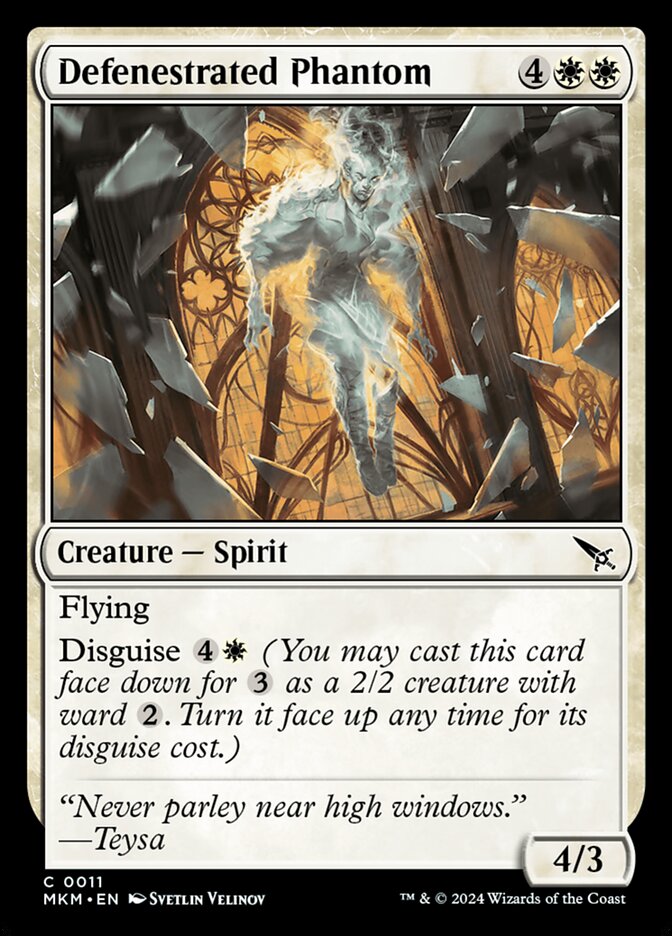
Jru: 2.0
Plain and simple, but the body is a bit weak for the cost. It can be used when you have enough payoff cards incentivizing a Disguise plan, or you can consider it to fill a slot when you lack high-cost finishers or fliers.
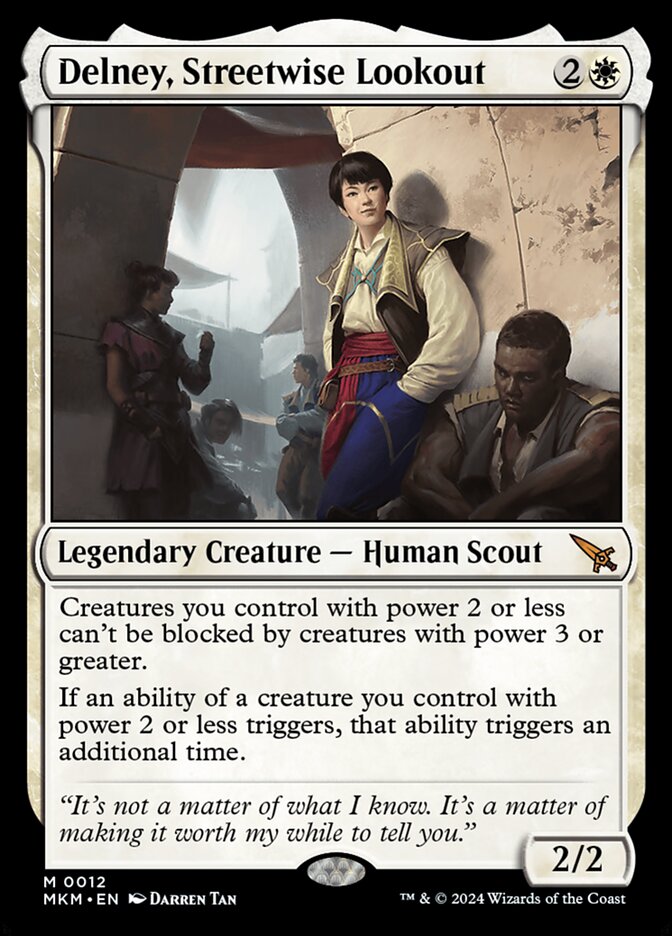
Jru: 3.5
As mentioned above, this set has a high proportion of creatures with power 2 or less, so it is easier to find enough trigger sources. Because Disguise creatures are 2/2, on offense you can also pair it with face-down Disguise creatures, so the opponent can only block with low-power creatures, and after blockers are declared you turn yours face up, giving you more chances to make favorable trades.
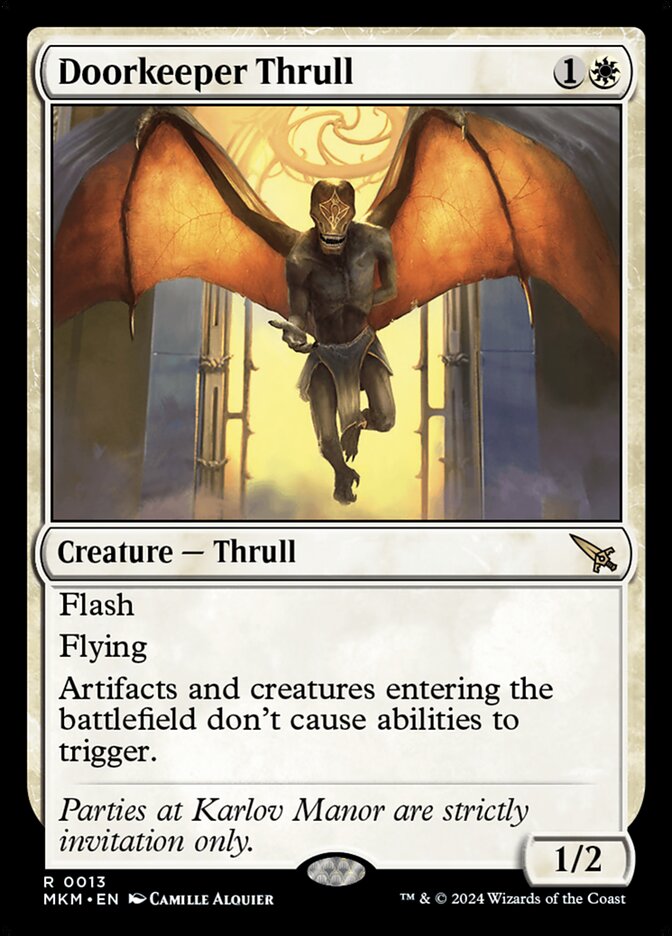
Jru: 2.5
A two-mana flash flier always has a floor score, but exactly how to score it depends on how many creatures or artifacts with enters abilities each side has. When you have few and the opponent has many, it is a bomb, but if it ends up locking your own, you’d be better off not playing it. The score may swing ±1.0 depending on what each side is running.
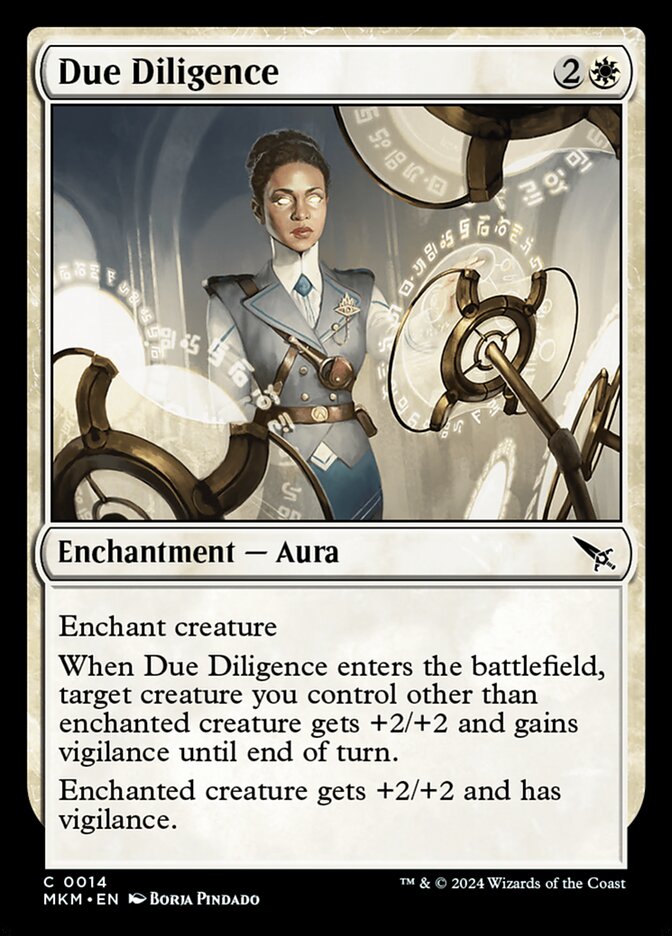
Jru: 2.5
An Aura with a decent amount of buff. Although the two-for-one problem is still unsolved, it has very strong burst, and when ahead it can still deliver enough force to crush the opponent. Recommended in aggressive builds.
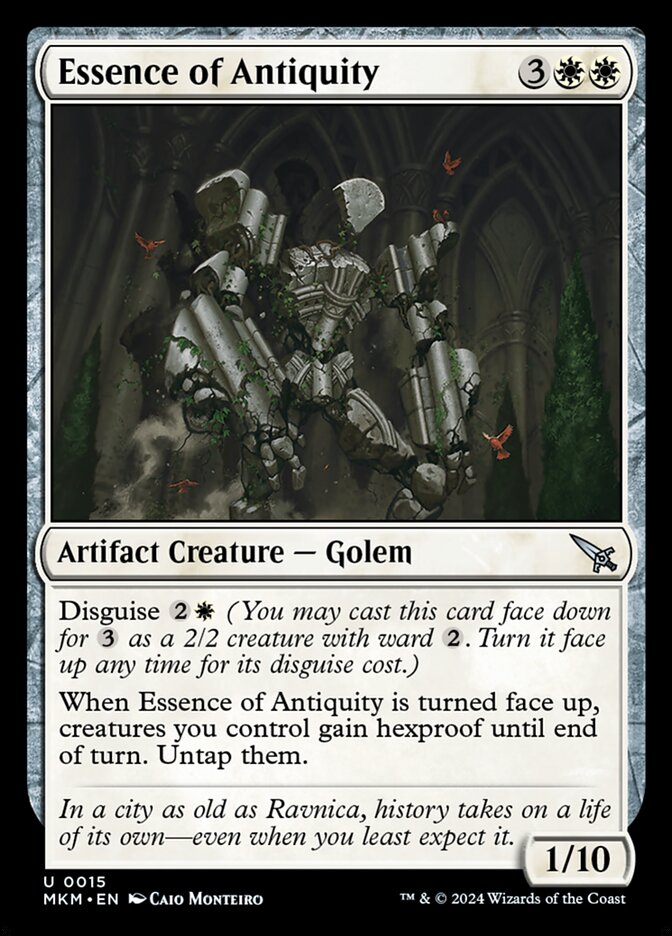
Jru: 2.5
When turned face up, your creatures all gain hexproof plus it untaps them. Used well it can make the opponent miscalculate and collapse, though most of the time it will probably be used as a protection spell that can also earn a card. The body is also an incredibly sturdy wall, and it can block basically any ground creature without deathtouch.
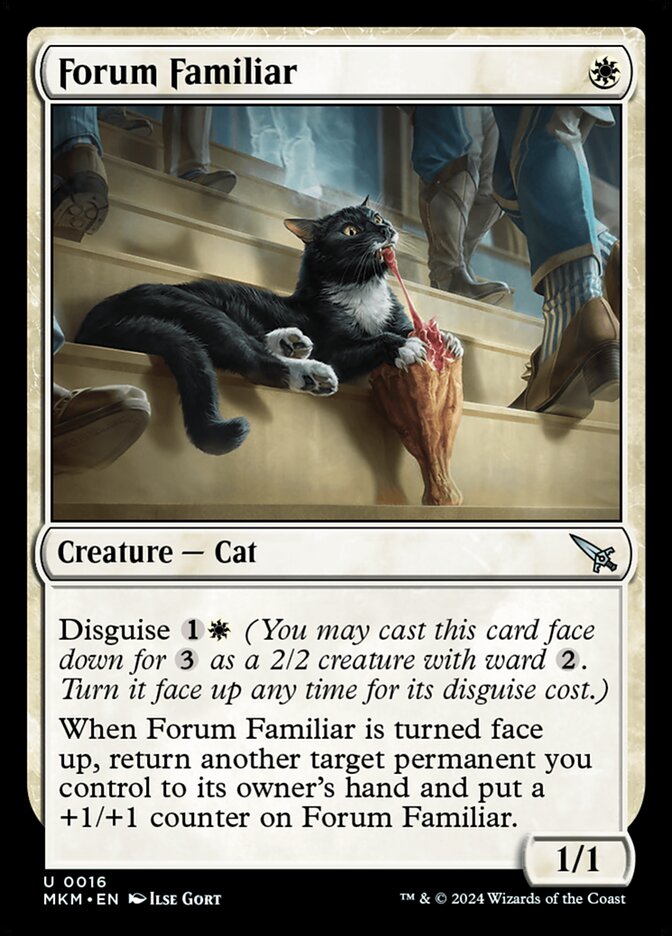
Jru: 1.0
In terms of cost alone the efficiency is terrible. Only consider it when you have strong enough Disguise payoffs or enters-ability incentives.
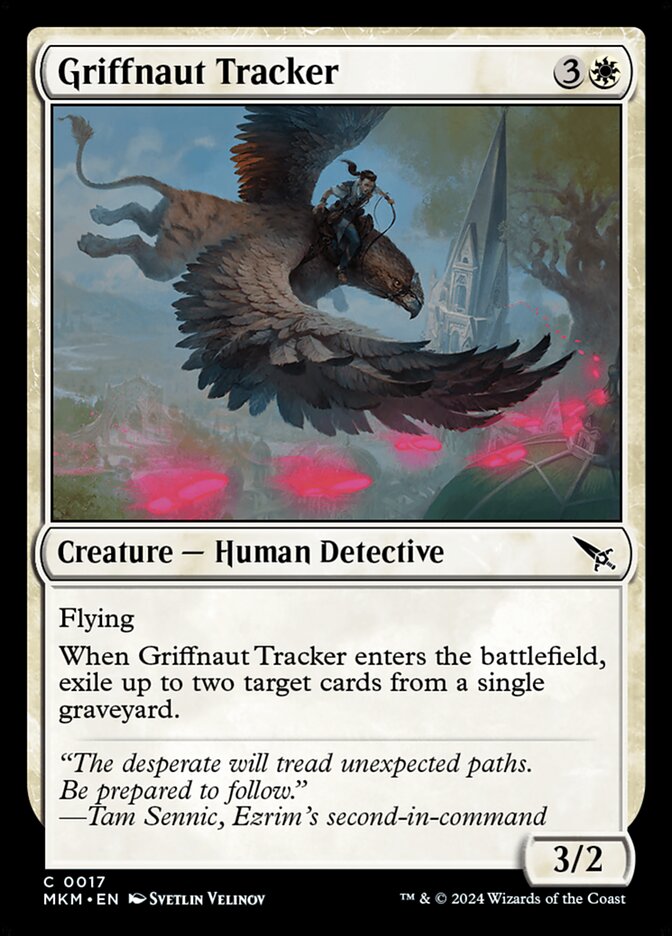
Jru: 2.5
A middling flier body. Since this set overall is not aggressive about filling the graveyard, fuel for Collect Evidence is hard to come by, and if the graveyard gets exiled once you can probably forget about collecting evidence, but apart from that it is just a regular flier on the curve.
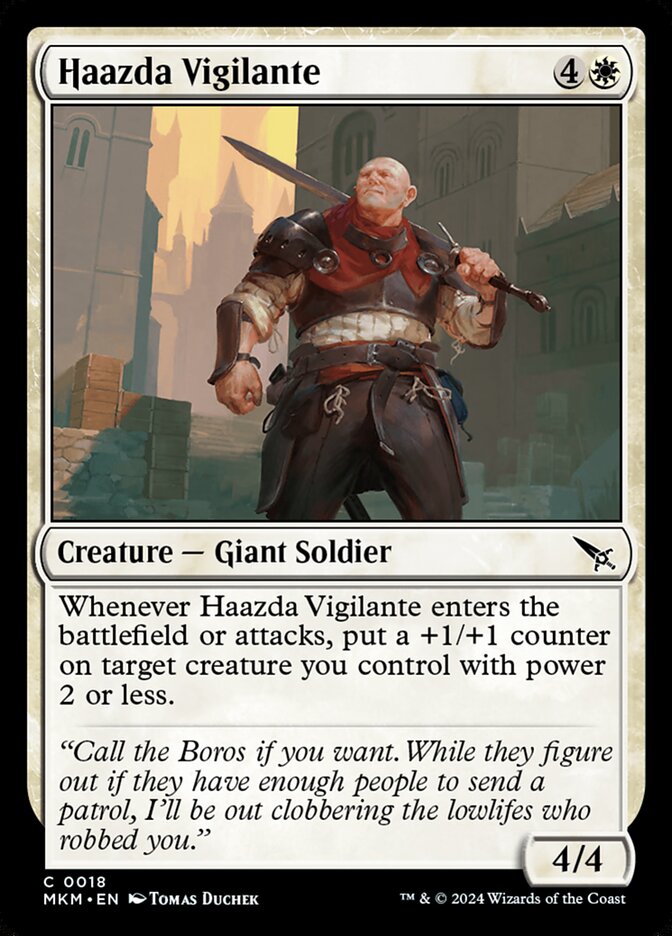
Jru: 3.0
Its own body is serviceable, and this set has many creature options with power 2 or less (don’t forget Disguise), so it easily rolls out a size gap that has a real effect on the matchup.
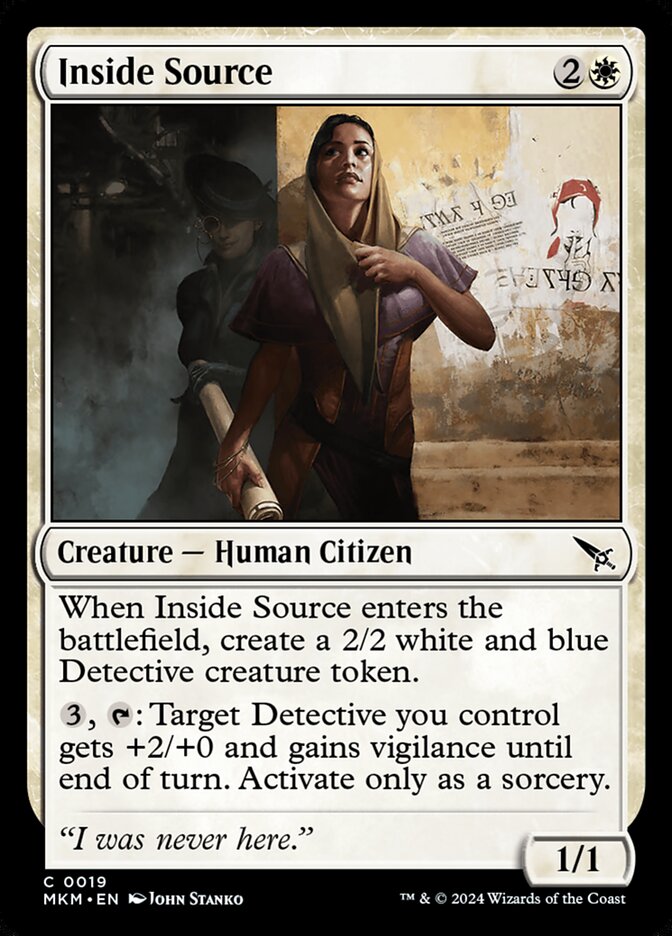
Jru: 3.0
A 1/1 plus a 2/2 for three mana is passable overall. It is one of the tribal-payoff cards for the Detective plan, and since it and the tokens it makes both have power 2 or less, it can also benefit from the other white payoffs for that theme (for example that bald guy above).
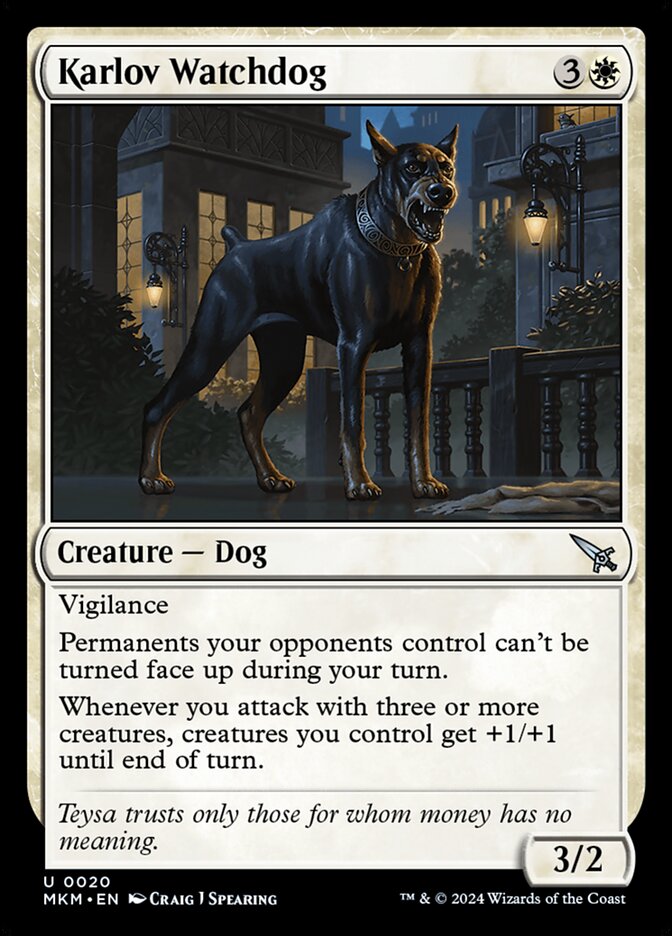
Jru: 3.0
On its own the body is a bit meager, but once the attack condition is met it is a one-turn anthem, and this burst fits very well with aggro’s need for finishing damage. Also, this set has quite a few low-cost fliers, so early attackers have a higher chance of surviving.
There is also an added value against Disguise and cloak: if the opponent uses many face-down cards, it can work wonders.
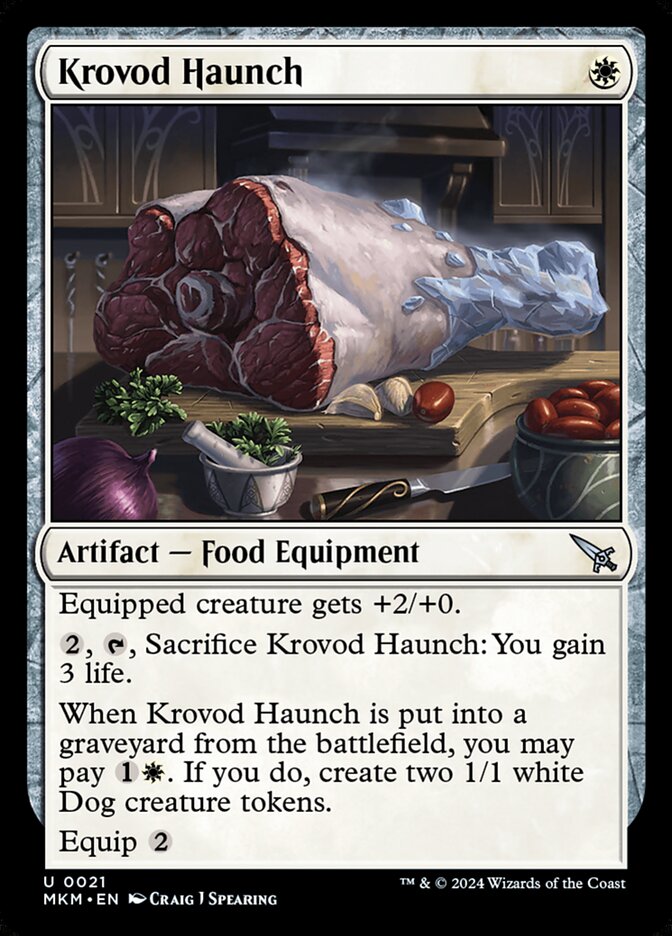
Jru: 2.0
In terms of cost-to-benefit it is acceptable. Because it adds no toughness, the creature carrying this meaty bone into combat can easily go out and never come back. If both sides trade creatures and you have none left, you can turn the bone into a creature for staying power, but a 1/1 is hardly much of a fighter, so it is best paired with other Equipment or low-power payoff cards to turn them into more effective creatures.
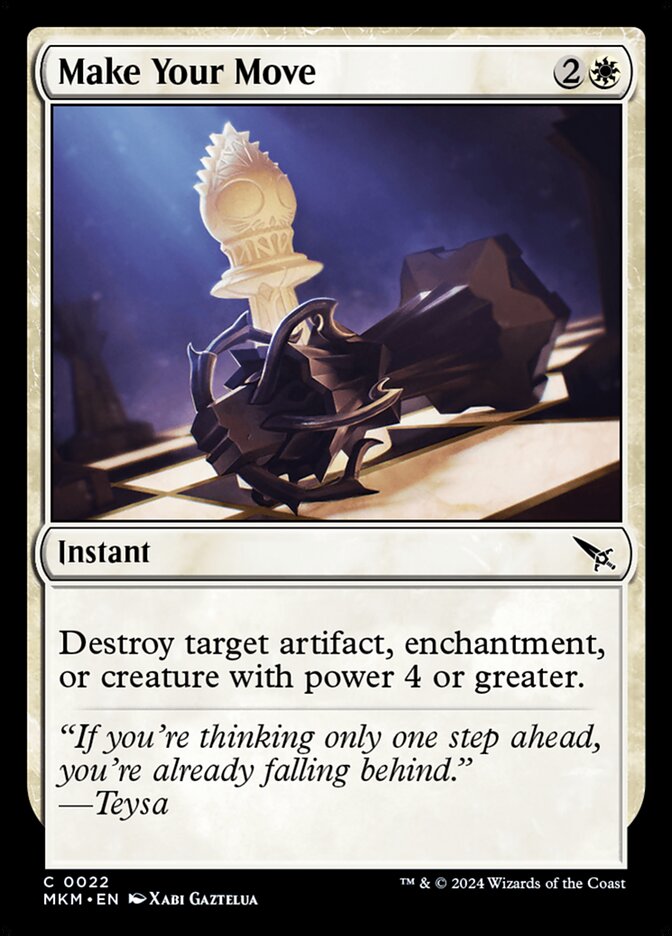
Jru: 2.5
Although it has range problems against creatures, it is still instant-speed removal, and this set has no shortage of artifacts and enchantments, so you will have to use it when the time comes.
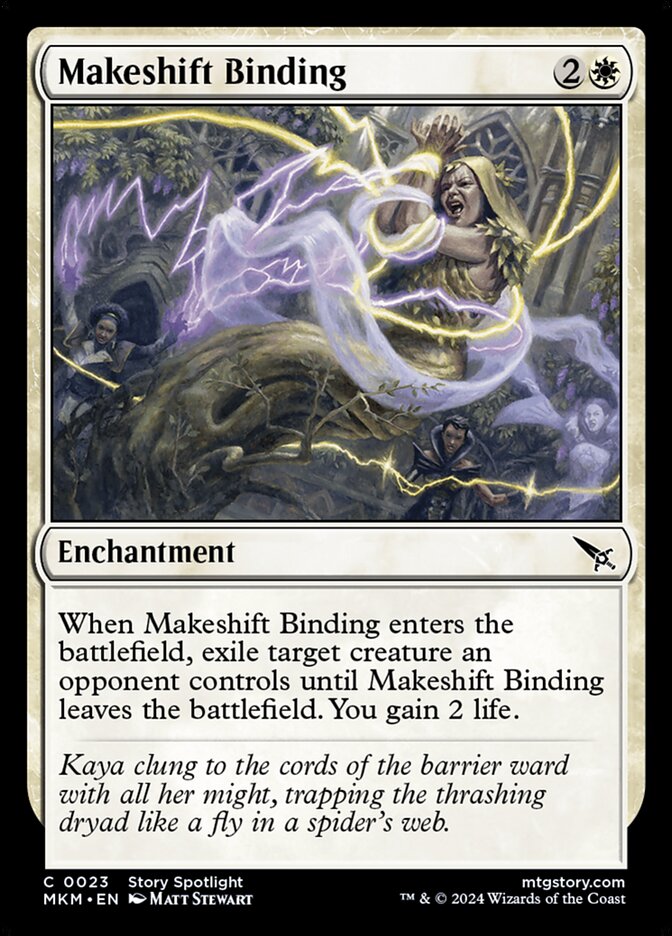
Jru: 3.5
Although it is less flexible than the one above and is not instant speed, most of the time what you want to remove is still a creature, so this one is more generally useful for dealing with creatures.
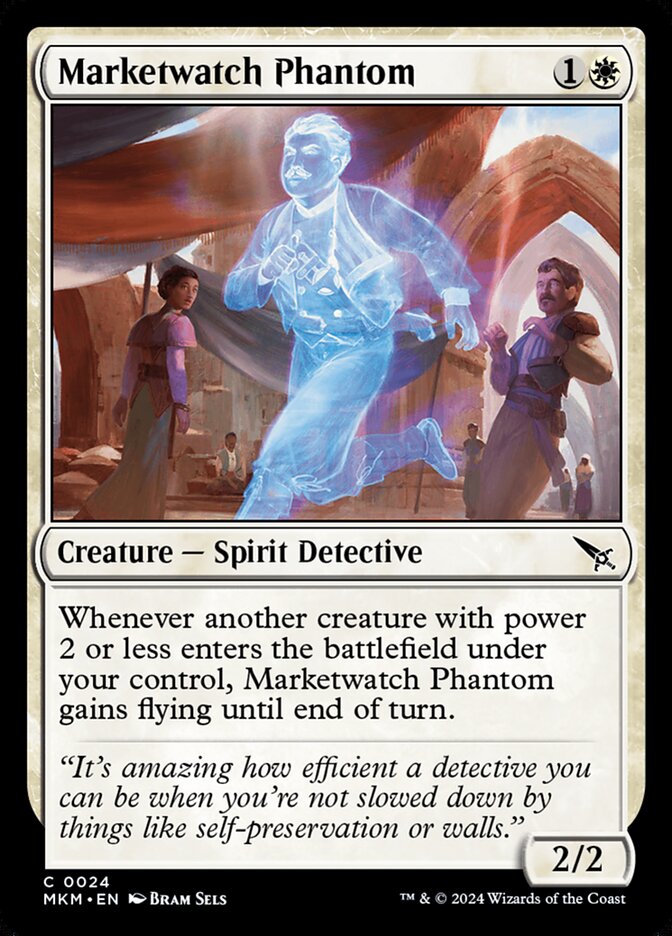
Jru: 3.0
Correct type. On offense it easily works out to a two-mana 2/2 flier, and for aggro it should be an important two-drop on the curve.
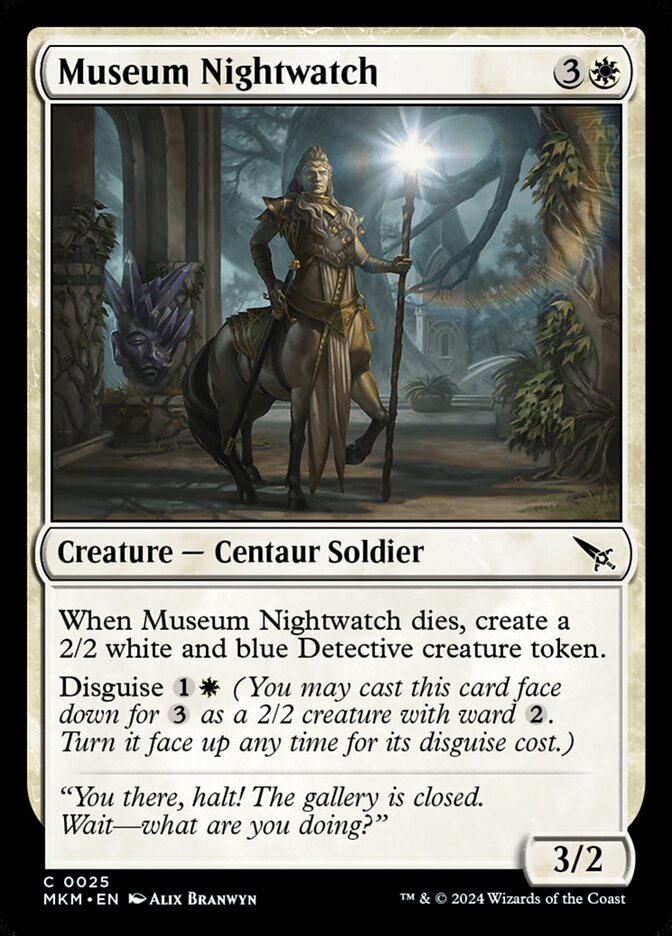
Jru: 3.0
One card, two lives, and the second life has the correct type too. With proper trades it can still create a card-advantage lead.
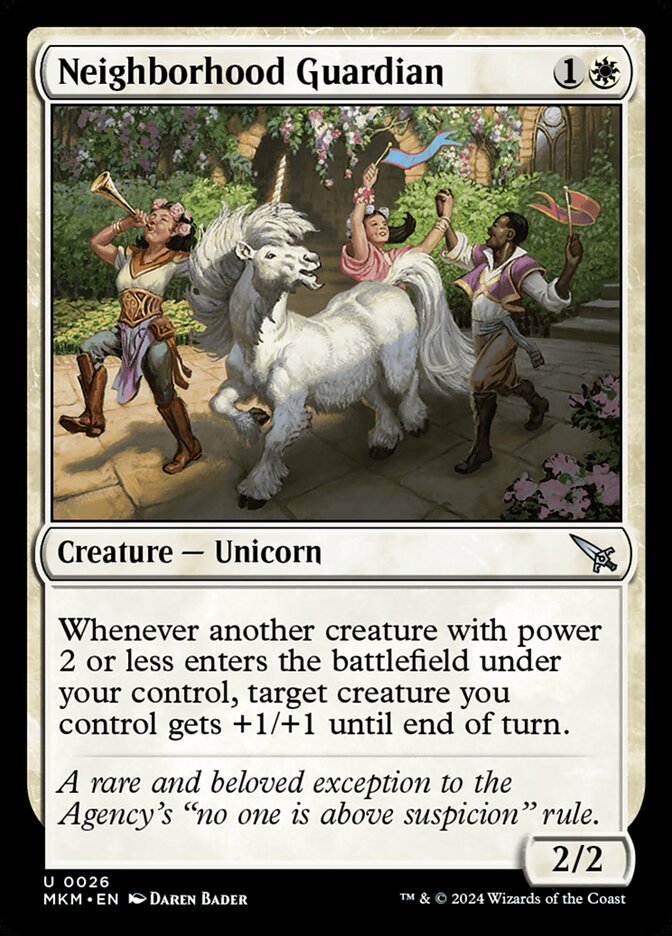
Jru: Aggro: 3.5 / Non-aggro: 2.5
In an aggro build it will probably trigger on nearly every creature entering, which creates plenty of early pressure.
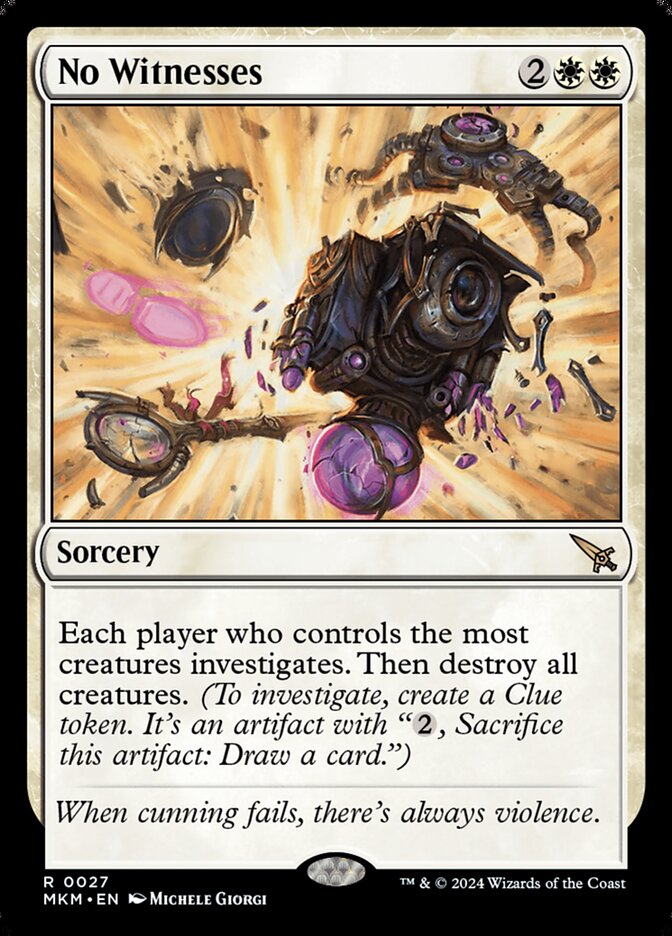
Jru: 4.0
A sweeper, when used well, can create an unrecoverable resource gap in one shot, and sweepers are also harder to play around in Limited. Although you may hand the opponent a Clue, being able to sweep the board for four mana is an advantage after all.
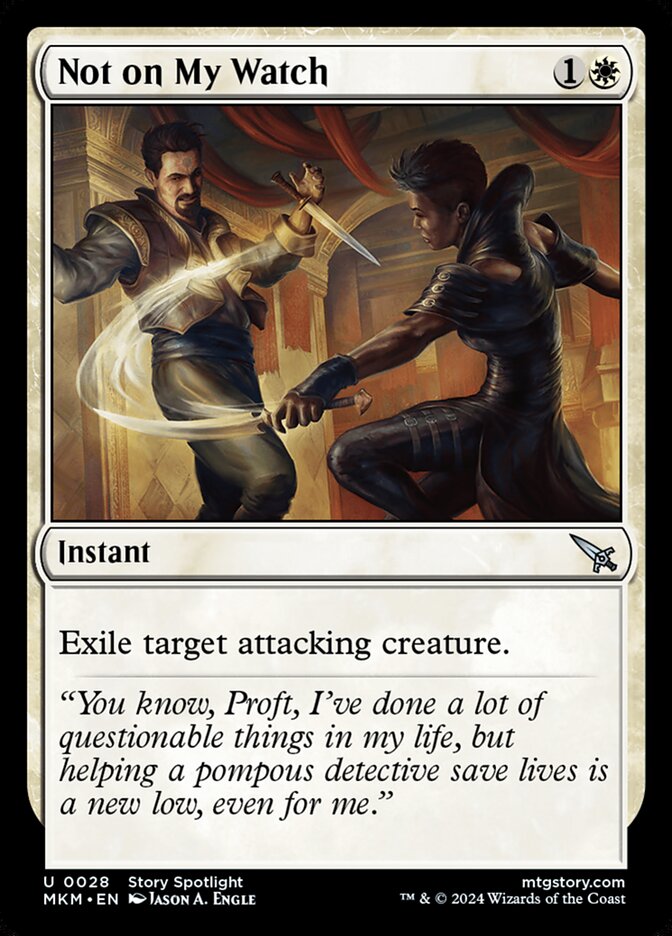
Jru: 3.5
The two-mana defensive removal has evolved again. Although it can only be used on defense, exiling is clean, and it is still a core removal spell I’d like to pick up more of.
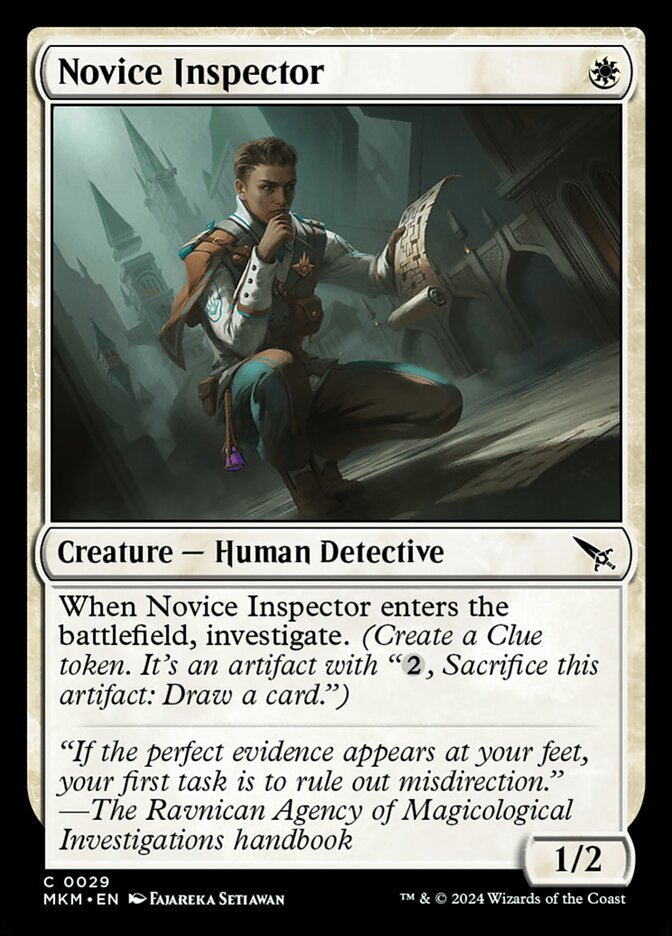
Jru: 3.5
Correct type, useful ability, and plenty of this set’s themed buffs apply to it. Although it is a one-drop creature, the value it gets rivals many two-drops.
By the way, thankfully this guy is not a Soldier like Thraben Inspector. I really don’t want to see an extra one-drop on the curve when I face Soldiers in Standard.
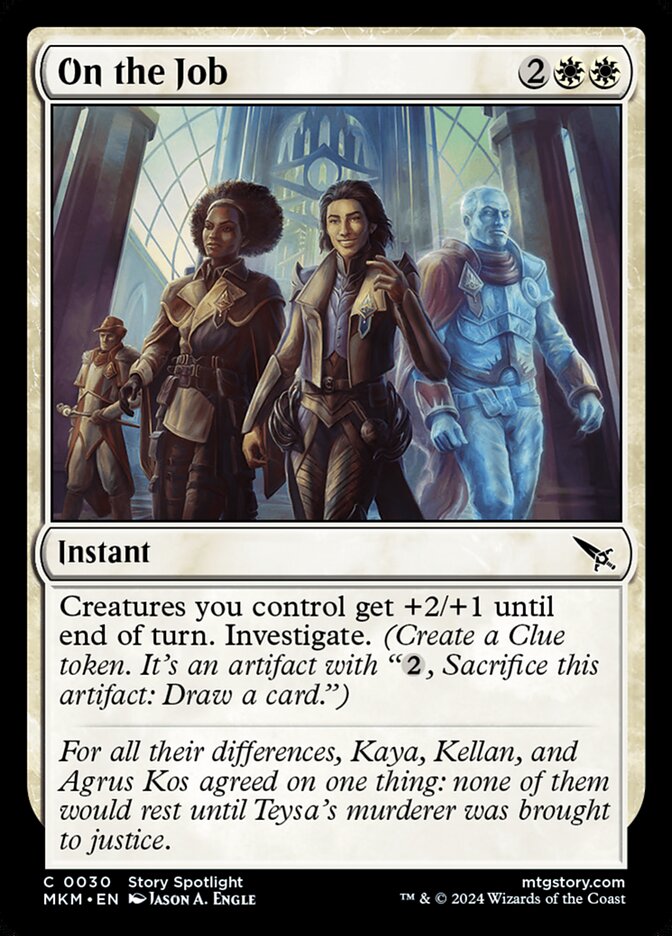
Jru: 2.0
White’s signature four-mana instant-speed team pump. The priority is not high but it is not unplayable, and tempo-oriented aggro builds can consider it.
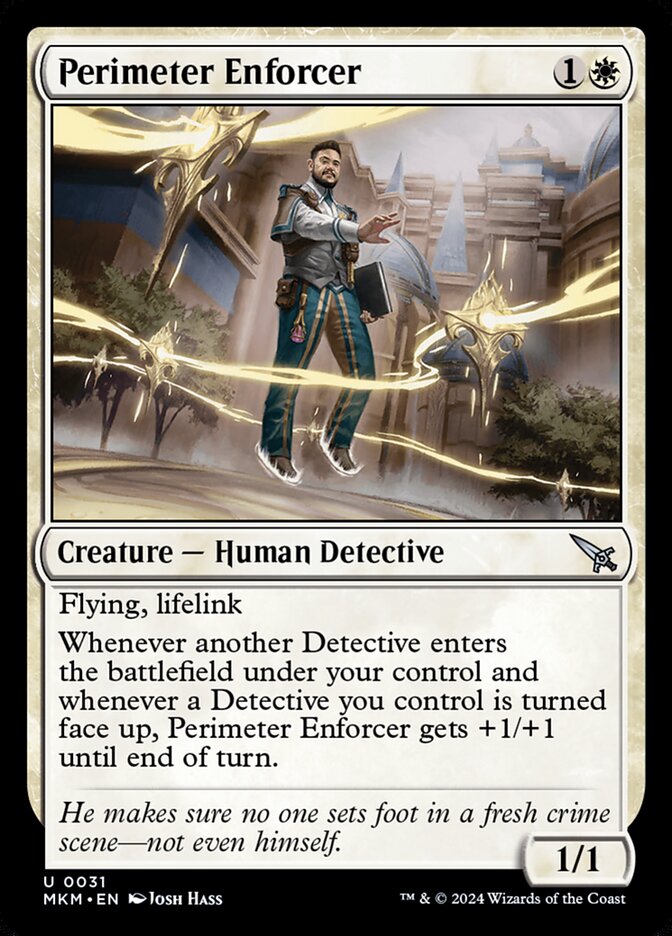
Jru: 3.0
A two-mana 1/1 flying lifelinker is already a usable flier, and once it grows to 2/2 it can create a nice life-total gap. You can expect it to be an important source of evasion and life-swing damage among white Detectives.
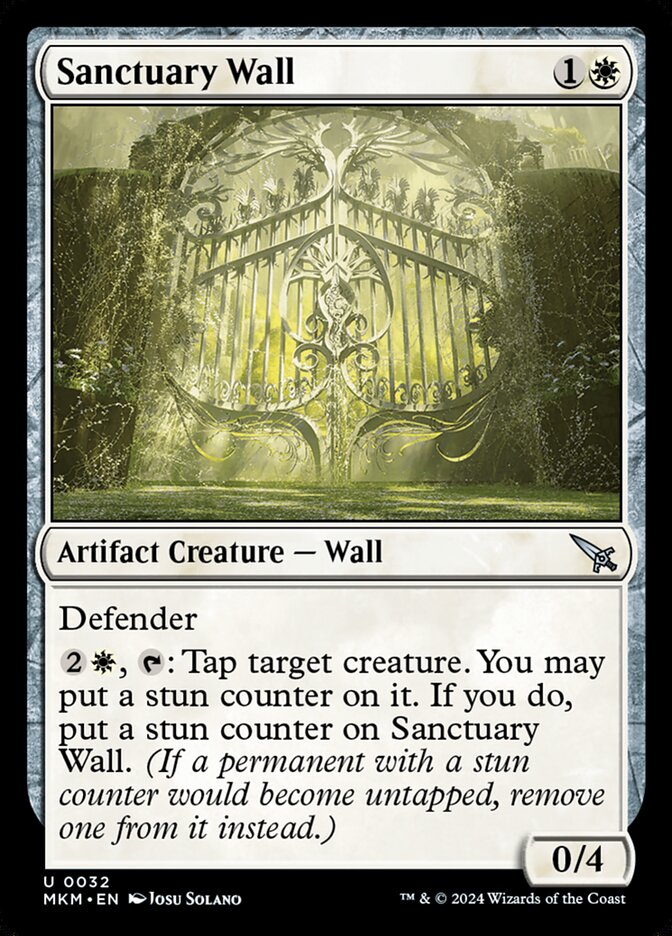
Jru: 2.5
The classic white tapper of Limited, with the activation cost at the benchmark three mana. It can put a stun counter on both itself and the target creature, giving this classic ability new room to play. On defense, this kind of tapper naturally targets the same creature every turn; by choosing to put one stun counter on each, the result is still that the same creature stays tapped for two turns, but on the second turn you have an extra 3 mana to use. Or, if you activate on your own turn to force a path through, you can ensure that the opponent’s most troublesome blocker can’t act during these two attacks, or at least won’t hit back at you next turn. That one turn of reset difference plus the 3 mana saved might make a considerable difference in the game.
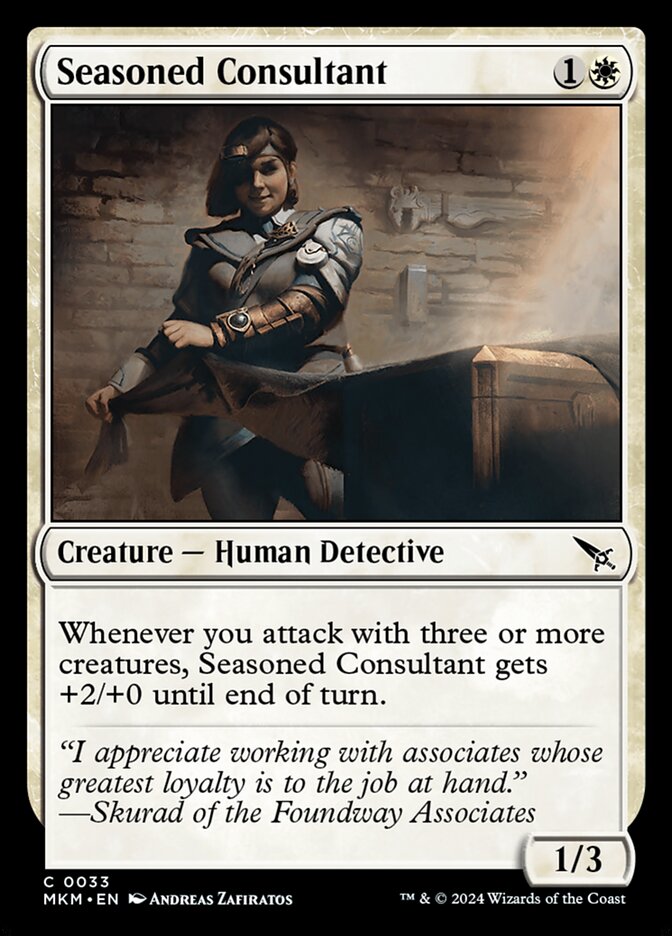
Jru: Aggro: 2.5 / Non-aggro: 1.5
She needs a very sharp aggro deck to realize the value of becoming a 3/3 when attacking, but quite a few cards can achieve similar results under such strict conditions, so her pick priority is not that high. Because she is a Detective I added a little to the score, and in a non-aggro deck she is just a vanilla creature with a meager body.
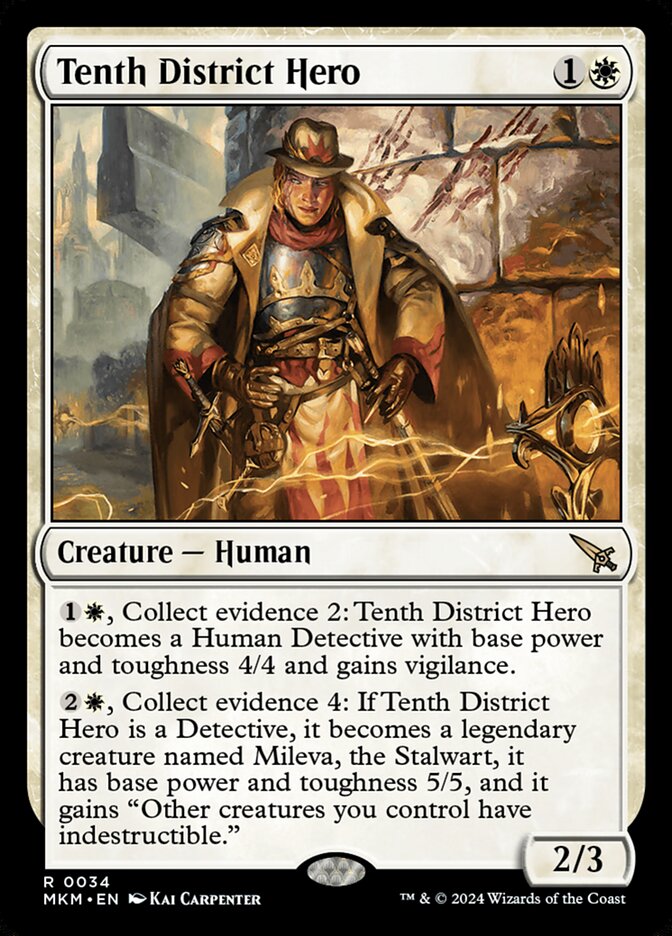
Jru: 4.0
Even before activating its ability it is a quality body, Collect Evidence costs are reasonable, and both upgrades are very noticeable. After Collect Evidence 2 it is a solid attacker, and after Collect Evidence 4 it is an unquestionable bomb. Although fully realizing its value requires a growth period during which it may be removed, the payoff is rich enough.
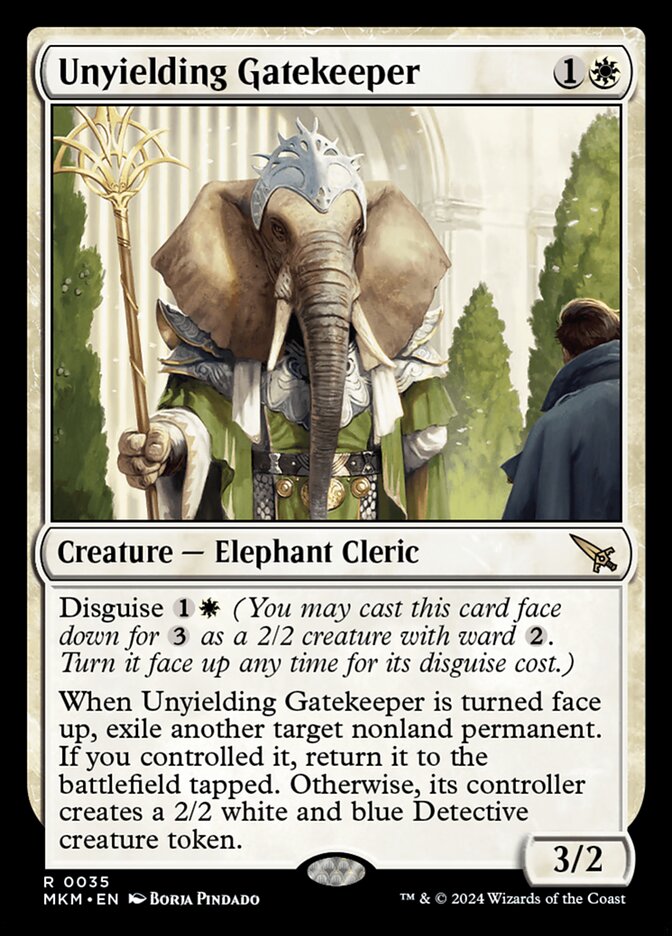
Jru: 3.5
The card itself is a quality two-mana 3/2, and you don’t have to obsess over Disguise. The turn-face-up ability after Disguise is not highly efficient, but it has decent application flexibility: pointing at an opponent’s creature is exile removal that gives the opponent a 2/2 Detective, and pointing at your own creature is a Cloudshift that enters tapped, which can re-trigger your creature’s enters ability, or indirectly turn some Disguise creatures face up (of course, since you are not actually turning it face up but exiling it and returning it face up, the turn-face-up ability won’t trigger). It can also be used as a protection spell.
Jru: 4.0
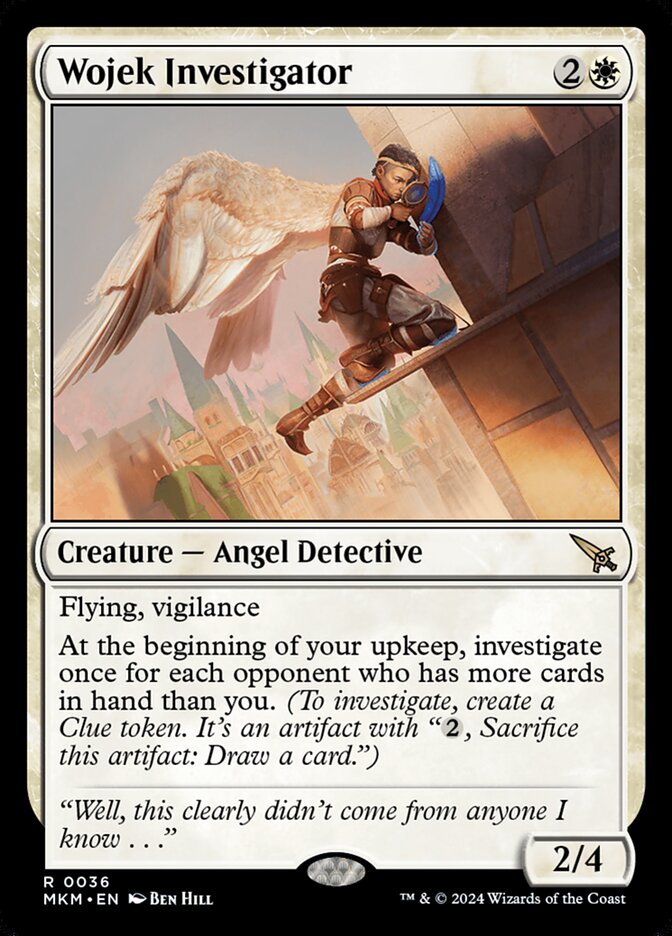
By the standard of a three-mana creature, a 2/4 flying vigilance is already a god of war combining offense and defense, and this combination of body and abilities alone gives it a good base score.
If your deck’s curve is low and you can proactively play out your hand first, you have a decent chance of earning a Clue or two. Since the card itself is good enough in combat, earning just one more Clue makes it more than worth it.
Jru: 3.0
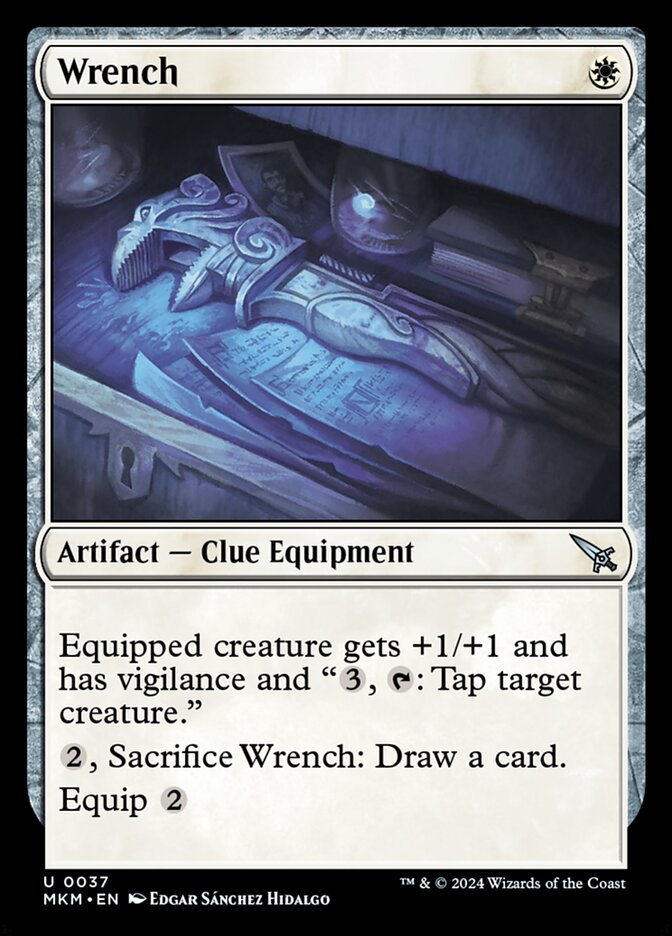
Equipment cast and equip costs are both reasonable, and the +1/+1 vigilance buff is quite practical in Limited. The instant-speed tap ability at an activation cost of three mana is also a benchmark value for commons and uncommons. Don’t forget you can declare an attack first and then activate the ability to tap the opponent’s creature before they declare blockers. The bonus Clue type can help you adjust your hand or pair with other Clue/artifact payoff cards in this set. Although each element on its own isn’t especially outstanding, a card that gives this many effects is above average.
Afterword
When I first started studying MKM’s mechanics, I expected this to be a relatively slow set: Cases take time to unlock their full functionality, Collect Evidence takes time to gather graveyard fuel, and Disguise is plainly sacrificing tempo for flexibility. The only mechanic that speeds up tempo is suspect, but because of its drawback I didn’t pay it much attention at first, and in the end the early previews even showed a whole bunch of creatures that looked like they were pushing a defenders or low-power theme.
But once the full card list was revealed, I began to doubt my first impression. First, the suspect mechanic: on closer thought it can actually have a very strong effect on the tempo of attack and defense. Also, from the creatures in this white article you can tell that low-cost creatures actually include plenty of attackers suited to racing for tempo, with a fair number of related buff cards.
So looking at this set’s Limited again now, it may be a set where fast and slow decks diverge especially sharply: the fast ones feature all kinds of flying, menace, and can’t-block effects, trading blows right to the flesh; the slow ones are like walking through a minefield, probing at what creature is under each of the opponent’s Disguises, and how to play to avoid getting trapped yourself.
- Title
- Murders at Karlov Manor (MKM) Limited Overview — White
- Author
- Jru
- Created at
- January 31, 2024
- License
- This work is licensed under CC BY-NC-SA 4.0 .