The Modern Scene: Four-Color Elementals

Note: This article was translated from Chinese by AI and may contain errors. Read the original Chinese version.
Introduction
Modern Four-Color Elementals is a deck I only decided to collect and practice this year.
Before it rose to become a meta deck, it was still stuck at the version built around Risen Reef and Eladamri’s Call, and after MAT brought Nissa, Resurgent Animist, people gradually started developing new ways to play Elemental decks.
But none of that is what made Elementals take off. What really made Elementals mainstream was the release of the LTR set this June. After adding Delighted Halfling and The One Ring, the deck’s power clearly went up by a lot. Uncounterable legendary spells and mid-game card advantage turned this deck, which badly needs its spells to resolve normally and to build a resource lead, into one of the top-tier decks.
Strengths and Weaknesses of the Deck
As one of the frontrunners of the metagame, Four-Color Elementals is bound to be a deck many players choose for MITQs/RCQs, so let’s briefly discuss the deck’s ways to win and its weaknesses.
Ways to Win
- Resource lead
This is one of the advantages of all four-color decks. This deck starts to build a clear resource lead in the mid-game: besides drawing cards, it has individual cards that trade one-for-many, and the resources you gain not only let you get ahead on cards but also set up the following two ways to win. - Board
One way to win: use the resource lead to call down individual creature cards that trade one-for-many, namely your Elementals, to clear the board and take control of it, and eventually the opponent loses because they have no way to deal with the board. - Control
Apart from earning resources, this deck is busy controlling the game. When you can build a resource lead and keep the opponent’s win conditions under control, the opponent, short on resources and almost unable to win, will usually concede on their own.
Weaknesses
- Attacks on “lands”
A big part of how the deck runs relies on finding the right lands to cast those spells that need at least two specific colors, thereby maintaining the tempo and advantage it should have. So it is quite afraid of individual cards that can target lands, with common ones being Blood Moon and Sundering Titan. - Slow speed
A common problem of multicolor decks. Against decks that can finish their game plan faster than you, such asBoros BurnorCreativityorBelcher, unless you topdeck exactly the right combination of answers, you have almost no resistance in game 1. - Long matches
The deck spends most of its time controlling the board and trading resources, and the point at which it really starts attacking with Elemental creatures is usually after turn 5. However, although these Elemental creatures have powerful board-clearing ability, they are also very fragile, so it often happens that you just finished clearing the board with Elementals but they are easily removed by the opponent, making the situation a stalemate and lengthening the match. This is especially obvious in the mirror.
Decklist & DeckTech
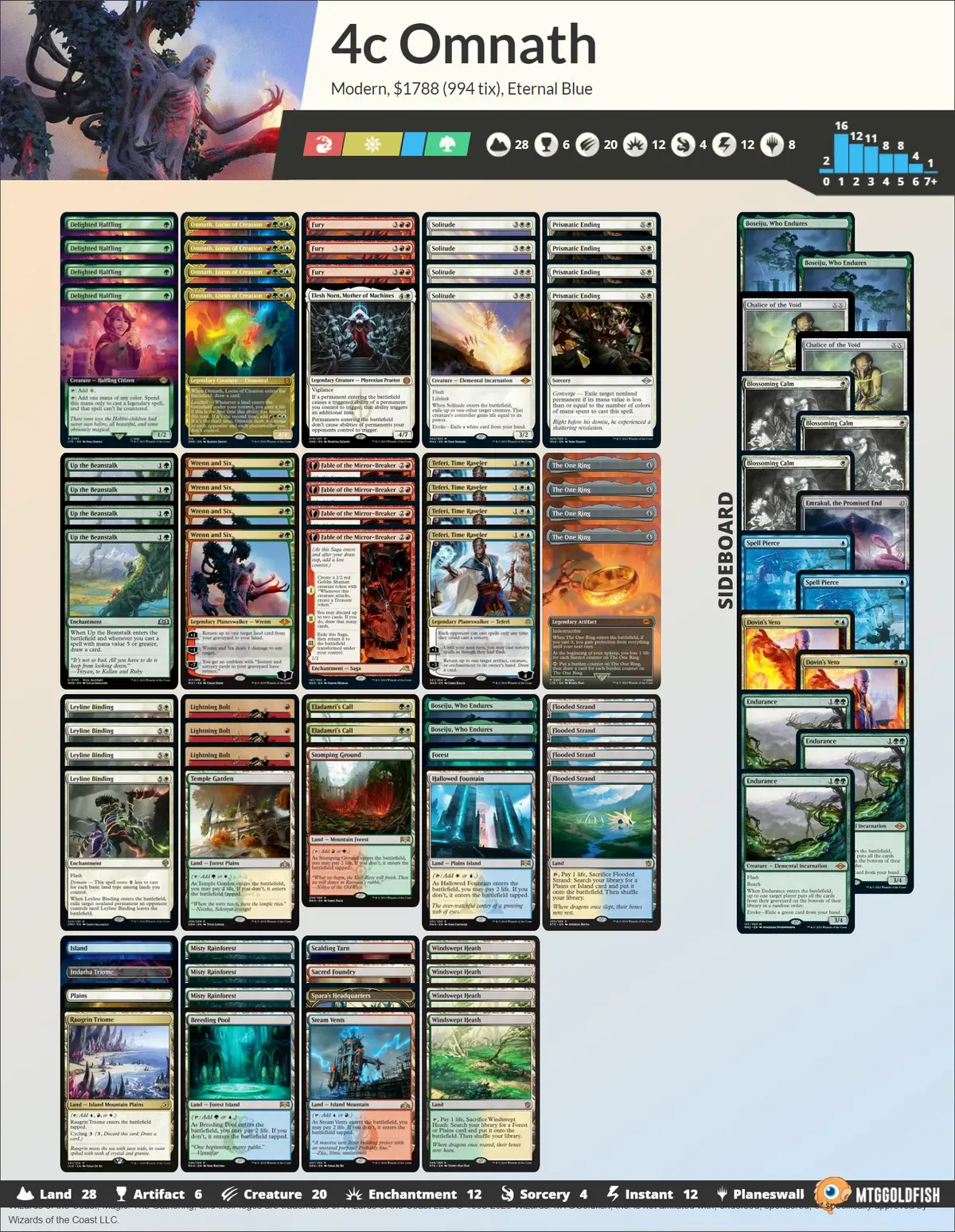
Deck link is attached as well.
This is a modified version of the 75-card Four-Color Elementals build that recently went 9-0 at an MO Super Qualifier (one Lightning Bolt and one Fury swapped out for two Eladamri’s Call). There is no special reason for raising the count to 75 cards other than to go with the new card Up the Beanstalk and play the greediest resource war, so as many Elemental board-clearing cards and card-advantage cards as possible are included, while the mana base relies on Wrenn and Six for stability.
Because four colors can reach a very wide range, there is a lot of freedom in how the deck is put together and in card choices, but basically some specific cards are still always played at 3 to 4 copies, with the rest depending on personal preference.
First, let’s briefly talk about how this deck works.
You can see that the early-curve cards in the deck are nothing but board-clearing cards or packages that stabilize the mana base, so you can tell the deck’s early goal: depending on the situation, either clear the board or stabilize mana, and then expand once the game reaches the mid-game.
Overall it is a slow midrange-control deck, with a certain level of resistance against fast decks.
From here on, I’ll introduce the deck’s composition and go through the individual cards.
Creatures
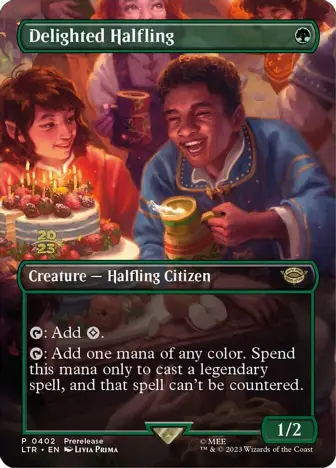
Delighted Halfling, the new one-drop from the Lord of the Rings set, is one of the important individual cards that greatly affect this deck’s speed.
Its uncounterable property plays a major role in helping cast key cards such as Wrenn and Six, Teferi, Time Raveler, Omnath, Locus of Creation, or The One Ring.
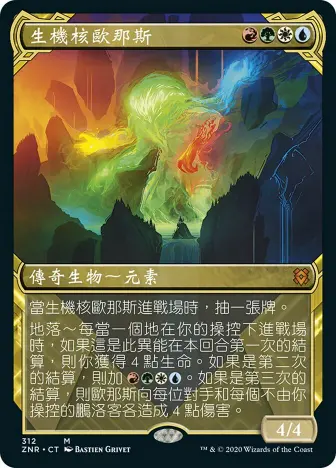
The jelly monster (Omnath) is one of this deck’s cores.
In a Modern environment with fetchlands, its landfall abilities can help you gain an advantage in different matchups.
It triggers a card draw on entering, so if you want to avoid it triggering landfall abilities, I suggest using the window created by this trigger to deal with it first.
- The life gain ability of landfall 1 plays an important role against aggro, and combined with fetchlands you can gain life once on each player’s turn.
- The mana ability of landfall 2 helps the Elementals expand in the mid-game.
- The damage ability of landfall 3 is rarely used, but if the opponent is in lethal range or has a planeswalker that must be dealt with, you can consider waiting until next turn and using a fetchland to trigger landfall three times at once.
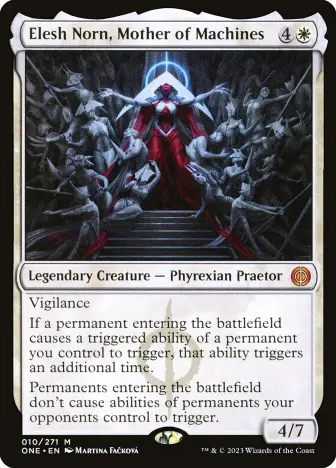
Mom (Elesh Norn) is not played in large numbers. Her main uses are to trigger your own enters abilities, to fight the mirror, or to fight decks that need enters abilities (such as Amulet Titan or Scapeshift).
Please note that when she’s on the battlefield with Omnath at the same time, playing a single land triggers Omnath’s landfall abilities twice.
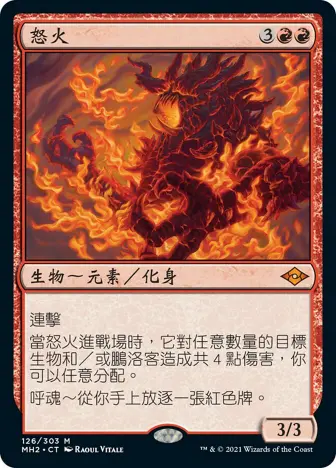
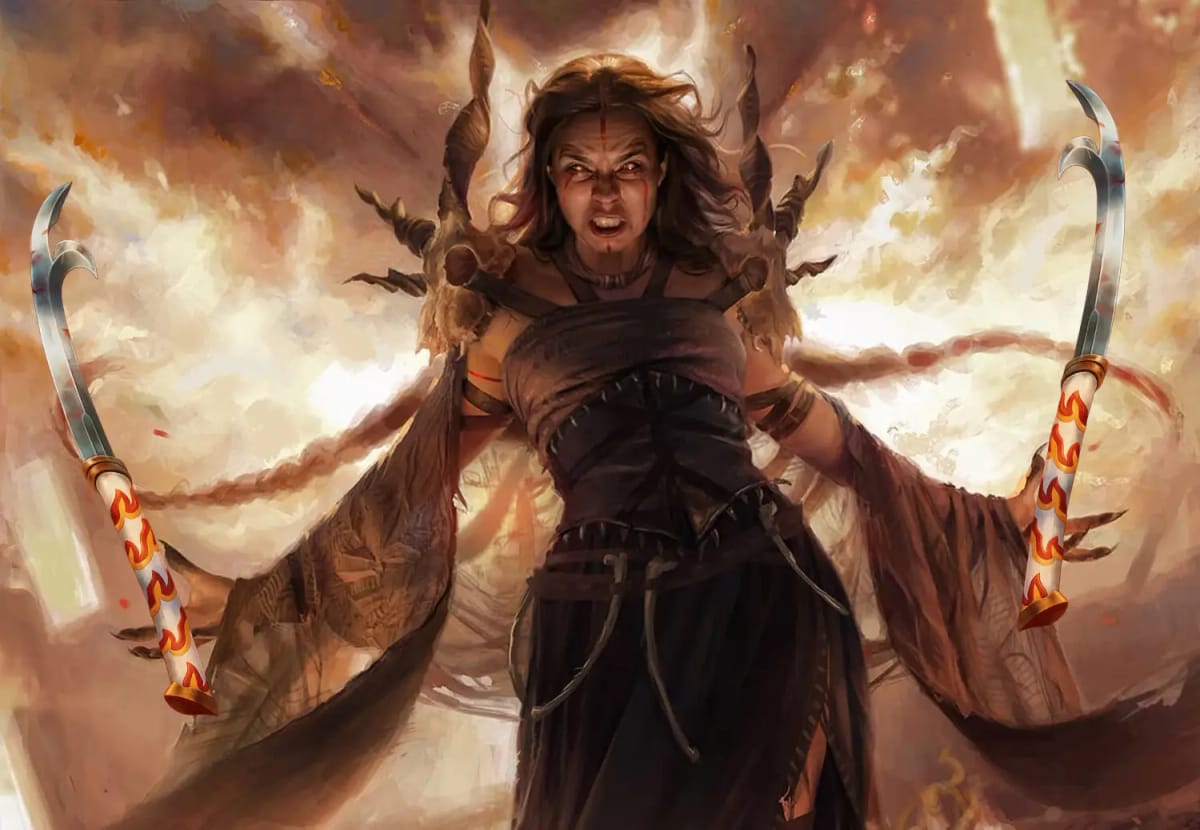
A red board-clearing card with evoke, with very good ability to distribute damage; it is strong against decks full of small creatures like Hammer Time or Yawgmoth.
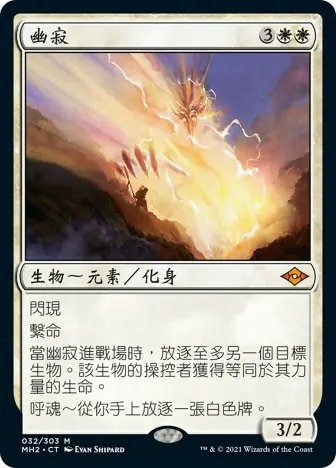
A white board-clearing card with evoke, with an excellent ability to remove a single big creature of the opponent’s, such as Murktide Regent or Death’s Shadow. Flash gives it the flexibility to be cast at instant speed, and its built-in lifelink also makes it one of the important cards against aggro.
Planeswalkers
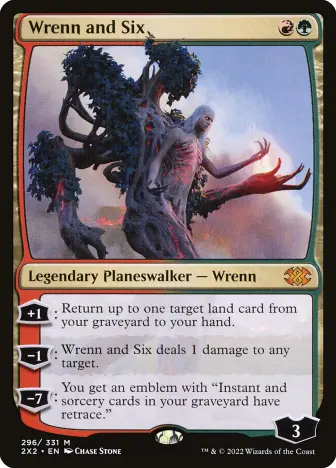
A very important card that combines stabilizing the mana base and early board clearing in one.
Mainly you [+1] to grab a fetchland to stabilize your mana every turn, and you can also grab a used Boseiju, Who Endures or a cycled tri-land.
[-1] can ping most of Modern’s one-drops. For example, Dragon’s Rage Channeler, Ragavan, Nimble Pilferer (the monkey), and Esper Sentinel are all within its kill range, or you can use it in the mid-to-late game to ping the opponent for lethal.
[-7] lets the instants and sorceries in your graveyard have retrace (you can cast them from the graveyard by paying their costs and discarding an additional land card). Although you rarely get the chance to use it, if you manage to get there and have enough lands in hand, you can Lightning Bolt the opponent many times, which becomes an end game option.
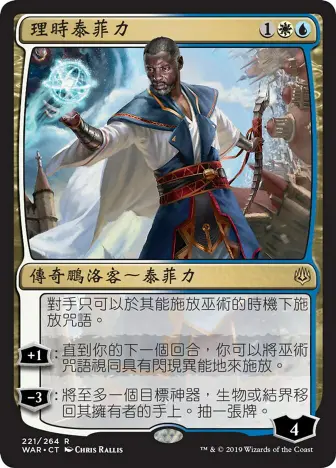
The infamous planeswalker. It’s very nasty: it not only lets the opponent play only Hearthstone, but can also use the rules to shut down the operation of some spells.
As long as he’s on your battlefield, the opponent can only cast spells at sorcery speed: the opponent can’t cast counterspells, can’t cast spells cascaded into, and can’t do anything that is not at sorcery speed under the rules.
If the opponent has Orcish Bowmasters on the battlefield, or could flash one in in response to Teferi being cast, using his [-3] to bounce an enchantment, artifact, or creature other than the Bowmasters back to hand will trigger the Bowmasters’ ability and get Teferi killed. Although bouncing the Bowmasters can save Teferi, if the opponent casts the Bowmasters again next turn Teferi still dies, so in the end you lose cards. Therefore, when the opponent has a Bowmasters on the battlefield, [+1] first for safety when Teferi enters.
Instants/Sorceries
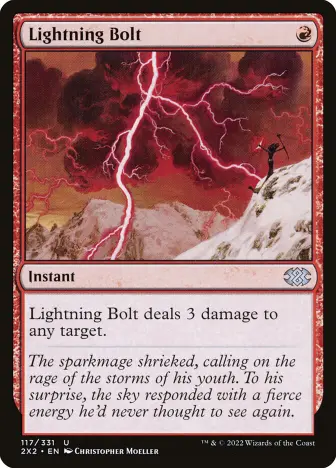
Lightning Bolt needs little introduction: an evergreen of Modern, hitting for 3 for one mana, simple and brutal. It can kill some 3-toughness creatures or planeswalkers, and is quite handy.
The main reason this card is included is to combine with Prismatic Ending to keep the game from being closed out by Tourach, Dread Cantor.
In the late game, if you get to use the ultimate of Wrenn and Six, you can also retrace this card to electrocute the opponent.
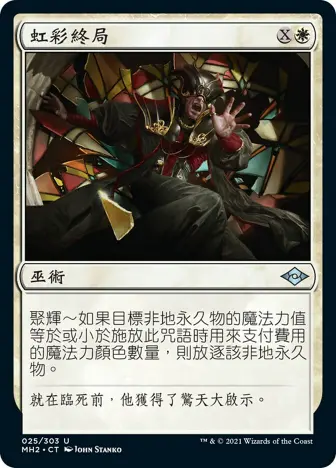
A powerful board-clearing card from MH2 that can remove nonland permanents with mana value 0 to 5 (if you have enough colors).
Basically it’s used to wipe the opponent’s early board. It is also one of the few single cards that can deal with the Ring.
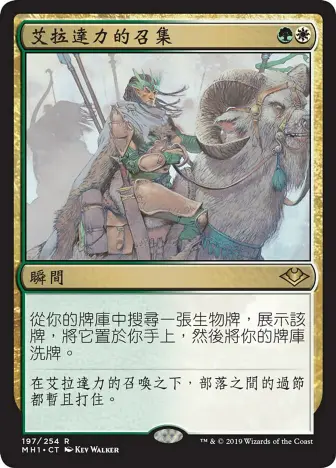
A card few (almost no) people play now, but I think if the environment is mostly mirrors, or Elementals are being targeted, this card still has to be included.
Mainly it’s for finding Omnath, Locus of Creation against burn, Elesh Norn, Mother of Machines against enters-ability decks, and the land-destroying dragon Obsidian Charmaw against Creativity. Especially in a 75-card build, being able to grab the right creature at the right time is very important.
The downside is that it loses tempo, and spending two mana to find a creature is quite a luxury in Modern, so this card’s inclusion value still needs testing, but I think it’s a good option.
Artifacts
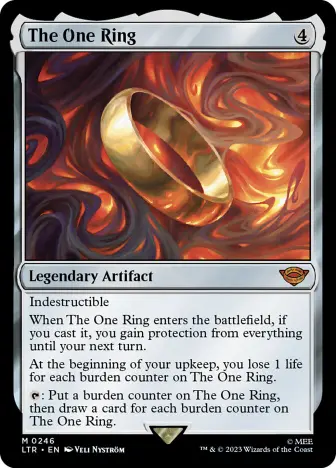
The Ring itself, with very strong card draw, plus, if you cast it, protection from everything for a turn that protects its owner.
Although keeping it around has a life loss side effect every turn, you can offset it with Omnath, Locus of Creation’s life gain, or by using Teferi, Time Raveler to bounce it back to hand.
Remember that its draw condition is to first put a burden counter on it, and then see how many counters are on it to decide how many cards you can draw. If the Ring leaves the battlefield for some reason before you put the counter on, the number of cards you can draw depends on how many counters were on it before it left.
(EX: The Ring has 2 counters and you activate the ability, and the opponent exiles it in response. What would have drawn 3 becomes drawing 2, because you can’t put one more counter on the Ring.)
Enchantments
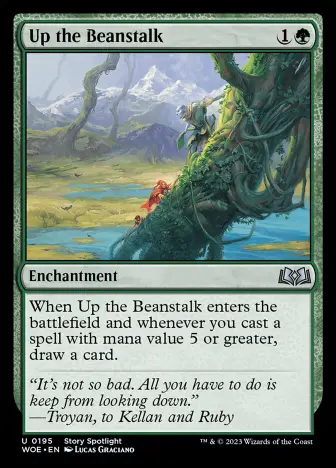
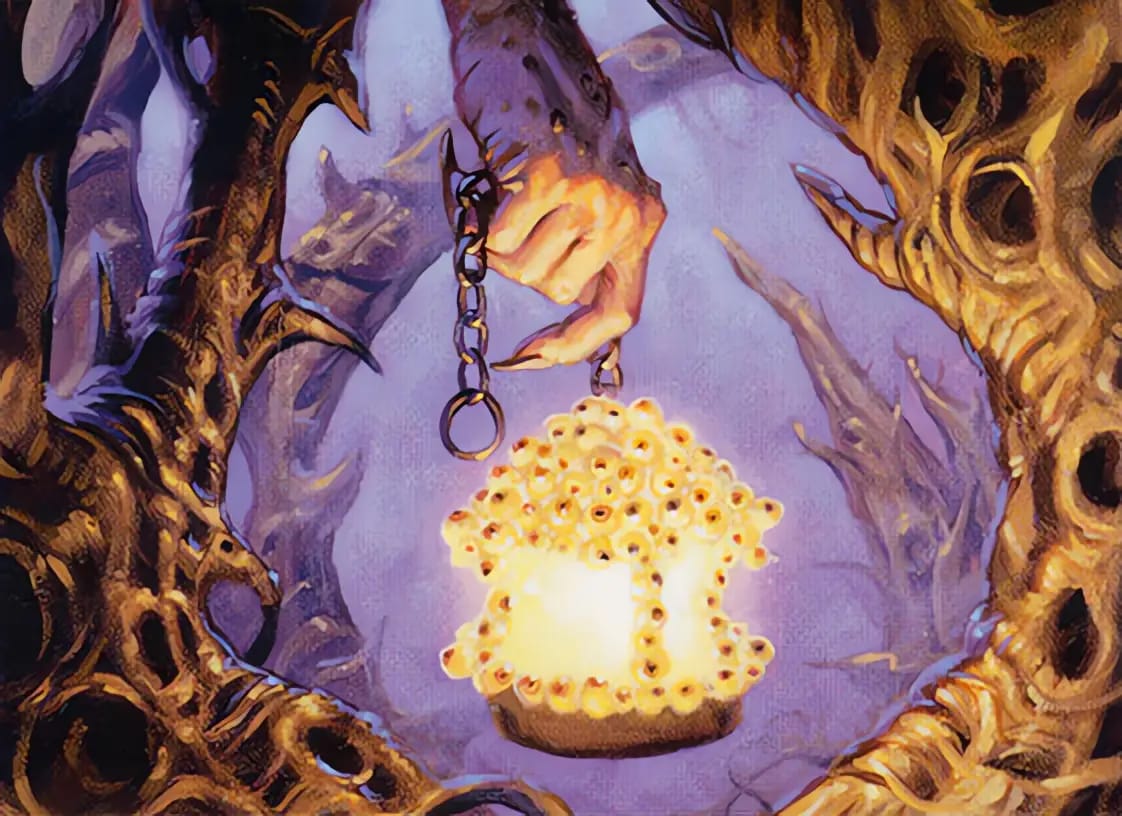
A new card from Wilds of Eldraine, which lets your resources explode faster in an Elemental deck.
Whenever you cast a spell with mana value 5 or greater, you draw a card.
The qualifying range includes Leyline Binding, Fury, Solitude, Elesh Norn, Mother of Machines, or Prismatic Ending with X equal to 4.
There are a few things to note when using it:
- You really can’t draw any more
In some stalemate matches where time gets stretched out, having too many of it on the battlefield actually carries the risk of decking yourself. If your main deck doesn’t include Endurance to shuffle the graveyard back into your library, you may have to think about how many of them you put onto the battlefield. - Draw punishment
If the opponent has Orcish Bowmasters or Sheoldred, the Apocalypse on the battlefield, too many Beanstalks actually become a double-edged sword. The main reason is that the Beanstalk’s ability is a “cast trigger”: when you use board-clearing cards that cost 5 or more, because of how the stack works, Orcish Bowmasters and Sheoldred, the Apocalypse trigger their abilities before they get removed. With multiple Beanstalks it could even help the opponent push your life total into their lethal range, so please be extra careful against black decks.
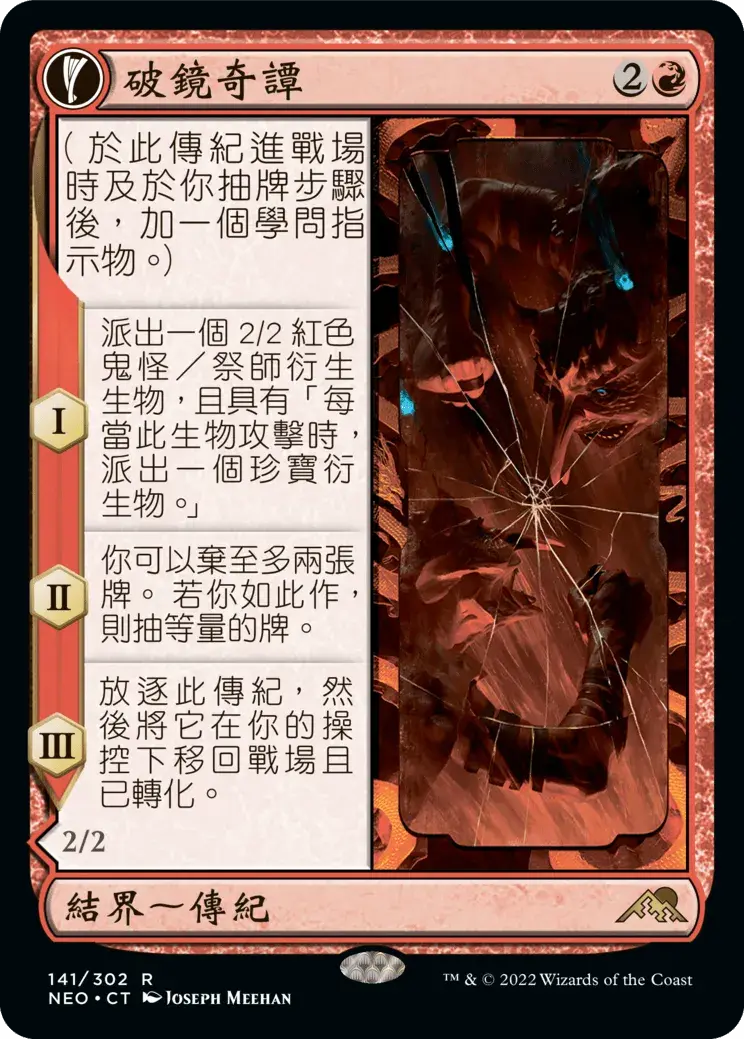
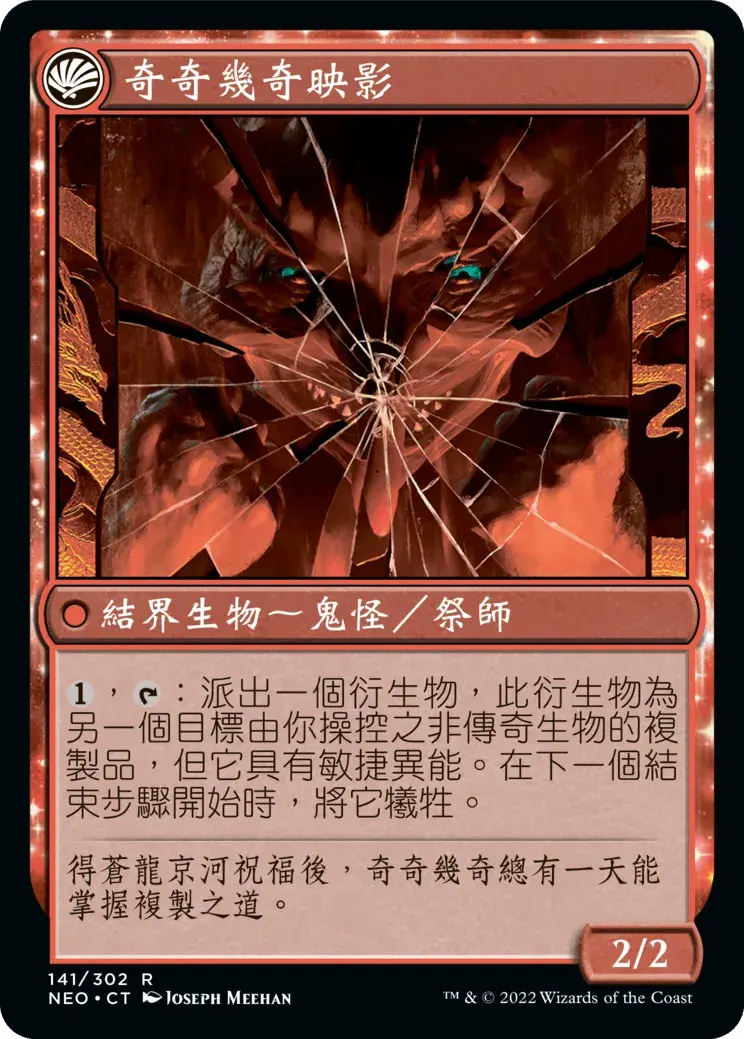
The Kiki enchantment (Fable of the Mirror-Breaker). I believe it needs little introduction; you can see it from Standard, Pioneer all the way to Modern, a powerful card that earns absurd amounts of resources.
All three of its abilities are excellent: making Treasure to adjust the mana base, looting, and copying creatures all fit this deck very well.
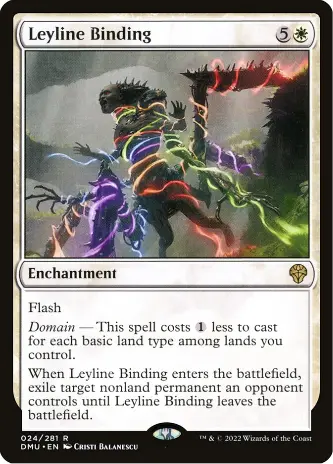
An elite card in Modern, a one-mana universal instant-speed answer to anything but lands.
Thanks to fetchlands being able to easily find tri-lands and shocklands, getting the five basic land types together is not hard. You don’t have to rely on luck for your mana base like in Pioneer, and in almost every matchup it can be played on turn 2.
Lands
Since this is a four-color deck, the mana base has to be very carefully chosen, so let’s explain which lands are included and why.
Fetchlands
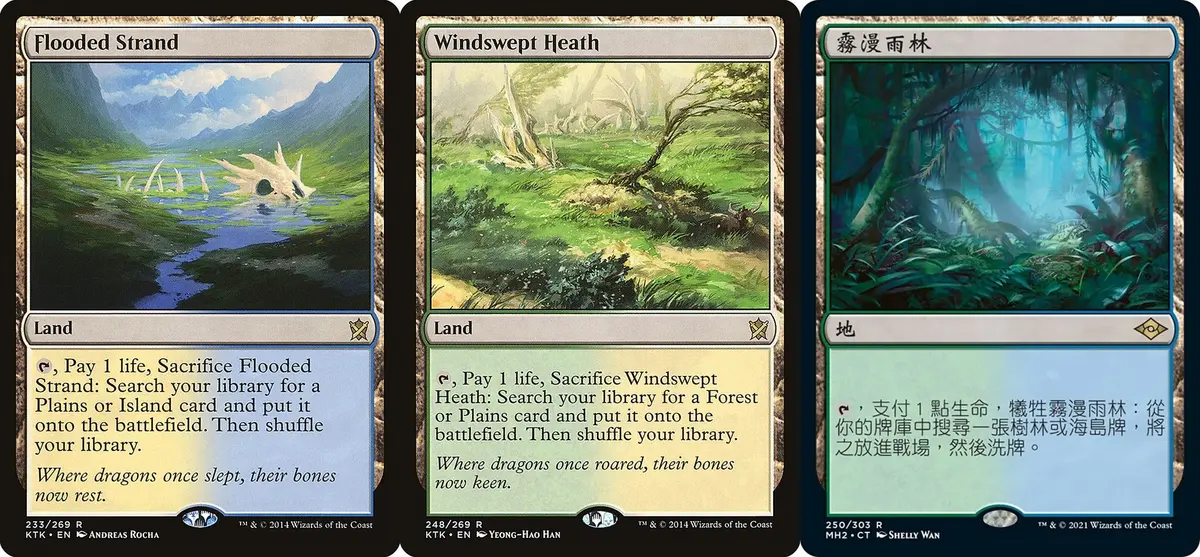
First, for the fetchlands, we include the three above.
Because color fixing is so badly needed, we play around 11-12 fetchlands to keep a sufficient density.
There are two reasons for choosing these three:
- The only basic lands in the deck are Island, Forest, and Plains, so we must avoid, as much as possible, situations where we need those basics and can’t find them, especially in matchups where we must prioritize fetching basics to avoid getting wrecked by Blood Moon.
- In most situations, these three fetchlands can find the tri-lands and shocklands we need.
Shocklands
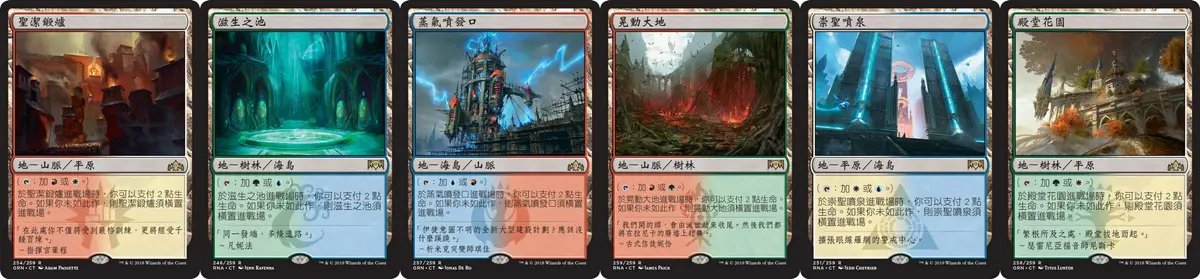
The shocklands are adjusted to support being able to cast Omnath, Locus of Creation, and basically the shocklands of the red, blue, green, and white pairs are all included.
Tri-lands
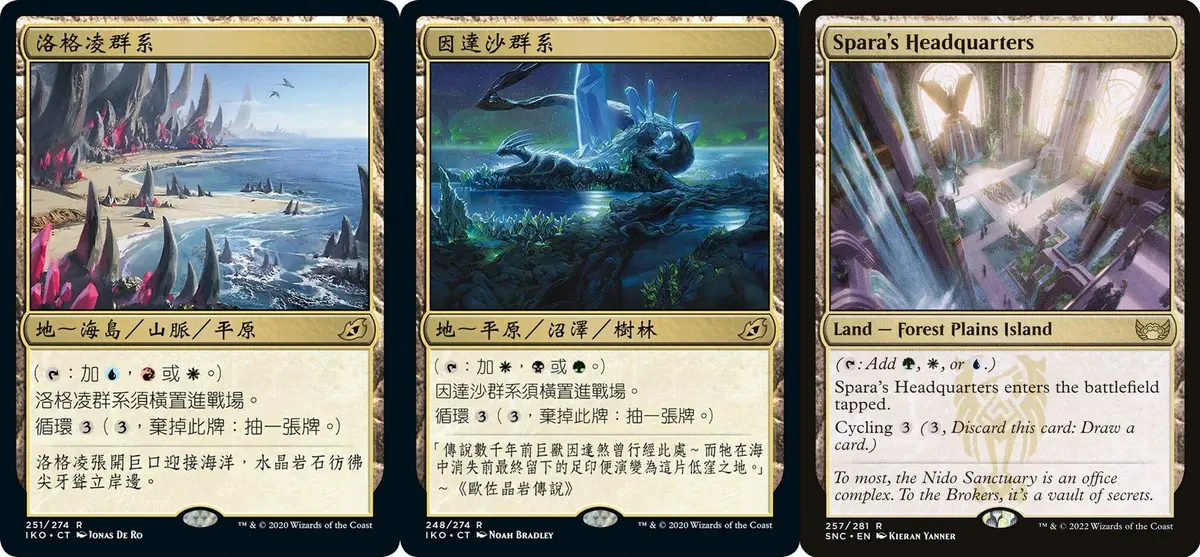
Three tri-lands are included. In order, the ones that get fetched first are Raugrin Triome and Indatha Triome, so that Lightning Bolt, Prismatic Ending, and Leyline Binding can be used in the first two turns.
Spara’s Headquarters can be fetched later when you have spare time, or cycled away when drawn and then picked back up with the [+1] ability of Wrenn and Six to filter.
Basic Lands
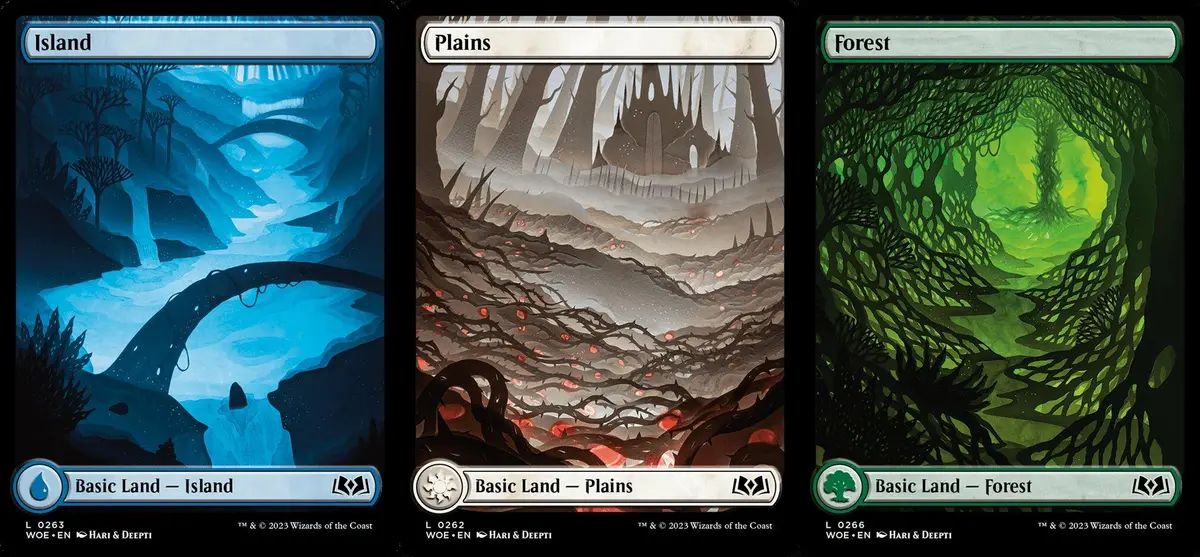
These three different basic lands are also there to guard against Blood Moon and are adjusted to support casting Omnath, Locus of Creation, so Mountain is not included.
Utility Lands
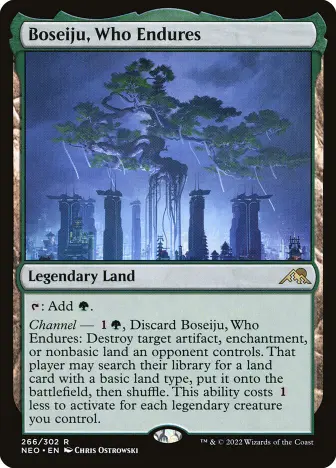
For the utility land we chose this Boseiju, which has powerful functionality in Modern and is very important in matchups against Creativity, Amulet Titan, and Hammer Time.
Sideboard Choices
Compared with Standard and Pioneer, Modern is more of a format that emphasizes sideboard flexibility and power. The following are cards the deck often uses in the sideboard, and of course the counts depend entirely on personal preference and the matchups the player wants to specifically target.
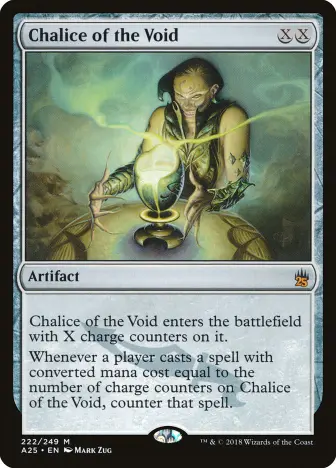
Chalice of the Void puts different numbers of charge counters on it in different matchups, but the shared goal is always to lock down the way the opponent’s deck operates.
Putting on a given number of counters counters every spell of that mana value cast by any player. (EX: Putting on one counter automatically counters all one-mana spells.)
Remember that Chalice of the Void’s ability applies to your own spells too. If the opponent sets their own Chalice and then foolishly casts a spell with the same mana value as the counters on it, remember you can’t let it through.
Likewise, if you set a Chalice yourself and then cast a spell with the same mana value as the counters and forget to trigger your own Chalice’s ability, if the opponent calls a judge afterward, you will very likely be penalized, so don’t take the risk.
Suggested matchups:
Hammer Time (X=1), Murktide (X=1), Death’s Shadow (X=1), Boros Burn (X=1), Cascade decks (X=0)
In the sideboard we bring a few more Boseiju to handle decks with more special lands and decks built around artifacts and enchantments.
Suggested matchups:
Hammer Time, Amulet Titan, Creativity, Affinity
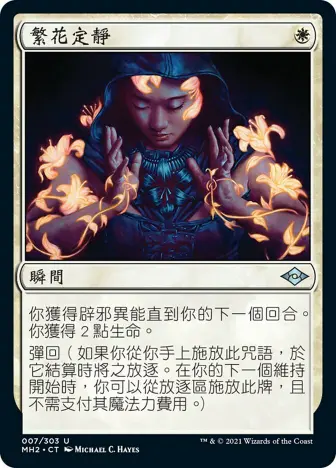
For one mana it gives yourself hexproof and gains 2 life, and its return-to-hand ability even lets you use it again on your next upkeep, protecting you from spells that target you for two turns, which is quite powerful.
Suggested matchups:
Rakdos Scam, Boros Burn
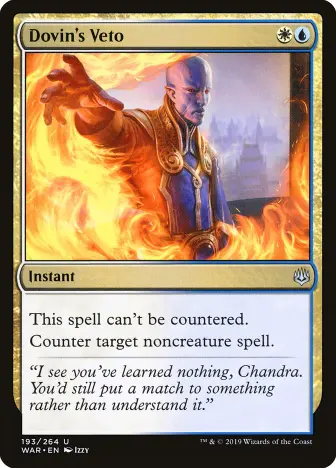
A blue-white noncreature counterspell, used against decks with powerful noncreature spells. Because it is uncounterable, it can get around counterspells like Force of Negation or Mystical Dispute.
Suggested matchups:
Creativity, Cascade decks, Four-Color Elementals, UB/UW Control, Indomitable Creativity, Boros Burn
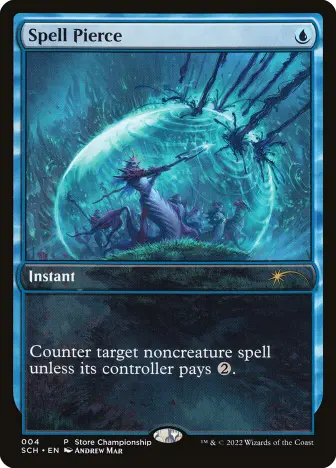
Spell Pierce is mainly used to disrupt the opponent’s early-to-mid-game operation, to counter when you need to protect your own spells from resolving, or to force the opponent to pay two mana to hold up their cards.
In a Modern environment that emphasizes early development, most decks tap out for spells, or are unwilling to pay these two mana because they want to leave mana up for other development/interference, which makes Spell Pierce much more likely to resolve.
The downside is that this card is not a good topdeck in the mid-to-late game: after turn 5, paying these two extra mana won’t affect the game much (though if the opponent has no protection it can still find use).
Suggested matchups:
Creativity, Cascade decks, Four-Color Elementals, UB/UW Control, Indomitable Creativity, Boros Burn, Izzet Murktide, Death’s Shadow
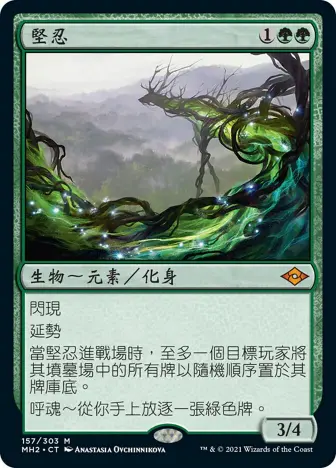
An Elemental used when you need graveyard hate; some builds put one in the main deck to prevent decking themselves from drawing too many cards.
Suggested matchups:
Izzet Murktide, Death’s Shadow, Jund Saga, Living End, Mill (shuffling their own graveyard), Rakdos Scam, Golgari Yawgmoth
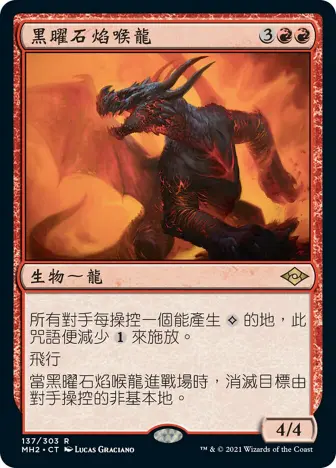
The land-destroying dragon, used against decks that need special lands to operate. Being nonlegendary gives it a chance to be copied by Reflection of Kiki-Jiki.
Suggested matchups:
Creativity, Amulet Titan
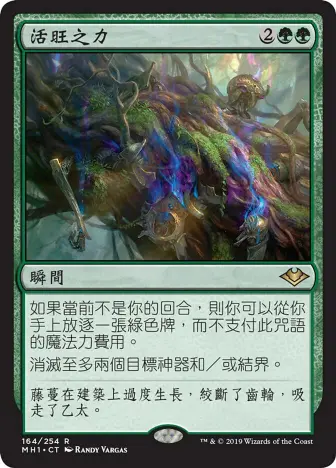
Used against artifact and enchantment decks, and being able to cast it for 0 mana via the alternative cost on the opponent’s turn is quite nice.
Suggested matchups:
Hammer Time, Affinity, Amulet Titan, Indomitable Creativity
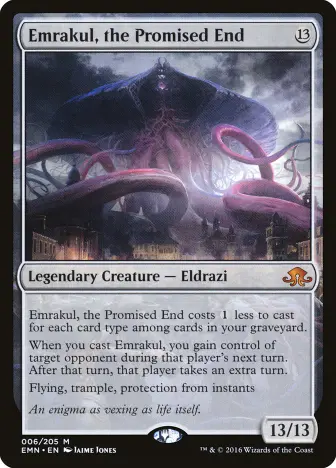
Casting it triggers the second ability, letting you gain control of the opponent’s next turn.
Mainly used against control and the mirror, taking control of the opponent to make them empty out their own resources and hand as much as possible.
Suggested matchups:
UW/UB Control, Four-Color Elementals.
Game Plan Thinking
Stabilize the mana base
For a four-color deck this is the most important point. Most spells in the deck need at least two mana of specific colors to cast, so stable color fixing and finding the right land at the right time is what players most need to practice when picking up this deck.Don’t be afraid of counterspells
Against tempo or control decks, you can’t do nothing out of fear of counterspells; that would simply throw away the win.
You are a deck that needs to stabilize the tempo, so judge which cards in your hand will become targets for the opponent’s counterspells, decide which cards need to be sacrificed and in what order to cast them, or take a big gamble when you have no choice, because if you don’t play cards, the opponent’s counterspells will just sit in their hand and do nothing to help them.
Conversely, whenever the opponent needs to pay for a counterspell but a spell they didn’t counter resolves, the headache will be theirs.How to play unfavorable matchups
Falling behind means the opponent can complete their game plan earlier than you. In that situation, unless you have no choice, mindlessly casting spells on curve doesn’t help you. Finding ways to disrupt the opponent’s game plan and drag the tempo in the direction you’re comfortable with is the better way to play.
So mulligan aggressively to find answers you can use, and slow the tempo down to counter the opponent’s plan; that is the approach I recommend.
Conclusion
After the release of Wilds of Eldraine, the Modern decks that followed also changed in noteworthy ways because they got reinforcements. Mainly for Four-Color Elementals, the addition of Up the Beanstalk takes an already quite strong deck up another level, and its presence in tournaments is expected to rise in the future.
It’s worth mentioning that because the new set has just been released and most players are still feeling things out, there’s a lot of variability and room for experimentation in the deck’s construction. The card counts players have built currently hover between 60 and 80 cards, with some getting good results and some meeting their Waterloo (like me), but I believe that after some time of tournament baptism and testing, this deck’s build will gradually settle down.
If you have any thoughts, feel free to leave a comment below, and I wish everyone good results at this season’s Modern MITQs. See you next time!
- Title
- The Modern Scene: Four-Color Elementals
- Author
- Enki
- Created at
- September 20, 2023
- License
- This work is licensed under CC BY-NC-SA 4.0 .