Domain Zoo Play Guide (Tarkir: Dragonstorm Modern)
Note: This article was translated from Chinese by AI and may contain errors. Read the original Chinese version.
Foreword
Thanks to cephille for the invitation. Otherwise I would probably never have written an introduction this long in my entire life.
What Is Domain Zoo?
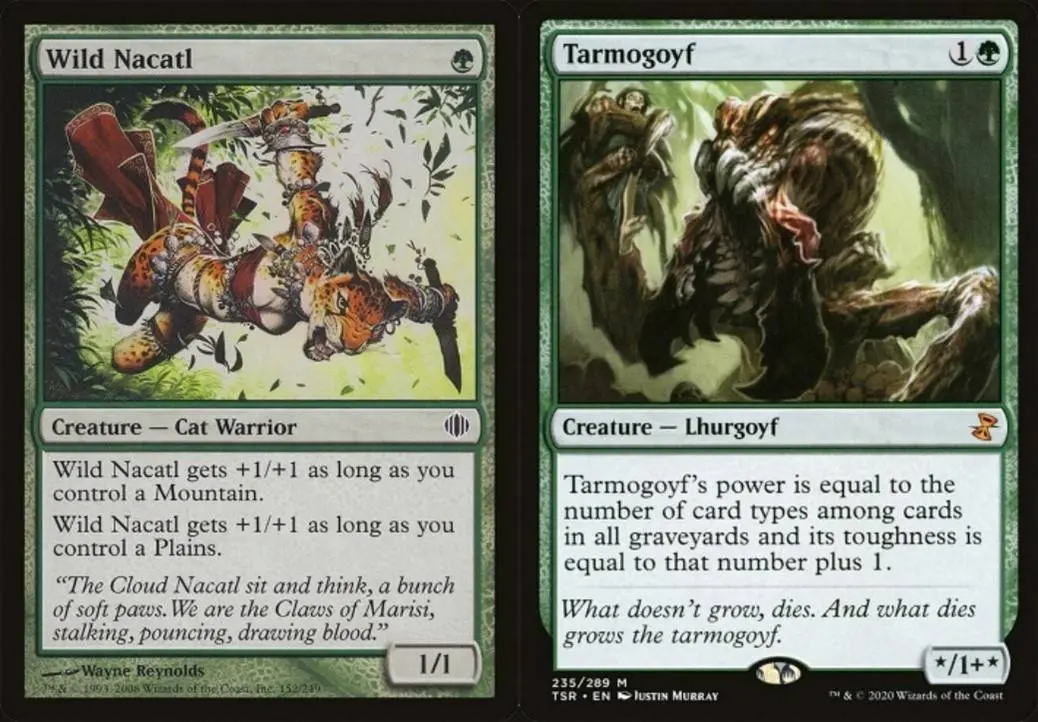
Naya Zoo used to be one of the signature aggro decks. It relied on cheap creatures with high individual power such as Wild Nacatl and Tarmogoyf, plus burn and support spells, to apply pressure quickly, keep the board advantage, and carry that advantage into the mid and late game.
But as power levels in recent formats inflated, aggro and midrange decks more efficient than Zoo gradually took its place. Then in 2021 an ancient ability keyword came back: Domain.
The earliest Domain-related wording appeared in Invasion (INV), where it was written as “for each basic land type among lands you control.” Tribal Flames, the most useful burn spell for Domain, comes from that set too. The wording stayed the same in the following set, Planeshift (PLS).
By the way, everyone’s favorite (?) Draco also comes from Planeshift. So I’m sure a Scion of Gargadon will show up eventually, too.
Anyway, back to the point, or this article will turn into the complete history of Domain.
It was not until Conflux (CON) in the Alara block that Domain officially became an ability word.Then it was forgotten for 12 years, and Hiveheart Shaman in Innistrad: Crimson Vow (VOW) even went back to the old wording. Come on, Wizards, you printed Modern Horizons 2 (MH2) only five months earlier!
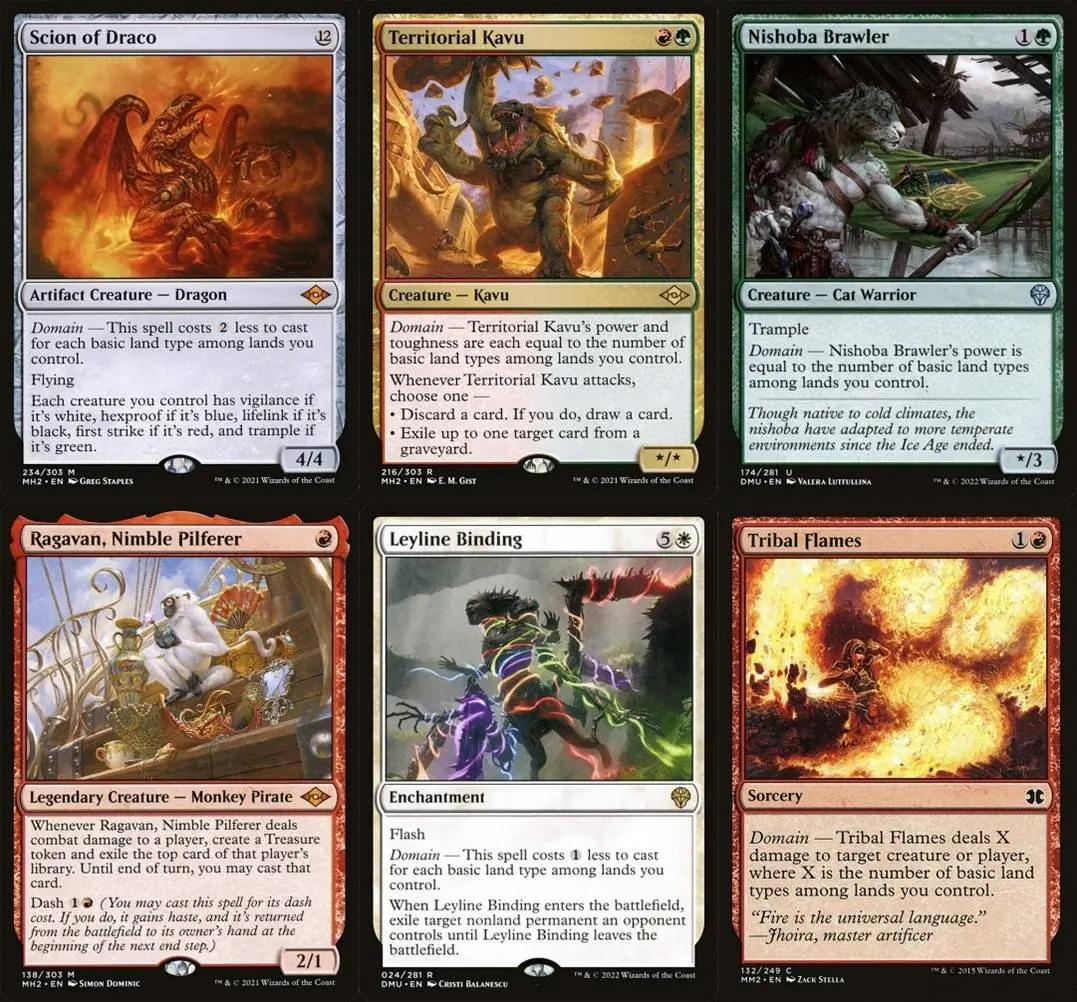
Modern Horizons 2 (MH2) and Dominaria United (DMU) arrived one after the other, adding Domain creatures such as Scion of Draco, Territorial Kavu, and Nishoba Brawler, as well as Ragavan, Nimble Pilferer, which has nothing to do with Domain but was once the representative one-drop of Modern. Add Leyline Binding and the triomes from Ikoria (IKO) and Streets of New Capenna (SNC), lands with three basic land types, and the deck reappeared in Modern. At that time, though, it lacked a decisive key card, so Domain Zoo only hovered at the top of Tier 2.
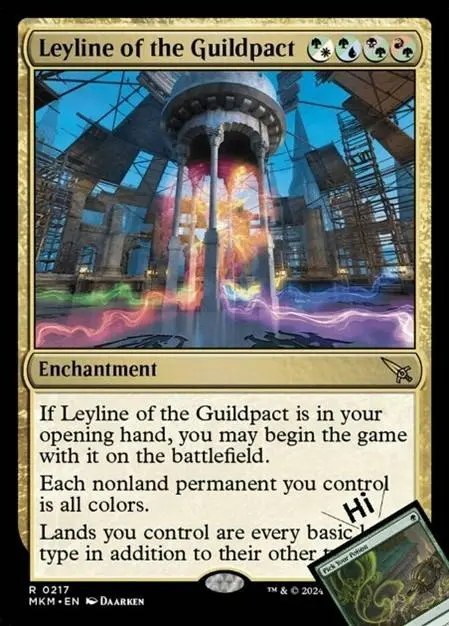
Then came Murders at Karlov Manor (MKM), and the most important missing piece arrived: Leyline of the Guildpact. It lets the deck reach Domain from the opening hand and cast Scion of Draco on turn two, giving Draco vigilance, hexproof, lifelink, first strike, and trample on its own. For a while the deck even sat in Tier 1.
Next, although Modern Horizons 3 (MH3) had no Domain cards at all, it still added new members such as Phlage, Titan of Fire’s Fury and Arena of Glory, raising the deck’s power level further. However, its gains were less obvious than other decks’, so it now hovers in the lower-middle part of Tier 1.
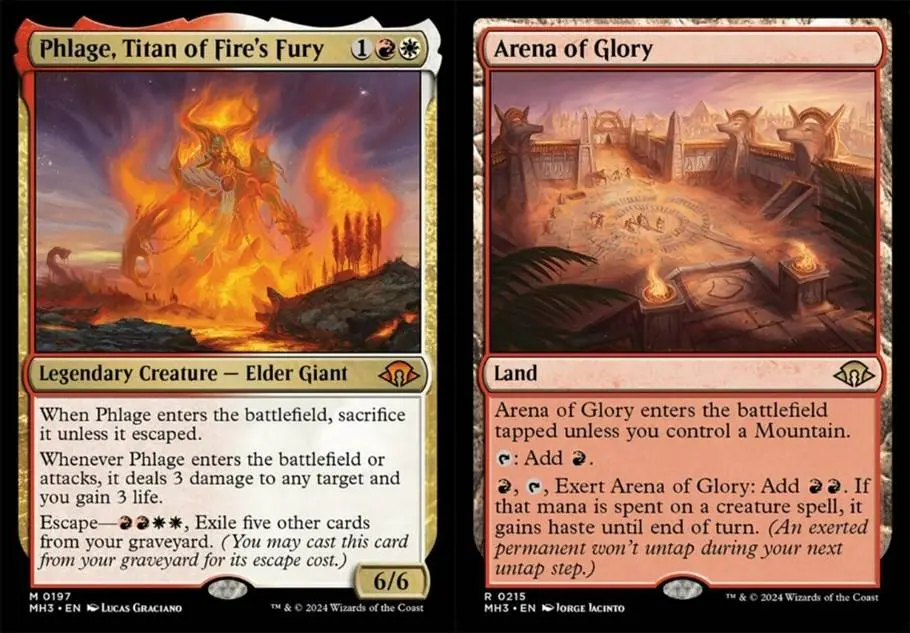
None of These Have Anything to Do with Domain Anymore
Strengths and Weaknesses of the Deck
Why Play This Deck?
In big tournaments, a player’s focus tends to drop as time goes on, which skews judgment and leads to misplays. An easy-to-pilot deck reduces mental strain and lowers the chance of this happening. Though if you’re going to misplay, you’ll misplay anyway.
The other reason is the metagame. After the bans of Grief and The One Ring, and with Energy running rampant, Domain Zoo suddenly lost several of its big enemies. The decks it used to be unfavored against either got hit by one or two bans or disappeared because they could not beat Energy, while Domain Zoo itself got a little boost in MH3 even though it has nothing to do with Domain, giving it smooth and stable matchups in the current metagame.
Strengths
You can see the opponent’s pained expression when they see the Leyline and then see the Dragon.
With the powerful Leyline + Draco combination, Domain Zoo gained what can only be called god-tier opening hands. The deck also has 8 pieces of direct damage (4 each of Lightning Bolt and Tribal Flames), which gives it very flexible ways to play. Against other aggro decks it can lean toward being the control deck, using these burn and removal spells to take out the opponent’s key creatures. Against control or combo decks it can aggressively go face and use the burn to end the game quickly.
Weaknesses
Although Leyline of the Guildpact has saved it from a lot of trouble, it still can hardly withstand the disruption that Blood Moon and Harbinger of the Seas do to its mana base. There is also Supreme Verdict, which you almost never see now but which leaves you with no out when you do. Sweepers you cannot counter are the pain point of creature decks.
In addition, the deck’s card selection is poor. Once you are in a topdeck war, it is easy to lose because you cannot find more resources. This shows up especially when the opponent has discard: you can easily get a god-tier opening hand and then run into discard, which cuts your strength down a lot, especially with a Leyline + Draco hand where Draco is the card that gets discarded.
Another recent problem for Scion of Draco is Consign to Memory, which you often meet in sideboard games against decks with blue.
Where Domain Zoo Stands in the Dragonstorm Metagame
From my own feel, aside from Orzhov Blink and Affinity, Domain Zoo is about 50-50 against everything, and 40-60 at worst. It has no glaring bad matchups, because Leyline + Draco is just that strong.
Orzhov Blink has plenty of creature and enchantment removal in its main deck, so even a Leyline + Draco opening struggles against it. Against Affinity, you cannot keep up with their speed, and Urza’s Saga brings both Construct tokens and a Shadowspear that gains them life, which makes finishing them off difficult.
Deck Construction
Lands / about 21-22
As a deck that needs to meet the Domain condition, the land configuration has very strict requirements, which I will detail later. Generally, though, it is 1 triome, 12 fetch lands, 4 shock lands, 1 surveil land, 2 basic lands, and 1-2 Arena of Glory.
As for 21 or 22, it mainly depends on how the main deck is built. If you use more two-drops, 22 lands is better than 21.Though it always feels like 21 is too few and 22 is too many.
Main Deck
Since it is called Domain Zoo, of course it is stuffed with Domain cards.
Scion of Draco, Territorial Kavu, Leyline Binding, Leyline of the Guildpact, and Tribal Flames: these 5 cards, 20 copies in total, are basically always played as full playsets. Only the number of Tribal Flames can be adjusted a little.
Also recommended are Ragavan, Nimble Pilferer, Lightning Bolt, Phlage, Titan of Fire’s Fury, and Stubborn Denial. These are usually played as 4-ofs or 3-ofs, with only Stubborn Denial occasionally at 2.
That leaves roughly 5-8 flexible slots. In the past these usually went to Nishoba Brawler and Wild Nacatl.
Deck Lists
Currently Domain Zoo falls roughly into two types. The first is the traditional one, the version that uses Stubborn Denial. It follows the typical Zoo strategy of putting pressure on the board with cheap, high-power creatures so that this low-cost counterspell can protect the key creatures on the board more effectively, or disrupt the opponent’s key spell, consolidating the board advantage.
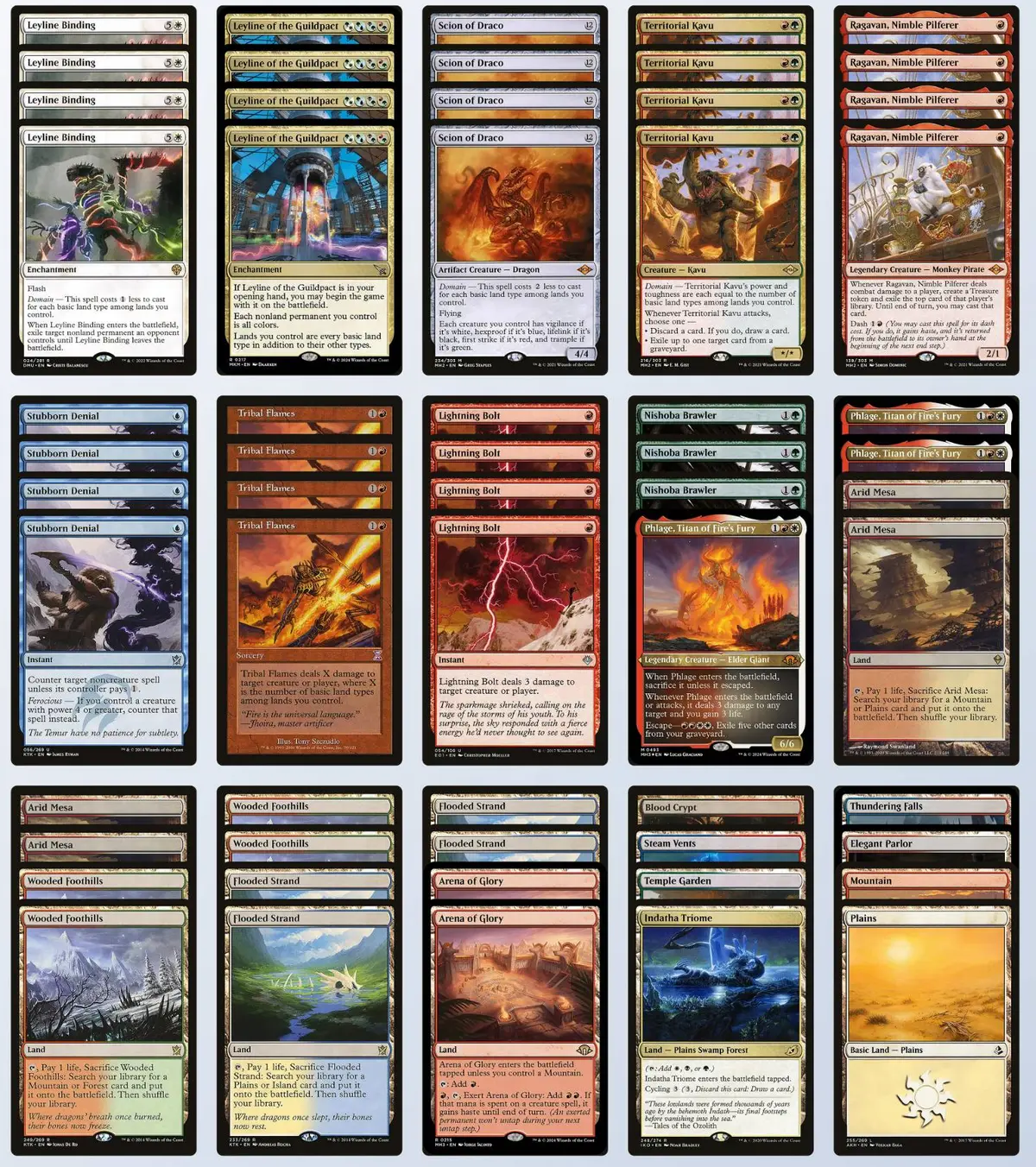
After Tarkir: Dragonstorm (TDM) arrived, versions trying Spectral Denial began to appear. Which counterspell to use seems to come down to personal preference (after all, this is an obscure deck that nobody is researching). If you ask me, though, I only miss Spectral Denial when I run into Solitude; the rest of the time Stubborn Denial is almost always stronger.
Also, to make up for the weak card selection, versions with Winternight Stories have recently started to appear.
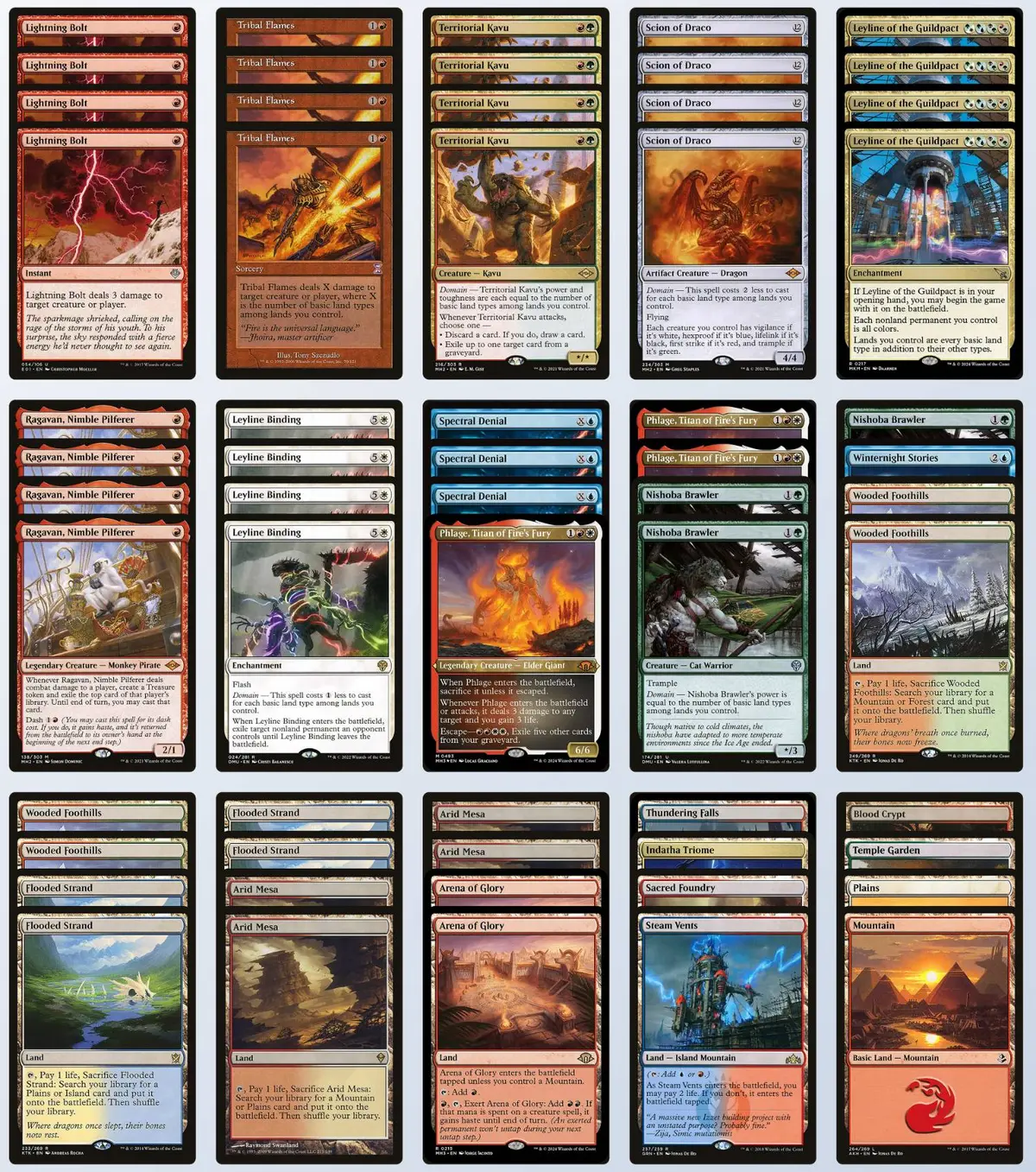
Spectral Denial + Winternight Stories version
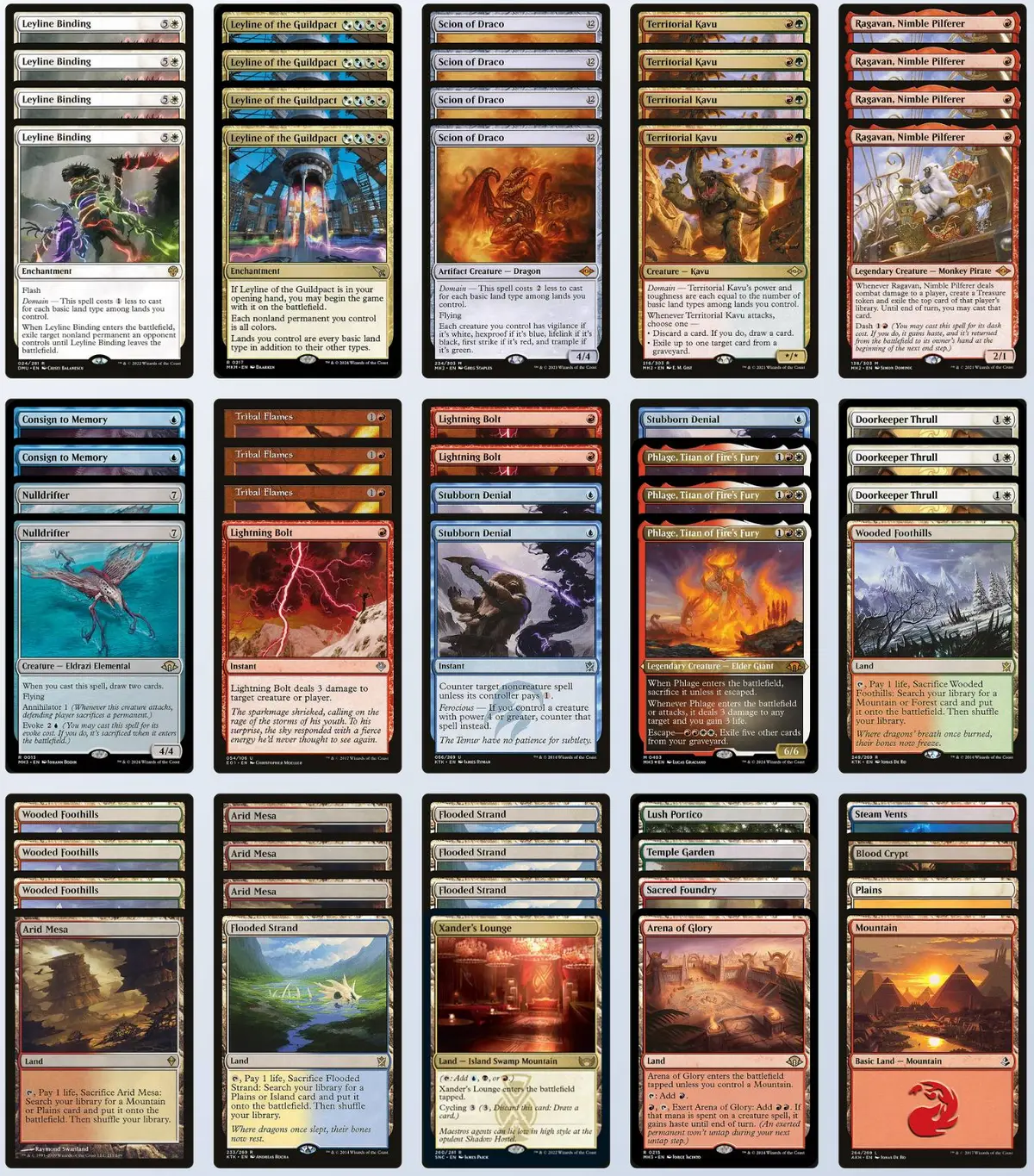
The second is the Thrull version. It was born when Energy ran rampant in Modern. Some people developed Orzhov Blink to counter Energy, and Zoo got hurt by it as well, so Zoo adjusted its builds by adding Doorkeeper Thrull and replacing Stubborn Denial with Consign to Memory. The aim is to negate all the ETB (enter-the-battlefield) effects of Orzhov Blink’s creatures. Many of Orzhov Blink’s removal effects are tied to creatures, such as Solitude and Skyclave Apparition, so a main-deck Thrull is a real headache for them.
Yes, this is an anti-anti-meta build.
The Thrull also benefits you. In the original builds there was a version that included Nulldrifter: flash in the Thrull at the end of the opponent’s second turn, then on your turn Nulldrifter draws two and leaves you a 4/4 flier with Annihilator 1, or a Phlage, Titan of Fire’s Fury that does not need to be sacrificed.
Especially with Phlage: if you use Consign to Memory, it is like hitting the opponent with a Lightning Helix and getting a 6/6 for three mana as a bonus, which is just too strong.
However, Nulldrifter’s cost is a bit hefty, and without the synergy it is inefficient as plain card selection, so it has dropped out of the Thrull builds.
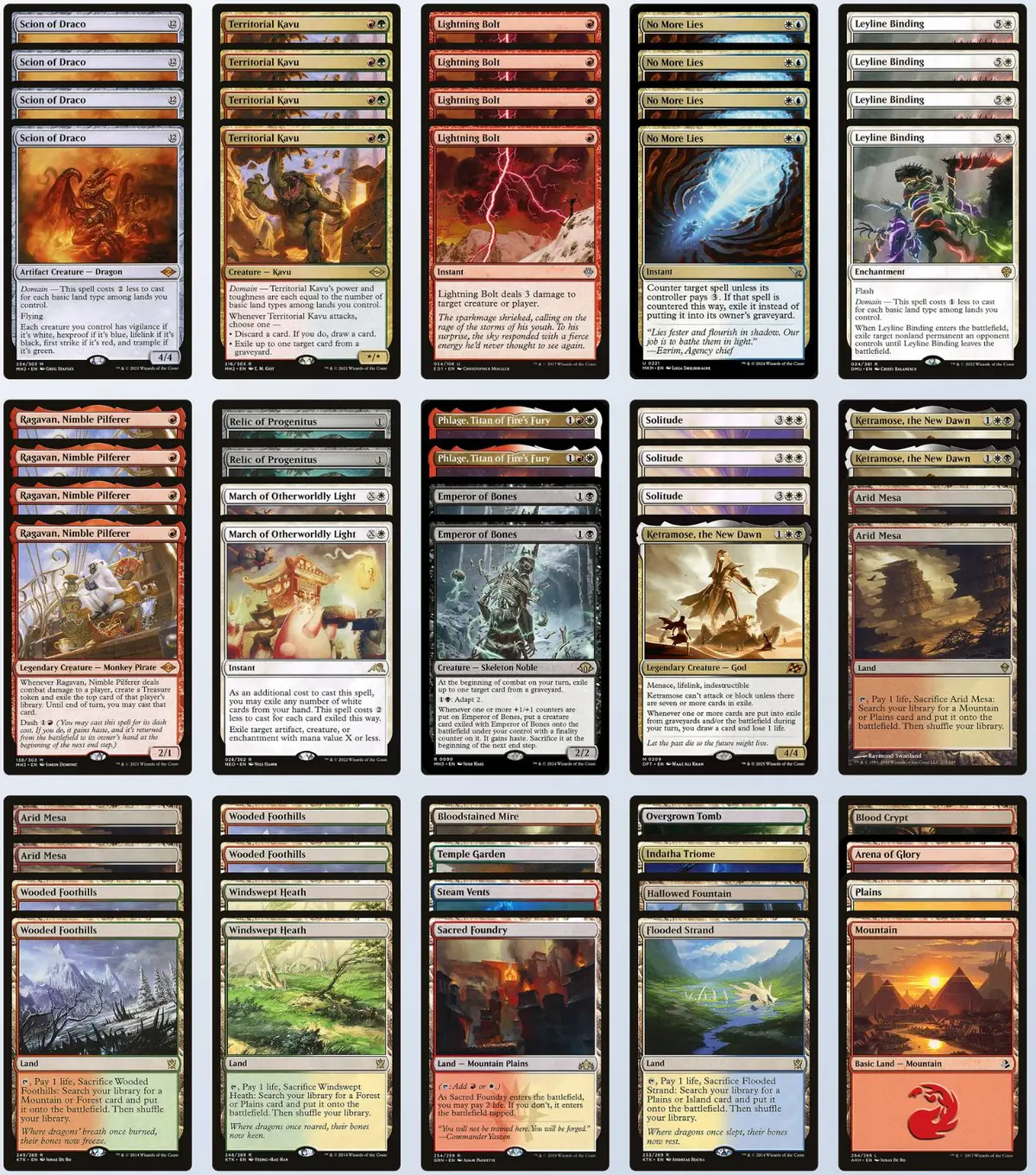
The third type (?) is the traditional variant. It is not much different from the traditional version: it just puts various sufficiently strong creatures or support spells in the flexible slots. The more common ones are Psychic Frog and Prismatic Ending. Some people play Snapcaster Mage or the recently popular Ketramose, the New Dawn.
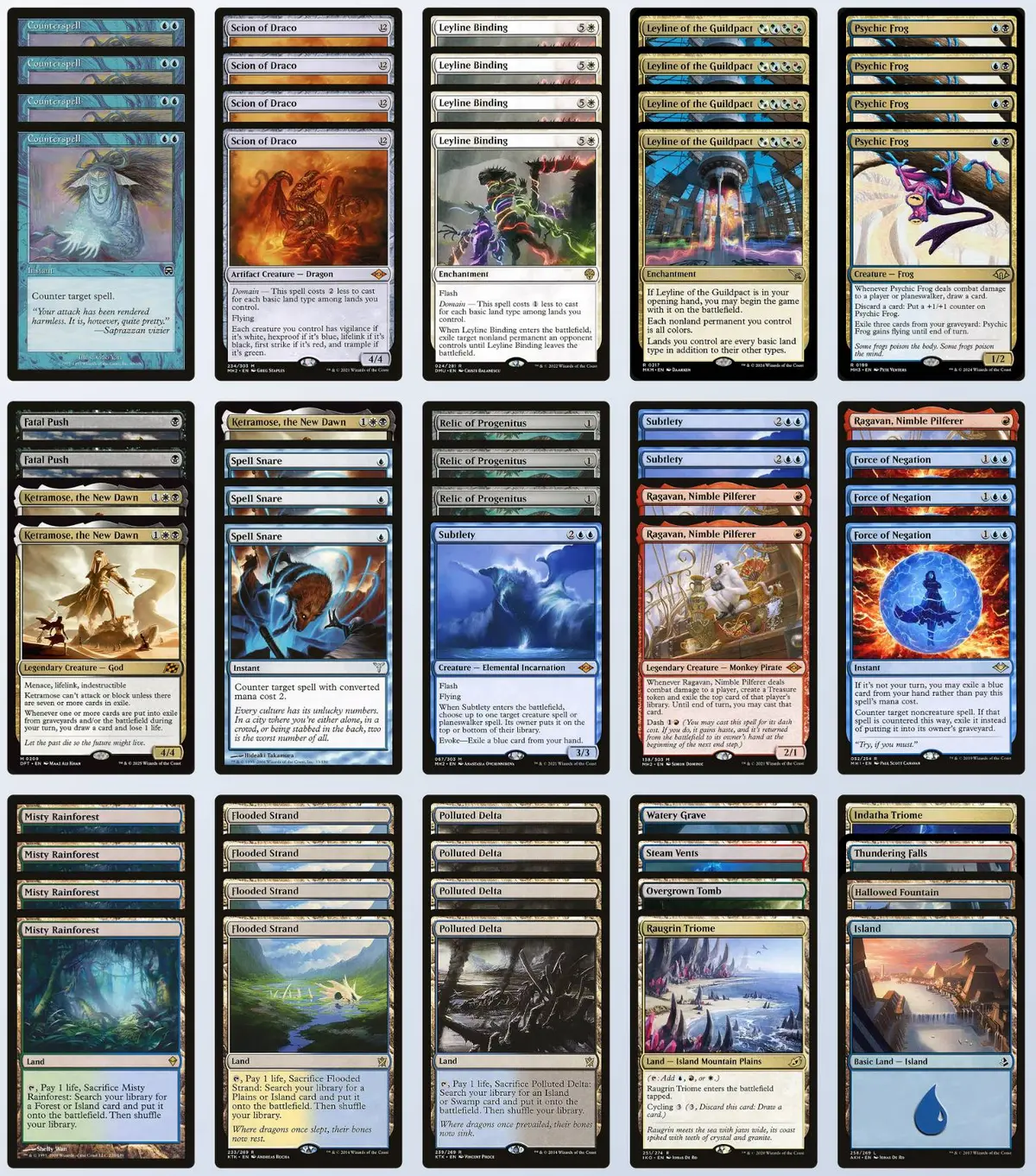
There is also another one (?), the blue Zoo, which uses blue free spells and counterspells such as Subtlety, Counterspell, and Force of Negation to hold the opponent in check or keep creatures alive as long as possible, and wins with one or two big creatures. This build was popular back when the Izzet Murktide era was in full swing, but it has declined a bit now because cheap creature decks like Energy exist.
There are also variants such as Leyline + Draco + Valakut or Leyline + Draco + Shardless Agent. There are too many to list, and they are far from the Zoo concept, so I won’t cover them this time.
Which one should you choose? Usually the traditional version, since staying power means the strength is reliably there. But if there is a lot of Orzhov Blink around you, the Thrull version is the best choice.
The Domain Mana Base
This is probably the most complicated part of the whole deck.
A stable and effective mana base is the key to Domain running smoothly. The deck’s overall strategy, its mana curve, its demand for specific colors of mana, the utility lands you plan to include, and how you handle opposing disruption all affect the final makeup and operation of the mana base.
This section has two focuses:
- Which lands to use, and why?
- Land sequencing techniques, tips, and details to watch for.
Mana Composition
First, the triomes.
Since the arrival of Ragavan, Zagoth Triome and Indatha Triome have been the more popular ones, because these two triomes let you play Ragavan on turn one and still reach Domain on turn two. Xander’s Lounge, on the other hand, lets you reach Domain on turn two while keeping one white mana available for casting Leyline Binding.
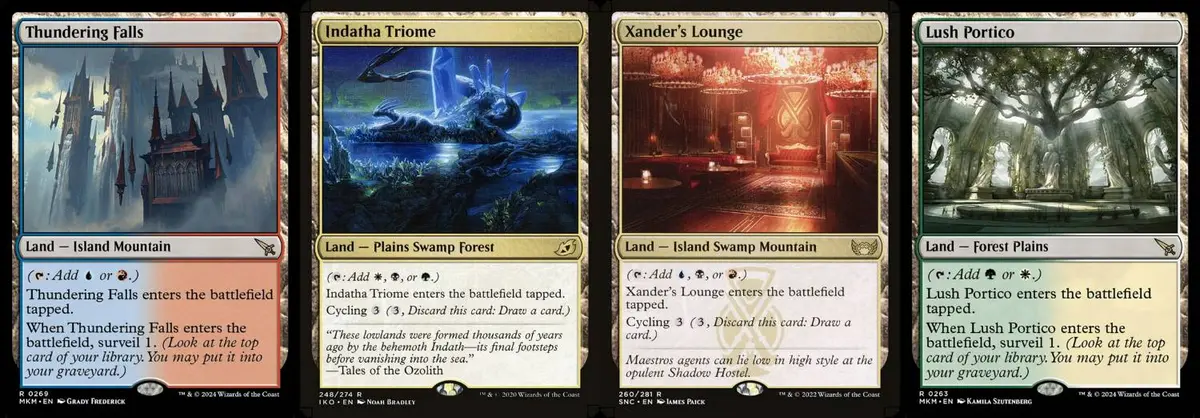
After Phlage arrived, though, to support the {R}{R}{W}{W} needed for escape, Xander’s Lounge and Indatha Triome became the mainstream choices. Because of Ragavan, Indatha Triome is more common most of the time, and most of the lists with Xander’s Lounge are Thrull versions.
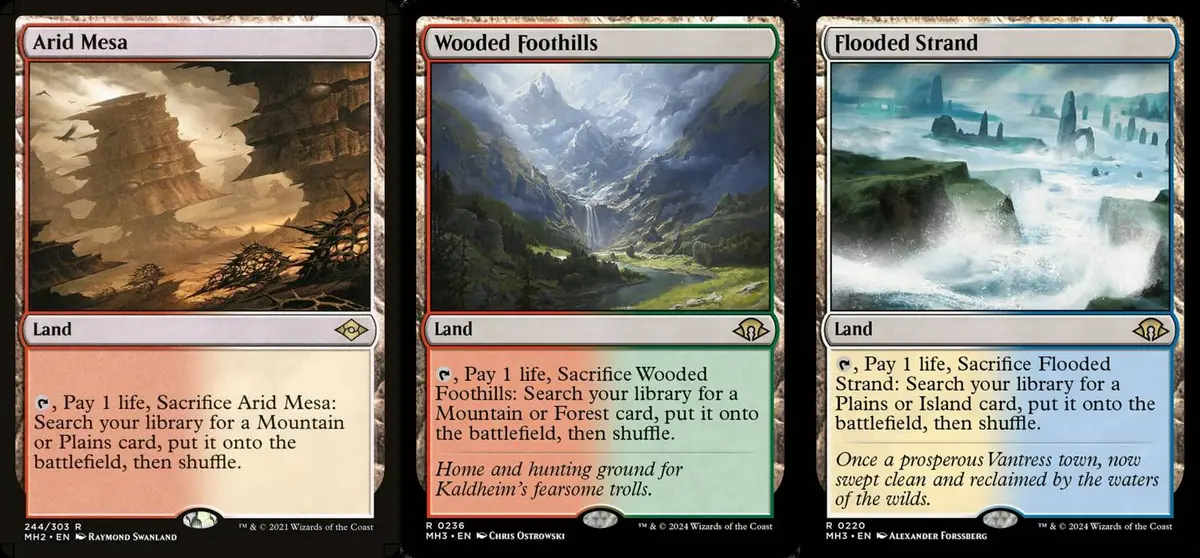
For fetch lands, color comes first. The current Zoo color usage is red > white > green = blue > black, so the basic lands became Plains and Mountain. The other reason is that MH3 brought Harbinger of the Seas, so you must have a Mountain to be able to use Lightning Bolt and Tribal Flames.
So the fetch lands you include must first be able to find red and white, and since all three fetches must be able to find the triome, you use Arid Mesa, Wooded Foothills, and Flooded Strand. In the era when you played a Forest, you would run Windswept Heath and Misty Rainforest.
The shock lands are always Sacred Foundry, Temple Garden, Steam Vents, and Blood Crypt: Plains/Mountain, Plains/Forest, Island/Mountain, and Mountain/Swamp respectively. These are also chosen according to color usage frequency.
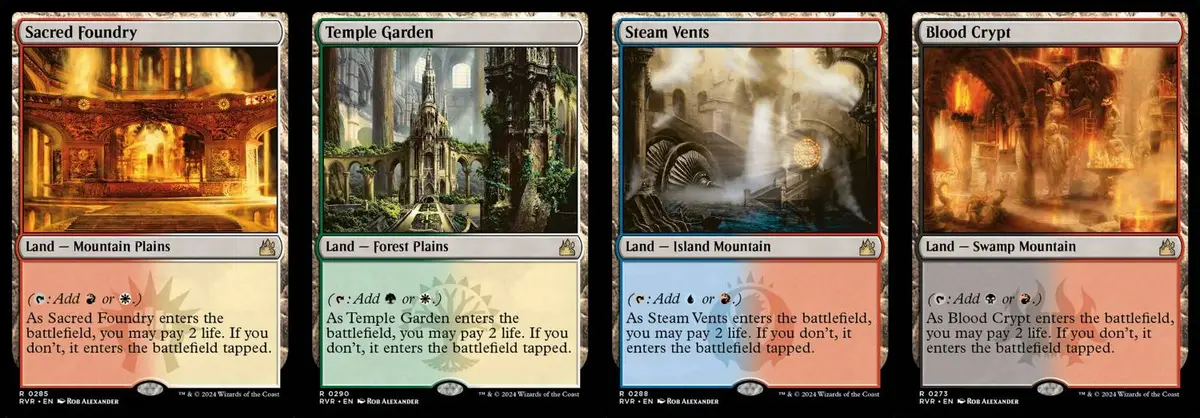
This configuration works with the triomes so that in any situation you can have a Forest/Mountain by turn two, which you need to cast Territorial Kavu. The most common situation in practice is Steam Vents into Ragavan on turn one, then Temple Garden into Kavu on turn two. That way, you reach Domain on turn three as long as you find a Swamp, and even if you cannot, Kavu is at least a 4/4. For this reason some people play Breeding Pool and Sacred Foundry instead, but Arid Mesa cannot fetch Breeding Pool, so you sometimes run into the slightly awkward combination of Sacred Foundry + Arid Mesa in your opening hand.
The surveil lands work entirely in concert with the triomes. With Xander’s Lounge use Lush Portico, and with Indatha Triome use Thundering Falls.
Order of Using Fetch Lands
Say your opening hand has three fetch lands, one Ragavan, Nimble Pilferer, two Territorial Kavu, and one Stubborn Denial. The intuitive play is to fetch Steam Vents for Ragavan, fetch Temple Garden on turn two for Kavu, fetch Blood Crypt on turn three to reach Domain, and then cast Kavu while keeping one blue mana for Stubborn Denial.
But what I want to talk about here is the fetch lands themselves. Unless your mana colors demand otherwise, you should always use Flooded Strand first, then Wooded Foothills, and Arid Mesa will always be used last. This is because Flooded Strand can only fetch Island/Plains types, so all it can find is Sacred Foundry, Temple Garden, Steam Vents, and the triomes, while the other two fetch lands can find every dual land and triome.
As for why Arid Mesa goes last, it is because the basic lands in the deck are Mountain and Plains, and it is the only fetch land that can find both kinds of basic land.
Note: although that line looks powerful, you would be down to 11 life, and the unnecessary Shock could cost you the game. I would still recommend attacking with Ragavan first to see whether you can get a Treasure, then using the Treasure and Steam Vents to cast Kavu while keeping your fetch land. If nothing happens, you can reach Domain on turn two, or you can still fetch Temple Garden for Kavu and save the Treasure for Stubborn Denial.
Sequencing Lands
Normally, you play Indatha Triome on turn one, and on turn two use Steam Vents or Thundering Falls to complete Domain. But if you want Ragavan on turn one, you start with Steam Vents. Since black mana is usually used the least, the usual line is Steam Vents + Temple Garden to complete four colors.
Also note that if you are not playing Breeding Pool, Steam Vents is the only blue source that enters and can be used immediately. If you want to use Stubborn Denial and also need red mana, you should prefer fetching a different land.
Even when you have Leyline of the Guildpact, I still recommend not relying too heavily on fetch lands to cast Territorial Kavu. Once the opponent removes Leyline of the Guildpact, Kavu immediately becomes a 0/0. I recommend fetching Indatha Triome and a Mountain, which costs less life, gives you four colors, and guarantees Kavu is still a 4/4 after the Leyline is removed.
Also, as long as Leyline of the Guildpact is out, your basic lands count as having Domain too. In that situation, if the opponent plays Blood Moon or Harbinger of the Seas, you can still cast Scion of Draco for two mana. So if you think the opponent has either of those cards, I suggest casting Territorial Kavu first, then Scion of Draco.
Beyond that, when fetching, take care to find {R}{R}{W}{W} for Phlage’s escape. Late in the game, if you have seven lands you can cast and escape Phlage in the same turn, but there are actually only 8 lands you can fetch, so pay attention when you fetch and when you want to discard lands to Kavu.
When Should You Fetch the Triome?
Although you will usually use a triome plus a dual land to complete Domain within the first two turns, if you cannot do it by around turn three, you can consider not fetching the triome and using the three shock lands to complete Domain instead. In the mid game you can easily run out of cards in hand, and at that point the triome can serve as a cycling-style way to replace a card.
How to Play the Deck Well
First, you do not always need to rush to attack.
Telling an aggro deck not to rush to attack sounds odd, but many players new to aggro decks like Zoo have a misconception: since the deck is full of creatures and burn, they assume they should always be the beatdown. Aggression is indeed the main way to win, and in most matchups it really is, but that does not mean it is the only plan. What matters is developing judgment: knowing in which matchups, or against which board states, you need to ease off the pressure and adopt a more defensive, even control-oriented, strategy.
Judging Your Role in the Matchup
Figuring out and playing your role well in a specific matchup is the key to raising your win rate. This takes time to evaluate the whole situation correctly, including the following aspects:
- Matchup: What kind of deck are you facing? Aggro? Midrange? Control? Combo?
- Play/draw: Being on the play usually favors attacking, while being on the draw may require you to stabilize first.
- Life totals: Whose life total is under more pressure? Do you have enough burn to finish them?
- Board state: The number, size, and abilities of the creatures currently on the battlefield.
- Card resources: How many cards do you and your opponent have left in hand? Which key cards are there?
Based on this assessment, you can decide how to use your hand and resources most effectively. Domain Zoo’s strength lies in the flexibility of its strategy: play differently according to the situation, and, importantly, realize when you need to change your game plan mid-game. You may start as the beatdown but need to switch to a defensive or control role as the board develops; conversely, you may need to control the board first and then go back on offense. Common strategic modes include:
1. Lone Wolf
Cast one or two key threats, then spend all your resources protecting them and let them win the game on their own. With this approach you may sometimes deliberately wait until turn three or four to make sure you still have mana to cast protection spells when you cast the threat.
2. All-Out Assault
When your opening hand is extremely smooth and explosive, or when the opponent’s deck is slow and lacks effective early interaction, you should send all your threatening creatures and damage at the opponent as quickly as possible, without considering creature trades or interaction with the opponent. The goal is to bring their life total down as fast as possible and win with burn, unless something shows up that seriously disrupts your attack plan.
3. Midrange/Control
Play the game with a combination of creatures, burn, and counterspells. Depending on the board, decide whether to deal with the opponent’s threats first or develop your own board first. Against aggro decks, you may not rush to attack: keep creatures back to block, slow the opponent down with removal or favorable creature trades, fight for control of the board, and then cast an efficient creature to end the game.
Keep Thinking, Reject “Autopilot”
Once again: do not fall into the mindset of “I’m Domain Zoo, so I must attack every turn.” Slow down, take time to evaluate the board carefully, think through the possibilities, and keep asking yourself these questions:
What is my path to victory right now? How can I win this game? How might the opponent respond? How will they stop me? What key interaction or counterplay might they have? Where are the key cards? Which cards, mine or theirs, matter most in this matchup? How should I deal with them? What happens if I lose my ability to interact? If I use up the burn or counterspells in my hand, what is the worst the opponent could do next turn? Which threat should I deal with first?
Only by continuing this kind of assessment and self-questioning can you make the wisest decisions in complex games and truly bring out Domain Zoo’s flexibility and power.
A Deeper Look: Dealing with Key Cards and Assessing Risk
Here is a deeper discussion of several of the key questions mentioned above:
- “How do I win this game?”
Based on the current situation/board, your hand, life totals, and the nature of the matchup, which role, beatdown or control, gives you the best chance? How likely am I to execute this plan successfully? Should I deal with the opponent’s board and interaction first, or put pressure on them as soon as possible? - “How will the opponent stop me?” and “Which cards do I need to watch out for most?”
The key cards to watch for are completely different in each matchup. For example, if your opponent might have Blood Moon, playing around it is critical. Never give the opponent a chance to slam Blood Moon on turn two or three and cripple your mana when you are not prepared.
Likewise, might the opponent have Supreme Verdict, All Is Dust, or other sweepers? Could there be other blockers? Plan ahead for how to handle these potential threats. - “What is the worst thing that could happen next turn?” and “Should I try to kill them now?”
This is a classic risk assessment. If the opponent has no interaction, or if you will lose next turn unless you go all in this turn, going for the kill is of course right. But if the opponent might have creature removal, or counterspells to answer your burn, could you lose the game because of it?
Judging how to handle these interactions sensibly is crucial, and there are usually several approaches:
1. Delay a Turn
Use this turn to cast more creatures, which increases the number of attackers next turn and raises the chance of a successful kill, and may also make a single removal spell from the opponent less effective.
2. Use the End of the Opponent’s Turn
Casting Lightning Bolt at the end of the opponent’s turn can probe their counterspells, force them to spend mana, reduce the risk of being countered on your own turn, or simply accumulate damage.
3. Attack in Waves
Attack with only some of your creatures and keep enough back as blockers, putting yourself in a safer position while waiting for the next, more secure chance to kill.
Practical Tips: Threat Sequencing
In the early game, how you order your creature casts often has a major impact on what follows.
- The Turn-One Decision: Should You Cast Ragavan, Nimble Pilferer?
On the play, casting it is usually recommended. When you are on the play, Ragavan’s potential payoff (stealing a card and making a Treasure) is simply too high, and it is worth betting that the opponent cannot deal with it on turn one. On the draw you need to evaluate more carefully. If the opponent likely has removal, or creatures that can block Ragavan, holding up a counterspell/burn spell may be the safer choice. - The Turn-Two Decision: Should You Cast Scion of Draco?
Opening with Leyline of the Guildpact is the ideal god-tier hand, and a turn-two Scion of Draco is usually very hard to deal with.
Without Leyline but with Scion of Draco, some hands can use a fetch land on turn one to find a triome, then Shock to reach Domain on turn two. However, this line also sacrifices your turn-one tempo. It is usually only considered in the following situations:
1. The survival rate/impact of a turn-two Scion of Draco is far greater than that of a turn-one creature.
2. In matchups where life total matters a lot, such as against burn or aggro, where you need to avoid shock lands.
3. You have multiple Scions of Draco in hand.
4. The turn-two decision: if you hold Scion of Draco, Territorial Kavu, and Nishoba Brawler at the same time, which should you cast first?
The core principle is: which threat is most likely to survive the opponent’s likely removal?
Here are the common removal and disruption effects in Modern:
| Creature vs. removal (counter) | Scion of Draco | Territorial Kavu | Nishoba Brawler |
|---|---|---|---|
| Fatal Push | Survives | Dies | Dies |
| Prismatic Ending | Survives | Dies | Dies |
| Leyline Binding | Dies | Dies | Dies |
| Static Prison | Dies | Dies | Dies |
| Solitude | Dies | Dies | Dies |
| Lightning Bolt | Survives | Survives | Dies |
| Galvanic Discharge | Survives* | Survives* | Dies |
| Spell Snare | Cannot be countered | Can be countered | Can be countered |
*Assuming the opponent has not accumulated any energy
Against Fatal Push and Prismatic Ending, only Scion of Draco survives. If the opponent might have them, Scion of Draco is the top choice, or you can use Nishoba Brawler to bait out the removal first, and consider Territorial Kavu last. Sometimes, though, Ragavan, Nimble Pilferer has already eaten a removal spell, and in that case the chance that Territorial Kavu survives safely goes up.
Leyline Binding, Static Prison, and Solitude can in theory all exile these three cards. But Scion of Draco can later grant abilities to your creatures and has flying, so having it removed is probably the biggest loss. Territorial Kavu has a stronger effect and better stats than Nishoba Brawler. You need to judge by the situation which loss is smallest, or which one the opponent is most likely to want to remove.
Against Lightning Bolt, Scion of Draco and Territorial Kavu can usually both survive; only Nishoba Brawler cannot. Also, although Galvanic Discharge can still kill Scion of Draco and Territorial Kavu when the opponent has accumulated energy, Nishoba Brawler is the only creature the opponent can kill with Galvanic Discharge without spending any extra energy.
Finally, the special case is Spell Snare. Although it is not removal, it is the cheapest of the blue spells and an effective answer to Domain Zoo’s creatures. Against Spell Snare, I again recommend casting Scion of Draco first, then considering Nishoba Brawler as a probe.
Analyze carefully which kinds of removal the opponent’s deck is most likely to use, and decide your threat sequencing accordingly, so that your key creatures can hold the board. Often you only need to land two hits, and the burn can handle the rest.
Single-Card Knowledge and Tips
Territorial Kavu

Wherever it is, Kavu’s power and toughness are always determined by Domain. Once you have enough land types, Stern Scolding cannot counter it.
Rather than rummaging, sometimes you should pay more attention to the opponent’s graveyard: guard against Phlage showing up or the opponent having enough cards to escape, shrink the number of creatures that Emperor of Bones and Overlord of the Balemurk can bring back, and exile cards that have a harder time reaching the graveyard so the opponent cannot achieve delirium.
Besides Dress Down, Kavu can also be killed outright by Tishana’s Tidebinder: if the attack trigger is countered, Kavu loses its Domain ability and becomes a 0/0. Watch out for this when the opponent has blue and three mana available.
Leyline of the Guildpact

This is a trick for when you know the opponent well or the decklists are open: if you are sure the opponent’s main deck has no way to remove enchantments, and you see two Leylines in your opening hand, you can play just one of them and give the other to Territorial Kavu to rummage away.
Leyline is quite easy to cast, so sometimes do not discard it carelessly; consider the possibility of assembling Leyline + Draco by hand. This matters especially once the game reaches a topdeck war.
With a Leyline out, your basic lands also have five types.
Scion of Draco

Even without Leyline of the Guildpact, it still grants effects to creatures according to their colors, making Kavu a first strike, trample creature, Ragavan a first striker, and Phlage a first strike, vigilance creature.
Ragavan, Nimble Pilferer
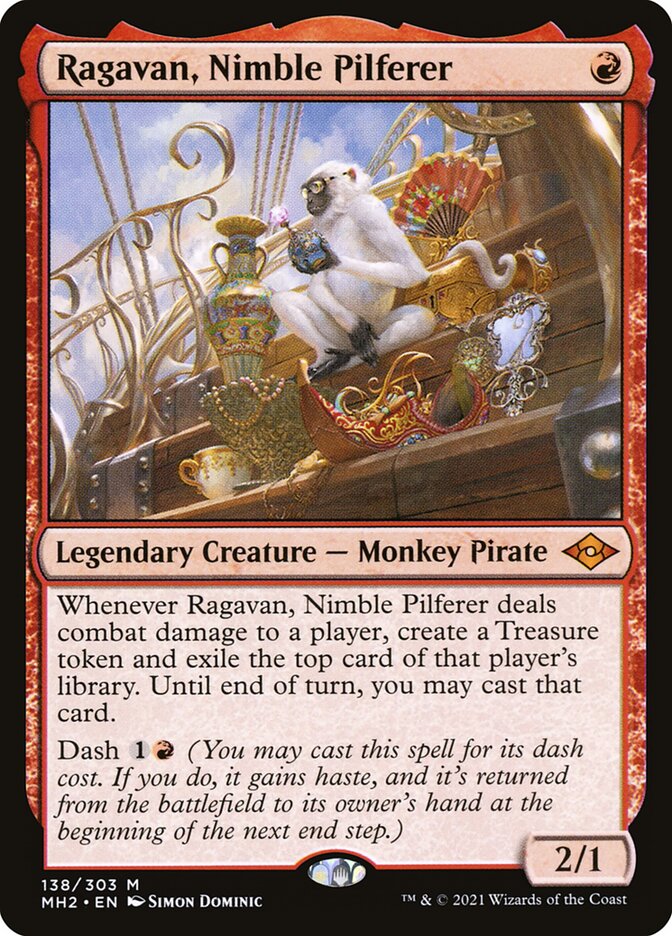
Sometimes your opening hand is a fetch land + triome / fetch land + Ragavan + Draco. In this case, you can cast Ragavan with Steam Vents, attack the opponent on turn two to try to make a Treasure, and then use the triome to reach Domain, so you can cast Draco with the Treasure’s mana.
Don’t forget the monkey has Dash, which sometimes becomes the key to the kill.
Phlage, Titan of Fire’s Fury

If you use Arena of Glory to escape Phlage, you can deal up to 12 damage in one turn.
The order of abilities on the stack matters. Always order it as dealing 3 to the opponent first and then sacrificing, to avoid Phlage going to the graveyard first and giving the opponent priority to respond with removal.
Leyline Binding
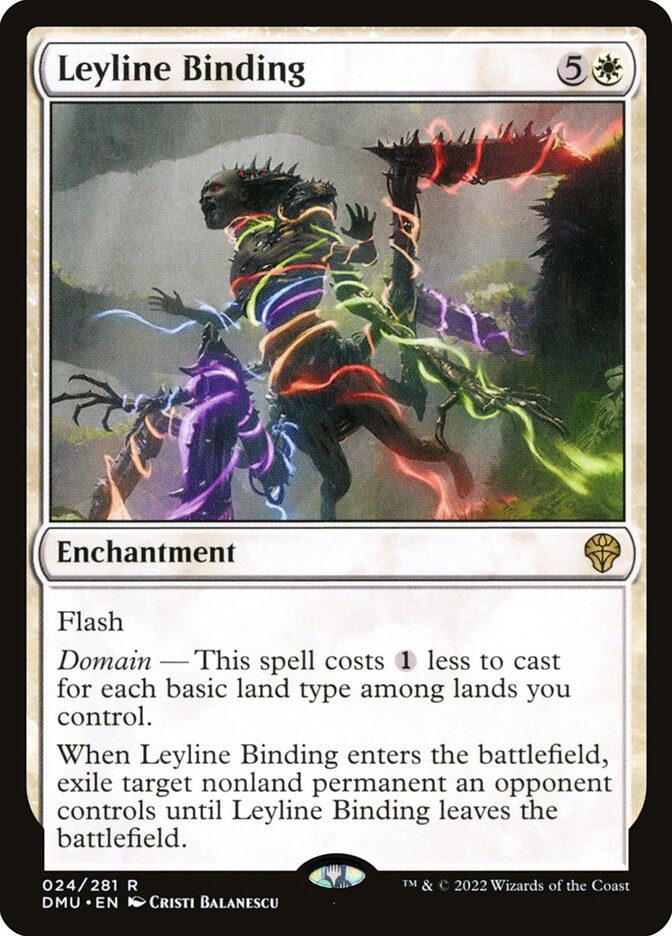
You do not have to insist on casting it with one white mana. Even with only 4 land types you can cast it for two mana, and so on. Even with only Plains you can still cast it for five. This is most often used against Blood Moon and Harbinger of the Seas.
Arena of Glory

The most common use of the two red mana produced after Arena of Glory is exerted is on Phlage after escaping. However, the two red mana do not both have to go to the same creature. You can also split them between two creatures and give both of them haste. The possible combinations are Kavu + Ragavan, Draco + Ragavan, or Kavu + Draco.
Mulligan? Or Keep?
This is the second ultimate puzzle. The best opening is of course the Leyline + Draco combination, and since the deck usually needs only two or three lands to function well, having too many lands is not ideal, so you can always keep this in mind when deciding whether to mulligan.
Of course, you will mulligan differently when you know what the opponent is playing, but that relies heavily on experience, which I will cover in the matchup section.
Hand Type One: Hands That Have Enough Fighting Power Even Without Leyline + Draco
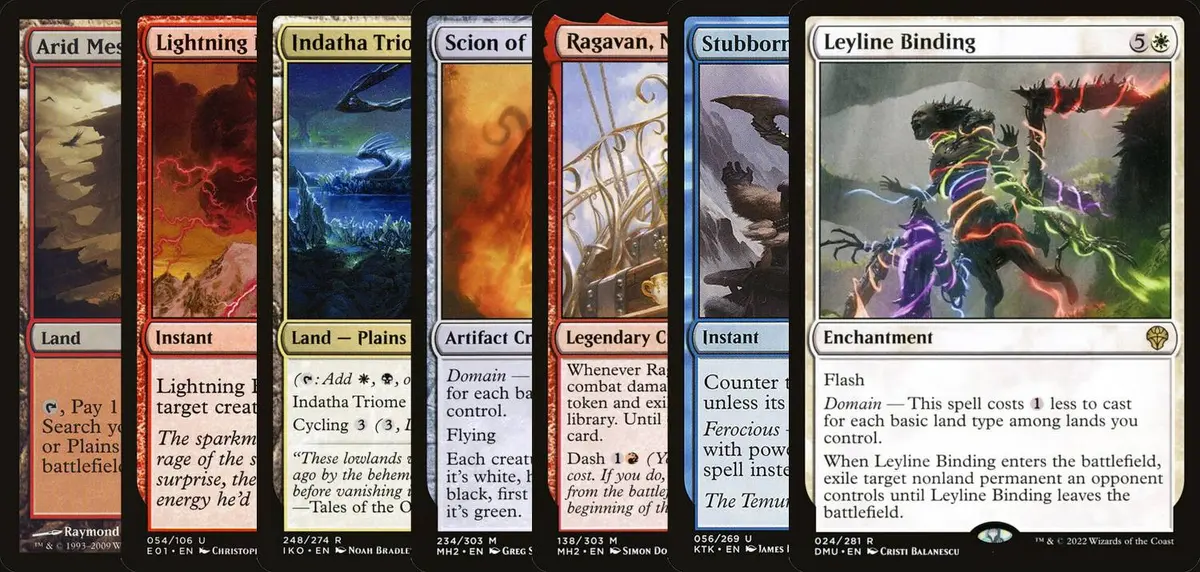
This is what the game plan I mentioned earlier looks like: use Ragavan to make a Treasure, then use the triome to reach Domain and cast Draco. Even if Ragavan gets removed, you can still reach Domain on turn two, and you have Lightning Bolt, Leyline Binding, and Stubborn Denial as interaction.
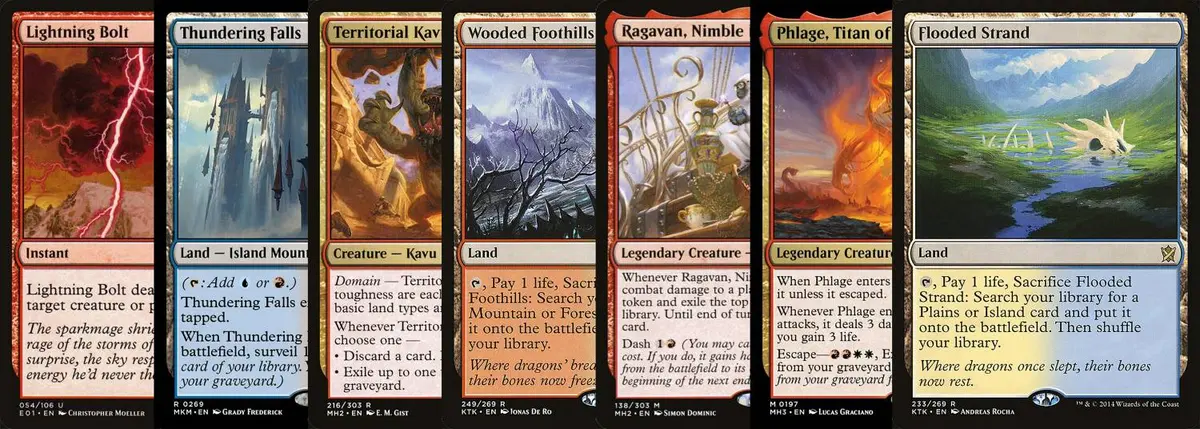
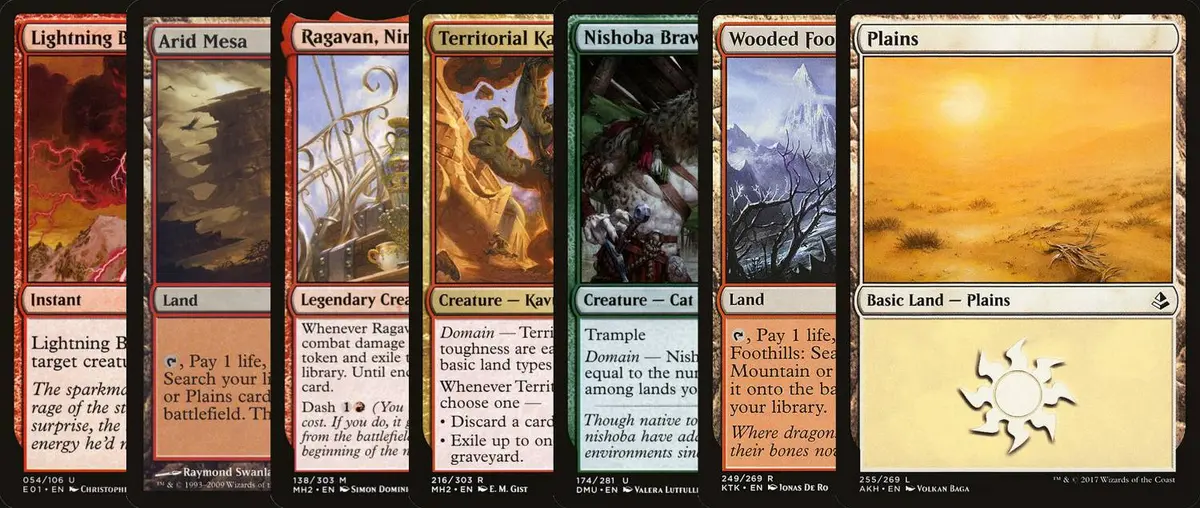
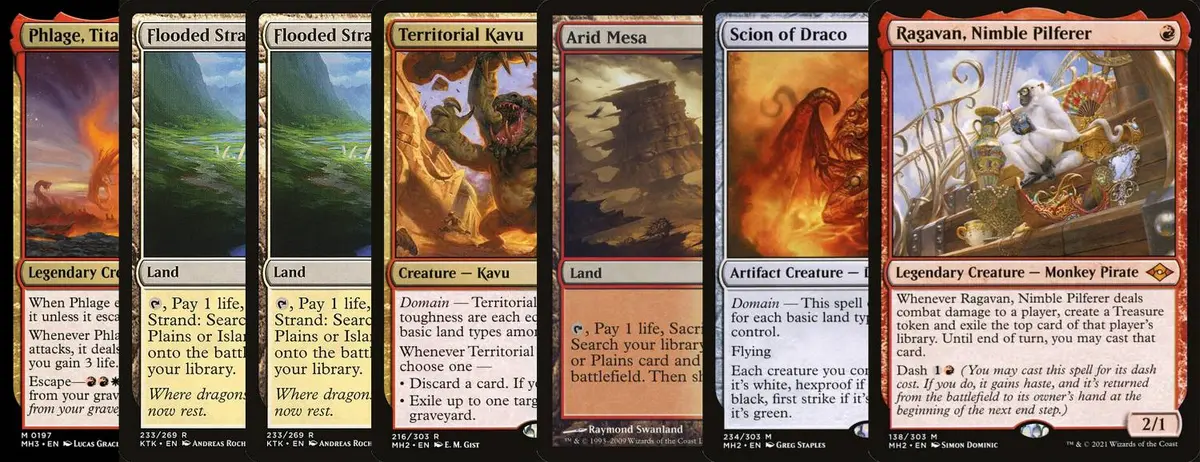
These three hands can all go Ragavan on turn one, Kavu on turn two, and reach Domain on turn three. As mentioned before, you do not fetch the triome to reach Domain but use it for cycling, or use Ragavan to make a Treasure and then fetch the triome to reach Domain. Although they lack ways to deal with noncreature cards, they are already quite good.
Hand Type Two: God-Tier Hands, or Hands Involving Leyline
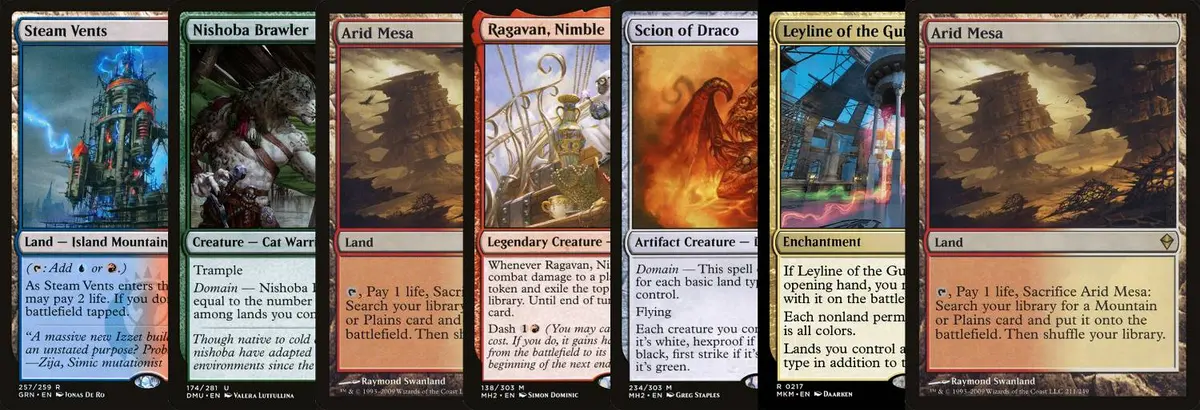
A perfect hand. Turns one through three have no dead spots, and with Ragavan to open plus the Leyline + Draco combination, you keep Domain even if the opponent has enchantment removal in their main deck. There is no reason not to keep it in either the main deck or sideboard games.
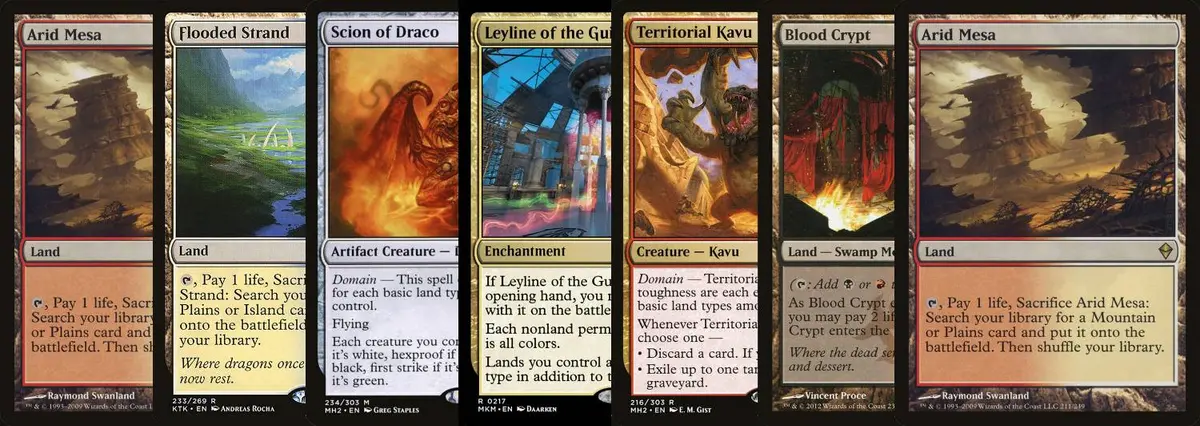
Also a very ideal god-tier opening hand. Although it lacks a one-drop creature or interaction, Leyline + Draco plus the ability to set up Domain is quite ideal. Just be careful that the opponent may discard Draco, but even then you still have Kavu.
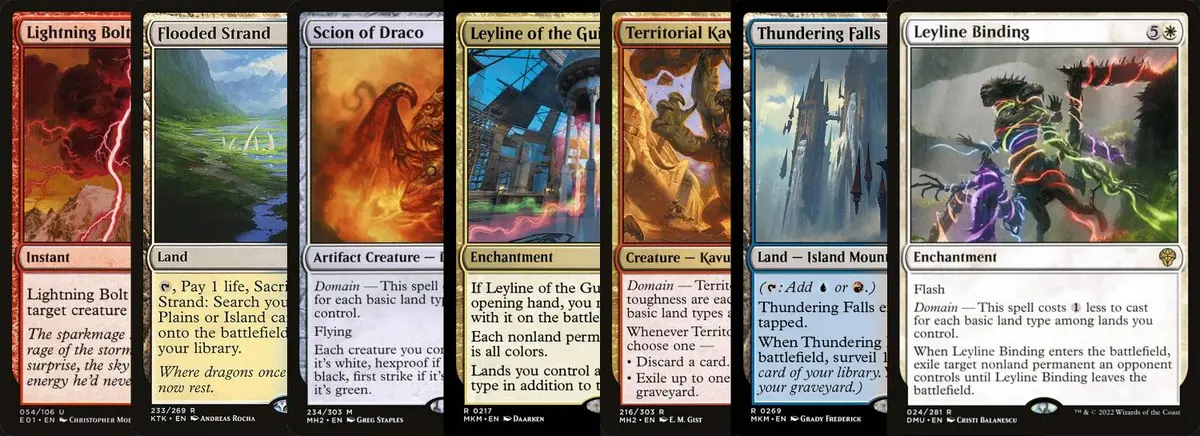
An even better hand than the one above. It has both creature and noncreature removal, and it can also reach Domain. It just also has nothing to do on turn one.
Hand Type Three: Borderline…
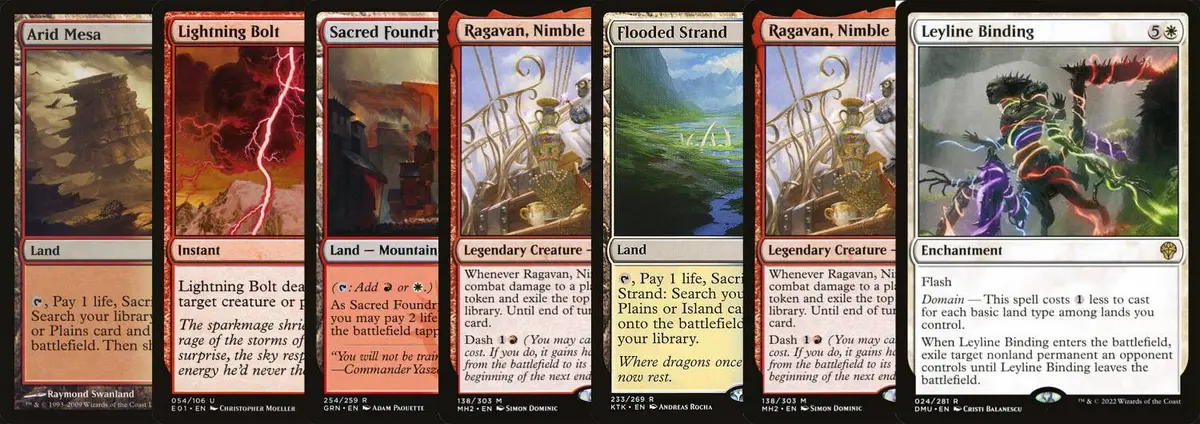
A hand that can assemble Domain but whose creatures are not very strong. On the play it is still acceptable: there are two Ragavans, so if one is removed there is still another. It also interacts with the opponent.
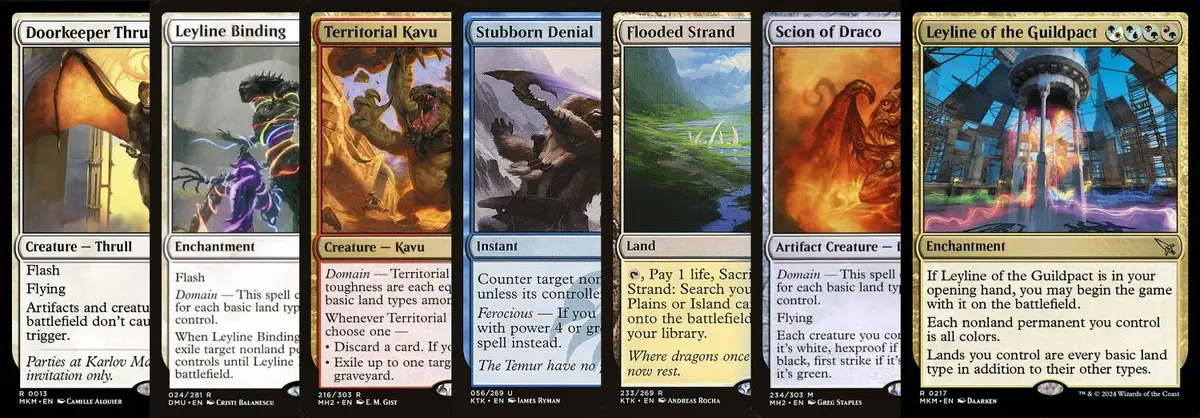
Great, just one land short…
Since there is a chance to find the second land through the surveil land, opportunity and risk coexist. This is a hand worth gambling on.
Everyone knows this is not really a math game (?), but still: the chance that the next draw from this hand is a land is about 39%, but if you surveil it is 40%.
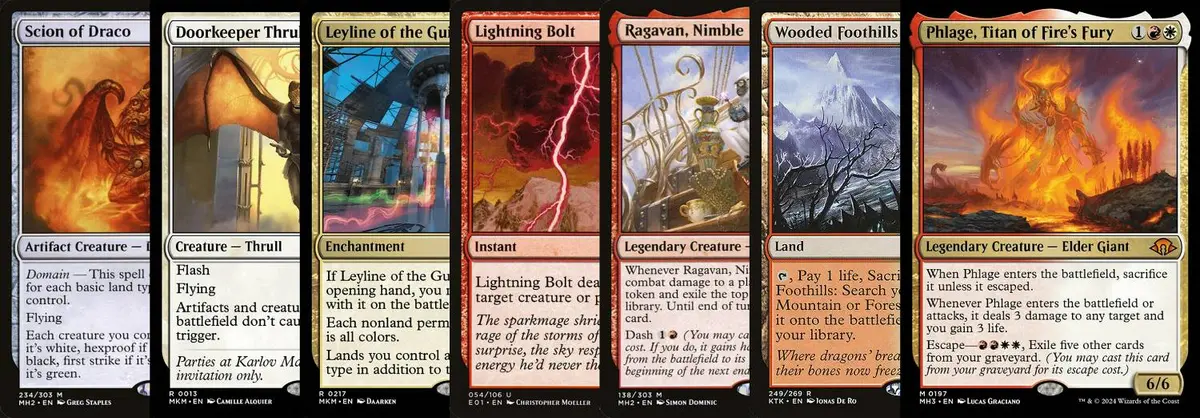
Great, just one land short… That sounds familiar.
Similar to the one above, but this time it has Ragavan, so there is a chance of using Ragavan to make a Treasure and cast Draco. The odds are better than the one above, and it is even more worth the gamble.
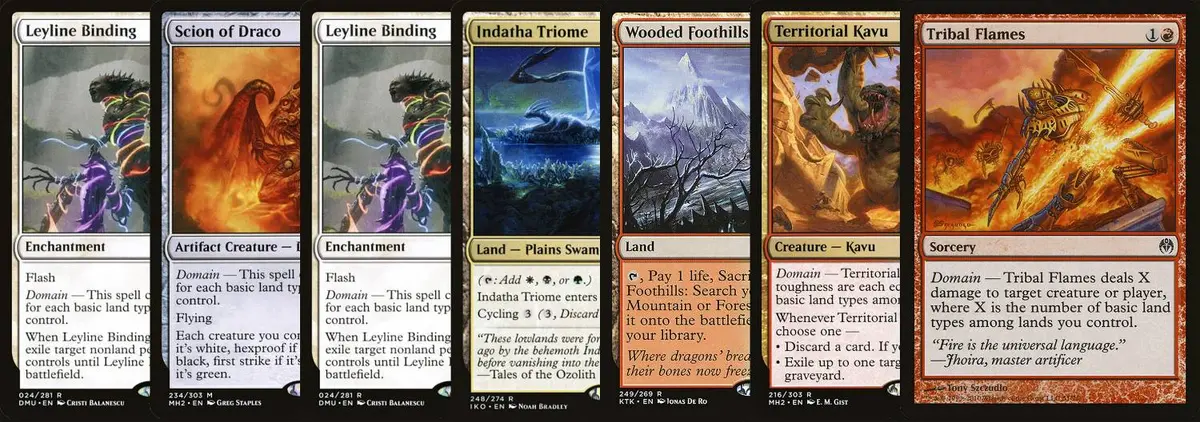
A hand that can definitely reach Domain on turn two and cast Draco or Kavu, with both creature and noncreature removal. It is an ideal but somewhat slow opening. As for which to cast, as I said earlier, you decide based on the opponent’s deck.
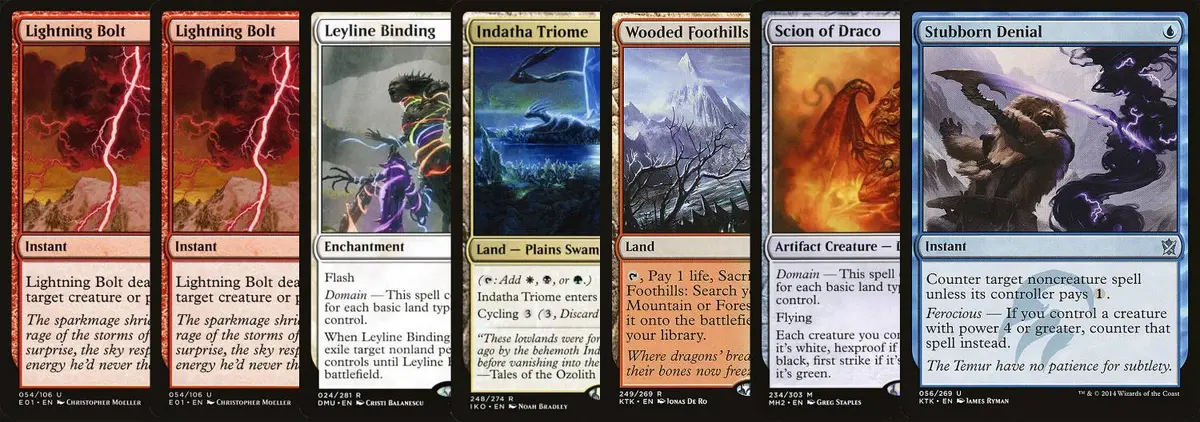
A hand that can definitely reach Domain on turn two and cast Draco. If you keep it, the plan is to protect Draco at all costs. Even if Draco is removed, you can use removal and counterspells to drag the game into the mid game, and then you are back in a topdeck war.
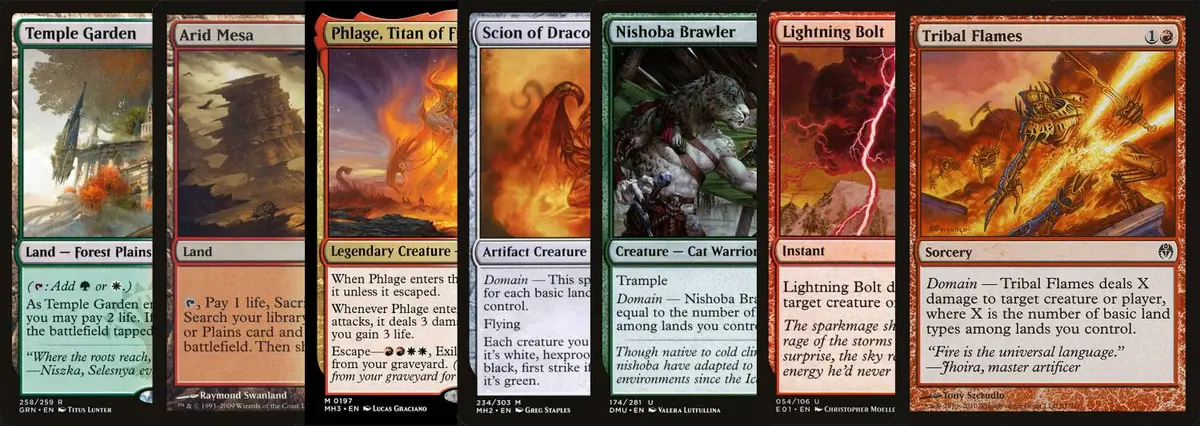
The most borderline hand. You can play Nishoba Brawler on turn two, and the fetch land and surveil land give you a bit of filtering, so you might reach Domain, and if you do not, you are at least not left completely without fighting power.
Hand Type Four: Not a Chance
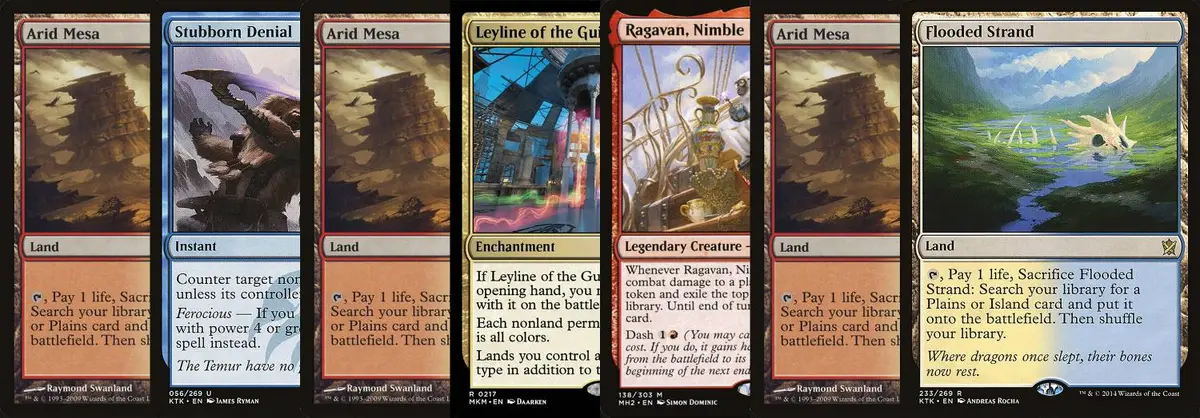
Although it has Leyline, it has only Ragavan with no follow-up, and starting with four lands is just too bad. You easily end up with mana and nothing to spend it on.
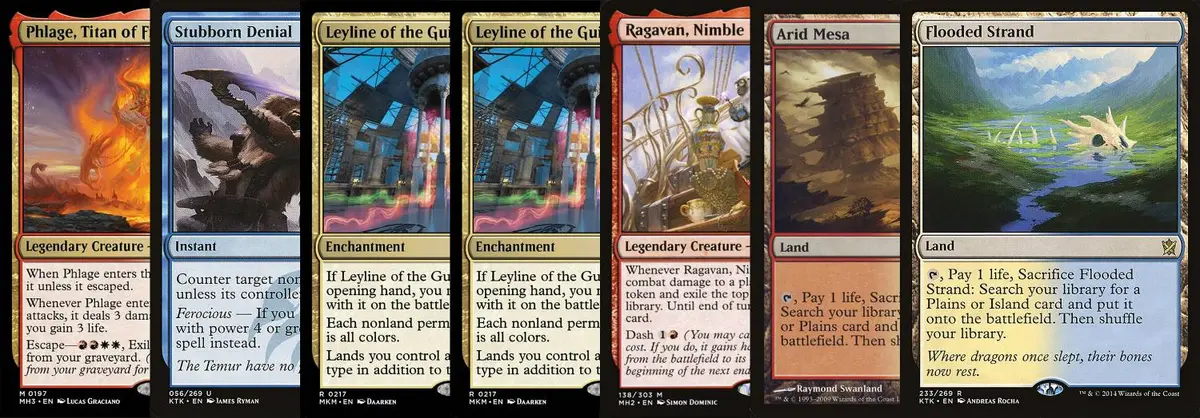
Same as above. One more Leyline and a Titan do not mean you have enough resources. It is a bit better than the one above, but unless you see this hand after a mulligan, you will not keep it.
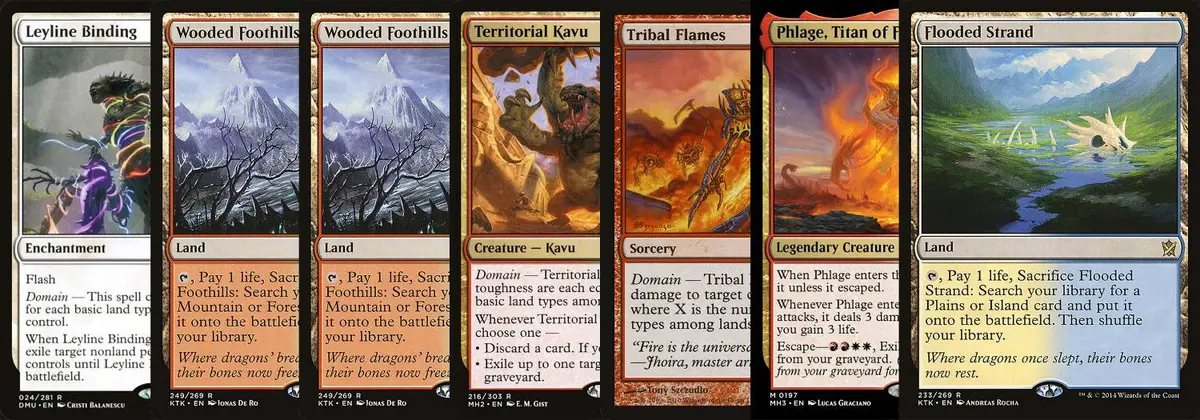
It looks like it can reach Domain, but if Kavu gets removed it is just a bad hand. If it is your opening hand, mulligan decisively. If you see it after one mulligan, you can think about whether to keep it.
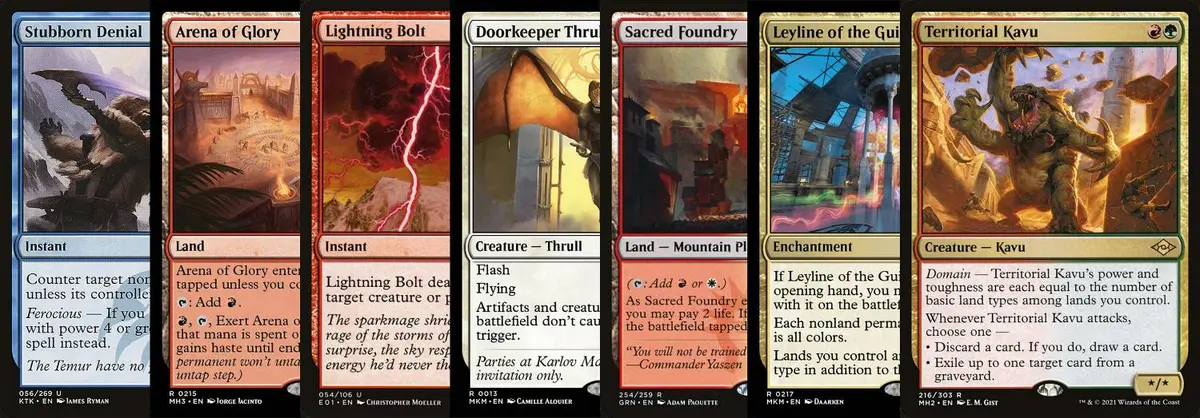
It looks like a borderline hand, but it is not borderline at all. These two lands mean that as soon as the Leyline is gone, Kavu is just a 2/2 dummy, and Stubborn Denial also becomes a dead card. This is a hand you accept only after a mulligan.
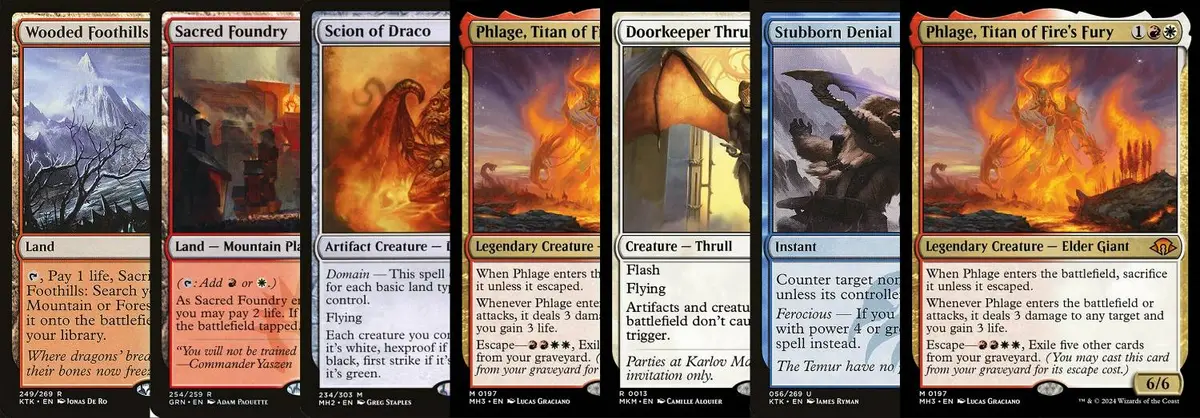
A Thrull build. It looks like it has the promise of Thrull on turn two and Phlage on turn three, but look at the lands: you open on red and white, and reaching Domain means the other land you need to find is black/blue/green. Of course, you can also skip Domain and hope for Phlage, but then Draco is useless.
Hand Type Five: Hands Full of Traps
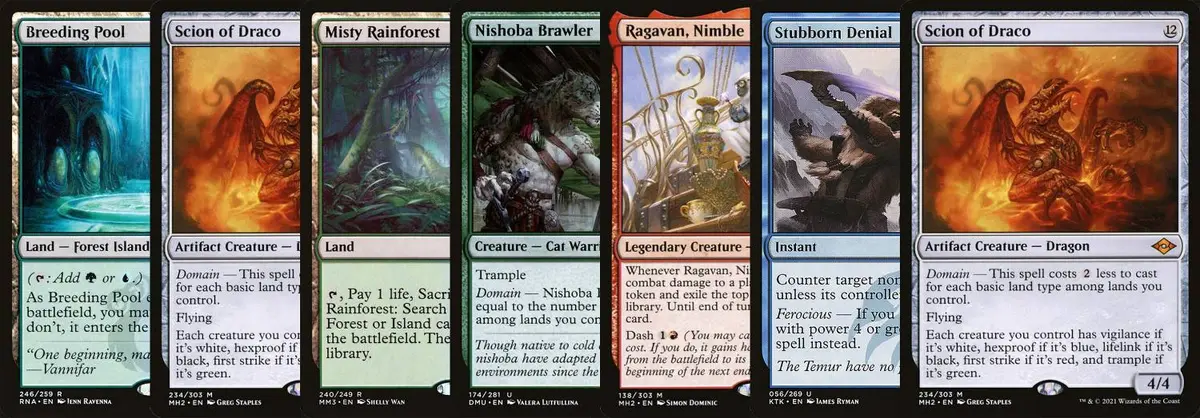
Looks pretty good, right? Think about it carefully, though, and you will find that the combination of Misty Rainforest and Breeding Pool cannot help you reach Domain.
Even if you find Steam Vents and play Ragavan, on turn two you have only three colors, Stubborn Denial is still not powered up, and neither Draco can come down.
This is a typical mistake from a problematic land configuration, which is why you should never include fetch lands carelessly.
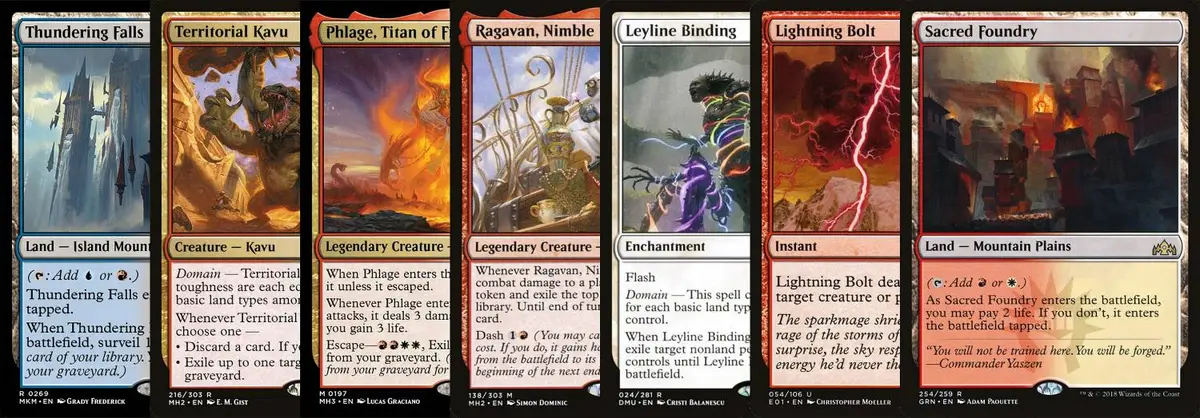
Same reasoning. It looks like Ragavan will bring you a future, but in reality Ragavan usually gets removed and the future disappears along with it. You might think relying on the surveil land to look for the future is a way out, but think more about the possibility of having no future…
That said, if you see this hand after a mulligan to five, you might consider keeping it.
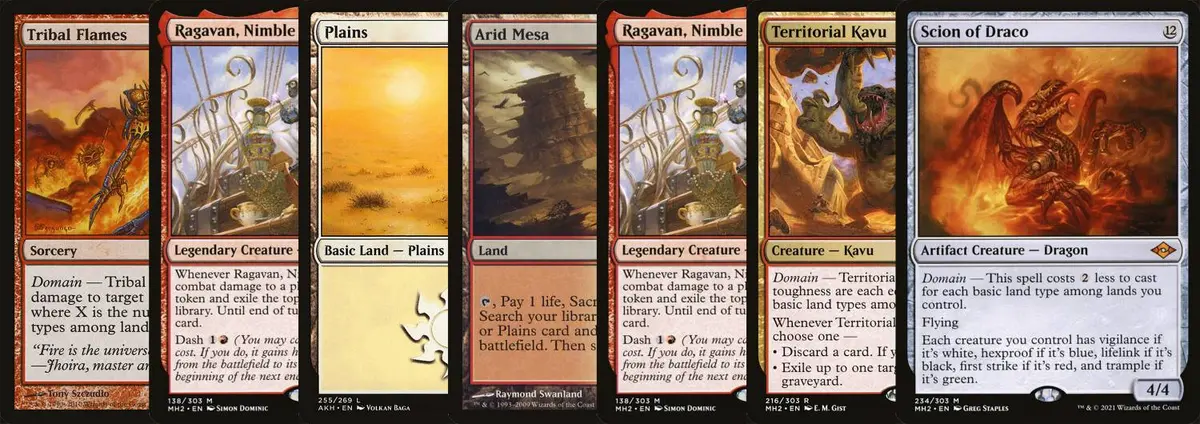
Another case of the wrong colors. Even if the triome you run is Xander’s Lounge, you only have 4 colors, Ragavan cannot come down on turn one either, and you still cannot cast Kavu on turn two.
If you use a shock land to cast Ragavan, you can assemble at most three land types. Even if you successfully get Kavu out with a Treasure, it feels like Kavu is waving hello to Lightning Bolt.
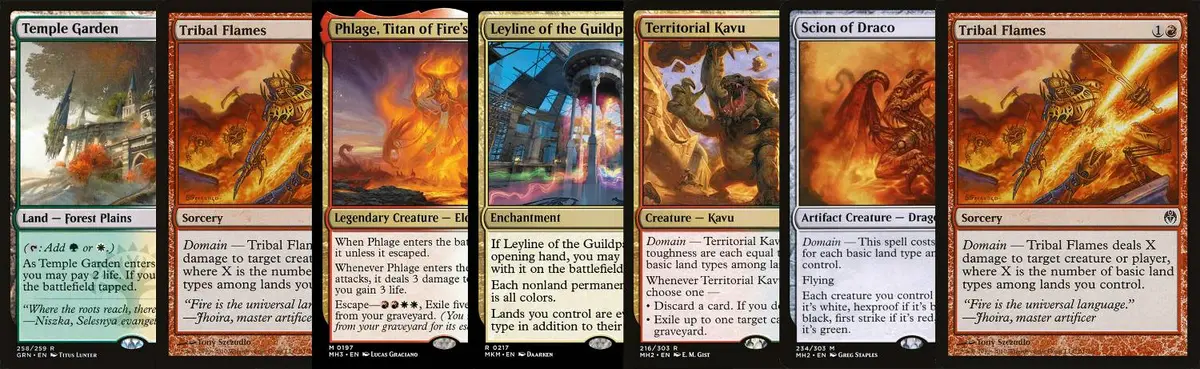
Worth a gamble?
Nope. Besides dying immediately if the Leyline is removed, you will notice that this land’s colors have nothing to do with the cards in your hand. If it were a surveil land you could think about it.
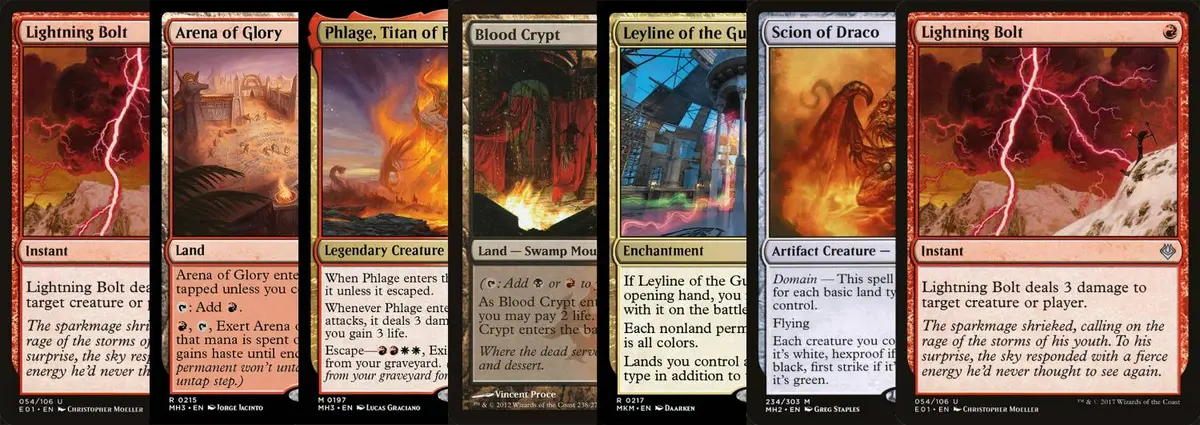
Some people may think this hand is quite strong, right? Dragon on turn two, and it can even attack first with haste. Yes, intuitively you want to keep it, but again, as soon as the Leyline is removed, the only cards you have left are two Lightning Bolts, and most importantly you are still missing blue, white, and green on the road to Domain, so it is really not a good opening hand. So you keep it only when you know for sure what the opponent is playing, or when you see this hand after a mulligan.
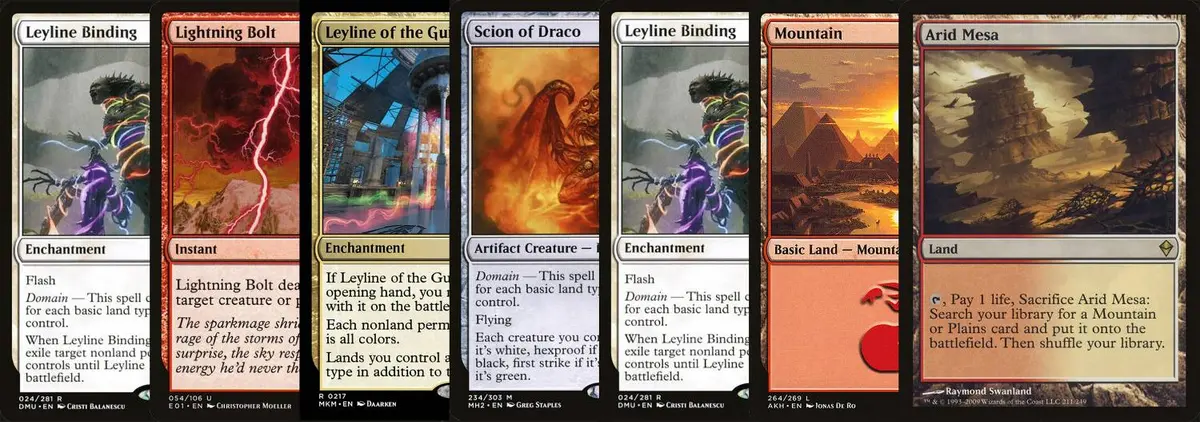
The colors look off here too, and it looks like you die as soon as the Leyline is gone, but in fact you are only one step away from Domain.
In main-deck games, the enchantment removal you are most likely to meet on turns one and two is Leyline Binding and Static Prison. Suppose the Leyline really does get removed that way: you only need to use Arid Mesa to find Indatha Triome, and then you can cast your own Leyline Binding for two mana to get Leyline of the Guildpact back.
That’s right, this is a hand that looks like it needs a mulligan but can actually be kept.
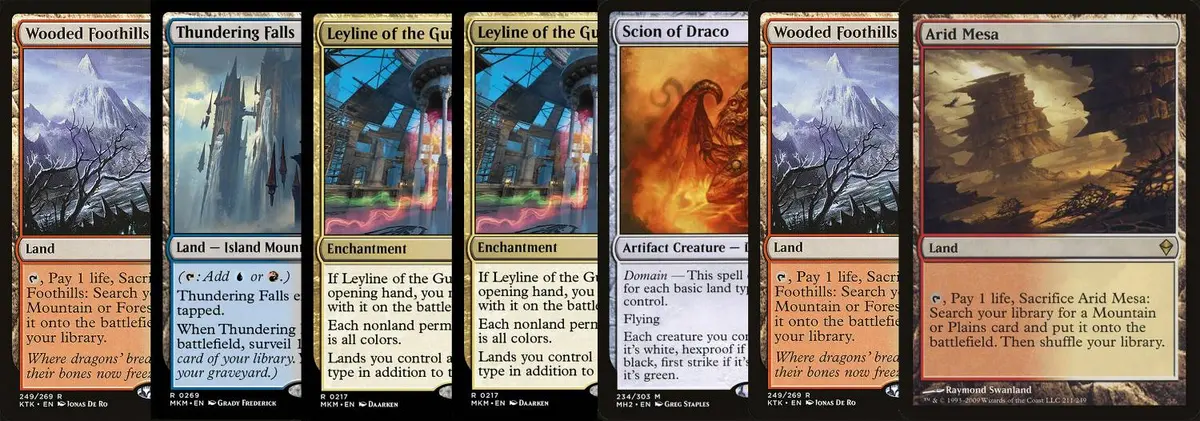
A hand that looks borderline but is a must-keep. Two Leyline of the Guildpacts make the opponent lose the desire to remove them, and with Draco it is even stronger. Although there is no follow-up at all, Leyline + Draco is strong enough.
This is also a hand that looks like it needs a mulligan but can actually be kept. Depending on the opponent, though, this hand sometimes does not work.
Sideboard Suggestions
As of the Dragonstorm metagame, the commonly used sideboard cards are roughly the following:
Consign to Memory
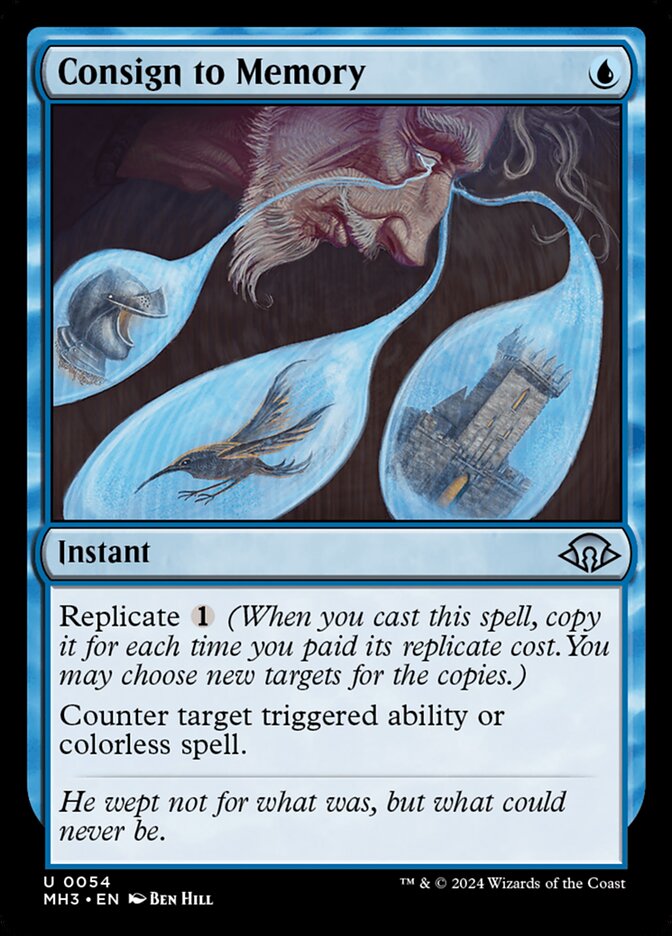
Matchups: Eldrazi, Storm, Amulet Titan, Orzhov Blink, Belcher, Affinity
Eldrazi is very common in the metagame, so most lists run a full four copies, since there are many targets to counter. Outside the Eldrazi matchup, it is also used to counter triggered abilities.
Obsidian Charmaw

Matchups: Eldrazi
Used to wreck Eldrazi’s mana base; it can usually come down by turn three.
Damping Sphere
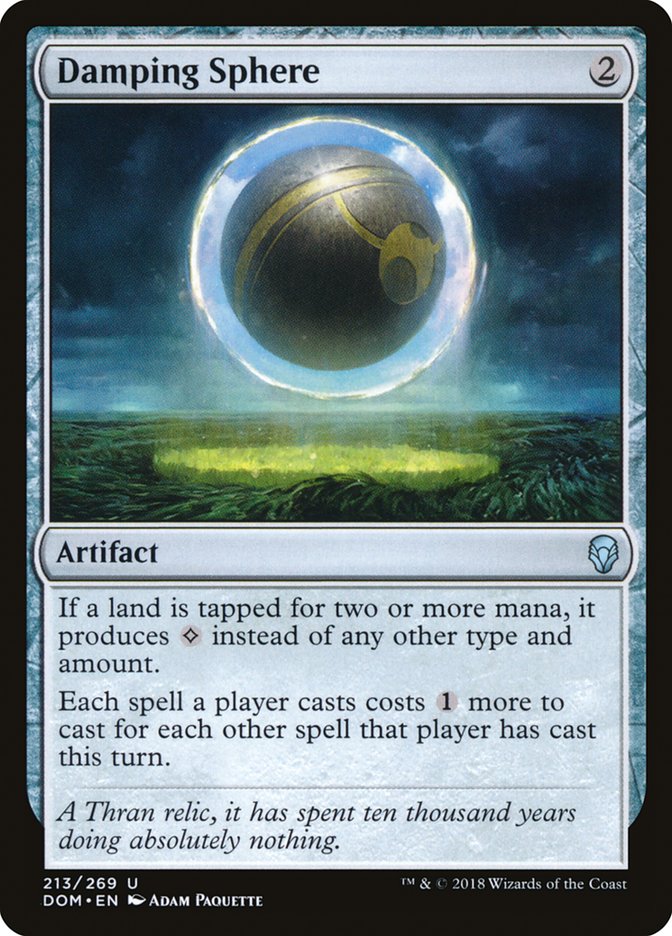
Matchups: Eldrazi, Amulet Titan, Storm, Jeskai Ascendancy
It affects lands and opponents who need to cast spells in succession.
Pyroclasm

Matchups: Energy, Orzhov Blink
A sweeper for small creatures. Sometimes it is even used against Izzet Prowess. Some also play Brotherhood’s End, which is useful against artifacts.
Rest in Peace

Matchups: anything involving the graveyard
Although RIP solves the problem once and for all, I still prefer the flexible Soul-Guide Lantern. Being able to keep using Phlage is always a good thing.
Hidetsugu Consumes All

Matchups: Energy, Jeskai Ascendancy, Affinity
A recent new option. Because it offers a sweeper, graveyard removal, and the ability to become a creature all at once, it has gradually been replacing Pest Control.
Wrath of the Skies

Matchups: Energy, Affinity, Izzet Prowess, Domain Zoo, Jeskai Ascendancy, Orzhov Blink
A sweeper that can be big or small, and it can take out Urza’s Saga.
Wear+Tear
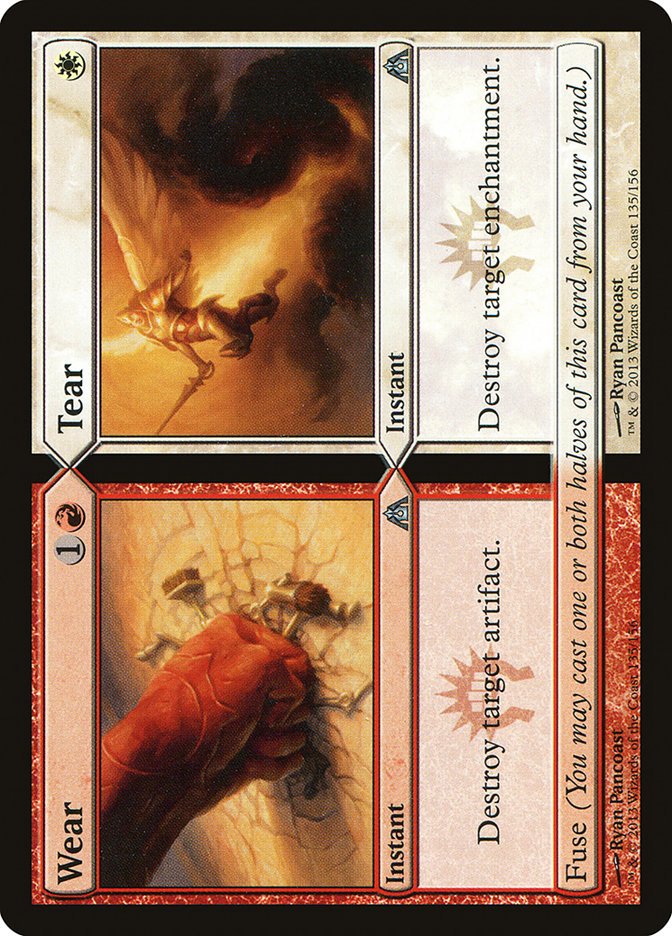
Matchups: Affinity, Izzet Prowess, Domain Zoo, Jeskai Ascendancy, Amulet Titan, Storm, Belcher, Energy
Good in any matchup where you may need to destroy artifacts or enchantments.
Celestial Purge

Matchups: UB Murktide, Izzet Prowess, Domain Zoo, Energy, Orzhov Blink
Exile-based removal against red and black. It is basically useful whenever the opponent touches either of those two colors.
Torpor Orb

Matchups: Orzhov Blink, Amulet Titan
The artifact version of Doorkeeper Thrull, mainly used against opponents that depend on ETB effects.
Deafening Silence

Matchups: Jeskai Ascendancy, Izzet Prowess, Storm
It was originally aimed at Storm, but the rise of Jeskai Ascendancy and Izzet Prowess has given it more reasons to be played. It limits noncreature spells to one per turn, and since Domain usually casts only one spell per turn anyway, it almost never restricts you.
Mystical Dispute

Matchups: UB Murktide, Belcher, Merfolk
Played mainly to target UB Murktide, and it works quite well against Belcher too.
Clarion Conqueror

Matchups: Belcher, Affinity, Jeskai Ascendancy, UWX Control, Eldrazi
A new card from TDM. By itself it shuts down the activated abilities of artifacts, creatures, and planeswalkers, and it even has an effect against Eldrazi, since Eldrazi Spawn tokens can no longer be sacrificed for mana.
Matchup Guide and Sideboarding Guide
Modern is notorious for its sheer number of decks, so it is simply impossible to prepare for each one. Here I list the ten most common Modern decks up to the TDM metagame.
Energy
An even or slightly favorable matchup. After all, our creatures are all a size bigger than theirs, so as long as you handle Guide of Souls, Ragavan, Nimble Pilferer, and Ajani, Nacatl Pariah carefully, you can win.
Since the sideboard brings in sweepers like Pyroclasm, you will almost always take out Ragavan, and Stubborn Denial is not effective here either. Then use Wear // Tear to answer the opponent’s Static Prison. You can also consider bringing in some Consign to Memory to fight the opponent’s Ajani, Nacatl Pariah or Fable of the Mirror-Breaker.
Overall you can play a bit more controlling, since the opponent has a hard time dealing with our big creatures. After that, just watch out for Blood Moon.
Eldrazi
Unfavorable in game one, roughly even after sideboarding. In the main deck it is purely a race: see whether you can get their life as low as possible before they ramp to six mana, and look for a chance to finish with burn.
In the sideboard you undoubtedly bring in Consign to Memory and take out Leyline of the Guildpact. Life total is basically fake in this matchup. If you run Obsidian Charmaw or Damping Sphere, you can swap out Phlage.
After sideboarding, the plan is to slow the opponent down and let the big creatures beat them. So unless your opening hand is an excellent Ragavan + Kavu + burn hand, I recommend mulliganing to find your sideboard cards, especially Consign to Memory.
Tip: Consign to Memory’s Replicate makes a copy rather than casting it, so even if the opponent has a Chalice of the Void set to X=1, if you Replicate, only the original gets countered by Chalice.
Orzhov Blink
As mentioned before, this is an unfavorable matchup. It is somewhat better if you can quickly deal with Phelia, Exuberant Shepherd so the opponent cannot keep bouncing resources back and forth, which makes Lightning Bolt important. Leyline Binding is the only main-deck answer to Ketramose, the New Dawn; once the opponent starts gaining life, you are done for.
Because they have many small creatures, you undoubtedly bring in Pyroclasm. Tribal Flames and Stubborn Denial look weak in this matchup, since the opponent can be beaten with creatures alone. Also bring in Consign to Memory and Torpor Orb to stop the opponent’s ETBs.
Tip: the text “At the beginning of the next end step, return the exiled card to the battlefield under its owner’s control” on Phelia, Exuberant Shepherd and Flickerwisp is a delayed triggered ability, which you can counter with Consign to Memory, so whatever they exiled never comes back.
UB Murktide
A slightly unfavorable matchup, usually a fight over Psychic Frog.
They are one of the few opponents against whom even Leyline + Draco is not a pleasant opening. The Frog can easily become a flying 4/5, and black means discard, so Draco may well go to the graveyard without ever getting a chance to land.
Add the triple squeeze on creatures from Spell Snare, Subtlety, and Fatal Push, and once you get into a topdeck war it will be a nightmare. I recommend using Tribal Flames or Leyline Binding on Psychic Frog. The other problem is Murktide Regent. Use Leyline Binding sparingly, as it will be the key to this matchup.
If you find the creature plan is not working, try to win with burn instead.
In the sideboard you usually bring graveyard hate, and either Celestial Purge or Mystical Dispute is fine. Celestial Purge in particular lets Leyline Binding focus on dealing with Murktide Regent, which is critical in this matchup. However, the opponent also has Consign to Memory, so Draco and Leyline Binding will be somewhat restricted.
Izzet Prowess
Overall favorable. As long as you deal with Cori-Steel Cutter, almost none of their creatures can beat ours. Note that Izzet Prowess has a high kill threshold: especially if the opponent has Slickshot Show-Off, being at around 16 life is already within the danger zone. Mutagenic Growth and Lava Dart often bring unexpected damage.
In the sideboard, bring in whatever sweepers you have; as long as the opponent has no creatures on the battlefield, they cannot deal damage. As with Energy, it is better to play a bit more controlling than to race the opponent.
Jeskai Ascendancy
Again, the Leyline + Draco combination does not help, but burn does. Saving Leyline Binding to deal with Jeskai Ascendancy is a good approach, and removing Emry, Lurker of the Loch is also important, since letting them reuse the graveyard’s resources over and over is no good.
Just delay the combo while killing the opponent with sufficiently large creatures, so without a doubt bring in Wear // Tear, Clarion Conqueror, and graveyard hate, and take out Leyline of the Guildpact and Phlage.
Amulet Titan
Unfavorable in the main deck. Stopping the effect of Amulet of Vigor will be the most important thing. The Leyline + Draco combination does not help you beat the opponent here, and neither Leyline of the Guildpact nor Lightning Bolt will be the key to victory, so take them all out. What you need are Consign to Memory, Wear // Tear, and Damping Sphere. As long as the opponent cannot assemble the combo, you can finish them with creatures in two or three turns.
Belcher
The main deck should be even or slightly unfavorable. The main thing is to stop the opponent from reaching seven mana to activate Belcher. Use Leyline Binding to remove all of the opponent’s Lotus Bloom and Tameshi, Reality Architect to buy time.
Another day of Leyline + Draco not helping. Similar to Jeskai Ascendancy, take out Leyline of the Guildpact and Phlage, then bring in Consign to Memory, Wear // Tear, Mystical Dispute, Clarion Conqueror, and graveyard hate.
Ruby Storm
Yet another day of Leyline + Draco not helping. In the main deck, if you fail to stop the opponent’s cost reduction in time, they will quickly complete the combo on turn two or three. Deal with the cost reducers first rather than building threats. In sideboard games, you gain an edge as the hate cards come in.
Without a doubt, what you need are Consign to Memory, Wear // Tear, Damping Sphere, and Deafening Silence, while Leyline of the Guildpact, Phlage, and Tribal Flames, which are not fast enough, come out. As long as the Storm engine does not get going, killing the opponent with creatures is just a matter of time.
Affinity
This is a tough matchup. As mentioned earlier, Urza’s Saga + Shadowspear, plus Kappa Cannoneer, which comes down fast, can’t be blocked, and keeps growing, are just too strong.
Once again, Leyline + Draco does not help. Besides a full playset of Consign to Memory and Wear // Tear, Hidetsugu Consumes All and Wrath of the Skies are also very good cards, especially Wrath of the Skies, which solves a lot of problems. If you run Mystical Dispute, it will be one of the best answers to Kappa Cannoneer.
Tip: if the opponent has Kappa Cannoneer on the battlefield, you can wait until they cast a colorless spell or trigger an ability, then target Kappa Cannoneer with Leyline Binding. After its ward triggers, cast Consign to Memory with Replicate, countering both the ward ability and the colorless spell/triggered ability at once for a two-for-two.
Conclusion
The best thing about Domain Zoo is the rich variety of ways to build it. With plenty of powerful creatures and counterspells such as Stubborn Denial and Consign to Memory, it plays aggro and control at the same time. Flexible sideboard choices also give the deck a high degree of adaptability across different metagames and matchups.
On the cost side, as the prices of some key cards (such as Ragavan and Phlage) have stabilized, the extra cost of building Domain Zoo may be relatively low for players who already own cornerstones of multicolor decks such as fetch lands, which lowers the barrier to trying the deck.As for the version that plays Orcish Bowmasters, let’s just ignore it for now.And if you’re starting Modern from scratch, I’d still recommend building Eldrazi.
I hope this beginner’s guide gives some useful ideas and help to everyone who wants to try Domain Zoo, a deck full of power and flexibility.
- Title
- Domain Zoo Play Guide (Tarkir: Dragonstorm Modern)
- Author
- CIXS
- Created at
- May 12, 2025
- License
- This work is licensed under CC BY-NC-SA 4.0 .