Doing Hard Time: Modern's Lantern of Insight

Note: This article was translated from Chinese by AI and may contain errors. Read the original Chinese version.
Introduction
Today I’m introducing a deck that you could fairly call the most prison-like in all of MTG history: Lantern of Insight Control.
Although everyone is used to calling it a control deck, the essence of Lantern of Insight is a hard lock, and the kind of lock that wins in the most drawn-out, agonizing way. By comparison, ordinary control decks built on removal or counterspells close out the game at lightning speed once they’ve stabilized the board.
Because games with this deck are so excruciatingly drawn out, friends jokingly say you’d better hit the gym before playing it, so that you don’t end up in a real-life fistfight.
Deck Overview
Decklist Link
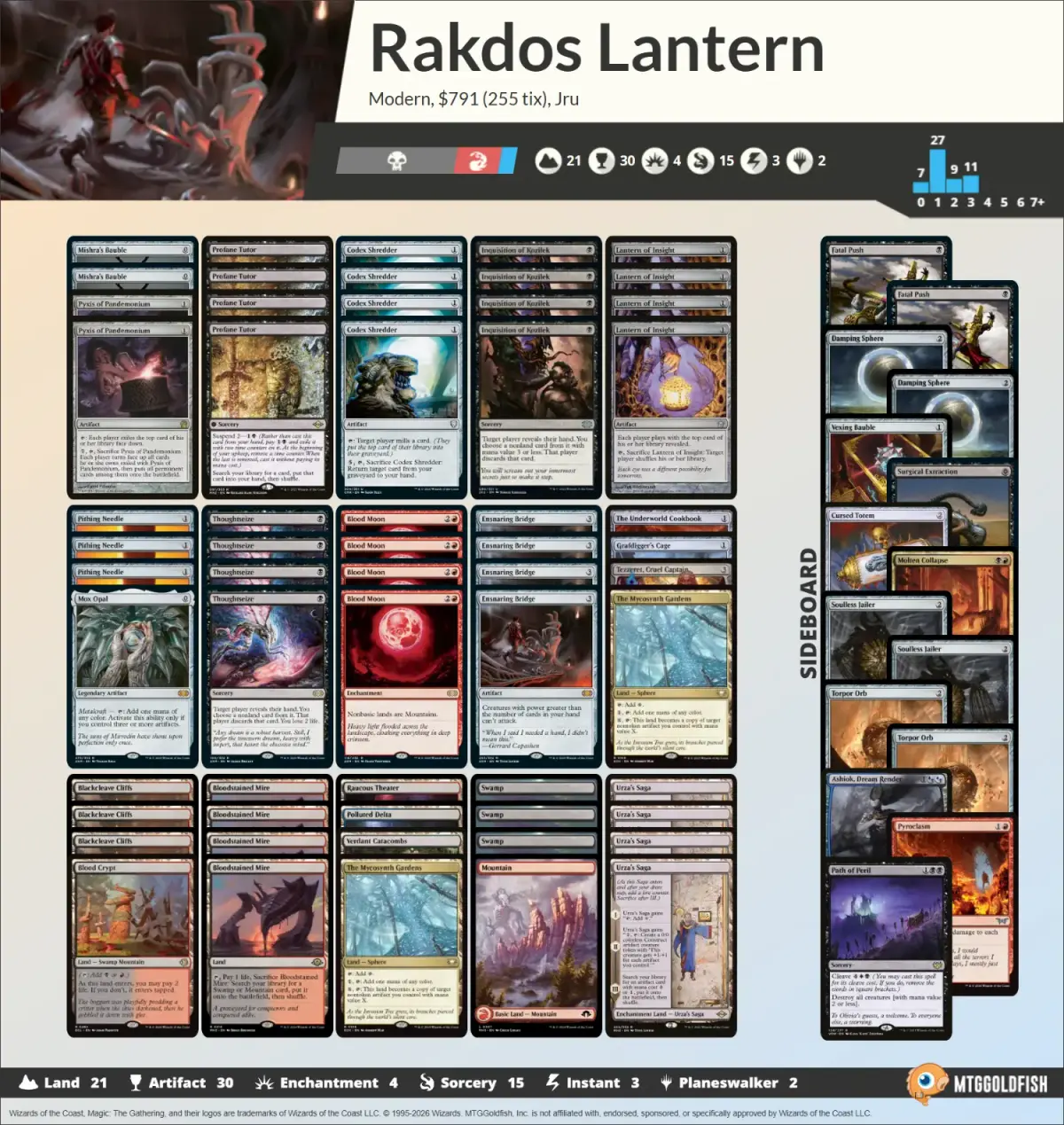
Core Components
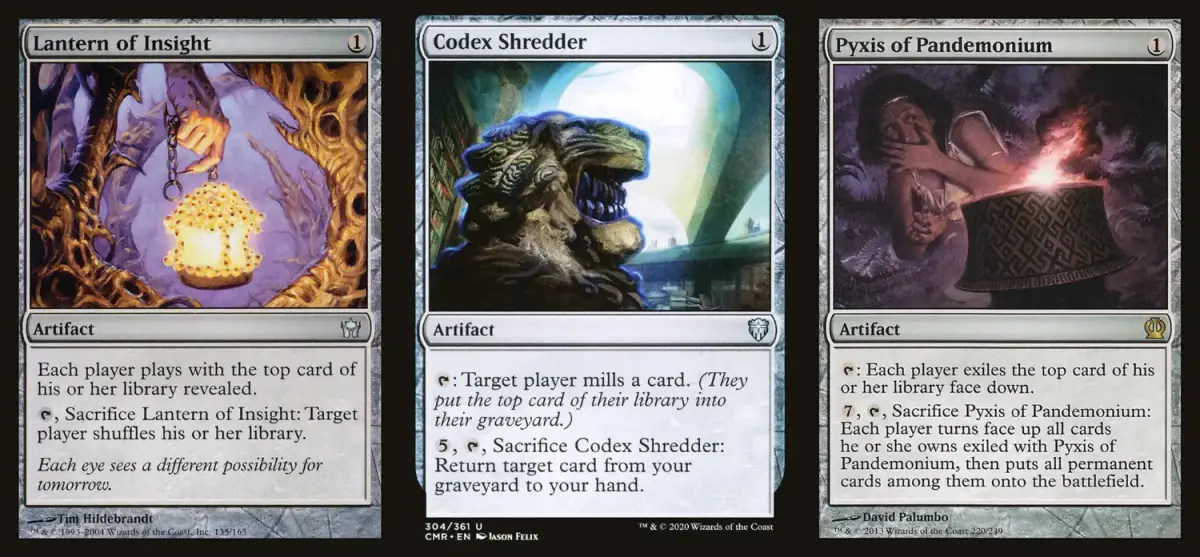
These three cards are the core of how the deck operates. First, let’s look at their main effects:
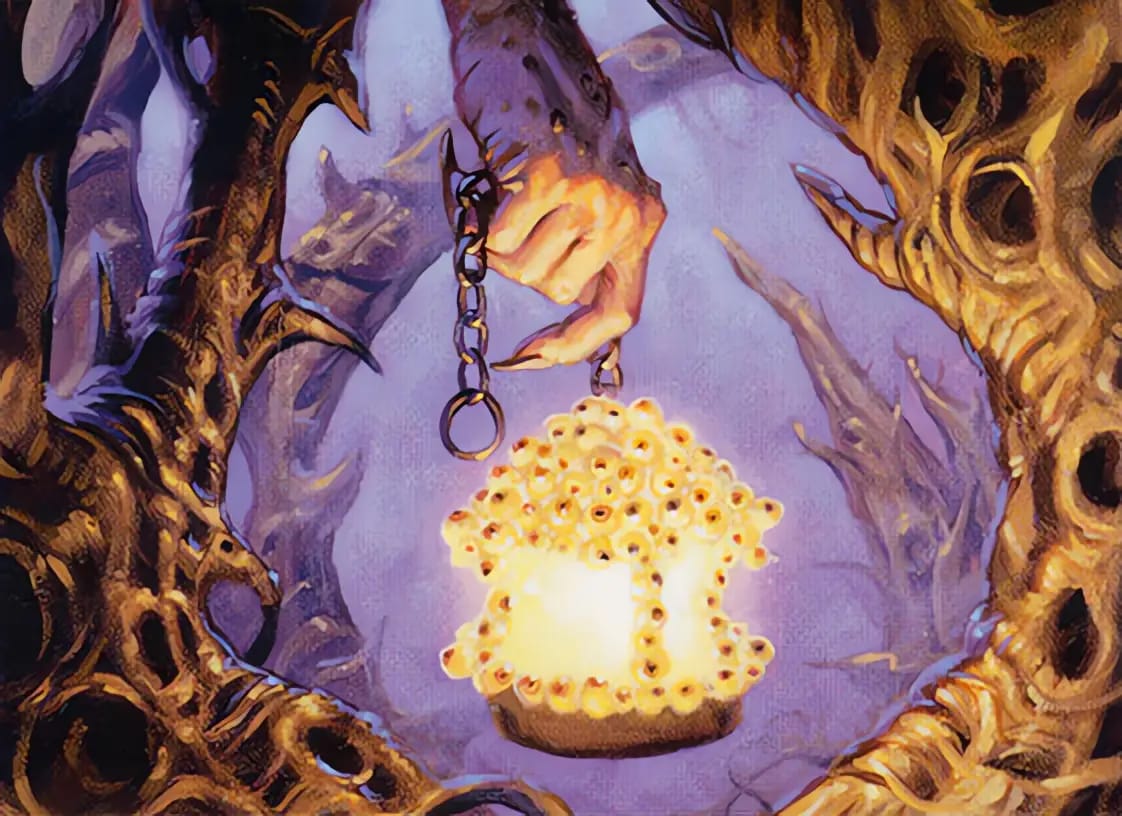
- Lantern of Insight (4): Each player plays with the top card of their library revealed.
- Codex Shredder (4): Target player mills a card.
- Pyxis of Pandemonium (2): Each player exiles the top card of their library face down.
With Lantern of Insight, we can know what’s on top of every player’s library. On its own that doesn’t have much impact, but what if we can also mill in a controlled way, over and over? That’s the core concept of this deck: use Lantern of Insight to confirm what’s on top of the opponent’s library, then pair it with the library attacks of Codex Shredder and Pyxis of Pandemonium to make the opponent draw nothing but blanks forever, achieving the lock.
This lock is also the way we win. It’s not that the opponent concedes because they’re too tortured to keep playing; it’s that you can really play it out to the end and win. As we control the top of the opponent’s library, we keep shrinking its size, so the opponent ultimately loses by the rules for drawing from an empty library. Codex Shredder mills only a single target player, so it guarantees the opponent’s library shrinks faster in the late game. Pyxis of Pandemonium can also deal with cards that are still useful after going to the graveyard, such as Phlage, Titan of Fire’s Fury.
Also, the library we adjust isn’t only the opponent’s. When you see a blank on top of your own library, you can choose to mill yourself to improve the expected value of your draws.
Discard
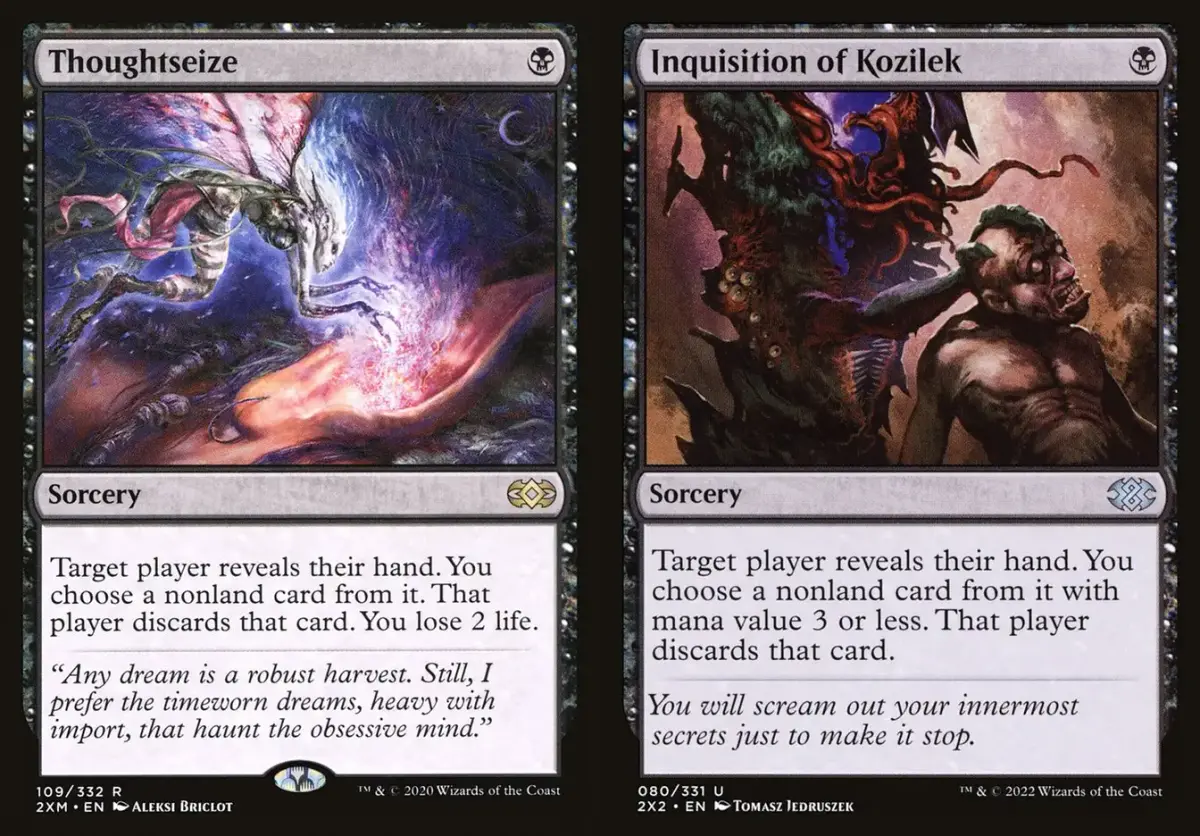
- Thoughtseize (4) & Inquisition of Kozilek (4):
Although we can control the opponent’s future draws, we still need a way to deal with the cards already in their hand, so the mainstream approach is to use discard to strip out key cards that could break our lock ahead of time.
Locks
As mentioned above, our goal is to make the opponent draw only blanks each turn, but apart from excess lands, how could a typical constructed deck possibly run that many blanks on its own? So we need to set up additional locks to turn many otherwise useful cards into blanks.
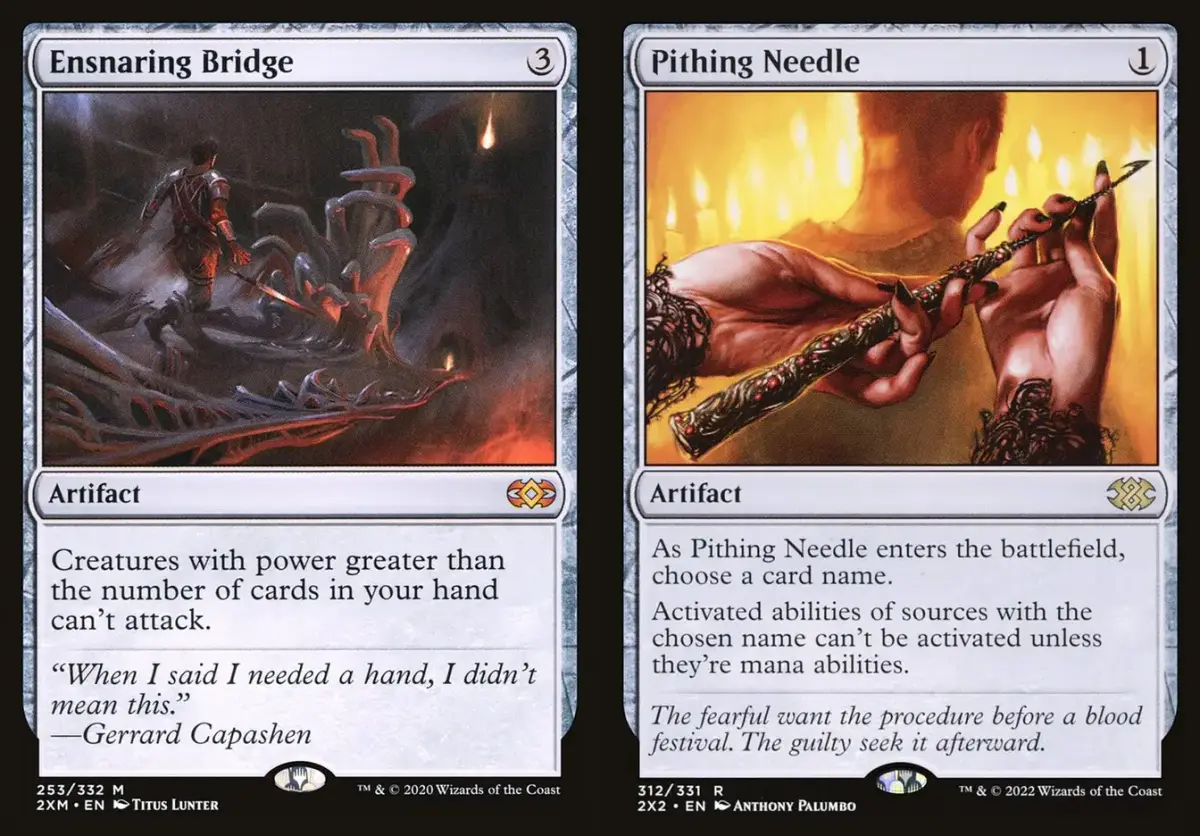
- Ensnaring Bridge (4):
The deck’s most important defense. Once Ensnaring Bridge is successfully set, pure power-and-toughness beaters become blanks. For opponents who win by attacking with creatures and aren’t good at removing artifacts, the game is practically over once Ensnaring Bridge lands.
How well Ensnaring Bridge defends depends on how cleanly you can empty your own hand. Sometimes if you can’t use up your hand in time, consider casting Thoughtseize or Inquisition of Kozilek targeting yourself. Both of these discard spells can target any player, not just the opponent.
- Pithing Needle (3):
After Ensnaring Bridge locks down creature attacks, a large share of the remaining ways to win come from activated abilities, such as various planeswalkers, Goblin Bombardment, and Goblin Charbelcher, so we need Pithing Needle to gamble on plugging this hole in our defense. If the opponent truly has no key activated abilities, you can also name a fetch land to mess with their mana base.
You’ll want at least 2 copies of Pithing Needle; the third is more of a flexible slot.
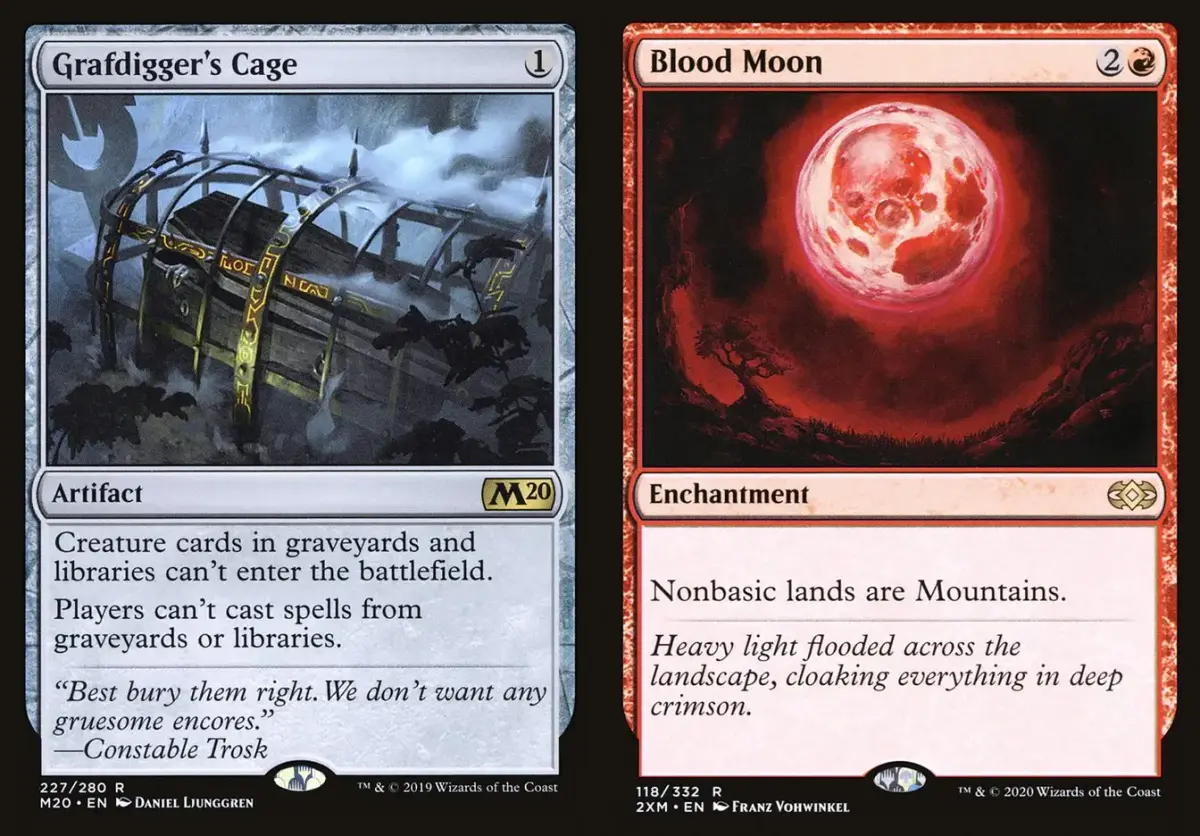
- Grafdigger’s Cage (1):
Our lock plan is to keep the opponent from drawing useful cards, but often those cards get milled into the graveyard by Codex Shredder, so we need a way to handle opponents who play with their graveyard as a second hand.
- Blood Moon (4):
The power of Blood Moon needs no further explanation. Although playing a few basic lands to guard against Blood Moon is common sense in Modern, the pressure Blood Moon applies is still strong. What’s more, sometimes the opponent isn’t familiar with our deck and doesn’t realize they need to play around Blood Moon, or they’re forced to find multicolor lands because of early-game color requirements, so a resolved Blood Moon is still deadly.
In addition, in this deck Blood Moon isn’t just a lock that wrecks the opponent’s mana base; paired with our own Urza’s Saga, it can also become an important Plan B for winning.
Further reading: How Blood Moon Went from Urza’s Saga’s Natural Enemy to Its Teammate
Tutors
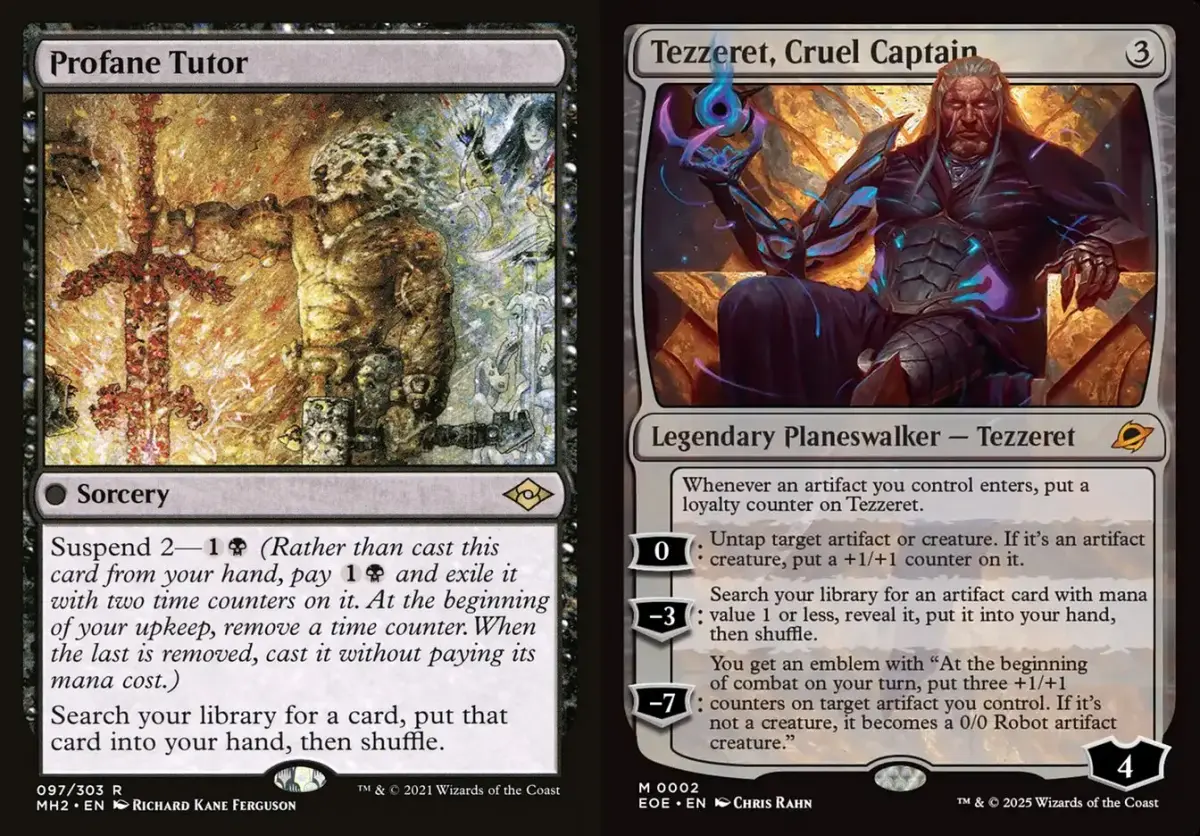
Lantern is a deck that needs many components to work together, and many matchups require finding a specific answer precisely, so it needs a certain number of search effects. Besides Urza’s Saga, the standard in artifact decks, it also uses these cards:
- Profane Tutor (4):
Although you have to wait two turns, it’s already the most efficient and stable universal tutor in Modern. Of course, if we limit it to artifact tutors, blue has more efficient options, but our own Blood Moon means this deck can’t support that kind of mana structure. Note that this card can be stopped by Vexing Bauble and Teferi, Time Raveler.
An unexpected new addition in recent years. Since nearly all our key components are 1-mana artifacts, Tezzeret’s {-3} works very well, and its {0} to reset artifacts also gives Codex Shredder and Pyxis of Pandemonium one more chance to adjust the top of the library.
Others
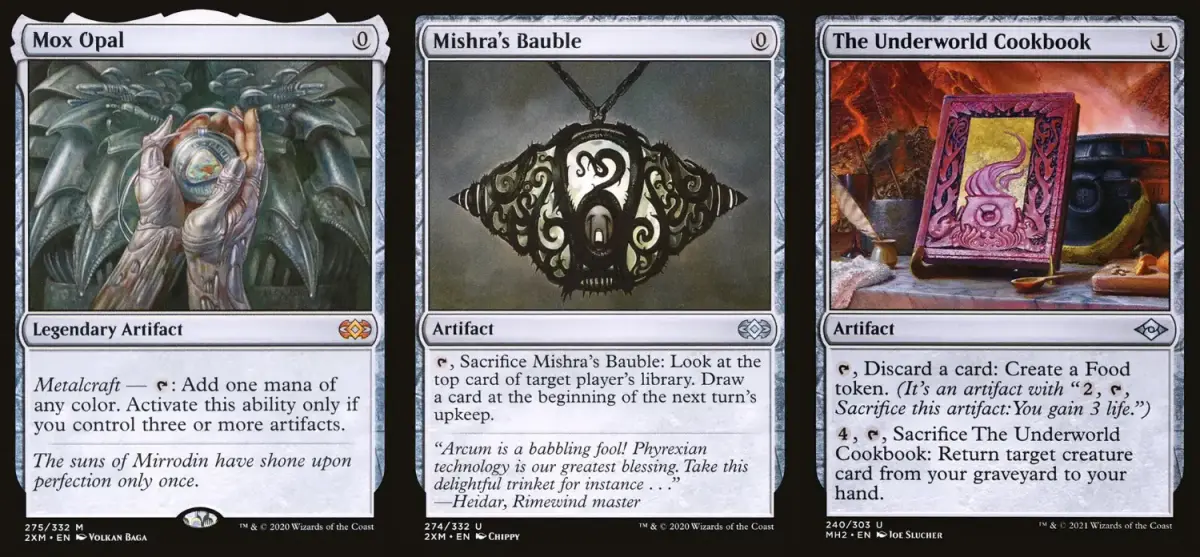
- Mox Opal (1):
There are arguments for running few or many. Running a full set makes it part of the deck’s mana base; running just 1 makes it one of the toolbox pieces, mainly to fill the mana gap of a missing land after Urza’s Saga runs its course when mana is tight.
- Mishra’s Bauble (2):
The most flexible slot, and it can also be swapped for the appropriate answer or lock against an anticipated opponent. Since Lantern’s ability to replenish resources is very weak, I wanted to strengthen card flow a bit, and the effect of looking at the top of the library is, for us, effectively a one-shot mini Lantern of Insight, which adds a little extra value.
On pure card flow, Vexing Bauble and Nihil Spellbomb are also good choices, and if you’re willing to splash a third color you could use Ancient Stirrings. I chose Mishra’s Bauble here purely because it costs 0 and needs no extra colors, keeping usage cost at the minimum.
Once the board lock is set up, you can convert every card you draw each turn into life, to keep opponents from using burn to bypass the board lock and finish you off. Having one more discard outlet also helps keep Ensnaring Bridge defending.
Lands
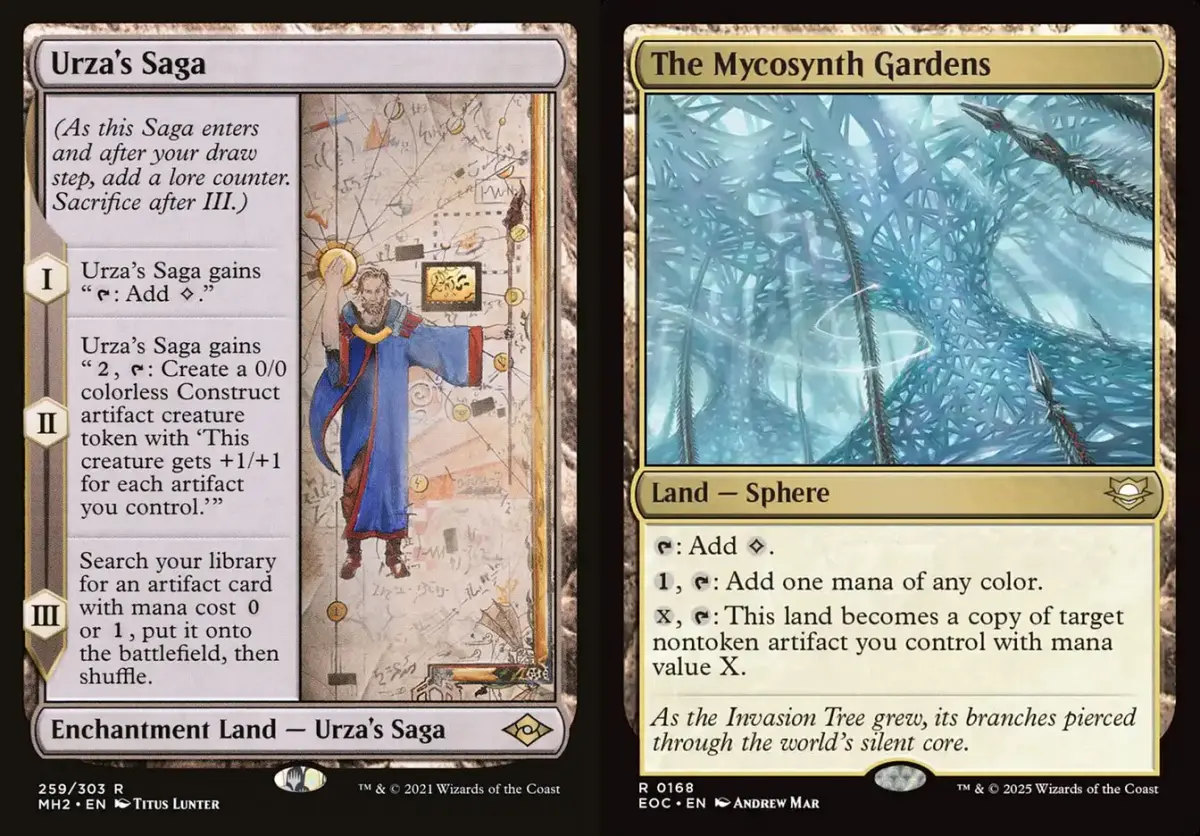
- Urza’s Saga (4):
The biggest addition in recent years. While keeping the main plan of doing hard time, it gives Lantern a Plan B of fighting head-on with creatures. Honestly, many times we win with Lantern of Insight having nothing to do with it, purely because the opponent got solo-carried to death by Urza’s Saga.
The copy ability is very useful. In the early game it just taps for mana normally, and once the lock pieces are mostly down and your hand is empty, it can copy whichever artifact you need.
The other colored lands are split as follows:
- Bloodstained Mire (4)
- Other black fetch lands (2)
- Raucous Theater (1)
- Blood Crypt (1)
- Blackcleave Cliffs (3)
- Swamp (3)
- Mountain (1)
Sideboard
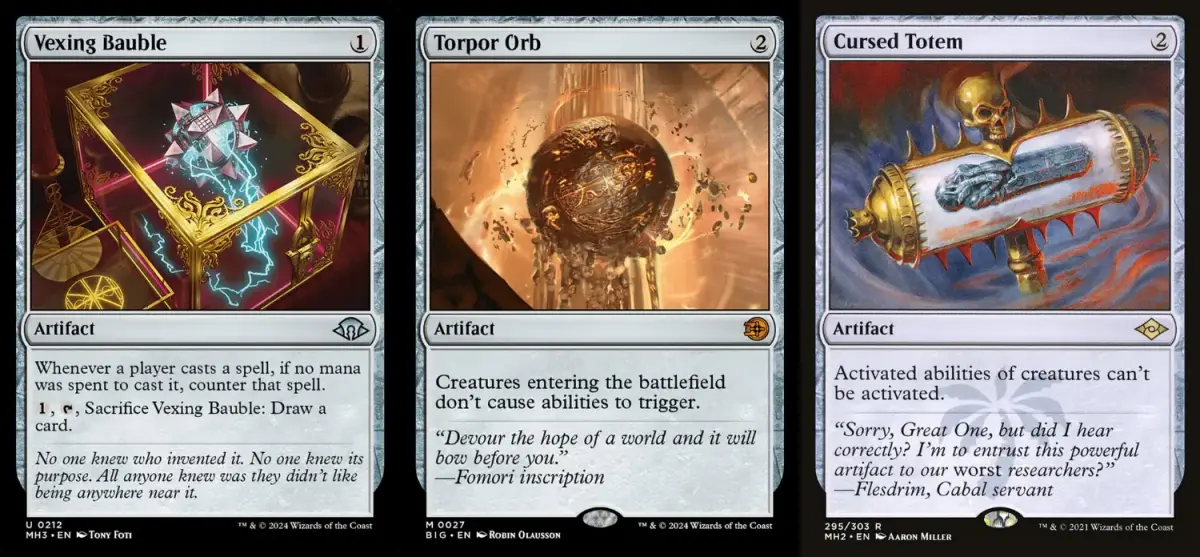
- Vexing Bauble (1):
Used against Affinity and cards like Goblin Charbelcher that make heavy use of alternative-cost spells. It’s worth considering for the main deck.
- Torpor Orb (2):
These days there are a great many decks built on creature ETB abilities, to the point where you could even consider moving this one into the main deck.
- Cursed Totem (1):
Also one of the old-school artifact lock choices, but its applicable situations in the current environment really aren’t plentiful. The matchup where it’s used most is probably Hammer Time, so it’s a take-it-or-leave-it option.
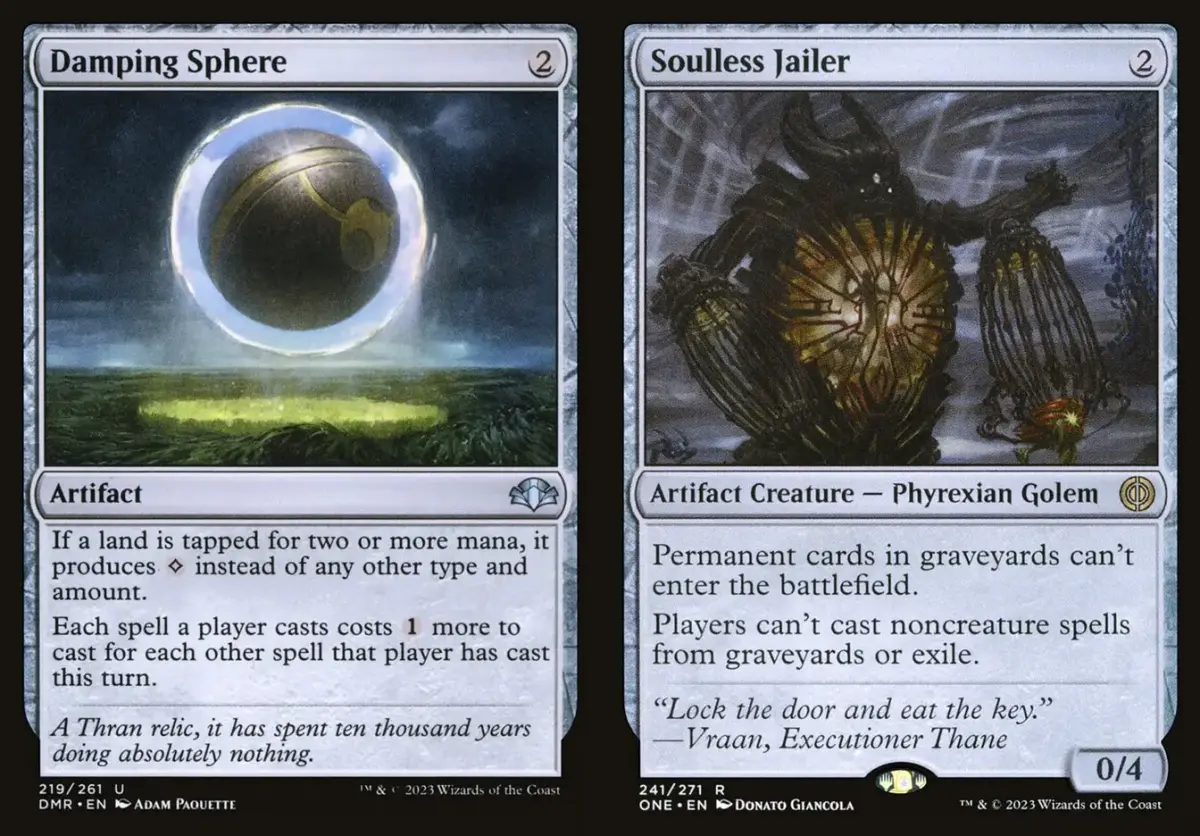
- Damping Sphere (2):
A common Modern sideboard card, good against Tron, Storm, and prowess.
- Soulless Jailer (2):
If you only want to watch the graveyard, there are more 1-mana options that Urza’s Saga can fetch. The reason I chose this one is that it also shuts down the spell-casting engine of Ruby Medallion Storm.
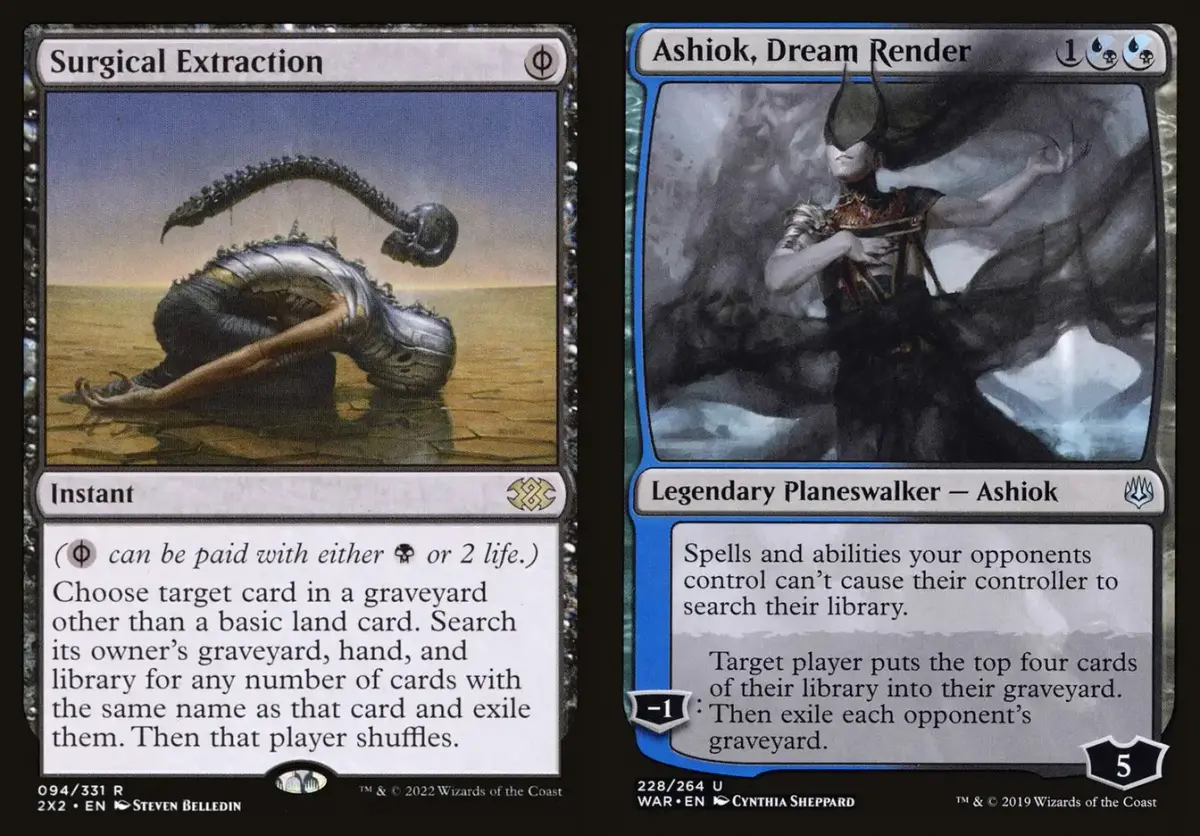
- Surgical Extraction (1):
Since most of the graveyard-hate artifacts above are sorcery-speed, the opponent still has a chance to execute a graveyard plan right after a single removal, so I added a 0-mana, instant-speed graveyard answer.
- Ashiok, Dream Render (1):
Honestly, Ashiok, Dream Render matches up so well in this deck that I hesitated over whether to put it in the main deck. Preventing opponents from searching their libraries fits the lock-deck philosophy, and the {-1} not only deals with the graveyards I’m more worried about, but also mills on its own, so it can double as Codex Shredder. But I really couldn’t squeeze out a 3-mana slot, so in the end it obediently stays in the sideboard.
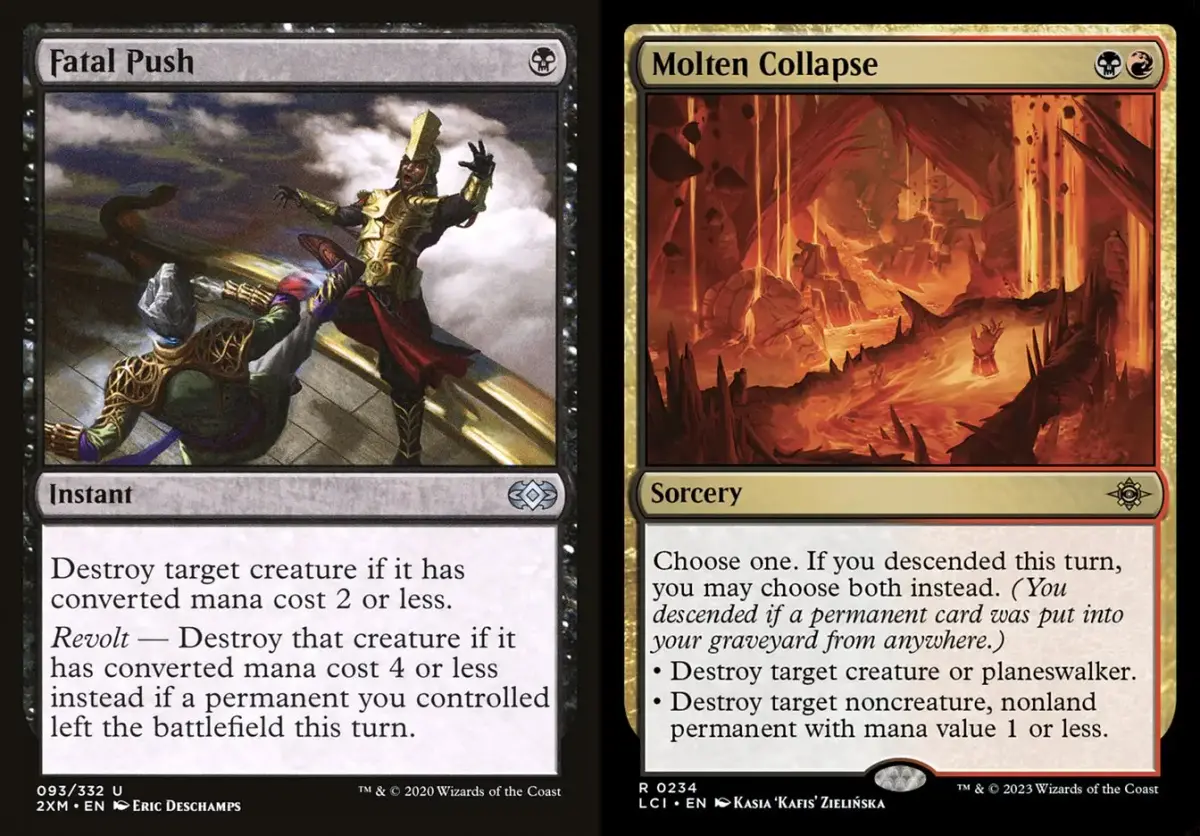
- Fatal Push (2) & Molten Collapse (1):
The sideboard still needs a bit of removal, since some things can kill you just by sitting on the battlefield, without taking part in attacks.
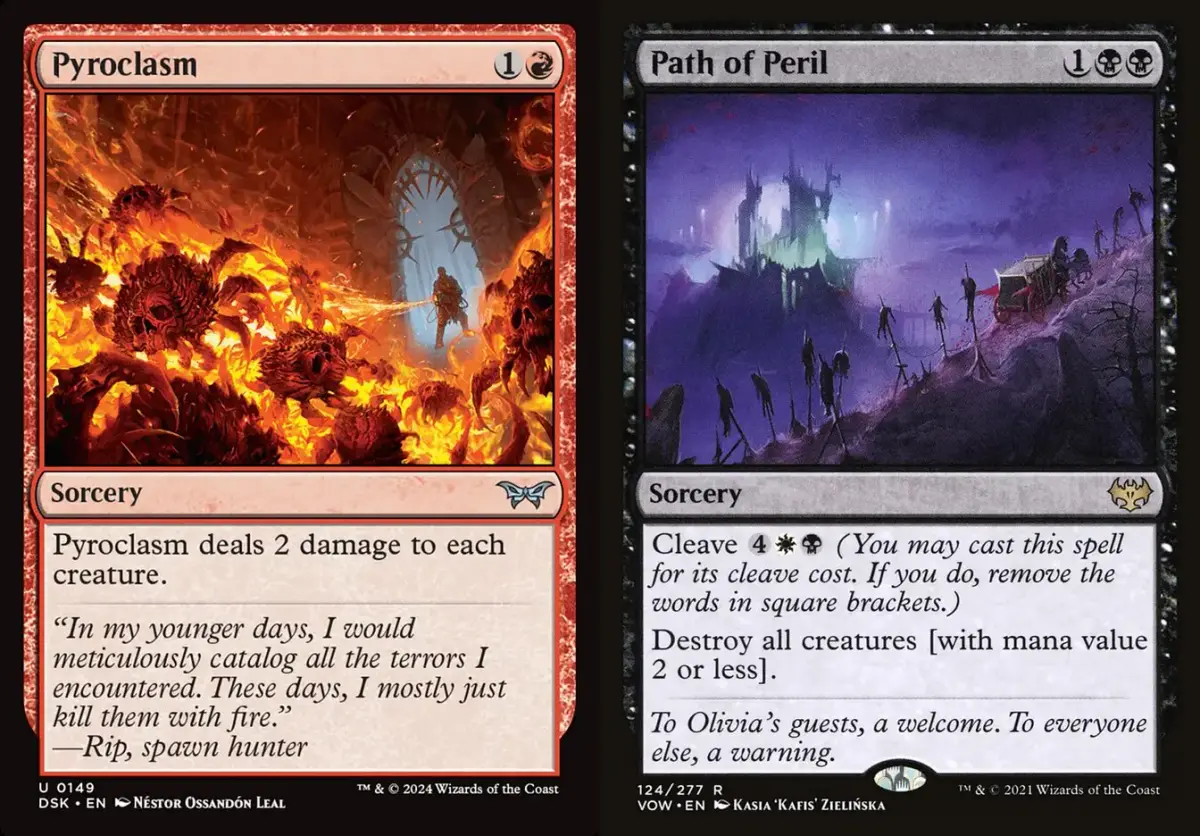
- Pyroclasm (1) & Path of Peril (1):
Against go-wide aggro decks like Boros Energy, having a few sweepers is still safer.
What Cards Can Lantern of Insight See?
The most common rules question when using Lantern of Insight arises when the opponent draws N cards, or looks at the top N cards of their library and puts X of them into their hand: which cards in the process are information we get to know?

Lórien Revealed: Draw three cards.
Under MTG’s rules, every draw is a single card at a time. If the opponent draws three cards with Lórien Revealed, that’s the action of drawing one card repeated three times.
- 121.2. Cards may only be drawn one at a time. If a player is instructed to draw multiple cards, that player performs that many individual card draws.
After the first card is drawn, the new top card is immediately revealed by Lantern of Insight, and only then does the next draw happen, so all three cards drawn with Lórien Revealed become public information.

Stock Up: Look at the top five cards of your library. Put two of them into your hand and the rest on the bottom of your library in any order.
Although we normally pick those cards up to look at them when looking at the top N cards, as far as the rules are concerned those cards are still in the library. Naturally, no new top card gets revealed during the looking process.
So when the opponent casts Stock Up, all we know is that one of those 5 cards is the card that was already revealed on top, and the other 4 are unknown. Whether the 2 cards that end up in hand include the card seen via Lantern of Insight is also unknown. Only after Stock Up finishes resolving and the cards not taken are put on the bottom does the opponent need to reveal the new top card.

Preordain: Scry 2, then draw a card.
In the definition of scry, the first part, looking at the cards, works the same way as above, so during the opponent’s scry 2 you won’t know what the second card from the top was.
- 701.22a “Scry N” means to look at the top N cards of your library, then put any number of them on the bottom of your library in any order and the rest on top of your library in any order.
But after the scry is over, the library must be revealed immediately, and only then is the card drawn, so you will know what card the opponent ends up with in hand.

Chromatic Sphere: {1}, {T}, Sacrifice this artifact: Add one mana of any color. Draw a card.
There’s one trickier scenario: when the top card of the library changes during the process of casting a spell, the new top card isn’t revealed until the spell has finished being cast.
- 401.5. Some effects instruct a player to play with the top card of their library revealed or allow a player to look at the top card of their library. If the top card of that player’s library changes while a spell is being cast, the new top card won’t be revealed and can’t be looked at until the spell has finished being cast (see rule 601.2i). The same is true for activating an activated ability. If the top card of that player’s library changes while a special action is being performed (see rule 116, “Special Actions”), the new top card won’t be revealed and can’t be looked at until the player has finished performing the special action.
Because Chromatic Sphere wraps its card draw inside a mana ability, you may draw a card off Chromatic Sphere during the process of casting a spell.
Conclusion
Lantern has been around for more than ten years. Its distinctive lock and win logic is still a very vivid trait, and it was once one of the top decks at the highest level of play.
But since MTG entered the MH era, the environment has accelerated like crazy, while Lantern’s efficiency at establishing its lock hasn’t improved much. For a Lantern deck whose defensive plan lacks removal, if the opponent’s first two turns are explosive enough, it can very likely get run over before the defense is set up. After MH3 printed Wrath of the Skies and Meltdown, the problem only got worse, so today Lantern is basically a Fun Deck. (Perhaps it’s because it sucks all the smiles off the opponents’ faces. Never mind whether the opponent has fun; at least I have quite a lot of fun myself.)
In practice, perhaps 1/3 of my wins come from Blood Moon + Urza’s Saga, not really from winning with Lantern control, and that’s also why I’m so aggressive as to splash red for just one Blood Moon.
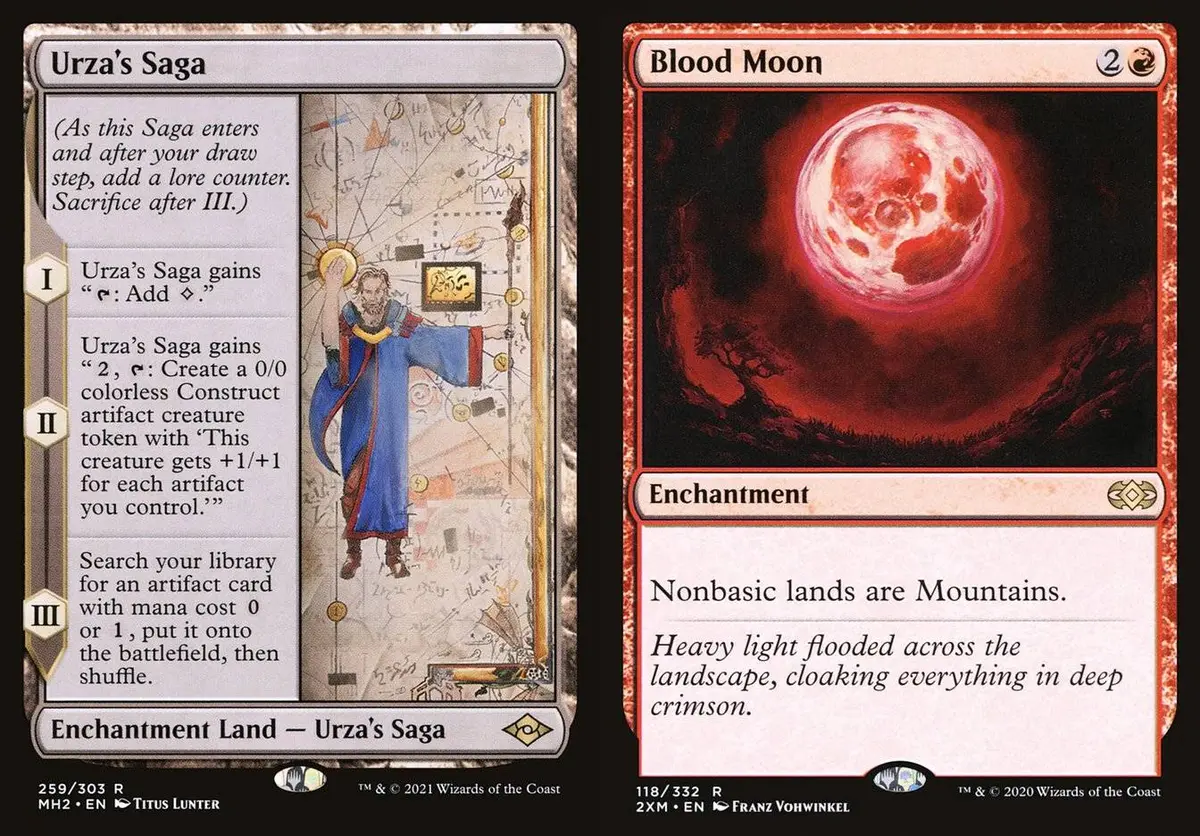
In fact, before the Saga rules change, Lantern was basically always Sultai. With the deep filtering and tutoring of Ancient Stirrings and Whir of Invention, it really did feel much smoother, so I built it with that structure for my first half year too.
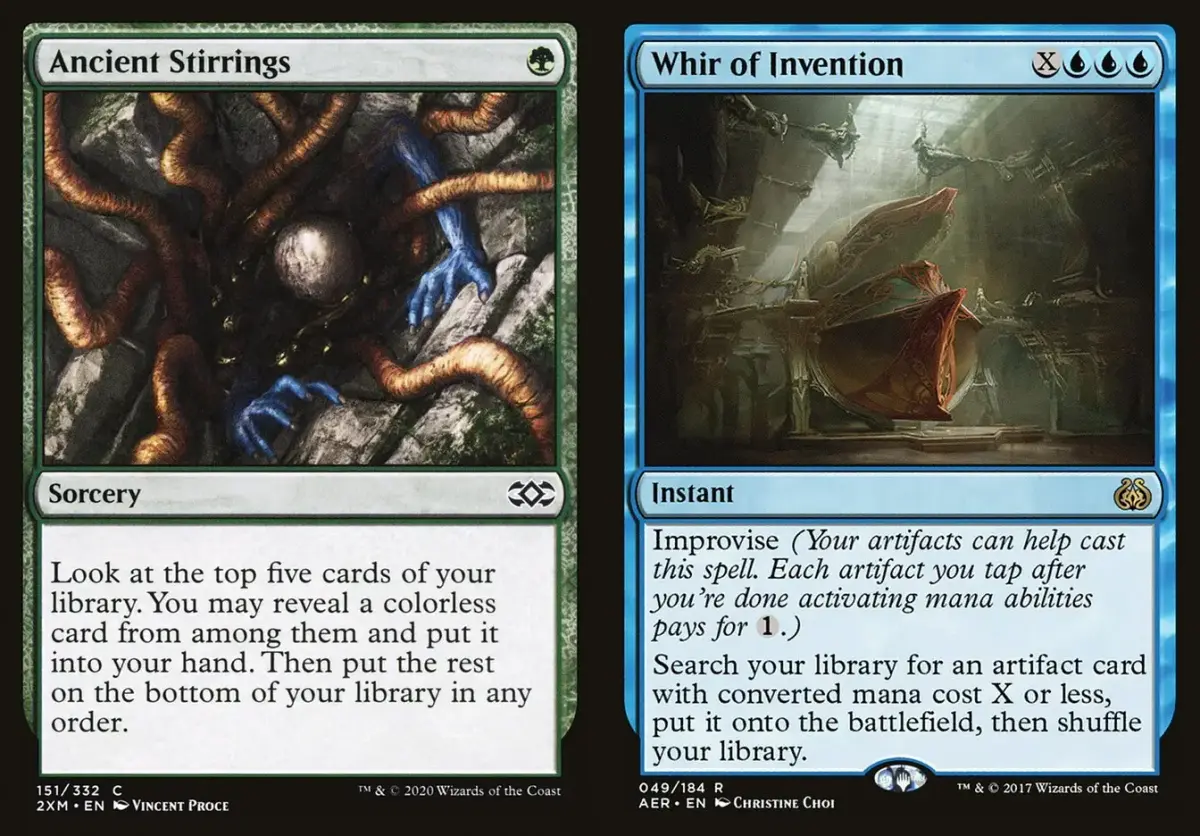
Unfortunately I eventually found that improving the ability to tutor artifacts did less actual damage than just resolving Blood Moon, and after casting Blood Moon it’s hard to play more colors yourself. Of course, a build that leans heavily on Mox Opal might ease this problem, except my wallet would die first.
That said, although the above makes Lantern sound like it performs miserably, in actual testing its overall win rate wasn’t far from 50%. After all, Lantern’s mode of operation is very special: opponents usually have only a handful of answers, and with our heavy discard, key cards drawn at the wrong time blow up, which is true for both sides at once.
Challenging for top finishes at competitive events with Lantern isn’t very realistic, but playing it casually with friends is perfectly fine. The biggest problem may be that you’ll have fewer friends. Players passionate about doing hard time are welcome to try this one-of-a-kind thrill.
- Title
- Doing Hard Time: Modern's Lantern of Insight
- Author
- Jru
- Created at
- May 12, 2026
- License
- This work is licensed under CC BY-NC-SA 4.0 .