Temur Rhinos: A Perfect Blend of Aggression and Control

Note: This article was translated from Chinese by AI and may contain errors. Read the original Chinese version.
Introduction
Season 5 of the RCQ (Regional Championship Qualifier, called MIT in Taiwan) has already been going for a while, and starting this week I will also be running around card shops to fight for RCQs. Because I once shared an article on my personal page that billed itself as the most detailed Pioneer Rakdos midrange article in all of Taiwan, I received an invitation from the Guildmages’ Forum team asking me to use half of the skill I had then to introduce this Modern deck that I have played for nearly a year and have won with in the US until it is nearly worn out.
Why You Should Choose Temur Rhinos
If you ask me what to play in Modern right now, I will answer without hesitation: “Temur Rhinos.” I think that in most matchups this deck is the proactive side, and no deck can easily stop two 4/4 trampling Rhinos on turn three. Given that, opponents have to make trades that are unfavorable for them, not to mention we also have plenty of counterspells and removal. Another point is that apart from the deck’s main core, every other slot can be changed to follow the environment. This trait makes the deck’s adaptability to the environment exceptionally strong. As long as the environment’s strength doesn’t surpass the essence of the deck itself or a key card isn’t banned, I think this deck can last a long time without needing to swap decks too often.
About Temur Rhinos
As the title says, Temur Rhinos is a deck that is a “perfect blend of aggression and control.” On the aggressive side, it can build a board early to put heavy pressure on the opponent and quickly lower their life total. On the control side, the whole deck is full of various counterspells and removal spells, so the opponent cannot develop smoothly in the early and middle game.
“Turn three Rhino, counter counter counter counter counter counter… game over”
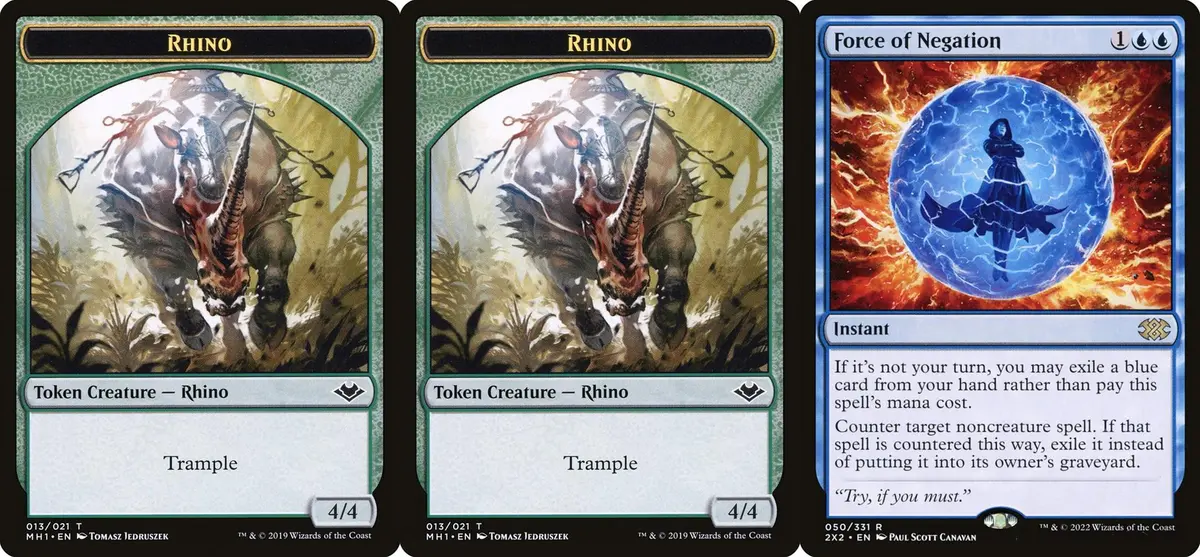
Deck Composition
This is my current decklist, and I will explain it in several parts.
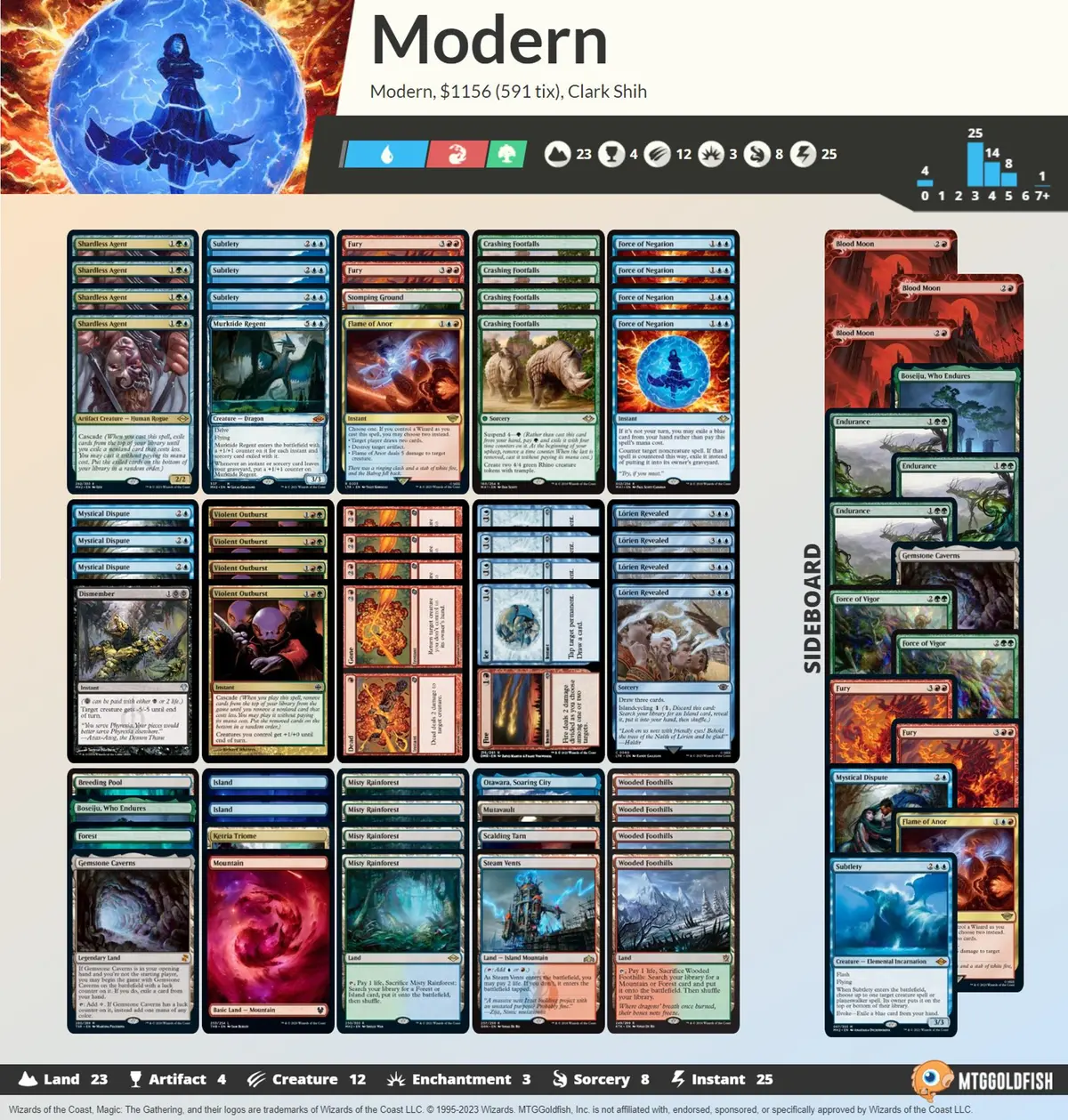
Deck Core
These are the cards I think cannot be cut, including the following:
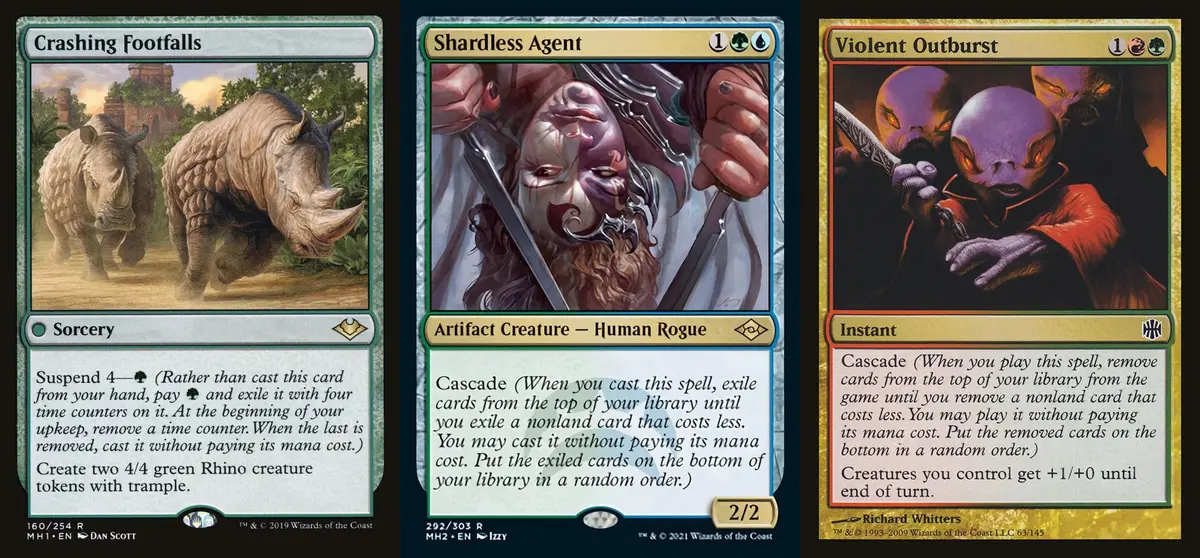
Crashing Footfalls / Shardless Agent / Violent Outburst: The deck’s operating system, no explanation needed.
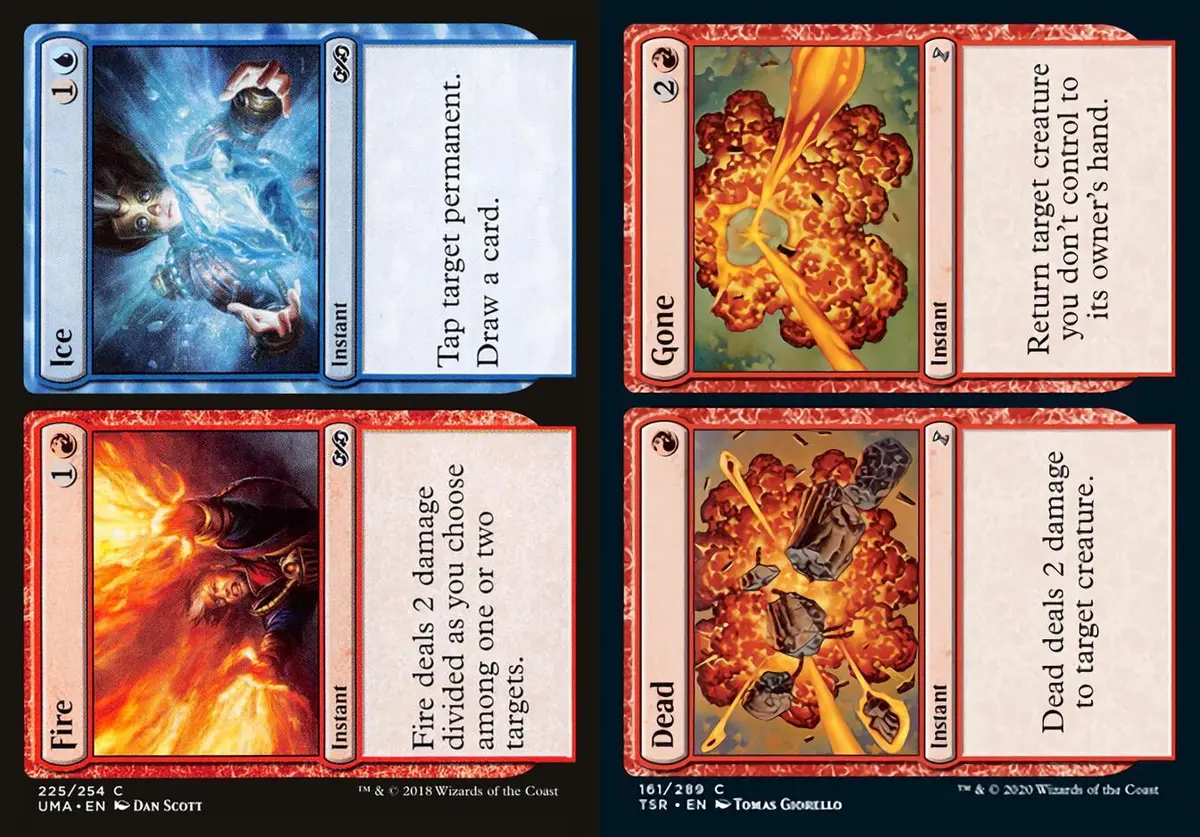
Fire // Ice: The “perfect” supporting card. The Temur Rhinos deck can’t start operating until turn three, and this card effectively makes up for our weak first two turns. For Fire, cheap removal and direct damage are exactly what we need. For Ice, a punctual 2-mana disruption can slow down the opponent’s tempo, and also lets us draw to find our Cascade cards.
Dead // Gone: Dead is a lot like Fire, but more efficient. Gone is a bit awkward in the current environment, though, because most creatures now have ETB abilities, so bouncing the opponent’s creatures is not very useful: the opponent can recast it and the problem remains unsolved. I originally wanted to put this card in the next section because it isn’t as useful in today’s environment as it used to be, but given that it has always been in Temur Rhinos, I finally decided to put it here.
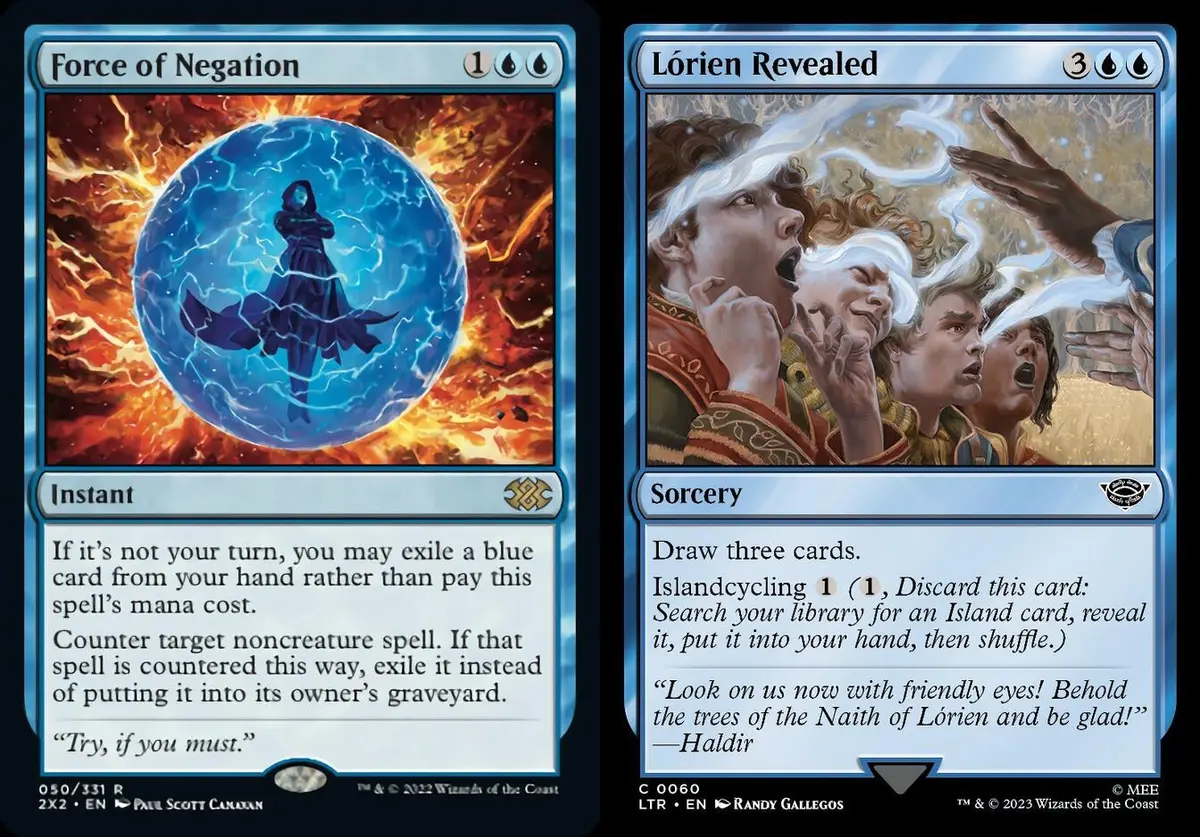
Force of Negation: It’s a 0-mana disruption. In Modern there are few decks that run only a small number of noncreature spells, but in theory Force of Negation always has room to shine. Furthermore, as long as Temur Rhinos continues to survive in the meta, other decks will definitely bring in matching sideboard cards to target us, and Force of Negation can usually help me effectively dodge those hate cards.
Lórien Revealed: Early on it acts as a de facto land search that isn’t disrupted by Blood Moon, and late it is strong card draw, and then there’s “it’s blue”: because of FON, Subtlety, and Commandeer, our deck needs plenty of blue cards, which gives it another use besides searching for lands. Of course, after cycling it can serve as material to quickly make Murktide Regent.
Other Support Cards
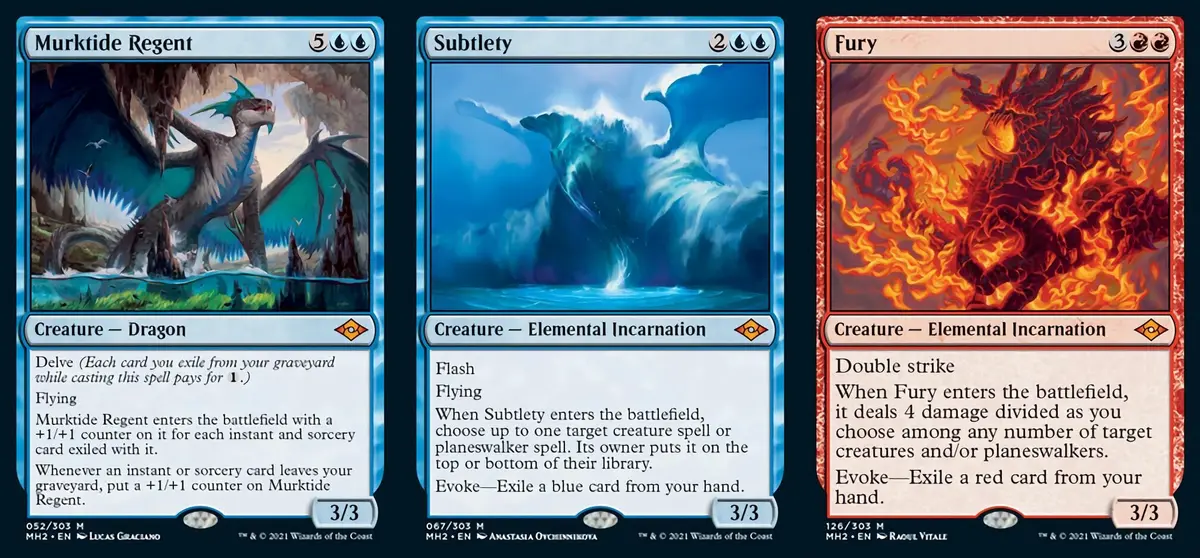
Murktide Regent: Our deck stacks its graveyard quickly on its own, and a powerful flying creature gives us an option besides Rhinos trampling people to death. It is useful in many matchups, such as Rakdos Scam, which emphasizes resource trading, and the Rhinos mirror, where a big flier is hard to answer. Many people run 2, but I run only 1, because I don’t think it’s necessary, and drawing two in a row is awkward.
Subtlety: Basically a necessary card to fight the environment. It is useful against Rakdos, Elementals, and so on, and being able to softly handle Teferi, Time Raveler is also a fairly important factor.
Fury: Removal. Given that the environment has Rakdos Scam and 4-color Elementals, I think this card can’t be cut. Besides being usable early as instant-speed removal, what I think is more important is that hard casting it helps our strength in the mid to late game.
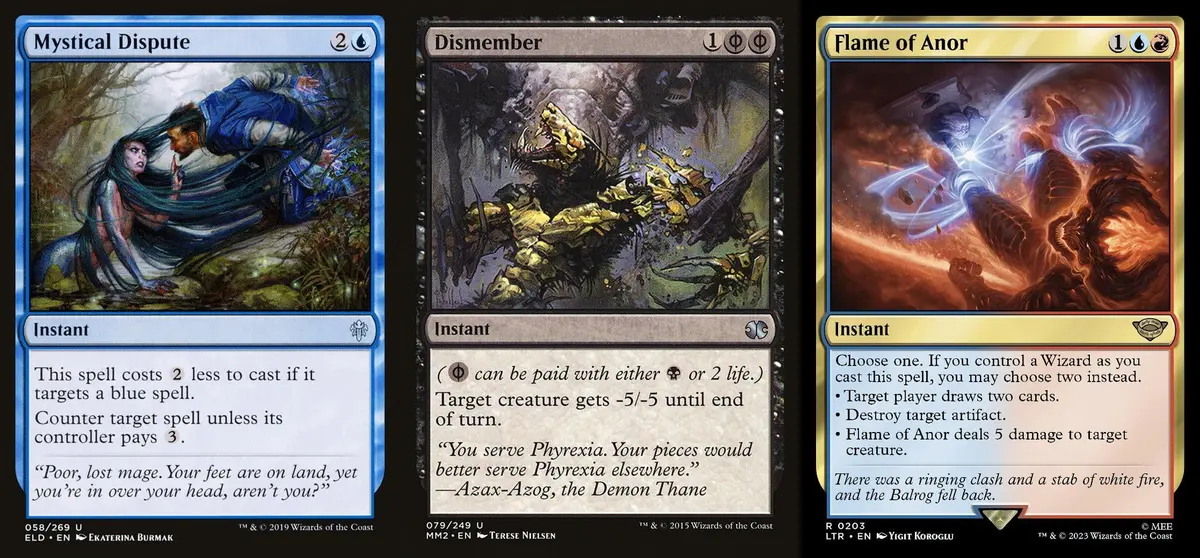
Mystical Dispute: Just a counterspell. It performs well in the mirror, against Elementals, Murktide, and Tron, but isn’t very good against Rakdos, Hammer Time, and Yawgmoth. I think main deck and sideboard together should total at least 3, and I run 3 main and 1 side. After all, if you run into a situation in game 1 where you can’t use it, early on it can also be material for FON and Subtlety, and in the mid to late game it is a serviceable counterspell.
Dismember: A card that came back into use after the Lord of the Rings set came out. Besides removing most creatures in the environment, I think the most important thing is that for a low mana cost and 4 life you can deal with creatures “worth more than the 4 life you pay,” for example Rakdos Scam’s turn-one Elemental, Sheoldred, Yawgmoth, and Omnath. But that’s as far as this card goes: it is a card for answering today’s mainstream, and for me paying 4 life isn’t worth it most of the time.
Flame of Anor: My first reaction when I saw this card was: “Damn, no Wizard? And what even has 5 toughness… I’d rather keep filling out Fury, which can also go face.” Later I found out I was wrong: destroying an artifact can be the answer to Chalice of the Void, dealing 5 can handle most creatures in the environment just like Dismember, drawing two is very powerful, and it is itself red and blue, so it helps us cast FON, Subtlety, Commandeer, and Fury. The drawback is that it costs 3, so in extreme moments it isn’t as good as Dismember. As for the Wizard part, we can run Mutavault to raise this card’s ceiling.
Land Choices
1 of each shock land, 1 tri-color cycling land: Basically no explanation needed. I see some people run more red-blue shock lands, but I don’t think that’s necessary.
4 each of red-green and blue-green fetchlands, 1 red-blue fetchland: Also basically no explanation needed. The red-blue fetchland count may vary based on each player’s considerations.
Gemstone Caverns: This card is here to raise the ceiling. I originally ran 2 main, but I added 1 more Mutavault, so I moved one to the sideboard. I think main and side together totaling 2 is about right in the current environment, and 1 feels a bit low to me, though given that drawing duplicates is a problem I think that’s understandable. Running 3 takes a big heart, but on the draw you are almost guaranteed to have one.
Boseiju, Who Endures: Artifact and enchantment removal that performs well against Tron, Titan, and Hammer Time. 1 to 2 across main and side is fine.
Otawara, Soaring City: Much like Boseiju, and worse than Boseiju most of the time, but it is better than Boseiju in that it can deal with planeswalkers and creatures.
Mutavault: This is optional. It simply works with Flame of Anor to raise the ceiling, and can deal damage when necessary, but both situations are somewhat unlikely, and I’m considering removing it.
Basic lands: I run 2 Island, 1 Forest, 1 Mountain. It was originally 2 each of Island and Forest, but recently people around me started playing burn, so I put 1 Mountain back in. I think 2 Islands are necessary in today’s environment, so we’re sure we can still operate normally against Blood Moon. As for whether to run 2 Forests, that is up to you, and I’m leaning toward putting the 2-Forest version back. The Mountain is there to make sure I don’t die from paying too much life, which is especially important when I need to cast Dead // Gone on turn one.
Sideboard Choices
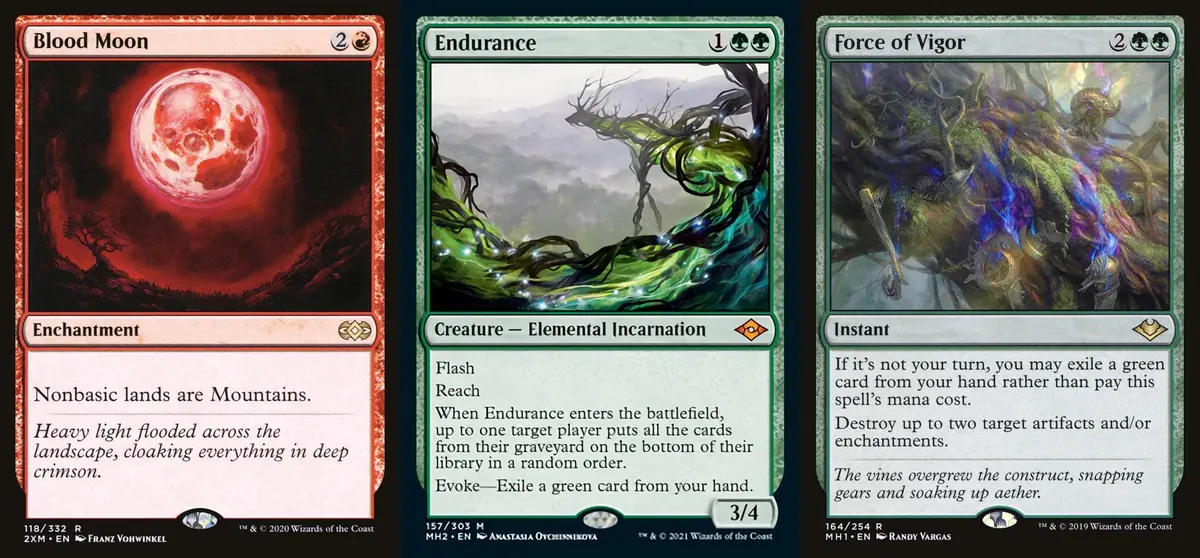
Blood Moon: Great for punishing multicolor decks and Tron. I personally like to run 3, while some people don’t run that many and instead bring in some Obsidian Charmaw to fight Tron, which I think is also viable, but I prefer how Blood Moon covers more matchups.
Endurance: Effective graveyard hate. Whenever the opponent can interact with the graveyard I bring it in, and sometimes you can choose to recycle your own Cascade cards and Crashing Footfalls for reuse. Finally, here is a little trick I think is useful: Endurance can block Fury, Solitude, and Subtlety to death, which comes up in some matchups.
Force of Vigor: Artifact and enchantment removal that comes in handy in some matchups, especially Hammer Time and the recently popular Hardened Scales. I think 1 to 2 is enough.
(I won’t explain the other cards that duplicate the main deck.)
Other Cards You Could Play
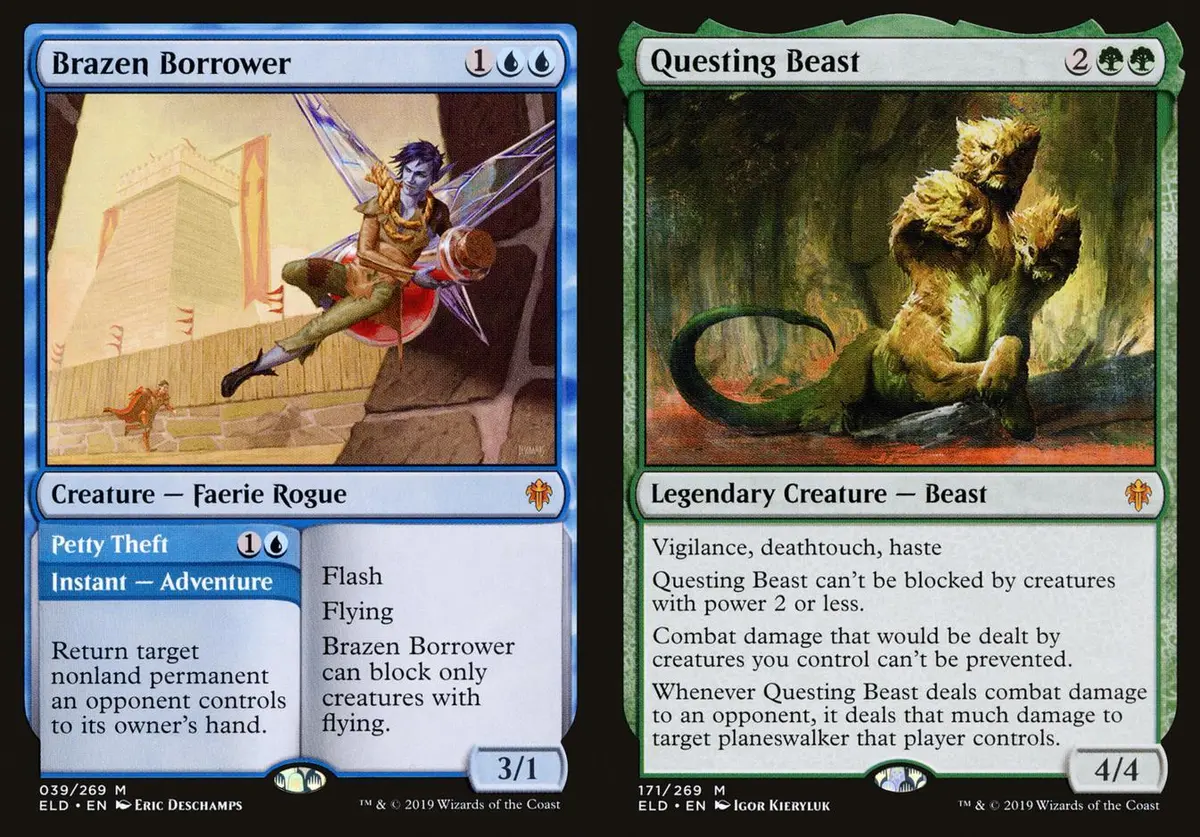
Brazen Borrower: It has recently been put back into use, and it can be a temporary answer to Chalice of the Void, and a 3/1 flash flier also provides evasive damage. However, I think the value of including this card remains to be confirmed. First, for handling hate cards it is only temporary, and bouncing creatures isn’t great in an environment with so many ETB creatures; as for the creature half, I think that if you don’t need its Adventure, there’s no need to discuss the creature half’s impact on the battlefield.
Questing Beast: My favorite card from my Standard days. Besides getting around the protection granted by The One Ring, it is hard for Yawgmoth decks to block it and it helps us deal with Grist, it can put pressure on Karn, the Great Creator, and it handles the planeswalkers in 4-color Elementals. Another feature is that it can handle Teferi, Time Raveler. When I saw players including this card back then, I thought Questing Beast was the answer to fighting this environment. However, this card is poor in the mirror and against Rakdos Scam, and furthermore it can’t “perfectly solve Teferi, Time Raveler”: a conscious opponent will use Teferi, Time Raveler’s [+1] to dodge our Questing Beast and Fury next turn. If your local scene has many 4-color Elementals and Tron, there is still room to include it.
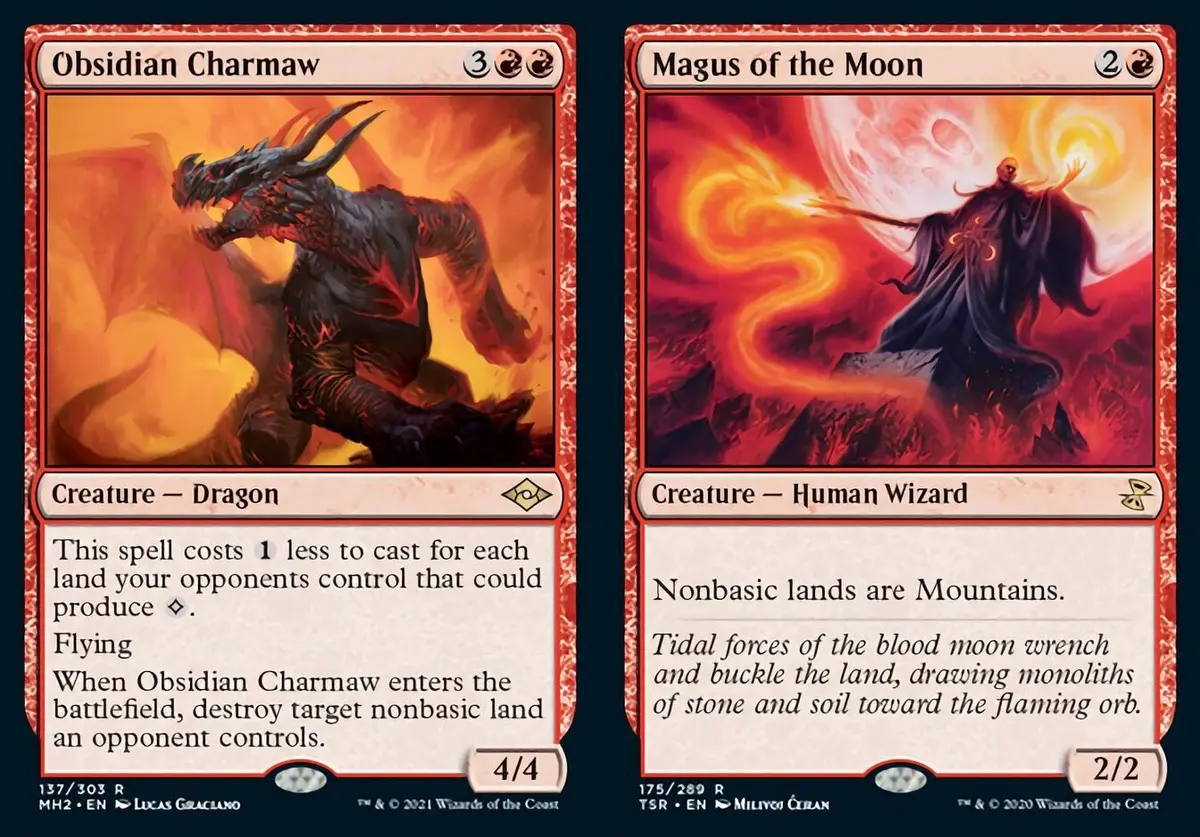
Obsidian Charmaw: This card is here to fight Tron. On the play it effectively prevents the 127 start and provides pressure early. Compared with Blood Moon, the ETB brings disruption value and you don’t need to worry about Boseiju, and blowing up a land can also indirectly slow the opponent’s chances of using Oblivion Stone, Karn, the Great Creator, and The One Ring. Compared with Blood Moon, Obsidian Charmaw covers far fewer matchups, but if you think Tron is a matchup you must get right, there is still room to include it.
Magus of the Moon: The same effect as Blood Moon, but today 4-color Elementals have too much creature removal and Tron also runs Dismember, so Magus of the Moon isn’t as good as Blood Moon.
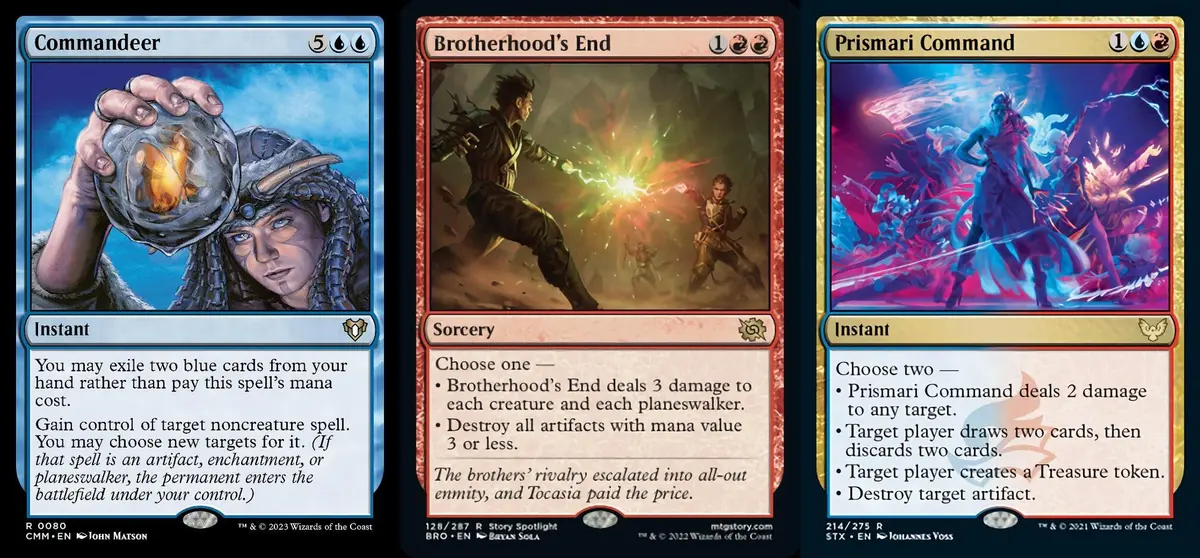
Commandeer: Temur Rhinos contains a large number of blue cards, so casting it early isn’t too hard. Used properly it can deal a devastating blow to the opponent in Tron and every The One Ring matchup, and it also works wonders in the mirror. Although I haven’t used it myself, I think this card isn’t good enough. First, its 3-for-1 cost is a bit too high in most situations. Apart from stealing The One Ring, Karn, the Great Creator, and stealing Crashing Footfalls in the mirror, I really can’t think of a situation worth 3-for-1ing with Commandeer. Second, when you draw Commandeer in the mid to late game you won’t necessarily have enough blue cards in hand to cast it for free, and you won’t necessarily have enough lands to hard cast it.
Brotherhood’s End: It is similar to Flame of Anor in giving a positive option besides destroying artifacts. In addition, this card performs well against Yawgmoth, Rakdos Scam, Merfolk, Hammer Time, and Hardened Scales, killing most creatures while letting the Rhino survive.
Prismari Command: Also a card similar to Flame of Anor. In the past it was included because it could effectively fight Hammer Time and Indomitable Creativity, but now Creativity’s glory days are gone and Hammer Time isn’t as popular, and compared with Flame of Anor’s draw 2, Prismari Command’s draw 2 discard 2 isn’t good enough.
Common Matchups and Sideboarding Strategy
Mirror (Temur Rhinos Mirror Match)
The mirror is the same old line: “whoever draws better wins,” though of course player skill and deck construction have some effect. We both have 4 Crashing Footfalls, and usually whoever uses up their 8 Rhinos first loses, so we need to include more cards that can trade with Rhinos or stop Crashing Footfalls from resolving, such as Fury, Murktide Regent, and counterspells. Sometimes even Endurance is worth considering, because it can recycle Crashing Footfalls from the graveyard for reuse. Resource advantage is also one of the key points of the mirror. Flame of Anor performs well in the mirror, and sometimes you can also hold on to Lórien Revealed in hand to ensure late-game resource advantage.
Remember: make sure your own Crashing Footfalls resolves, stop the opponent’s Crashing Footfalls, and maintain resource advantage, and leave the rest to your right hand~
Sideboarding Strategy
Basically on the draw you bring in Gemstone Caverns and take out one fetchland. Land changes won’t be repeated in other matchups.
| Side Out | Side In |
|---|---|
| -4 Dead // Gone | +2 Fury |
| +1 Mystical Dispute | |
| +1 Flame of Anor |
Dead // Gone isn’t good in this matchup because Dead has almost no targets, and although Gone can effectively deal with a Rhino or temporarily deal with Murktide Regent, I don’t think it’s worth it. I see some people take out Subtlety but I don’t, because the opponent also has Fury and Murktide Regent, and Subtlety can be an answer to those two cards as well as extra damage.
Rakdos Scam
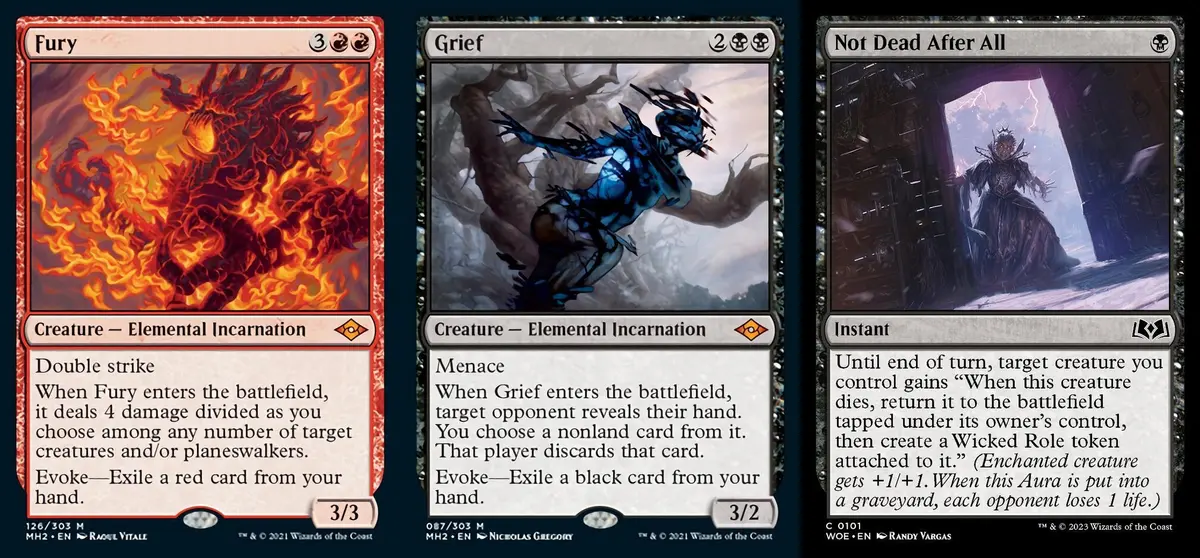
A matchup that is favorable for us, and usually our topdecks are better. The easiest way to block Undying + Grief is a pair of Rhinos. Although we will be forced to discard two cards, it doesn’t matter, since our deck has 8 Cascade cards and we will always draw them. If they don’t have a turn-one Undying + Grief, they are just an ordinary midrange deck: “destroy everything on the battlefield and ask them what it feels like to be hit by a Rhino horn.” Subtlety and Fury perform well in this matchup, both disrupting their game plan, and like Murktide Regent they give us another way to win when we can’t produce Rhinos.
In sideboarded games they will bring in Chalice of the Void, Engineered Explosives, or Hidetsugu Consumes All to fight our Rhinos, but we also have removal and other ways to win. The only problem may be Sheoldred: its 4/5 body can perfectly trade with a Rhino, but we are prepared for it and aren’t totally helpless.
All in all, our game plan is simple: “Destroy everything, gain favorable resource trades through our cards, and win with the remaining resources.” Don’t be in a rush in this matchup, because it stays in our favor even late in the game.
Sideboarding Strategy
| Side Out | Side In |
|---|---|
| -4 Force of Negation | +2 Fury |
| -3 Mystical Dispute | +1 Flame of Anor |
| +1 Subtlety | |
| +2 Endurance | |
| +1 Boseiju, Who Endures |
We choose to take out all of our counterspells and bring in more removal and card draw, because this matchup quickly enters a topdeck stage, and a counterspell isn’t good enough when topdecked. I think Endurance in this matchup is purely a supporting role: it blocks most of their creatures, prevents them from using Scam’s fake death, and finally recycles our own Rhinos. If you have a better card, Endurance isn’t so necessary.
4-Color Elementals
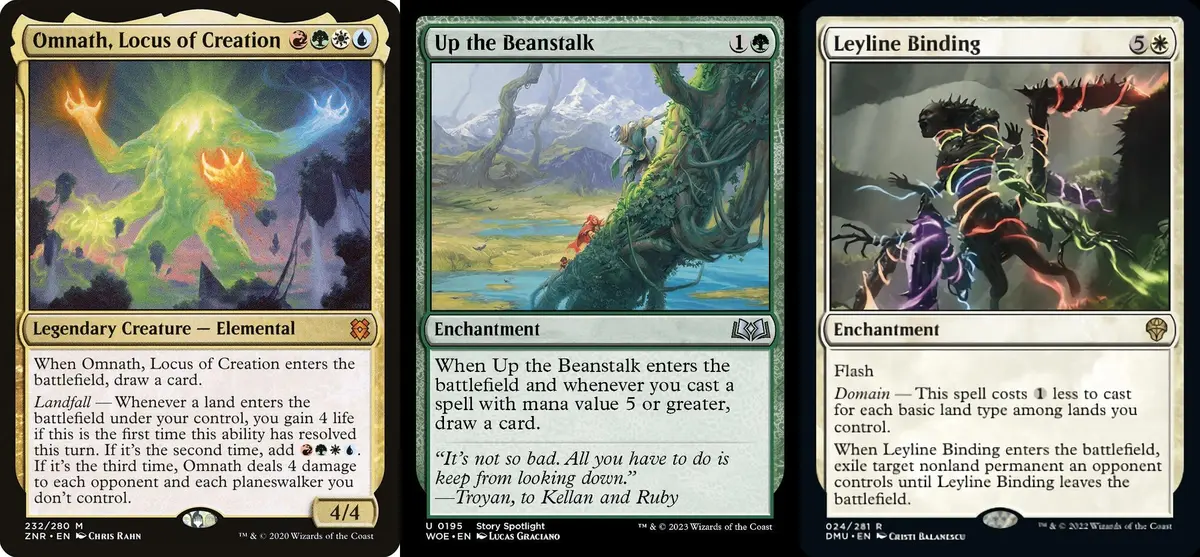
Before Up the Beanstalk was included, I thought this matchup was good. Early on they needed to spend more than two cards’ worth of resources to answer our Rhinos, and this resource gap could keep us ahead throughout the game, so even if we didn’t win early, as long as we kept The One Ring from landing we could let the opponent die slowly through the resource gap.
However, since Up the Beanstalk started being included, this matchup has changed. Their ability to catch up on resources early is far better than before, and we also find it hard to stop the opponent from casting Up the Beanstalk early. In my experience, if the opponent has only one Up the Beanstalk, then we are competing on the same level, and if the opponent has two or even more, the matchup is very bad for us. Because of this, we have to end the game quickly early. In the midgame we still have a chance to finish the match, but a little later and our win rate drops sharply.
Sideboarding Strategy
| Side Out | Side In |
|---|---|
| -4 Dead // Gone | +2 Fury |
| -1 Murktide Regent | +1 Flame of Anor |
| -4 Fire // Ice | +1 Subtlety |
| +3 Blood Moon | |
| +1 Mystical Dispute |
The reason for removing Dead // Gone is the same as in the mirror: it barely helps in the matchup. Murktide Regent is too easily answered in this matchup, so it comes out. I think Fire // Ice is also not good in this matchup: Fire can’t effectively remove their creatures, and Ice is somewhat weak if you don’t cast it on turn two.
Yawgmoth
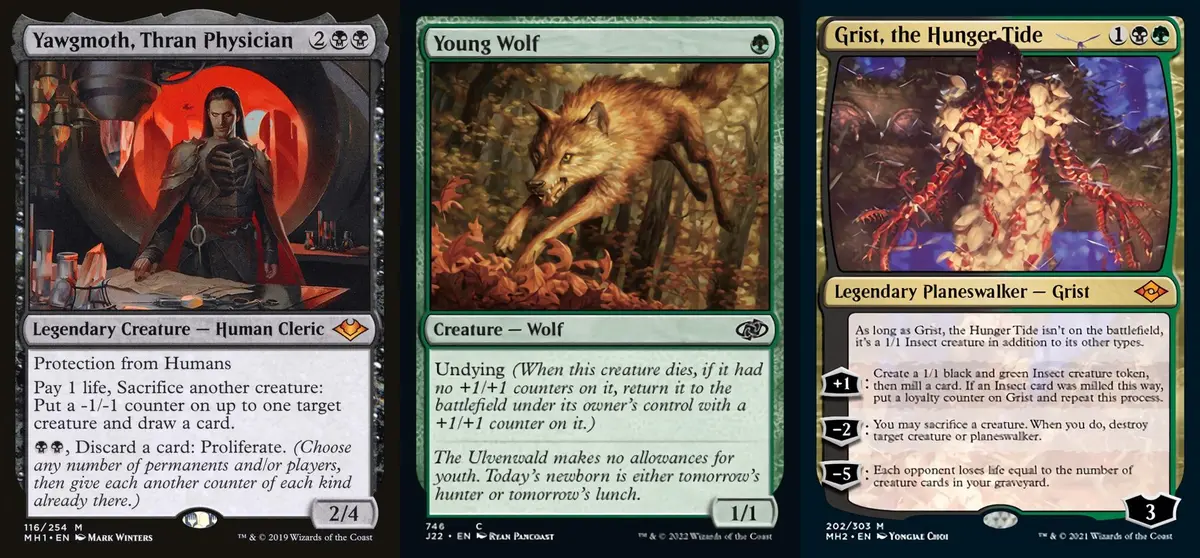
Although Yawgmoth has received big boosts from several rounds of new cards, the essence of the deck hasn’t changed; it just operates in a more complicated and flashy way.
I think this matchup comes down to three key points: first, understand how the whole deck operates. Agatha’s Soul Cauldron brings the deck more ways to win, so be sure to understand all the ways this deck operates, lest you get shot in the face by a flashy sequence of plays from the opponent with no defense. Second, know that the early strength of this deck depends on the number of creatures on the battlefield, so in theory our goal is to kill their creatures with everything we have, giving us time to slam down our Rhinos and put us ahead. Finally, “do everything to stop the Doctor from landing.” The problem with the Doctor isn’t that it can make an infinite combo, but that it earns a large amount of resources while reducing your creatures’ toughness. As long as the Doctor doesn’t land, this matchup is definitely easy.
In summary: kill their creatures, stop the Doctor from landing, slam down our Rhinos, pressure their life total, then force them into trades that are unfavorable for them, and finally win.
Sideboarding Strategy
| Side Out | Side In |
|---|---|
| -4 Force of Negation | +2 Fury |
| -3 Mystical Dispute | +1 Flame of Anor |
| -1 Murktide Regent | +1 Subtlety |
| +3 Endurance | |
| +1 Mystical Dispute |
Tron
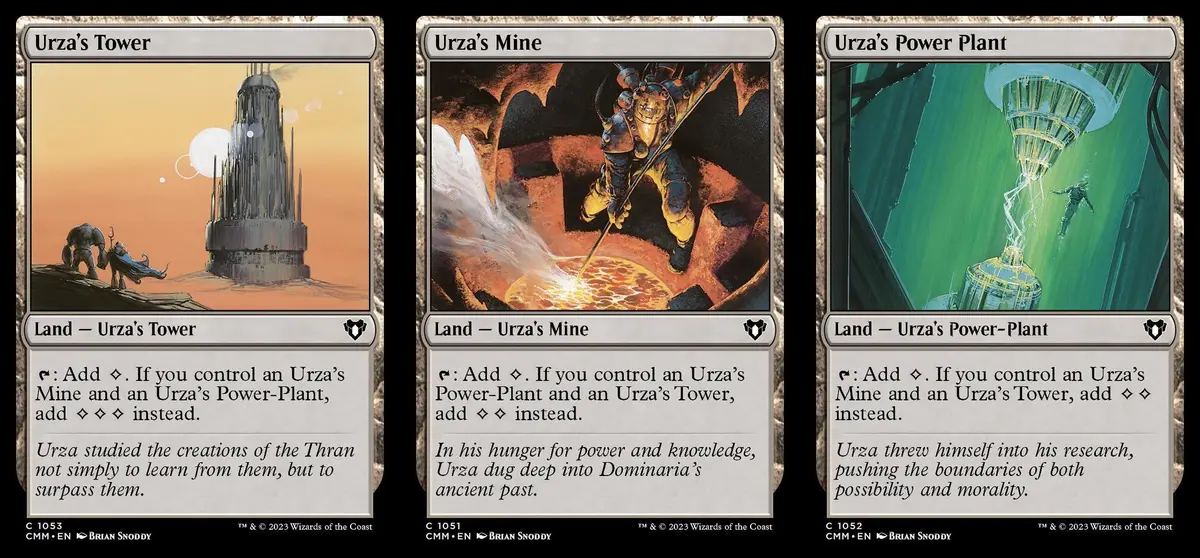
I don’t like running into this matchup, but it isn’t as bad as you’d imagine. The quality of what they slam down is far greater than ours, and if we don’t counter their cards, the balance of victory quickly tips to them. Also, because we need to leave mana open every turn to handle the opponent’s threats, we won’t necessarily have a window to make a Rhino and apply pressure. In the end, we get crushed by Tron’s high-quality cards with insufficient disruption in hand and no Rhino. This is also why Obsidian Charmaw is great in this matchup, because it can do both “disrupt” and “apply pressure.”
Therefore, what we can do is to slam down a Rhino early when we have FON or Subtlety in hand, so that we can both disrupt early and pressure with the Rhino.
Sideboarding Strategy
| Side Out | Side In |
|---|---|
| -4 Dead // Gone | +1 Flame of Anor |
| -1 Dismember | +1 Subtlety |
| -3 Mystical Dispute | +3 Blood Moon |
| +2 Force of vigor | |
| +1 Mystical Dispute |
Conclusion
I’m very happy about the invitation from the Guildmages’ Forum team this time. It has been a long time since I spent this much time analyzing a deck I’m familiar with. Not long ago I also finally qualified for the Season 5 RC. I tried 6 times, with 5 Top 8 finishes and 1 time missing out on tiebreakers! This time I only introduced the 5 matchups I think you are most likely to encounter in the environment, and when school gets less busy one day, I will fill in more.
If you really want to know my thoughts on specific matchups and sideboarding strategy in advance, you can also search FB for “夢續工作室 DreamOn Studio” and message us, and we can answer your questions there. I also hope everyone can listen to our Podcast: “龍尊與荒野騎士的玄境之談”, which you can now hear on both Spotify and Apple Podcast~
- Title
- Temur Rhinos: A Perfect Blend of Aggression and Control
- Author
- ClarkShih
- Created at
- November 3, 2023
- License
- This work is licensed under CC BY-NC-SA 4.0 .