The Last Dance of Temur Rhinos - The MIT#5 Champion's Journey and Tournament Report

Note: This article was translated from Chinese by AI and may contain errors. Read the original Chinese version.
Introduction
Hi everyone, I’m 葉永丞 David Yeh. In the fifth MIT, I went 8-0-2 and earned a spot at the 2024 Worlds and the Pro Tour. This article is just going to be a serious talk about the deck (the nonsense is saved for the next one)

Pre-Tournament Preparation
Before MKM releases
MITQ#5_桌遊侍_Temur Rhinos_David Yeh
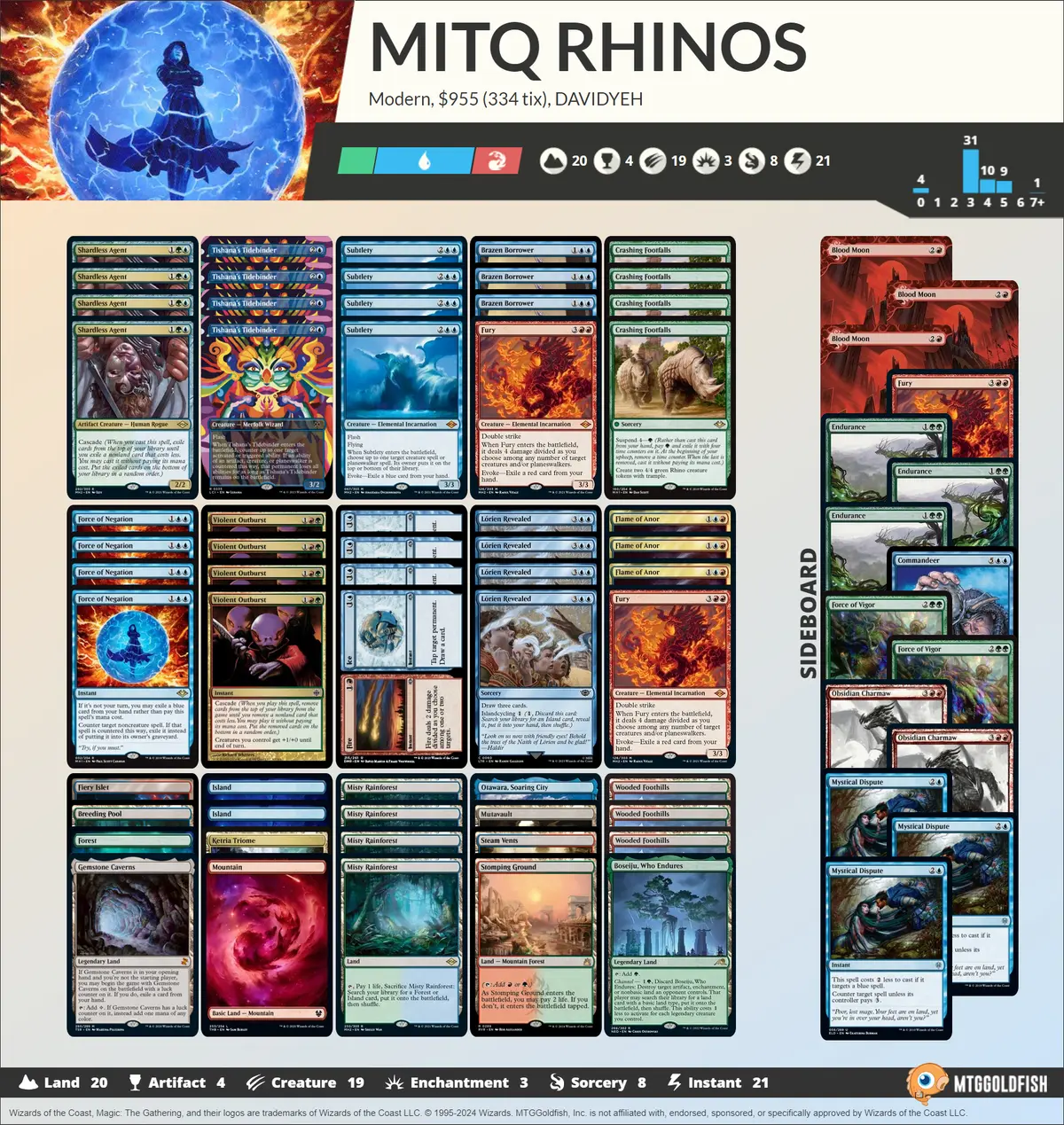
The picture above is the deck I used at the 桌遊侍 MITQ#5. That day I beat four Rakdos Scam decks and two Burn decks, and it felt pretty good. However…

DECEMBER 4, 2023, BANNED AND RESTRICTED ANNOUNCEMENT
Who knew that the day after I qualified at the MITQ, Fury would get banned? I had been cutting corners by playing only Fury and no Dead // Gone to deal with small creatures, and now that was gone.
The tasty Scam decks became rarer, and so did the annoying 4C Omnath. Without Fury, you can expect more small-creature decks, so the stronger Hammertime, Hardened Scales, Humans, Golgari Yawgmoth and Selesnya Company decks should show up more; and rare animals like Faeries, Merfolk, Affinity, Infect, Death & Taxes and Bant Cloudshift should appear too. Originally I just wanted to replace Fury with Bonecrusher Giant…

After MKM releases
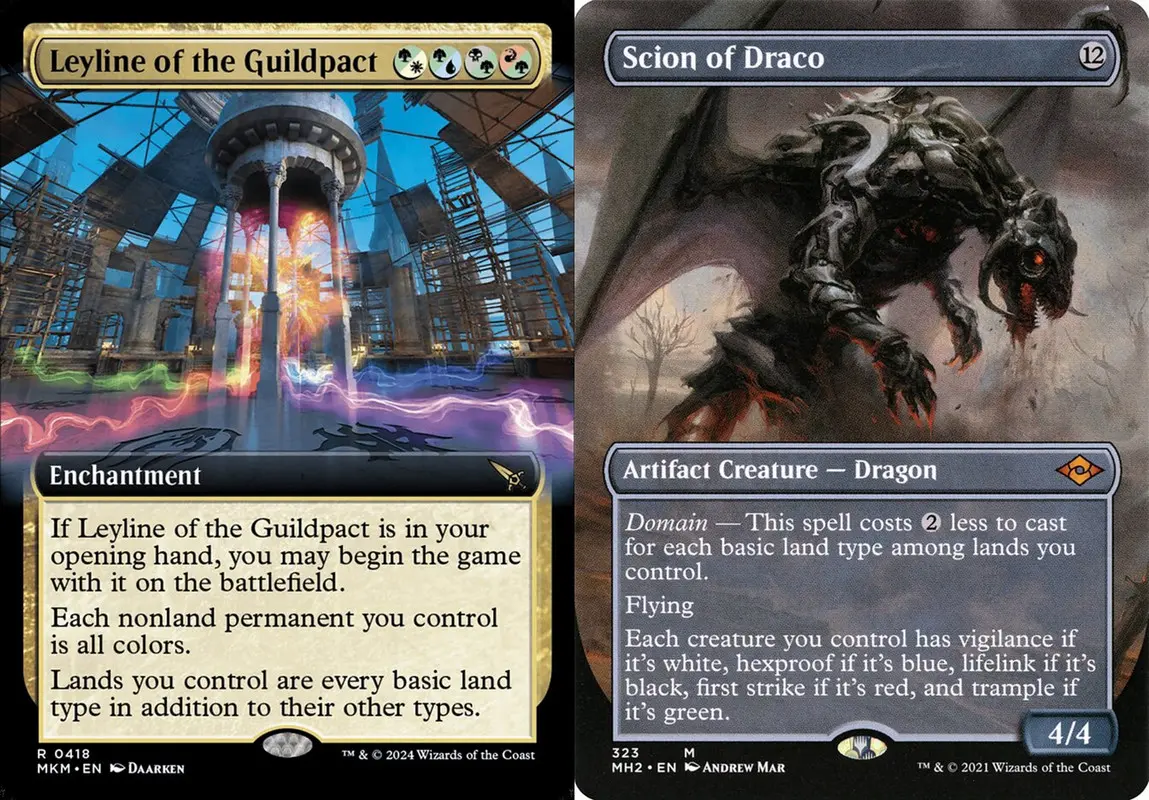
But Murders at Karlov Manor (MKM) changed a huge amount in Modern. First is Leyline of the Guildpact, which pushed Domain Zoo into the top five, and the US RC also saw a lot of the new Domain Rhinos. With the combination of Scion of Draco + Leyline of the Guildpact, Scion of Draco benefits from the Leyline’s effect and has vigilance, hexproof, lifelink, first strike and trample on top of its own flying, so unless you remove Leyline of the Guildpact, you simply can’t race it.
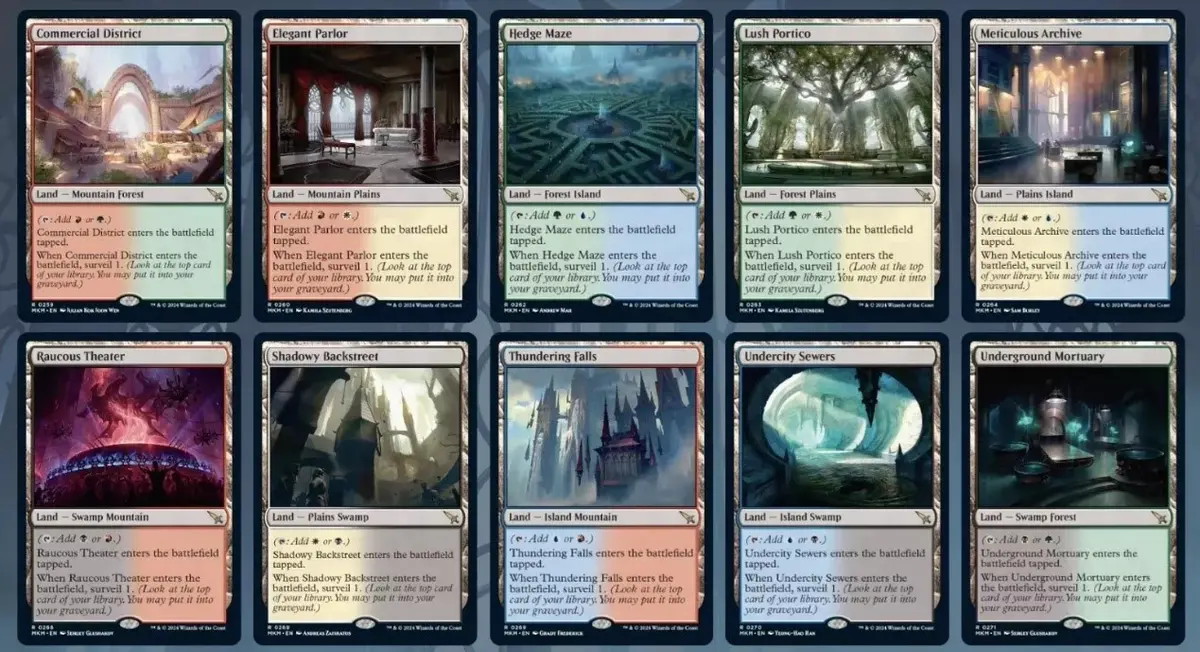
Also, the surveil lands that carry two basic land types interact well with fetch lands, which upgraded the existing Living End and Goryo’s Vengeance decks a notch.

With more Domain Zoo and Domain Rhinos around, many decks started playing MKM’s best common, Pick Your Poison, in the sideboard, which is a simple and effective way to hit Scion of Draco and Leyline of the Guildpact. In addition, besides Pick Your Poison, Izzet Murktide decks splashing green have also started playing the ancient beast Tarmogoyf. This deck is naturally good at assembling delirium, and using Goyf to hold off Rhinos and Territorial Kavu is more than enough.
While writing this I realized Violent Outburst got banned…
The day after the MITQ, Fury was banned…
The day after MIT, Violent Outburst was banned…

The Decision Before MIT#5
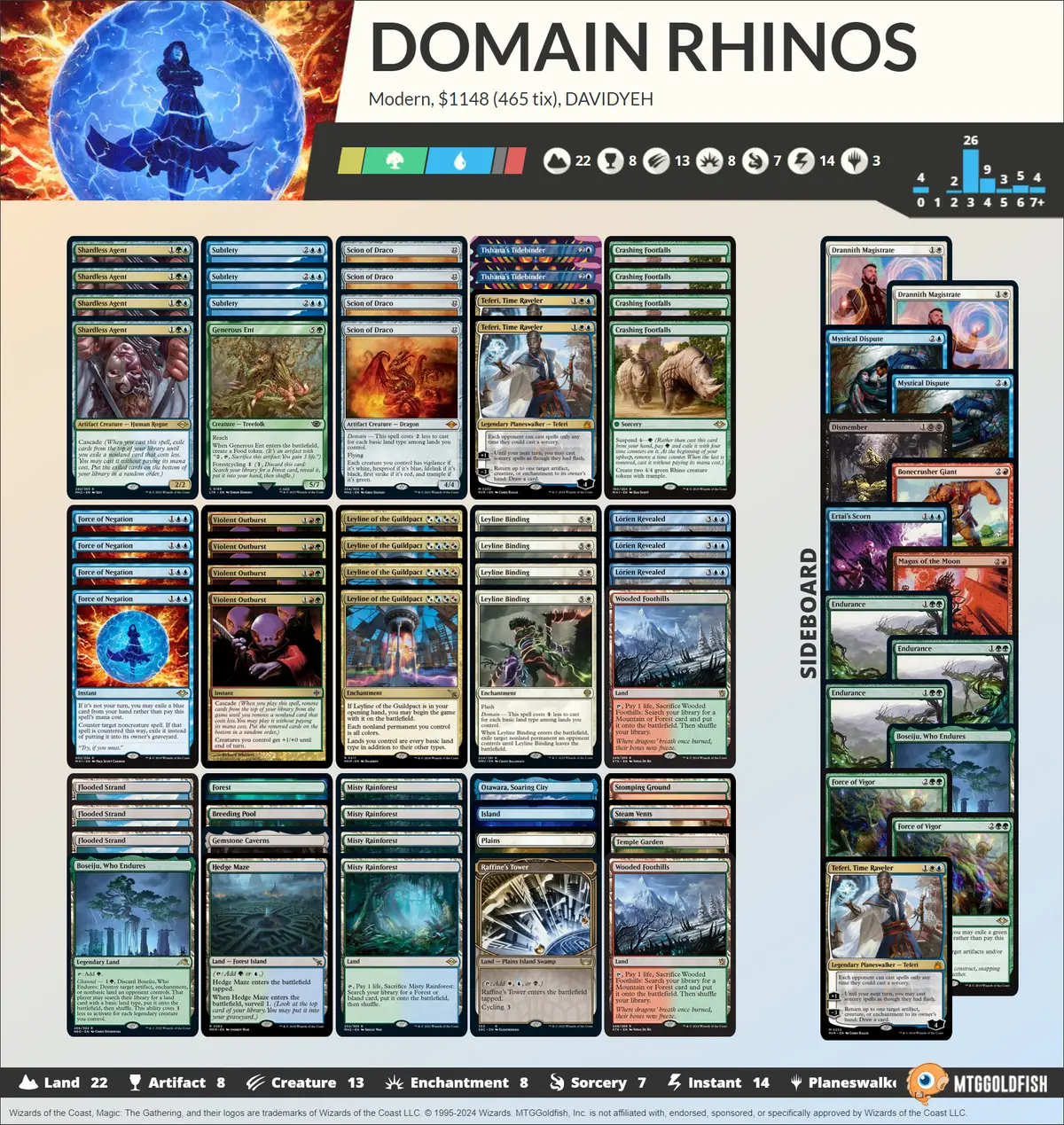
Honestly, I originally planned to play Domain Rhinos at this MIT, with this list: MIT#5_Domain Rhinos_David Yeh
While building it, the deck felt packed to the brim, with really few flexible slots. Take the US RC 7th-place Domain Rhinos in the picture below as an example. It is probably still the most common main deck and sideboard configuration from before Violent Outburst was banned, a uniform deck that everyone plays the same.
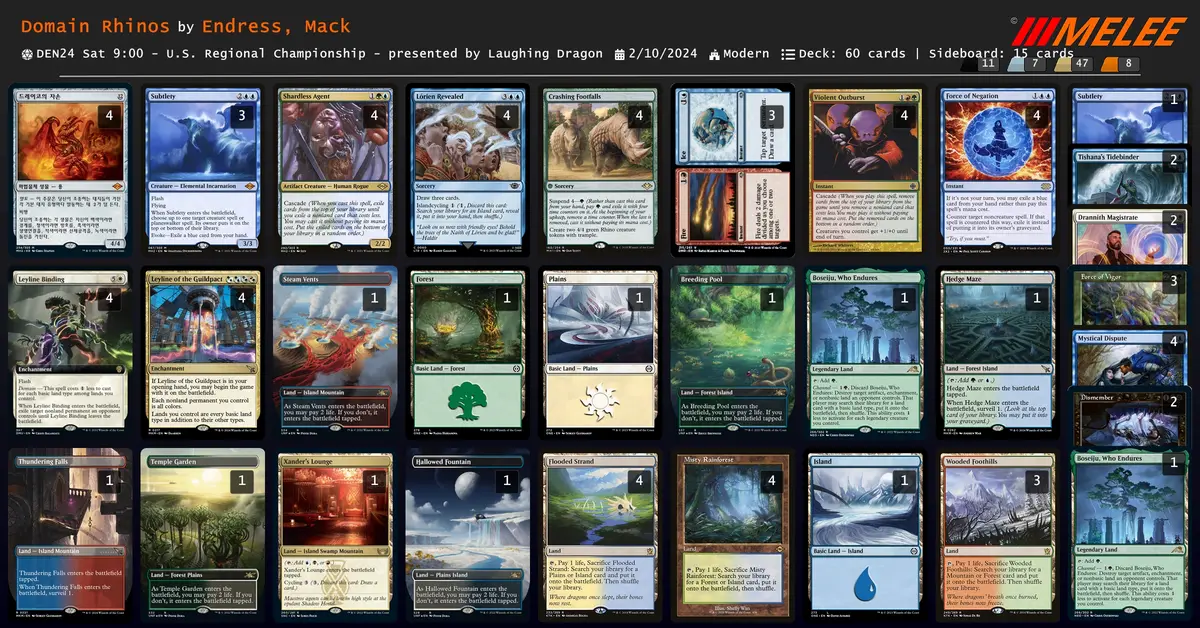
The most obvious differences in Domain Rhinos are probably:
- Choosing between Xander’s Lounge and Indatha Triome as the three-color land, since the fetch lands and shock lands / surveil lands that go with these two lands are naturally different.
- Whether the sideboard has four Territorial Kavu: LSV played Indatha Triome at the RC. Personally I think Indatha Triome with Steam Vents + Thundering Falls should be better than Xander’s Lounge with Temple Garden + Lush Portico. After all, Domain Rhinos is still mainly red, blue and green, and you probably don’t want two white-green lands.
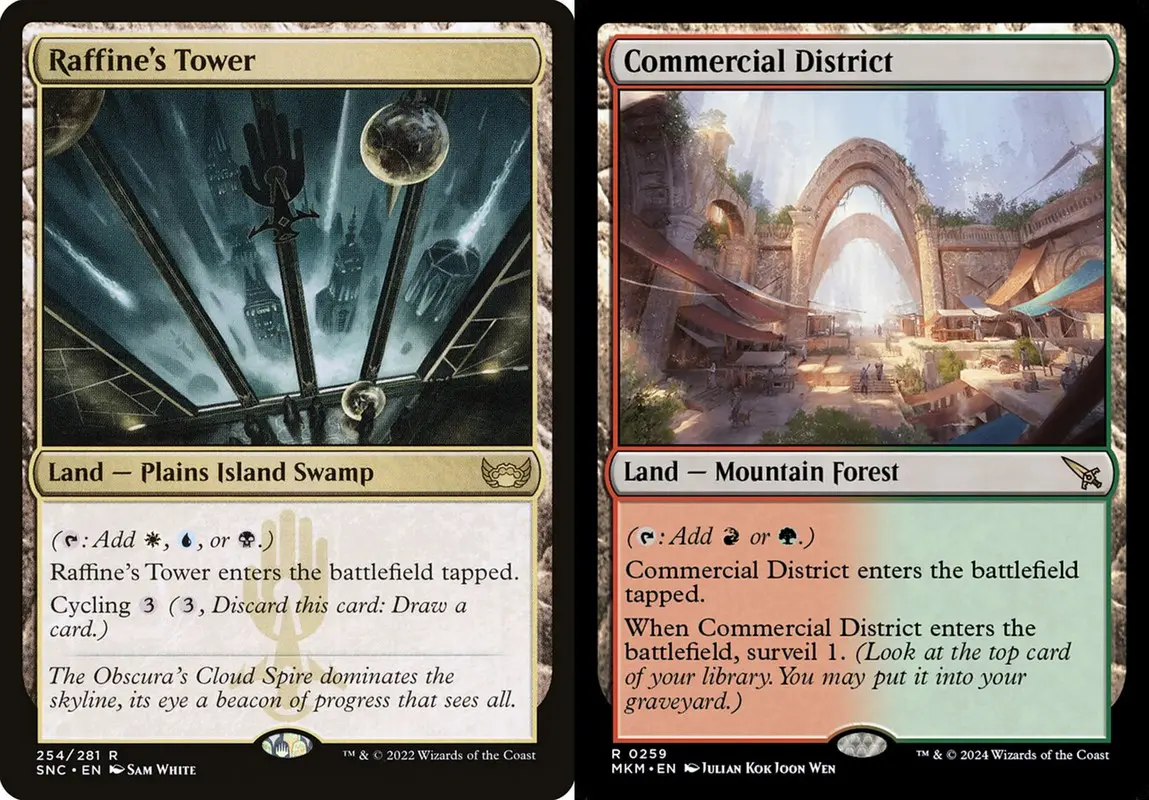
I also thought about another combination of three-color and two-color lands. Black is the least useful, so it should be tied to the three-color land. That way, on turn one Raffine’s Tower, and on turn two either Stomping Ground or Commercial District works, and with white and blue on turn two you can cast either Leyline Binding or Mystical Dispute. The drawback, though, is that you might not be able to cast Violent Outburst on turn three. (Doesn’t matter, it got banned anyway…)
Also, playing Territorial Kavu in the sideboard is rare. After siding in, the deck becomes more like Domain Zoo, which can dodge hate cards like Chalice of the Void; it is big enough to beat Rhinos in combat, and when attacking you can discard excess Leylines to loot for what you need, and against Living End it can also exile a few creatures from the graveyard. (Although getting hit by it once still probably means death…)
In the two weeks before MIT I gathered the cards for Domain Rhinos, and although having Leyline on turn one into Scion on turn two feels great, and even just a turn-two Scion feels pretty good, it still felt a bit off no matter how I played it. I always felt it had fewer tricks than the old three-color Rhinos and was less flexible, and the lands were just three-color lands and surveil lands.

I considered playing one Zur, Eternal Schemer, which turns the deck’s eight Leylines into a Wurmcoil Engine-like threat with hexproof, deathtouch and lifelink; on the other hand, Zur is blue and can also be pitched to Force of Negation and Subtlety.
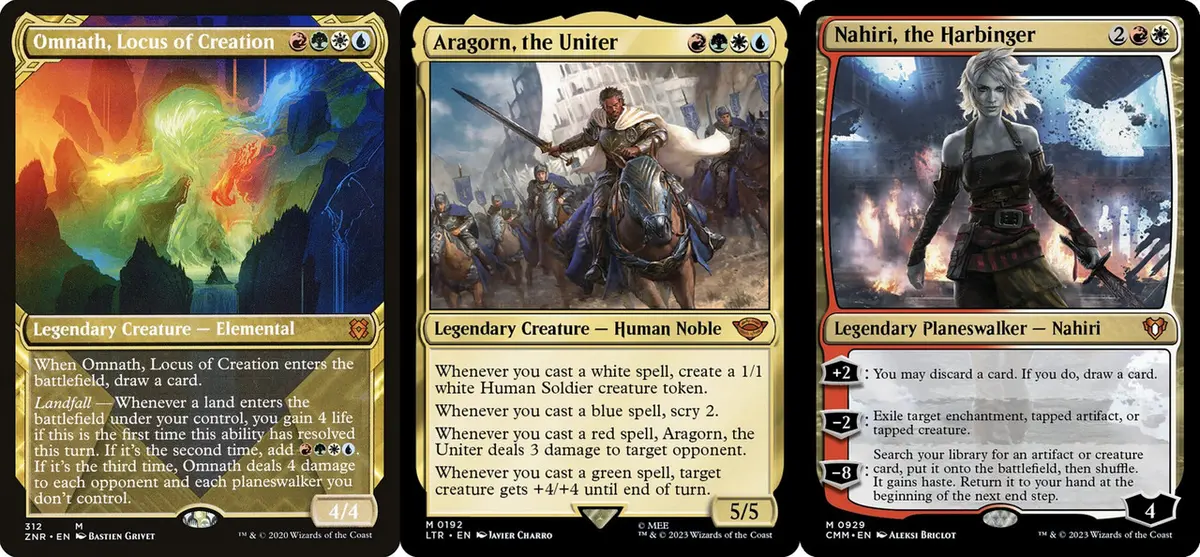
Or other excellent multicolor cards such as Omnath, Locus of Creation, Aragorn, the Uniter and Nahiri, the Harbinger. In any case, I spent several days daydreaming, trying to make the deck less monotonous. Afterwards I also tried building Domain Scapeshift and 4C Omnath with Scion…
Three days before the tournament, I happened to see that ClarkShih had posted an article on Guildmages’ Forum, Temur Rhinos RC Deck Building Guide. I learned a lot from reading it and made up my mind to go back to Temur Rhinos.
Analysis of the Temur Rhinos Build Used at MIT#5
My final deck is as follows: MIT#5 Temur Rhinos_David Yeh
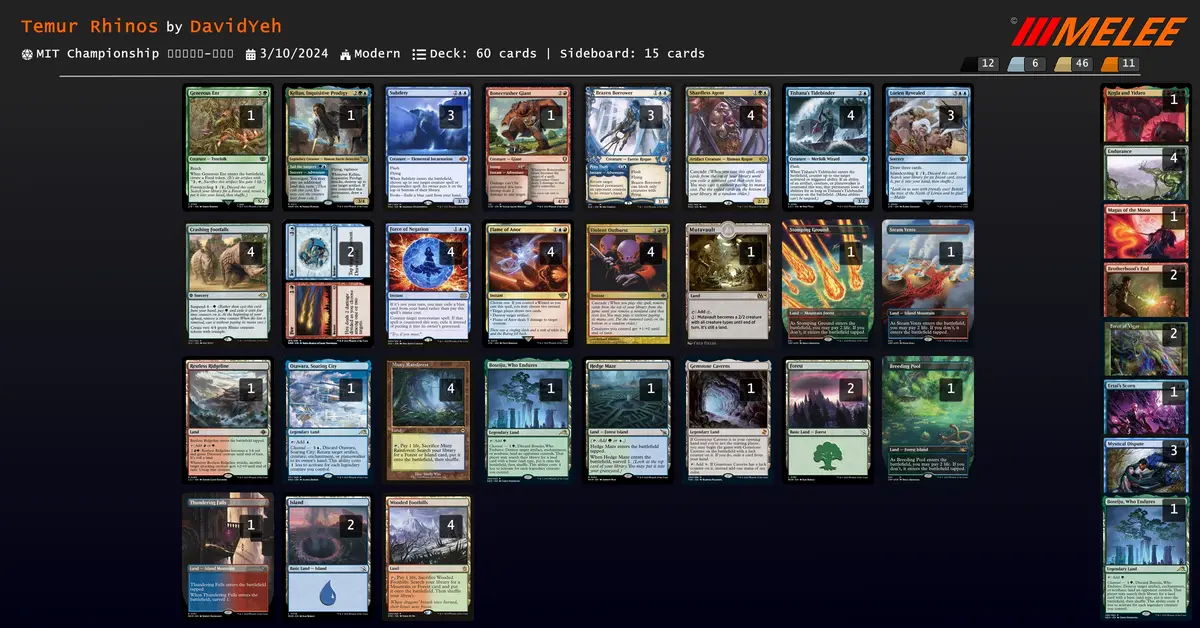
Main Deck Introduction
First, as at the MITQ, I don’t play Dead // Gone. The consideration is that before you make a Rhino on turn three, the only thing you really need to kill is Dauthi Voidwalker, and the decks that play Dauthi are the few black-based Scam decks, a few Mono-Black Coffers decks, and Goryo’s Vengeance decks. If you don’t remove Dauthi Voidwalker and force through a Rhino anyway, every one of its Not Dead After All can bring a Rhino back to life…
If you have Force of Negation in hand, consider forcing out a Rhino to get exiled by Dauthi, then using Force of Negation to counter the exiled Rhino~
In addition, another card that must be answered before turn three is Teferi, Time Raveler, but that has nothing to do with Dead // Gone; you have to rely on Force of Negation and Subtlety.

Three Borrowers are still very useful. Turn one, smooth out your lands; turn two, bounce a threat; turn three, make a Rhino, and the tempo is on our side. Borrower can also effectively deal with hate cards you meet in the main deck, such as Chalice of the Void, Roiling Vortex, Dauthi Voidwalker and Boromir, Warden of the Tower. Although Borrower’s biggest fear is Orcish Bowmasters, only Golgari Yawgmoth and black-based Scam should be using it, and if you meet it, just don’t flash it in carelessly; think a little more before casting card-draw spells.

The enter-the-battlefield ability of the four Tishana’s Tidebinder can counter cascade abilities that trigger on cast like Violent Outburst and Shardless Agent, lock down planeswalker loyalty abilities other than Teferi, Time Raveler, equip or other abilities of various equipment, Chalice of the Void, Oblivion Stone, The One Ring, Engineered Explosives, Agatha’s Soul Cauldron, Amulet of Vigor, Aether Vial, Leyline Binding, Archon of Cruelty, Omnath, Locus of Creation, Yawgmoth, Thran Physician, Sheoldred, the Apocalypse, Ulamog, the Ceaseless Hunger, Dauthi Voidwalker, Stoneforge Mystic, Territorial Kavu, the MH2 five elementals, the two crabs in Dimir mill (Hedron Crab, Ruin Crab), fetch lands, The Mycosynth Gardens, Shelldock Isle and so on… too many to list.
A creature this useful goes straight in the main deck instead of the sideboard.
Guildmages’ Forum editor’s note: for more on Tishana’s Tidebinder interactions, see The Flash Deck Your Opponent Can’t Counter: Mono-Blue Merfolk

Four Flame of Anor alongside four Tidebinders and Mutavault; some of these could be swapped for one Dismember, but I feel Temur has no life gain, so it would be a heavy burden. I also looked for powerful Wizards to pair with Flame, but the two-mana Snapcaster Mage doesn’t work, Magus of the Moon and Arcane Proxy might be good for one copy, and Vannifar, Evolved Enigma might be the best choice, but she doesn’t suit Rhinos…

Three Subtlety: Subtlety was good against the old Rakdos Scam but is bad against Temur Rhinos and Living End. Against Domain Zoo and Domain Rhinos, it can push back the Scion of Draco the opponent plays on time on turn two, which is acceptable. If decks with Teferi, Time Raveler like 4C Omnath and Domain Rhinos keep increasing, a full set of Subtlety might be better.
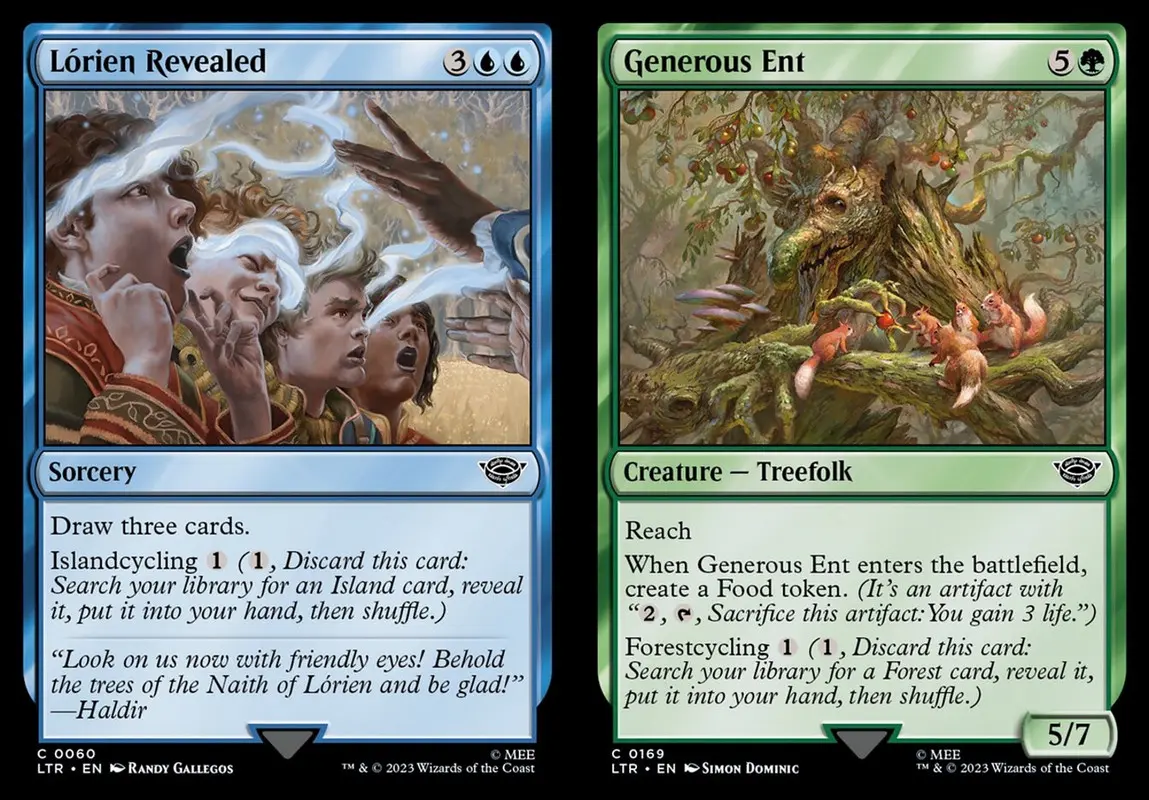
One Generous Ent replaces Lórien Revealed, just hoping that when I face Living End in game one and unluckily get my graveyard hit, I at least have an Ent to hold off the Oliphaunt. And the fun thing in practice is that sometimes if you hard-cast the big tree, the opponent’s Scion of Draco or Murktide Regent can’t get through. Lórien Revealed can also be pitched to Force of Negation and Subtlety, so it’s up to personal preference.

Kellan, Inquisitive Prodigy is something I first saw Japanese players put in their sideboards on the Hareruya site. In practice it is a super-powered Serra Angel, looking especially mighty when you face Hammertime, Scales, Amulet and Green Tron. When you really want to draw cards, you can also blow up your own Shardless Agent to farm the opponent and draw cards, and on turn two when you have nothing to do and want to ramp, you can cast it via its adventure as Tail the Suspect. It is both blue and green, so it can be pitched to Force of Negation, Endurance and Subtlety, which is perfect. On top of that, it’s legendary, so it reduces the channel cost of Boseiju, Who Endures and Otawara, Soaring City, which also makes unfamiliar players miscount mana. Its 3/4 body is slightly bigger than Subtlety, Dragon’s Rage Channeler and Brazen Borrower, and it isn’t afraid of being swept by a sideboard Brotherhood’s End.
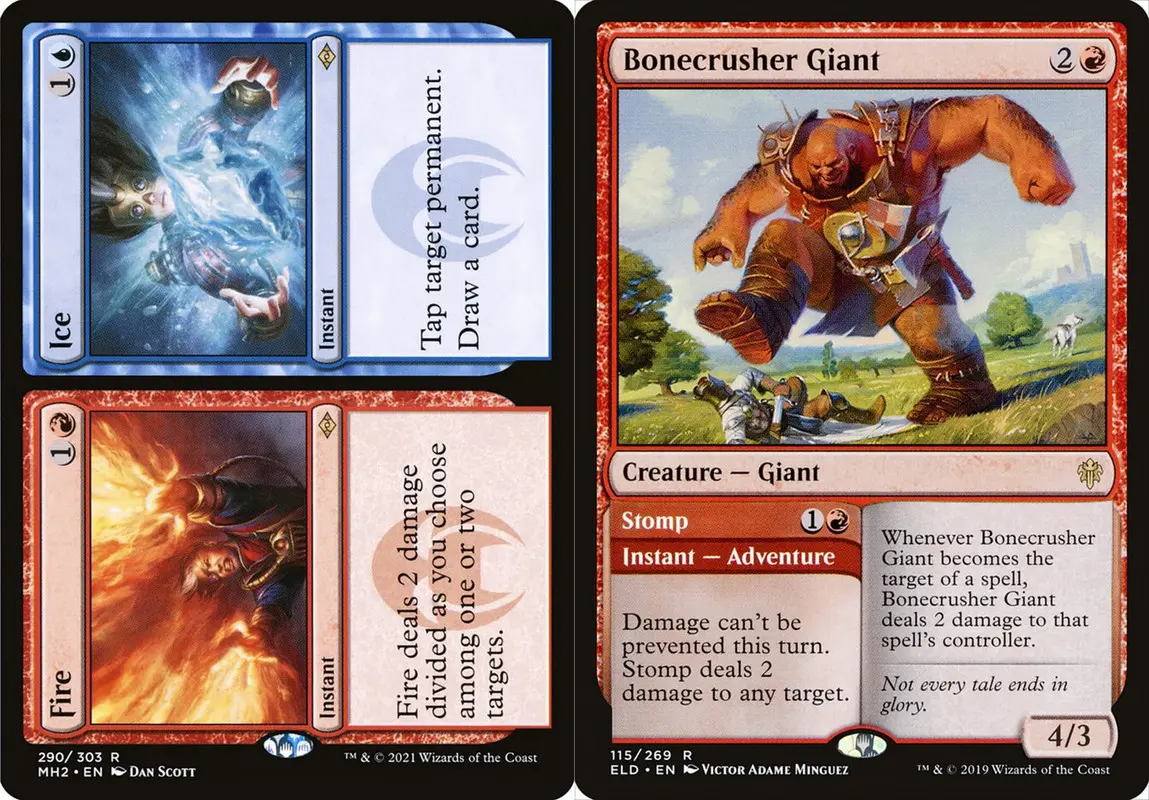
One of the Fire // Ice was changed to Bonecrusher Giant, which has a chance to punch through The One Ring’s protection when it enters. If the field has a lot of 4C Omnath, Green Tron and Amulet Titan, I’d reduce the number of Fire // Ice to add more Bonecrusher Giant.
Lands: 22 lands + 4 cycling fetch-style lands. I don’t want to go with just 21 or even 20 lands; in a big tournament I would rather draw three lands in a row and then topdeck my way out than get stuck on lands on turn three and be done.
The basics are one each of the blue-red, red-green and blue-green shock lands, Boseiju, Who Endures, Otawara, Soaring City, Gemstone Caverns, Mutavault, and eight fetch lands that find green (Misty Rainforest, Wooded Foothills). Since I don’t play Dead // Gone, I chose two Islands and two Forests as basics, to guarantee that Force of Negation and Endurance can always be cast outright at key moments.
The new set’s blue-green and red-blue surveil lands are also fixed inclusions, but I thought for a long time about whether to play the red-green surveil land. Only a few lists play all three surveil lands, or they just put back one Ketria Triome to avoid color problems,

In the end I decided to add more punch with a creature land, but two Mutavault could clog up the deck (after all there is also Gemstone Caverns). After considering six dual creature lands and Treetop Village, I decided on Restless Ridgeline. Four lands animate it plus itself; it has 3 power itself and gives the neighboring creature +2 power, so five lands add up to 5 attack power.
This land really does force the opponent to be wary (opponents often picked it up to read it). When your life total is too low and all your lands are tapped (for example, when they sweep your Rhinos), at end of turn flashing in something like Brazen Borrower, Tishana’s Tidebinder, Endurance or Subtlety, then animating the lands plus one 3-power creature is 8 damage, and if before end of turn it was Violent Outburst with two Rhinos, animating the lands and attacking along with them for 13 usually kills. At MIT that day I animated it only once, but with Mutavault I hit for 7 and killed an unfamiliar opponent (pressing palms together).
Sideboard Introduction
Sideboard Cards Not Used
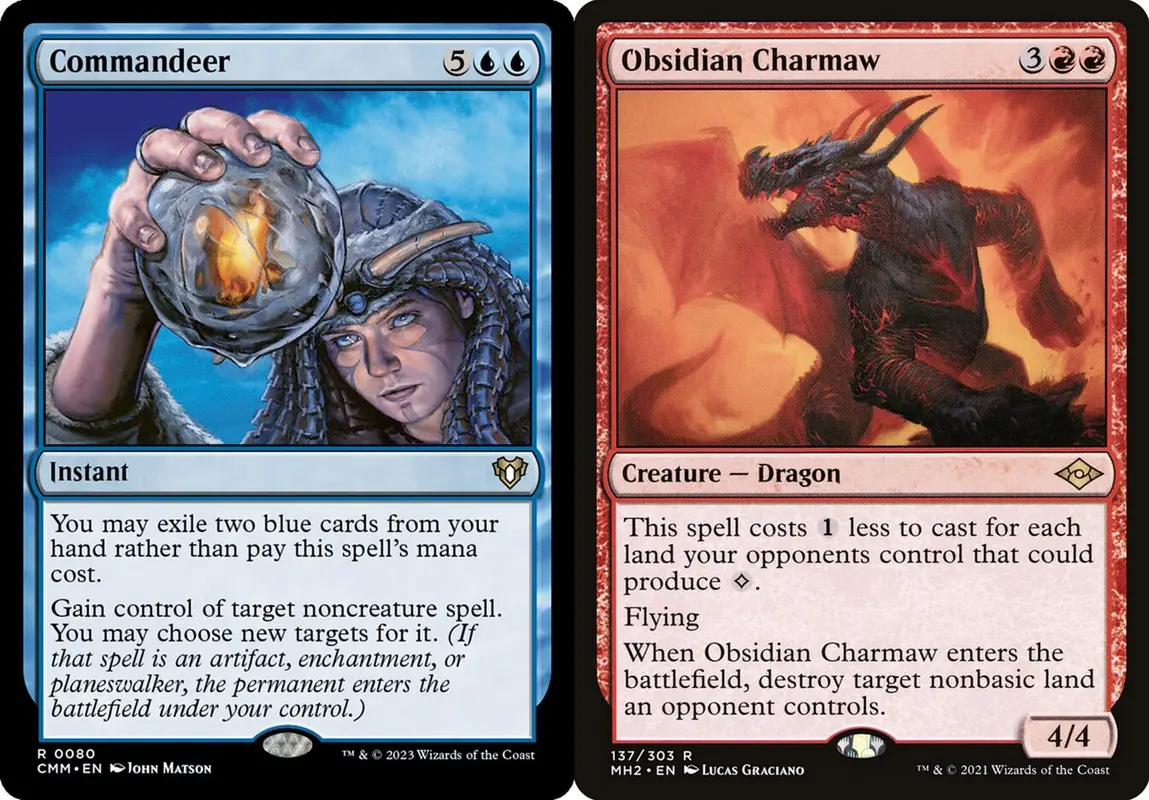
Next, the sideboard choices. First, the cards I didn’t play: Commandeer is mainly for stealing the opponent’s The One Ring, but the decks that play the Ring now, like 4C Omnath, Amulet Titan and Azorius Control, are fewer than the Cascade decks, and besides, Tishana’s Tidebinder can already handle the Ring. And Obsidian Charmaw is only aimed at Tron-style furniture-lands decks like Green Tron; in the past I would also bring it against Hammertime and Scales with four Inkmoth Nexus and four Urza’s Saga. But there aren’t many of those decks, and relying on counterspells and removal should be enough.
Sideboard Cards Used
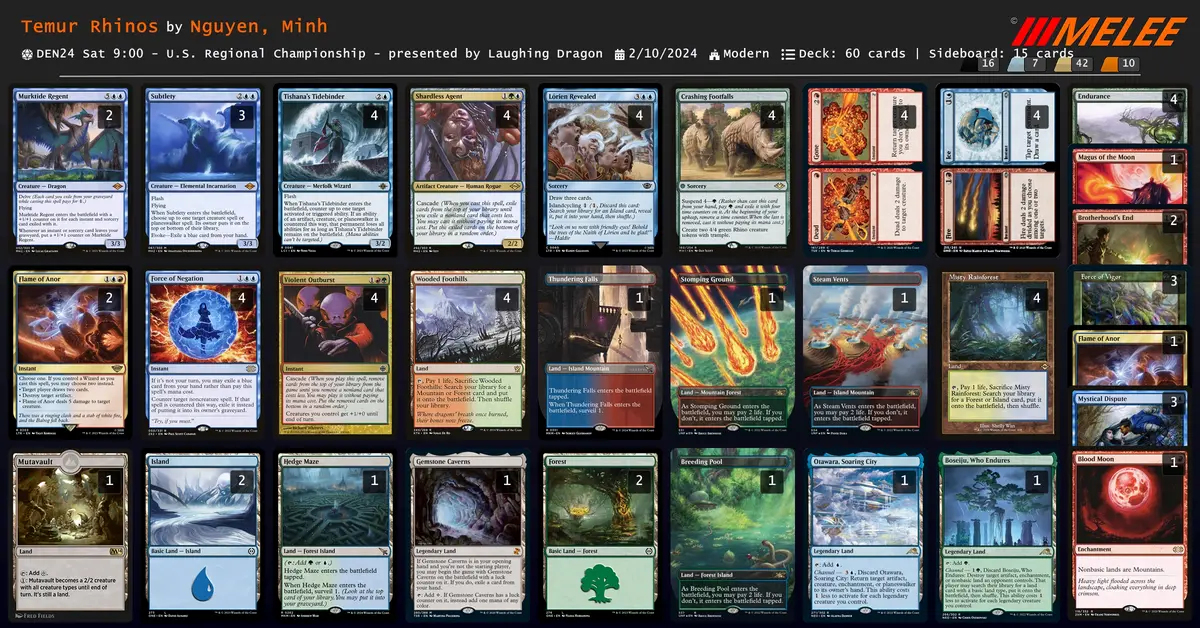
The sideboard I chose mainly follows the US RC champion Minh Nguyen’s deck. I wanted my sideboard to have at least four counterspells, four removal pieces for hate cards, and four Endurance.
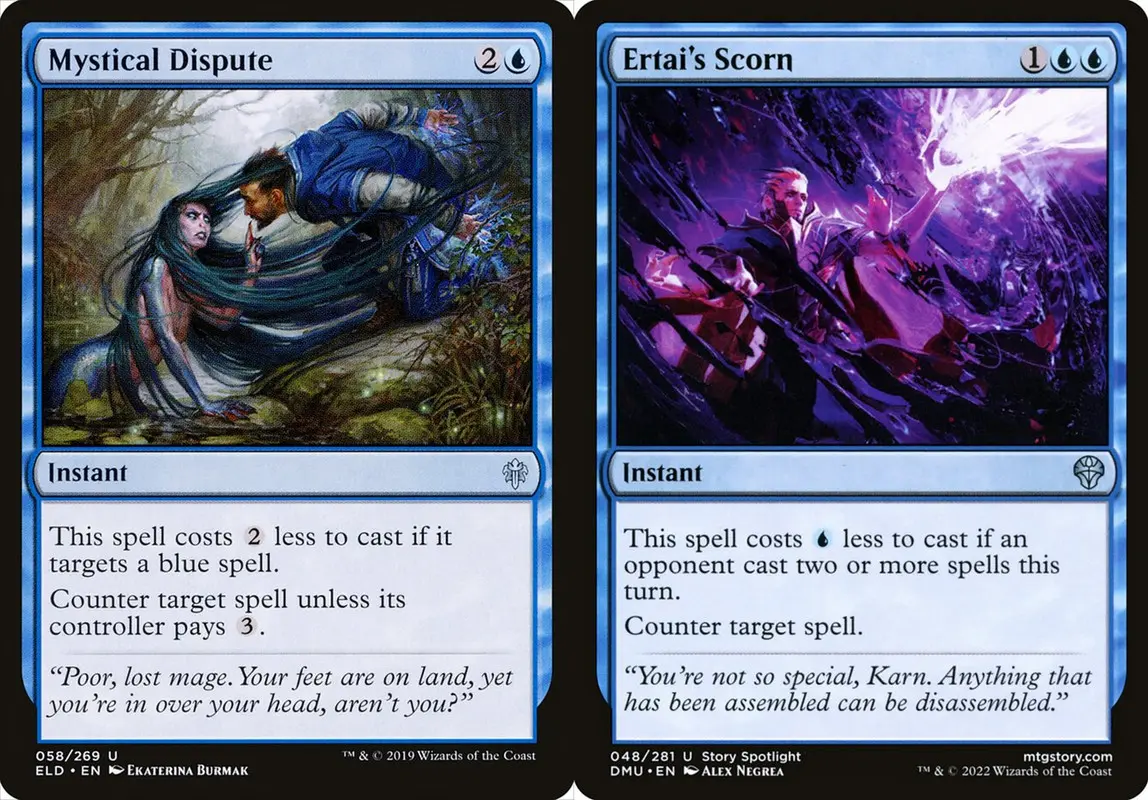
The four counterspells are a combination of Mystical Dispute and Ertai’s Scorn. You must have at least one Ertai’s Scorn: besides being able to counter a Cascade spell on turn two on the draw, in most matchups the opponent assumes that after you’ve used up your Force of Negation, anything that gets around Mystical Dispute will resolve, and then Ertai’s Scorn, which works just like Cancel, is very useful.
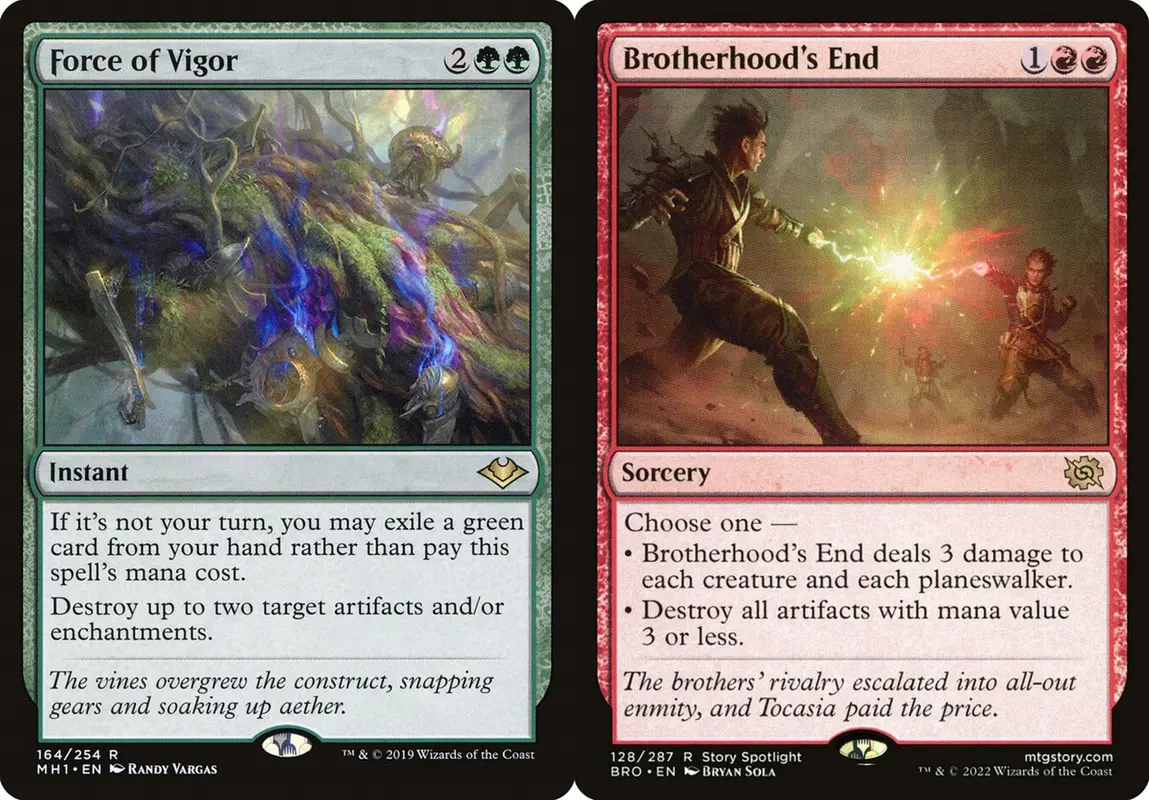
The four removal pieces are a combination of Force of Vigor and Brotherhood’s End. I decided on at least two Brotherhood’s End: besides destroying Hammers and Scales, against Domain Zoo it can also sweep 8 cats and 4 monkeys (Wild Nacatl, Nishoba Brawler, Ragavan, Nimble Pilferer), Lavinia, Azorius Renegade, Meddling Mage or Drannith Magistrate. Against Yawgmoth it can also sweep away Grist, the Hunger Tide, Delighted Halfling and Soulless Jailer.
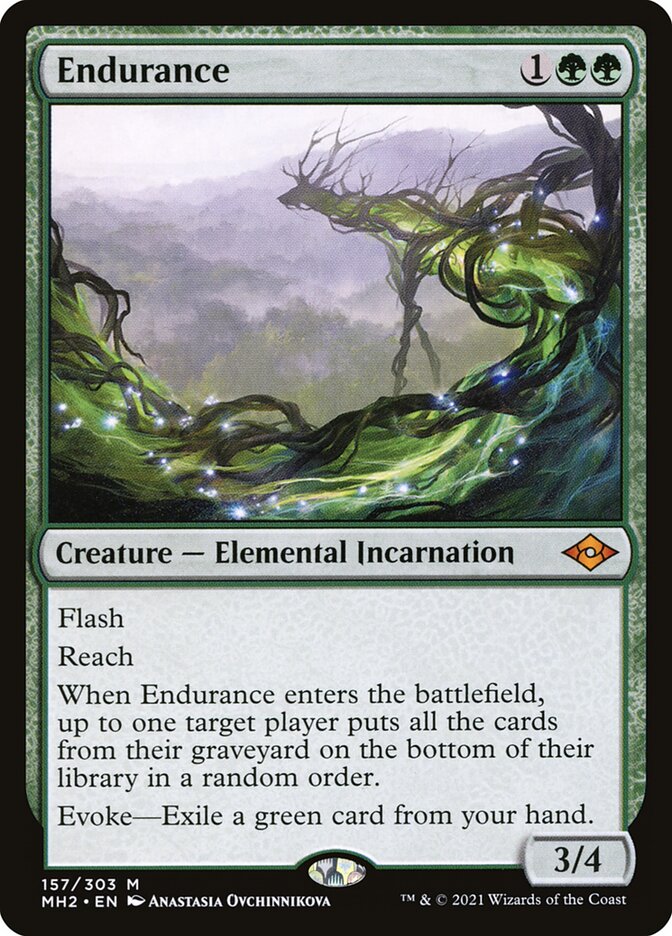
The four Endurance are against the deck’s natural predator, Living End, and for when you feel the game is dragging on and you need more Rhinos shuffled back in.

Magus of the Moon is just one copy, there to scare opponents when they look at the Open List; I didn’t think there would be many Green Tron decks this time. I chose the creature Magus of the Moon rather than Blood Moon because, first, removal is very strong now, Force of Vigor is impossible to guard against, and Boseiju, Who Endures can’t stop it either; second, he is a Wizard and can go with Flame of Anor.

Last is Kogla and Yidaro, which many people asked about. I first saw this card in Amulet Titan sideboards. I think the idea is similar to some Amulet decks putting Trumpeting Carnosaur in the sideboard: using a creature’s ability to get around counterspells to deal with artifact // enchantment haters like Blood Moon or Chalice of the Void. And the two abilities of hard-cast Kogla when it enters cover quite a lot, so I play one as a universal sideboard card.
- The fight from hard-casting it at six mana can deal with haters like Dauthi Voidwalker, Soulless Jailer, Lavinia, Azorius Renegade, Drannith Magistrate, Meddling Mage, or Magus of the Moon;
- And when undisturbed, it can even attack with haste to take out Teferi, Time Raveler, or kill an opponent with a low life total in one hit.

Sideboarding Strategy
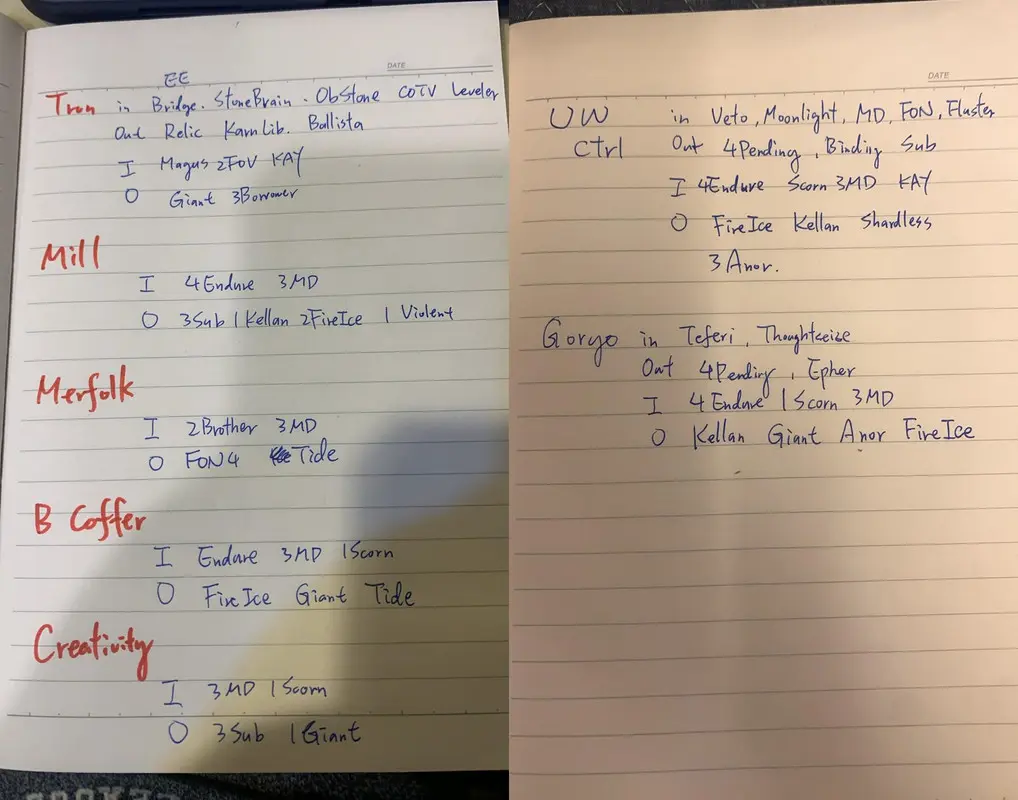
Next is my sideboarding strategy. The picture above is one of my sideboard notes. With the internet being so developed now, you can find guide videos or articles for every deck, so I went through the strategies of all the major decks against Rhinos. For this I prepared strategies for sixteen decks, knowing what they are thinking, roughly which cards they will take out, and whether the cards I bring in are still effective.
With the sideboard strategy well prepared, during the tournament you can tell from the Open List what they will bring in, and you can guess fairly accurately what they will take out; you can even infer from the cards they kept that they probably aren’t familiar with the matchup. I also read the Complete Guides for Amulet and Yawgmoth twice, so I roughly know what to watch for in different situations. In short, the more time you spend studying your opponents before the tournament, the less panicked you’ll be when you meet them.
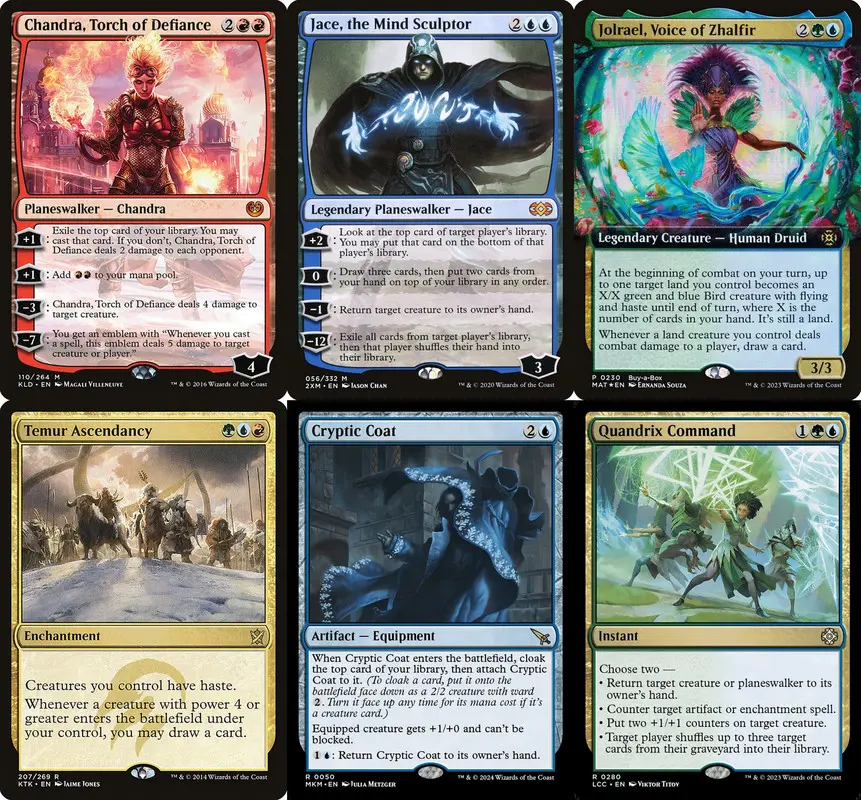
Finally, I had originally considered the cards above, but I didn’t have time to test them and wasn’t sure whether to put them in the main deck or the sideboard, so I’ll leave them to see whether I get a chance to test them later!
MIT#5 Quick Tournament Report
I don’t remember the details of the matches clearly, so please bear with me, opponents. For the decklist and match records, see the match list on Melee.
Round 1: Golgari Goryo’s Vengeance 2-1
- In game one, on the draw, I got wiped out by a turn-three Emrakul, the Aeons Torn.
- Unfortunately my sideboard notes didn’t cover this deck, but luckily Endurance held things together; in games two and three I won a tug-of-war using removal, burn, bounce and the Construct tokens made by Urza’s Saga.
Round 2: Green Tron 2-1
- In game one, a quickly assembled Ulamog, the Ceaseless Hunger made me concede.
- After siding in, with counters and removal it was easy to play against, and I even summoned Generous Ent to beat down.
Round 3: Azorius Control 1-1

On to the feature match!
- In game one, after being locked down by Narset, Parter of Veils and Geier Reach Sanitarium, I quickly conceded and moved on to the next game.
- In game two, I countered The One Ring and smoothly punched through the opponent.
- Game three ran out of time; the opponent drew Supreme Verdict off a cycling land, and I couldn’t deal the last few points of damage, so it was a draw.
Round 4: Azorius Control 2-0
The Open List confirmed there was no Narset, Parter of Veils, which felt much better. In both games I didn’t play it safe and just made Rhinos steadily, attacking with creatures every turn and slowly chipping away at their life total to win.
Round 5: Rakdos Scam with Blue 2-0
On the Open List I saw three main deck Tishana’s Tidebinder and three sideboard Mystical Dispute (shocked)
- In game one I got Scammed once, but Rhinos held on and I won.
- In game two my cast Rhino got hit by Tishana’s Tidebinder, and I pushed it back with Subtlety and won.
Round 6: Amulet Titan 2-0
One of the opponent’s deck cards was bent; I called a judge to check and then won. I heard it was Vesuva @@
Round 7: Mono-Black Coffers Intentional Draw
Top 8: Selesnya Ballista Company 2-1
Looking at the Open List, I hadn’t seen Company in a long time and it was different from what I imagined. Main deck had Boromir, Warden of the Tower and Agatha’s Soul Cauldron, sideboard had The Battle of Bywater, Boromir and Mirran Crusader.
- Game one, on the play, Rhino on turn three, and on turns four and five I used Adventure Borrower + Bonecrusher Giant to disrupt and win. My notes had nothing on Selesnya Company, so I took out Force of Negation and brought in Brotherhood’s End, Ertai’s Scorn and Kogla.
- Game two, the ground offense was held by Auriok Champion, Heliod, Sun-Crowned and Conclave Mentor, and with the sun god giving the Mentor lifelink I simply couldn’t race.
- Game three, I went off: the opponent mulliganed three times and played only Forest and Boseiju.
Top 4: Golgari Yawgmoth 2-1
The Open List looked like a typical Yawgmoth deck.
- Game one, on the play, turn-two Bonecrusher on Delighted Halfling, Rhinos on turns three and four, Subtlety pushed Yawgmoth back once, and finally Yawgmoth arrived, but my creatures and life total couldn’t hold up against four Rhinos.
- Game two, the opponent played mana dorks on turns one and two; I made a Rhino on turn three and kept Endurance in hand. The opponent’s turn-three Yawgmoth threw -1/-1 and drew a ton of cards, my Rhinos all died next turn, and after Hapatra, Vizier of Poisons entered none of my creatures could stay on the board.
- Game three, my opening hand was two Mystical Dispute, Brazen Borrower, Endurance, Violent Outburst and two lands. The opponent Thoughtseized away Violent Outburst, then kept developing with Wall of Roots, Halfling and Young Wolf. I played Endurance to hold off the ground offense, and the opponent kept drawing lands and mana sources. Along the way they played an Agatha’s Soul Cauldron and, after two activations on Wall of Roots, neither graveyard had creatures. I drew a Flame of Anor and a Lórien Revealed, jumped in with Brazen Borrower, and attacked for four turns to win.
After the game, the opponent flipped over Chord of Calling off the top of their library, but in my hand I had two Mystical Dispute, Brazen Borrower, Endurance, Tishana’s Tidebinder, Flame of Anor and Ertai’s Scorn…
Finals: Mono-Black Coffers 2-1
I looked over the Open List first: both main deck and sideboard had Dauthi and Deadly Cover-Up, which is a pain, but luckily the opponent wasn’t going to Worlds, which gave me a chance to realize my dream!
Conclusion
Some people say that what Taiwanese players do best is copy a Top 8 deck and then ruin it with their own tinkering before they’re willing to take it to a tournament 😆
I don’t think so. In a national team qualifier Standard event I once played Basilisk Collar in Jund, going 6-0 in the constructed rounds; and in White-Blue Lark I played Loxodon Warhammer and beat up a bunch of mirror matches. Spending more time testing and fine-tuning a deck is definitely better than copying a deck while only half understanding it.
I got into Magic in high school, and twenty years have gone by like one day. I’ve played in plenty of the old national team qualifiers, but I never imagined I’d win a championship during the busiest time of life with three little ones. I’ve taken this Rhino deck to tournaments only three times, which is truly very lucky. I hope to keep winning glory for Taiwan at Worlds!
- Title
- The Last Dance of Temur Rhinos - The MIT#5 Champion's Journey and Tournament Report
- Author
- David Yeh
- Created at
- March 16, 2024
- License
- This work is licensed under CC BY-NC-SA 4.0 .