A First Look at Standard with Outlaws of Thunder Junction



Note: This article was translated from Chinese by AI and may contain errors. Read the original Chinese version.
Before We Start
With the release of OTJ, Standard has reached the largest card pool in its history. At a moment when constructed offers the most options ever, what changes can the new set bring to Standard? Let’s Brainstorm!
Note:
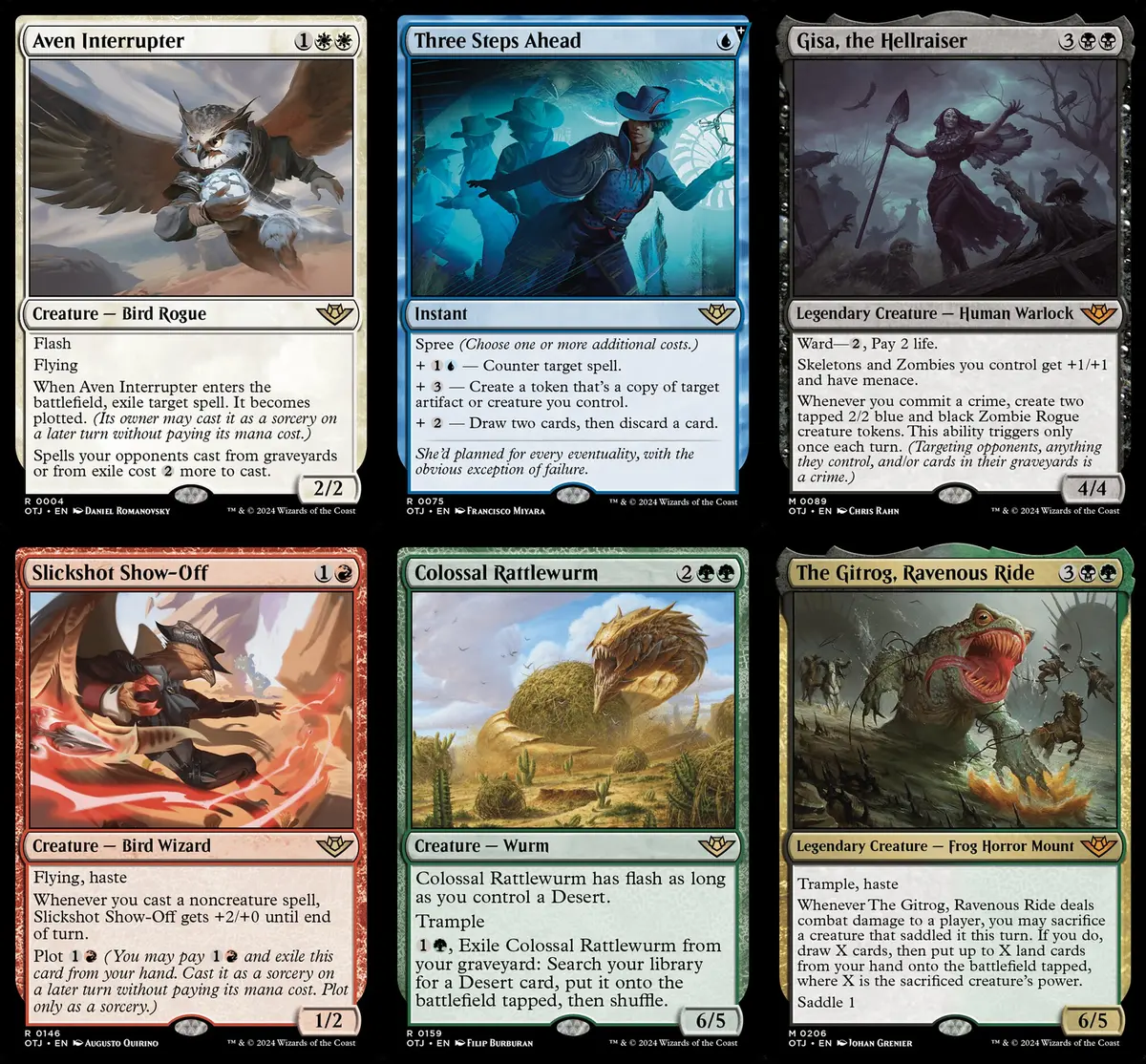
This article focuses on creative lists that were rarely seen in the previous metagame, and on decks that have improved significantly thanks to new individual cards.
Deck Introductions
Golgari Midrange
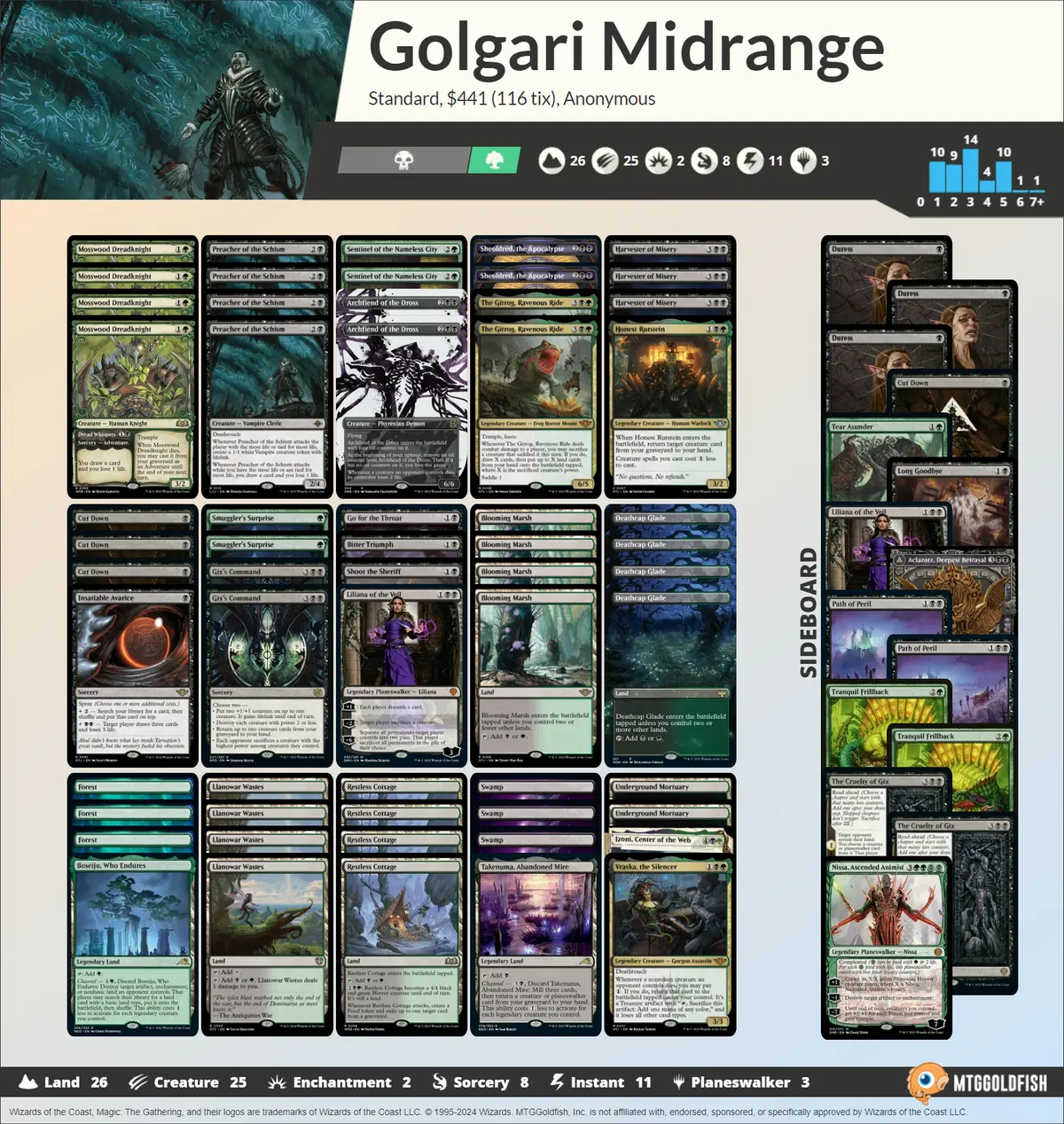
Outlaws of Thunder Junction brings back five enemy-color fast lands, which completes the mana curve of enemy-color midrange decks. The addition of Blooming Marsh lets Golgari develop more smoothly in the early game. On the draw, you no longer face the cruel choice of whether your first land should be a Golgari tapped land or a Swamp, or whether to keep black mana open so you can use Cut Down at instant speed to kill your opponent’s two-drop and regain tempo. Basically, this is still the existing Golgari Midrange build with new OTJ cards tried out, so let’s see what’s new!
For spells, it uses two new Spree cards and a new two-mana black removal spell:
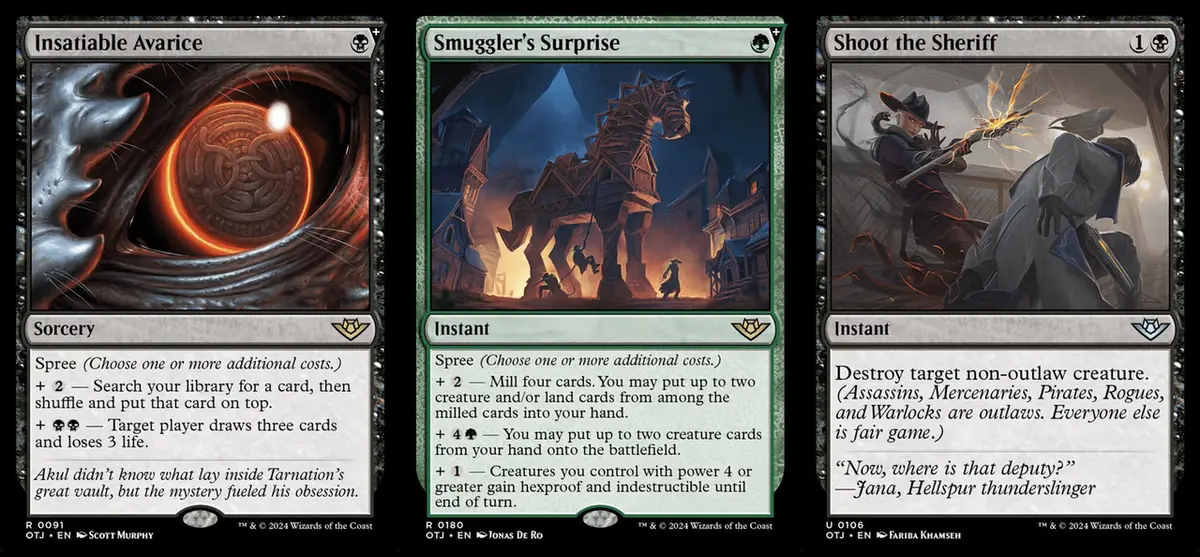
- Insatiable Avarice can act as a weakened Grim Tutor without paying 3 life; or you can pay 3 life to draw 3. Paired with Sheoldred, the Apocalypse it can become “gain 3, draw 3”, or “drain your opponent for 9 and draw 3” to finish the game. Basically I chose this card to maximize how often I find Sheoldred and the effect it has. I want at least three Sheoldreds in my deck, but I don’t want to draw three of them XD
- The other card, Smuggler’s Surprise, is very flexible. I can pay three to mill four and take two creature/land cards into my hand, or pay two to give a creature with power 4 or greater hexproof and indestructible until end of turn. In the more extreme case, there is a cap of six mana at instant speed to put two creatures from my hand onto the battlefield. That probably won’t come up often, but it should be useful against control decks, and even if it gets Countered, I can just slam creatures down next turn to regain tempo.
- I also tried one Shoot the Sheriff. Cards like Power Word Kill always run into the awkward situation where you can’t use them when you want to, but since most of the strong cards from the last metagame are not Outlaws, I figured I’d put in one copy to test.
For creatures, these are the ones I want to prioritize:
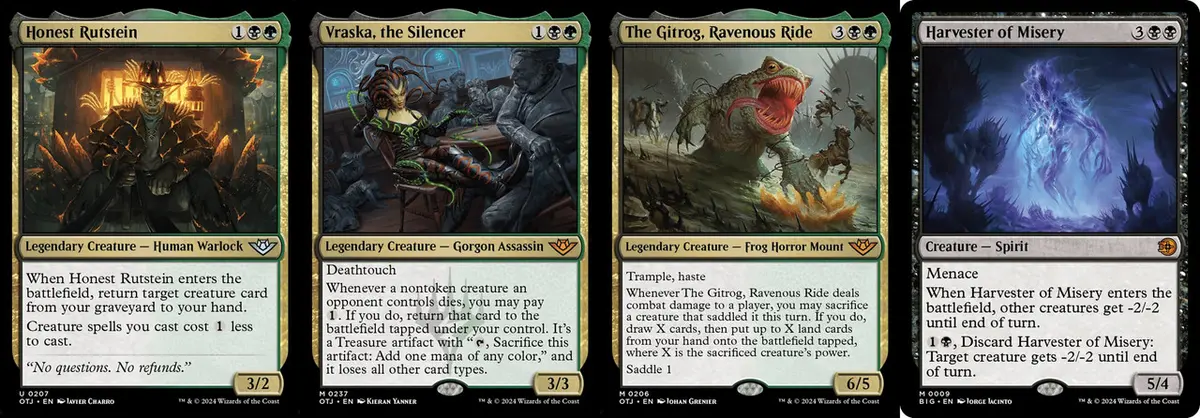
- Honest Rutstein: The new version of Old Rutstein can pick up cards from the graveyard and make creature spells cost one less. I believe it should perform well in Golgari, a color pair that earns advantage and resources through quality creatures!
- Vraska, the Silencer: A test card. It doesn’t die to Cut Down, and our removal can turn the opponent’s creatures with abilities into treasures for us. A two-mana removal spell, then one more mana to gain your opponent’s Sheoldred, the Apocalypse? Try it!
- The Gitrog, Ravenous Ride: A 6/5 trampling haste frog for five mana. Haste is strong against control! As the best Mount in OTJ, the frog can also sacrifice the creature riding it to draw cards and ramp, so the four-drop slot brings back Archfiend of the Dross to raise the deck’s ceiling.
- Harvester of Misery: Another new card from a subset: The Big Score (BIG). It gives us denser early removal, but mainly it is for annoying creatures like Grand Abolisher and Thalia, Guardian of Thraben that your opponent may have: kill them for two mana and then it’s our turn! The -2/-2 ability also gets around the opponent’s Counterspell and Duress more easily. Slamming it down as a 5/4 for five mana as a small sweeper is also acceptable, which is why this Golgari list doesn’t use cards like Deep-Cavern Bat. What? Kill something on turn two, then on turn three bring Honest Rutstein back to get it again? So nice!
Azorius Flash
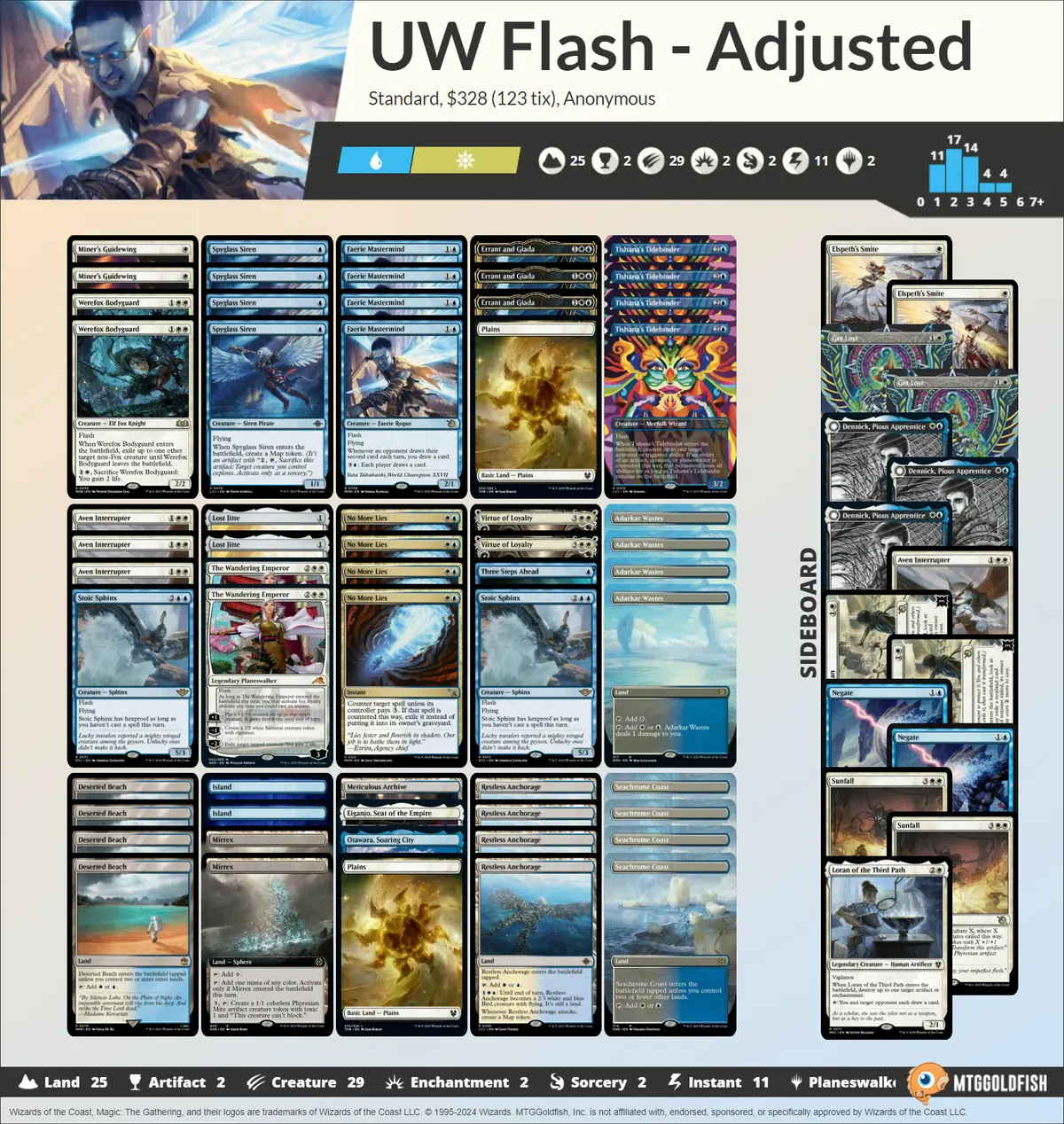
Azorius Flash already exists in the current Standard. It mainly relies on Errant and Giada, The Wandering Emperor, and a whole bunch of flash creatures to keep the opponent running around in circles. Let’s see what new reinforcements Outlaws of Thunder Junction brings us!
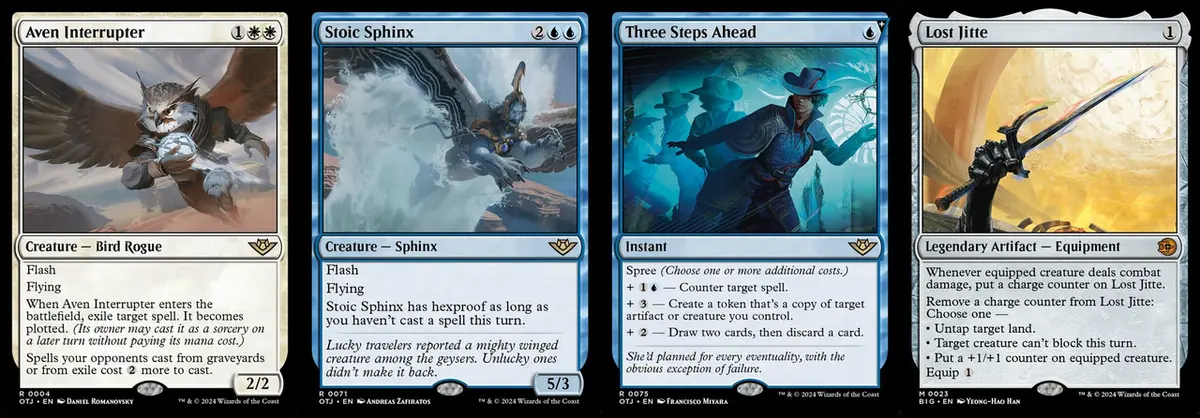
Aven Interrupter: A 2/2 flash for three that exiles a spell and plots it. The opponent has to pay two more when casting it later, which is well suited to suppressing midrange decks that only cast one spell per turn, or, when your own spell is about to get countered, you can exile it with Aven and use it later. One issue is that if the opponent’s spell is a sweeper or another finisher, Aven may only buy you one turn, and you still have to face the free cast next turn, so when using it you need to consider whether you will still have answers next turn.
Don’t forget that as long as Aven is on the battlefield, spells your opponent casts from exile or the graveyard cost two more. If the opponent doesn’t have enough mana, you can also consider playing several Avens so almost all of their plotted spells can’t be cast! You might even catch flashback or impulse draw effects (exile the top X cards, and you may play them until the end of your next turn)!
Stoic Sphinx: A 5/3 flash flyer for four mana. It has hexproof as long as you haven’t cast a spell, which is a great fit for a flash deck that doesn’t take the initiative. It replaces two of the original list’s copies of The Wandering Emperor as a mid-sized finisher to test.
Three Steps Ahead: A three-mana Cancel, or loot two, are both fairly average but useful options, but the biggest value of this card is the four-mana instant mode that makes a copy of a creature or artifact you control. That makes it very flexible to use!
Lost Jitte: The new Jitte is much weaker than the old one, but the upside is that its casting and equip costs are also halved, which suits small evasive aggro creatures well. The current Azorius Flash build looks like a good home, so I put in two copies to test. The ability to make a creature unable to block may not be needed in a deck full of flyers (it can be used in mirror matches), but the other two, putting a +1/+1 counter on your flyer at instant speed or untapping a land, which boosts Azorius Flash’s tempo. The only question is whether you can reliably put charge counters on it. If Jitte still isn’t strong enough in testing, it can be cut later.
However, considering that Grand Abolisher will be in the Standard environment, Azorius Flash’s tempo will become very clunky once Abolisher arrives. And when they have to come down at sorcery speed, most of your creatures are smaller than the opponent’s by more than a little. Whether you can find an effective way to deal with Grand Abolisher right away or stop it from entering will be an indicator of whether Azorius Flash can survive in the new Standard.
Mono Black Midrange
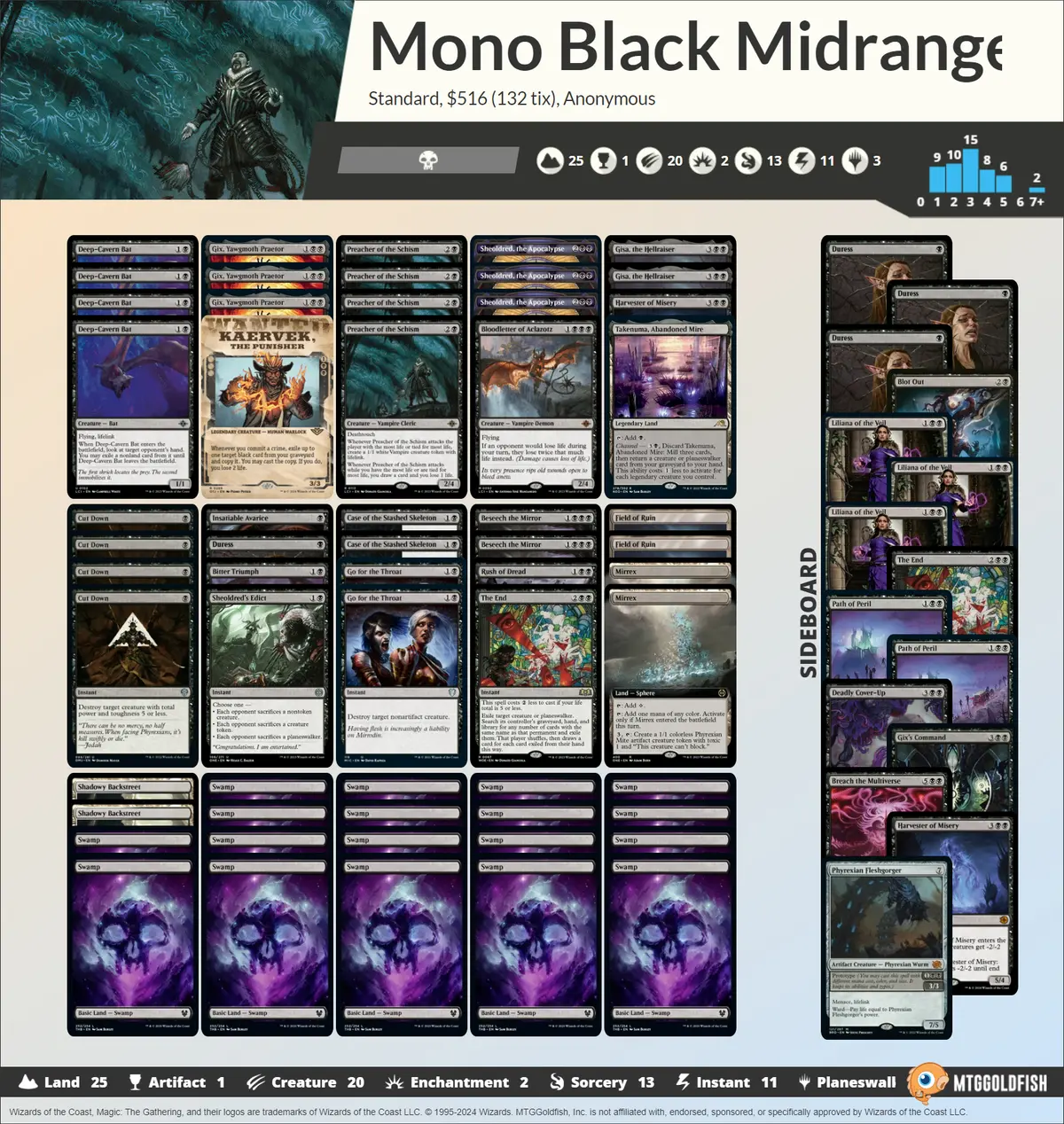
Gisa the Hellraiser is my big sis, great, deck built! Speaking of big sis, how could we forget Sheoldred, the Apocalypse and Liliana of the Veil? Hm? The two-card Corpse Express kill combo of Bloodletter of Aclazotz and the new OTJ card Rush of Dread is so cool! And what if you can’t assemble all those key pieces? Then let’s throw in Beseech the Mirror and Case of the Stashed Skeleton…
Only kids make choices! I want them all!
The way it plays is basically a Mono Black Midrange deck with an add-on combo. It still uses the standard curve of Deep-Cavern Bat on turn two, Gix, Yawgmoth Praetor on turn three, and Sheoldred, the Apocalypse on turn four. The new OTJ cards Kaervek the Punisher and Gisa the Hellraiser are both black payoff cards that are good at committing crimes.
Boros Prowess
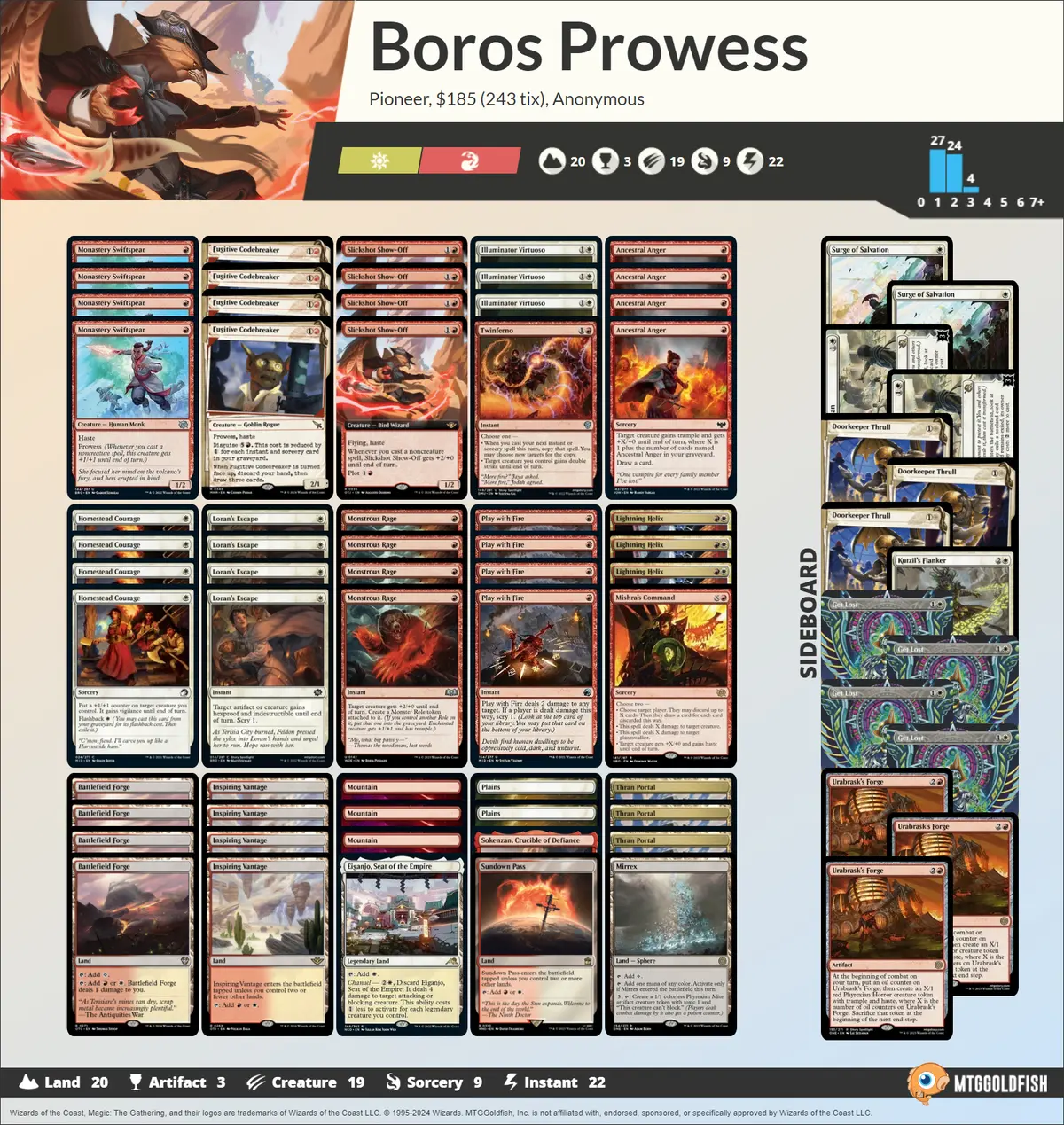
Outlaws of Thunder Junction brings us Slickshot Show-Off, a more explosive Kiln Fiend. Combined with the previously great red aggro creatures such as Monastery Swiftspear and Fugitive Codebreaker, plus the powerful white heroic creature Illuminator Virtuoso, along with plenty of cheap spells and, don’t forget, your Inspiring Vantage, ta-da! Boros Prowess takes shape!
As for the support spells, besides the must-play prowess spells, it uses Twinferno for an extra burn, or the traditional one-of in prowess decks, Temur Battle Rage, to let the red bird punch through the sky. Both perform very well. I also experimentally included one Mishra’s Command. Whether this long-neglected card is the final piece of the prowess puzzle or just another failed attempt is up to players to find out through testing.
As a side note, in testing this deck occasionally still ends up with the prowess and heroic axes not meshing. Illuminator Virtuoso can’t grow when your hand holds only burn spells, and without haste it is also one of the creatures in this deck that takes longer to make an impact. Cutting Virtuoso for a pure prowess build might be more harmonious; however, there are no other haste prowess creatures that can be cast for two mana in the current Standard, and cutting Virtuoso would also leave a shortage of creatures.
Mono Red Aggro
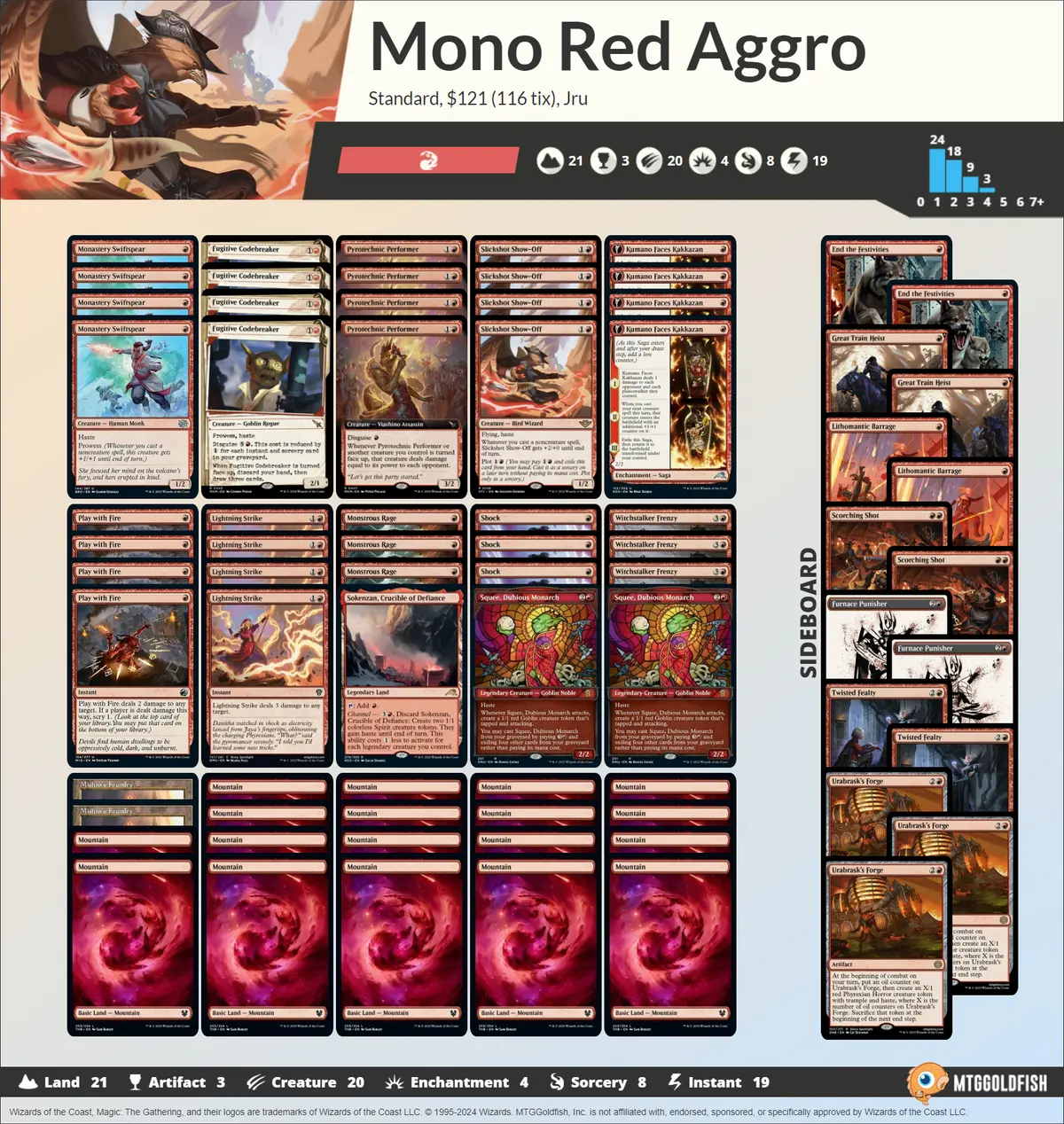
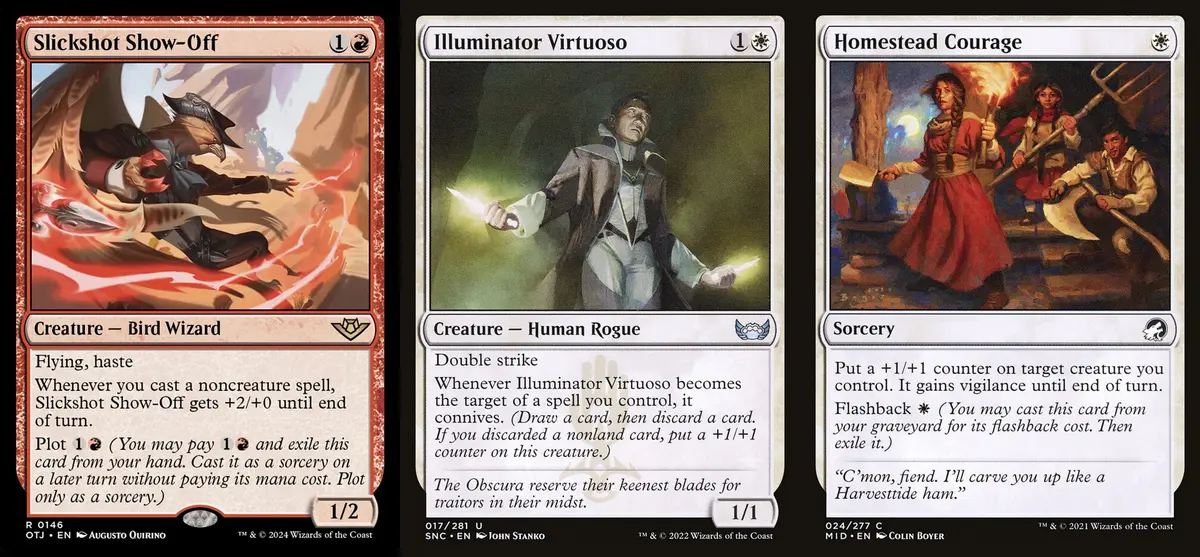
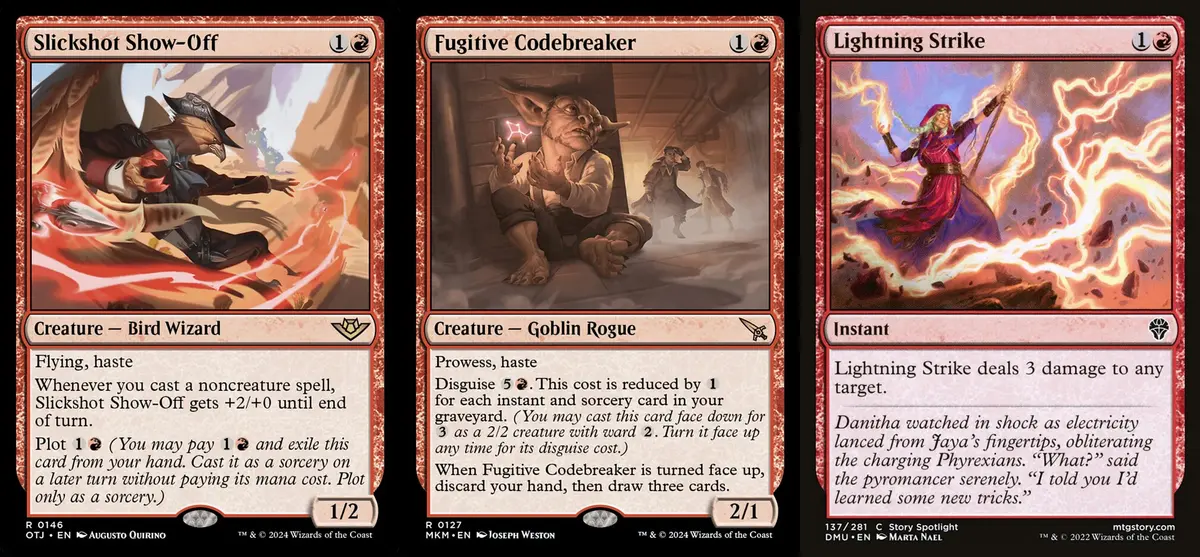
Fugitive Codebreaker in the last set already amazed me, and I didn’t expect this set to bring an even nastier Slickshot Show-Off, pushing red-based prowess decks to a whole new level. A two-mana flying haste pseudo-prowess creature that gets +2/+0 once per trigger is efficient enough as a beater by itself, and Plot is the finishing touch!
Some people might wonder why I would skip a turn and give up a hasty attack. If the opponent has no interaction like removal or Counterspell, it truly makes no difference, but if you judge that the opponent has the answer ready to deal with you, you can choose to plot Slickshot Show-Off first. That way, the mana the opponent held up for a turn to cast their removal may be wasted, and in later turns you get to make multiple threats in a single turn for a small amount of mana. Even if the opponent has enough removal in hand, they may not have enough mana to use it all. The addition of Slickshot Show-Off, without a doubt, raises both the explosiveness and the flexibility of red-based aggro by a notch.
Gruul Heroic
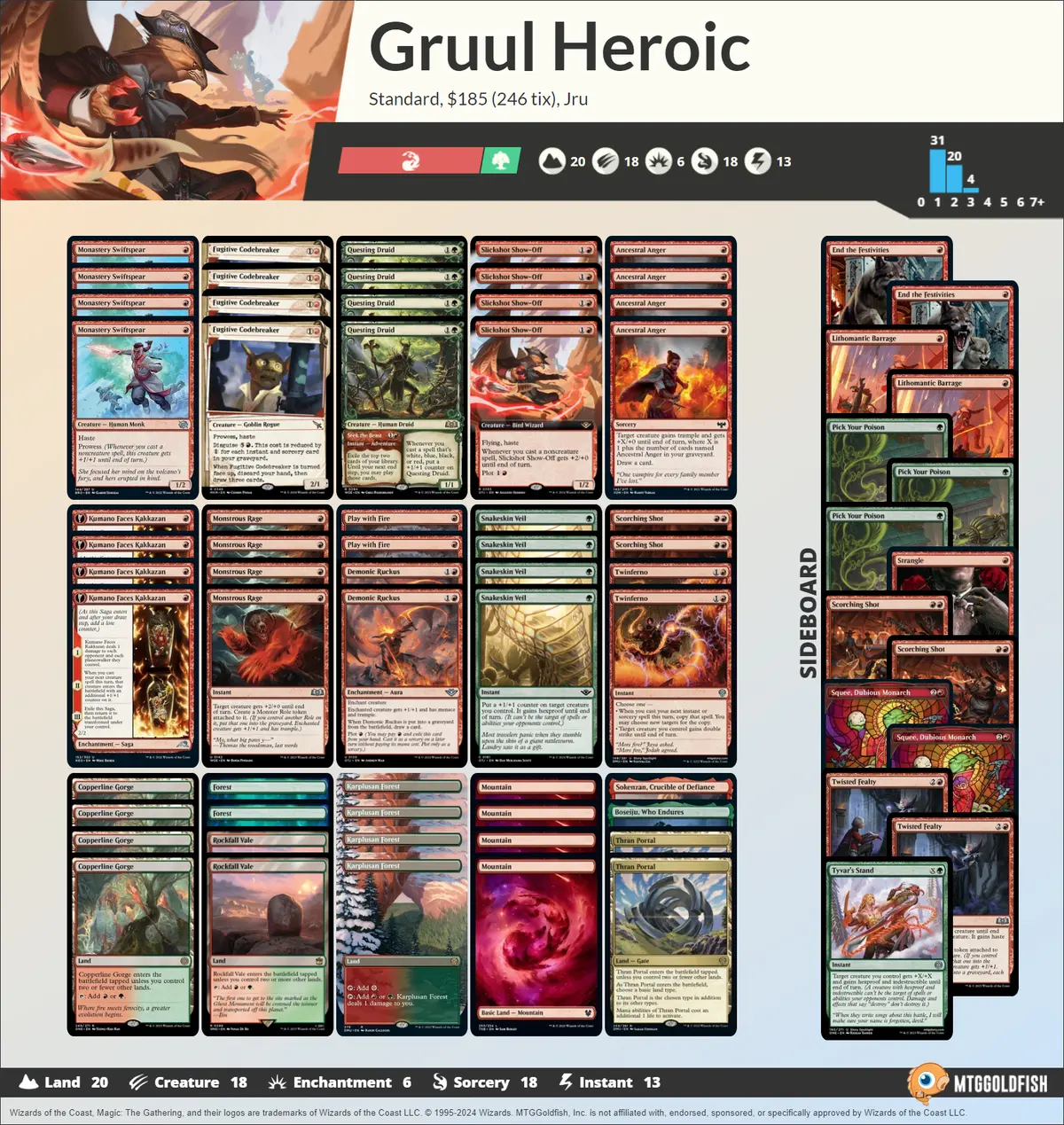
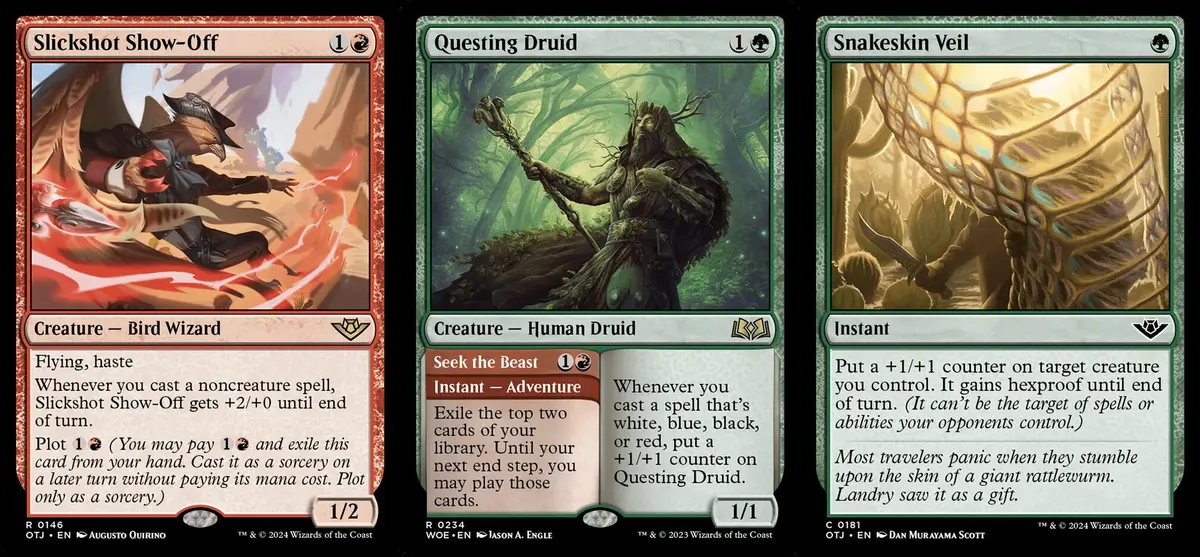
Once again it is Slickshot Show-Off’s show. It has terrifying burst in heroic decks too. Mixing in green gives access to protection spells and Questing Druid, which both draws cards and scales. Another easily underestimated card is Demonic Ruckus: Plot lets it deal more burst damage in a single turn, and menace plus trample help heroic damage get through defenses and hit the opponent directly.
Izzet Prowess
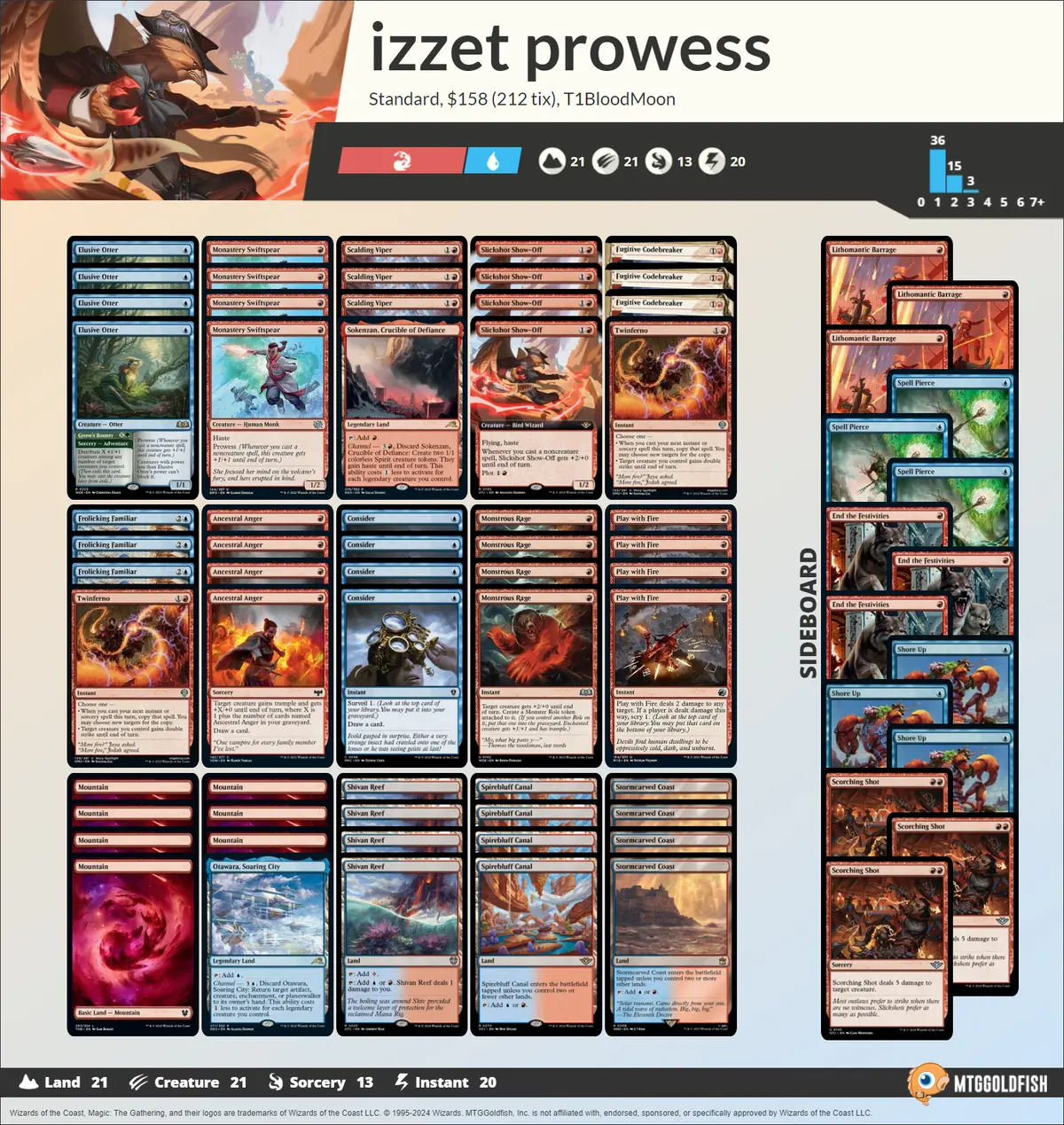
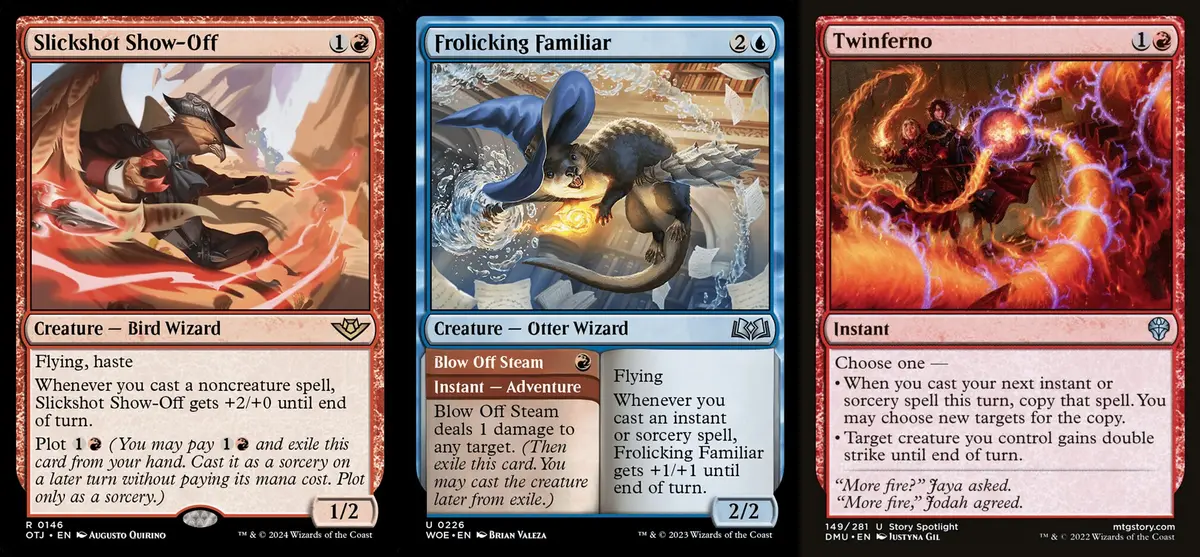
Yep, you guessed it, it’s Slickshot Show-Off again, but this time he brings his prowess buddy Monastery Swiftspear and two cute little otters, Elusive Otter and Frolicking Familiar. Izzet’s strength is creatures with flying or that can’t be blocked, giving them strong evasion on their own. Two Twinferno give double strike, raising the kill line another notch, and in the sideboard, blue contributes Shore Up for protection and Spell Pierce for pressure. If you don’t kill their creatures, you’d better be afraid that your opponent won’t even think about trading with your creatures and will just race you all the way to your face.
Mono Red Reanimator
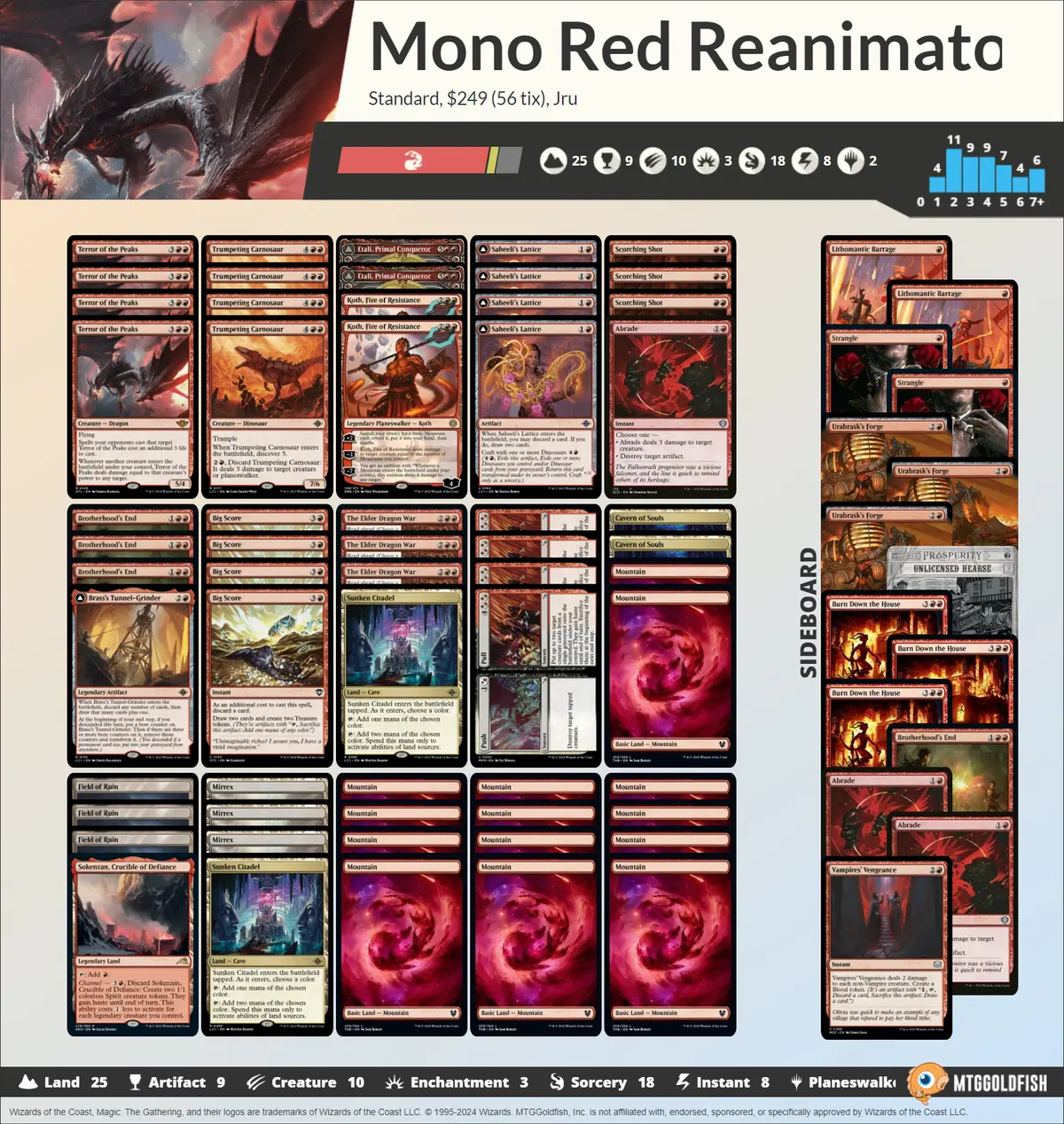
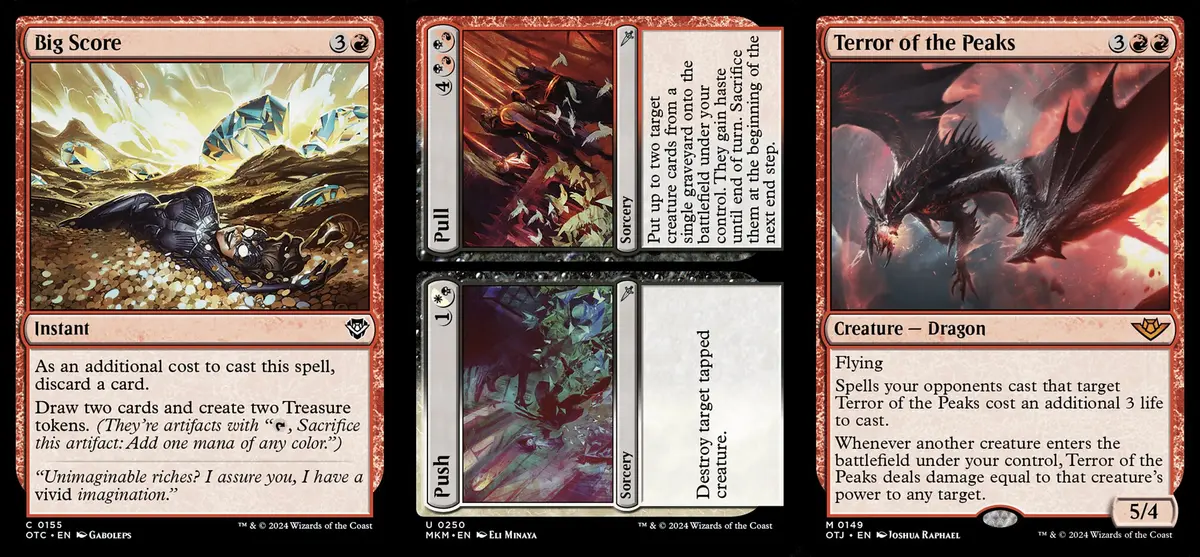
Push // Pull brings back two Terror of the Peaks at once. They see each other enter and each deal 5 to any target, and then the two 5/4 haste dragons rush out to attack, for a total of 20 damage. Fun game.
The deck as a whole is built on the reanimation tactics of Push // Pull. Trumpeting Carnosaur and Etali, Primal Conqueror are also quality reanimation targets commonly seen in Standard red reanimator decks. Add a certain ratio of removal and looting, and the deck is done.
Although the current version is Mono Red, it can also be freely expanded into a two-color deck. The most classic color pair is still adding black: besides greatly strengthening removal, you can also use powerful reanimation spells like The Cruelty of Gix and Breach the Multiverse.
Mono White Humans
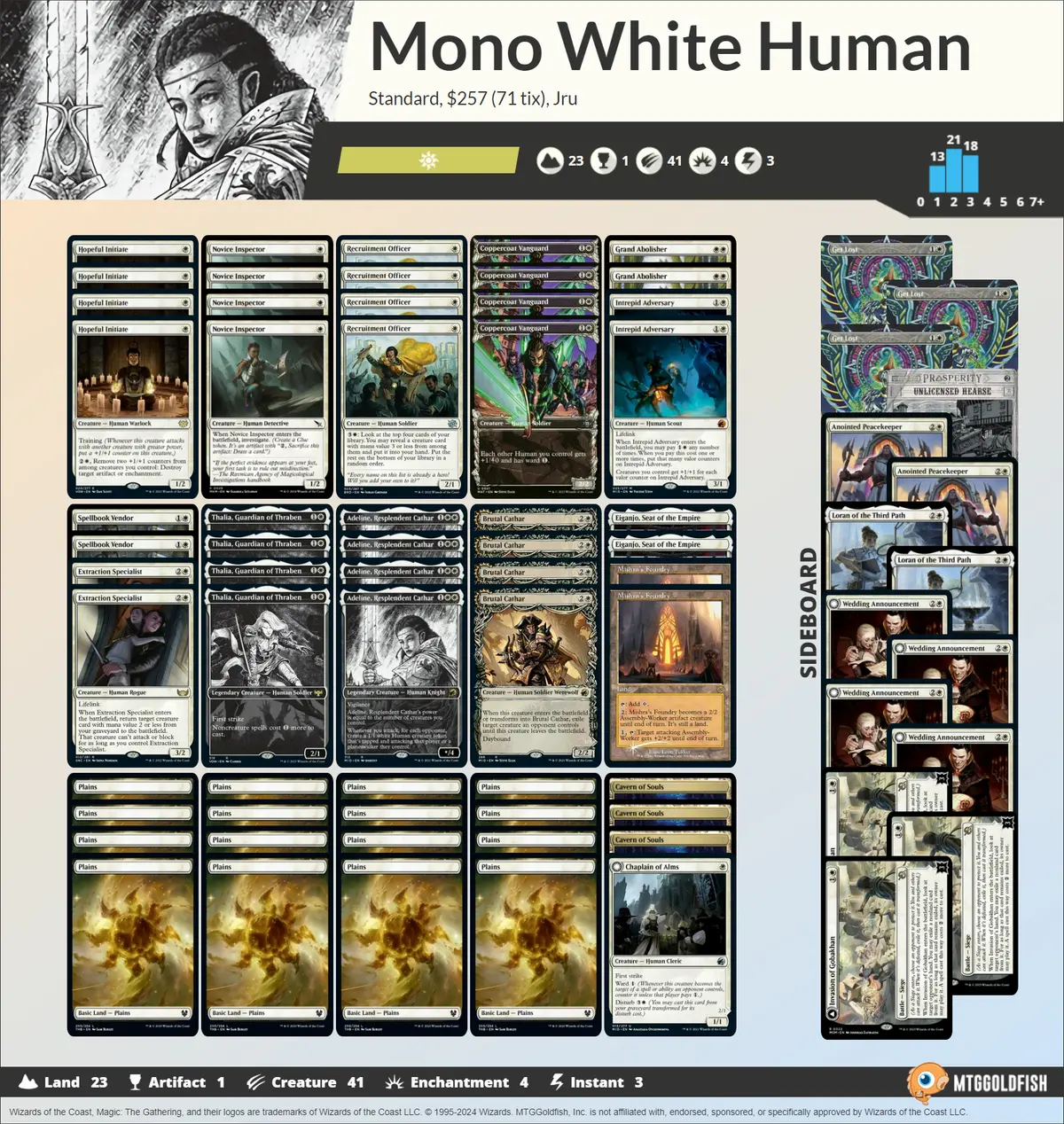
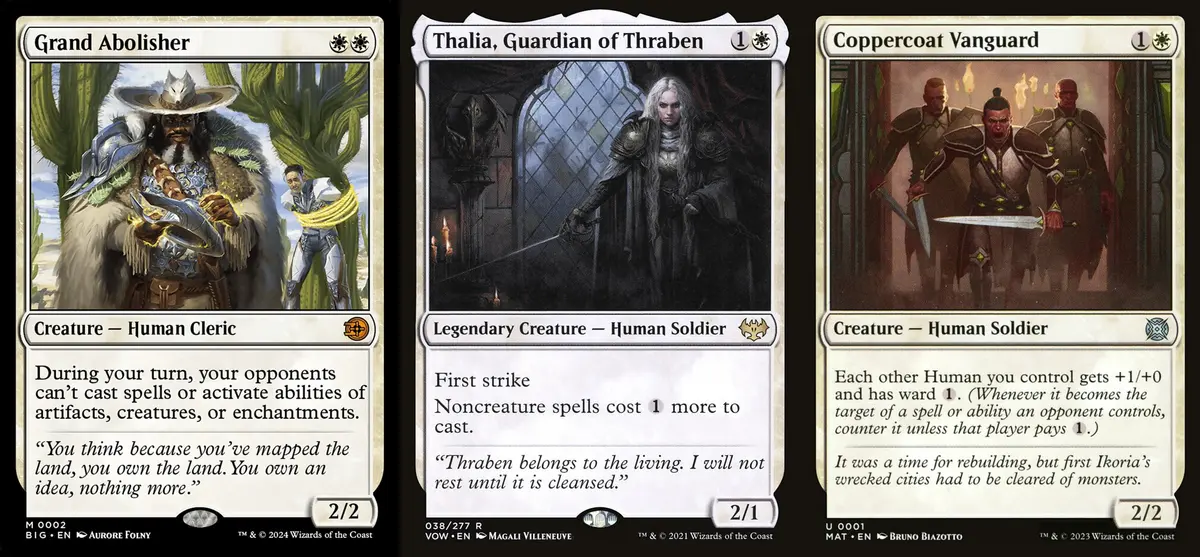
Grand Abolisher and Thalia, Guardian of Thraben cast with Cavern of Souls. This game is so fun, don’t you think? Lousy Counterspell players.
Mono Green Aggro
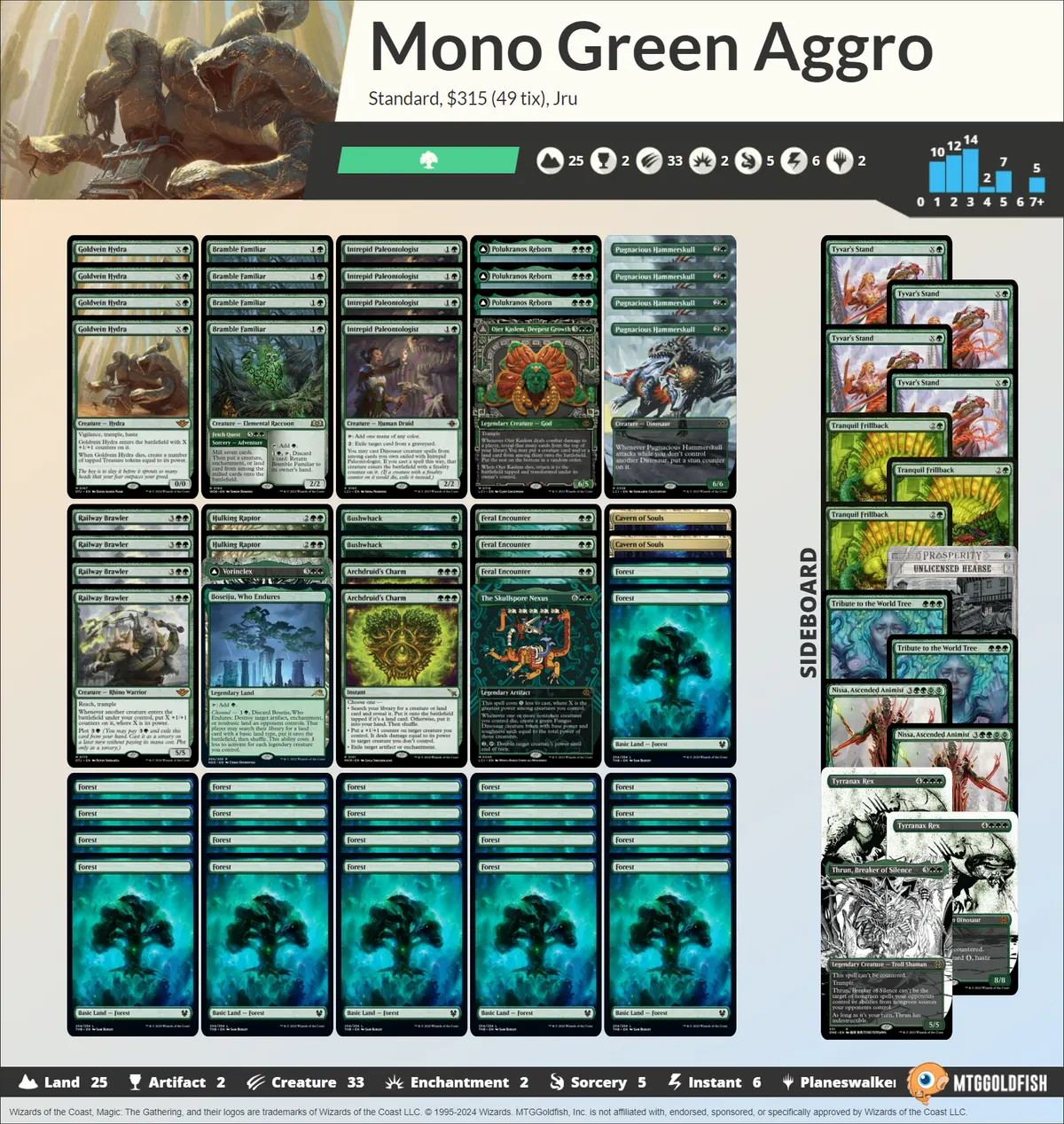
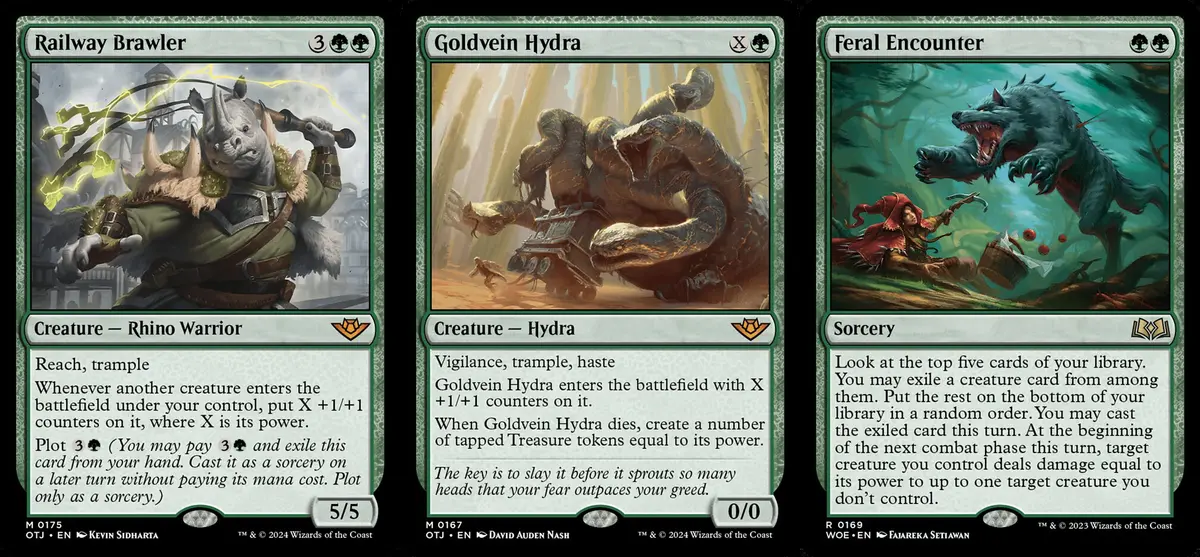
Mono green gained two new cards this time, Goldvein Hydra and Railway Brawler. Both fit green’s style: plain, no-frills, brutally large bodies, and both have trample, so they won’t be held up by throwaway small creatures from cards like Wedding Announcement that can chump block without regret.
Goldvein Hydra’s X-cost casting and its ability to create X Treasures when it dies make it a good curve play whenever you draw it. Even when cast early with X=2 or 3, it isn’t an attacker the opponent can ignore, and when it dies it bursts into a pile of Treasures, so the opponent may face an even more violent explosive board next turn. On top of that, it has vigilance, so the opponent always has to think about the consequences of trading with it.
Mono Black Aggro
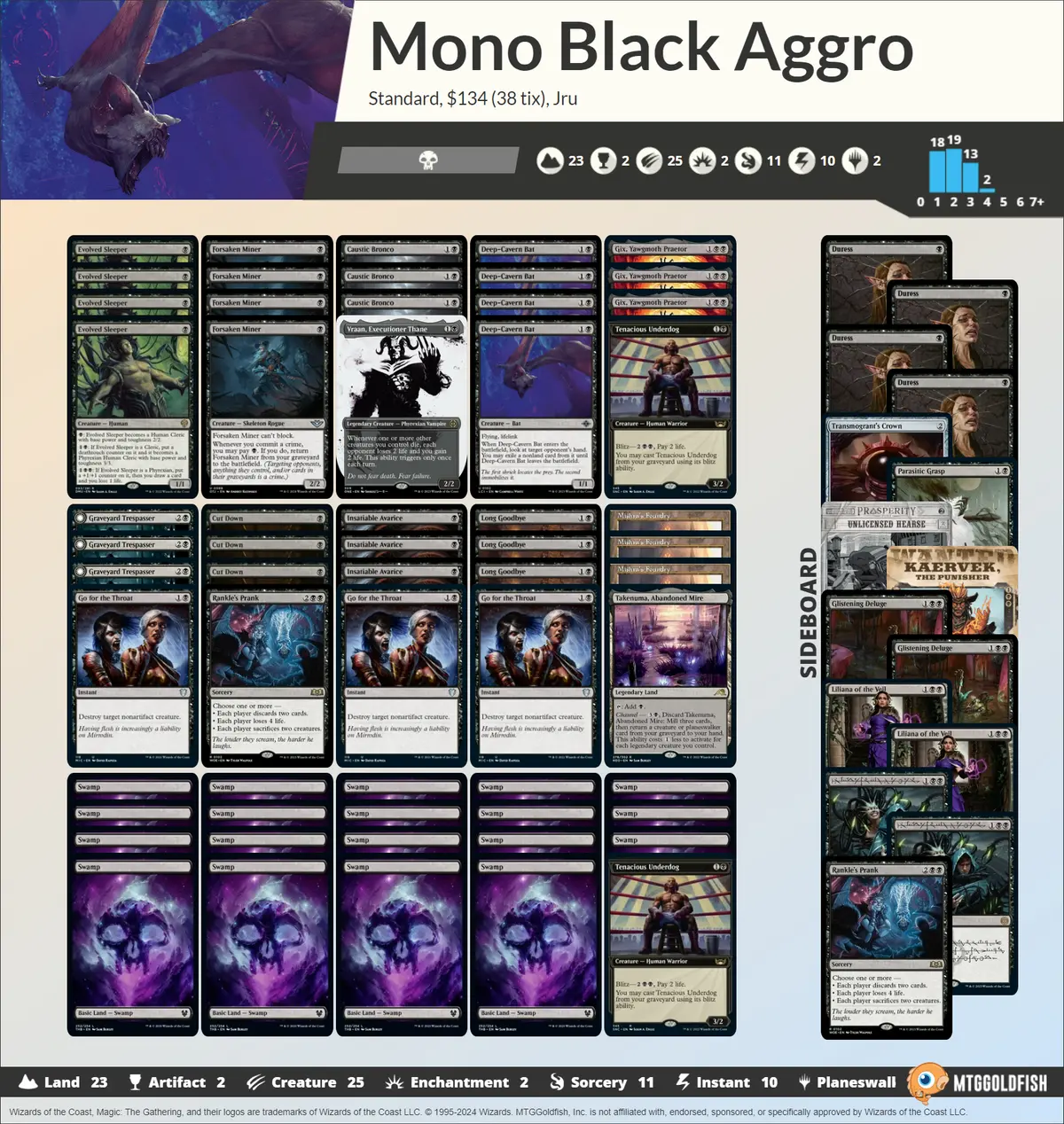
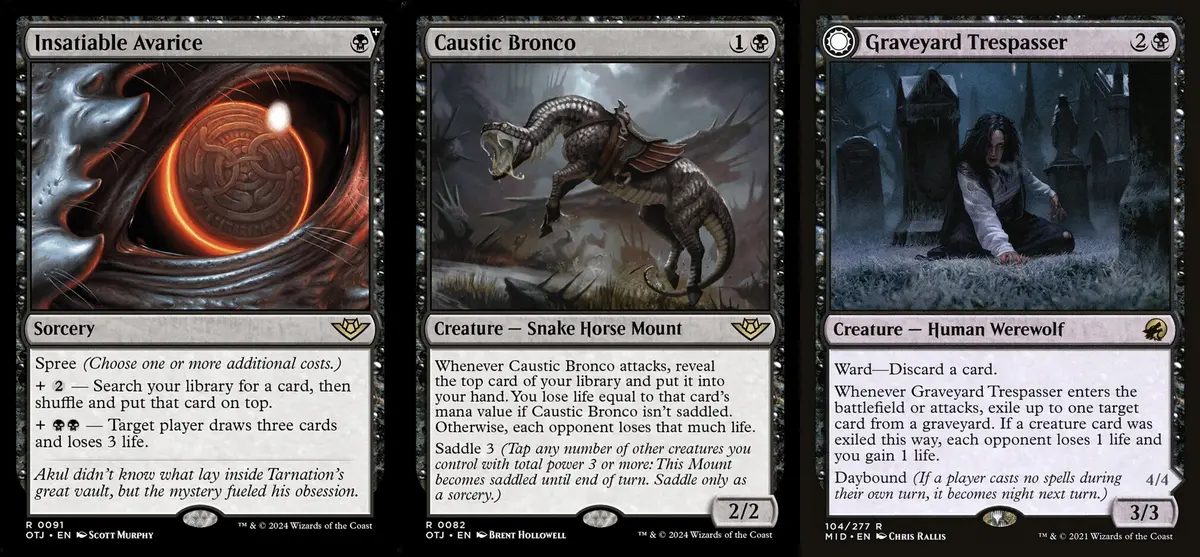
Dark Confidant’s pay-life-to-draw design is one of the classic black designs, and this set has a new Dark Confidant variant: Caustic Bronco, which keeps refilling your resources while you attack. Although saddling it avoids the drawback of losing life yourself, and can even make your opponent lose life instead, it still requires extra support, so the overall deck design still follows the idea of keeping your own mana curve low. That includes cards like Insatiable Avarice, which is actually a high-cost spell in practice, but as a card it counts as a one-mana Spree card.
Also, to make it easier to meet Caustic Bronco’s Saddle 3 requirement, the three-drop slot doesn’t use the recently popular Preacher of the Schism but returns to the embrace of the old friend Graveyard Trespasser. Although Graveyard Trespasser hasn’t shown up much lately, it still performs well in aggro decks, and its graveyard exile ability satisfies the commit-a-crime condition and also supports Forsaken Miner and Kaervek the Punisher.
Golgari Bargain
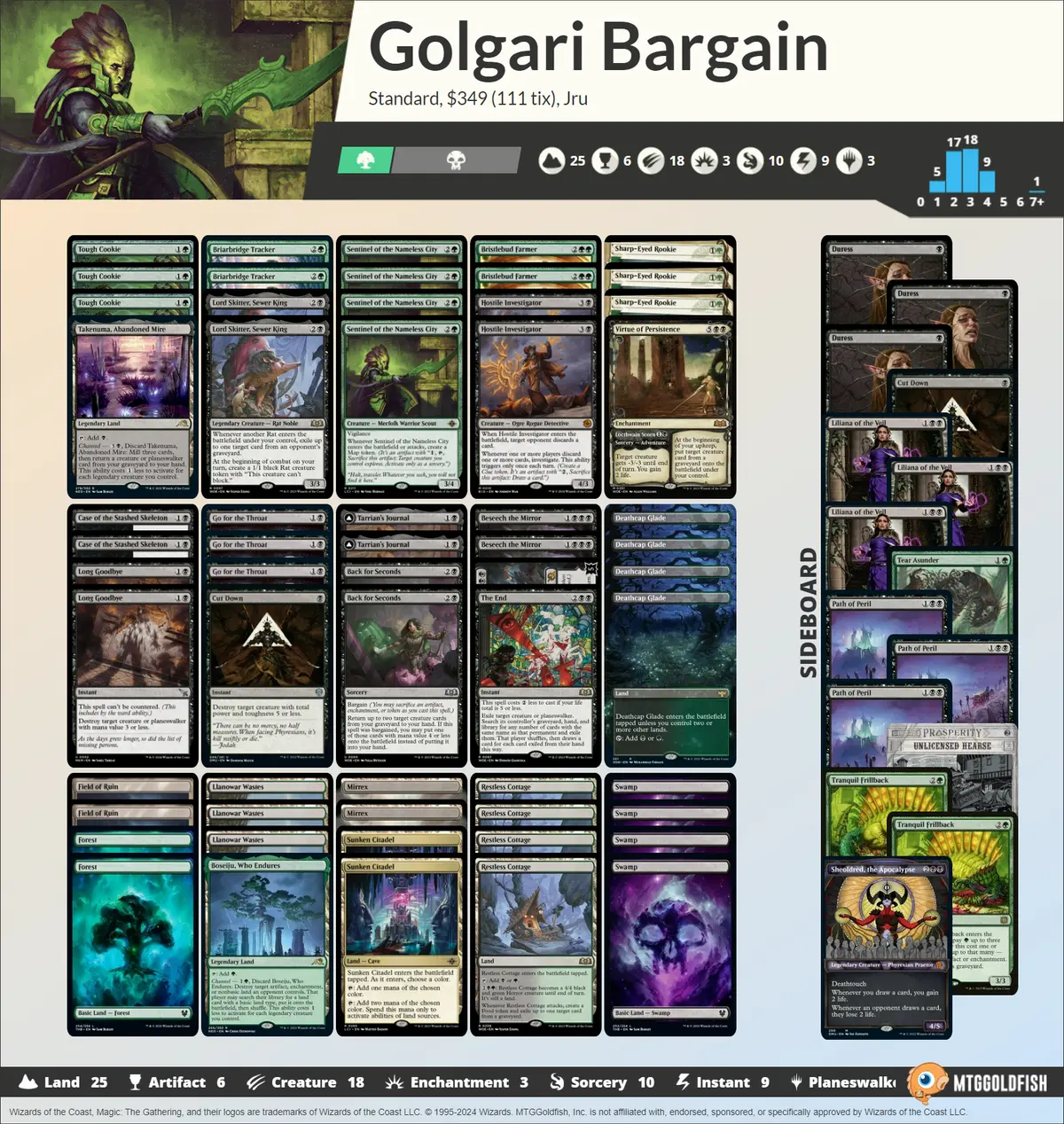
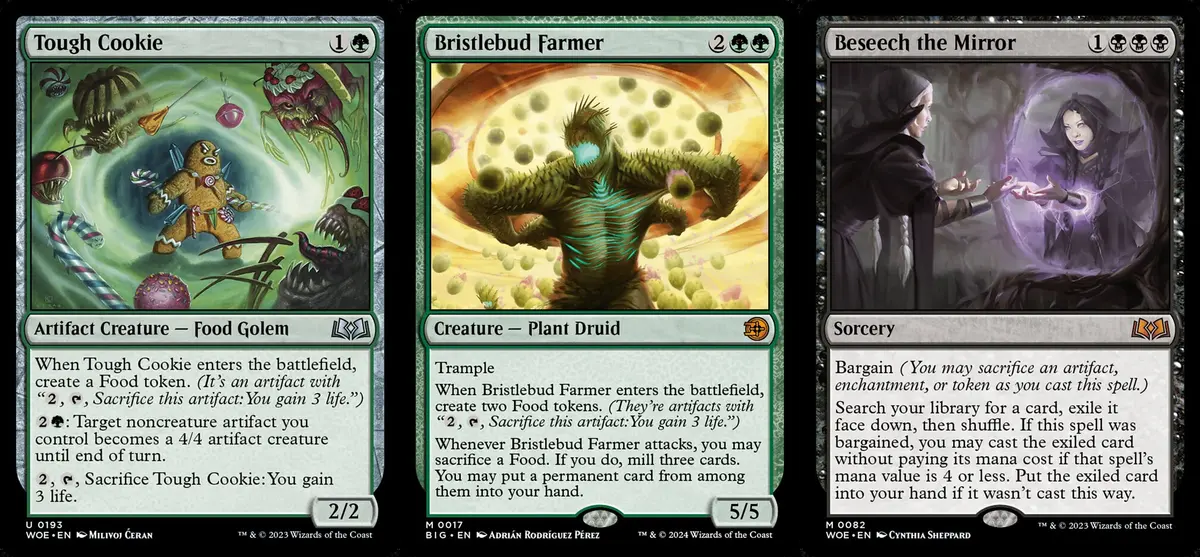
Standard currently has an overflowing supply of quality creatures that enter with artifact tokens, and now the four-drop slot adds two more card-advantage creatures, Bristlebud Farmer and Hostile Investigator. These artifacts can be converted into extra combat power by Tough Cookie, become bargain fodder for Beseech the Mirror and Back for Seconds, or provide activation points for Tarrian’s Journal to draw cards, and so on. You could say they have plenty of uses.
Dimir Bloodletter
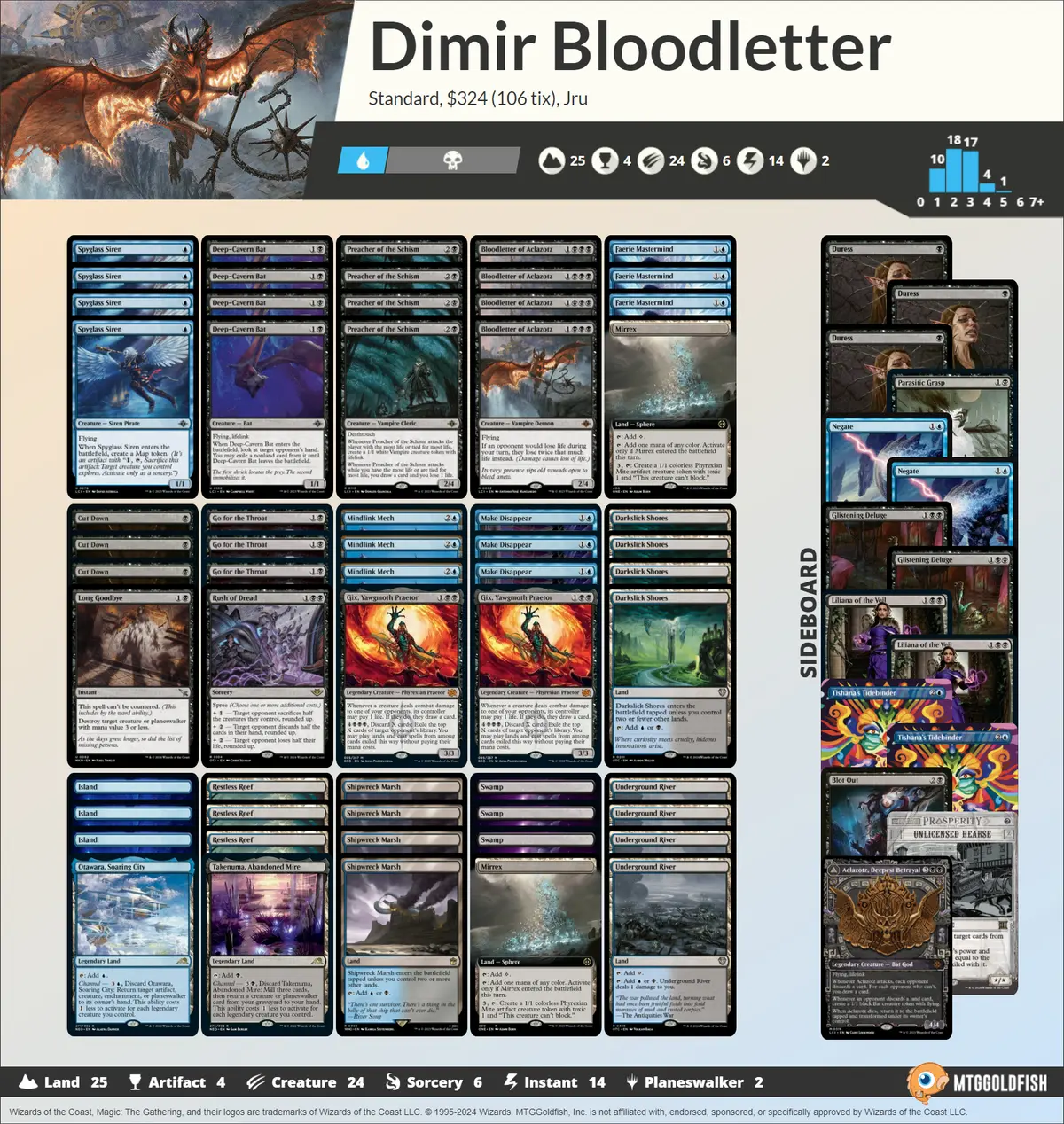
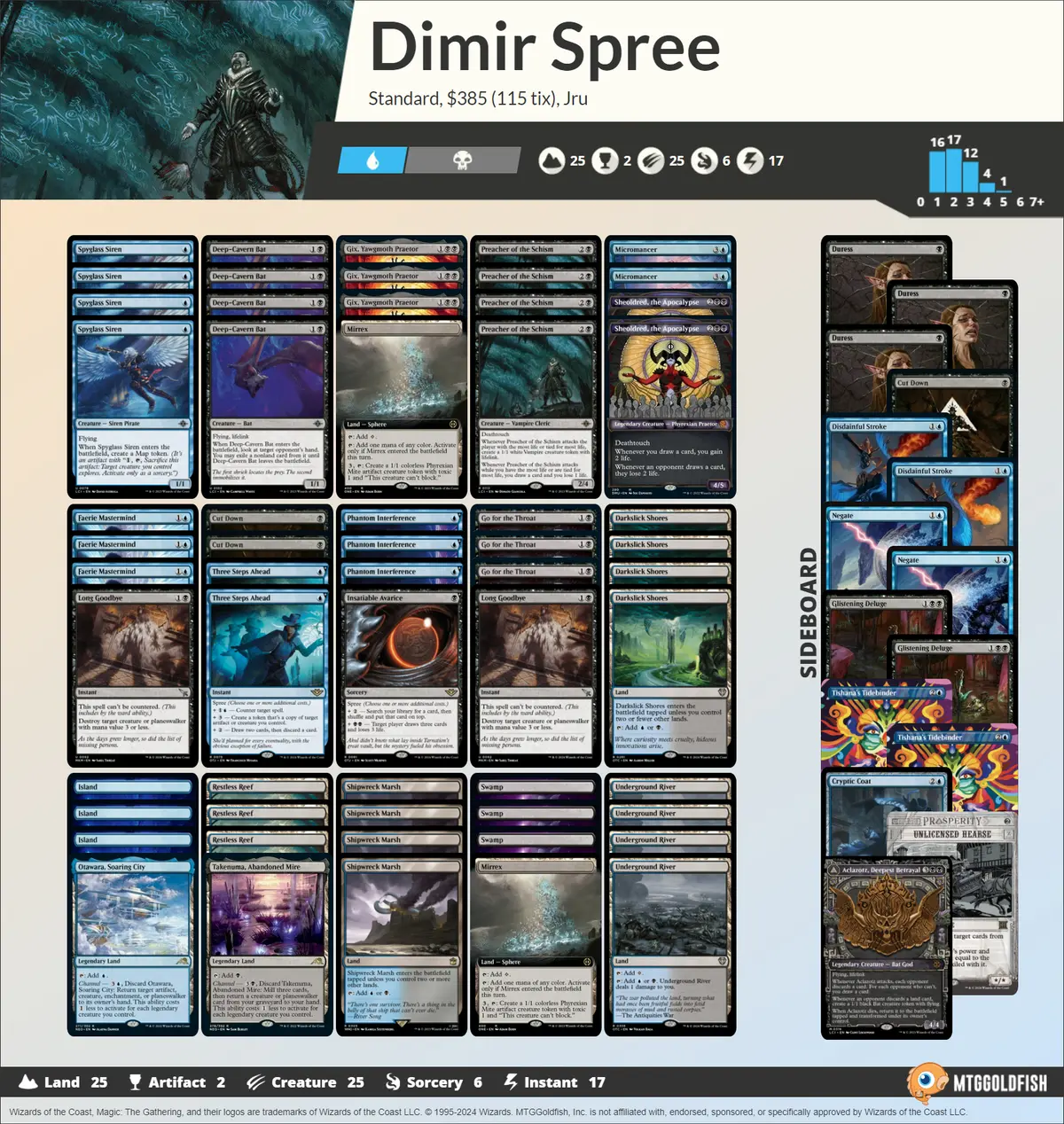
A variant of Dimir tempo that hands the heavy responsibility of the deck’s final damage to Bloodletter of Aclazotz. Paired with the third mode of the new card Rush of Dread, which makes the opponent lose half their life total (rounded up), doubled, it simply drains the opponent no matter how much life they have. In other words, it is a one-turn-kill combo.
The pairing of Bloodletter and Mindlink Mech is also fun. Mindlink Mech on turn three and crewing it with Bloodletter on turn four makes your Mindlink Mech a 4/3 copy of Bloodletter. Because you have two Bloodletters, the opponent will lose four times as much life this turn, which could easily kill them in one punch. In addition, Deep-Cavern Bat and Preacher of the Schism are also quality pilots for Mindlink Mech.
Considering that Rush of Dread is effectively a high-cost card, and may be unreliable without Bloodletter to go with it, the list only puts in one for now. If you’re excited about this theme, you can raise the count of Rush of Dread yourself. After all, its ceiling is a one-turn kill, so the reward is high enough.
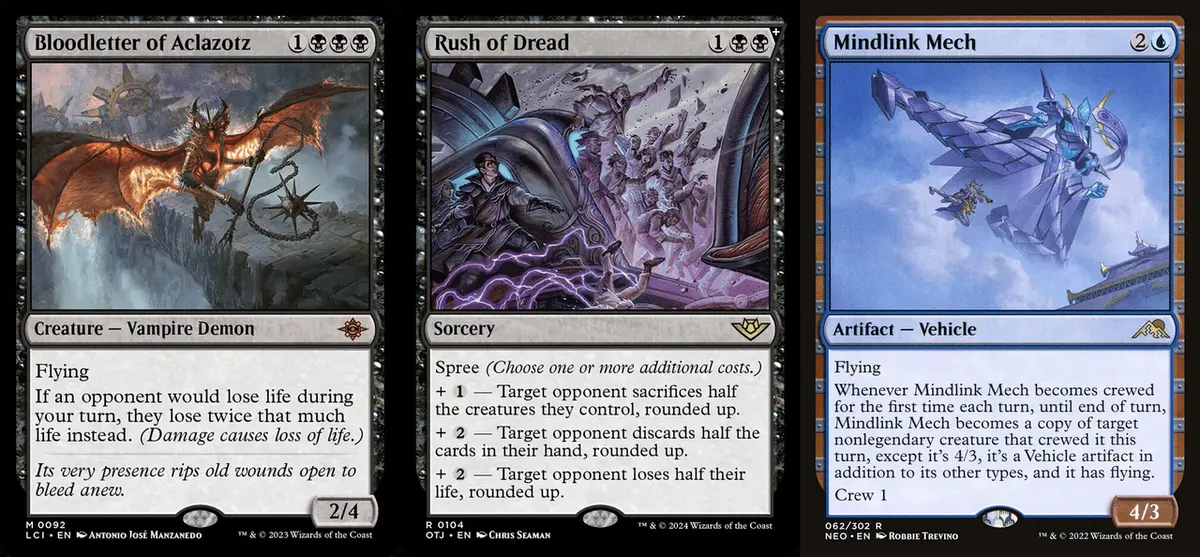
Dimir Spree
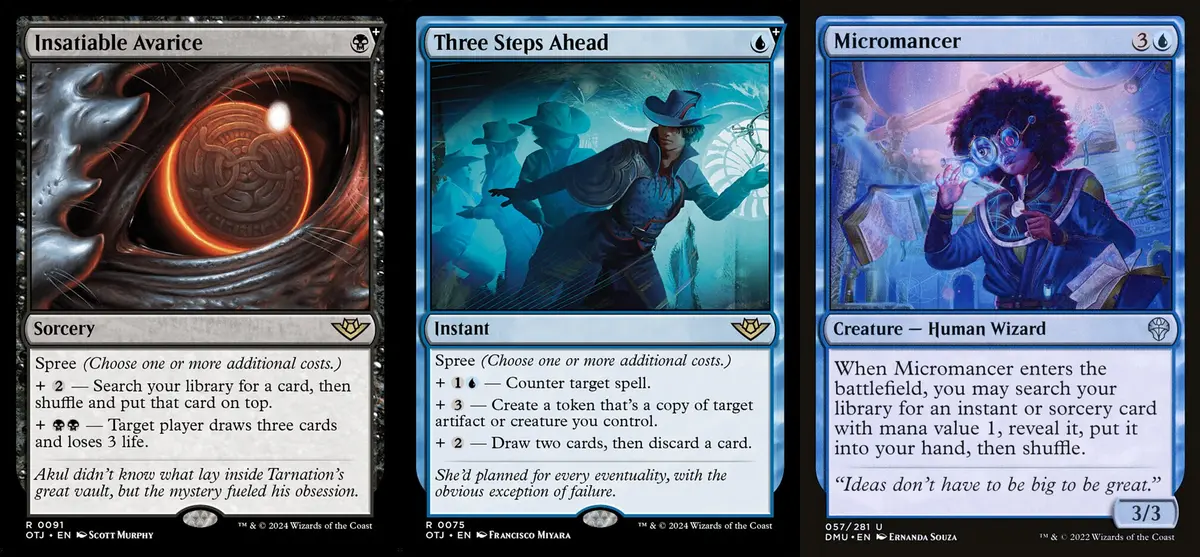
Micromancer can search for a one-mana instant or sorcery when it enters. In the past you might only find things like Cut Down or Duress, so the options were relatively limited. Now there is a whole batch of Spree spells that count as one-mana cards, which may give Micromancer a new job.
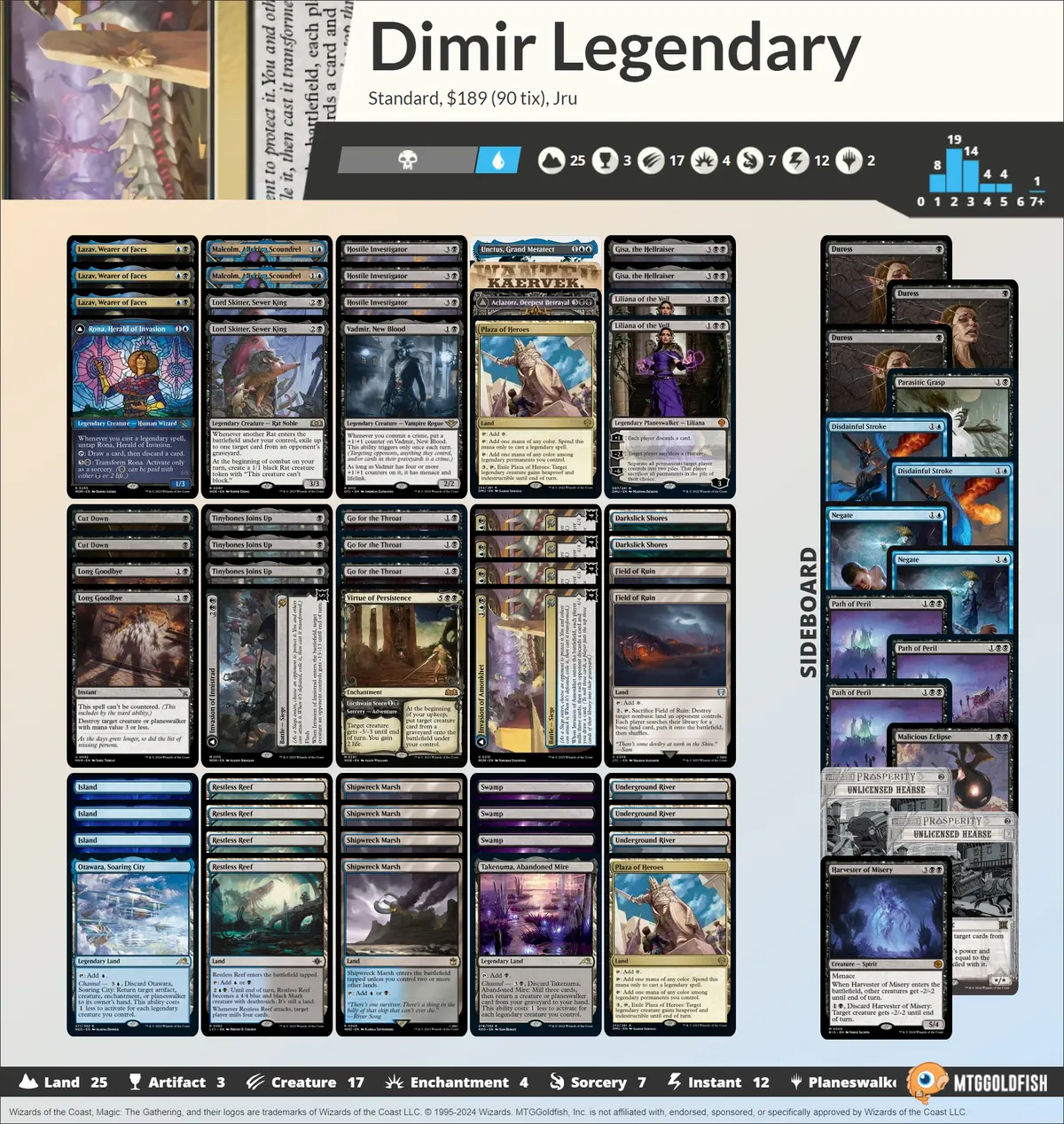
Dimir Legendary
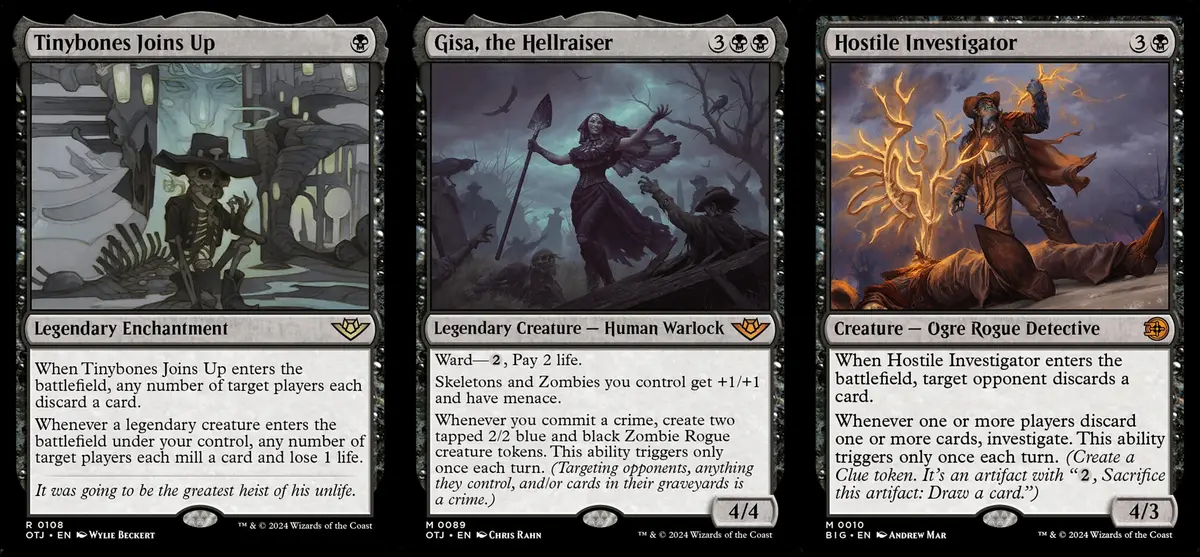
Tinybones Joins Up, Gisa the Hellraiser, and Hostile Investigator together form the core idea of this deck. Gisa the Hellraiser gets a very high board-building payoff when you commit crimes, Hostile Investigator focuses on discarding (no matter who discards), and its own enter ability also commits a crime, while Tinybones Joins Up can do both discarding and committing crimes at once, which merges the two main lines of discard and crime together.
Tinybones Joins Up’s crime ability triggers when a legendary creature enters. Gisa the Hellraiser is of course the biggest beneficiary, since just entering triggers the crime immediately, but building only around Gisa would be a bit forced, so the deck naturally looks for legendary creatures. Luckily, Dimir lacks no quality legendary creatures, and some even bring extra discard or crime-related abilities of their own.
Rakdos Soulflayer
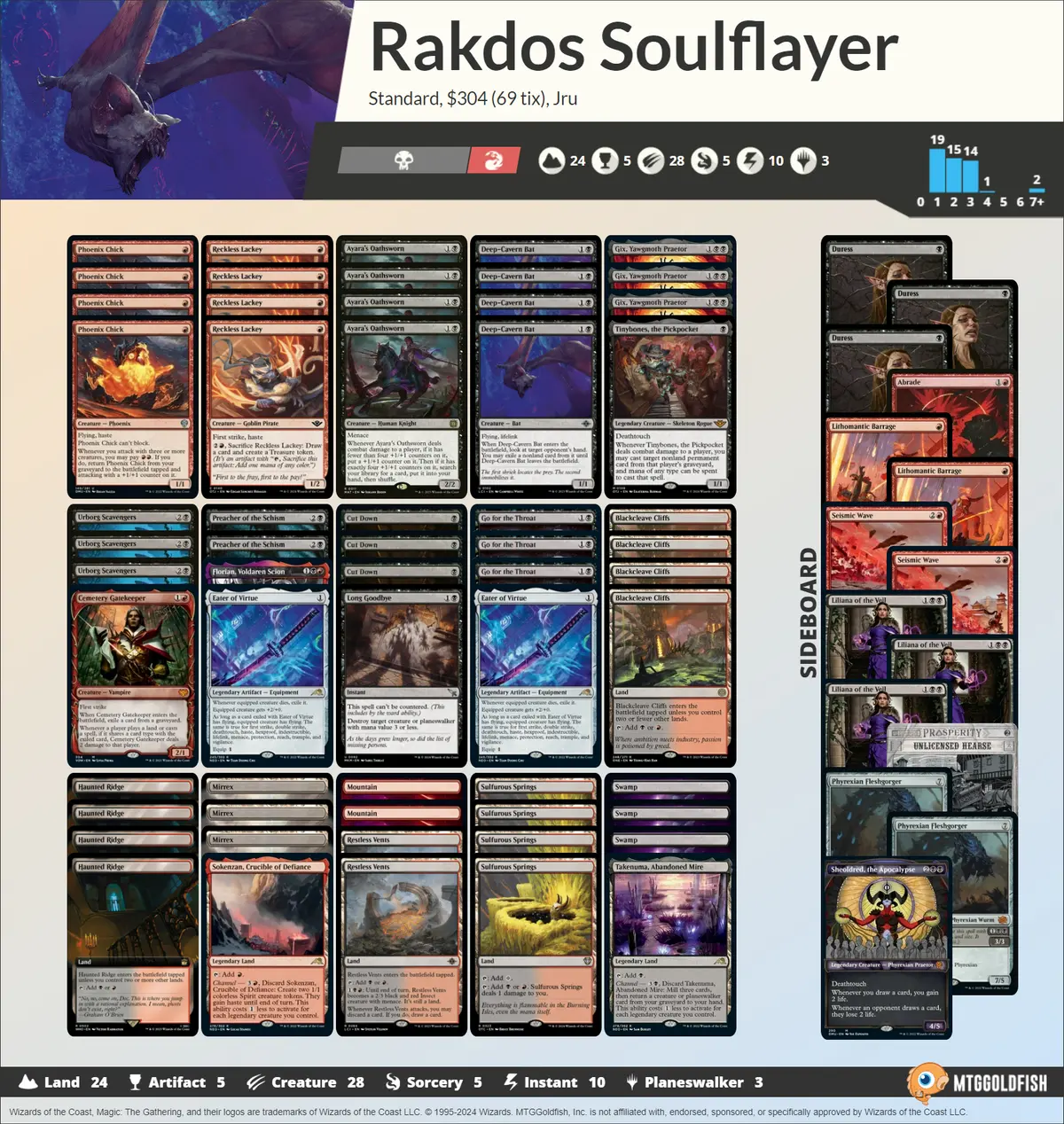
Just like a Delver of Secrets deck doesn’t have any Delver of Secrets, it’s perfectly normal for a Soulflayer deck to have no Soulflayer.
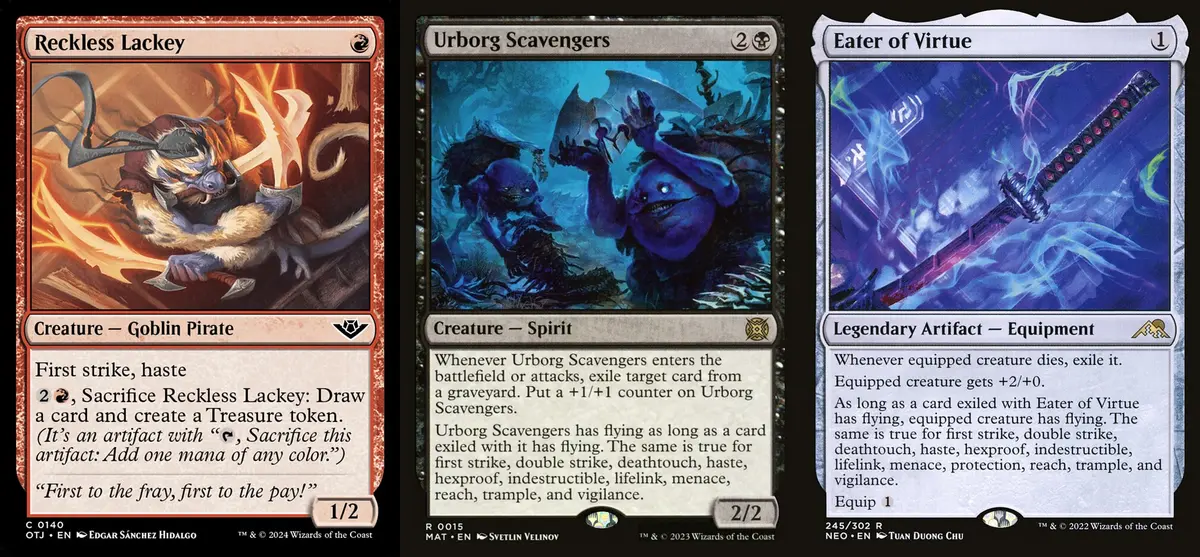
The deck’s goal is keyword aggro, maximizing the value of Eater of Virtue and Urborg Scavengers. The set’s new common powerhouse creature Reckless Lackey (Zoro) is exactly the one-drop this deck needs.
(By the way, if you feel that giving Zoro just one Eater of Virtue isn’t enough, you can try giving him a pair of Lizard Blades as well, which completes the three-sword style.)
Grixis Outlaw
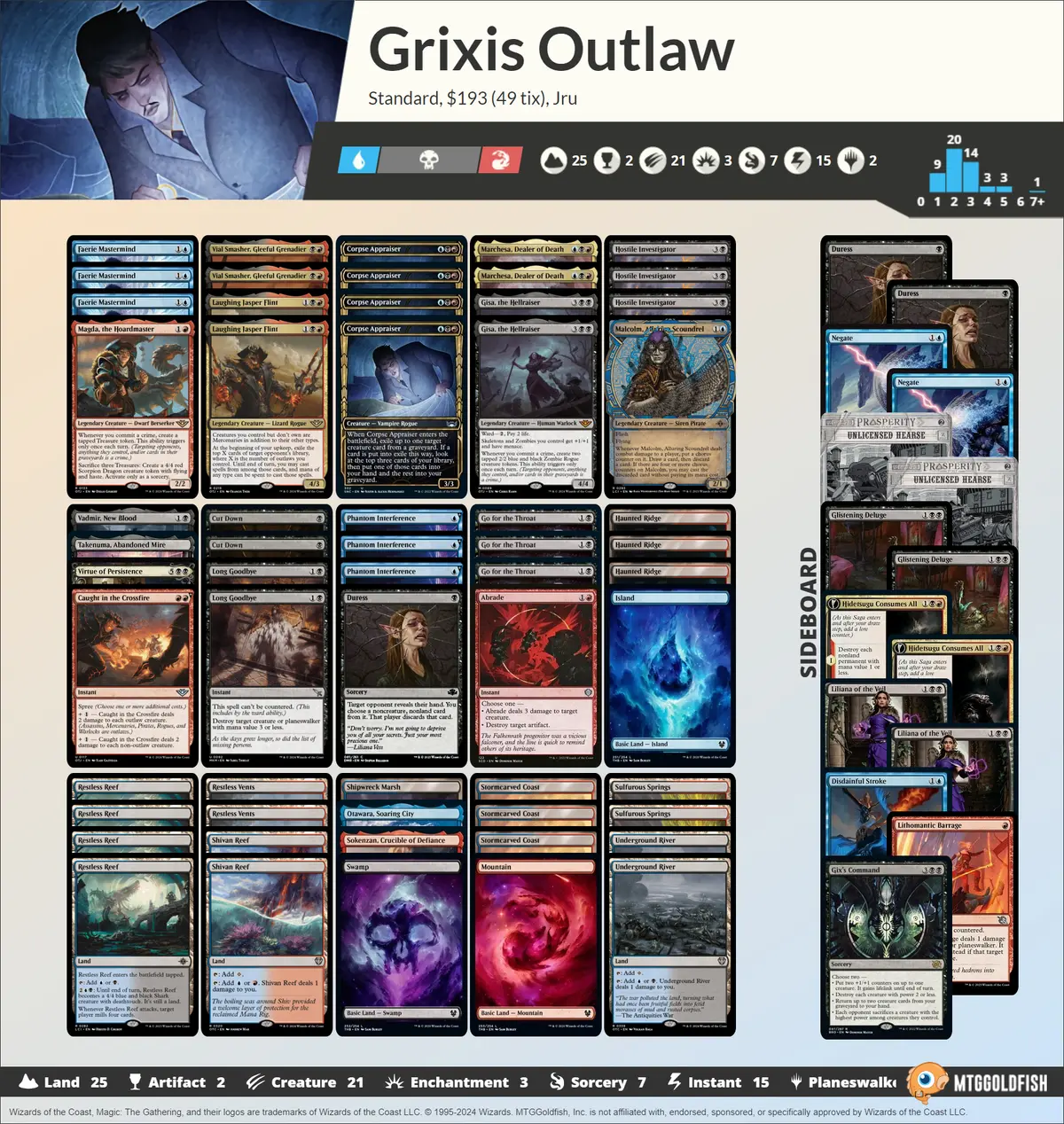
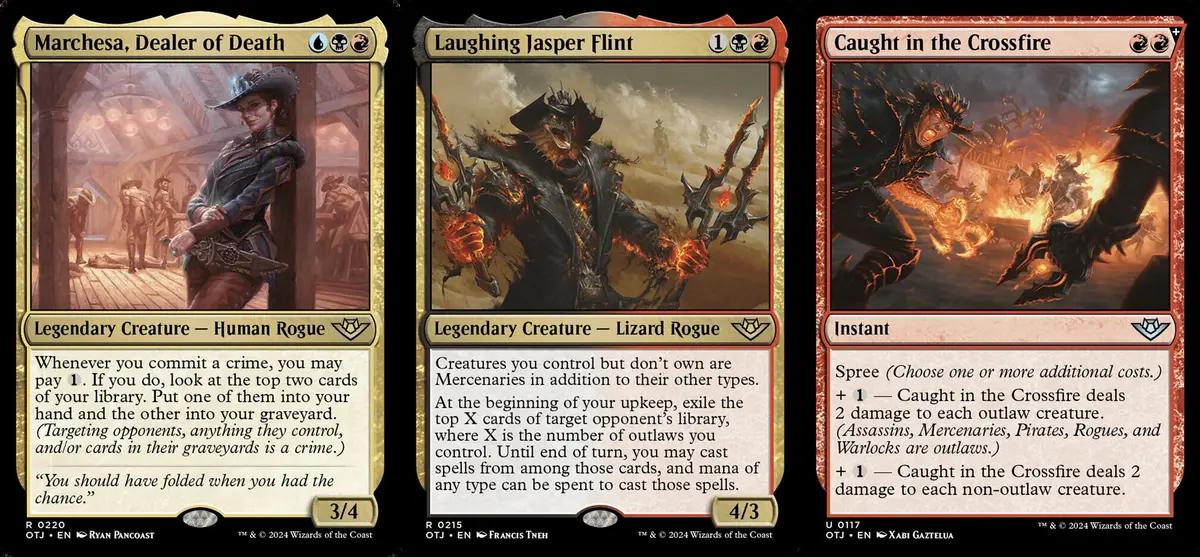
Outlaws, assemble! Although it’s an Outlaw theme, I still don’t want to force it and stuff in low-efficiency cards, so it’s essentially an orthodox midrange deck whose creatures just happen to be Outlaws. The main tribal payoffs come from Laughing Jasper Flint, which counts Outlaw creatures, and Caught in the Crossfire, which instantly sweeps non-Outlaw creatures for 2 damage. Besides that, Outlaws and crimes are almost conjoined twins: Laughing Jasper Flint and Vial Smasher, Gleeful Grenadier are typical Outlaws that trigger crimes, so this deck actually also incorporates part of the crime theme, with the main payoffs coming from Marchesa, Dealer of Death and Gisa the Hellraiser.
Grixis Amonkhet
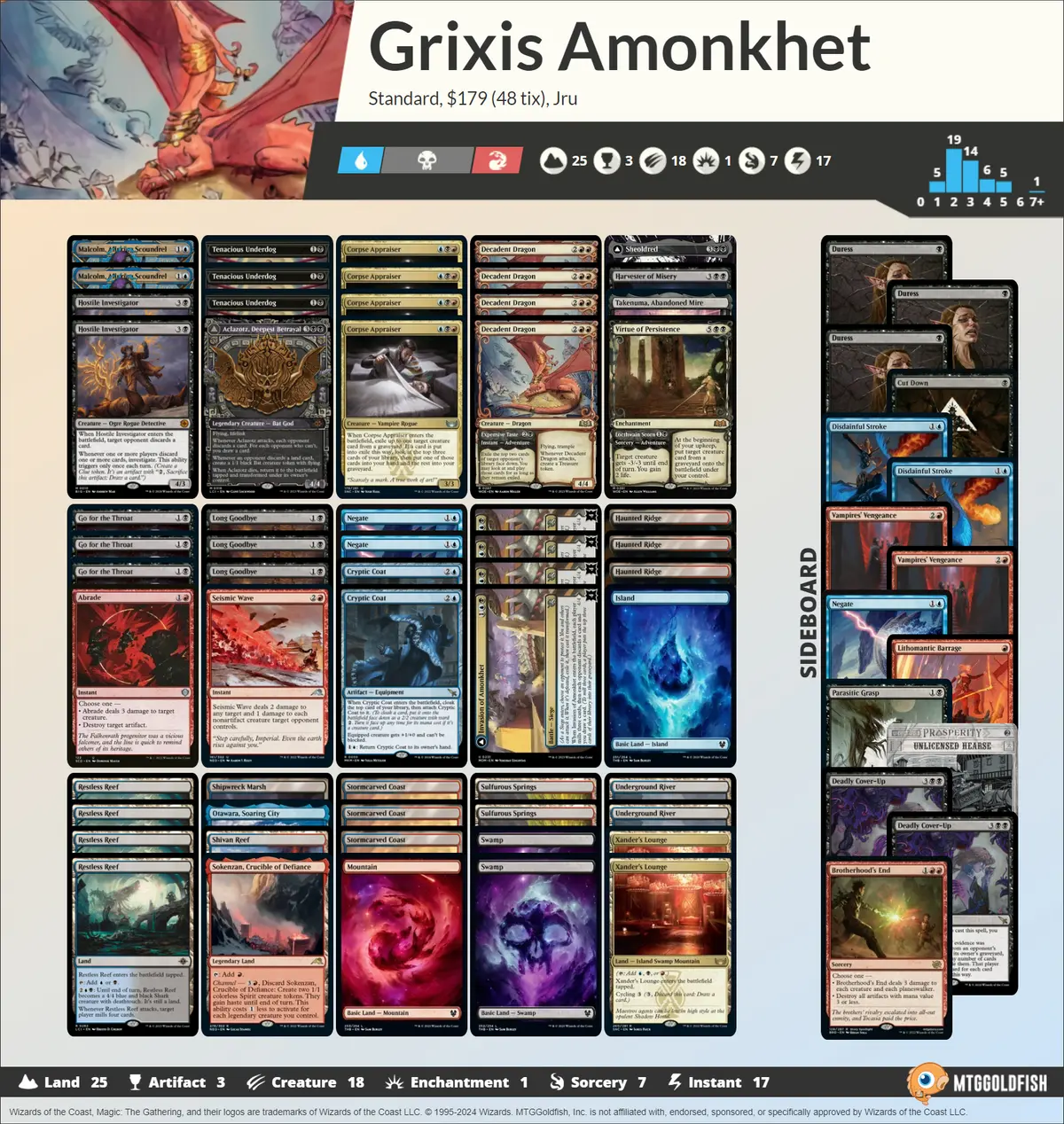
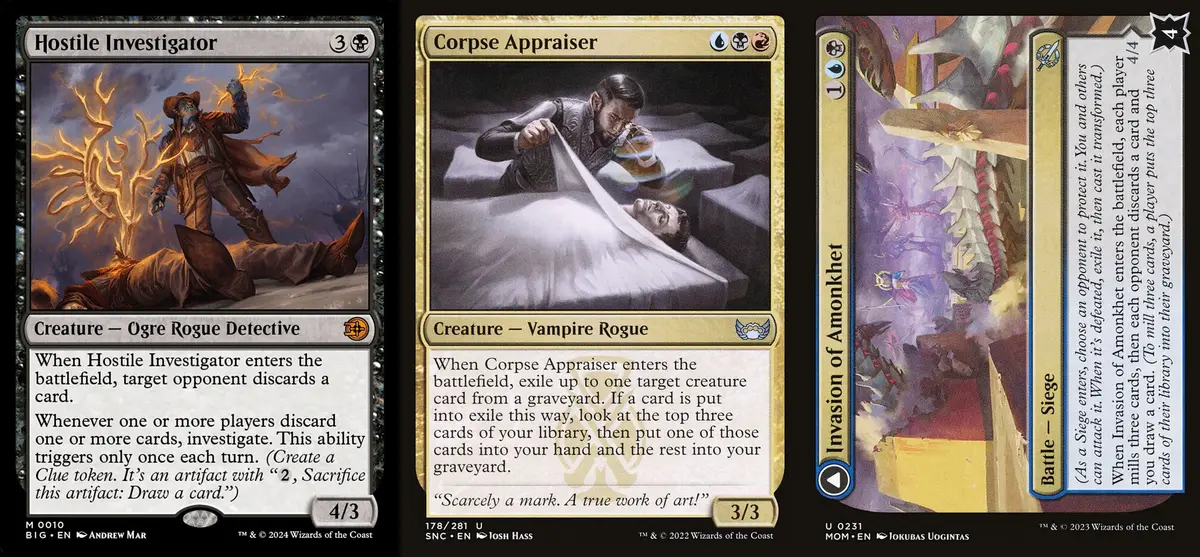
A tweaked version of one of the author’s main Standard decks from the last set. Hostile Investigator fits perfectly with the grindy strategy centered on Invasion of Amonkhet.
Sultai Amonkhet
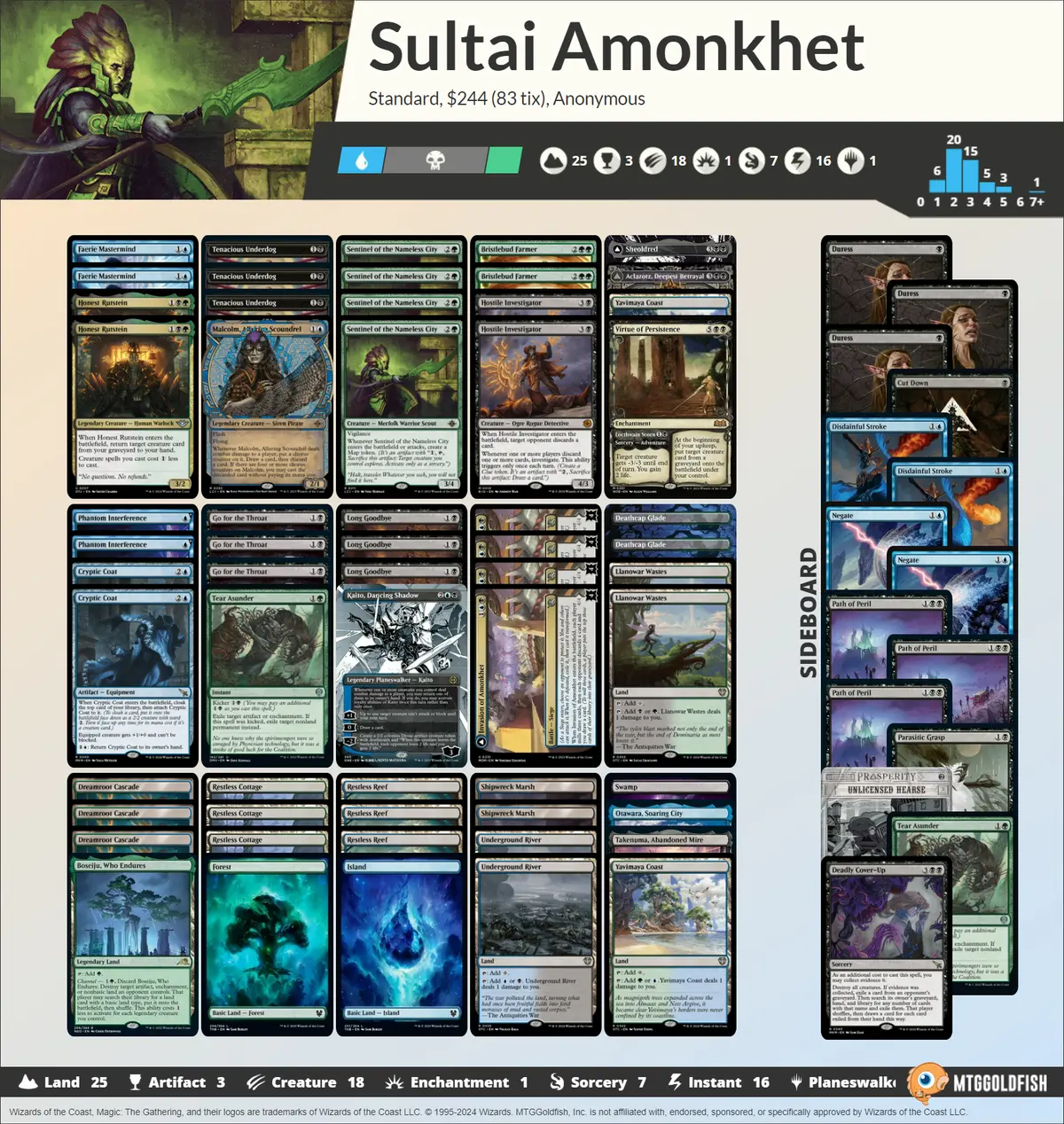
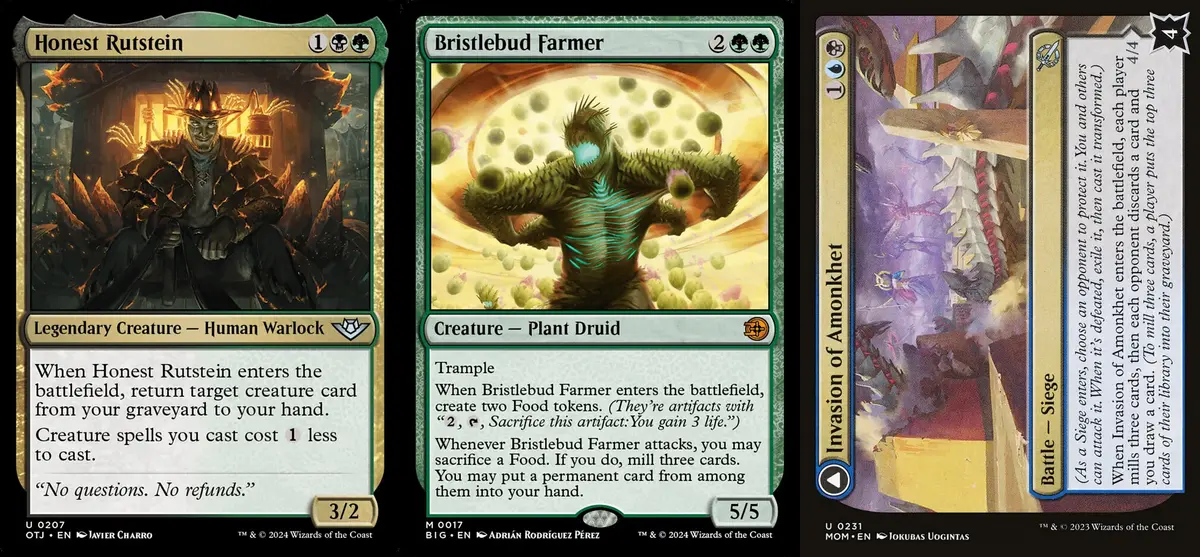
Like the list above, this is an Invasion of Amonkhet grindy deck. ETB card-advantage creatures such as Hostile Investigator, Bristlebud Farmer, and Honest Rutstein are the best partners for Invasion of Amonkhet.
Boros Convoke
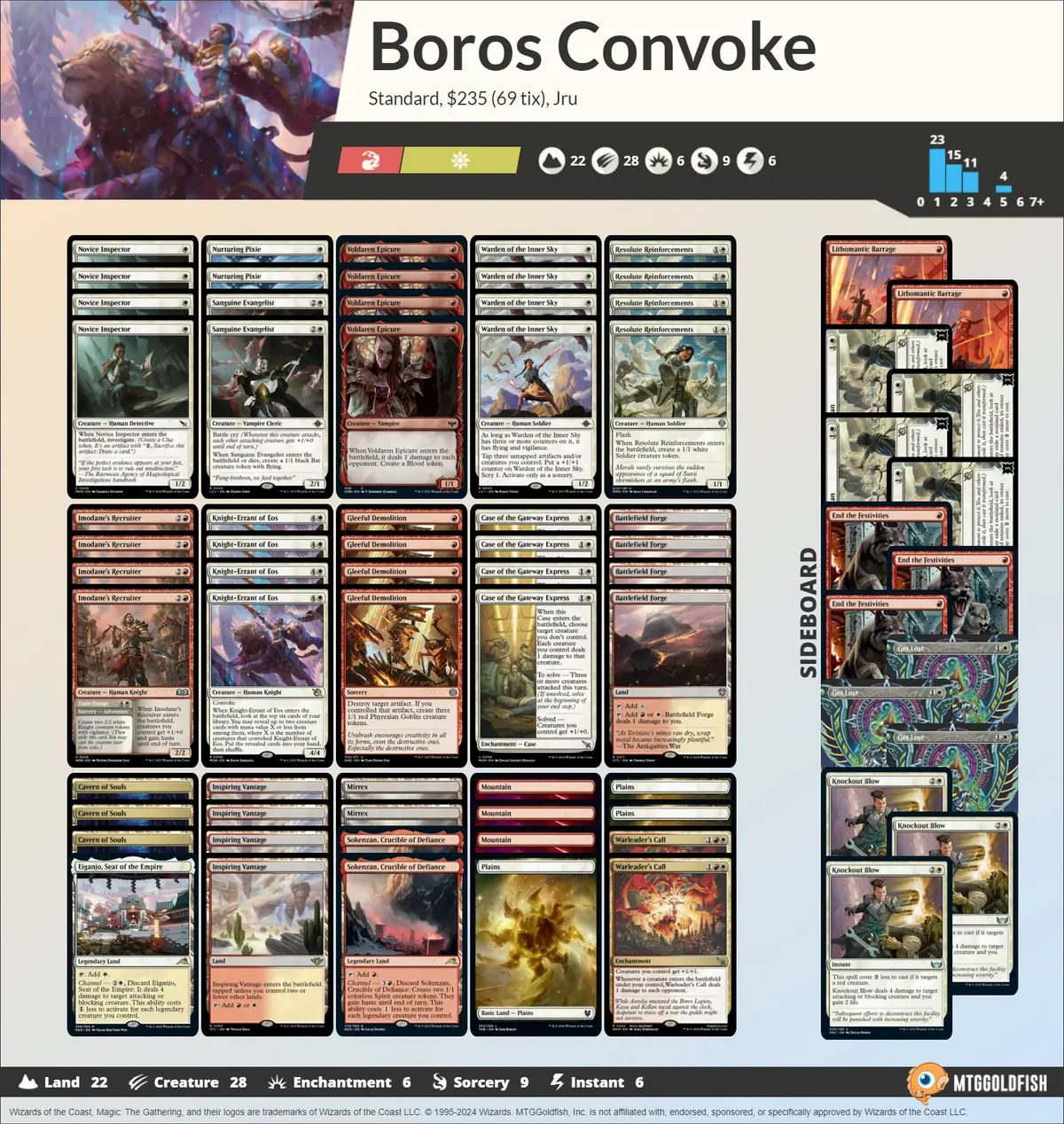
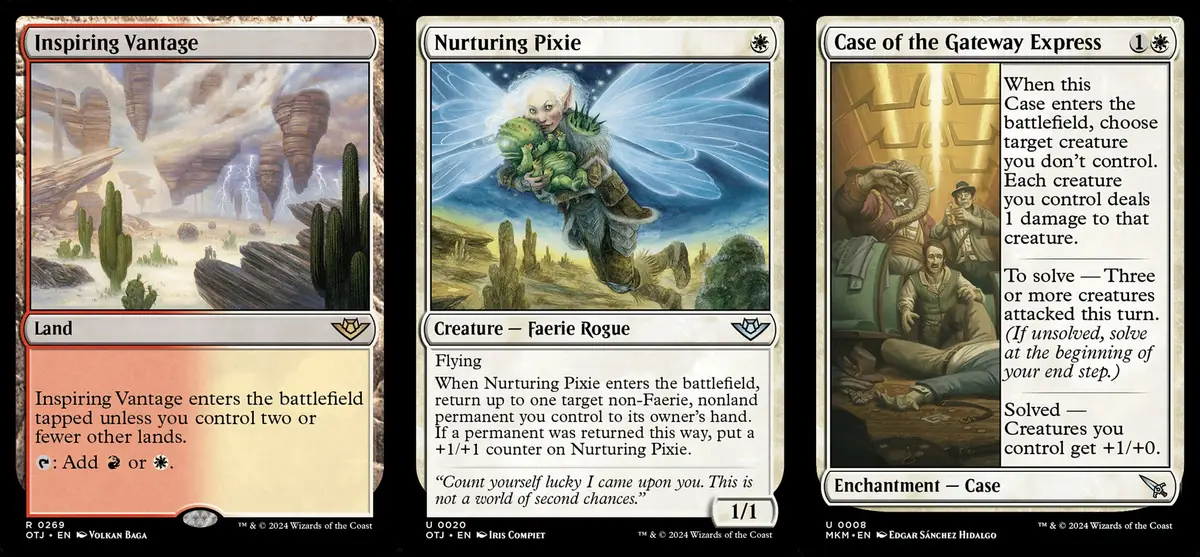
The Boros fast land is without a doubt this set’s most important reinforcement for Boros Convoke, instantly supercharging its fragile mana base. In addition, Nurturing Pixie is also a major upgrade. It is almost equivalent to a one-mana 2/2 flyer, a strong beater, and its enter ability of returning a nonland, non-Faerie permanent to hand is a delight for a Boros Convoke deck whose enter abilities are almost all low-cost, letting you freeload on all sorts of enter effects once more. Whether you rebuy Case of the Gateway Express to remove something again, or rebuy Imodane’s Recruiter to deal another burst of damage, it feels great.
Simic Artifact Aggro
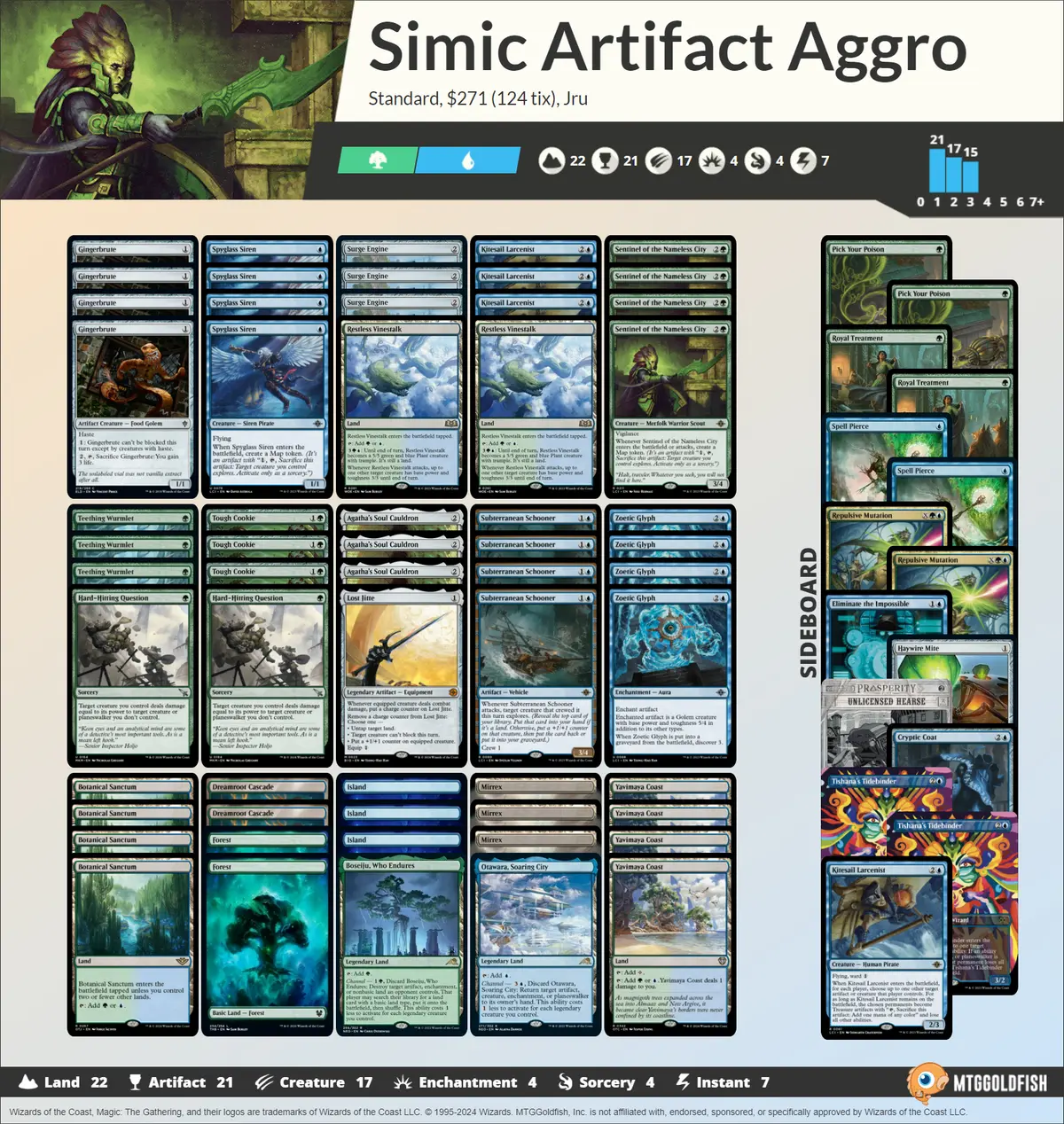
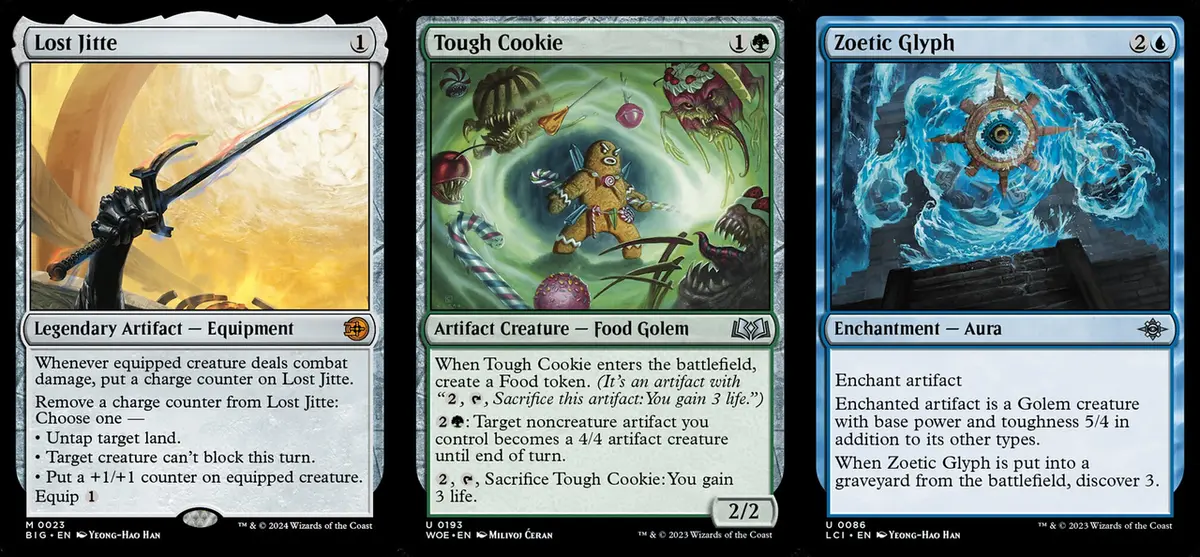
Today’s blue artifact aggro decks have creatures with relatively strong evasion, and I tried adding one Lost Jitte on top of that base, hoping for a positive snowball effect. Of course, the biggest contribution of this set is certainly the reprint of the Simic fast land, which relieves the heavy color-fixing pressure on enemy-color aggro.
Gruul Artifact
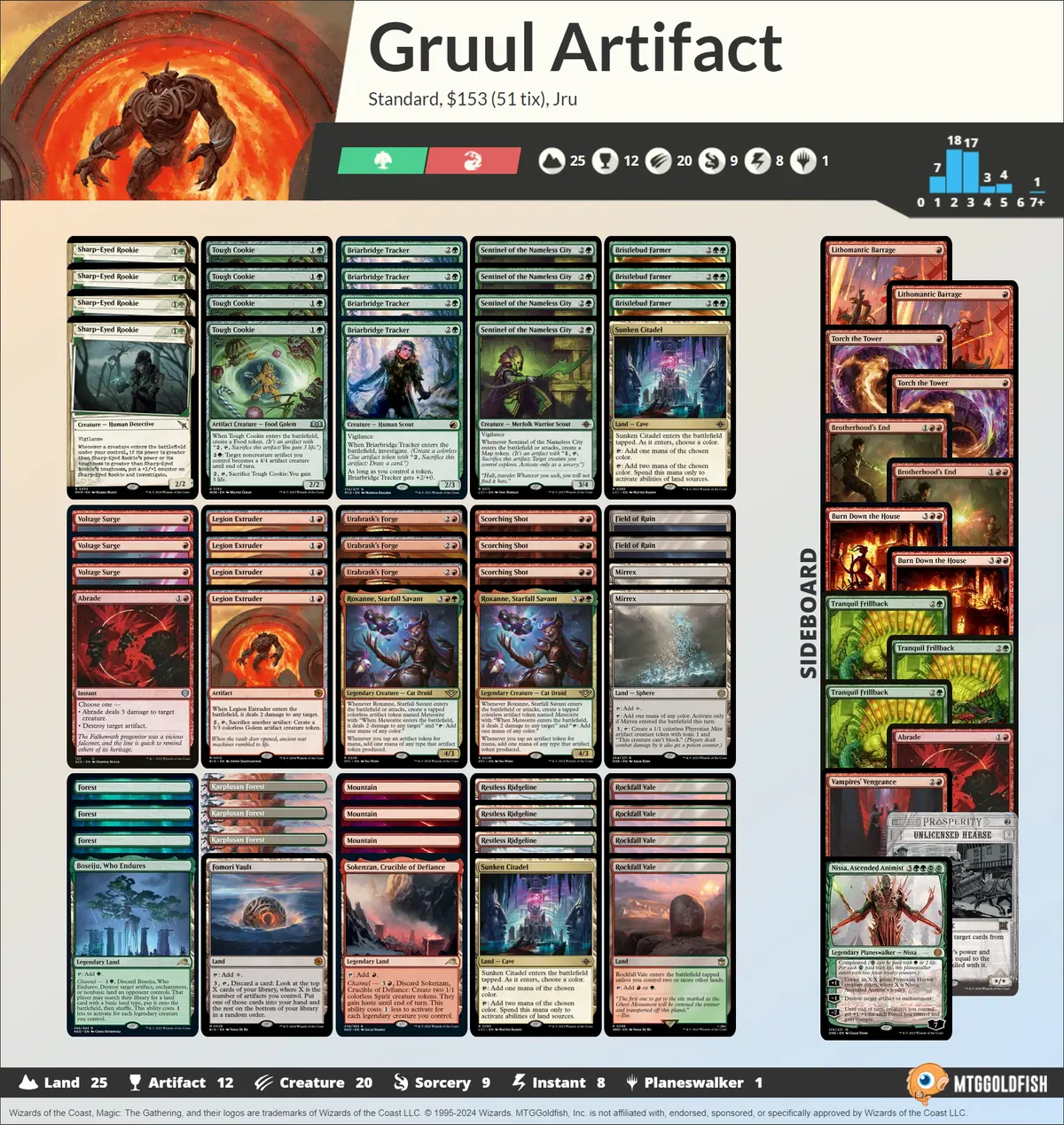
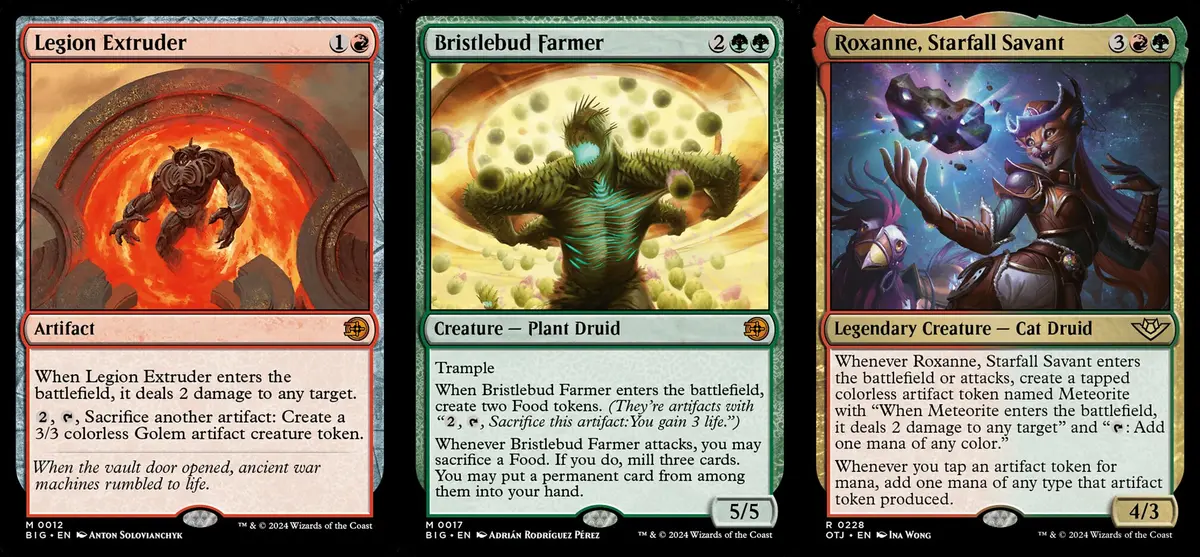
Legion Extruder can keep turning all sorts of artifacts into 3/3 beaters, so the deck’s goal is to keep producing various artifacts to feed Legion Extruder. Current Standard lacks no quality creatures that make artifact tokens, and green accounts for the largest share of them, including the new cards Bristlebud Farmer and Roxanne, Starfall Savant, so it naturally ended up as Gruul. If you feel red removal alone isn’t strong enough, you can also consider splashing black. If you do, the three-drop slot can partly switch to Jewel Thief, plus Hostile Investigator, which has been showing up everywhere today.
Finally, don’t forget that Legion Extruder’s enter ability deals 2 damage to any target, so you don’t need to fixate on using it as removal. For smoother follow-up development, if you should go face, just go face. Also, the ability to sacrifice an artifact to create a 3/3 token can be activated at instant speed.
Azorius Artifact
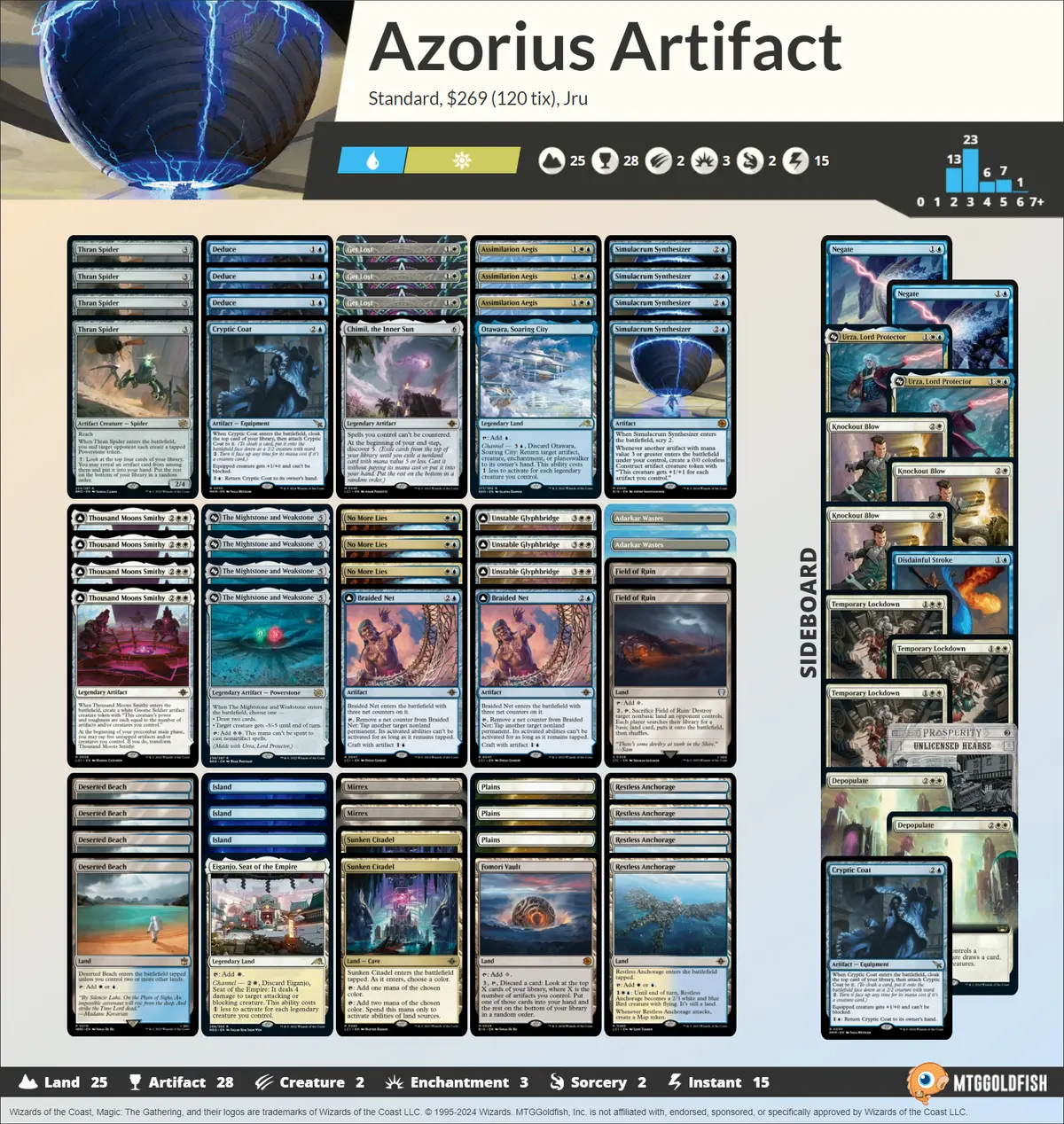
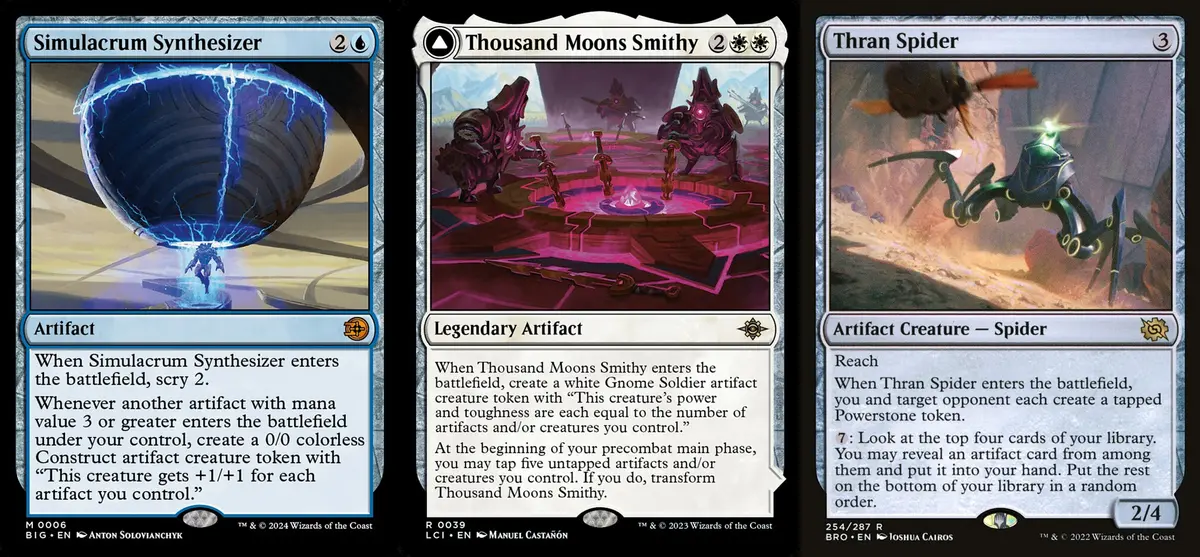
Since the BRO set, Standard has steadily received a fair amount of material for artifact themes, and this set adds a new favorite to artifact decks: Simulacrum Synthesizer. It lets you keep reaping powerful board-presence token payoffs whenever you lay down artifacts with mana value 3 or greater, so all the main-deck cards with mana value 3 or greater in this deck are artifacts. Building like this used to carry the problem of weak early-to-mid-game removal, but this set also reinforces that area: Assimilation Aegis is a three-mana artifact that works as outright removal, and when it exiles a creature with a strong battlefield ability (such as Sheoldred, the Apocalypse), you may even get extra payoff.
Jeskai Anchor to Reality
Jeskai Anchor to Reality decklist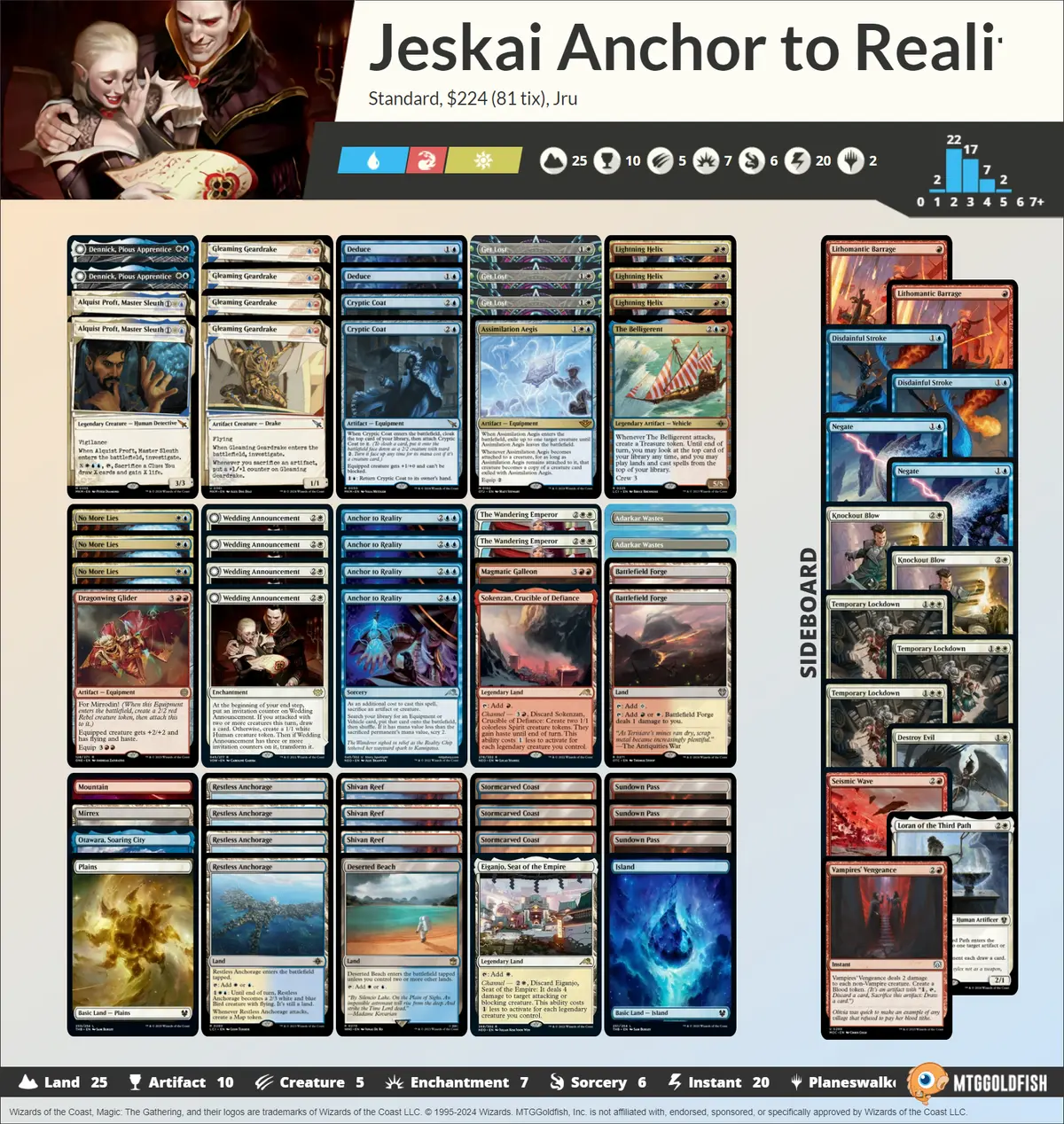
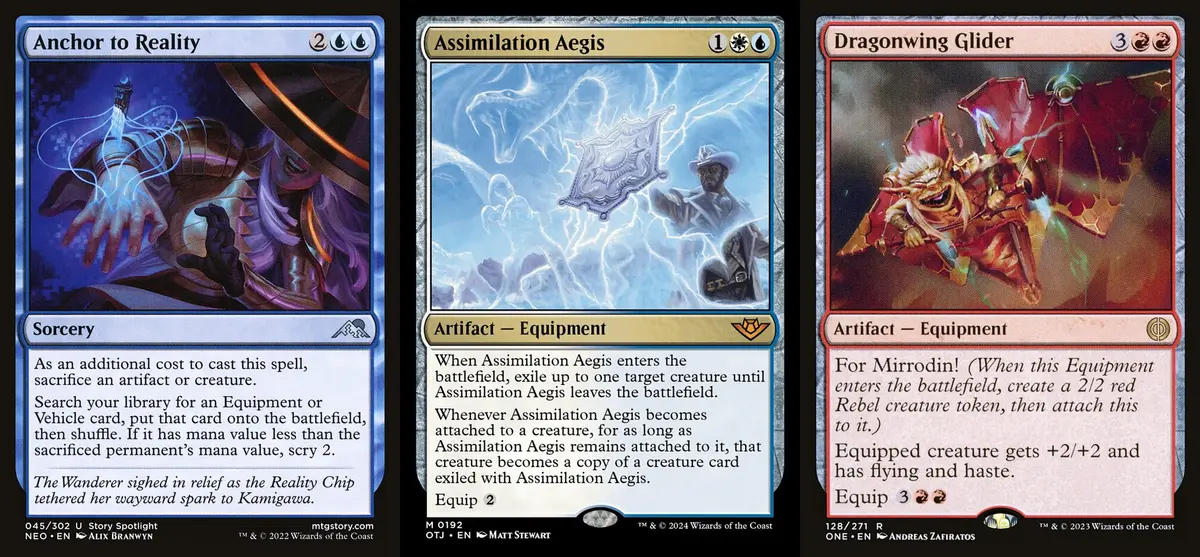
Since Anchor to Reality was first printed, the author has used it in Modern. The main airdrop targets were Kaldra Compleat and Skysovereign, Consul Flagship. Both are very intuitive good airdrop targets, and the ramp package of Arbor Elf + Utopia Sprawl happens to have a chance of producing four mana plus a creature as fodder on turn two. With a bit of luck it easily creates free-win games (though of course that kind of play is out of the question in the current metagame). However, when I tried to bring Anchor to Reality to Standard, I couldn’t assemble the deck at all. Standard back then lacked no fodder providers, but lacked powerful airdrop options that could settle the game in one blow, and there weren’t enough options for a toolbox either, so I shelved this idea until now.
Only in this past year has Standard gradually received many new Equipment and Vehicles. Although none has board-dominating power like Kaldra Compleat, the variety is certainly sufficient: removal, beaters, card advantage, whatever kind of tool you need can be found. So I rebuilt this deck with Anchor to Reality as the core of a toolbox.
Jeskai Control
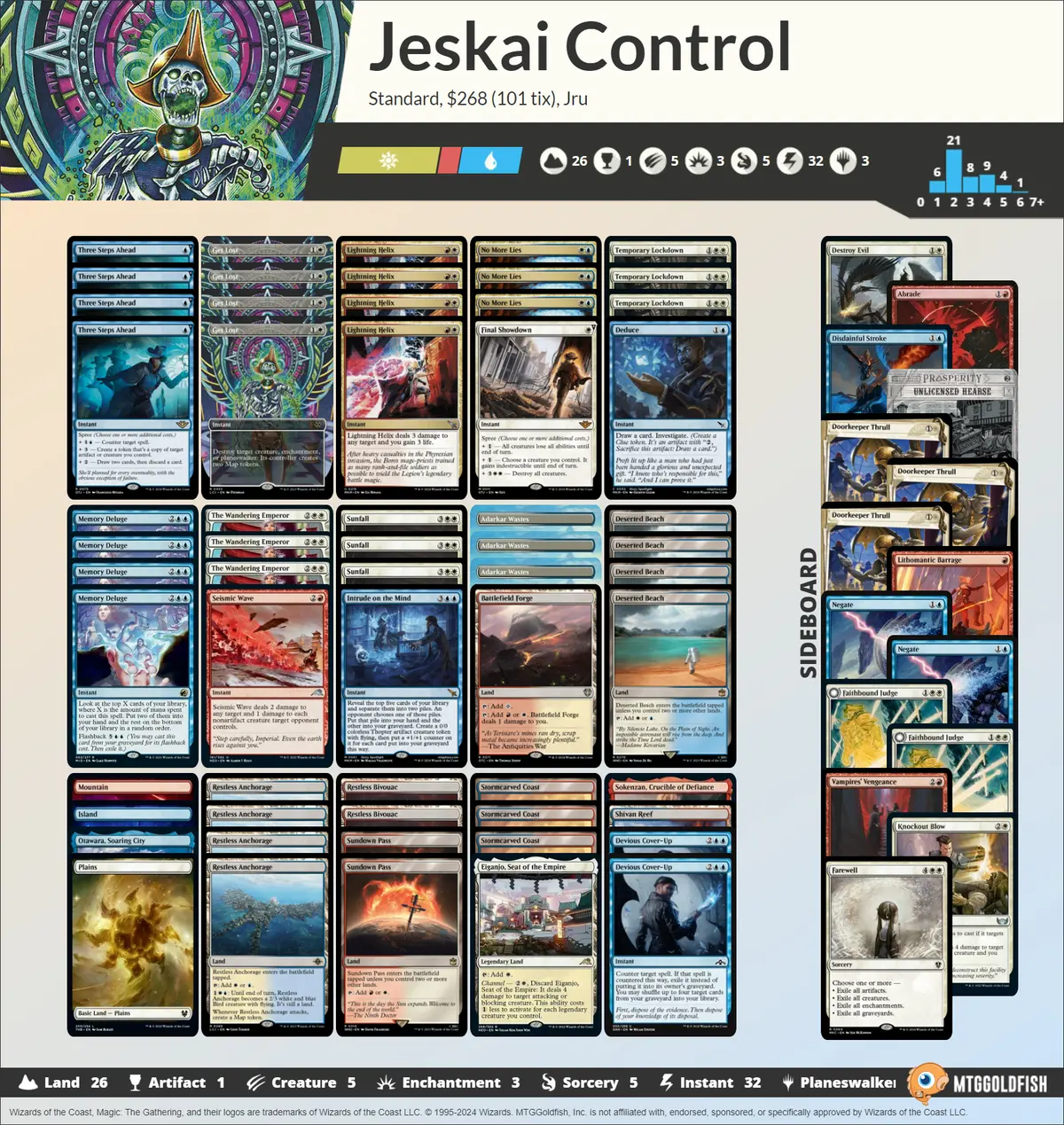
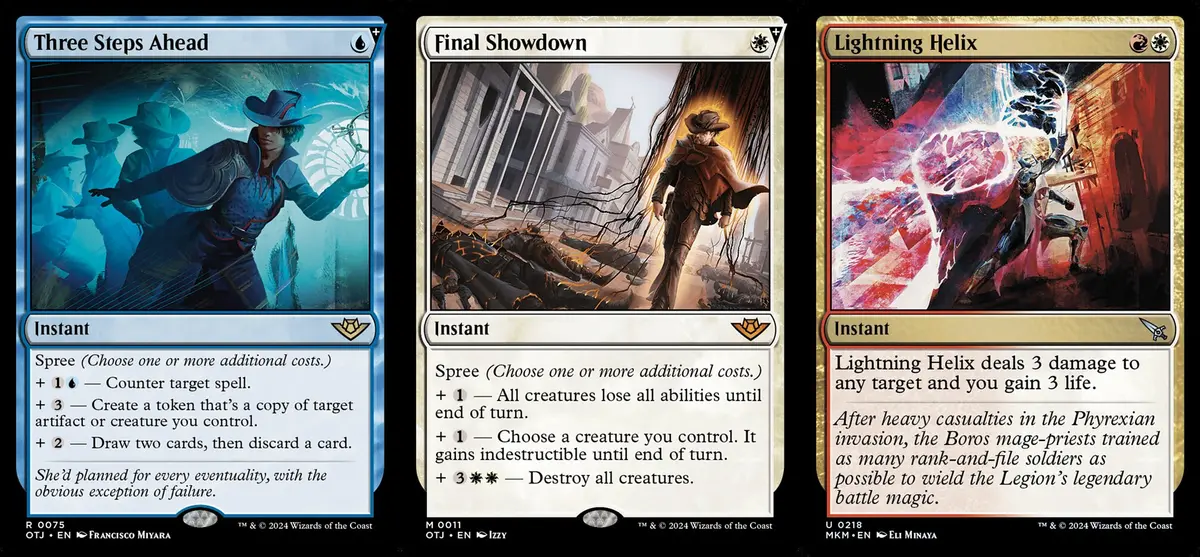
A tweaked version of the author’s most-played main Standard deck from the last set. Three Steps Ahead is a major breakthrough as a three-mana real Counterspell. Although relying on counterspells as the main interaction is no longer realistic in a metagame full of Cavern of Souls and Grand Abolisher, Three Steps Ahead comes with two proactive options, one of which is the hand adjustment that control decks need on a daily basis, which greatly lowers the odds of it being a dead card. The option to make a copy is less used by control, but not completely useless, since there are still a few ways to produce tokens. Note that it can also copy the Clue given by Deduce.
Additionally, I also tried replacing one six-mana sweeper in the main deck from Farewell with Final Showdown, which can sweep at instant speed. These two six-mana sweepers each have their pros and cons, and it is easy to adjust flexibly depending on the metagame.
Dimir Control
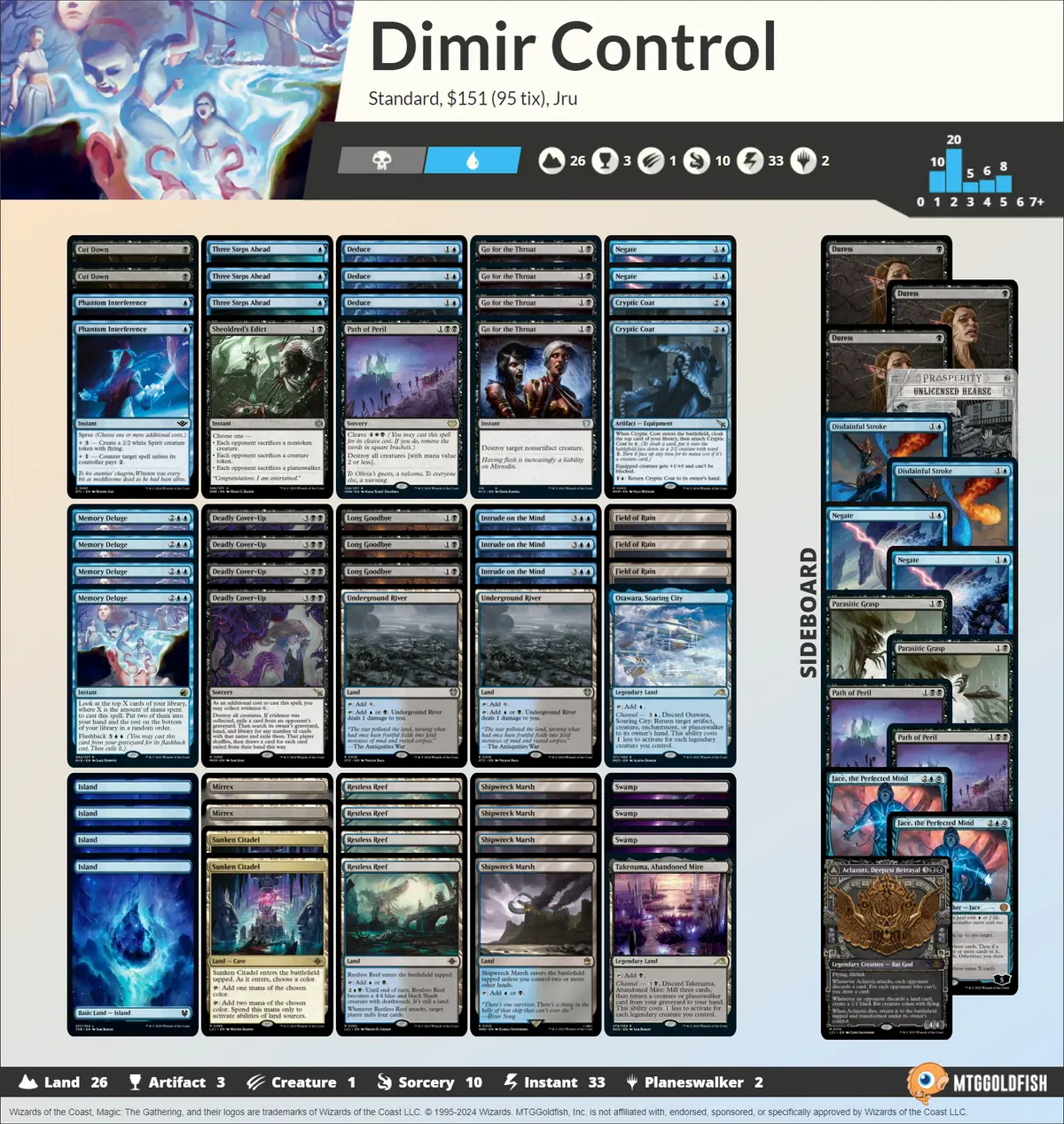
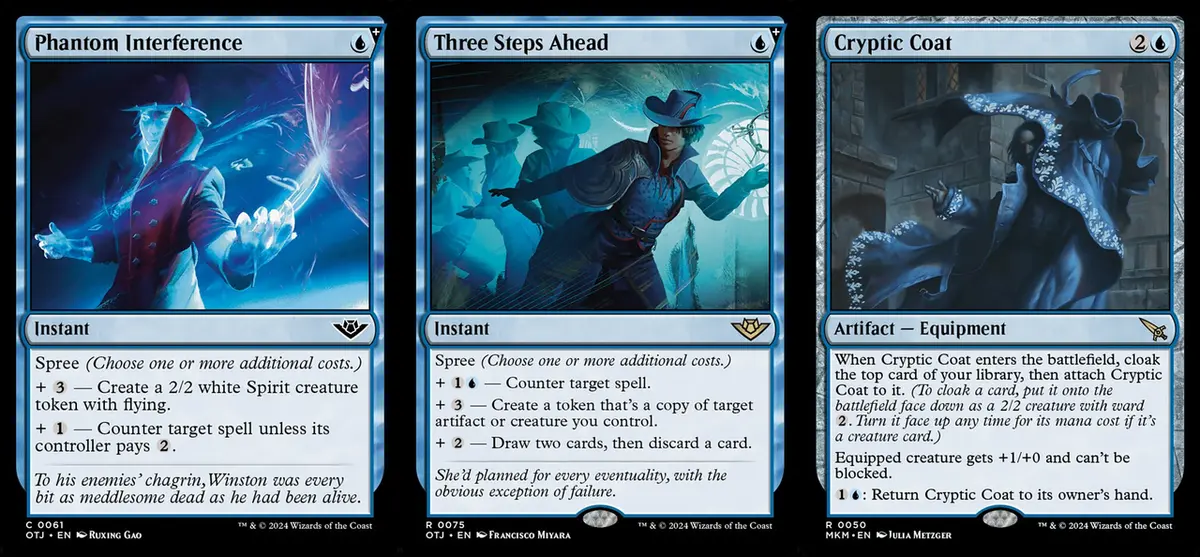
As a two-mana soft-counter upgrade in the vein of Quench, Phantom Interference is actually very good, especially for control decks that often don’t know where to squeeze out a creature to apply pressure. It may even be better than Make Disappear, but paying two versus three mana is an unbridgeable difference, so in Azorius, which can use No More Lies, No More Lies is still preferred. As for Three Steps Ahead, in this deck it can also copy Cryptic Coat to get an extra 3/2 ward 2 unblockable finisher.
Golgari Control
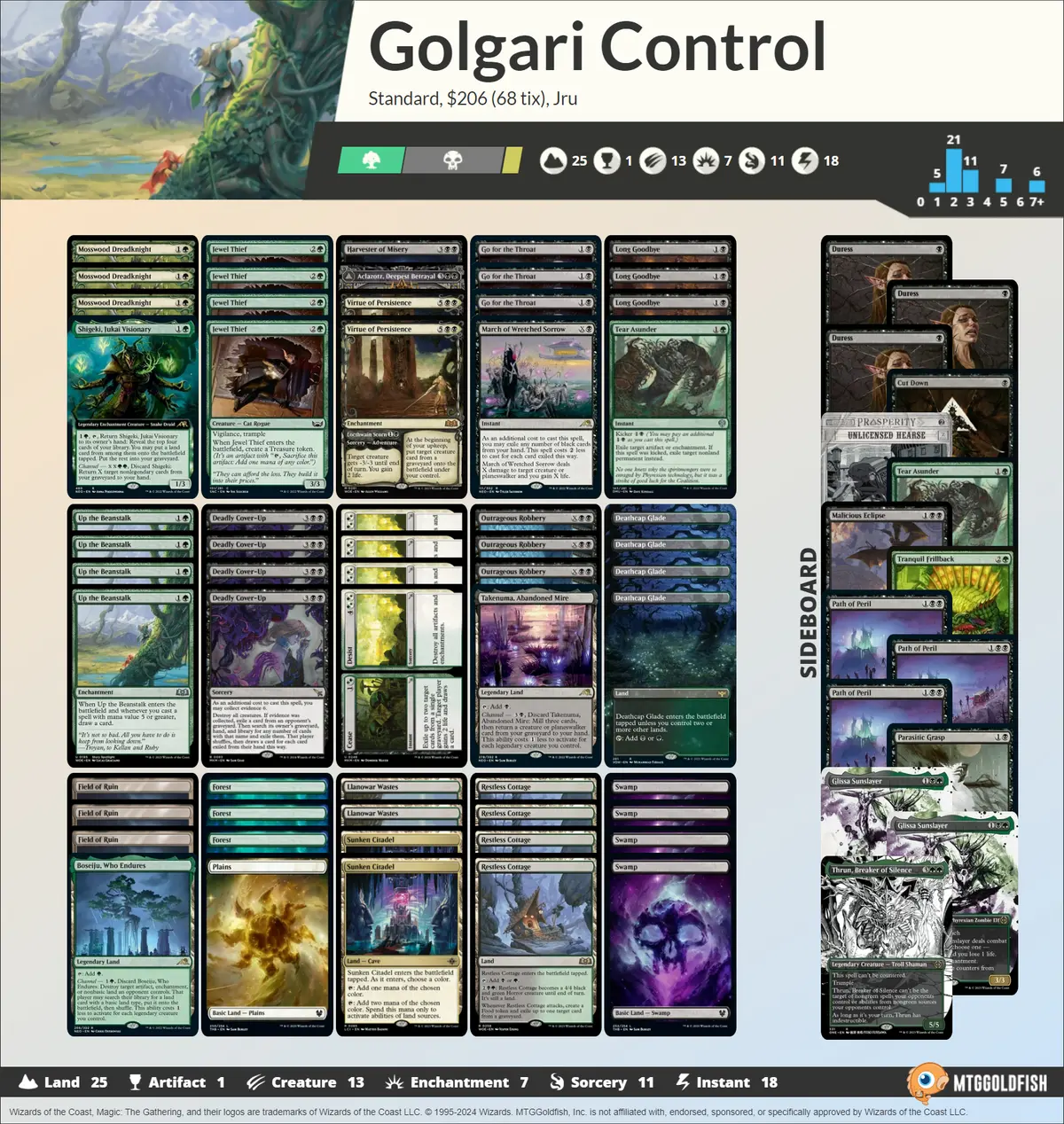
The author’s favorite deck at the end of the last set. Although the deckbuilding concept looks a bit silly, it performs quite steadily in practice. The draw trio of Up the Beanstalk + Cease // Desist + Outrageous Robbery gives this deck card-drawing power comparable to blue control decks. Especially in a metagame dominated by midrange, Outrageous Robbery can easily create an irreparable resource gap in one go, and it also triggers Up the Beanstalk’s draw by itself. Deadly Cover-Up is not only a sweeper that triggers Up the Beanstalk’s draw, but can also use the eight-mana card Cease // Desist, which acts as a two-mana draw spell earlier, as collect-evidence fodder to mind-cut the opponent. Because of Up the Beanstalk, this deck puts special emphasis on five-mana spells, and Jewel Thief, which can jump from three to five mana, becomes the lubricant that makes the deck run more smoothly. There are many options for jumping from three to five mana, but Jewel Thief is the one that fights best early on. A 3/3 vigilance trample can hold the defensive line while keeping the ability to trade in combat, and can even sneak in a few punches at the opponent.
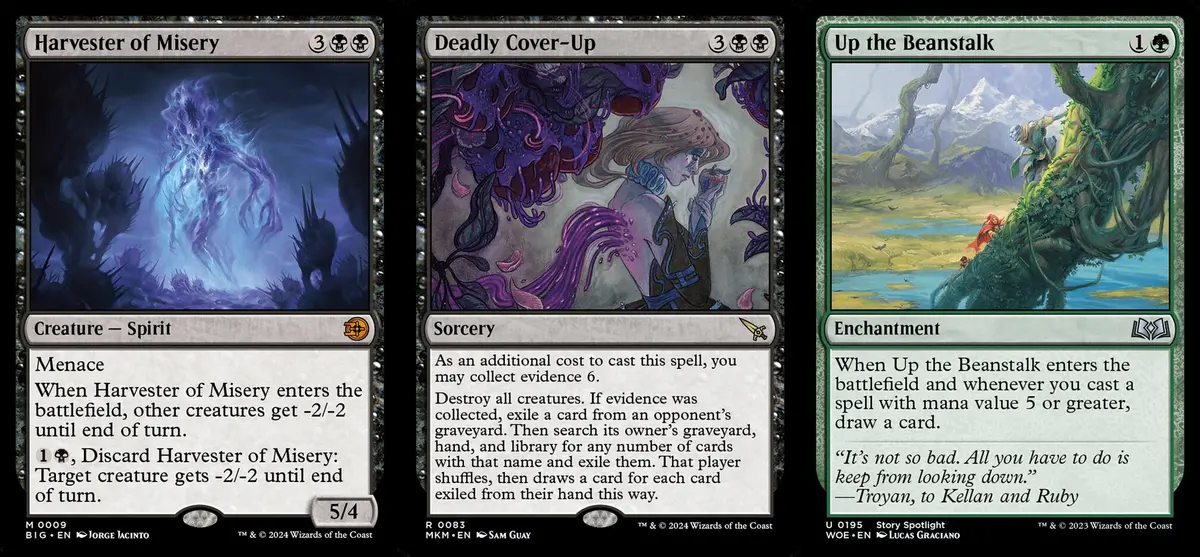
As for the new card in this list, it is Harvester of Misery. The pseudo-channel -2/-2 doesn’t have much range, but in most matchups it isn’t a completely dead card, and the body is a five-mana creature, which happens to trigger Up the Beanstalk’s draw, matching this deck’s construction needs.
Simic Ramp
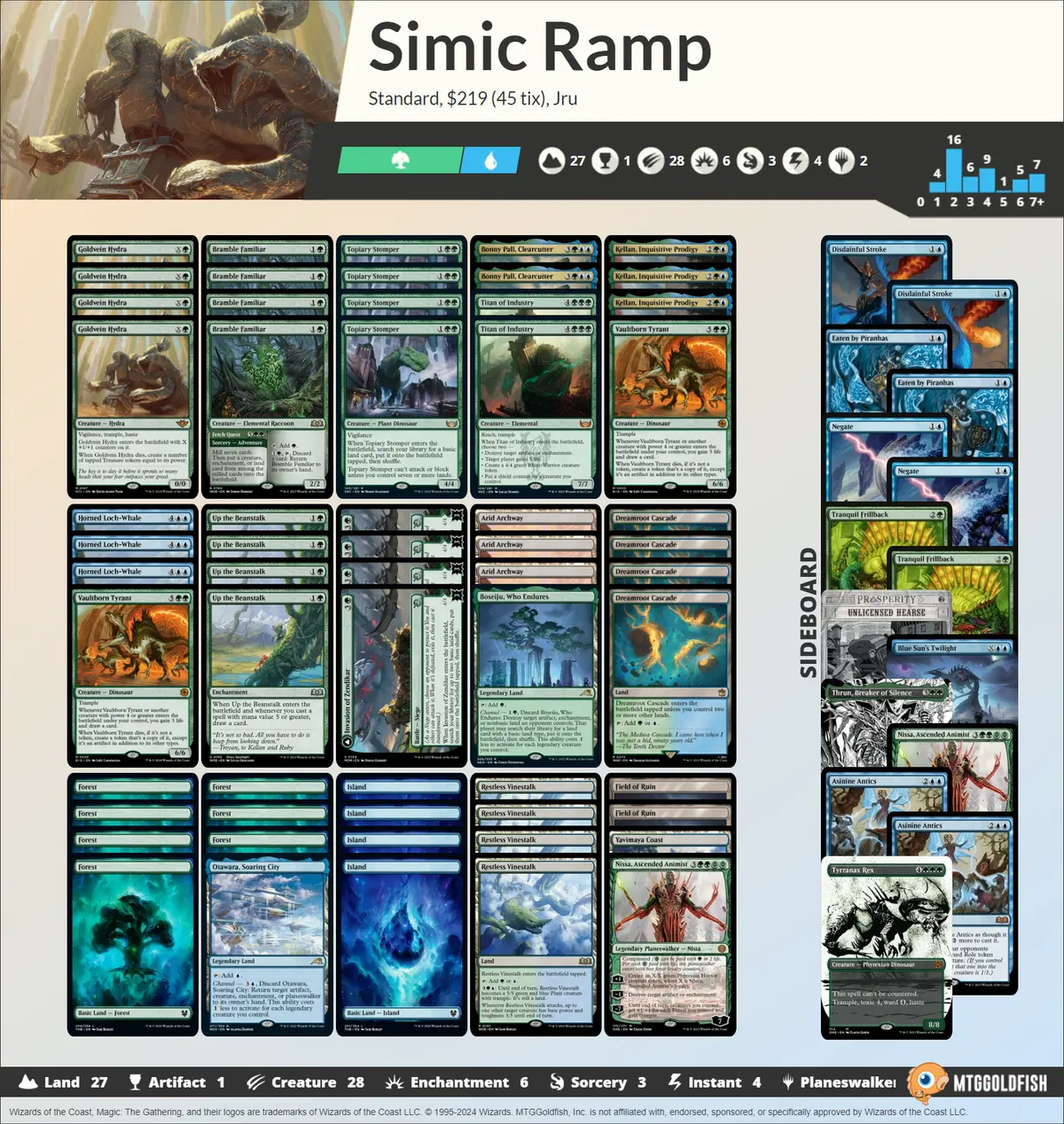
A very traditional ramp deck that slams down big guys.
Desert Festival
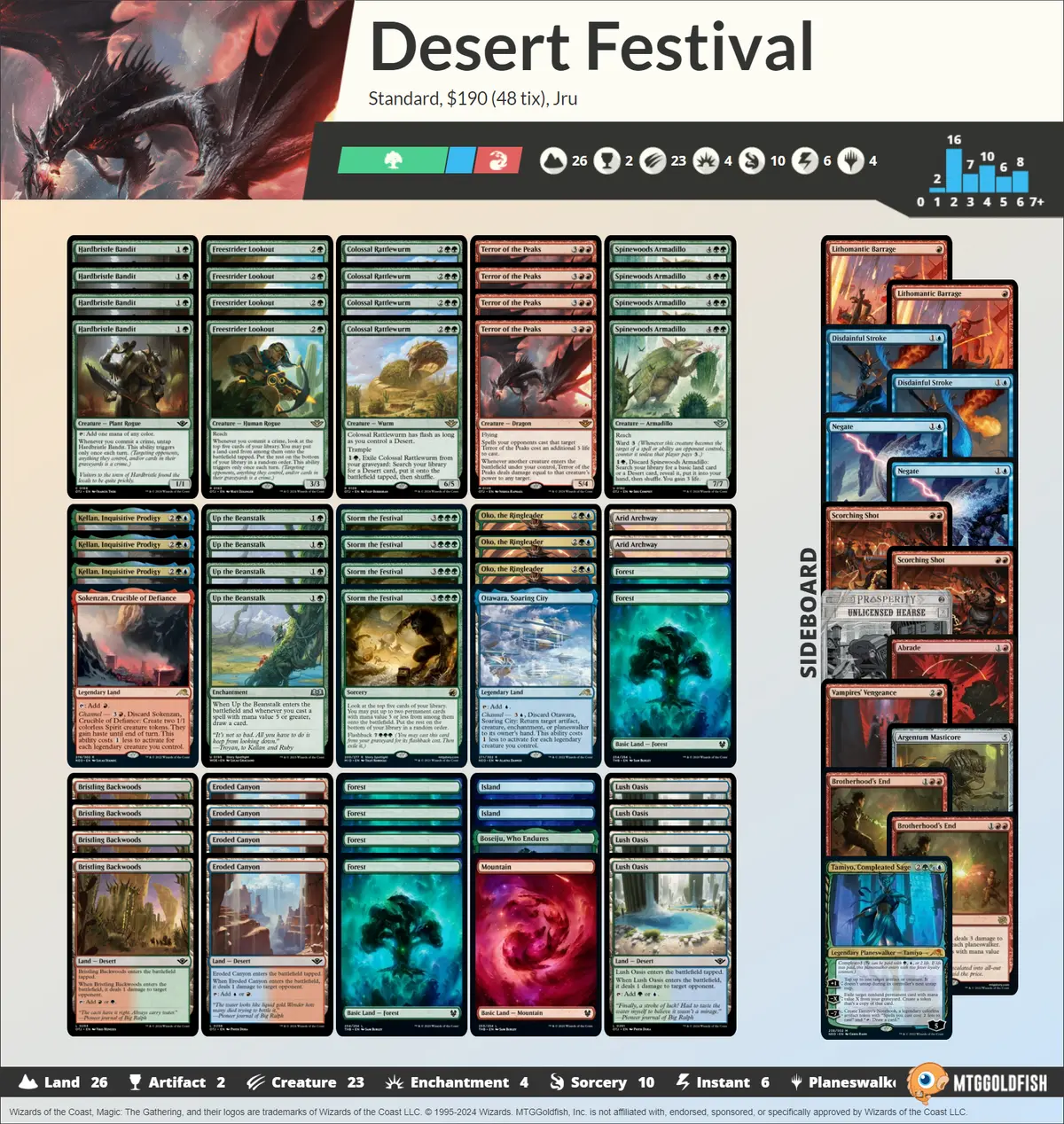
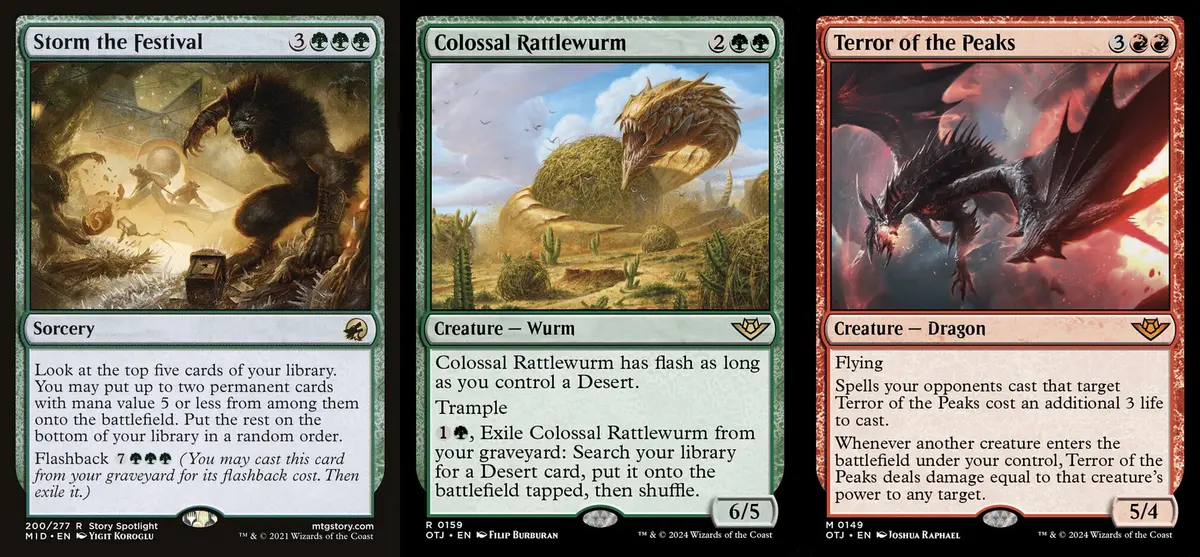
The new two-color desert commits a crime with its enter ability dealing 1 damage to target opponent. Together with the crime abilities of Hardbristle Bandit and Freestrider Lookout, they form this deck’s ramp backbone. However, the payoff after ramping is not slamming down a seven-mana fatty, but using Storm the Festival to lay out a stronger board and suppress the opponent. The best finisher among them is Terror of the Peaks. Also don’t forget that Oko, the Ringleader has the ability to turn itself into a copy of Terror of the Peaks.
Selesnya Mount
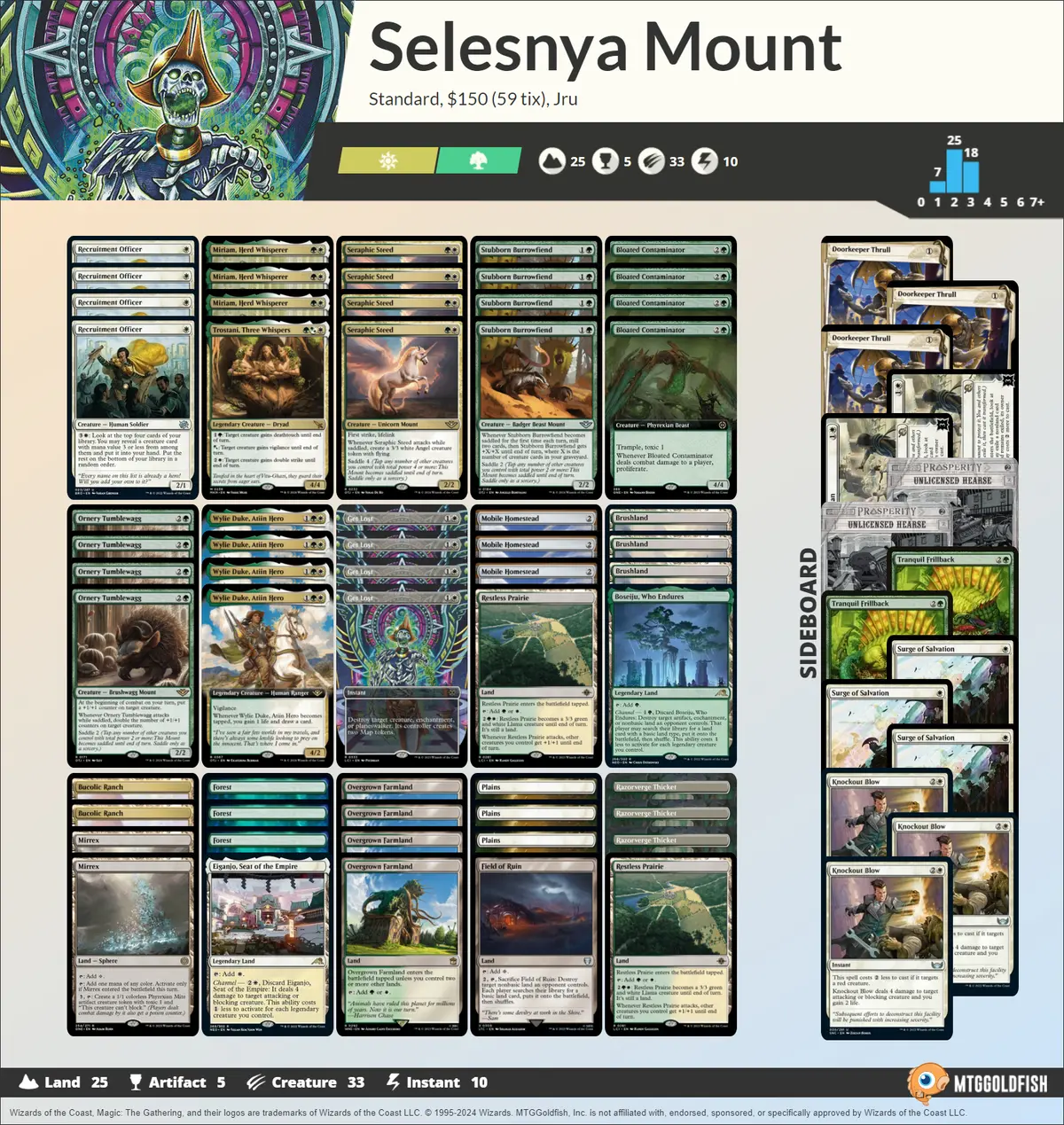
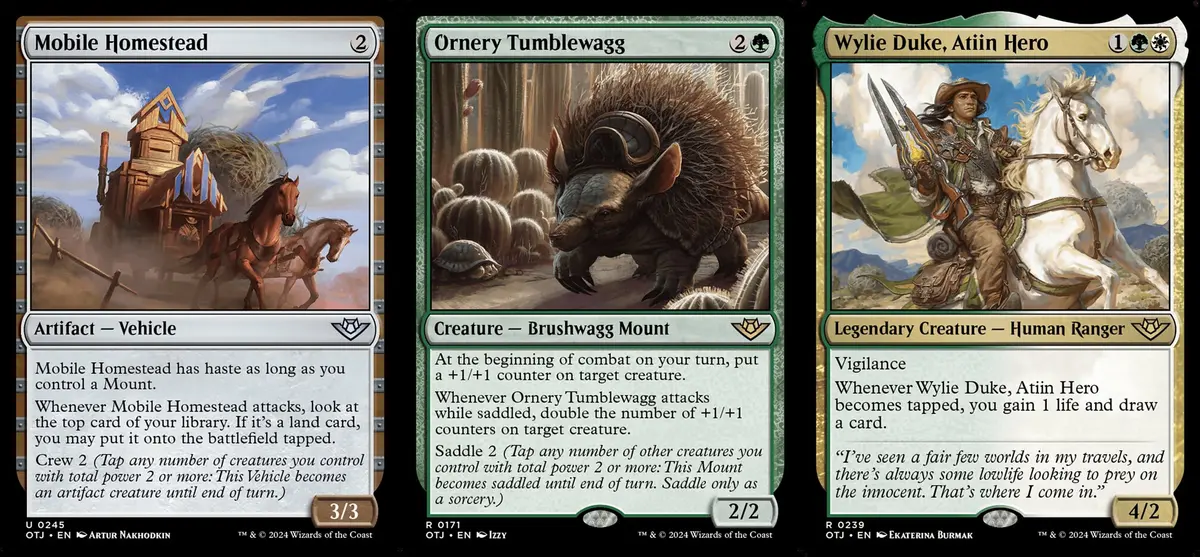
The Selesnya Mount theme in Limited is like a joke? Then let’s see whether it can regain a bit of dignity in constructed. Although it’s called a Mount theme, if you look closely you’ll notice the supporting pieces were designed to include Vehicles too.
Conclusion
We are at a historic moment, exactly as the introduction said: Standard has the largest card pool ever.
Ever since Dominaria in 2018, when rotation-by-block ended and every set became its own independent large set, the design philosophy of cards has changed greatly. The clearest sign is that closed keyword mechanics or themes, lacking enough sets to supply cards, usually never get substantially strengthened again after their set. At most they get an upgraded dual land or utility land, or a new card in the same role replaces something like removal. Furthermore, cramming a more closed mechanic entirely into one set tends to polarize its power level: either it is so weak it is pointless, or so mindlessly strong that the game becomes hard to interact with on equal terms.
So today’s card design emphasizes versatility. It rarely requires an entire deck to run on a single thematic mechanic. Instead, cards with various functions that happen to cooperate are matched together, as long as the whole deck’s game plan is consistent. This is also why Standard deck names today are often just a classification like XX color pair + aggro/midrange/control, rather than a very specific theme name.
Whether this change is good or bad depends on personal taste. As for the author, I very much like the current Standard. To use an analogy: if a more closed theme is like a jigsaw puzzle, where you piece together components that have already been decreed to go together within a restricted frame, then today’s Standard is more like Lego. You can freely combine pieces in your own style and find the play style that best expresses yourself. Of course, what you assemble still has to pass the test of balance, and that can be continuously optimized through repeated testing and tuning.
This kind of constructed environment also brings one characteristic: many decks tend to become collections of powerful individual cards, seeking extra synergy between those powerful cards (the author’s own preferred way of building also falls into this category). As the Standard card pool expands to three years, the pool easily becomes saturated, so once some decks have gathered quality individual cards to a certain point, new sets may no longer change them significantly. But that doesn’t mean things never change again; the form of change just becomes more subtle.
If I were asked to evaluate the biggest difference between Standard’s construction logic and that of other formats, I would say it is the clarity of the proactive game plan. In the mainstream decks of other formats, aside from traditional control, there is basically a very clear operating theme, and the proactive game plan is built around that theme. Standard is less clear in this regard: although many midrange decks have various small synergies between individual cards, it is hard to say what theme runs through the whole deck. The focus of the game lies less in emphasizing a proactive theme and more in how to gain an edge over the opponent in the back-and-forth of interaction, and the depth of play decisions has also increased significantly compared with before. Of course, I’m not saying either style of game has an absolute advantage, but at least for me personally, I love this kind of interaction-focused environment.
- Title
- A First Look at Standard with Outlaws of Thunder Junction
- Author
- Jru, cephille, T1BloodMoon
- Created at
- April 26, 2024
- License
- This work is licensed under CC BY-NC-SA 4.0 .