Outlaws of Thunder Junction Mechanics Breakdown

Note: This article was translated from Chinese by AI and may contain errors. Read the original Chinese version.
Outlaw
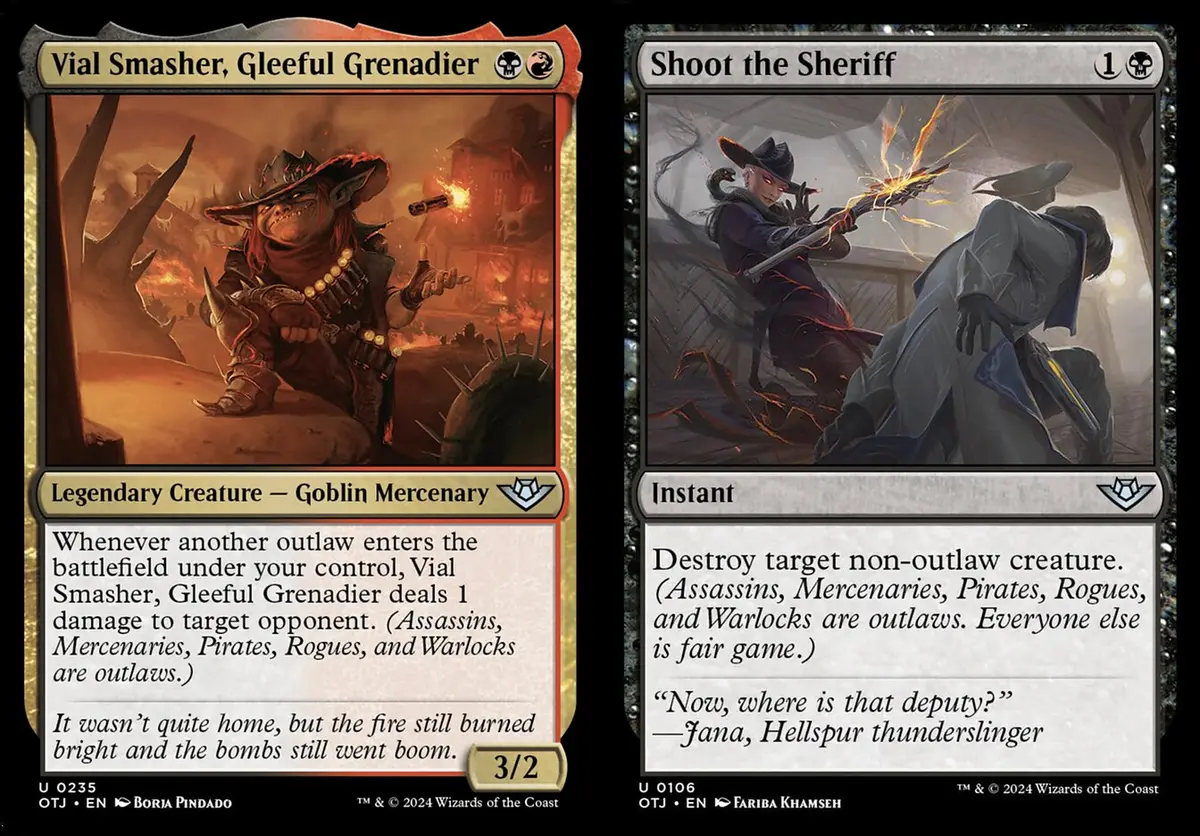
Outlaw is the best name for this plane where everyone is a bad guy. Outlaw is a collective term for the following five creature types: Assassin, Mercenary, Pirate, Rogue, and Warlock. As long as one of your creatures has at least one of those types, it is an Outlaw creature.
Also, Outlaw is not only used to describe creatures on the battlefield. Phrases like “Outlaw spells” and “Outlaw creature cards in your graveyard” may also appear.
Saddle
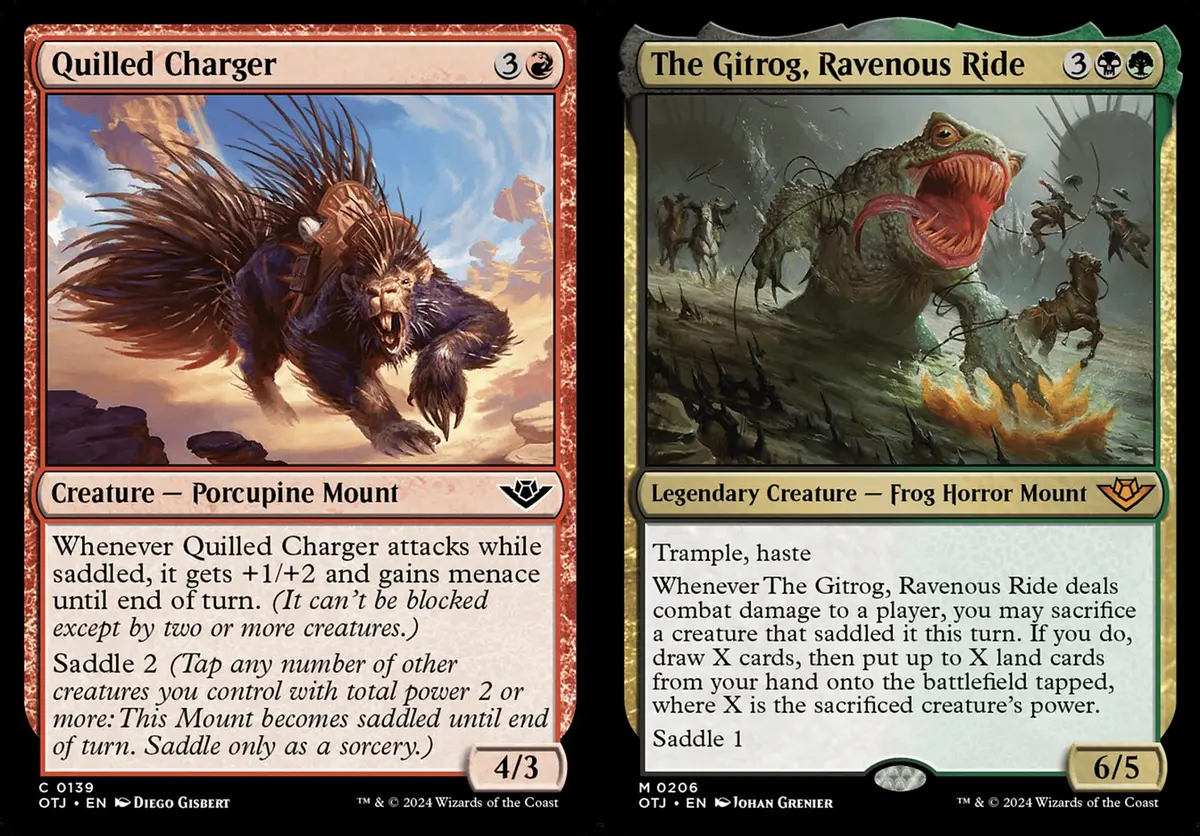
This set introduces a new creature type: Mount. This type has nothing special in the rules; it is just that this set’s Saddle abilities appear on Mount creatures.
Saddle is an activated ability that can only be activated at sorcery speed. Saddle is always followed by a number N. Saddle N means: tap any number of other untapped creatures you control with total power N or greater.
Once a Saddle ability resolves, that creature is saddled. Being saddled does not provide any rules effect by itself, but cards have abilities that care whether the card is saddled. For example, when Quilled Charger attacks, if it is saddled, it gets +1/+2 and menace until end of turn.
A few cards also care about the creatures tapped to activate Saddle. For example, The Gitrog, Ravenous Ride can sacrifice a creature that saddled it to earn resources. (So Thalia, how did you dare to ride that thing?)
One last emphasis: the Saddle ability and the Mount type have no rules connection at all. They are only put on the same cards for flavor reasons. Even if a creature with Saddle loses the Mount type for some reason, the Saddle ability still works.
Commit a Crime
When you cast a spell, activate an ability, or put a triggered ability on the stack, if you target one or more of the following, you commit a crime:
- An opponent (a player)
- A spell or ability controlled by an opponent
- A permanent controlled by an opponent
- A card in an opponent’s graveyard
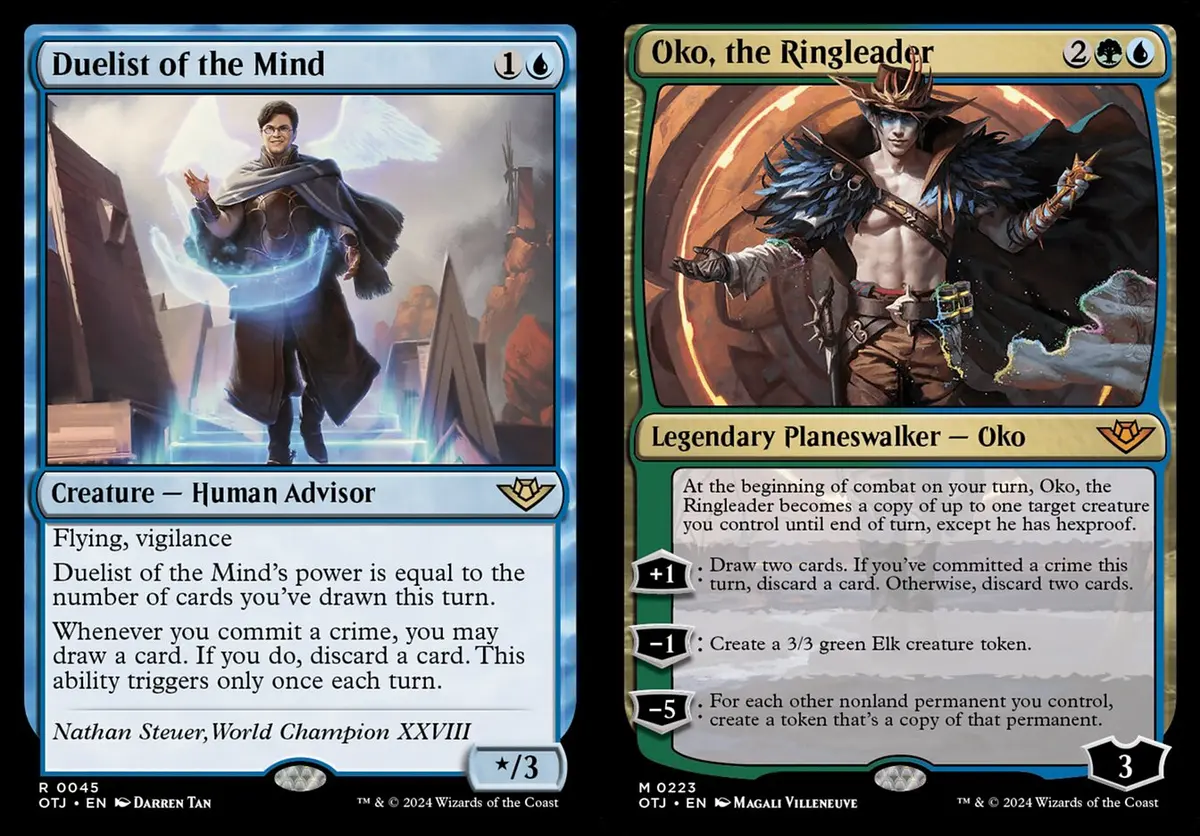
If your spell or ability’s targets are not among the above (for example, in exile), it does not count as committing a crime. Once that spell or ability is on the stack, you have already committed a crime, and it does not matter how that spell or ability resolves afterwards. Some abilities trigger when you commit a crime (such as Duelist of the Mind), and some effects check whether you have committed a crime this turn to change their effect (such as Oko, the Ringleader).
Spree
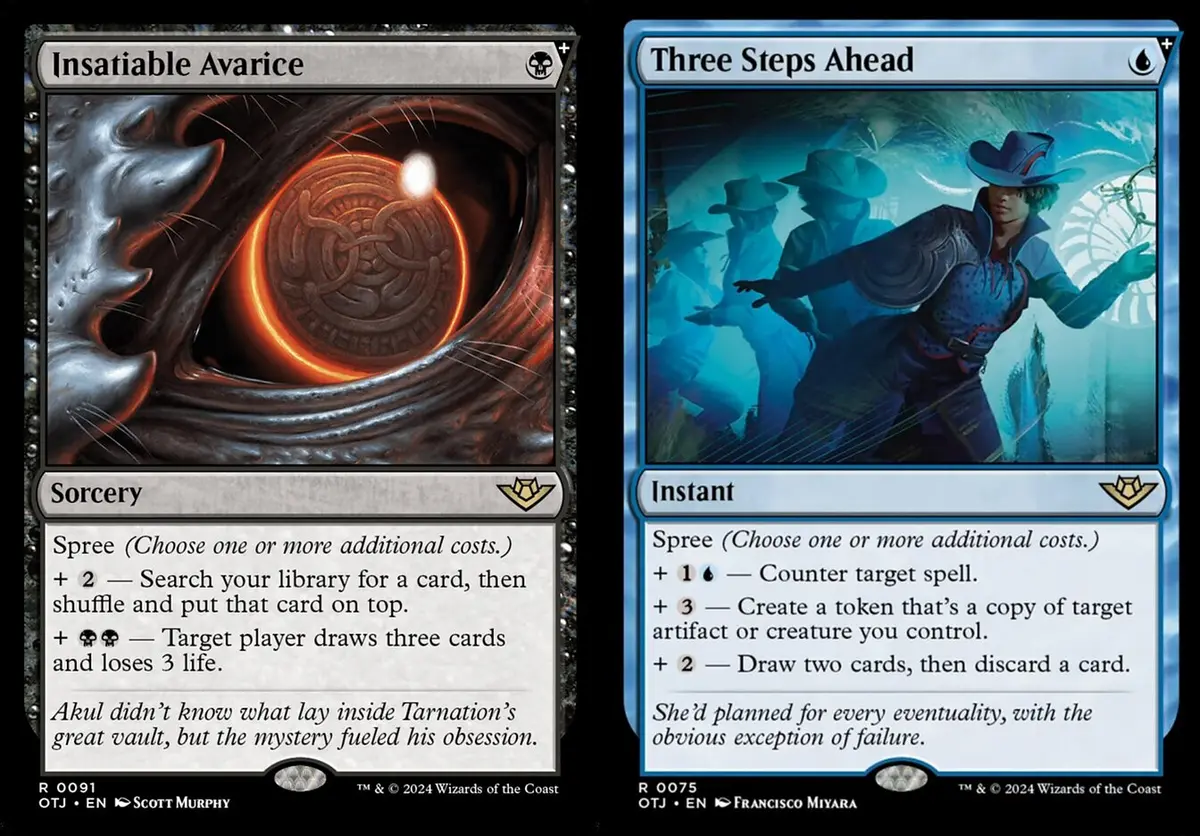
Spree spells have multiple modes, each with an additional cost. When you cast a Spree spell, you must choose one or more modes, cannot choose the same mode more than once, and must pay the corresponding additional costs.
For the additional costs, here are a few common rules clarifications worth repeating. We use Insatiable Avarice as the example throughout:
When you choose multiple modes as you cast, the spell always resolves from top to bottom, not in an order you choose.
In this example, if you choose both, then on resolution you first search your library for a card to put on top, and only after that does the target player lose 3 life and draw three cards.Additional costs do not change the spell’s mana cost; they only change what you pay when casting.
In this example, whether you choose one mode or two, it is a spell with total mana value 1, and it can be countered by Minor Misstep. Even if you choose both modes and must pay 5 when casting, it still cannot trigger the draw ability of Up the Beanstalk.Even if an effect lets you cast a spell without paying its mana cost, that only covers the original cost in the top-right corner of the card. You still have to pay the additional costs.
In this example, you can use the enters ability of Sword of Once and Future to cast Insatiable Avarice from your graveyard for free, since it is a one-mana sorcery. But afterwards you must still choose at least one mode and pay its additional cost; all the sword saves you is that single black mana in the top-right corner.
Finally, every Spree card has a ”+” symbol in the top-right corner. This symbol has no rules meaning; it is only a visual reminder.
Plot
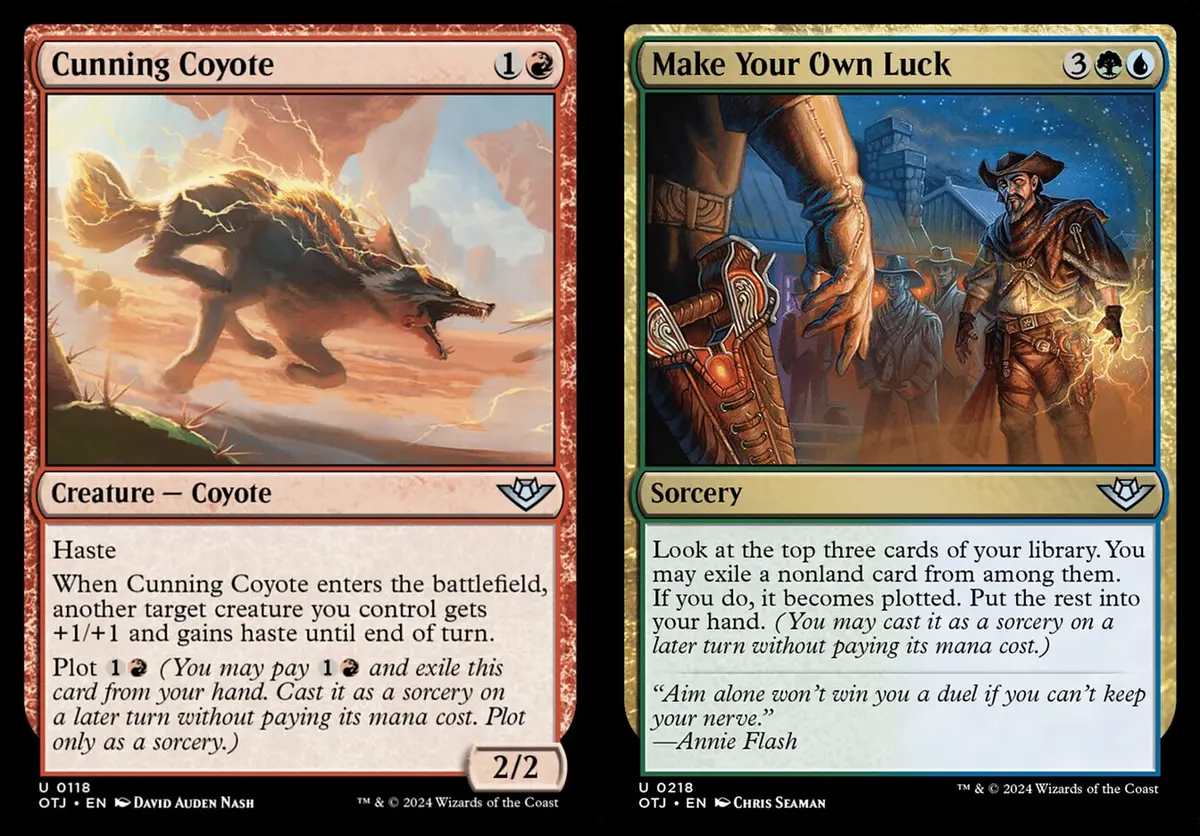
A Plot card can be exiled from your hand at sorcery speed by paying its specified mana cost. That card then becomes plotted. On a later turn after this one, you can cast the plotted card from exile at sorcery speed without paying its mana cost.
Also, exiling the card from your hand by paying its plot cost is a “special action”, which does not use the stack and cannot be responded to.
There are many ways for a card to become plotted, not just cards that have Plot themselves. For example, Make Your Own Luck can look at the top three cards of your library, choose one to exile, and make it plotted. With cards like that, freeloading the casting cost of Atraxa, Grand Unifier is not just a dream.
Set Symbols
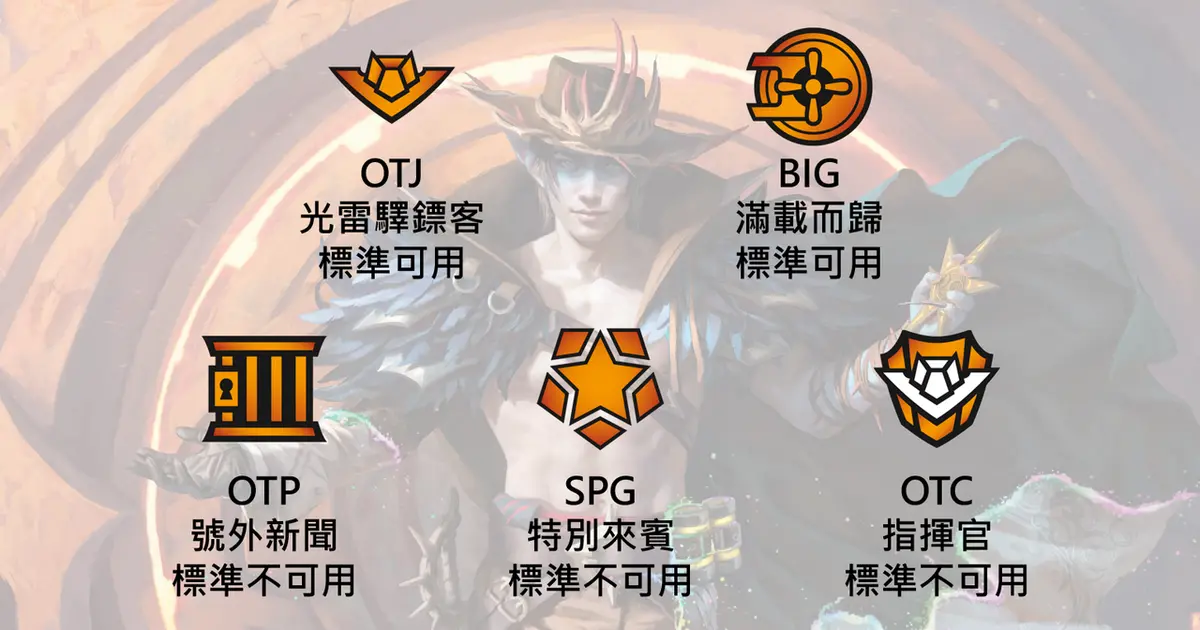
Yes, you read that right. It really is the set symbol that indicates which set a card comes from…
In the Outlaws of Thunder Junction booster packs, you will see 5 different set symbols. For Limited, no matter which set the cards you open come from, they are all usable cards in this Limited event, so you do not need to worry about opening cards that cannot be used under the rules. But for Constructed formats you need to be careful! They do not all come from Standard-legal sets. (All I can say about this is that it is chaos.)
The five sets are as follows:
Standard-Legal
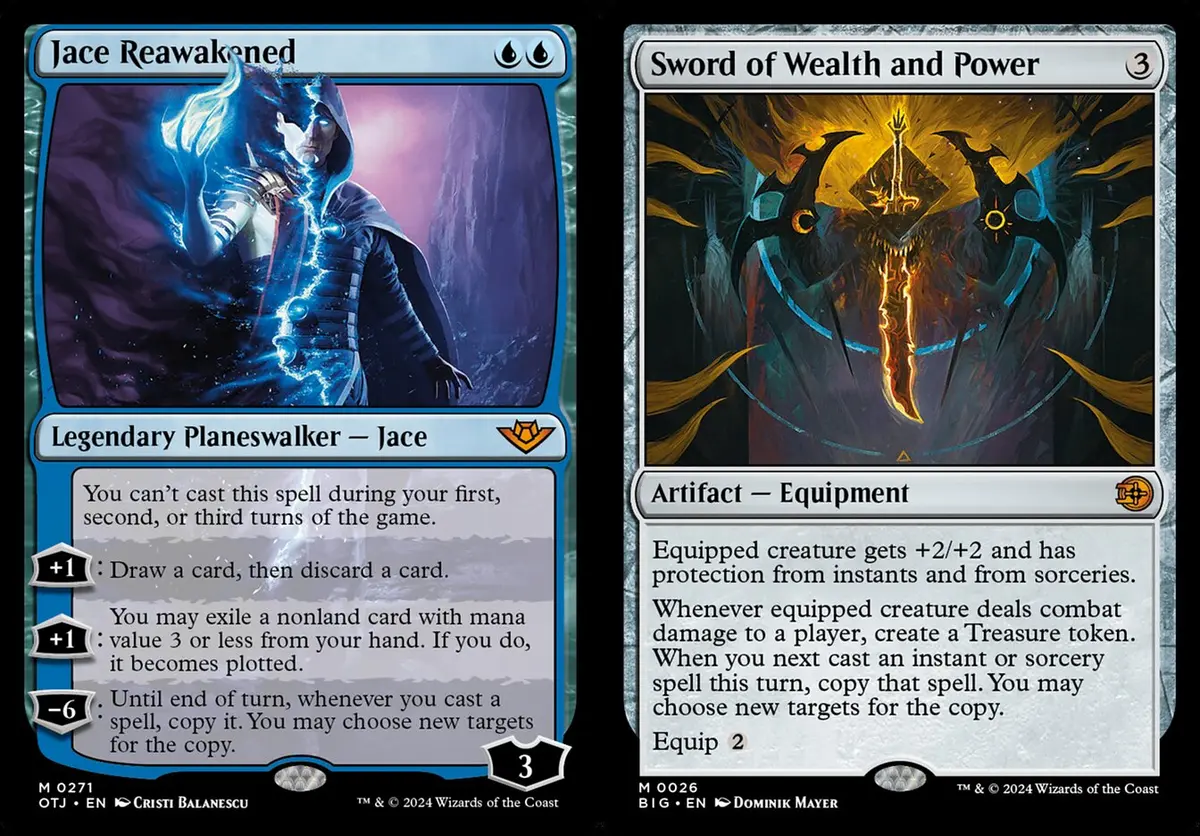
- OTJ: Outlaws of Thunder Junction
- BIG: The Big Score
Not Standard-Legal
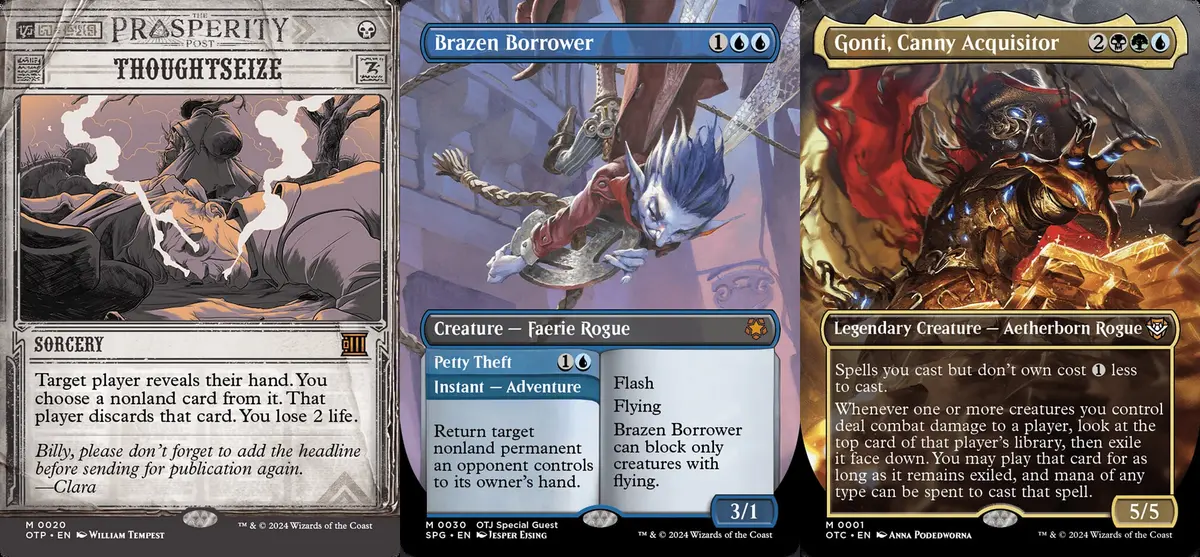
- OTP: Breaking News (newspaper style)
- SPG: Special Guests
- OTC: Commander
Note: Strictly speaking, these three sets are not “not Standard-legal,” but rather “do not change the Standard-legal card pool.” Although no such card exists at the time of writing, if these three sets’ lists later update a card that already exists in the Standard pool, you can still use that card in Standard.
Get Ready for Outlaws of Thunder Junction
Outlaws of Thunder Junction prerelease events start on April 12, 2024. Head to a nearby store and experience the new set!
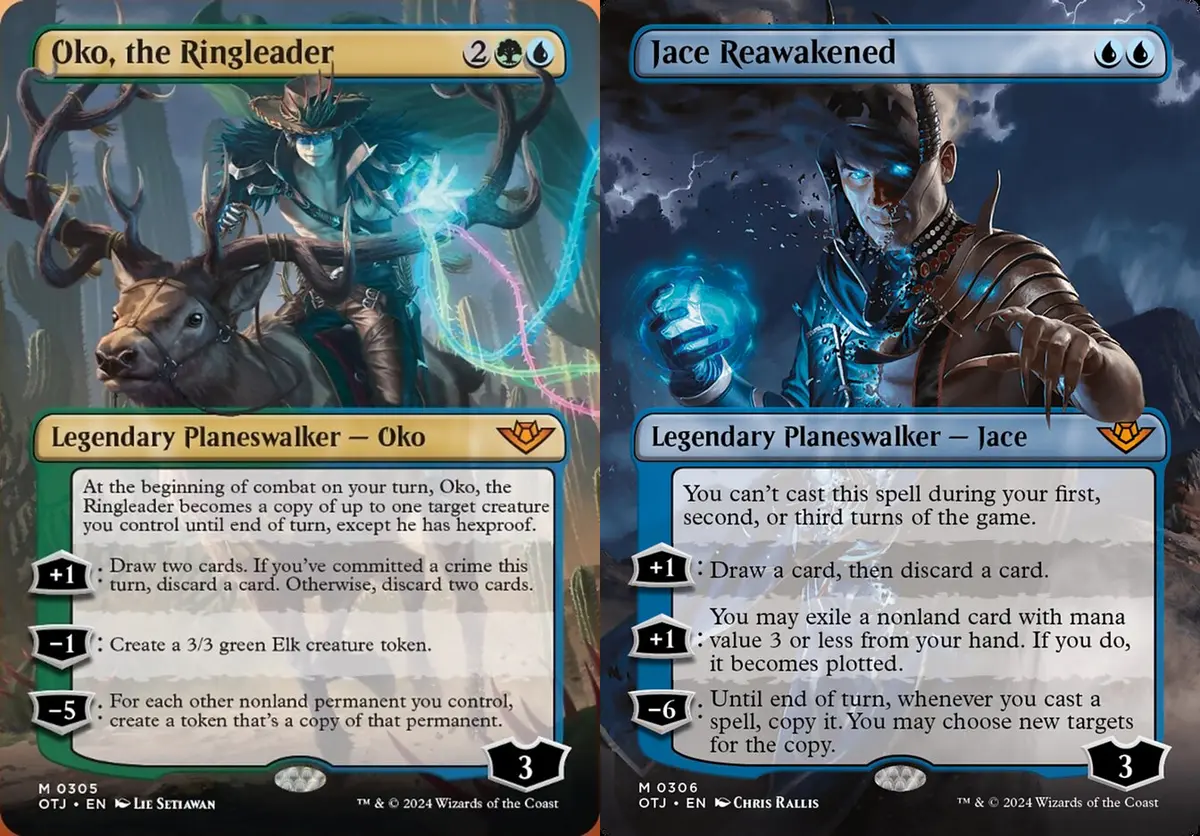
Outlaws of Thunder Junction Calendar:
April 12–18: Prerelease
April 19: Outlaws of Thunder Junction release date
April 19–21: Play days
April 26–May 2: Commander Party
April 19–June 25: Standard Showdown
May 4–12: Store Championships
- Title
- Outlaws of Thunder Junction Mechanics Breakdown
- Author
- Jru
- Created at
- March 29, 2024
- License
- This work is licensed under CC BY-NC-SA 4.0 .
Related Articles
cephille's Outlaws of Thunder Junction Limited Analysis (Written Before PT OTJ)
April 23, 2024
Outlaws of Thunder Junction (OTJ) Limited Primer — Breaking News (OTP)
April 12, 2024
Outlaws of Thunder Junction (OTJ) Limited Introduction: The Big Score (BIG) & Special Guests (SPG)
April 12, 2024
Outlaws of Thunder Junction (OTJ) Limited Guide — Black
April 12, 2024