Pioneer 80 Four-Color Enigmatic Incarnation

Note: This article was translated from Chinese by AI and may contain errors. Read the original Chinese version.
Introduction
Hi everyone, I’m Enki. MITQ Season 5 is in full swing, and while you are all battling it out in Modern, MIT Season 4 is also coming soon.
Since the format of this MIT is Pioneer, and I am a multicolor-theme enthusiast, I wanted to take this chance to properly introduce this 80-card four-color Enigmatic Incarnation deck.
Although the deck’s usage rate isn’t high and it hasn’t won the favor of many players, it actually has a decent win rate against many meta decks. It also took fifth place at the European RC: Legacy European Championship Lille. So I personally think this deck is competitive enough for tournaments and has a chance of being played at MIT/RC.
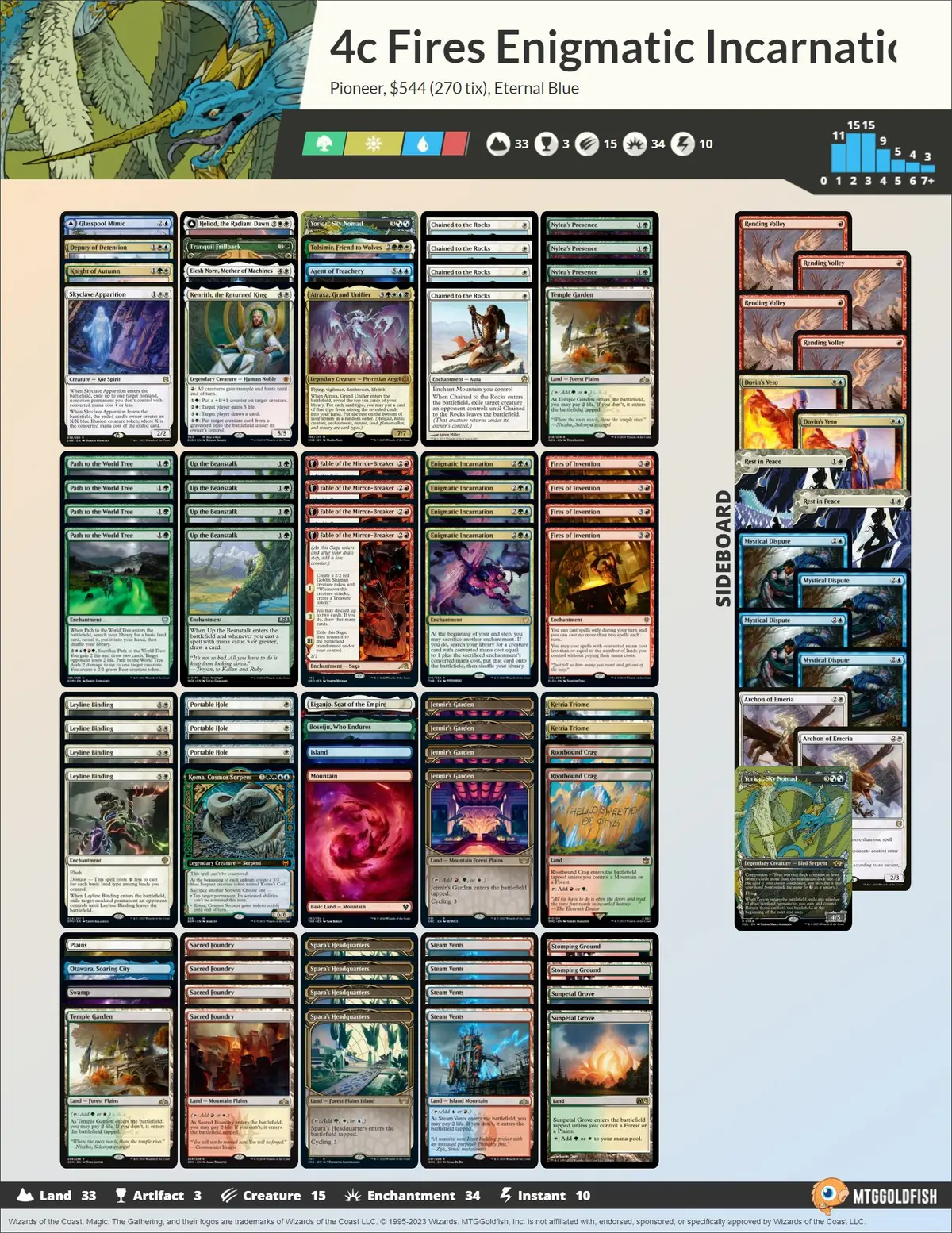
Here is the decklist first.
A Brief Look at the Deck’s Nature
The deck’s tempo is controlling in the early game, a medium-slow type whose game plan only changes noticeably once it reaches turn 5.
There are two game plans that speed up winning: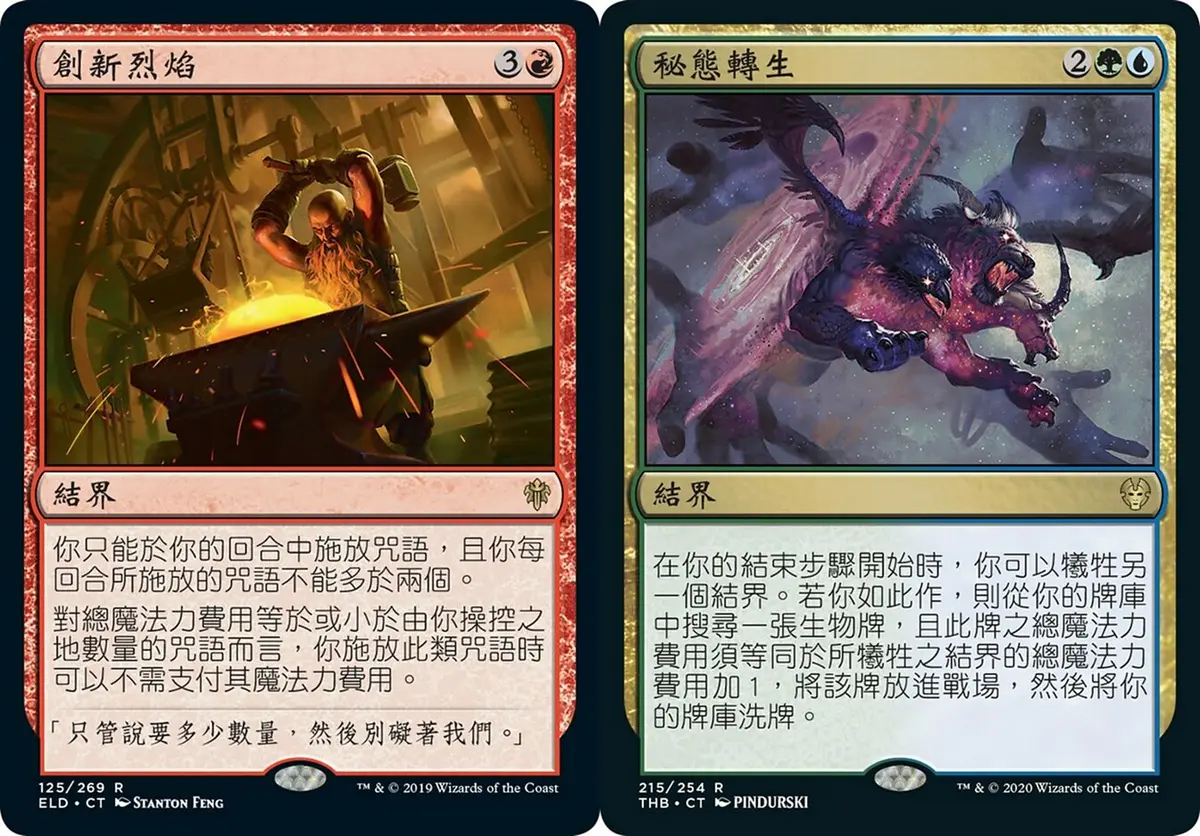
- Fires of Invention
Landing Fires of Invention on the battlefield gives you the ability to cast two spells per turn for 0 mana, speeding up the deck and suppressing the board. Because spells cost 0, lands can all be played tapped and you will have spare mana to pay for activated abilities, use Kamigawa’s channel lands, or get a companion. All these small details raise your win rate, force the opponent to keep up with your pace, and leave them gasping for air. - Enigmatic Incarnation
This is the deck’s main way to win.
By turn 4-5 there are usually many enchantments on the battlefield that were used in earlier turns for filtering, color fixing, and removal. After casting Enigmatic Incarnation, we can sacrifice those enchantments and search the deck for a creature card that answers the current matchup.
This card gives the deck a toolbox nature, letting it respond effectively to any matchup without losing tempo.
Cards
Enchantments/Artifacts
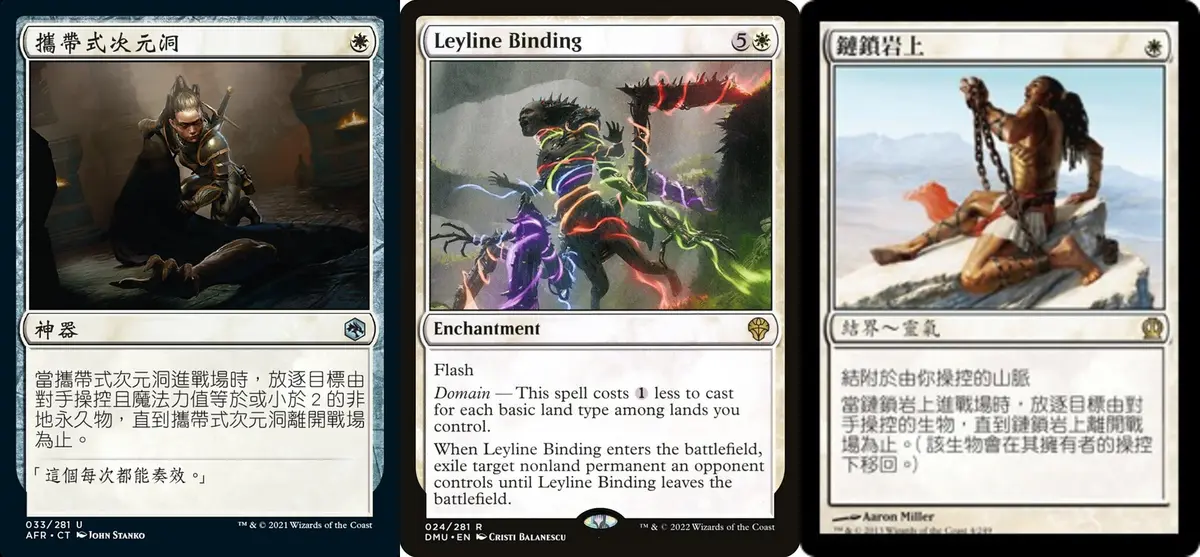
Previous 80-card Fires decks only ran two removal spells, Leyline Binding and Chained to the Rocks. But considering the weak early game of five-color decks, plus the worry that an 80-card deck lowers the odds of drawing them, to increase the chance of drawing removal early we added Portable Hole, which has a relatively low cost and fits the deck’s colors well, to improve resistance against fast decks.
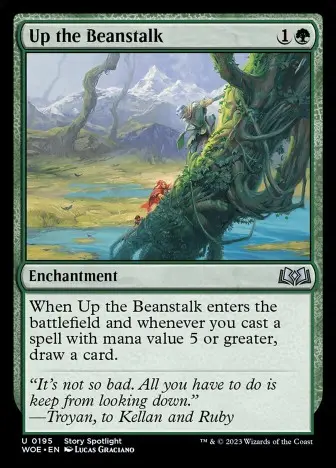
I really don’t want to say much about this one. You see it in Standard, Pioneer, and Modern, and it is a real source of chaos.
Entering the battlefield and casting a spell with mana value five or more each let you draw an extra card, giving quite good resource recovery, and with multiple copies you can earn a huge card advantage at once.
The awkward part is that most of the 80-card Fires deck’s spells are concentrated at four mana or less, so most of the time you can’t draw as many cards as you would imagine, but it is still a powerful card-draw engine against control or whenever you need to build a resource gap.
The more common interactions are triggering it with the low-cost Leyline Binding, or paying 3 to get the companion Yorion, Sky Nomad: draw a card when it is cast, then have the companion’s enter ability blink it out, and draw another when it comes back at end of turn. Of course, with multiple copies you earn a ridiculous amount.
Another reason to play it is that it costs 2, which fits the cost we need when using Enigmatic Incarnation to toolbox, so it doesn’t always stay on the battlefield and is often sacrificed.
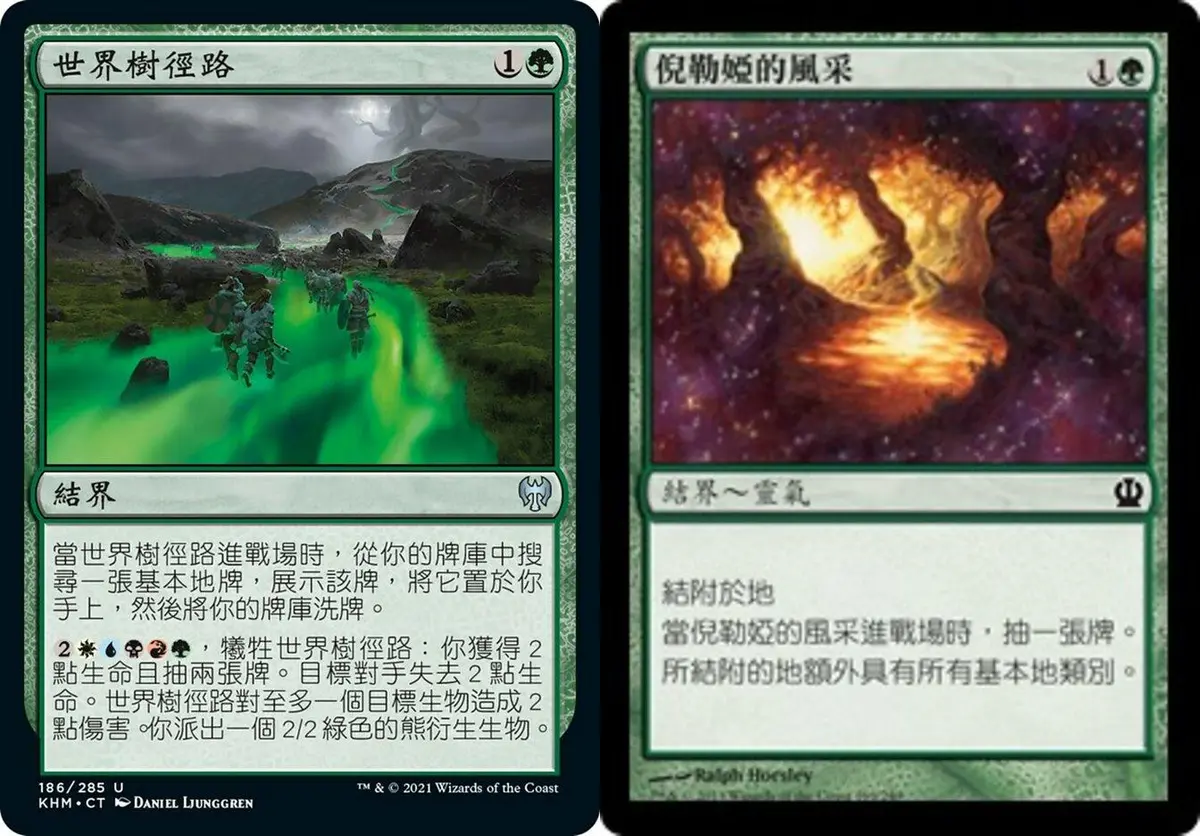
These two are enchantments used for color fixing, filtering, and later turns, paired with Enigmatic Incarnation to toolbox the deck.
The order of use depends heavily on the current situation, but basically follows these principles:
Path to the World Tree: when you need a land right now or are missing a specific color.
Nylea’s Presence: when you need to use Leyline Binding right away.
Worth mentioning: when Fires of Invention is on the battlefield, since every spell you cast costs 0, there is a good chance to use the second ability of Path to the World Tree (at least I use it often), while Nylea’s Presence can give the enchanted land all basic land types, which just satisfies the condition for Leyline Binding to drop to a single white mana.
And of course, since they are both enter-the-battlefield abilities, blinking them with the companion Yorion, Sky Nomad also earns spare resources.
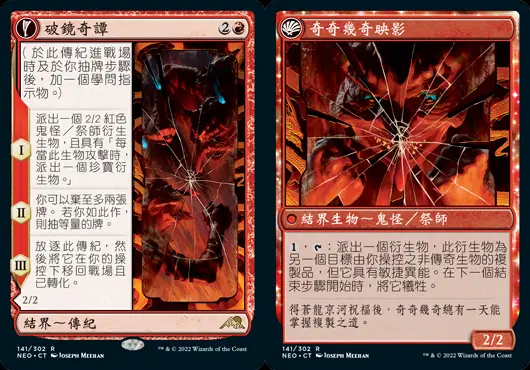
I think everyone knows this one well, the wicked three-mana enchantment source of chaos.
If it resolves successfully, it is a card that nets value: it can ramp, filter, copy creatures, and it is an enchantment too, so there is no reason not to play it.
If you want to use Enigmatic Incarnation to sacrifice this and toolbox, the only thing we can find is Heliod, the Radiant Dawn. I will cover the specifics in the creature section below.
Creatures (Toolbox)
What you can find by sacrificing a 2-mana enchantment…
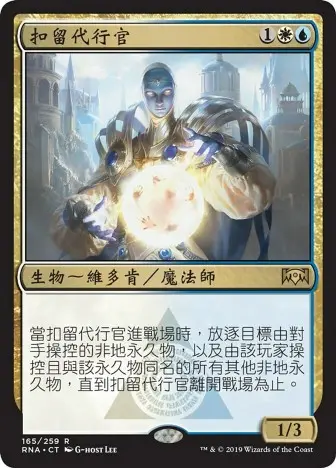
Commonly called the Orb guy.
When it enters, it suppresses any nonland permanent and other permanents with the same name, until it leaves the battlefield.
It is usually fetched to deal with a threat your current hand can’t handle, or with most same-name tokens. The conditional one-for-many ability earns it a place in this deck.
The downside is that it is a creature with 3 toughness, which is fairly fragile, so it is better to call it out only when the opponent really can’t remove it (e.g., Mono-Green).
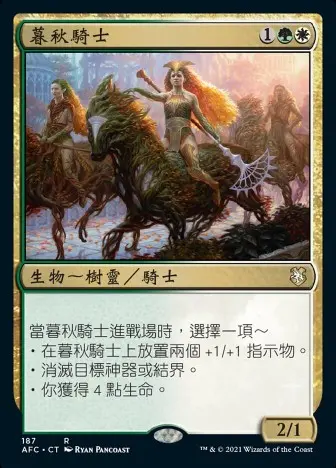
Choose one of three on entering. Usually you pick destroying an enchantment or artifact, or gaining life. It gets fetched against aggro or specific decks, but for some reason I often see it show up in my hand…
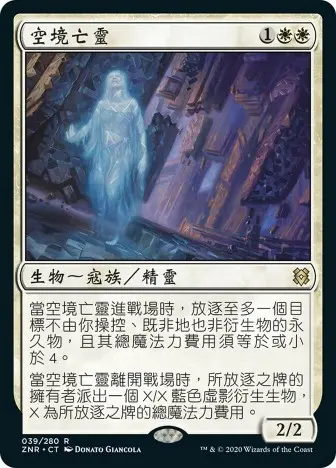
This old bro is probably the one I fetch most often. It can exile a nontoken, nonland permanent with mana value four or less, and if it is killed it only gives the opponent an X/X Illusion token, and the card it took does not return to the battlefield, which makes it quite a good removal method.
A small detail: its removal ability and leave-the-battlefield ability are separate. If the opponent wants to kill it while its removal ability is still on the stack, something gets exiled but the opponent doesn’t get the Illusion token (because nothing had been exiled when it was killed), an awkward situation.
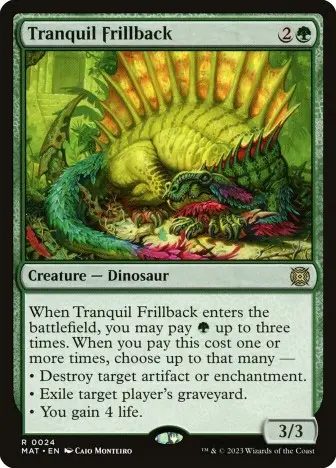
The green dinosaur.
Three abilities can trigger on entering, and each additional green mana paid lets you choose one more (no repeats). You have a chance to use almost all three, and the most commonly used is probably graveyard removal/destroying an enchantment or artifact. A quite good, versatile card worth playing.
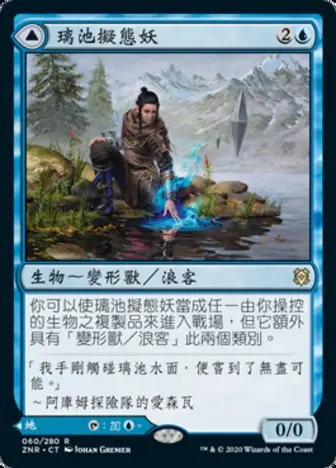
The clone shapeshifter, used to copy a creature on the battlefield and trigger its removal/card-advantage ability again.
Usually used to copy a 3-mana creature for removal or a 7-mana big guy.
Sometimes it just gets played as a tapped land.
What you can find by sacrificing a 3-mana enchantment…
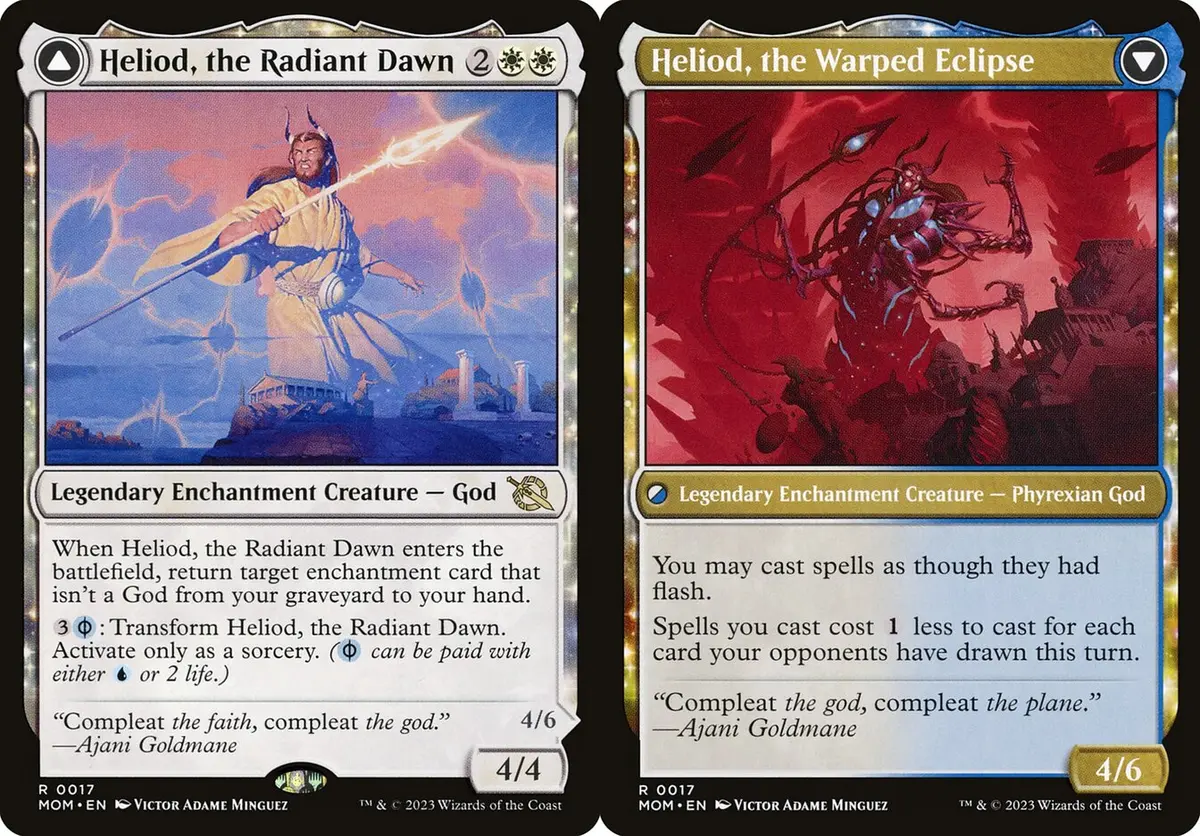
This is the Heliod, the Radiant Dawn mentioned above, usually found by using Enigmatic Incarnation to sacrifice Fable of the Mirror-Breaker.
On entering, it can grab an enchantment from the graveyard (most of the time Fable of the Mirror-Breaker).
We play it because it is an enchantment itself, which lets us recover resources while helping us jump up a level: using Enigmatic Incarnation to go from 3 to 4, and from 4 to 5 to fetch a 5-mana creature.
Another point worth mentioning is that its flipped side’s ability makes spells have flash, so if the opponent wants to cast a sweeper-type spell on their turn, you can respond by casting Yorion, Sky Nomad and blinking your permanents out to save the board.
What you can find by sacrificing a 4-mana enchantment…
Usually done by sacrificing Fires of Invention, or by having two Enigmatic Incarnation sacrifice each other.
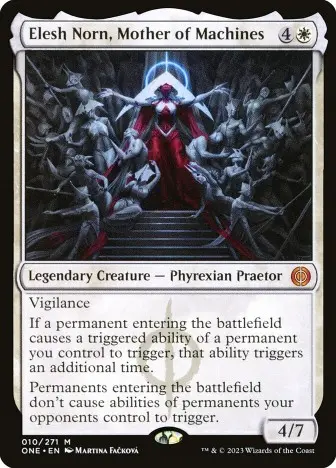
Mom.
Nearly all the creatures and enchantments this deck fetches with Enigmatic Incarnation have enter-the-battlefield abilities, so playing Mom doubles all of the value.
Conversely, Mom is also what this deck fears most. If the opponent can bring her out, everything this deck does crashes and you are reduced to a creature-quality brawl with the opponent, a situation that is basically unplayable.
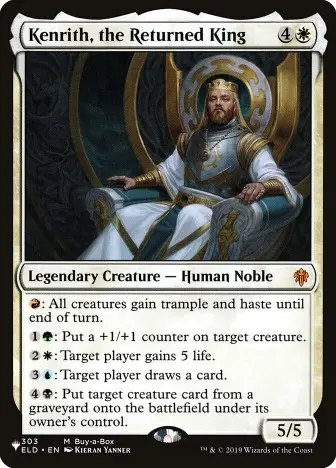
The King.
A card that can squeeze extra value out of Fires of Invention.
When Fires of Invention is on the battlefield, lands are almost always left untapped, so you can make good use of the King’s ability.
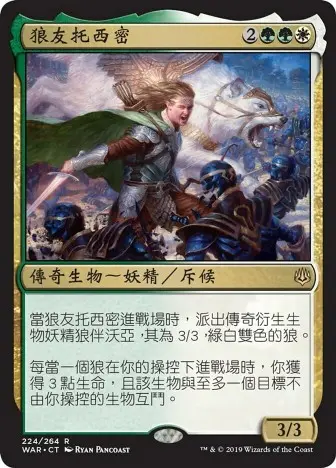
A card fetched in creature matchups: summon a 3/3 that fights an opposing creature and gain three life, and if the 3/3 survives you can keep two creatures on the board, very useful against aggro decks.
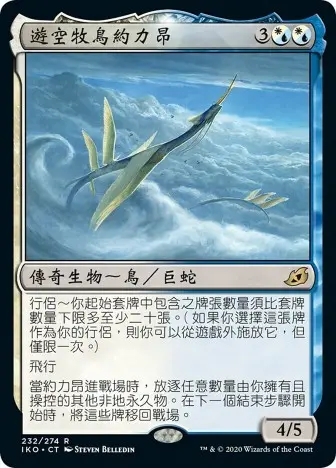
A card with one copy in the main deck and one in the companion slot. The deck has an extreme number of enter-the-battlefield abilities that earn cards, so blinking with it to earn again effectively widens the resource gap.
Note that if you fetch it with Enigmatic Incarnation, it blinks at the end of your own turn and does not return to the battlefield immediately, but only at the next end step.
Also worth mentioning: if Fires of Invention is on the battlefield, you can cast it as the second free spell and, when triggering its enter ability, blink Fires of Invention away. That removes Fires of Invention’s two-spell limit, and you can cast other spells by paying costs normally to continue developing.
What you can find by sacrificing a 6-mana enchantment…
There are quite a few 7-mana big monsters to choose from, mostly a matter of personal preference and which decks you want to target.
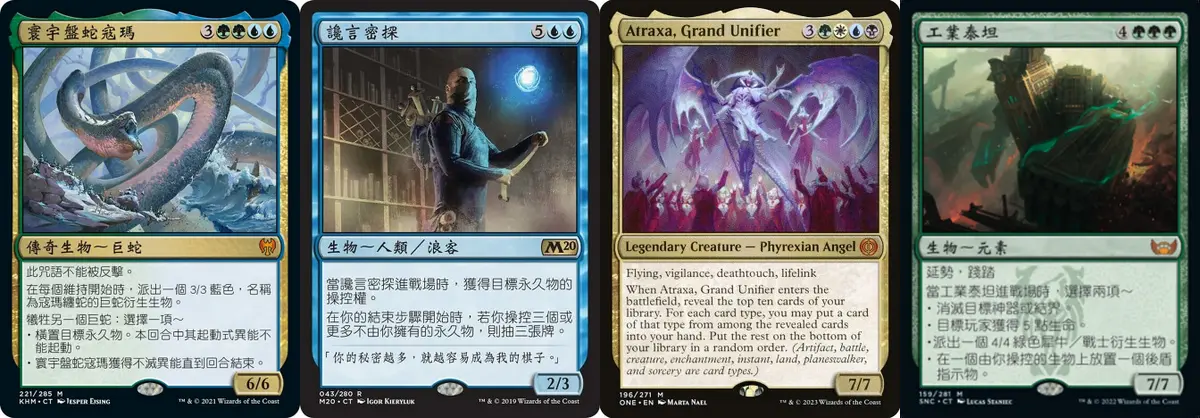
The commonly seen ones are the cards above, basically all cards that deliver extremely high value as soon as they enter the battlefield.
If you can get Leyline Binding onto the battlefield early and cast Enigmatic Incarnation on time on turn 4, you can sacrifice Leyline Binding to pull these big monsters from the deck onto the battlefield, a devastating blow to any deck.
Sideboard Choices
Because the deck is 80 cards, you want a leaner sideboard, raising the number of copies of cards for specific matchups as much as possible to avoid spreading the sideboard so thin that you lower the odds of seeing them.
For the current meta, the deck’s sideboard choices are:
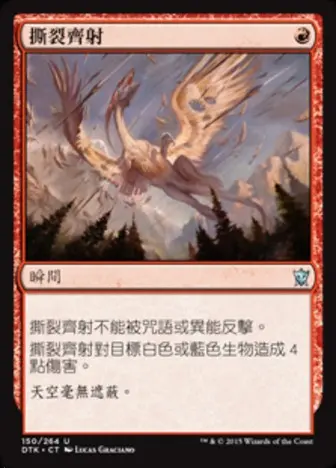
This is a sideboard card for dealing with most of today’s aggro decks.
Its main targets are White Humans, Azorius Spirits, and Greasefang; basically the core cards of these decks all get hit by it.
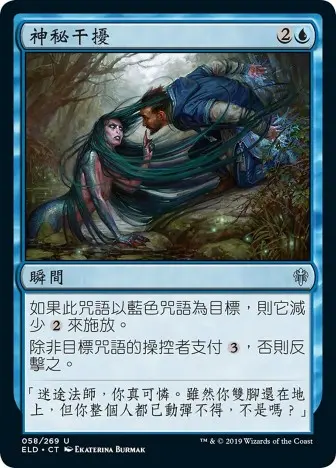
A card played to disrupt blue-heavy decks, or to counter back so your important spells resolve.
Its main targets are Azorius Spirits, Azorius Control, the Lotus Field combo, and Phoenix, and it also comes in against Mono-Green.
If you bring this one in, you take out the four Fires of Invention, because while Fires of Invention is on the battlefield you can’t cast spells on the opponent’s turn, which would leave this card stuck in your hand as a dead card.
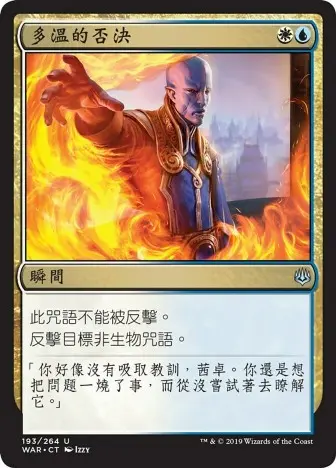
A noncreature counterspell the opponent can’t say no to, used to counter threatening spells you absolutely can’t let the opponent resolve.
Its main targets are Azorius Control, the Lotus Field combo, Mono-Green, and Phoenix.
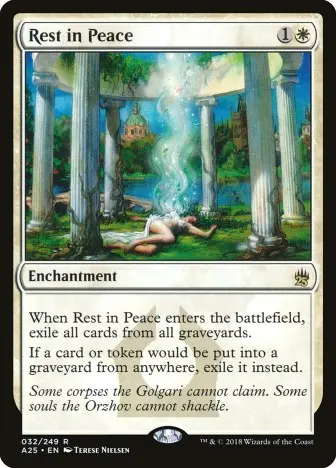
Graveyard hate, no explanation needed.
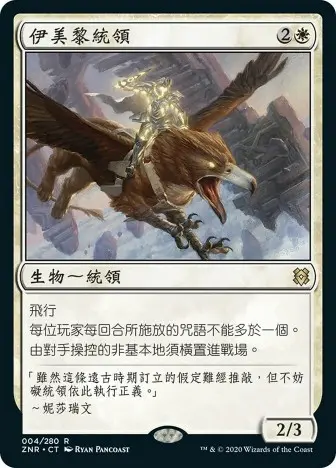
A combo limiter, played to stop the opponent from going crazy and casting too many spells in one turn, restricting everyone to one at a time.
Its main targets are Mono-Green and the Lotus Field combo.
ManaBase
This part needs a special mention because most five-color decks have different land configurations, especially in an 80-card build, where to draw opening hands with lands that let the deck run normally you have to tune the ratio to some degree.
Taking the decklist above as an example, the color ratio of the colors its lands can produce is:
Green: 19
White: 18
Blue: 12
Red: 19
Black: 1
As you can see, apart from blue and black, the green, white, and red mana are set much higher and quite evenly.
The main reason for this configuration is that in the first two turns we want white and green mana to cast the cheap 1-mana removal and the 2-mana draw-filter enchantments, on turns 3 and 4 we want red mana for Fable of the Mirror-Breaker or Fires of Invention, or we want to produce blue and green mana for Enigmatic Incarnation.
For these reasons, to keep the early tempo stable we first chose to play four each of the three-color lands that produce white and green, Jetmir’s Garden and Spara’s Headquarters.
And to keep Chained to the Rocks from becoming a dead card without a Mountain, we also played as many three-color lands and shock lands with the Mountain type as possible, including four Sacred Foundry (which enables Chained to the Rocks on turn 1), and Ketria Triome, Steam Vents, and Stomping Ground to produce green and blue mana.
That way we can almost guarantee that in most early games there is something to do every turn, which is especially important in the tightly paced Pioneer format.
Mana base is basically a common problem for most 4-5 color decks. Skipping a turn because of the wrong mana colors is very painful, and this is also why multicolor decks are a bit more at the mercy of luck than mono-color or two-color decks: their mana base is relatively unstable and you can’t always assemble what you want.
Conclusion
All in all, although the deck’s way of operating is very interesting and its suppression is more than sufficient when things go smoothly, as a tournament deck it still has some old problems: the old mana base problem, and a hard time against aggro and combo. Although these can be fixed with the sideboard, the 80-card thickness lowers the rate of drawing them, and needing to mulligan in certain matchups is also a small drawback.
But aside from the problems above, it is still a deck that can handle different situations. The toolbox nature lets it deal with the opponent’s threats while still executing its game plan, and gives the deck-building freedom, making it easy to gain an advantage in many medium-to-slow matchups.
- Title
- Pioneer 80 Four-Color Enigmatic Incarnation
- Author
- Enki
- Created at
- November 3, 2023
- License
- This work is licensed under CC BY-NC-SA 4.0 .