A Look at Rakdos Vampires at PT MKM

Note: This article was translated from Chinese by AI and may contain errors. Read the original Chinese version.
Before We Start
Pioneer Rakdos Vampires achieved outstanding results at this Pro Tour Murders at Karlov Manor (PT MKM). Twelve Vampire decks were registered (11 Rakdos and 1 mono-black), all of them made Day 2, and two reached the Day 3 top 8! In the end, Seth Manfield piloted Rakdos Vampires to the title!
ChannelFireBall (CFB) also has a dedicated article: link
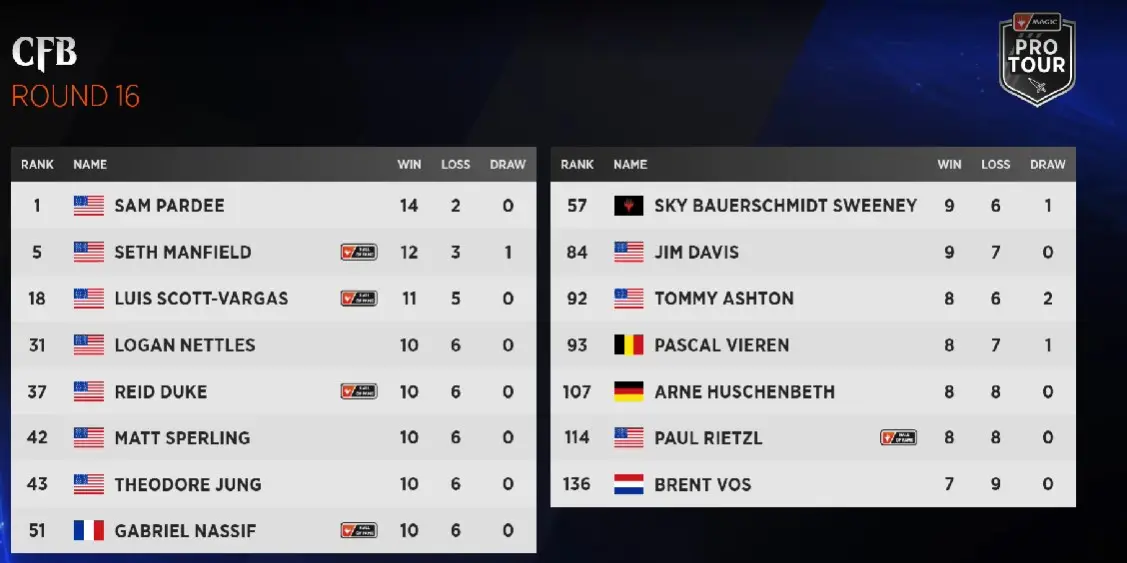
The image above shows the ChannelFireBall (CFB) team’s results at PT MKM through Day 2, which are very impressive. Apart from the following three who didn’t play Vampires, the other 12 players all played Vampires, and among them Paul Rietzl, the originator of the Vampire deck, entered with mono-black Vampires.
These results are the first time since Sorin, Imperious Bloodlord debuted in M20 that he has shone at a Pro Tour-level event. This deck, however, is a familiar presence to me personally: during the 2022 summer MITQ#1 season I began playing a similar Rakdos Vampires list. Although unfortunately I didn’t get good enough results at the time to take part in the MIT main event, I’m naturally delighted that a deck like this could shine at a major event.
As for Rakdos Vampires, the well-known CFB player Luis Scott Vargas (LSV) also published a related article on the CFB website after the event:
Ripping Veins and Taking Names: Pioneer MTG’s Hottest New Deck
Interested readers can also click this link to see my tournament report from two years ago, XD.
Hey man, why until now?

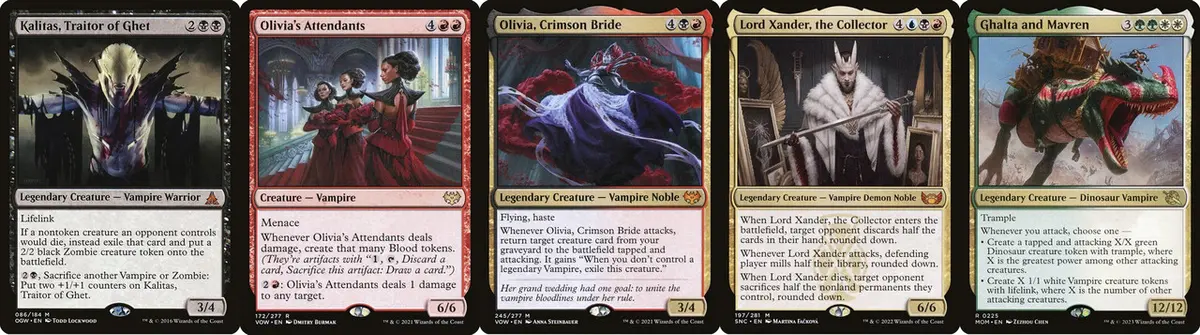
The combo of Sorin, Imperious Bloodlord plus expensive Vampires has been tried by players like me ever since the Pioneer format began in fall 2019, but this is a card that needs support, mainly using Sorin’s [-3] loyalty ability to put a powerful high-cost Vampire onto the battlefield. However, since there weren’t many powerful Vampires in the early Pioneer environment, this combo had no significant impact on the Pioneer scene. But thanks to ever-stronger creatures being printed, Vampires have grown stronger year by year. Besides the old-timer Kalitas, Traitor of Ghet, there are high-cost legendary Vampires like Olivia, Crimson Bride and Lord Xander, the Collector; and VOW’s Olivia’s Attendants, combined with Sorin’s first ability [+1], can even act like a deathtouch machine gun (Okay, these three cards are my own personal inclusions). MOM printed the biggest Vampire Dinosaur ever, Ghalta and Mavren, which also drew Vampire fans into brewing, but the old problem of unstable four-color or even five-color mana still made this combo hard to put into real play.
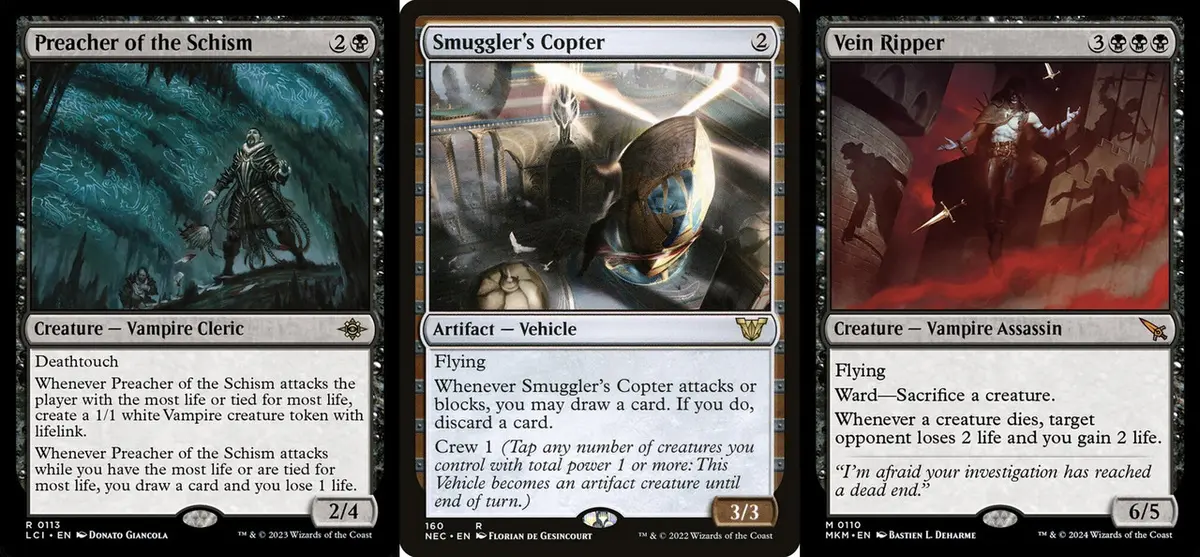
More recently, after LCI’s Preacher of the Schism and MKM’s Vein Ripper were printed, the Sorin combo finally had its day in the sun. In addition, the unbanning of Smuggler’s Copter gives the deck more consistency in assembling the combo or finding key answers, so it no longer has to rely only on the rummage of the equally three-mana Fable of the Mirror-Breaker to find the necessary components. The weak experience of drawing the wrong half in the past, and the lack of hand-adjusting ability in long games, have been markedly improved.
Similarities and Differences Between Rakdos Vampires and Rakdos Midrange
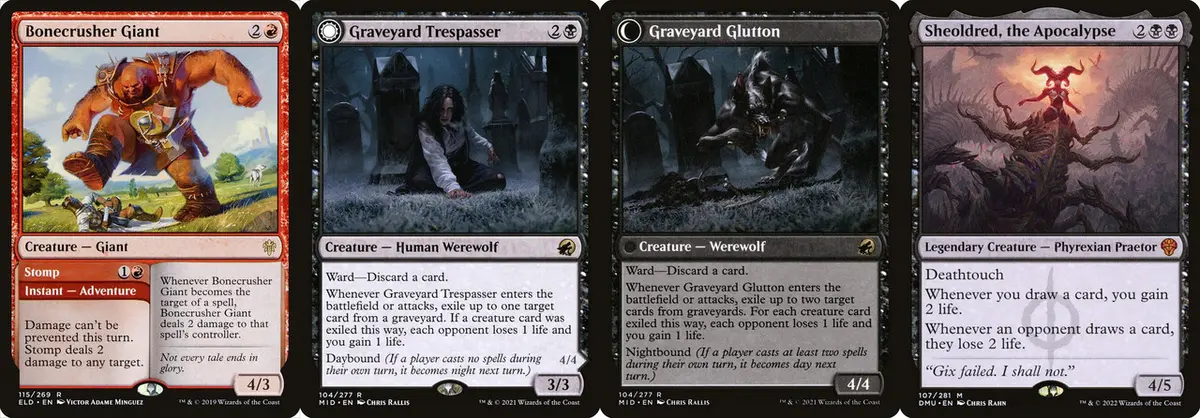
From my experience piloting Rakdos Vampires in 2022-2023, the basic deck structure of Rakdos Vampires is very similar to Rakdos Midrange, also a system of Thoughtseize (discard), Fatal Push (kill), and Fable of the Mirror-Breaker (draw). The difference is that, to maximize Sorin’s value, Rakdos Vampires must play a fair number of Vampires. Considering you want each of Sorin’s loyalty abilities to function effectively and reliably, in my previous experience you need at least 18-20 Vampire cards (including Mutavault). That also leaves the deck no room for cards like Bonecrusher Giant and Graveyard Trespasser, and cuts down the strongest Sheoldred, the Apocalypse, and the number of other answers must also be squeezed. This part has to rely on Sorin’s second ability [+1] to make up the difference, but I have to say that it depends on pairing with other Vampires and so is relatively unstable.
Also, as for the claim that adding Sorin makes the three-mana slot too bloated, I personally think it has an effect but not a significant one. The real difference is whether you play Sheoldred, the Apocalypse, and there’s nothing to be done, she’s just that strong. Swapping 4 Sorin for 4 Bonecrusher Giant, although Sorin must be cast for three mana and can’t do a two-mana Adventure like the Giant, this effect is a necessary sacrifice for the Vampire build, and Sorin’s ceiling when he lands is far higher than the Giant’s, so it can be seen as a change made in pursuit of ceiling. And the 3 Graveyard Trespasser are swapped for 3 Preacher of the Schism. Preacher performs better against the vast majority of decks that don’t use the graveyard, though the black Werewolf’s resilience to removal and its ability to pull back a life deficit as soon as it enters is the trade-off of this choice.
Rakdos Vampires at the 2024 PT MKM, Using Seth Manfield’s List as an Example
Going back to the Rakdos Vampires at the just-concluded 2024 PT MKM, we can look at it in three parts. Here I use Seth Manfield’s version, and the other lists are largely similar; where Seth’s version differs, it will be explained below:
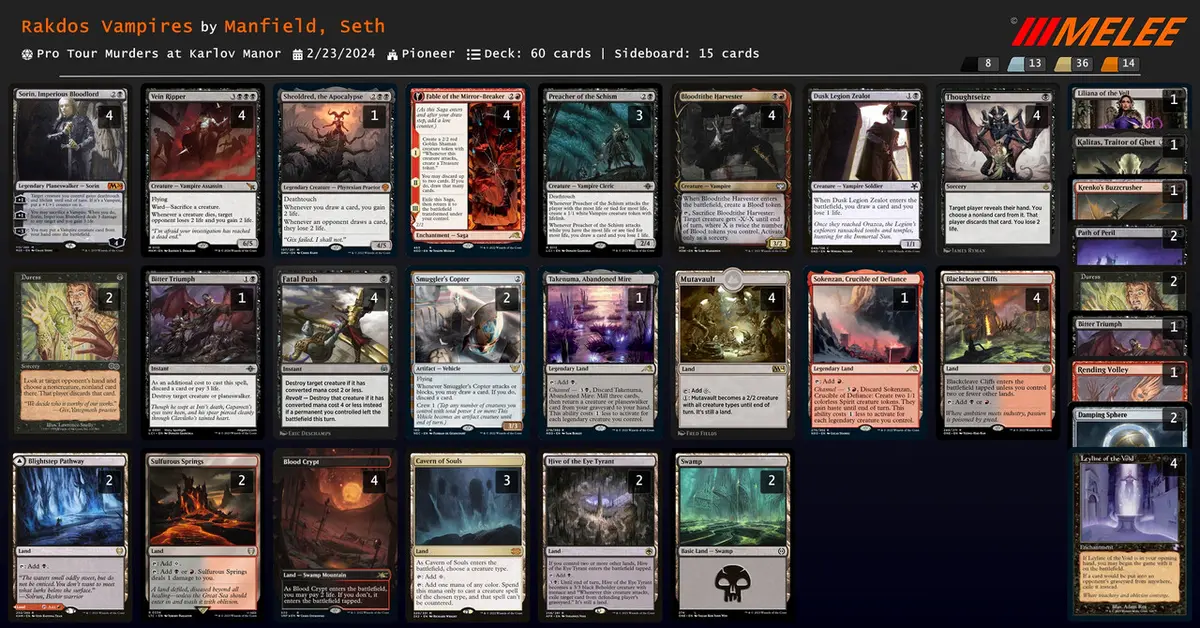
- Vampires + Sorin Combo: The high-cost Vampires add Vein Ripper as a super hard-to-kill Blood Artist, and since it isn’t legendary, it can even be the copy target of a flipped Fable of the Mirror-Breaker. At three there’s Preacher of the Schism, which starts drawing cards after attacking. The two-drop slot has only 2 Dusk Legion Zealot to smooth the curve and serve as fodder for Sorin’s [+1], plus the original strong core Bloodtithe Harvester. These 13 cards plus a full set of Mutavault make 17 Vampire cards in total along with 4 Sorin, taking up more than a third of the deck. Worth noting is that Seth put 1 Sheoldred in the main deck, which also shows how much he values this card;
- The lands required to build the deck also take up a third, including 3 Cavern of Souls.
- The last third is actually only 17 cards. After subtracting the must-have Rakdos system discard, kill, draw 12 cards, only 5 flex slots remain. Seth’s choices at this PT were: 2 Smuggler’s Copter, 1 Bitter Triumph, and 2 Duress. I believe this is the best answer the Pros arrived at after repeated discussion of the PT environment, and here is my personal reading:
- As mentioned above, the 2 Copters are meant to assemble the deck’s components faster or find key answers, while keeping up offensive pressure in the process. The reason there isn’t a third is probably that there really aren’t enough creatures to crew it, and after adding four Sorin the deck’s creature count is already too low.
- 1 Bitter Triumph as the only extra kill spell was probably chosen considering its cost and versatility, and it’s also a declaration from the pros: Bitter Triumph is currently the best answer in Pioneer black-based decks apart from Fatal Push.
- 2 Duress (plus 2 more in the sideboard for a full set) fully declare Seth’s respect for decks like Azorius Control, Lotus Field, and Izzet Phoenix, and also let you check the opponent’s hand before casting key cards like Sorin and Fable of the Mirror-Breaker so they resolve successfully. Against extreme aggro decks such as Boros Convoke and Izzet Ensoul Artifact, these two Duress can hit these decks’ soft spots, stripping the opponent’s key win conditions such as Gleeful Demolition and Ensoul Artifact.
Compared with other versions, Seth’s version has 1 more Sheoldred and 1 more Duress in the main deck, which shows his emphasis on matchups like Lotus Field and Phoenix, and it also played a key role when he faced JED’s Izzet Phoenix in the quarterfinals and 陳鳴陽’s Lotus Field in the semifinals. Rather than sticking strictly to the Vampire theme, Seth’s version responds better to other mainstream decks, and cutting the weakest card in the deck, Dusk Legion Zealot, I think is a very reasonable choice.
How to Play & Sideboard Plans
Basically this is a traditional Rakdos Midrange deck with a Sorin combo bolted on, using the Rakdos discard-kill-draw triangle to attack steadily and earn an advantage, and sometimes Sorin on turn three can turn Vein Ripper into the opponent’s nightmare. But even without assembling the Sorin combo, if you can stay on the offensive and keep up pressure, you have a considerable advantage against most midrange decks. Conversely, if Rakdos stays defensive it can’t expand its advantage; attacking is the best defense, which is not only a principle for aggro decks but applies to Rakdos too. Below I briefly describe, from my own understanding, how Rakdos Vampires might play against each of the mainstream Pioneer decks. This is for reference only, and if you want to learn more, you can wait for the sideboard strategy sharing from Pros or professional players.
Aggro Control: Izzet Phoenix
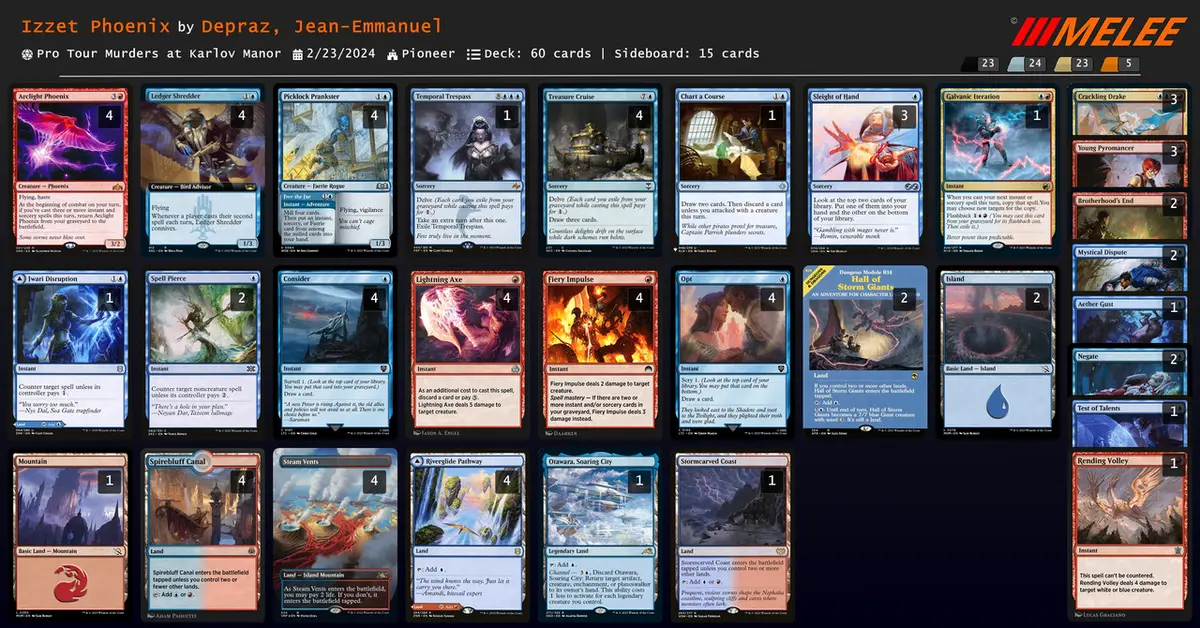
For this kind of aggro control deck, it comes down to discard disruption and cards brought in from the sideboard like Leyline of the Void to slow down the opponent’s plan, while Damping Sphere will leave a Phoenix deck stuck and unable to deal with it in time, making their spell chains nearly impossible. Interestingly, in current Phoenix builds it is very difficult to deal with Vein Ripper! Besides Phoenix having so few creatures that it’s hard to pay the ward cost, the only cards that can remove Ripper on their own are the 4 Lightning Axe, while Fiery Impulse needs at least two, which means you must have two or more creatures to pay the ward cost, and I think the odds of that are very low.
Traditional Control: Such as Azorius Control and Niv to Light
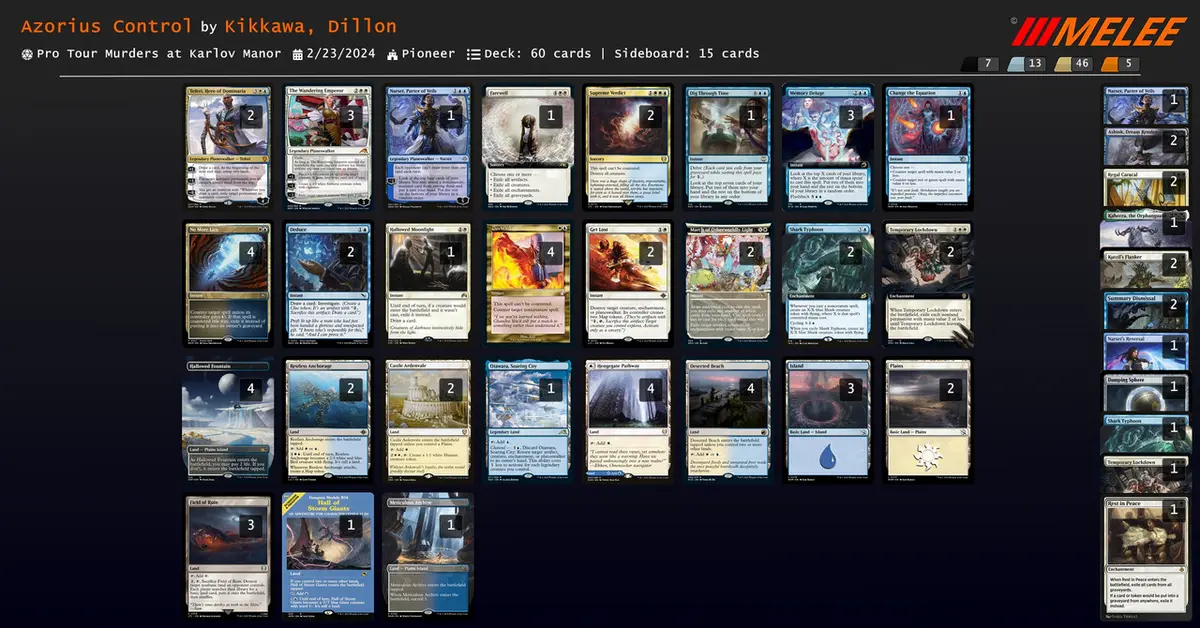
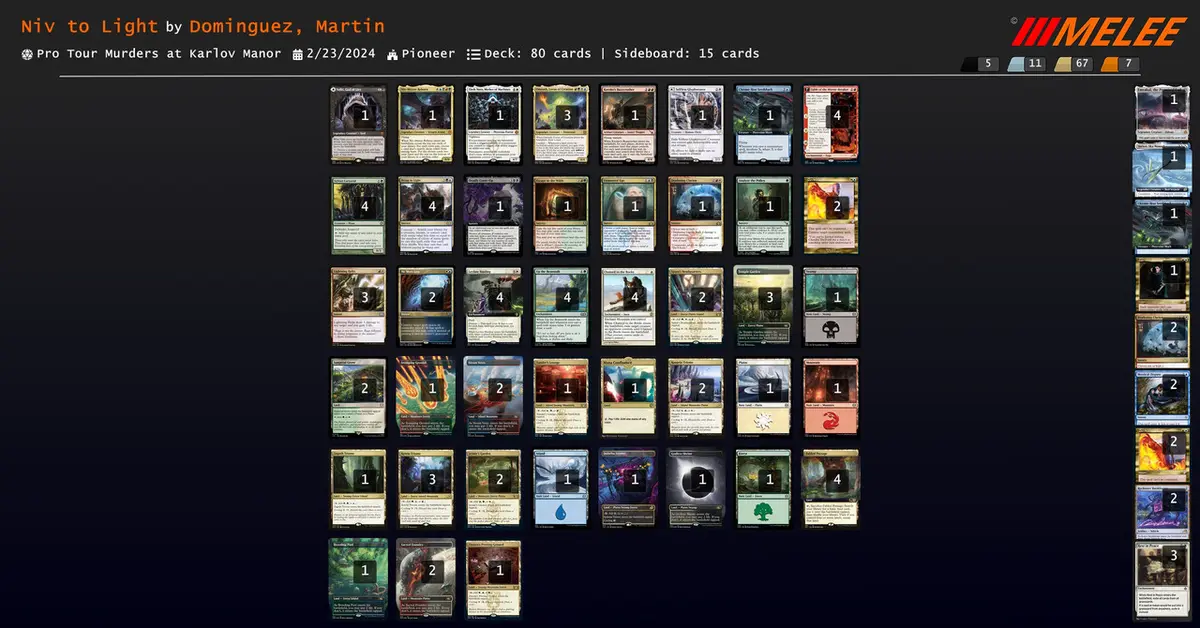
The Vampire deck has 2 Hive of the Eye Tyrant and 4 Mutavault, 6 manlands in total, which will be our important source of damage against control. In addition, targeted discard also plays a very important role. In this kind of matchup, hold your discard spells and use them to probe when we want to resolve important spells, or before a turn when the opponent might sweep the board, to maximize the value of discard. Also, against Azorius Control, Vein Ripper basically doesn’t fear the opponent’s single-target answers, since the opponent has almost no creatures to pay Ripper’s ward cost! Successfully resolving Ripper when you can confirm the opponent has no sweeper can help you win quickly.
Combo: Lotus Field, Amalia Combo
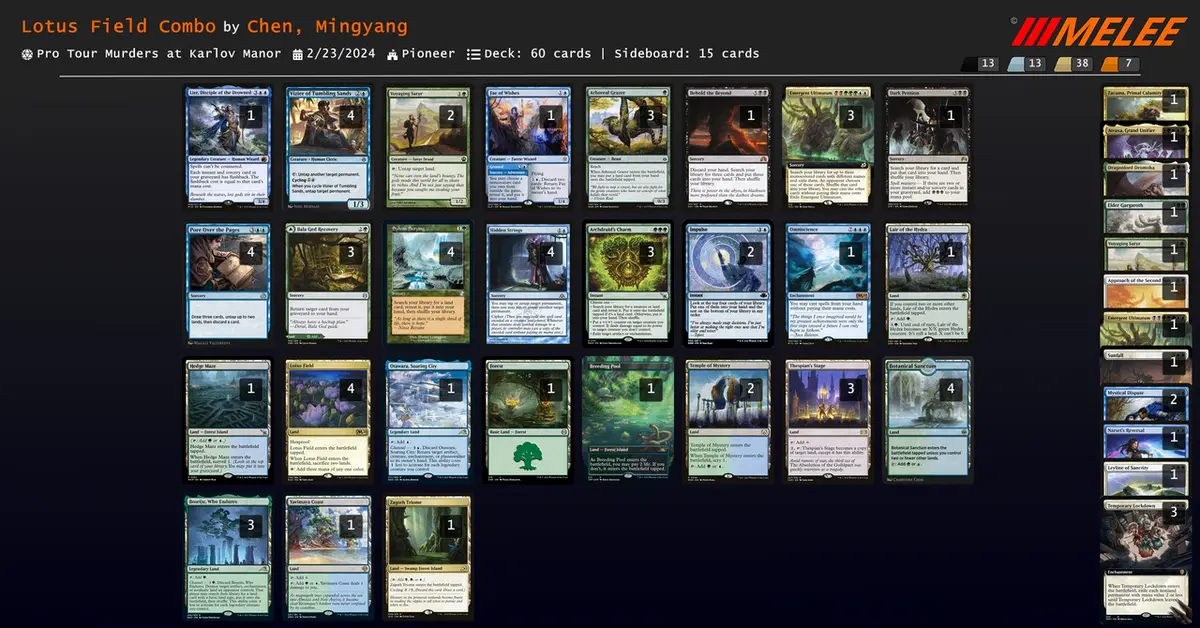
An unfavorable matchup. Because Vampires is a deck that doesn’t win fast enough, even if you land Sorin + Vein Ripper on time on turn three, the opponent may take the game before that or on their own turn. You need enough disruption such as more discard, and Damping Sphere from the sideboard, to buy time. If your Sheoldred can stand on the battlefield on time, the opponent has to pay a heavy price when using Pore Over the Pages to dig for deck components. Slowing your opponent so that you can win faster than they do is your only chance to take this matchup. You can see this from Seth’s main deck and sideboard being full of Duress while putting Sheoldred in the main deck. Interested readers can also go back and watch how Seth played against Lotus Field in the quarterfinals and semifinals, and I believe you can gain more insight.
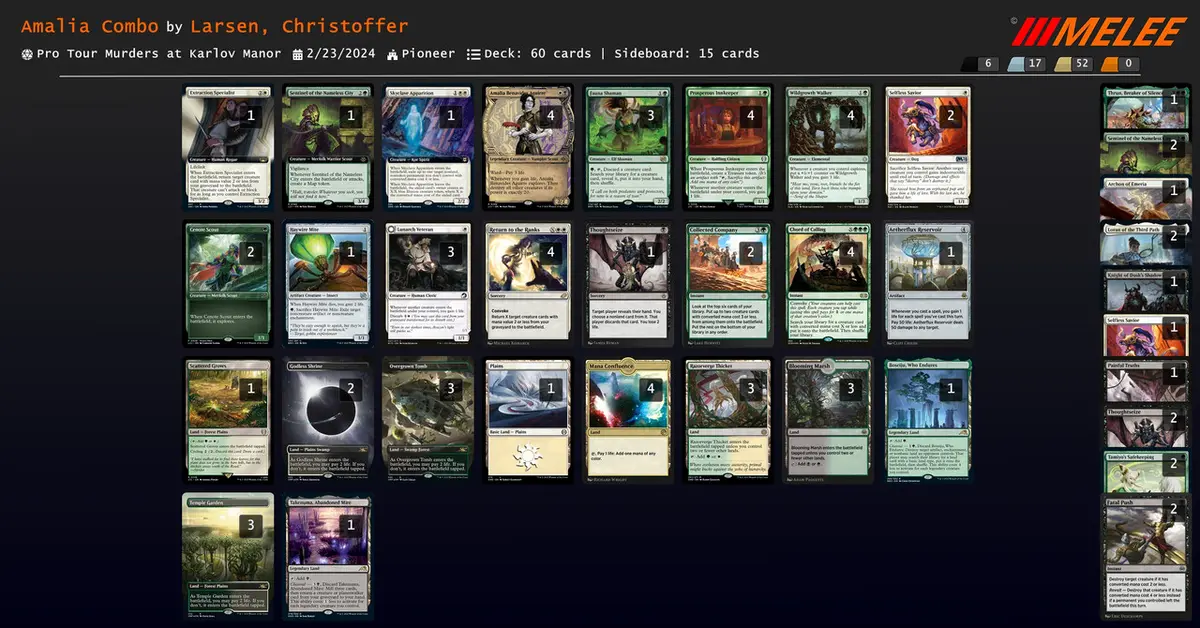
It’s a pity we didn’t see Vampires versus Amalia in the quarterfinals, but in the semifinals we saw Heroic and Amalia go to the seventh game of a best-of-five before a winner was decided, which was well worth the ticket, XD
Amalia combo, as a creature-based combo, gives us more ways to interact than Lotus Field, and has fewer dead cards. But even though Fatal Push can effectively answer combo components, the opponent using Chord of Calling, Collected Company, or even Return to the Ranks to flash creatures in from the graveyard to assemble the combo often still leaves us unable to guard against it. In this matchup you need to use your removal carefully on Amalia Benavides Aguirre and Wildgrowth Walker, and try to keep at least one black mana up to threaten your opponent. As for Bloodtithe Harvester, as a sorcery-speed -X/-X removal, it can if necessary also remove the first-arriving Selfless Savior to prevent the opponent’s protection plan. However, the opponent’s answers are very diverse, and responding with targeted removal alone can’t win you the game. You still need Thoughtseize and Duress to check their hand, while resolving our threats as soon as possible. Provided you’ve confirmed the opponent can’t go for the combo directly, Sorin dropping Vein Ripper to start an air raid can quickly lower the opponent’s life total, and the opponent’s deck has no proactive way to remove it. Sideboard Kalitas, Traitor of Ghet + Path of Peril can make this matchup much easier. Remember to watch out for the opponent’s possible Skyclave Apparition and Fatal Push!
Traditional Midrange: Rakdos Midrange
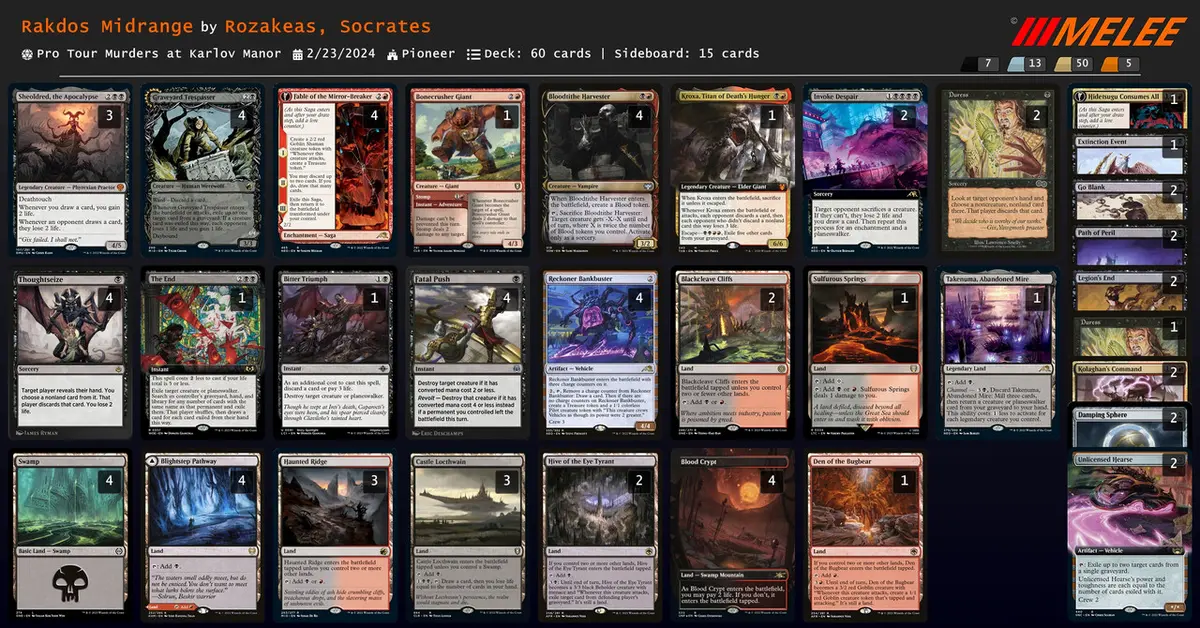
The Rakdos Midrange mentioned here refers to the traditional version that doesn’t play Inti, Seneschal of the Sun or Copter and instead plays a full set of Reckoner Bankbuster. Against this version of Rakdos Midrange, the key to Rakdos Vampires winning should be the air war rather than the ground war. Smuggler’s Copter in the air and the Vein Ripper dropped by Sorin: the earlier they arrive the better, letting us quickly lower the opponent’s life total for the kill. The opponent’s escaped Kroxa, Titan of Death’s Hunger and Sheoldred will be quite a nuisance, so we need to save our important kill spells for them. Note that this version of Rakdos plays Invoke Despair, so it doesn’t necessarily need to pay a large price to remove our Sorin + Ripper. So when the Sorin combo isn’t achieved or gets answered, the Rakdos Midrange with stronger card-advantage ability will have the edge in a long game, which is quite unfavorable to us, so we must try as much as possible to avoid falling into that situation. The opponent’s Thoughtseize and Duress will also be the biggest enemy of reaching the Sorin combo, so factor that into your keep decisions as well.
Don’t forget, Rakdos Vampires that can’t assemble the Sorin combo is just an inferior version of Rakdos Midrange.
Extreme Aggro: Such as Boros Convoke, Izzet Ensoul Artifact, and Boros Heroic
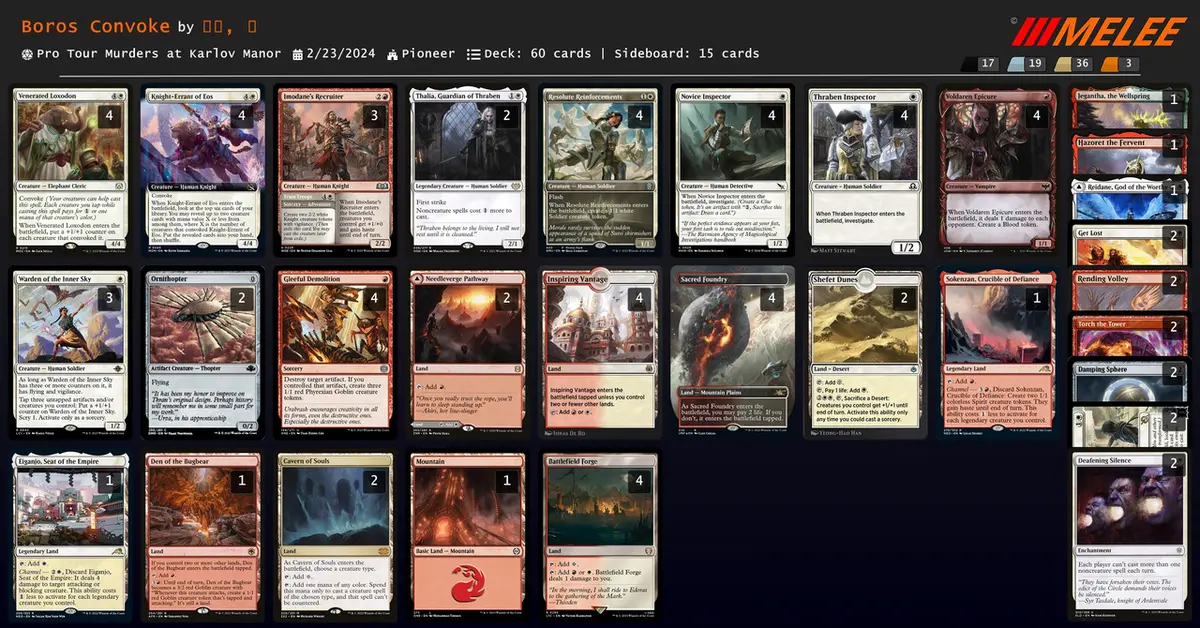
Against a deck like Convoke that wins by spreading wide across the board plus a huge burst of damage, the sideboard’s Path of Peril is useful but sometimes still a bit too slow. You also need enough targeted kills and discard to stop the opponent’s development in the first three turns and resolve your big Vampires as soon as possible. Sideboard Kalitas, Traitor of Ghet can make the matchup somewhat easier, but the opponent will have answers too, so you can’t over-rely on it. Making good use of Sorin’s [+1] to keep yourself at a safe life total is a necessary play to hold out until you can turn the game around.
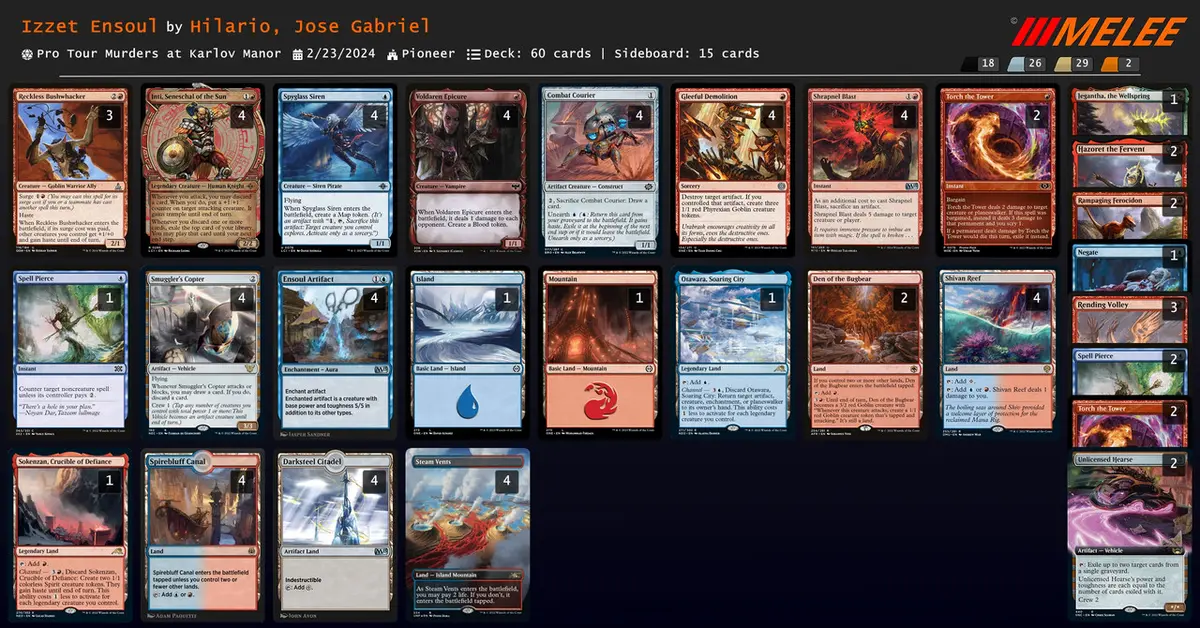
Against Ensoul Artifact, a deck that deals damage in units of 5, since the opponent has the trick of Darksteel Citadel + Ensoul Artifact making a 5/5 indestructible creature, the sideboard’s Liliana of the Veil with its edict effect might be a bit too slow, but without a better solution you may still have to bring it in. As for life total, if you drop below 10, watch out for a possible chain of Shrapnel Blast.
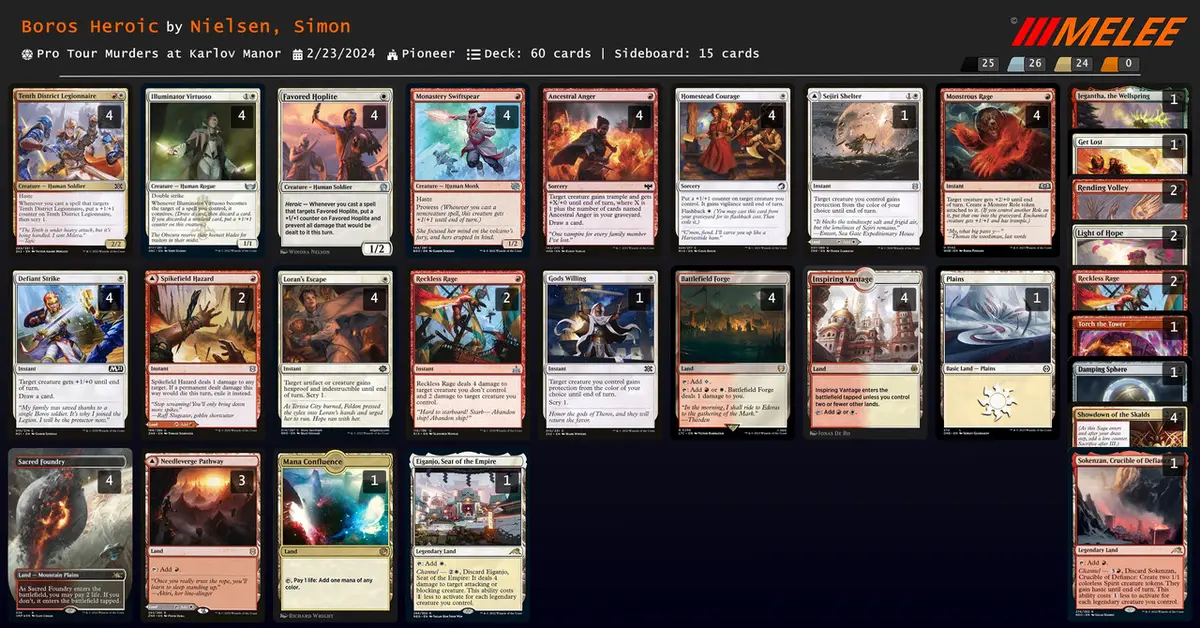
As for Boros Heroic, if you carefully hold on to targeted kills and use discard to check whether the hand has protection spells, it will be very easy to play against, and otherwise it’s very dangerous. Worth noting is that Heroic now plays a full set of Loran’s Escape, which grants extra indestructible, so the sideboard’s Path of Peril may not achieve the expected effect when used.
Predicted Metagame Changes After PT MKM
Since Rakdos Vampires performed so well this time, there will surely be many players who want to follow along, and other anti players who don’t want to let Sorin and Vein Ripper resolve will further stir up the metagame. Perhaps decks that previously did well against Rakdos Midrange, like Gruul Vehicles and Greasefang, will increase their usage. And sacrifice-based answers like Soul Shatter, Liliana of the Veil, and Sheoldred’s Edict may also re-enter the consideration of black-based players.
Let’s keep watching.
Conclusion: Real Gold Will Always Shine
In the world of MTG, many individual cards are waiting for the release of another card or several cards that pair with them, and can then be developed into astonishing combos or performances. There are still very many cards like Sorin, and this is also the energy that keeps MTG evolving. If you also have a favorite soulmate card that doesn’t yet have a strong enough partner, don’t worry, it may just be that the time hasn’t come. Keep playing, and you will surely witness the day it blossoms.
All is not gold that glitters, but gold will glitter forever. At least, for you.
- Title
- A Look at Rakdos Vampires at PT MKM
- Author
- cephille
- Created at
- March 1, 2024
- License
- This work is licensed under CC BY-NC-SA 4.0 .