Voices of Two: Pioneer Strixhaven Twins

Note: This article was translated from Chinese by AI and may contain errors. Read the original Chinese version.
Before We Start
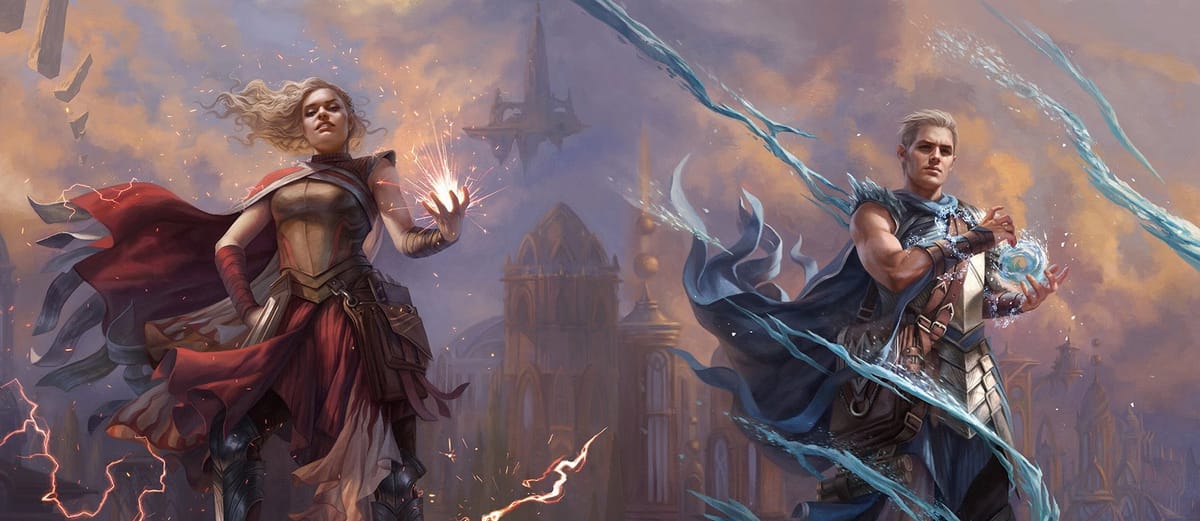
The story of Wilds of Eldraine ends with Rowan and Will going their separate ways. On the goal of rebuilding the world, the two set out on different paths, and whether the Kenrith twins will join hands again in future stories is still unknown, while we players in the real world are also about to head to Ixalan. On the eve of the new set’s release, let’s build a Pioneer deck themed around the Strixhaven twins, in memory of this one-of-a-kind pair of twin planeswalkers.
Starting from the Beginning: Theme Explained
First, of course, let’s look at the twins’ abilities.
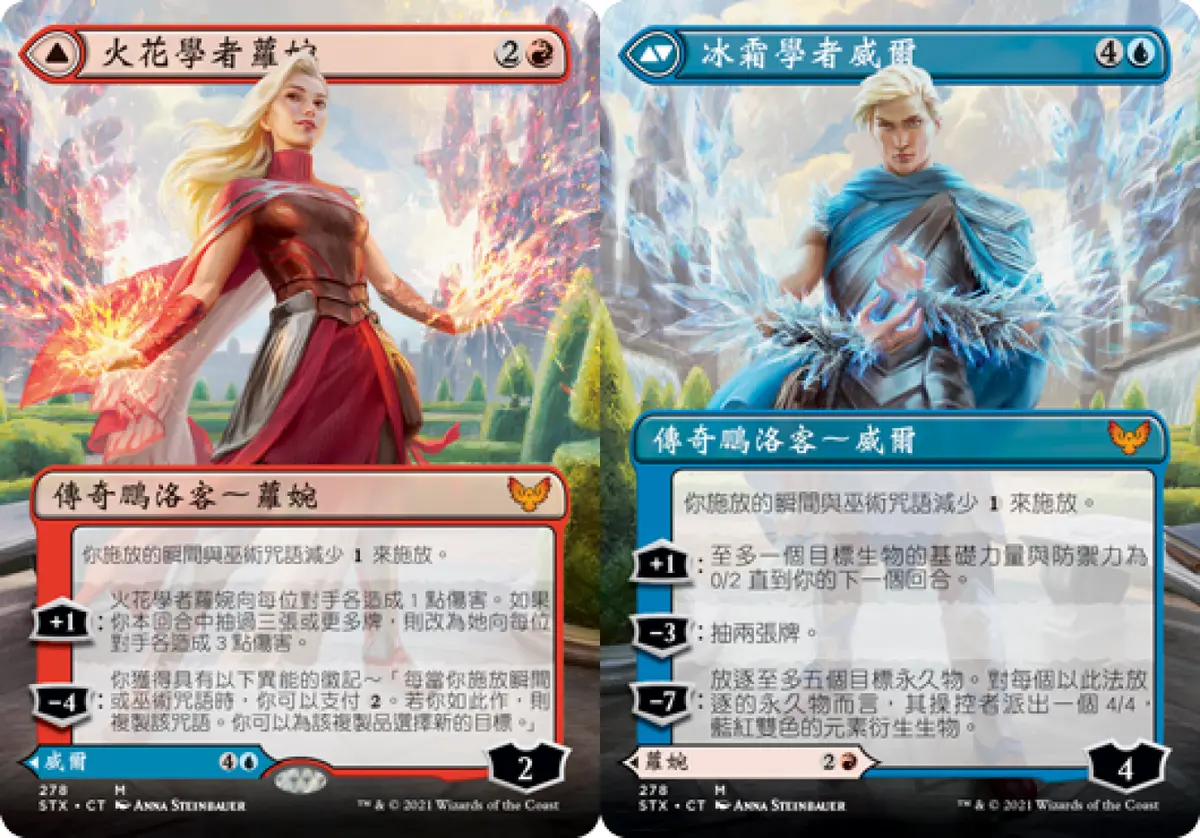
Instant and sorcery spells you cast cost {1} less to cast.
+1: Rowan, Scholar of Sparks deals 1 damage to each opponent. If you’ve drawn three or more cards this turn, she deals 3 damage to each opponent instead.
-4: You get an emblem with “Whenever you cast an instant or sorcery spell, you may pay {2}. If you do, copy that spell. You may choose new targets for the copy.”
Instant and sorcery spells you cast cost {1} less to cast.
+1: Up to one target creature has base power and toughness 0/2 until your next turn.
-3: Draw two cards.
-8: Exile up to five target permanents. For each permanent exiled this way, its controller creates a 4/4 blue and red Elemental creature token.
Rowan, Scholar of Sparks is cheap and easy to cast and can hit the opponent directly. The powerful emblem that lets you pay extra to copy instants and sorceries needs only 4 loyalty to activate, but she has no influence on the board, her starting loyalty is low, and she’s quite fragile in creature combat. Will, Scholar of Frost costs slightly more and can weaken one of the opponent’s creatures down to a size Shock can handle, or just -3 to refill your hand, and his ultimate can put out up to five 4/4 Elemental creatures, 20 damage in total, which can likewise finish the opponent.
As the first modal double-faced cards with a planeswalker on both sides, the Strixhaven twins have the flexibility to choose the suitable face to play depending on the game situation, but in return, the power of either face is clearly lower than that of an ordinary planeswalker. In fact, they saw little play either in Standard at the time or in Pioneer after rotation.
So how can we make good use of the Strixhaven twins?
First, the siblings share a passive ability that reduces the cost of instants and sorceries, and Rowan’s emblem also only applies to instant and sorcery spells, so naturally the build follows the traditional spell-centered blue-red instants and sorceries route. In other words, Rowan’s emblem is the Strixhaven twins’ greatest weapon, and getting the emblem is the goal we should prioritize.
Multiple Choice: Deck Construction
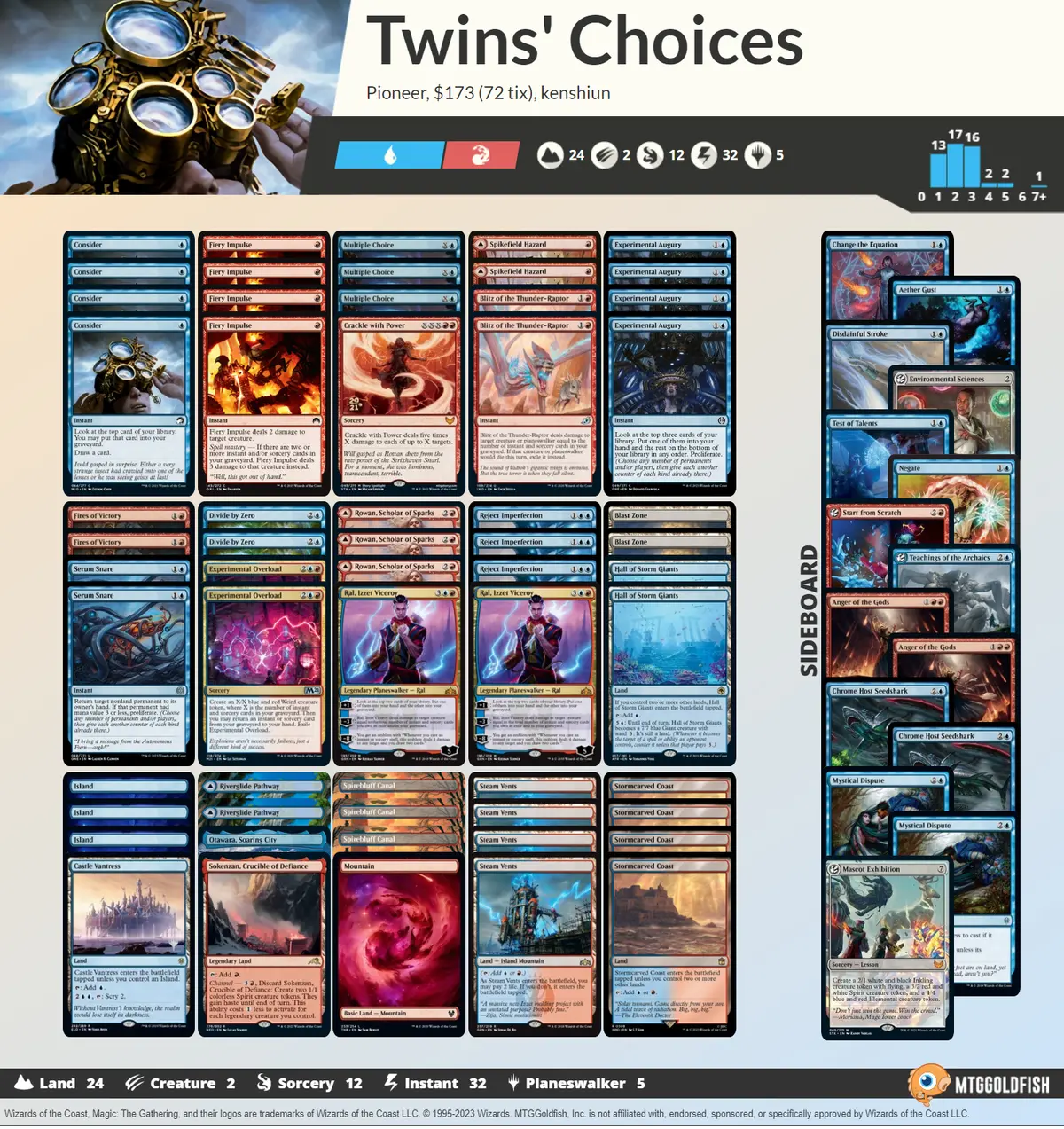
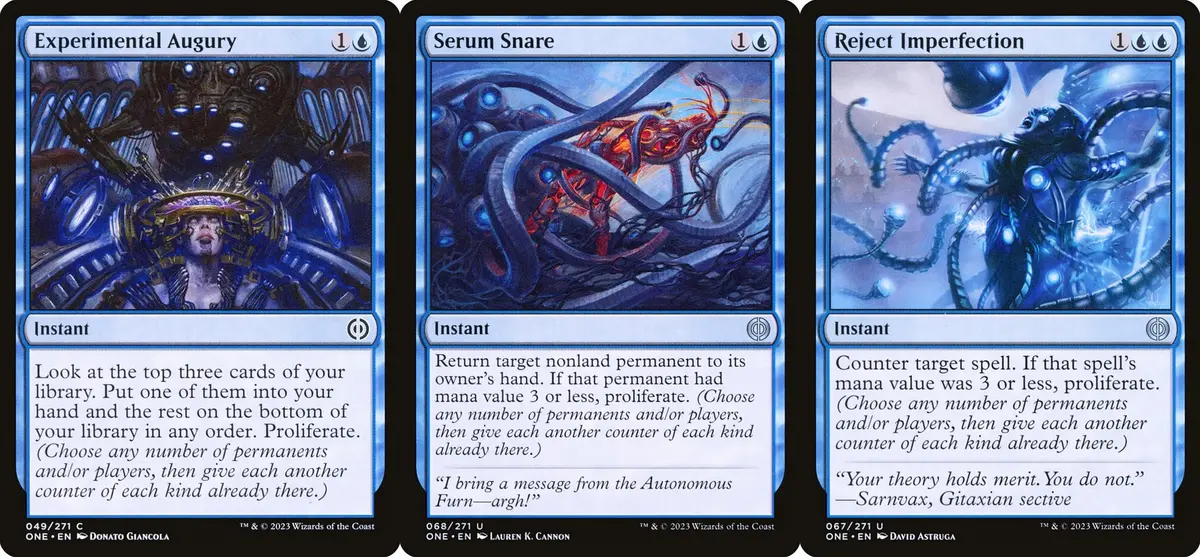
As you can see, this is a blue-red control deck with somewhat unusual ingredients. To efficiently speed up Rowan to her ultimate, proliferate cards are naturally the first choice. Here we chose Experimental Augury, Serum Snare, and Reject Imperfection, three cards that loot, bounce, and counter. Normally the costs of these proliferate spells aren’t that efficient, but with the twins’ cost reduction it’s a different story, and if things go smoothly, reaching the goal in a single turn is no problem at all.
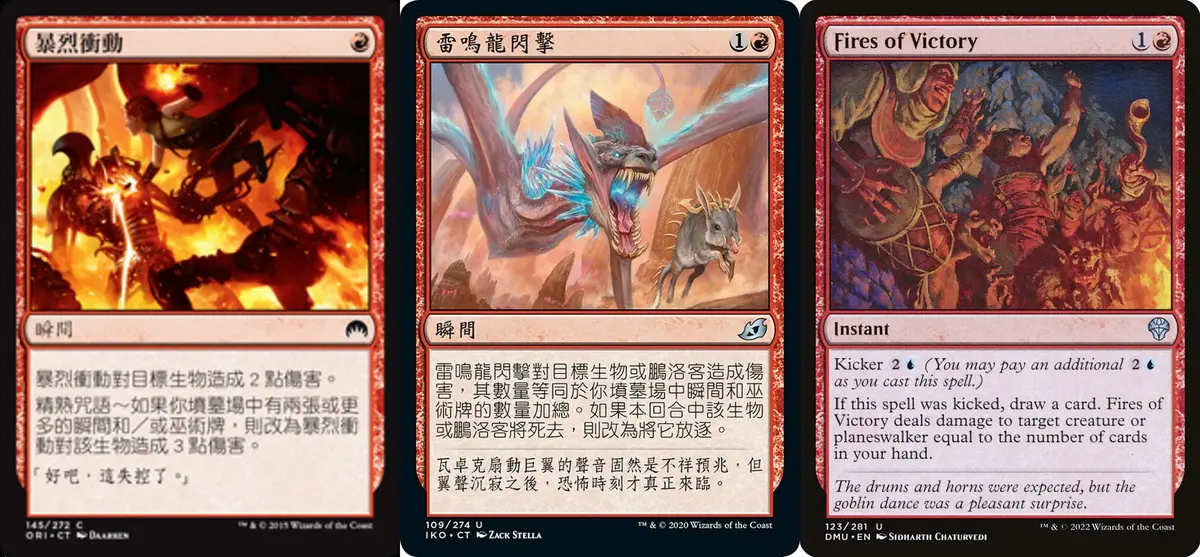
For red removal we chose Fiery Impulse, Fires of Victory, and Blitz of the Thunder-Raptor. Fiery Impulse is the first choice of one-mana red removal in instants-and-sorceries decks in the Pioneer card pool, and paired with Consider to fill the graveyard, it can meet the spell mastery condition as early as turn 1. Fires of Victory easily deals 4 to 5 instant-speed damage in the early game, effectively removing mid-sized creatures played early. The downside is that its firepower gets much worse in the late game once your hand is spent, so you need kicker to draw a card to compensate. Blitz of the Thunder-Raptor is powerful mid-to-late-game removal: instant-speed exile burn that often reaches double digits can handle the vast majority of late-game threats.
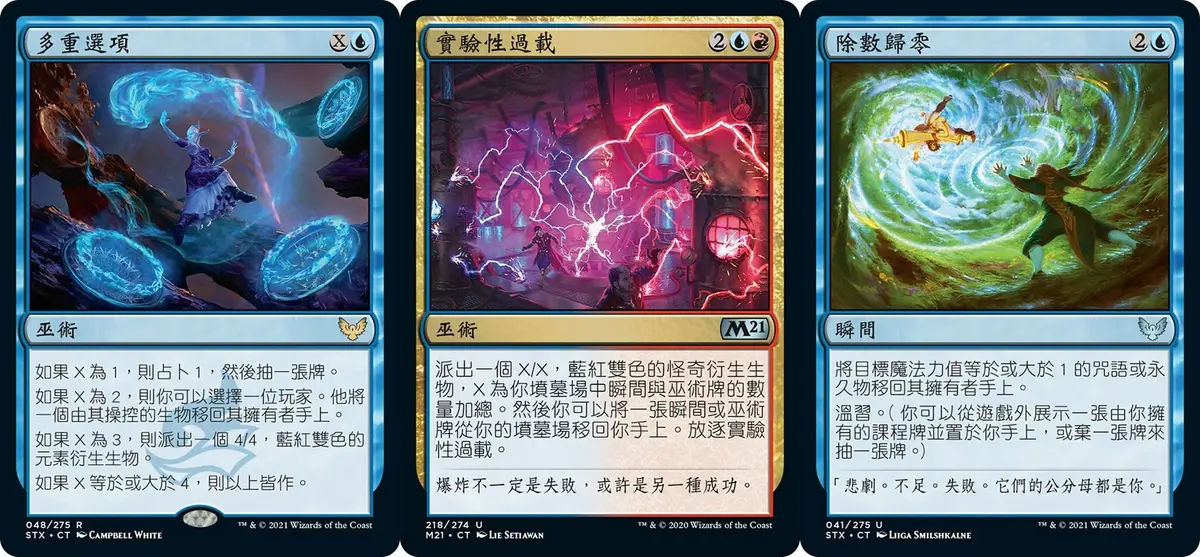
For resources we don’t use traditional draw spells either, but instead choose Multiple Choice and Experimental Overload, which come with bodies, plus Divide by Zero, a former Standard banned card. Divide by Zero’s flexibility of bouncing spells and permanents while tutoring a Lesson needs no explanation. Multiple Choice lets you choose, depending on the mana paid, to loot, bounce a creature, make a 4/4 Elemental, or do everything at once. The downsides are the slightly high cost and sorcery timing, and the cost problem is fixed whenever a twin is on the battlefield. Experimental Overload returns an instant or sorcery while sending out a Weird token whose size equals the number of instants and sorceries in your graveyard, and a double-digit body in the late game easily ends the game with one punch.
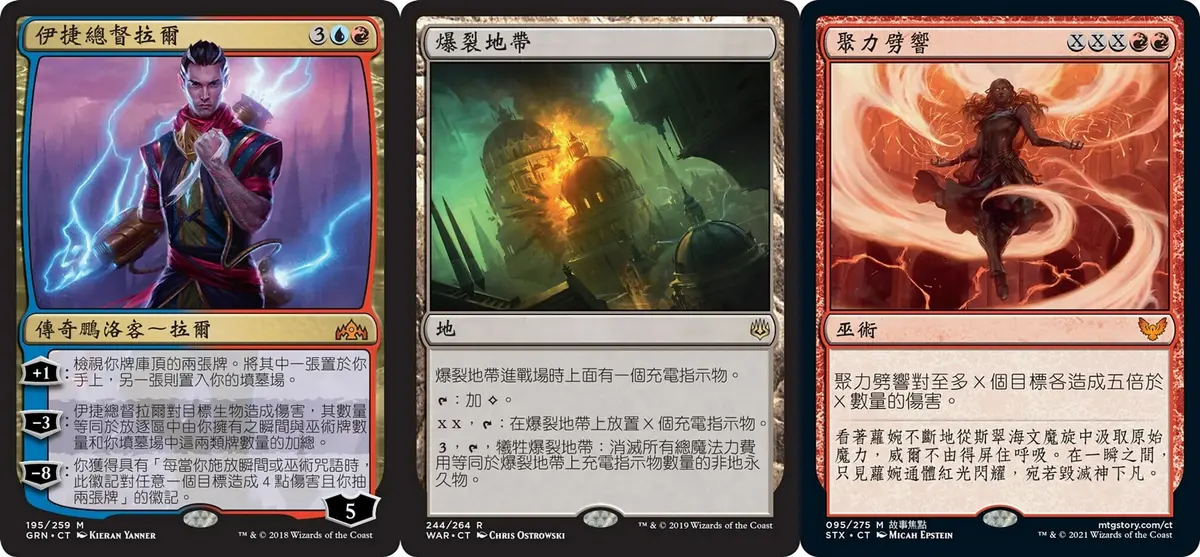
Finally we bring Ral, Izzet Viceroy and Blast Zone, which work with the proliferate theme, and Crackle with Power, the blow with which the twins took down Blood Avatar, as an extra finisher. As a blue-red five-mana planeswalker, Ral, Izzet Viceroy has little to complain about apart from the slight flaw that his -3 can only handle creatures, and getting the emblem out quickly with him is nearly equal to winning. Blast Zone makes up for the main deck’s lack of sweepers, uses proliferate to bank counters and reduce the tempo loss, and can also handle the opponent’s artifacts and enchantments.
Expressive Iteration: Gameplay Demonstration
Rowan vs. Mono-Blue Tempo
Will vs. Mono-Red Aggro
The demonstration videos were recorded on MTGA Bo1, so the companion is Zirda, the Dawnwaker, and the land configuration is slightly changed
The first priority in the early game is to meet Fiery Impulse’s spell mastery condition so its range reaches three to deal with threats, then depending on the situation play Rowan, Scholar of Sparks on turn 3 or 4. Although Rowan’s loyalty is low, she’s a planeswalker after all, and as long as you can deal with the opponent’s creatures she can mostly stay standing. Add a proliferate play and you can open the emblem next turn, and then it’s the time of unstoppable power: Consider becomes three mana for two surveil 1 and draw 1, Fiery Impulse becomes three mana for two 3-damage hits, Multiple Choice draws two, makes two 4/4 Elementals, and bounces two of the opponent’s creatures. You suppress the opponent with double the resources, and finally end the game with the tokens or Crackle with Power.
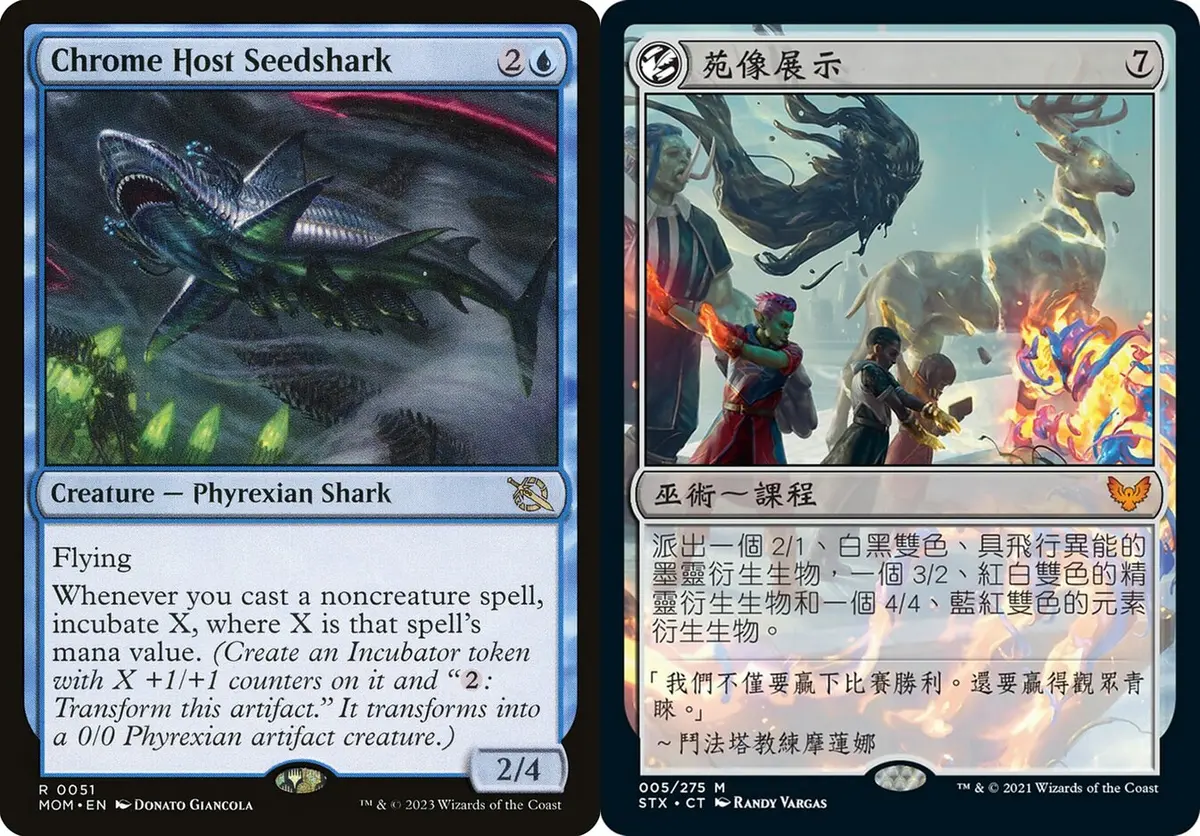
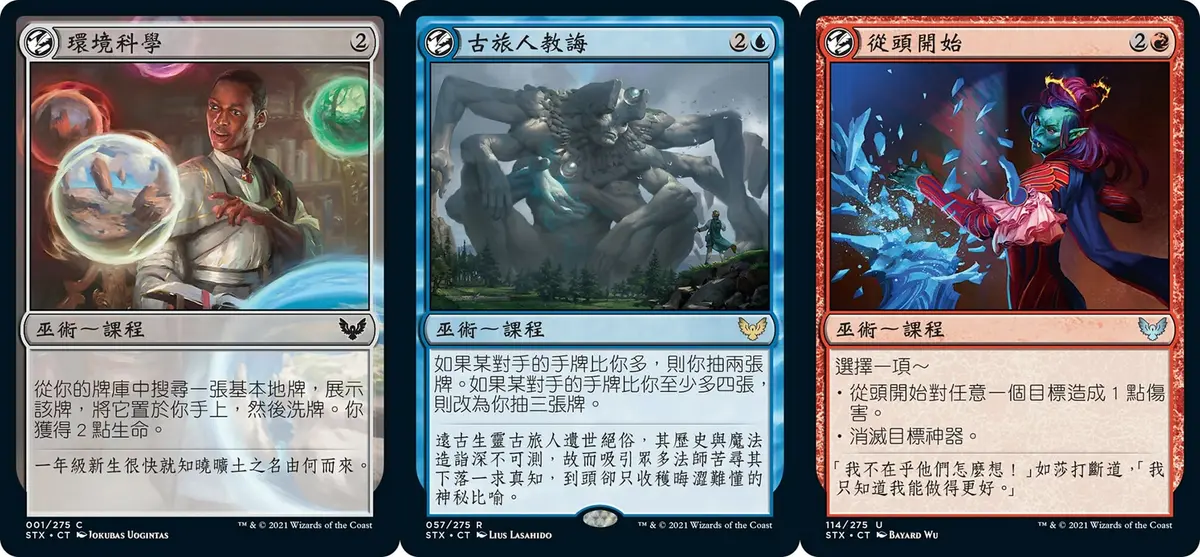
For sideboard strategy, we keep four commonly used Lessons, Environmental Sciences, Teachings of the Archaics, Start from Scratch, and Mascot Exhibition, for Divide by Zero to learn, and prepare Chrome Host Seedshark, which benefits from proliferate effects, to deal with the opponent’s graveyard hate strategies. The remaining slots go to counters and sweepers swapped in for removal depending on the matchup: Anger of the Gods, Mystical Dispute, Negate, Disdainful Stroke, Change the Equation, Test of Talents, and Aether Gust.
Conclusion
Personally, the story of the Kenrith twins is a quite captivating side plot, and whenever they appear in a new story I look forward to the growth and activity of these two. The reason Wizards of the Coast made them lose their sparks is, rather than story necessity, more likely that they no longer knew how to design a new form of this pair of twin planeswalkers. Perhaps in the future they may regain their planeswalker status in a merged form, but it’s hard to imagine how to keep printing them as a duo afterward. Here I simply use this deck to commemorate the siblings’ good times in the story.
- Title
- Voices of Two: Pioneer Strixhaven Twins
- Author
- JerobaMTG
- Created at
- November 1, 2023
- License
- This work is licensed under CC BY-NC-SA 4.0 .