Marvel's Spider-Man Mechanics Breakdown

Note: This article was translated from Chinese by AI and may contain errors. Read the original Chinese version.
Translation Notice
As of the completion of this article, there is no official Traditional Chinese translation information for the new set. The translations of the new mechanics currently follow Mtgch. If the official Traditional Chinese names later differ from the current ones, this article will be updated.
The Soul Stone & Harness

Based on current information, Harness is a mechanic that appears only on the single card The Soul Stone, but it may be a theme that continues to expand in future Marvel crossover sets.
The Soul Stonehas a Harness ability. After you activate that ability and it resolves, The Soul Stone‘s ∞ ability takes effect. Of course, even after the ∞ ability is in effect you can still keep activating the Harness ability; it just will not change The Soul Stoneany further. Maybe you simply want to exile your creatures?
Web-slinging
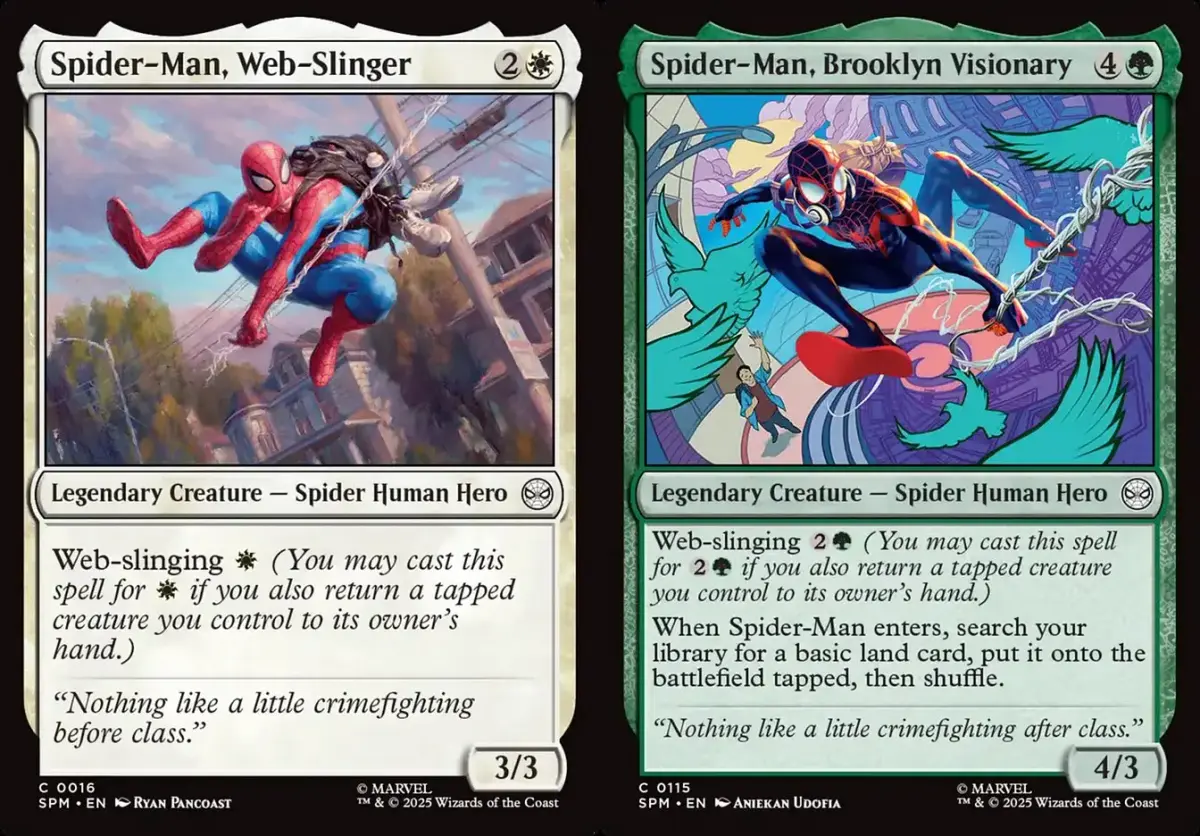
Web-slinging is an alternative cost for casting a spell. You may choose to cast the spell with Web-slinging. To do so, you pay the mana specified by Web-slinging and return a tapped creature you control to its owner’s hand as part of the casting cost.
Web-slinging does not change when the spell can be cast.
Mayhem
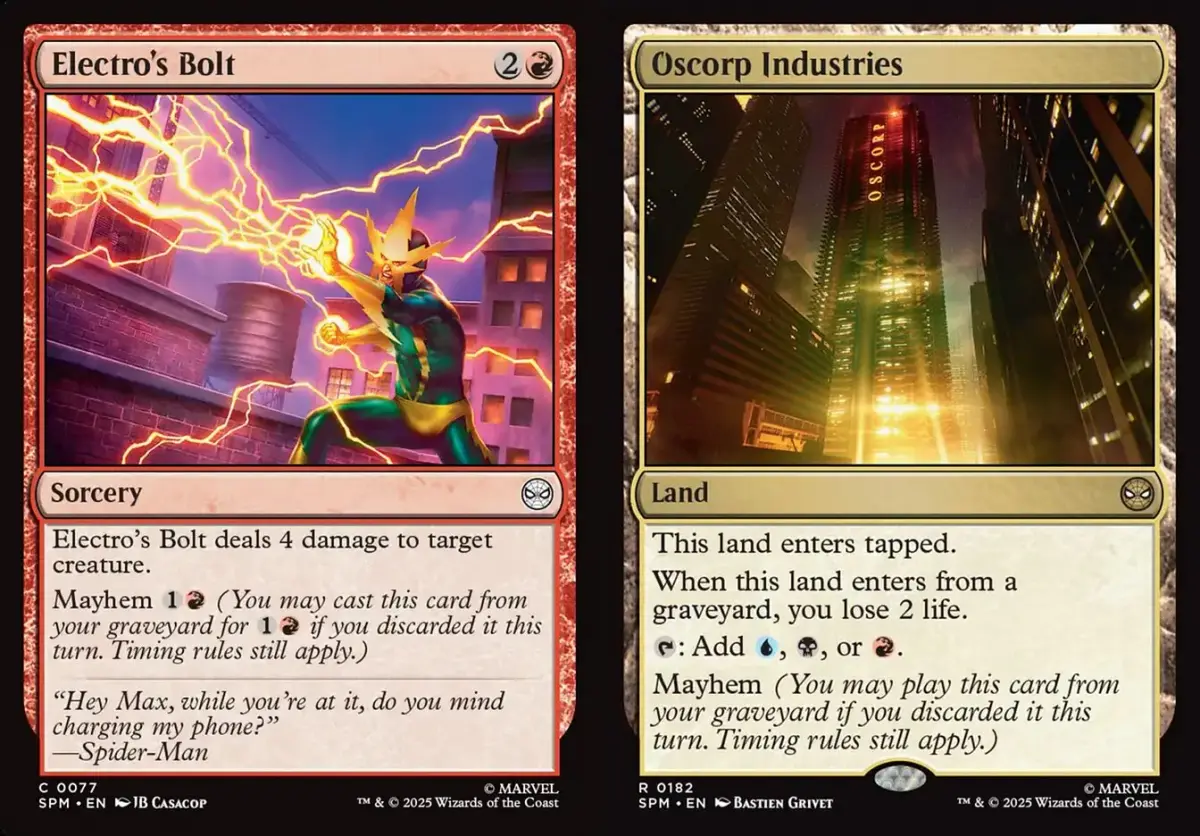
Mayhem is a mechanic that lets you play cards from your graveyard.
If there is a card with a Mayhem cost in your graveyard, and it was put there this turn because it was discarded, you may play that card from your graveyard. If the card is a land, it is played normally. If the card is a nonland card, Mayhem is followed by an alternative cost, and that alternative cost is what you pay when you cast the spell.
Mayhem does not change when the spell can be cast. (Despite being called Mayhem it still follows timing rules, so apparently it is not mad enough)
Author's Ramblings
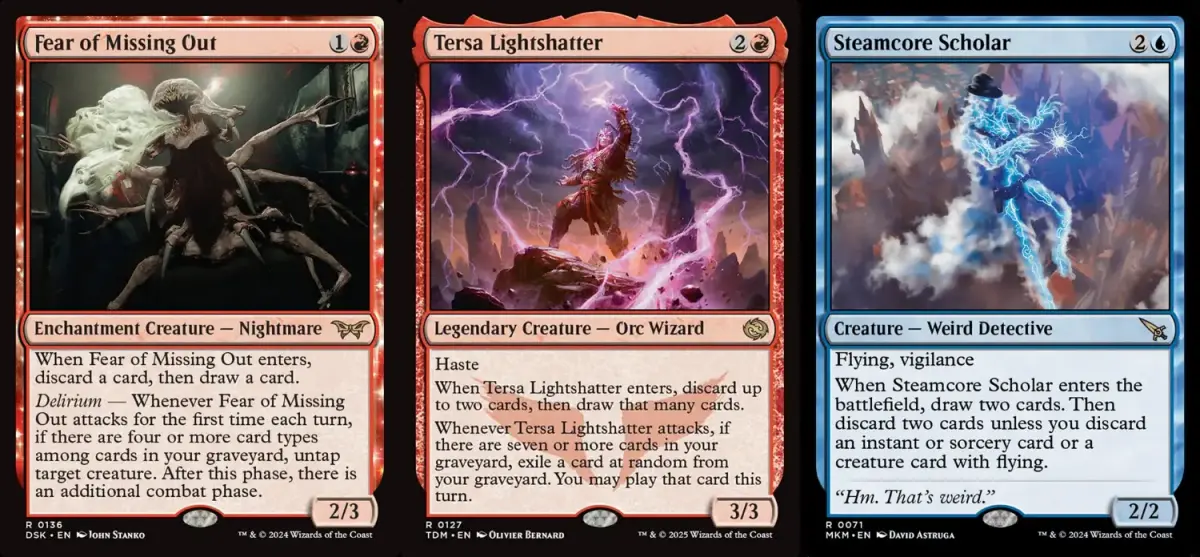
Vivi Agatha’s Soul Cauldron is still getting stronger, earning even more value.
Connive
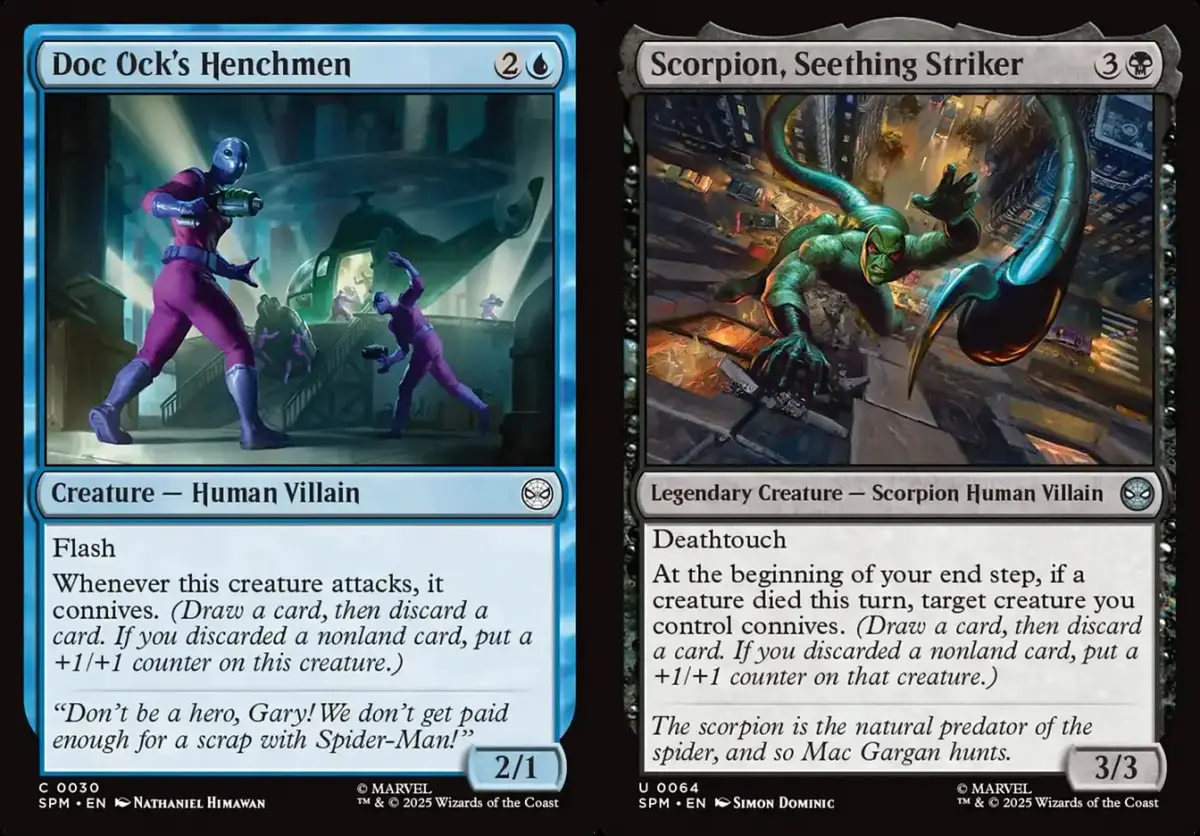
When a creature you control connives, the process is: draw a card, then discard a card. If you discarded a nonland card this way, put a +1/+1 counter on that creature.
If the conniving creature is no longer on the battlefield when the ability resolves, connive still resolves; it is just that even if you discard a nonland card, no creature gets a +1/+1 counter because of it. For example, Doc Ock's Henchmen triggers connive when it attacks. If it dies in response to instant-speed removal, connive still resolves normally afterward, making you draw one and discard one. However, although a creature does not need to be there for you to connive, if it is an ability that makes a target creature connive and the target is gone when the ability resolves, then the ability simply disappears for lack of a target, and that has nothing to do with the connive rules anymore. Scorpion, Seething Striker
 is exactly this kind of example.
Connive’s discard is also a good partner for making Mayhem work. Come to think of it, you can put a +1/+1 counter after the loot, and the discarded card can be reused through Mayhem. Which Standard deck benefits the most from this? Truly hard to guess~ Vivi Agatha’s Soul Cauldron, what do you think?
Modified
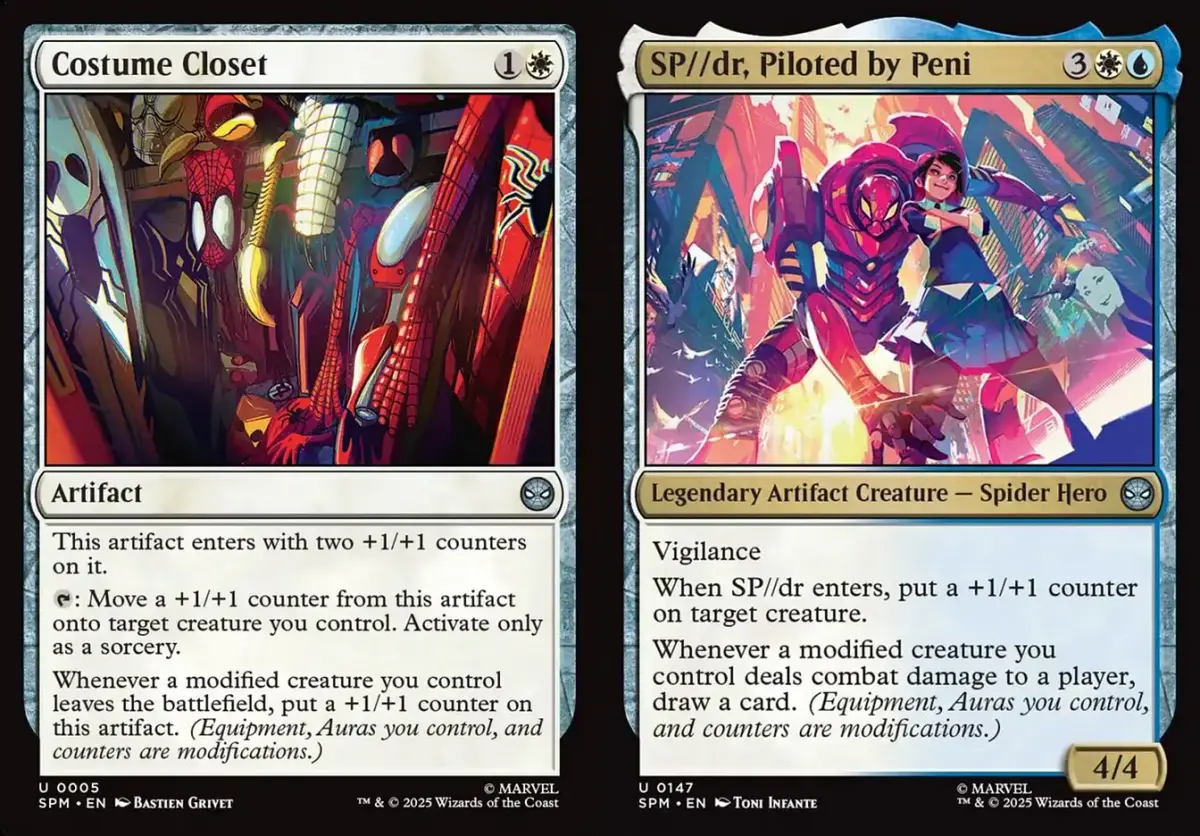
Some cards have effects on “modified creatures you control.” A creature of yours is modified when it meets at least one of the following conditions:
- It is equipped
- It is enchanted by an Aura you control
- It has a counter on it
Because Auras only count if you control them, when you put debuff Auras on an opponent’s creature, it does not make the opponent’s creature a modified creature.
Modal Double-Faced Cards
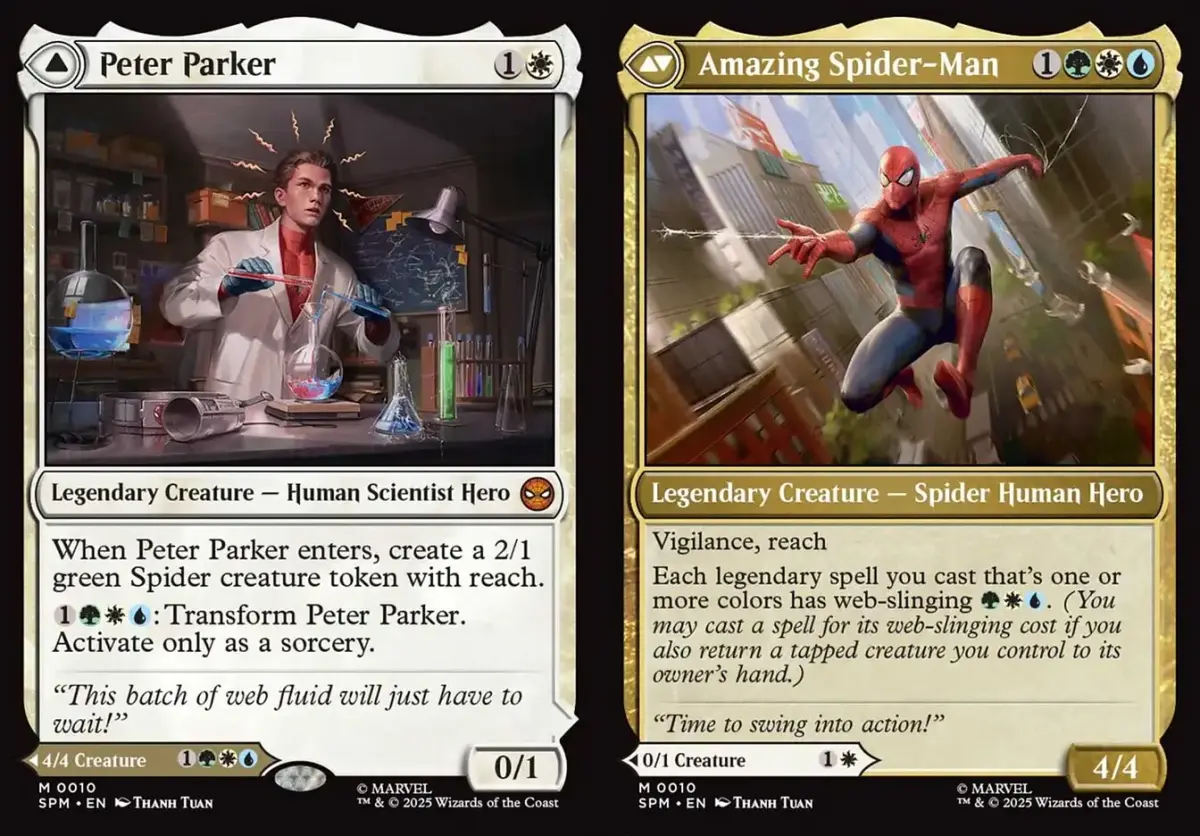
Modal double-faced cards (MDFCs) are another kind of double-faced card mechanic distinct from transform double-faced cards (TDFCs). They first appeared in the Zendikar Rising (ZNR) set, and this set brings a major rules change.
When you want to use a modal double-faced card, you can choose which face to use and pay the corresponding mana cost.
In any zone other than the battlefield and the stack, a modal double-faced card has only the characteristics of its front face. On the battlefield and the stack, if its front face is up it has only the front face’s characteristics; if its back face is up it has only the back face’s characteristics. If you put a modal double-faced card onto the battlefield without casting it, it defaults to entering front face up.
Now for this set’s major rules change. Previously, modal double-faced cards (MDFCs) could not transform; only transform double-faced cards (TDFCs) could. This rule is eliminated starting with this set! Starting with this set, modal double-faced cards can also transform. However, only starting with this set do modal double-faced cards have transform abilities printed on them; modal double-faced cards from earlier sets still cannot transform on their own.
In this set, the transform abilities appear only on the front face of modal double-faced cards, so if you first cast the front face of a modal double-faced card, you may later have the chance to transform it to its back face through an ability.
Version Split Between Physical Cards and Digital
MTG’s crossover sets with outside IPs are officially called Universes Beyond. When making a crossover set, a very unique challenge may come up: licensing issues
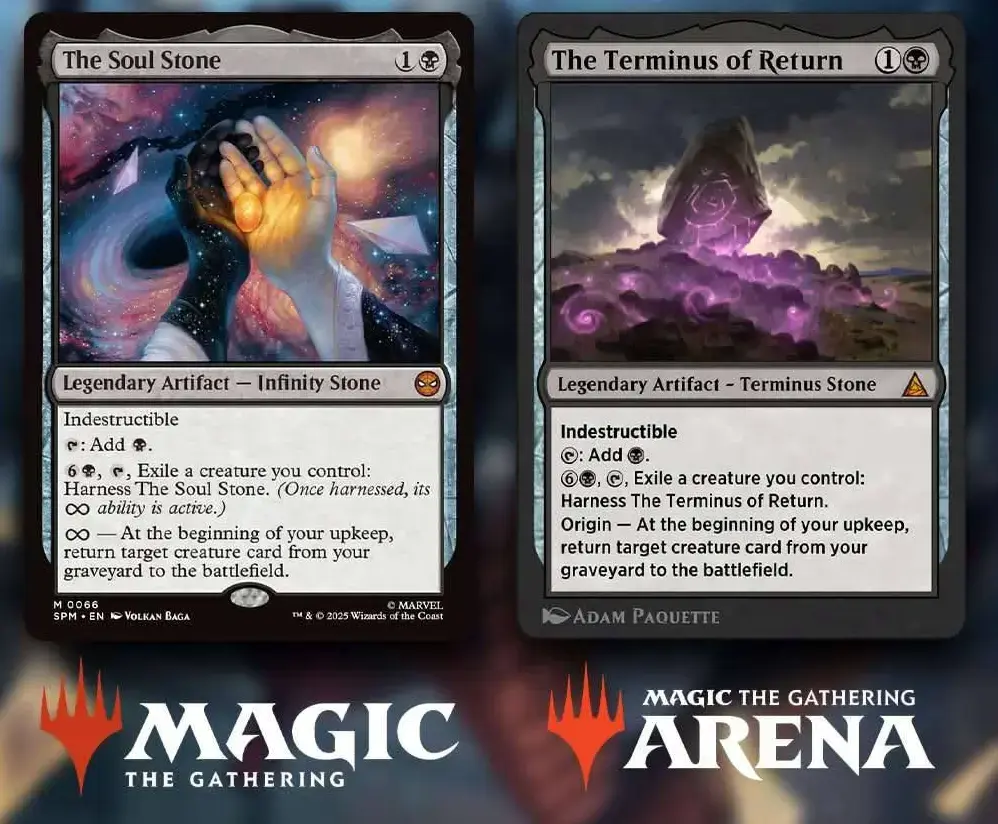
Marvel’s Spider-Man was heavily affected in this regard. Because of licensing issues, Marvel’s Spider-Man cannot come to the digital games (MTGA, MO) and can only be released as physical cards. The official solution is to make another set called Through the Omenpaths. Through the Omenpaths is the digital mirror version of a Universes Beyond set: it redraws that Universes Beyond set’s cards in MTG’s style and gives them new card names, while keeping everything else functionally unchanged.
On the left of the example image is the normal physical card, and on the right is that card’s Through the Omenpaths version. But looking closely you can see that their subtypes are not entirely the same, so the specific design rules for Through the Omenpaths are not yet clear and we need to wait for further official information.
Marvel’s Spider-Man – Through the Omenpaths: Card list link
Not every Universes Beyond set will get a Through the Omenpaths version. Only sets that cannot come to digital because of licensing issues are handled this way. For details, see the official Wizards of the Coast announcement published on 2025/4/21.
Experience Marvel’s Spider-Man Limited
Marvel’s Spider-Man prerelease events start on September 19, 2025. Head to a nearby store and experience the new set!
- Title
- Marvel's Spider-Man Mechanics Breakdown
- Author
- Jru
- Created at
- September 9, 2025
- License
- This work is licensed under CC BY-NC-SA 4.0 .