
I Drafted Alone: Solo Drafting with Reality Fracture (FRA)

Note: This article was translated from Chinese by AI and may contain errors. Read the original Chinese version.
Introduction
With entertainment options as countless as the stars these days, getting eight people together for a draft pod is harder and harder. For this project, I used Reality Fracture (FRA) as the showcase set. I mostly weighed deck strength and thematic synergy, and tried to complete the challenge of drafting by myself!
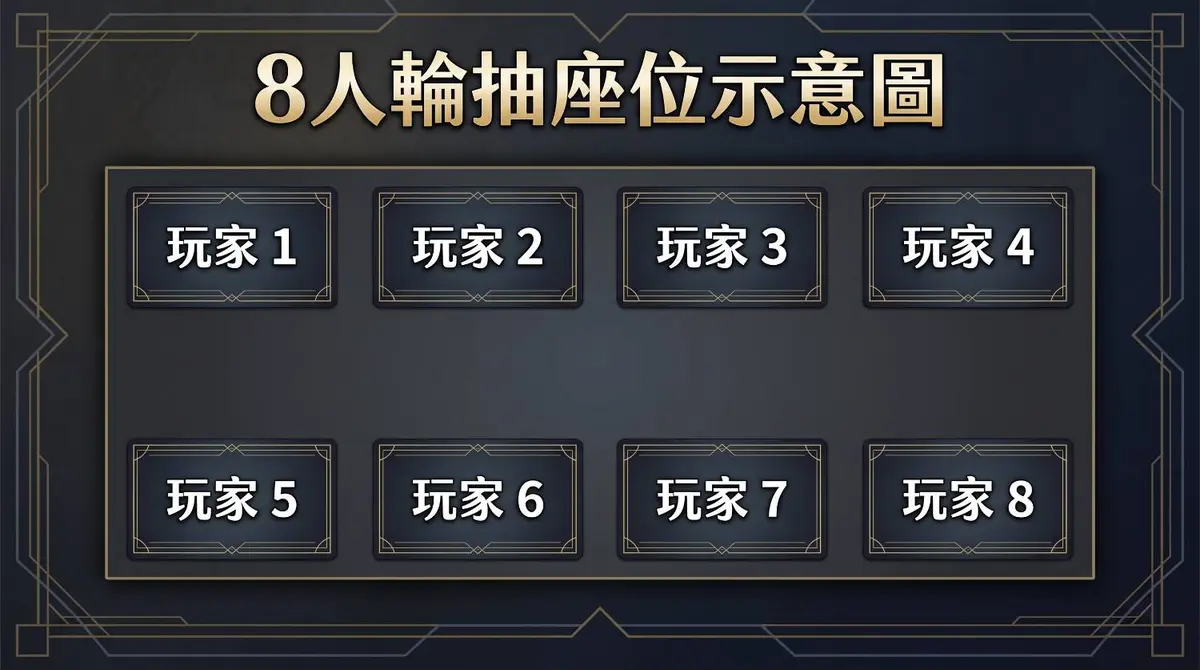
Seating chart for this draft. Image generated by Gemini 3.1 Pro
The seating is shown above.
Please note that the seat order in this article differs from a real draft. In a proper draft, players 1 through 8 should be seated clockwise in order. I had misunderstood this, and by the time I noticed, all the photos had already been taken, so I decided to keep it as is and leave this note. If you are interested, see this official article: Bahr: Here’s What the Optimal Draft Looks Like
The format follows the usual eight-player draft rules: pack one passes left, pack two passes right, and pack three passes left again. In each booster, everything except the last card (the token / advertisement card, which isn’t passed) goes around, so 14 cards get passed. There was no time limit, and I was allowed to look at any player’s picked cards at any time. Throughout the process, I tried to complete the picks and deck construction of eight independent “players” within what a single human brain can handle.
Let’s get started!
Pack 1: First pick
When each player opens their first pack, they pick what they consider the best first pick. What would you take? Don’t rush on. Settle on your answer first, then continue to the next section.
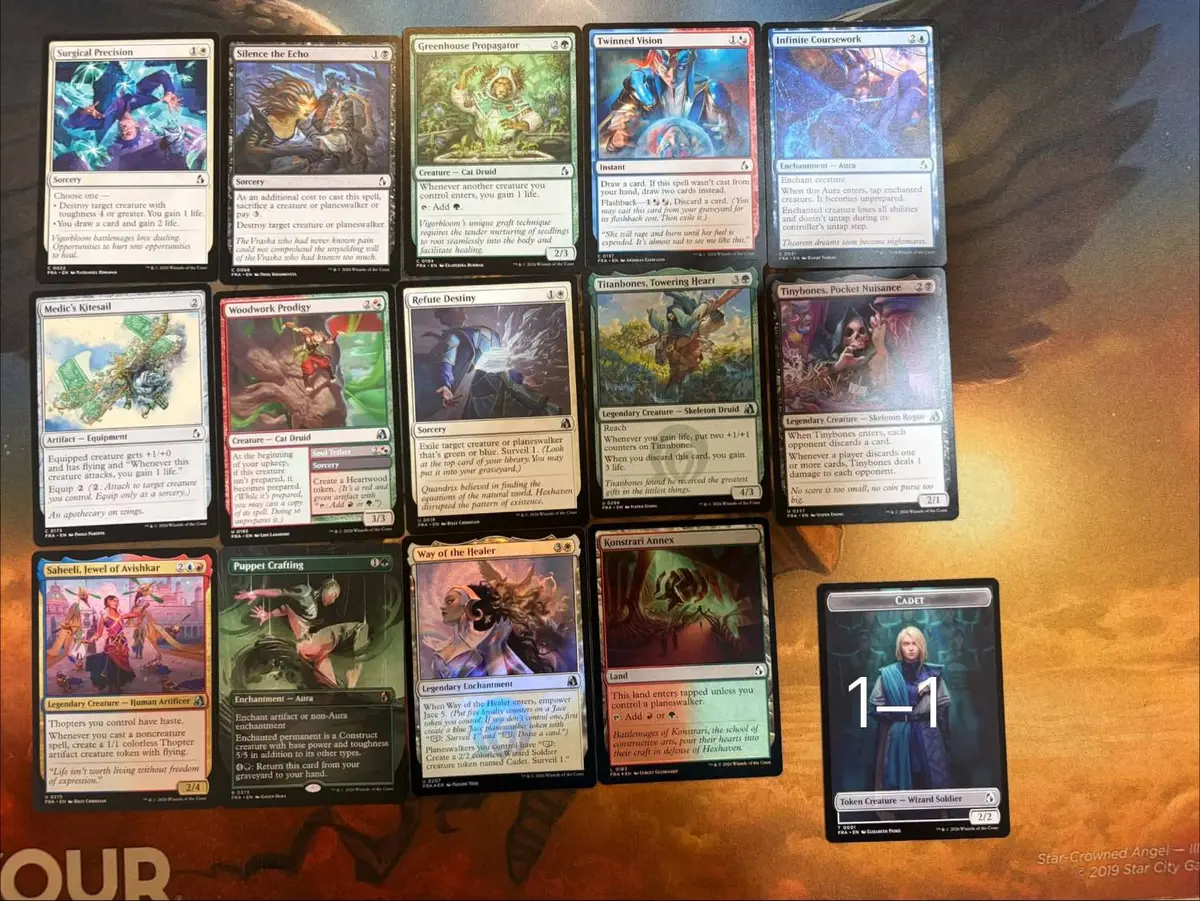
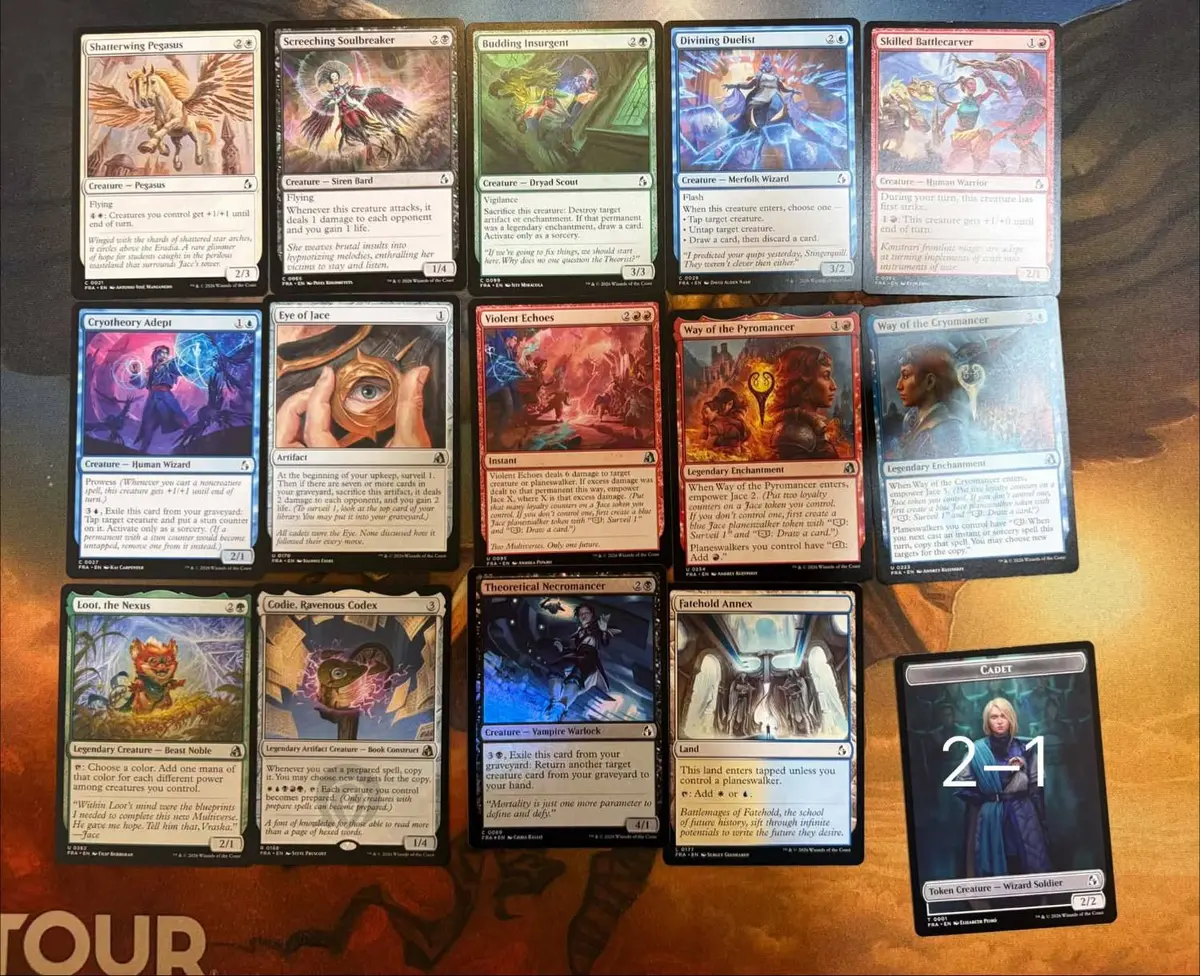
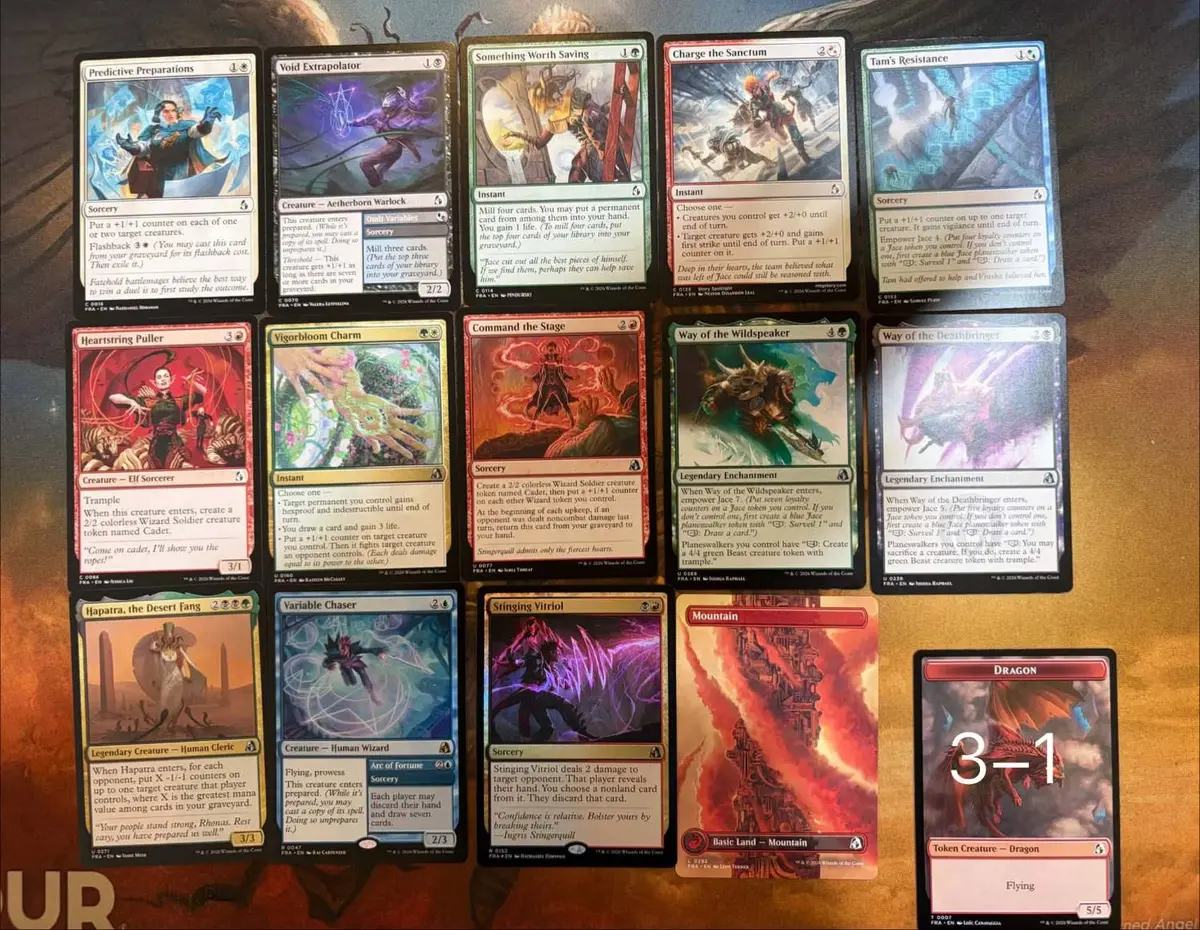
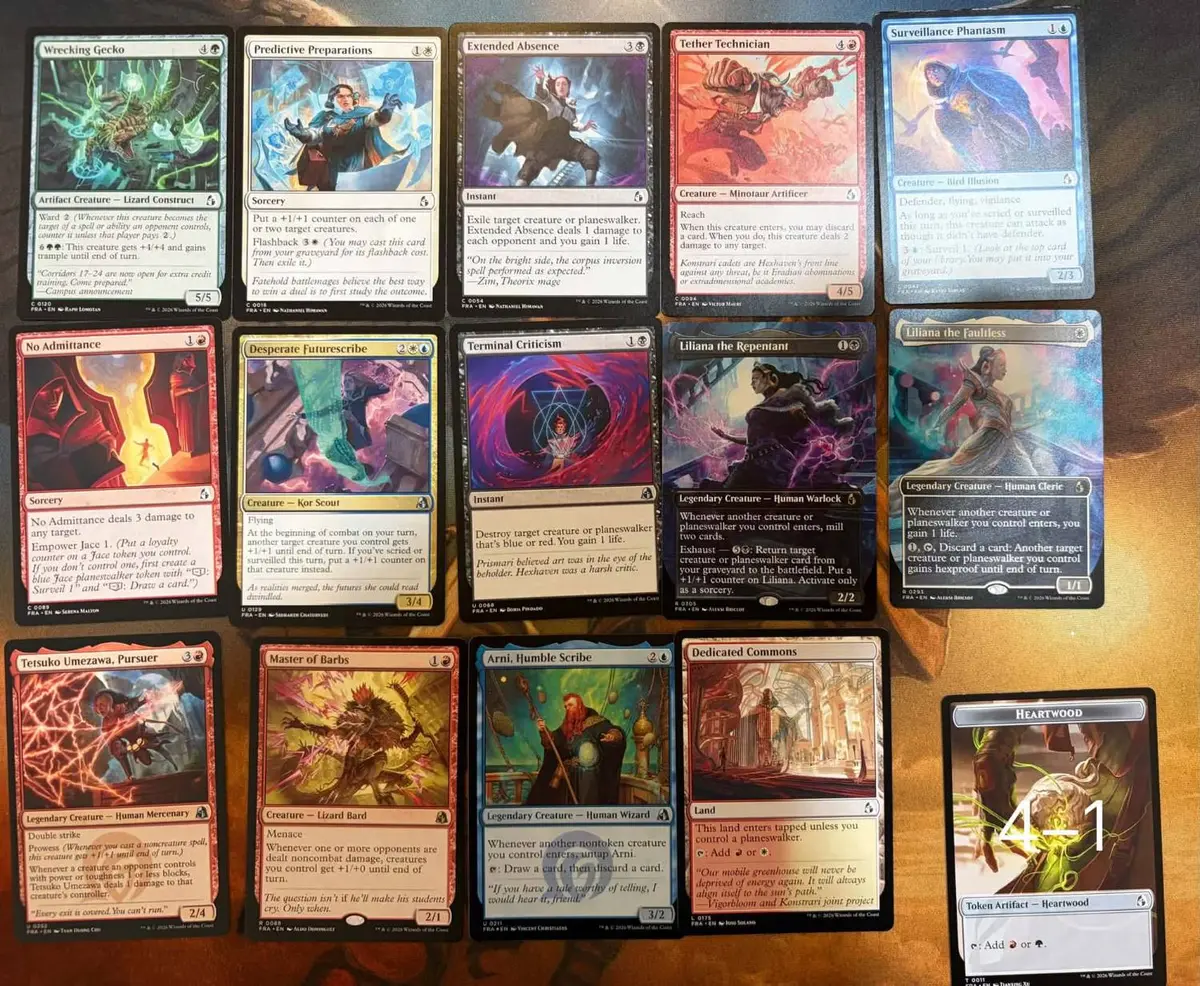
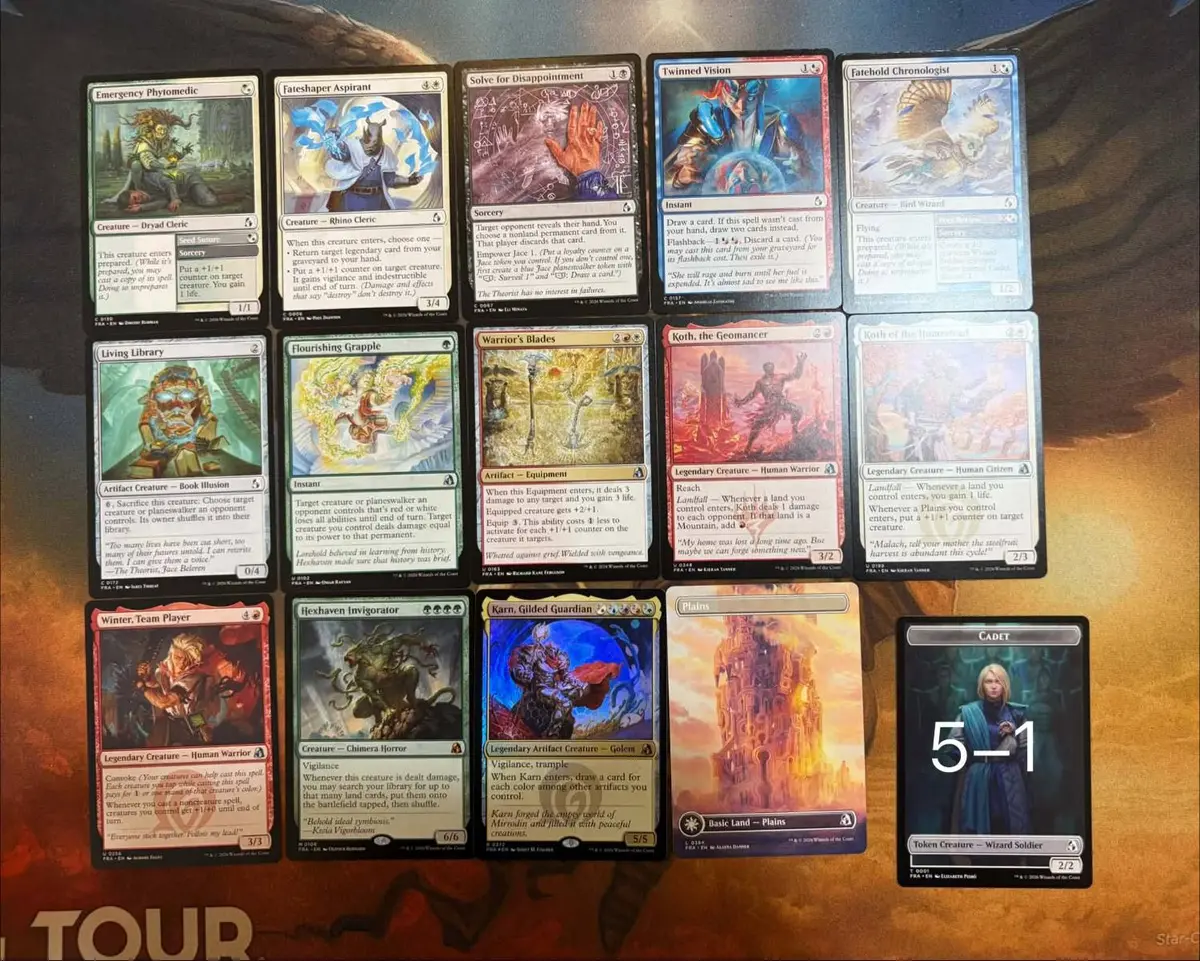
Player 5, pack 1, pick 1. The card with the heavier glare is Koth of the Homestead.
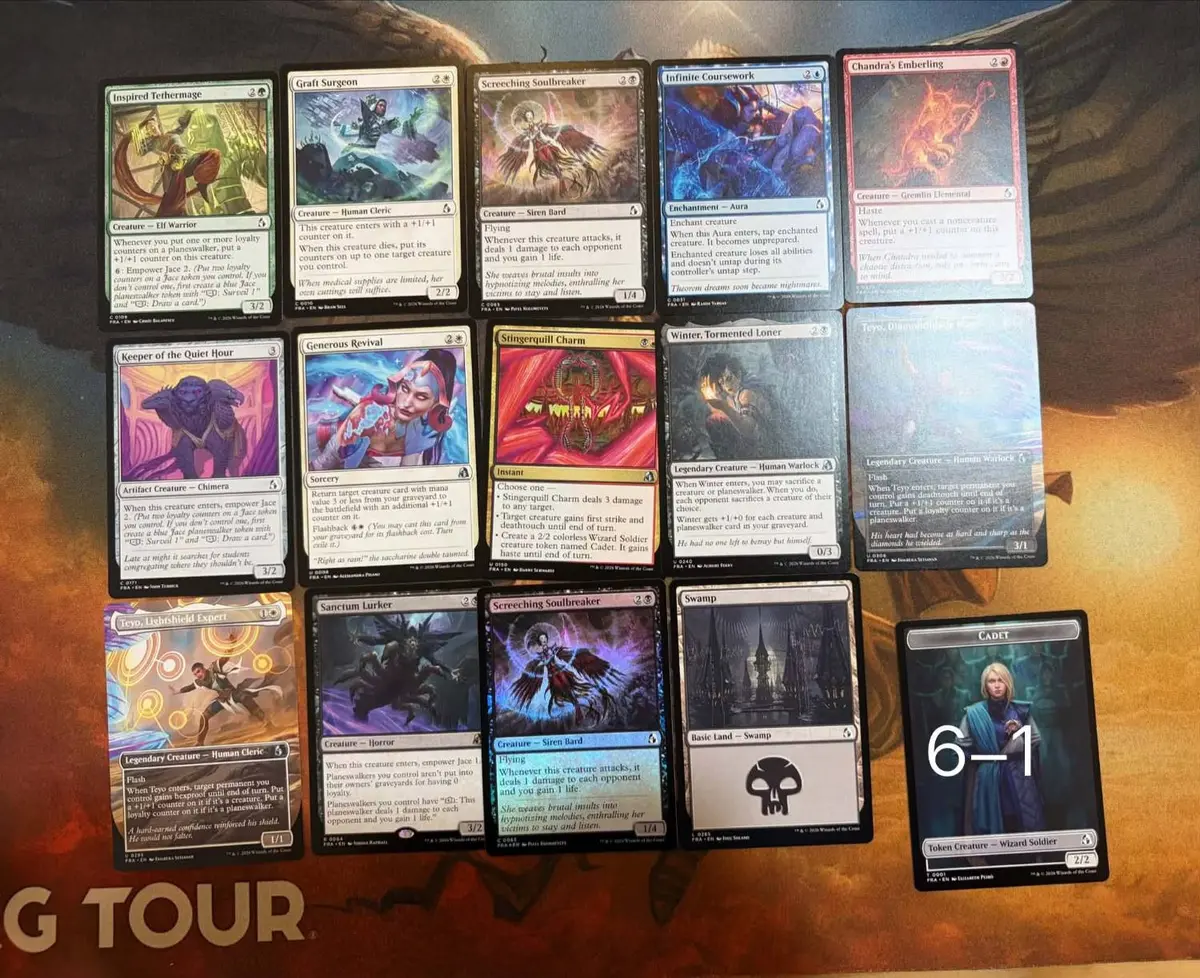
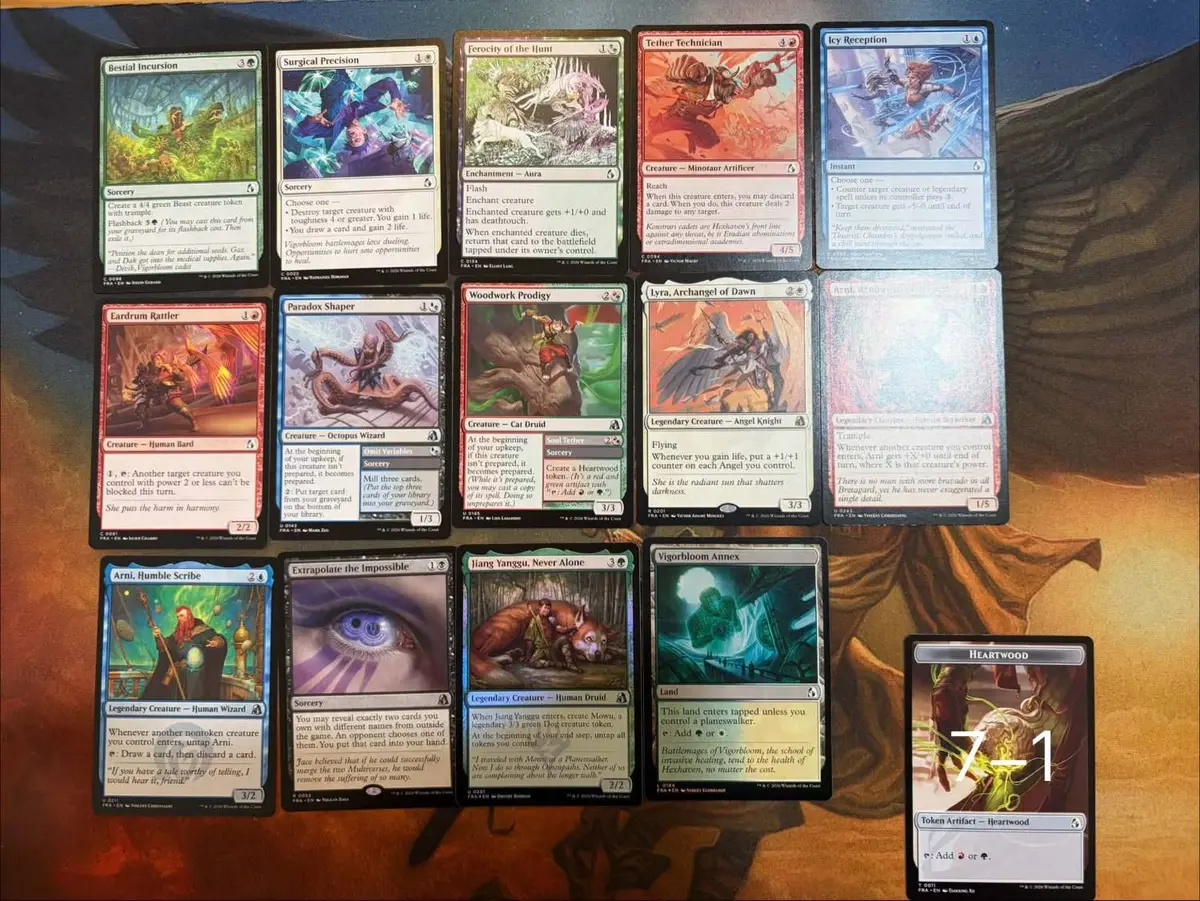
Player 7, pack 1, pick 1. The card with the heavier glare is Arni, Renowned Champion.
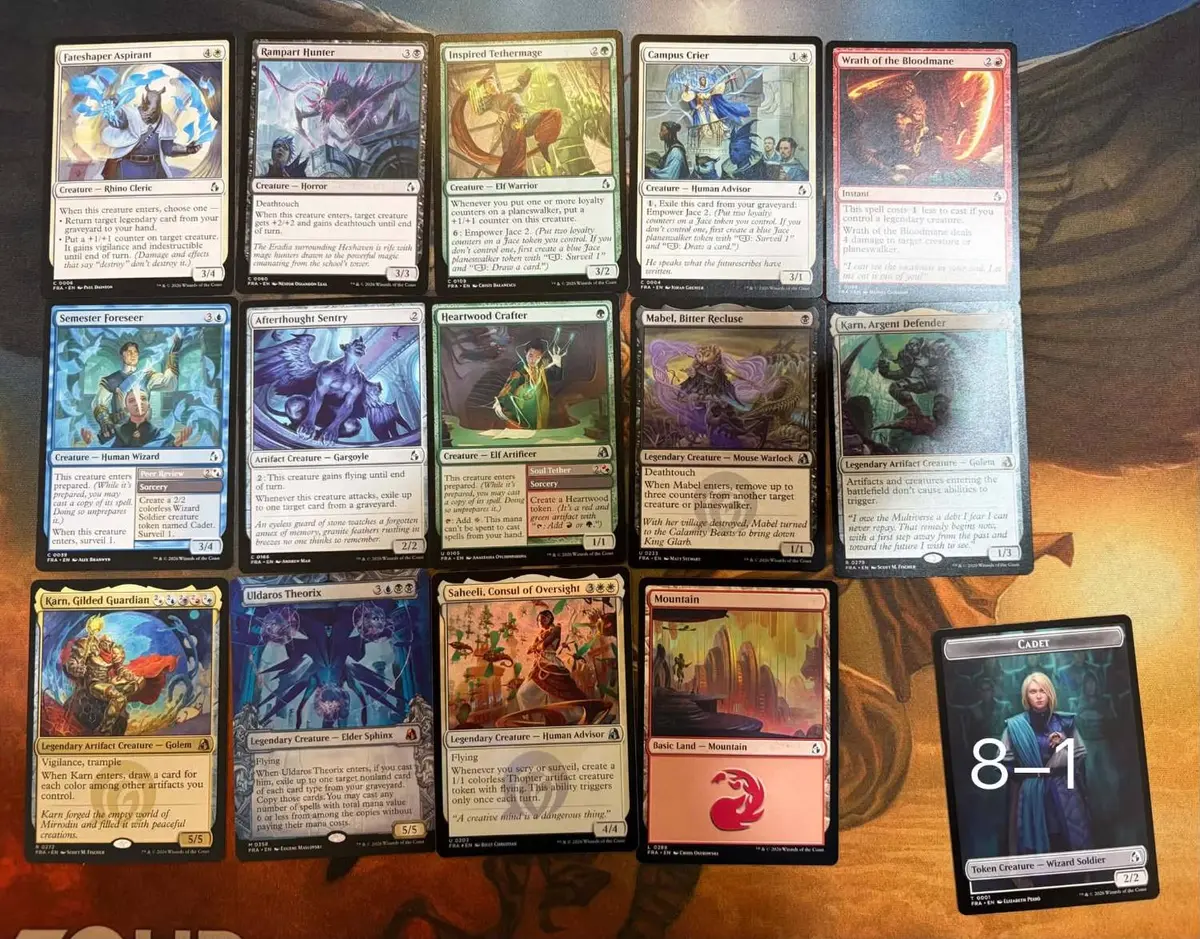
Pack 1: The picks
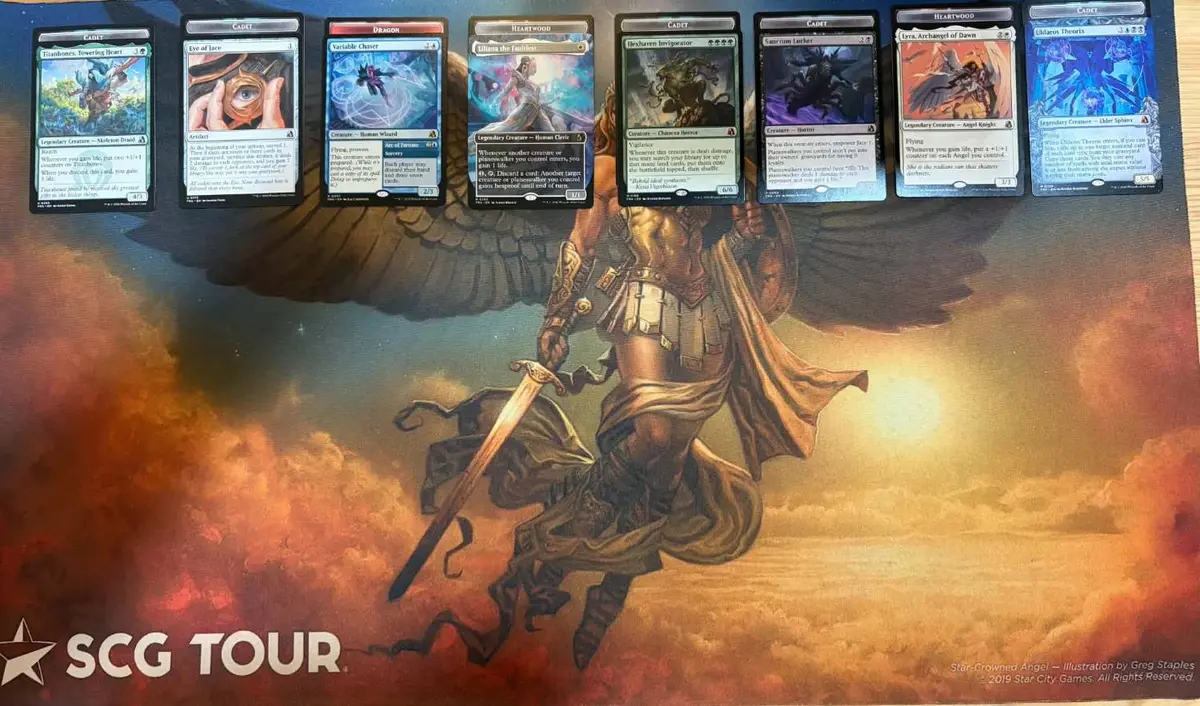
Ta-da! The first-pick reveal! Except for players 1 and 2, the other six players all took the R/MR card from their pack. Player 1 skipped Puppet Crafting because it needs support, and FRA is not an artifact/enchantment-themed set. Player 2 passed on Codie, Ravenous Codex
 mainly because Eye of Jace
 , which surveils 1 every turn, is the more well-rounded effect.
Draft tip: In pack one, first picks should usually prioritize raw card power and color openness, with theme second. At the moment of the first pick, it is hard to be sure the theme will really come together and that there will be enough playables for it.
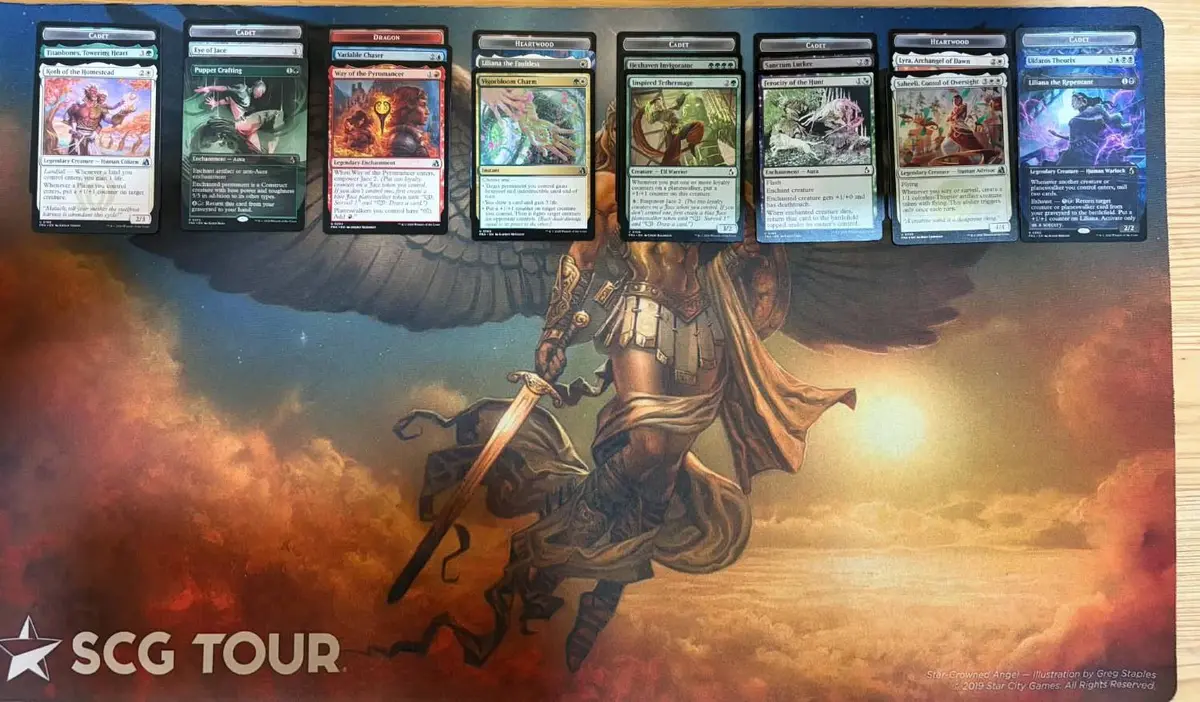
- Player 1 first-picked Titanbones, Towering Heart
 , so wants a white-green lifegain plan. Compared with the one-shot lifegain of Emergency Phytomedic // Seed Suture
 , Koth of the Homestead
 , which gains life repeatedly off land drops and can even grow creatures, is a better fit.
- Player 2 first-picked Eye of Jace. Getting passed Puppet Craftinghere was very tempting, so player 2 decided to raise the priority of later artifacts/enchantments and head toward a green-based aggro Ensoul Artifact deck.
- Player 3 first-picked Variable Chaser // Arc of Fortune
 , and this pack had plenty of red-blue gold cards. Among Way of the Pyromancer
 , Way of the Cryomancer
 and Violent Echoes
 , player 3 chose the first one, the red Way, to pair with acceleration.
- Player 4 first-picked Liliana the Faultless
 and likewise went down the white-green lifegain path. Between Vigorbloom Charm
 and Way of the Wildspeaker
 , player 4 took the more flexible Vigorbloom Charm.
- Player 5 first-picked Hexhaven Invigorator
 and basically takes green whenever it is available. This pack had little to choose from, so player 5 took Inspired Tethermage
 .
- Player 6 first-picked Sanctum Lurker
 and stayed relatively open. Player 6 decided to stay black and took Ferocity of the Hunt
 as a trick. Woodwork Prodigy // Soul Tether
 would also have been fine, but it felt too early to commit to a second color.
- Player 7 first-picked Lyra, Archangel of Dawn
 , also locking in white, and took Saheeli, Consul of Oversight
 .
- After player 8 first-picked Uldaros Theorix
 , the deck leaned toward a black-based graveyard-recursion plan. The passed Liliana the Repentant
 , Extended Absence
 and the blue Surveillance Phantasm
 were all quite good, but after weighing rarity and the deck’s development, player 8 took Liliana the Repentant.
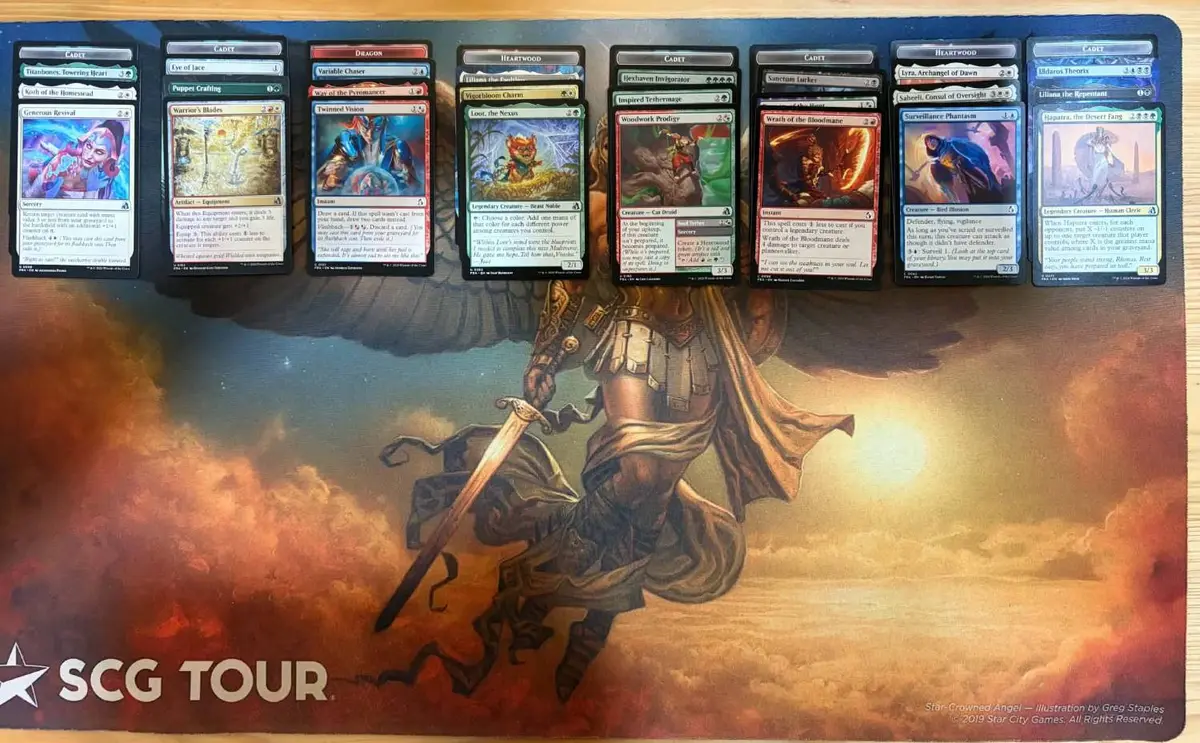
Player 2, locked into the artifact theme, took Warrior's Blades . After the blue Surveillance Phantasmwas passed from the previous seat, player 7 is showing signs of shifting toward a blue-white surveil theme. Player 8 hesitated between two Beast Way enchantments and the black-green Hapatra, the Desert Fang
 , and in the end chose the black-green Hapatra, which can be dug back onto the battlefield.
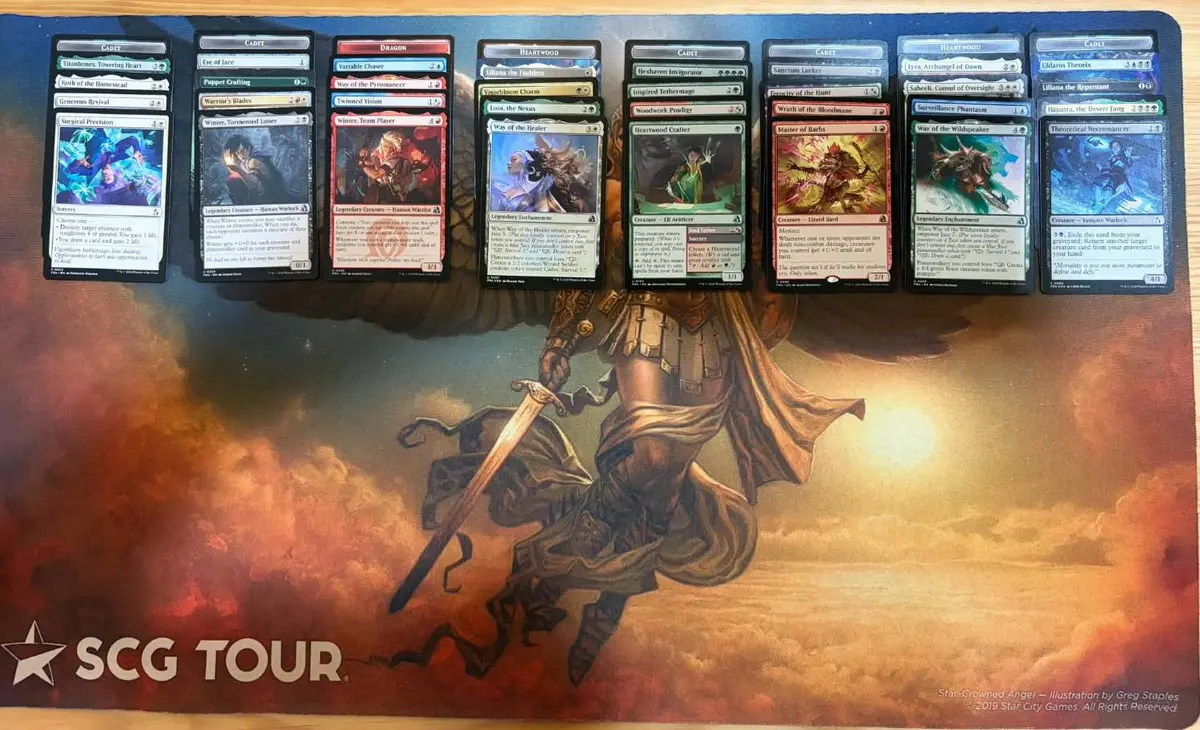
Player 2 leaving the artifact creature Keeper of the Quiet Hour to take Winter, Tormented Loner
 , and player 4 not continuing with the green lifegain engine Greenhouse Propagator
 , were both thematically inconsistent. Player 7 taking the third-color Way of the Wildspeakerwas more or less forced, since the other blue-white cards available had too little impact. Players 5, 6 and 8 each got an important card for their theme on this pick.
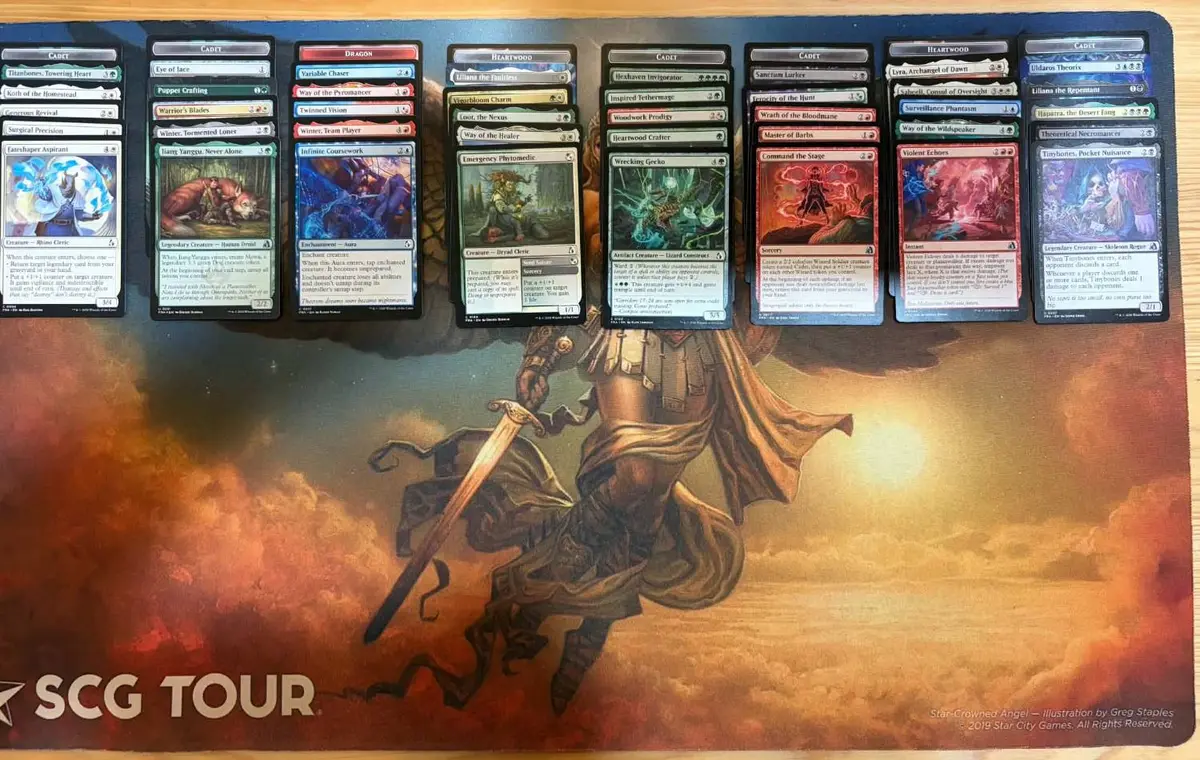
Player 1 starts to diverge from the deck’s theme. The five-mana Fateshaper Aspirant is a solid card, but it neither supports the lifegain plan nor interacts with the Generous Revival
 taken at pick 3. What this deck lacks most right now is a two- and three-drop curve, so taking a five-drop is not the best choice. Afterthought Sentry
 , which can take off and attack in the mid to late game, may have been better. Player 7 moving into a fourth color and taking the two-red-pip Violent Echoeswas also not a sensible choice, especially when the same pack even had a blue-white dual land available. Staying in two colors is still the safer approach. Player 8 ignored the plentiful blue-black gold cards and picked Tinybones, Pocket Nuisance
 , continuing to stock up on creatures that can be reused from the graveyard.
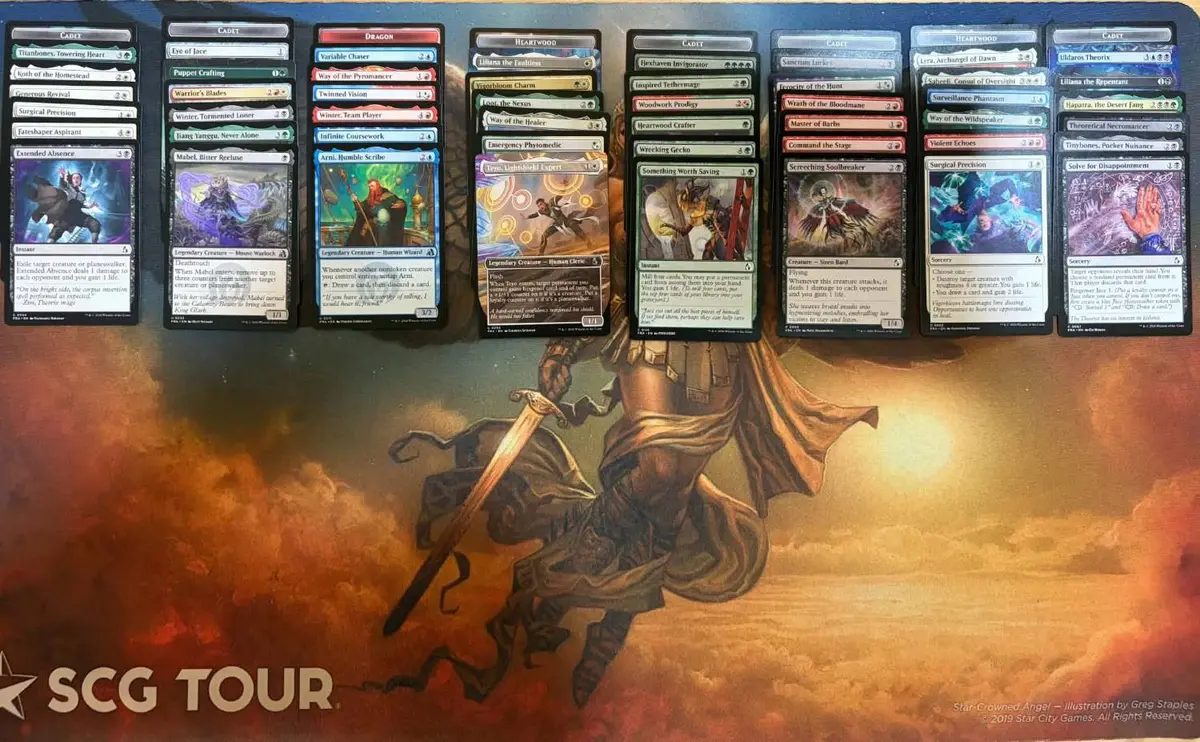
Player 1, affected by the neighbors on both sides fighting over green cards, faced the decision of splashing a third color in this pack. Between the red No Admittance and the black Extended Absence, player 1 chose the sturdier latter (which also triggers lifegain), but the deck inevitably moves toward a clunkier build. Meanwhile, player 2 ignoring Afterthought Sentryto take the unsynergistic Mabel, Bitter Recluse
 clearly shows they have not yet realized that green should be their main color. Player 3 choosing Arni, Humble Scribe
 while lacking bodies is not practical. A non-creature-themed deck must get through the early game with removal, disruption, or creatures with better stats, so that the mid and late game has room for the theme to work. Taking other red creatures with better stats, or even Icy Reception
 as a two-mana disruption piece, would have been better.
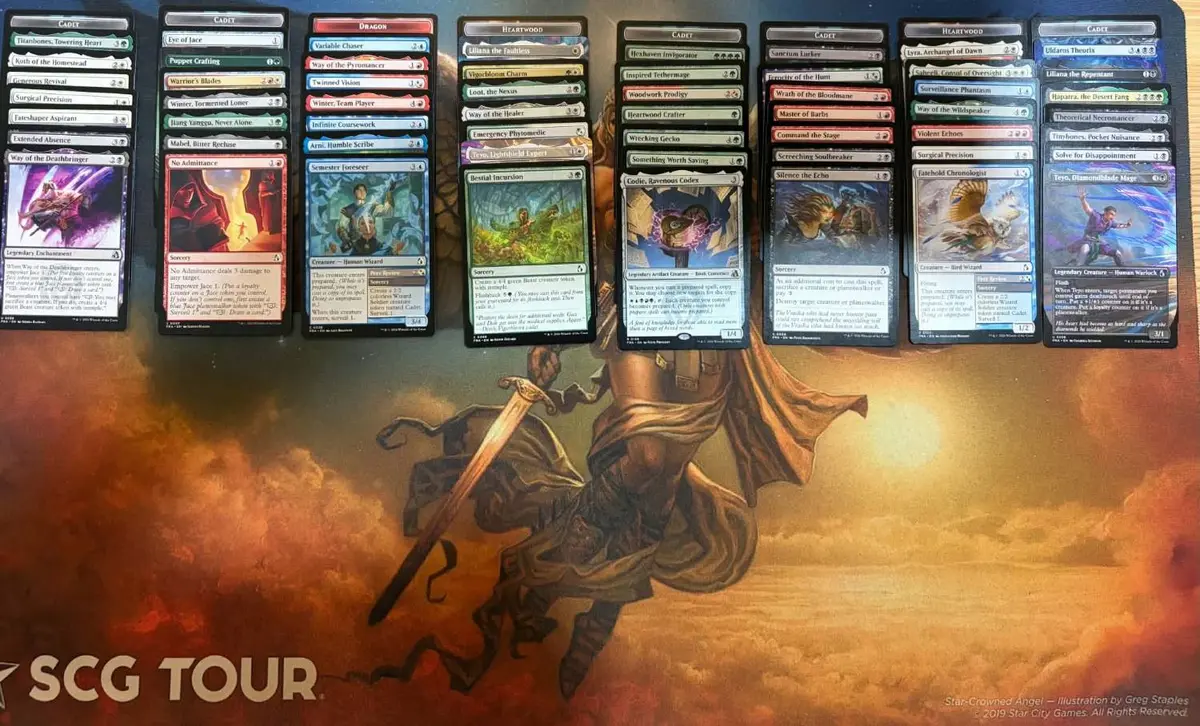
This pack is relatively dull, but player 5 got Codie, Ravenous Codex, which gives a chance to copy a prepare spell one more time. Budding Insurgent was also available in the same pack, but in a draft I still recommend taking the card with the higher ceiling.
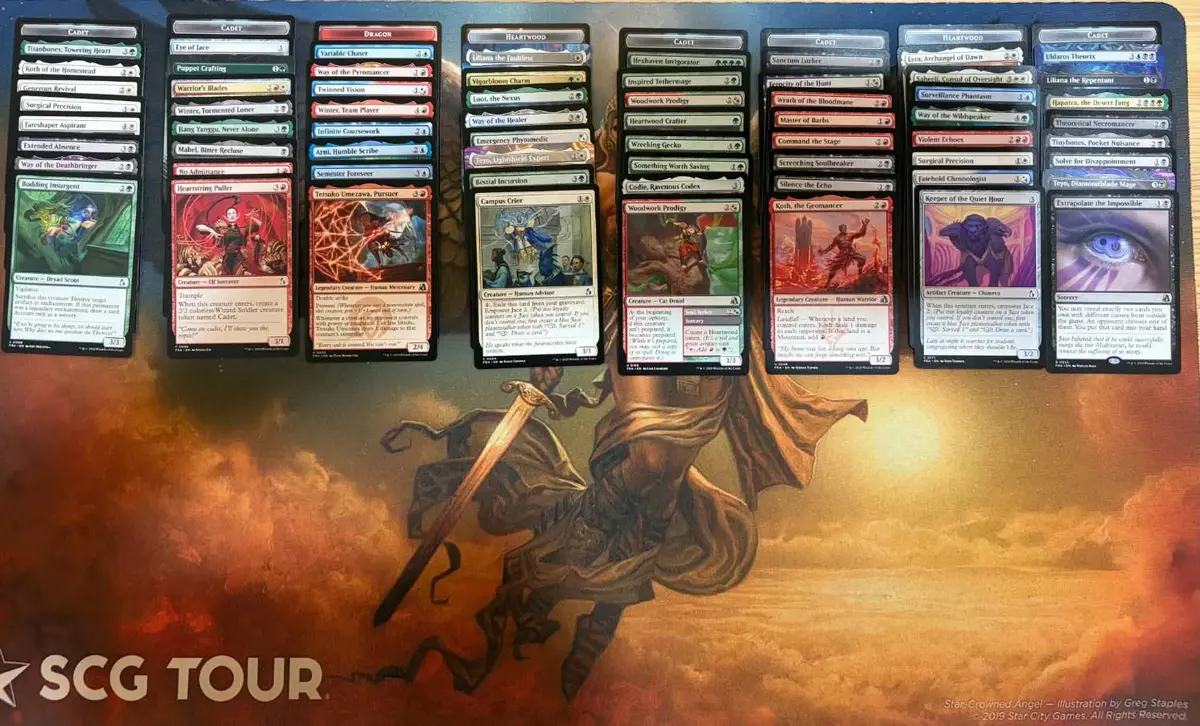
Player 2 finally snapped out of it and took a red curve card, beginning to lock into red-green and watching for a chance to splash white. It was pure luck that player 5 could take a second Woodwork Prodigy // Soul Tether. After player 6 took Koth, the Geomancer , they now have three engine creatures that trigger on noncombat damage, and the red-black shell is already quite clear. After player 8 took Extrapolate the Impossible
 , their later pick strategy shifted a little too, leaning slightly toward expanding the usability of prepare cards.
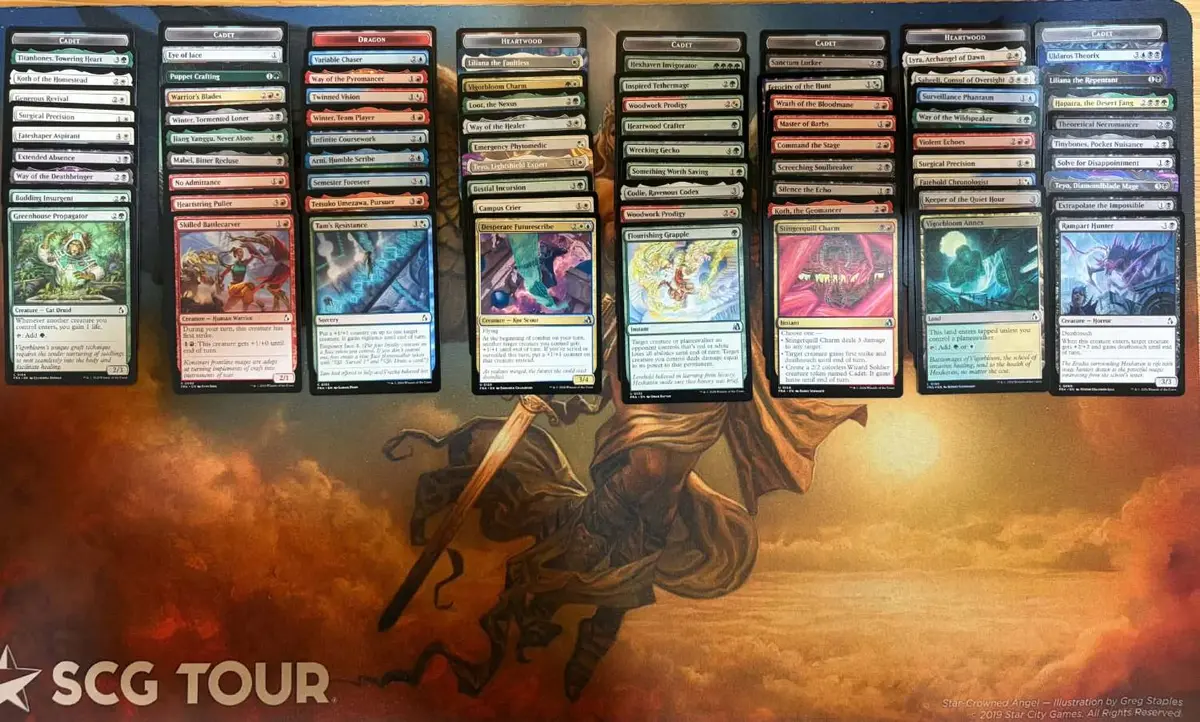
Players 1 and 6 were lucky enough to get their own Greenhouse Propagatorand Stingerquill Charm back.
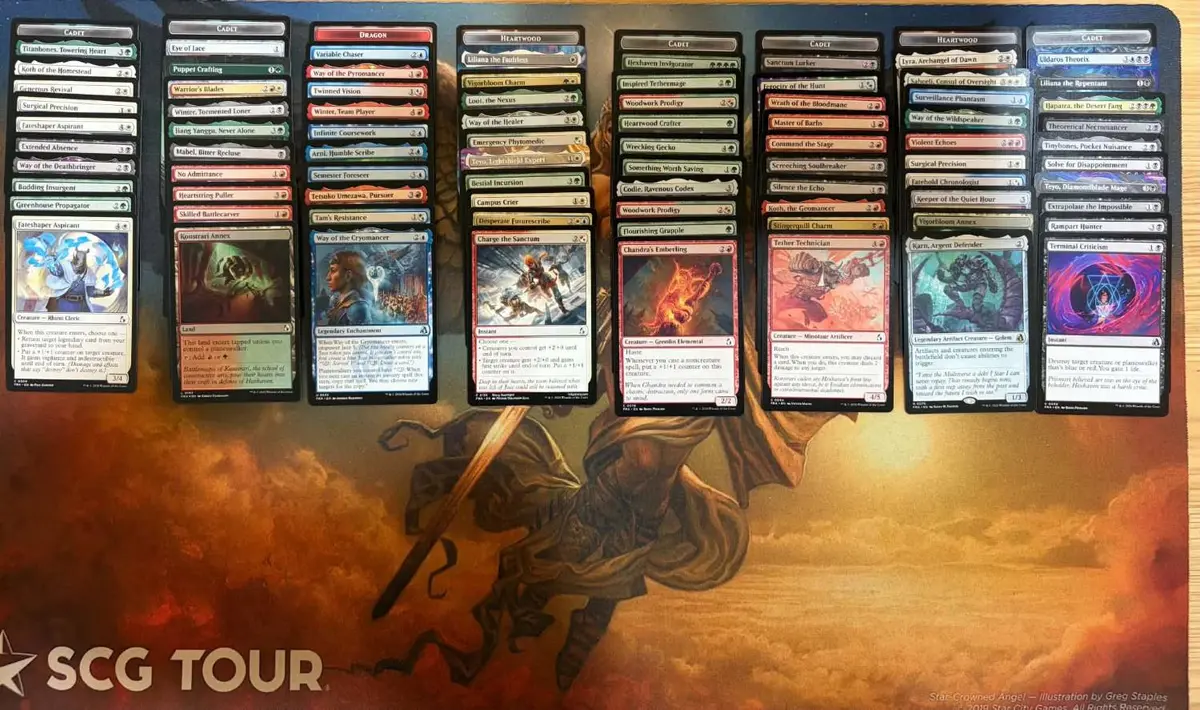
Player 2 taking the red-green dual land and letting Medic's Kitesail go cannot be called wrong, but it is not a pick that raises the deck’s ceiling.
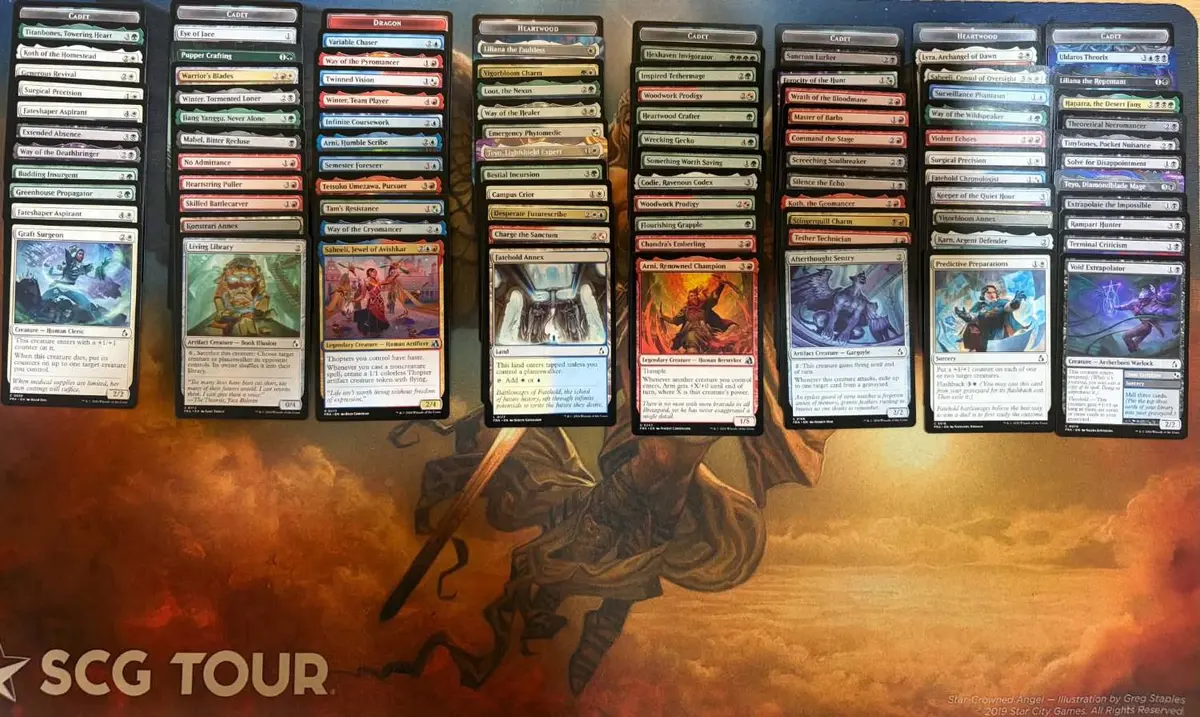
The Living Library that player 2 took adds early defense, increases thematic synergy, and is also a good hidden mid-to-late-game answer.
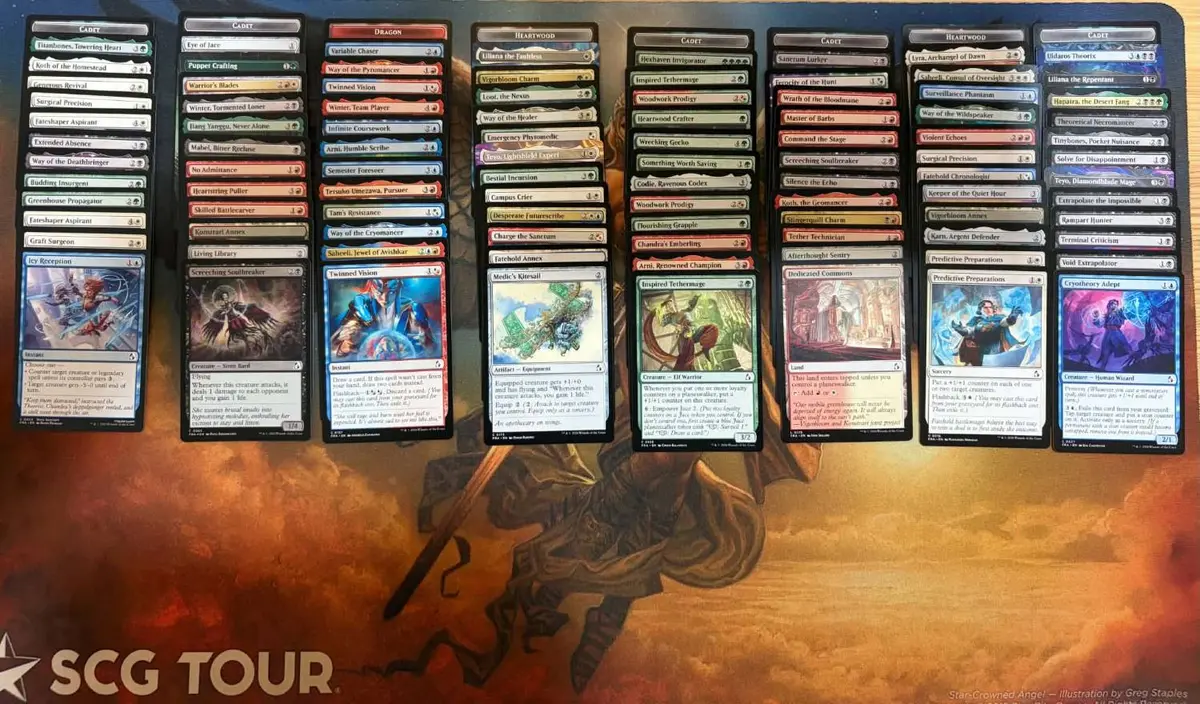
Player 4 getting Medic's Kitesailwas a pleasant surprise.
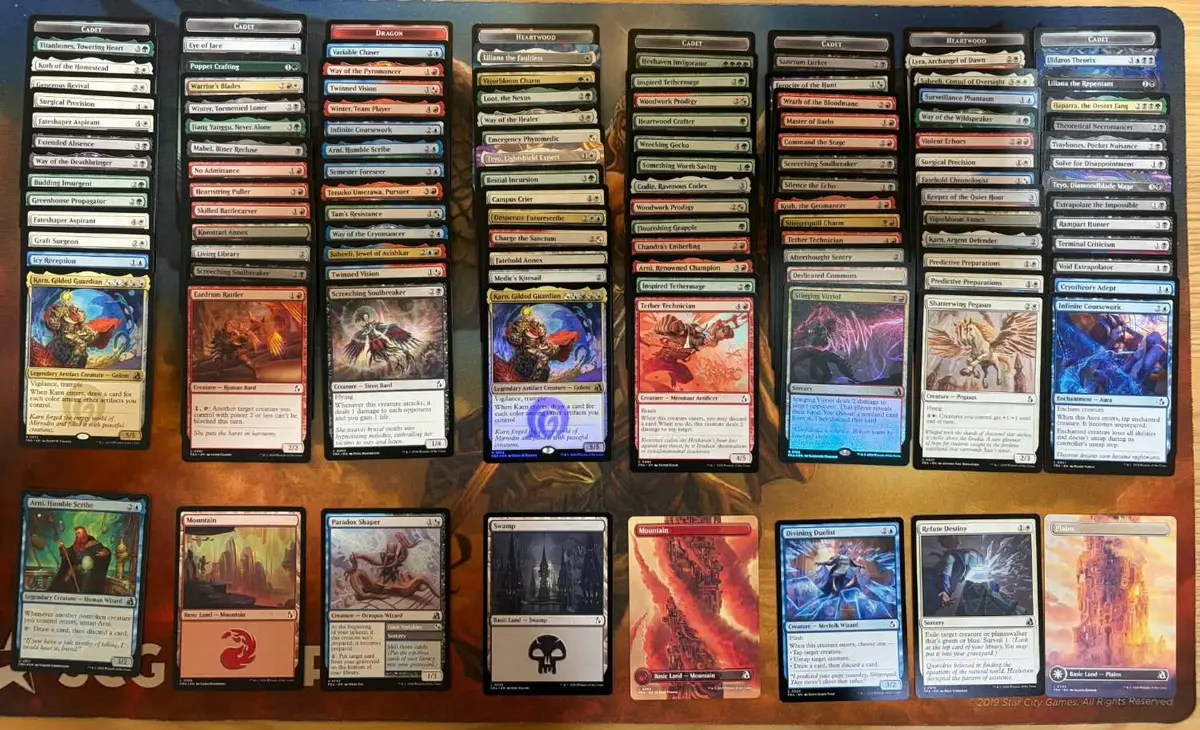
In the last few picks, player 6 saw what came back around in this set. Even Stinging Vitriol was passed all the way to the end, so it is almost certain that player 6 is the only one at the table playing red-black. Barring surprises, they can build a very complete red-black deck.
Pack 2: First pick (pick 15)
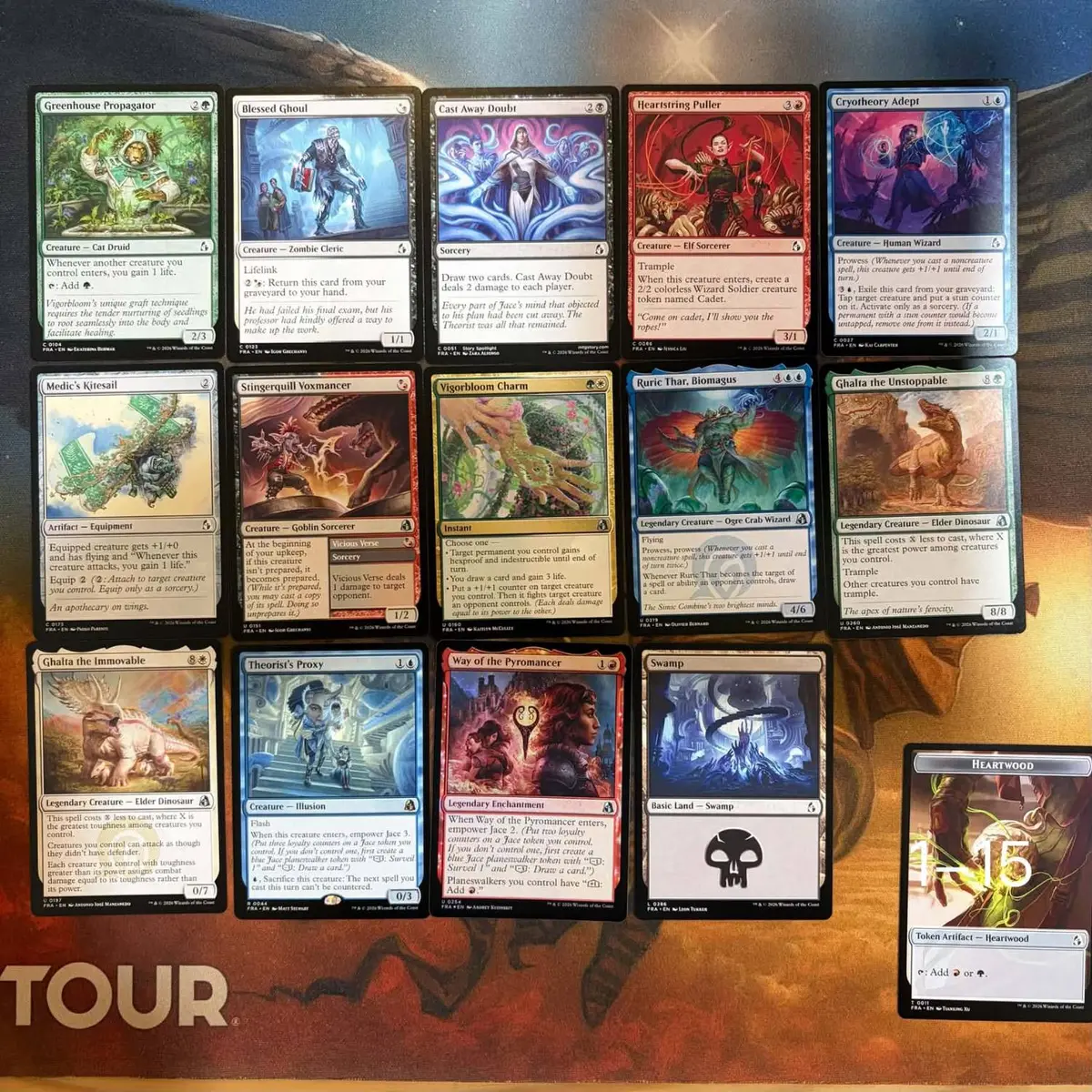
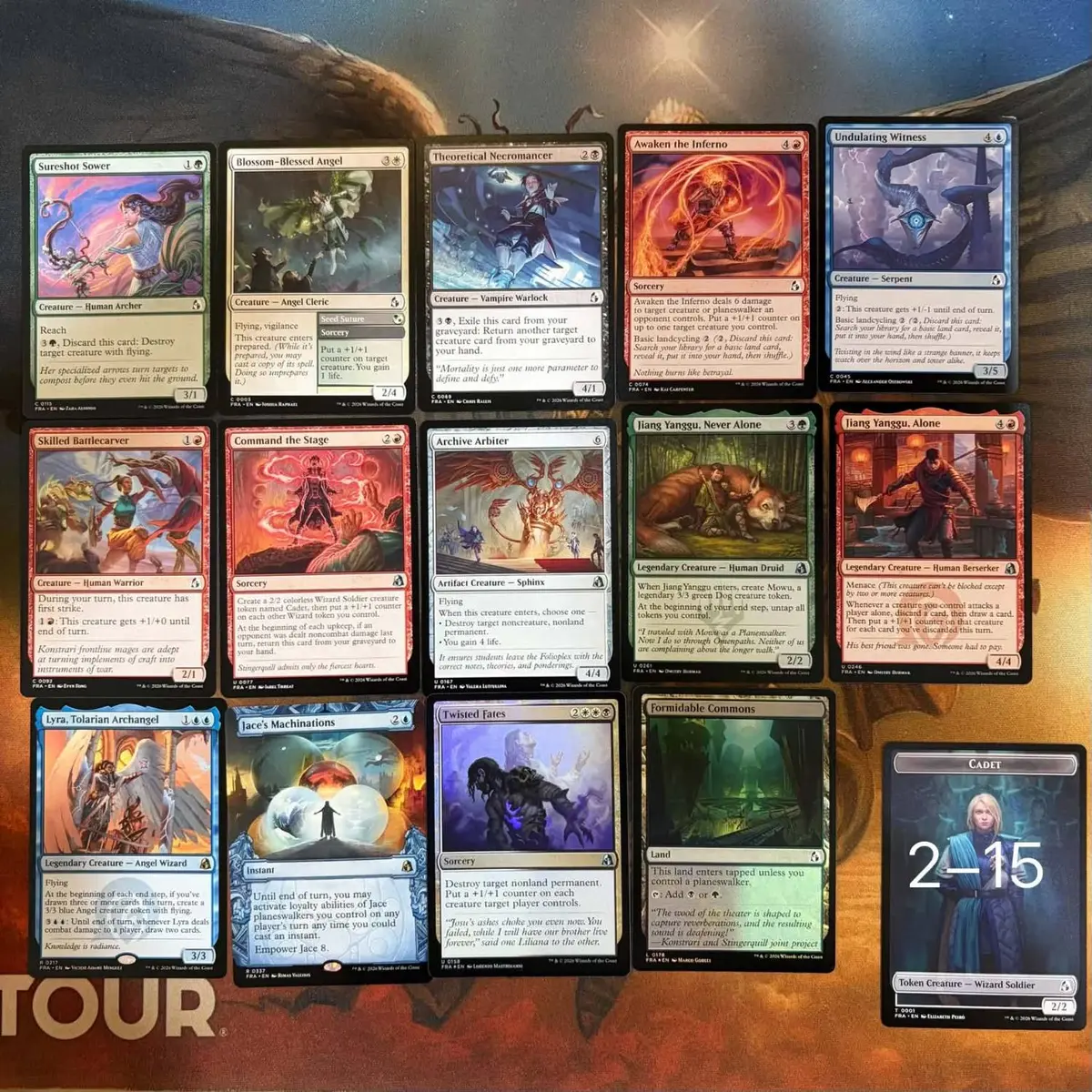
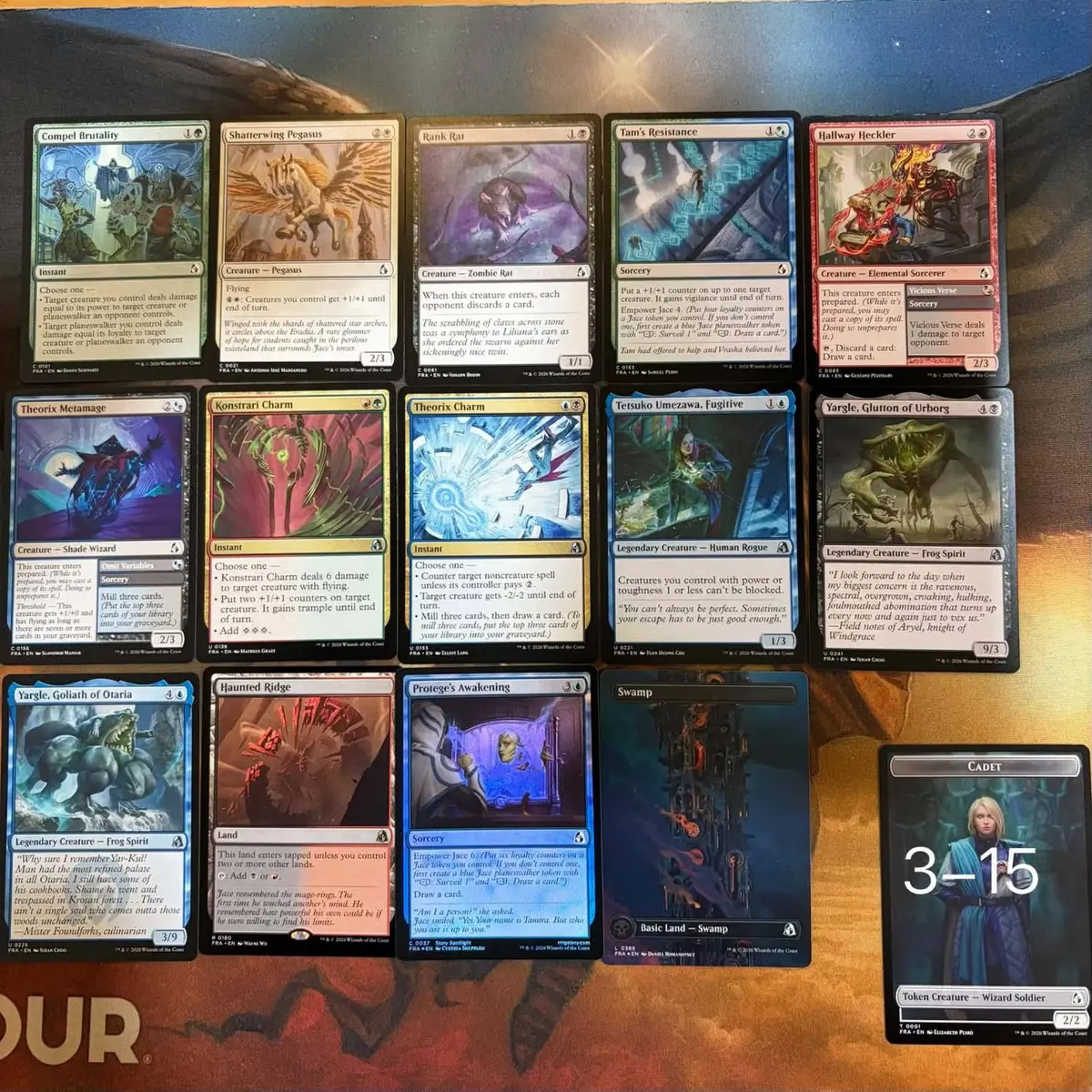
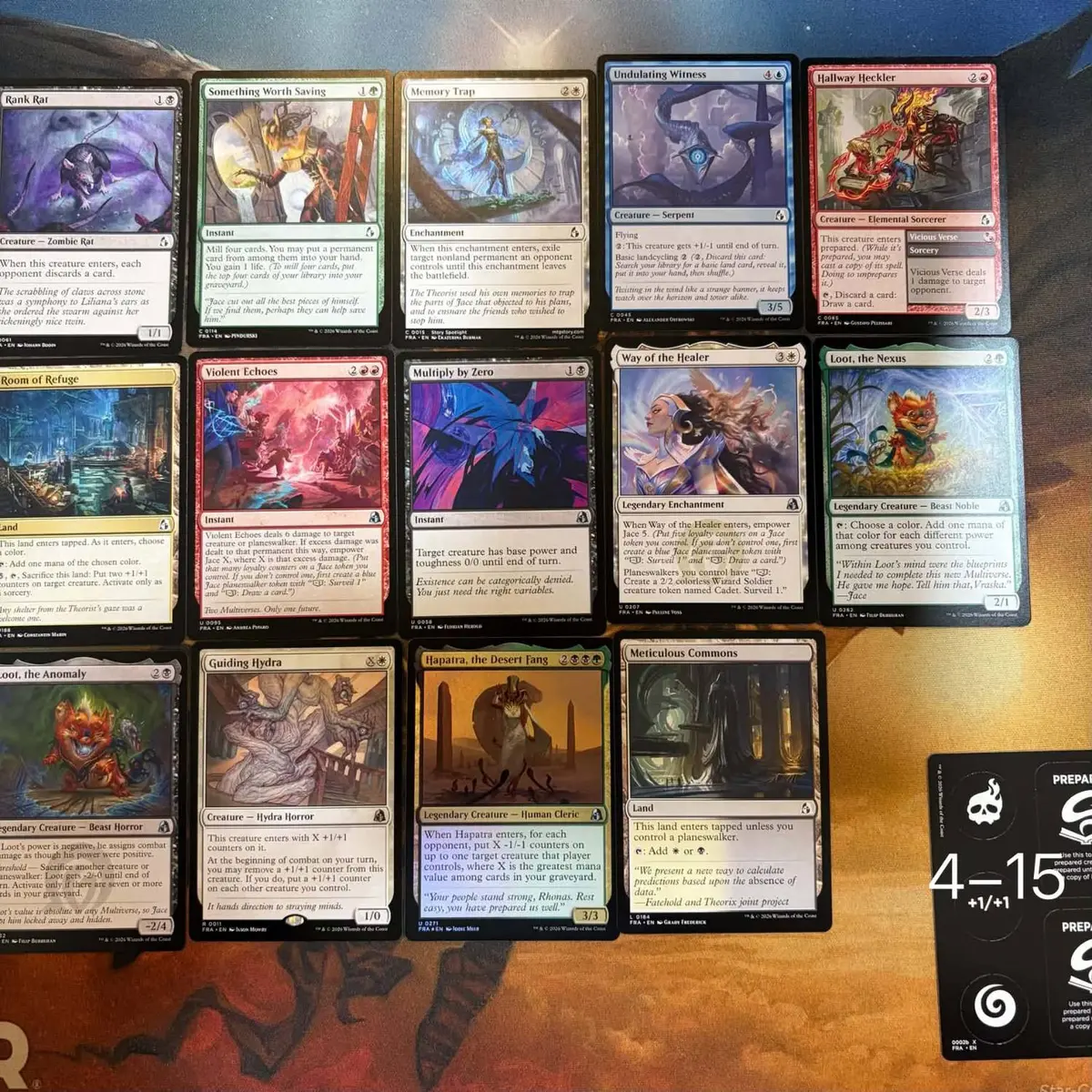
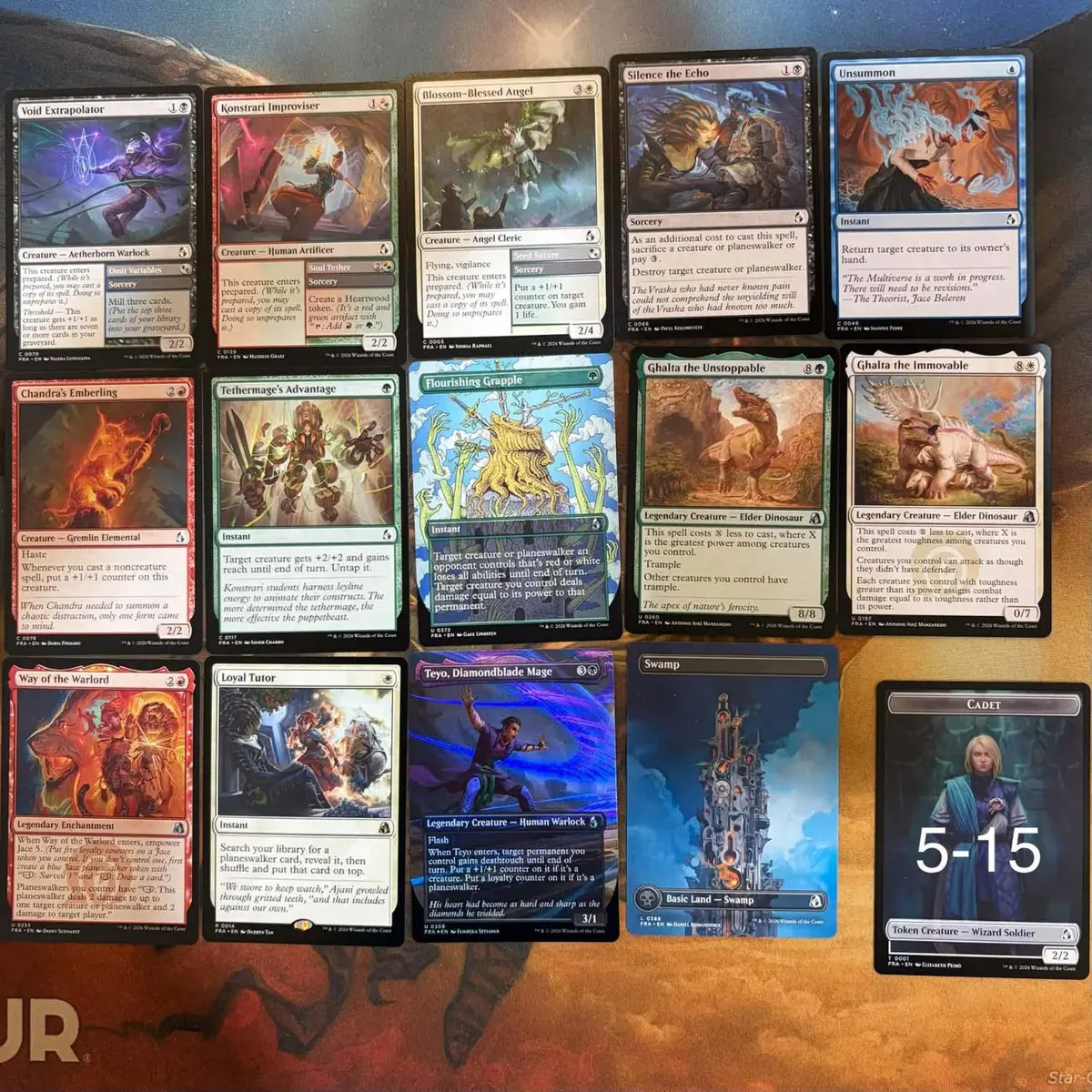
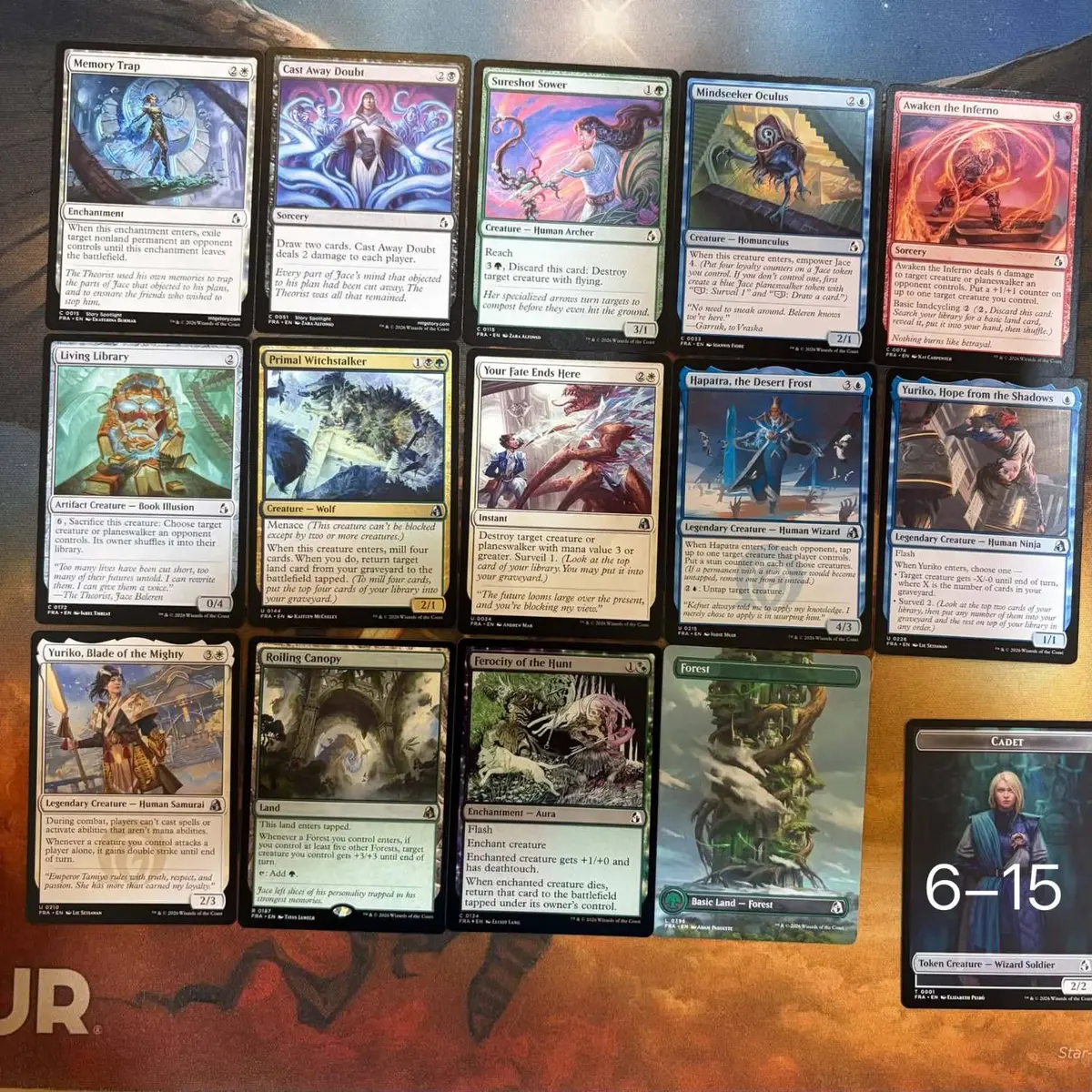
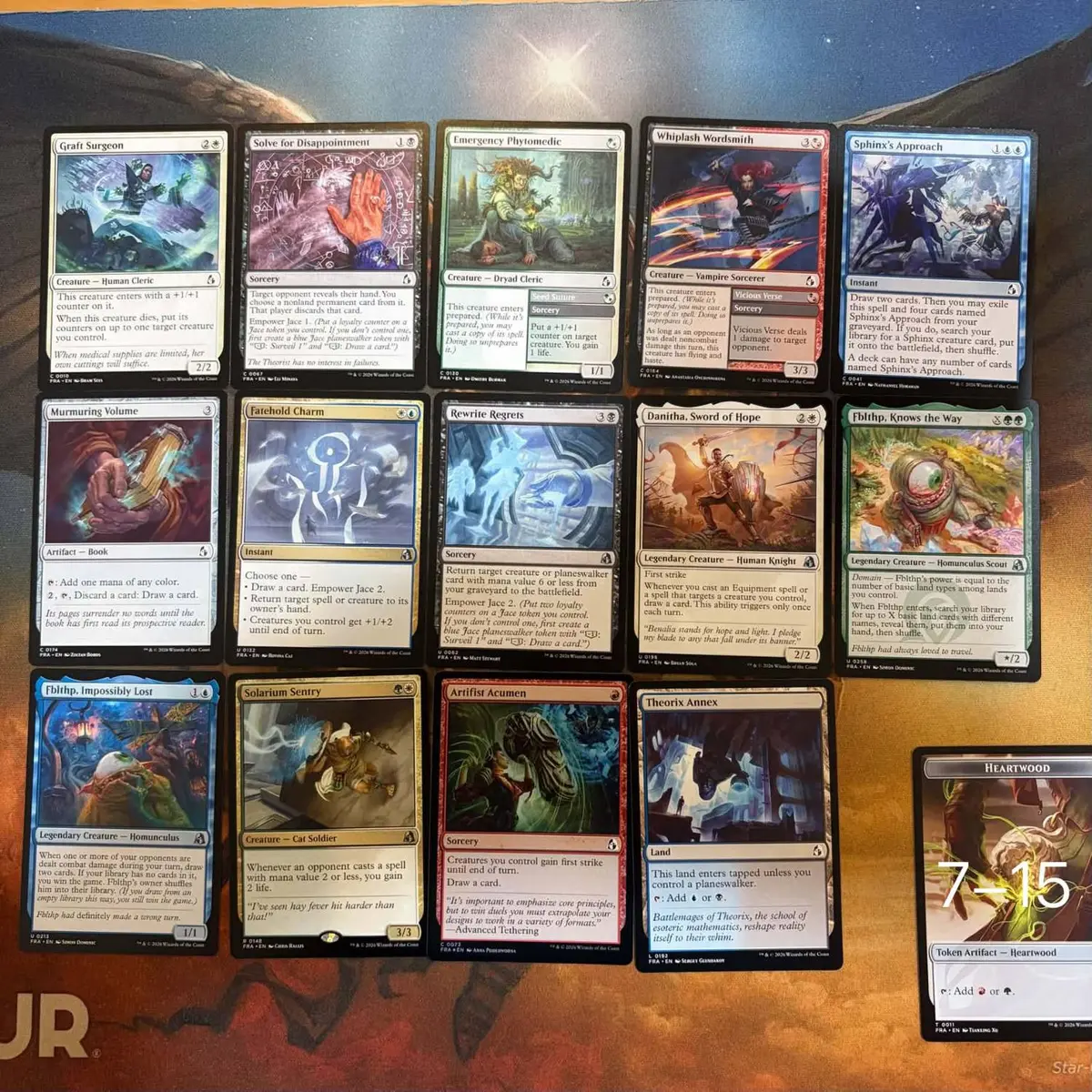
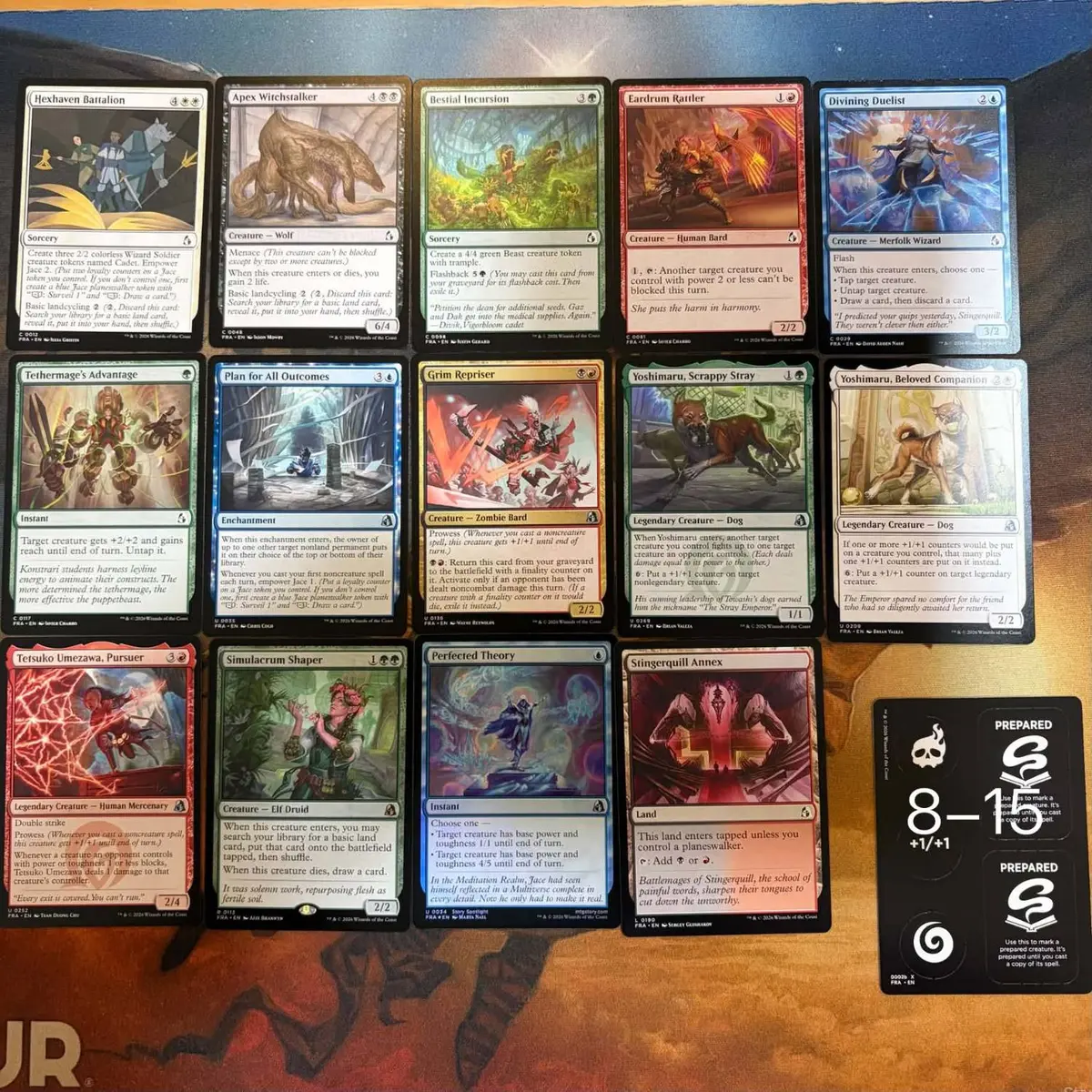
Pack 2: The picks
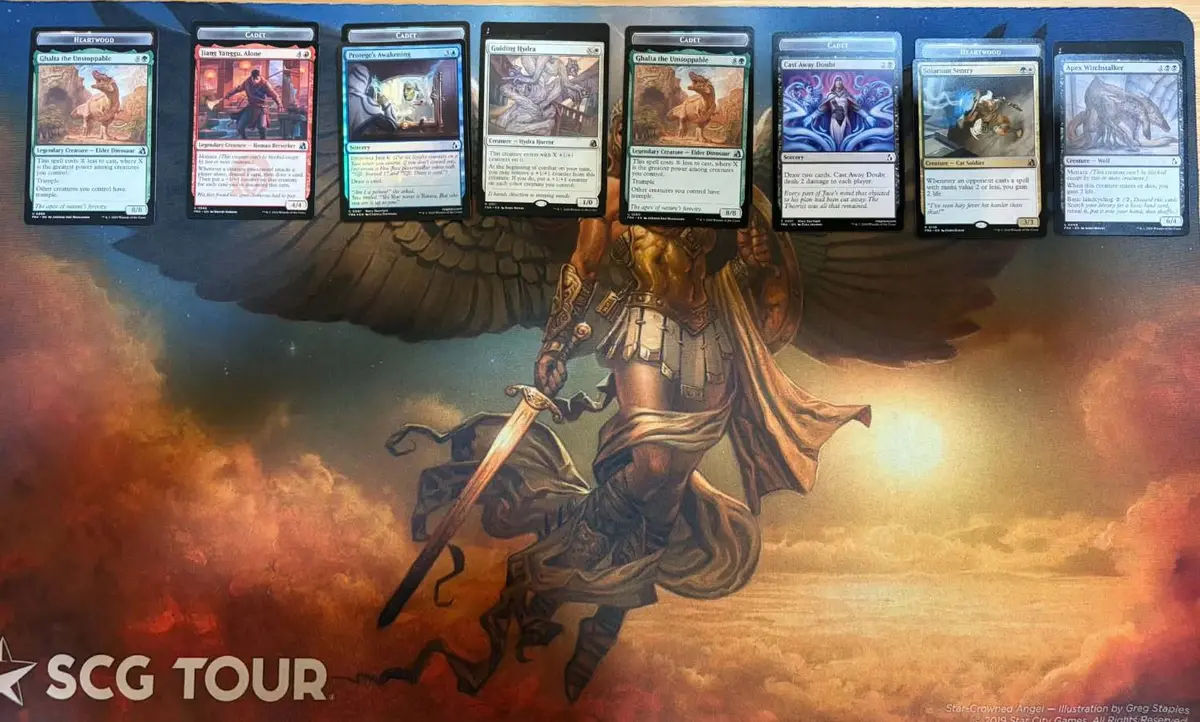
- Player 1 worried too much about lacking strong creatures, passed Vigorbloom Charm, and first-picked the less synergistic Ghalta the Unstoppable
 . In hindsight, this was not ideal.
- Player 2’s pack-one game plan could not fit Lyra, Tolarian Archangel
 at all, so player 2 chose Jiang Yanggu, Alone
 , a strong card playable in red.
- Player 3 felt like dead ashes looking at this pack and took Protege's Awakening
 . With hindsight, taking Theorix Charm
 here and going toward a black splash would have noticeably improved the final deck’s strength. But who could know at the time?
- Player 4 had plenty of goodies in this pack and took the strongest card, Guiding Hydra
 .
- Player 5’s green foundation is already very solid, and took Ghalta the Unstoppable, giving the whole team trample, which is quite fierce! Player 5 also considered Way of the Warlord
 to pair with Hexhaven Invigoratorfor land-finding triggers. But the big dinosaur fits the theme better.
- Player 6 had little to take in this pack. Cast Away Doubt
 was slightly early, but not unacceptable. It also matches the red-black burn-to-face plan. If not that, the red basic landcycler Awaken the Inferno
 was also a decent choice.
- Player 7 was misled by the white-green R cards and the possibility of splashing a third color. If picking again, this is where to take Fatehold Charm
 .
Though it also came back around later - Player 8 first-picking the black basic landcycler Apex Witchstalker
 was not reckless. It finds a land early and gets dug back up in the mid to late game, a reasonable choice given blue-black already has Uldaros Theorix, and the loss of passing Plan for All Outcomes
 from the same pack is small. Its main-mode six-drop is also not weak, and considering the Extrapolate the Impossibletaken in pack one, a basic landcycler makes it easier to cast the off-color bombs on your prepare cards that look uncastable at first glance.
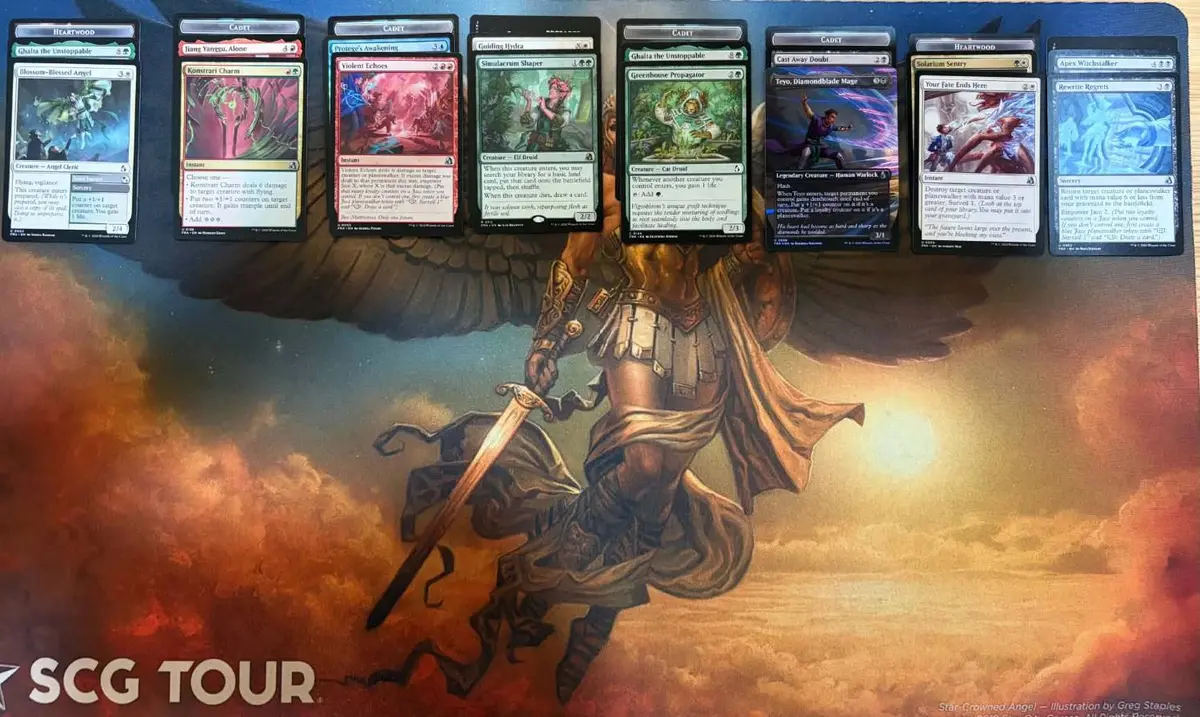
Instead of Konstrari Charm , mono-green Compel Brutality
 would have been a better pick for player 2. Player 8 got the much-needed Rewrite Regrets
 here, raising the graveyard-digging ceiling even higher!
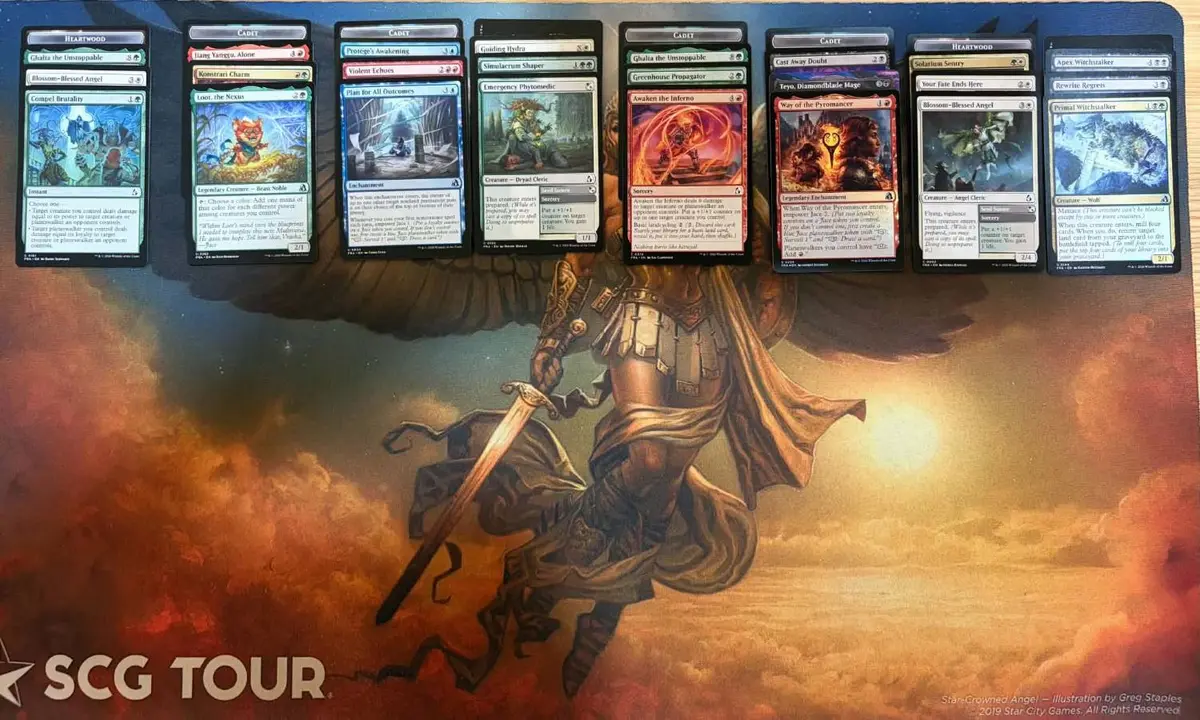
Given the signal from the previous pack, player 6 decided to gamble that their Stingerquill Voxmancer // Vicious Verse would wheel, and prioritized Way of the Pyromancerfor acceleration. Player 8 picked poorly here, probably only considering the possibility of splashing for prepare cards. Taking Mindseeker Oculus
 outright would have been better, or Yuriko, Hope from the Shadows
 to smooth the early curve would not have been bad either.
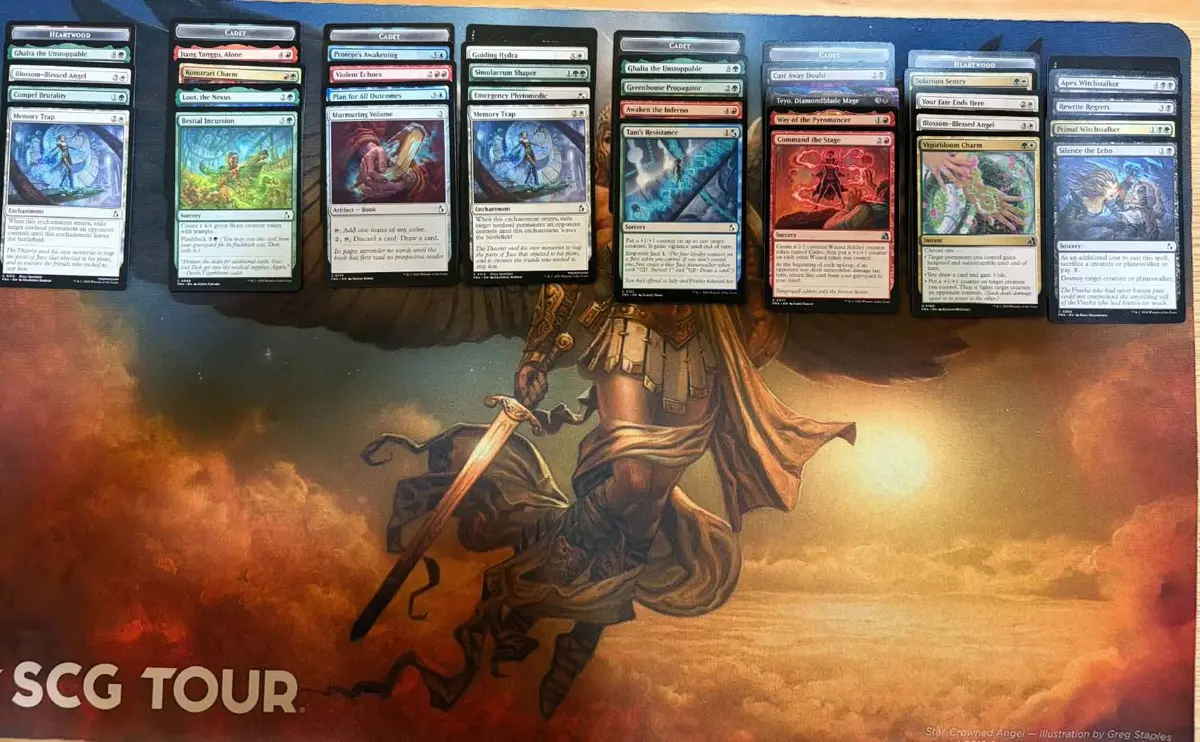
If player 2 had taken the white basic landcycler Hexhaven Battalion here, the ceiling would have been higher. Player 3 missed the window to switch to black on the previous two picks, and can only take the mana rock Murmuring Volume
 for now and make progress slowly. Player 6 got a second Command the Stage
 here, and with plenty of noncombat damage sources, gains another plan for overwhelming opponents at medium speed. Player 7 was once again misled by the Vigorbloom Charmthat player 1 passed and has not given up on splashing green.
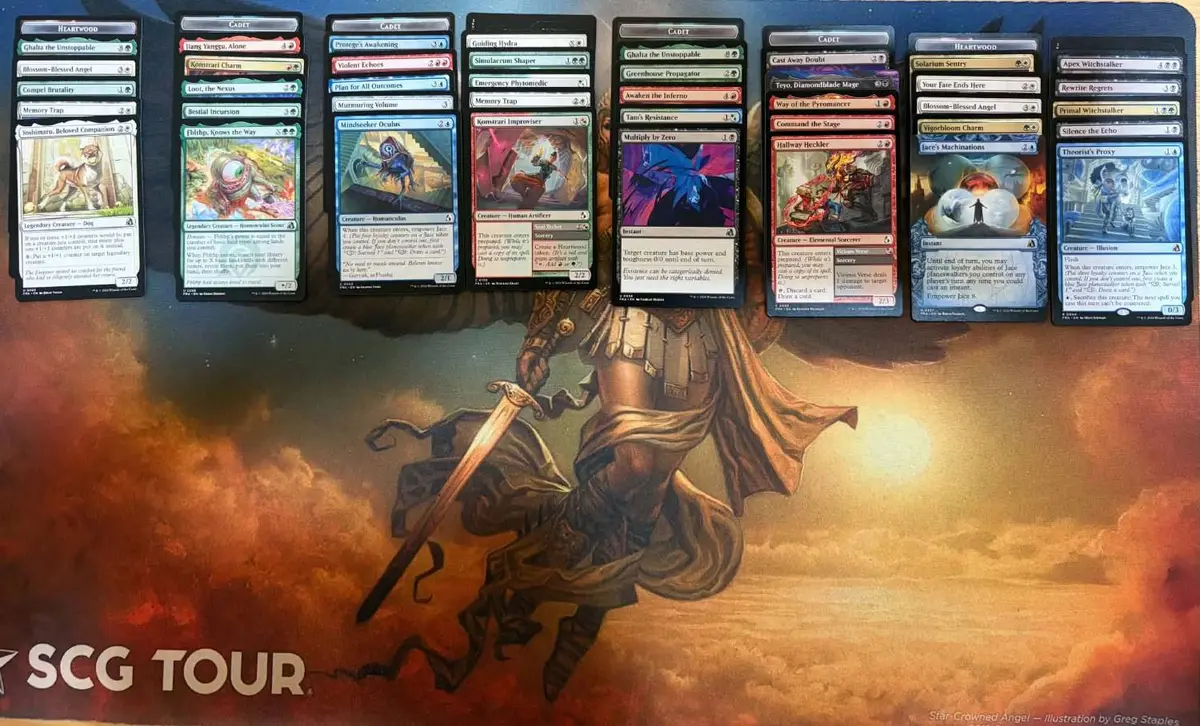
Nothing in particular to mention about this pick. But player 7 not taking Lyra, Tolarian Archangeland choosing Jace's Machinations instead was entirely my mistake. I was so eager to go white-blue splashing green that I did not even look carefully at what was in this pack.
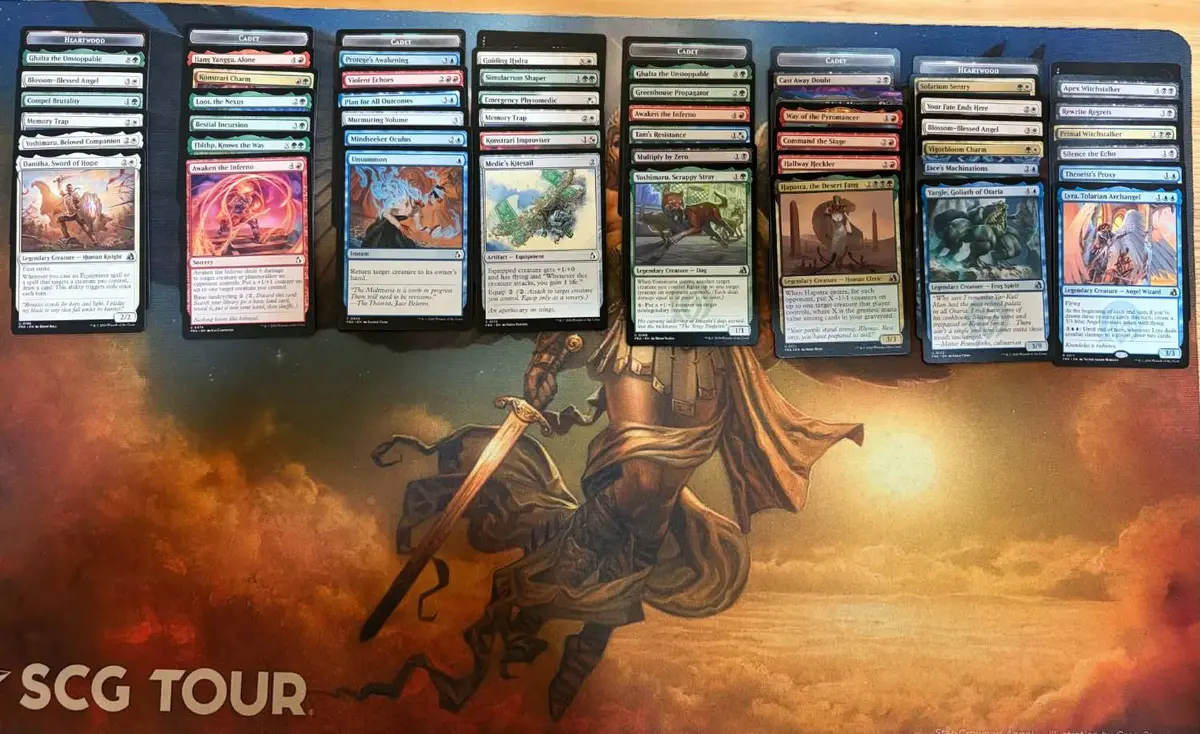
The previous pack’s mistake let player 8 end up with a Lyra, Tolarian Archangelthey should never have had. The Yoshimaru, Scrappy Stray player 5 got fits well with the abundant mana of mono-green.
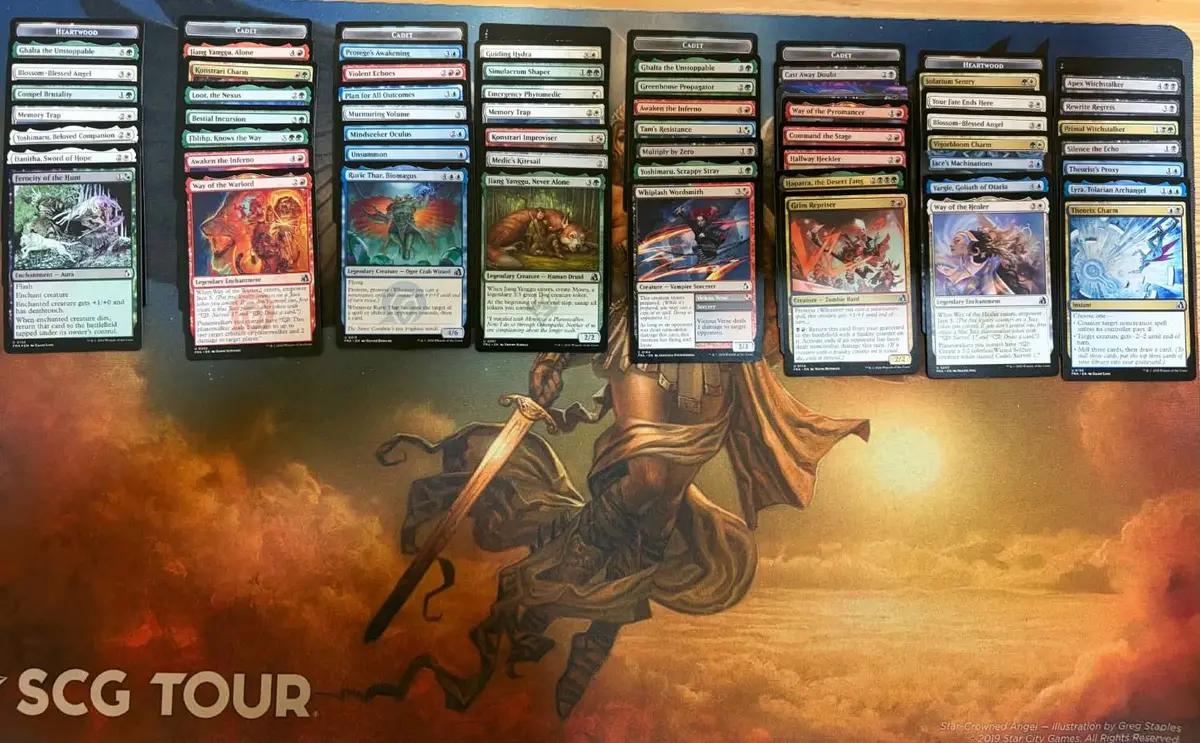
Player 1 picked up a Ferocity of the Hunt, which goes reasonably well with the Danitha, Sword of Hope taken last pick. Player 3 finally has a somewhat decent finisher in Ruric Thar, Biomagus
 . Players 7 and 8 picking up Way of the Healer
 and Theorix Charmrespectively was a real bargain.
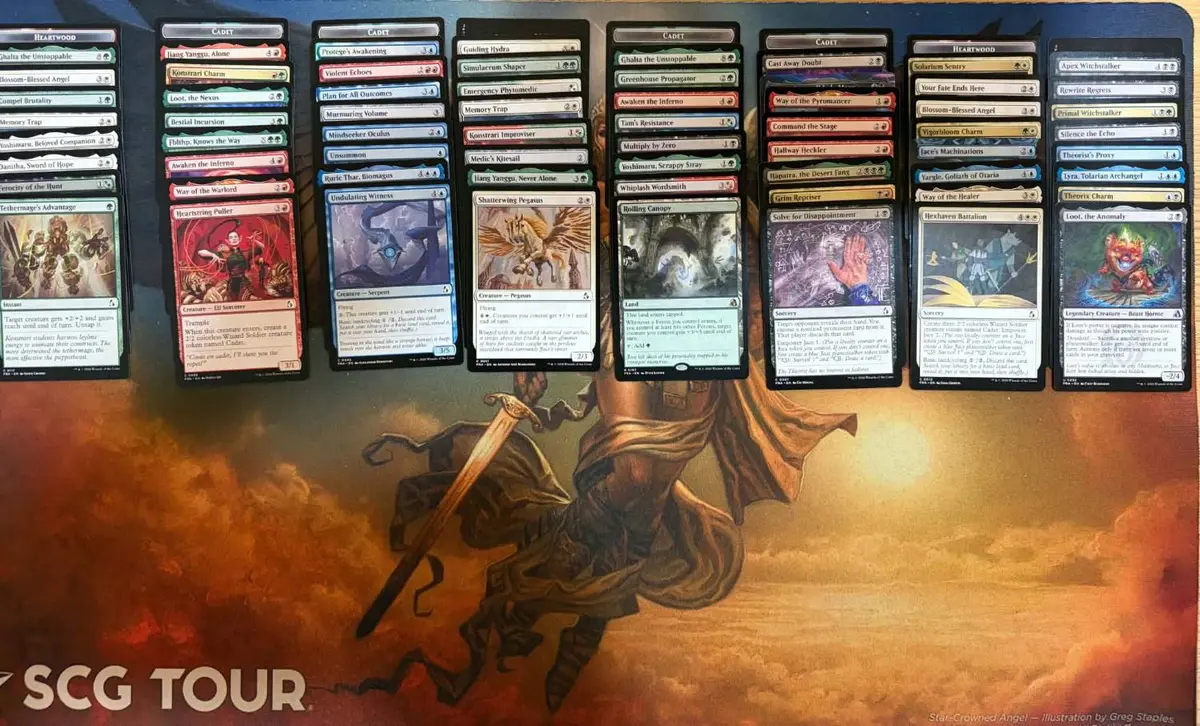
On this pick, player 5’s deck underwent a qualitative change! They picked up the best payoff card in mono-green, Roiling Canopy . Paired with Hexhaven Invigorator, there is a chance to find multiple Forests with other damage before combat damage is dealt, and burst out an astonishing size bonus! Player 8 got Loot, the Anomaly
 , who will be a deadly hitter in their blue-black self-mill game plan!
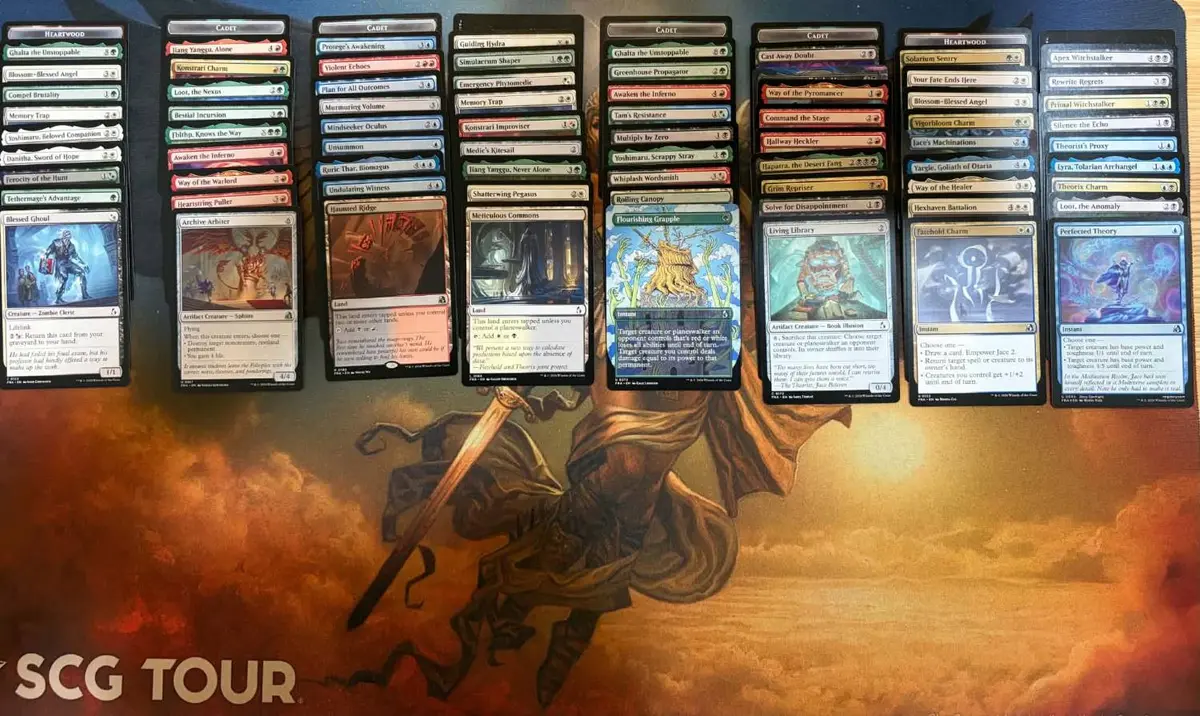
The Archive Arbiter that player 2 took happens to patch up the deck’s weak anti-air. Player 7 also picked Fatehold Charmback up.
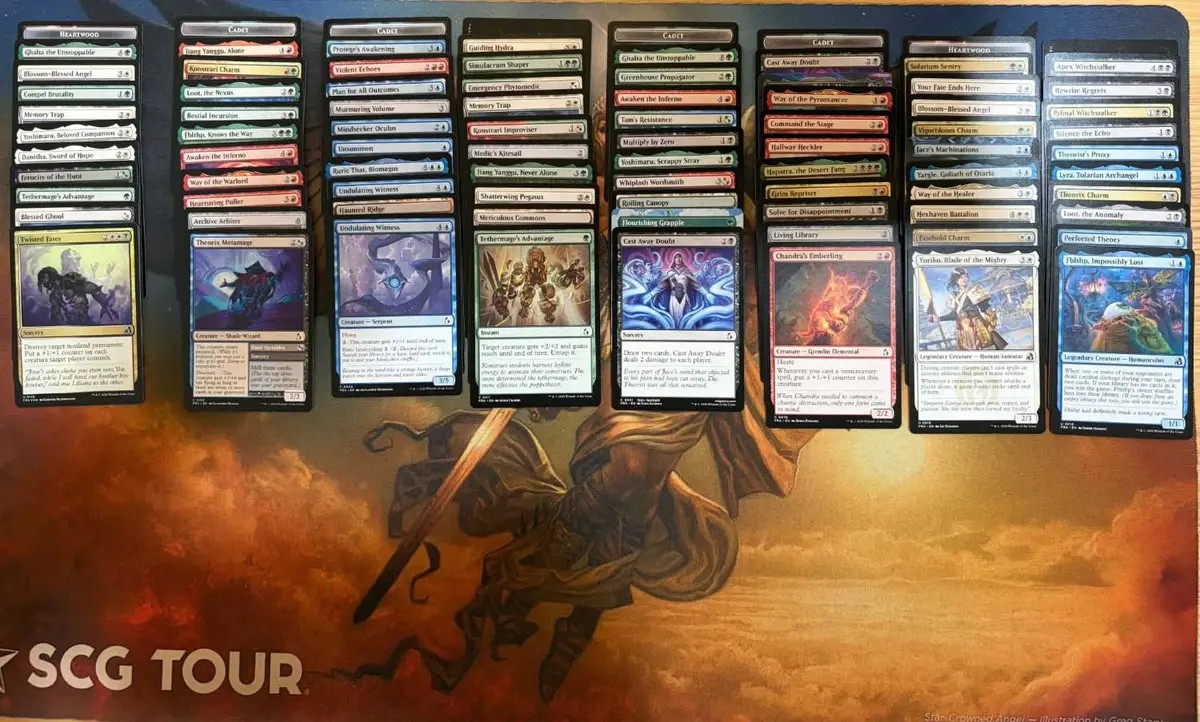
With Twisted Fates , player 1 has basically locked in the white-green splash black route. Player 7 gained Yuriko, Blade of the Mighty
 from this pack. Player 8 got Fblthp, Impossibly Lost
 , which expands the deck with a third winning axis: draw out the library with Fblthp, Impossibly Lost‘s ability before milling themselves out. By now, player 8’s blue-black is no longer just a plain graveyard midrange deck, but a modular midrange deck that accumulates resources through self-mill while bolting on an extra win condition.
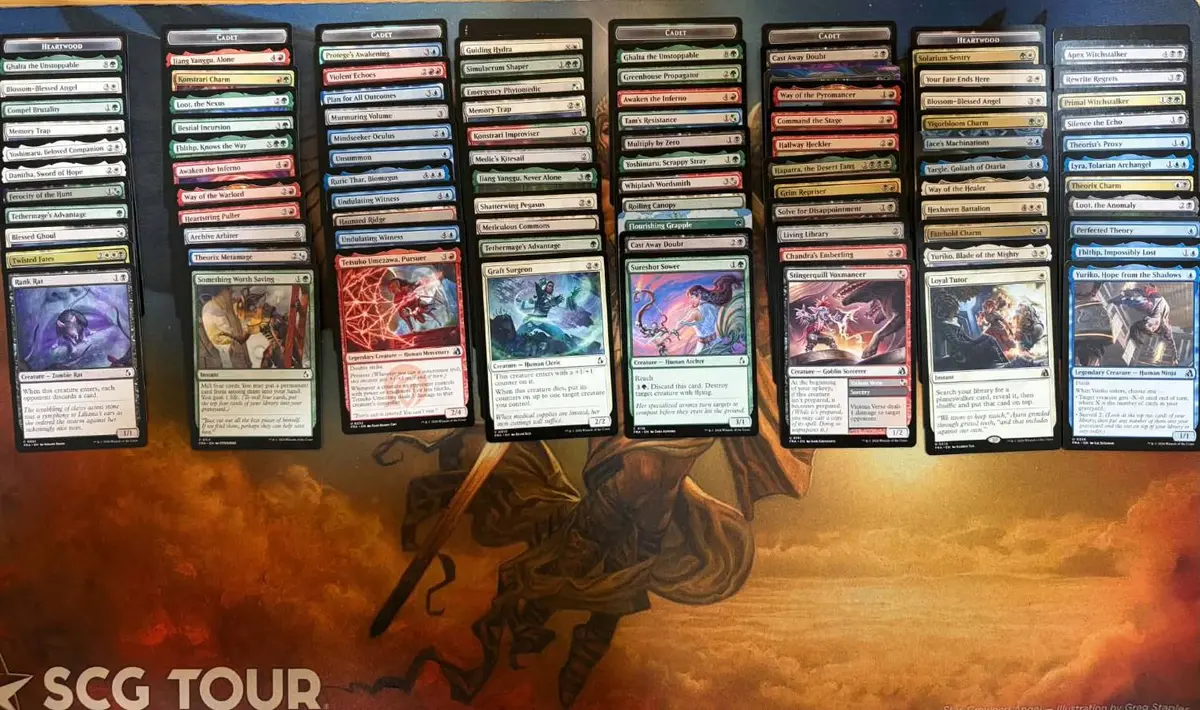
Player 6’s gamble paid off! Stingerquill Voxmancer // Vicious Versewheeled indeed, though even if it hadn’t, the deck was already quite complete. Player 8 picked up Yuriko, Hope from the Shadows, leaving only one last puzzle piece for the plan of winning with Loot: Tetsuko Umezawa, Fugitive .
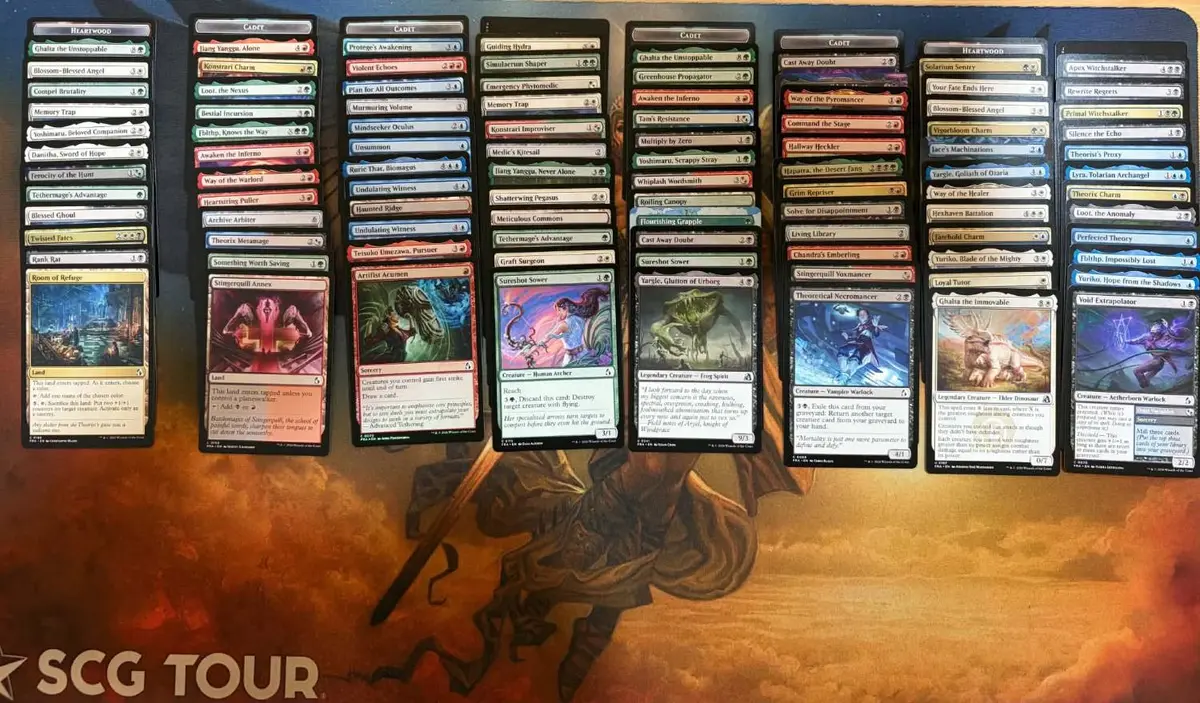
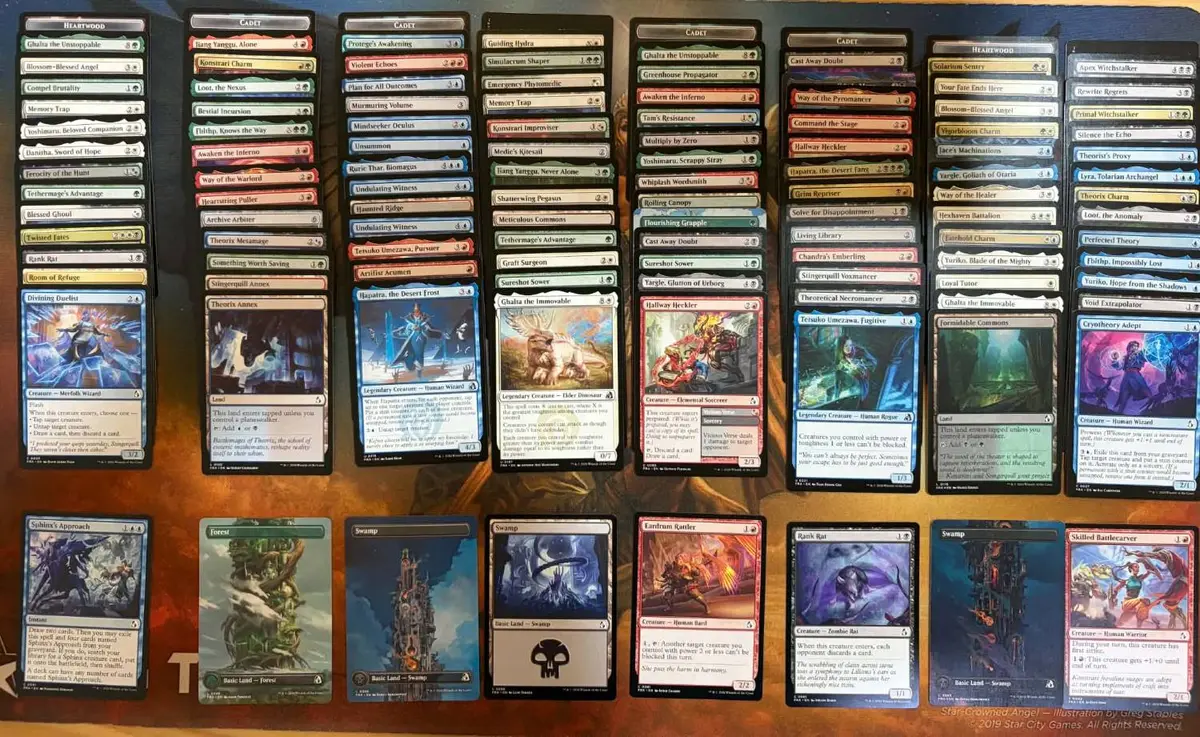
These last three picks are basically garbage time in the draft, with no particularly key cards.
Pack 3: First pick (pick 29)
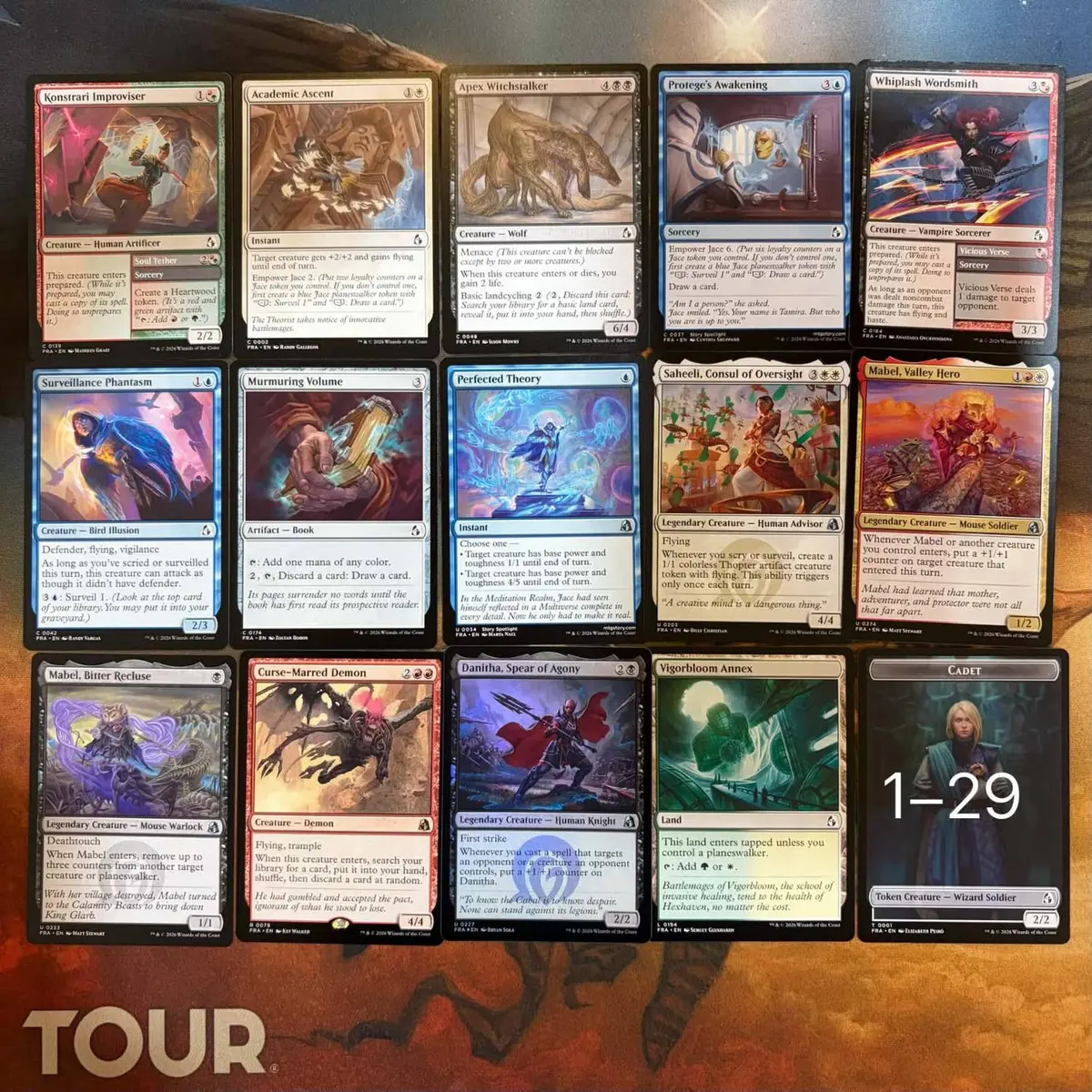
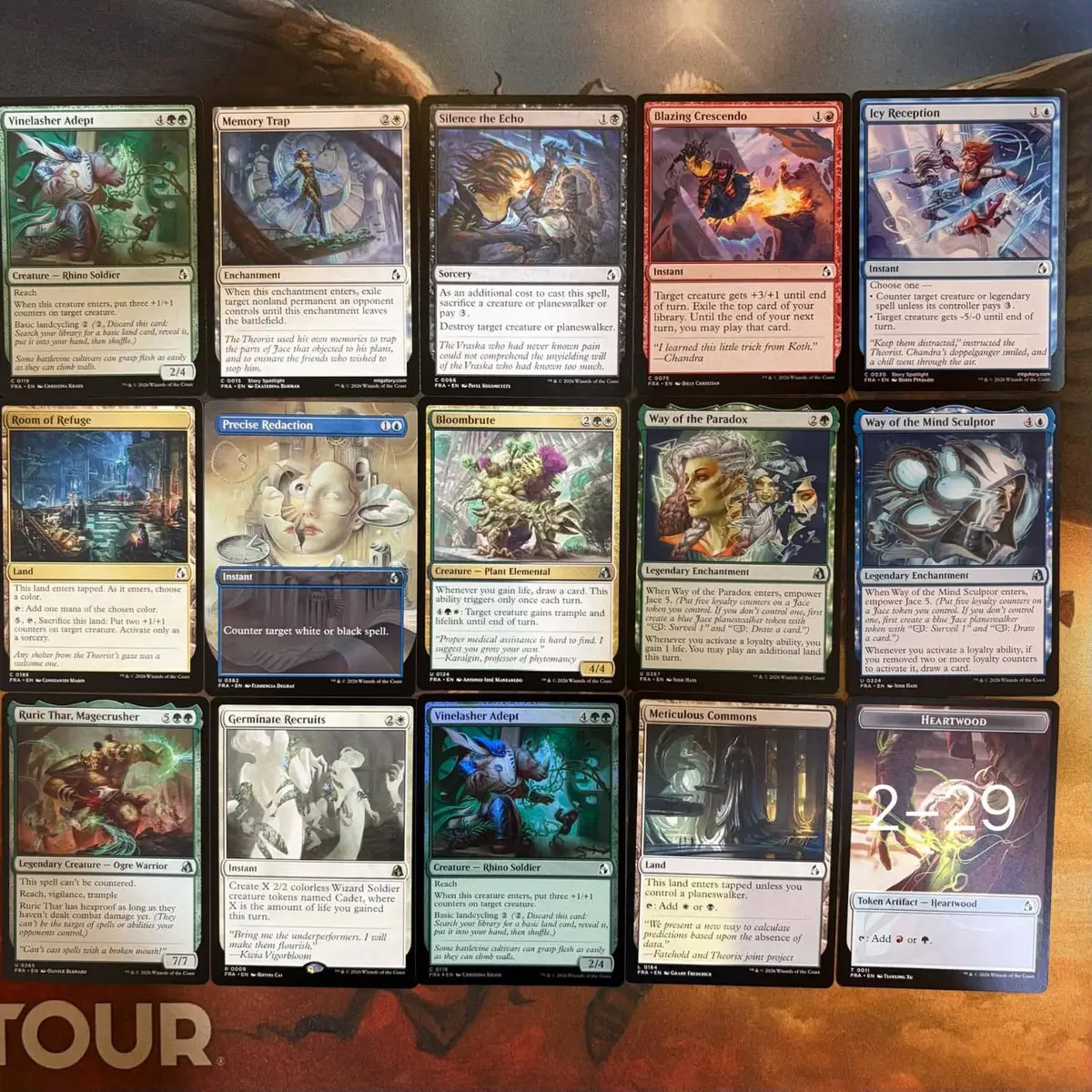
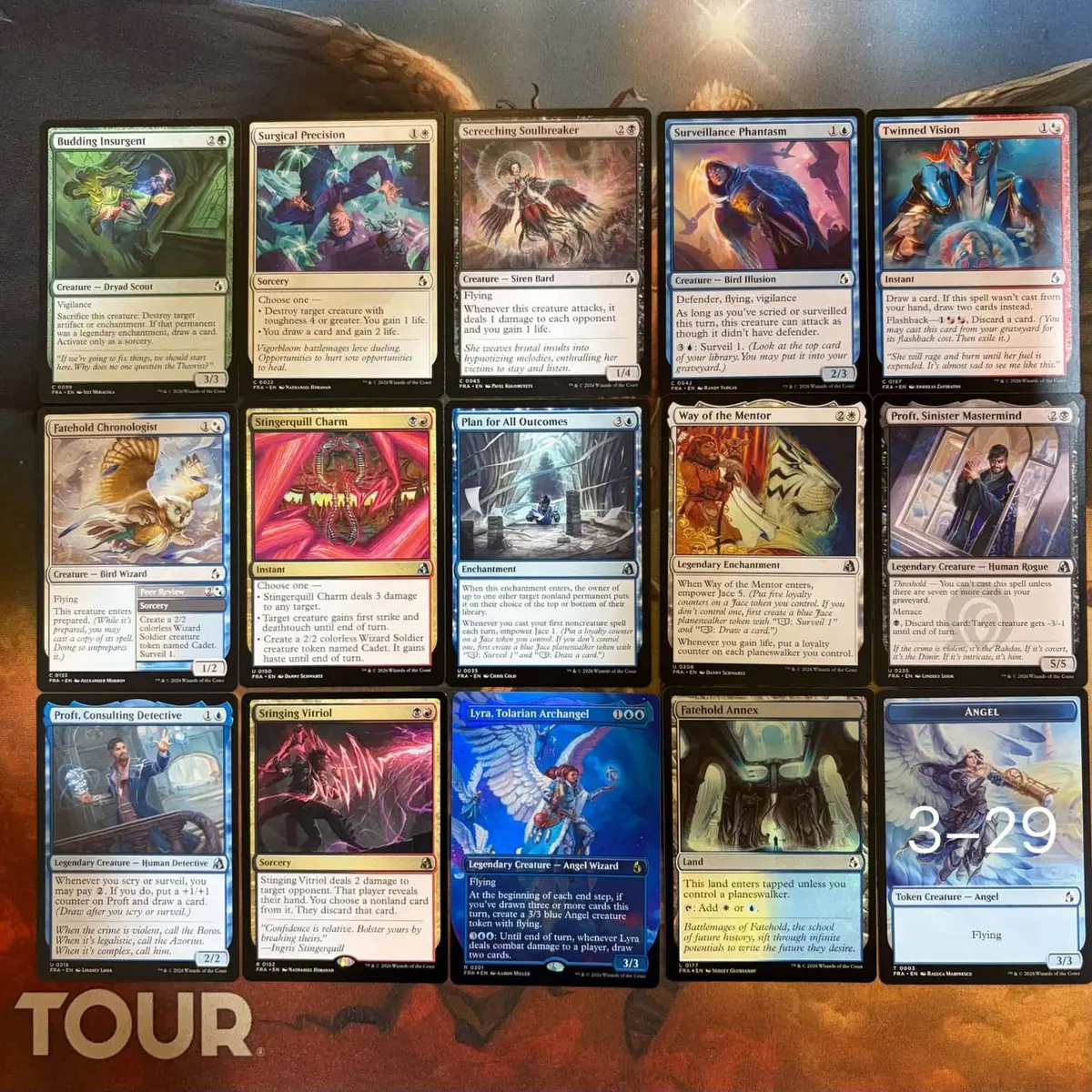
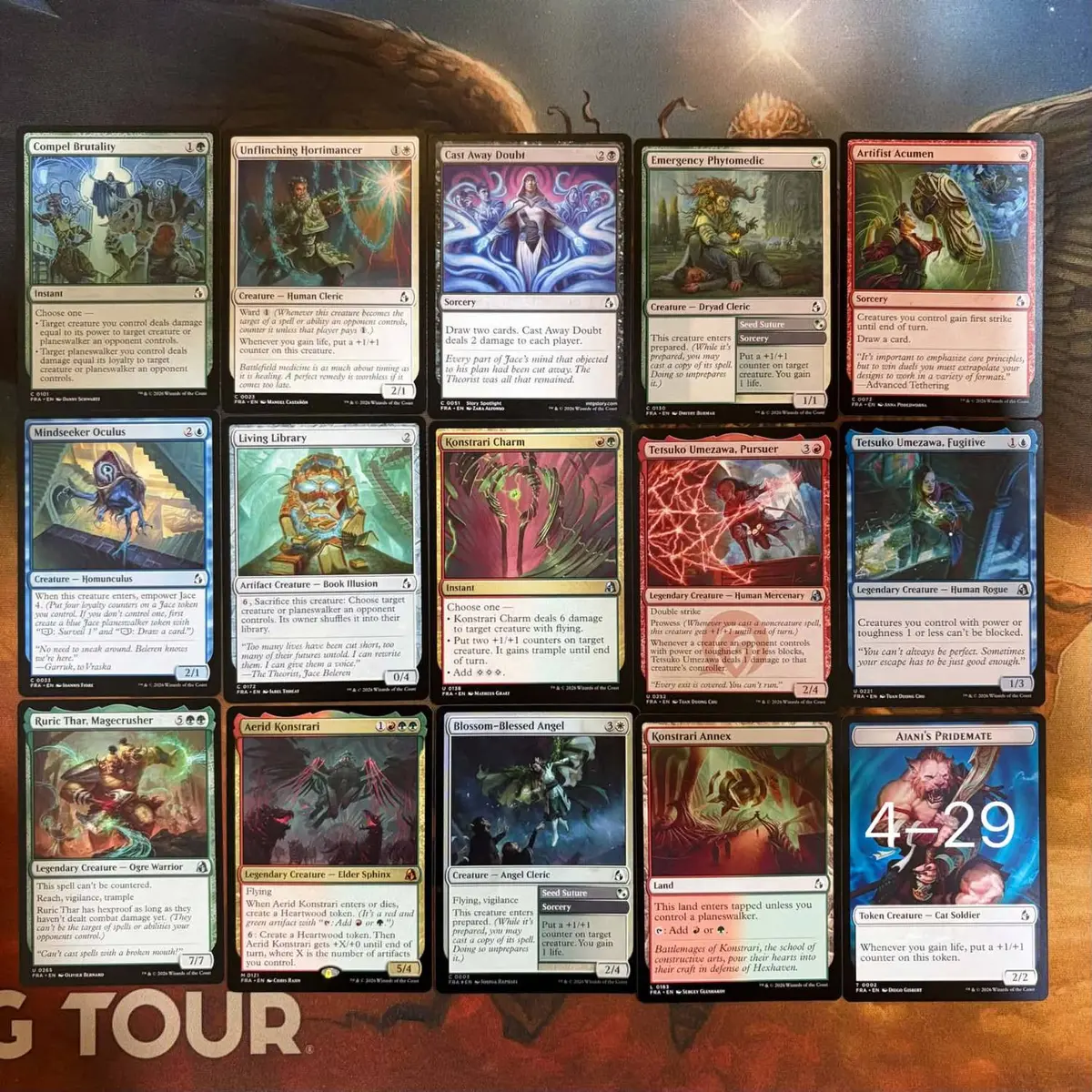
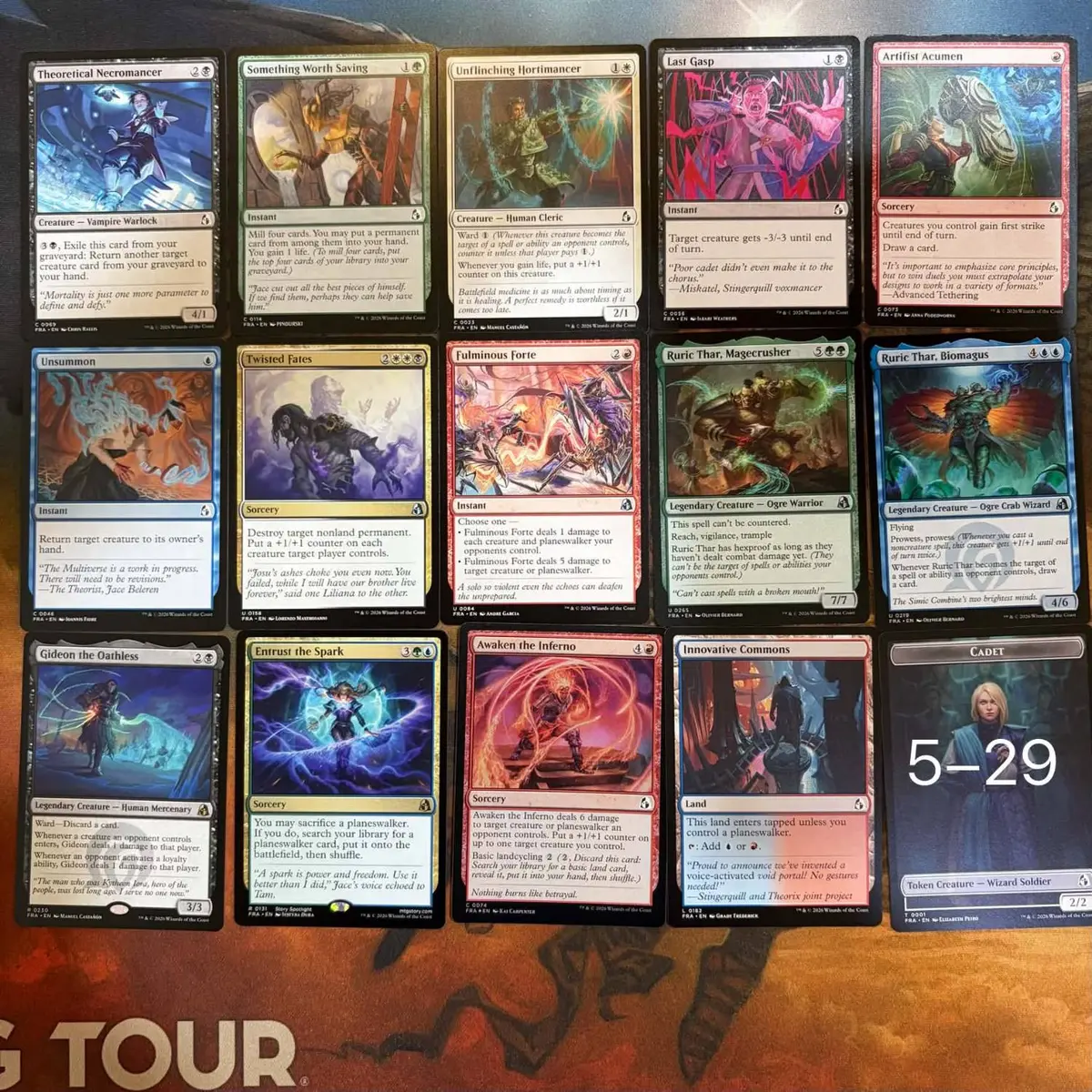
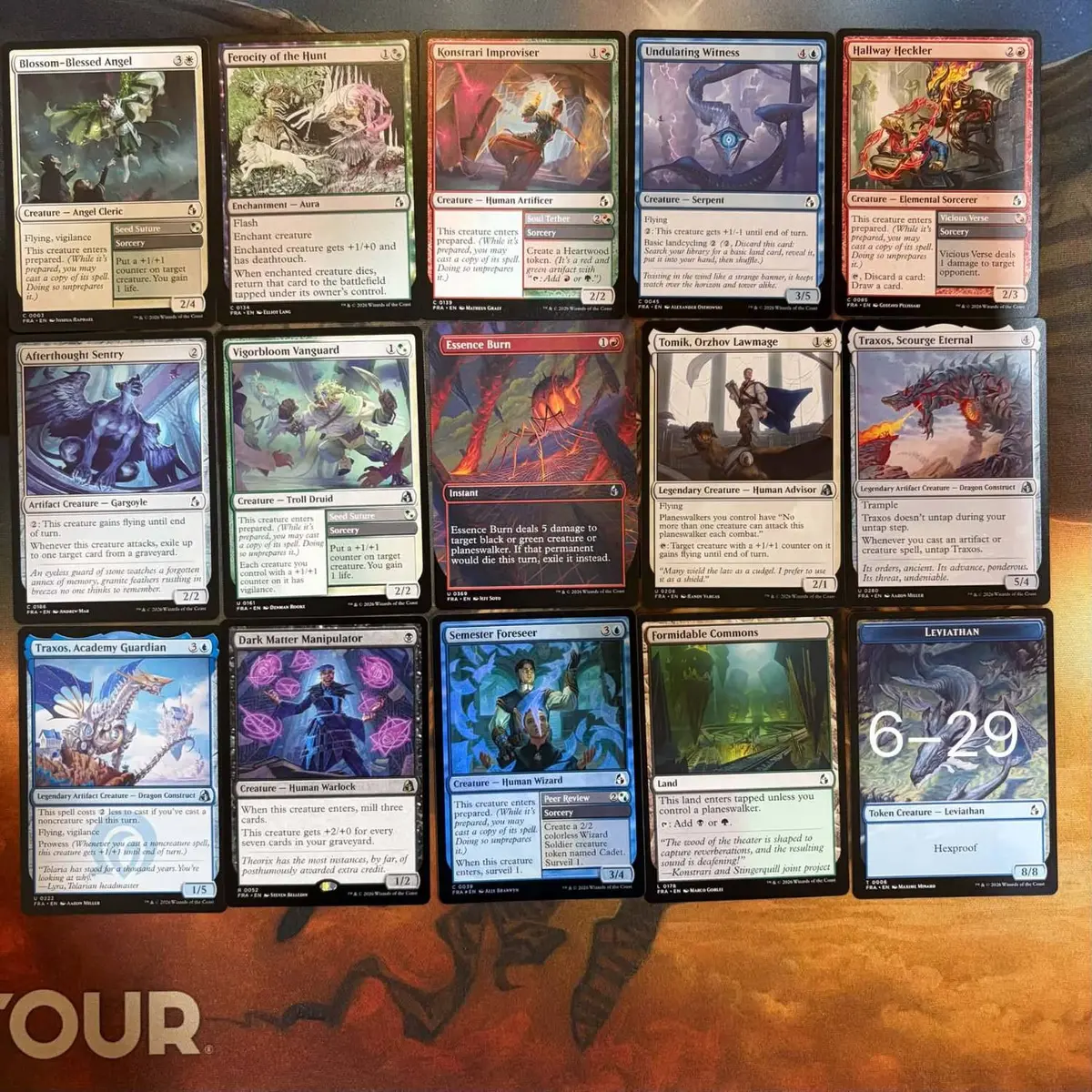
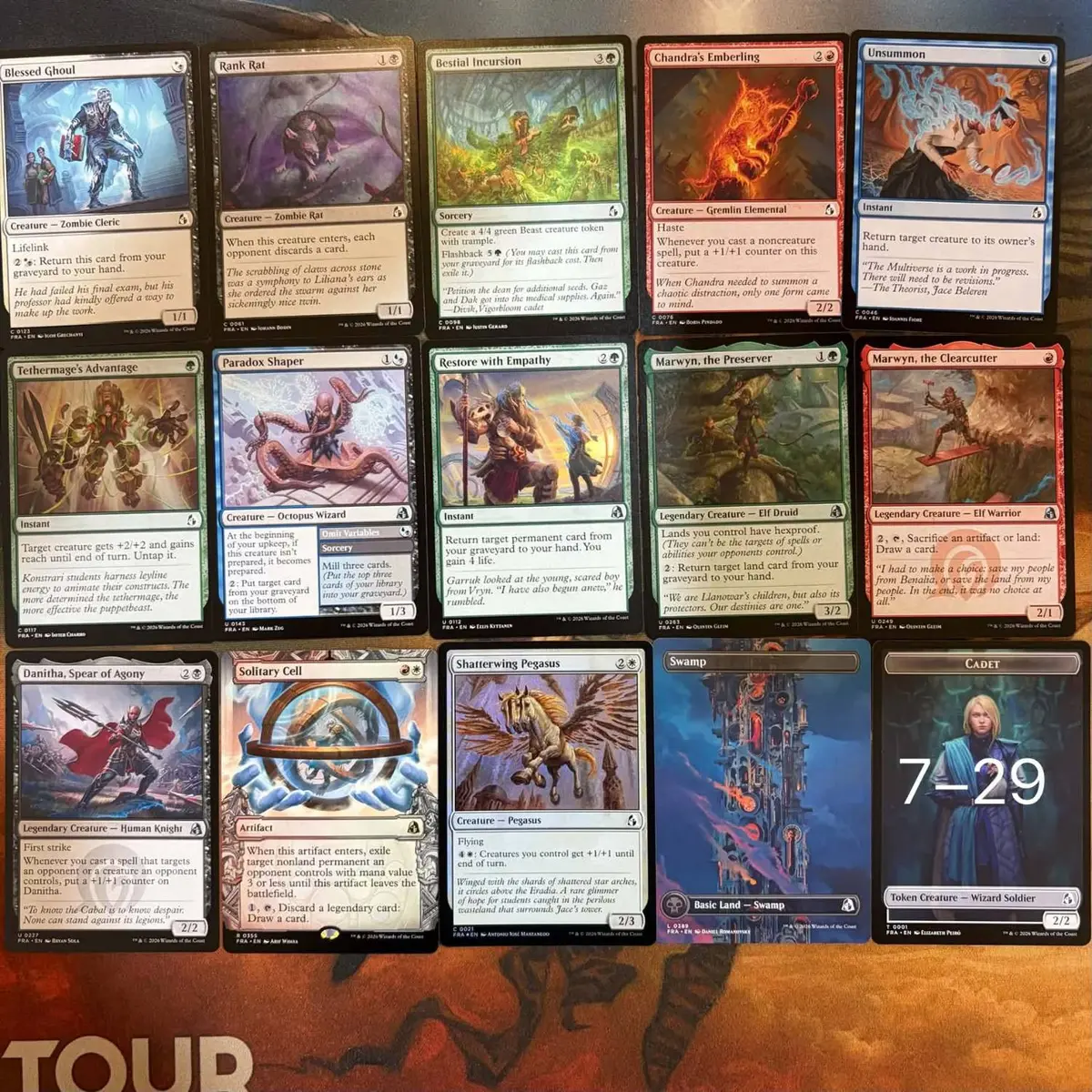
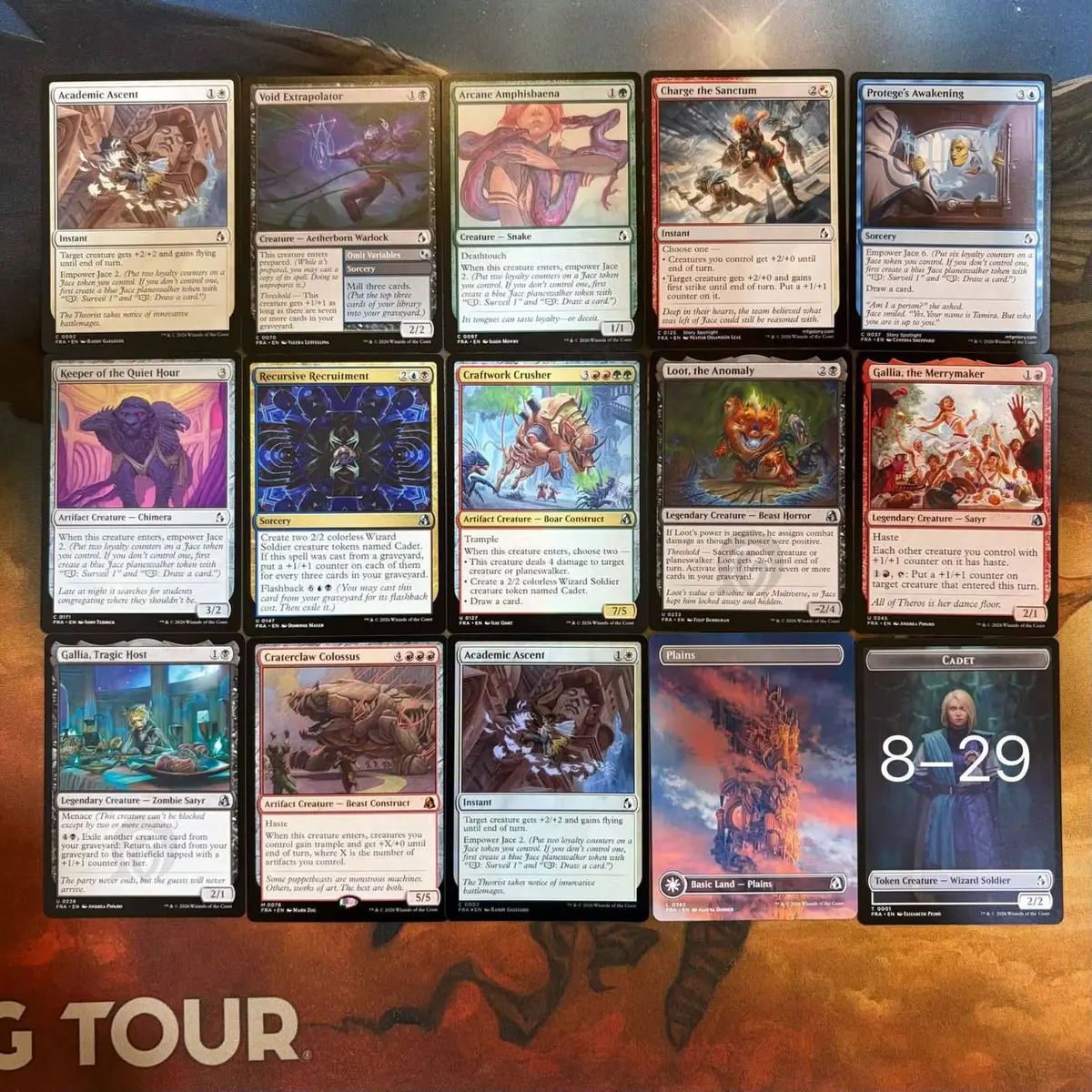
Pack 3: The picks
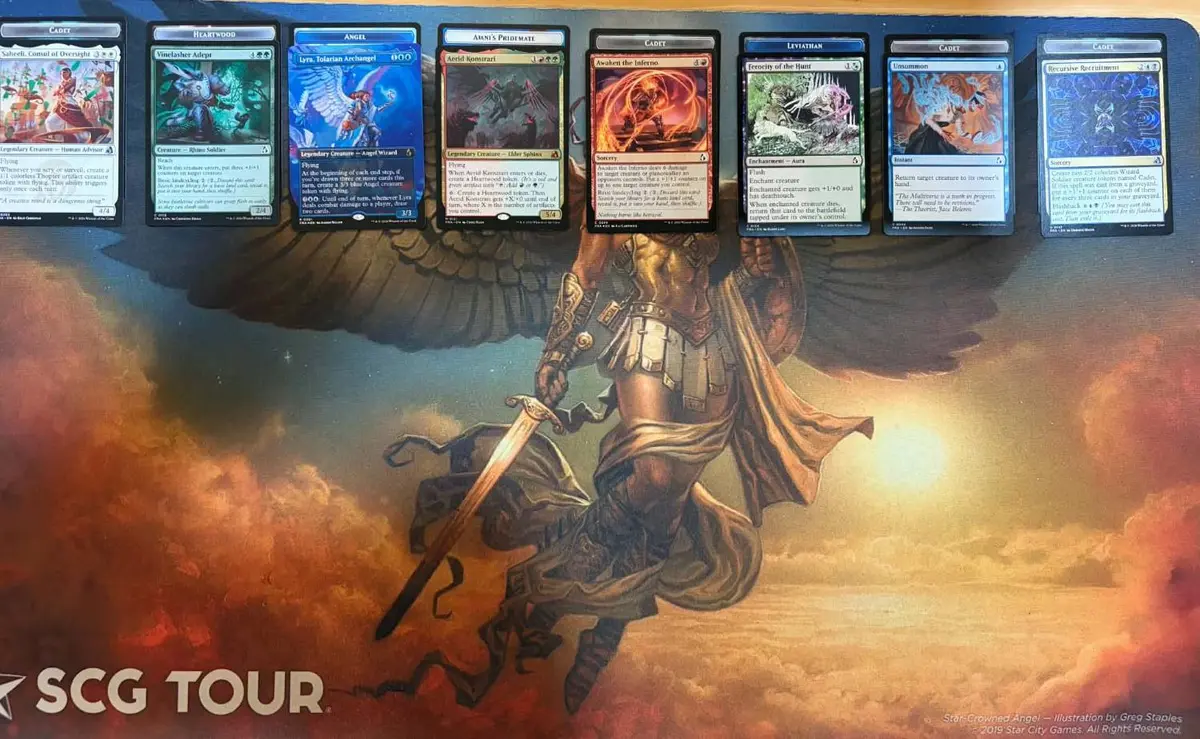
- Instead of the less synergistic Saheeli, Consul of Oversight, player 1 would do better to take the black basic landcycler Apex Witchstalker, which makes the splash more stable.
- Although there were two in the same pack, player 2 still took the green basic landcycler Vinelasher Adept
 as an important base for splashing white.
- Player 3 opened the much-needed Lyra, Tolarian Archangelthemselves.
- Player 4 could have directly taken the best thematic two-drop, Unflinching Hortimancer
 , but after some deliberation still chose to hold the bomb red-green Sphinx Aerid Konstrari
 . Paired with cards like Konstrari Improviser // Soul Tether
 that can make Heartwood tokens, there is a real chance to get it onto the battlefield.
- Player 5 directly took the red basic landcycler Awaken the Inferno, which is also quite reliable as removal.
- Player 6 did not have many good cards to take and the deck is strong enough already, so took a second trick, Ferocity of the Hunt.
- Player 7 also had little to take and took Unsummon
 .
- Player 8 decided to let the other unusable bombs go and took Recursive Recruitment
 to strengthen the board in the mid-to-long game. Player 8 does not take a second Loot, the Anomalyfirst, because the components are not yet assembled, and also because it is not as strong as the other copy.
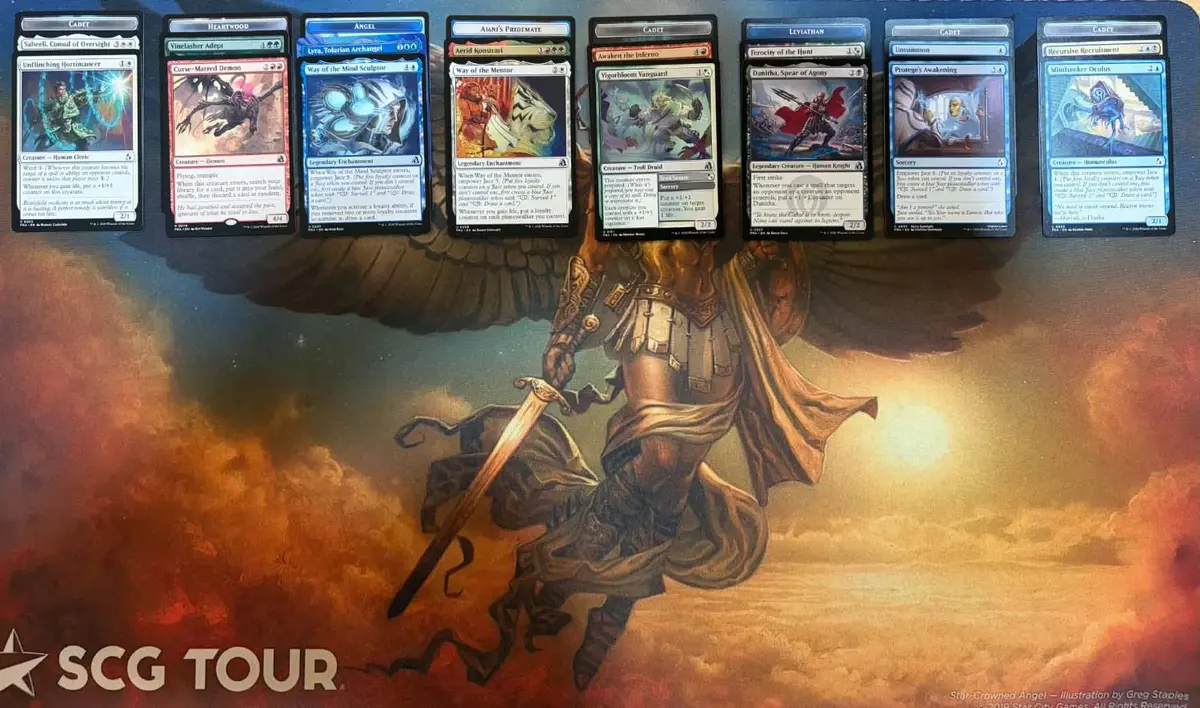
Player 1 finally has a decent two-drop, Unflinching Hortimancer, so grabs it quickly. Player 2 was passed Curse-Marred Demon and is super happy! Player 3 taking Way of the Mind Sculptor
 here is not impossible, but the deck’s curve is truly terrible, and Icy Receptionshould have been prioritized. Player 5 picking up Vigorbloom Vanguard // Seed Suture
 is a great deal. Player 6 keeps holding cards back. Danitha, Spear of Agony
 is not unplayable, but this red-black deck’s three-drop curve is too good to leave room for it. Player 7 takes Protege's Awakeningfor card advantage plus surveil. Player 8 fell into a long think between Mindseeker Oculusand Tetsuko Umezawa, Fugitive: the former has the higher payoff, while the latter is the last puzzle piece to pair with Loot, the Anomaly. In the end, payoff came first, and the former was chosen.
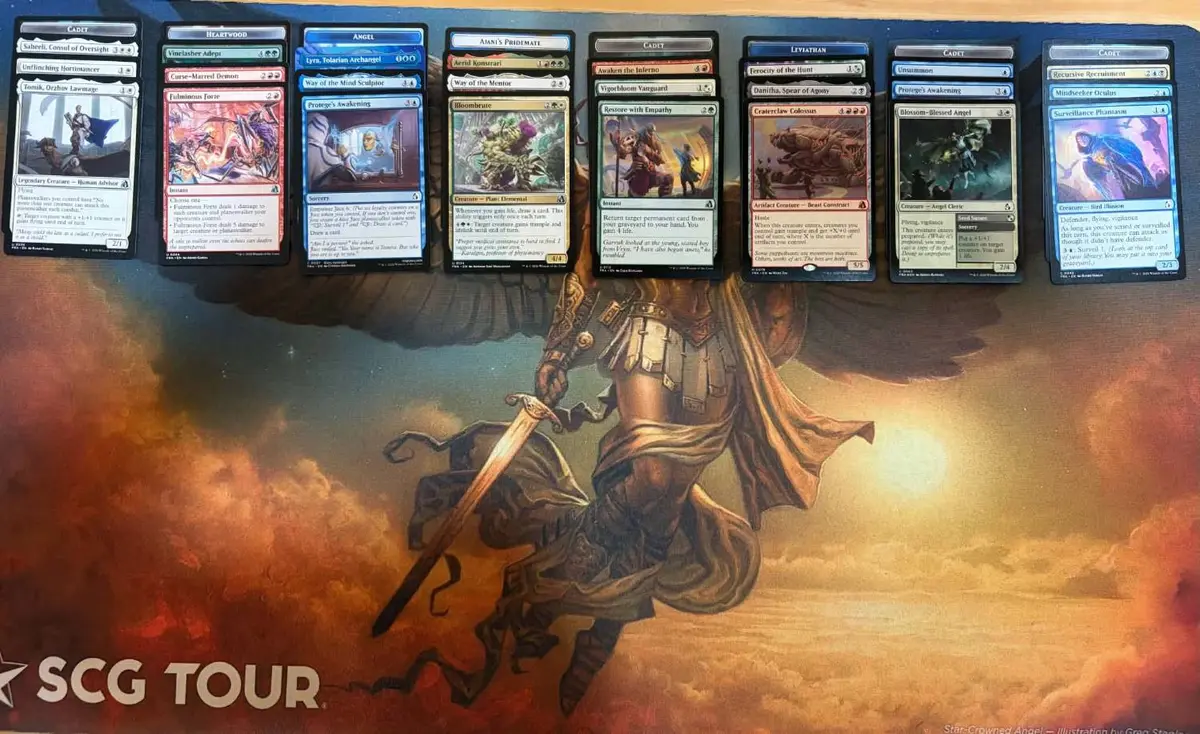
Player 1 has to take a two-drop for the curve now, and takes Tomik, Orzhov Lawmage . Player 3 leaving Surveillance Phantasmon the table was probably due to fatigue late in the draft. Player 4 gained the important white-green gold card-advantage creature Bloombrute
 , and the R card they let go, Germinate Recruits
 , quite likely wheels. Player 5 took the important graveyard recursion piece Restore with Empathy
 , one more way to rebuy key cards. Player 6 keeps holding cards back; if not holding back, Gallia, Tragic Host
 could also be taken. Player 8 took the solid two-mana defensive line Surveillance Phantasm.
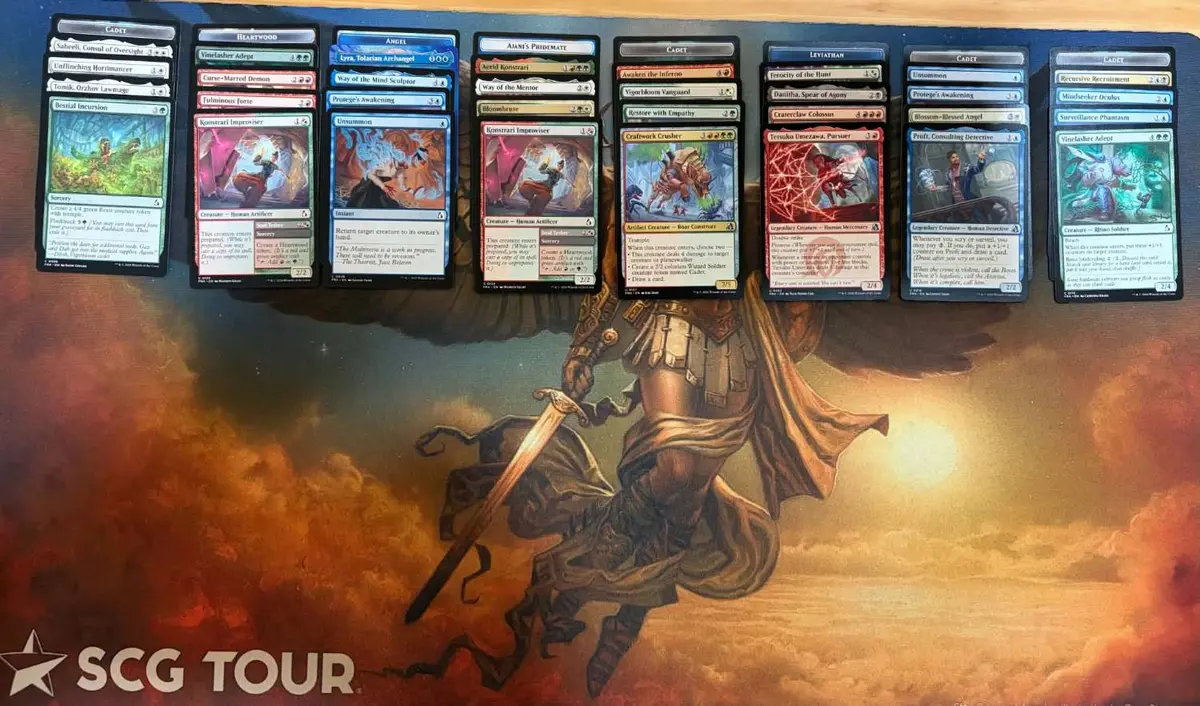
Player 1 taking Bestial Incursion here to fill in creature slots is not so suitable. They should keep taking one- and two-drops, such as Blessed Ghoul
 or Marwyn, the Preserver
 . Player 2 took Konstrari Improviser // Soul Tetherto fill the two-drop slot, but Afterthought Sentryfits this deck better, so it was probably overlooked. Player 5 gained the best red-green uncommon, Craftwork Crusher
 . Player 6 found a third Cast Away Doubtin this pack, felt that was too many, and took the four-drop curve card Tetsuko Umezawa, Pursuer
 instead. Player 7 got the key blue-white surveil payoff creature Proft, Consulting Detective
 , while player 8 kept taking the green basic landcycler Vinelasher Adept.
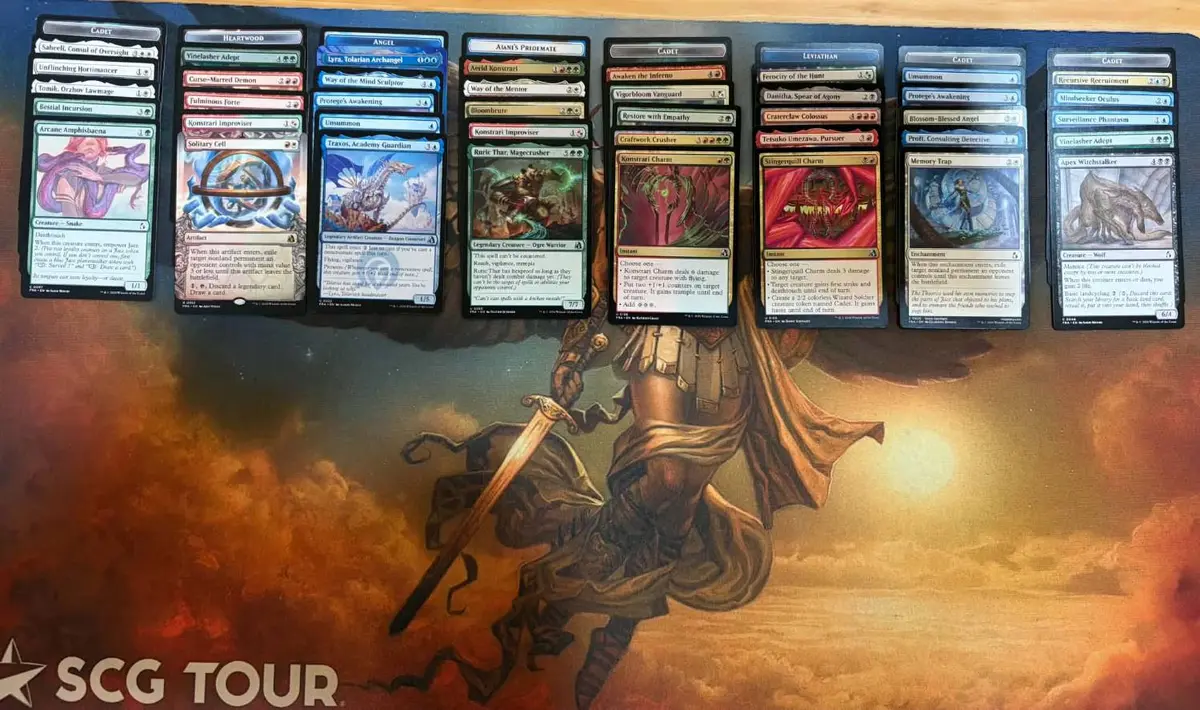
Player 2 got the important artifact removal Solitary Cell . Player 3 chose the bigger-bodied Traxos, Academy Guardian
 , though to pair with a red-blue non-creature theme, Semester Foreseer // Peer Review
 would have been better. Player 4 again has nothing to take here, so takes Ruric Thar, Magecrusher
 to see if it can be of use. Player 5 also had Ruric Thar, Magecrusheravailable, but the deck is no longer short on big creatures, and Konstrari Charmis the more flexible choice. However, not noticing Compel Brutalitywas a bit of a pity. Player 6 saw two guild-specific cards, a second Stingerquill Charmand Stinging Vitriol, and is overjoyed! Took the Charm first since it can fill the two-drop slot, and the other will surely wheel. Player 8 keeps taking a second black basic landcycler, whose six-mana main mode is also quite solid.
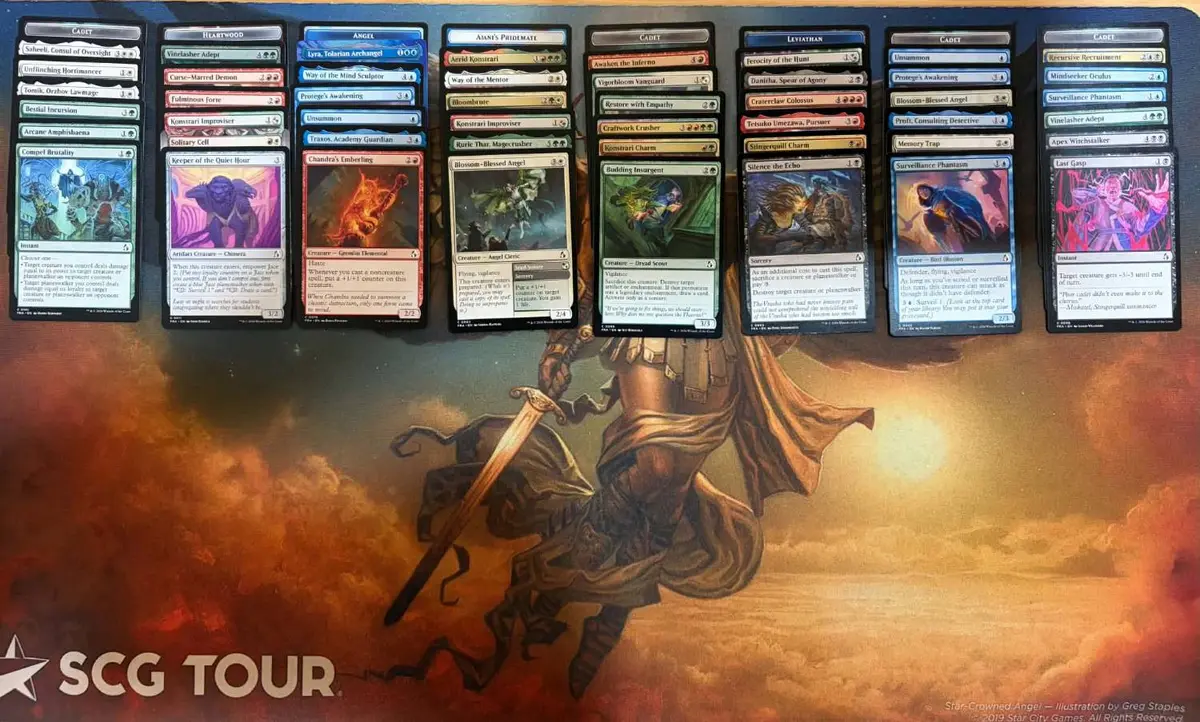
If player 2 had noticed the Mabel, Valley Hero passed at pick 2, they should have taken Gallia, the Merrymaker
 to pair with it, but taking Keeper of the Quiet Hourto fill the curve and theme is not bad either. Instead of Chandra's Emberling
 , player 3 would do better to grab Paradox Shaper // Omit Variables
 , since the early curve is just too empty.
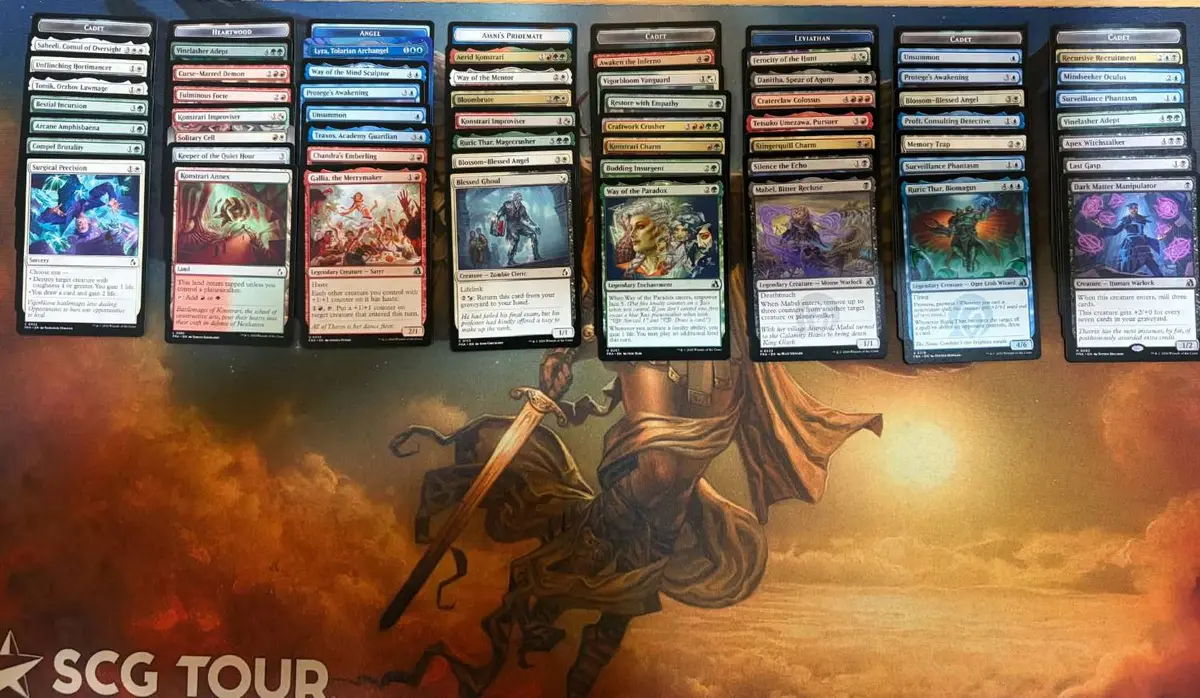
Player 6 took the not-very-synergistic Mabel, Bitter Recluse; Whiplash Wordsmith // Vicious Verse would have been better here, since in this deck it has a good chance of flying over to attack. Deck 8 getting Dark Matter Manipulator
 is like adding wings to a tiger.
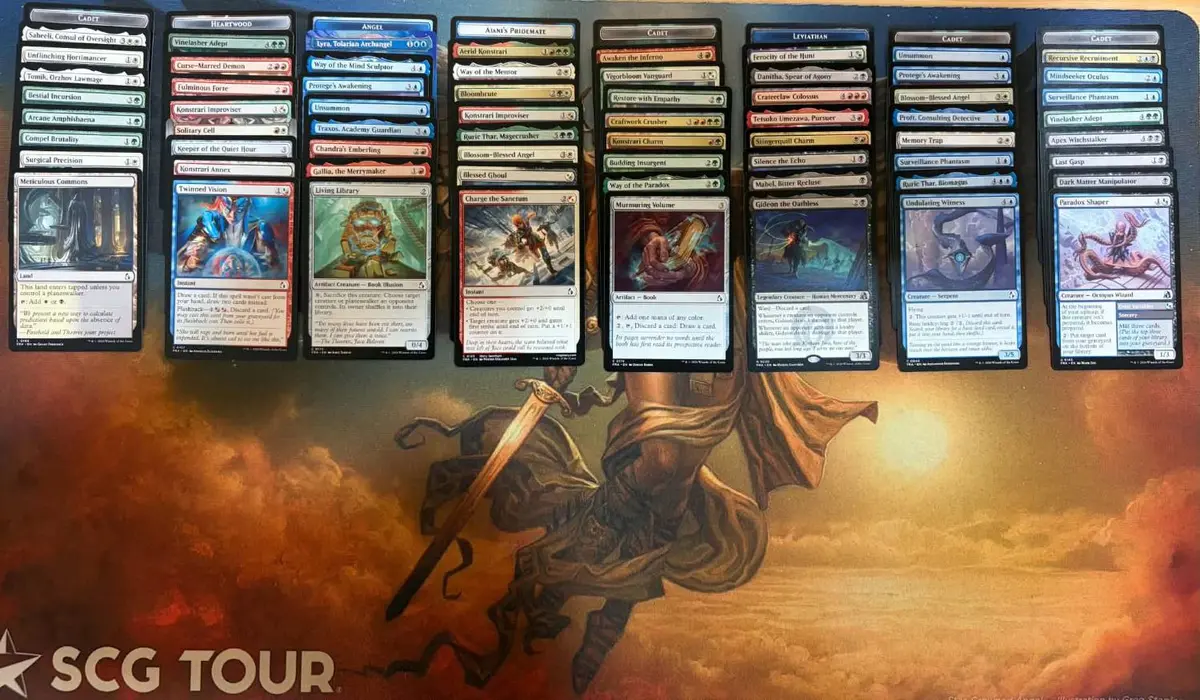
On this pick, where nobody has anything good, player 6 can still take Gideon the Oathless , which nobody else needs. With only one player in red-black, they are being fed to the point of bursting.
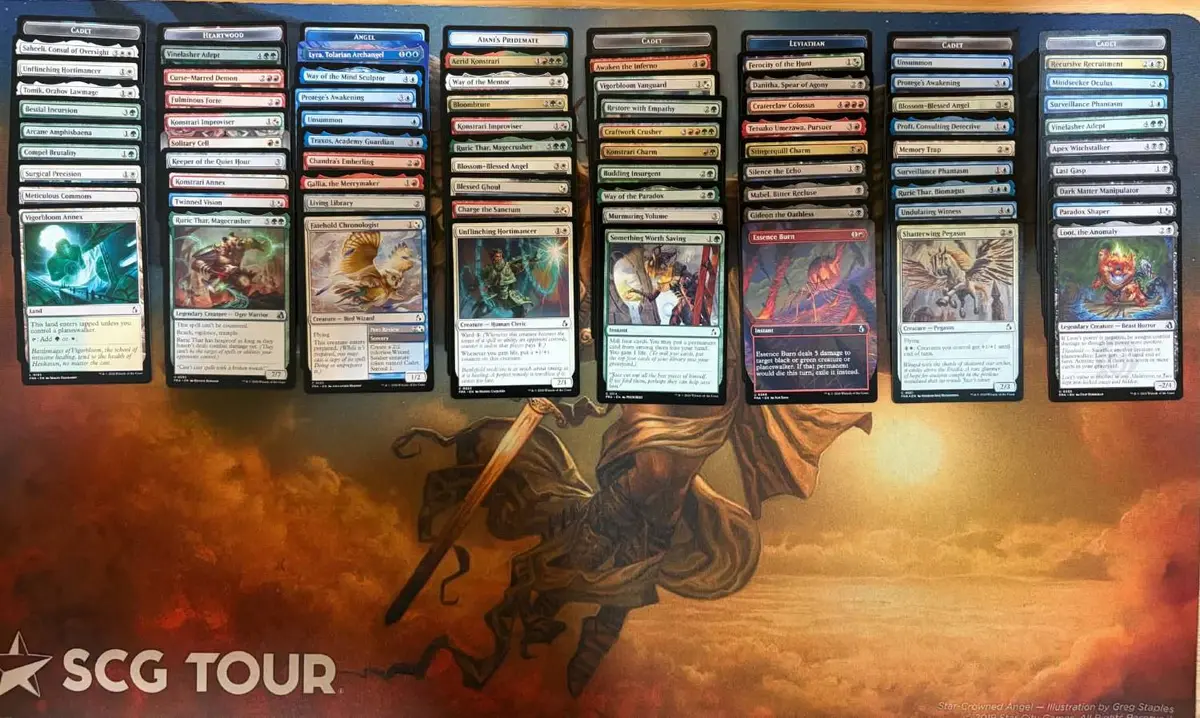
After a trip around the table, player 4 also picked up their own Unflinching Hortimancer. Player 8 also got a second Loot, the Anomaly, and now it depends on whether Tetsuko Umezawa, Fugitivewheels.
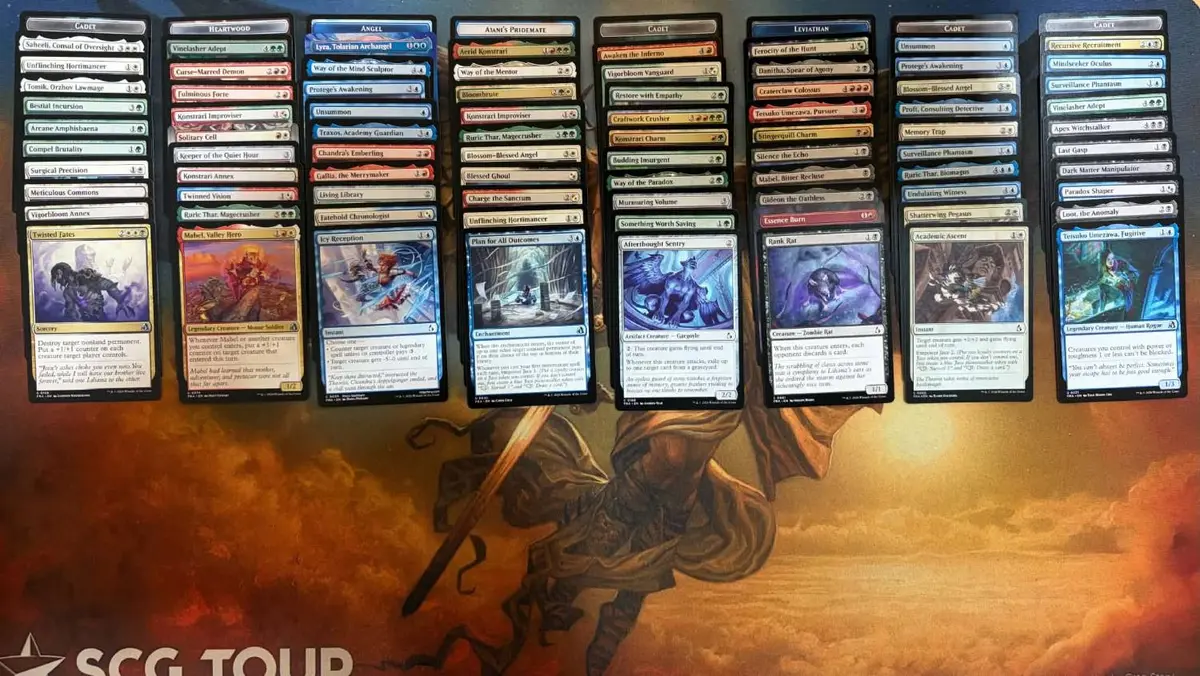
Player 1 picks up a second Twisted Fates. Player 2 takes the wheeled Mabel, Valley Hero. Player 8 gets Tetsuko Umezawa, Fugitiveas hoped, and the plan of killing the opponent with an unblockable Loot is now complete!
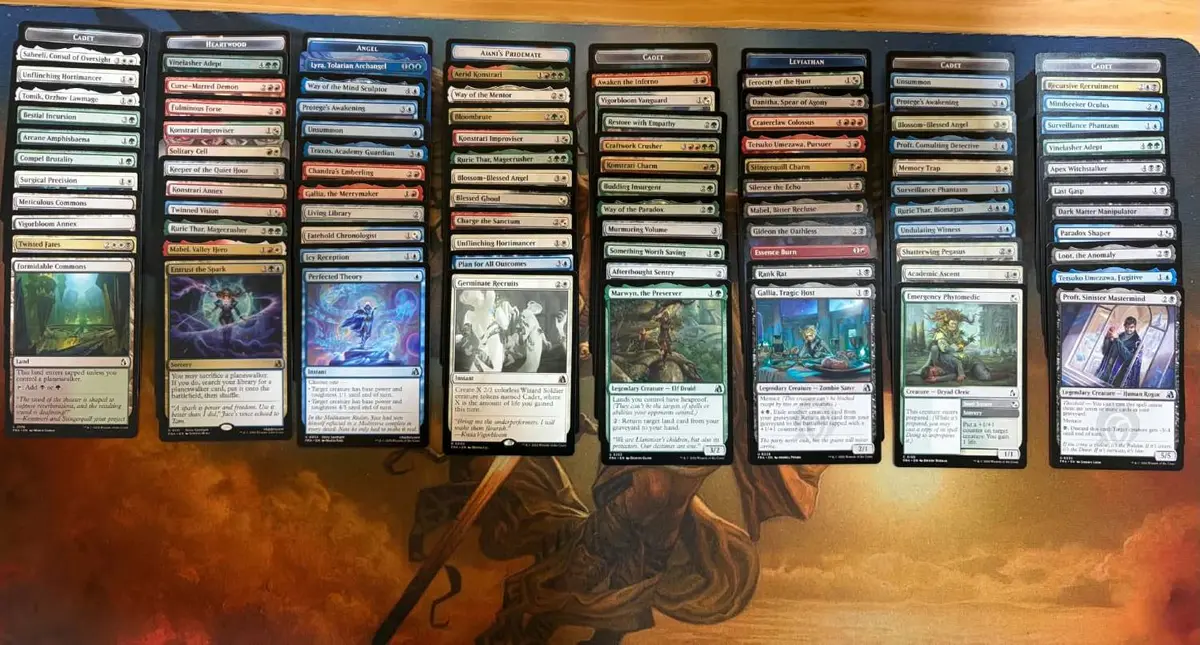
Player 4 takes back the lifegain-themed R card Germinate Recruits. The Marwyn, the Preserverthat player 5 got has a small synergy with Murmuring Volume, allowing loot-style discard-and-draw in the late game once lands explode out. Player 8 still has Proft, Sinister Mastermind to take at this point; only two players in black is a happy thing.
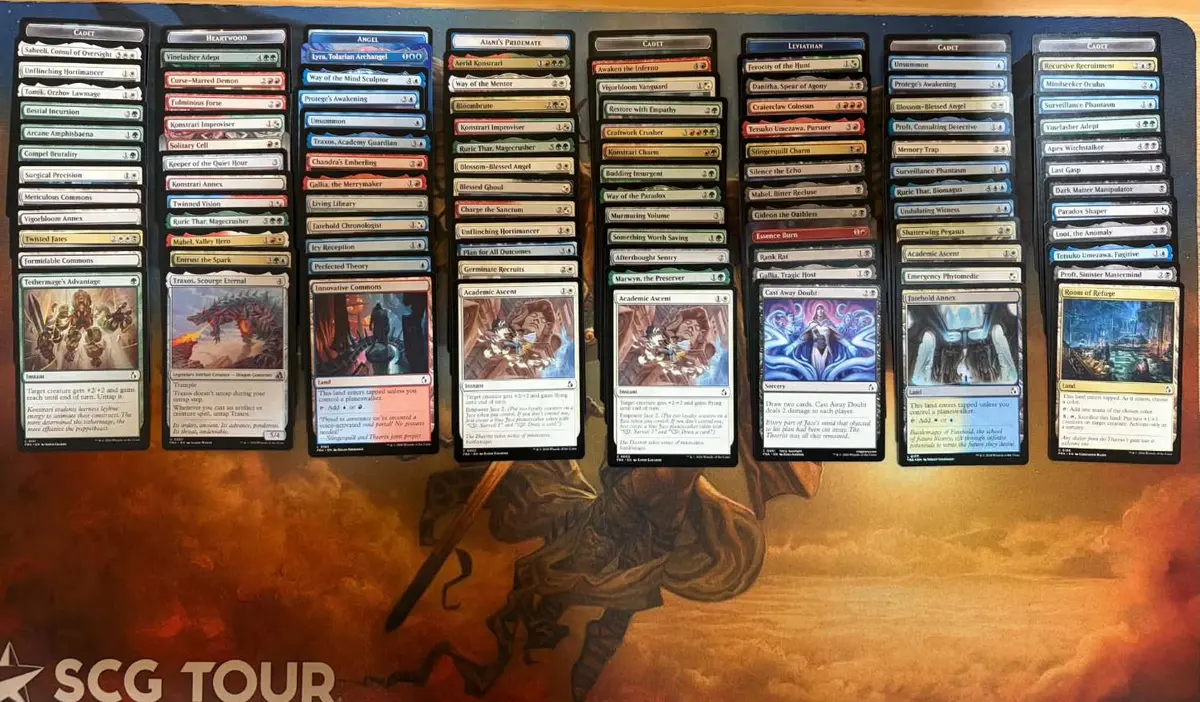
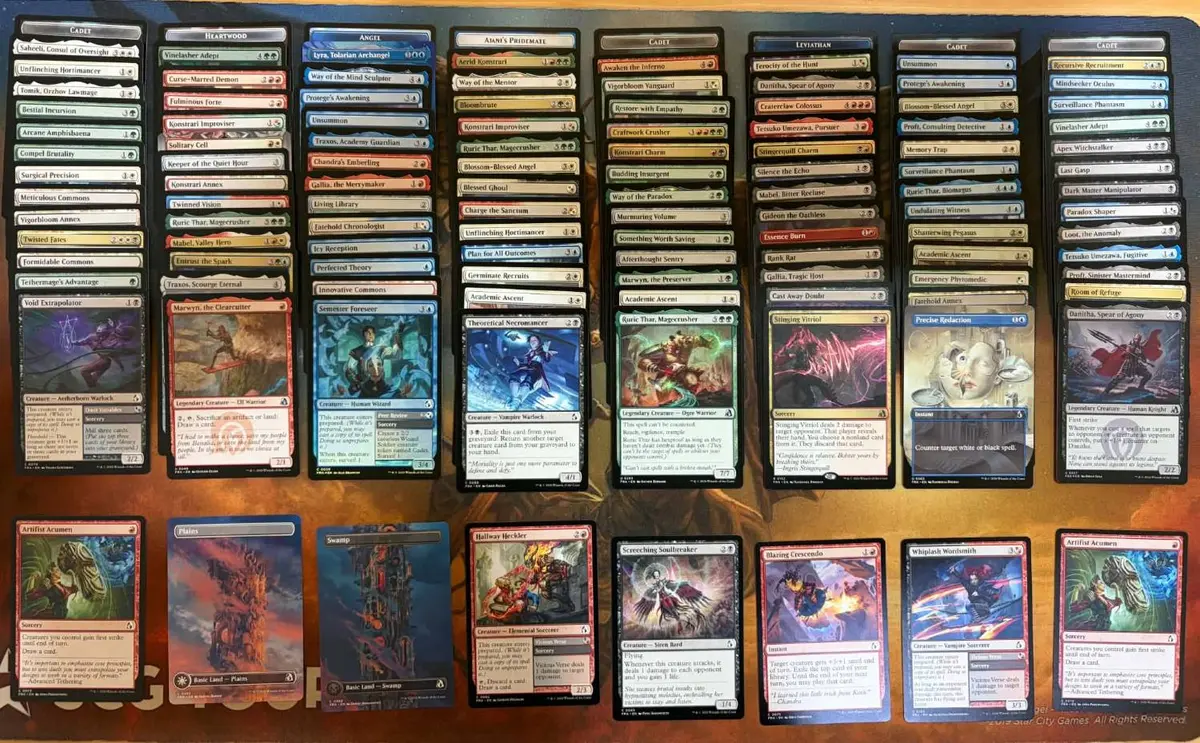
The last three picks hold few surprises, and Stinging Vitriolunsurprisingly returned to player 6’s hands.
Final decks
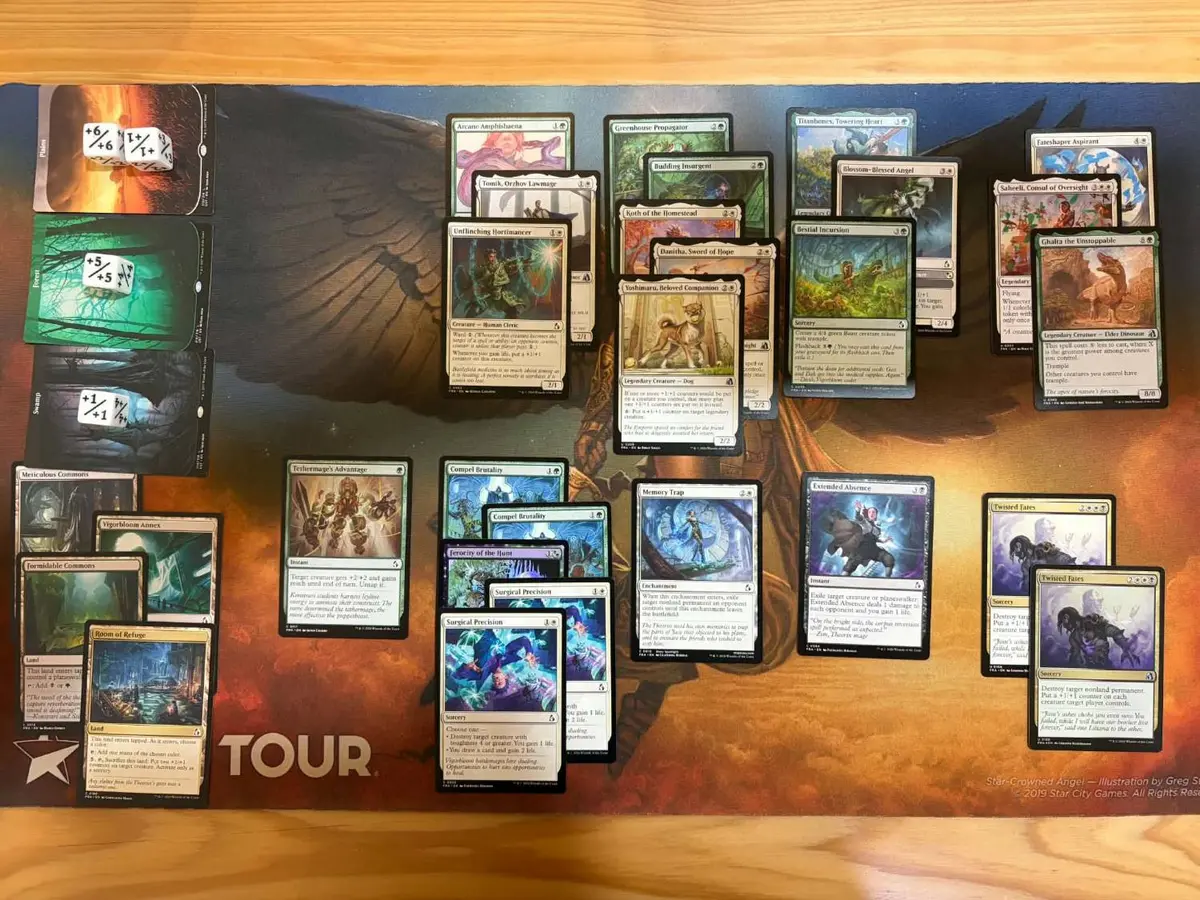
Player 1 made quite a few mistakes during the draft, in both curve selection and thematic fit. As a result, the final deck ended up an awkward removal-heavy deck with insufficient synergy. Once the curve comes out at the wrong time, it easily falls behind. In addition, many cards in this set have an empowered-Jace effect. Without enough card draw and filtering, plain one-for-one trades cause a more obvious resource gap in the mid to late game.
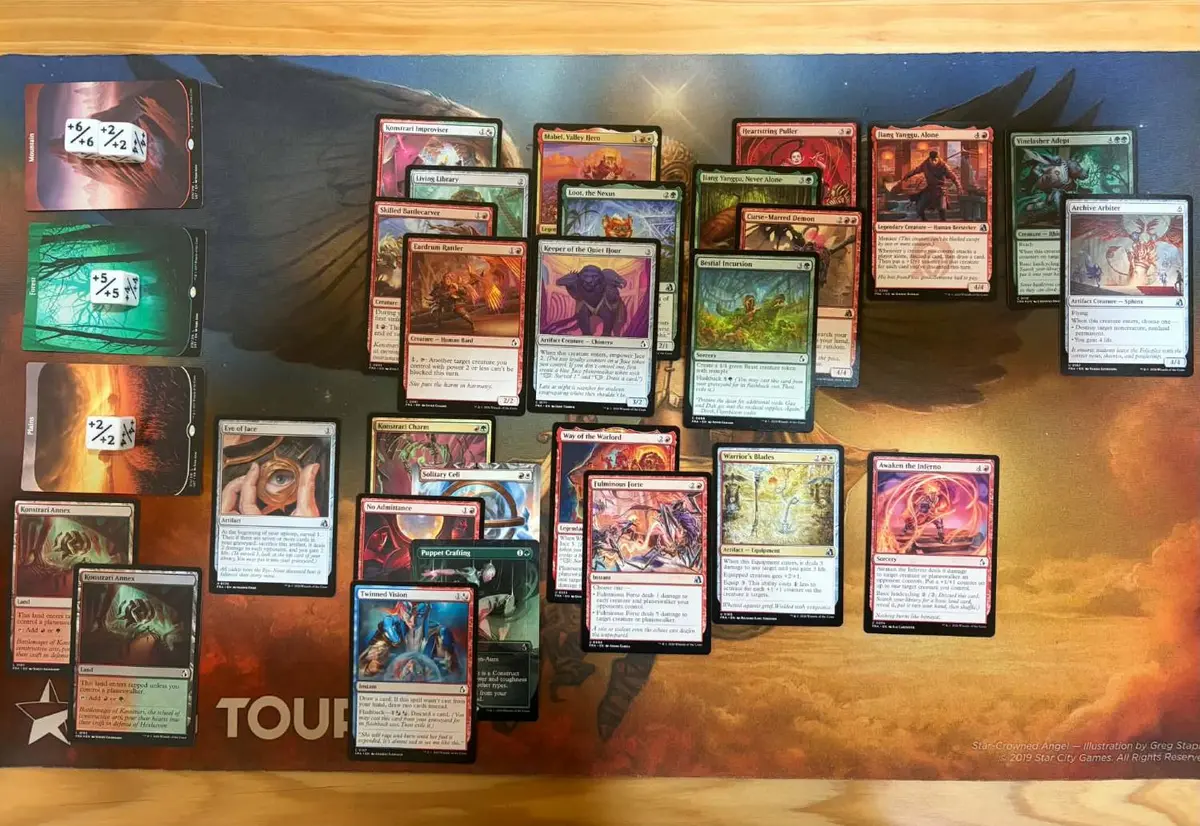
Player 2 also made quite a few mistakes, but luckily the theme synergy is decent, with a total of 7 artifact/enchantment cards as targets for Puppet Crafting. If Eye of Jacecomes down on turn one and an aura goes on at turn two, that would be a very strong start. The mid to late game also has strong flyers and cards like Jiang Yanggu, Alone, so if the early tempo holds, the deck still has the ability to win in the midgame.
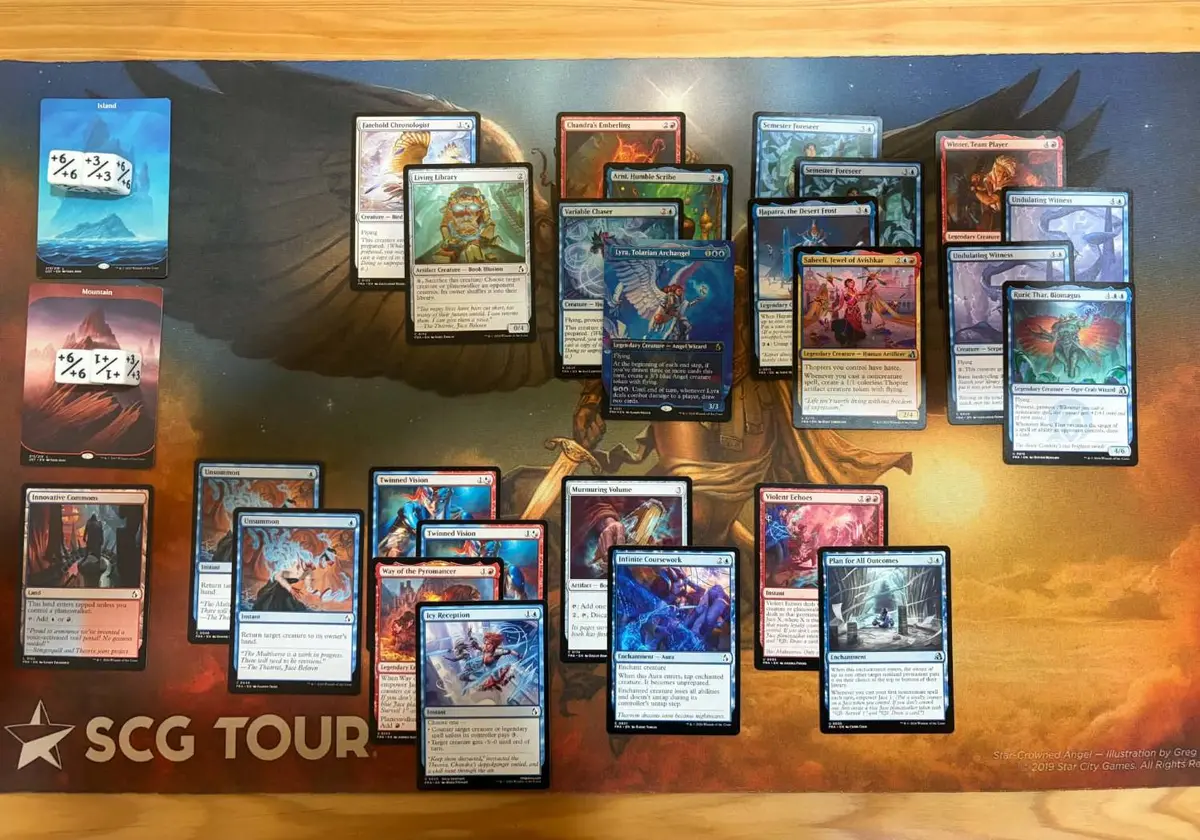
Player 3’s red-blue noncreature spell theme has a badly drawn curve and lacks enough acceleration. If the early tempo does not keep up, it will struggle to survive the midgame. As mentioned earlier, this deck lacks a stable early defense, which basically hands the first four turns of the game to the opponent, a real disadvantage against faster aggro decks.
Player 4’s white-green lifegain theme came together relatively well, and all the key cards were picked up. But the problem is similar to player 1’s: if the curve comes out at the wrong time, there is a considerable drop in power.
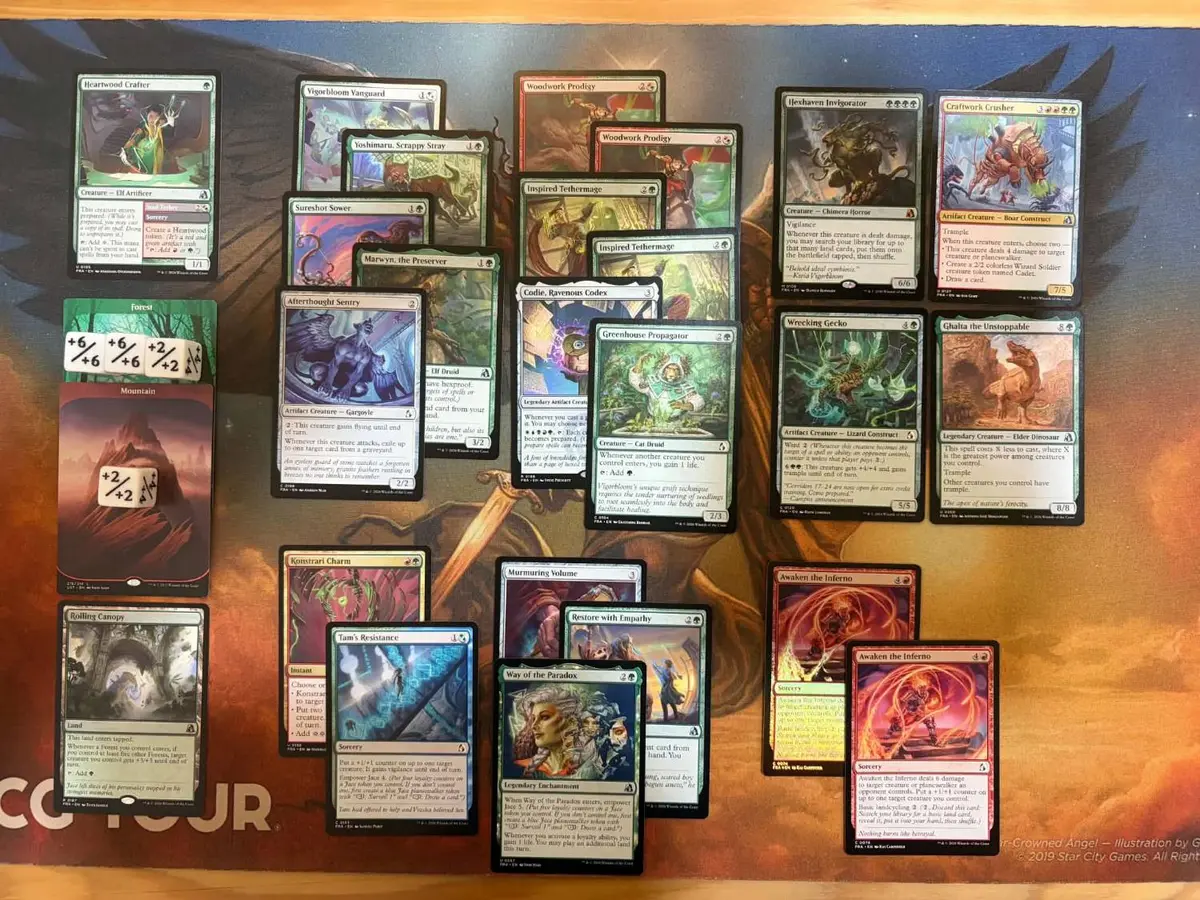
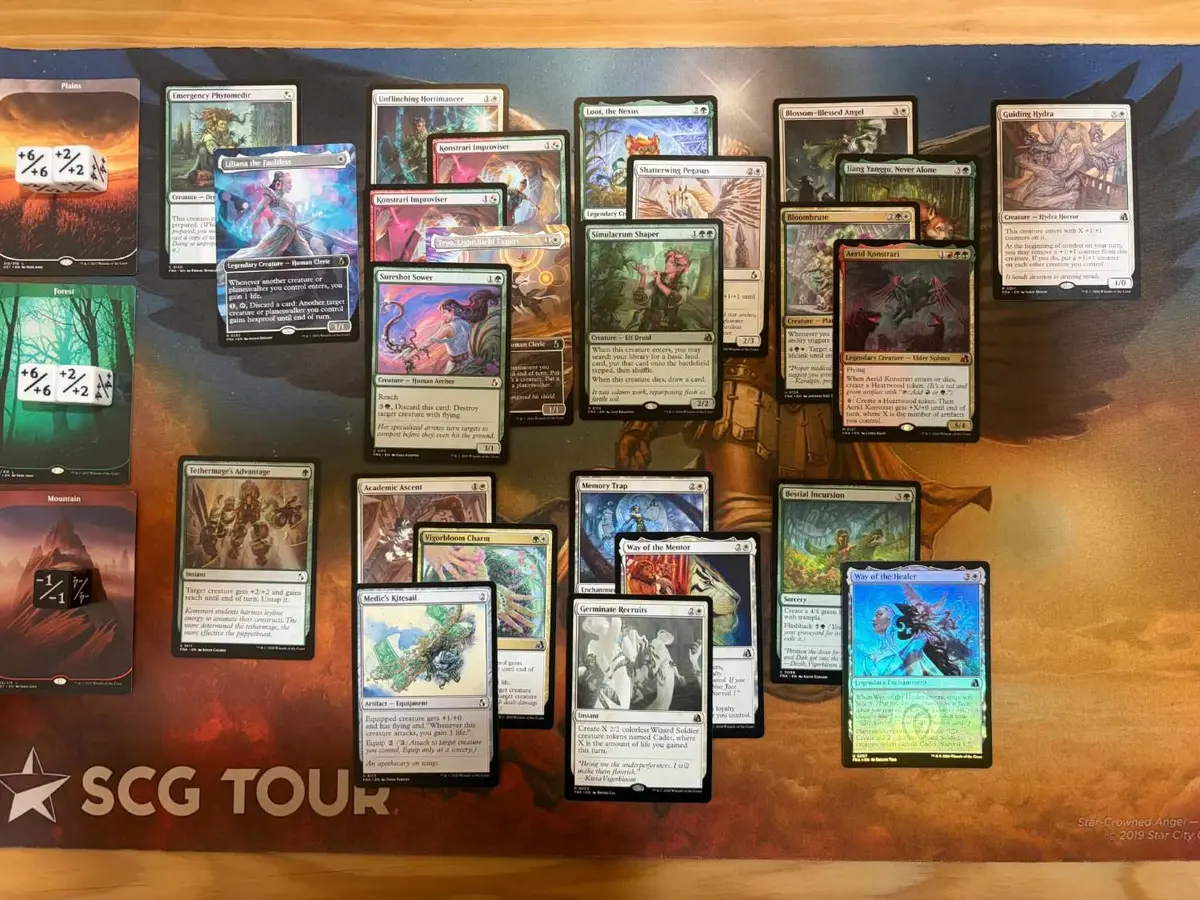
Player 5’s mono-green splash red deck is quite good. With Heartwood Crafter // Soul Tether and two Woodwork Prodigy // Soul Tether, mana should not be a problem after turn five, and the deck can even follow up with mana sinks like Yoshimaru, Scrappy Strayand Inspired Tethermageto strengthen the board and earn card advantage.
I also found that mono-green may be the best single-color archetype to draft, since the strongest U/C prepare creatures all involve green. The pity is not picking up one or two more red burn spells to go with the ace Hexhaven Invigorator, but luckily this set is slower, so the deck should have enough time to ramp.
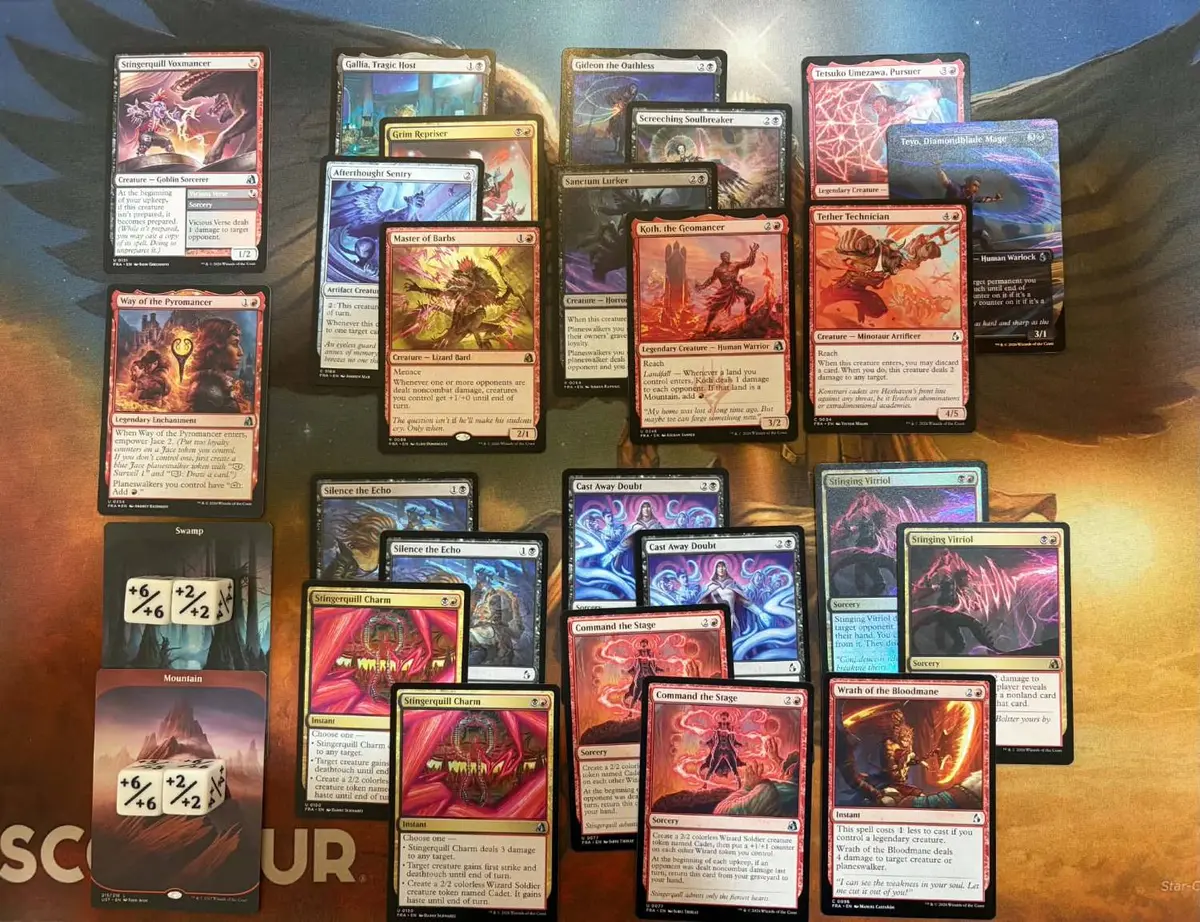
Player 6’s red-black theme came together very completely. The deck is stocked with theme creatures and spells at three mana and below that trigger on noncombat damage, so the deck’s mana values need not be high and 16 lands are enough. Tactically, at the end of turn two, use Stingerquill Charmto “flash in” a 2/2 Cadet, and on turn three play Command the Stageto attack with a 3/3 while another 2/2 stays back on defense. If noncombat damage keeps coming afterward, it is easy to swamp the opponent with a sea of Cadets (not hard for this deck). But the deck’s weaknesses are also obvious: big blockers, flyers, or decks that can gain life steadily, like white-green lifegain. If red-black lacks ways to push damage through, late-game pressure, or finishers, even with an early lead it may run out of steam in the mid to late game. Still, the two copies each of the three-mana sorceries Cast Away Doubtand Command the Stagefill in that gap in staying power.
Looking at each guild’s prepare spells, red-black’s prepare spell can only deal 1 damage to the opponent, while white-green’s gains 1 life and puts a counter on a creature, which is inherently quite unfair. If red-black lacks effective interaction, removal, and the ability to get past big blockers, facing its archenemy white-green will be a considerable disadvantage.
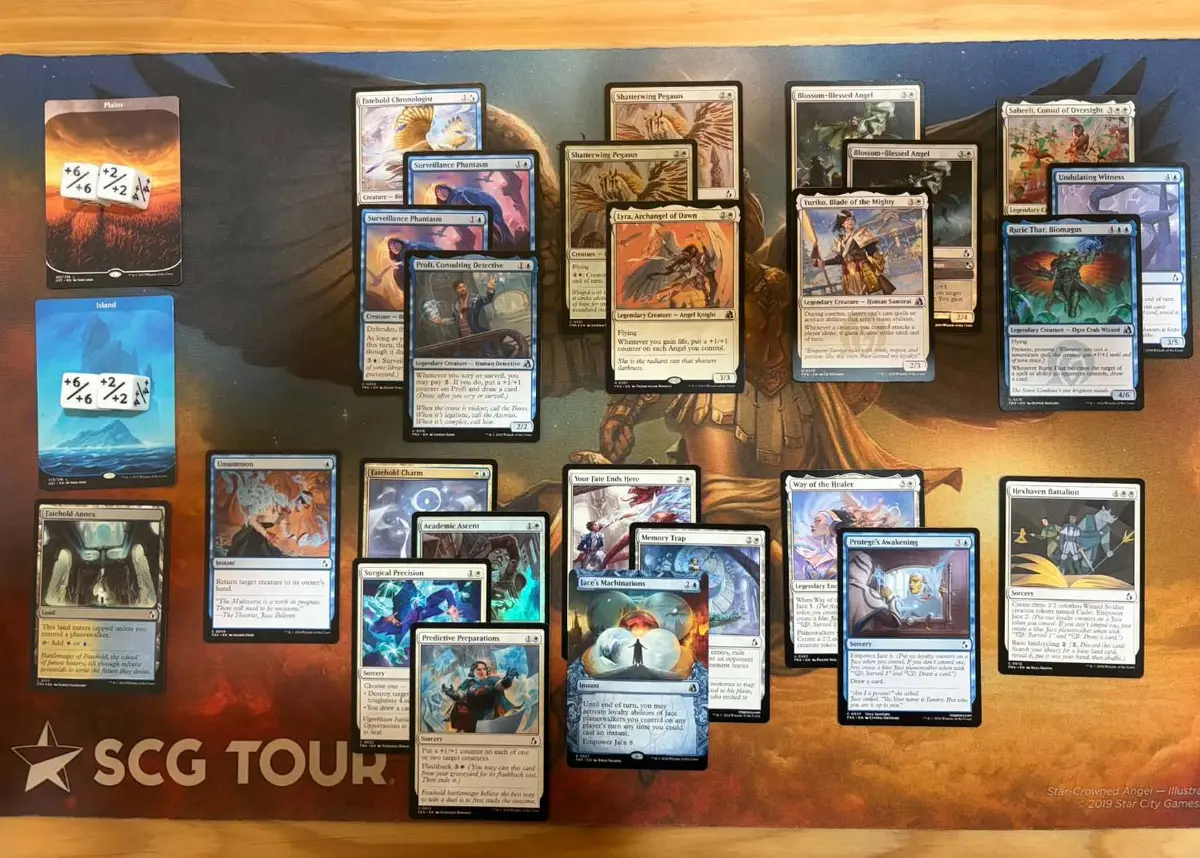
Player 7’s blue-white surveil theme did get its key cards, but while considering a green splash, wasted quite a few picks on less relevant cards, leaving the final deck’s theme not clear enough.
None of the white decks were drafted very well this time. I’ll need to focus more on future picks.
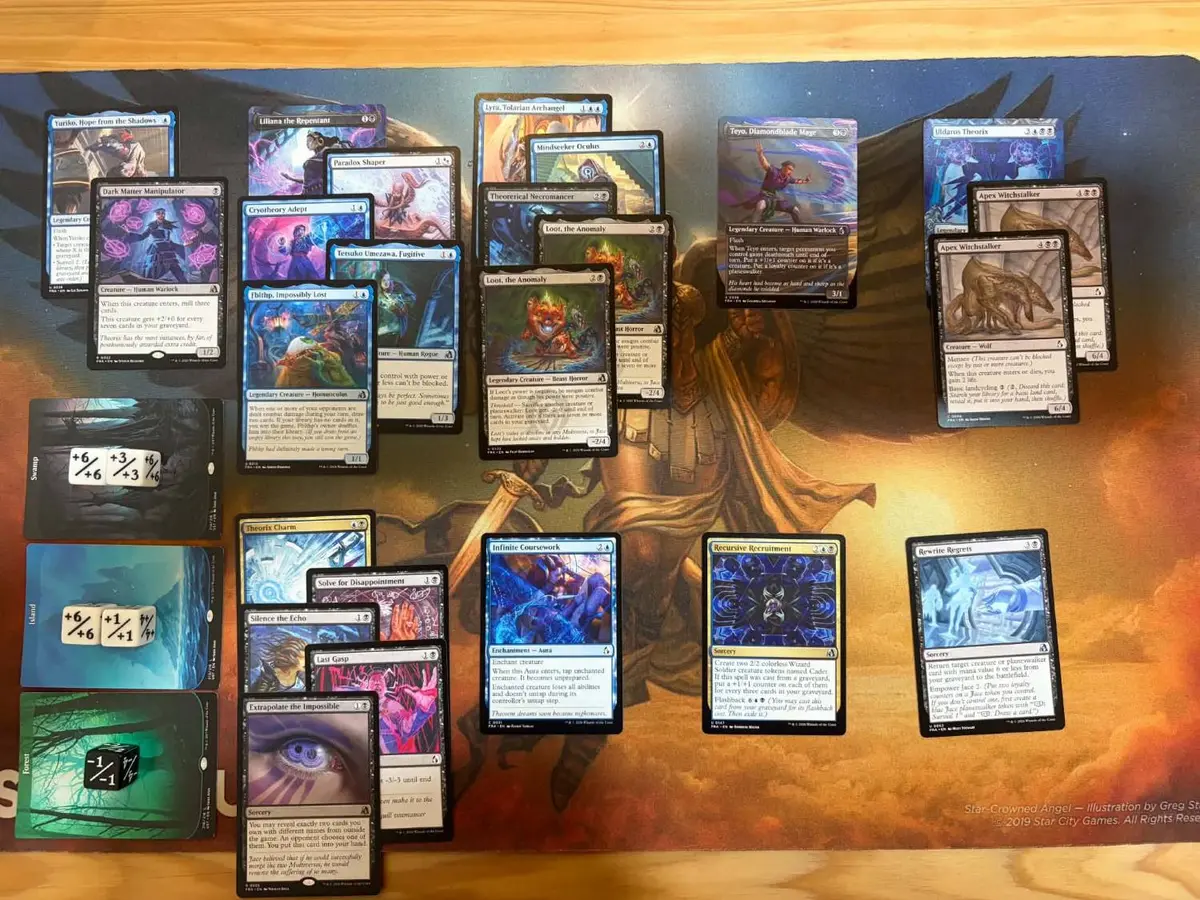
I was very excited about this blue-black deck from the moment it opened Uldaros Theorix, so I may have been biased along the way. But the result also pleased me quite a bit, and it has a great many ways to win. Here is a quick rundown of them:
- Midrange graveyard recursion: use Uldaros Theorixand Rewrite Regretsto dig the graveyard directly, or use Theoretical Necromancer
 to pick up cards from the graveyard, getting two or more uses out of a single card.
- Self-mill, then draw out the library to win: mill until two or fewer cards remain in the library with Fblthp, Impossibly Loston the battlefield, attack with a creature, and trigger Fblthp’s ability to draw out the library and win. But watch out for the opponent killing your Fblthp, Impossibly Lostin response.
- Self-mill, then a Loot, the Anomalyassault: with 7 or more cards in the graveyard (threshold), Loot can sacrifice creatures to grow. Thanks to the negative power, when Tetsuko Umezawa, Fugitiveis on the battlefield Loot cannot be blocked; and if you also flash in Yuriko, Hope from the Shadows, there is even a chance to blow the opponent away in a single hit.
- Self-mill, then use Recursive Recruitmentto flash back from the graveyard for eight mana and make two huge Cadets.
And Extrapolate the Impossiblelets you find the prepare card you need at the moment, and occasionally works wonders.
Match results
The matches were an 8-player single-elimination bracket, best of three. Thanks to the anonymous players who helped complete the matches.
Round 1
Table one pitted player 1, white-green splashing black, against player 8, playing blue-black. Player 8’s two wins were basically uncontested mid-game resource crushes. The one loss came from player 8 getting stuck on four lands and being run over by player 1’s curve.
Table two was more of a tug-of-war. In game one, player 7, playing blue-white, quickly won with Yuriko, Blade of the Mightyand flyers. But in games two and three, player 2, playing red-green artifacts, stabilized the board and then counterattacked to win.
Table three was also one-sided. Player 3, playing red-blue, saw their defenses quickly pierced by player 6’s tightly curved red-black deck. On top of that, red-blue has no way to gain life, and had no chance to turn things around against red-black’s steady noncombat damage offense.
And at the last table, table four, player 4’s white-green lifegain strategy, even in a game where the curve came out smoothly, quickly could not keep up the pressure against player 5’s creature size advantage. Once ramped past, it was basically a lost game.
Round 2
In the first table of round two, player 8 faced player 2. Even when both sides developed smoothly, player 2’s game plan could not effectively take down player 8, who has the long-game resource advantage.
At table 2, player 5, playing mono-green, faced player 6, playing red-black. Red-black took game one with a fast curve and direct damage to the face, but in the next two games, facing mono-green’s huge acceleration and the big disadvantage of burn spells against the opposing ace Hexhaven Invigorator, it finally lost to mono-green’s heavy assault.
Round 3 (Finals)
The finals were a real tug-of-war, with both sides reaching one game apiece. At the key turn, mono-green pushed blue-black’s life down to 4, but blue-black summoned the ace Uldaros Theorix, choosing the 4-mana sorcery Rewrite Regretsand 2-mana instant Last Gasp in the graveyard to remove the opponent’s creature and dig Apex Witchstalkerout of the graveyard, restoring life to 6 and making two big blockers. Mono-green discarded Sureshot Sower
 to eliminate the blue-black Sphinx, then played a Forest to trigger Roiling Canopy‘s +3/+3, turning a 2/2 trampler into a 5/5 attacker; blue-black blocked with Apex Witchstalkerand life went back up to 7. After that, both sides entered a standoff, until blue-black summoned an attack-capable Lyra, Tolarian Archangel. With only 6 cards left in the library, they used Theoretical Necromancerfrom the graveyard to pick up Fblthp, Impossibly Lostand put it onto the battlefield. After Lyra attacked successfully, in response to Fblthp, Impossibly Lost‘s triggered ability they used Theorix Charmto mill three and draw one, then drew the last two cards of the library to win.
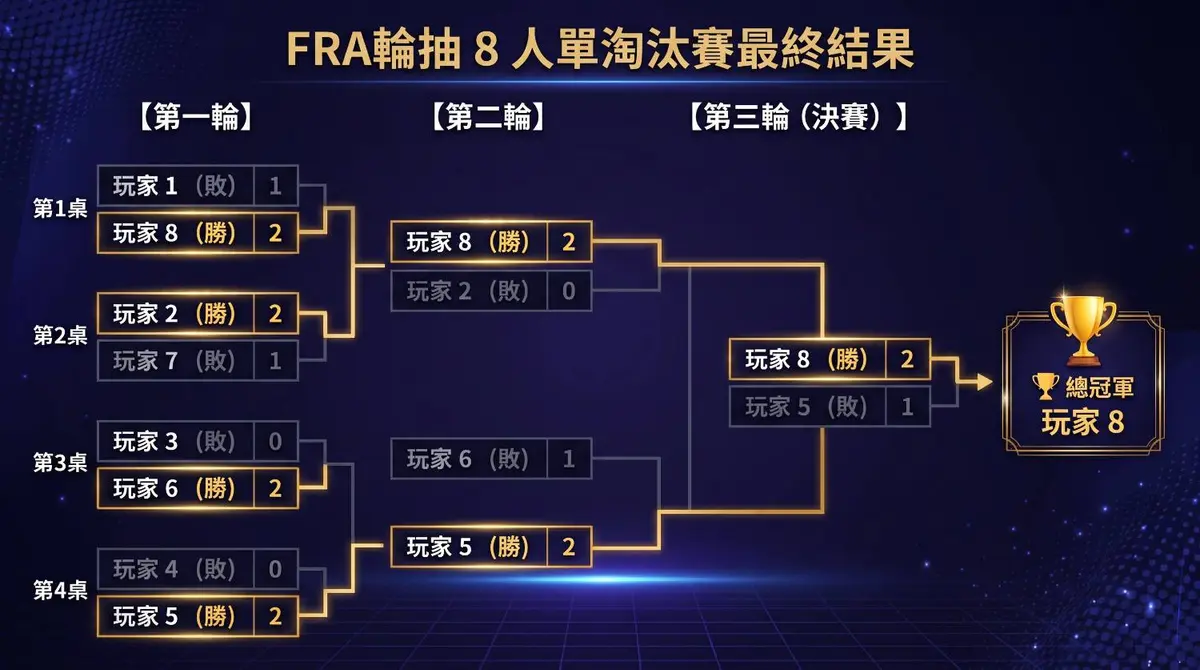
Results of the 8-player draft matches. This image was generated by Gemini 3.1 Pro
Conclusion: Can an “Omniscient” view create eight “Omnipotent” draft decks?
Completing an eight-player draft alone is much harder than I imagined. Even with no time limit and the ability to repeatedly check what each “player” had previously taken, I was still limited by my understanding, preferences and fatigue in the moment, and made choices that looked less than ideal in hindsight. The draft also forced me to keep switching among eight lines of thinking, and with my limited brainpower, I found many blind spots from the time while writing this retrospective. For that reason, this attempt gave me a chance to repeatedly re-examine the whole draft from different perspectives.
By “omniscient”, I do not really mean being able to foresee what each pack will open, but grasping as much “known” information as possible: who is fighting over the same colors, whose theme is taking shape, who lacks a curve or interaction, and what signal each pick sends to the neighbors on either side. And by “omnipotent” here, I do not mean building eight of the most well-rounded decks. Rather, it means giving each deck the basic conditions needed to win matches: a clear theme, a reasonable curve, and enough interaction.
Looking back over the whole draft, what truly decides a deck’s success or failure is often not taking the strongest single card on some pick, but whether, at the right moment, you make tradeoffs consistent with the deck’s theme. The theme provides draft direction, the curve determines the game’s tempo, and interaction determines the margin for error. When these elements mesh with each other, the 42 cards chosen go from a pile of “not bad cards” to a module that really works.
A well-designed, highly playable set should be like FRA. The official color-pair themes are only a starting point; when you piece together different components, you will find many more possibilities worth exploring. Drafting is a process of putting imagination into practice, while actual matches are used to confirm whether that imagination can withstand the test of reality.
If you happen to have a box of boosters on hand, try drafting eight players by yourself too. You will find that the hardest part is not picking the “strongest” card on each pick, but making reasonable choices for eight different players within the limits of your own blind spots. At that moment, your thinking no longer serves a single deck, and you must use a near-”omniscient” bird’s-eye view to weigh signals, themes, curve and interaction at the same time, building eight decks with different themes and similar power, each with its own plan to win.
The Theorist, Jace Beleren , in the story, gradually walked toward “Omniscience” with a mortal body, and finally reached that state. Drafting eight players alone may also be a small step toward that goal: not to pursue knowing everything and being able to do everything, but to face your own biases more honestly each time you switch perspectives.

- Title
- I Drafted Alone: Solo Drafting with Reality Fracture (FRA)
- Author
- cephille
- Created at
- October 16, 2026
- Updated at
- October 16, 2026
- License
- This work is licensed under CC BY-NC-SA 4.0 .
Related Articles
Article Translation — Reid Duke's "Level One": Choosing Your Deck
August 17, 2026
Article Translation: Reid Duke's "Level One": Sequencing
July 24, 2026
Article Translation: Reid Duke's "Level One": Playing in a Grand Prix: Part I
June 13, 2026
Article Translation — Reid Duke's "Level One": Board Sweepers
April 7, 2026