Standard 4-Color Legends

Note: This article was translated from Chinese by AI and may contain errors. Read the original Chinese version.
Introduction
As a player who has always followed Standard, talk of legendary decks brings to mind the Esper Legends that used to show up often in tournaments. That deck featured powerful white-blue-black legendary creatures (such as Thalia, Guardian of Thraben, Raffine, Scheming Seer, Adeline, Resplendent Cathar, and so on) and packed lots of channel lands from the Kamigawa sets. By using the property that legendary creatures on the battlefield reduce the cost of channel lands, it achieved a tempo-suppression effect of building the board while disrupting the opponent, and then used those legendary creatures to quickly kill the opponent for the win.
The 4-color legends deck introduced this time also uses the tempo efficiency of legendary creatures and channel lands, but shifts the core cards from white to red and green. Compared with the fast-kill approach Esper used before, this four-color deck plays a more resource-oriented game, making it more resilient against the midrange decks in the current Standard environment that have many powerful card-advantage tools. At the same time, besides killing with creatures, 4-color legends can also win with the deck’s own unique Plan B.
Deck Introduction
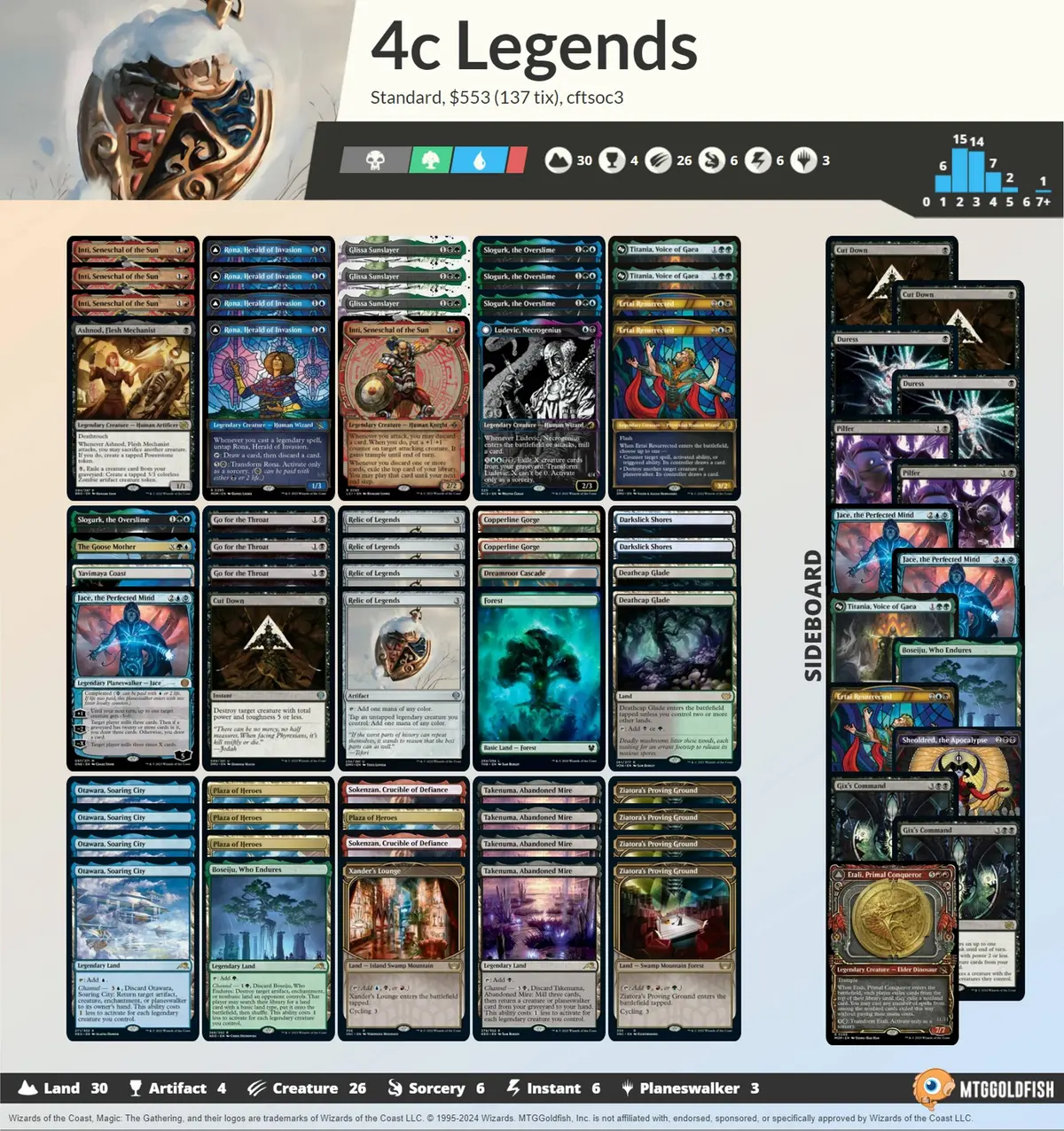
As usual, the decklist first.
Core Cards

The most important card in the whole deck; every ability on it fits perfectly with what a legends deck wants to do. Besides being a legendary creature itself, reducing the cost of channel lands, and being a trampling beater, it also comes with extremely powerful resource recovery and self-protection.
The first ability, counter-adding, triggers whenever you mill, cycle a tri-land, or use a channel land’s ability, growing its body, and since it has trample, being bigger means the damage can go through and hit the opponent’s face, which matters a lot in a race. The common way to trigger it is to mill two or three lands when using Takenuma, Abandoned Mire to draw cards, directly giving it 3 to 4 +1/+1 counters, at which point the second ability becomes usable.
The second ability is self-protection: remove three +1/+1 counters from it to return it to hand, which can dodge removal and sweepers. Since it’s a core card, I think it’s only natural for it to have some self-protection.
The third ability is recovery, triggering whenever it leaves the battlefield, whether it’s exiled, destroyed, or even bounced. So you can trigger it yourself with the second ability’s self-protection to return up to three land cards from the graveyard, and naturally the targets we want to pick are the excellent channel lands or the tri-lands that can be cycled.
Because it’s a legendary creature, if necessary you can also slam the second copy from your hand to trigger the legend rule for the same-named legend on the battlefield, sacrificing the second copy of Slogurk to achieve the land-recovery effect.
In addition, the deck’s Plan B also needs this card to work. (Mentioned below)

A rising-star legendary creature from The Lost Caverns of Ixalan (LCI), already adopted in many formats and one of the quite important cards in this deck.
Its first use is giving creatures +1/+1 and trample during combat. Besides letting damage go through, it also lets creatures that need to deal combat damage to trigger their abilities (for example: Glissa Sunslayer) earn extra resources.
Its second use is generating resources. Both the channel lands and the tri-lands in the deck need the card itself to be discarded to activate their abilities, so while discarding you can trigger its second ability: exile the top card of your library and you may play it until your next end step, earning a resource edge.
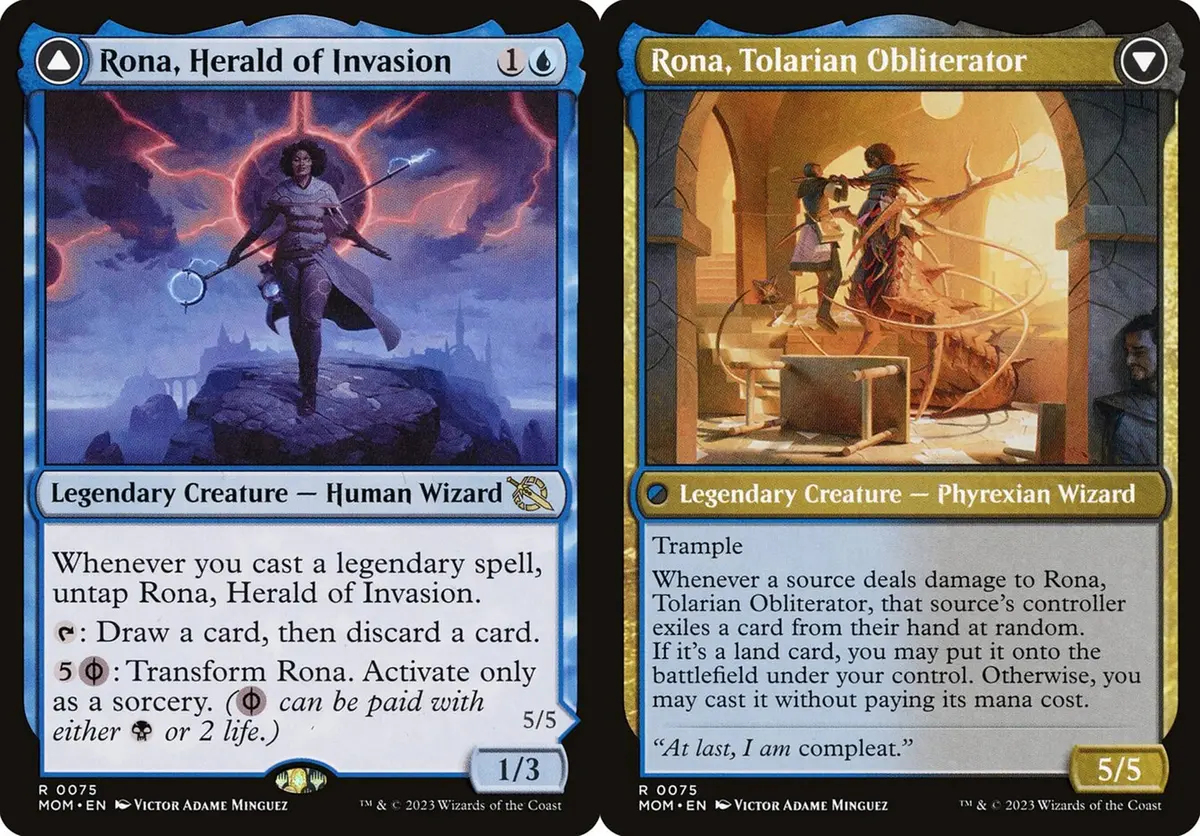
A legendary creature from March of the Machine (MOM); tap it to rummage, and casting a legendary spell untaps it.
Its role is fast card filtering. When rummaging, besides triggering the card-advantage ability of Inti, Seneschal of the Sun, discarding a land can actively trigger the first counter-adding ability of Slogurk, the Overslime, quickly letting it meet the self-protection condition.
Although it’s not often used, sometimes you have a chance to use spare mana to flip it, turning it into a trampling beater.

A mana-producing artifact from Dominaria United (DMU) made for legends decks.
It can produce extra mana by itself, and mainly it lets other legendary creatures tap to produce extra mana. Paired with the untap ability of Rona, Herald of Invasion // Rona, Tolarian Obliterator, you can achieve a super-fast board spread in a single turn, leaving the opponent unable to cope.
Kamigawa’s Channel Lands
The channel lands from Kamigawa: Neon Dynasty (NEO), which activate abilities by discarding the card itself. With enough legendary creatures standing on the battlefield, these lands can serve as very low-cost utility cards, making full use of good mana efficiency and playing important roles in drawing cards, clearing the board, and developing the board.
In this deck we use the four channel lands other than the white one:

One of the most important channel lands. Besides returning a creature/planeswalker from the graveyard to hand, it also mills three by itself, letting Slogurk, the Overslime reach its highest-ceiling, powerful state.
Given its necessity, basically run 4 copies.
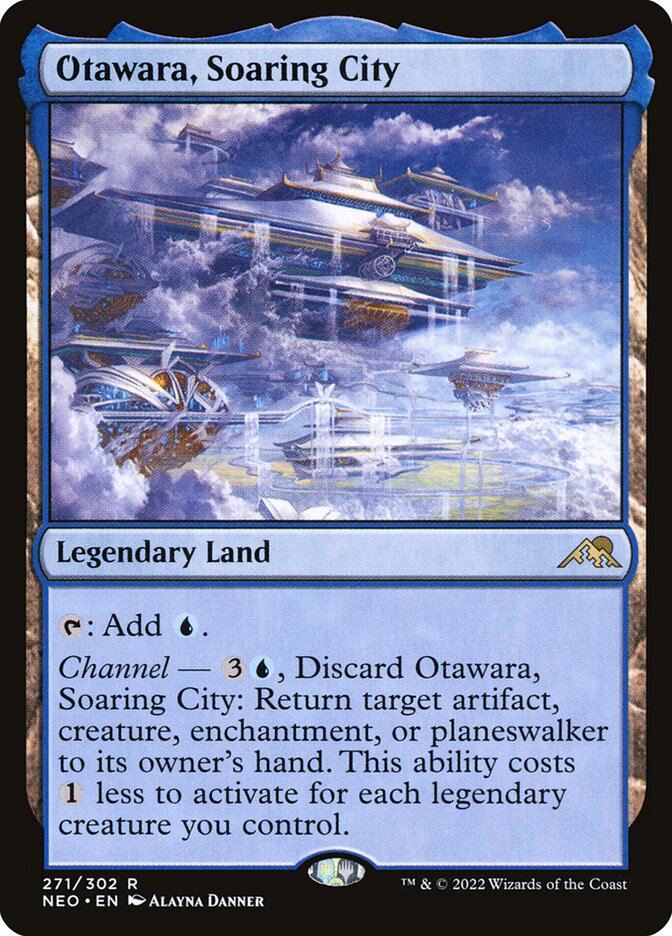
One of the most important channel lands, and the legends deck’s main way to clear the board/protect itself. It cheaply bounces the opponent’s threat so your creatures’ damage can get through, or protects your own creatures.
Given its necessity, basically run 4 copies.

A channel land for developing the board; sometimes you’re just two damage short of lethal, or you use it to make two blockers.
Include at your discretion.
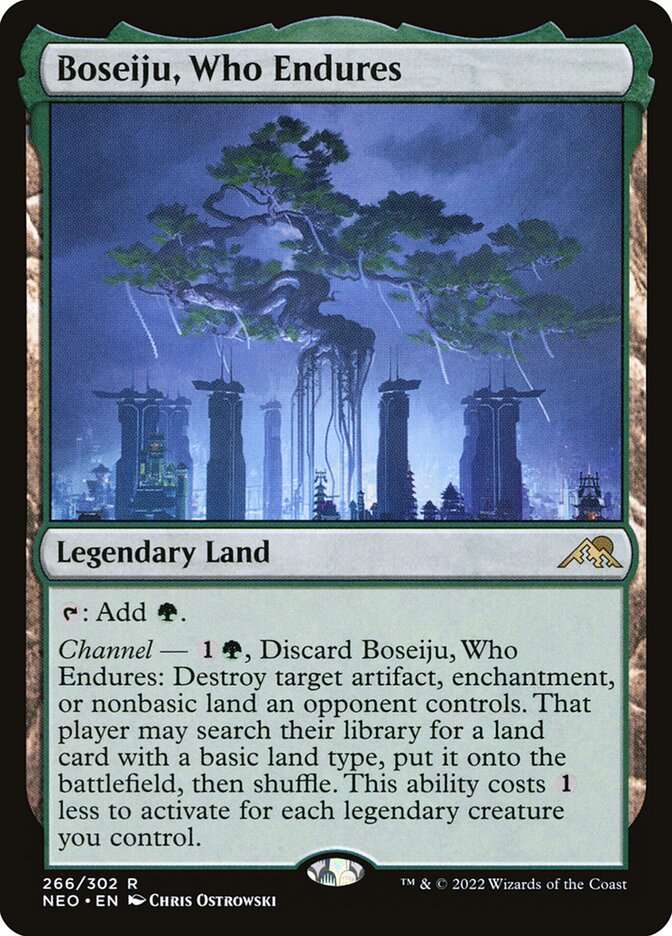
A channel land for blowing up artifacts and enchantments or creature lands. It’s very effective against decks built around artifacts and enchantments, or for destroying creature lands with troublesome abilities.
Include at your discretion.
Plan B?

As you can see in the attached decklist, the main deck includes Jace, the Perfected Mind. Usually when it comes down you directly use [-5] to mill the opponent for 15, and afterward, by using Takenuma, Abandoned Mire you can pick the used Jace, the Perfected Mind back up from the graveyard, and if Slogurk, the Overslime is on the battlefield, using its third ability returns the used Takenuma, Abandoned Mire to hand, creating a situation where Jace, the Perfected Mind can be cast over and over, emptying the opponent’s library so they lose because they can’t draw cards.
Conclusion
Overall, I think 4-color legends is an average, middle-of-the-road deck in Standard. Pay attention to the interactions between individual cards and the timing and methods for pulling off odd combos. It’s quite difficult to pilot, so it demands a lot of practice and mastery.
Based on the author’s own experience, pay attention to the following points when piloting the deck:
Try not to forget that when Inti, Seneschal of the Sun is on the battlefield, discarding on the opponent’s turn lets you exile the top card of your library to increase your usable resources, whether you’re using a channel land, cycling a tri-land, or using the rummage ability of Rona, Herald of Invasion // Rona, Tolarian Obliterator.
The cost reduction of channel lands floats with the number of legendary creatures you control. Try to calculate how many channel land activations you can do on the opponent’s turn before deciding how many creatures to put on the battlefield, so your mana usage is optimized.
Slogurk, the Overslime is the main driver of resource recovery and also one of the main beaters. During the game, always keep track of how many lands can be dumped into the graveyard at the moment, so you always know how many +1/+1 counters are on it and can set up a kill or multiple bounces.
When Relic of Legends is on the battlefield, legendary creatures can be used as mana sources without summoning sickness, and paired with the untap ability of Rona, Herald of Invasion // Rona, Tolarian Obliterator, you can make a big board spread.
When you have Jace, the Perfected Mind in hand, you can calculate your mana and the opponent’s library size to check whether you can cast Jace multiple times to take the opponent’s library away and win. Of course, when you don’t have Jace in hand you can also count the opponent’s library to scare them and force them into defensive plays.
That’s all of my thoughts on this deck. I hope it helps players interested in Standard multicolor decks (not Domain).
- Title
- Standard 4-Color Legends
- Author
- Enki
- Created at
- January 29, 2024
- License
- This work is licensed under CC BY-NC-SA 4.0 .