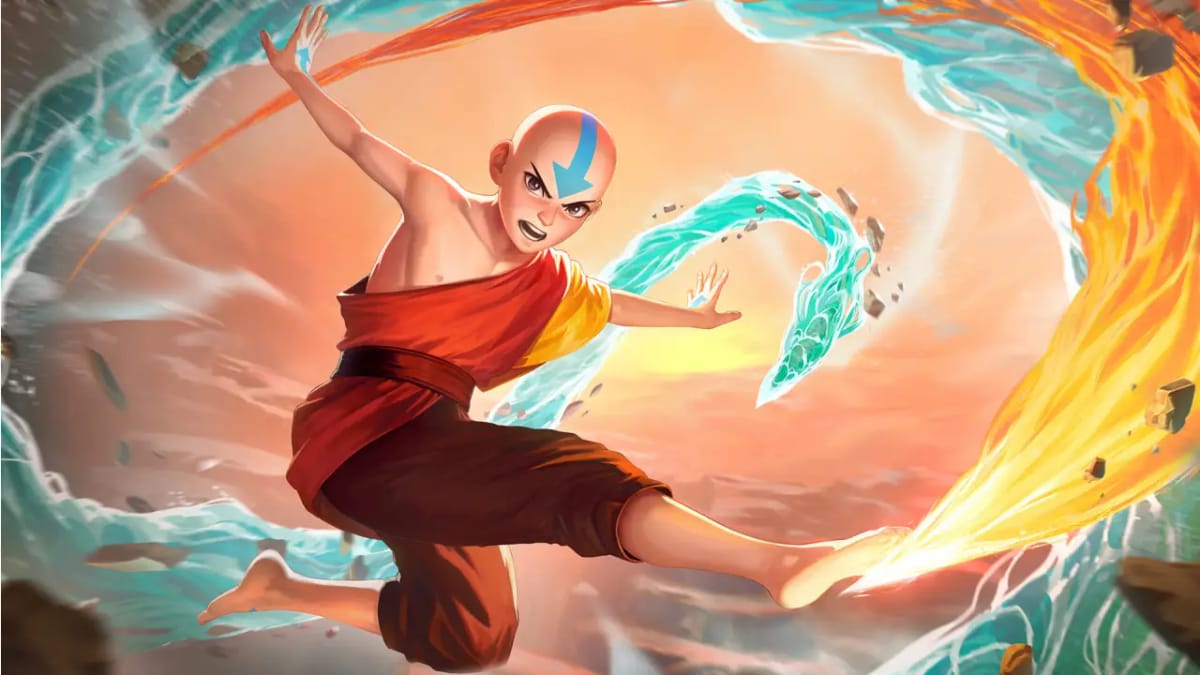
Invoke the Divine: Standard Avatar Aang Allies
Note: This article was translated from Chinese by AI and may contain errors. Read the original Chinese version.
Introduction
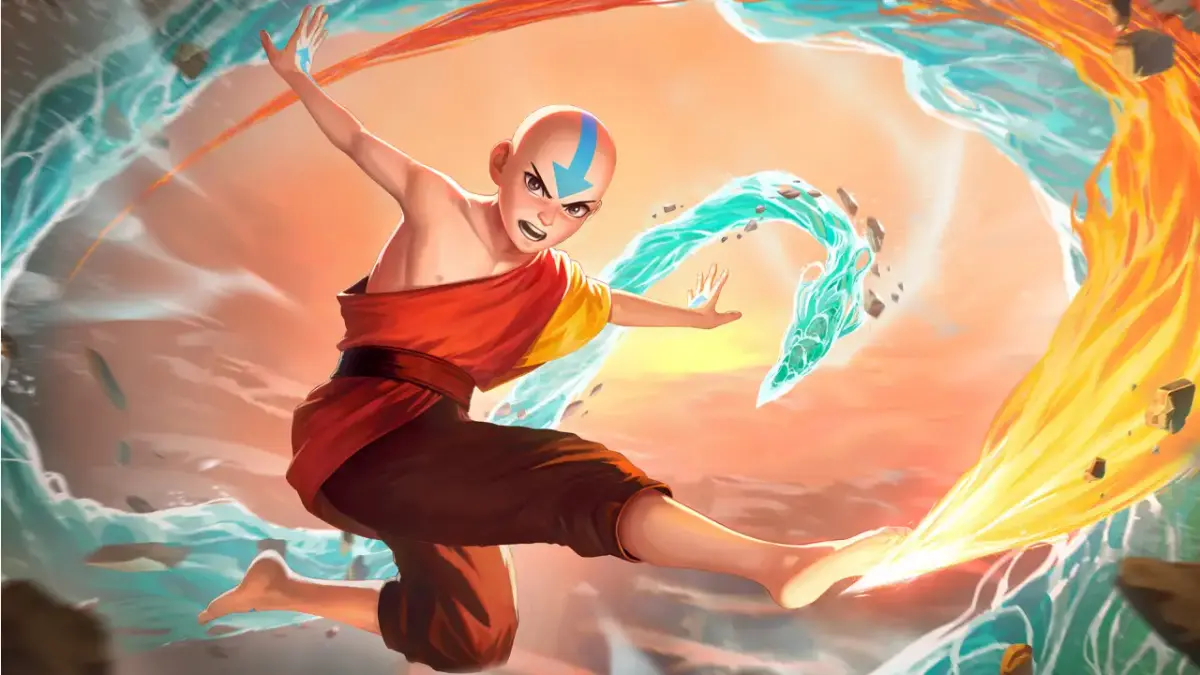
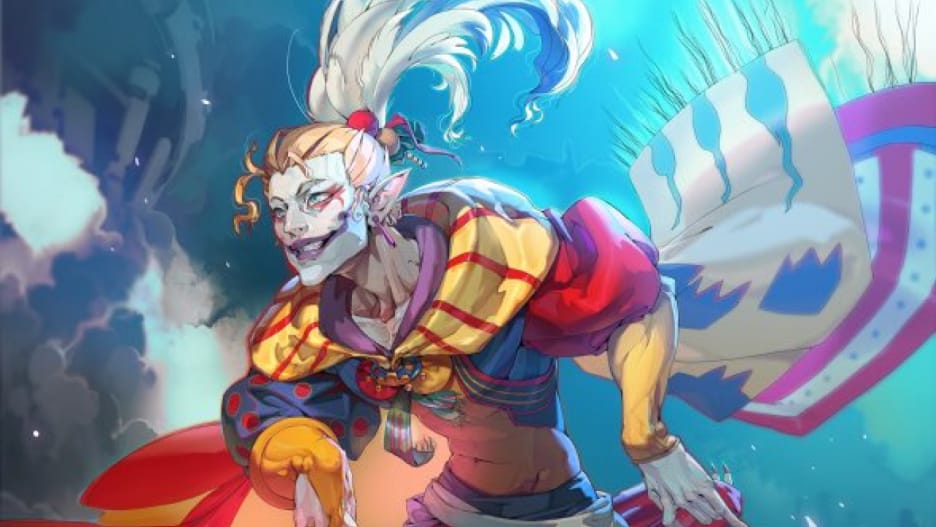
After learning all four bending arts, air, water, earth, and fire, Aang, the protagonist of Avatar: The Last Airbender, became the genuine Avatar of his age. Wizards of the Coast designed him as a four-color creature with a transform ability. The ability is powerful, but the conditions to use it are also quite harsh. He might be great as a commander, but can he be made to work in Standard?
Card Analysis
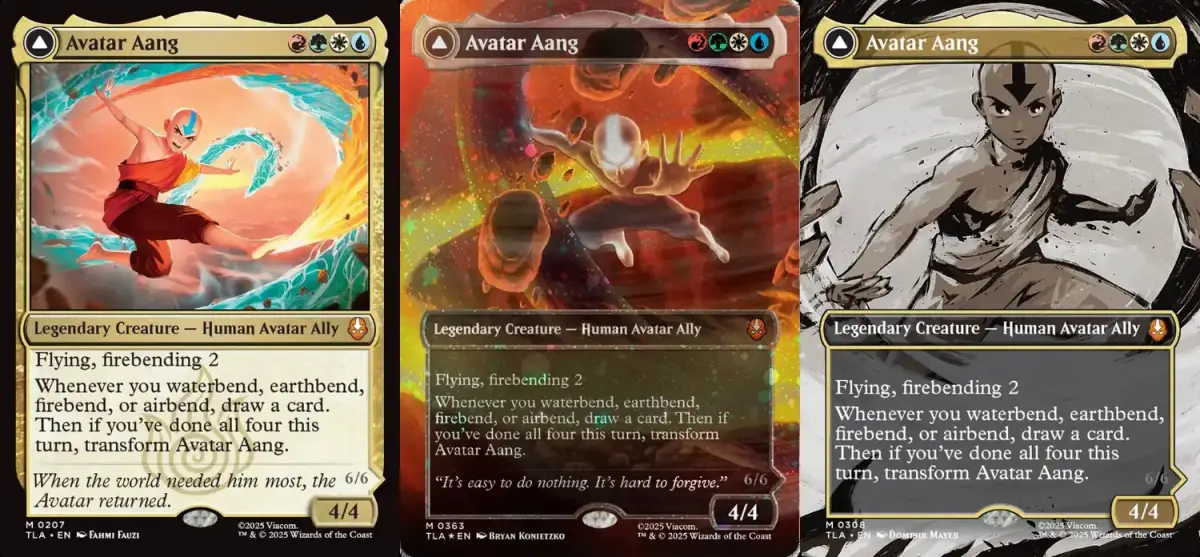
Avatar Aang
Creature — Human Avatar Ally
Flying, firebending 2
Whenever you waterbend, earthbend, firebend, or airbend, draw a card. If you’ve done all four this turn, transform Avatar Aang.
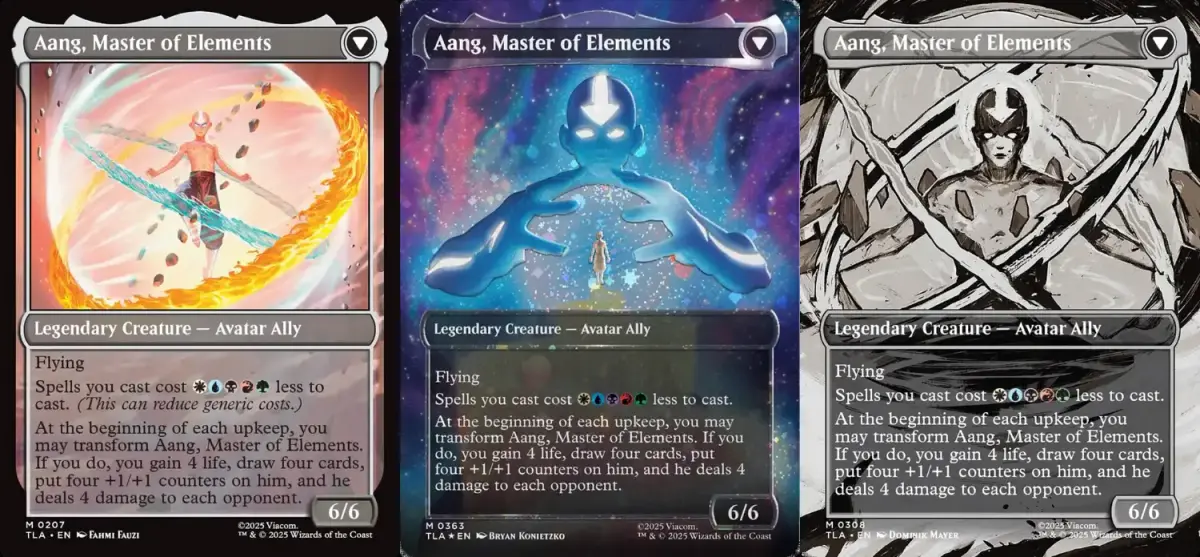
Aang, Master of Elements
Creature — Avatar Ally
Flying
Spells you cast cost {W}{U}{B}{R}{G} less to cast. (This effect reduces generic mana costs.)
At the beginning of each upkeep, you may transform Aang, Master of Elements. If you do, you gain 4 life, draw four cards, put four +1/+1 counters on him, and he deals 4 damage to each opponent.
Played on its own, Avatar Aang is a quality four-mana 4/4 flyer that draws a card when it attacks, and if you put him in a deck built around the bending ability, he is a powerful card draw engine. The transformed Aang, Master of Elements is even more outrageous. The cost reduction doesn’t just reduce colored mana, it also reduces generic mana along with it, meaning the colorless part in the top right corner is reduced too. That makes nearly every spell costing five or less free to cast, so you can quickly dump the cards drawn before transforming, then transform back to draw four more. The resources from doing it just once are enough to crush the opponent. To make full use of his power, you need a way to meet his transform condition.
So which direction is better to build in? With the current card pool, we can see two directions that have bending: the creature-based Ally package, and the noncreature spell package.
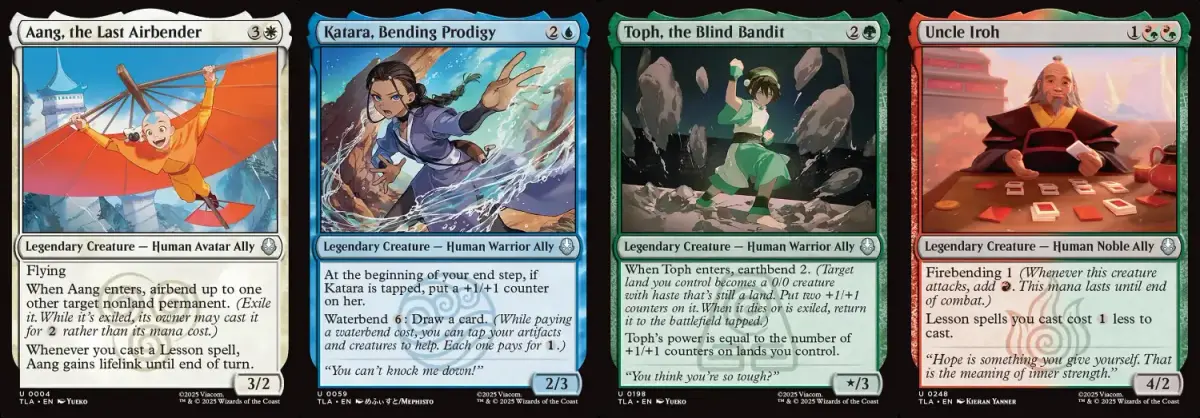
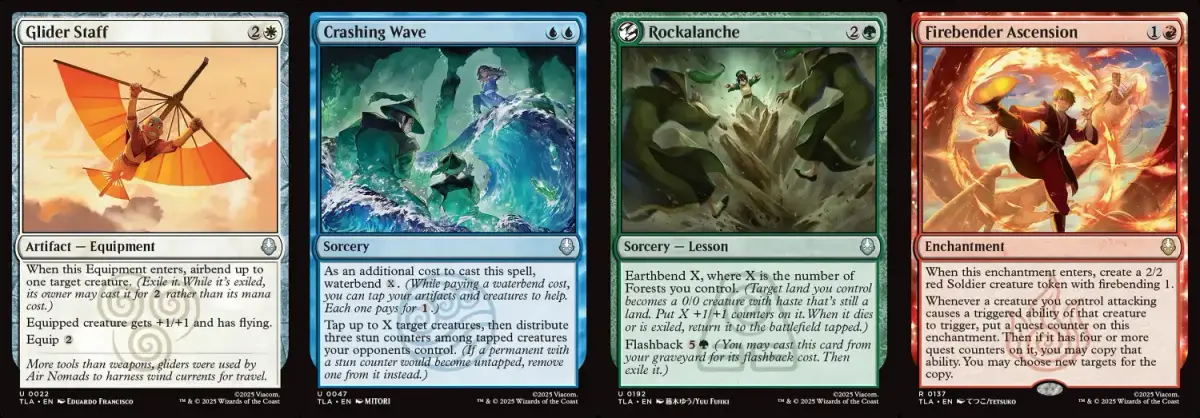
A serious discussion would take a lot of space, so I’ll go straight to the conclusion: the Ally package triggers and fixes colors steadily, but it is awkward to mix in non-Ally tricks, and there are few airbending options. The noncreature spell package finds it easier to assemble the three bending arts other than firebending, but the effects are uneven, color stability is also worse, and you must find ways to keep Aang from getting removed. Therefore, I think going with Allies is more suitable. The list is as follows:
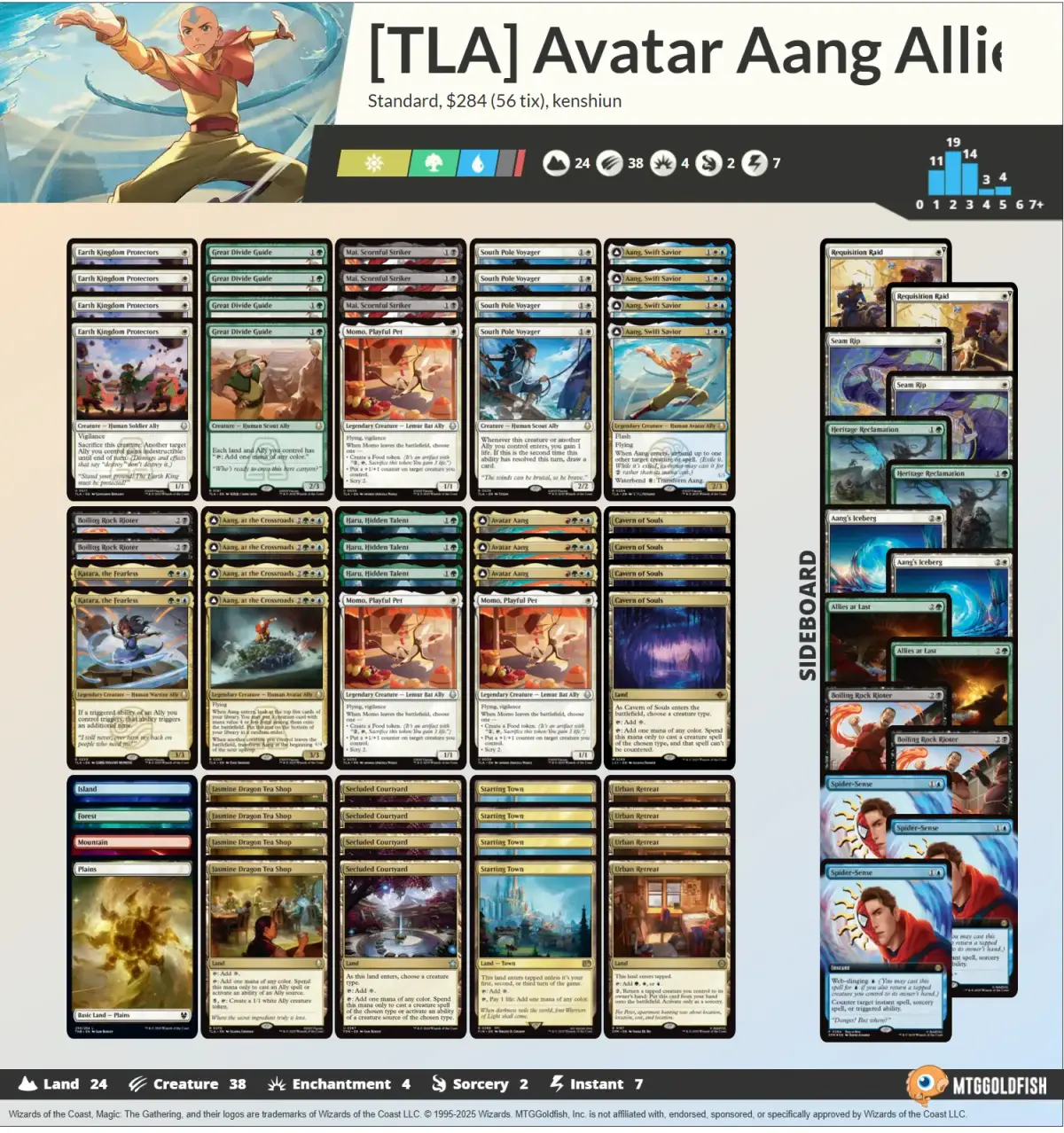
Basic cast: Earth Kingdom Protectors, Great Divide Guide, South Pole Voyager, Katara, the Fearless
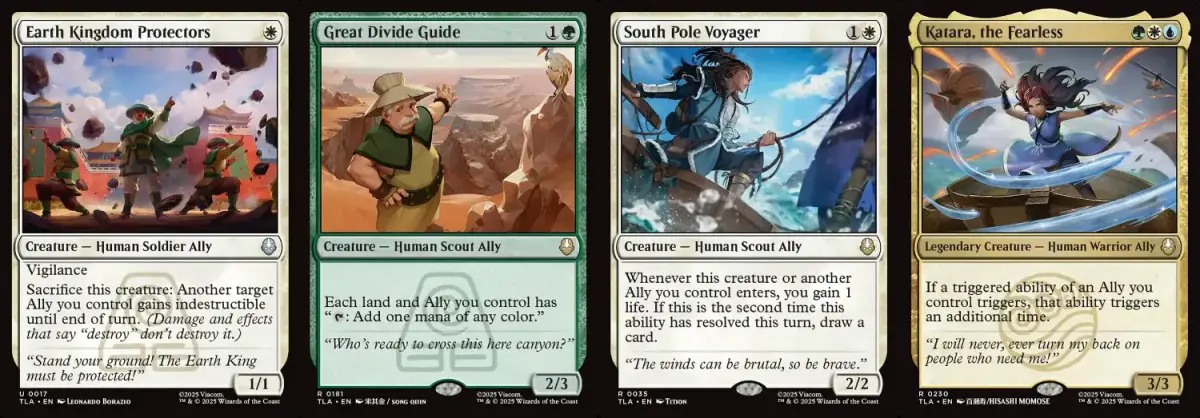
First up is the basic cast common to typical Ally decks. Earth Kingdom Protectors is both a one-drop for the curve and a protector for key creatures, with built-in vigilance to conveniently support waterbending or mana production from Great Divide Guide. Great Divide Guide is the key piece for color fixing and ramp, letting all Allies produce mana of any color and helping you deploy quickly. South Pole Voyager maintains your life total and draws cards, but it only draws if a second Ally enters the same turn to trigger the lifegain, so it isn’t very efficient on its own and needs to be used with Katara. Katara, the Fearless makes your Ally triggered abilities trigger an additional time, giving every Ally double value, and is the core player of a typical Ally deck.
Bending Descends: Haru, Hidden Talent, Aang, Swift Savior, Aang, at the Crossroads, Avatar Aang
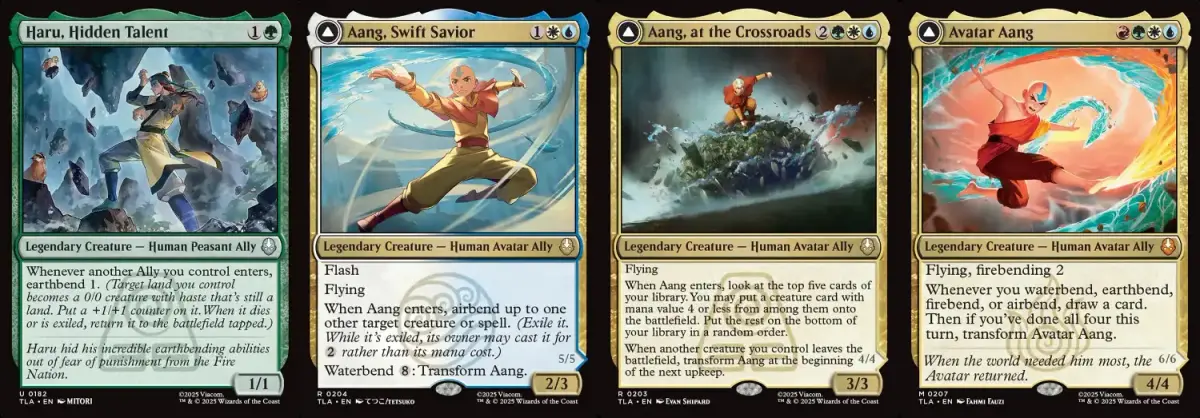
Next are the bending users who meet the transform condition… which are almost all Aang himself (lol). Since only Aang and his mount Appa can airbend, the choices are very limited, and the waterbending Allies all have something unsuitable about them, so Aang, Swift Savior alone has to carry both airbending and waterbending, making it the key card for triggering the transform. The main use of Aang, at the Crossroads is to put Avatar Aang or other Allies onto the battlefield. Since being able to earthbend only after transforming is far too slow, the main earthbender is Haru, Hidden Talent, which triggers earthbend 1 whenever another Ally enters, and paired with Avatar Aang, it is a super strong draw engine that draws one for every one you play. Finally, firebending is handled by Avatar Aang himself, and the mana produced happens to be usable to pay for waterbending’s high cost, thereby meeting the condition of four bending arts in one turn.
Metagame answers: Momo, Playful Pet, Mai, Scornful Striker, Boiling Rock Rioter
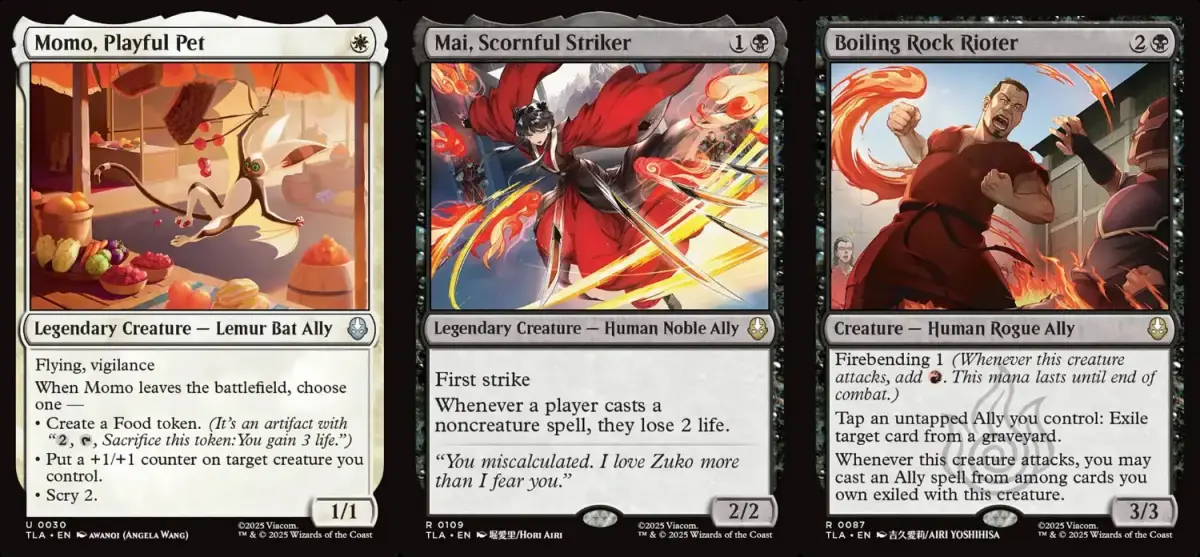
For the one-drop slot, I instead used Momo, Playful Pet, which has flying and vigilance and a payoff when it leaves the battlefield, in place of the common Earthen Ally. The reason is that the latter has unstable combat power and no evasion, low survivability, and an expensive earthbend cost, which really can’t be called good in the current environment of beefy creatures and plentiful cheap removal. Mai, Scornful Striker specifically counters the currently popular Lesson-style spell decks: the more noncreature spells the opponent casts, the closer they are to death, and paired with Katara it is wonderful beyond words. When necessary, Protectors can use indestructible or airbend to stall and force the opponent to take more damage. Boiling Rock Rioter is an Ally recursion engine and a graveyard-hate machine, letting Protectors hop back and forth between the battlefield and graveyard to dodge the opponent’s removal, while messing up the opponent’s graveyard so they can’t play reanimation shenanigans.
Mana base: Jasmine Dragon Tea Shop, Cavern of Souls, Secluded Courtyard, Starting Town, Urban Retreat
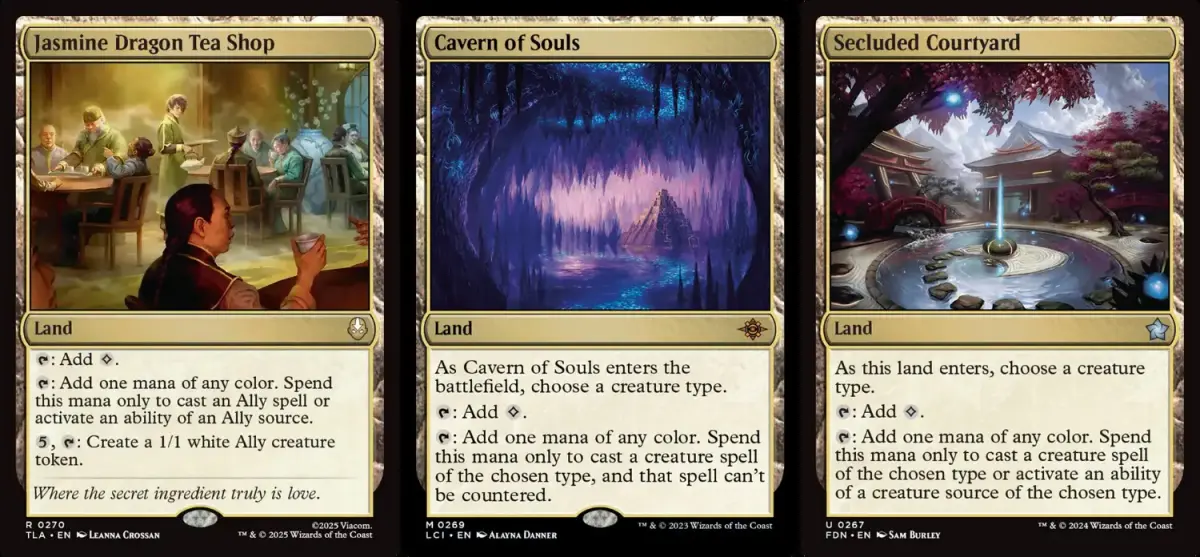
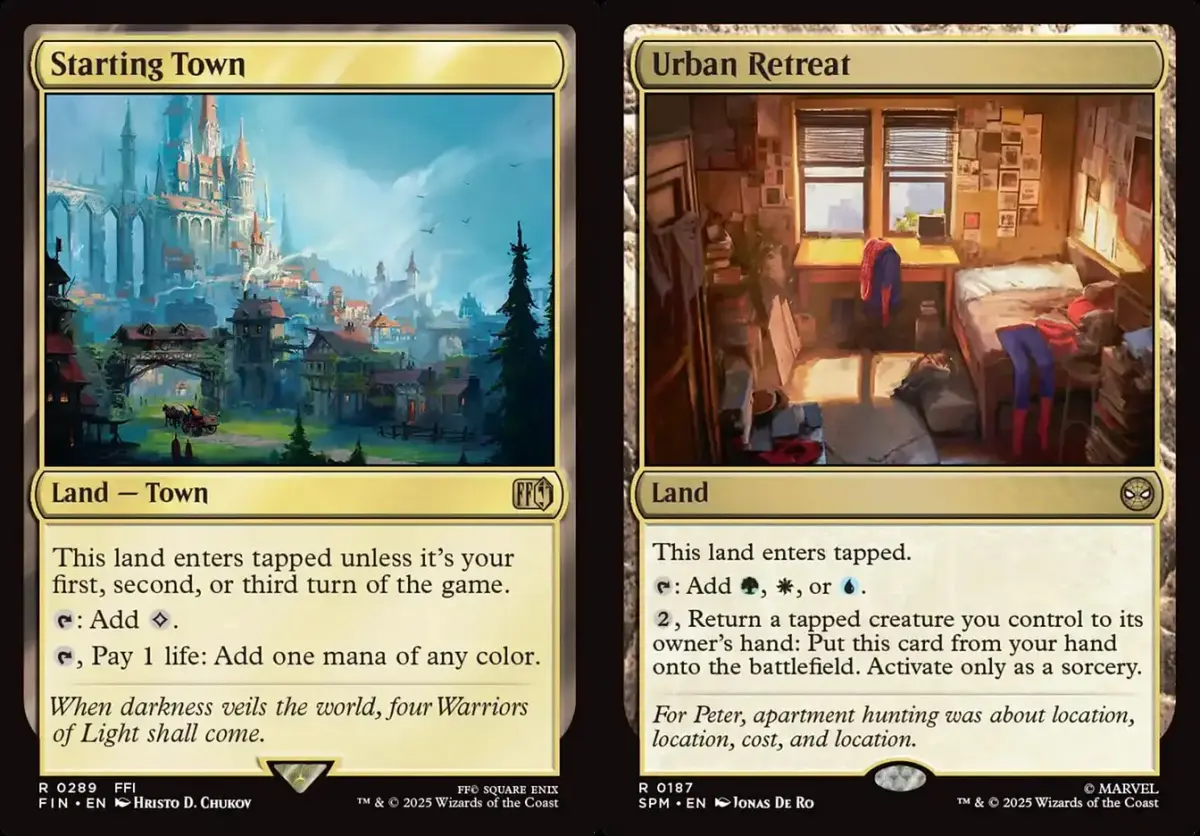
Since this is an all-creature five-color tribal deck, the lands include the Ally-specific land Jasmine Dragon Tea Shop and the two tribal-specific lands in Standard, Cavern of Souls and Secluded Courtyard, plus the five-color land Starting Town, for 16 five-color lands in total. For the remaining slots, most other players stuff in shocklands for better tempo, but considering the whole deck’s color distribution and the need to recur creatures, I went with the Bant tapped tri-land Urban Retreat.
Gameplay Demonstration
These matches demonstrate Avatar transformation, Katara drawing cards violently, Urban Retreat recursion, and the shameless plays of Rioter. The thrill factor should be beyond doubt, with quite a déjà vu of four-color Omnath. However, it is after all a somewhat midrange all-creature deck, so against faster or very controlling matchups it may still get nowhere, and then you have to rely on sideboard spells to deal with them.
Note: The Water Tribe Rallier that appears in the deck in game 1 was later changed to Mai.
Conclusion
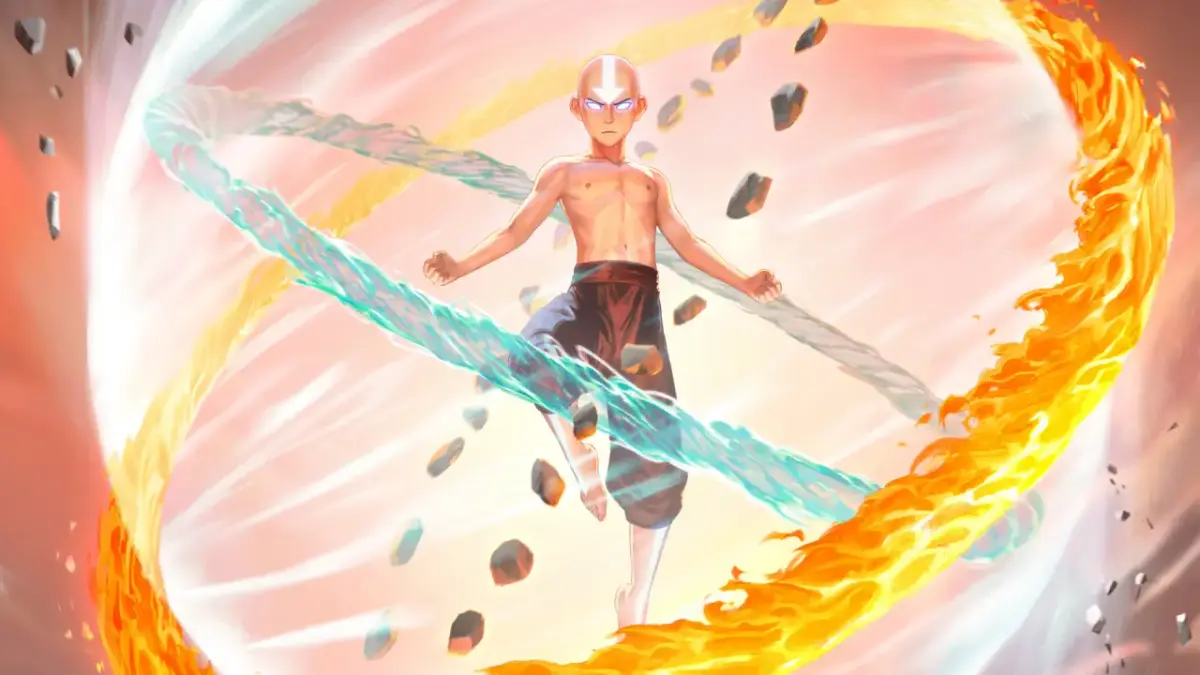
The eventful year 2025 comes to an end, so let’s close out the year with this colorful Avatar deck. Looking through my records, I published 26 deck articles on this site this year, and I wonder whether readers have found a deck they like. If any article won your favor, it is my honor. Next year we will return to the home turf of Lorwyn, so I ask readers for your continued guidance.
- Title
- Invoke the Divine: Standard Avatar Aang Allies
- Author
- JerobaMTG
- Created at
- December 29, 2025
- License
- This work is licensed under CC BY-NC-SA 4.0 .