Faebloom Trick: Standard Dimir Faeries
Note: This article was translated from Chinese by AI and may contain errors. Read the original Chinese version.
Before We Start
“Huh? Did FDN give Faeries any support at all?”
I believe quite a few readers will have this question. Open Scryfall and search the Foundations card pool, and there are only three Faeries in total, none of which seems to help the tribe much. Widen the search to all of Standard, and the cards released since Wilds of Eldraine are only Kellan, who is the wrong color, and Faeries that Dimir builds can’t really use. So why pick this moment to build Faeries?
Card Analysis
Although Dimir is currently the peak of midrange decks in Standard, the Faerie tribe that shares its colors has all but disappeared, leaving only Faerie Mastermind. The reason is naturally that playing a tribal deck restricts your creature choices. On one hand, you can’t put in the best creature cards in the card pool to raise your power, especially for creatures costing three or more, where Faeries have a significant strength gap against the creatures in current lists. On the other hand, the Faeries’ tribal payoff isn’t enough to make people give up other quality creatures, and that’s how things ended up. So what exactly got supported?
My answer is Faebloom Trick.
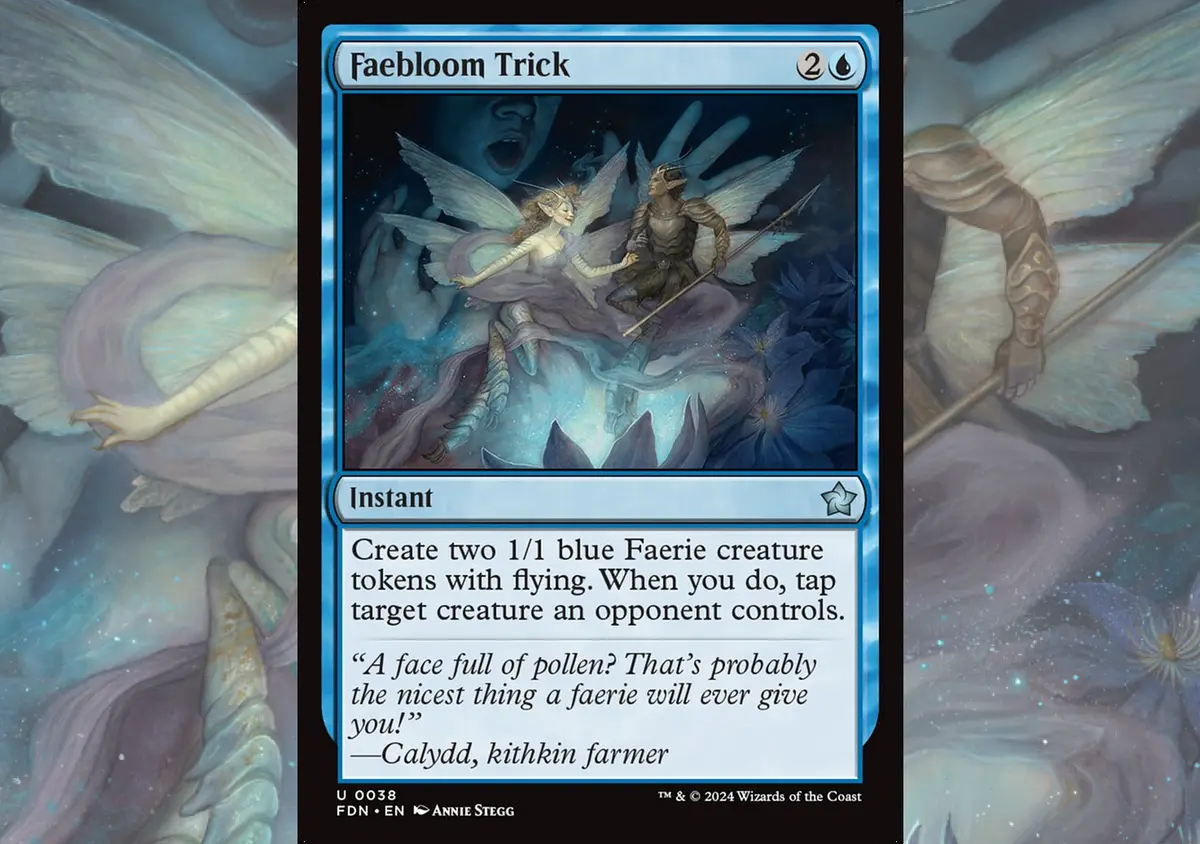
Instant
Create two 1/1 blue Faerie creature tokens with flying. When you do, tap target creature an opponent controls.
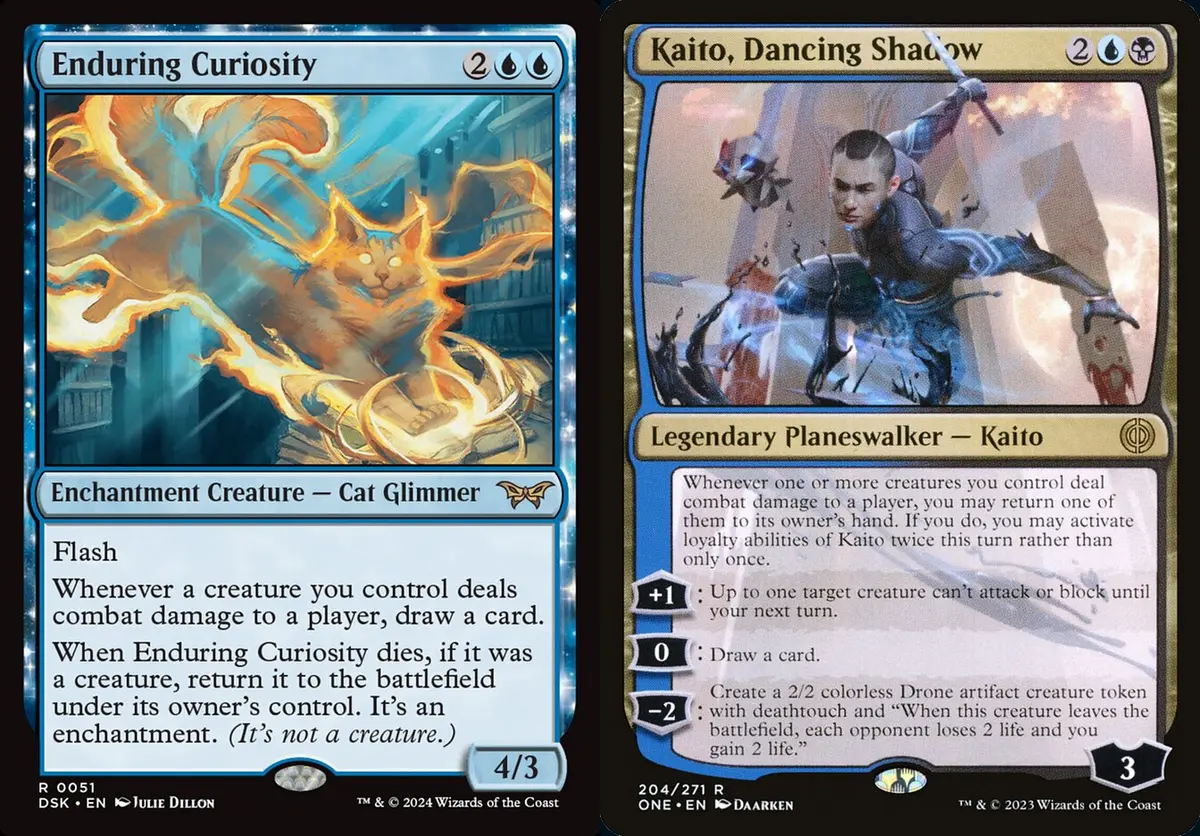
At first glance it’s just a Midnight Haunting with an added tap on an opponent’s creature, but it’s actually a big boost for Faeries. First, popping out two flyers at instant speed means a single removal spell can’t clean them up, letting your Faerie-linked instants and sorceries work more reliably, and paired with Enduring Curiosity and Gix, Yawgmoth Praetor you can draw more cards. Second, the attached tap effect gives a strong tempo advantage, which can delay the opponent’s offense or clear the way, creating an opportunity to turn from defense to offense. It can be called the Faeries’ best three-drop.
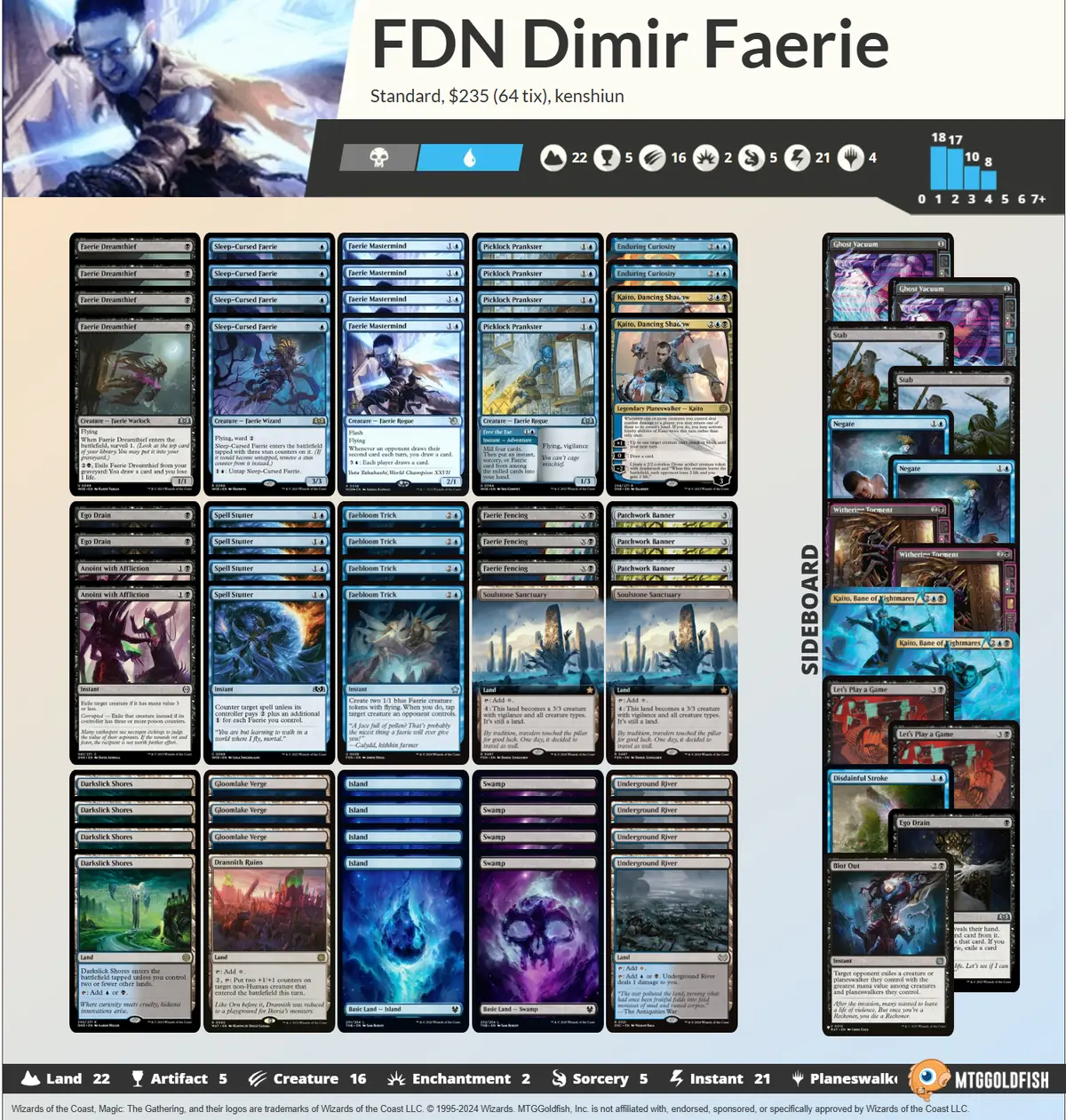
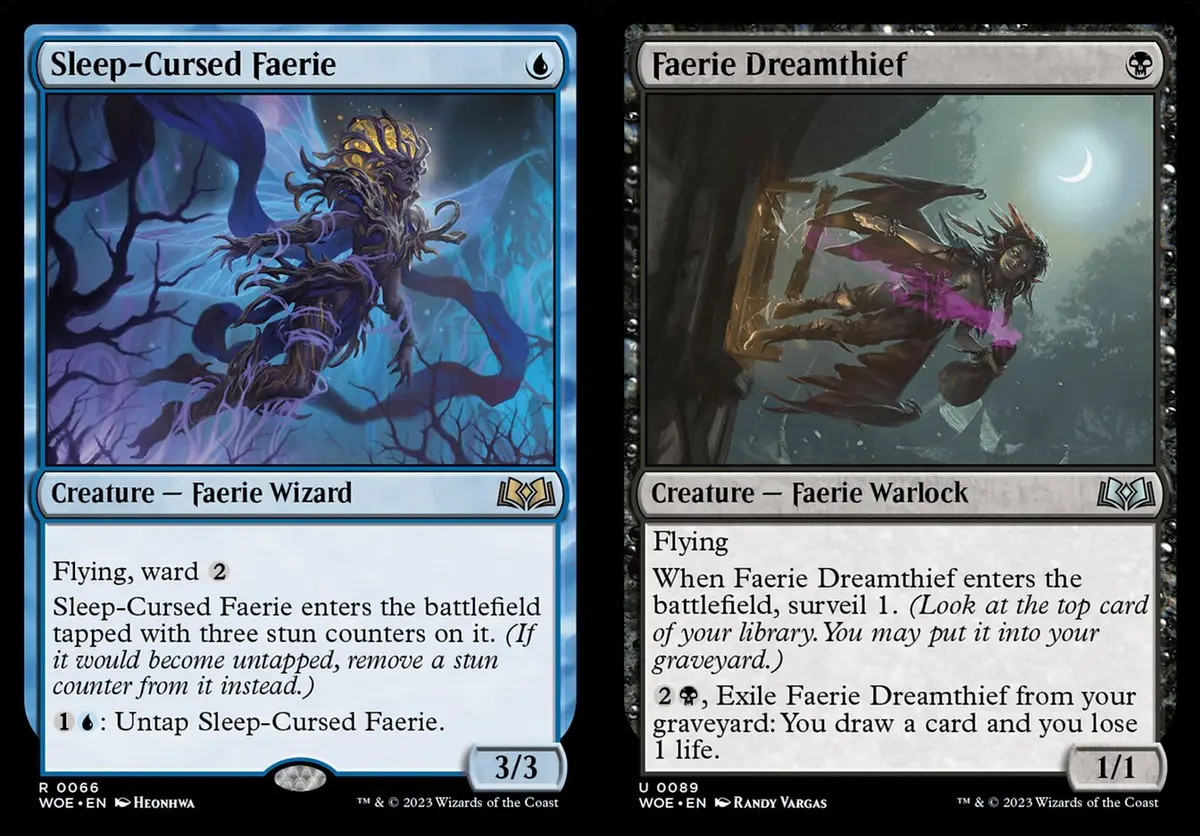
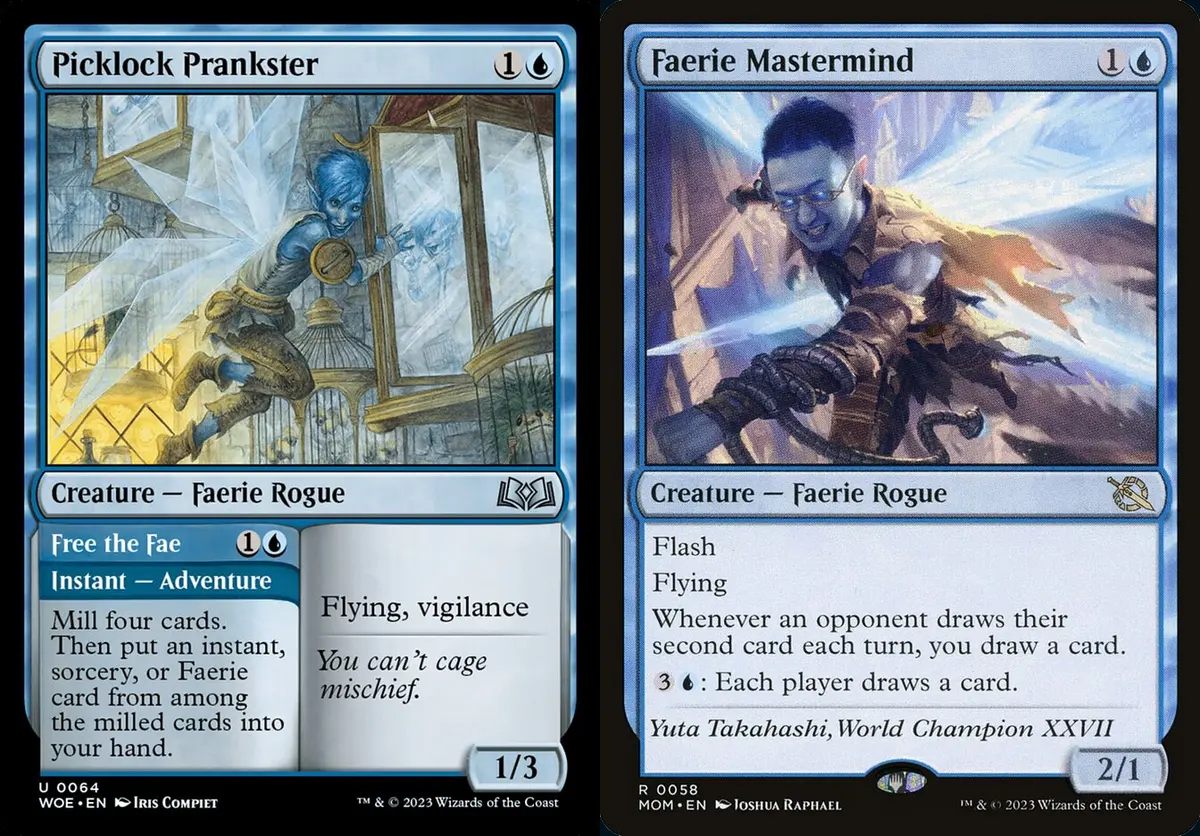
Creatures at two mana or less are centered on the Faeries from Wilds of Eldraine. To steadily improve the reliability of Faerie-linked spells, the one-drop slot is filled with the hard-to-remove Sleep-Cursed Faerie, the reusable-after-death Faerie Dreamthief, the Picklock Prankster, which can be used as either a creature or an adventure spell, and the current star card of Dimir midrange, Faerie Mastermind.
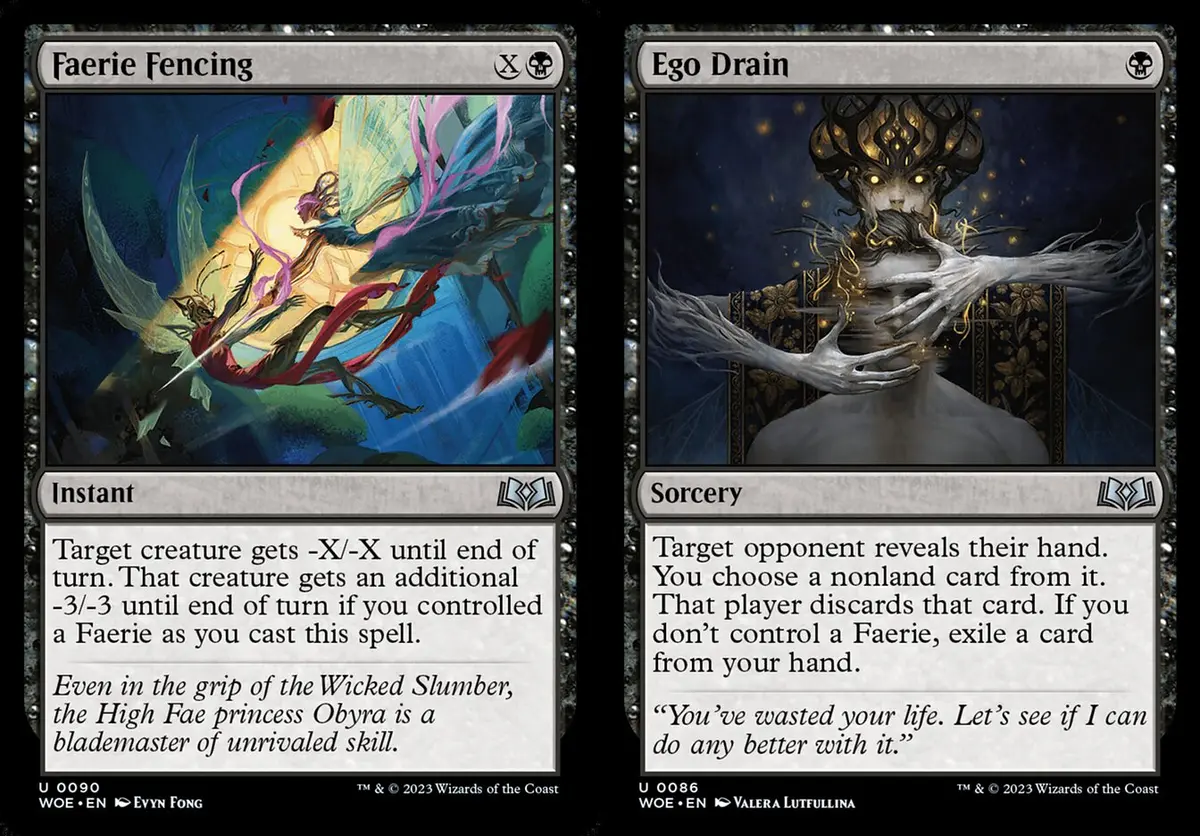
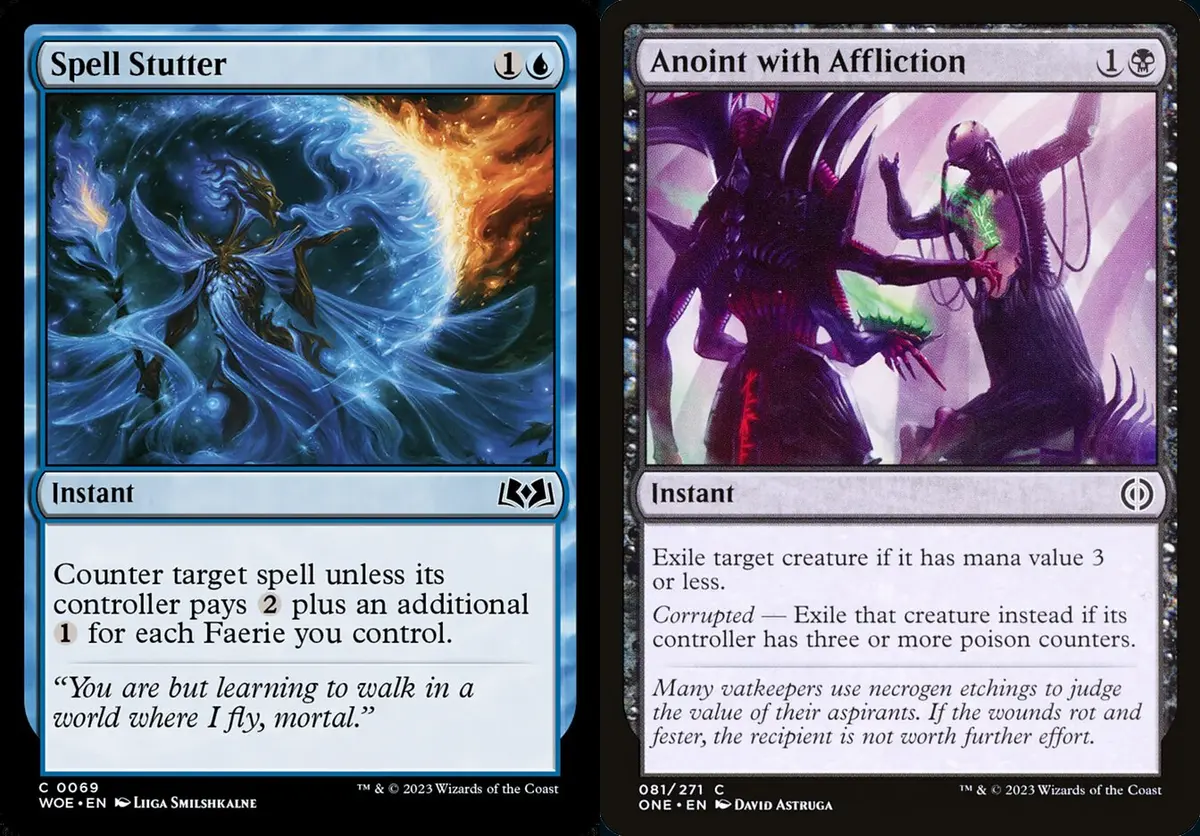
For spells, besides the core Faebloom Trick, the tribal-linked spells Faerie Fencing, Ego Drain, and Spell Stutter are naturally going in. Spell Stutter is a soft counter that makes the opponent pay: the more Faeries on the battlefield, the more the opponent has to pay, and even without Faeries they have to pay at least 2, so I run a full set. When Faerie Fencing is cast with a Faerie on the battlefield, it starts at -3/-3, beating other one-mana removal, and paying extra gets a stronger removal effect, so it’s unlikely to become a dead card. Ego Drain can make the opponent discard any nonland card, so there’s no worry about the tragedy of Duress only seeing an Overlord. Considering that black’s spells need Faeries on the battlefield more and have a usage threshold, the numbers are trimmed slightly, with Anoint with Affliction as a supplement.
At four mana are the card-draw engine Enduring Curiosity and Kaito, Dancing Shadow. Enduring Curiosity has extremely strong card-refilling ability in decks with strong evasion, and flashing it in at the right time to draw a big pile might make the opponent concede outright. But as for the planeswalker, why not Kaito, Bane of Nightmares? Because this deck is a Draw-Go-style flash tempo deck that values defensive performance over offensive ability, and Kaito, Dancing Shadow, who can [0] refill the hand on the spot or [-2] create a 2/2 deathtouch Drone that drains life when it leaves, does this better. Of course, when the opponent’s deck is more passive, you can also swap in Kaito, Bane of Nightmares from the sideboard to deal with it.
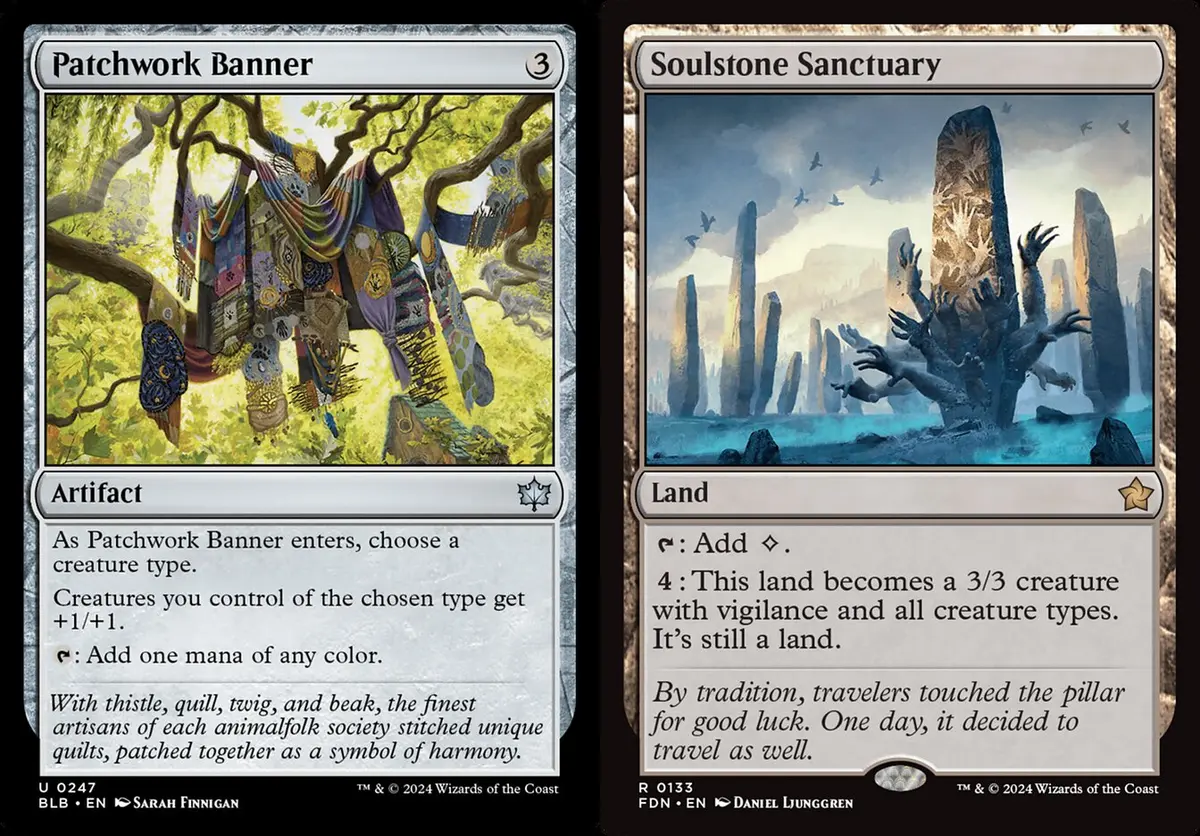
The insufficient striking power of the little flyers is reinforced by the artifact Patchwork Banner, which gives a single creature type +1/+1 and doubles as a mana rock. For utility lands I chose the new manland Soulstone Sanctuary and Drannith Ruins, which boosts a single creature’s body, as combat supplements.
Gameplay Demo
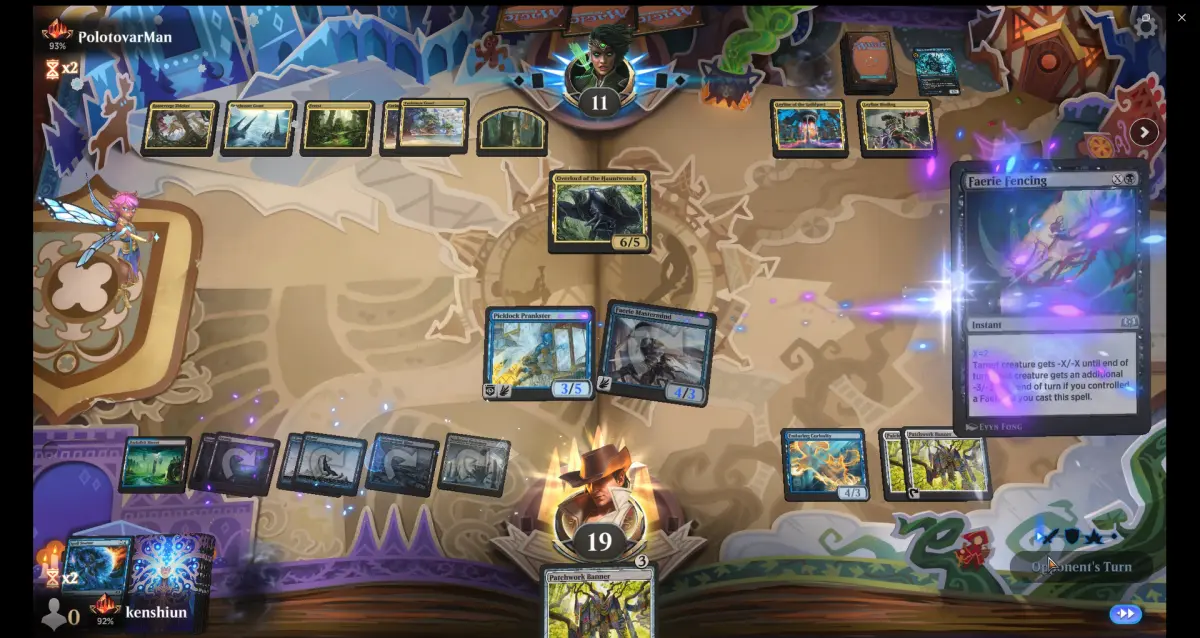
This game against mono-black midrange demonstrates what’s great about Faebloom Trick in a match. It delayed the Unstoppable Slasher’s offense for two turns, and although the opponent used Rush of Dread to make me sacrifice two creatures, giving up tokens is still a smaller loss than sacrificing two Faerie cards. If the opponent hadn’t made me sacrifice with Rush of Dread, a Patchwork Banner coming down could have punched them down to 4 in one hit, and as long as no demon was cast, everything was fine. The opponent’s last draw was Sheoldred, the Apocalypse, which couldn’t block Sleep-Cursed Faerie, and the game ended.
Conclusion
The addition of Faebloom Trick from Foundations gave Faeries back the flexibility they deserve. Toying with the opponent using a small-creature mana curve plus instants and flash costs only half as much as orthodox Dimir midrange, and as long as you can afford Faerie Mastermind, the rest isn’t a big problem. The win rate in testing was also good, so readers who find the meta version of Dimir midrange awkward to play can give it a try.
- Title
- Faebloom Trick: Standard Dimir Faeries
- Author
- JerobaMTG
- Created at
- December 3, 2024
- License
- This work is licensed under CC BY-NC-SA 4.0 .