Cunning Evasion: Standard Dimir Ninjas
Note: This article was translated from Chinese by AI and may contain errors. Read the original Chinese version.
Before We Start
The Ninja creature type, from Betrayers of Kamigawa (BOK) in 2005, returned to the Standard environment after 17 years in Kamigawa: Neon Dynasty (NEO), bringing a string of high-quality low- and mid-cost Ninja cards that surpass even those of Modern Horizons (MH1), and additionally providing support for Rogues. This freed Ninja tribal from the limits of the Kamigawa environment, making it a tribal theme that can hold its own in Standard and even Pioneer.
Chapter of Ninjutsu: The Ability Explained
First, let’s start by explaining the ninjutsu ability.
Ninjutsu {cost} ({cost}, Return an unblocked attacking creature you control to its owner’s hand: Put this card onto the battlefield from your hand tapped and attacking.)
As the rules text shows, ninjutsu is an ability that swaps an unblocked attacking creature with a Ninja in your hand. Flavor-wise, it’s like a Ninja shedding its disguise and revealing its true self to ambush the opponent. Because of the ability’s complexity, there are four points to keep in mind when playing:
- You can only activate ninjutsu after blockers have been declared
- Returning the attacking creature is a cost; as soon as you activate ninjutsu, the creature has already returned to hand
- A creature that enters via ninjutsu can’t change which player or planeswalker it attacks
- An attacking creature that entered via ninjutsu can itself be returned to hand as the ninjutsu cost
From these traits, ninjutsu is an ability you can only activate during combat on your own turn. By using ninjutsu to dodge the opponent’s counterspells, make the opponent misjudge damage, and lure the opponent into using their cards wrongly, Ninja decks emphasize proactive attacking more than the current Dimir Faeries and Dimir midrange decks, and can be classified as Dimir aggro.
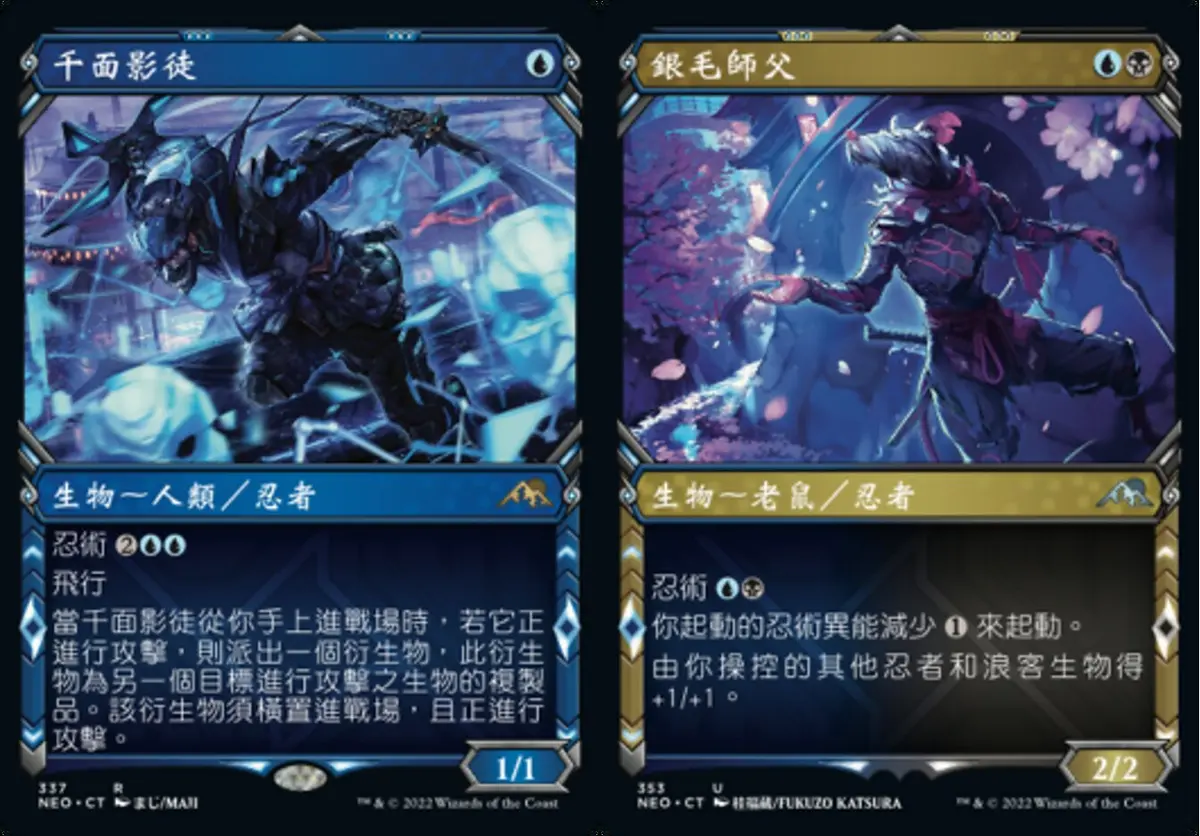
Among the NEO Ninjas, the official designers provided a killer shadow-clone combo: Thousand-Faced Shadow paired with Silver-Fur Master. As a lord, Silver-Fur Master not only gives a stat boost, but its accompanying ninjutsu cost reduction lets Thousand-Faced Shadow copy itself repeatedly. I remember that in a Pioneer MITQ last year, my opponent was at nearly full life and I was at 1 life, and I top-decked Thousand-Faced Shadow and pulled off an extreme comeback kill with a punch of 20-some damage.
Way of the Ninja Chapter: Sample Decks
As mentioned above, since ninjutsu must be paid for and activated on your own turn, building toward aggro is a perfectly reasonable direction. Recently, 晴屋福岡店 happened to have a 3-0 deck that made full use of ninjutsu’s aggressive nature. See the decklist:
Decklist link
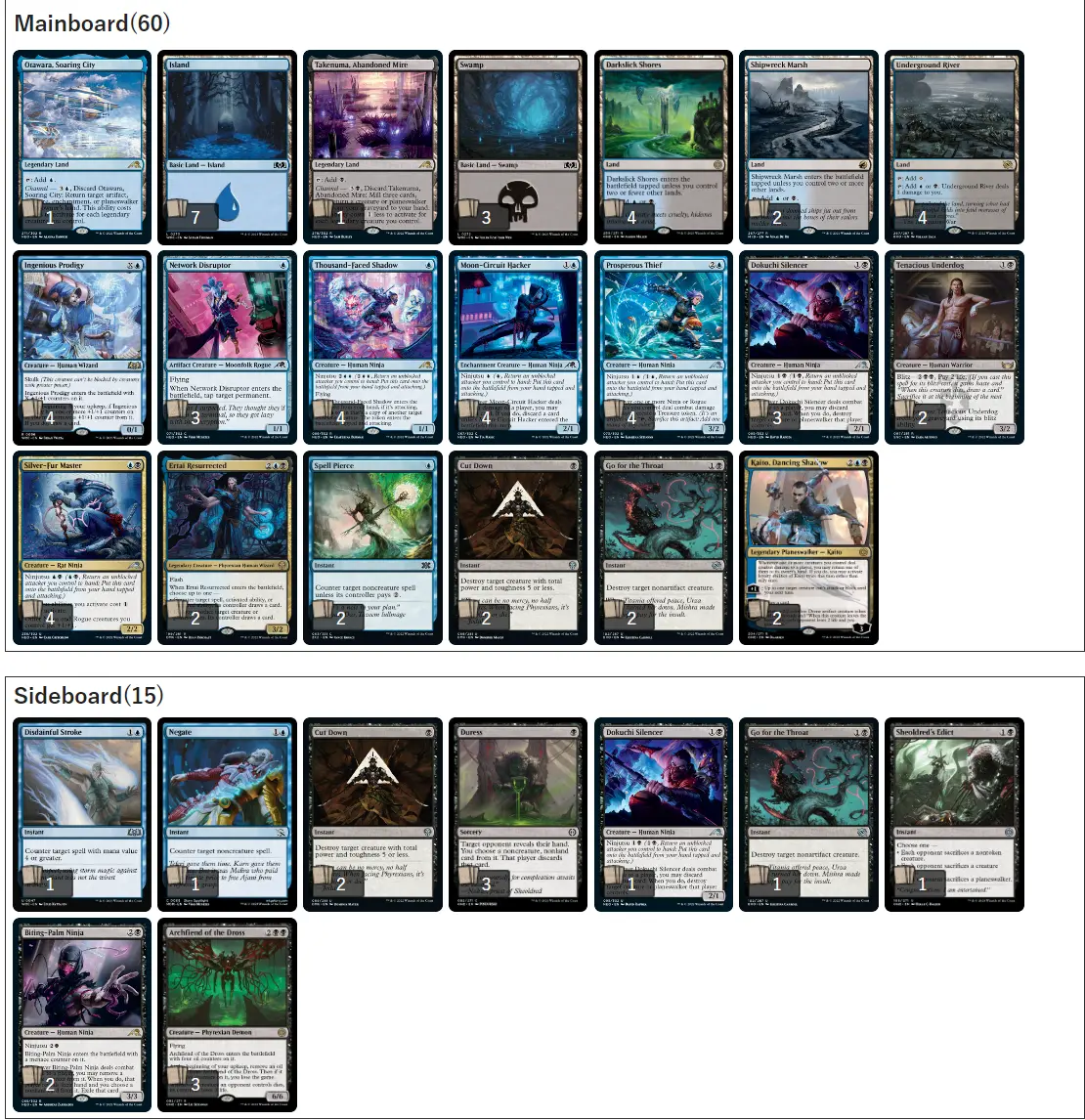
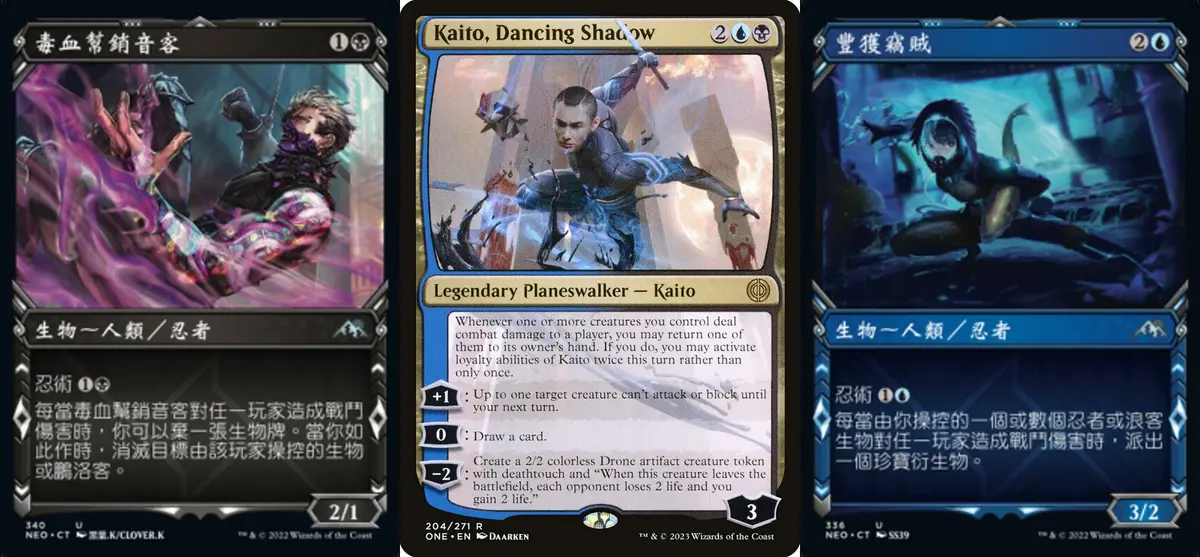
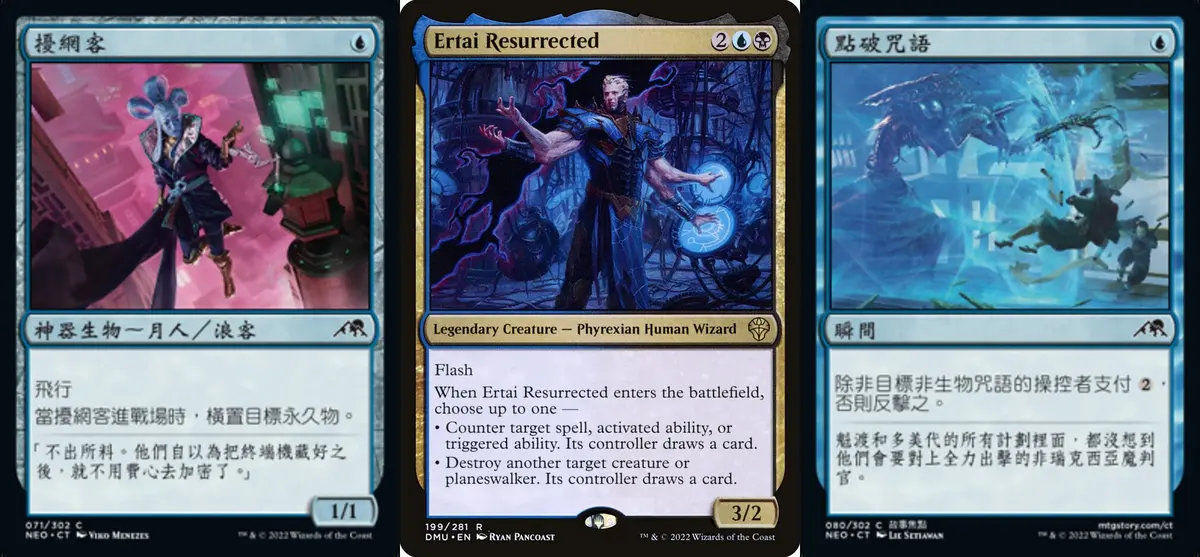
As many as 11 one-mana evasive creatures and 15 ninjutsu creatures at two mana or less let the deck reliably pull off ninjutsu on turn two. With a creature count of 30, far above that of an ordinary deck, Dokuchi Silencer shoulders the removal duties. A few instant and sorcery removal spells, Network Disruptor’s tapping, and the +1 immobilizing effect of Kaito, Dancing Shadow clear the way, while Spell Pierce and Ertai Resurrected serve as insurance for getting in your opponent’s way at critical moments. The deck waits for a chance to play the shadow-clone combo of Thousand-Faced Shadow copying Silver-Fur Master to end the game.
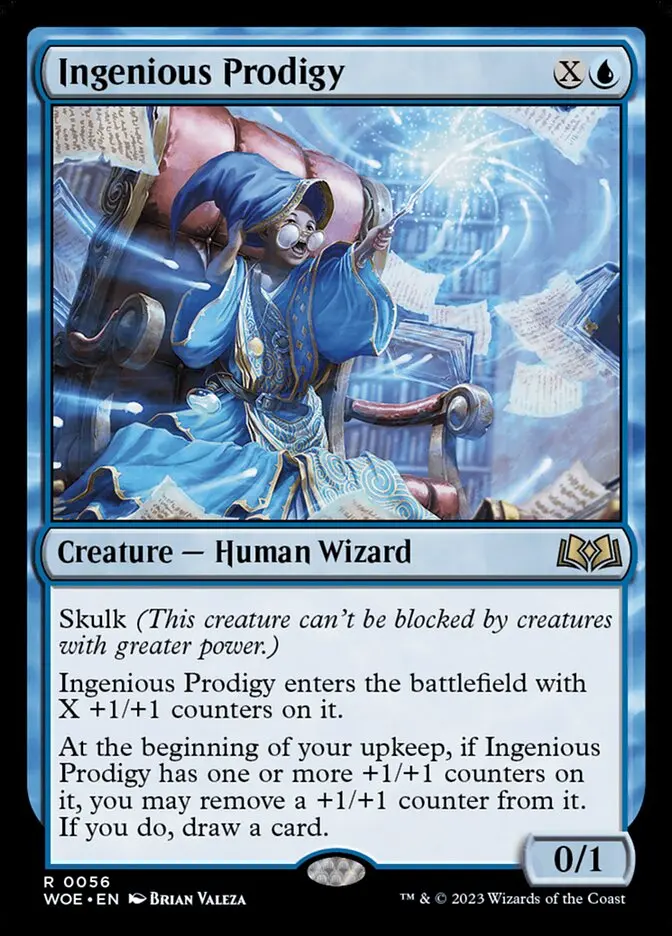
Ingenious Prodigy, newly introduced in Wilds of Eldraine (WOE), is this deck’s biggest highlight. A one-mana 0/1 with skulk is an excellent ninjutsu enabler, and in the mid to late game it can show up as a big creature to pressure the opponent, with removing a +1/+1 counter each turn to draw providing a steady stream of card resources. Even after the counters are used up and it’s a 0/1, you just return it with ninjutsu and recast it.
In terms of bringing out ninjutsu’s aggressive nature, this version’s game plan is built very beautifully. However, a structure that emphasizes attacking tempo so heavily is, as some players have criticized, unbeatable when you’re on the play and curve out with a flier on turn one and ninjutsu on turn two, but on the draw you’ll probably get beaten to a pulp by removal and sweepers right from the start. In my view, the burst power of the Master shadow-clone combo doesn’t need any more icing on the cake, and attention should go to play flexibility instead. Here is the sample decklist:
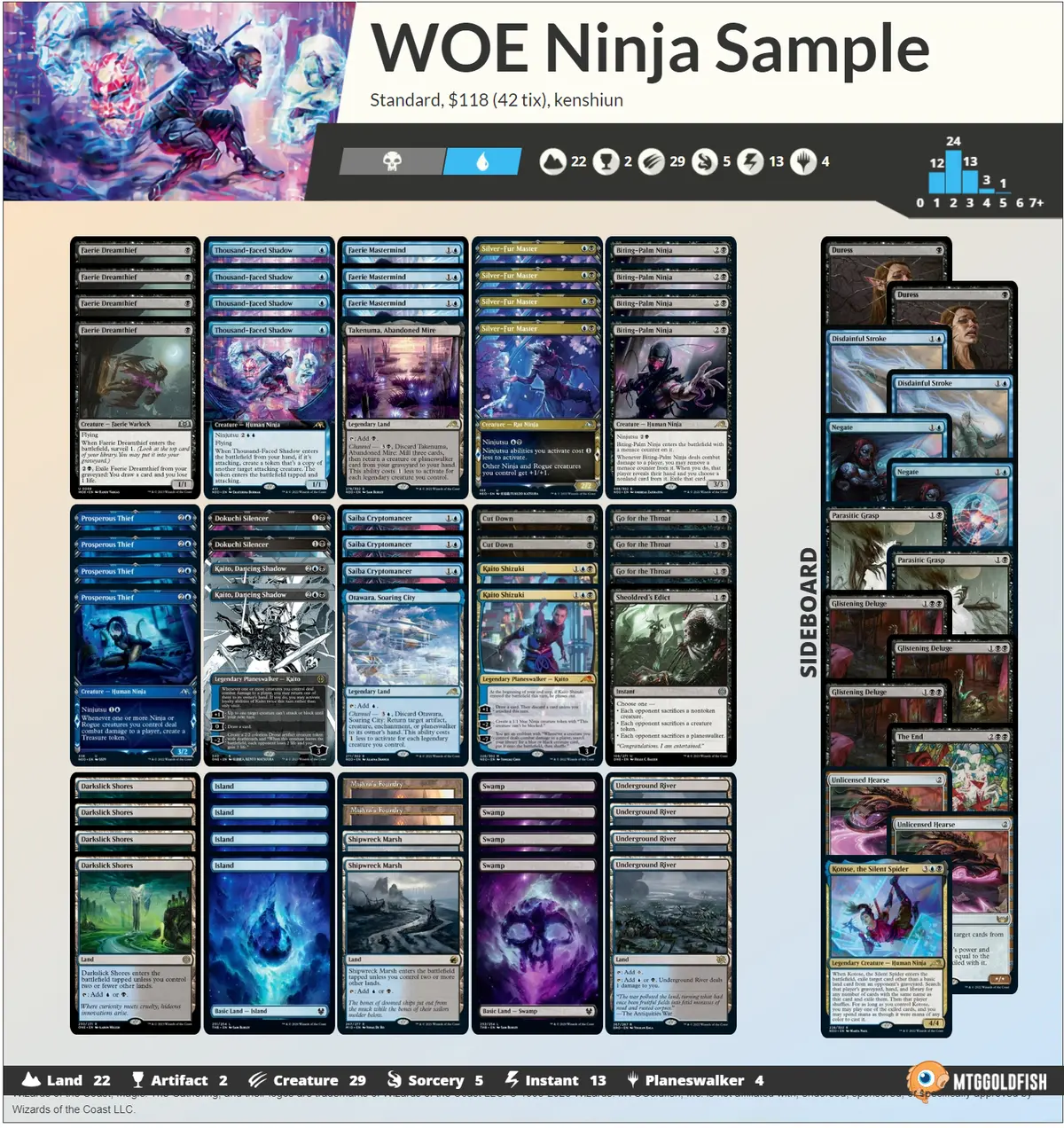
In the sample decklist, we kept the win-condition pieces Thousand-Faced Shadow and Silver-Fur Master, along with Prosperous Thief, which also has a lord effect, and a small number of Dokuchi Silencer. We removed the filler Moon-Circuit Hacker and instead put Biting-Palm Ninja in the main deck. Biting-Palm Ninja is a solid three-mana 3/3 with menace that comes with a built-in Night Terrors and can jump in via ninjutsu, which makes it a nightmare for mid-to-slow decks. Two Biting-Palm Ninja using ninjutsu repeatedly leaves the opponent completely unable to hold onto cards in hand.
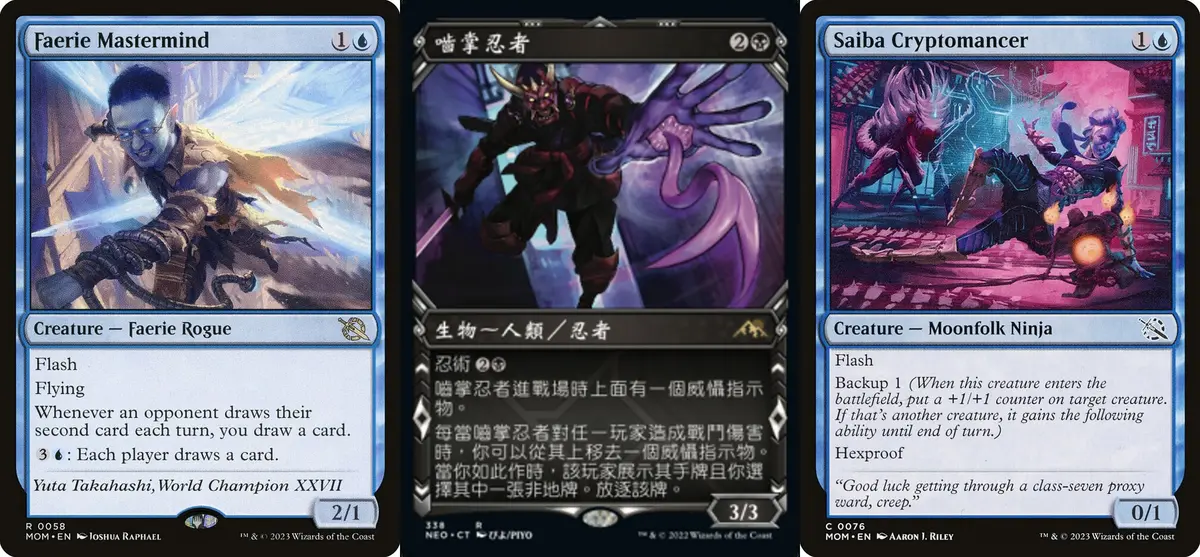
In addition, when a sweeper wipes out all your creatures, the Ninjas in your hand can’t jump onto the battlefield via ninjutsu, so how to preserve a creature to enable ninjutsu is an important issue. Besides tokens created by planeswalkers, there are three solutions to this problem: 1. flash creatures, 2. recursive creatures, 3. manlands. The 晴屋 deck chose recursive creatures, making good use of Tenacious Underdog’s blitz ability and coordinating it with ninjutsu as the situation calls for, for example returning the blitzed Underdog to hand to jump in Silencer, then discarding the Underdog back into the graveyard as fodder for the Silencer. The sample version chose flash creatures and a manland. Thanks to March of the Machine (MOM) for giving us two high-quality flash creatures of the right creature type: Faerie Mastermind and Saiba Cryptomancer. Faerie Mastermind has both evasion and resource-refilling ability, with a notable ambush effect in midrange matchups; Saiba Cryptomancer comes with hexproof itself and can back up a teammate with a +1/+1 counter and hexproof. When the opponent is holding up mana for removal, it can flash in brazenly, and its clever interaction with ninjutsu makes it an excellent combat trick. As for the manland, naturally it’s Mishra’s Foundry. Its two-mana animation cost lets you use it to jump in a ninjutsu when you have five lands, and it fits both versions’ Kaito traits well.
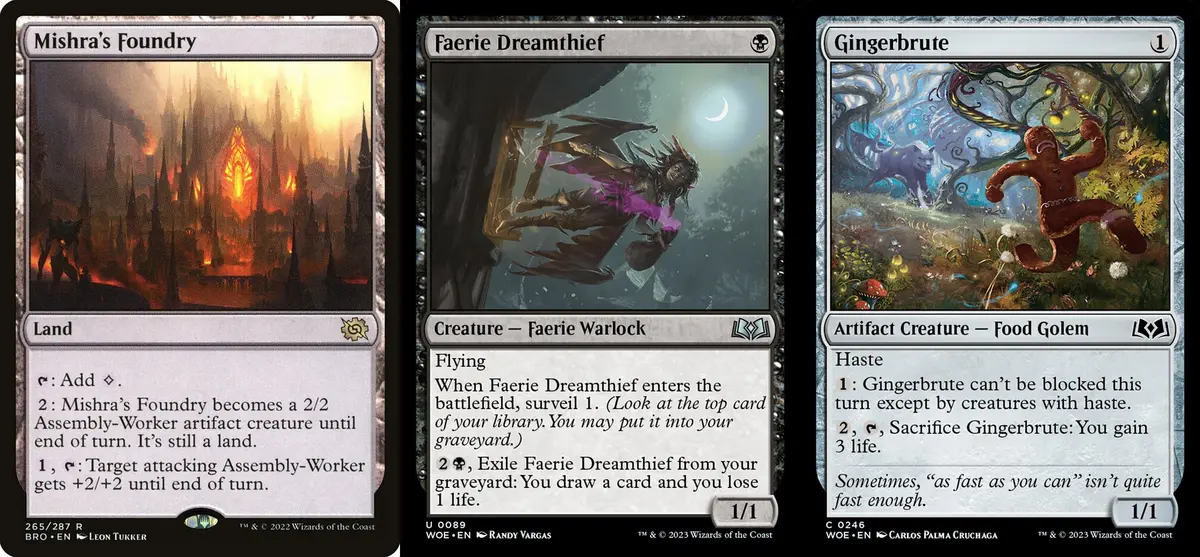
Incidentally, there is also a usable haste creature since WOE came out, namely Gingerbrute. A one-mana 1/1 with haste that can pay 1 to activate “can only be blocked by creatures with haste,” it’s often used in Ninja commander decks, and it’s not a bad option in Standard either.
In contrast to Ingenious Prodigy used in the 晴屋 version, the sample version picks Faerie Dreamthief as its new-card representative. Faerie Dreamthief, a one-mana 1/1 flier, not only meets early tempo needs, but its enters-the-battlefield surveil also acts as a lubricant, lowering the chance of land or spell screw, and it can also exile a card from the graveyard to return a card to hand. It performs well when ahead, and when behind it can be sent in to dig for cards. Apart from the slight pity that it lacks the Rogue type, it’s flawless.
Chapter of Technique: Key Play Points
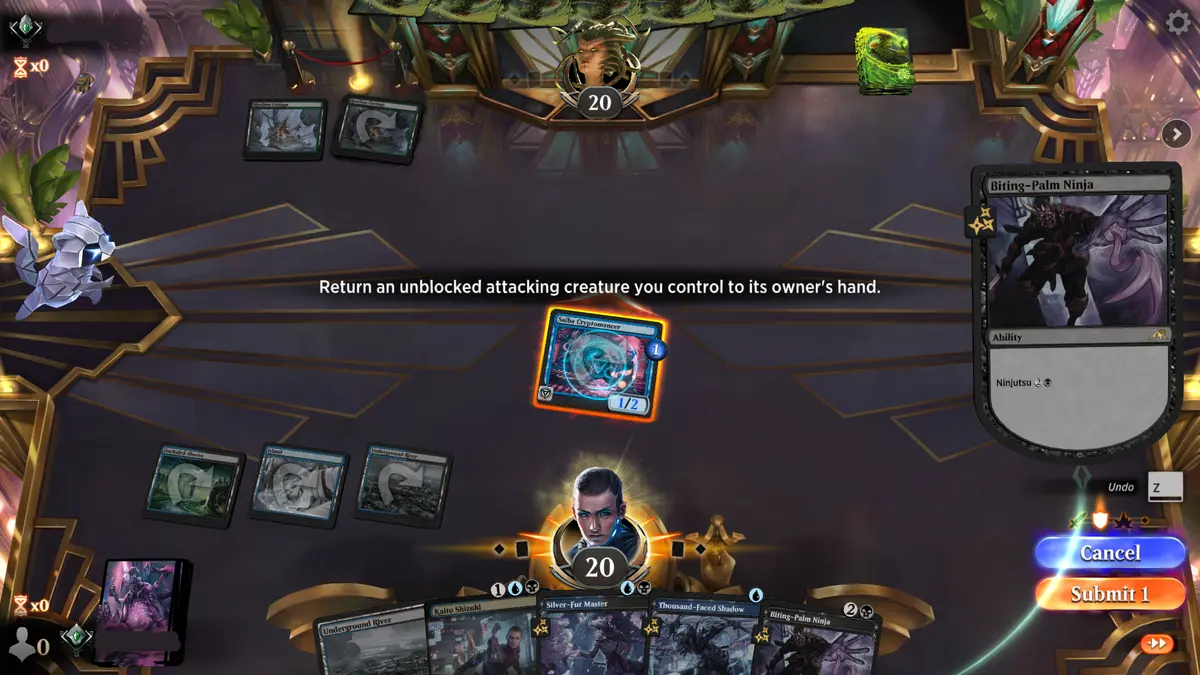
If you ask what situation Ninja players hate most, it’s when the creature that jumped in via ninjutsu gets hit by removal. That’s not only the loss of a creature card, but because a creature was returned to hand, you also lose tempo. On the aggro route there usually aren’t many options, and mostly you can only curve out creatures and jump in ninjutsu plays. The sample midrange version adds flash creatures, which widens the range of play options considerably. For example, I play a flier on turn one, and on turn two, should I ninjutsu in Prosperous Thief? Should I hard-cast Silver-Fur Master? Or hold back a flash creature and wait for an ambush? The answer varies by opponent; in other words, you have to anticipate the opponent’s likely responses and play accordingly. Let’s assume a scenario here: on turn two you hold both Faerie Mastermind and Saiba Cryptomancer, and the opponent taps out on turn two to cast a creature. I would usually flash in Faerie Mastermind for evasion damage, then on turn three ninjutsu in a Biting-Palm Ninja to look at their hand or a Prosperous Thief to make Treasure. But if the opponent chooses to pass with mana up, it usually means they’re holding mana for removal or a counterspell, and that’s a good time to flash in Saiba Cryptomancer. If it doesn’t get countered, you get free damage and look for a chance to jump in a ninjutsu. As long as you have enough mana, after ninjutsu returns a creature to hand you can also flash it in in response to the opponent’s removal to help absorb it, and even if it gets countered on turn two, it can escort the Biting-Palm Ninja or Kaito Shizuki on turn three.
In the limited space here it’s not possible to explain every scenario. In any case, I roughly sum up the Ninja deck’s play tips in the following points:
- Don’t be fixated on jumping in creatures through ninjutsu; hard-cast when the situation calls for it
- Anticipate and avoid the opponent’s plays, and if you lack experience, make up for it with Duress
- Make good use of Cryptomancer’s hexproof and +1/+1 counter to create advantages
- Leave yourself a follow-up play when using ninjutsu, and the follow-up play can be obtained by returning a creature to hand
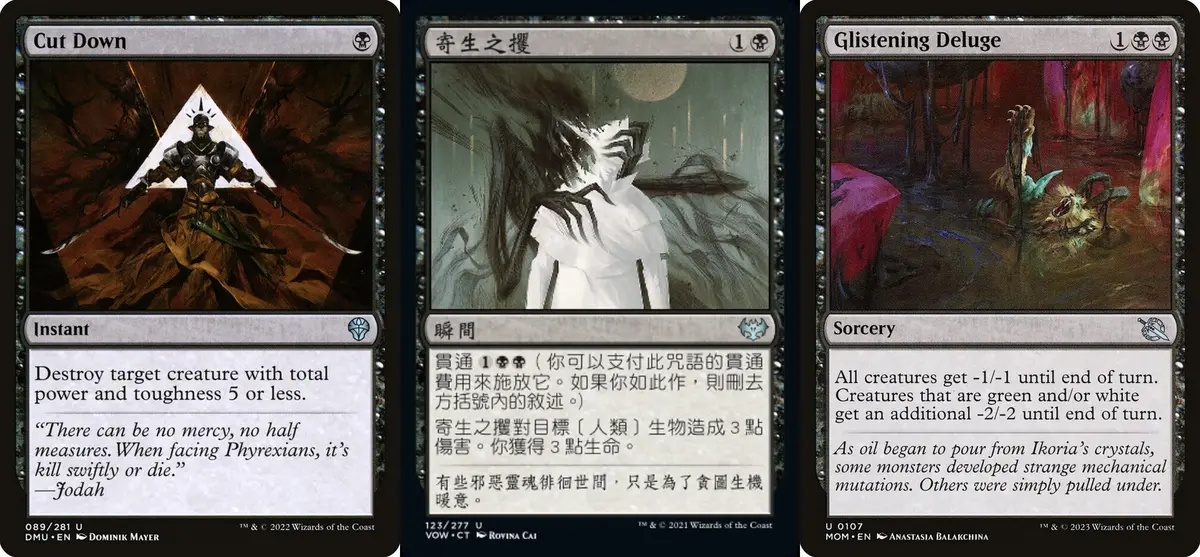
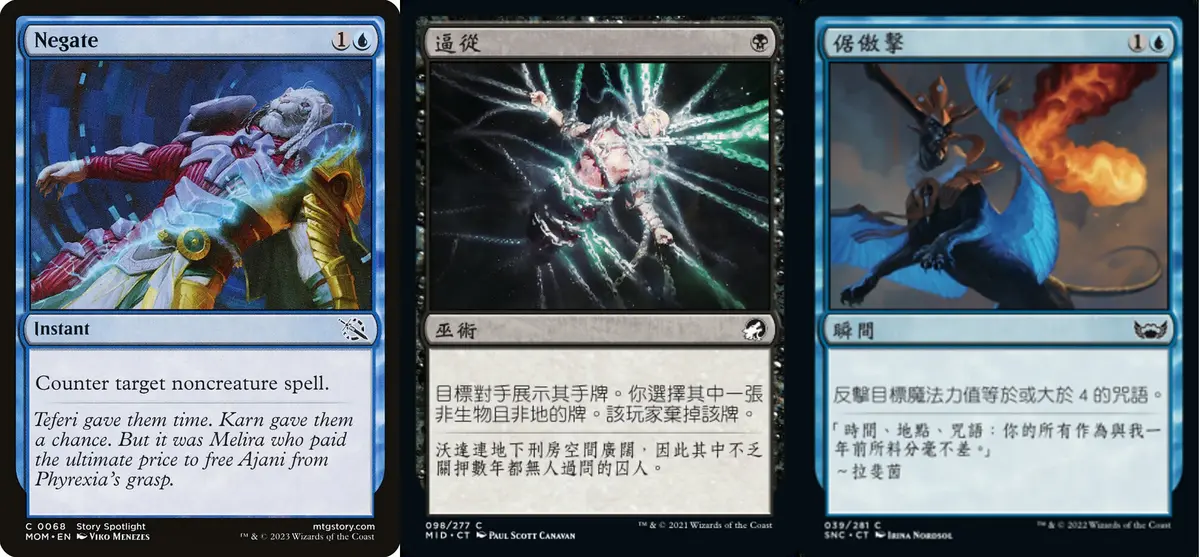
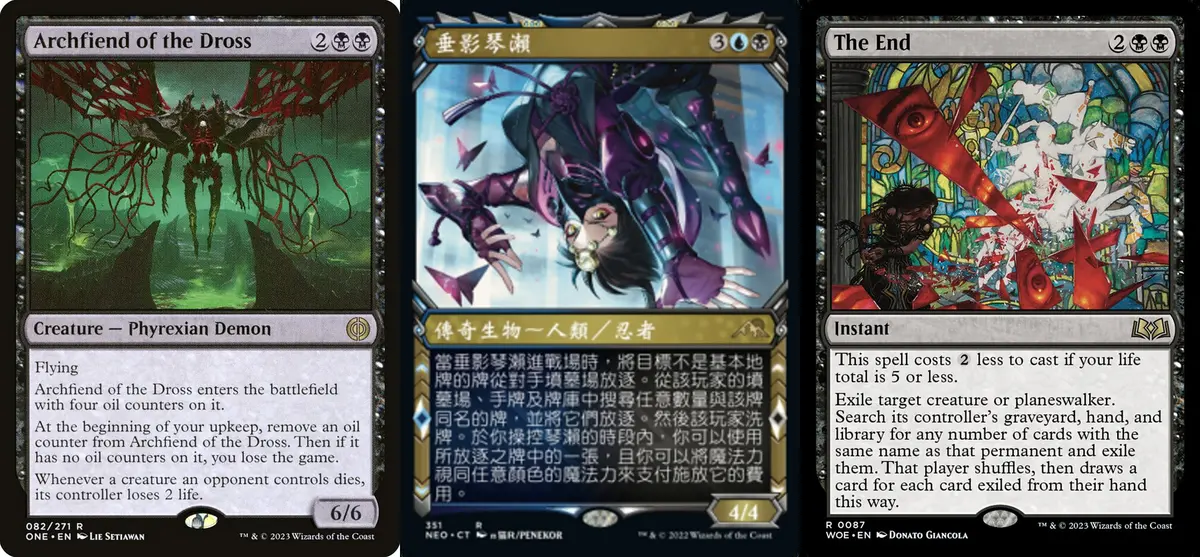
As for sideboard strategy, it’s mainly swapping spells and a few creatures. Against aggro, bring in more Cut Down and the life-gaining Parasitic Grasp; if it’s a white-green go-wide deck, add Glistening Deluge to clear it all out in one go. Against slow decks, bring in Duress, Negate, and Disdainful Stroke, and the 晴屋 version also swaps in Biting-Palm Ninja. In midrange matchups, it’s the turn of Archfiend of the Dross, The End, and Kotose, the Silent Spider.
Chapter of Hidden Gems: Directions for Evolution
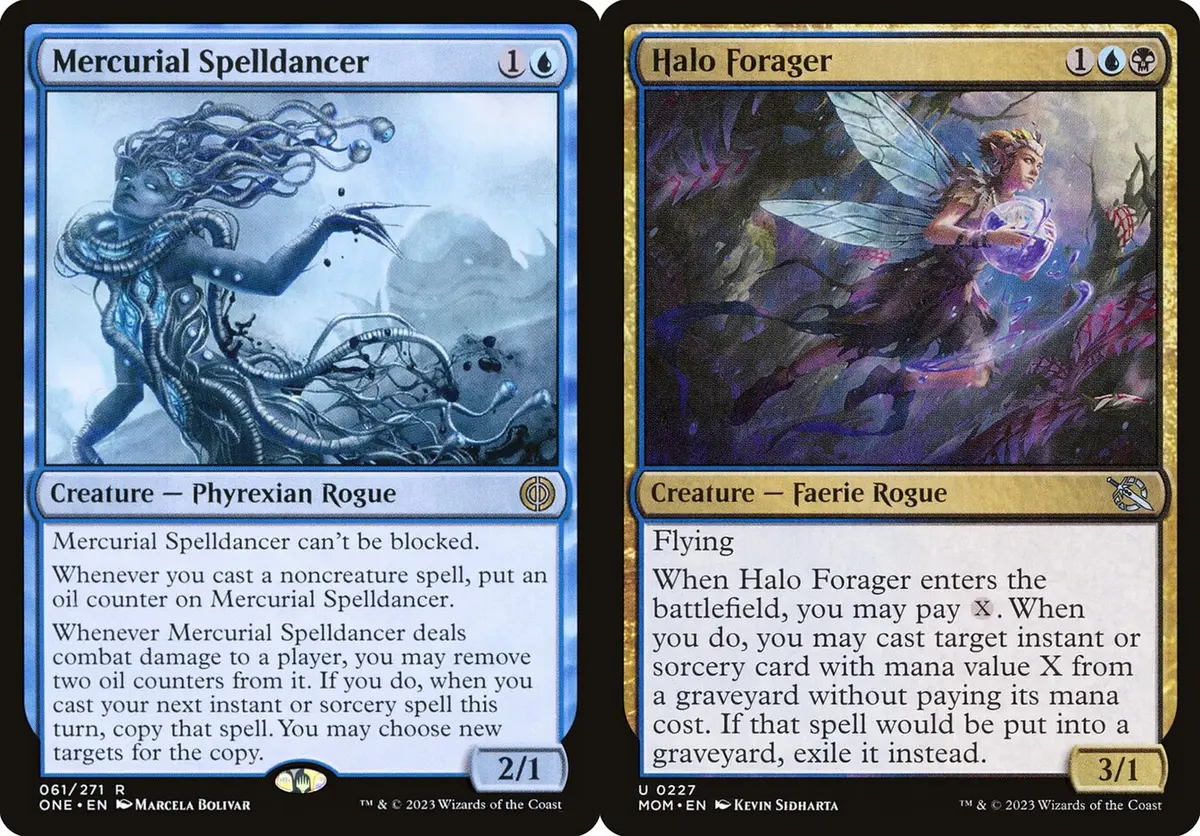
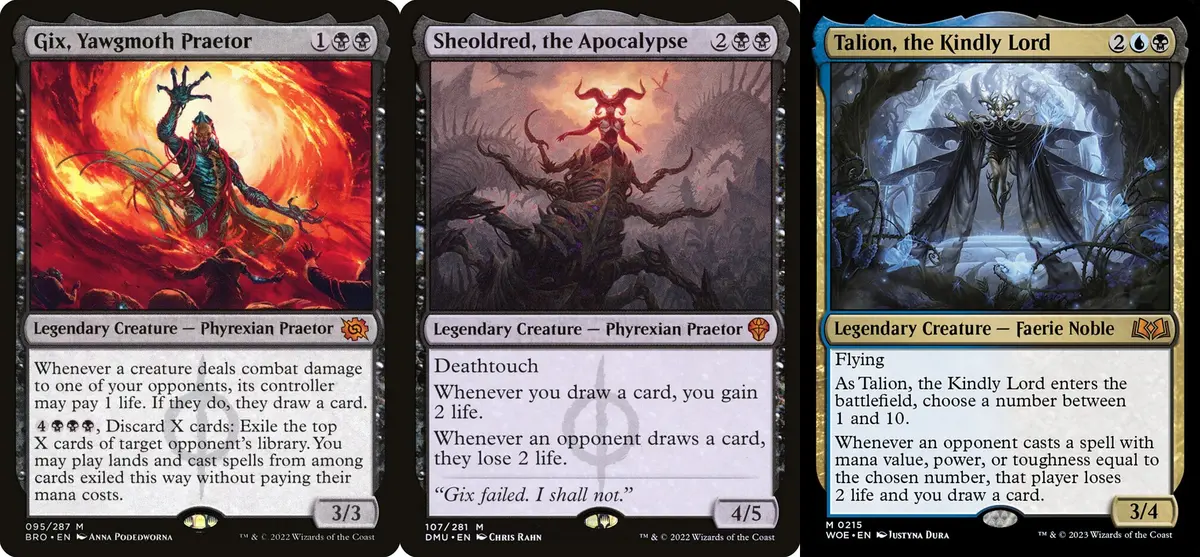
As mentioned earlier, the NEO Ninjas also include Rogues as part of the tribal support, so the deck’s growth isn’t limited to the Kamigawa environment. In the Standard card pool, Mercurial Spelldancer and Halo Forager can both get the tribal bonus. Gix, Yawgmoth Praetor, though not a Rogue, easily draws cards in a Ninja deck with plenty of small fliers, and you could also directly shift the slots to put in flagship creatures like Sheoldred, the Apocalypse and Talion, the Kindly Lord. There are as many ways to make it stronger as you like, and finding the play style that suits you best is the right path. I sincerely hope every player can play happily and have fun.
- Title
- Cunning Evasion: Standard Dimir Ninjas
- Author
- JerobaMTG
- Created at
- October 1, 2023
- License
- This work is licensed under CC BY-NC-SA 4.0 .