Standard Domain Ramp Feat. Progenitus

Note: This article was translated from Chinese by AI and may contain errors. Read the original Chinese version.
Introduction
Hi everyone, it’s me again, the multicolor enthusiast Enki. With the release of FDN, it looks like Wizards wants to promote the Standard format. Besides printing some new cards, they also reprinted quite a few old ones, which has injected fresh blood into Standard. Whether it will reshuffle the whole environment is hard to say, but a wider selection of cards makes the format more flexible and more forgiving, and there are more things to consider during matches. I think it is a pretty good change.
As for me, it has been a long while since I last wrote an article. With limited time and no notable results, I never had the chance to write a new one. This time, after FDN’s official release, I quickly qualified for the MITQ in the first week of the season with Domain Ramp, and I felt it was a good moment to share this “five-color deck.”
As usual, here is the decklist: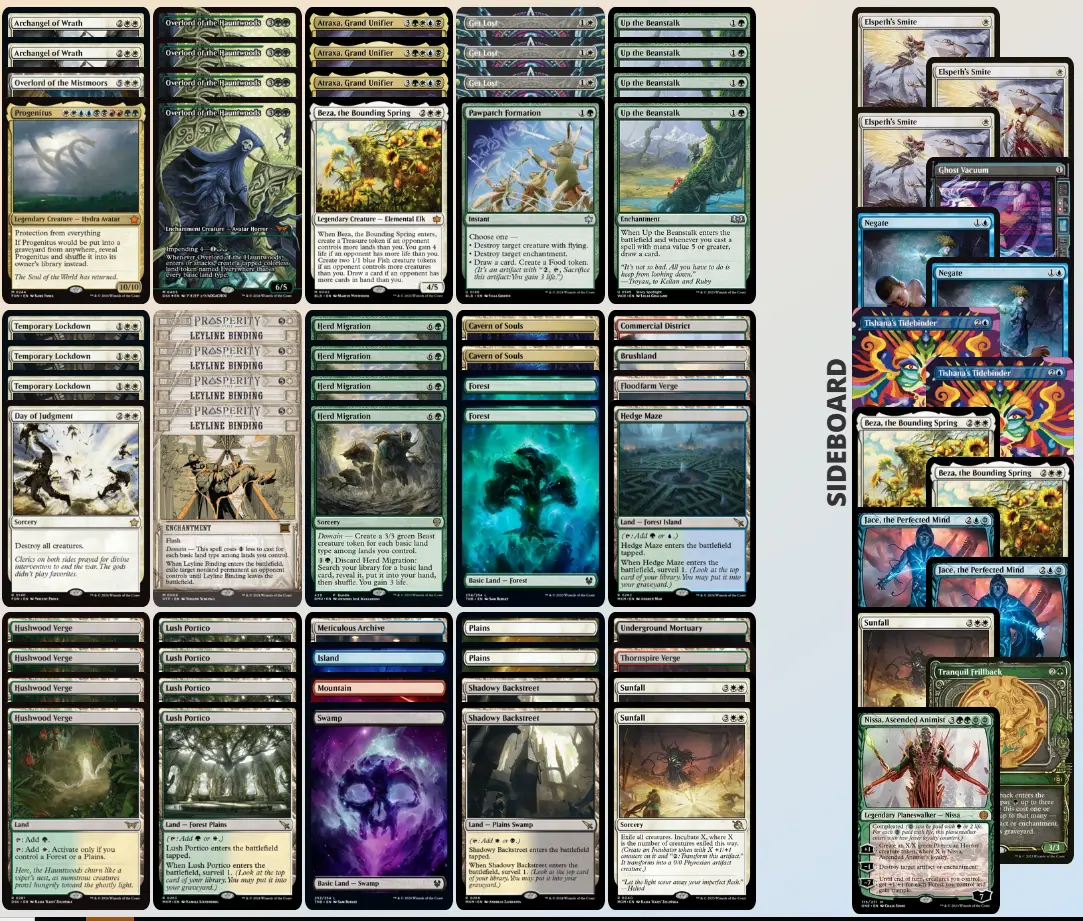
Here are this event’s results for reference:
R1 2-0 Golgari Midrange (on the play) OO
R2 2-1 Gruul Aggro (on the draw) OXO
R3 2-0 Boros Burn (on the play) OO
R4 ID
R5 ID
Top 8 2-1 Dimir Midrange (on the draw) OXO
Why Domain
Before the season officially started, I originally wanted to play world champion Javier Dominguez’s Dimir Demons. But after discussions with our “infighting Playtest Team,” although we had different opinions on deck choice, our views on which decks would appear in the environment were very close: Dimir-based midrange and red-based aggro would be the most common. From the feel of it, I also thought Dimir Demons is slightly disadvantaged against both of these, and its only advantage is against slow decks, because the combo of Doomsday Excruciator and Jace, the Perfected Mind
 can win the game outright. After a crushing loss to Temur Otter combo a few days earlier, Dimir Demons was officially eliminated from my list.
In the end I turned my eyes to Domain Ramp, which I had been considering all along. Most lists online go the Zur, Eternal Schemer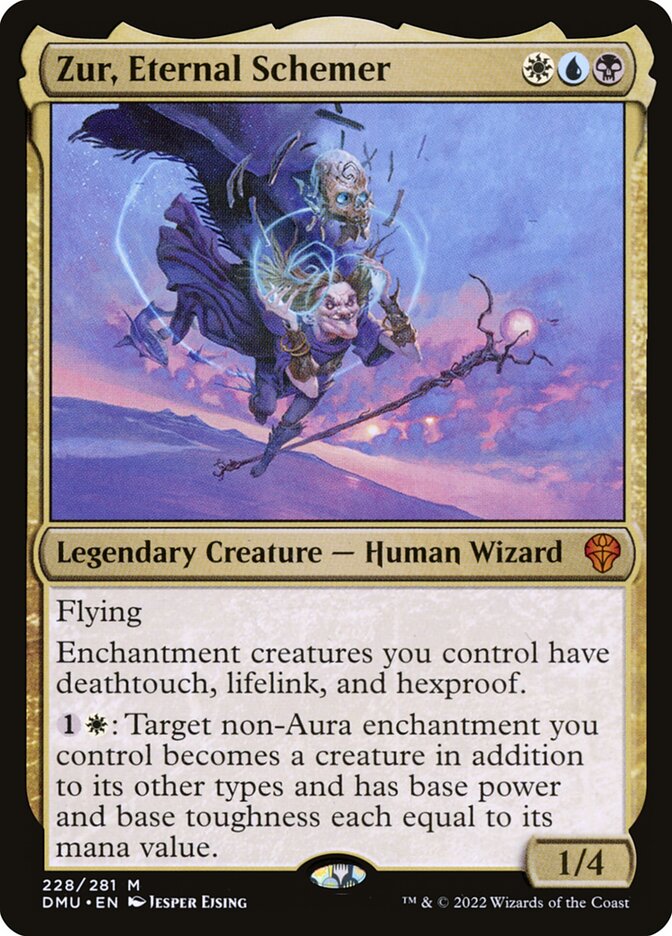 route, but I personally prefer a more controlling route, which gave rise to the list above.
Is Domain Ramp a good choice in this environment? What advantages does it have against Dimir and red-based aggro?
My view: it is not a strongly favored choice, but it is not much worse than the others either.
Against tempo decks like Dimir there is a slight disadvantage, but thanks to Up the Beanstalk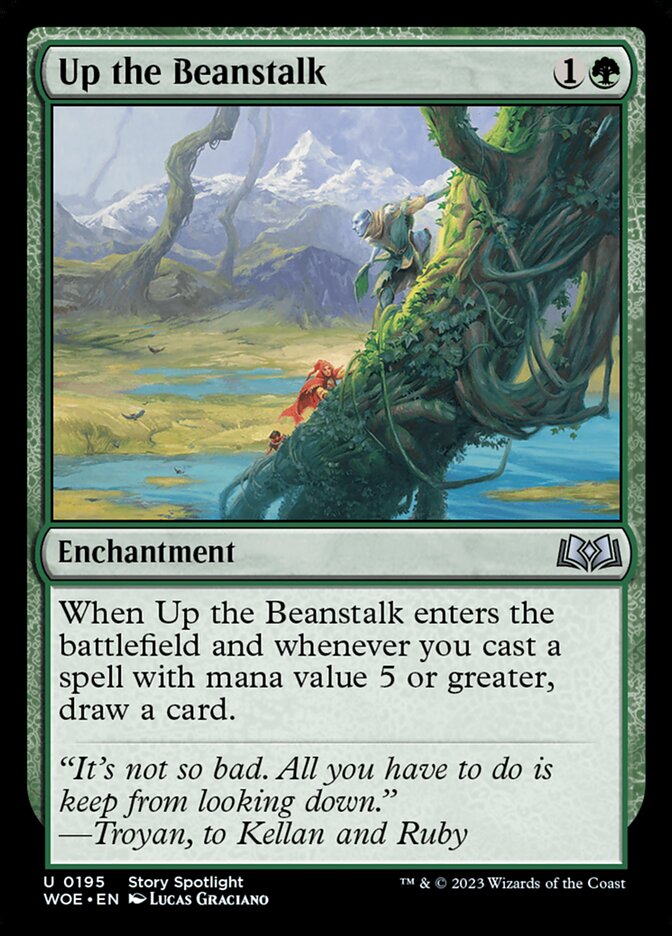 and Cavern of Souls
 , as long as our card flow is fine, we have a chance to outgrind the opponent on resources and protect our game plan.
Against the eternal nemesis, red-based aggro, I think the style that pumps creatures with Roles plus burn is the hardest to beat. In the early game, our lands almost always enter tapped, and Leyline Binding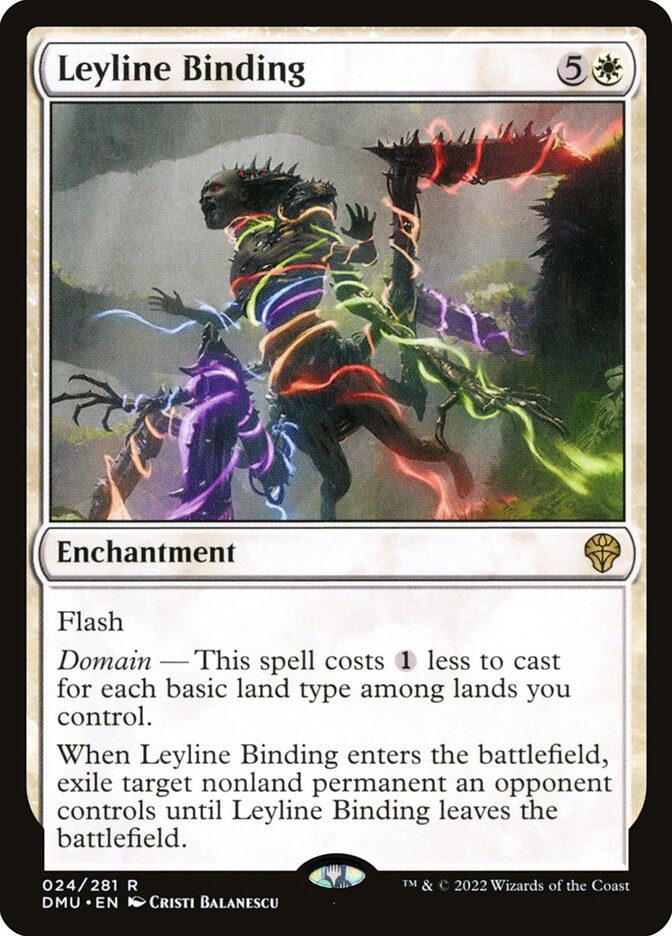 can be used on turn 3 at the earliest, so compared with before we have far fewer chances to interact with the opponent early, and our win rate dropped quite a bit. How to keep a hand became the biggest question, so I originally thought Domain was not really viable…
Until FDN came out and some variables appeared, namely the rise of Boros Burn.
This change made me feel that Domain has a chance to beat red-based aggro. The reason is that several friends who were testing Boros Burn revealed some of its weaknesses: it cannot beat decks that keep gaining life. As a ramp deck, life gain is a basic for us, and every three life gained is a card of disadvantage for the opponent. Finally, adding some conditions from a bet with a certain friend (mentioned below), I decided to enter with Domain.
Deck Overview
All right, that was a lot of rambling. Let us return to the main topic, the deck overview, which is basically split into three parts:
1. Game plan
2. Card choices
3. Sideboard changes
For each part I will roughly explain my understanding and why I did what I did.
Game Plan
We play differently depending on the matchup, but it all comes down to the same goal: drag the game into the mid to late game and survive.
1. Land sequencing
The first and most important thing is the correct order of playing lands. The current environment no longer has tri-lands, and the penalty for being unable to produce the right colors is much heavier than before. If you misplay a tapped land in the first few turns, then in the following turns, turns 4 and 5 when the deck starts to take off, this mistake may keep you from casting your big cards on time and cause trouble, and this chain reaction can lower your win rate.
In fact, land sequencing revolves around a few principles: mostly planning ahead around the cards in hand that you can use now and the cards you might draw. Thinking this way makes mistakes less likely. Of course, this is related to experience, so familiarity with the deck is also key.
2. Using surveil lands
Decide based on the current matchup and curve smoothness. Do not stubbornly hold on to a big card because you cannot bear to part with it, because sometimes you die before you ever get to cast it. This also requires planning ahead.
3. Using cards and choosing targets
The number of removal spells is limited, and you will not draw one every time to immediately deal with the current problem. Remember that we are a control deck. We want to solve problems, so you need to decide which card goes to which target based on the current matchup and situation. Do not throw out your removal the moment you see something; think about the opponent’s deck and the situation, because sometimes you do not have to remove those permanents.
Card Choices
- Creatures
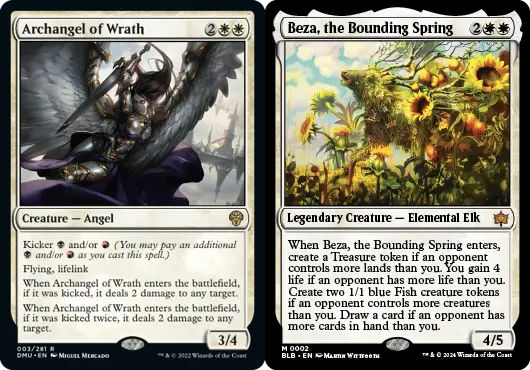
I believe everyone should be familiar with these two cards.
Archangel of Wrath is a very good card for clearing the board and surviving, and normally you would play many of them. The reason I only play two is that, besides lacking slots, it is basically a 5- or 6-mana card, and using it puts certain demands on the mana base; except in certain matchups I basically do not hard cast it. Because the land and color requirements are so imposing, I decided to reduce its numbers a bit.
Beza, the Bounding Spring , which has an immediate effect when entering at 4 mana, is a strong card that can turn around a losing position, but conversely, when ahead it does not bring you much. It is somewhat stronger in the sideboard games, but since it is already strong enough on its own, I am willing to give up one main deck Archangel slot to it.
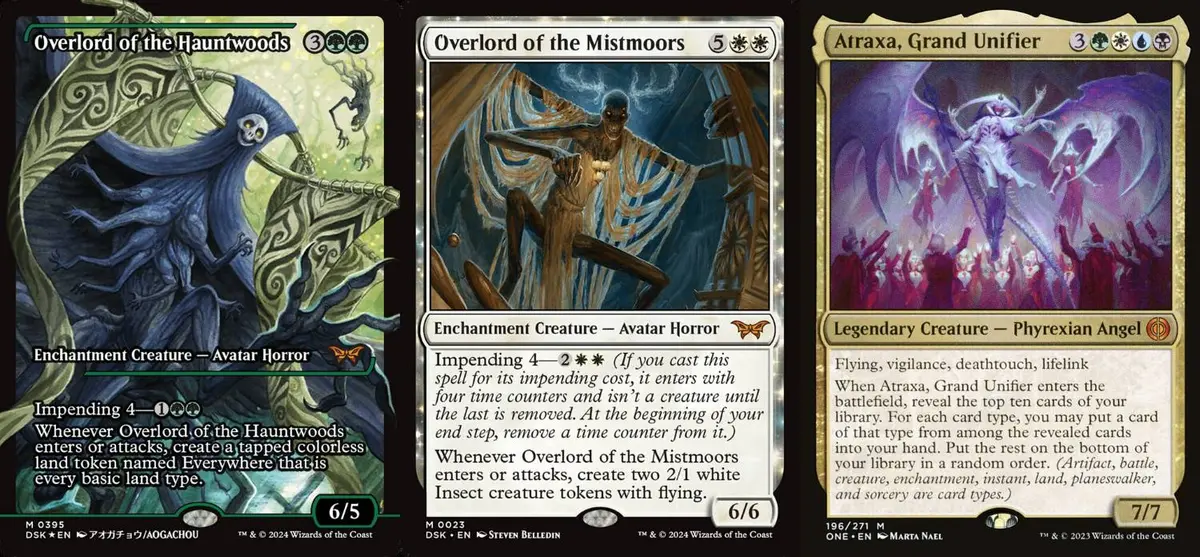
Overlord of the Hauntwoods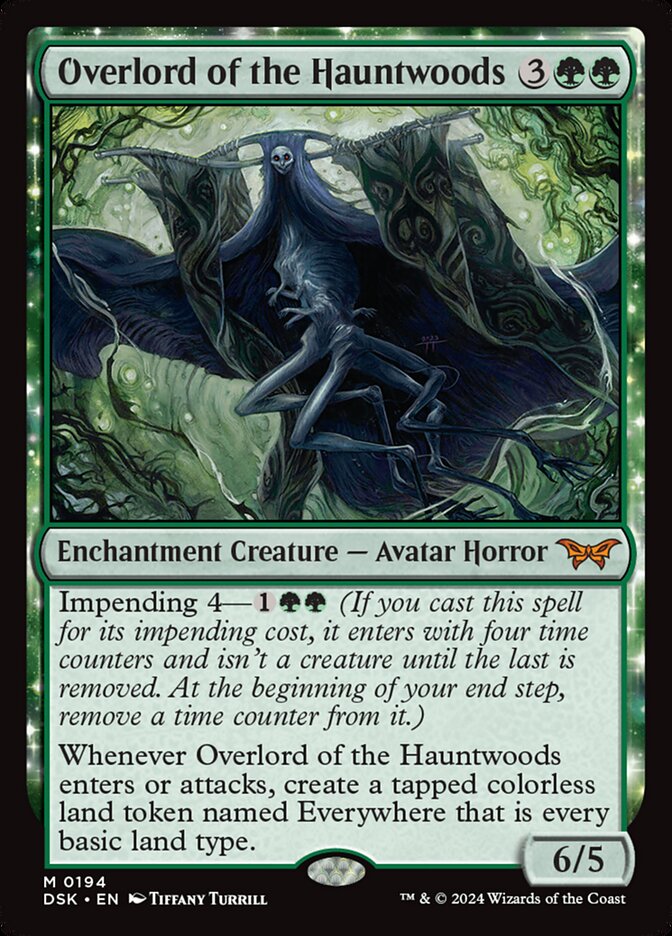 is one of the biggest boosts DSK gave this deck. After the rotation the deck lost its original ramp options, and the green Overlord became Domain’s lifeline; honestly I think it is a bit too strong. Three mana to ramp you a land is one thing, but it is a land with every basic land type, directly unlocking Leyline Binding’s maximum cost reduction, and it can even attack as a creature. In every sense it is a bit too dominant, so basically a must-play of 4.
Overlord of the Mistmoors is one of the flexible slots. Against Dimir-based midrange, the ability to make two flying creature tokens is excellent, and against other board-flooding decks and some control decks, that ability serves as a way to make blockers to buy time or to speed up the clock. But since our deck mainly wants to survive, I do not play too many of these more aggressive cards.
Atraxa, Grand Unifier needs no explanation: she replenishes resources and finishes the game as a beater, and also survives well. The thing to watch is that your mana base must be right before casting her.

Progenitus
The star of this article, and one of the reasons I finally chose Domain as my deck. It is both a game-ending beater and the deck’s guardian, an old card that became usable after FDN’s release.
Do not be put off by how heavy its color requirement is. I tested it, and with the help of the green Overlord there is a chance to cast it. Protection from everything makes it very hard to remove, and since no creature can block it, its 10 damage is guaranteed to hit the opponent’s face. As for weaknesses, they are the color requirement and its fear of sacrifice-style sweepers or Sunfall’s exile.
Normally you would not play this card; it is a personal choice, and I played it for two main reasons:
1. A bet with a certain Taiwan champion
He said that if I played Progenitus and got the qualification, he would treat me to a meal; if I lost I would only have to buy him a drink. It looks like he has to treat me to a meal now.
2. Some tactical considerations
When I first saw this card, I thought that when it goes to the graveyard it would shuffle all the resources in the graveyard back, and for a moment I thought it might be a card that could fight Jace, the Perfected Mind. Later I found I had misread it: it only shuffles itself back, and I gave up on that idea.
But once the bet above was made, I was forced to play Progenitus, and after thinking carefully, in a sense it can still fight Jace, mainly because we are also a deck that plays Jace. In a long game where both sides’ resources are nearly spent and both libraries are in range of Jace’s ability, if our board is hugely ahead or we hold Jace, the opponent will usually try to resolve Jace to mill our library out and turn the game around. But if Progenitus escorts us by shuffling itself back, we will draw it in our draw step and get an extra final turn, a chance to reverse the game that Jace had turned around, either with the board or by casting Jace to mill the opponent in return.
If you do not like this card that much or want a more stable replacement, I recommend playing another Archangel of Wrath or Beza, the Bounding Spring.
- Noncreature
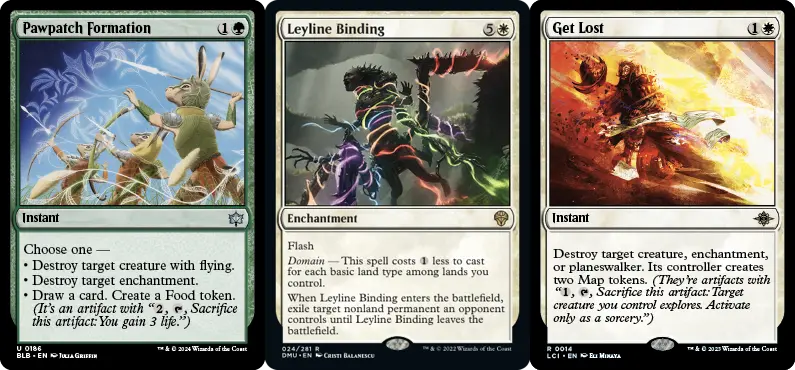
Get Lost is basically the first-choice removal: wide range, small drawback, low cost, and a great fit for the early mana curve we want. But this small drawback (giving the opponent two Map tokens) might get us killed by extra power, so later I chose to play one fewer and one more Pawpatch Formation.
Pawpatch Formation is a very good card that fits the current environment with many enchantments and flying creatures: it can kill, destroy, draw cards, and gain life. Its only drawback is that it cannot kill ground creatures; if there were not so much aggro I might want to play more, and one copy is within a reasonable range.
Leyline Bindingis not as strong as it used to be. The dual lands with basic land types available in the environment now are only the surveil lands, so it basically needs three mana to be used, and most of the time it needs the green Overlord’s help. Also, there is a lot of enchantment removal now, so it is no longer so powerful. But since it can answer every nonland permanent, we basically still need to play a full set, though depending on the situation I would cut one or two.
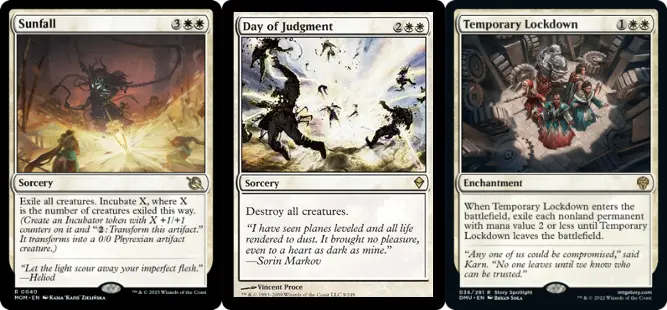
Sunfall needs no explanation: a midrange killer and an extremely strong sweeper. But after internal discussion, we felt that in some situations you may need to sweep the board faster, so I put in one Day of Judgment
 to replace a Sunfall slot, which gives a chance to avoid falling into the opponent’s lethal range or dying too early.
Temporary Lockdown is a strong card against aggro, or for pressing down an excess of tokens/permanents, and it can work wonders in some non-aggro matchups, but I mainly include it against aggro; against the pump-up red aggro decks it is the best card to draw.
Up the Beanstalkdraws cards.
Usage note: try not to play more than two. You will draw too many cards and be forced to discard important threats or removal, or deck yourself out before you win.
Sideboard Changes
Dimir Midrange
| Side In | Side Out |
|---|---|
+3 Elspeth's Smite | -1 Beza, the Bounding Spring |
| -1 Pawpatch Formation | |
| -1 Progenitus |
This matchup is not very easy; bringing in Elspeth's Smitemakes it more comfortable. This card can basically deal with all of the opponent’s creatures (except manlands), and the key is that it exiles, so both Unstoppable Slasher and Enduring Curiosity
 can be handled painlessly.
I take out Beza because it cannot help us block the opponent’s flying creatures and struggles against tempo.
I take out Pawpatch Formationbecause I feel its role overlaps with Elspeth's Smite, and usually only the first mode gets used.
As for Progenitus, whether to bring it back depends on the opponent’s plan. If the opponent sideboards to go long with you and finally win with Jace, you can consider bringing it back, but this is not very realistic, because Dimir opponents will want to disrupt you with tempo-style play and flood the board to beat you in the midgame; basically, if you drag the game out a bit further, their cards cannot match the power of yours.
Boros Burn
Simply put, you need to bring in a bunch of life gain and find ways to survive.
Leyline Binding, which can only start being used at 3 mana, is cut down a bit, with Elspeth's Smitefilling the slots.
Negate is used to counter burn spells to the face.
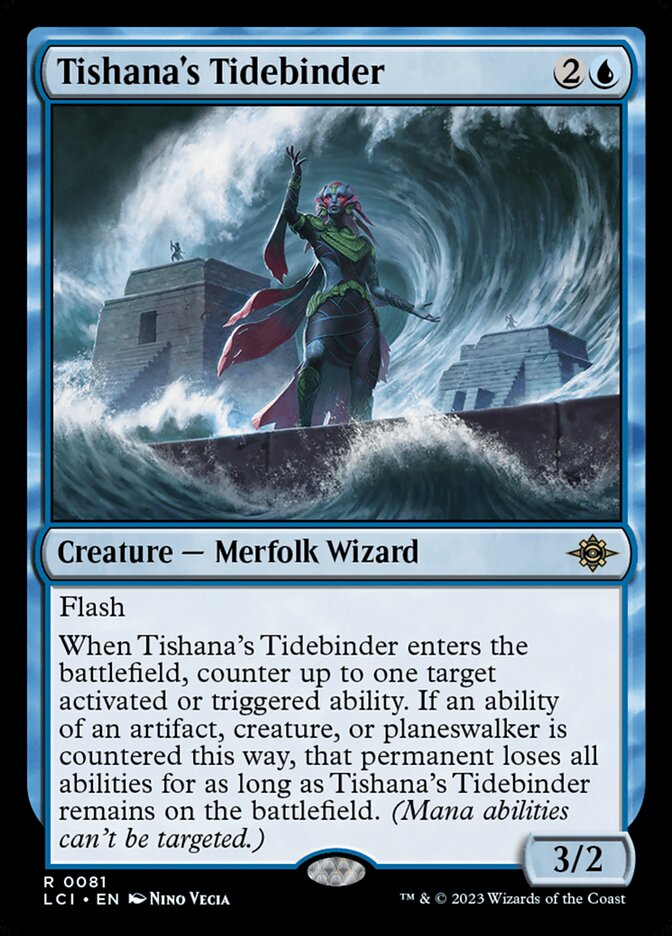
Urabrask's Forge can be answered with Negate, Tishana's Tidebinder
 , Tranquil Frillback
 , and Leyline Binding.
In this matchup you also need to pay special attention to Screaming Nemesis : the opponent may slam this card and then burn it themselves, so that you cannot gain life for the following turns. Be sure to hold removal to guard against it.
Gruul Aggro
A disadvantaged matchup. Try to keep hands with removal, do not let the opponent deal too much damage to your face, and find a way to survive.
Tishana’s Tidebinder is again used to deal with Urabrask’s Forge.
White-Based Tokens
| Side In | Side Out |
|---|---|
| +2 Negate | -1 Beza, the Bounding Spring |
| +2 Tishana's Tidebinder | -3 Temporary Lockdown |
| +1 Tranquil Frillback | -1 Day of Judgment |
+1 Nissa, Ascended Animist | -4 Leyline Binding |
| +1 Sunfall | |
| +2 Jace, the Perfected Mind |
This matchup goes long. Basically we need to maintain a board where we can draw more than the opponent, and remove the opponent’s means of generating resources. If the game becomes extremely deadlocked, we will need to rely on Jace to win.
Progenitus has a chance to become a win condition in this matchup: if the opponent has already used up their Sunfalls, or you hold a Negate that can counter a sweeper, you can consider hard casting Progenitus to win.
I cut Leyline Binding in this matchup, because white-based decks have far too much enchantment removal, and I do not want to press down one thing only to have it destroyed and returned so the opponent gets value a second time.
Golgari Midrange
| Side In | Side Out |
|---|---|
| +3 Elspeth's Smite | -3 Temporary Lockdown |
| +1 Sunfall | -1 Progenitus |
| +1 Nissa, Ascended Animist | -1 Day of Judgment |
| +1 Beza, the Bounding Spring | -1 Pawpatch Formation |
The logic for Elspeth's Smiteis the same as against Dimir: it can deal with most threats and exile them.
I do not really want to keep Temporary Lockdown. Although Golgari now plays Elves to quickly ramp into a turn-3 tempo play, I would rather concentrate on dealing with their 3-mana and 4-mana threats.
Conclusion
That is all of my sharing on this Domain Ramp deck!
FDN has just been released and the environment has not settled yet, so I believe there are still many promising decks waiting to be developed. If you want to qualify quickly, you might as well try this deck~
The season is long, and I hope everyone has smooth sailing on the road to qualification. See you next time!
- Title
- Standard Domain Ramp Feat. Progenitus
- Author
- Enki
- Created at
- November 19, 2024
- License
- This work is licensed under CC BY-NC-SA 4.0 .