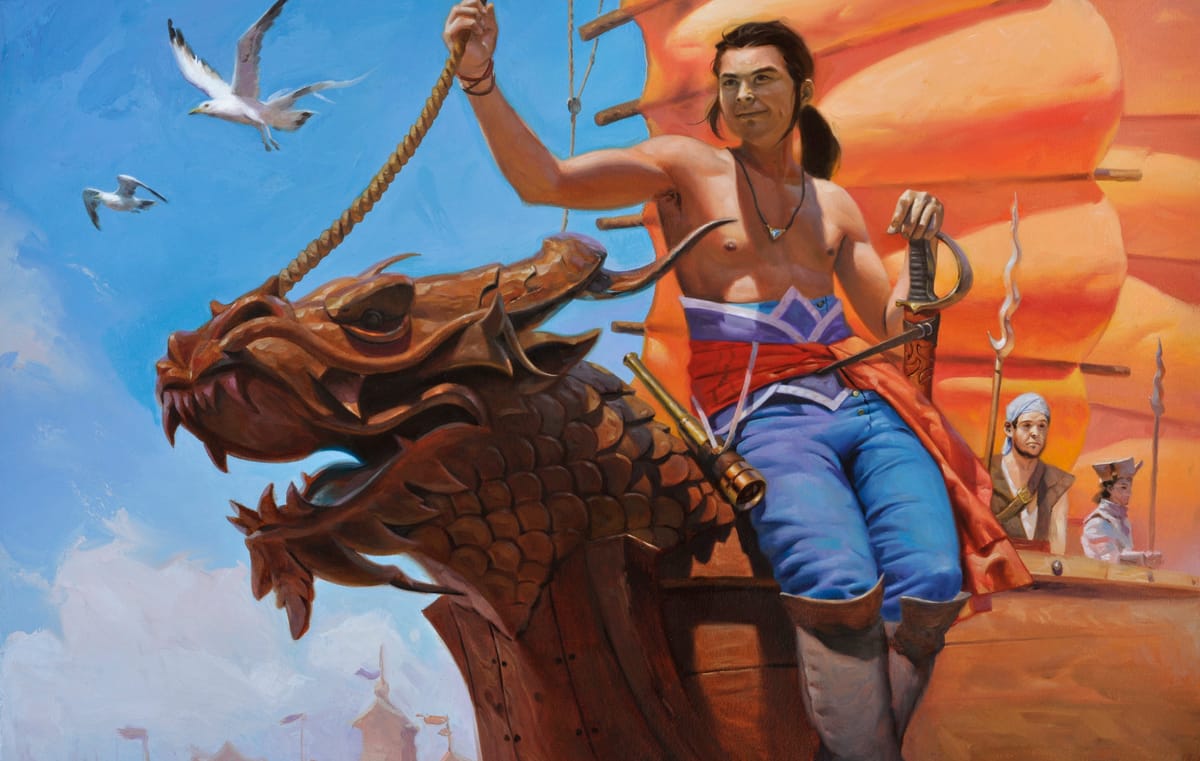
Chart a Course: Testing Pirate Captain Builds

Note: This article was translated from Chinese by AI and may contain errors. Read the original Chinese version.
Before We Start
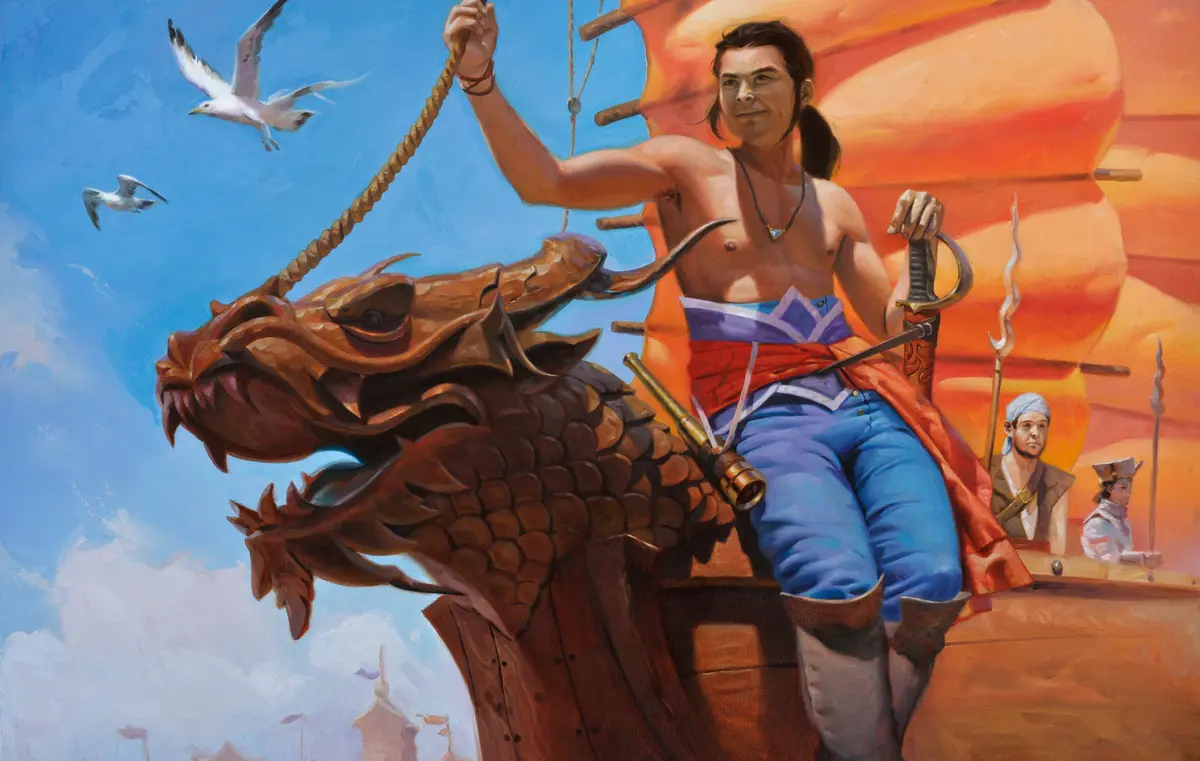
Foundations reprinted Corsair Captain from Jumpstart into Standard, solving the long-standing problem of Pirates lacking a three-mana lord, but how much does it really help in practice? This time we’ll try something new and examine its performance in both Standard and Pioneer together!
Card Analysis
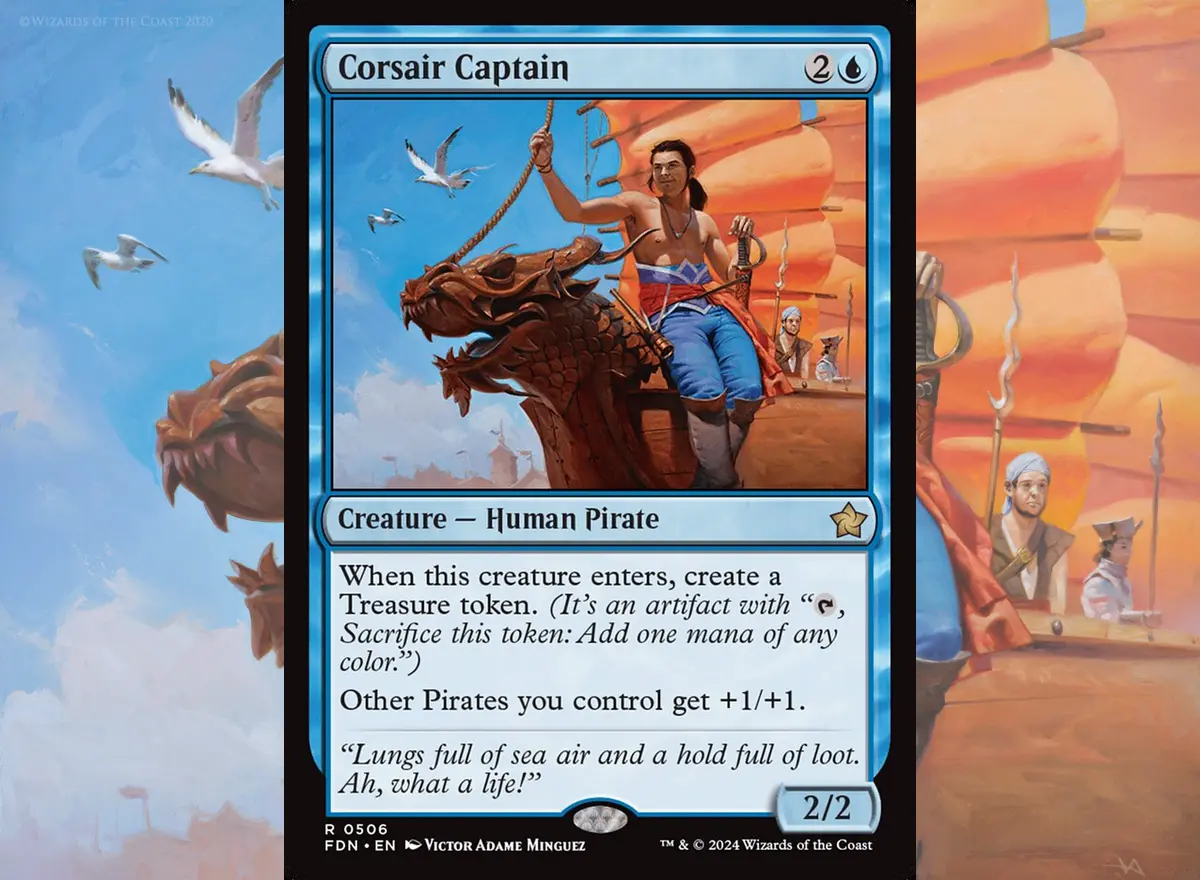
Corsair Captain
Creature — Human Pirate
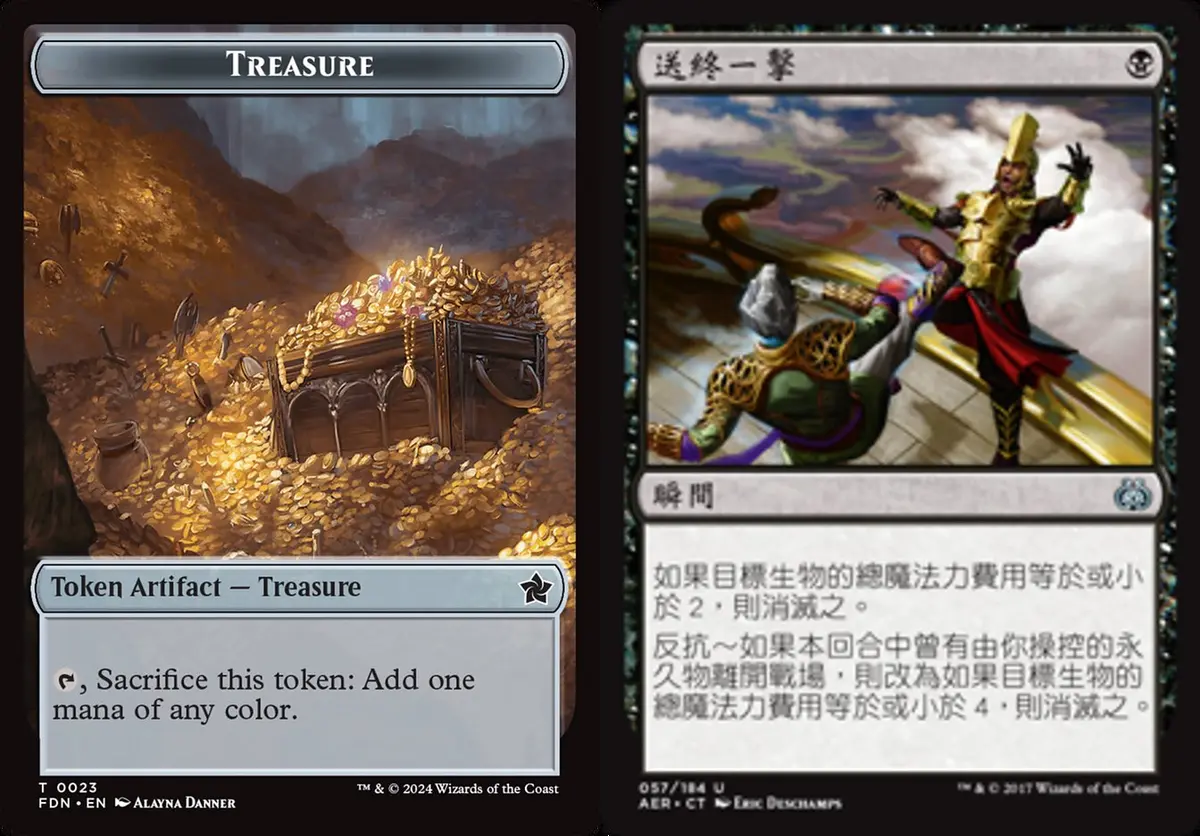
When this creature enters, create a Treasure token.
Other Pirate creatures you control get +1/+1.
A three-mana lord that gives a Treasure on entering, as simple and easy to remember as its name. Although it’s a design so simple it’s almost suspected of laziness, an extra Treasure always adds a good amount of flexibility, and it does interact with Pirates. First, Treasure’s artifact type pairs with Goblin Tomb Raider and Captain Storm, Cosmium Raider to boost your striking power.
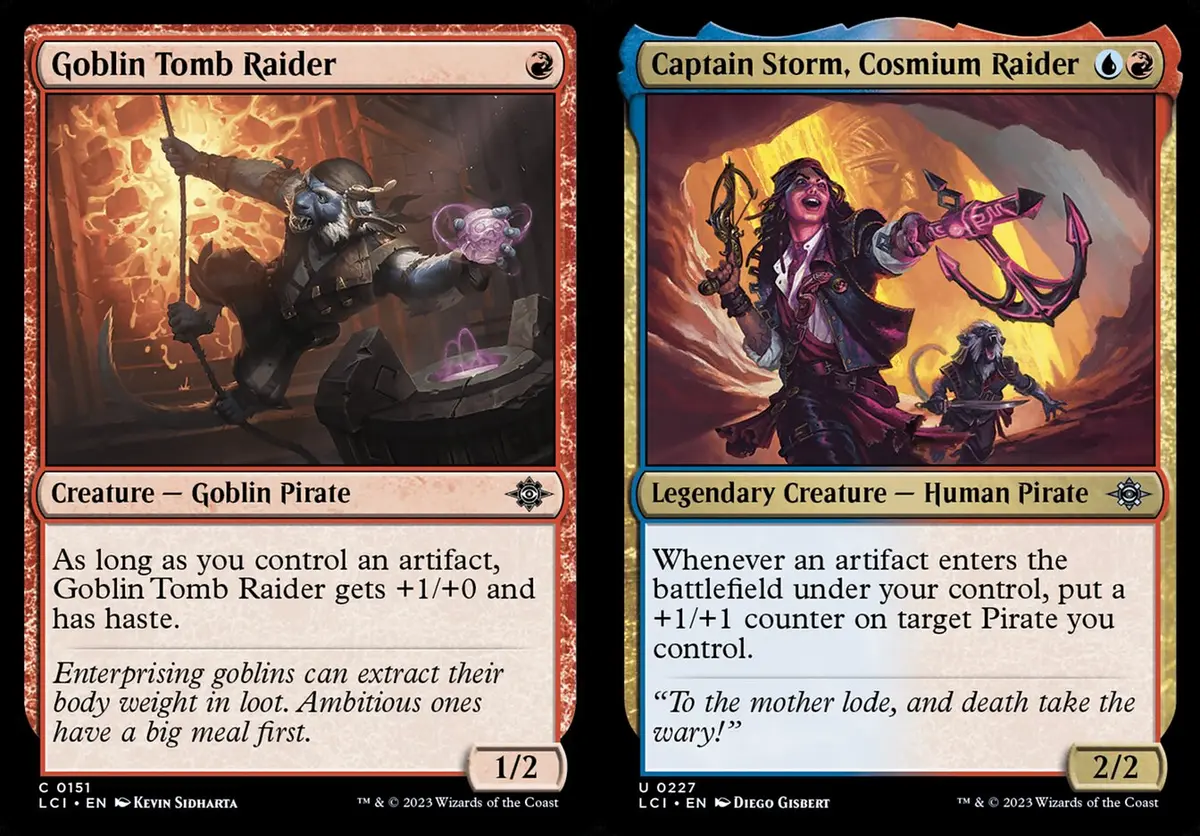
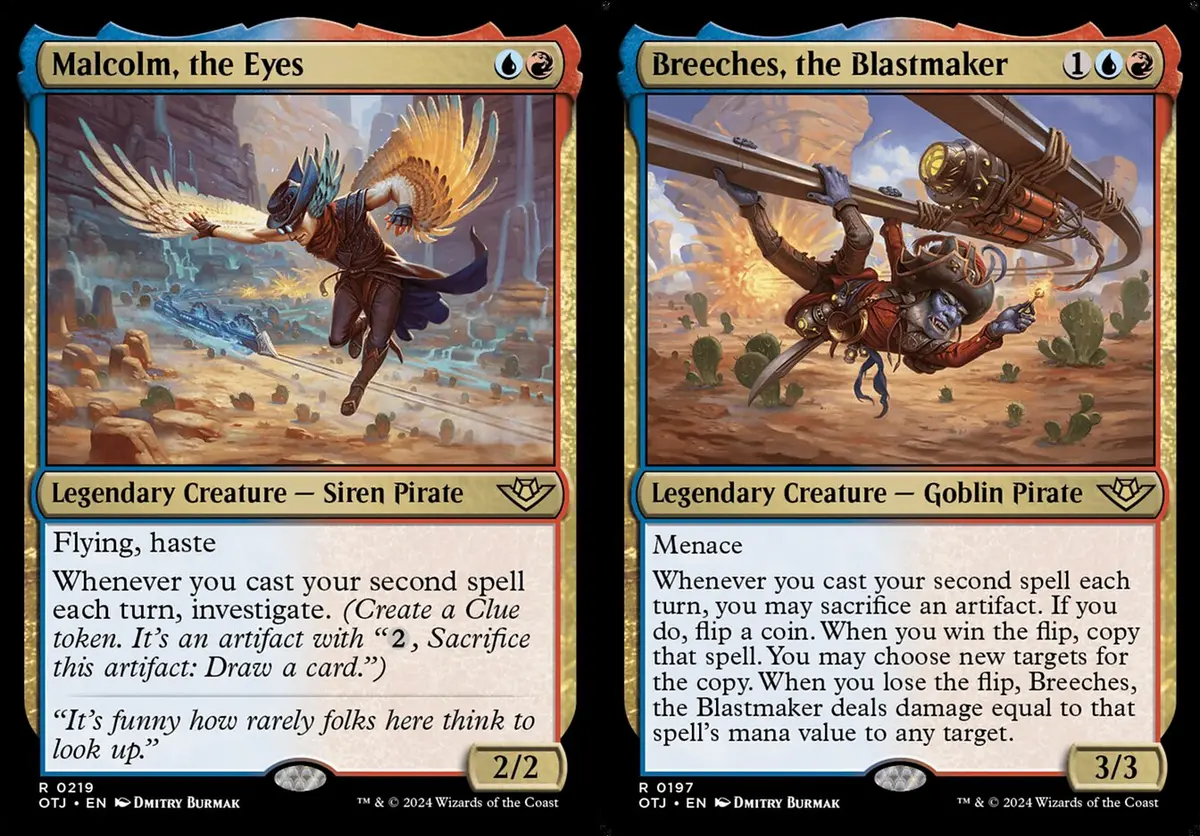
Next, it can also be used to cast spells, triggering the second-spell trigger of Malcolm, the Eyes and Breeches, the Blastmaker; at worst it’s a mana jump and color fix.
In the Pioneer card pool, besides lubricating three-color Pirates, Treasure is also an important source of revolt, so your Fatal Push is always ready to send away the opponent’s key creature.
Standard: Izzet Pirates
In the pre-rotation Standard environment, which lacked a lord, we built an artifact Pirate route centered on Captain Storm, Cosmium Raider. Now that we have a proper lord in Corsair Captain, we don’t need to depend on Captain Storm’s unreliable pumping ability; in addition, the new Standard, with enchantments rampant, is unfriendly to red-blue and needs a more aggressive style of play, so we made the following adjustments:
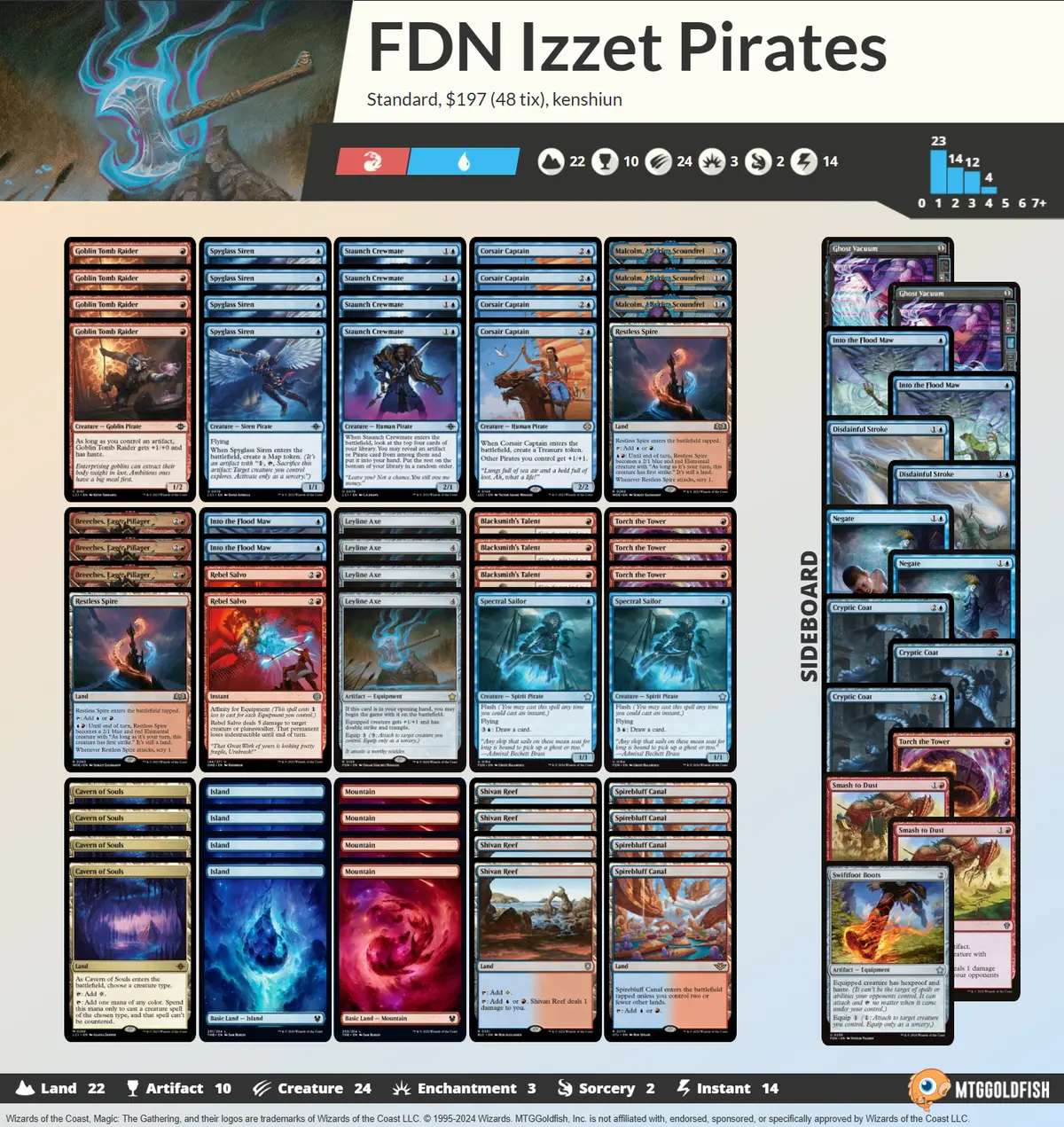
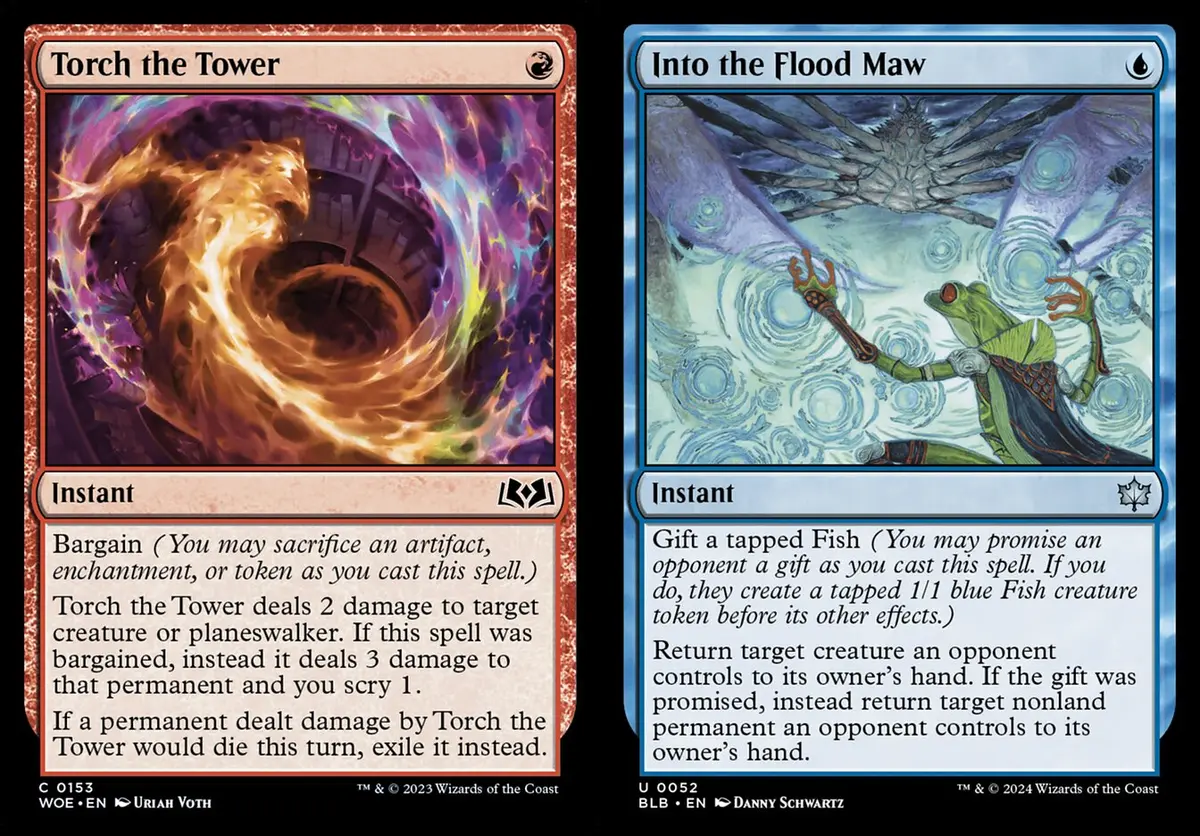
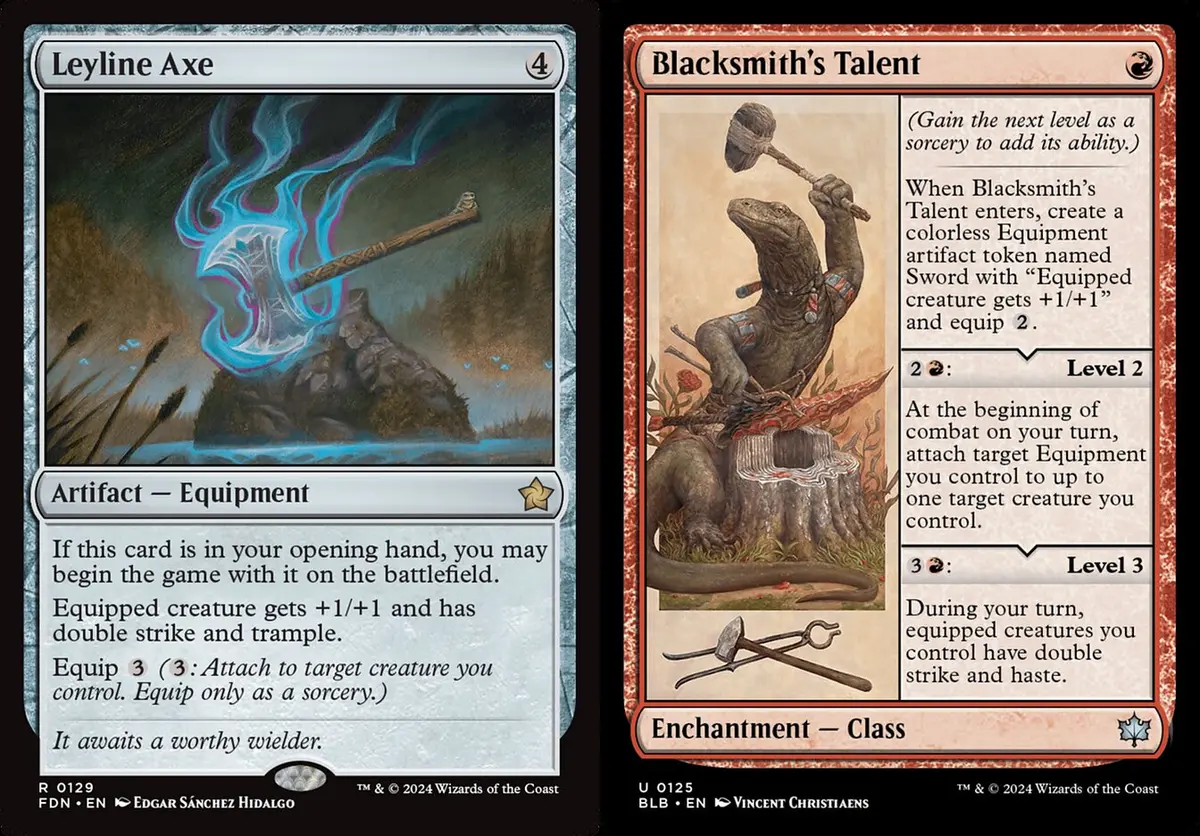
We replaced the Treasure package’s Diamond Pick-Axe and Dire Flail with Leyline Axe and Blacksmith’s Talent, using double strike and trample to boost breakthrough power and punch through the opponent’s creature defenses. For removal we also added Torch the Tower, which handles extreme aggro, and Into the Flood Maw, which temporarily deals with enchantments.
In Game 1 against Boros Auras, the Treasure from the turn-3 Corsair Captain played a key role the next turn. At 46 seconds the opponent tried to put Sheltered by Ghosts on it as removal; an ordinary three-mana lord would mostly just get pressed down by the enchantment and then be beaten up by the aura creature. However, with the Treasure, I responded with Into the Flood Maw to bounce the opponent’s Optimistic Scavenger, directly collapsing the opponent’s tempo. At 1:08 the opponent played a second Sheltered by Ghosts, but by then I had enough mana to pay for ward, and a Rebel Salvo saved the pressed-down Breeches, Eager Pillager and decided the game.
The second half demonstrates a Leyline Axe opening hand: Goblin Tomb Raider put out the firepower of a Goblin Guide, and picking up Leyline Axe on turn 3 beat the opponent down to 6, and the game ended on turn 5.
Pioneer: Grixis Pirates
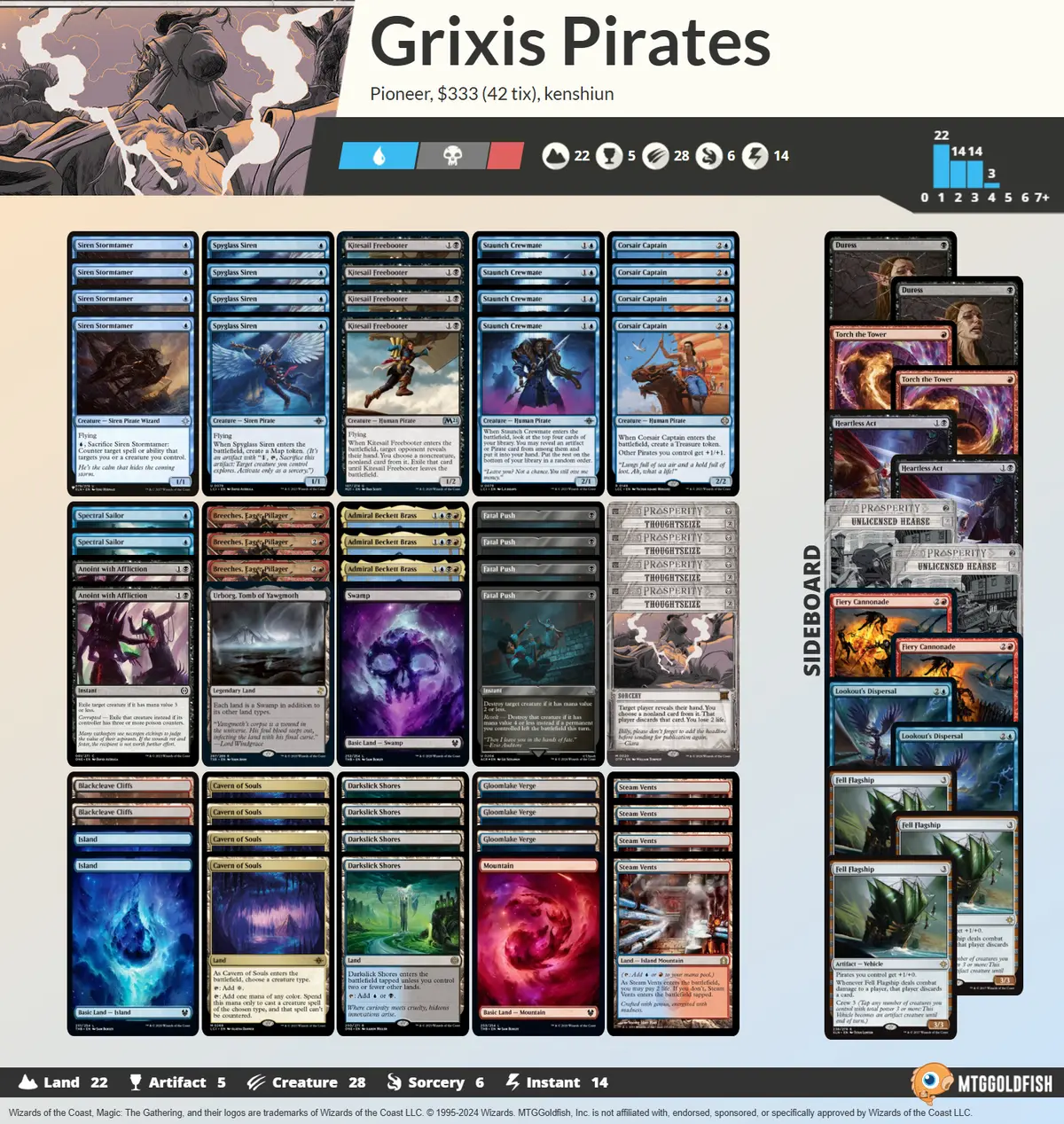
The biggest difference between Pioneer and Standard is that the Pirate cards from the old Ixalan environment are available, so you no longer need to rely on artifacts and can play a pure tribal axis. The biggest boost from the old sets’ black Pirates is the turn-2 hand disruption of Kitesail Freebooter, which, together with Thoughtseize and Siren Stormtamer as escorts, keeps you from being helpless against all sorts of decks. The missing striking power is made up by the lord effects of Corsair Captain and Admiral Beckett Brass.
In Game 1 we faced a Phoenix deck, and the opponent smoothly pulled out two Arclight Phoenix on turn 3. However, on the next turn I drew Corsair Captain, and three creatures hit the opponent hard, dropping their life to 8 and making their play more conservative. The opponent clearly smelled Fatal Push, and threw out removal one after another trying to lure me into using up the Treasure, but I didn’t take the bait. At 2:42 I sacrificed the Treasure to flash in Spectral Sailor and followed with Fatal Push to clear the way; the next hit dropped the opponent to 1, and then Thoughtseize discarded the last nonland card in their hand, Treasure Cruise, for the win.
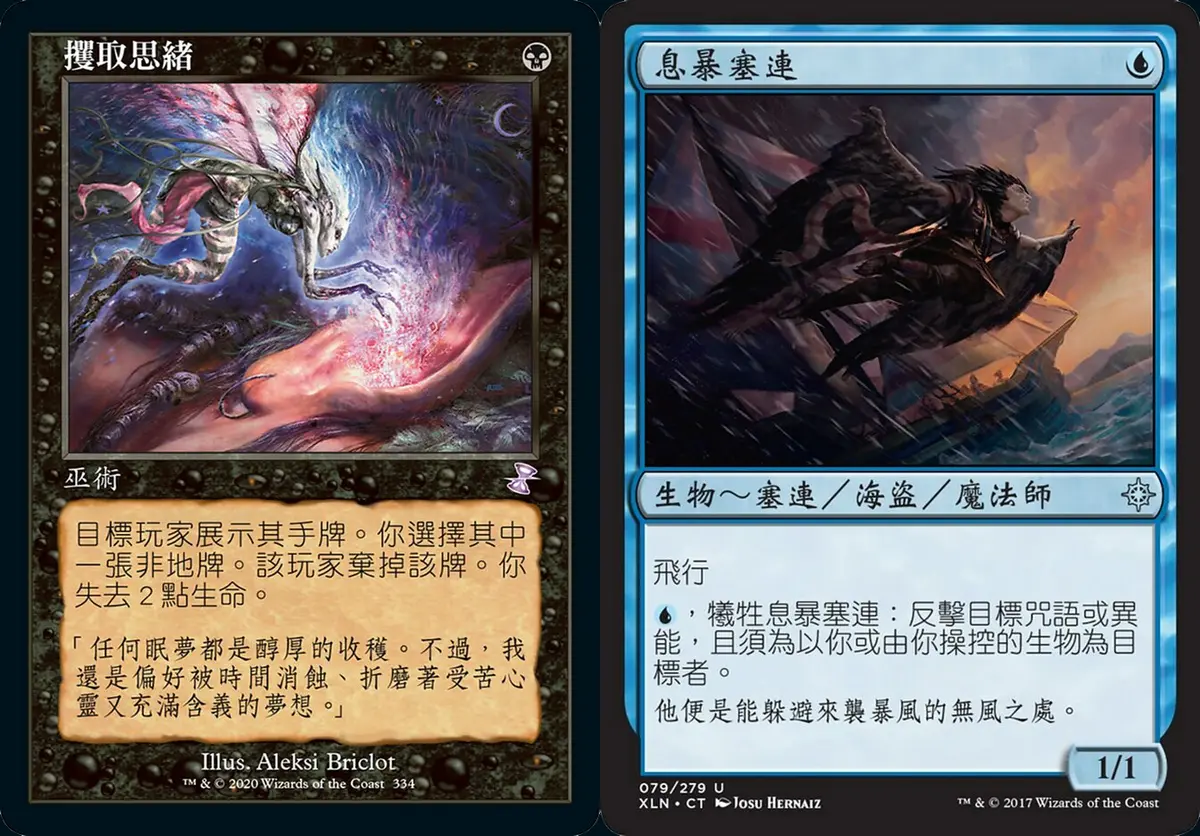
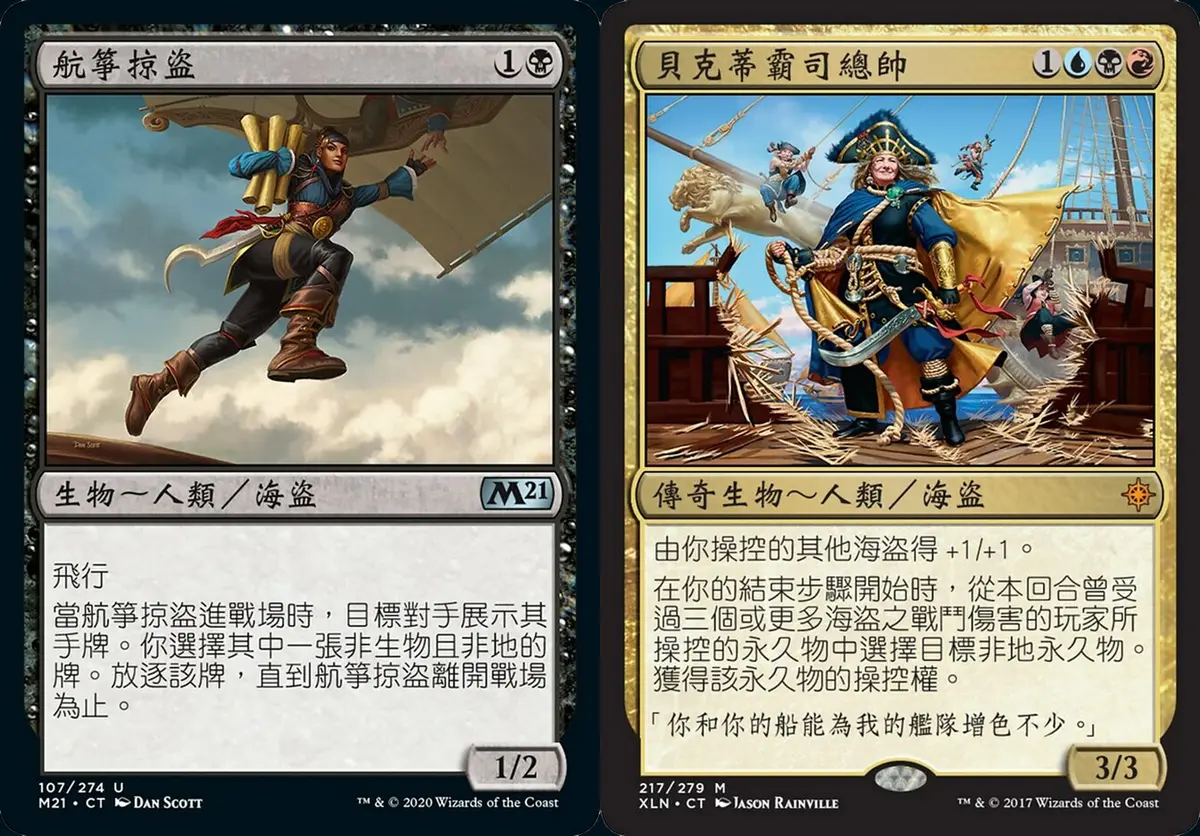
Game 2 was a tribal-deck showdown, with the opponent on mono-blue Spirits. On turn 3, right after Corsair Captain entered, I immediately used the Treasure to cast Thoughtseize and discard the opponent’s Shacklegeist, breaking up their creature interference. Although the opponent gained the advantage in the life-total race with two Supreme Phantom lords, unfortunately they hadn’t accounted for Admiral Beckett Brass’s ability, and at 4:09 I commandeered one of their Supreme Phantom, leaving their damage insufficient, and the opponent conceded outright.
Conclusion
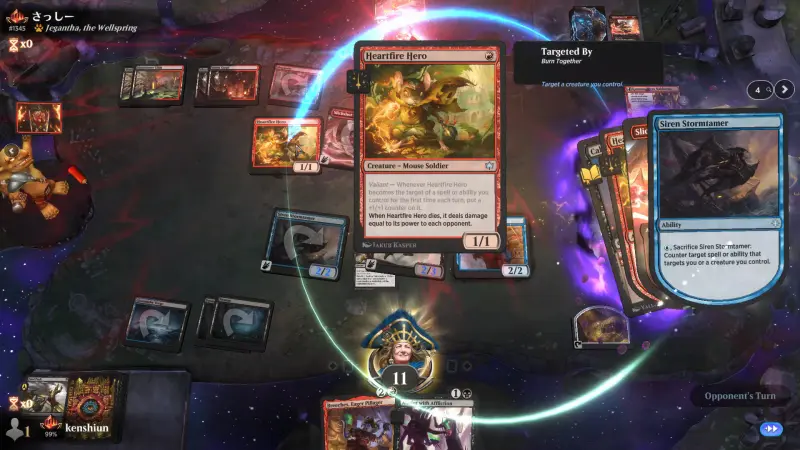
In the demonstrations above, we can see the advantage brought by Corsair Captain’s Treasure: that one mana of key interference often steers the wind in my direction, and as a proper three-mana lord it also gives Pirates the go-wide striking power they lacked, letting a bunch of little scrubs deal damage effectively. Although the design is simple and unremarkable, it’s a solid card that significantly improves Pirate decks’ strength.
Further Reading
Foundations Standard Preliminary Look
Storm Fleet: Standard Izzet Pirates
- Title
- Chart a Course: Testing Pirate Captain Builds
- Author
- JerobaMTG
- Created at
- November 26, 2024
- License
- This work is licensed under CC BY-NC-SA 4.0 .