
Ultimate Torment: Standard Golgari Collect Evidence Control

Note: This article was translated from Chinese by AI and may contain errors. Read the original Chinese version.
Introduction
I’m a player who is passionate about control. As a reactive play style, controlling your opponent means you have to understand their game plan so you can prepare the right answers. In the recent Standard meta there are three imaginary opponents you can’t avoid:
- Red-based aggro
- The Stormchaser’s Talent archetype of Self-Bounce
- The Overlord + Zur, Eternal Schemer Up the Beanstalk deck
When building the deck, you have to think thoroughly about how to face each of these. Facing red aggro is the simplest in terms of deck-building logic: just prepare enough cheap removal spells, plus a plan to stabilize the board once you reach the midgame, and at the very least you keep some ability to answer red aggro (of course, whether you actually draw them in the early game and who goes first is another matter).
As for the Stormchaser’s Talent Self-Bounce deck, here I specifically mean the version paired with Hopeless Nightmare, which emphasizes repeatedly bouncing permanents to earn ETB value. From a control perspective, the deadliest part of this deck is the repeatedly re-entering Hopeless Nightmare. Having Obstinate Baloth or Wilt-Leaf Liege is enough to suppress it. Of course, it’s best if we have enough enchantment removal, and fortunately decks that play those two creatures will probably have at least green or white, which is a color group that doesn’t lack enchantment removal.
Finally, the final boss is the recently much-discussed Overlord Beanstalk. Control naturally has decent resistance to this kind of big mana curve deck (as long as you don’t fantasize about counterspell-controlling people to death in an environment with Cavern of Souls), but here I want to go one step further: while making sure the deck runs normally, also improve its resistance to Overlord Beanstalk. There are two approaches:
- Use a Jace, the Perfected Mind mill deck.
- Strengthen enchantment removal, ideally with an enchantment sweeper.
I’m sure everyone has seen plenty of the Jace, the Perfected Mind mill from approach 1, so this time let’s look at how to respond to the current environment and build a removal-oriented deck based on approach 2!
Deck Introduction
Decklist link
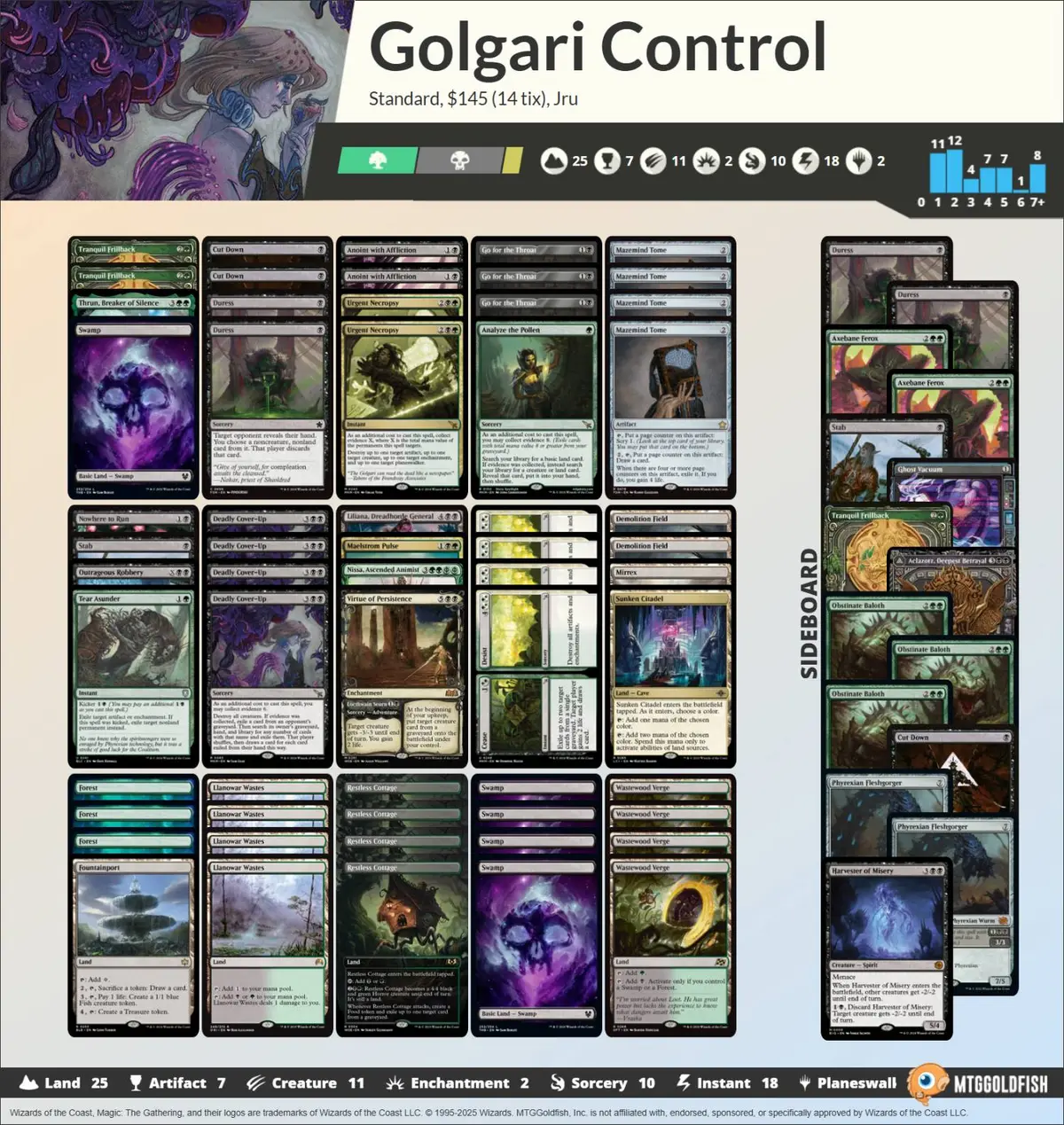
Collect Evidence System
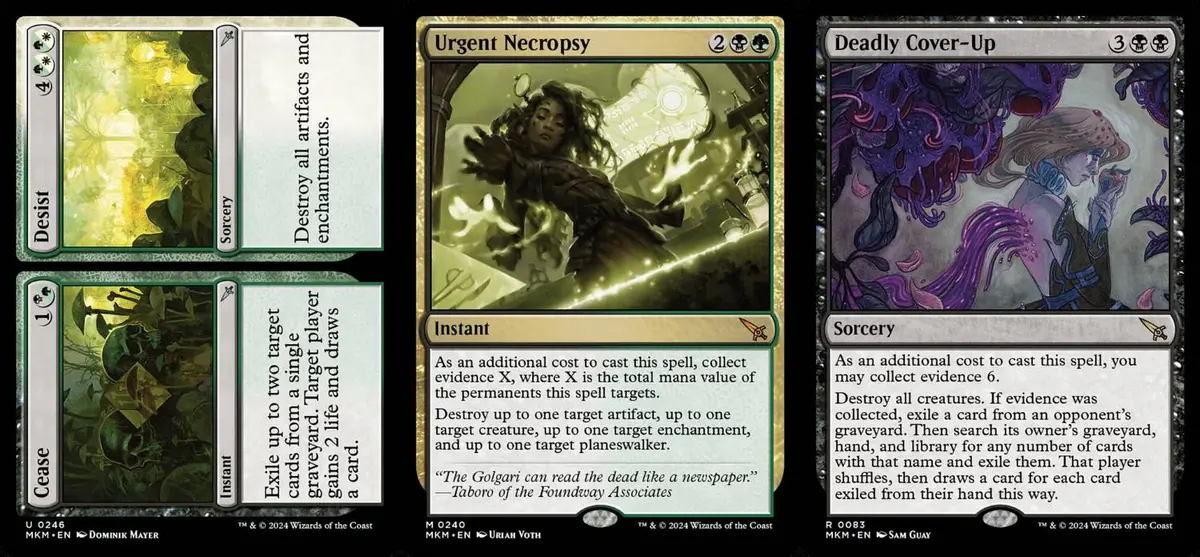
Cease // Desist (4):
The starting point of the whole deck. Cease on the left is a two-mana instant-speed card-draw spell. Control always needs a low-cost slot like this, and the added value of graveyard removal plus life gain is very useful in today’s environment. Gaining 2 life is about the same as countering a one-mana burn spell, which is significant against red aggro. And the current environment makes it far too easy to use the graveyard, for example: Level 2 of Stormchaser’s Talent, the graveyard-digging spells of Abhorrent Oculus decks, return-on-death effects like Enduring creatures, and all sorts of scattered graveyard usage. Being able to do all that while drawing cards is very practical.
Since Cease on the left already guarantees the card’s usefulness, Desist on the right is a free flexible option. Desist destroys all artifacts and enchantments, which is exactly the best answer to Overlord decks. Even if they’re hiding in impending, there’s no escape: Beanstalk and Leyline Binding all go down too. White token control decks of the Caretaker’s Talent archetype are also heavily wounded by a single sweep.
The card’s benefits don’t stop there. Although it’s a two-mana card-draw spell, its main body is still an 8-mana card, which is the best possible fit for the collect evidence system described below.
Urgent Necropsy (2):
An instant-speed removal spell with a very high ceiling. Instant-speed 1-for-3s are nothing new, and it has single-handedly caused the opponent to collapse many times, but since it has a heavy casting prerequisite, 2 copies is the limit.
An example of a tragic wipeout: Kaito, Bane of Nightmares + Preacher of the Schism + Enduring Curiosity + a Map token.
Deadly Cover-Up (4):
Control always needs a main-deck sweeper. These days resistance to destroy effects mostly comes not from indestructible but from returning after death, so a destroy sweeper followed by hand-and-library disruption clears the board no worse than an exile sweeper. Removing the opponent’s key card plus confirming their hand information and deck composition is also very important for control.
Against opponents like Overlord Beanstalk who rely on a few key cards by name as win conditions, often a single collect-evidence sweep that cuts Zur, Eternal Schemer or Overlord of the Mistmoors is enough to completely cripple the opponent’s engine. In this respect its control power is even more efficient than Sunfall.
Creatures
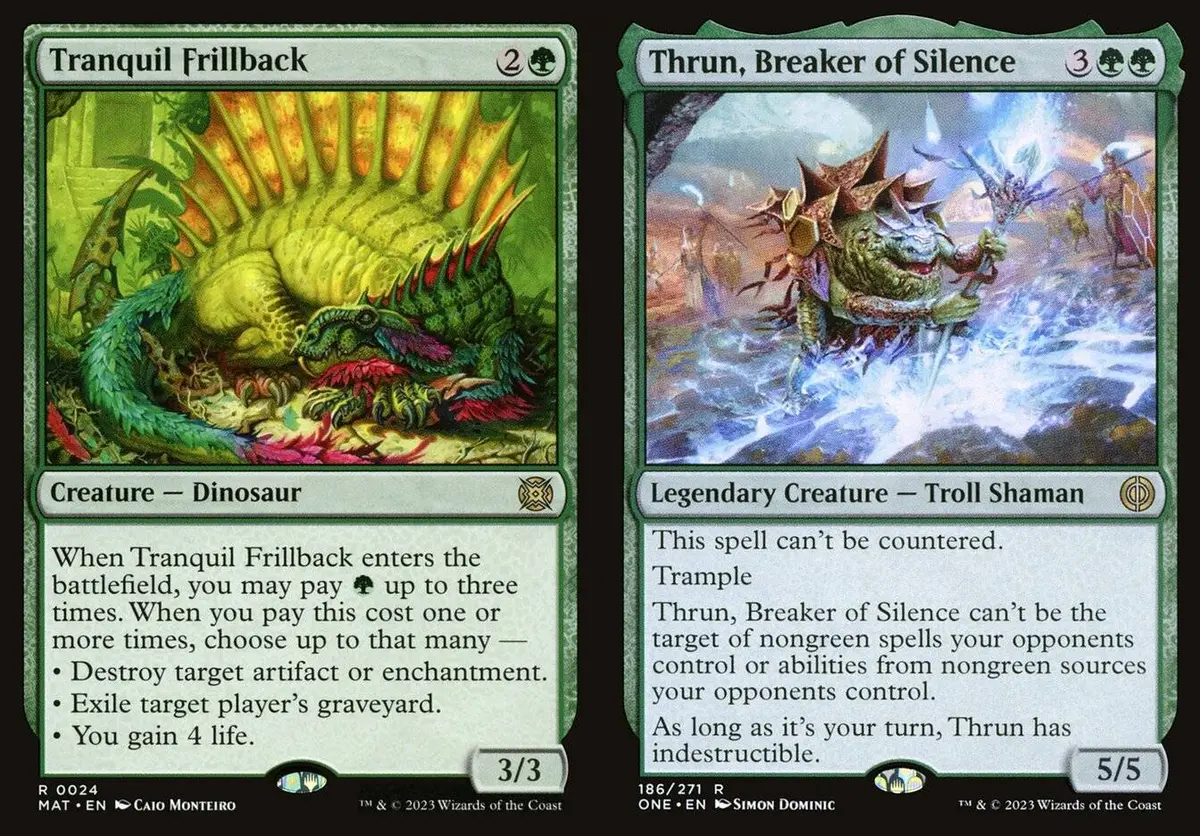
The proportions of each role in this control deck are closer to traditional control of the past. One trait of such decks is few win conditions and even fewer creatures, which means the opponent will usually (especially in game one) have too much removal. So when choosing creatures, look for ones that are either very hard to remove or only care about an ETB effect and can be sent off freely once they’ve earned their value.
Tranquil Frillback (2):
Destroying artifacts and enchantments and exiling graveyards are both very useful in the current environment, and life gain is also what control wants. A very solid green creature option.
Thrun, Breaker of Silence (1):
A terminator that is extremely hard to remove. Most of the time only in a Golgari mirror might it run into hard kills with green like Tear Asunder or Maelstrom Pulse. Because it has indestructible on your own turn, you don’t have to worry about being caught in the destroy sweep of Deadly Cover-Up.
Planeswalkers
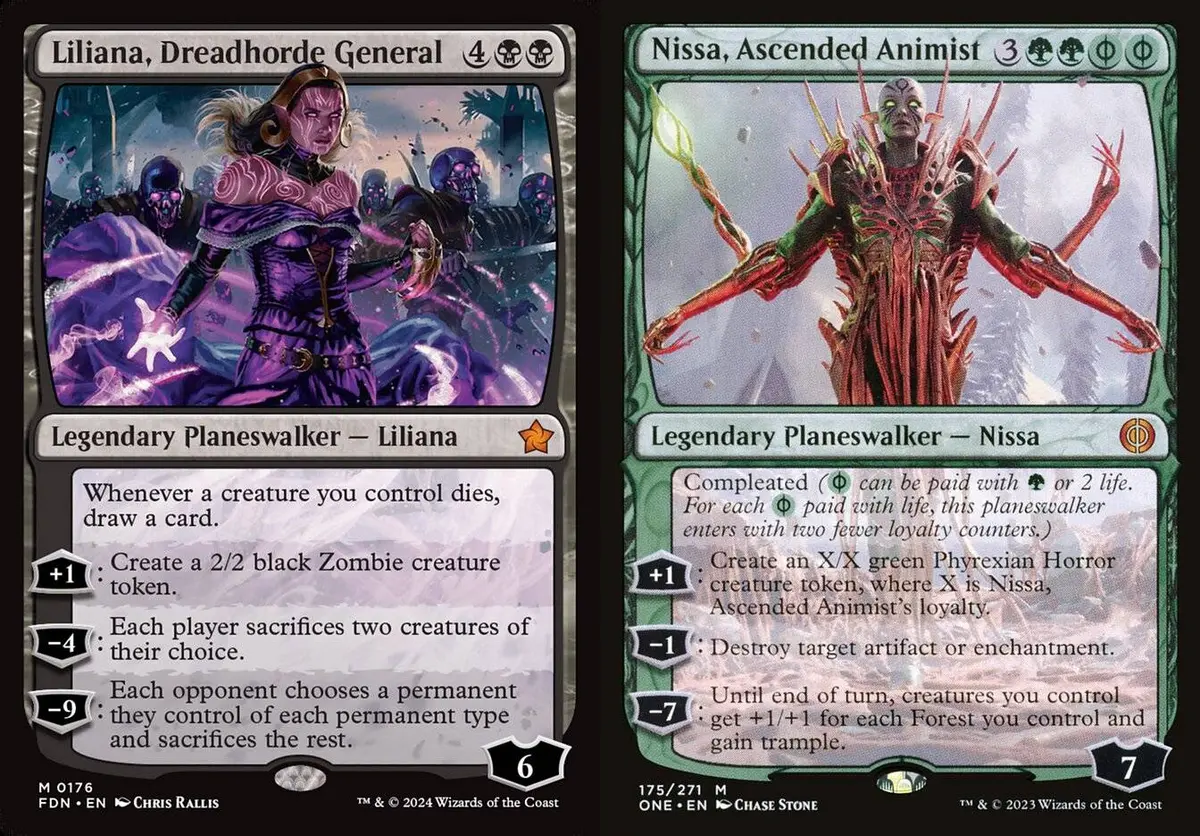
The planeswalkers this deck chooses must all be able to win the game on their own.
Liliana, Dreadhorde General (1):
She develops the board while providing removal and card-advantage points, and her [-4] is often key to stabilizing the game.
Nissa, Ascended Animist (1):
A one-card war god. As long as she isn’t removed right after arriving, she will end the game very quickly.
Creature Removal
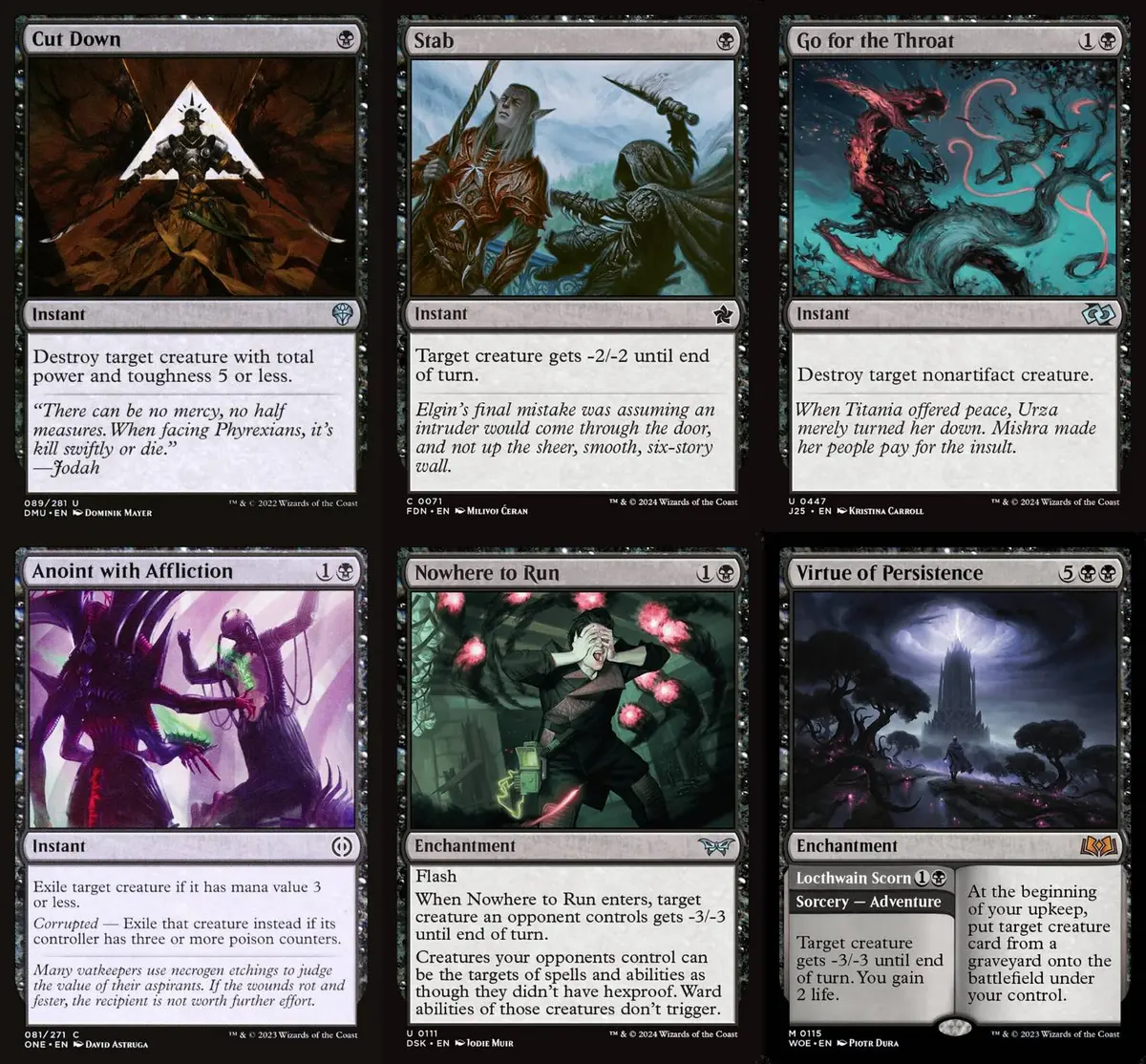
Cut Down (2):
The standard one-mana black removal option.
Stab (1):
I personally like mixing Cut Down with Stab or Disfigure. Each has pros and cons, but in the current environment Cut Down hits more targets, so the split is Cut Down 2 + Stab 1.
Go for the Throat (3):
The benchmark black removal in Standard. Some decks have changed some slots to Shoot the Sheriff to deal with the artifact creatures added after DFT, but we’re a green deck full of artifact and enchantment removal, so we don’t have that problem.
Anoint with Affliction (2):
It performs very well against creatures like Heartfire Hero, Mosswood Dreadknight, and Enduring Innocence. Most decks’ creature curves now mainly consist of creatures costing 3 or less, so this range is plenty, and this deck really does have a chance to reach Corrupted.
Nowhere to Run (1):
Shines against red-based aggro decks with green or white protection spells, but it’s removal with limited range after all, and this deck can’t hold any more short-range kills, so 1 copy is the limit.
Virtue of Persistence (1):
One reason I said above that the deck can’t hold more short-range kills is that it also needs the black Virtue. The Adventure removal is a sorcery, but the life gain it comes with is also worth a lot, and the card itself is also a precious extra win condition. If there weren’t so many protection spells these days, I’d lean toward cutting Nowhere to Run and playing two black Virtues.
Permanent Removal
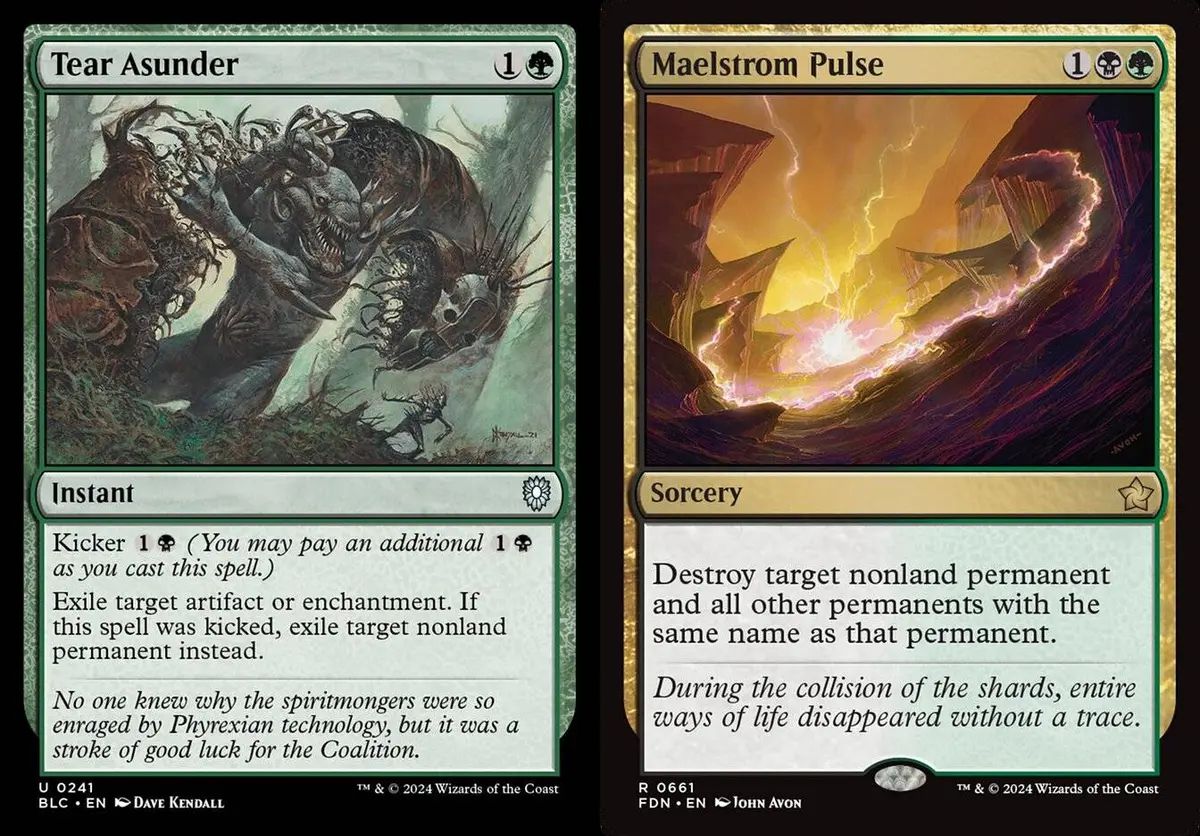
Tear Asunder (1):
These days there is no shortage of artifact and enchantment targets. Even at its worst it’s a 4-mana exile hard kill. The efficiency is a bit lacking, but it won’t be a dead card. Just note that it can’t kill manlands.
Maelstrom Pulse (1):
A simple and brutal universal answer, with a chance of a 1-for-many depending on the board. If you feel the limited-range short removal above is too much, you can swap in one more Maelstrom Pulse, though trading a two-mana kill for a three-mana kill carries some risk against red aggro, so weigh the pros and cons carefully.
These two removal spells are already regulars in Golgari midrange, and their power is beyond question. But compared with a typical Golgari midrange deck, this deck’s ability to remove planeswalkers in game one is dangerous, because most of the time you can’t expect to force through creature damage to kill the opponent’s planeswalkers. The kill spells that can directly answer planeswalkers are, besides one each of Tear Asunder and Maelstrom Pulse, just the 2 copies of Urgent Necropsy. So against opponents with planeswalkers, carefully evaluate when to use your universal removal.
Card Advantage
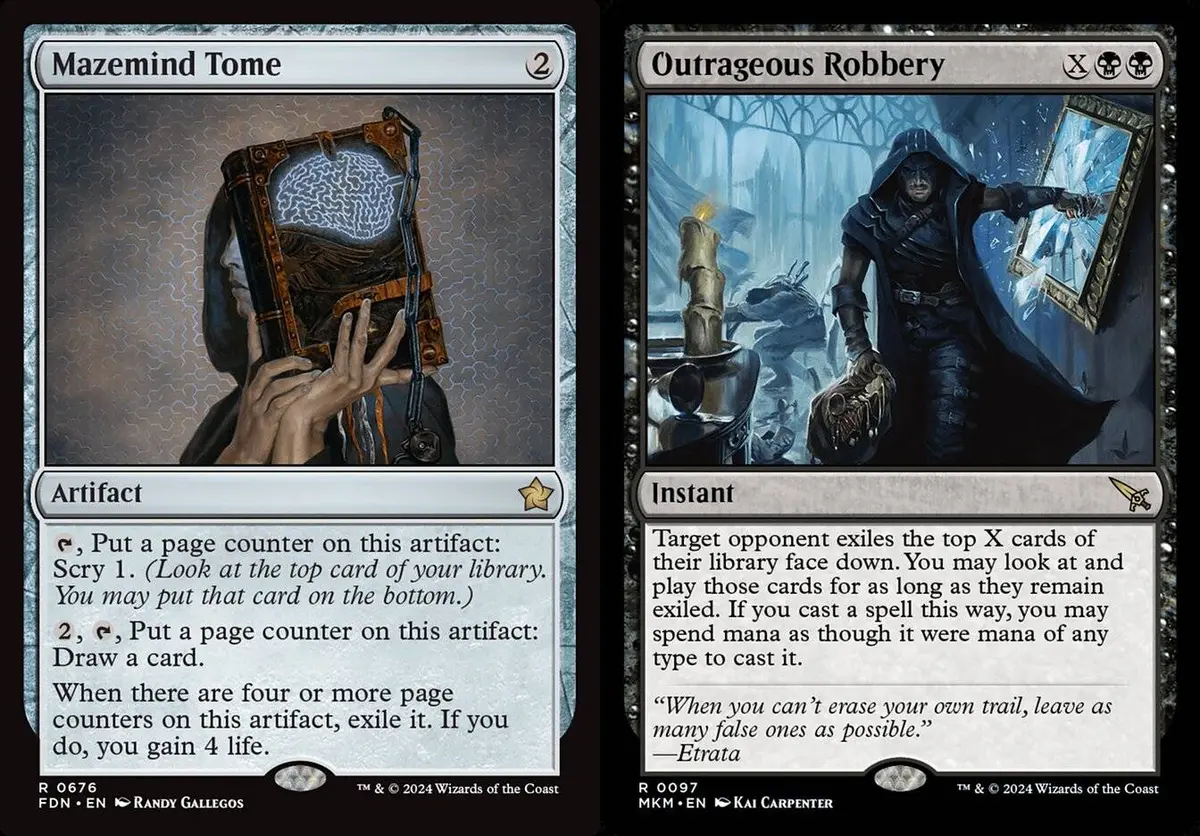
Mazemind Tome (4):
A card with a role similar to Up the Beanstalk. The advantage of using Mazemind Tome is that the deck’s curve is more flexible and lets you build a deck quite different from the Beanstalk axis. But having to spend 2 mana for every draw also dooms it to be a slower, more reactive deck, and gaining 4 life is of great value to control. Although it’s an artifact that gets swept by Desist, Mazemind Tome blows itself up after four uses anyway, so with proper planning of how you use the two, you can avoid hurting yourself.
Outrageous Robbery (1):
Because this deck easily turns into a long, stalled “prison” game, the expected value of X spells rises too. A single resolution often creates a resource gap the opponent can’t recover from, and since it’s an instant it’s easy to slip in at a gap, but it is ultimately too clunky, so 1 copy is basically enough, and if you want to be greedy you can consider 2. Also, against the mill combo of Doomsday Excruciator, as long as the opponent doesn’t connect the mill and mill you out in the same turn, you can use this card to take their library first and win the race.
Other
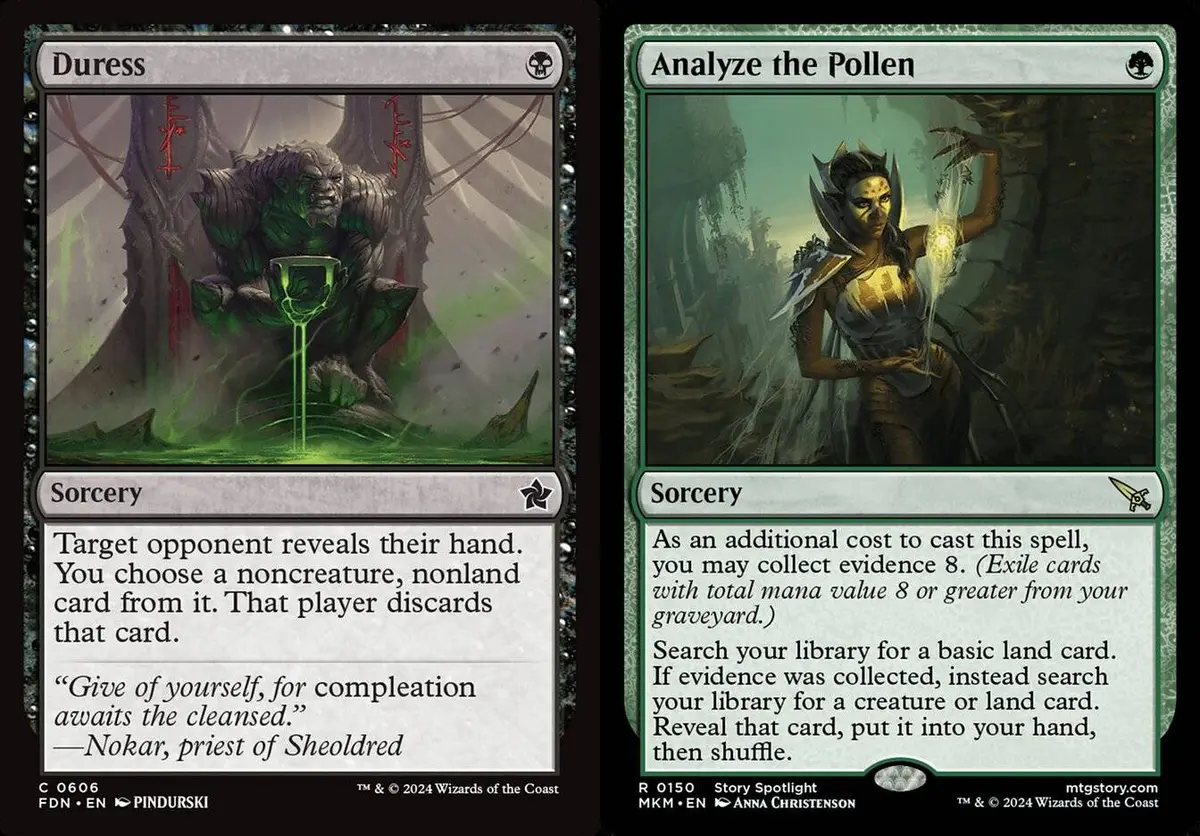
Duress (2):
There are far too many noncreature spells these days, and even a red aggro hand is full of tricks, so 2 copies in game one won’t leave you with dead cards.
Analyze the Pollen (1):
It originally sat in the 26th land slot, also a tapped land slot (Underground Mortuary), but in testing I always felt the deck’s right land count was between 25 and 26. I also tried Fabled Passage in between, and eventually found that replacing the 26th land with Analyze the Pollen was the most suitable option. After all, spending one mana to find a basic land and play it is about the same as playing a tapped land, and it likewise improves the stability of Verge lands. Not to mention this deck relies on a few key creatures or lands as finishers, so Analyze the Pollen helps a great deal with the deck’s stability and flexibility. As for collect-evidence fodder… a single Cease // Desist satisfies collect evidence 8.
Lands
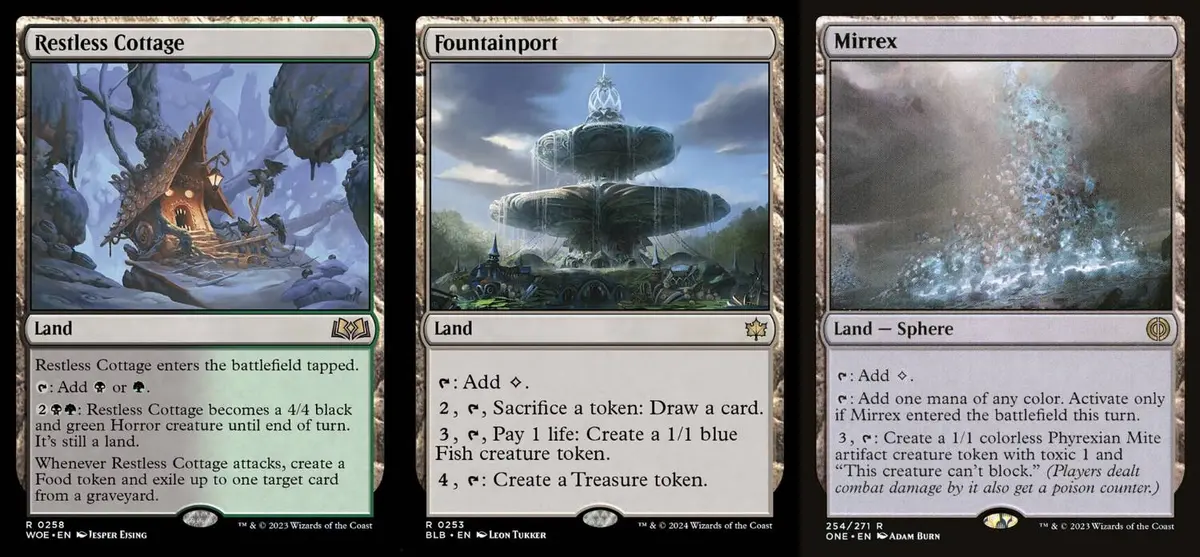
Restless Cottage (4):
It provides an extra win condition while fixing colors. Manlands have always been one of the saviors that solve control decks’ “how do I win?” question.
Fountainport (1):
A universal utility land. A normal control deck might play 2, but our ability to produce tokens is very weak, which makes using the draw ability less convenient, so we play only 1. The slot that would have been the second Fountainport was given to the guy below.
Mirrex (1):
In terms of pure winning ability, poison is far more efficient than the 1/1 white vanilla Fish from Fountainport above. The reason normal white token control decks don’t consider Mirrex is that they have plenty of token-producing methods, which fully unlock Fountainport’s potential, and they don’t lack win conditions either: a 1/1 white vanilla creature that can block is far better than a 1/1 poisoner that can’t block. But in this deck’s composition, we have a higher demand for win conditions, so we need Mirrex’s poison to assist us.
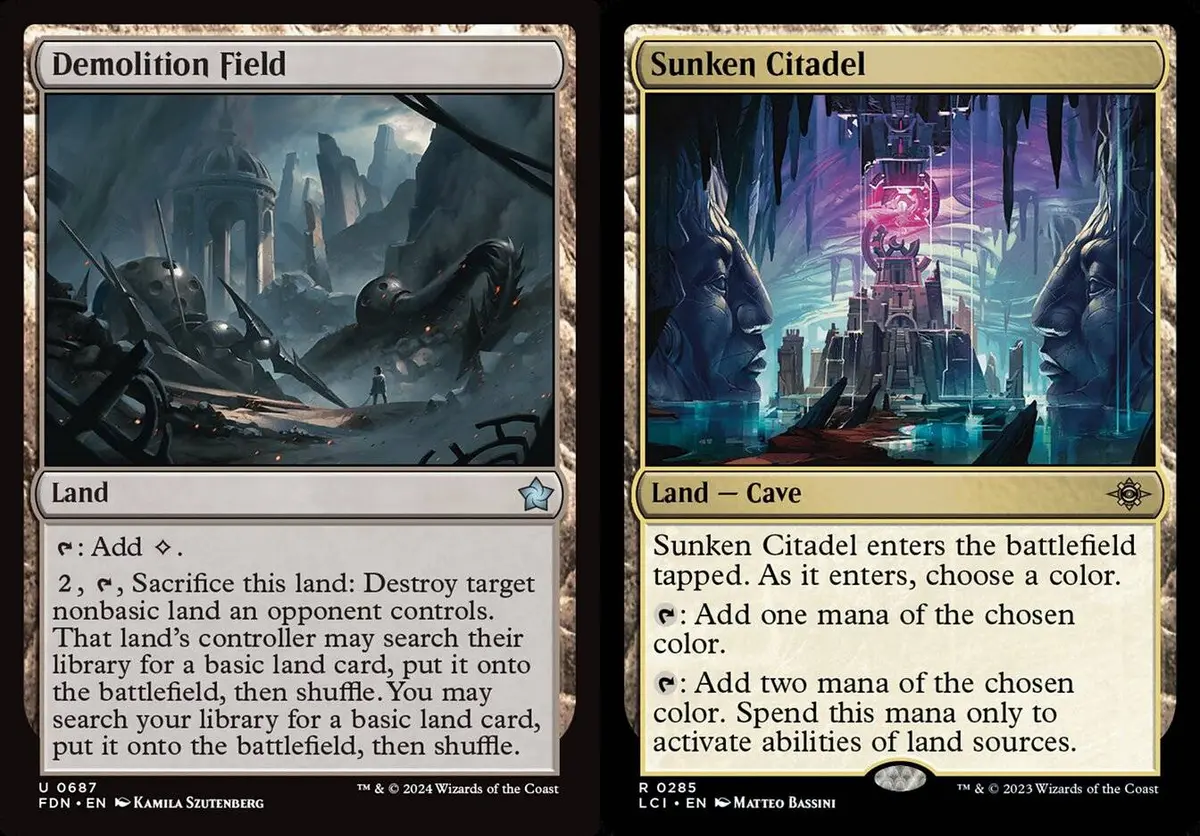
Demolition Field (2):
I insist on using only a two-color pair rather than mixing in more colors, and one of the core motivations is wanting to play Demolition Field. There are really too many utility lands these days, and for a reactive control deck, having extra answers to lands is important. A two-color deck without color-fixing pressure can still free up enough basic lands, while a three-color deck basically doesn’t have that luxury.
Sunken Citadel (1):
We still have one tapped fixing land slot available. I originally played Underground Mortuary, but testing showed our fixing pressure isn’t that heavy, and Verge lands are rarely affected by whether we have Underground Mortuary. Playing Sunken Citadel instead is enough for our fixing needs, and on top of that it supports the large number of utility lands we play.
The remaining land slots are the pure fixing lands: Verge lands, pain lands, and basic lands.
Sideboard
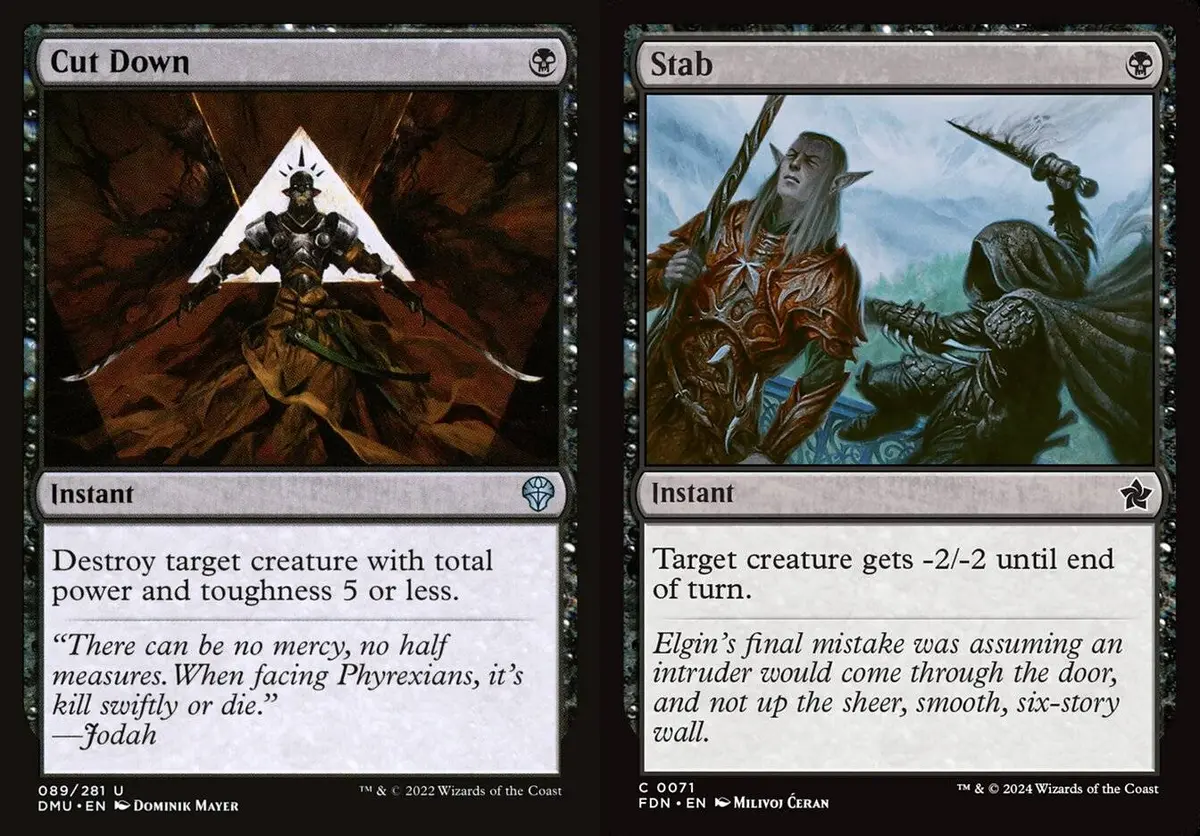
Cut Down (1) & Stab (1):
More one-mana removal as a supplement.

Duress (2):
Together with the main deck, that makes a full playset of Duress. If you feel a full playset is too much, you can consider swapping one for Cruelclaw’s Heist. The ceiling goes up, but on turn two this deck may well not have two black mana, which adds quite a bit of instability risk.

Tranquil Frillback (1):
This guy is just too good in the current environment. In matchups where it shines, you can bring in more Tranquil Frillbacks from the sideboard.

Obstinate Baloth (3):
The nemesis of Hopeless Nightmare. A 4/4 body plus 4 life is also very good in some creature matchups that emphasize racing life totals.

Axebane Ferox (2):
Almost every opponent, when they see me play this card, has to pick it up and look at what on earth it is?? The purpose of this card is to switch the deck’s tempo, giving me a more proactive midrange plan to switch to in sideboarded games. Its haste damage often catches the opponent off guard. Although “Ward - Collect evidence 4” isn’t a hard number to pay, in the early and midgame the graveyard sometimes can’t produce the fodder to pay for it. Here are a few interesting cases from testing Axebane Ferox:
- Ward is a triggered ability. When the opponent cast a removal spell on it, I responded to the ward trigger, used Cease at instant speed to exile the high-cost cards in the opponent’s graveyard, and the opponent’s removal got countered because they couldn’t pay collect evidence 4.
- The opponent, to target the collect evidence system, played RIP, and upon seeing Axebane Ferox started wondering how to deal with this thing without a sweeper.
- The opponent’s Kaito, Bane of Nightmares jumped in, hit me, and used [0] to draw. With no creature on the board to block, Kaito was immediately punched to death by a hasty Axebane Ferox.
The more common configuration for a card in this role is Sheoldred, the Apocalypse, and playing it is indeed flawless, but in sideboarded games I need to strengthen my ability to force through damage to planeswalkers, and haste helps me do that better.

Harvester of Misery (1):
Spot removal early or a small sweeper in the mid to late game, a flexible two-in-one creature. It is very good against Dimir tempo, convoke, and similar decks, and in Omniscience combo decks, Grand Abolisher may be there as an escort, and this is one of the few ways to remove Grand Abolisher at instant speed on the opponent’s turn.

Aclazotz, Deepest Betrayal // Temple of the Dead (1):
Another one-card war god, and it’s especially tricky to handle when the opponent lacks removal.

Phyrexian Fleshgorger (2):
For reasons similar to Axebane Ferox above, it is used to switch game plans. Menace plus lifelink, together with ward - pay life, makes it an MVP single card in many racing matchups, and prototype lets it deliver maximum value in both early and late stages of the game. Although it’s an artifact creature that gets swept by your own Desist, the matchups where you want to trade life totals with it probably don’t need you to sweep artifacts and enchantments anyway, so you don’t have to worry about getting in your own way.
Another advantage of choosing Fleshgorger is that it dodges the opponent’s black removal: it doesn’t die to Go for the Throat. Nowhere to Run can indeed ignore ward and kill the prototype version, but the only creature in game one within that kill’s range is Tranquil Frillback, which is useless after its ETB. Even if they want to keep it to catch the sideboarded Fleshgorger, it easily becomes a dead card, and it can’t even kill Restless Cottage, so the opponent usually won’t want to keep it for the sideboarded games. Anoint with Affliction just has no idea what to do against those four-drops above.

Ghost Vacuum (1):
The standard graveyard-hate sideboard card. Since we already have many graveyard-hate cards such as Cease and Tranquil Frillback, 1 copy is enough.
Why No Up the Beanstalk?
I believe many people’s first reaction to the decklist is: why not use Up the Beanstalk? When you try swapping Mazemind Tome for Up the Beanstalk, you’ll find it’s a change that affects the whole deck.
Suppose we still assume the deck uses the collect evidence system of Urgent Necropsy & Deadly Cover-Up. After swapping in Up the Beanstalk, to make the deck’s tempo and Beanstalk’s card-advantage ability make sense, you would surely play Overlord of the Hauntwoods, and once you play Overlord of the Hauntwoods, the sweeping side of Cease // Desist is no longer messing with the opponent but with yourself. It’s still usable as a card-draw spell, but there’s actually a more proactive option better suited to the ramp tempo that Overlord of the Hauntwoods brings: switch to Spinewoods Armadillo as the turn-two life-gain, card-draw curve (although drawing cards and finding lands are a bit different). Since it’s also a high-cost card that can be proactively put into the graveyard on turn two, it’s compatible with the collect evidence system, and finally with Breach the Multiverse it becomes an explosive win. One reason for choosing Spinewoods Armadillo is that it’s a creature, which lowers the chance of Breach the Multiverse whiffing.
Following the above reasoning, the deck would roughly transform into this:
Golgari Breach the Multiverse ~ Decklist link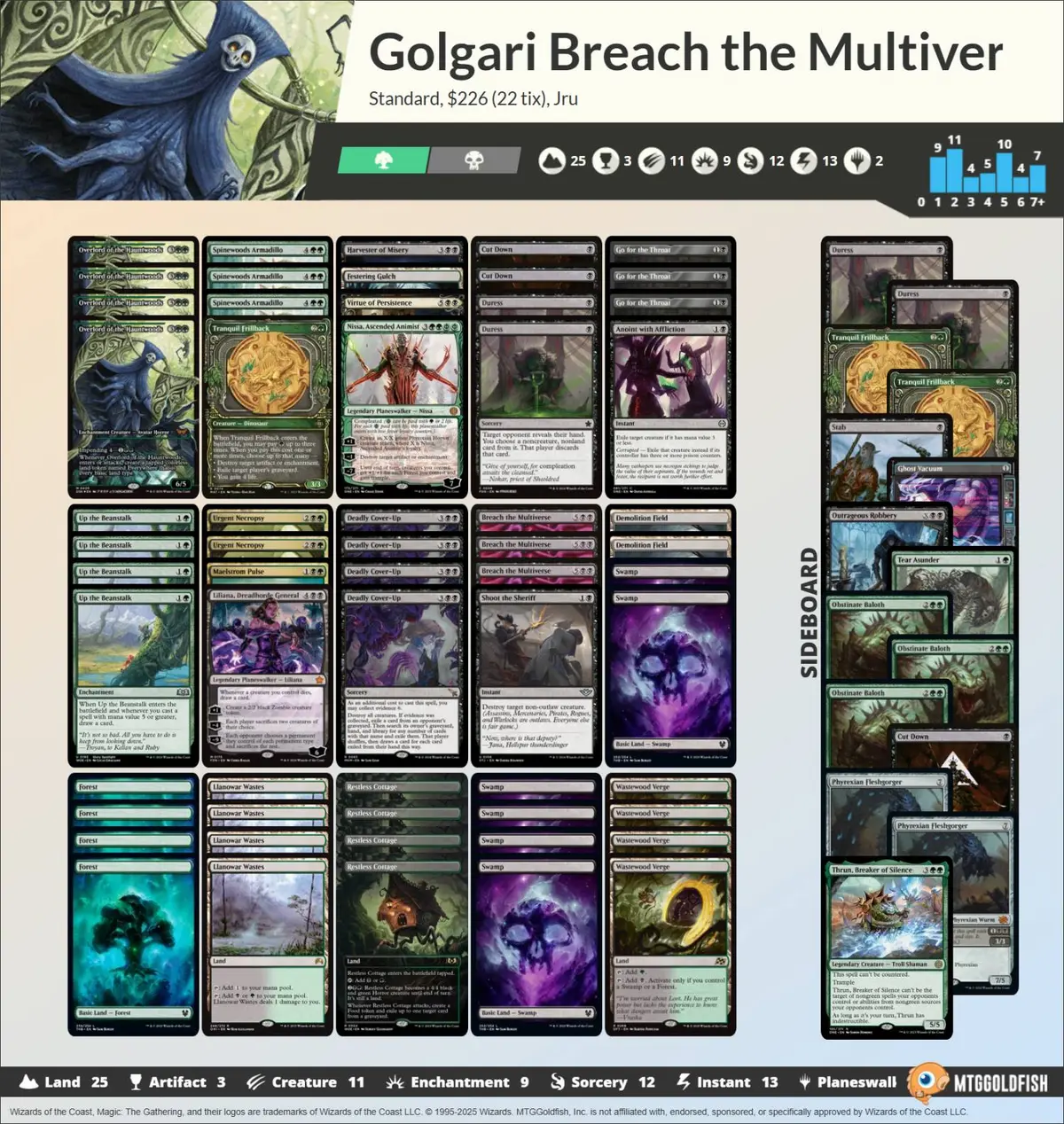
This list is an untested conceptual prototype. Anyway, although the removal system is very similar, the game concept has completely turned into another kind of deck, and the deck I want to play is a control deck that keeps removing the opponent until their face is contorted, not a ramp-up-and-go-for-one-big-play proactive deck, so I didn’t research the details of this list any further.
Derivative Archetype: Orzhov Ketramose Collect Evidence Control
The new Orzhov god Ketramose, the New Dawn can also be called a match made in heaven with Cease // Desist + Deadly Cover-Up. Cease can exile from a graveyard, and Deadly Cover-Up’s collect evidence cost when cast and its disruption after resolution each count as an exile event, so Ketramose can draw you two times. At the same time, Ketramose is indestructible itself and can dodge the sweep.
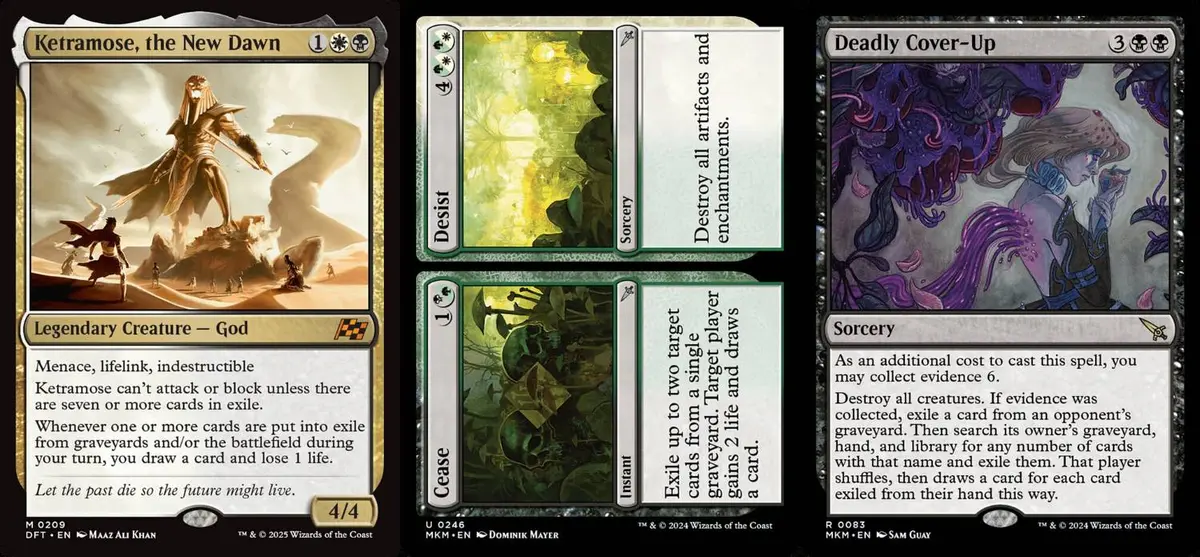
Building on the concept above, you get an Orzhov Ketramose collect evidence control deck. The sample list is as follows:
Orzhov Ketramose Collect Evidence Control ~ Decklist link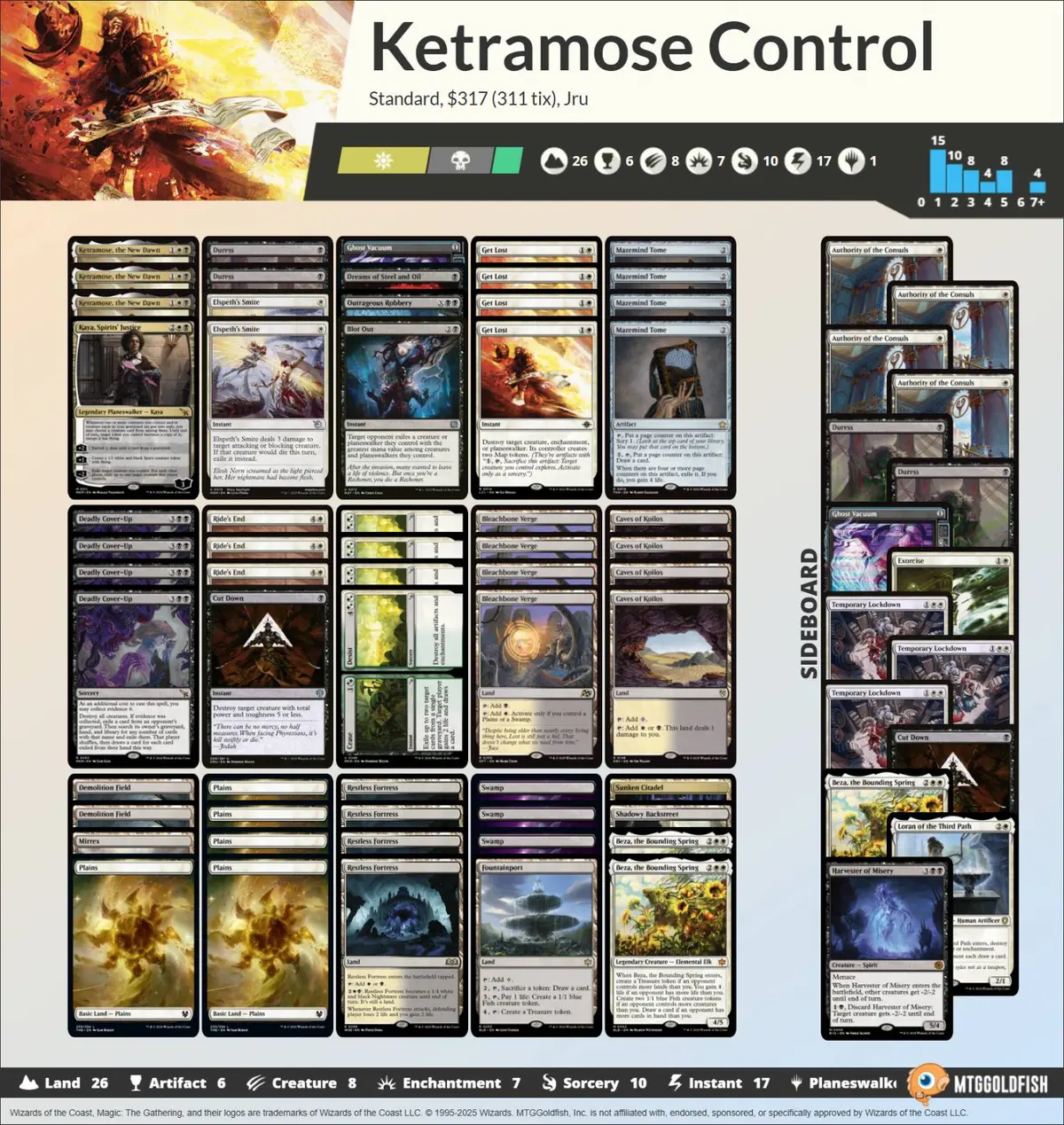
However, the list above is also an untested conceptual prototype, and it will certainly need continuous playtesting to refine the details. It’s only meant as a reference to get the ball rolling, and readers interested in this structure can try adjusting the deck from here.
Conclusion
I spent about three weeks tuning this Golgari collect evidence control deck before finally reaching a balance I’m satisfied with. The main deck changes were actually always small: from the first version to the final version you see in this article, it differs by only 4 cards, but those 4 changes alone made a noticeable difference once there were enough games tested. The sideboard, on the other hand, was scrapped and rebuilt from the concept at least 3 times. At first it was filled with all sorts of seemingly standard hate cards, for example Malicious Eclipse if I expected to face small creatures flooding the board, but I later found this way of building too rigid and easy to lose to the opponent’s own answers in sideboarded games. Later I gradually shifted toward a midrange Plan B. I also tried creature options such as Mosswood Dreadknight, Glissa Sunslayer, Preacher of the Schism, and Sentinel of the Nameless City, the good single cards common in Golgari midrange, or forcibly switching into an Unholy Annex // Ritual Chamber shell in sideboarded games. It was only after constant testing and review, and reflecting on whether my reasons for choosing each card made sense, that I arrived at the Phyrexian Fleshgorger + Axebane Ferox build (though I also have to admit that such off-meta card choices have some extra advantage in formats where decklists aren’t public).
I currently own 8 paper Standard decks. Apart from 2 of them being old decks with new cards added as tweaks, the other 6 were all built from scratch after DFT, ranging from meta-style decks to ones where the opponent looks and says “What on earth is this?” But in fact I have tested 9 decks, meaning 3 were scrapped after experiments (to be precise, the core concept that inspired the deck couldn’t be tuned to balance, and even if the final deck was salvaged, it wasn’t the type I originally wanted to play). Of course not every idea can be fully realized, but as long as buying cards doesn’t cause a financial burden, failures like these aren’t scary. This testing process is a kind of training for your deck-building ability. What matters is being able to review the experimental data you collected with logical analysis after testing, so my advice to friends who have deck-building inspiration but fear failure is to just try! People only improve by taking on challenges.
As for why 4 of my 8 paper Standard decks are control decks, what’s wrong with this person… That’s a different story.
- Title
- Ultimate Torment: Standard Golgari Collect Evidence Control
- Author
- Jru
- Created at
- March 19, 2025
- License
- This work is licensed under CC BY-NC-SA 4.0 .