Infinite Resources: Standard Golgari Self-Mill

Note: This article was translated from Chinese by AI and may contain errors. Read the original Chinese version.
Before We Start
Golgari midrange has the best removal and creatures in the Standard card pool (BLB even added a Vraska + green Talent instant-kill combo), and has been one of the pillars of Standard in recent years. However, the mainstream Golgari midrange in the meta is a proactive deck that emphasizes attacking tempo, while the author prefers a slower build that values long-game resource battles. The two share quite a few powerful cards, but the underlying logic of the game plan is completely different. Conveniently, the new DSK cards include quite a few resource-engine cards that make good use of the graveyard. They struggle to have an immediate impact on the board in a short tempo battle, but they are well suited to creating enormous card advantage in a long resource battle, so I built this Golgari resource-battle deck on that foundation.
Deck Introduction
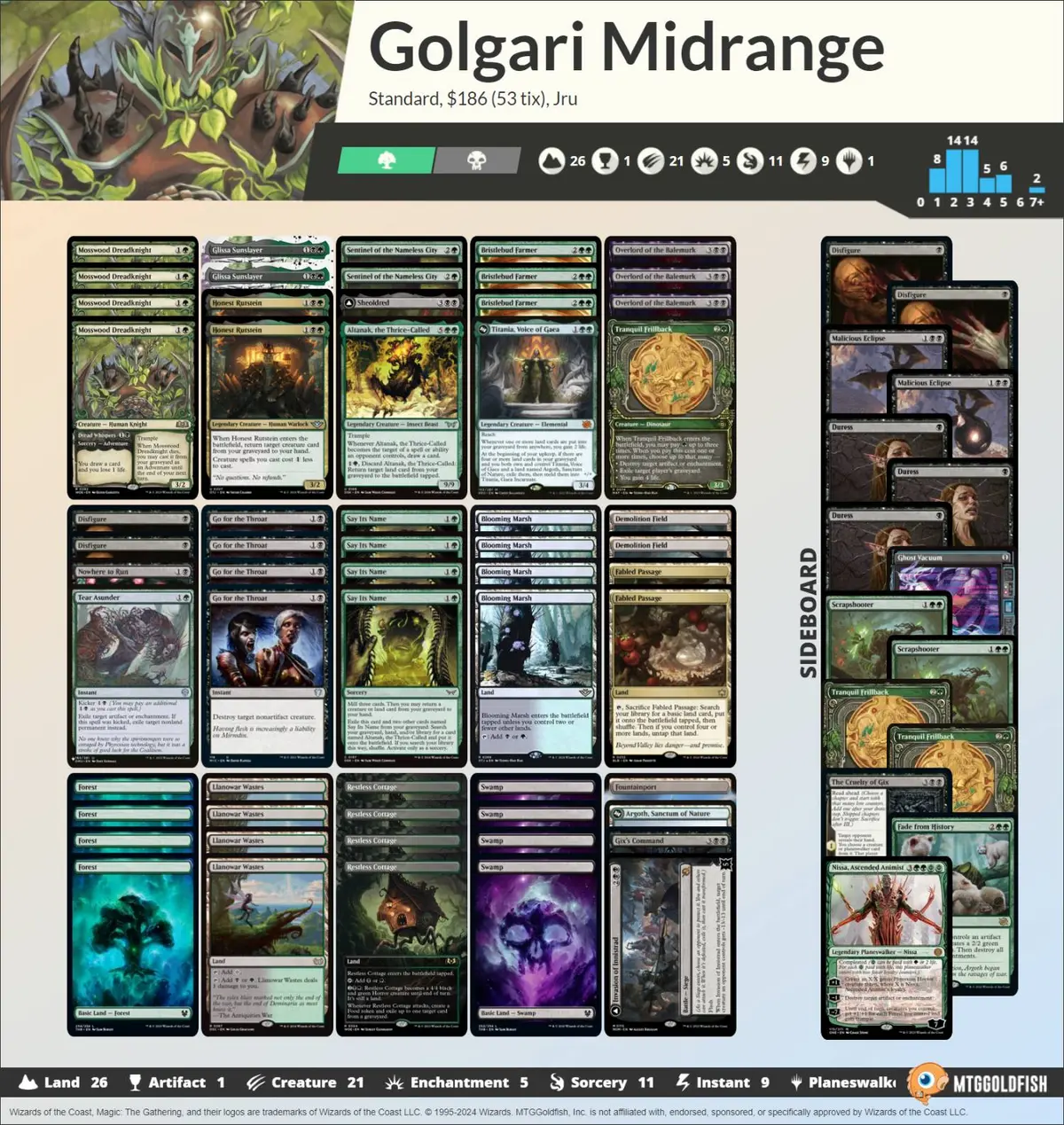
The whole deck runs on one core idea: “card advantage”. The main game plan is to keep drawing cards and trade resources with the opponent until the opponent’s resources run dry.
Since the game plan assumes a long game, and some resource cards take a while to pay off, you will mostly be on the defensive early on. The first priority is to make sure your line isn’t broken through and to drag the game safely into the mid and late game, which is when this deck truly kicks in.
But exactly when to defend and when to attack still depends on the opponent’s deck and the state of the board. Although this deck can beat most opponents in a resource battle, there are always more extreme decks, and then you need to try to apply pressure early. And unlike control, many of our creatures are powerful cards that give you tempo when you want tempo and resources when you want resources; the same creature can switch freely between offensive and defensive logic depending on how you play it.
Main Deck Breakdown
The Say Its Name Package
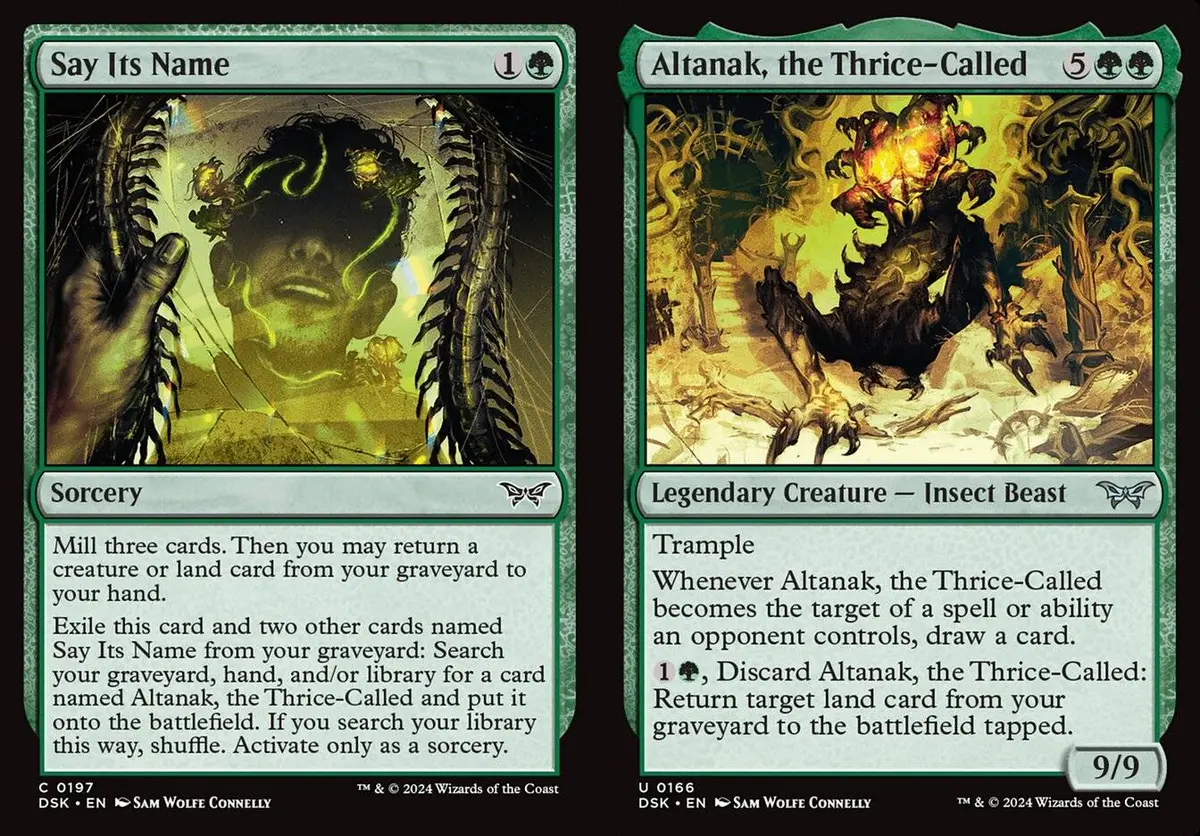
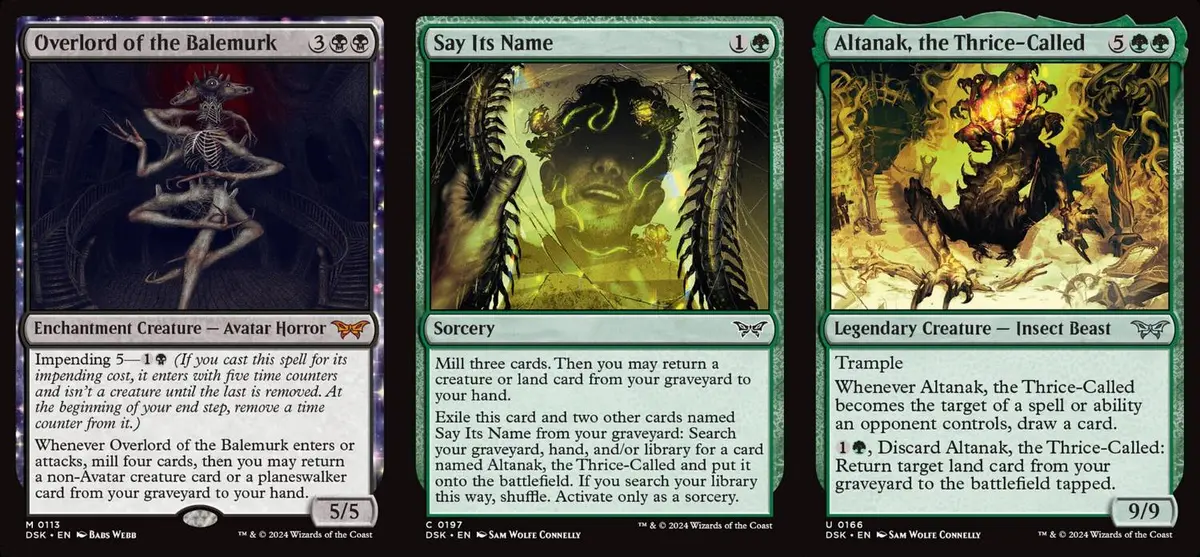
Say Its Name (4) + Altanak, the Thrice-Called (1): this is actually the author’s personal driving motivation for building this deck. I just wanted to play this Say Its Name package. Even among regular two-mana looting spells, Say Its Name is among the stronger ones. Note that after milling, you pick any creature or land card from the graveyard to put into your hand; there is no target when you cast it, and the card you recover isn’t limited to the three you milled, which contributes a lot to the deck’s consistency. As for exiling three Say Its Name from the graveyard to drop in Altanak, the Thrice-Called, that gives this looting system an extra ceiling. Although Altanak can also be dealt with by a single removal spell, it can be considered an almost free creature, and it draws a card when targeted, so sometimes just looting will inexplicably freeload a +2 card advantage. Don’t forget this is a self-mill deck, so it keeps filling the graveyard anyway; in testing, gathering three Say Its Name in the graveyard is actually not hard, and because lands often end up in the graveyard, even if Altanak is in your hand you usually don’t need to worry about it clogging your hand. And of course, if you’re lucky enough, you have a chance to turn the board into this on turn two…
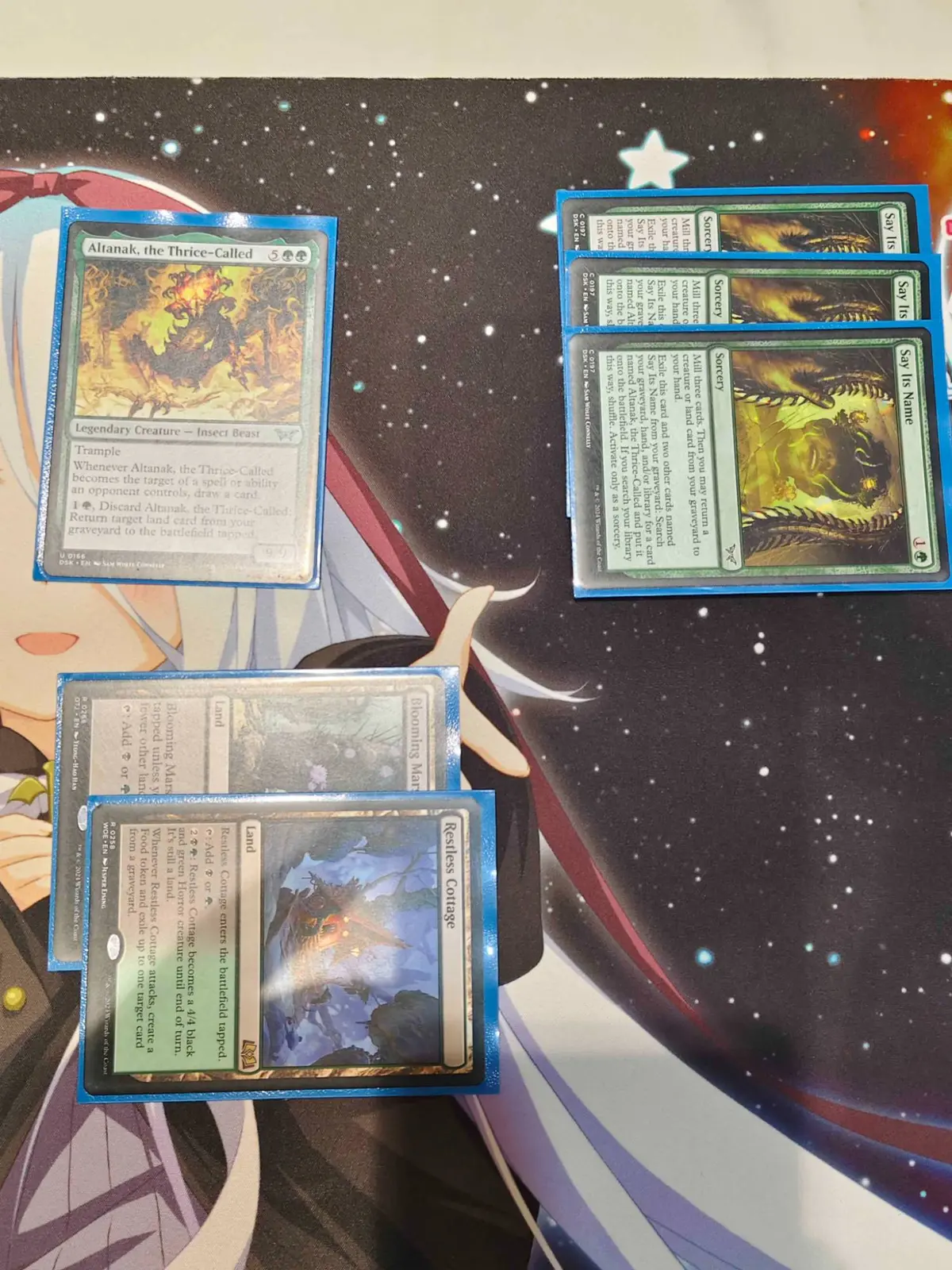
However, Say Its Name & Altanak are also often the cards swapped out most in sideboarded games. At their core they are just a looting spell and its companion, support spells, and even removing them doesn’t affect the original game plan. When you need to keep the main-deck removal and bring in more cards that hate on the opponent, they are always the first to give up their slots.
Resource Engines
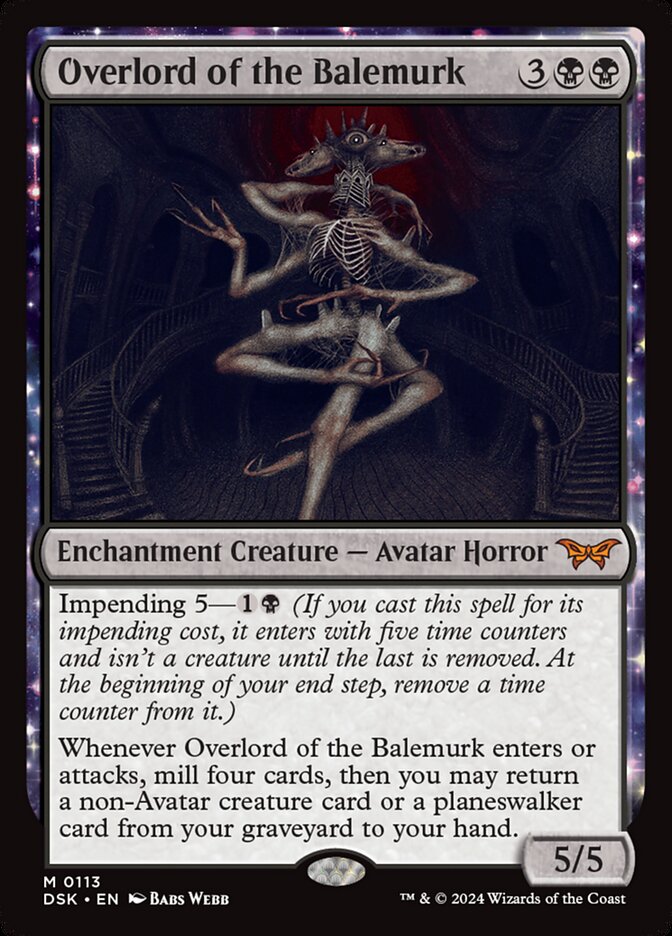
Overlord of the Balemurk (3): Overlord’s graveyard-filling efficiency and card advantage need little introduction. It gains value just by entering, and if you let it live to attack and gain value again, you’ve usually won the game; the opponent can probably never catch up to your resource count.

Honest Rutstein (2): The real MVP of the deck. It often recurs Overlord or another Rutstein over and over, and almost every opponent who has experienced it has given an extremely irritated review. In addition, this deck has quite a few creature cards, so the cost reduction often lets you suddenly go off and flood the board. Don’t forget that when Overlord is cast with impending it is still a creature spell, so it benefits from the cost reduction.

Bristlebud Farmer (3): A powerful attacker and resource engine, and again one you almost can’t let live to attack. Once it attacks successfully, it easily starts a resource chain. Note that this guy’s recursion wording differs from Overlord’s and Say Its Name’s: it picks one permanent card from the three milled cards to put into your hand. Because of Bristlebud Farmer, some of the removal spells chosen are cards whose type is permanent.
Other Creatures

Mosswood Dreadknight // Dread Whispers (4): The top two-drop in Golgari; however you build, you can hardly do without it. When using it, don’t be overly fixated on the standard procedure of going on an adventure and then casting it from exile. Playing it straight out at the right time sometimes lets you control the pace of the game.

Glissa Sunslayer (2): The standard Golgari three-drop king.

Titania, Voice of Gaea (1): A somewhat toy-like free slot. Its back half, Argoth, Sanctum of Nature, is naturally included too, but their fusion is not the theme of this deck, just a small side combo, so don’t be overly fixated on it. Because of the frequent self-milling, Titania can gain quite a lot of life when on the battlefield, and for a long-game deck life is an important asset. A three-mana 3/4 reach is also a decent body, and it can intercept flyers such as Slickshot Show-Off, Faerie Mastermind, Deep-Cavern Bat, and Zoraline, Cosmos Caller.

Sentinel of the Nameless City (2): A solid three-drop. A vigilant attacker performs brilliantly in matchups that value life-total trades; it has a body that isn’t easily traded off, and the Map token is also a very useful thing.

Tranquil Frillback (1): In this environment, Tranquil Frillback rarely lacks a job, and it is one of the few creatures that can completely clear out Enduring Innocence with a single card. Also, since we are a graveyard deck, we really don’t like running into graveyard hate, and most of it is artifacts and enchantments (such as Ghost Vacuum and Rest in Peace). Ghost Vacuum can even be seen in some decks’ main decks, so leaving all artifact and enchantment answers to the sideboard would be a bit too dangerous; the main deck needs some ability to respond as well. If the current environment has more artifacts and enchantments, you can consider swapping Titania for a Scrapshooter. The reason for not playing a second Tranquil Frillback is the deck’s curve: although Tranquil Frillback is a three-mana creature, it is not effectively a three-drop on the curve. You don’t want to slam a vanilla body on time, and you sometimes need to hold it until the target you want to hit appears before using it as removal. What’s more, we also have Honest Rutstein, who is not an active turn-three play if you haven’t put creatures in the graveyard on turn two, so if we kept increasing the number of main-deck Tranquil Frillback, it would actually hurt the deck’s tempo. In this respect Scrapshooter is much more proactive; at least it is a powerful three-mana 4/4 reach on the curve, and even if you just slam it, it plays an active role on offense and defense.

Sheoldred, the True Scriptures (1): This is probably the card in the deck that departs most from the normal deckbuilding path. The most common options for this slot should be Sheoldred, the Apocalypse or Hostile Investigator, and that’s how I built it at first, but after testing I found I wasn’t actually short of win conditions. Instead, because of the high frequency of self-milling, it’s easy to mill away my removal spells and be unable to recover them, so I still wanted a creature with removal built in. At first I switched to Chupacabra Echo. To be honest, it is just a downgraded Ravenous Chupacabra. Although I’m a self-mill deck, in the early game the graveyard doesn’t necessarily have enough permanents to provide removal reach, and drawing it under the wrong conditions really makes you want to die, but it can’t be denied that once the number of permanents in the graveyard builds up enough (a single Overlord ETB may be enough), it is a super-strong resource-trading tool, and precisely choosing the target you want to remove is still impressive. But after being stuck on four-mana tempo a few times by openings with no chance to self-mill, I decided to switch to the more reliably functioning Sheoldred, the True Scriptures, which is at least a strong threat the opponent can’t ignore, and can also solve my trouble with handling planeswalkers.
Removal

Disfigure (2): For why I chose Disfigure over Cut Down, see this article: Analyzing the Shift in Standard Threat Structure Through Cut Down and Disfigure.

Nowhere to Run (1): A permanent-type removal spell, excellent against green and white aggro with protection spells, and it can also shut off the death ability of Heartfire Hero.

Go for the Throat (4): The benchmark of black removal in Standard.

Tear Asunder (1): In today’s environment, where artifacts and enchantments are everywhere, one copy in the main deck is certainly not a mistake; at worst it is a four-mana exile-anything answer and won’t be a dead card.

Invasion of Innistrad // Deluge of the Dead (1): One more permanent-type removal spell. Although the cost is a bit clunky, the effect is very powerful: once it transforms, it can suppress the board on its own. For a resource-oriented deck like ours, where the opponent’s life total is sometimes under little pressure, attacking the battle puts more defensive pressure on the opponent than attacking them directly. If you find this card too clunky, you can swap it for another regular two-mana removal spell.

Gix’s Command (1): A black all-purpose card, useful against almost any opponent.
(If you sweep the board and then recur Honest Rutstein + Overlord, the opponent’s face usually twists; I vouch for it with the reaction memes of the victims.)
Lands

Argoth, Sanctum of Nature (1): Special-purpose support for Titania, Voice of Gaea. Continuously self-milling to produce tokens has good synergy with the deck, but because that costs a lot and we rarely empty our hand, there are very few moments when you actually need to activate this ability. If you choose to swap out Titania, you don’t need to keep this land either.

Fountainport (1): As long as you aren’t afraid of color screw, it is a universal resource engine, and this deck’s token-producing ability is quite rich; often Fountainport doesn’t need to produce and consume its own tokens, and you can keep drawing cards just by eating tokens that others provide. Going up to 2 would also be possible, but this deck’s actual color requirements are much heavier than they appear, so at 2 the color-screw risk would be a bit high.

Demolition Field (2): There are so many utility lands now that for a long-game deck, bringing 2 as an answer to utility lands is basic. If conditions allow I would even want to bring 3, but again there are mana-fixing concerns.

Fabled Passage (2): Extra fixing, and proactively putting lands into the graveyard also makes Say Its Name, Altanak, the Thrice-Called, and Titania run more consistently.

Restless Cottage (4): How to balance manlands against the surveil land is up to personal understanding. For the author, I prefer increasing the number of manlands, and since there is currently no on-color Verge, there’s no need to consider the ratio of typed lands.
Blooming Marsh (4), Llanowar Wastes (4), Forest (4), Swamp (4): the rest of the fairly standard mana base.
Sideboard Breakdown

Ghost Vacuum (1): Decks like ours that keep filling the graveyard and then use it in untargeted ways are, after all, in the minority, and most graveyard-using decks in the current environment can be contained by Ghost Vacuum alone. By the rules, creatures with death-triggered return abilities such as Enduring Innocence, Aclazotz, Deepest Betrayal // Temple of the Dead, and Unstoppable Slasher can also be exiled by responding to the triggered ability with Ghost Vacuum (of course, whether to bring in Ghost Vacuum against decks with these cards is really hard to say).
Targets: graveyard resource-using decks, and the death-return single cards mentioned above.

The Cruelty of Gix (1): A card-advantage god card in resource battles; each of its three chapters gains resources.
Targets: midrange resource battles, Ramp or reanimator decks that put out big creatures.

Malicious Eclipse (2): For use against decks that go wide with small creatures; we still mostly need removal that holds up against early threats.
Targets: aggro or go-wide small-creature decks.
Disfigure (2): More one-mana removal, which gives you the means to stand up to aggro.
Targets: aggro, or midrange/tempo decks with a high share of small creatures.

Duress (3): The standard black sideboard card.
Targets: control, and any opponent with a high share of noncreature spells.

Nissa, Ascended Animist (1): In midrange mirrors or against control, it is a powerhouse that can win the game on its own.
Targets: midrange, control.
Tranquil Frillback (2): It can handle artifacts and enchantments or hate graveyards. Since we ourselves are very afraid of graveyard hate in the form of artifacts and enchantments, the share of corresponding removal is higher than in a regular deck. Against some aggro decks it also gets played for its lifegain and its ability to hit key cards.
Targets: artifact, enchantment, and graveyard decks, and certain types of aggro decks.

Scrapshooter (2): An extra supplement similar to Tranquil Frillback. The main imagined enemies are still artifact and enchantment decks, but the two differ somewhat in role and tempo. In some midrange matchups, as an answer to the opponent’s graveyard hate, it may be used as a pure threat, replacing graveyard-using cards that have been singled out.
Targets: artifact and enchantment decks, the answer to the opponent’s graveyard answers.

Fade from History (1): There are so many artifacts and enchantments in the current environment that bringing one handles a lot of matchups. Even if you have Overlord on your own board, sweep when it’s time to sweep; never go soft. Remember how this card is worded: as long as a player had something destroyed, you get a 2/2 Bear token; it is only a True/False condition check, and whether you had 1 or 10 permanents destroyed makes no difference. (I blow up one Food token, you blow up four Overlords, and we both get a 2/2 Bear token; it shouldn’t make much difference, right?)
Targets: decks with lots of artifacts and enchantments.
Sideboarding Approach
Compared with other formats, Standard decks have more vague themes. Decks with the same name, like “XX color-pair midrange”, may contain wildly different cards, and the only decks whose builds are truly specific may be extreme decks like red aggro and convoke.
So for this sideboarding section I plan to do things differently: apart from red aggro and convoke, I will use the functional traits of the imagined opponent to introduce which cards should be swapped out. I believe this is the most headache-inducing part of sideboarding for most people, while which cards to bring in is relatively clear, and you can also refer to the notes tags in the earlier sideboard card introductions.
Responding to Graveyard Hate
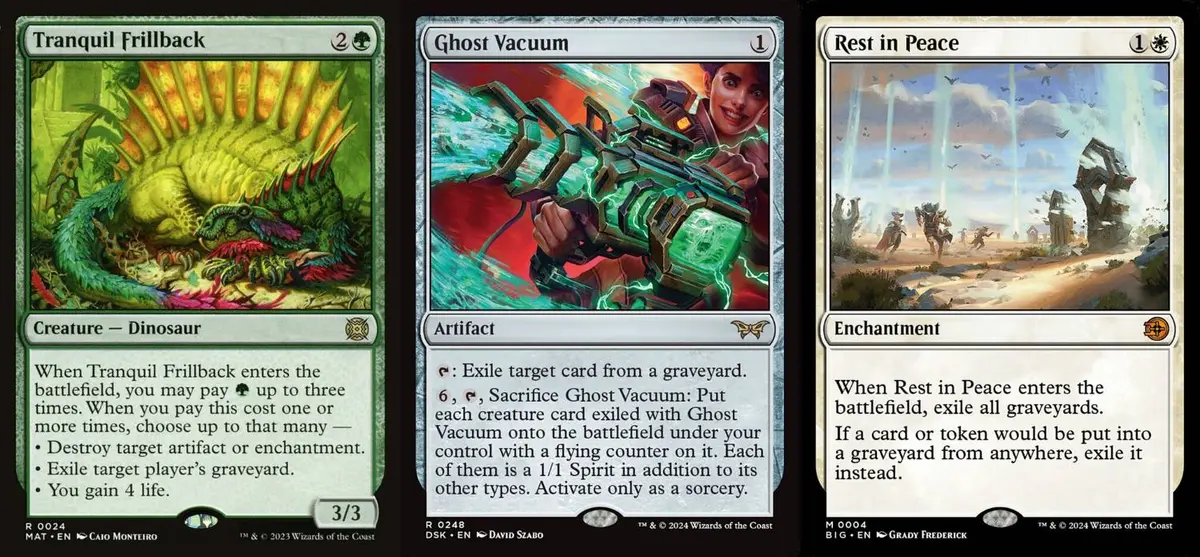
As a graveyard-using deck, how to handle the opponent’s graveyard hate is an important part, and the graveyard hate the opponent prepares is very likely separate from the deck’s main body; it simply depends on which hate card they chose. Although we are good at using graveyard resources, we aren’t as pure as a graveyard-themed deck; most of the game plan still runs on the battlefield, and the cards that use graveyard resources are basically all standalone cards that can function on their own, so you can swap them out in sideboarding without hesitation.
Common graveyard hate can be roughly divided into the following four categories by mode of operation. However, whichever mode the graveyard hate uses, it disables the graveyard effect of Say Its Name, so as long as you meet an opponent who can hate graveyards, you can basically take out all of Say Its Name & Altanak, the Thrice-Called.
One-time exile of a specified card from the graveyard (example: Cease)
This level of graveyard hate is no obstacle to how this deck runs, and opponents who bring this kind of card are rare. If the opponent can interfere with the graveyard at instant speed, be a little careful when using Honest Rutstein.One-time exile of all cards in the graveyard (example: Tranquil Frillback)
Overlord & Bristlebud Farmer both mill first and then recover cards. Having the graveyard emptied has some effect, but it doesn’t stop the deck from functioning. Against this kind of one-time graveyard wipe, just leave yourself a way out and make sure you can rebuild after the disaster. The idea is the same as facing a control sweeper: be careful not to fill the graveyard with too many resources and get wiped out in one go.
As long as this kind of effect stays at sorcery speed, you don’t need to fear sideboard graveyard hate of this mode too much; just take out the Say Its Name package and manage the risk when playing.Continuous exile of specified cards from the graveyard (example: Ghost Vacuum)
Gix’s Command’s graveyard recursion has no target, and so do Overlord & Bristlebud Farmer, which can also recover resources from the cards you milled, so in theory this kind of effect can only restrain us and cannot immediately stop us from gaining resources. If it’s something like Urborg Scavengers, which can’t respond to graveyard removal at instant speed, there’s nothing to fear. But against a card with the ability to respond like Ghost Vacuum, it is very troublesome: Honest Rutstein is shut down outright, and as soon as you see Ghost Vacuum you can take Rutstein out. Also, as long as Ghost Vacuum is on the battlefield, Mosswood Dreadknight has almost no chance to be reused, and repeatedly exiling quality creatures from the graveyard adds up to a big problem, so this matchup already requires actively bringing in answer cards.Continuous exile of all cards in the graveyard (example: Rest in Peace)
This is without doubt the answer card that gives us the biggest headache. Against opponents with Rest in Peace or Leyline of the Void, bring in all of Tranquil Frillback & Scrapshooter without question, take out the Say Its Name package and Honest Rutstein entirely, and depending on the situation you can even reduce the number of Overlord and Mosswood Dreadknight.
Also a reminder: against RIP and Leyline of the Void, Overlord can’t recover resources from the graveyard, but Bristlebud Farmer can still recover the cards it milled; the detailed rules explanation comes later.
Midrange Decks
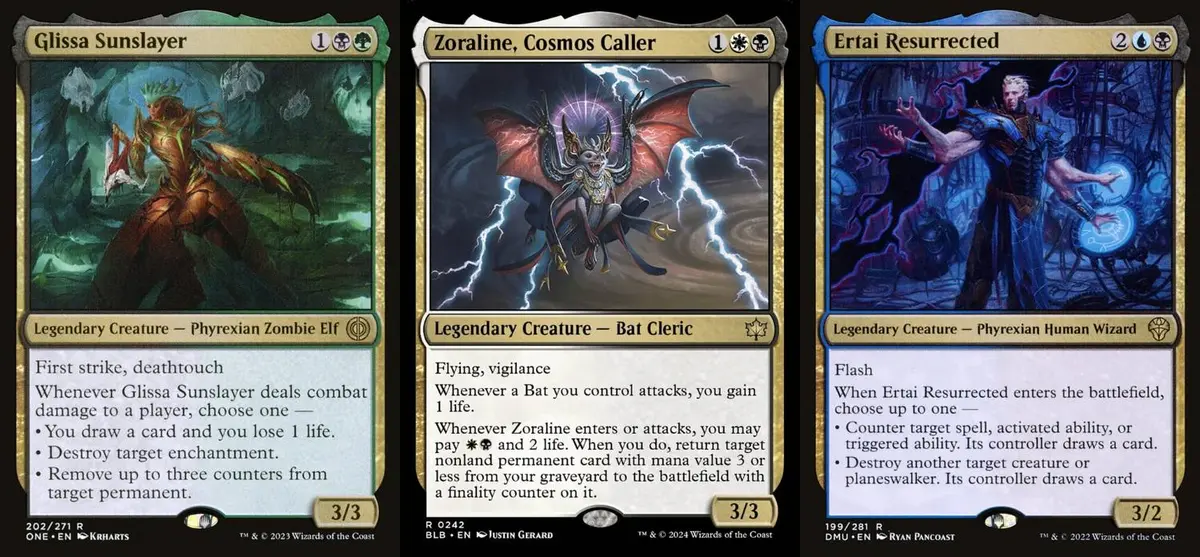
In this matchup the main structure of the deck doesn’t change much; just free up a few slots for the corresponding hate cards. Taking out all of Say Its Name & Altanak, the Thrice-Called normally frees up enough slots, and a competent midrange deck usually brings graveyard hate, so after referring to the counter-logic above, it is clear which cards should come out.
Control Decks
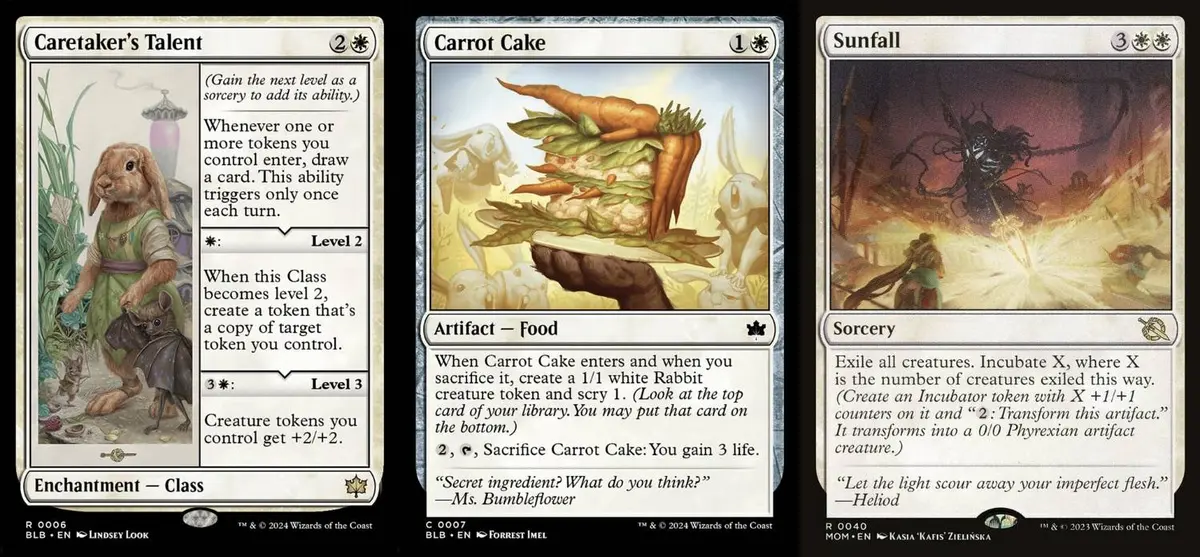
Generally speaking, removal is the least useful in this matchup; at least Disfigure & Nowhere to Run are definitely useless. But control decks have more and more creatures now (cards that aren’t creatures but can produce creature tokens count too), and many hide in the sideboard, so you can’t mindlessly take out all the removal. You still need to keep a certain number of high-reach removal spells to keep the opponent in check; the exact number depends on the opponent’s build. Also, control is unlikely to skip graveyard hate, especially since white-based control always has RIP, so the Say Its Name package still can’t stay in.
Considering that the recent high share of white-based control is the Caretaker’s Talent derivative, it will mostly become a sideboarding mode where you bring in all the artifact and enchantment removal: on one hand to stop the opponent’s resource engine, and on the other to avoid your own resource engine being disrupted. And against white Talent token control, you actually need to bring in Malicious Eclipse in place of regular spot removal, using a small sweeper to deal with the opponent’s sea of tokens.
Red Aggro
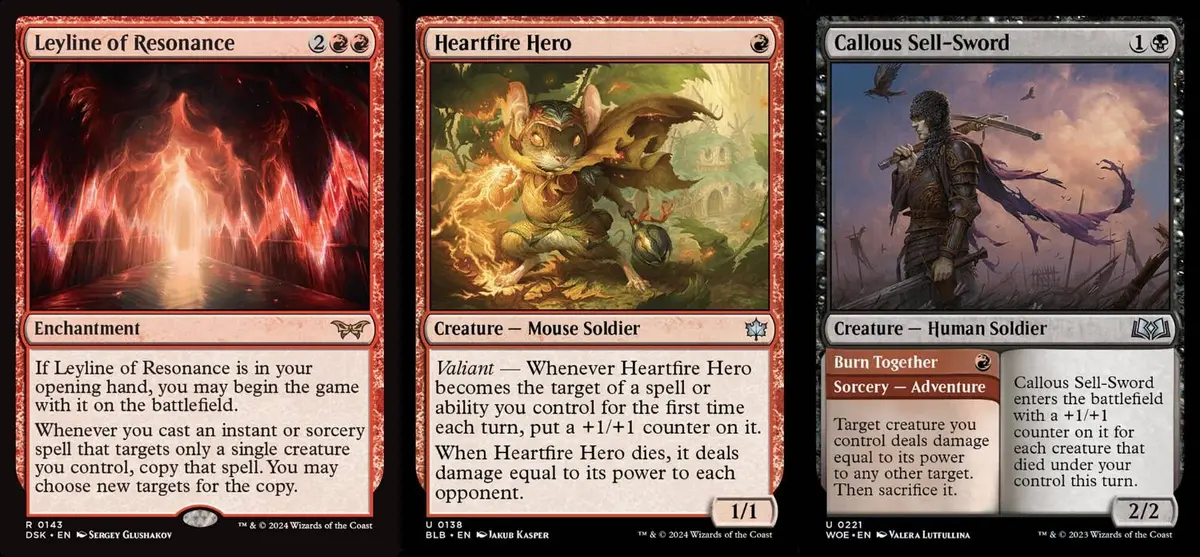
| Side In | Side Out |
|---|---|
| +2 Malicious Eclipse | -3 Overlord of the Balemurk |
| +2 Disfigure | -4 Say Its Name |
| +2 Tranquil Frillback | -1 Altanak, the Thrice-Called |
| +2 Scrapshooter |
In this matchup there’s no time for wide-open looting; we need to make sure we can always keep an eye on the state of the game, and even after sideboarding like this, we still have quite a few card-advantage sources.
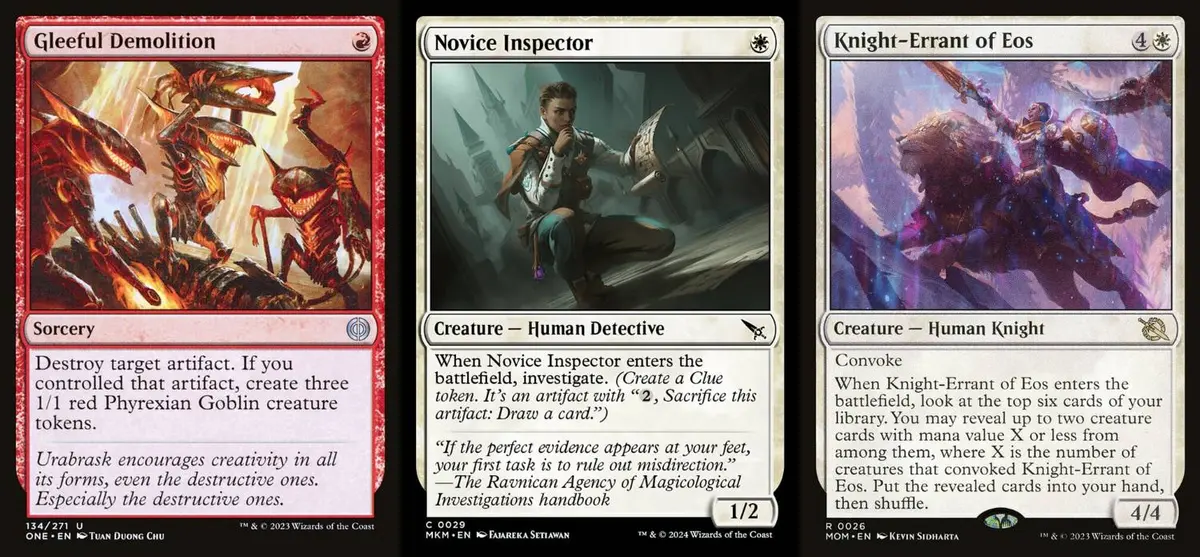
Urabrask’s Forge is red aggro’s most important Plan B win condition, so we need to bring in Tranquil Frillback & Scrapshooter to deal with it, and they are also good creatures against aggro: Tranquil Frillback can gain 4 life at once, which is effectively the damage of 1 to 2 of the opponent’s spells, and Scrapshooter is a very sturdy blocker that can block even Slickshot Show-Off.
Convoke
| Side In | Side Out |
|---|---|
| +2 Malicious Eclipse | -2 Overlord of the Balemurk |
| +2 Disfigure | -1 Sheoldred, the True Scriptures |
| +2 Tranquil Frillback | -1 Altanak, the Thrice-Called |
| +2 Scrapshooter | -4 Say Its Name |
The logic is much the same as against red aggro above, but the sacrifice-based removal on Sheoldred is laughably bad in this matchup; by comparison, Overlord is a bit more useful.
Other Cards Not Used
Pick Your Poison:
This deck’s self-mill + recursion system mostly recovers creature cards, so artifact and enchantment removal is left to Tranquil Frillback & Scrapshooter, which are creatures.Analyze the Pollen:
This deck basically doesn’t lack graveyard fodder. With the fusion pairing of Titania, Voice of Gaea + Argoth, Sanctum of Nature, and toolbox creatures like Tranquil Frillback and Sheoldred, the True Scriptures, in theory Analyze the Pollen should perform quite well, but both the creature and removal counts are already at their limit and are hard to trim, and there really is no slot to squeeze out in the spell area. If you really want to try this card, you can free up a land slot for it; Analyze the Pollen’s floor is also swapping in a basic land, so in principle changing that slot won’t cause you to miss land drops, though it may cost you a bit of tempo, and 25 lands is also enough to support this deck.Cut Down:
Recently Unstoppable Slasher usage has shown signs of rising, so you can consider adjusting the ratio of sideboard Disfigure and Cut Down.Sheoldred’s Edict, Anoint with Affliction:
Both are good two-mana removal options, and playing one in the main deck or putting them in the sideboard are both reasonable; you can also directly swap them with any removal other than Disfigure in the current list. Sheoldred’s Edict can handle planeswalkers, which is indeed the kind of target this deck has a harder time dealing with, and one reason I run a full set of manlands is to increase the ability to hit planeswalkers, but it performs terribly against go-wide opponents with many cheap creatures. Anoint with Affliction can clean up troublesome creatures like Mosswood Dreadknight // Dread Whispers, Unstoppable Slasher, and Enduring Innocence, and bypass the death ability of Heartfire Hero.Cruelclaw’s Heist:
Logically, 1 to 2 copies in the sideboard would be fine, but it doesn’t seem very necessary either, so in the end it was left undecided.Liliana of the Veil:
It was in the initial list. A permanent removal spell that can be recovered by Overlord of the Balemurk & Bristlebud Farmer looked like the planeswalker that best fits the deck’s game plan, but after testing it was the first to be kicked out. The reason is that on the draw, when you choose Overlord of the Balemurk or Say Its Name to loot on turn two and the opponent curves creatures on turns two and three, Liliana is a really bad three-mana sorcery-speed edict, and that situation is not rare. If you really want to use this card, I suggest putting it in the sideboard and deciding whether to bring it in based on the opponent and the play/draw order.Urgent Necropsy:
A high-ceiling, very profitable removal spell that could be swapped with the slot of Invasion of Innistrad // Deluge of the Dead, but since I wanted that slot to be a permanent-type removal that Bristlebud Farmer can recover, and raising the graveyard requirements further would be painful against graveyard hate, I ended up not using it.Caustic Bronco:
A looting spell crowds out the timing for playing creature cards, and since my game plan is still defensive in the early game, it would make it harder for me to reliably provide creatures to crew.Unstoppable Slasher:
Since this deck’s game plan isn’t to race life totals early, Unstoppable Slasher puts less pressure on the opponent than it looks.Preacher of the Schism:
A top-tier three-drop with nothing to complain about; swapping it directly for the main-deck Titania & Sentinel of the Nameless City would be totally fine. If anything, using Preacher of the Schism is the regular way to build; it’s just that the author took a liking to the abilities that work with filling the graveyard, so I tested those first, and I was happy with the actual results so I kept things as they are.Phyrexian Fleshgorger:
In this era where Go for the Throat is the removal benchmark, opponents can easily fail to remove it, and it also performs well against aggro. Although it is normally treated as a three-drop, with this deck’s tempo, dragging the game to seven lands is routine, and the chance of hard-casting the full seven-mana version is not low either; it can go in the main deck or the sideboard. However, because powerful artifacts and enchantments have increased greatly in recent Standard, there is more corresponding removal, and this set also printed Nowhere to Run, so Fleshgorger can hardly just enter and stand unrivaled to the end like it used to.Obstinate Baloth:
It was a sideboard card back when black-based discard decks were popular, but those decks make up too small a share of the current environment, and there is no need to bring it just to respect Liliana of the Veil.Chupacabra Echo:
Used before and eventually replaced, for the reasons described in the main-deck Sheoldred section.Harvester of Misery:
Also one of the candidates for the main-deck Sheoldred slot, but in testing I felt that what I needed more was high-reach removal for dealing with powerful creatures in long games, not short removal against aggro, so I ended up not using it. But if the environment you’re in has a high share of aggro, it is still a good option, and a quality sideboard card even if there’s no room in the main deck.Other quality creatures you can choose for the main-deck Sheoldred slot:
Hostile Investigator
Sheoldred, the Apocalypse
Vorinclex, The Grand Evolution
Aclazotz, Deepest Betrayal // Temple of the Dead
Ojer Kaslem, Deepest Growth // Temple of Cultivation
The Gitrog, Ravenous Ride
Izoni, Center of the Web
Rules Corner: What Resource Recovery Can RIP Stop?
As mentioned above, in front of Rest in Peace, Overlord of the Balemurk and Bristlebud Farmer both mill and then recover resources, yet one cannot recover cards while the other can. Let’s see why this difference arises:
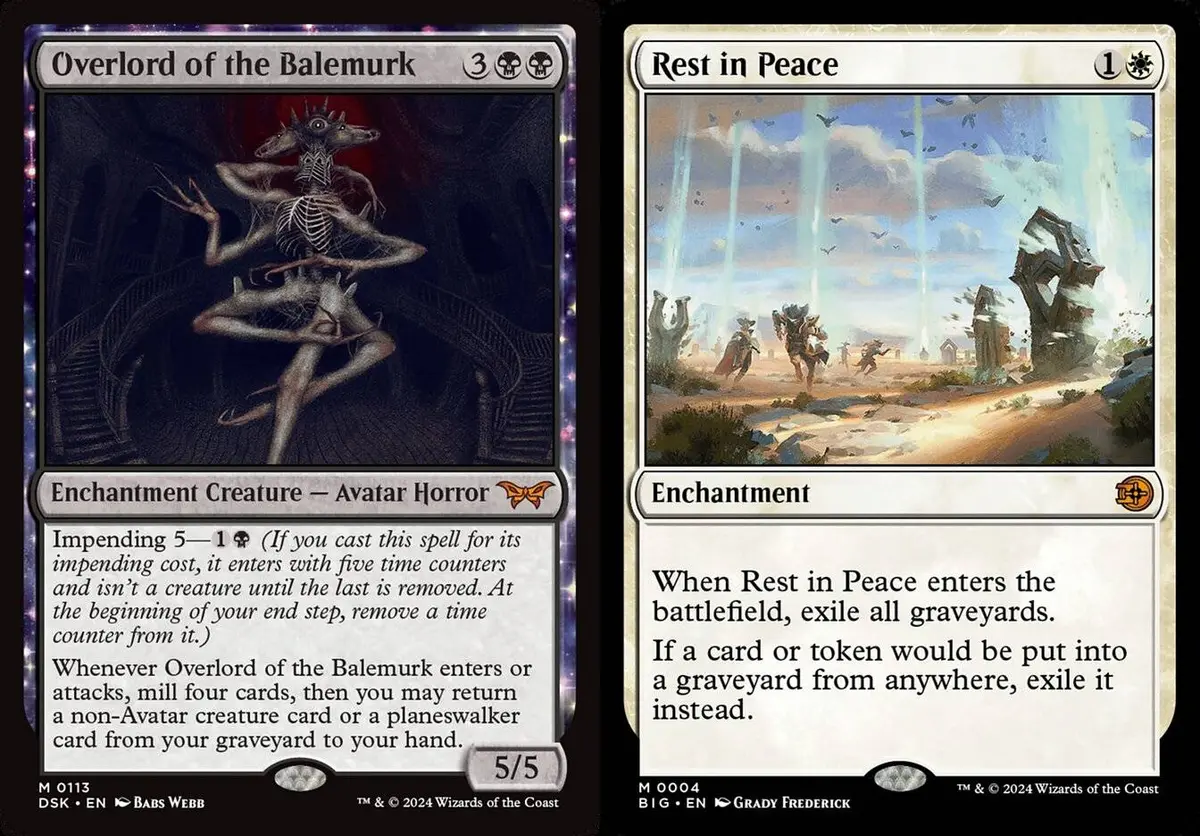
Overlord of the Balemurk: Whenever Overlord of the Balemurk enters or attacks, mill four cards, then you may return a non-Avatar creature card or a planeswalker card from your graveyard to your hand.
Rest in Peace: If a card or token would be put into a graveyard from anywhere, exile it instead.
Overlord’s ability first mills 4 cards and then recovers one qualifying card from the graveyard. But the instant the cards are milled, they are exiled instead thanks to RIP’s replacement effect, so when Overlord tries to recover a card from the graveyard after milling, you’ll find your graveyard is empty and there is no qualifying card to choose, so naturally nothing is recovered.
(In addition, Say Its Name is worded with the same logic as Overlord.)
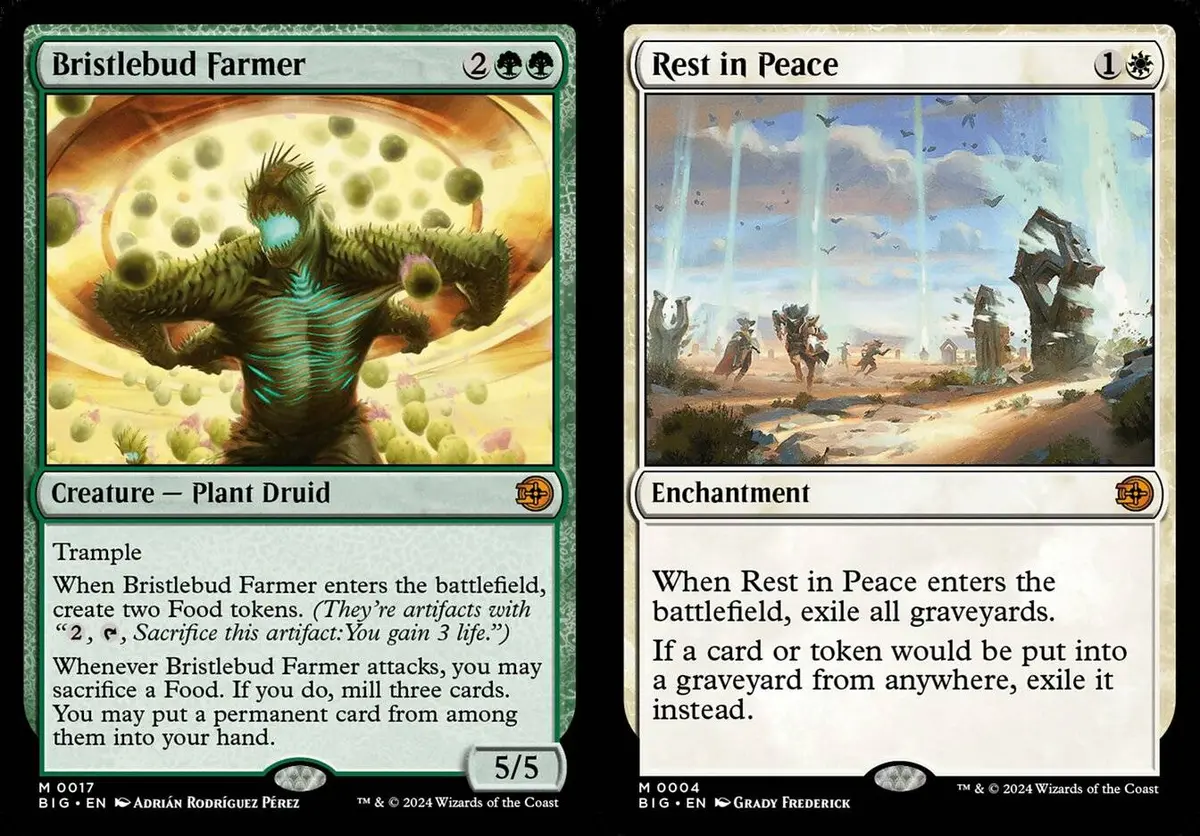
Bristlebud Farmer: Whenever Bristlebud Farmer attacks, you may sacrifice a Food. If you do, mill three cards. You may put a permanent card from among them into your hand.
Rest in Peace: If a card or token would be put into a graveyard from anywhere, exile it instead.
Bristlebud Farmer is worded slightly differently from Overlord: it mills 3 cards and then chooses one qualifying card from those 3 to put into your hand. The key here is that what this ability checks is not the graveyard but “the cards milled by this effect”, and for this kind of effect, rule 701.13c has a dedicated definition:
- 701.13c
An effect that refers to a milled card can find that card in the zone it moved to from the library, as long as that zone is a public zone.
That is to say, even if the 3 cards milled by Bristlebud Farmer are exiled instead because of RIP’s effect, this ability can still track those 3 cards, because the exile zone is a public zone, and in the end Bristlebud Farmer can still choose one qualifying card from those 3 to put into your hand, while the other 2 simply stay in exile.
Conclusion
Although this deck is billed as self-mill, it isn’t like Dredge, which truly throws the whole deck into the graveyard; it is just that the distinctive resource-engine cards happen to have self-mill traits, and overall the deck is still Golgari midrange that values resource volume.
When piloting this deck, there is one more key point to note: don’t mill your own library out. Overlord’s mill is a mandatory trigger. Fortunately, Golgari creatures all hit hard, so normally you can knock the opponent out before you deck yourself, but once the game reaches the midgame, as long as the opponent hasn’t shown a clear breakthrough, you need to keep watching your library margin at all times and carefully plan how to operate Overlord.
Also, after reading the sideboarding analysis above, you’ll notice that Say Its Name & Altanak, the Thrice-Called come out in every matchup after sideboarding, so is it really worth including them in the main deck?
The answer is still yes. In main-deck games against unspecified opponents, the generality of a card matters more, and a simple but deep looting spell like Say Its Name meets one of the definitions of generality, and the ability to proactively fill the graveyard really does help some of my cards function, raising the deck’s consistency quite a bit. Altanak, the Thrice-Called is just a freebie.
Although this play style is easy to hate out in sideboarded games, I’m not a true graveyard deck to begin with, and once I switch things around in the sideboard the mode of operation actually changes, so not only can I lure the opponent into making ineffective hate choices against my deck, I can also clearly find slots to bring in my own targeted sideboard cards.
- Title
- Infinite Resources: Standard Golgari Self-Mill
- Author
- Jru
- Created at
- October 24, 2024
- License
- This work is licensed under CC BY-NC-SA 4.0 .