Standard Deck Recommendation: Grixis Battles

Note: This article was translated from Chinese by AI and may contain errors. Read the original Chinese version.
Before We Start
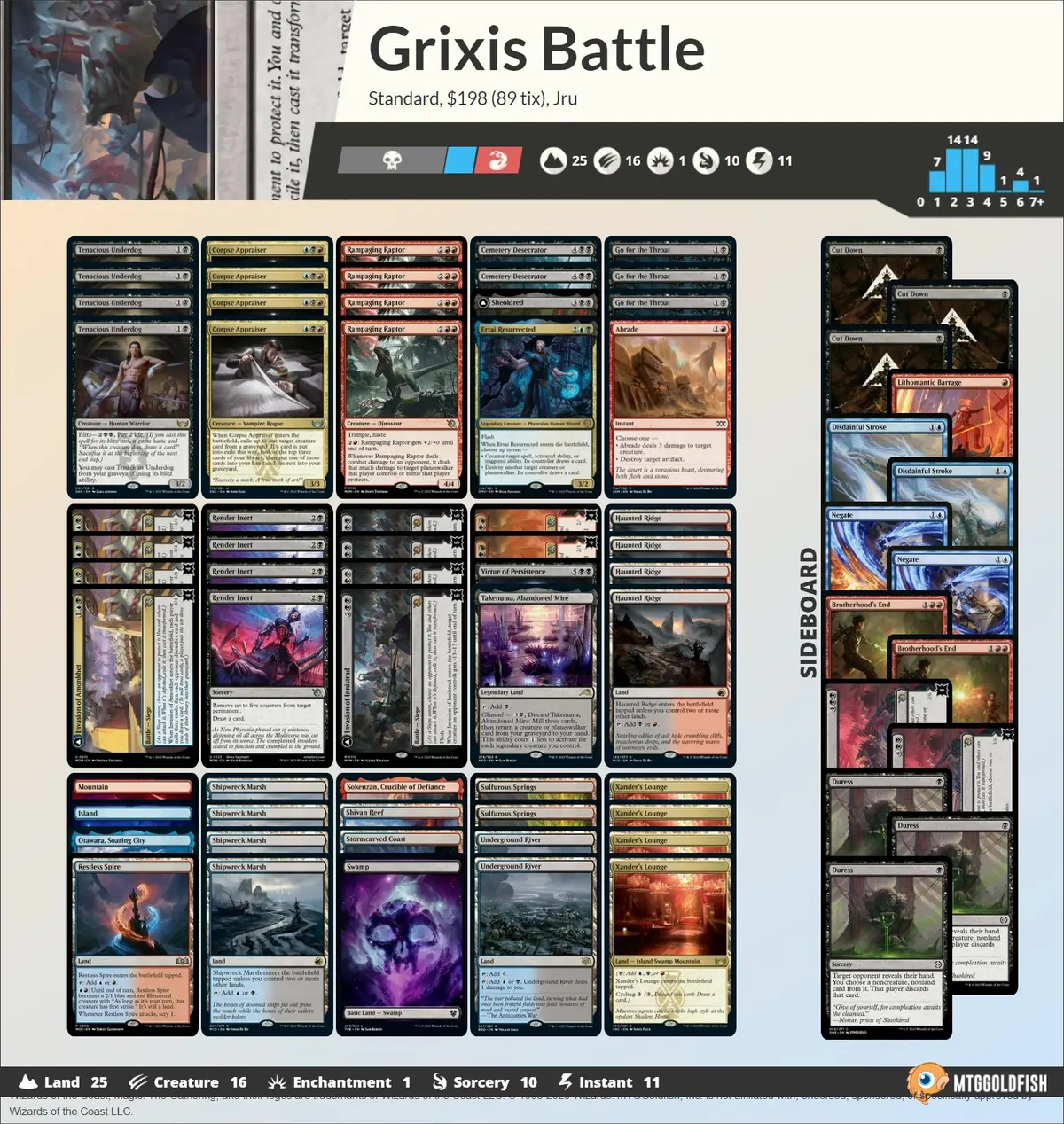
Battles are a new card type introduced in March of the Machine. The mechanism of sacrificing a bit of tempo and life total in exchange for a huge amount of resources caught my eye right away, and Invasion of Amonkhet and Invasion of Innistrad stood out in particular. At a glance, these two cards fit my deckbuilding habits perfectly, and since the March of the Machine preview season I have been convinced this would be a Standard deck I could pilot very comfortably.
How Battles Work
Battles are a relatively new card type, and some readers may not be familiar with how they work, so here is a quick introduction. For the complete rules, see the full Battle rules.
The rules can be split into two parts: the rules of Battles themselves, and the rules specific to the Siege subtype introduced in March of the Machine.
Battle
- A Battle enters with X defense counters on it, where X is the number in the bottom right corner of the card.
- When a Battle is dealt damage, that many defense counters are removed from it. When the last defense counter is removed, the Battle is defeated.
- When a Battle enters, its controller chooses a player to be its protector. Which players can be chosen is determined by the Battle’s subtype.
- A Battle can be attacked like a planeswalker. The protector cannot attack it, and, just like protecting their own planeswalker, the protector can block creatures attacking the Battle with their own creatures.
- The scope of “target” was redefined with the arrival of Battles: effects that can deal damage to any target can now also target a Battle.
Siege
- As a Siege enters, you choose an opponent to protect it.
- When a Siege is defeated, exile it, then you may cast it transformed without paying its mana cost.
- Every Battle subtype printed in March of the Machine is a Siege.
One more point worth stressing: although a Siege has an opponent as its protector, you are still its controller. If you cast an overloaded Cyclonic Rift, it will not bounce the Battle that your opponent is protecting back to your own hand.
Since all Battles printed so far are Sieges, the rest of this article simply says “Battle” and will not point out which rules are Siege-specific.
Deck Overview
Who will like this deck
- Players who like the unusual Battle mechanic
- Players who like sitting on a huge pile of resources
- Players who like flexible decision-making in how the deck operates
- Black players who cannot afford Sheoldred, the Apocalypse
Who will not like this deck
- Players who dislike long games
- Players who dislike decks full of non-intuitive decisions without immediate payoff
Deck features
Battles have two defining traits in a game:
- Double the resources:
Battles are all double-faced cards right now, and many of them are respectable cards even if you only look at one face. Put the two faces together and you get a huge resource advantage. - Changing what life-total pressure means:
In the past, players could trade life for tempo and block favorably. In games that are not especially focused on racing, the opponent has plenty of room to take damage and build the best possible board. Battles change that. Many Battles have a huge impact on the board once flipped, so for the opponent, a Battle’s defense is no longer something that can be given up as casually as their own life, and they may be forced into bad blocks to protect the Battle. For a resource-grinding deck, accumulating resources on the board matters more than a racing tempo, and a Battle is itself a tempo/resource converter that turns tempo I don’t especially need into resources that are more useful to me.
Although the deck is called Grixis Battles, I did not build it to flip Battles as efficiently as possible. Instead I focused on widening the resource advantage, and the creatures are chosen on the premise of a normal midrange grind. This approach has a side effect, though: the deck plays in an extremely non-intuitive way. It demands exceptional long-term planning. You almost always have to think about what your game plan is a few turns from now and how to respond to everything the opponent might do. Many cards in the list are somewhat passive, and many cards that look proactive do not reach peak value just by being played on curve. On top of that, there are many decision points, so if your long-range read of the game is not good enough, one wrong decision can set off a chain of bad situations. Readers who want to try this deck should be mentally prepared for that. On the other hand, if you enjoy thinking a lot, I highly recommend giving it a try.
Card Introductions
Battles
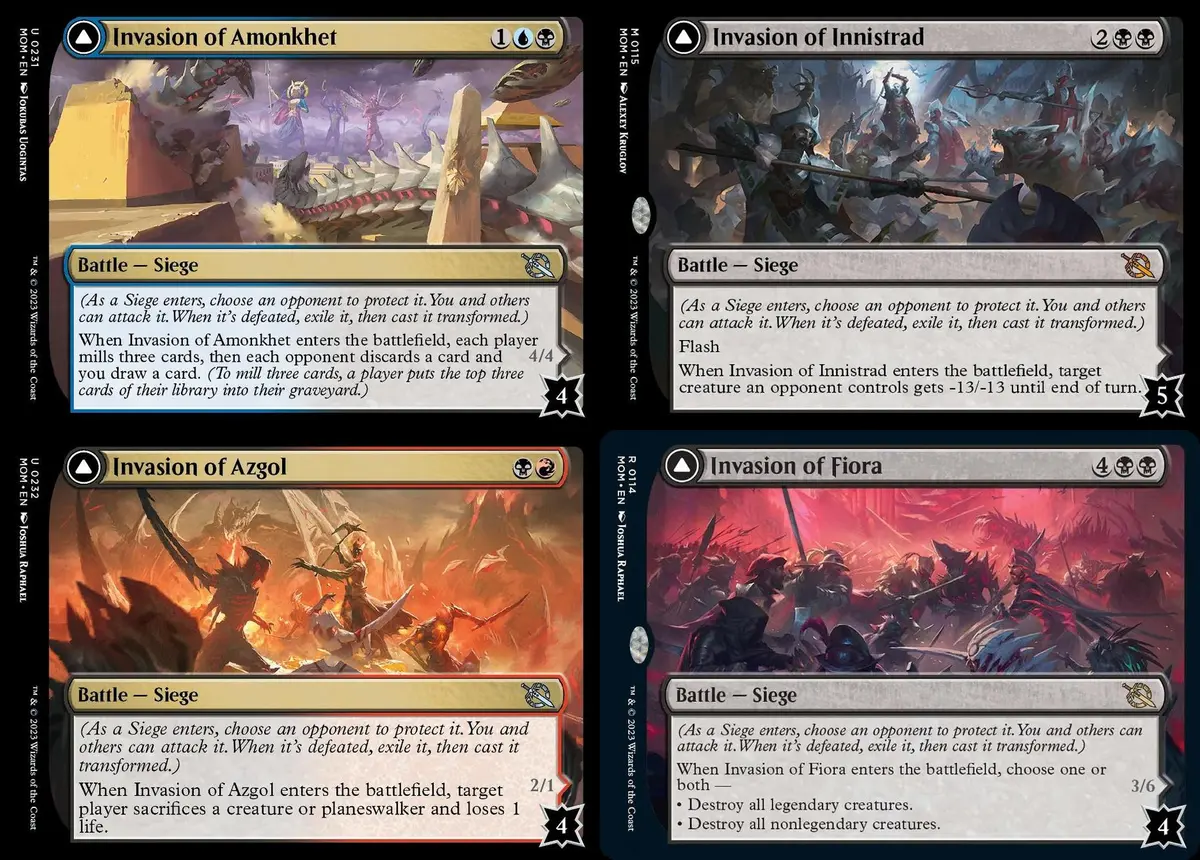
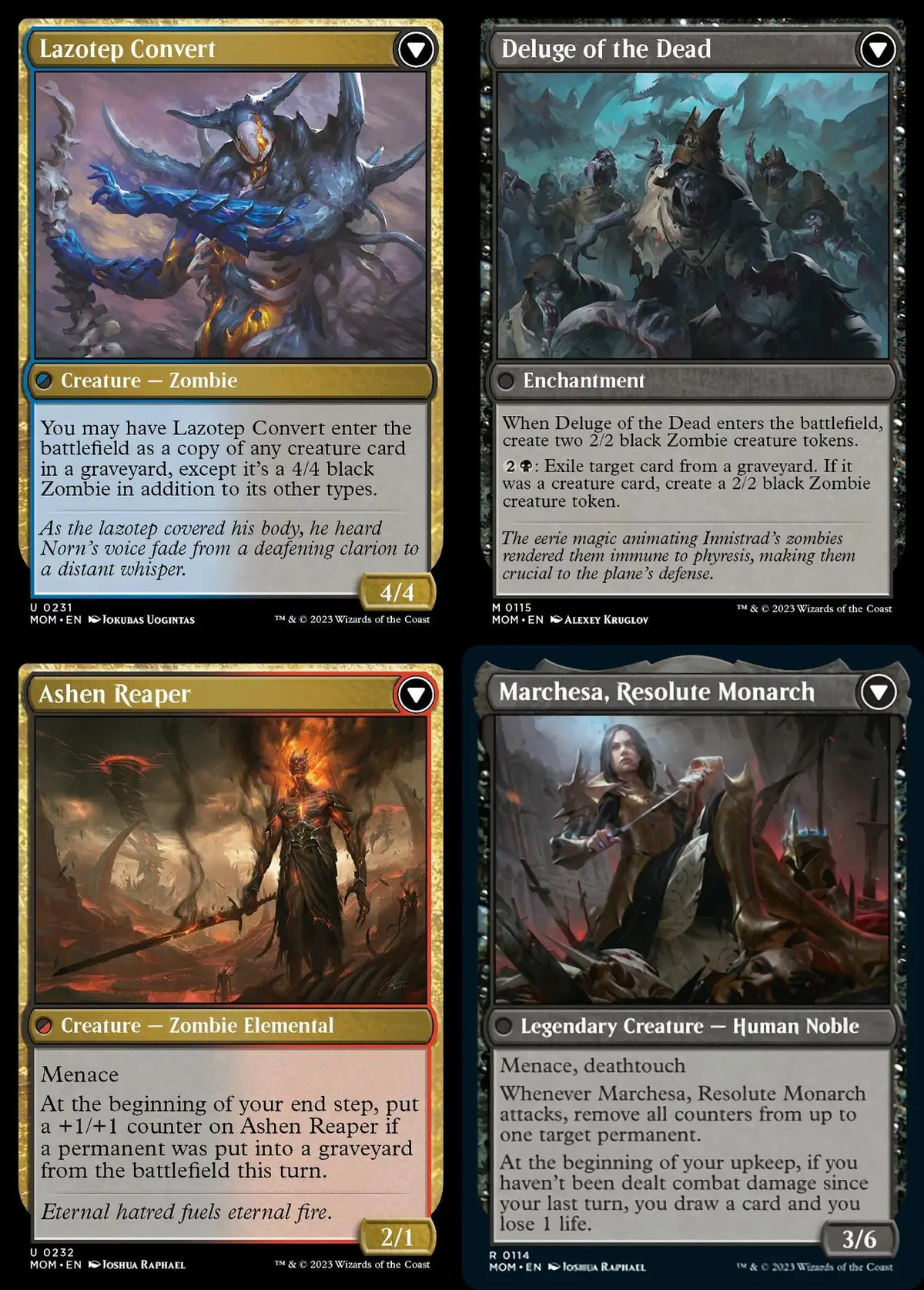
Invasion of Amonkhet is the face of Battles, and its front side alone is good enough. It is a card-advantage spell like any other, and “I draw one, the opponent discards one” is often deadlier than simply drawing two. Milling three cards helps set up a good copy target for the back face, or feeds Corpse Appraiser, and hitting Tenacious Underdog is a good thing too, effectively extra card advantage. Remember that Invasion of Amonkhet mills first and then draws and discards, so don’t do it backwards.
The back face of Invasion of Amonkhet, Lazotep Convert, “enters as a copy of any creature card in a graveyard”. It has no target; you choose what to copy only after it is successfully cast, and if the copied creature has an enters-the-battlefield ability, it triggers as well. The creature card being copied is not exiled and stays in the graveyard. I recommend not using the method of placing a card under Lazotep Convert as a marker in tournaments, since it may cause misunderstandings.
Invasion of Innistrad is, for me, the spiritual successor to Invoke Despair: on top of removal, a single card provides resource expansion and a win condition, just not as promptly. Judging from several months of testing, I think Invasion of Innistrad is a generally underrated card. As removal, the front face is admittedly a bit clunky at four mana, but still barely within the playable range. The flipped Deluge of the Dead is the real powerhouse: the two 2/2 Zombie tokens it makes on entering are enough to create a board advantage, and it keeps attacking the graveyard and providing sustain afterward (note that the exile target can be any card, but to get tokens you must exile a creature card). In my testing games so far, once Invasion of Innistrad flips even once, the game is almost never lost.
Invasion of Azgol is only barely playable. As removal it is nowhere near as good as Sheoldred’s Edict, and the creature on the back is not impressive either. I only included it to raise the Battle count in the deck, giving the other cards that work with Battles more targets and lowering the chance of a dead draw, and because the deck’s overall curve is already high, I can’t stuff in more expensive Battles. As for other two-mana Battles, Invasion of Mercadia is actually not bad, but for this slot I wanted removal more, and Invasion of Tarkir is awkward in a deck with no Dragons; its 5 defense is also hard to crack, and its removal may be even worse than Invasion of Azgol. At least Invasion of Azgol can get around the ward on things like Graveyard Trespasser and Phyrexian Fleshgorger. However, with the recent rise in Lord Skitter, Sewer King play, Invasion of Azgol has become harder and harder to use, so if you can safely remove the target you want, use it early.
Invasion of Fiora is not just a Battle but also the only sweeper in black Standard. Its starting defense of 4 is relatively easy to crack, and Rampaging Raptor can punch through it in a single hit. The flipped Marchesa, Resolute Monarch is undoubtedly a powerhouse as well. Because the curve currently has a lot of expensive cards, I put it in the sideboard to deal with slower, go-wide matchups, but there is actually another way to build the deck that lets you reasonably move Invasion of Fiora to the main deck and improve its resilience in matchups that were previously unfavorable. I will cover that later.
Battle Converters
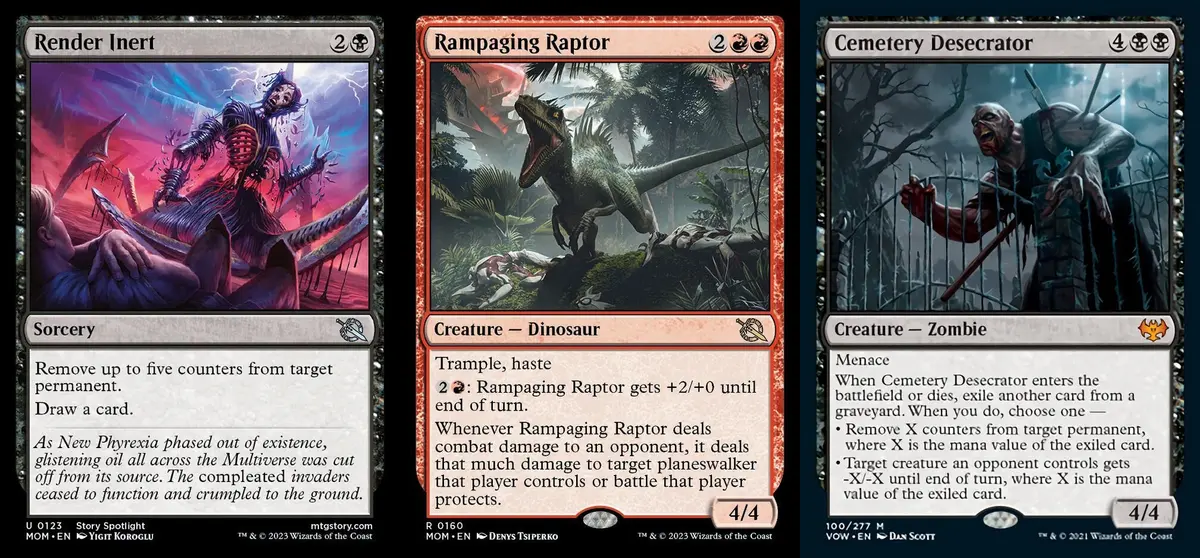
Render Inert is the most important support piece for Battles. None of the Battles in this deck start with more than 5 counters, and removing 5 counters flips a Battle immediately, and it also draws a card by itself, which is a free resource. The usual route of attacking the Battle with creatures can be answered by the opponent with removal or blocks, but the only answer to Render Inert is a counterspell, which is much harder to pull off. Invasion of Amonkhet + Invasion of Innistrad + Render Inert is already a very complete Battle package, and on that foundation you can easily build all kinds of variants of this deck.
Also, Render Inert only says to remove 5 counters and does not restrict the counter type, so there are many ways to use it: for instance, it can act as removal on a planeswalker, or remove lore counters from a Saga to make it start over from the beginning. When there is no good target on the board to remove counters from and you urgently need to filter, you can also target any permanent at random and just draw a card, since Render Inert does not require you to actually remove counters to cast it.
Rampaging Raptor (a.k.a. red Questing Beast) is the reason this deck splashes red. It has Questing Beast’s ability to hit Battles, plus haste, trample, and the ability to pump itself, so it easily grabs both tempo and resources at once and makes the board spiral out of control instantly. Because of Rampaging Raptor, apart from Invasion of Innistrad, whose ability breaks the mold, this deck should not use any Battle with more than 4 starting counters, so that Rampaging Raptor and the Battles truly work together. Also, don’t forget that Rampaging Raptor, like Questing Beast, is a planeswalker killer: to deal with a planeswalker, just attack the player.
Since the deck runs a full set of Invasion of Innistrad + Rampaging Raptor as its theme, they take up a lot of the four-mana slot, which also happens to be a good reason not to play Sheoldred, the Apocalypse.
Cemetery Desecrator can also work with Battles because it can remove counters, and it is fairly versatile; even without Battles it works as removal. Don’t forget that Cemetery Desecrator triggers once when it enters and once when it dies. There is also a small combination between Cemetery Desecrator and Invasion of Amonkhet: when Invasion of Amonkhet flips, if there is a Cemetery Desecrator in the graveyard, you can choose to enter as a copy of Cemetery Desecrator, which triggers its enters-the-battlefield ability (target creature gets -X/-X, or remove X counters from target permanent). If you have another Invasion of Amonkhet and enough fodder in the graveyard, you can repeat this and instantly roll out a runaway board.
There is also a rule to keep in mind with Cemetery Desecrator: its ability has no target for the graveyard-exile portion. You choose which card to exile as the ability resolves, and as long as there is a card in the graveyard that can be chosen, you must choose one. After that it creates a second triggered ability, where you choose which mode to execute and the target. This second triggered ability goes on the stack and can be responded to. For more details on this kind of two-part triggered ability, see this article: “If you do vs. When you do”.
Removal
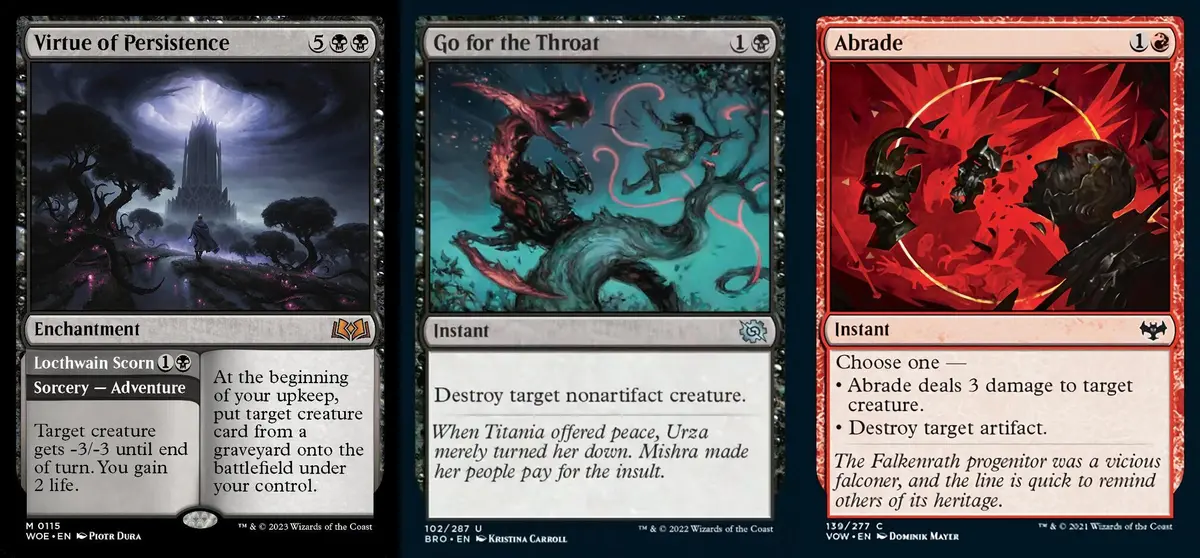
Virtue of Persistence is included as a single copy, just to show that this is a post-Wilds of Eldraine Standard deck. Since the deck already has two Invasion of Azgol, I did not dare raise the share of sorcery-speed removal any further, so one is enough.
Go for the Throat and Abrade are both the benchmarks of two-mana removal and need no further explanation.
Solid Creatures
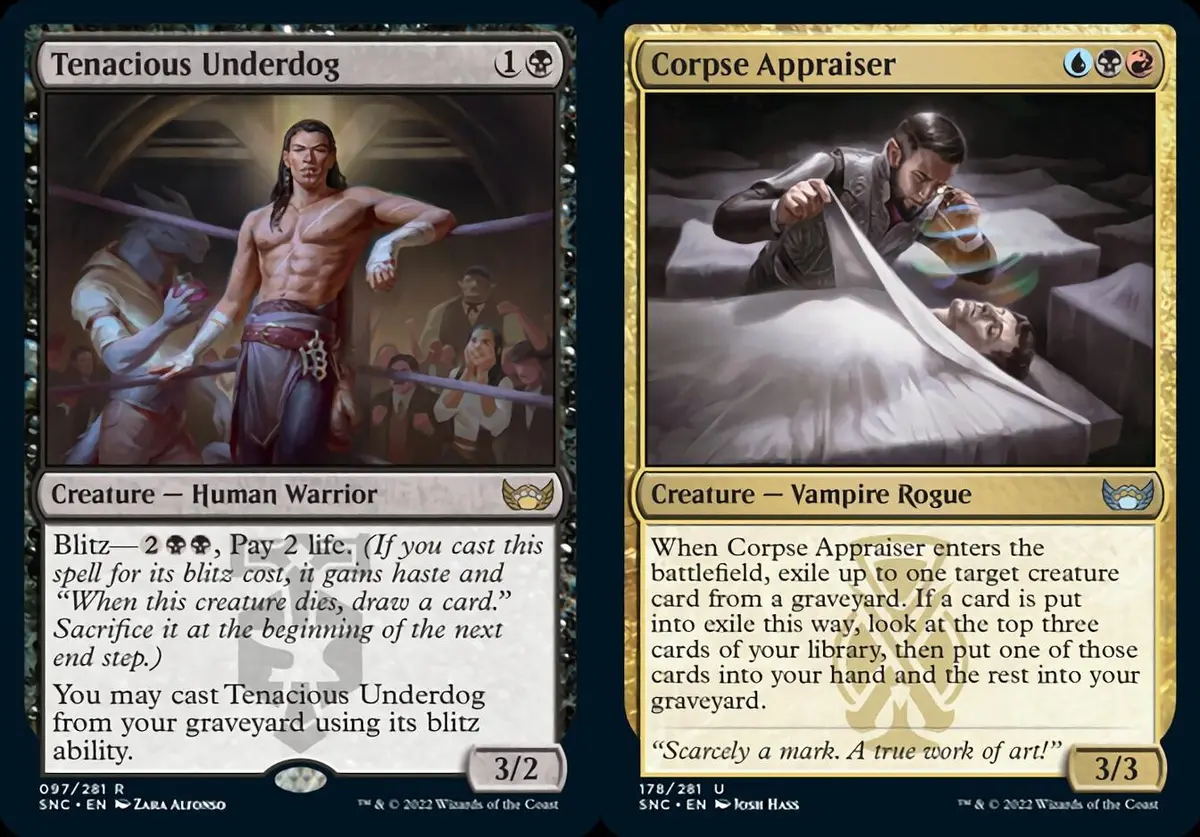
This slot just needs low-cost attackers, and there is a lot of freedom in what to pick. In the end I chose creatures with strong resource-generating abilities that work well with Invasion of Amonkhet.
Besides being a card-advantage engine, Tenacious Underdog is also a Battle converter you can use repeatedly. Strictly speaking this deck does not have many creatures, and Tenacious Underdog’s blitz from the graveyard provides more chances to flip Battles.
Corpse Appraiser has proven itself in all kinds of Grixis decks since it was printed. On entering, besides drawing a card it also hoses graveyards, and there is no shortage of good targets such as Dennick, Pious Apprentice, Tenacious Underdog, and Mosswood Dreadknight. Looking at three and taking one improves the consistency of your hand quality, and its graveyard-filling ability produces many synergies in this deck.
Other Toys
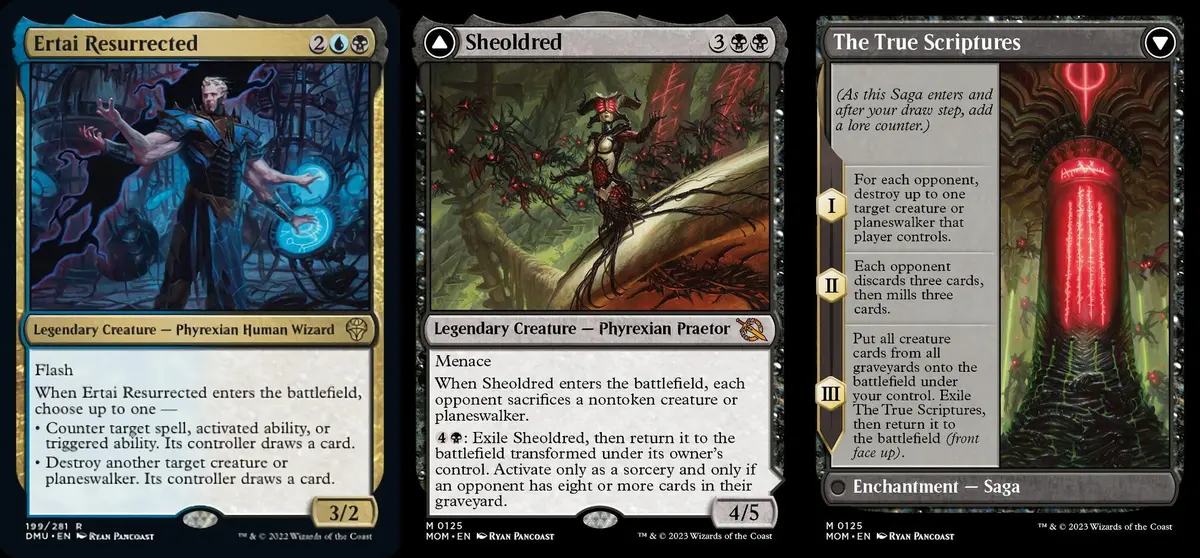
Since Ertai Resurrected and Sheoldred, the True Scriptures both suit my taste, I selfishly left a spot for each of them (though at some cost, detailed later). Both have enters-the-battlefield abilities, which also makes them good things for Invasion of Amonkhet to copy when it flips.
Ertai Resurrected is quite good in terms of flexibility and is currently the only counterspell in the main deck, but since it gives the opponent a card in hand, you should weigh the situation when using it.
Sheoldred has a small combination with Invasion of Amonkhet: if Invasion of Amonkhet flips and becomes a copy of Sheoldred, and you activate Sheoldred’s transform ability, it exiles this card and then returns it transformed (as Lazotep Convert), entering as a copy of any creature in the graveyard. For the detailed rules, see this article: “Transforming Double-Faced Cards and Copy Effects”.
This slot can basically be any card, but I recommend creatures with enters-the-battlefield abilities so that Invasion of Amonkhet’s copy effect has an immediate payoff, or cards that directly shore up pain points in the main-deck games. Still, make sure the card is broadly useful, and don’t invest in cards with too narrow a target range in the main deck.
Deck Weaknesses
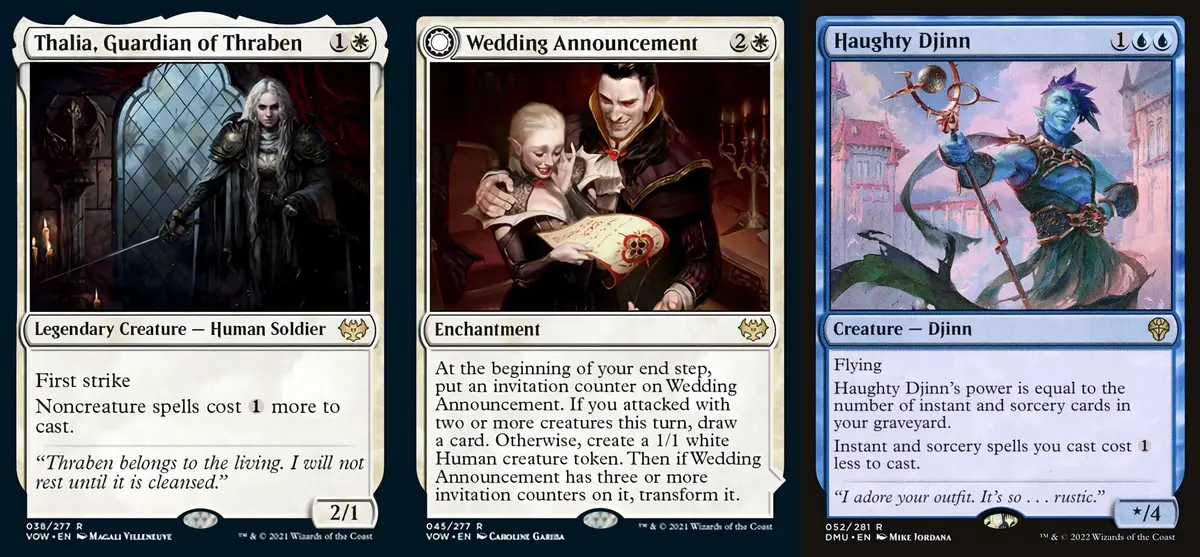
The deck’s curve is currently on the high side and it doesn’t have many early creatures, so it is naturally afraid of aggro, which is also the main focus of the sideboard. And because a high share of the deck is noncreature spells, it is especially afraid of mono-white aggro using Thalia, Guardian of Thraben.
One key source of our card advantage is Corpse Appraiser’s enters-the-battlefield ability, but getting a card from it requires some cooperation from the opponent’s build. If the opponent has no creatures, it gets a bit awkward, since our only two-drop creature is Tenacious Underdog, which normally you don’t want to exile. If the opponent just plays passively and passes the turn, it doesn’t matter much, because this deck gets stronger the longer the game goes. But if the opponent builds a board out of noncreature spells, we are in great pain. The most typical example is Wedding Announcement, and an opponent who plays Wedding Announcement very likely also plays Virtue of Loyalty and The Wandering Emperor. Without a sweeper in the main deck, maneuvering around these will be very hard.
In addition, our card choices are a very standard midrange build, so in the main-deck games we are easily countered to death by blue tempo, and Invasion of Amonkhet’s mill is even helping the opponent. However, blue tempo has a relatively low metagame share, and news of Cavern of Souls being reprinted made some blue tempo players jump ship, so the sideboard is not currently designed too heavily against blue tempo.
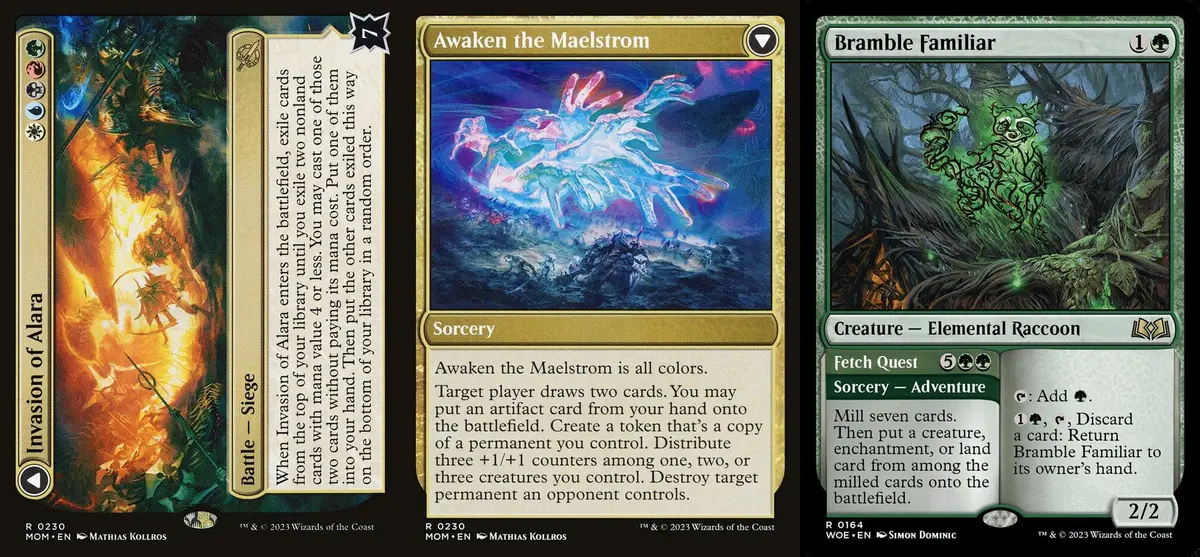
The over-the-top combo of Invasion of Alara and Bramble Familiar easily creates a runaway board, and without a counterspell or sweeper in the main deck it is very hard to handle. Currently the sweeper is in the sideboard, and the only counterspell in the main deck is Ertai Resurrected. Battle package pieces also take up too many slots, making it hard to increase the number of main-deck counterspells. Still, this is a classic “lose game 1, win games 2 and 3” matchup: after sideboarding it becomes an extremely favorable matchup, so there is no need to worry too much about facing the Alara raccoon combo. For readers unclear on how this combo works, see this article: “How Lier Interacts with Adventure Cards”.
Adjustment Directions
From the analysis above, it is clear that having a sweeper would greatly improve our answers in many main-deck matchups. In most cases it is not that we can’t cope without a sweeper; we just have to handle things through more tedious and less forgiving roundabout plays. Because it is still manageable, I did not push hard to adjust the main deck. But there is a simpler and more efficient build: swap the sideboard Invasion of Fiora into the main deck in place of Invasion of Azgol, and change the expensive Sheoldred and Ertai Resurrected into two-mana creatures, ideally ones that participate actively in both attacking and blocking and that you don’t mind trading away. My personal top pick is Bloodtithe Harvester. It is removal by itself, and the Blood token’s loot ability and its ability to sacrifice itself can supply fodder for Corpse Appraiser or give Invasion of Amonkhet more copy options. If you choose to invest in Bloodtithe Harvester, you can also adjust the ratio with Tenacious Underdog according to your own understanding.
Readers confident in their long-range roundabout play can also keep the original structure. The slots for solid creatures and toys can also be filled to personal taste, but I still recommend mostly two- and three-mana creatures, with two copies being the limit for creatures costing four or more.
Piloting Notes
Basic game plan
Most of the time, Grixis Battles is a control deck wearing a midrange skin. The main game plan is to keep expanding resources and keep control of the board until the opponent can no longer deal with your enormous resources, and then calmly reap the game.Switching tempo
Although the deck is described above with control logic, unlike control, Grixis Battles has extremely flexible tempo-switching. Rampaging Raptor is often the switch for changing tempo. A sudden 4/4 haste trampler can easily catch the opponent off guard, and if you happen to have a Battle on your side or the opponent has a planeswalker, it is easy to swing the momentum in one go.Always read the game ahead
As emphasized repeatedly above, this deck needs a lot of long-term planning. Setting up one action for a play three turns later is routine. You need to keep thinking, at least three turns ahead, about what options the opponent has against each of your moves. When there are multiple things you can attack, how should you distribute your attackers to steer the opponent into the decision that is best for you?Make good use of the dual pressure of Render Inert and creatures
Sometimes, even when you have Render Inert in hand and a Battle on the board that can be flipped, there is no need to rush to cast Render Inert. If trading your creature with theirs is favorable to you, you can first attack the Battle with creatures, forcing the opponent to use removal or make bad blocks. If the opponent really does so, you still have the option of forcing it through with Render Inert, but the opponent will have wasted a wave of resources in the earlier exchanges.Timing of deploying Battles
When you can choose between deploying creatures or Battles first, choose to deploy creatures first, so that when the Battle enters later you can attack it the same turn and flip it. But when the creature in hand is Rampaging Raptor, you can play the Battle first.Casting Invasion of Innistrad on an empty board
Invasion of Innistrad can be cast whether or not the opponent has creatures, and since the -13/-13 targets only the opponent’s creature, you need not fear being forced to kill your own creature when the opponent has none. Against opponents like control, who have few creatures worth removing, you can choose to simply cast Invasion of Innistrad at the end of the opponent’s turn with no target, creating an extra resource point for yourself.Keep a spare Battle on the board when appropriate
Sometimes even when you can flip a Battle, there is no rush to do so. Leave it on the board as backup ammunition. For example, against an opponent with a sweeper like Farewell, because the Battle type is outside the range of many sweepers, you can use that to build a point of resource sustain, so even if the opponent sweeps all your creatures, you can quickly rebuild the board with the Battle left on the field. Sometimes Invasion of Amonkhet is held back and left unflipped while waiting for a more worthwhile copy target to enter the graveyard.Sideboard thinking that abandons the Battle theme
Against aggro, Invasion of Amonkhet likely has no room to empty the board and draw cards, and against control, removal-type Battles will likely become dead cards. In these cases, feel free to give up Render Inert and some of the clunkier Battles, swap in targeted cards for dealing with the opponent, and play with ordinary midrange thinking.
Staying Flexible
There is no fixed pattern to how Grixis Battles plays. The game plan changes dramatically depending on the opponent’s deck and your current hand, and even the same hand becomes a completely different style of game depending on the decision path you take. Both while playing and when reviewing, try to think about different lines and which one best suits the game at hand. This rich space for thought is also why I like this deck.
- Title
- Standard Deck Recommendation: Grixis Battles
- Author
- Jru
- Created at
- October 11, 2023
- License
- This work is licensed under CC BY-NC-SA 4.0 .