
A Duel for Your Lifespan: Parker Luck in Standard

Note: This article was translated from Chinese by AI and may contain errors. Read the original Chinese version.
Introduction
Parker Luck is a fascinating effect. Put simply, both players use each other’s life total as a Dark Confidant. If you want to raise the expected damage your opponent takes, you have to push the card mana value of your deck as high as possible. Standard right now happens to have split cards, Adventures, Omens, and a whole pile of other mechanics where the card has a very high mana value but the spell you actually cast sits on a perfectly normal curve. So why not build a deck that burns through lifespan and lets both sides feel the thrill?
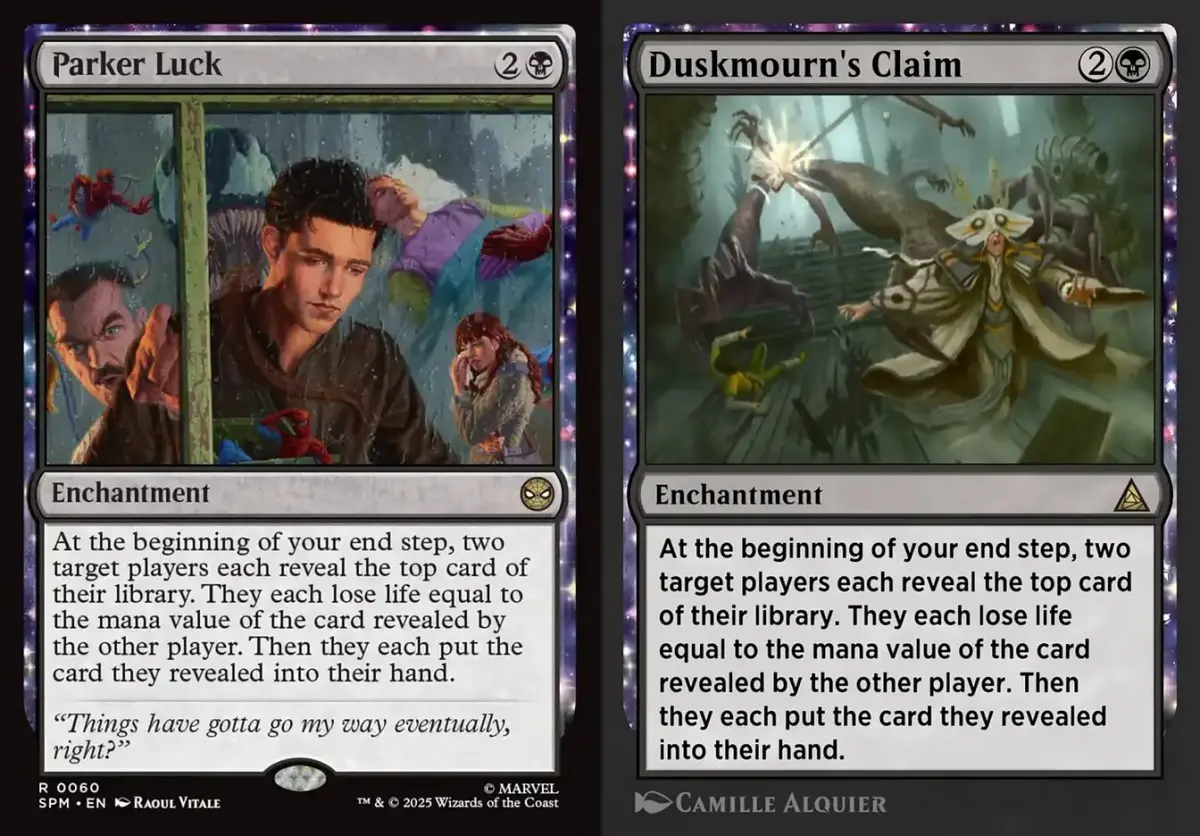
By the way, before Parker Luck there was a creature-based predecessor with a very similar effect: Keen Duelist.
Deck Overview
Decklist Link
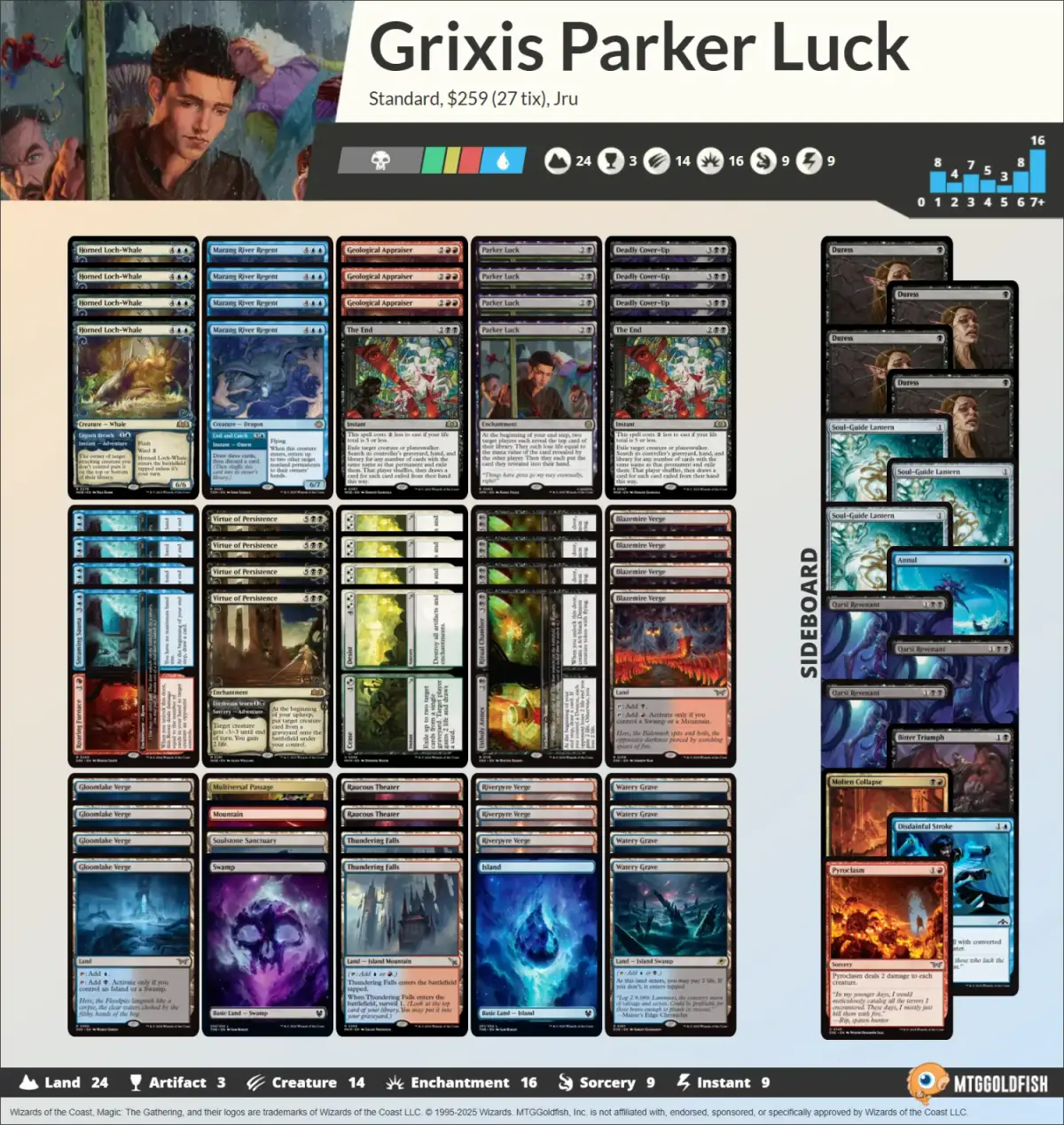
Deck Core
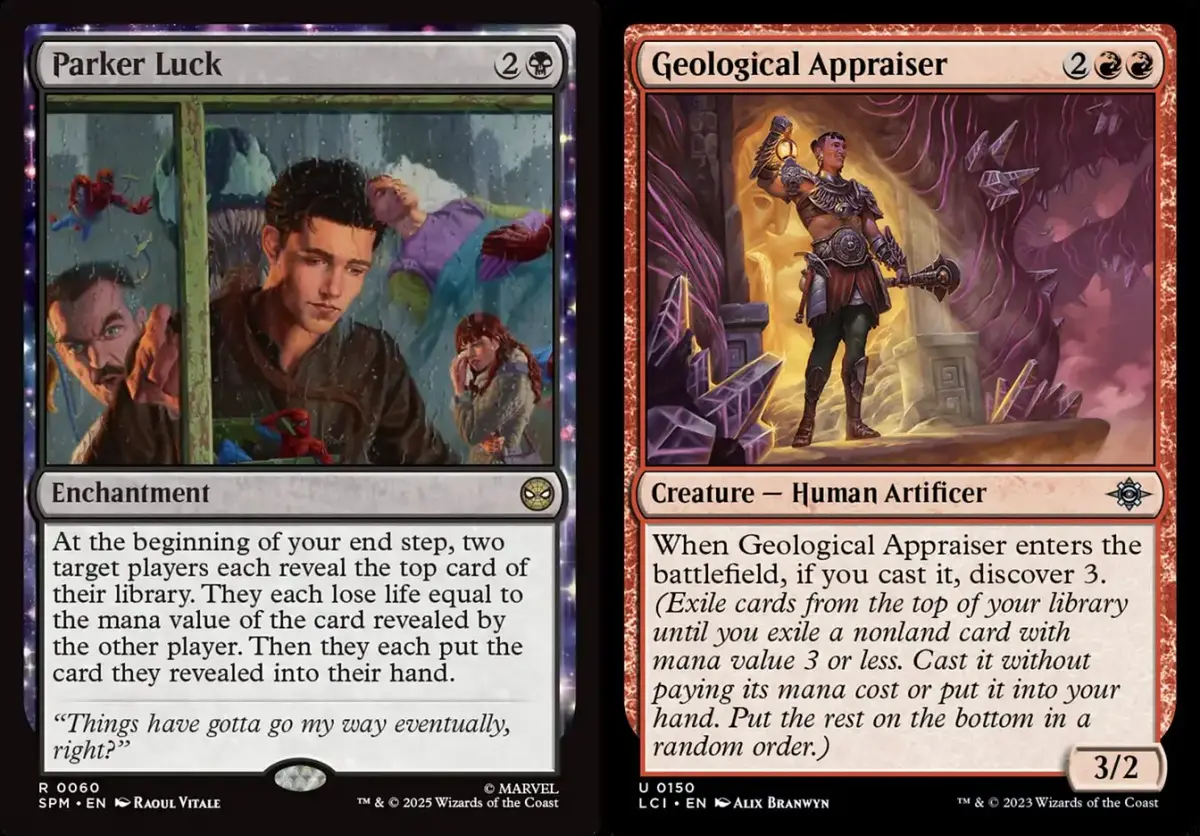
- Parker Luck (4):
The theme card is, without question, a full playset, and it is usually the main way to win. Because of Parker Luck, the way this deck plays out is quite unique. The base of the deck is a control shell of removal plus card draw, but Parker Luck is a life-racing plan. Most of the time the removal is not there to lock the opponent out; it just stalls the game long enough for Parker Luck to finish the job. So the closest archetype is actually tempo (clunky mana values, no counterspells, tempo, do you even hear what you’re saying?). The most comfortable matchup is an opponent who is also proactive, with weak interaction but a slower clock than yours, which usually makes for a midrange game. When the opponent has strong interaction, or races life faster than Parker Luck does, you have to adjust your game plan appropriately after sideboarding. Against strong interaction alone, Parker Luck is still very effective, but you can’t expect to win with it alone. Against aggro decks that are faster than you, you have to give up on Parker Luck entirely.
This card also creates an interesting situation: if both players’ life totals are reduced to 0 or less during a single resolution of the effect, the game ends in a draw.
- Geological Appraiser (3):
This is the real construction core of the deck. Discover is essentially a variant of Cascade, and in this deck it works the same way as modern Cascade decks do: the only card with mana value 3 or less in the whole deck is Parker Luck, so in game 1 Discover 3 can force a hit (after sideboarding you inevitably swap in cheap cards to answer the opponent).
The reason it is not a full playset is that in testing, three copies already gave me all the Discover I needed, and the 4-mana slot is extremely precious in this deck. I will mention later that other cards need that slot too, and weighing everything, three is the most balanced count.
Removal
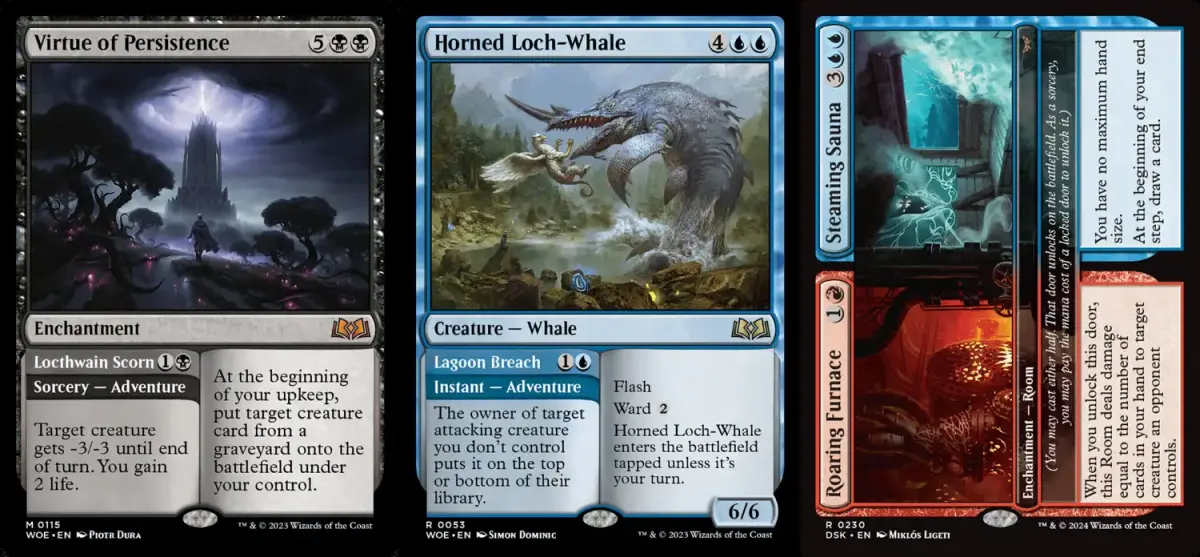
Although the cards themselves are not cheap, these three are effectively 2-mana removal slots. Our game plan is to land Parker Luck on turn three and start racing to see who gets blown out first. If the opponent sets up pressure early, that easily hands them a favorable life race, so I run far more 2-mana removal than a control deck would. Fortunately these are all cards with dual functions, which keeps the rate of dead draws down when you flood on them.
This is the removal with the lowest ceiling on what it can hit. Usually you spend it as soon as there is a valid target, but late in the game it can also become a Plan B win condition. The 2 life gained is actually surprisingly important, because Parker Luck also easily hits you, and often these extra points of life are what let you survive until the deadline.
- Horned Loch-Whale (4):
The Adventure on Horned Loch-Whale has the most unusual role among these three removal spells. It is the only one that does not care about the target’s toughness, and the only instant. When the opponent has a creature with toughness too big for the other two 2-mana removal spells, Horned Loch-Whale is extremely valuable. On the other hand, because the creature’s owner chooses whether it goes on top or the bottom of the library, if Parker Luck is on the battlefield, putting the opponent’s expensive creature back on top of their library is actually stabbing yourself. So you need to be very careful about when to use Horned Loch-Whale.
This deck’s card draw is surprisingly strong, so even though Roaring Furnace is removal with an upper limit on what it can hit, that limit usually works out fine. In the mid to late game you can often force through even Overlord of the Mistmoors or Quantum Riddler.
In plenty of games where your life is running low, the card draw risk of Parker Luck and Unholy Annex // Ritual Chamber is a bit too high, and then Steaming Sauna becomes the key to staying alive.
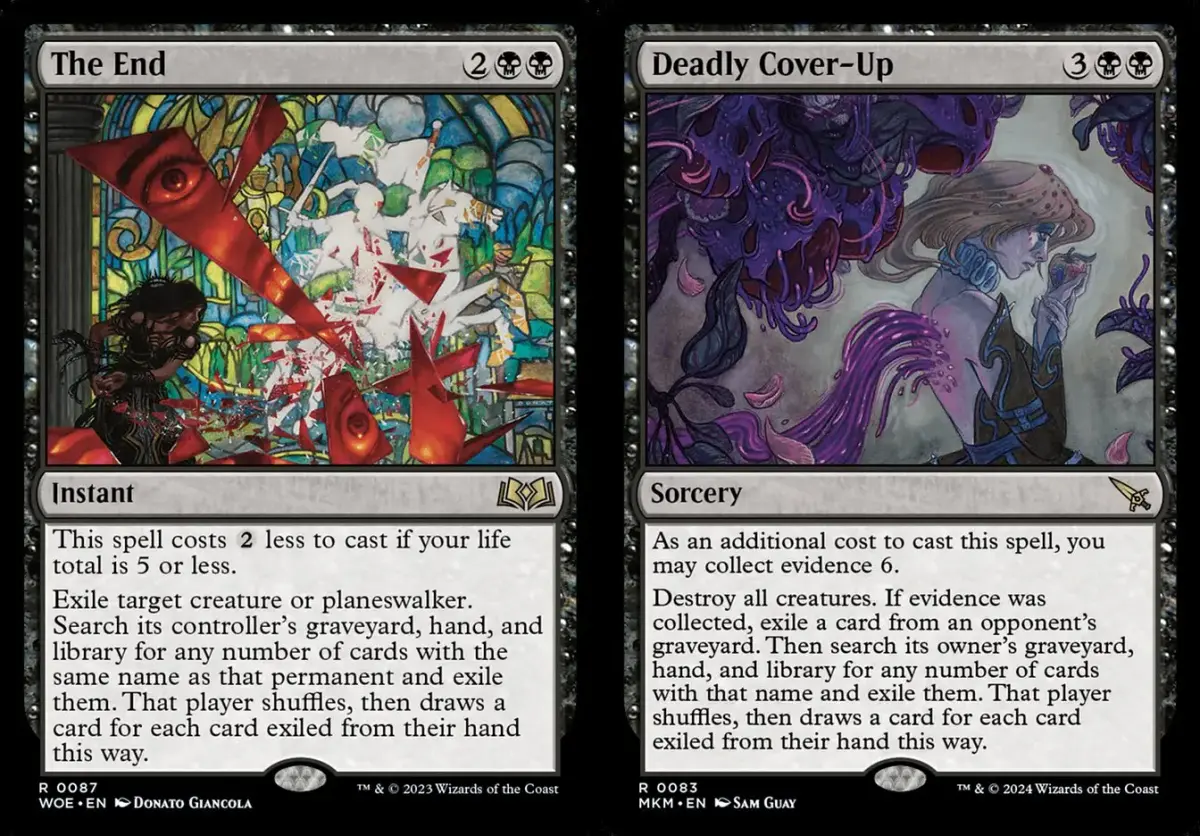
- The End (2):
When I talked about Geological Appraiser earlier, I mentioned that the 4-mana slot is extremely precious. What I meant is The End, or more precisely, a life-saving, powerful hard removal spell. Look at the 2-mana removal above and you will notice that their range or timing restrictions are fairly obvious, so you can still run into blind spots fairly often, never mind that none of them can hit a planeswalker. If the opponent lands a Kaito, Bane of Nightmares, the end is near. Since we need to satisfy the mana value condition of Geological Appraiser, there are basically no other removal options with an effective cost of 3 or less, so at least the 4-mana removal has to solve this problem, and the strongest 4-mana removal is undoubtedly The End (strictly speaking it can also be cheaper, but let’s not assume you are at 5 life).
If you can squeeze out more slots for 4-mana removal, besides adding more copies of The End, Overlord of the Boilerbilges is another option worth considering: its effective cost is 4, and it has a chance to kill Kaito, Bane of Nightmares.
- Deadly Cover-Up (3):
A sweeper is also indispensable for this deck. With Parker Luck or another enchantment in play, simply sweeping the board to stabilize one wave can snowball into a huge advantage. As a pure sweeper, Ill-Timed Explosion also fits this deck very well, or rather this is nearly the build with the highest expected value for Ill-Timed Explosion in Standard. But damage-based range can never beat real destruction, and besides, I really don’t want to pour 6+ damage into a Screaming Nemesis.
The hand-and-library snipe effect on these two removal spells is also key. Even from a purely control perspective they apply strong pressure. For us, besides cards with key effects, when racing life with Parker Luck, expensive cards may also be targets worth cutting. And when you use the Adventure on Horned Loch-Whale earlier to put an expensive creature on top of the library, this is a way to force a shuffle on the opponent.
Card Draw
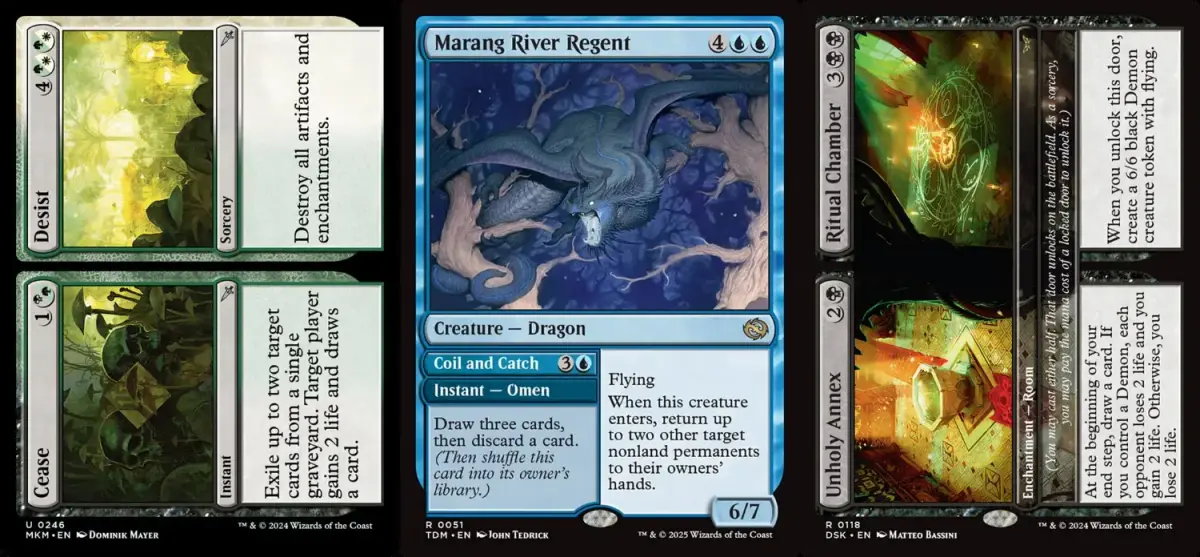
- Cease // Desist (4):
Since this deck can never produce two white/green mana, pretend Desist on the right side doesn’t exist. This is a 2-mana instant-speed graveyard hate plus card draw. Standard graveyard usage has been so high in recent years that instant-speed graveyard removal is a great bonus, and our 2-mana slot can’t be only removal. We still need some proactive card advantage, otherwise the deck runs too clunkily in matchups where the opponent has no creatures early.
- Marang River Regent (4):
Although it is classified as a 4-mana draw spell, its power as a creature is actually more important. It is one of the few cards that is in the deck not merely as a low-cost option but because of the abilities of its expensive half. Grixis has noticeably weaker removal than the white-based decks, so the extra soft answer that Marang River Regent provides is very important. Since we can kill with an ability directly, it often doesn’t matter if we fail to clear the problem completely; what matters is buying turns. Still, Marang River Regent has the strength of a control finisher on its own, so sometimes it has nothing to do with Parker Luck at all, and with Marang River Regent + Horned Loch-Whale you can kill people in a conventional control mode. We also have quite a few enchantments that Marang River Regent can reuse over and over afterward.
The card with the widest gap between floor and ceiling in the whole deck: it can be an MVP or a dud. Its biggest upside is that it is a mana value 8 card, and when you successfully turn on the Demon token plus lifelink card draw, the strength is beyond dispute. The problem is that we run no Demon creature cards at all. Apart from the Demon that Unholy Annex makes itself, there is only a single Soulstone Sanctuary, and the deck has very few creatures otherwise, which means we can hardly bait out the opponent’s removal with other creatures first, so the survival rate of this Demon token is a bit worrying. On top of that, Parker Luck already spews your own life, so on the draw side of Unholy Annex, if you can’t gain life through the Demon, it is very easy to hurt yourself to death. So normally, unless you are stuck on lands or facing control, you don’t dare to casually open the 3-mana draw side. You usually turtle up to 5 mana to make the Demon token, and only declare the 3-mana draw side at the end of your second main phase if the Demon is still alive.
When Unholy Annex and Parker Luck are on the battlefield together, how you order the stack matters a lot. The general principle: if Unholy Annex can gain life, resolve it first. Conversely, if it would only cost you life, or there is a Demon on the battlefield but the opponent is likely to respond with removal, resolve Parker Luck first. This avoids extra life loss turning a win into a draw.
Lands
The thing you fear most when playing Parker Luck is flipping a land yourself, so to reduce the chance of that happening, you can’t run too many lands. This creates a seemingly contradictory picture: the card mana values are all over the place, yet the deck only allows 24 lands. Fortunately, the actual curve of this deck is about a typical midrange level, and there are plenty of card draw sources, so once the initial engine starts running you rarely get stuck on lands; flooding is actually more frequent. At first I was also afraid of too many expensive cards, so I tried a traditional control land count of 26, and the result was a miserable death. 26 lands is simply far too many for this deck.
However, a three-color deck with 24 lands also means that once the basic surveil lands, Verges, and basic lands are in, the slots are basically used up. And although we are mainly blue-black with only a light splash of red, the color requirement of the most crucial Geological Appraiser happens to be two red mana, so the mana base still has to lean toward an evenly three-color build. After placing all the lands above for basic operation, there are only two slots left:
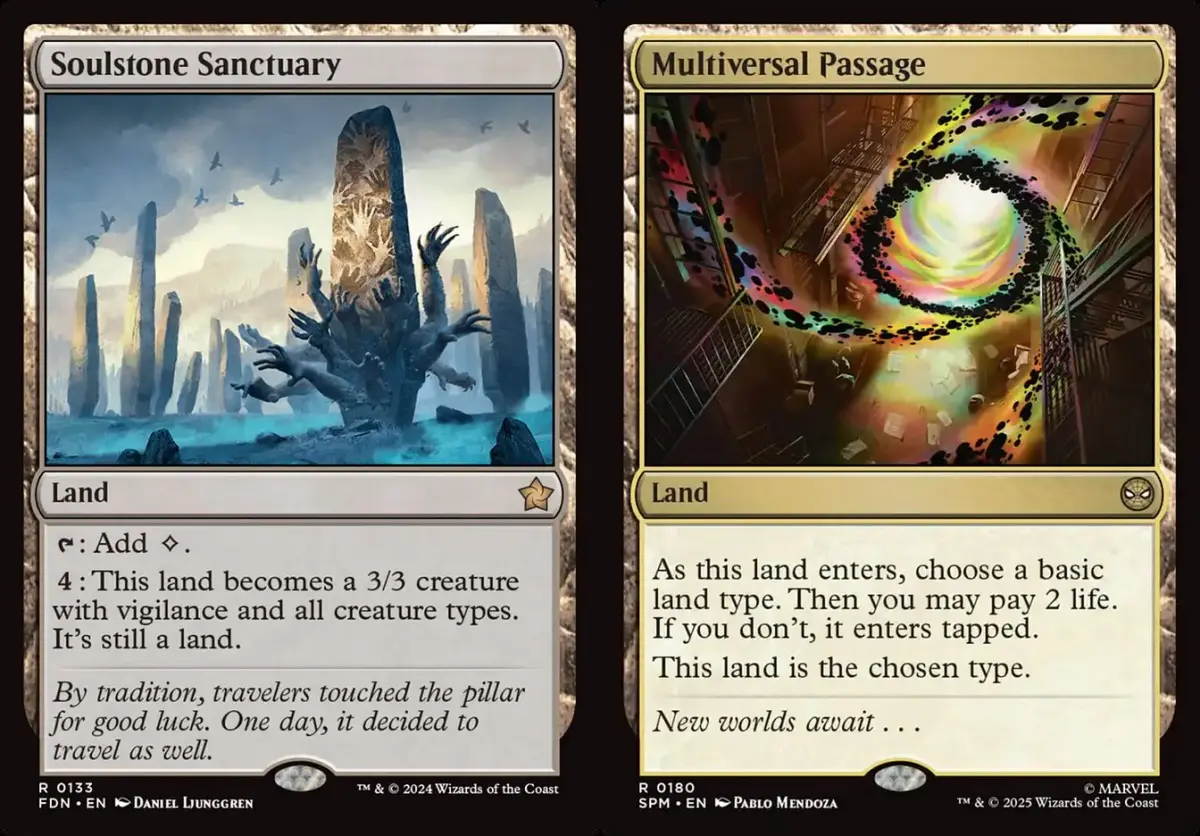
- Soulstone Sanctuary (1):
If you play Unholy Annex, you definitely want Soulstone Sanctuary, but with 24 lands in a three-color deck it is really hard to fit colorless lands. Forcing in one is already the limit, and any more would get you killed by color screw first.
- Multiversal Passage (1):
What this slot needs is also a fixing land with a basic land type, so that the Verges have more stable fixing. In fact a surveil land would also be fine here. Although you would have more tapped lands, an extra surveil before the Parker Luck flip can noticeably reduce the chance of revealing a land. Each has pros and cons, so choose for yourself.
Sideboard
General principle: the first thing to decide is whether, in this sideboarded game, you want Parker Luck as your main win condition. When you plan to keep Parker Luck as your main game plan, don’t overboard. That will only make your curve lower and make you kill yourself. Even if you have plenty of cards suited to the matchup, don’t bring them all in.

- Soul-Guide Lantern (3):
Standard sideboards definitely need some graveyard hate now. Because the Spider-Man set brought up the Bringer of the Last Gift deck, Soul-Guide Lantern has become a necessity, rather than relying only on Ghost Vacuum like before. In principle the two can be mixed, and 2 Soul-Guide Lantern + 1 Ghost Vacuum is also a reasonable configuration. The reason this list drops Ghost Vacuum entirely is that the full playset of Cease in the main deck already gives strong enough instant-speed single-card exile. What is harder to hold down is the kind of deck that can use the entire graveyard, so I decisively went with 3 Soul-Guide Lantern.

- Qarsi Revenant (3):
One of the key creatures against red aggro. In principle, against red aggro I take out every Parker Luck and bring in every Qarsi Revenant. Parker Luck costing yourself life is a minor issue; the key is that refilling resources for red aggro is truly terrifying.

- Duress (4):
What we fear most is an accident with a key enchantment, so discard is very important in sideboarded games.
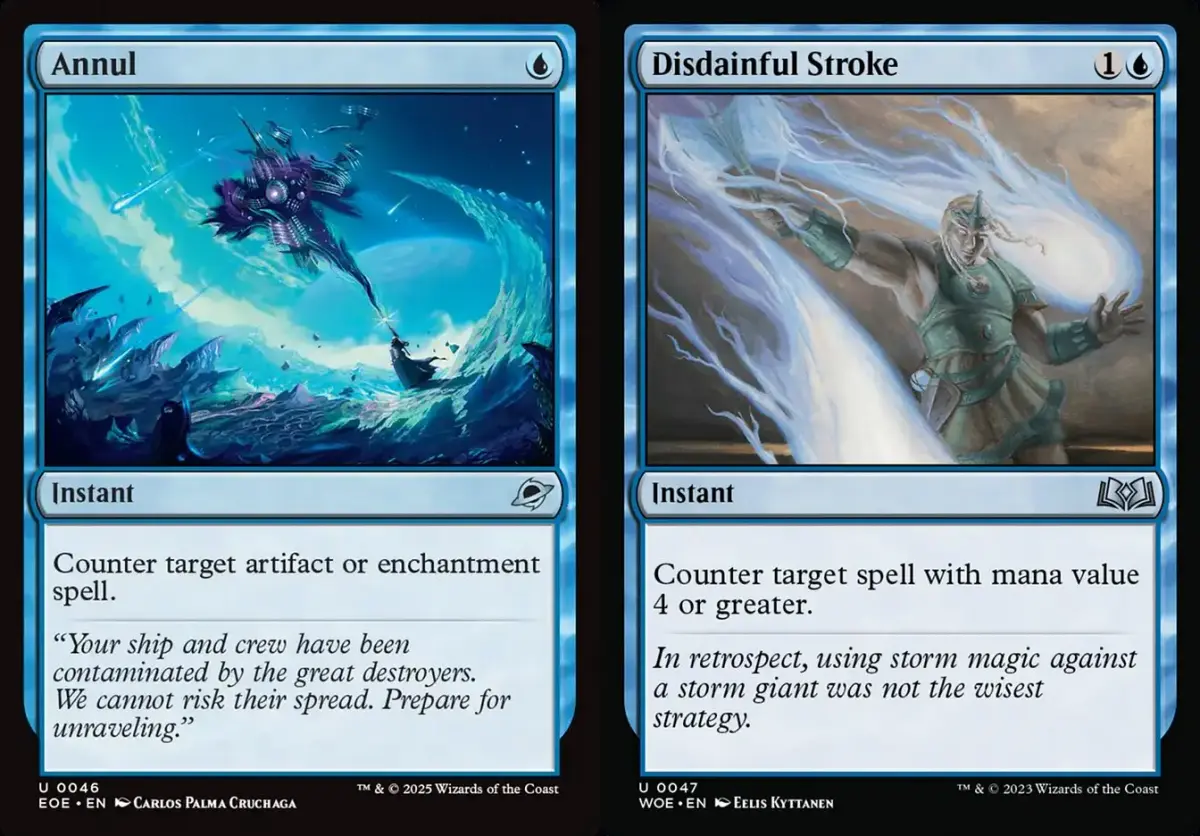
- Annul (1) & Disdainful Stroke (1):
A blue sideboard is bound to pick up a few counterspells, but when Geological Appraiser flips a counterspell it just becomes a revealed card in your hand, which is not very efficient. So running only 2 counterspells that can hold off a key play is about right. Annul is absolutely necessary, while Disdainful Stroke is not that important, and switching it to Negate is also worth considering.
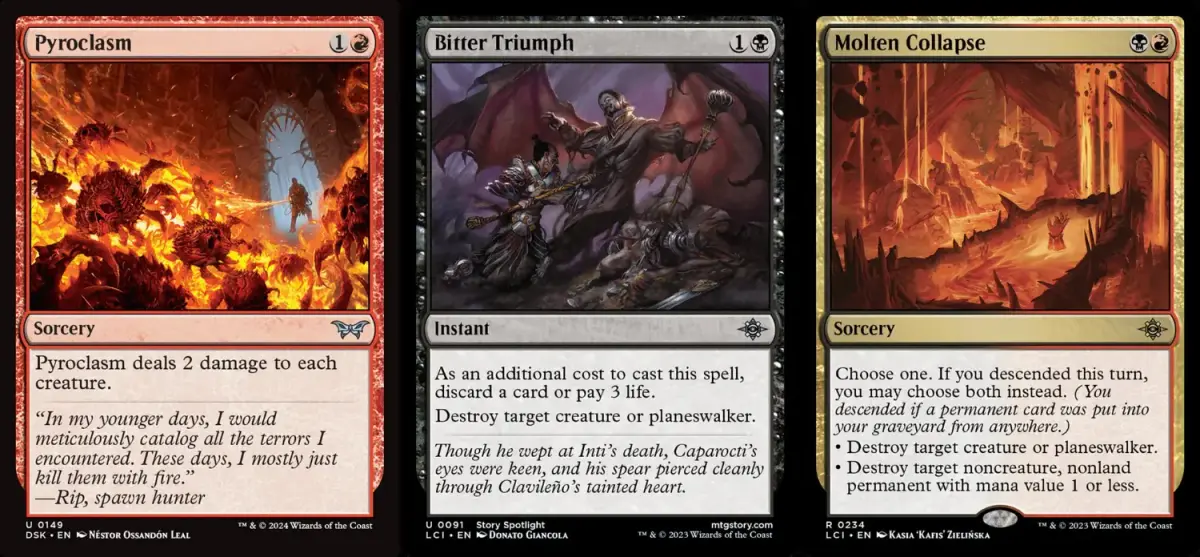
- Pyroclasm (1):
You always want one burn spell against fast creature floods. Purely on functionality I actually prefer Fire Magic, since being instant speed is very important against Dimir, but when Geological Appraiser flips a Tiered spell, if you want the lower option you have to dutifully pay extra, which is a pretty miserable situation.
- Bitter Triumph (1) & Molten Collapse (1):
To put it plainly, this slot has just one requirement: removal that can kill Kaito, Bane of Nightmares. Each has its own pros and cons, and bringing one of each lets you flexibly adjust to the details of the matchup.
Cards Not Used

A relatively expensive spell that can also do something for 2 mana. Purely in terms of functional requirements, this card matches what we need perfectly. The card actually competing with Quantum Riddler for a slot is Unholy Annex // Ritual Chamber, and each has its pros and cons:
| Attribute | Unholy Annex // Ritual Chamber | Quantum Riddler |
|---|---|---|
| Card mana value | 8 | 5 |
| Real cost | 5 | 2 |
| Ceiling | High (continuous life gain + card draw) | Stable |
| Floor | Huge dud (suicide card) | Stable |
| Notes | Usually you don’t dare to open the 3-mana draw side bare, so it is classed as a 5-mana spell | This deck doesn’t dump its hand quickly and refills its hand well, so the extra draw effect basically goes unused |
In fact, by my usual deckbuilding habits I would definitely set Unholy Annex aside and pick up the stable, reliable Quantum Riddler, but this deck is the sole exception, and the key is the attribute that looks least important: card mana value.
While testing this deck I found that the card mana value curve matters far more than it seems on the surface. Often a flipped card being off by just a little makes the difference between life and death for the opponent, and when I explain later why the old decklist was abandoned I will discuss the importance of the card mana value curve again. After all, if you’re playing Parker Luck, you were never in a play-it-safe mindset to begin with, and you certainly want to find ways to gamble on the ceiling. Unholy Annex is only clunkier to operate, not yet a dead card, so in the end I kept Unholy Annex.
However, Quantum Riddler is still a reasonable and powerful option, especially when you choose to give up Parker Luck in sideboarded games for a normal control plan, so readers can decide for themselves which card should take this slot. I recommend Unholy Annex be either 4 or 0, though you don’t necessarily have to fill the gap with 4 Quantum Riddler. Running 2 to 3 Quantum Riddler plus cards that Geological Appraiser can’t flip by mistake is fine too. For filler I recommend Overlord of the Boilerbilges: 4 damage burn to any target, which can finish off the opponent and can also deal with a Kaito, Bane of Nightmares that hasn’t used its +1.
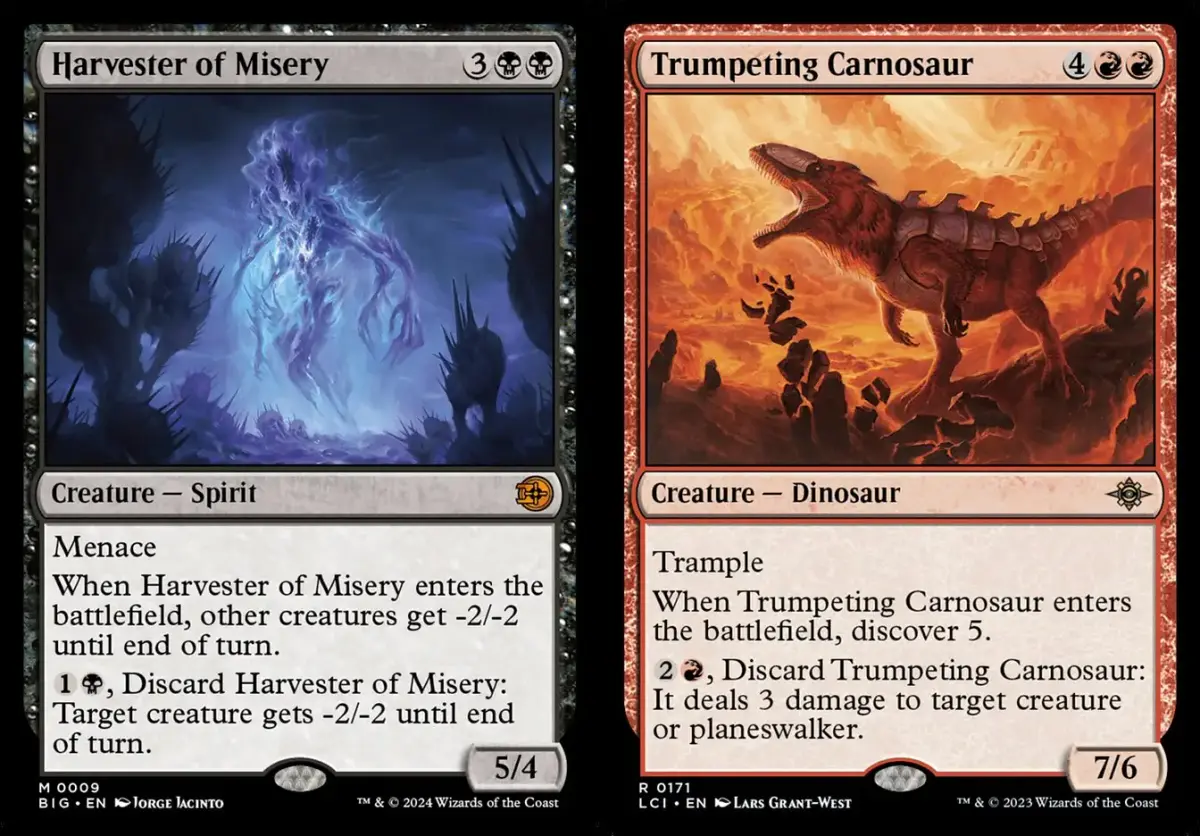
These two cards also fit the deck’s requirements perfectly, yet were passed over, though the reason for not using them is much simpler. As removal, their range is far too low. A normal deck only accepts them on the premise that it already has excellent removal, trading some removal ability for flexibility. But the biggest problem with our main deck removal is already its dangerous range, so adding even more low-range cards isn’t right either.

Since I already have Unholy Annex, and Parker Luck also makes the opponent lose life on my turn, Bloodletter of Aclazotz should fit perfectly in terms of function, right? It fits, but I don’t know how I’m supposed to produce those three black mana. Grixis is already a weak-fixing color combination in current Standard, lacking shock lands, and I’m also running a three-color deck, even squeezing a Soulstone Sanctuary into 24 lands. Putting Bloodletter of Aclazotz in on top of that means either the color screw risk is too high or you have too many tapped lands and die to tempo.
The Discarded Build: Mardu Version
In fact, what I built first was not Grixis but Mardu, since this color combination also seemed to have many cards that intuitively fit the theme. The main deck had Ride’s End as a relatively stable 2-mana hard removal, and having white in the sideboard gave far stronger answers. The first version revealed a new problem after only a few matches, and after tuning back and forth, the final Mardu testing record looked like this:
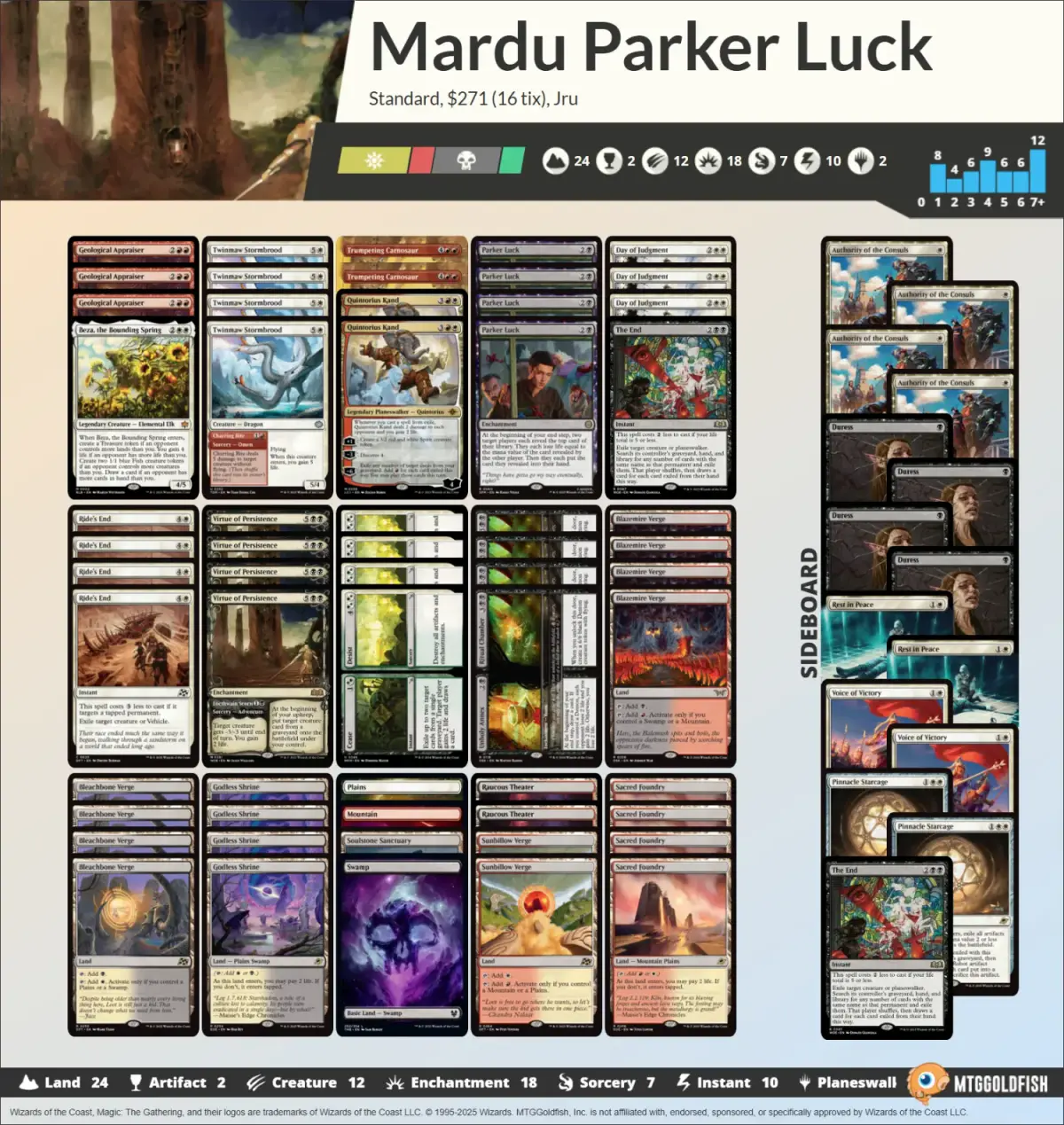
So what was wrong with this version? First, in situations where you can’t rely on Parker Luck, the Plan B win conditions were far too scarce and weak. Trumpeting Carnosaur looks strong but has a not-small chance to flip Deadly Cover-Up and leave you with an awkward look. Quintorius Kand performed well, but without an early creature defense line it still gets run over easily.
The other big problem is that the overall card mana value curve of the deck was slightly lower than the Grixis version. It seems like a tiny difference, but in actual play the performance of Parker Luck is worlds apart. When flipping the same number of nonland cards, the opponent of the Mardu version could very easily survive at 1 or 2 life, while with Grixis they were flipped straight to death. I haven’t carefully run the probability formulas to calculate how big the expected value gap between the two versions is, but the difference in how often actual results crossed the line between life and death was extremely obvious.
Though I should confess that I never tested Overlord of the Boilerbilges in the Mardu version. Perhaps adding Overlord of the Boilerbilges would improve the problems above quite a bit.
Conclusion
From the moment I saw Parker Luck, it was clear this was not a serious deck, and you could even say it has no favorable matchup against anything mainstream. Against Vivi Cauldron there is a tiny chance of racing, but if they casually pump out a Proft’s Eidetic Memory, more than half of your removal is going to stall out, and the sideboard always has counterspells like Annul to handle you. Speaking of counterspells, control and Dimir tempo have the same problem. One has enchantment removal and the other has discard to mess with you (4C Control says: I have both), and Dimir additionally has the problem of Kaito, Bane of Nightmares being unanswerable, plus flash getting around sorcery-speed removal. As for red aggro… racing life against it is already difficult, and looking at our number of nonbasic lands and then at Sunspine Lynx, I think practicing cutting cards is faster.
My attitude toward Standard right now is actually to wait for the ban announcement. If I were playing a serious tournament, I would still obediently pick up Azorius Control. This deck is for killing time in casual games, but in a no-pressure, fun environment it really has entertainment value while also performing quite well. I even feel that among all the decks I’ve played this entire year, this is the one most people have been begging me to write an article about. If you are in a non-tournament setting and just want a relaxed, pressure-free, thrilling game, you are welcome to try this deck.

- Title
- A Duel for Your Lifespan: Parker Luck in Standard
- Author
- Jru
- Created at
- November 3, 2025
- License
- This work is licensed under CC BY-NC-SA 4.0 .