
Let's Play a Game: Standard Grixis Saw

Note: This article was translated from Chinese by AI and may contain errors. Read the original Chinese version.
Before We Start

I wonder what you readers think of Cursed Recording from “Duskmourn”. Do you see it as an excellent spell-copying engine? Or do you plan to stack it up to five counters and gift it to the opponent giving away a TV while playing Magic sounds great, right? The origin of this deck was a small deckbuilding event started by faintmama among GF players. As Guildmages Forum’s FUN DECK generation BOT(?), the author naturally had to serve up a deck that is both fun and playable. Let’s take a look at the author’s answer!
Card Analysis
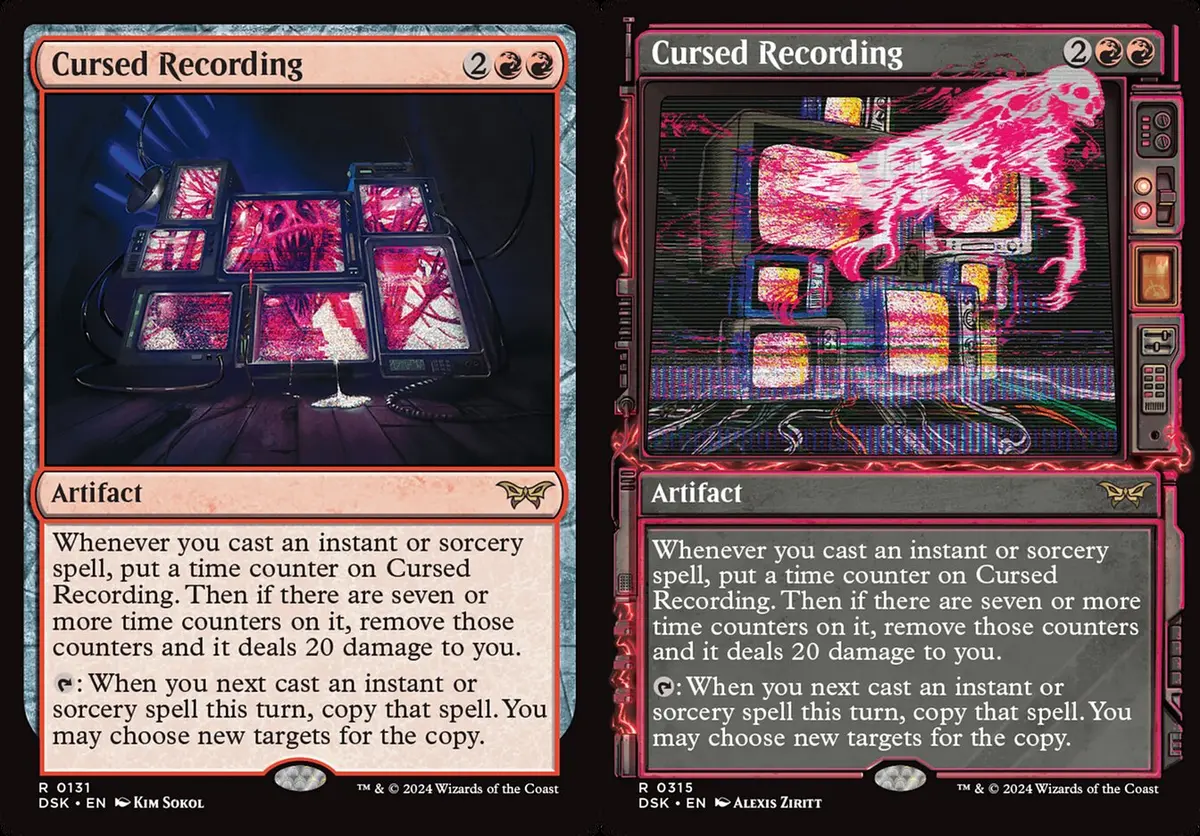
Artifact
Whenever you cast an instant or sorcery spell, put a time counter on Cursed Recording. Then if there are seven or more time counters on it, remove those counters and it deals 20 damage to you.
{T}: When you next cast an instant or sorcery spell this turn, copy that spell. You may choose new targets for the copy.
Cursed Recording is a powerful instant-and-sorcery copying engine. It needs no additional payment: just tap it to copy your next instant or sorcery, a very strong effect. But in return, when you cast your seventh instant or sorcery, Sadako from the videotape crawls out and scares you into heart failure. In other words, unless your deck has plenty of ways to deal with Cursed Recording, using it in a deck with a heavy share of instants and sorceries makes it very easy to blow yourself up. So what about stacking it up to five time counters and gifting it to the opponent with Harmless Offering? Honestly, it is quite hard to control exactly five counters, and if you draw Donate-style cards such as Harmless Offering or Fateful Handoff too early, they get stuck in your hand and put you in danger. Even if you really meet the condition and donate it to the opponent, the effect only seals the opponent’s instants and sorceries, and cannot actively win you the game. Therefore, to make good use of Cursed Recording, you have to spend your instant-and-sorcery budget on important spells. So I reluctantly gave up faintmama’s idea of giving away a TV while playing Magic XD.
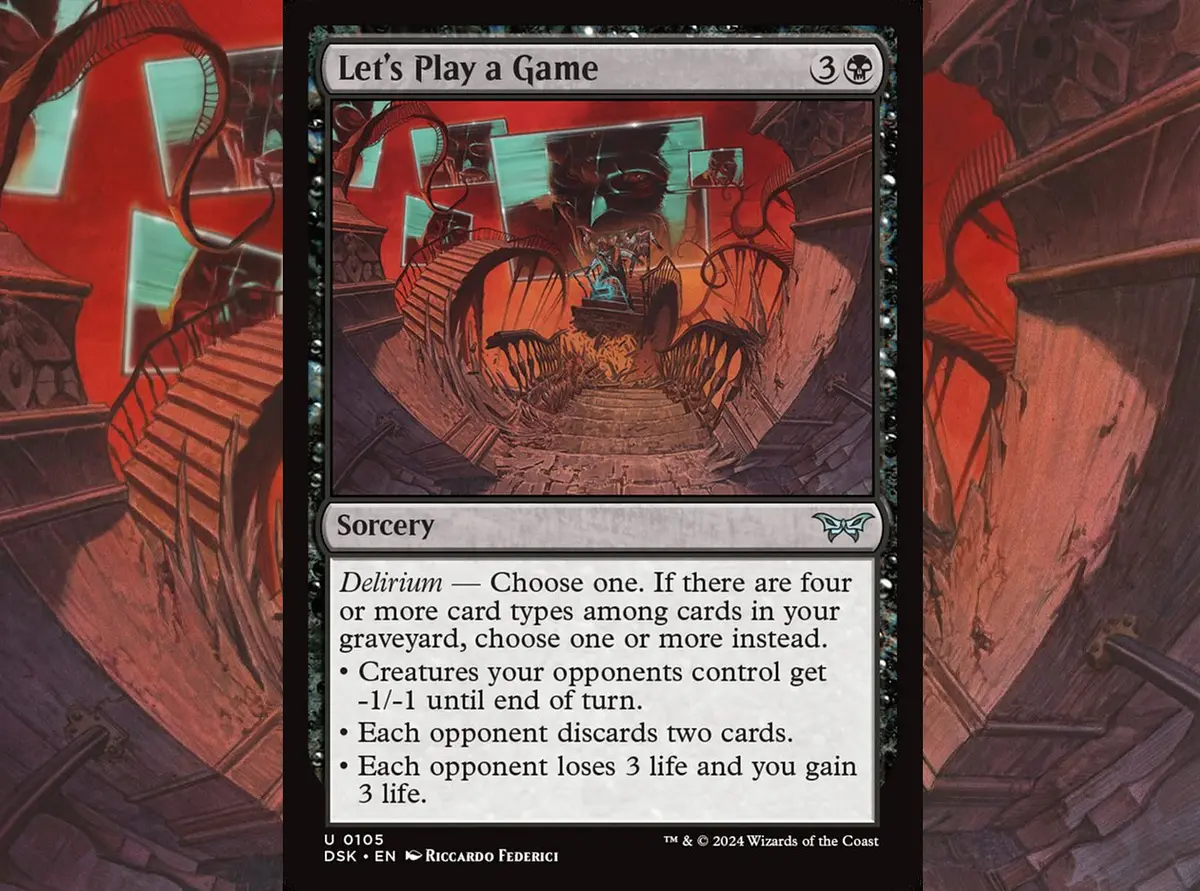
The spell the author chose to pair with Cursed Recording is Let’s Play a Game. With delirium achieved, Let’s Play a Game can do a one-sided sweep of small creatures, discard, and direct damage all at once. Copied by Cursed Recording, it can often make the opponent’s board collapse instantly while also emptying their hand, leaving them with no ability to resist. But without delirium, it is just a sorcery of Limited-level strength. So we have to find a way to achieve delirium and also filter out Cursed Recording as quickly as possible, and a blue-black graveyard-stacking route is the most suitable direction. The decklist is as follows:
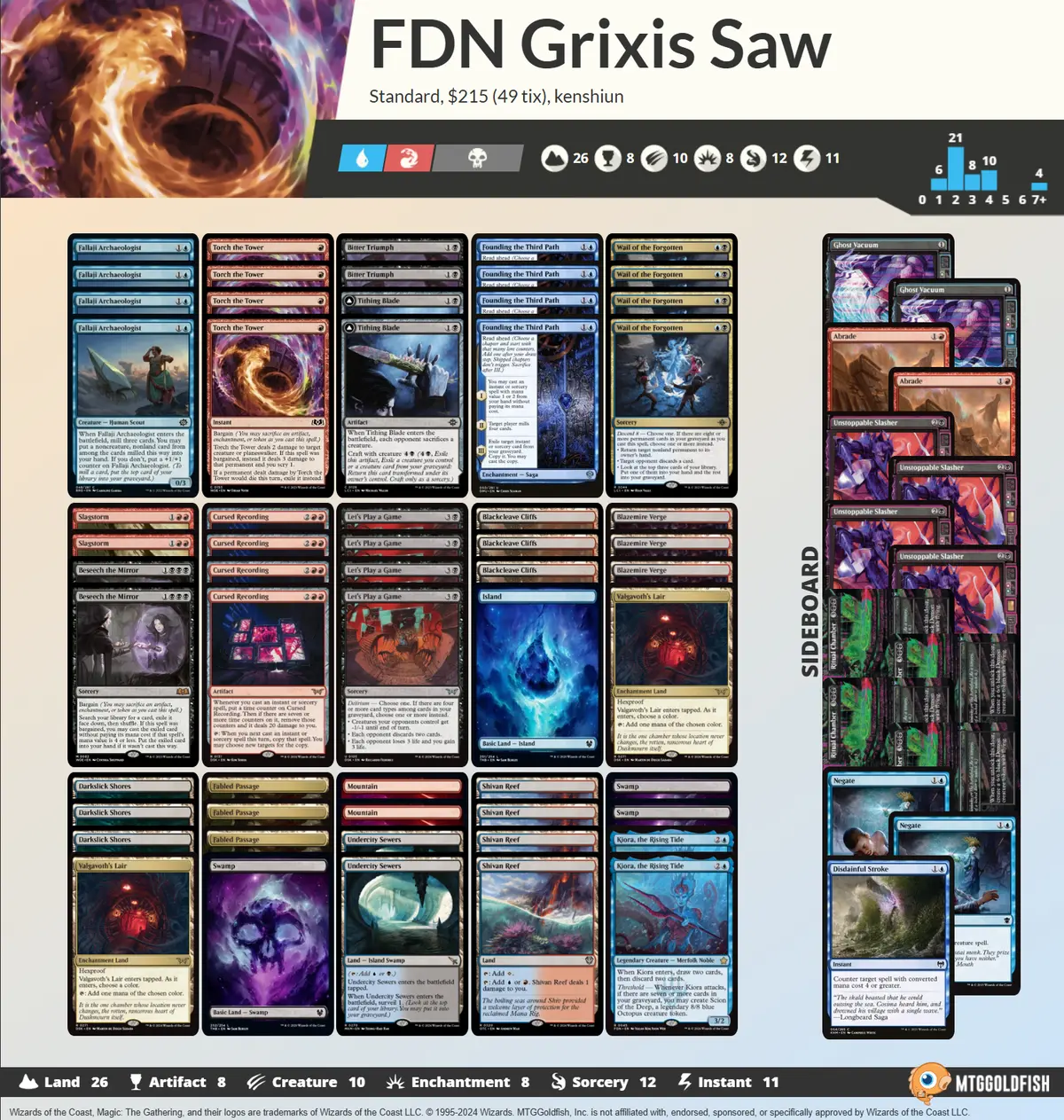
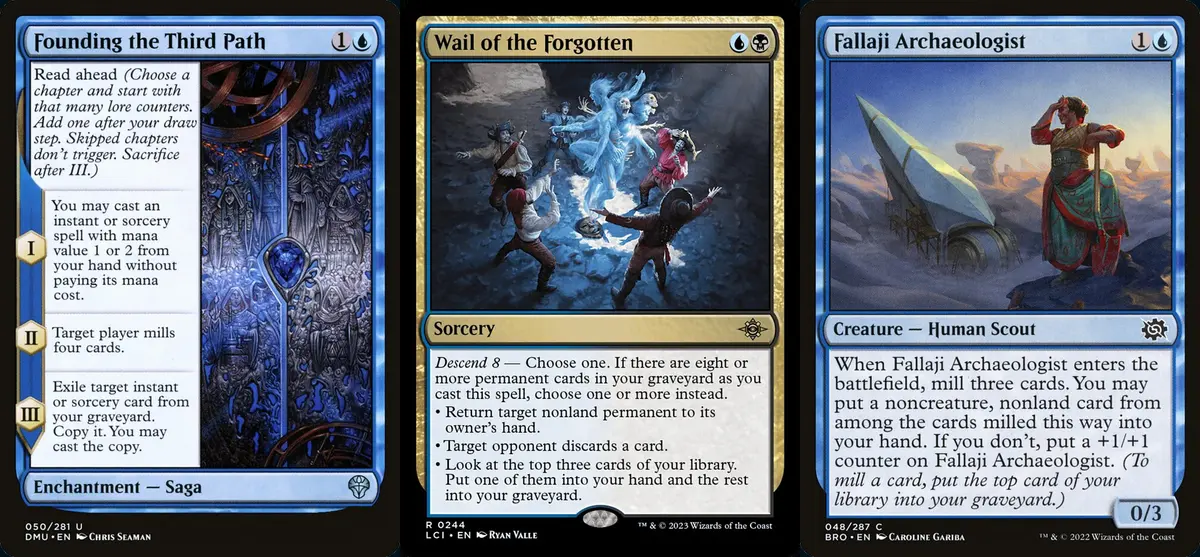
Founding the Third Path, Wail of the Forgotten, and Fallaji Archaeologist are this deck’s graveyard-stacking engines. The combination of Founding the Third Path and Wail of the Forgotten is quite common and widely used in all kinds of Sultai graveyard decks. The former stacks the graveyard while giving flashback to graveyard spells, and the latter filters and stacks the graveyard, and once its descend condition is met it can also double as removal, again a spell well suited to being copied. The key point is that Wail of the Forgotten can return Cursed Recording, helping you avoid the self-blowup ending. Fallaji Archaeologist can, while stacking the graveyard, filter the Cursed Recording or Let’s Play a Game we need into hand, and it also doubles as an early blocker, lying in the graveyard to fill out card types after it dies.
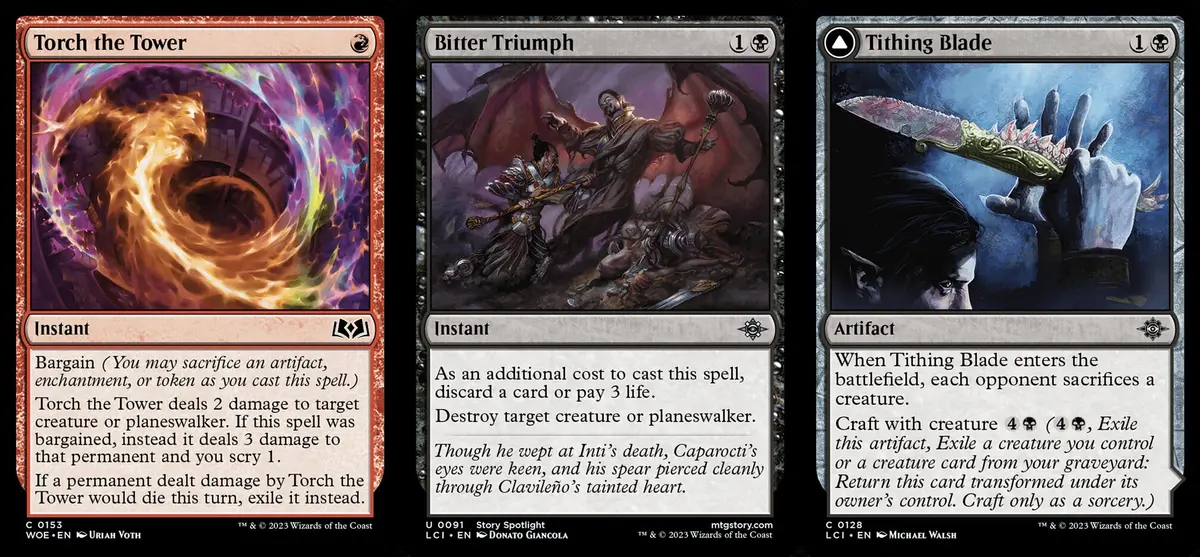
Next comes the part about gathering card types. First are the instants that help us survive the early game, made up of four Torch the Tower and two Bitter Triumph. I will not repeat the importance of Torch the Tower in the current environment, but in this deck it has another important function: when Cursed Recording has stored six time counters, you can bargain it by sacrificing it to avoid the self-blowup. Bitter Triumph is universal removal for creatures and planeswalkers, and its side effect of discarding a card can be used to achieve delirium or descend conditions. Next are artifacts: besides the four Cursed Recording, the author also includes two Tithing Blade // Consuming Sepulcher as removal supplements, which after crafting have a chance to finish off the opponent.
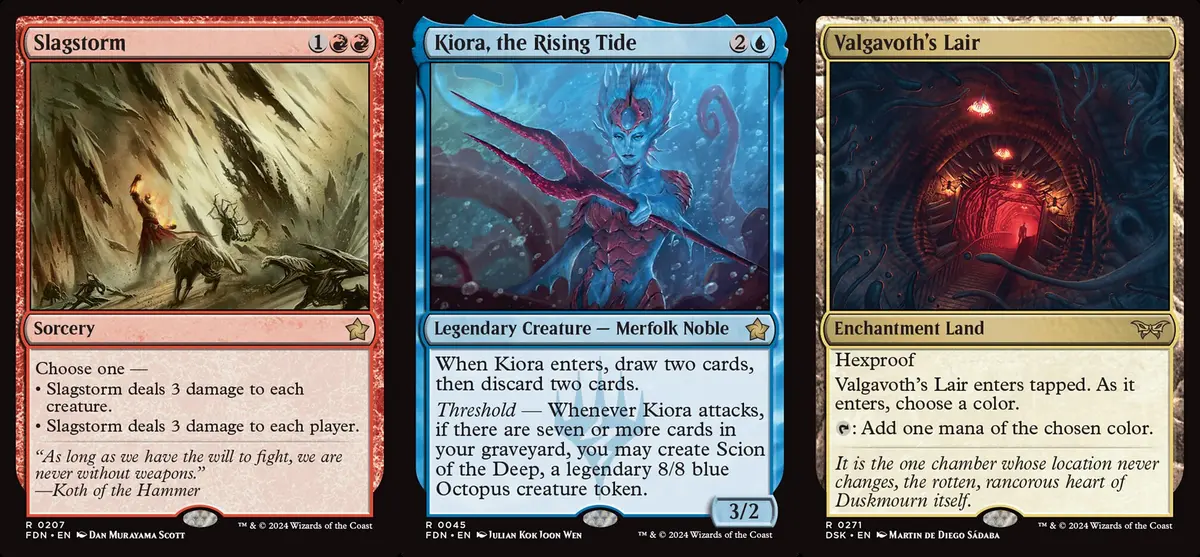
For sorceries, the author uses two Slagstorm as sweepers. After being copied by Cursed Recording, the range can rise to 6 or more, and you can choose to deal damage to all players, so it also comes in handy when you need burn to the face. For creatures, two Kiora, the Rising Tide are added to help with filtering and graveyard stacking. Drawn in the mid-to-late game, she is a game-deciding hit, bringing out the 8/8 legendary Octopus, Scion of the Deep, to suppress the opponent. Lastly, for enchantments, Valgavoth’s Lair tops up the land count while fixing colors.
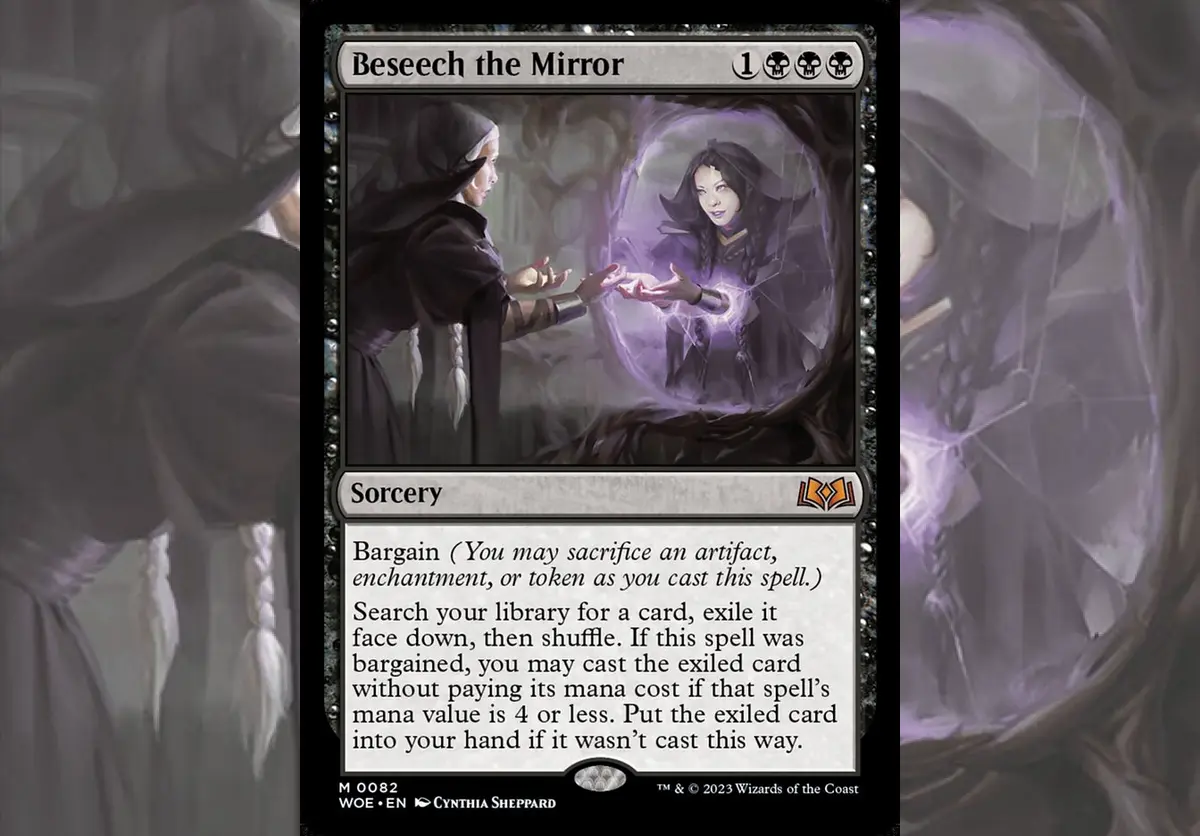
For the last two slots, we fill in the tutor Beseech the Mirror as a flex slot. It can fetch whatever card you need most at the moment, and it can also use bargain to get rid of a Cursed Recording about to explode.
Gameplay Demo
The two games this time were against mono-black midrange and red-white Auras. In game one, the opponent got hit by the Cursed Recording plus Let’s Play a Game combo and was left with an empty hand. Although he animated two Soulstone Sanctuary, the damage they dealt was offset by the life drained by Let’s Play a Game, and after Slagstorm swept through, he basically could not recover. In game two against red-white Auras, although the author filtered into Cursed Recording, there was no room to use it, so it could only be left to get stacked into the graveyard. Facing the opponent’s fierce assault, the author barely held on until life was 1, then Beseech the Mirror found Let’s Play a Game to regain 3 life and discard the opponent’s only two cards in hand, and finally Kiora, the Rising Tide brought out Scion of the Deep to successfully dissuade the opponent.
Conclusion
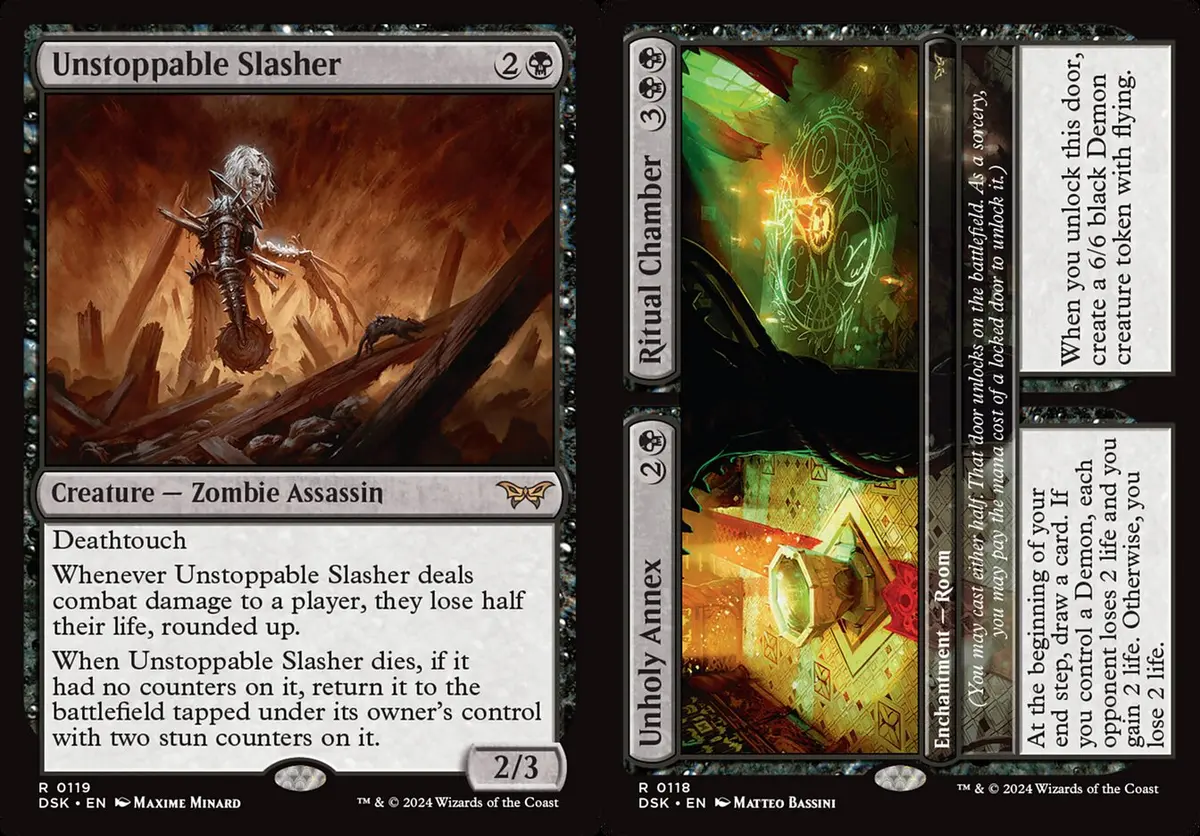
Like all combo decks, this deck of course runs with great vigor when it can meet the prerequisites, but if your filtering does not go smoothly and you do not find it, or it gets disrupted and you lose Cursed Recording, the deck’s power drops sharply. Even if you win game one smoothly, once you reach the sideboard games the opponent will surely bring in graveyard hate or artifact removal, so in a best-of-three you need to be mentally prepared to take out the combo and bring in a second or third win condition. In this article’s example, the author used the combination of Unstoppable Slasher and Unholy Annex // Ritual Chamber, common in black-based midrange, as a backup plan. What would you set up if it were you?
- Title
- Let's Play a Game: Standard Grixis Saw
- Author
- JerobaMTG
- Created at
- January 1, 2025
- License
- This work is licensed under CC BY-NC-SA 4.0 .