A Few Notes on Standard Rotation After Edge of Eternities (EOE)
Note: This article was translated from Chinese by AI and may contain errors. Read the original Chinese version.
What Is Standard Rotation?
Standard is a limited-card-pool format, and rotation is the process of making cards from certain older sets unusable in Standard after a fixed period, keeping Standard varied and lively. Since the official article Revitalizing Standard was published on May 7, 2023, Standard’s lifespan has been extended from the original 2 years to the 3 years we know today.
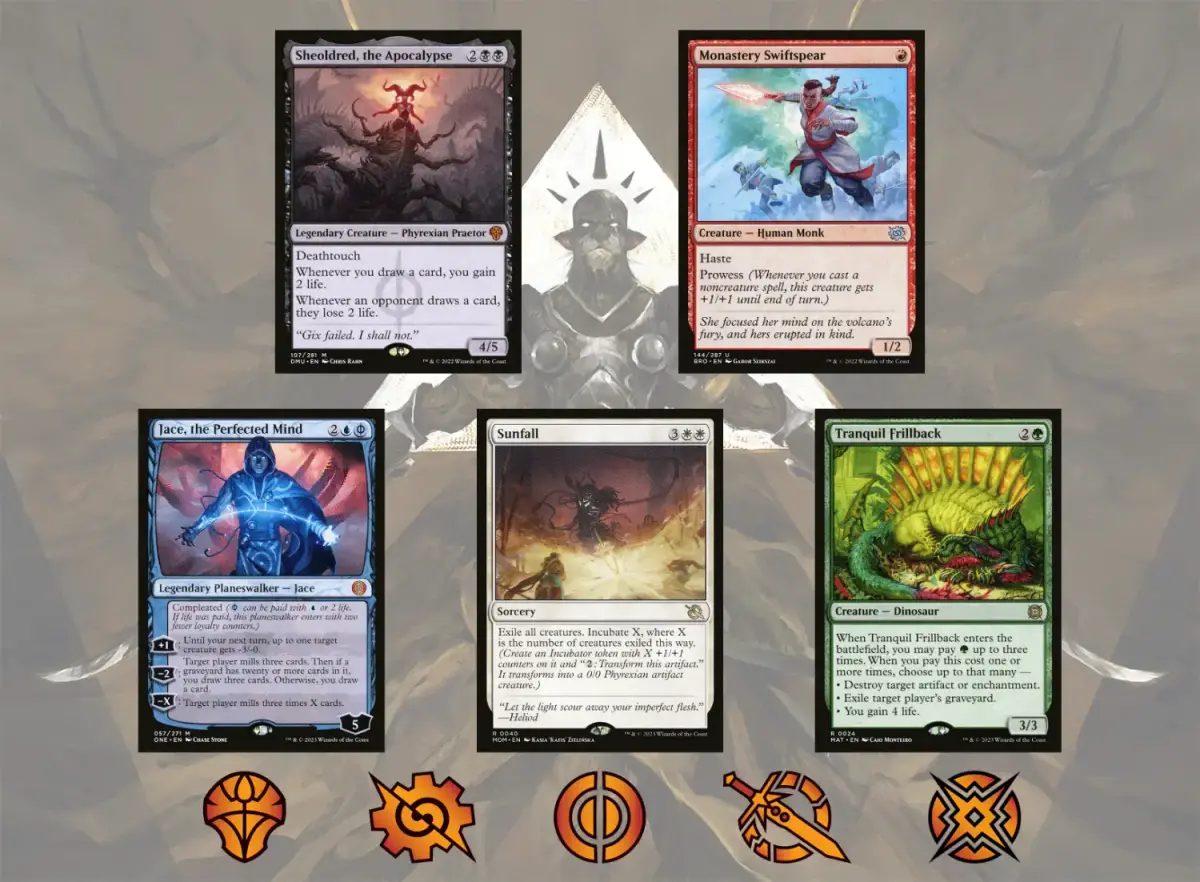
Starting from the Edge of Eternities (EOE) prerelease on July 25, 2025, we will also welcome the second rotation since Standard was extended to 3 years. Cards from the following 5 sets will no longer be usable in Standard (of course, they can still be used in eternal formats outside Standard, such as Pioneer, Modern, Legacy, or above):
- Dominaria United (DMU)
- The Brothers’ War (BRO)
- Phyrexia: All Will Be One (ONE)
- March of the Machine (MOM)
- March of the Machine: The Aftermath (MAT)
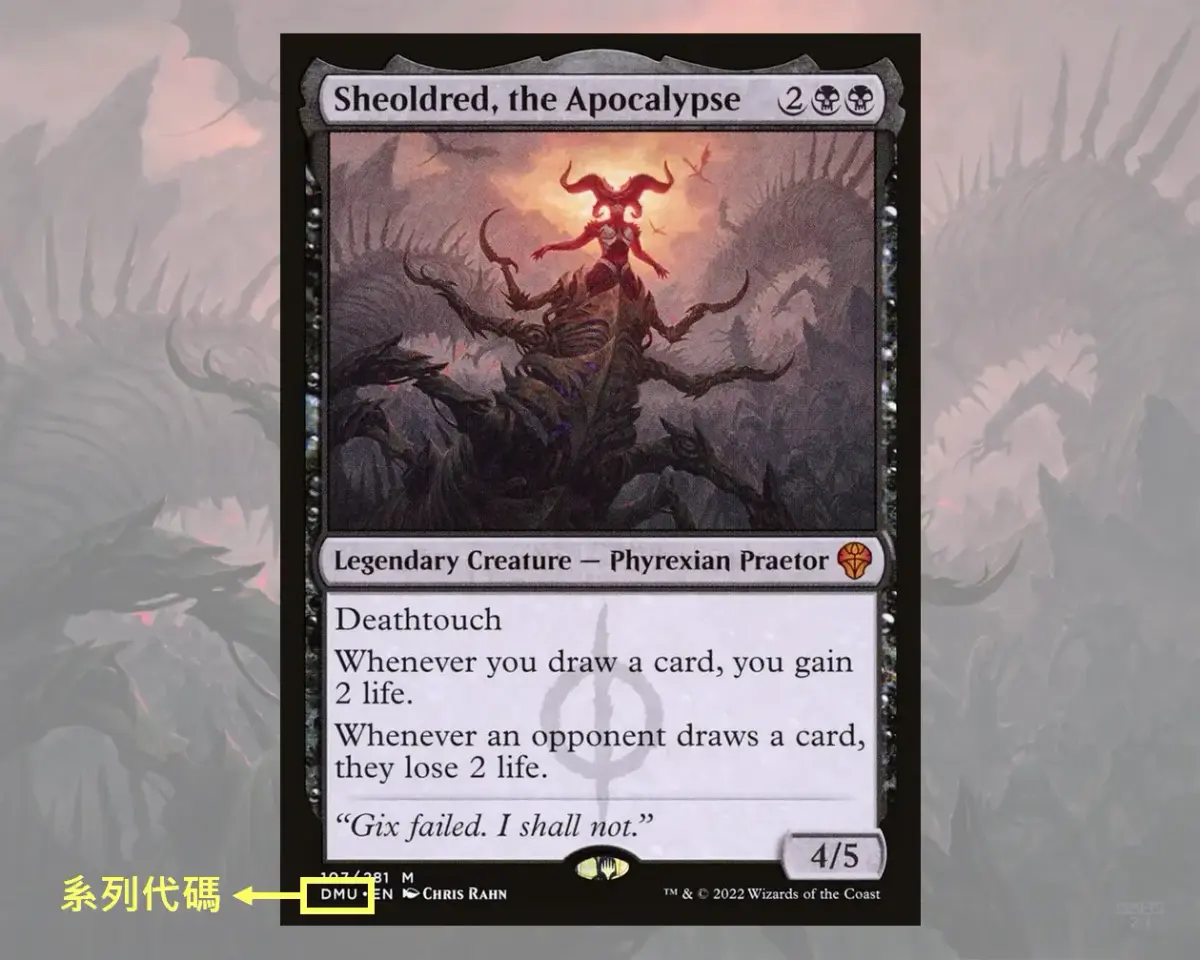
A friendly reminder for new players: to check a set code, see the image below. At the lower left of the card, directly below the number, there is a three-letter uppercase code, which is its set code. To learn more essential MTG knowledge, check out this article: MTG Beginner’s Guide
Banned Cards in Standard
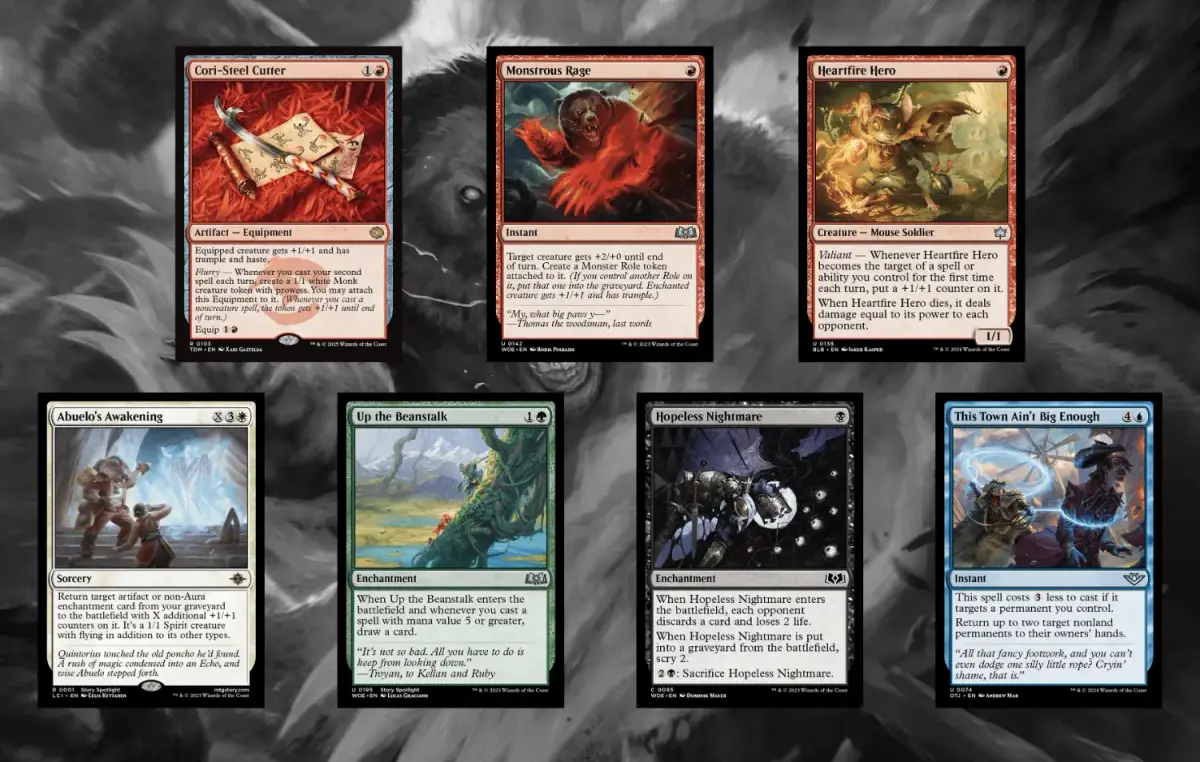
In the June 30, 2025 Banned and Restricted announcement, the 7 cards pictured above were banned in Standard. Bans usually happen when one or a few cards, and the decks built around them, take up too large a share of a given format and make the format unhealthy, squeezing out the survival space of other decks that have potential but a power-level gap. At such times, Wizards uses routine or even emergency ban announcements to ban the cards causing the situation.
We specifically mention Standard bans because these 7 banned cards can also be seen as Wizards believing that their continued presence in Standard would harm the overall diversity of the environment, so they were rotated out early.
If you count the online version, MTG Arena, in its BO1 format (Best of One, a format without sideboarding in which the first player to win one game wins), Leyline of Resonance
was also banned. But this is different from the paper Standard format.
Possible Effects of the EOE Standard Rotation
This section is mainly written for players who already have some understanding of pre-rotation Standard and have invested in it for a while. For new players who started around FIN, I suggest simply waiting until EOE is released, then looking at decks on MTGGoldfish and choosing one you are interested in and can afford.
1. Lands
The old friends who are leaving us
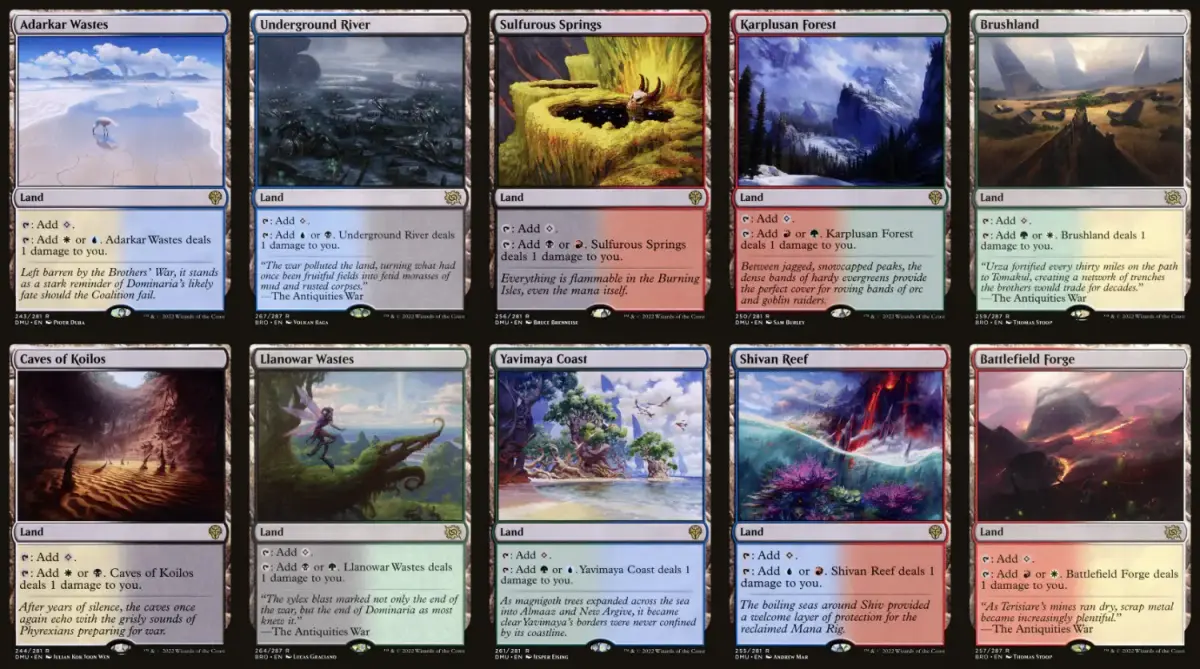
10 pain lands, lands that deal 1 damage to you when tapped for colored mana
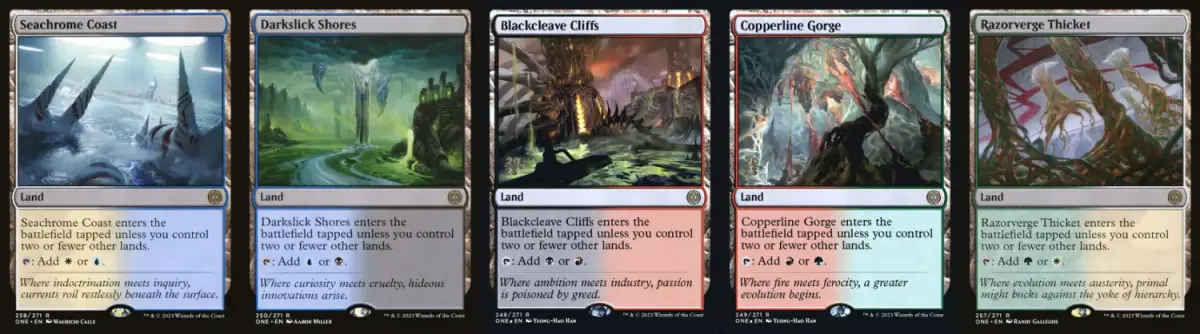
The 5 allied-color fast lands and 10 two-color pain lands will leave us after rotation, which will have a considerable impact on aggro and midrange decks that need to develop steadily early on (control rejoices!?
But EOE reprints the 5 shock lands!
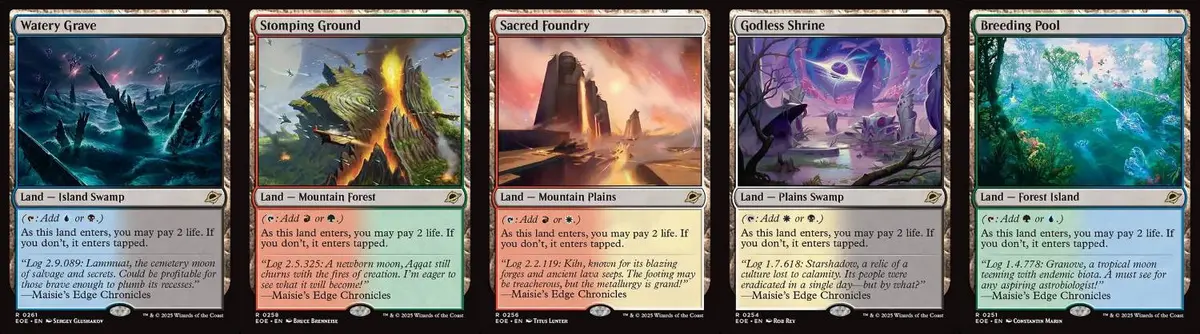
I have to say that the color pairs that got strong fixing lands printed first after rotation will be the front-runners that win the new Standard at the starting line. Like a buff in an online game, these five color pairs are the Tier 1 that gets the smooth mana development buff. The other five color pairs that haven’t been printed yet (perhaps later sets will print them, who knows) will be suppressed to a degree, and unless a groundbreaking card or theme is developed, the disadvantage of lagging behind in fixing will be very noticeable in deck building.
In three-color deck building, although there is no three-color combination in which all three color pairs are supported, it should still be a direction worth trying if at least two of the color pairs are supported by shock lands. For example:
- White-based Mardu (Red White, White Black)
- Blue-based Sultai (Blue Black, Green Blue)
- Black-based Esper (Blue Black, White Black)
- Red-based Naya (Red Green, Red White)
- Green-based Temur (Red Green, Green Blue)
2. Black-Based Midrange May Be Weakened
The quality one- and two-mana removal is gone, especially Cut Down
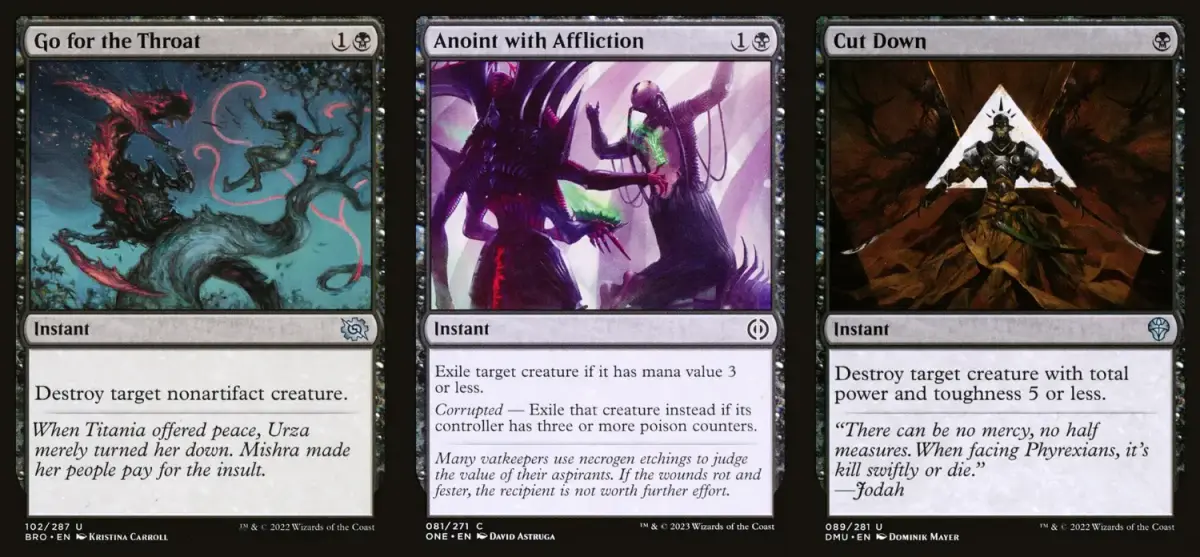
Even with the restriction that it can’t kill artifact creatures, Go for the Throat is still the two-mana removal with the widest reach in Standard, and Anoint with Affliction
 is the most reliable sideboard removal against specific decks, and it wouldn’t even be strange to use them together in the main deck. After rotation, although the environment still has two-mana kill spells with restrictions or side effects such as Shoot the Sheriff
 , Bitter Triumph
 , and Long Goodbye
 , if you don’t want side effects, BLB’s Feed the Cycle
 can also be a backup plan.
However, compared with the gap among two-mana removal, the departure of Cut Down will deal a heavy blow to black-based decks. In both breadth of removal and tempo, the one-mana Cut Down could hold off the toughest first three turns for black-based decks, which the existing one-mana instant removal Stab
 cannot match at all, and this shortcoming shows even more against must-kill creatures like Voice of Victory
 , Fear of Missing Out
 , or Vivi Ornitier
 .
The black four-drop curve changes hands
In addition, the four-mana Sheoldred, the Apocalypse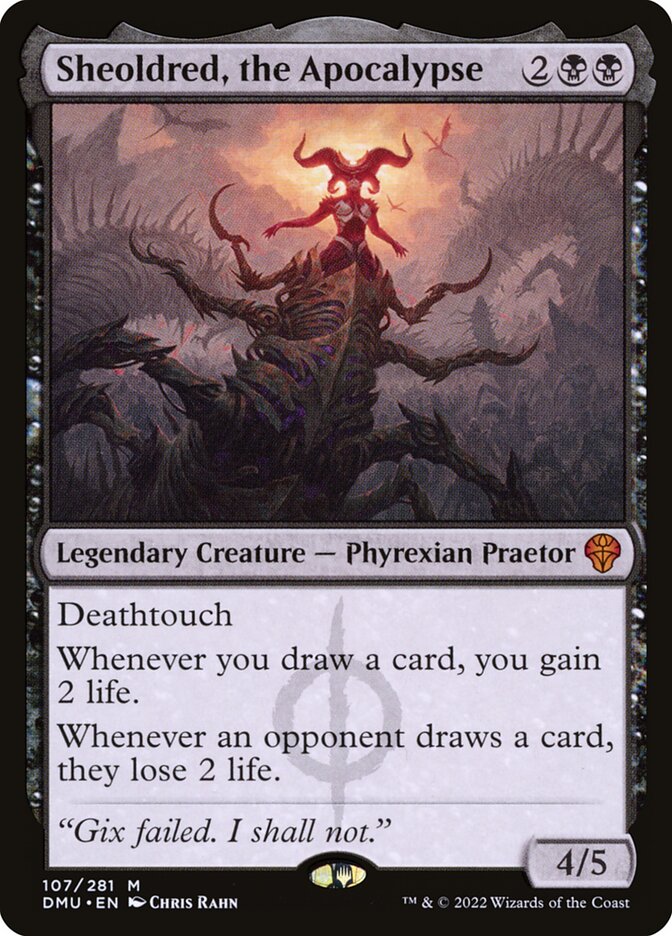 and Archfiend of the Dross
 have basically monopolized the four-drop slot in black decks, and this will also change with rotation. Now is the time for a comeback!
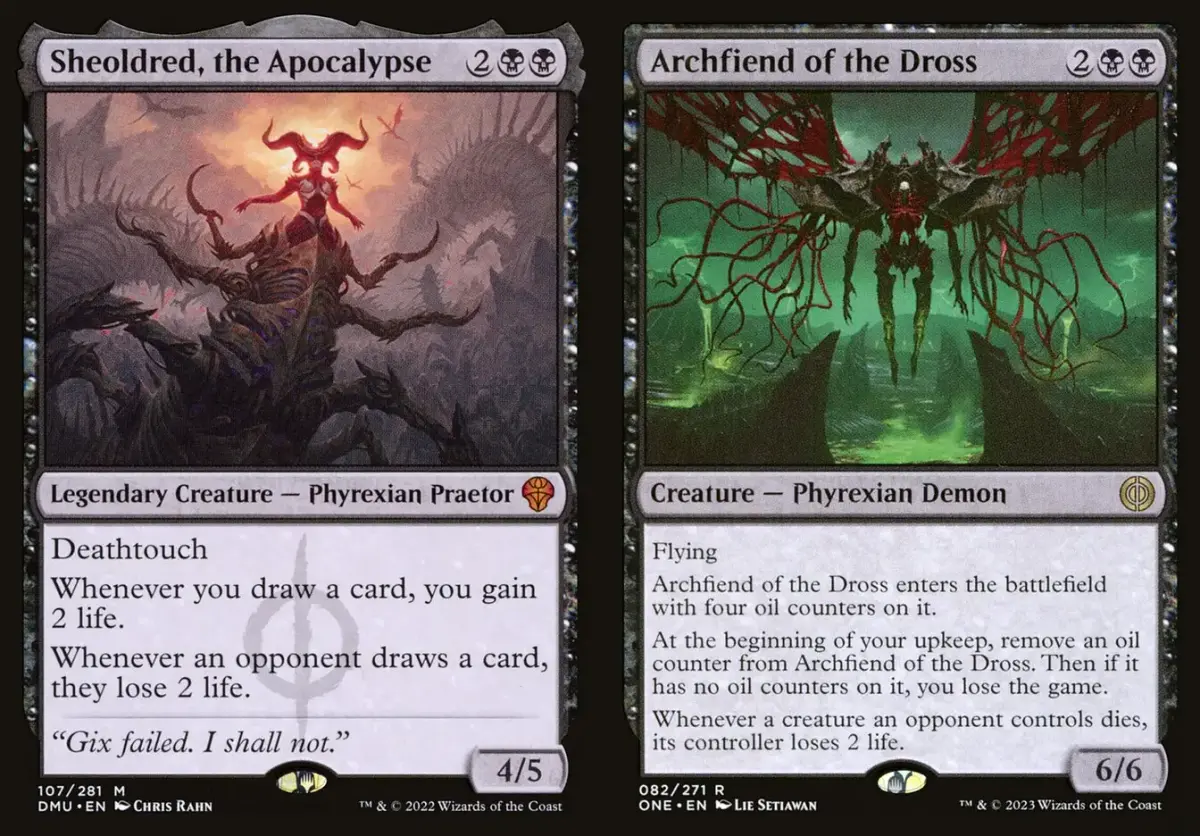
The biggest impact above is still the departure of Cut Down. Whether black-based midrange decks can maintain high competitiveness and quick adaptability in the post-rotation Standard will depend on whether a one-mana removal as strong as Cut Down gets printed in the future.
3. The Omniscience Combo Will Fall Silent for the Time Being
After the bans, the Omniscience combo is also losing quite a few key cards to the coming rotation, and it will likely be quiet for a while, or you could say Long Goodbyeto it. (Unless EOE can bring it a little hope, but the new dig effect, Rescue Skiff , costs six.)
Scrollshift

Often used to blink your own Temporary Lockdown at instant speed, it repeatedly clears the board while also refreshing the ETB abilities of low-cost permanents.
Its interaction with the DSK Overlords also gives this card a special status that can’t be ignored. As long as the deck has a certain number of permanents suited to refreshing ETB abilities, the small add-on system of Scrollshift+ Overlord alone can provide enough winning power.
The deck that takes this line of thinking furthest is the Omniscience Combo. If this deck were purely a combo deck, it would have many fragile points to target. That it got as far as needing a ban (Abuelo's Awakening
 ) owes a great deal to the Plan B mode of Scrollshift+ Overlord.
(Of course, for the Omniscience deck, what is strong is less the interaction with the Overlords than the interaction with the whole deck.)
By the way, regarding the interaction with impending Overlords, besides the aforementioned Zur, Eternal Schemer
, Render Inert
is also rotating out, so using sneaky tricks to quickly turn an impending Overlord on the battlefield into a creature will be much harder.
In fact Scrollshifthas quite a wide range of uses and isn’t purely an Omniscience-specific weapon, but the following two cards rotating out together are important support cards inseparable from the OmniscienceCombo deck.
Repair and Recharge & Ephara’s Dispersal
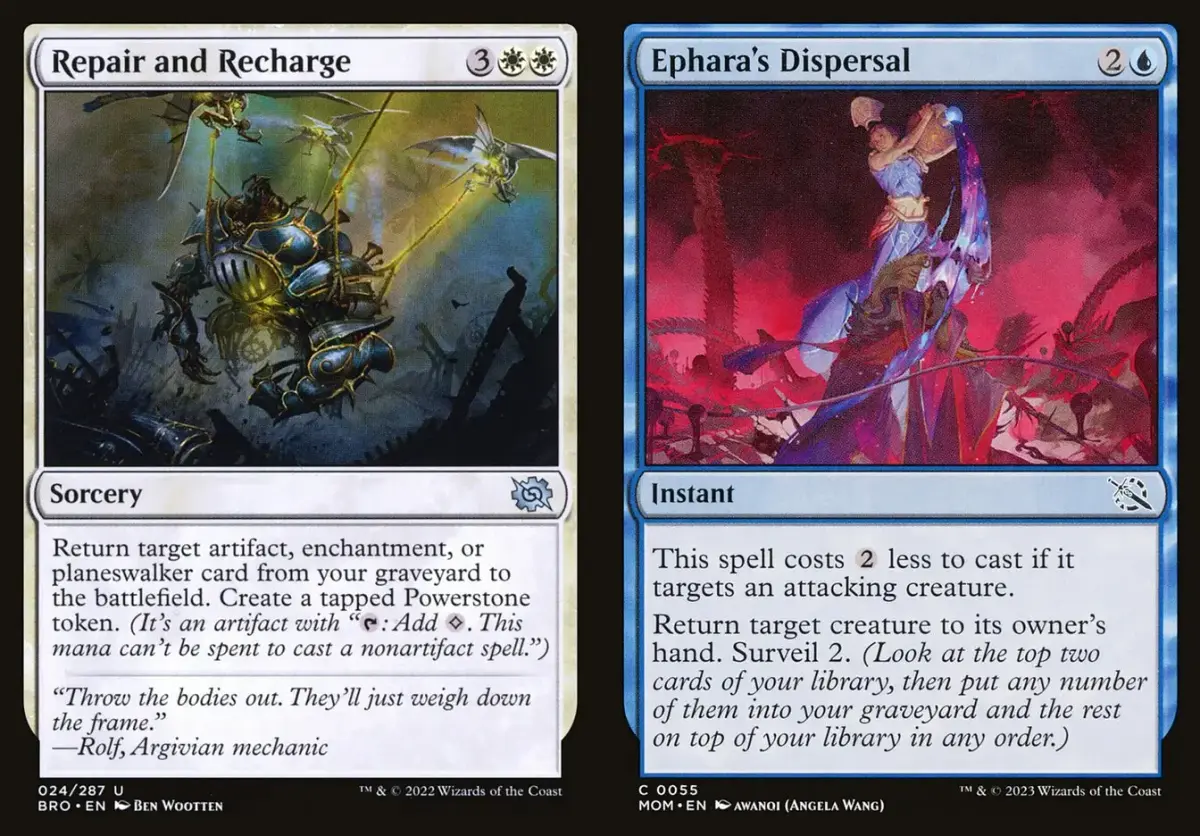
Repair and Recharge was the most efficient replacement after Abuelo's Awakeningwas banned. With it gone too, digging for Omnisciencebecomes harder still. The remaining reanimation spells either cost more or have messier color requirements. Although level 3 of Builder's Talent
 is also 5-mana reanimation, the leveling process requires extra mana, and overall operating efficiency is far below Repair and Recharge.
Ephara's Dispersal is only a soft-removal bounce effect, but for a combo deck, being able to hold off one attack for 1 mana while also getting a surveil 2 to speed up finding combo pieces is mostly far better than a 2-mana hard kill. And with Omniscienceon the battlefield, it can also bounce your own creatures with ETB abilities as a link in the chain.
In addition, Fallaji Archaeologist and Oracle of Tragedy
 are also among the pieces rotating out this time, but these were only at the level of picks in some builds and are not very necessary for the Omniscience deck.
4. Certain Themes Transforming or Even Disappearing
Land Theme
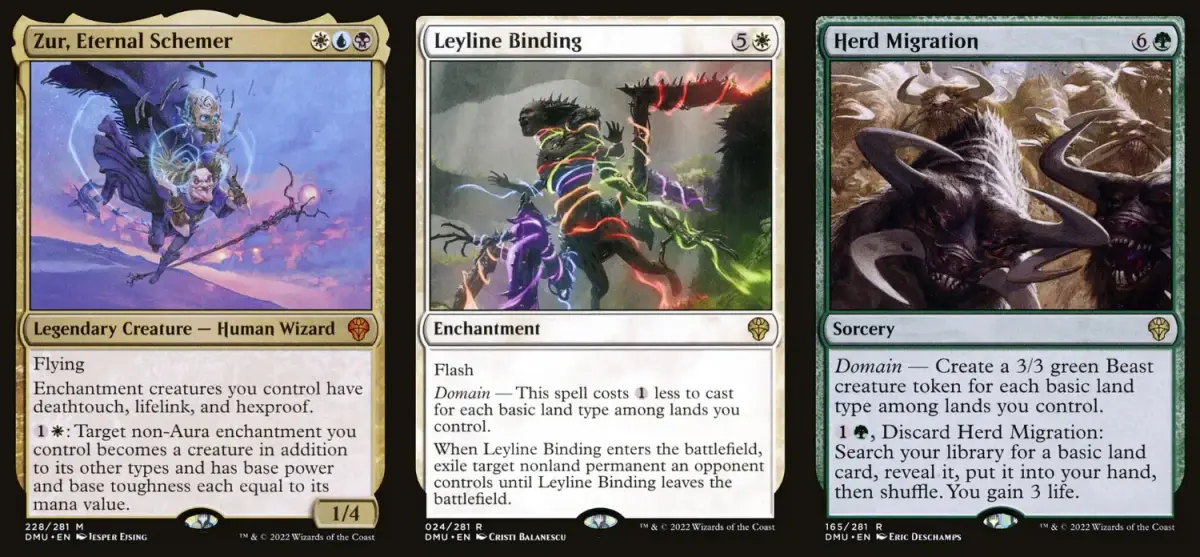
Although Up the Beanstalk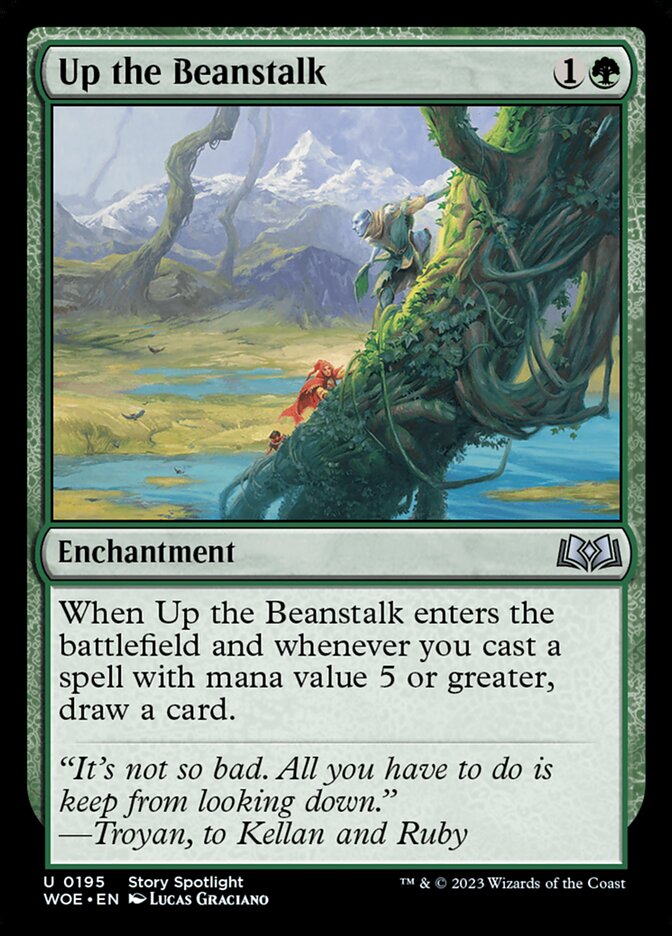 was banned, that only pulled this deck from a state of excess resources to a relatively fair one. But with the departure of the core card Zur, Eternal Schemer, transforming into a DSK Overlords-style ramp deck should be a temporary option, and with FIN adding Yuna, Hope of Spira
 and a whole group of Saga creatures, enchantment-based Ramp decks still have great prospects.
Boros Convoke
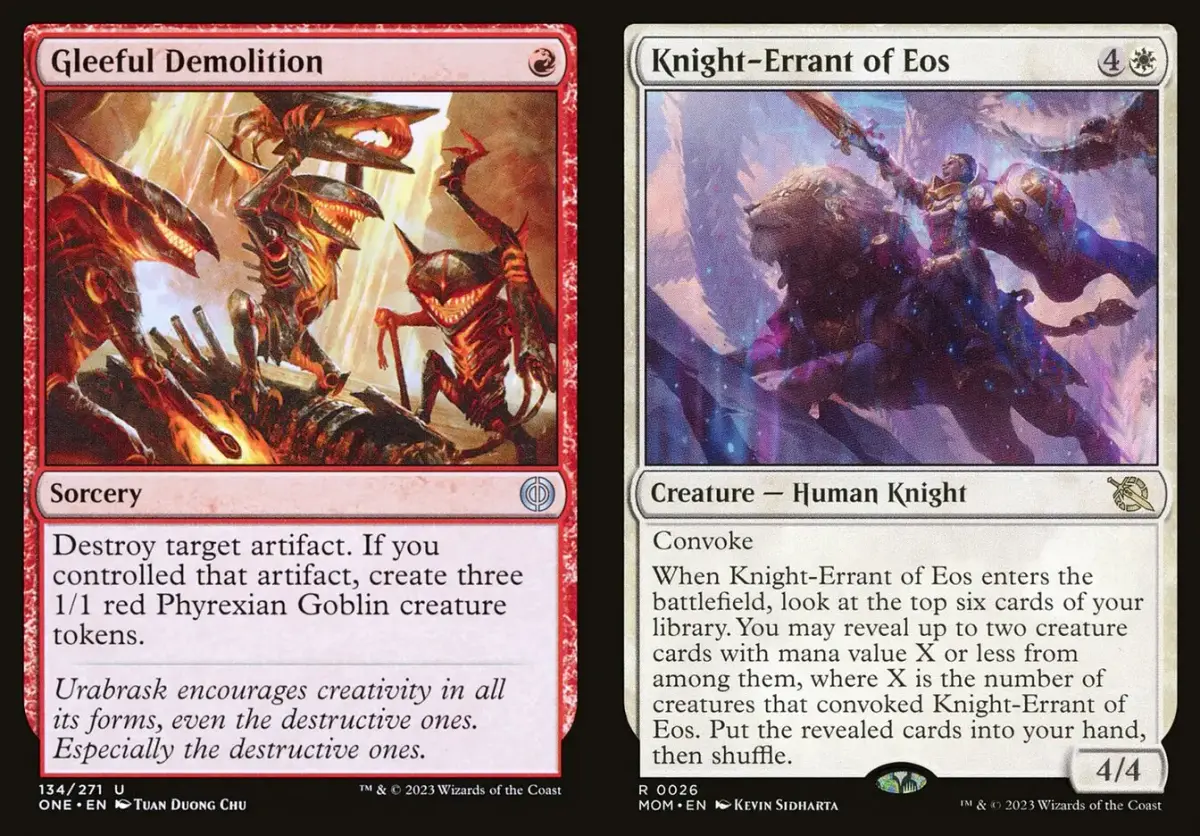
The key cards of Boros Convoke, Gleeful Demolition and Knight-Errant of Eos
 , will both rotate together. With the double blow of losing both burst and staying power, the deck will need to transform after rotation.
Poison and Toxic Counters Theme
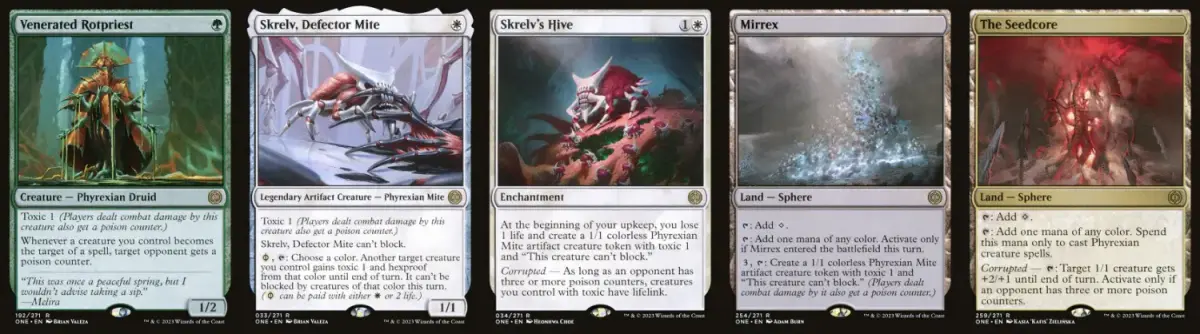
It rose with ONE and will leave with ONE’s rotation. Goodbye to the nightmare of being poisoned from afar by Venerated Rotpriest .
Legendary Theme
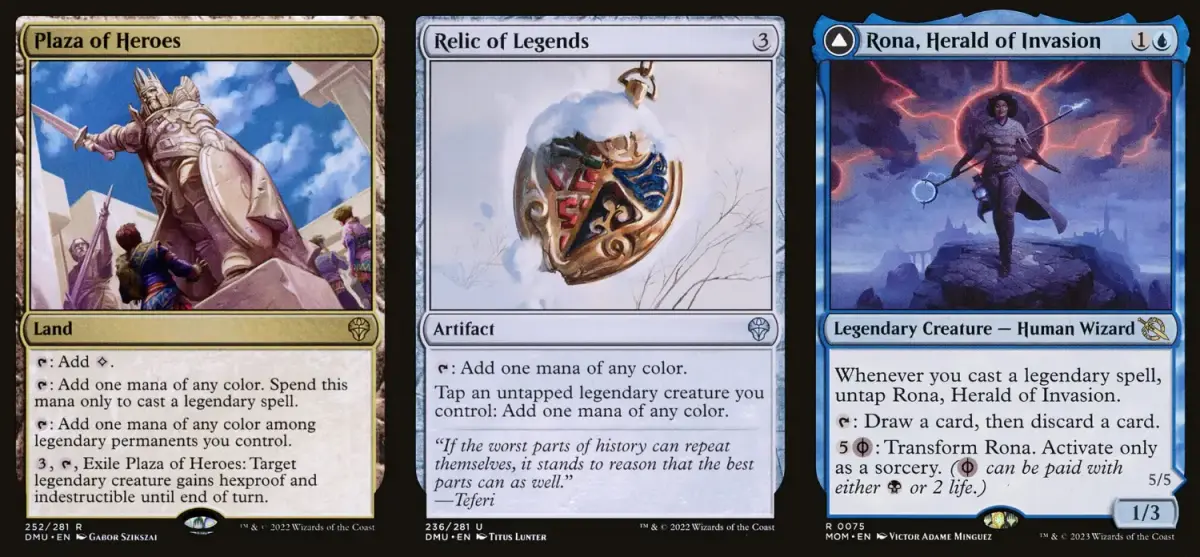
Since the core cards are all in the sets rotating out this time, this theme will basically disappear after rotation.
5. Powerful Color-Hate Sideboard Cards
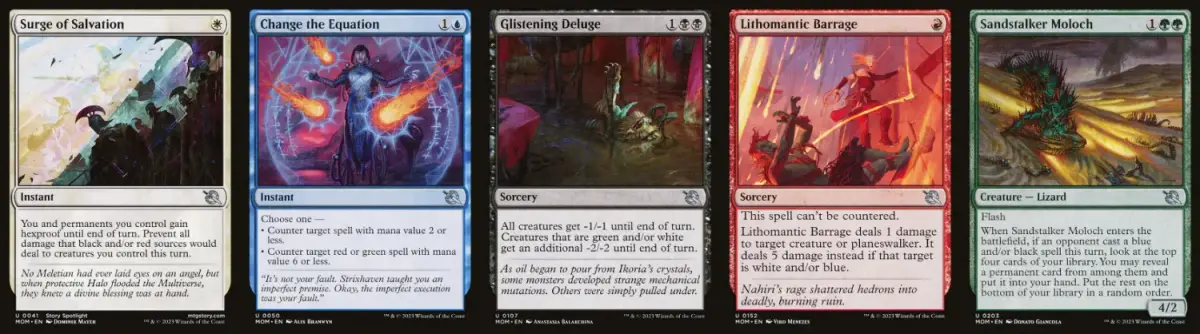
These quality sideboard cards will leave us, but every generation has its own talent, and there will always be new cards entering players’ sideboard arsenals!
6. Other Important Cards
Temporary Lockdown
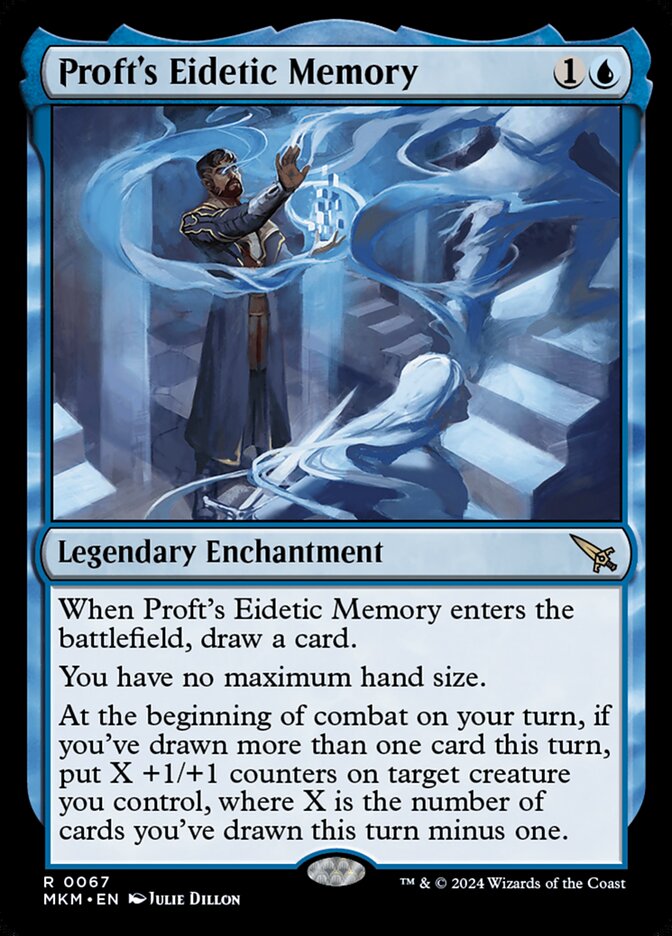
Since its debut, Temporary Lockdownhas been an important answer to aggro in white, and some blink-package decks also use it as one of their working parts. Although it will rotate out this time, EOE also brings a successor with a very similar function, Pinnacle Starcage . Note that Pinnacle Starcagecan only exile creatures and artifacts, so it can’t remove Proft's Eidetic Memory
 or Insidious Roots
 , but likewise it won’t hit your own Authority of the Consuls
 or Rest in Peace
 , so it has both pros and cons.
Against red-based aggro, not clashing with your own Authority of the Consulsis very important, but since it is an artifact, red does have a chance to destroy it.
Jace, the Perfected Mind

A big weapon against control and other slow decks, especially non-blue Token control. Unless you exile it with The Stone Brain , you are almost dead on contact. Although there is still Riverchurn Monument
 for winning by mill alone, it can’t affect the board or earn extra card resources, and is pure milling, not as well-rounded as Jace, the Perfected Mind.
Monastery Swiftspear

Whether this card rotating out will actually affect the environment is honestly hard to say. Monastery Swiftspearhas major historical significance for red-based aggro, but in recent builds it was clearly an optimized-out, phased-out option. Especially before the June 30, 2025 ban update, pure red aggro’s one-drop damage came from Heartfire Hero + Hired Claw
 , while red-blue prowess had already shifted to midrange, needing only Stormchaser's Talent
 for its one-drop damage. Even after Heartfire Herowas banned, Monastery Swiftspear‘s employment rate recovered in a subtle way: red-blue doesn’t necessarily need it, red-green may choose green creatures like Pawpatch Recruit
 , and even in pure red aggro some people switched to Greasewrench Goblin
 .
Overall, Monastery Swiftspearis no longer the absolute core damage source supporting red-based aggro, but because of its important historical significance, the author feels it is still worth a mention.
Urabrask’s Forge

For red aggro and all kinds of red-based decks, it has always been a powerful Plan B win condition. Although losing it won’t drastically change the nature of the deck, it is no longer possible, as before, to rely on Urabrask's Forgeas a powerful win condition that switches to noncreature in post-board games against opponents with lots of creature removal.
The Stone Brain
An important answer card against certain special decks in the environment, especially combo decks. The only current replacement is Ancient Vendetta , but its exile at the fastest is one turn slower than The Stone Brain, and only black decks can use it.
Conclusion: Treat Standard Rotation as a Change of Seasons!
Although it is sad to see old friends leave, the arrival of new friends also brings new ways to play and chemistry between decks. You wouldn’t want Standard to be forever dominated by a single deck, and if that really happens, the June 30, 2025 bans are a recent warning. The unchanging face of Standard is always the limited experience that comes with rotation, and the unforgettable memories we accumulate as players as the seasons change. And don’t forget, Foundations (FDN) will accompany us in the Standard seasons for a full five years! Change or no change, we will keep playing just the same!
Editor’s note: For new players unfamiliar with FDN, you are welcome to read: How Foundations Impacts Standard


- Title
- A Few Notes on Standard Rotation After Edge of Eternities (EOE)
- Author
- cephille, Jru
- Created at
- July 17, 2025
- License
- This work is licensed under CC BY-NC-SA 4.0 .
Related Articles

I Drafted Alone: Solo Drafting with Reality Fracture (FRA)
October 16, 2026
Article Translation — Reid Duke's "Level One": Choosing Your Deck
August 17, 2026

Article Translation: Reid Duke's "Level One": Sequencing
July 24, 2026
Article Translation: Reid Duke's "Level One": Playing in a Grand Prix: Part I
June 13, 2026