Gruesome Realization: Standard Mishra Delirium
Note: This article was translated from Chinese by AI and may contain errors. Read the original Chinese version.
Before We Start
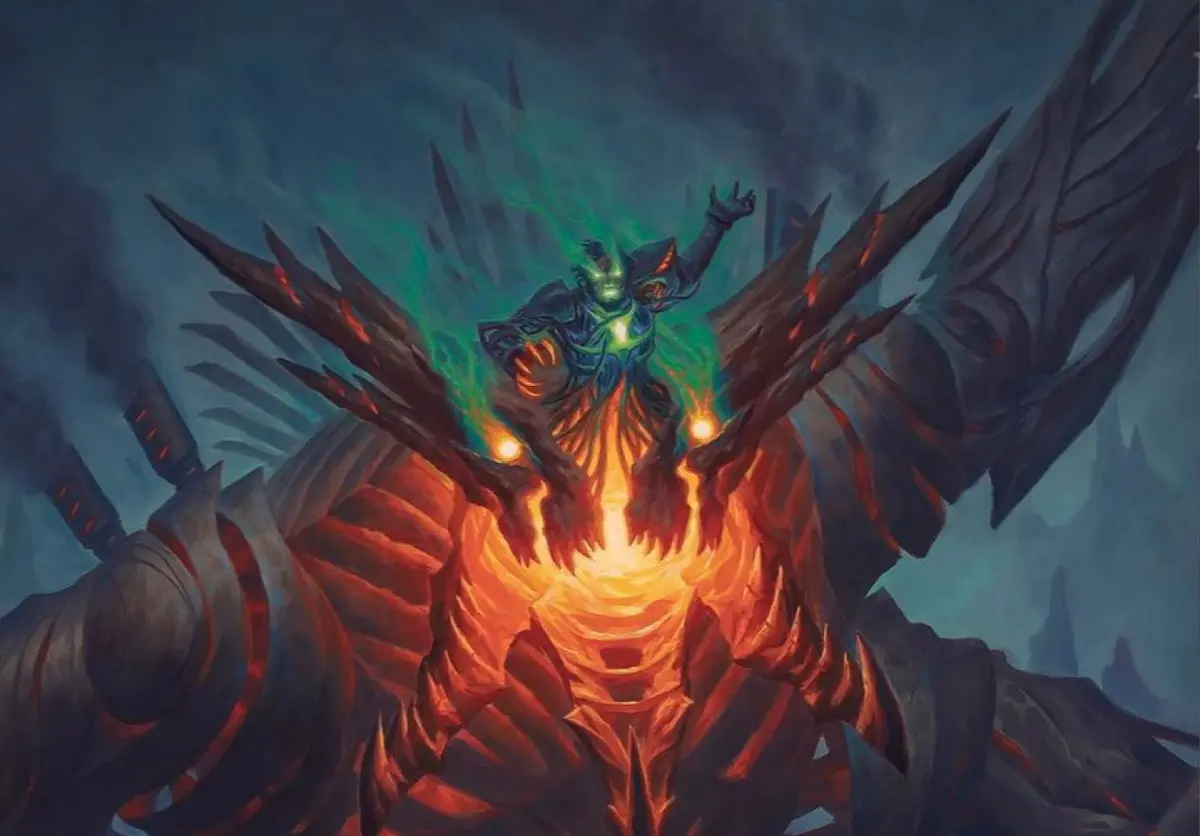
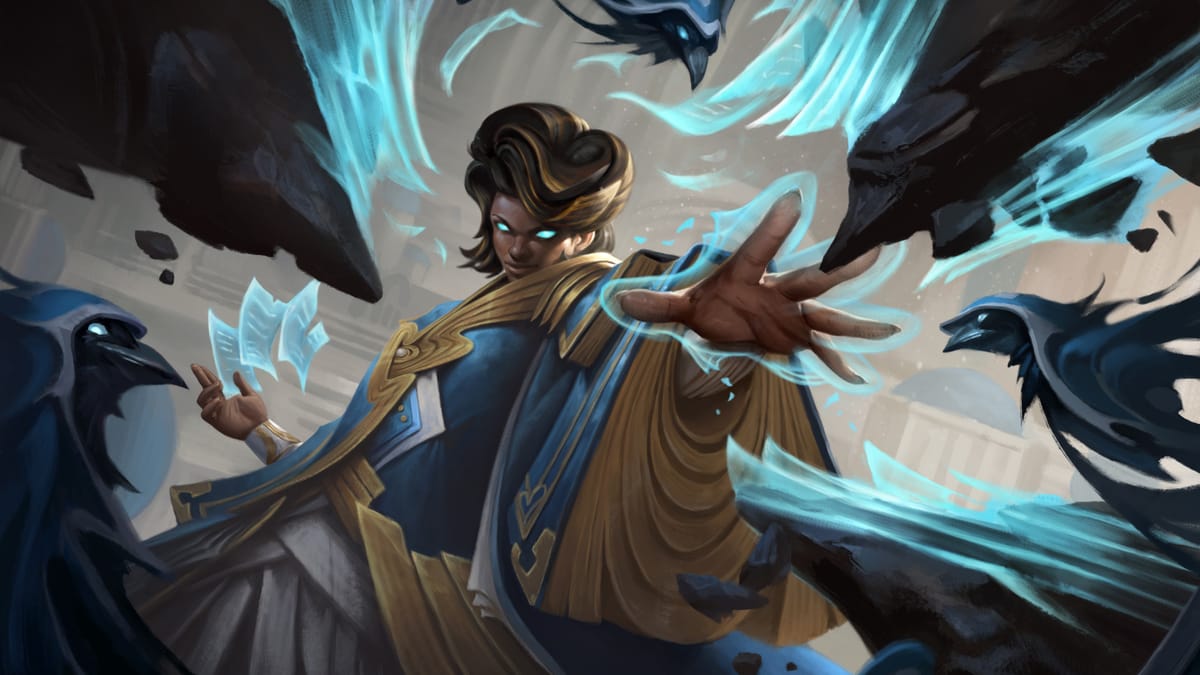
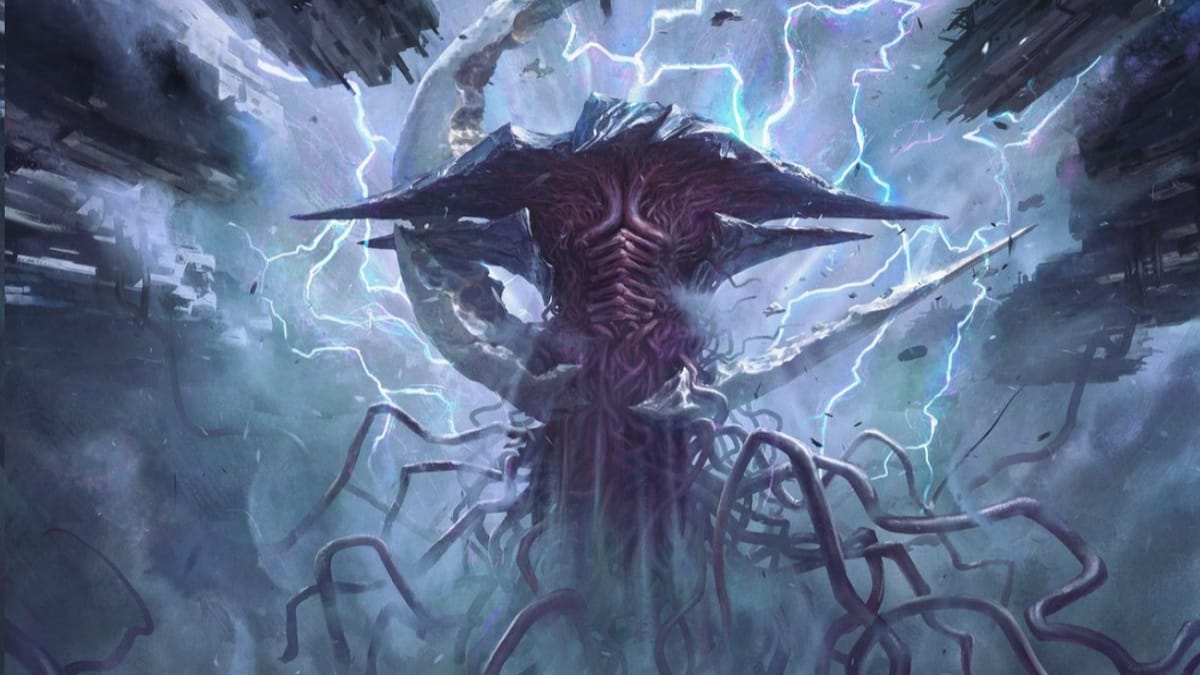
The climax of The Brothers’ War story is the three-way all-out war at Argoth, Sanctum of Nature. The leaders of the three factions, who are also the set’s three melding giants, Urza, Lord Protector, Mishra, Claimed by Gix, and Titania, Voice of Gaea, have already seen two of them find jobs in this site’s Standard deck articles (see Jeskai Meld and Golgari Selfmill). Where will the remaining Mishra end up?
Card Analysis
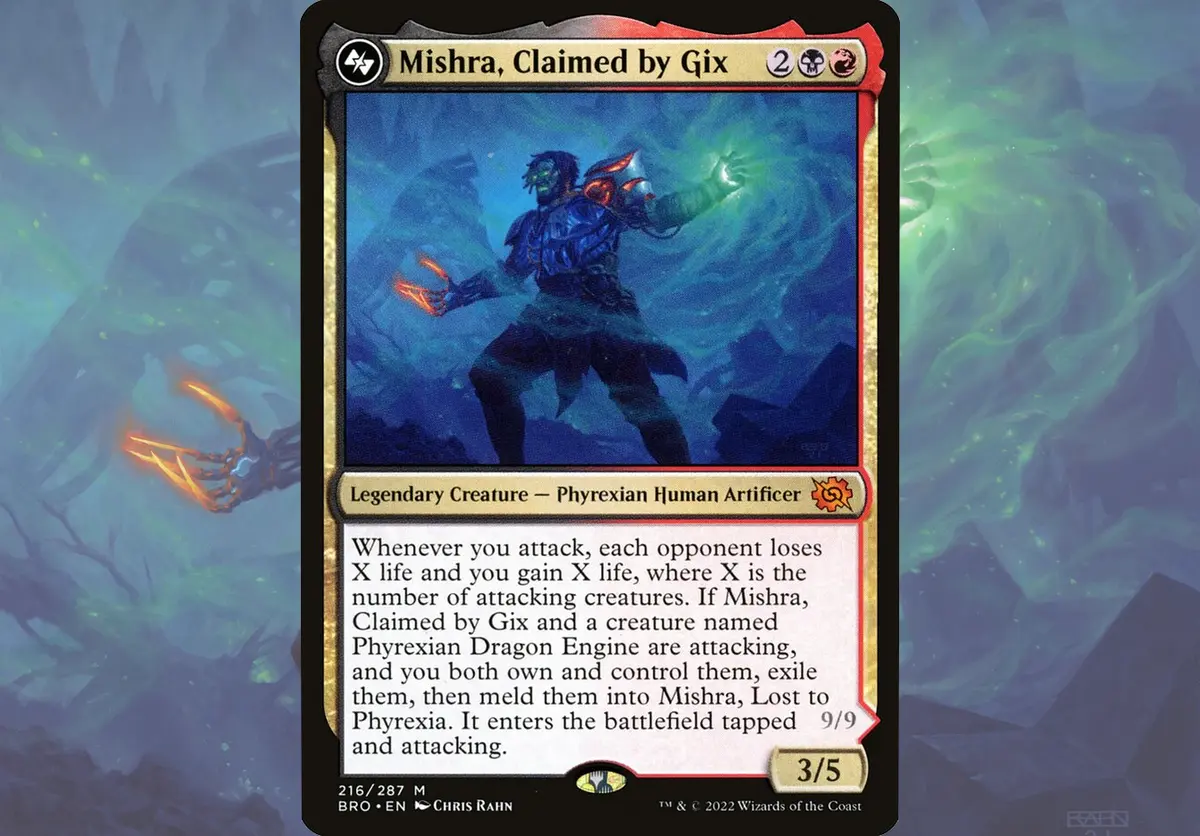
Mishra, Claimed by Gix
Whenever you attack, each opponent loses X life and you gain X life, where X is the number of attacking creatures. If Mishra, Claimed by Gix and a creature named Phyrexian Dragon Engine are attacking, and you both own and control them, exile them, then meld them into Mishra, Lost to Phyrexia. It enters the battlefield tapped and attacking.
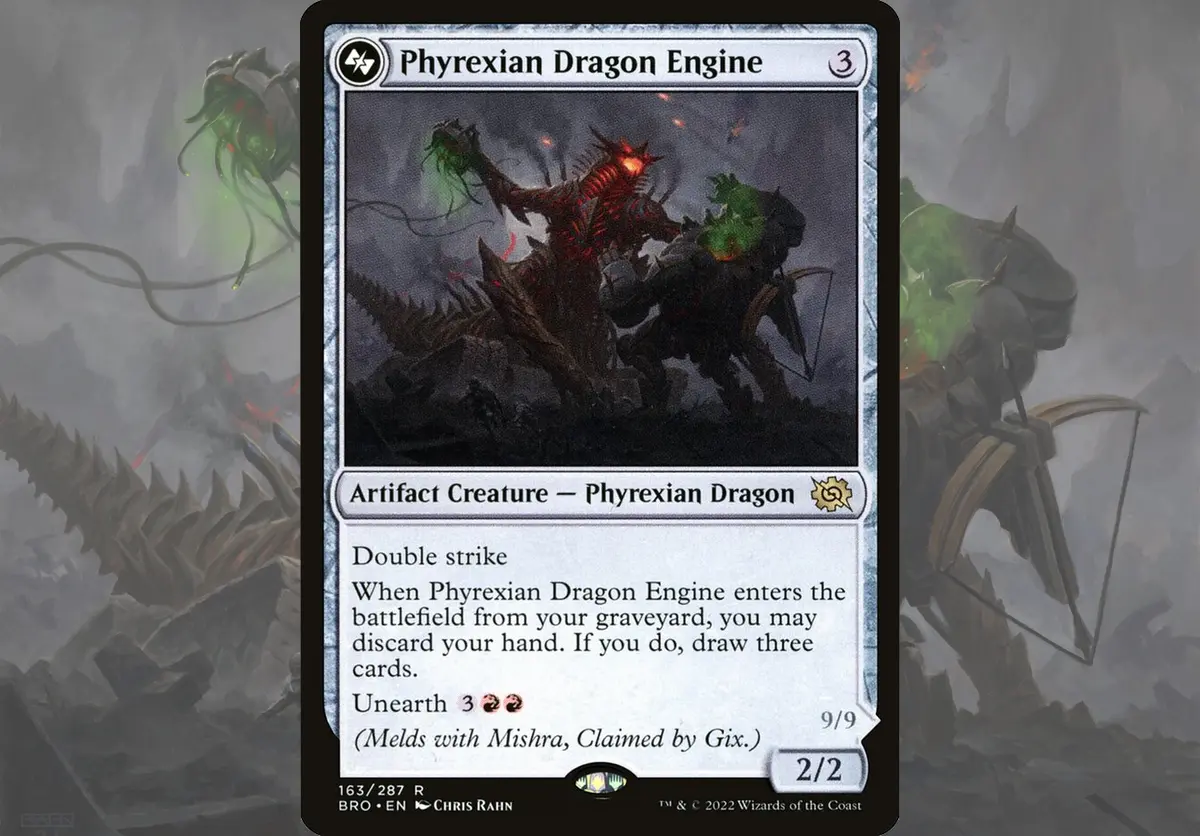
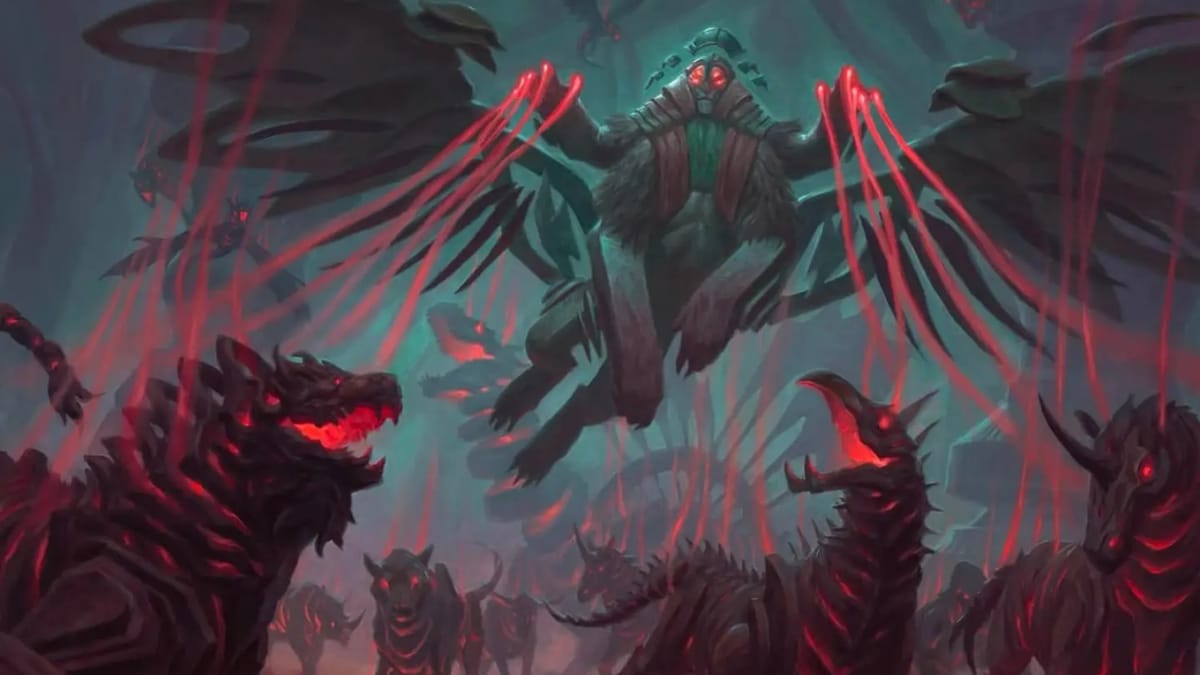
Phyrexian Dragon Engine
Double strike
When Phyrexian Dragon Engine enters the battlefield from your graveyard, you may discard your hand. If you do, draw three cards.
Unearth {3}{R}{R}
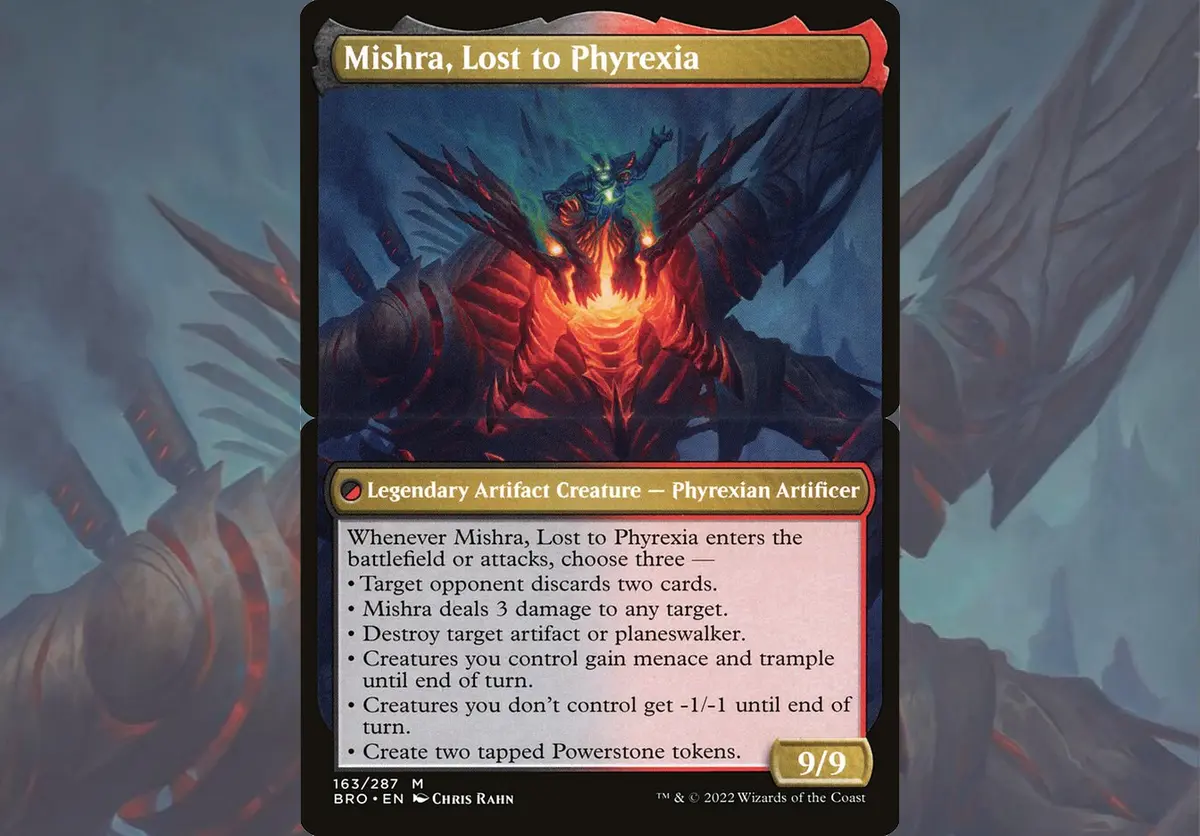
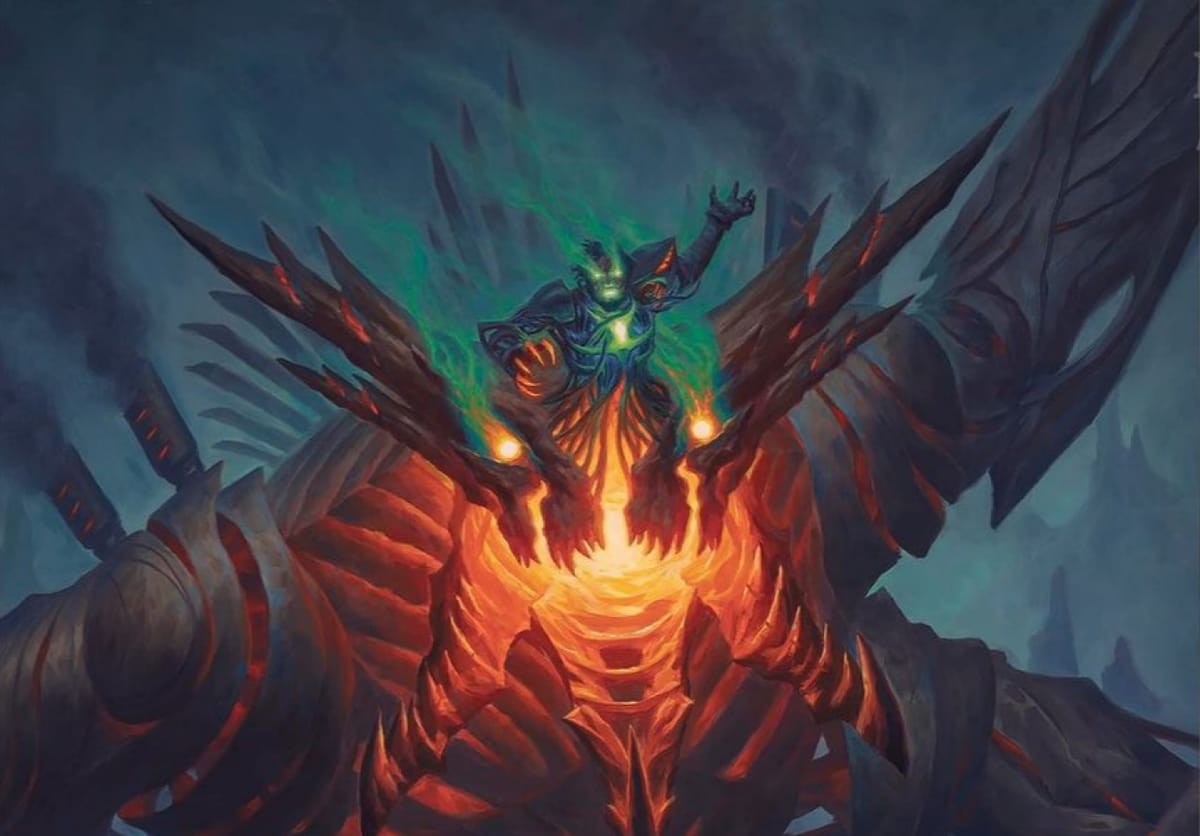
Mishra, Lost to Phyrexia
Whenever Mishra, Lost to Phyrexia enters the battlefield or attacks, choose three:
‧Target opponent discards two cards.
‧Mishra deals 3 damage to any target.
‧Destroy target artifact or planeswalker.
‧Creatures you control gain menace and trample until end of turn.
‧Creatures you don’t control get -1/-1 until end of turn.
‧Create two tapped Powerstone tokens.
If the melded Urza, Planeswalker is overwhelming control over the battlefield, then Mishra, Lost to Phyrexia is absolute destructive power. Unless the gap is far too large, a successful meld almost equals winning the game. Of course, we can’t only look at the power after melding. The strength before melding is the point, since a weak front side directly hurts the deck’s strength. Mishra, Claimed by Gix has some power, but like the other two, it is rather underwhelming, so we should turn our attention to the other half, Phyrexian Dragon Engine. A three-mana 2/2 double striker looks pretty ordinary, doesn’t it? Actually, the body and double strike aren’t important. What matters are the artifact type and the unearth card-draw ability. Having read this far, readers should be able to guess how to use it. That’s right, pair it with the delirium of Duskmourn.
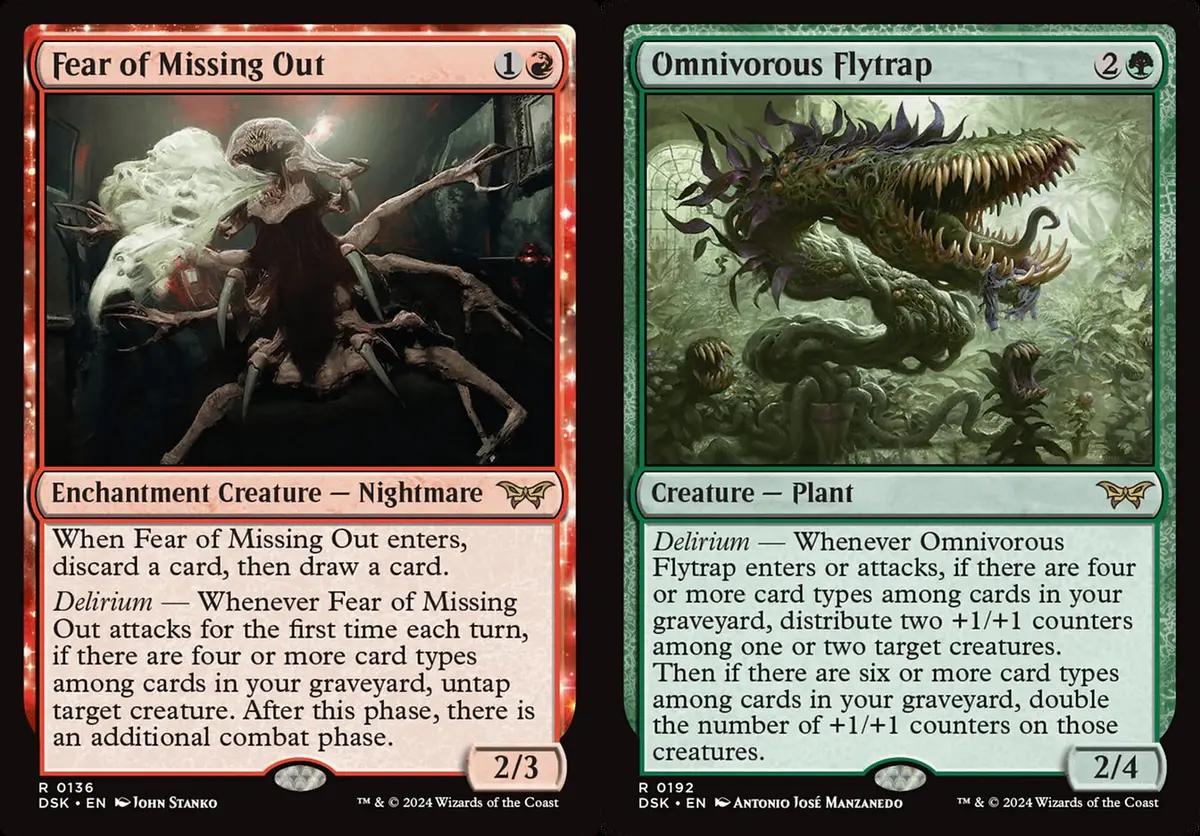
Delirium is the returning mechanic of Duskmourn, with Fear of Missing Out and Omnivorous Flytrap as the main attackers, supported by graveyard filling or looting so the graveyard can keep four or more card types to meet the delirium condition. Once Fear of Missing Out achieves delirium it grants an additional combat phase, letting a creature you control attack one more time. Omnivorous Flytrap quickly pumps stats, and if you reach six types it doubles the counters.
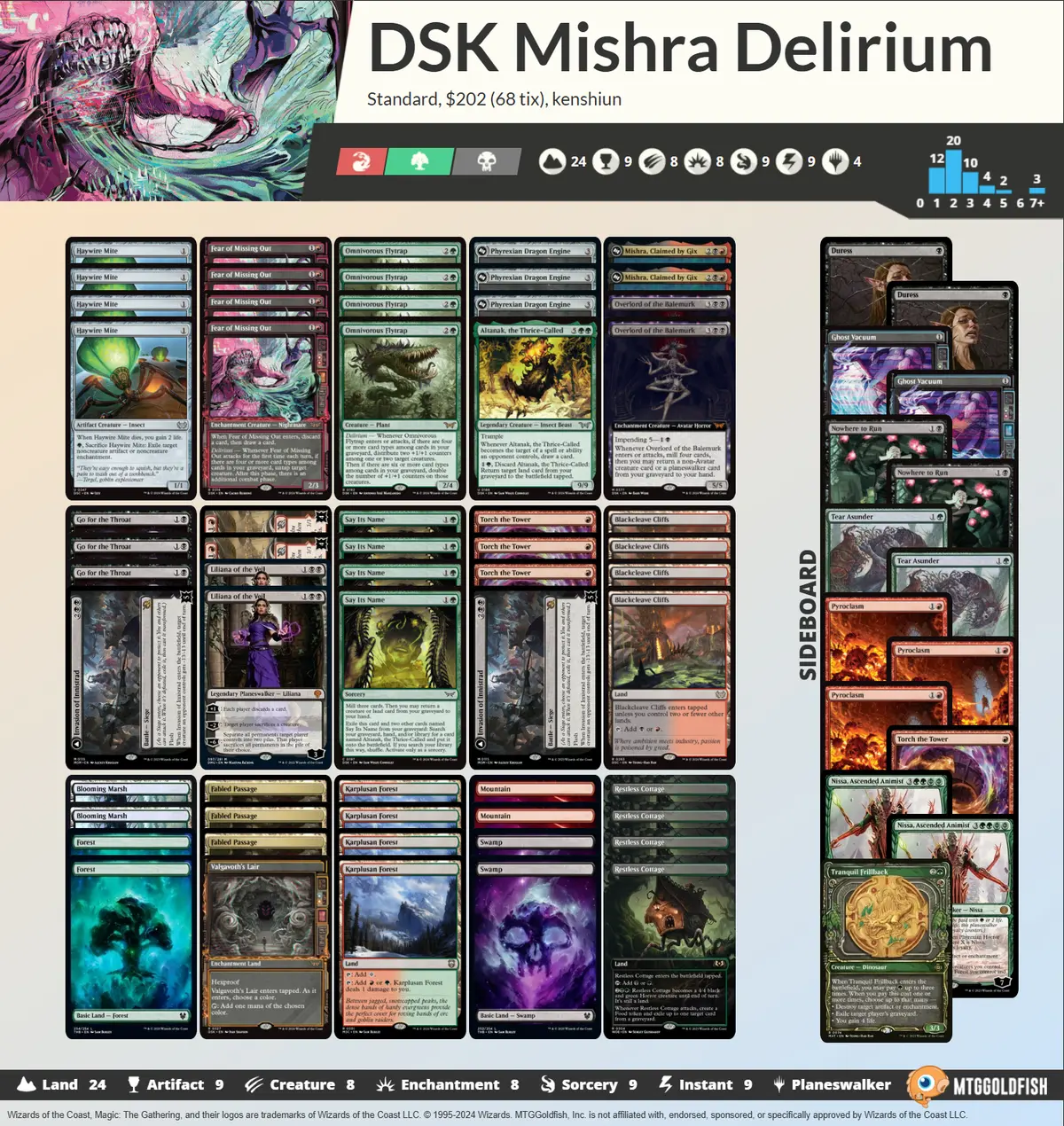
Next, let’s go through the card choices by type:
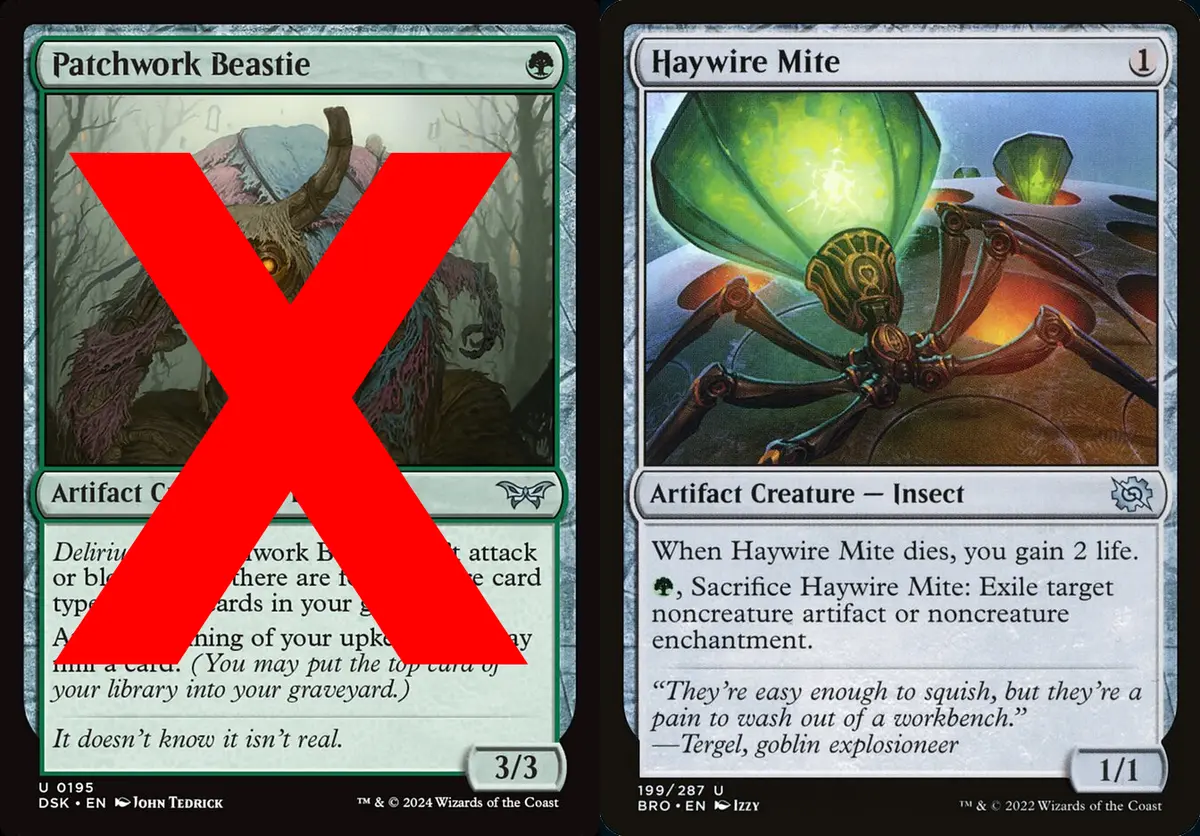
There are seven artifacts. Besides the three thematic Phyrexian Dragon Engine, there is a one-mana self-mill engine, Patchwork Beastie, that fits the delirium theme, but given how rampant artifact and enchantment hate is right now, I went with Haywire Mite instead. Haywire Mite can disrupt the opponent while gaining life, and if there is a target, you can proactively sacrifice it to fill a delirium type.
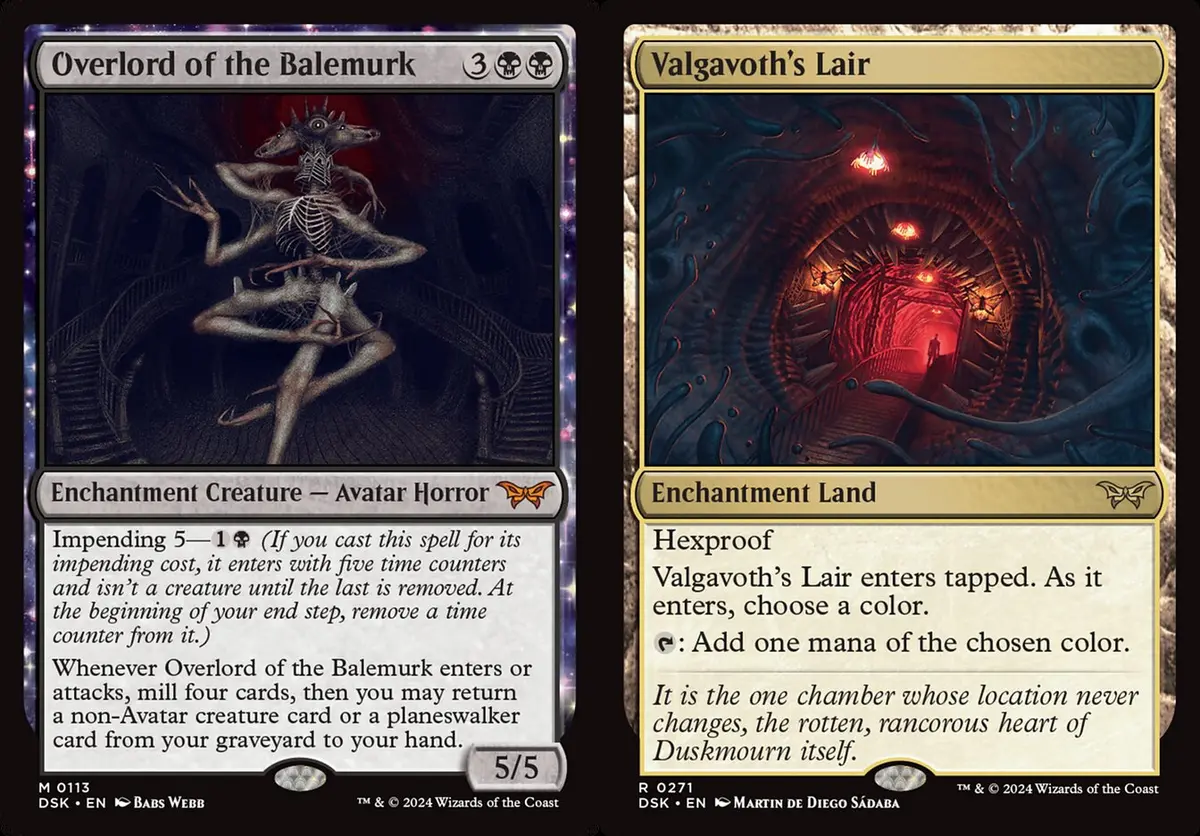
There are also seven enchantments, of which the aforementioned Fear of Missing Out takes up four, plus two of the currently hot Overlord of the Balemurk, which self-mills to enable delirium while recurring creatures and planeswalkers. I also added one Valgavoth’s Lair for color fixing and filling a type.
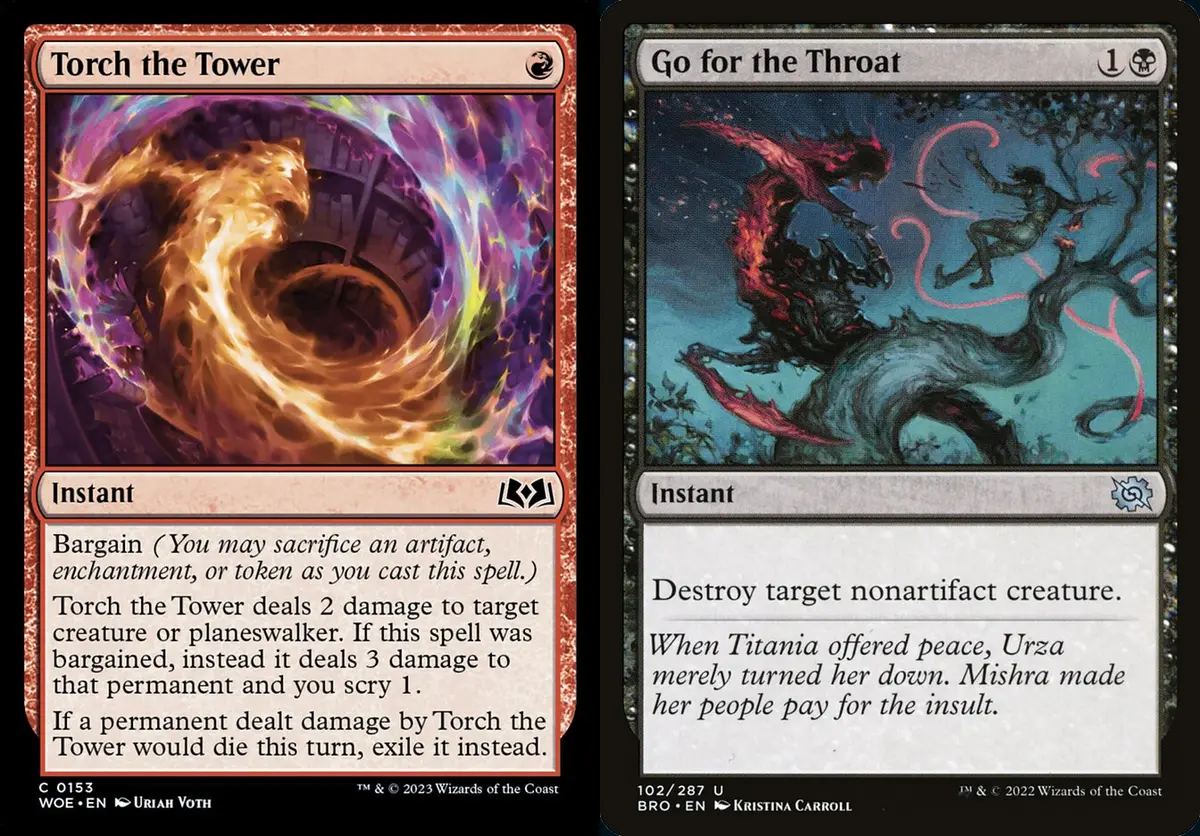
For instants I went with removal, six in total: Torch the Tower to fight aggro and sacrifice outlets, alongside the common creature removal Go for the Throat.
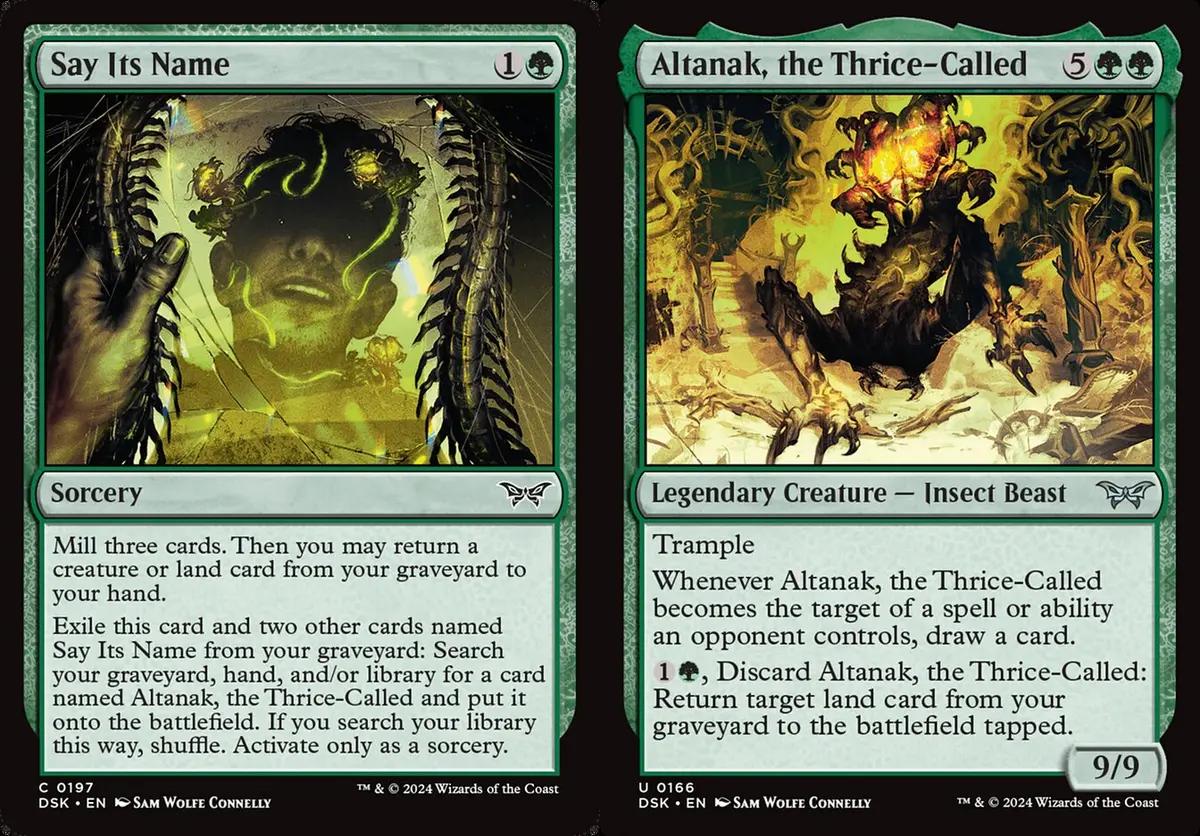
For sorceries I put in a full set of Say Its Name. Compared with casting Overlord of the Balemurk with impending, Say Its Name can recur lands and is better in the early and midgame, and if you collect three copies you can also summon the 9/9 trampler Altanak, the Thrice-Called, so it’s a safe inclusion.
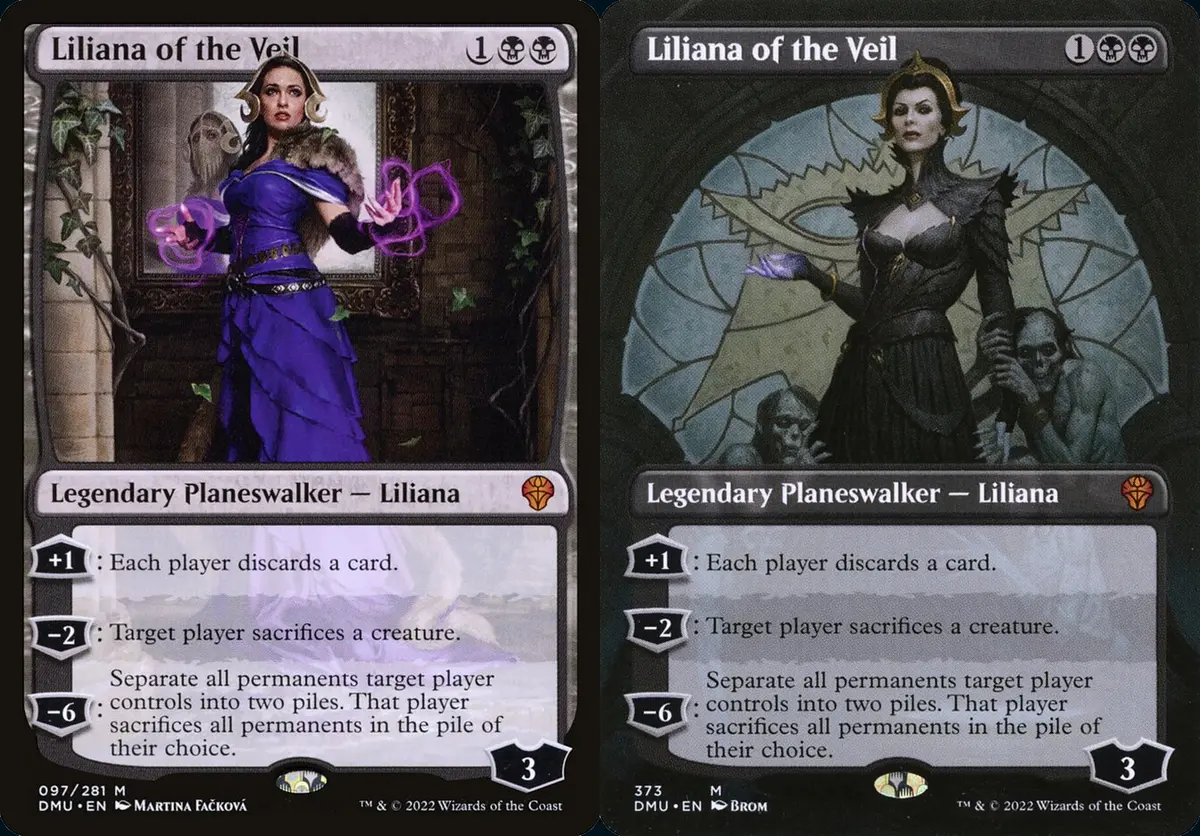
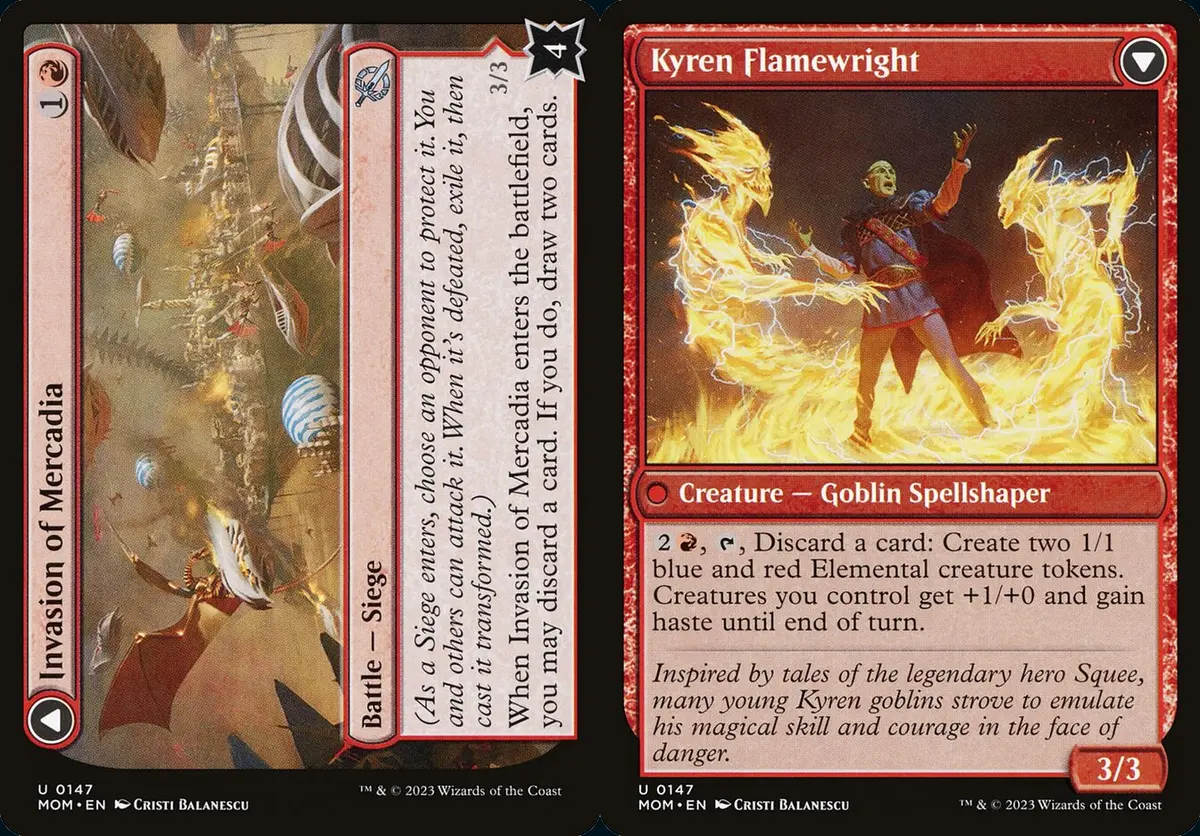
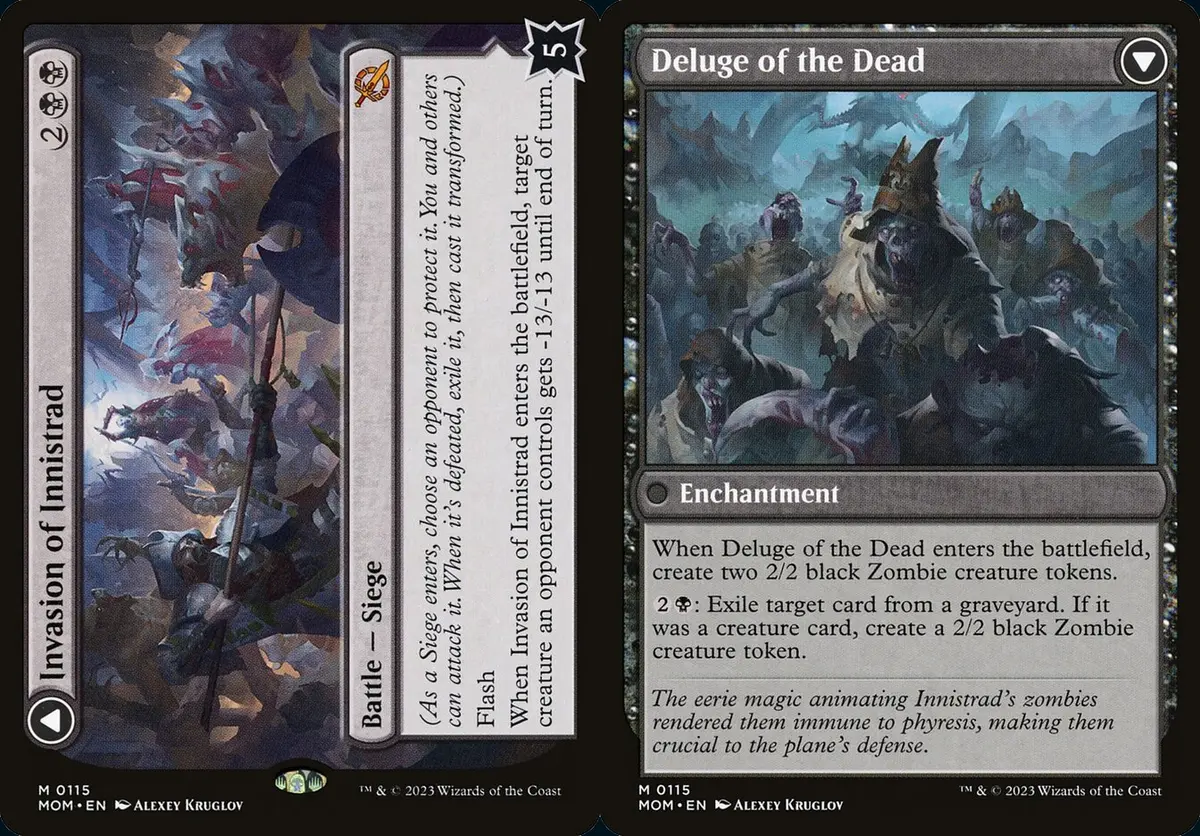
For the remaining six slots I put in two copies of the planeswalker Liliana of the Veil, along with four Battles, Invasion of Mercadia and Invasion of Innistrad. The strength of Liliana of the Veil is well known, so I won’t elaborate. Invasion of Mercadia is early-game looting that helps fill types, while Invasion of Innistrad is powerful removal that cleanly kills indestructible creatures and creatures with death-triggered abilities that check their size. Both Battles have decisive combat power once flipped, and they are themselves the seventh type, so even if they get put into the graveyard they are very helpful.
Gameplay Demonstration
First up is the match against Dimir Reenact the Crime. This deck uses Collector’s Vault to accelerate and fill the graveyard, then uses graveyard-digging spells like Reenact the Crime to slam its finisher onto the battlefield. In this game both sides were building up their own charge. Early on, my Haywire Mite destroyed their Collector’s Vault to slow the opponent’s looting (though they immediately played a second one). Then the opponent used a Treasure to hard-cast Atraxa, Grand Unifier and refill their hand, but I removed it with Liliana of the Veil. At that point my graveyard had six types, so the Omnivorous Flytrap I played next doubled its counters, hitting the opponent hard and breaking through Invasion of Mercadia along the way, and on the next turn I unearthed Phyrexian Dragon Engine to meld. Although the opponent staged a wild comeback with two Reenact the Crime, instantly building a defensive line of three flagship creatures, the whole team gained menace and trample from Mishra, Lost to Phyrexia and was still knocked out in one swing.
Game two was against mono-black discard. Although the opponent used Go for the Throat on turn four to stop me and avoid facing a Mishra meld on turn five, I had plenty of graveyard types, and just by having Omnivorous Flytrap enter, I made a 6/6 double-striking Dragon Engine, forcing the opponent to wipe the board with Rankle’s Prank. Then Dragon Engine unearthed to quickly refill my discarded hand, and with the extra combat phases from Fear of Missing Out, the Bloodletter of Aclazotz the opponent played couldn’t stop the assault at all. After the second Omnivorous Flytrap entered to make a 6/7 Fear of Missing Out, the opponent’s Bloodletter was forced to chump, and at 3 life they conceded.
Game three was against mono-white tokens. Under the interference of a Haywire Mite that kept crawling back, the opponent was soon dismantled to the point of not being able to function. Although I made one misplay, forgetting to sacrifice the Dragon Engine to bargain, so it was exiled for nothing, it didn’t affect the outcome. In the end, the opponent threw in the towel on the very turn Mishra, Claimed by Gix came down.
Conclusion
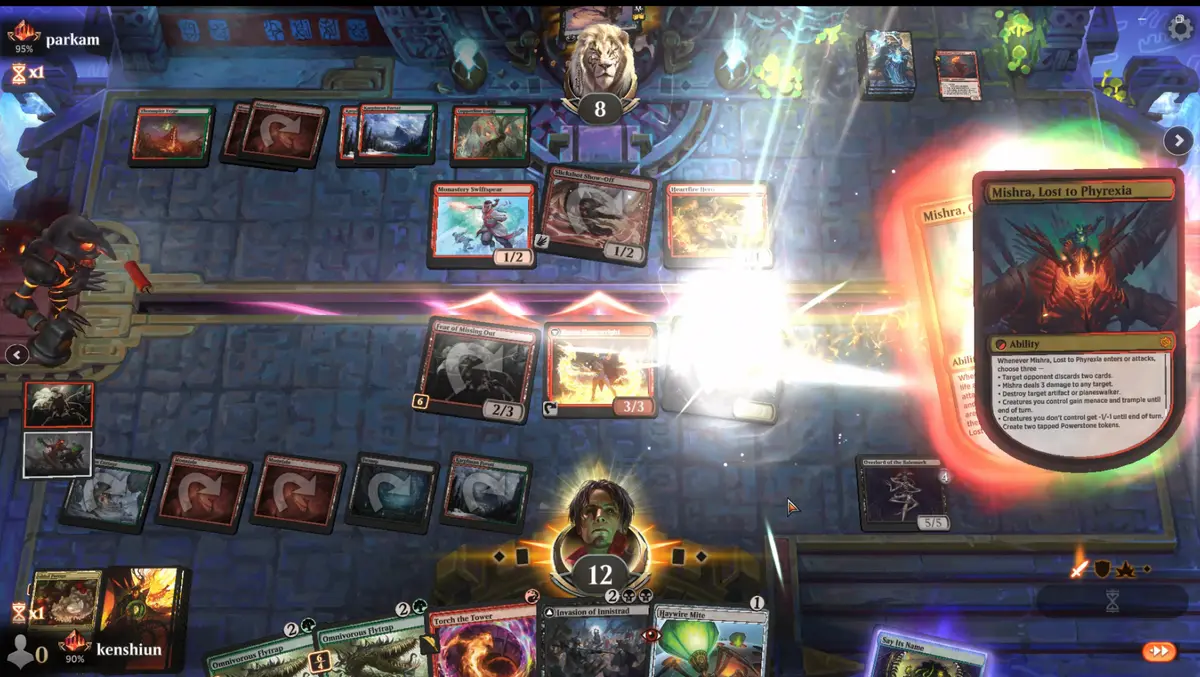
The unearth card draw of Phyrexian Dragon Engine interacts well with the delirium mechanic. It lies in the graveyard to fill types in normal times, unearths to draw three when your hand runs dry, and if Mishra, Claimed by Gix is on the battlefield, there is a chance to meld for one earth-shattering punch. Beyond that, the delirium of Duskmourn came out just right: strong enough, with core components that are cheap, built on low-rarity cards, and with plenty of room to adjust to your own preferences. It is a great fit for beginners who want to try a midrange deck.
- Title
- Gruesome Realization: Standard Mishra Delirium
- Author
- JerobaMTG
- Created at
- November 1, 2024
- License
- This work is licensed under CC BY-NC-SA 4.0 .