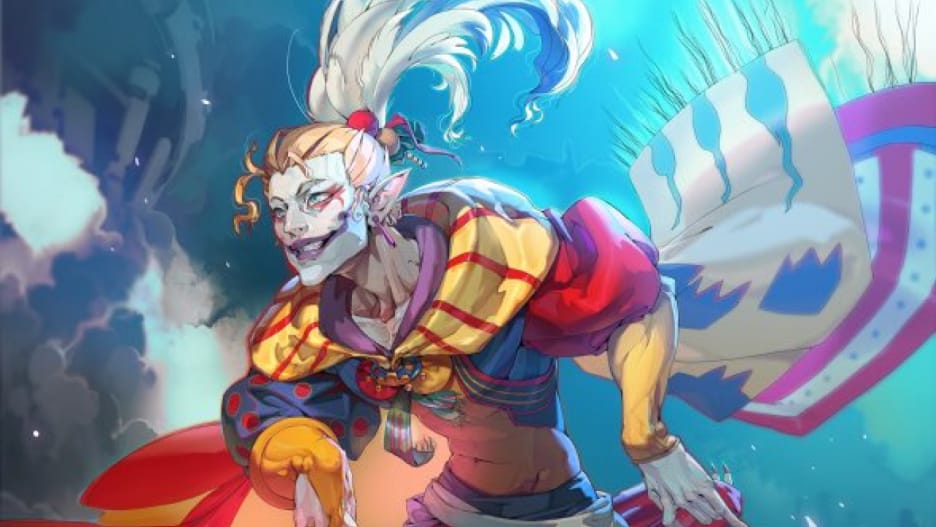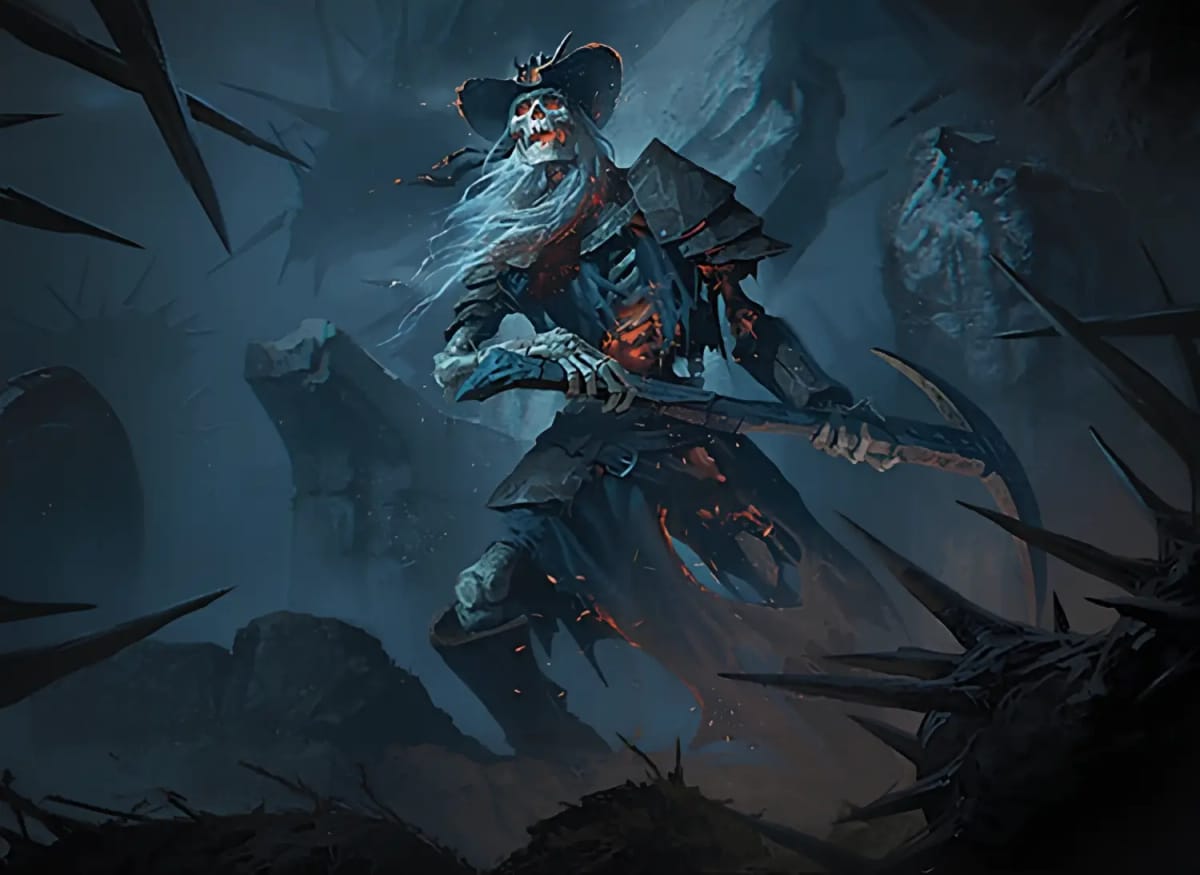
Big Bro Seph Takes Rakdos Skeletons to Heaven

Note: This article was translated from Chinese by AI and may contain errors. Read the original Chinese version.
Preface
Hello everyone, I’m faintmama, a bored uncle who lately likes writing diary-style posts on my little fan page, Faintmama’s TCG Lab. Honestly, I never imagined I would write a Standard deckbuilding article for Guildmages’ Forum, and in the past I didn’t even think I should touch Standard, which rotates so quickly.
But in the end I played it anyway XD. For my birthday I received a box of Duskmourn: House of Horror, and instantly became a rich man in powerful commons and uncommons. Then my friend cephille shared a YouTube video about mono-black Skeletons, and I was immediately drawn to this tribe, so bad by design that it is almost funny. I thought, hey, they’re cheap, so why not build it for fun.
Of course, things were not as simple as I first thought, since I am an old newbie who can’t be content with copying lists and loves tinkering. After noticing that Jund Uncle’s Daily Life had played four Blazemire Verge in a Golgari midrange deck, a clever idea, I admired it, copied it, and gradually set off down the road of no return of building my own Rakdos Skeletons.
Why Splash Red?
Mono-black Skeletons is basically a fun deck of “turn one, two, three, just tap tap tap, then rush in and beat them up, so easy”. But although I am charmed by this goofy tribe, at heart I am not a player who likes to play straight-line aggro. On top of that, I felt that Skeletons’ efficiency at racing is clearly worse than red-based Mouse decks, their evasion and ability to protect individual creatures are poor, and they even have the flaw of being unable to block, which leaves the mid-to-late game short of flexibility in offense and defense. So I began to suspect that mono-black Skeletons has no future at the competitive level, but I still wanted to bring a deck I love to competitive events torturing myself.
As for why red? I have to admit that at first it was a petty, penny-pinching mindset at work: I’m already playing Blazemire Verge, so why not actually play a few quality red cards?
At the end of 2024, I was having a great time with the combination of Urabrask’s Forge and Fountainport, but no matter the size of the event, whether forty-something players or a dozen or so, Rakdos Skeletons hovered around 8th to 12th place, lacking the key energy to break through the northern Taiwan crowd. Of course, that also had something to do with my own imperfect skill.
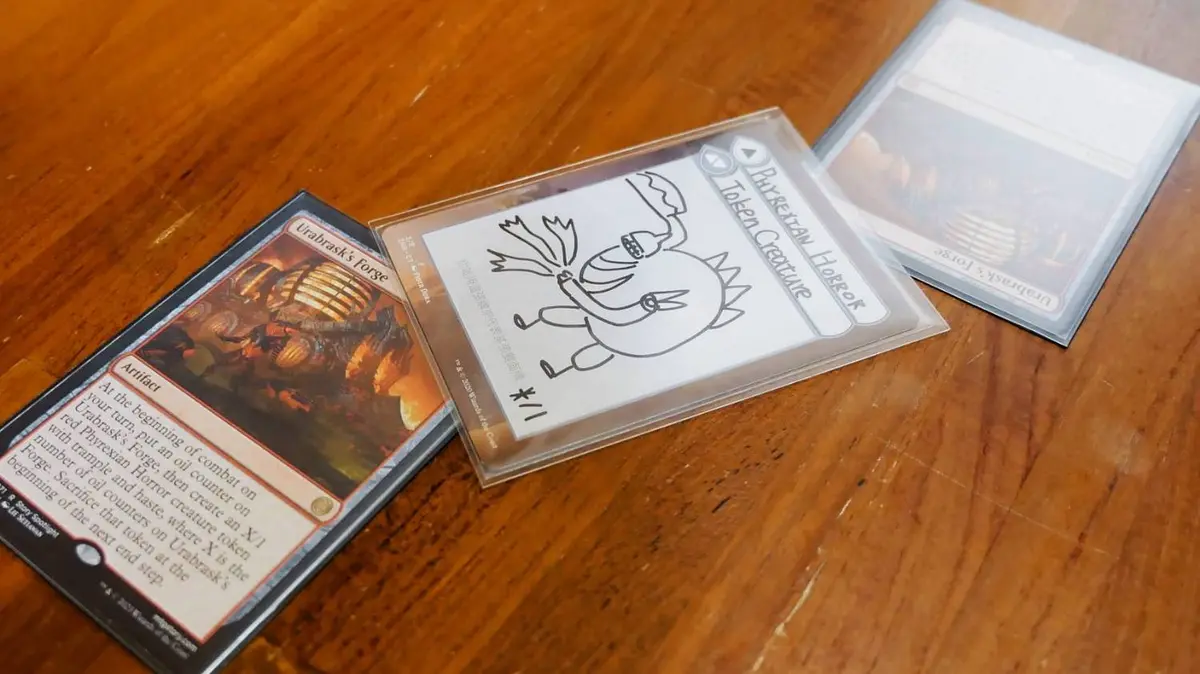
I have told this story too many times. If you’re interested, please see A Middle-Aged Guy’s Year-End Diary After Stumbling into Competitive Play
but don’t leave yet, finishing this article is more important.
From knowing nothing about Standard to today, what I would say now is: the biggest reason to splash red is to play four Torch the Tower, because black cannot deal with the format’s great enemy Enduring Curiosity in time. As for Urabrask’s Forge, although it is a super favorite card of mine, the current version has no room for it: the Forge has to be played on time as much as possible, getting traded up against an opponent’s main-deck Spell Pierce is brutal, and it is not a good late-game topdeck.
That wraps up my small takeaways on splashing red. As for brewing your own deck, the entry price is usually not too high at first, since you won’t necessarily use mainstream key cards, but it costs the player more time and energy to test repeatedly and bravely swap out core cards before getting a chance to fight the mainstream. The sense of achievement when an experiment succeeds is huge, and the understanding and gains along the way are definitely plentiful. I recommend it to players who like experimenting and can view wins and losses in a healthy way.
So… What Does Rakdos Skeletons Actually Look Like?
Since Edge of Eternities is about to release and Standard is about to go through a major rotation, I won’t spend time on the details of how Rakdos Skeletons evolved. Here I’ll just briefly discuss how the concept changed: at first I played mono-black rush Skeletons, then turned it into red-touched Forge-and-Fountainport Skeletons, at one point stubbornly switched to mono-black discard Skeletons and failed badly (the creatures are too poor in quality to support a discard approach), and finally returned to Rakdos sacrifice, a.k.a. “Sephiroth is my big bro” Skeletons. Only at the end of the FIN season did I truly find a version that could fight the mainstream.
Here is the deck list link to share with everyone. I was still tinkering right up to the last day, fun and painful at once XD.
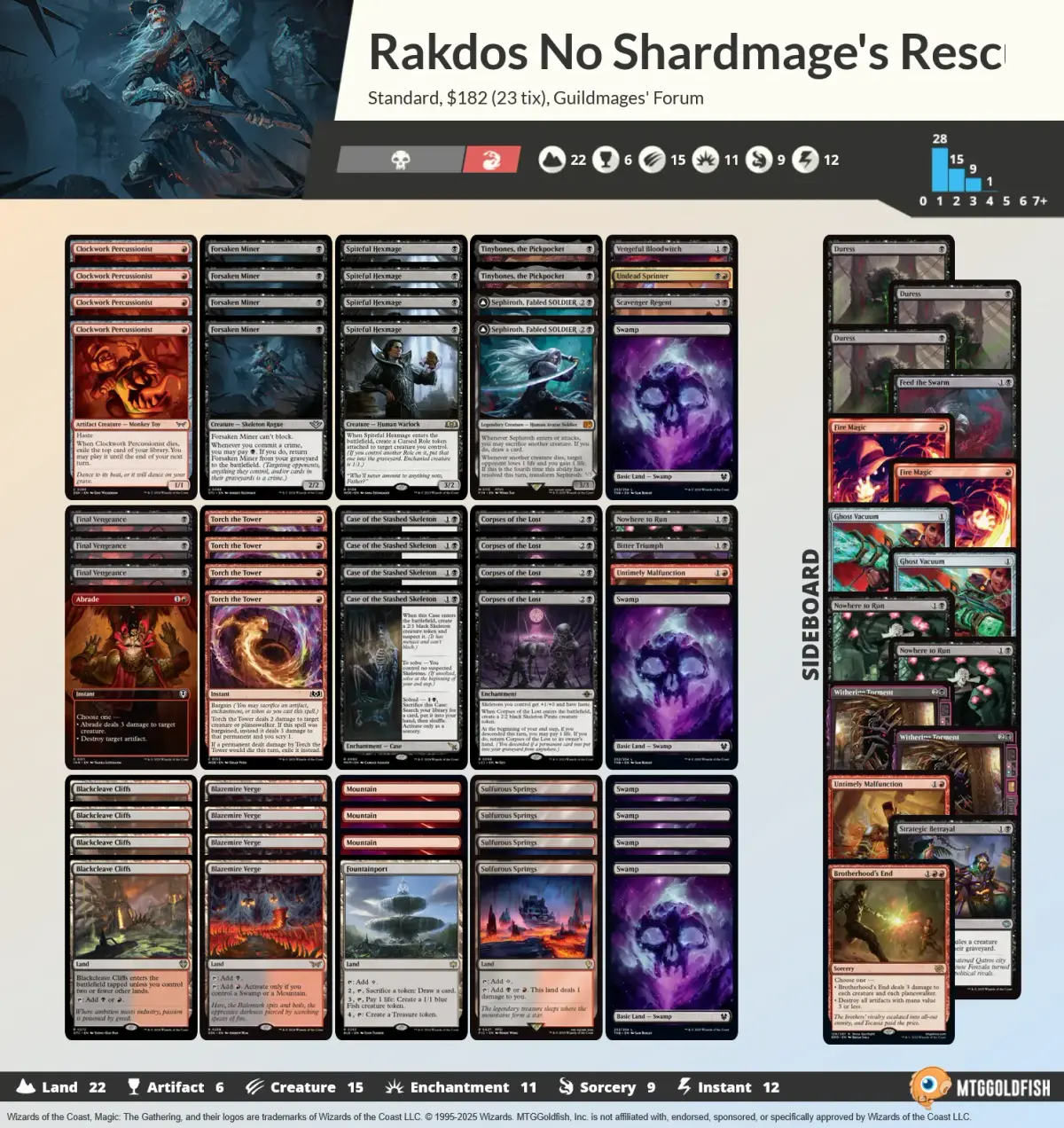
I still played one Fountainport, because it’s my love, after all.
So… Who Is Big Bro Seph?
Big Bro Seph (a nickname that sounds like “Brother Fei”) is what the site’s friend GY_Player calls Sephiroth in our Discord group. Honestly, since I am of the early-middle-aged generation that lived through the variety show Long Xiong Hu Di, this kind of silly humor makes my heart go doki-doki.

I never expected the young folks wouldn’t know the show’s Korean co-host. Sigh, she was a pioneering Korean entertainer who built her career in Taiwan.
Jokes aside, Sephiroth really is a card worth discussing. Both I and several excellent players on the tournament scene were initially skeptical of Sephiroth’s value, for a simple reason: you will definitely run into the situation where it is answered with removal in response to casting, and it just enters alone and forlorn. If you spend three mana and only get a vanilla 3/3 creature, that would probably not be great even in Magic five years ago, let alone today.
Sephiroth actually really needs friends. His seemingly cold exterior may just be him hoping someone will take off his armor so he turns out to be an extrovert.
So the key point is that Sephiroth must be in a build with enough low-cost creatures to show his value and consistency. After putting it into practice in several FIN store championships, I’m confident that Big Bro is Rakdos Skeletons’ best partner: when the Skeletons and little guys have finished their job of racing but can no longer break through the defenses and become idle villagers (some Skeletons can’t even block, so not attacking really is terrible XD), Big Bro makes every scrub’s heroic sacrifice pay off. Once Big Bro resolves, the scrub creatures fight again as kamikaze mad dogs, and every creature dying on the board comes with us gaining one and the opponent losing one, which is super powerful and torturous for the mind.
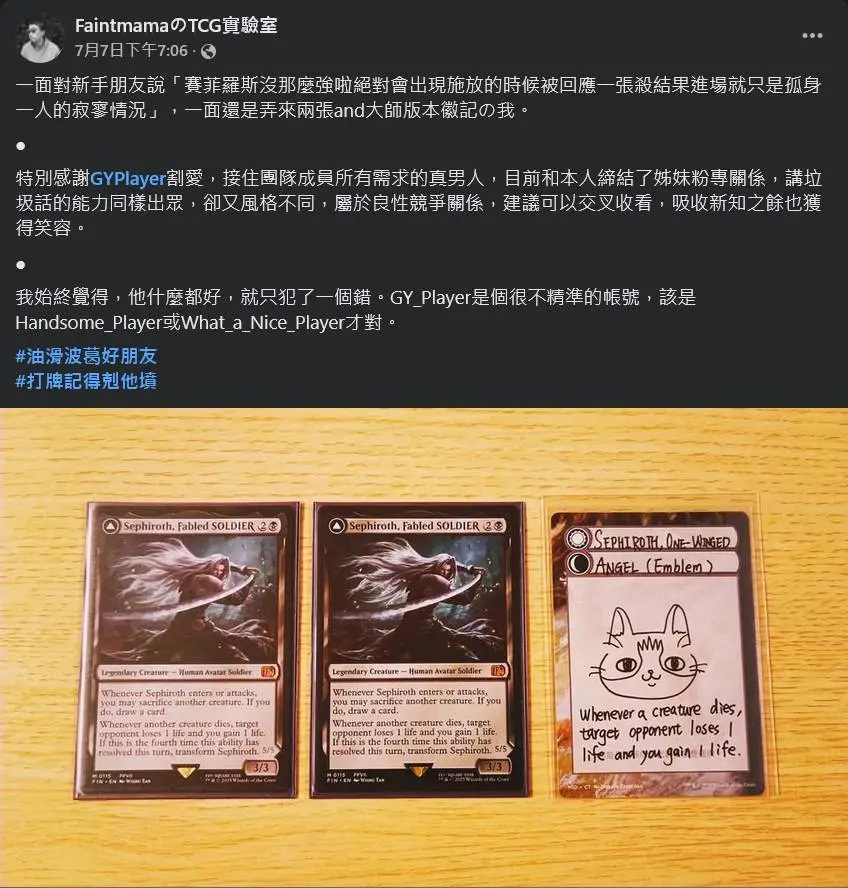
Doubt Big Bro, accept Big Bro, fall in love with Big Bro.
Of course, the strongest part is the flipped Sephiroth, One-Winged Angel. That emblem that reads “Whenever a creature dies, target opponent loses 1 life and you gain 1 life.” is absolutely something that completely tips the game.
Card Choices
Now we move on to the card analysis. I’ll group them loosely by theme and explain the reasons item by item, with reasons for the number of copies as well.
Skeleton Section
Plan A is to have this bunch race hard first. 1-2-3 Skeletons really is strong.
Forsaken Miner x4: Actually, Forsaken Miner is my favorite card, and I think this creature is the deepest card in the current Standard environment.
Consider this scenario: cast Final Vengeance and choose to sacrifice Forsaken Miner. The sacrifice cost does not go on the stack, so Forsaken Miner is already in the graveyard. Target the opponent’s Vivi Ornitier, pay one black when you commit a crime, and Forsaken Miner returns to the battlefield.
Flashiness, showing off, and deep rules understanding are all part of Forsaken Miner’s charm. Ugly, but to me it is incredibly cool.
Tinybones, the Pickpocket x2: In the early game its priority is lower than Forsaken Miner, since the opponent’s graveyard has nothing to steal yet XD. In the late game, with Sephiroth, Fabled SOLDIER on the battlefield, its value becomes very high: deathtouch is equivalent to two damage and two life gained, and it may even catch haste to start swinging right away. My own highlight moment was using this card to take the last of the opponent’s life and win the match.
Case of the Stashed Skeleton x4: The 2/1 suspected Skeleton it creates can’t block, but has menace, and performs decently in a build with plenty of removal.
In the mid-to-late game this Case gives you a chance to pay two to search your library, and quite a few of my wins came from that play. Both the Case and the token can be used as sacrifice and Bargain costs, so when casting it, watch for signs of whether a blue opponent has a counterspell for noncreature spells.
Corpses of the Lost x4: The key card for racing. On entering, it first makes a 2/2 Skeleton, and all Skeletons on the battlefield get +1/+0 and haste, widening the board and pumping at once.
If you descend during your turn, at the beginning of your end step you can decide whether to pay one life to return that enchantment to your hand. This deck does not roll resources by drawing cards but through all sorts of odd mechanics, which happens to sidestep situations where drawing extra cards gets punished.
When casting it, watch for signs of whether a blue opponent has a counterspell for noncreature spells, but when it’s time to be brave and slam it down, you just have to, since failing to finish the race also ends in losing the match.
Little Guys’ League
Creatures that come with a benefit when sacrificed, with artifacts, enchantments, and tokens available for Bargain.
Clockwork Percussionist x4: I call it the Clang-Clang Monkey XD. It has many strengths: haste early lets it race, being an artifact lets it serve more broadly as a sacrifice cost, and when it dies it keeps exploring deep into the library.
Cards that make the opponent feel uncomfortable whatever they do (killing it feels like a waste, blocking it to death benefits me, but not dealing with it means being poked constantly) are, to me, good cards.
Spiteful Hexmage x4: A one-drop with relatively low priority. It’s perfect if the Cursed Role token can go onto Tinybones, the Pickpocket or Clockwork Percussionist. The Cursed Role token is an ideal sacrifice cost.
It’s the creature that comes out first when sideboarding, so you don’t necessarily need to play four.
The two cards above were inspired by Taipei players michaelchen and Terryrr. Rakdos sacrifice is an attractive mechanic and color pair. Although it is not in the current metagame mainstream, it still draws some players to keep exploring, and quietly serves as a bridge for exchange among like-minded players.
Undead Sprinter x1: I’m not very inclined to pick decks that rely entirely on the graveyard, but I really like builds that partially use the graveyard, leaving the opponent to agonize over whether to hate my graveyard. If you manage to bait out the opponent’s Ghost Vacuum, I consider that the desired effect achieved, since the graveyard is only a bonus for us and not a required space, so the opponent choosing to hate the graveyard means giving up part of their defenses, which helps Rakdos Skeletons race early.
This Zombie is an annoying good buddy for Skeletons XD, repeatedly making the opponent frown, a nice lubricant card.
Key Life-Draining Creatures
Once you can’t break through the opponent’s defenses, try moving to Plan B and switch to a draining approach.
Sephiroth, Fabled SOLDIER x2: In short, Sephiroth is my big bro: whenever any creature on the battlefield dies, it triggers drain one.
I don’t like to play too many legendary creatures, and three mana is a little clunky and the card price is even clunkier, so in the end I only included two.
I hope to see a Big Bro every game… but early on you can’t really hold two Big Bros in hand and play, so I’d say 2.5 copies is the ideal state.
Vengeful Bloodwitch x1: A low-cost substitute for Sephiroth, Fabled SOLDIER, avoiding the awkward situation of legendary creatures clogging your hand. Only your own creatures dying drains one, and its body is poor, but poor in a way that has some effect: killing it feels like a waste, and not dealing with it means being drained constantly. As usual, when the opponent is uncomfortable is when we are comfortable. I unexpectedly like this lackluster card, but at most one copy in the build.
Scavenger Regent x1: Cast normally, it is a 4/4 Dragon with “Ward—Discard a card.”, a decent late-game creature in games where resources run dry. It also gives us a main-deck sweeper option. Remember that we have chances to search the library, and the scrappy build increases the board states we can handle, and even sweeping away a bunch of our own creatures can end the game…
Big Removal Section
Cards that sacrifice or Bargain to raise their ceiling, clearing the way while also trading up.
Torch the Tower x4: The biggest reason to splash red. It can handle many problems at instant speed, and threats up to Enduring Curiosity are all within range. Bargain can often bring extra benefits, not to mention that scry always helps you out.
Final Vengeance x3: A sorcery-speed one-black exile spell that requires a sacrifice cost. As I always say: cast Final Vengeance and choose to sacrifice Forsaken Miner. The sacrifice cost does not go on the stack, so Forsaken Miner is already in the graveyard. Target the opponent’s Vivi Ornitier, pay one black when you commit a crime, and Forsaken Miner returns to the battlefield.
Sorcery-speed removal with a very high ceiling.
Bitter Triumph x1: If you happen to have Forsaken Miner in hand, you can make it the discard cost XD, then, following the earlier idea, immediately pay one black to let Forsaken Miner enter the battlefield. So cool.
Instant-speed removal that handles big creatures and planeswalkers, but the cost of three life hurts quite a bit, so I ended up cutting it down to just one copy in the build.
Nowhere to Run x1: It can turn off the opponent’s creatures’ Hexproof and Ward, and the enchantment itself can also serve as a sacrifice or Bargain cost.
Abrade x1: It can hit a creature for three at instant speed, or destroy an artifact. Against Vivi Cauldron and Boros Convoke, it is a chance to make the opponent unexpectedly collapse. I think it is worth one main-deck copy in the July 2025 environment.
Untimely Malfunction x1: A super favorite card. All three options have a chance to come in handy: destroy an opponent’s artifact; make the opponent’s removal kill their own creature, make their graveyard hate hit a scrub, make their counterspell counter the wrong thing; or make two of the opponent’s creatures unable to block and rush in to end the game.
Opponents who have seen this card all struggle when playing.
22 Lands
In extreme cases, this is a deck that can play even from a one-land opening hand, while keeping the ceiling to keep fighting in the mid-to-late game.
Blackcleave Cliffs x4: The color-fixing land I most want to see in the first three turns, nothing more to say.
Blazemire Verge x4: A good land that, when played early, gets the opponent started overthinking, but its early priority is still behind Blackcleave Cliffs.
Sulfurous Springs x4: Painful, but a foolproof color-fixing land you just have to play.
Fountainport x1: My love card. Flexibility is power, and Rakdos Skeletons has many tokens that can be eaten to cash in for cards. The perfect tempo is to eat a suspected Skeleton after combat to let Case of the Stashed Skeleton close the case.
Swamp x6: By calculation 6-7 Swamps are needed, and in such cases I choose 6, lowering the chance of having no secondary-color mana in a game and supporting freedom in sideboarded games.
Mountain x3: By calculation 2-3 Mountains are needed, and in such cases I choose 3, lowering the chance of having no secondary-color mana in a game and supporting freedom in sideboarded games.
15-Card Sideboard
Thinking about the sideboard has been the most wonderful leisure time of the past seven months.
Duress x3: I think the effect main-deck Duress can achieve has diminished, but the 3 Duress sneaked in from the sideboard in games on the draw are different: since the opponent decides whether to mulligan with the mindset of “haven’t seen Duress yet”, Duress at this point has a chance to discard the opponent’s precious key card and reveal hand information.
Targeting also achieves committing a crime. In the Rakdos Skeletons build, Duress is not necessarily a terrible late-game topdeck.
Ghost Vacuum x2: I think it is the best graveyard hate choice at the moment, and its six-mana activated ability may also play a key racing role in the late game.
Strategic Betrayal x1: Graveyard hate that also clears the way. It doesn’t necessarily hit accurately, but it also achieves committing a crime.
Nowhere to Run x2: Mainly a card aimed at Dimir Midrange and Gruul Aggro. One main, two sideboard has a chance to make the opponent collapse, which I think makes it worth playing this way.
Untimely Malfunction x1: A favorite card naturally gets one main and one sideboard, adding one more in matchups where artifacts need to be destroyed.
Feed the Swarm x1: Since one of this deck’s great enemies is Authority of the Consuls, I bring it.
Withering Torment x2: Also a card that can deal with Authority of the Consuls, and it would be great for raiding away Temporary Lockdown too.
Fire Magic x2: There are many opponents that need respect, so I won’t list them one by one. The point is to respect your own deck even more, since sweeping away your own creatures can sometimes win the game.
If you bring Fire Magic and then misplay and blow it up, that also counts as having played a Vivi Cauldron deck.
Brotherhood’s End x1: Destroys artifacts and sweeps the board. Same old song once more: flexibility is power. The efficiency of three mana to deal three to the whole board is also very eye-catching.
Conclusion
Originally I had no confidence in, and no plan to share, my Rakdos Skeletons build, since my time playing is still short, only seven months into Standard, and my practice volume is at the bottom among competitive-level players, so I hardly dared to embarrass myself XD.
But I have always known that when it comes to the purest love for a deck, I absolutely do not lose to any player.
In several store championships this time in FIN, Rakdos Skeletons finally emerged from its cocoon and harvested some wonderful moments, even reaching third place with only a tiny gap to City of Brass (though that distance was both tiny and enormous). Although I couldn’t get a photo of the Skeletons posed next to City of Brass to share, I thought it over and still decided to share this journey. As for a detailed tournament report, I won’t belabor it on Guildmages’ Forum, and friends who are interested are welcome to head over to Faintmama’s TCG Lab to keep exchanging ideas.
In the last two events, my OMW% (opponent match-win percentage) was 77.8% and 71.7% respectively. I was lucky enough to play against all the top players in Taipei, with some losses and some wins, a god-tier play I may never surpass, but also judgments that weren’t perfect and mistakes.
Yet now I have a baseless confidence that I have truly brought Rakdos Skeletons to a position where it can fight the mainstream. If the Skeletons were piloted by players more skilled than me, they might climb even higher and successfully reach City of Brass.
But that doesn’t matter anymore. The seven months I spent with Rakdos Skeletons were truly happy. Before I go senile, I will remember well the process of fighting side by side with them.
- Title
- Big Bro Seph Takes Rakdos Skeletons to Heaven
- Author
- faintmama
- Created at
- July 20, 2025
- License
- This work is licensed under CC BY-NC-SA 4.0 .