Croaking Counterpart: Standard Simic Frogs
Note: This article was translated from Chinese by AI and may contain errors. Read the original Chinese version.
Before We Start
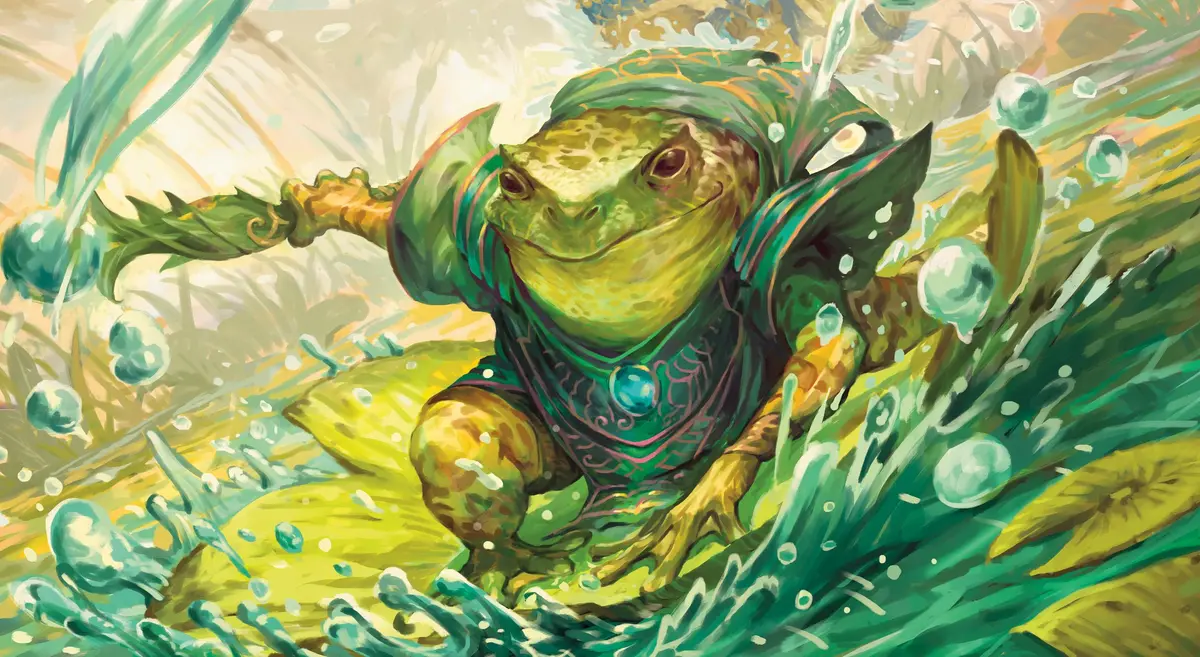
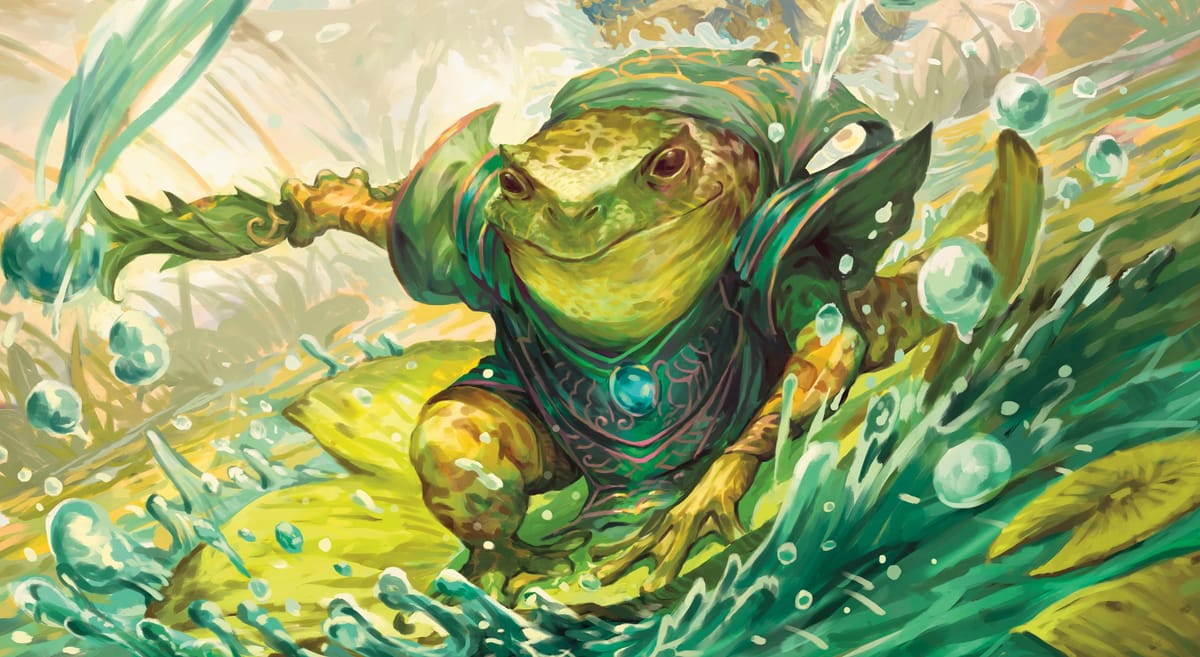
Bloomburrow gave us ten two-color critter tribe themes: Mice, Rabbits, Lizards, Rats… Most of them have a clear strategy that can form a Standard tribal deck. But Frogs have two conflicting themes at once, enter/leave-the-battlefield effects and putting +1/+1 counters, so how should we build them?
Card Analysis
To know how the deck plays, first look at how the legend was designed:
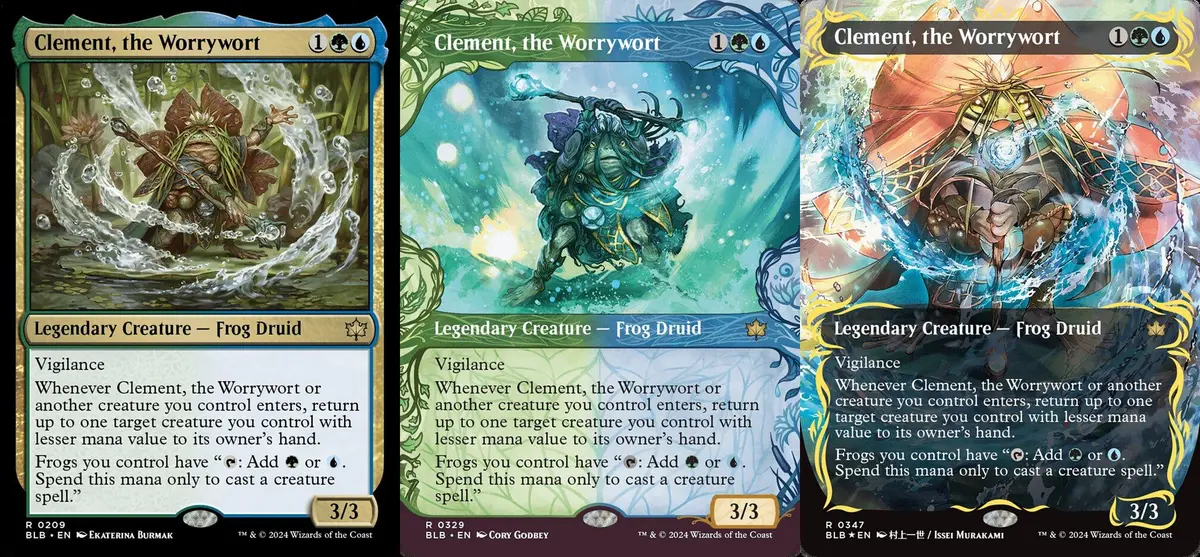
Clement, the Worrywort
Legendary Creature - Frog Druid
Vigilance
Whenever Clement, the Worrywort or another creature you control enters, return up to one target creature you control with lesser mana value than that creature to its owner’s hand.
Frogs you control have “{T}: Add {G} or {U}. Spend this mana only to cast creature spells.”
Helga, Skittish Seer, Glarb, Calamity’s Augur, and the older Golgari legendary Frogs clearly can’t fit with a Simic tribal strategy, so they’re not discussed here.
From the ability design of Clement recycling cheap creatures, we can see that the Frog tribe’s theme is to repeatedly enter and leave the battlefield to earn resources. Creature picks should ideally have enter/leave triggered abilities, especially in the low curve, which pretty much assumes recursion. So rare one-drops like Valley Mightcaller and Mistbreath Elder, creatures that don’t suit being bounced or blinked, are actually not very useful, and it’s no exaggeration to call them deckbuilding traps.
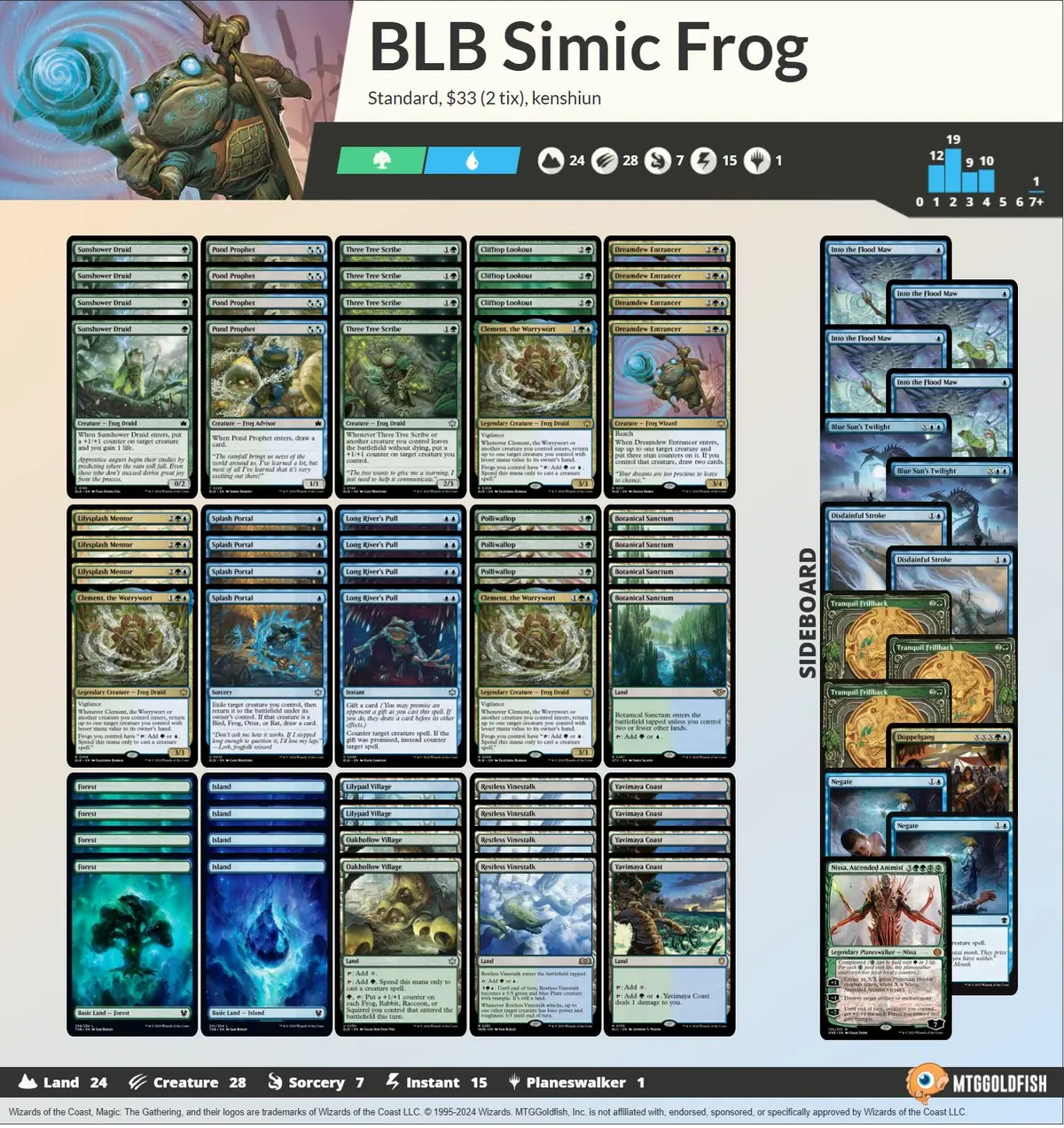
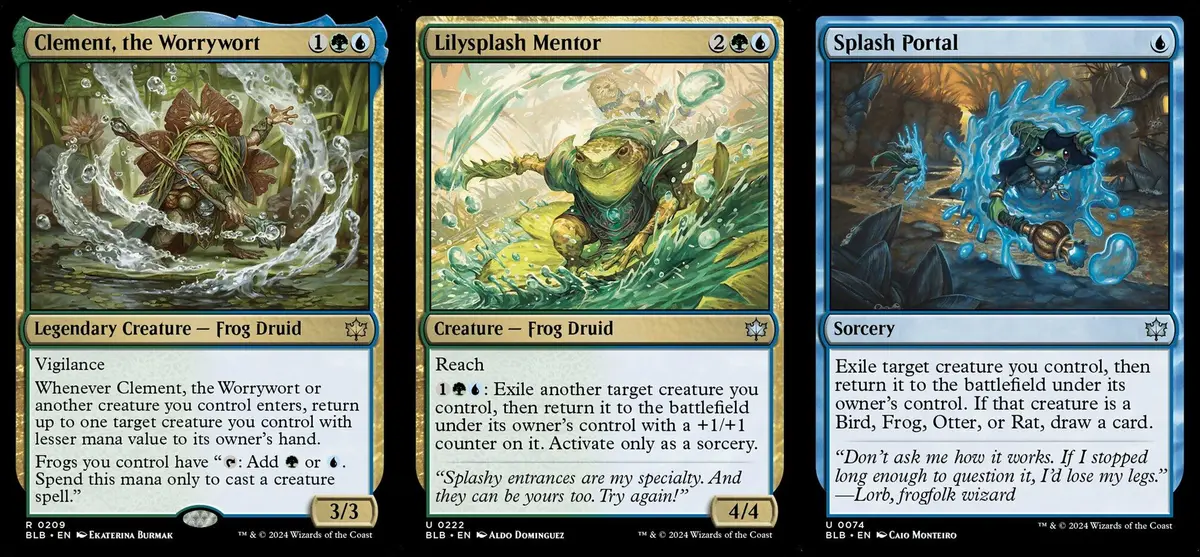
Clement, the Worrywort, Lilysplash Mentor, and Splash Portal are this deck’s bounce engine. When Clement himself enters, he can return a creature with mana value 2 or less, and at the same time grants Frogs the ability to make mana, helping you quickly recast the bounced creatures. Lilysplash Mentor is the Frog deck’s main warrior: besides a solid 4-mana 4/4 reach body, it comes with a three-mana Cloudshift-style ability that lets you happily farm resources in the mid-to-late game. Splash Portal is a light, card-neutral one-shot bounce. Although it’s a sorcery, its efficiency is too good to leave out.
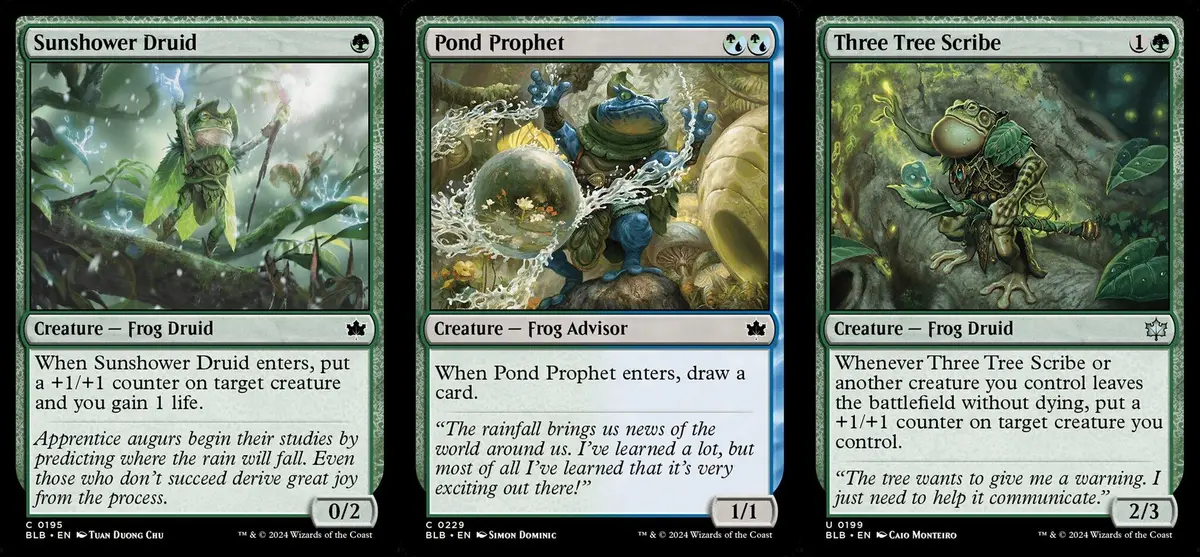
Next, let’s introduce the Frogs in charge of being the bouncy balls (?): Sunshower Druid, Pond Prophet, Three Tree Scribe, Clifftop Lookout, and Dreamdew Entrancer. Choosing Sunshower Druid over two rare Frogs, it can be seen as a one-mana 1/3 anti-aggro creature that gains 1 on entering, and in the mid-to-late game it can reinforce your other attacking creatures. Pond Prophet refills your hand and is a solid creature for farming enters. Compared with the equally two-mana Dour Port-Mage, Three Tree Scribe not only has the better body, but its leave-the-battlefield ability includes itself, so I chose the former.
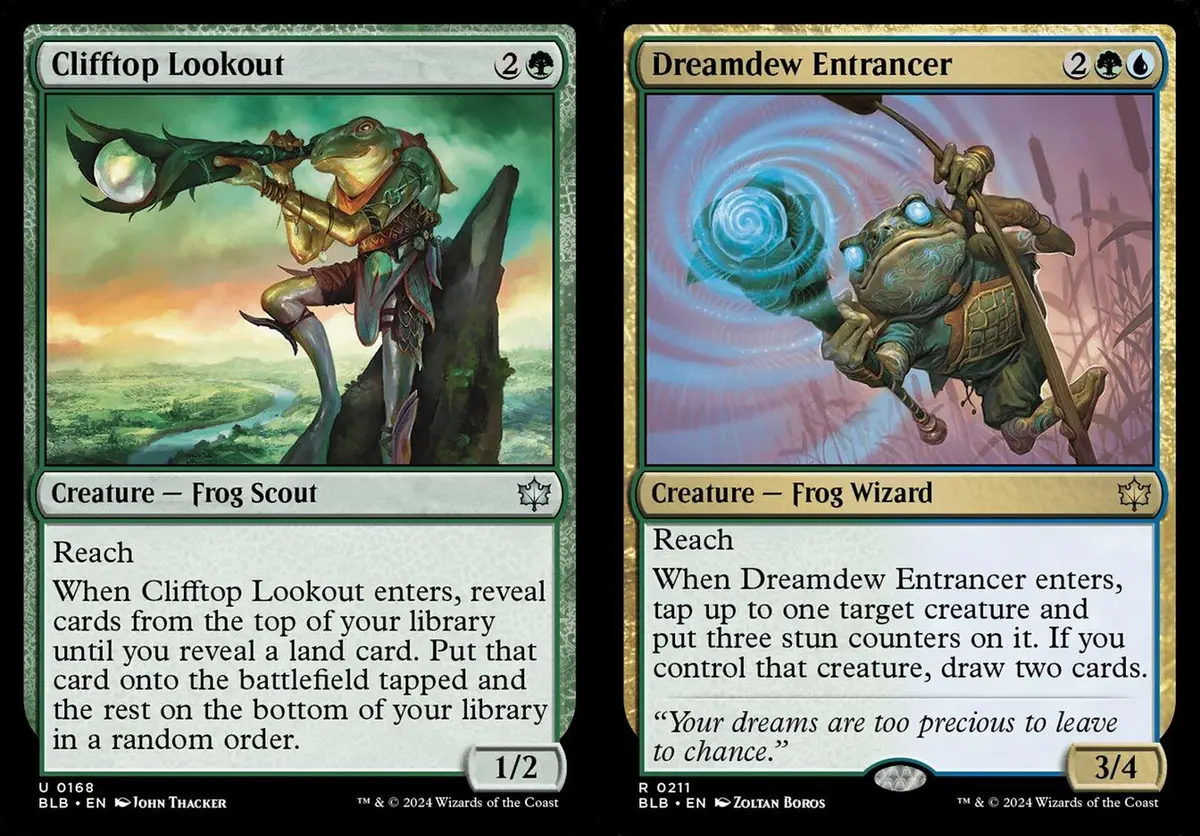
Clifftop Lookout looks like a strange choice, but this deck needs lots of mana to run. Besides ramping on entering, Lookout, with Clement’s help, works as a three-drop that returns creatures with mana value 2 or less, and it comes with reach and can stand there to scare Deep-Cavern Bat. Last is Dreamdew Entrancer, aka the King of Leaps, which handles both refilling resources and holding down creatures. Three stun counters mean the opponent’s creature almost never untaps again, while putting stun counters on your own creatures draws cards, and with one bounce it’s lively again, making it the pillar of the Frog deck.
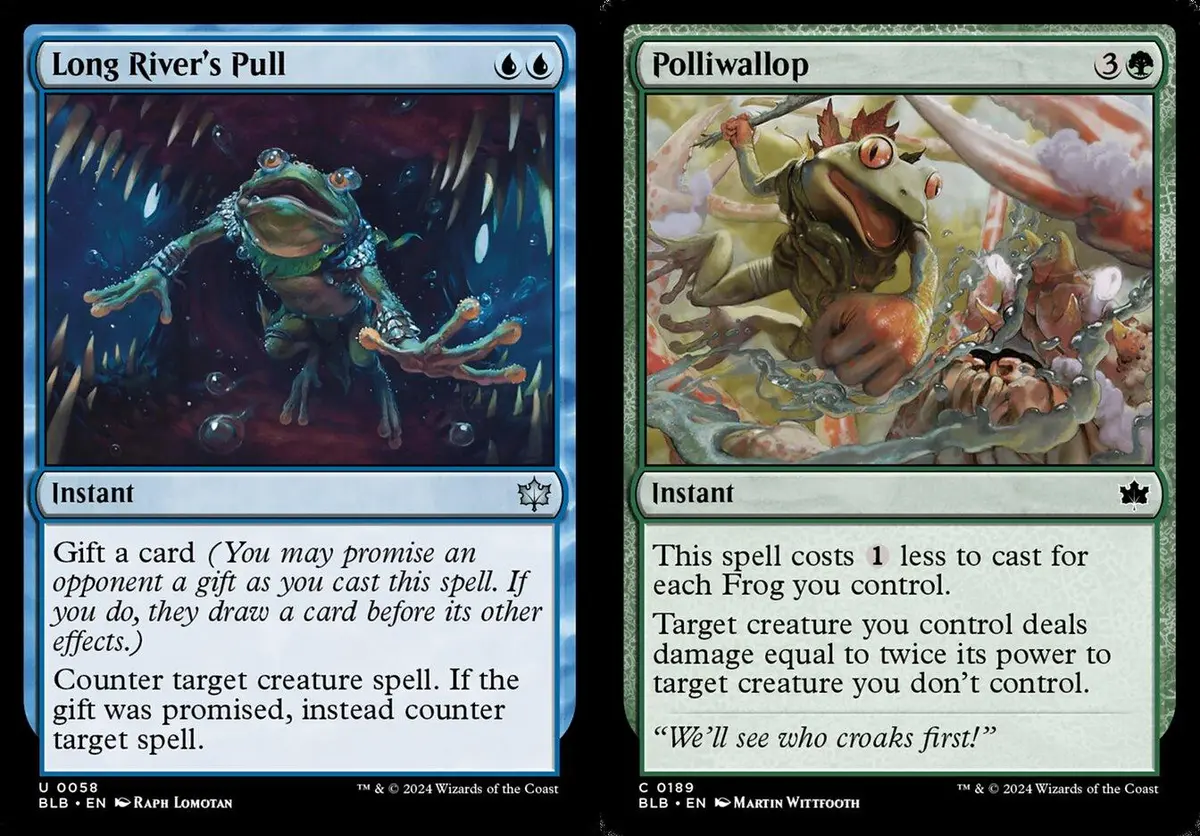
After introducing the creatures and blink tricks, the remaining slots naturally go to counterspells and removal for interacting with the opponent. I chose Long River’s Pull and Polliwallop. Long River’s Pull can be called the Counterspell of the Standard card pool. Although it has a side effect when used to counter noncreature spells, its range is comprehensive enough, and the art features a Frog (?), so I run a full set. Polliwallop is a tribe-exclusive instant removal with built-in affinity for Frogs, and it deals double damage in one direction. As a fight-style removal spell it is excellent, but considering it’s a dead card with no creatures, I run only three.
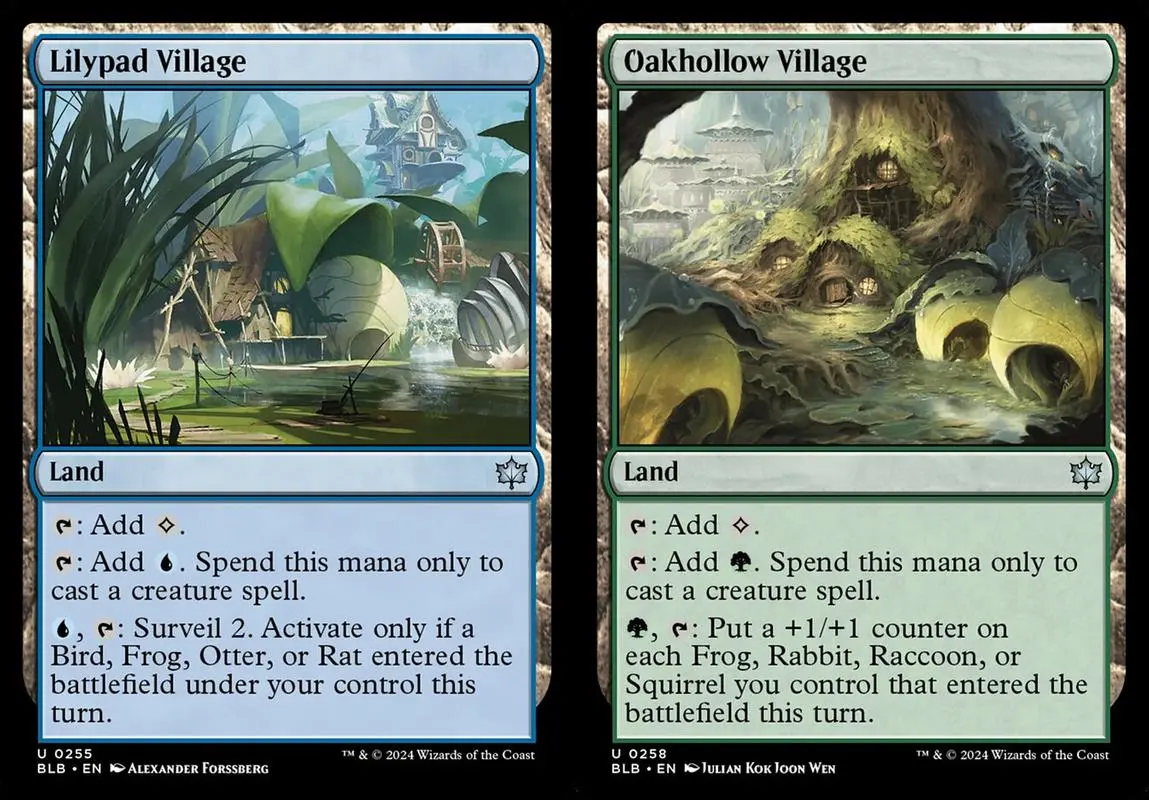
For lands, besides the three sets of rare dual lands, the tribal lands with enter restrictions, Lilypad Village and Oakhollow Village, easily meet their prerequisites in a Frog deck that hops around with nothing better to do. Together with the land expansion from Clifftop Lookout, they can bring considerable benefits in the mid-to-late game.
Gameplay Demo
The opponent is a Golgari counters deck built around Innkeeper’s Talent. Facing the opponent’s tempo of turn-2 Innkeeper’s Talent and turn-3 Phyrexian Fleshgorger, early on I only had scrubs like Sunshower Druid and Pond Prophet. Though their combat power was unimpressive, with a turn-4 Dreamdew Entrancer and a later Splash Portal, I successfully paralyzed the opponent’s Phyrexian Fleshgorger and Glissa Sunslayer, and with Lilypad Village continuously surveilling the top of the library, I finally won the game by attacking with cheap creatures.
This game against Azorius control demonstrates the Frog deck’s staying power. Since the opponent had few creatures, Dreamdew Entrancer unscrupulously put stun counters on my own creatures to draw cards and rake in resources. Late in the game, Oakhollow Village boosted the scrubs’ combat power, and finally the opponent’s Temporary Lockdown accidentally triggered Three Tree Scribe’s counter-placing ability, growing Clement, the Worrywort to 7/7. Seeing the situation was hopeless, the opponent ended this 16-minute battle by conceding.
Conclusion
Although the Simic Frog deck can show staying power in the mid-to-long game no worse than control decks, with a little built-in lifegain and decent single-target interaction giving it some resistance to red aggro, Simic’s weakness against fast, wide boards like convoke is an unsolvable problem. If you want to build it and play it, you may need to weigh the meta at your local store.
- Title
- Croaking Counterpart: Standard Simic Frogs
- Author
- JerobaMTG
- Created at
- August 15, 2024
- License
- This work is licensed under CC BY-NC-SA 4.0 .