The Ship of Theseus: My Chiba Journey with Sultai Control

Note: This article was translated from Chinese by AI and may contain errors. Read the original Chinese version.
Introduction
Hello everyone, I’m Patrick, that stubborn player who only plays Sultai. Recently I took 9th place at MIT 12 and 64th place at the Chiba Spotlight, so I want to use this article to share my experience with the deck I used. I will explain the deckbuilding logic of the whole list, the individual cards I especially liked after actually playing them, and the matchups I think are easier to play. Since there is little information about this deck online, it is hard to find accurate enough statistics for reference; but if you want to try a type of control other than 4C or Jeskai, you might take a look.
Deck Composition
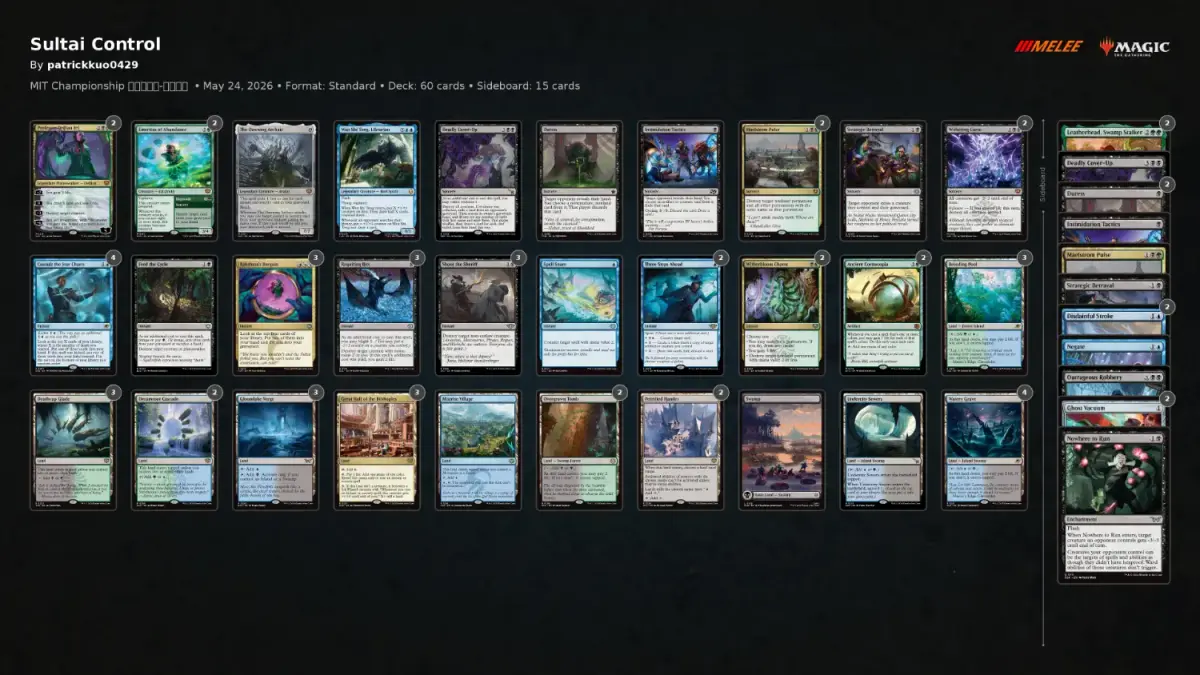
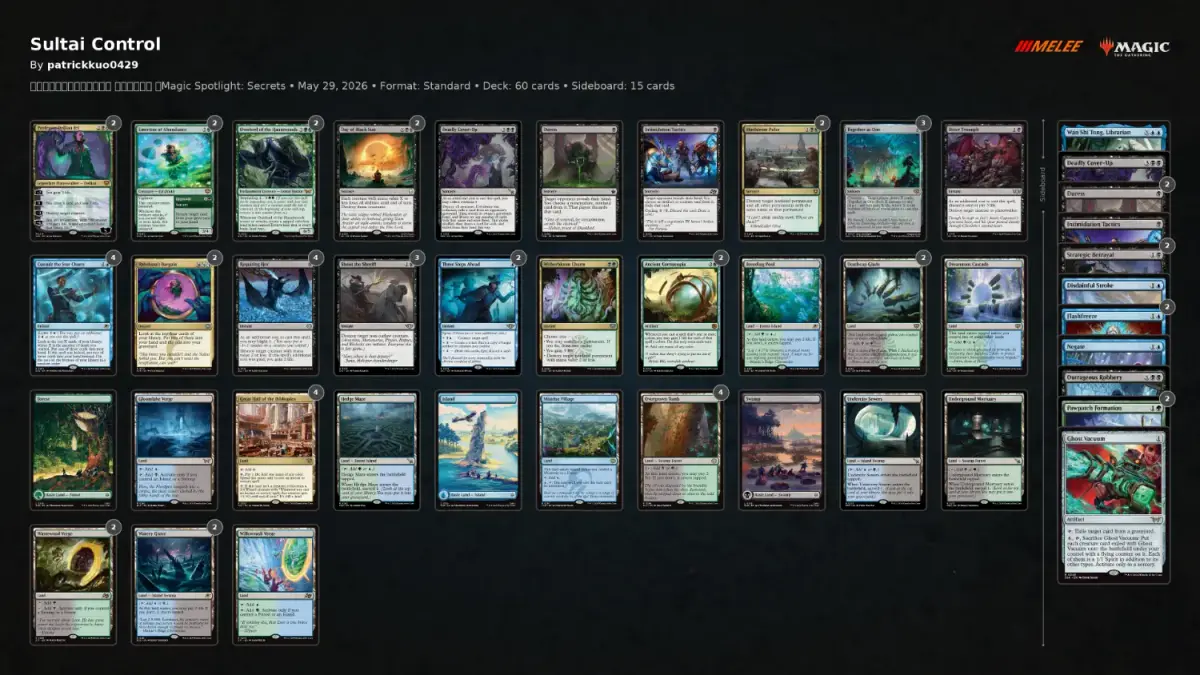
Sultai Control_Chiba Spotlight
Sultai control in the current environment can be roughly divided into two kinds: one is a value creature package led by Superior Spider-Man , Deceit
 , and Wistfulness
 ; the other is a pure control package led by Professor Dellian Fel
 . The evoke Elementals that debuted in Lorwyn Eclipsed (ECL) quickly became the choice of most Sultai control players: versatile discard, a strong body, and the four-mana Spider-Man being able to both clear the board and hold the board when “doing it again” are all very attractive elements, and it is currently the most common build type.
What I chose, however, is another, more traditional route:
A draw-go style control deck with lots of card filtering and removal, plus a small number of finishers.
The reason this archetype is still competitive is thanks to the planeswalker Professor Dellian Felfrom Secrets of Strixhaven (SOS).
In an era of power inflation and increasingly complicated abilities, he rarely has such plain abilities: life gain, card draw, destroying creatures, and an emblem that is enough to win. The effects look simple, yet they perfectly fill in every element a control deck needs most.
- The old problem of “not surviving” can be solved with life gain, giving the player several extra turns of breathing room to find removal;
- Destroying creatures is also what control uses most often;
- And the most powerful is still that emblem. It not only fits the logic of the planeswalker itself, it also means nearly every Sultai control deck now plays Ancient Cornucopia
 , a mana rock that was used heavily in the early days but was gradually forgotten.
In the past, although Ancient Cornucopiacould provide a stable mana source and life to buy time, it had the drawbacks of not bringing card advantage and not being able to win; now this problem has changed qualitatively because of the planeswalker’s emblem. Like the 4C control strategy, it can keep chipping away at the opponent’s life through extra damage while clearing the board; once the emblem has been activated once, you can fully rely on the life gain attached to various spells to hurt the opponent to death. This is exactly why pure control can work now.
Removal
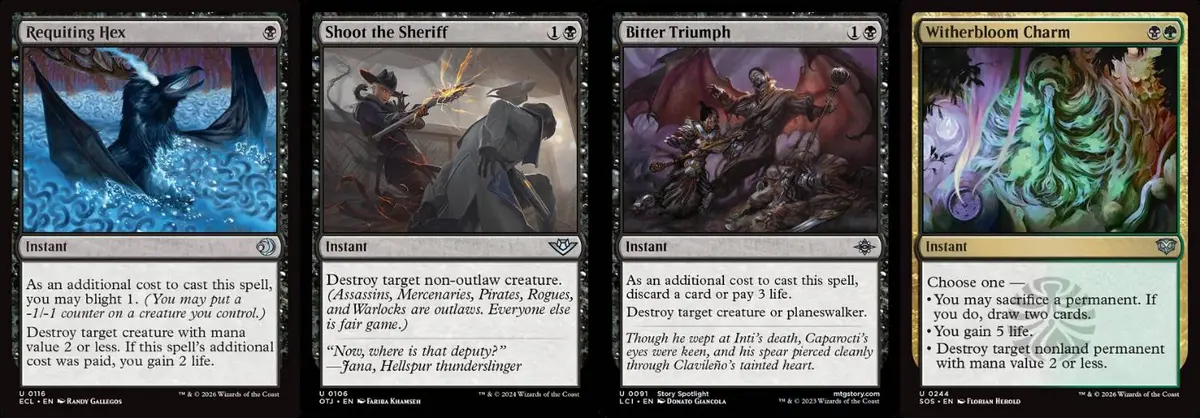
Requiting Hex , Shoot the Sheriff
 , and Bitter Triumph
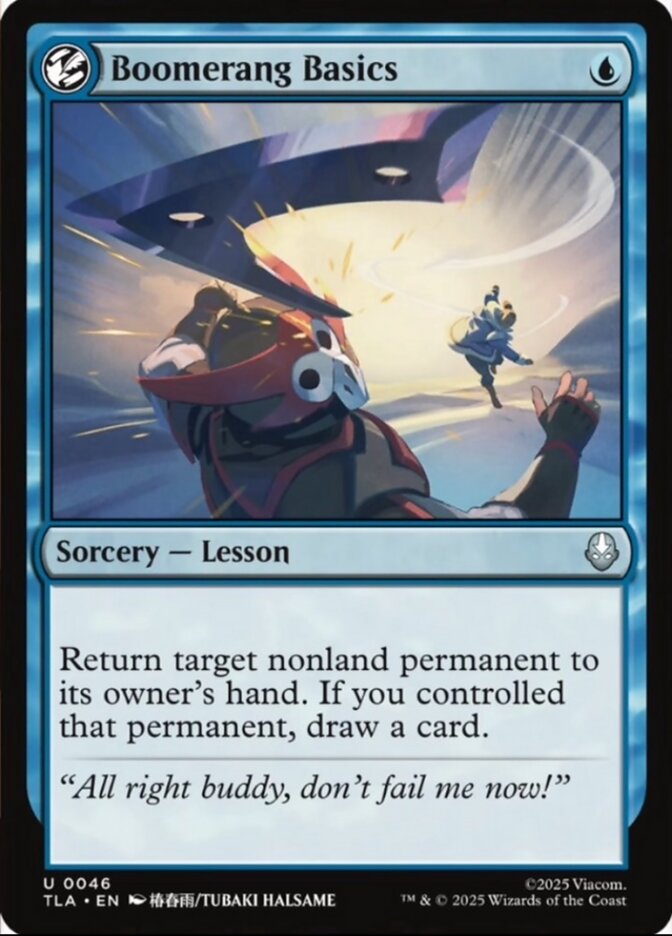
 are the instant-speed removal essential for dealing with aggro in the environment. Since the environment is still expected to be dominated by Izzet prowess, and the board swells quickly on the opponent’s turn, you still need lots of instant-speed removal to survive. Witherbloom Charm
 has a use similar to the sideboard Pawpatch Formation
 : against Izzet prowess it can remove the main creature threats and can also interrupt the combination of Stormchaser's Talent
 and Boomerang Basics
 ; against Mardu discard it can also handle Cool but Rude
 . Compared with other removal it sacrifices range, but in exchange it can be used to draw cards and gain life when necessary, and together with Professor Dellian Fel‘s emblem it can also finish quickly.
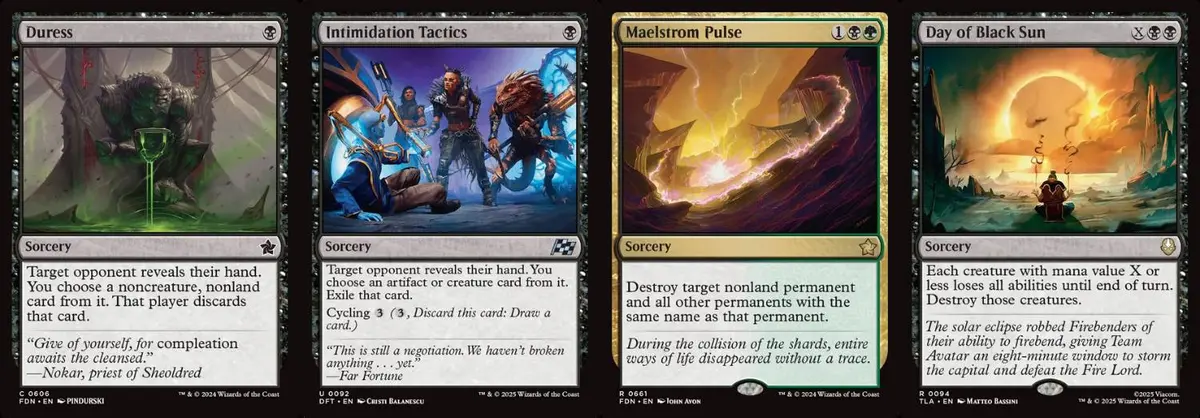
I play one each of Duress and Intimidation Tactics
 . Out of personal habit, I like to put a small number of discard spells in the main deck; but this deck is neither a combo deck nor a tempo deck, so the benefit of playing too many to escort the main plan is not high, which is why I only included one of each.
Maelstrom Pulse is one of the most useful removal spells in the current environment, in my opinion. The current environment has plenty of noncreature win conditions, such as Monument to Endurance
 , Cool but Rude, and Stormchaser's Talent, and also many creatures that make tokens or copies; although it is a sorcery and costs 3 mana, as long as it can hit two or more targets at once, it is a very valuable removal spell. Taking a step back, at worst it can handle those annoying planeswalkers for you, such as Professor Dellian Fel, Ral, Crackling Wit
 , and Kaito, Bane of Nightmares
 .
For sweepers, I chose Day of Black Sun , valuing its ability to handle some creatures with indestructible, though of course this part can be adjusted for the environment; and Withering Curse
 is a decent small sweeper in an environment with plenty of prowess, but to fully unleash it, the number of life gain sources would probably need to be a bit higher.
Card Draw
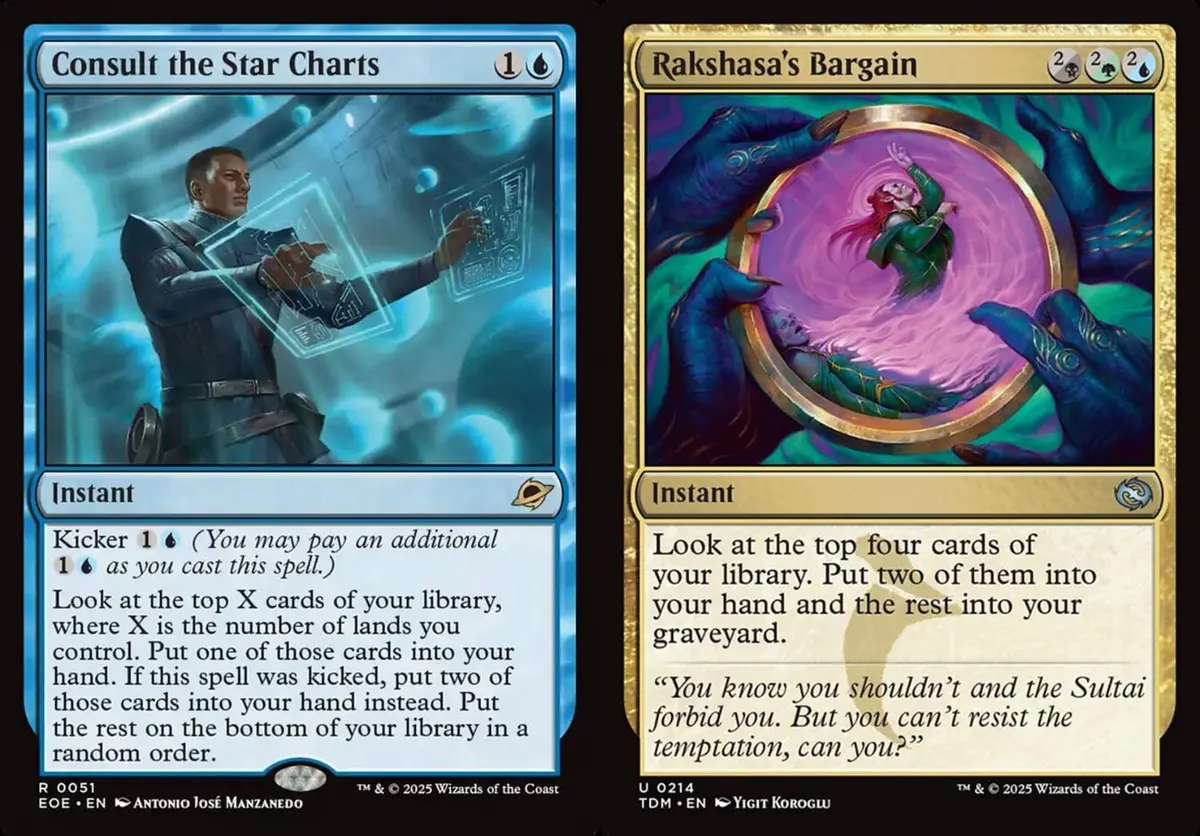
Consult the Star Charts and Rakshasa's Bargain
 are arguably the best card draw spells in the current environment (there is also Stock Up
 , but since Rakshasa's Bargainhappens to be in the right colors and is an instant, I chose it). At low cost they help you find removal or lands, and at high cost they help you find win conditions.
Threats
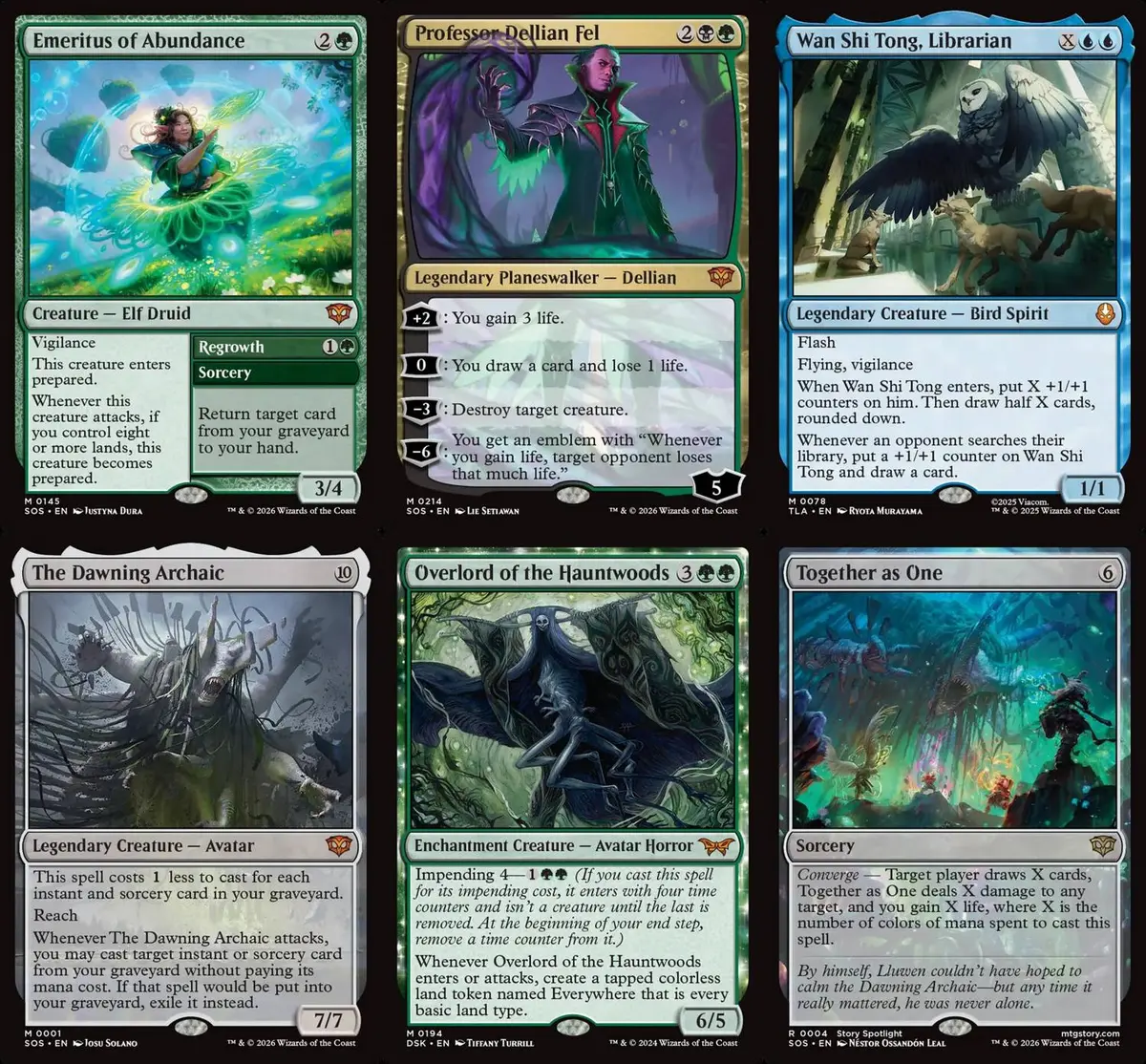
I play two Emeritus of Abundance // Regrowth in every version; it is also a creature I really like from Secrets of Strixhaven this time. A three-mana 3/4 vigilance has excellent stats that can block most creatures costing 3 or less, and when you need to attack you do not have to worry about being hit back. Its effect of returning any card from the graveyard for 2 mana gives it many good targets in a control deck; and in the late game with enough lands you can keep casting it, ensuring a good amount of resources late.
Professor Dellian Fel‘s power has been covered above and I will not repeat it here; but besides his functions on the table, his “body” is also a hidden strong advantage. Entering at 4 mana, choosing +2 and gaining 3 life, the loyalty counters instantly go to 7. If the opponent is not using removal but wants to deal with him using creatures, it effectively gives you a 10-point life advantage, and most of the time the opponent cannot necessarily kill him that same turn with just the creatures on the battlefield. After that, +2 loyalty each turn reminds me of the nightmare that was Oko, Thief of Crowns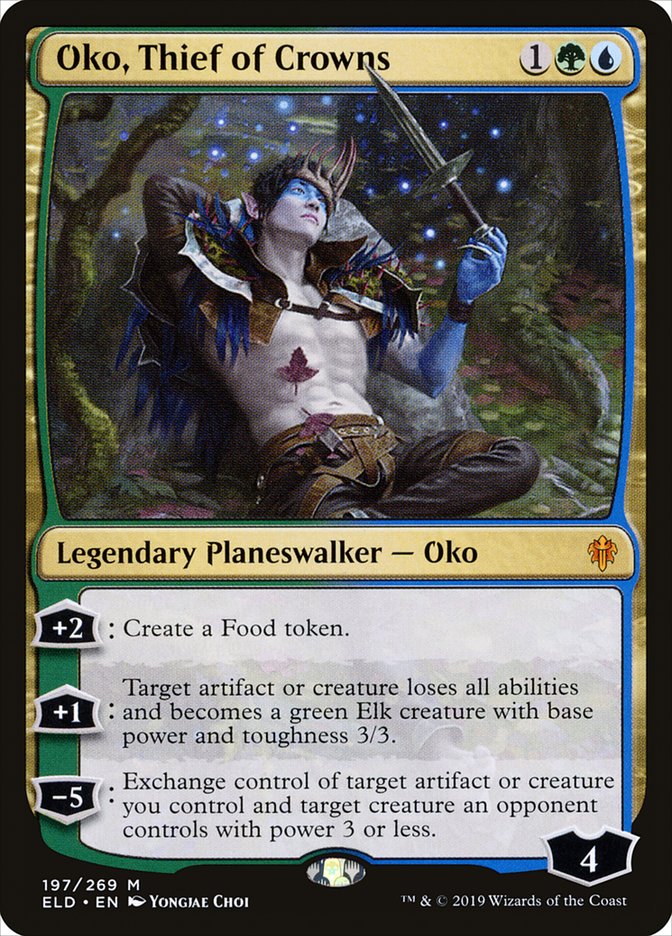 in creature combat: you cannot attack it and you cannot leave it alone.
The rest are matters of opinion.
Wan Shi Tong, Librarian
 : A regular in control decks; when you do not know who to put in, putting it in is never wrong. It draws cards, has flexible casting timing, and blocks the opponent well, all excellent traits; it is just that it has too few targets, and often becomes a fixed target for the opponent’s removal as soon as it enters, while you would want to hold it back for the late game, so its actual casting timing is not that flexible after all.
The Dawning Archaic
 : My favorite card at MIT 12. Because the deck has a total of 27 sorceries and instants, it is actually easy to call it out within 4 mana; its excellent body plus reach often keeps the opponent from breaking through for a while, and the trigger after attacking can also steadily accumulate advantage. Although I later switched to another card and did not put it in the deck for now, I still think it is well worth trying!
Overlord of the Hauntwoods
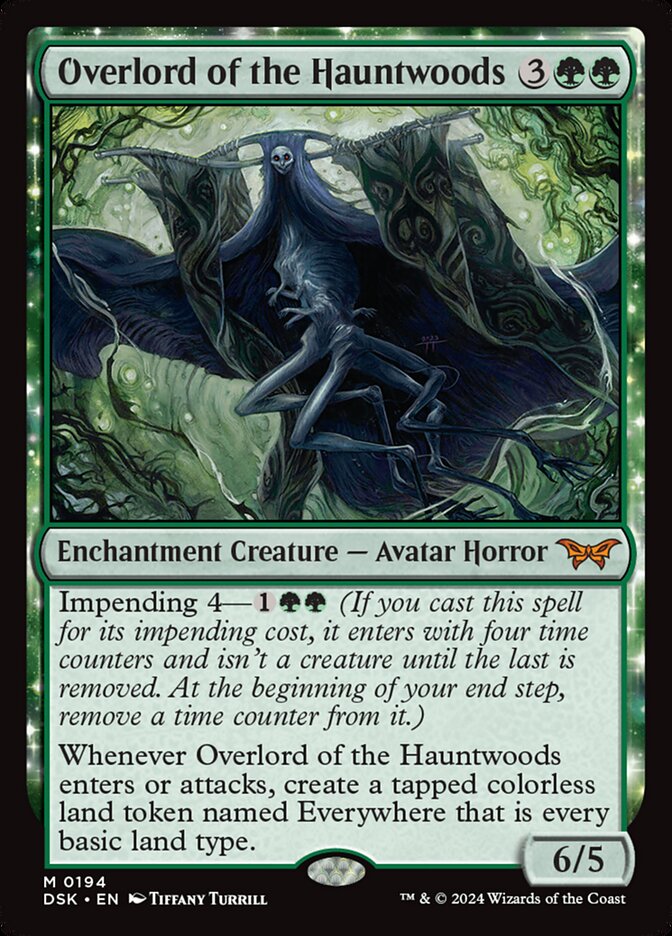 : It actually corresponds to the slot of Ancient Cornucopia. At first I saw a deck online that chose 4 Overlord of the Hauntwoodswith 4 Emeritus of Abundance // Regrowth. Although it is also acceleration, the extra land it provides helps Emeritus of Abundance // Regrowthreach the prepare threshold faster, and it has good synergy with Consult the Star Charts, deepening the filtering. Also, since it is itself a creature, its benefit when drawn alone late is better than a mana rock’s. Weighing it up, I ended up playing two of each.
Together as One
 : I put it in the threats section because in many cases it is not just removal: combined with the planeswalker’s emblem, a single copy can deal 10 damage and let me win quickly. It is arguably my favorite single card of this tournament, and this event’s MVP. Thanks to the new land Great Hall of the Biblioplex
 and the four five-color mana rocks in the deck (I count the Everywhere Token made by Overlord of the Hauntwoodstoo), my three-color deck also has a chance to cast five-color spells. Six mana to deal 5 damage, gain 5 life, and draw 5 cards satisfies board, resources, and time all at once; in a great many matches I turned the game around with this one card alone, and it is arguably the non-Jeskai version of Jeskai Revelation
 .
Sideboard
The sideboard is mostly conventional choices: Flashfreeze against landfall decks and four-color control, Disdainful Stroke
 against Dimir Demons, and Ghost Vacuum
 and Strategic Betrayal
 for graveyard hate, among others. The more unusual one is Pawpatch Formation. Whether it is Orzhov flash’s High Noon
 and lots of fliers, Mardu discard’s Hardened Academic
 and Cool but Rude, or Izzet prowess’s Slickshot Show-Off
 and Stormchaser's Talent, it can handle them effectively, so it is a removal spell with a very wide range of application.
Matchup Analysis
At the Chiba Spotlight, my results were as follows:
- R1 2-0 Izzet Prowess
- R2 2-1 Selesnya Landfall
- R3 2-0 Izzet Prowess
- R4 2-1 Temur Omniscience
- R5 1-2 Sultai Control (Spider-Man Deceitversion)
- R6 0-2 Mono-Green Landfall
- R7 2-1 Boros Aggro
- R8 2-0 Five-Color Allies
- R9 0-2 Dimir Demons
- R10 2-1 Izzet Prowess
- R11 0-2 Four-Color Omniscience
- R12 0-2 Selesnya Counters
- R13 2-0 Mono-Green Landfall
- R14 2-1 Mardu Discard
- R15 2-0 Izzet Spellelemental
I finished with a 10-5 record. The five losses were to Sultai control, mono-green landfall, Dimir Demons, four-color Omniscience, and Selesnya counters; against the mainstream Izzet decks, I went a perfect four wins. Of these, the losses to mono-green landfall and Selesnya counters, I think, do not necessarily fully reflect the matchups themselves. Several key games were affected by mulligans, and after a long tournament my mental state declined, lowering decision quality, so I lean toward seeing these two losses as individual factors in the tournament rather than a structural disadvantage of the deck.
You can see that what this deck is best at is maneuvering against creature decks. Whether aggro or midrange, removal of every dimension, stable life gain, deep enough card filtering, and nearly endless late-game resources give it extremely strong control in long games.
Advantage Against Creature Decks
The most mainstream decks in the environment are still creature-based: Izzet prowess, mono-green or Selesnya landfall, Mardu discard, plus Orzhov MoMo and Orzhov flash, which I did not face this time but expect to appear, and the various green-based creature decks with Badgermole Cub . With lots of cheap and efficient removal plus stable life gain, I think most of these matchups can stay around a 7:3 advantage. Take Izzet prowess as an example: as long as you successfully trade off the first two waves of threats, afterward either Professor Dellian Felor Together as Onecan quickly open up the gap in life and resources, so most long games are quite favorable.
In these matchups, once Together as Oneresolves the game is almost over: the gap in life and resources is opened up instantly, which is especially deadly against aggro; and Professor Dellian Fel‘s life gain every turn also keeps prowess-type decks from assembling enough resources to finish. These two cards are the most important core cards of this deck against creature decks, and the key source of most wins.
Disadvantage Against Combo Decks
In contrast, although Sultai has answers to all kinds of threats “on the board,” against combo decks that can keep accumulating resources in hand it has almost no good preventive measures; this kind of problem is the domain white is better at handling, and a weakness that Sultai colors are inherently hard to cover.
Without survival pressure, the opponent can very calmly assemble a win condition at leisure. Take four-color Omniscience as an example: the opponent often only needs to find all the pieces through lots of card filtering, then, with a Cavern of Souls on the battlefield, slam Voice of Victory and Kona, Rescue Beastie
 one after another on a six-mana turn. Against this kind of development that cannot be countered and immediately creates a winning threat, this deck has almost no effective answer.
Or against Dimir Demons, the opponent will actively use lots of hand disruption to first clear out the cards I use to counter; after confirming I cannot stop it, they slam Doomsday Excruciator directly, often catching me off guard. In addition, the large amount of removal and life gain in the deck is of relatively limited value in these matchups, which also dooms this archetype to a disadvantage against combo decks.
If in the future I want to improve the win rate against Dimir Demons, Omniscience, and similar decks, I would suggest putting threats that can win quickly, like Stoic Sphinx , in the sideboard. Since the main deck already carries removal of every dimension, I think the amount of removal can be moderately reduced to put in threats of a different dimension. Especially at events like the Spotlight where decklists are not public, this kind of configuration often brings better results.
Conclusion
This is not my first time attending a major event, but it is the first time I made it into Day 2, even finishing 64th and standing in the prize money. As a player who has devoted body and soul to Sultai, I know very well that I will not be a professional player, nor someone who can always get good placements. More often, a deck’s strength depends heavily on whether the cards given by the recent sets are strong enough and whether there happen to be themes that can come together, and these are not conditions that reliably happen.
However, the current Standard environment has changed to a 3-year rotation, and with the large number of UB (Universes Beyond) sets expanding the available card pool to an unprecedented richness, Sultai’s possibilities are no longer what they were. In the past, strong control color pairs such as Azorius, Jeskai, and Esper could always get suitable components in every environment; while Sultai, a non-traditional control color combination, often only gets one or two playable cards in an entire set. Now, as the card pool expands, this disadvantage is gradually shrinking. So if you are also a player with a faith, you might try sticking with the color combination you have always liked best in the current card pool.
Although the deck I bring to every tournament is different - Standard rotates, the meta at tournaments changes in an instant, and players develop new decks without even waiting for new sets to come out - perhaps I cannot replicate that successful deck every time, but for me, the bond between me and my decks has never been broken. It is like my Ship of Theseus: all the parts have been replaced, but it is always the ship that accompanied me through countless challenges.
- Title
- The Ship of Theseus: My Chiba Journey with Sultai Control
- Author
- Patrick
- Created at
- June 22, 2026
- Updated at
- June 22, 2026
- License
- This work is licensed under CC BY-NC-SA 4.0 .