A Board-Commanding Surprise: Standard Temur Manifest

Note: This article was translated from Chinese by AI and may contain errors. Read the original Chinese version.
Before We Start
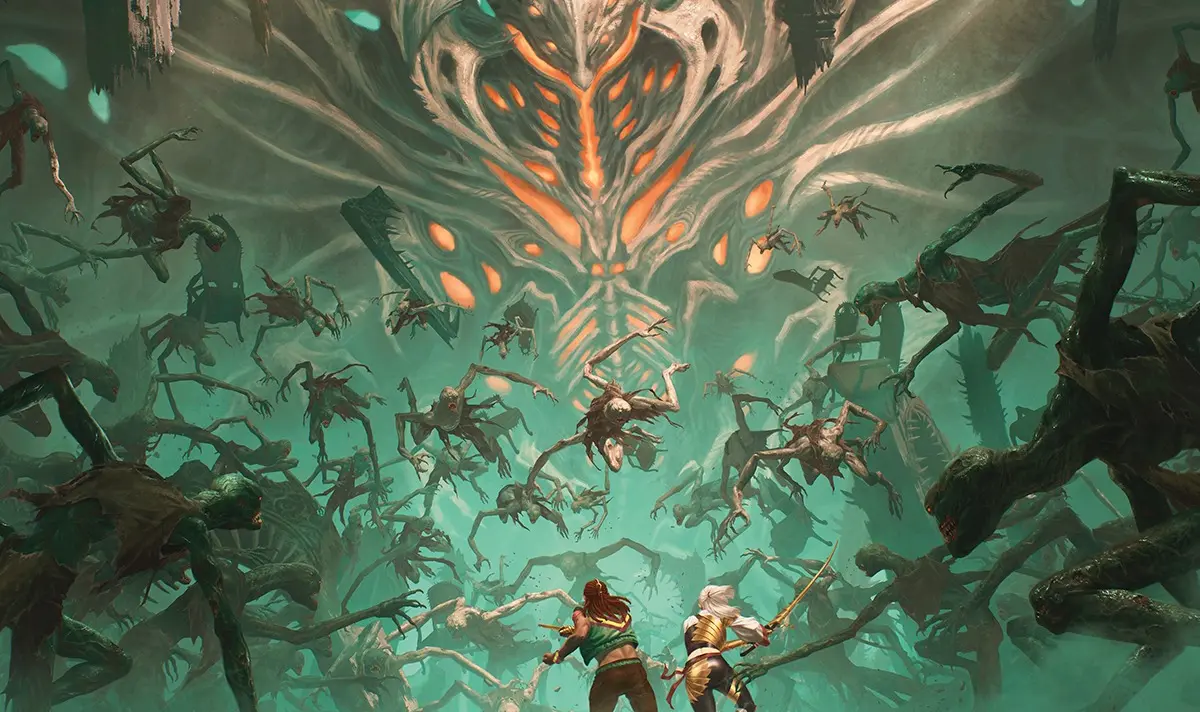
Among the keyword abilities in MTG’s history, morph is hardly a popular mechanic. You have to first cast a vanilla 2/2 creature for three mana and then pay separately to turn it face up and trigger its ability, which was not efficient even in the era of Onslaught, when morph first appeared. In past Standard formats, only specific powerful morph-style cards were played, and trying to build a themed deck around them usually fell short. Duskmourn: House of Horror released the newest derivative of morph, manifest dread, and alongside the disguise ability that debuted in Murders at Karlov Manor, is there a chance of building a themed deck?
Card Analysis
The biggest drawback of morph is that you must first cast a vanilla 2/2 creature for three mana: no body to speak of, no efficiency to speak of. To have it enter turned face up and immediately activate its ability usually takes four or more mana, and your opponent knows the creature you’ve put face down is certainly nothing good, so they will surely take this window to remove it first and stop you from developing. To fix this drawback, Murders at Karlov Manor introduced the disguise ability, which additionally gives ward two, but the problem of the feeble body is still not solved. So how do we deal with this problem? Putting them onto the battlefield via manifesting is a good way. Here we have to mention Valgavoth’s Onslaught, a super bomb in Limited:
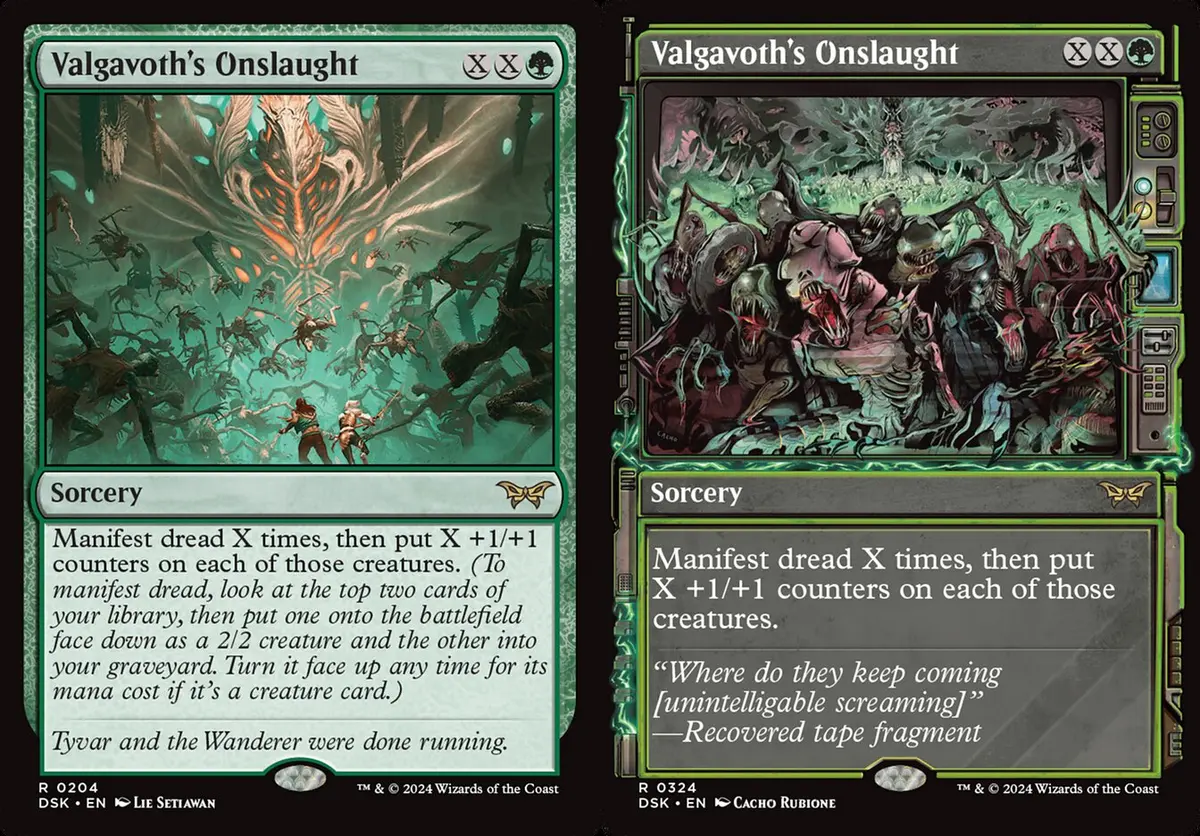
Valgavoth’s Onslaught
Sorcery
Manifest dread X times, then put X +1/+1 counters on each of those creatures. (To manifest dread, look at the top two cards of your library, put one onto the battlefield face down as a 2/2 creature, and put the other into your graveyard. If it’s a creature card, you may turn it face up any time for its mana cost.)
Anyone who has used it knows how outrageous Valgavoth’s Onslaught is. While you manifest dread X times, you also put X +1/+1 counters on each manifested creature; even with X=1 it is a serviceable three-mana 3/3 creature. Since only creatures can be paid for and turned face up, when you manifest multiple creatures onto the battlefield, the opponent can usually only guess with their removal, and with X=2 you have two 4/4s, so even if you get swept, you can lay the board back out in one shot.
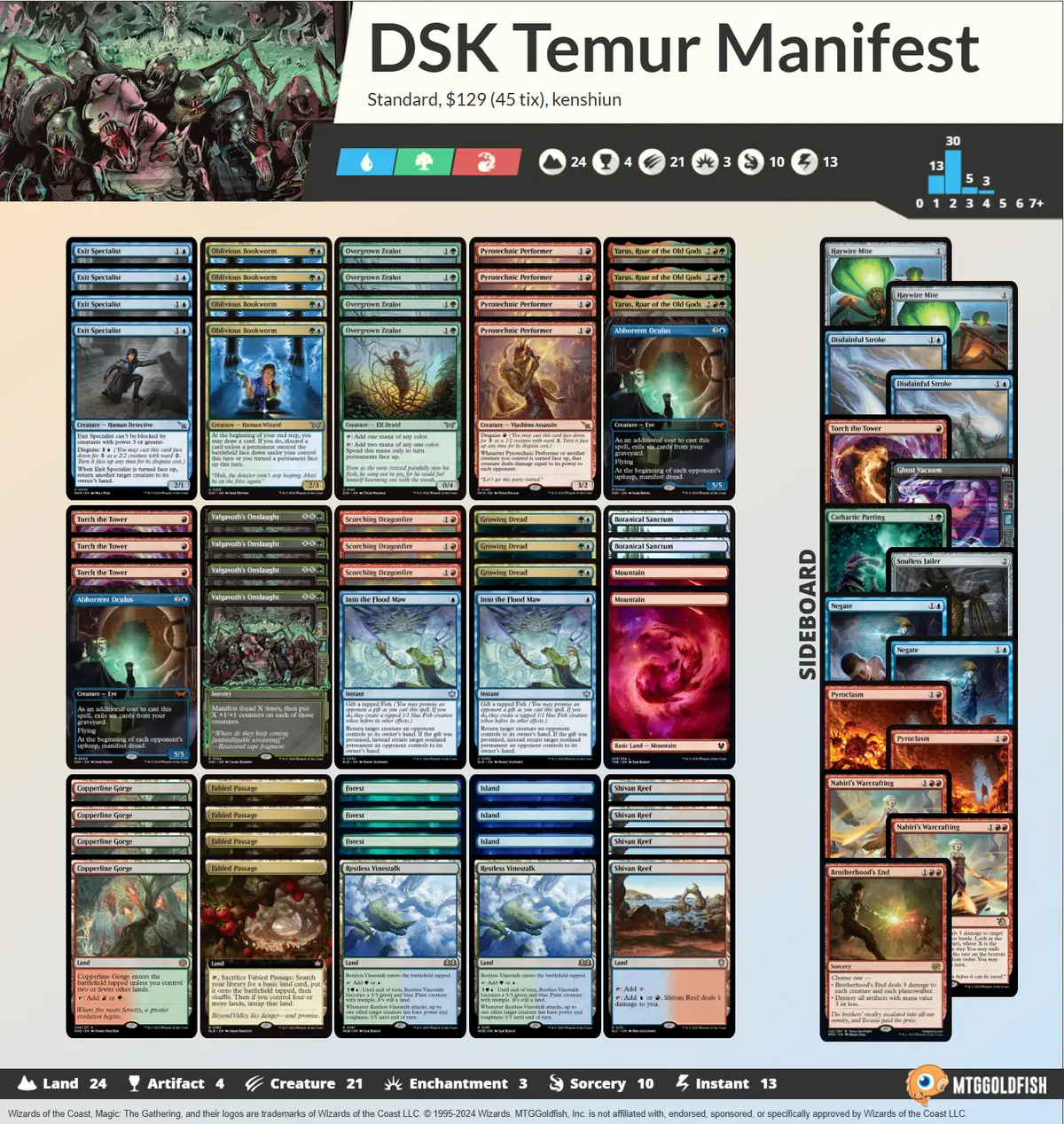
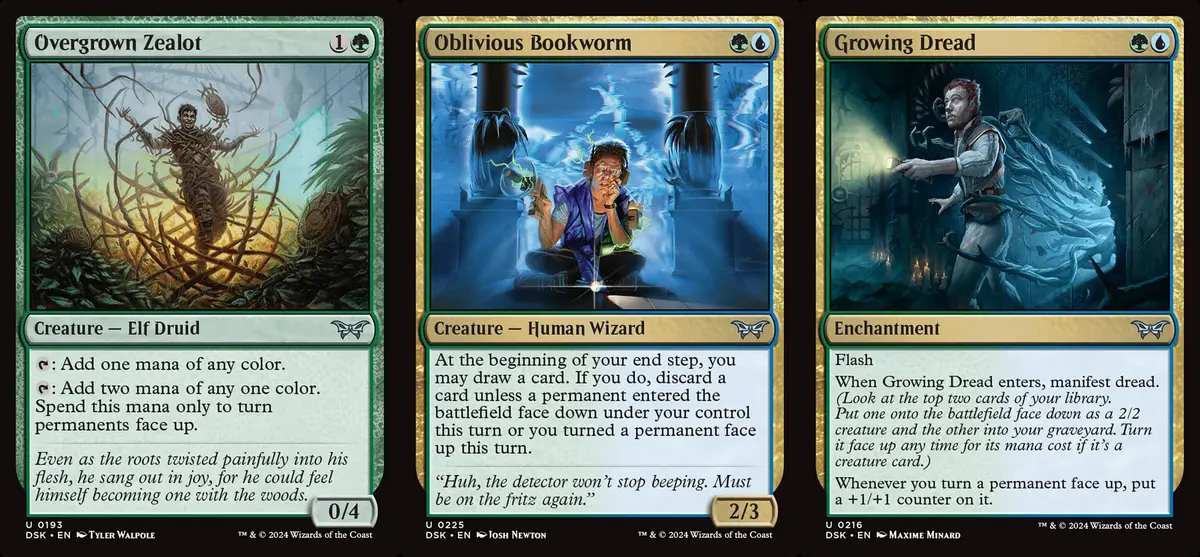
First, I included the morph-related components released in this set: Overgrown Zealot, Oblivious Bookworm, and Growing Dread. Overgrown Zealot is an excellent early blocker, and when you produce mana to pay for turning face up, it can produce two, helping the creature you manifest or disguise on turn three be turned face up the same turn. Oblivious Bookworm is an automated looting engine that normally adjusts your hand and helps fill the graveyard, and if a face-down creature enters or is turned face up during your turn it becomes a card-drawing machine; if it gets manifested itself, turning it face up on your own turn lets it draw just the same. Growing Dread is a two-mana flash manifest dread, usable as a combat trick or extra clock, and when a creature is turned face up it also gives an extra +1/+1 counter, making it quite flexible in use.
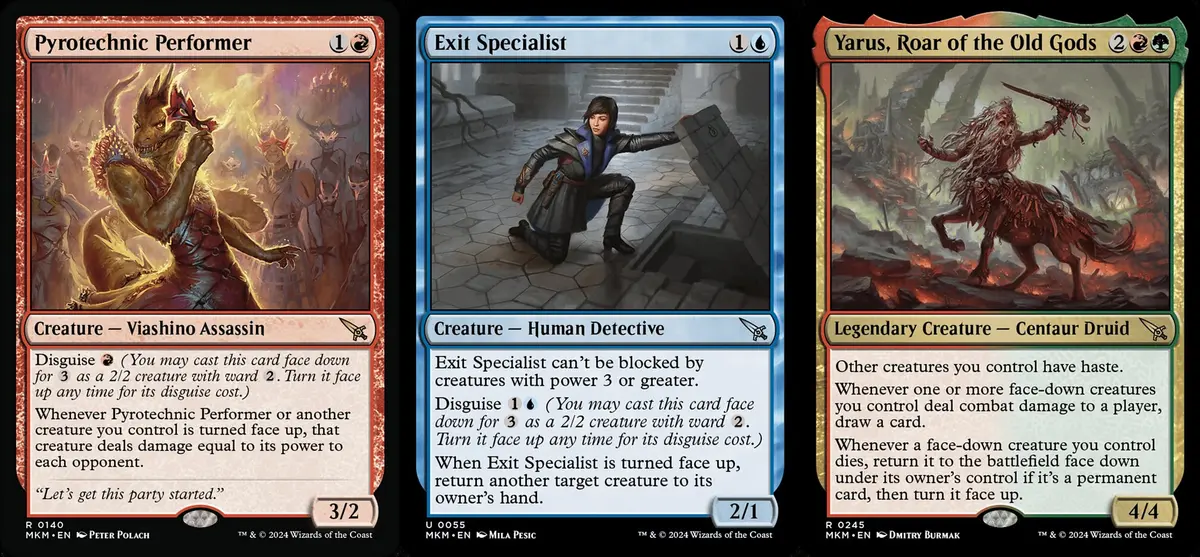
Next are the good friends from Murders at Karlov Manor: Pyrotechnic Performer, Exit Specialist, and Yarus, Roar of the Old Gods. The ability of Pyrotechnic Performer to deal damage to the opponent equal to the creature’s power when a creature is turned face up may look unremarkable, but in fact it easily deals astonishing damage when turning up creatures in succession, and cases of dealing double-digit damage in a single turn are not rare. When Exit Specialist is turned face up it performs an Unsummon, which can rescue your own creature or disrupt the opponent’s tempo depending on the situation, and it has some evasiveness itself too. Yarus, Roar of the Old Gods is the lord of face-down creatures: face-down creatures that connect with the opponent draw you a card, and when they die they return face up and trigger their abilities. Giving the whole team haste, combined with Valgavoth’s Onslaught it easily decides the game with a single swing.
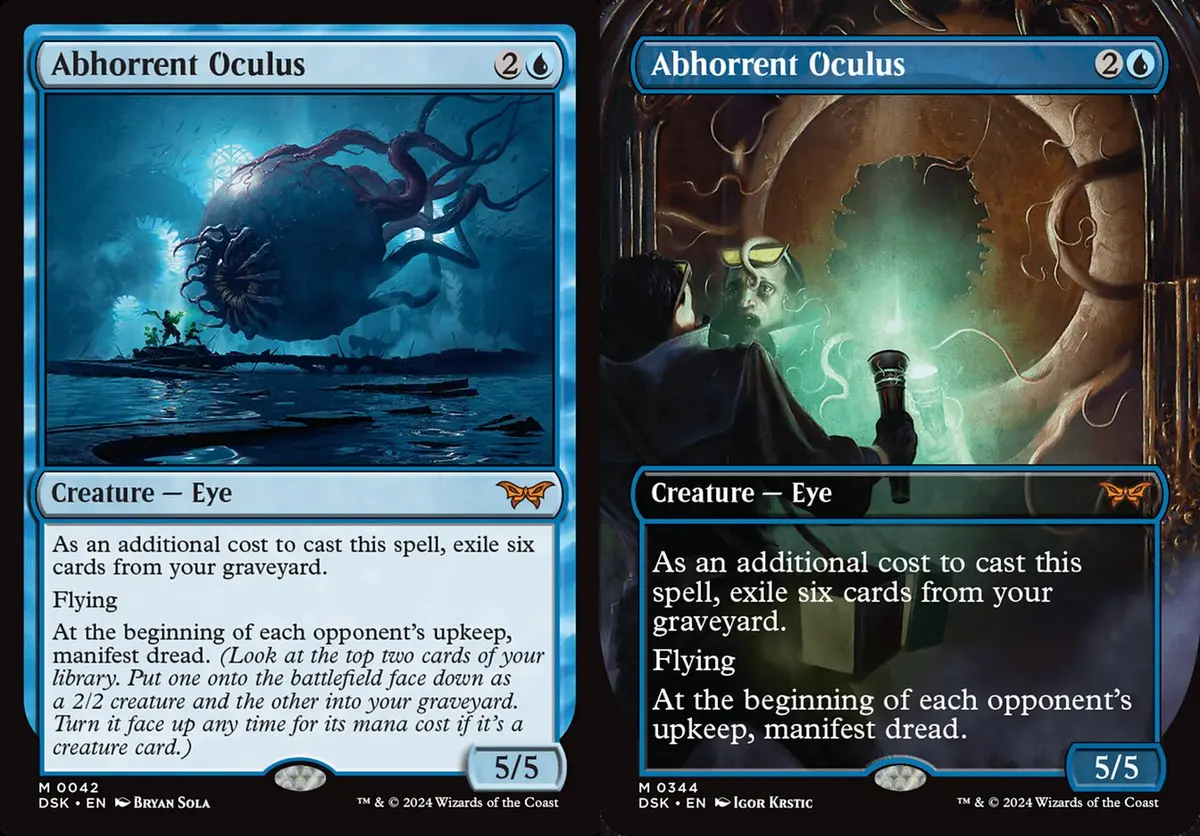
As a supplement to the creatures, I also included two Abhorrent Oculus. A three-mana 5/5 flyer is already a pretty disgusting body, and it automatically manifests dread during the opponent’s upkeep. However, it has the additional casting cost of exiling six cards from your graveyard; although you can stock that with Oblivious Bookworm, Fabled Passage, and the other manifest dread cards, it still isn’t advisable to play many. But if you happen to manifest it, you needn’t worry about that at all.
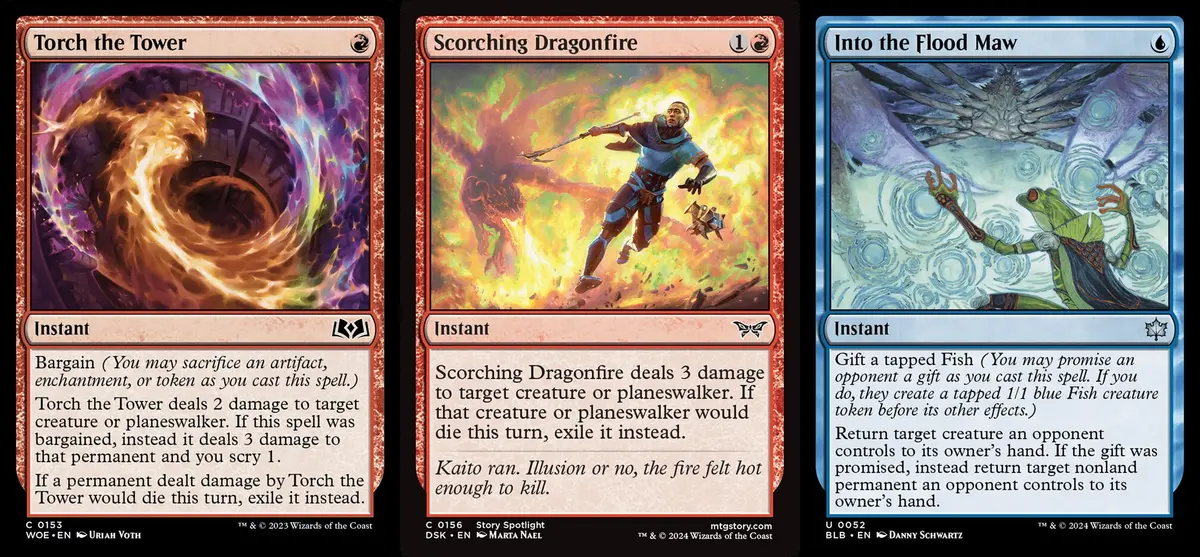
For removal, to deal with the rampant Prowess/burn-type red aggro decks, I chose low-cost answers that don’t trigger death abilities, such as Torch the Tower, Scorching Dragonfire, and Into the Flood Maw, to get in the opponent’s way.
Gameplay Demonstration
First up was the very popular Orzhov graveyard recursion deck of late. On turn four they recurred Valgavoth, Terror Eater, a hard-to-answer big flyer with lifelink, which really made me want to throw in my cards and concede… and in this game the opponent really did. When Valgavoth came down, I had only one manifested creature, one disguised Pyrotechnic Performer, and Yarus on the battlefield, and the opponent was still at 18 life; any way you looked at it, I was dead. But it turned out otherwise. With the combo of Pyrotechnic Performer, Growing Dread, and Valgavoth’s Onslaught, I forcibly dealt 36 damage and won the game (and that damage doesn’t even count the other face-down Pyrotechnic Performer).
In this game the opponent seemed to be a mono-black midrange deck with PTSD about recursion. They opened with Leyline of the Void, and also had Lord Skitter, Sewer King and Liliana of the Veil, with every kind of countermeasure in place. My Abhorrent Oculus also got caught in the tail end of the storm, but since I didn’t draw it, it wasn’t a problem. On turn three I first used Scorching Dragonfire on Lord Skitter to stop them from filling the board; on turn four, my disguised Exit Specialist soaked up a removal spell and delayed the opponent’s tempo; on turn six, Valgavoth’s Onslaught luckily manifested Yarus, using body size to forcibly suppress the opponent’s second Lord Skitter and start refilling resources. The opponent’s Liliana of the Veil could only jump to a nearby creature, and finally Restless Vinestalk stood up and, together with Yarus, dealt the opponent the final blow, and the opponent conceded in response.
Conclusion
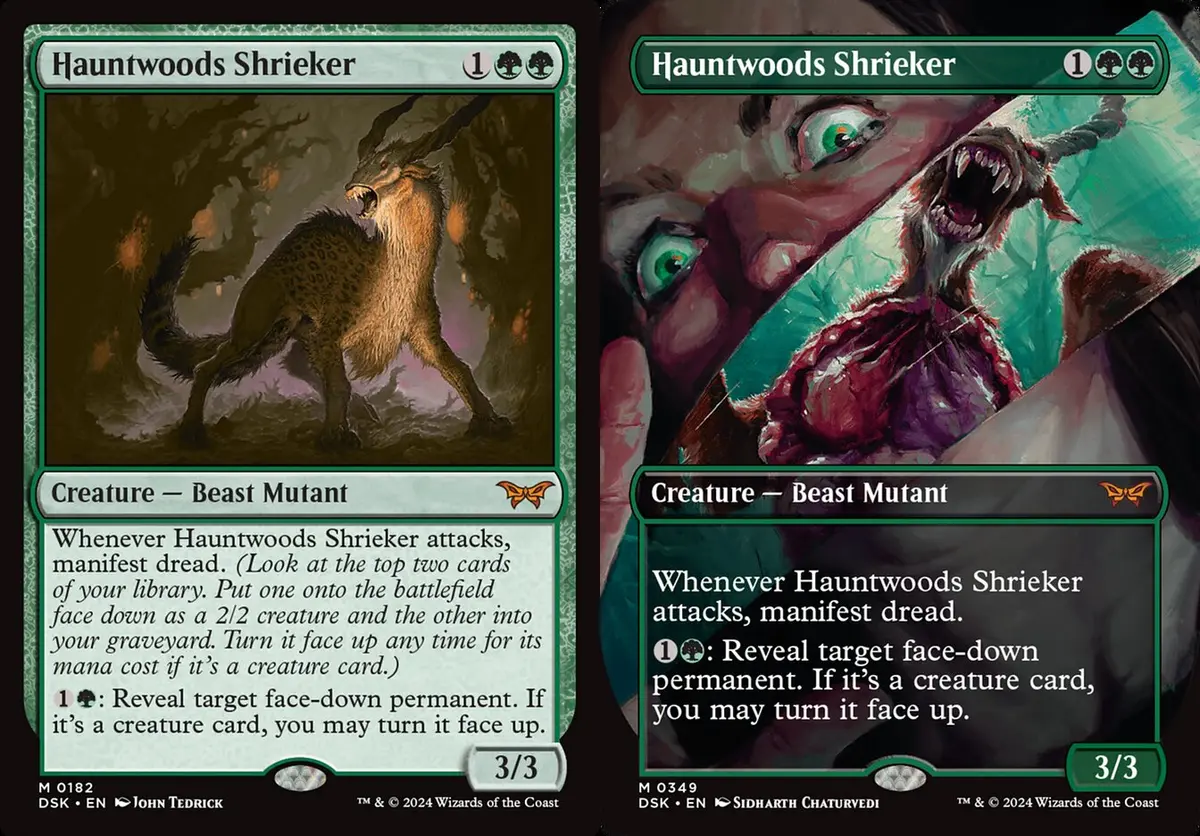
Although the overall tempo is somewhat slow, it has astonishing explosive power, which I’m quite satisfied with. But is this article’s build the optimal one? Not necessarily. In fact, during testing I ran into a Selesnya version built around Hauntwoods Shrieker, and the opponent’s build felt quite solid to play against. Interested readers can try different color combinations in many ways; you might find a version better than this one.
- Title
- A Board-Commanding Surprise: Standard Temur Manifest
- Author
- JerobaMTG
- Created at
- October 9, 2024
- License
- This work is licensed under CC BY-NC-SA 4.0 .