
Standard Deck Recommendation: Classic White-Blue Control

Note: This article was translated from Chinese by AI and may contain errors. Read the original Chinese version.
Before We Start
This is a carnival for traditional control fans, and a trial of your bladder’s limits.
Although Wilds of Eldraine didn’t give traditional White-Blue Control many new cards, it filled in the most critical holes, and the overall improvement is very noticeable. Let’s see how the most classic White-Blue Control adapts to the new era!
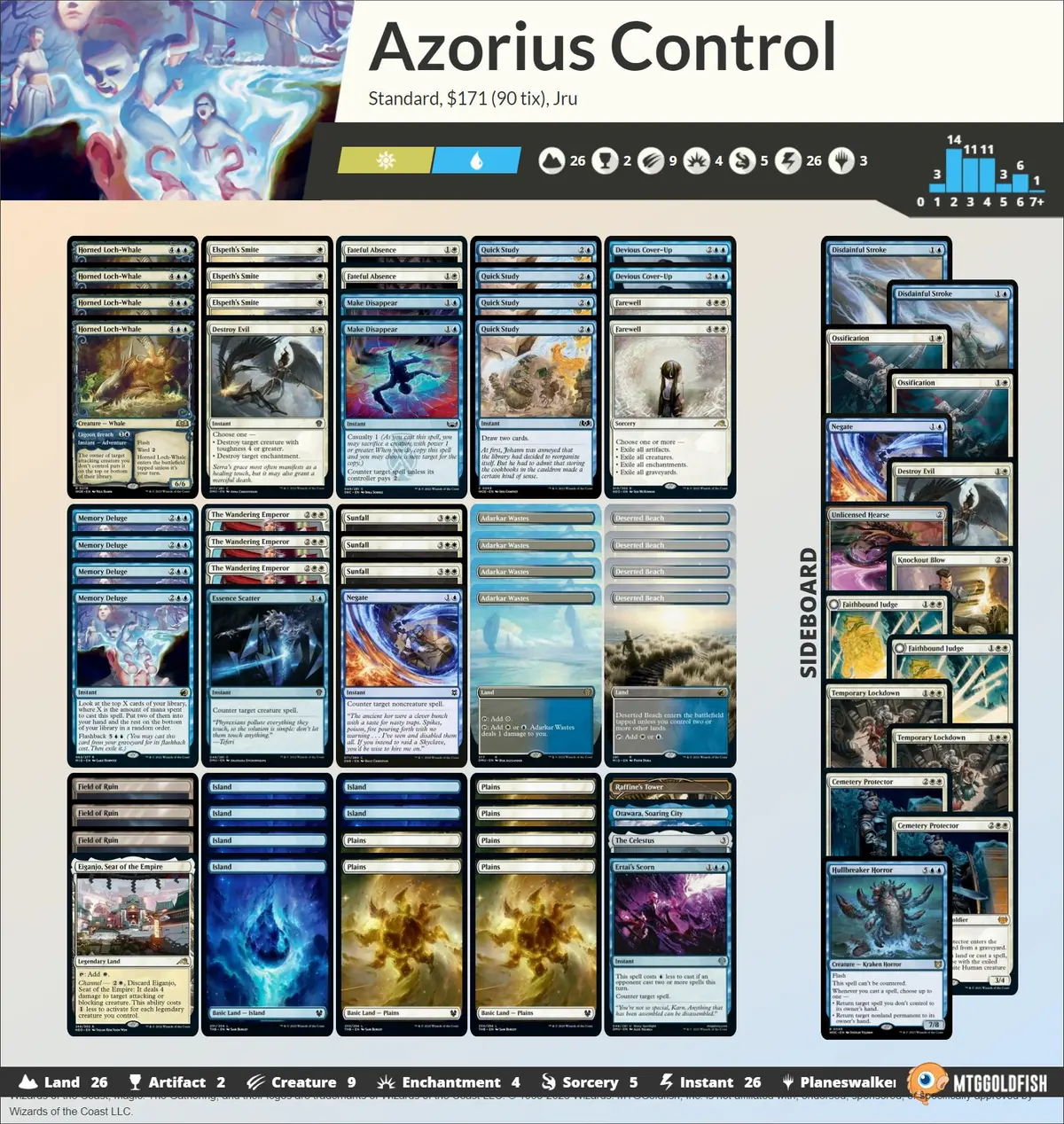
Deck Introduction
Who Will Like This Deck
- Teferi
- Fans of traditional Draw-Go control
- Those who want to try a build without black
- Those who want to effectively beat the opponent’s death triggers and graveyard plans
- Those with a friend who plays the Invasion of Alara + Raccoon combo, and who want to bond with him
Who Won’t Like This Deck
- Those who don’t like stress-testing their bladder
- Those who don’t like an overly passive game plan
As said above, this is a very traditional Draw-Go control deck. It stabilizes the board with a large number of reactive answers, finds the right time to widen the resource gap, and looks for a moment to switch from defense to offense and take over the game once the board is stable.
A major feature of traditional control is that every card has a clear role, so let’s introduce this deck starting from each card’s role!
Card Analysis (Main Deck)
Single-Target Removal
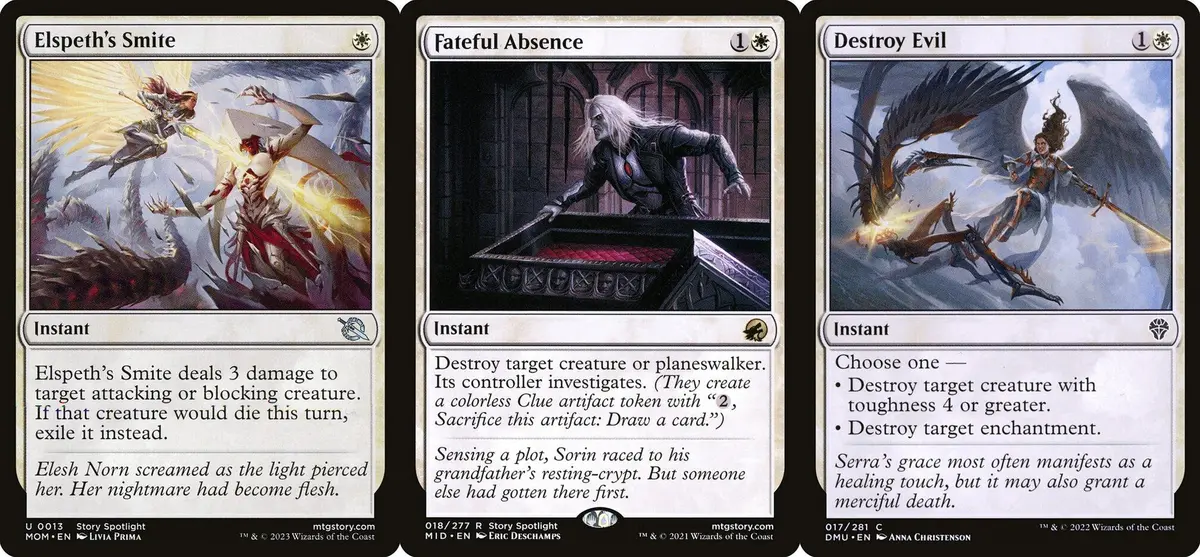
Elspeth’s Smite is roughly a white Lightning Bolt against creatures on defense. The creatures that 3 damage can handle in Standard mostly have to attack to pressure White-Blue Control, so the restriction doesn’t matter much. Also, toughness 3 is the dividing line for a standard attacker: the vast majority of regular attackers in Standard have toughness 3 or less. The fact that death becomes exile also handles Tenacious Underdog, Mosswood Dreadknight // Dread Whispers, Razorlash Transmogrant and Dennick, Pious Apprentice well. However, against prowess creatures like Monastery Swiftspear or other attackers that can grow in size, there is a risk of wasting the card, so keep in mind the possibility of the opponent’s toughness going up.
Fateful Absence is one of the few unconditional hard removal spells in this deck, and also a precious answer to planeswalkers. It is the only direct answer in the main deck to a planeswalker that has successfully entered, but the side effect is just as strong: it is a removal spell that costs you card advantage, and the one whose target you need to think hardest about. A similar role could be filled by Ossification. The many basic lands in White-Blue Control are enough to power Ossification, and it doesn’t have the card-disadvantage problem. However, this White-Blue Control uses a lot of counterspells, and more sorcery-speed cards easily conflict with counters, and in the main deck there is also a slight risk of clashing with your own Farewell, so I didn’t put Ossification in the main deck.
Destroy Evil supplements removal blind spots: it can handle a successfully resolved Sheoldred, the Apocalypse, Wedding Announcement // Wedding Festivity and so on, but its targets are restrictive, so one copy in the main deck is just right, and more than that tends to clog your hand.
Finishers That Double as Single-Target Removal
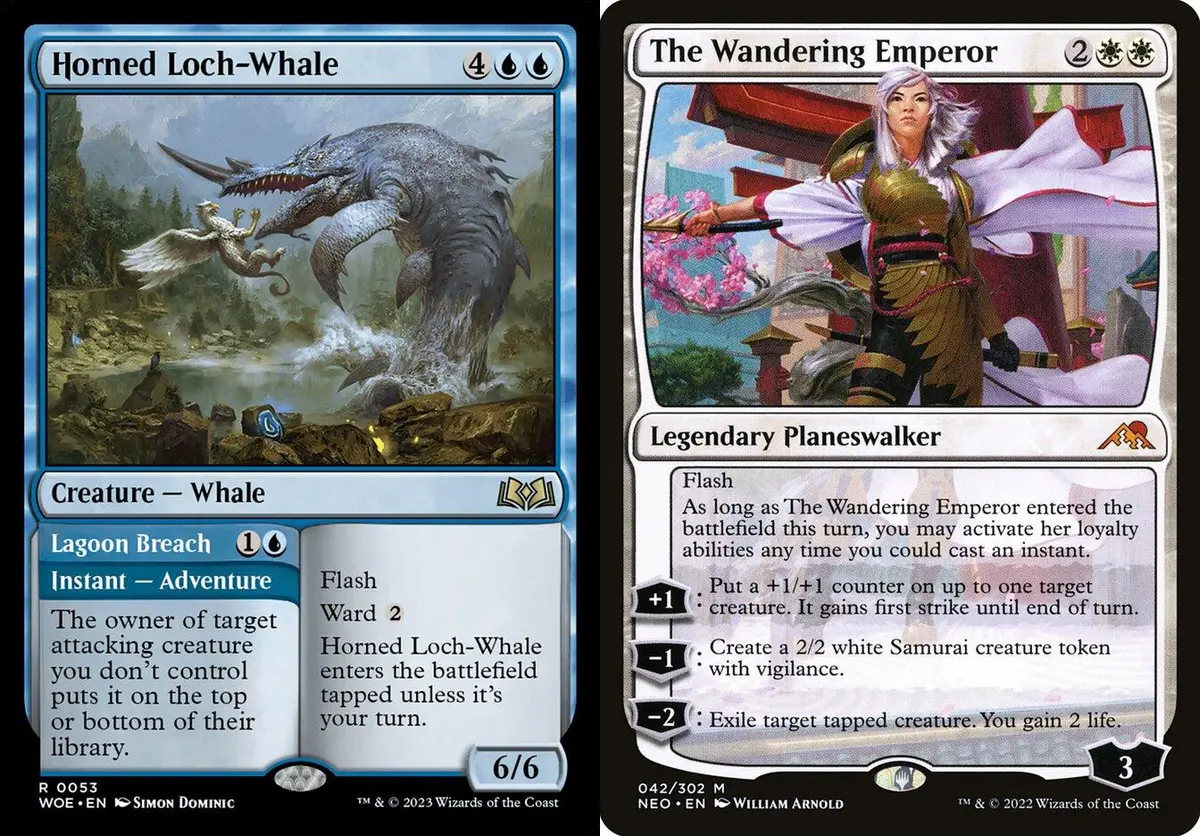
Horned Loch-Whale // Lagoon Breach is the MVP card of Wilds of Eldraine, and you could say this one card lifted the entire deck. The adventure side, Lagoon Breach, fills a big pain point of non-black control decks: too many blind spots in cheap removal. In the past, cheap removal in non-black colors had large blind spots in range or targeting restrictions, or strong side effects like Fateful Absence, and in this regard Lagoon Breach can already be called excellent!
Threats that hit you from outside combat, like Sheoldred, the Apocalypse, are after all few. The way the vast majority of creatures pressure a control deck is still by attacking, so the restriction of targeting an attacking creature isn’t harsh. And although the opponent decides whether the creature goes to the top or bottom of the library, which seems likely to produce a result that is bad for you, from a card-advantage perspective you don’t lose a card even if they choose the top: the threat has indeed disappeared from the board, and it can be seen as roughly equal to killing one creature and the opponent topdecking an identical creature. Knowing what the opponent will draw next also helps you plan the game, so it’s not all bad, and if the opponent chooses the bottom of the library, it’s really no different from two-mana hard removal.
Of course, against creatures like Corpse Appraiser that only want the enter-the-battlefield ability, it becomes quite awkward, so Lagoon Breach is not a cure-all and you still have to weigh the situation. There is also an interesting hidden ability: when the opponent chooses the top of the library, it means they are guaranteed not to draw a land for at least a turn. Sometimes opponents choose the top of the library out of greed for a particular card, which indirectly makes their land drops stumble and hurts their development. Of course you can’t expect the opponent to make this kind of decision error, and you should still think on the premise that the opponent plays reasonably. Conversely, sometimes by watching where the opponent chooses to put the creature, you can infer the structure of their current hand and what they expect to draw, and then plan how to use your own interactive spells.
After all this, I haven’t even talked about the creature itself. As a flash creature, Horned Loch-Whale fits the Draw-Go approach perfectly. Although it was balanced in design, so it enters tapped if it enters on a turn that isn’t yours and can’t enter to block when the opponent attacks, the flaw doesn’t outweigh the merit, and Horned Loch-Whale is still a very qualified finisher. Not to mention that ward 2 pretty much cancels out the drawback of entering tapped. Against opponents who lack hard removal or whose hard removal is too expensive, casting it proactively on your own turn is very likely to take over the game too, as the vast majority of creatures can’t get through the 6/6 wall.
Don’t forget that The Wandering Emperor is also in this entry. Her strength needs no elaboration: she has long proven herself in every format, being removal + life gain + board expansion all in one card, and as soon as she finds an opening she can snowball out of control; being a planeswalker also makes her relatively hard to remove.
The biggest advantage of Horned Loch-Whale // Lagoon Breach and The Wandering Emperor is that while serving as finishers, they also have removal capability, which greatly improves the deck’s ability to respond.
Sweepers
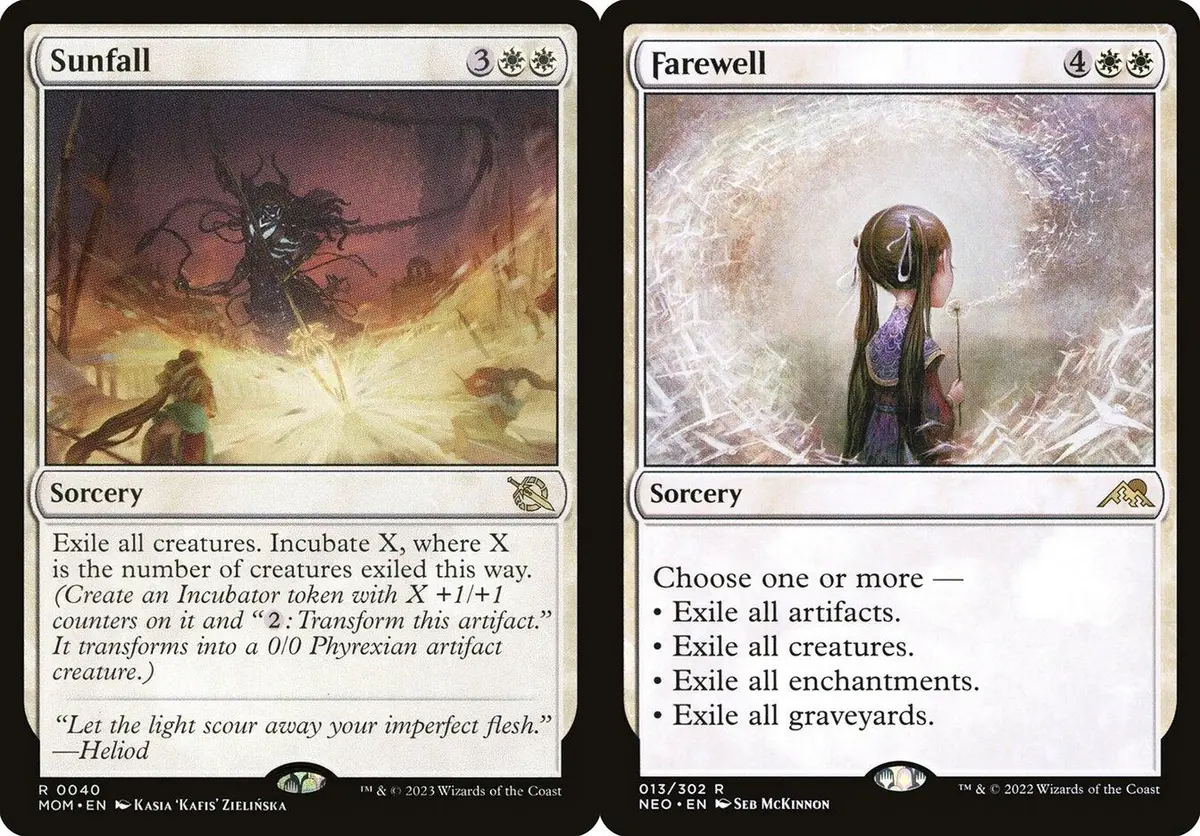
Single-target removal alone can’t widen the card gap, and it’s easy for something to slip through and keep you from really stabilizing the board. Sweepers are a major weapon for turning around the tempo of a game in regular control.
Sunfall and Farewell are both exile sweepers, which further improves resistance to graveyard decks. Besides being a sweeper, Sunfall is also a win condition, although the most common use of that little Incubator token is trading with other attackers. Farewell, on the other hand, is a catch-all against planeswalkers and everything off the battlefield; for decks that rely on noncreature artifacts, enchantments or graveyard usage to function, one Farewell is enough to declare victory.
The Magic of Friendship: Counterspells
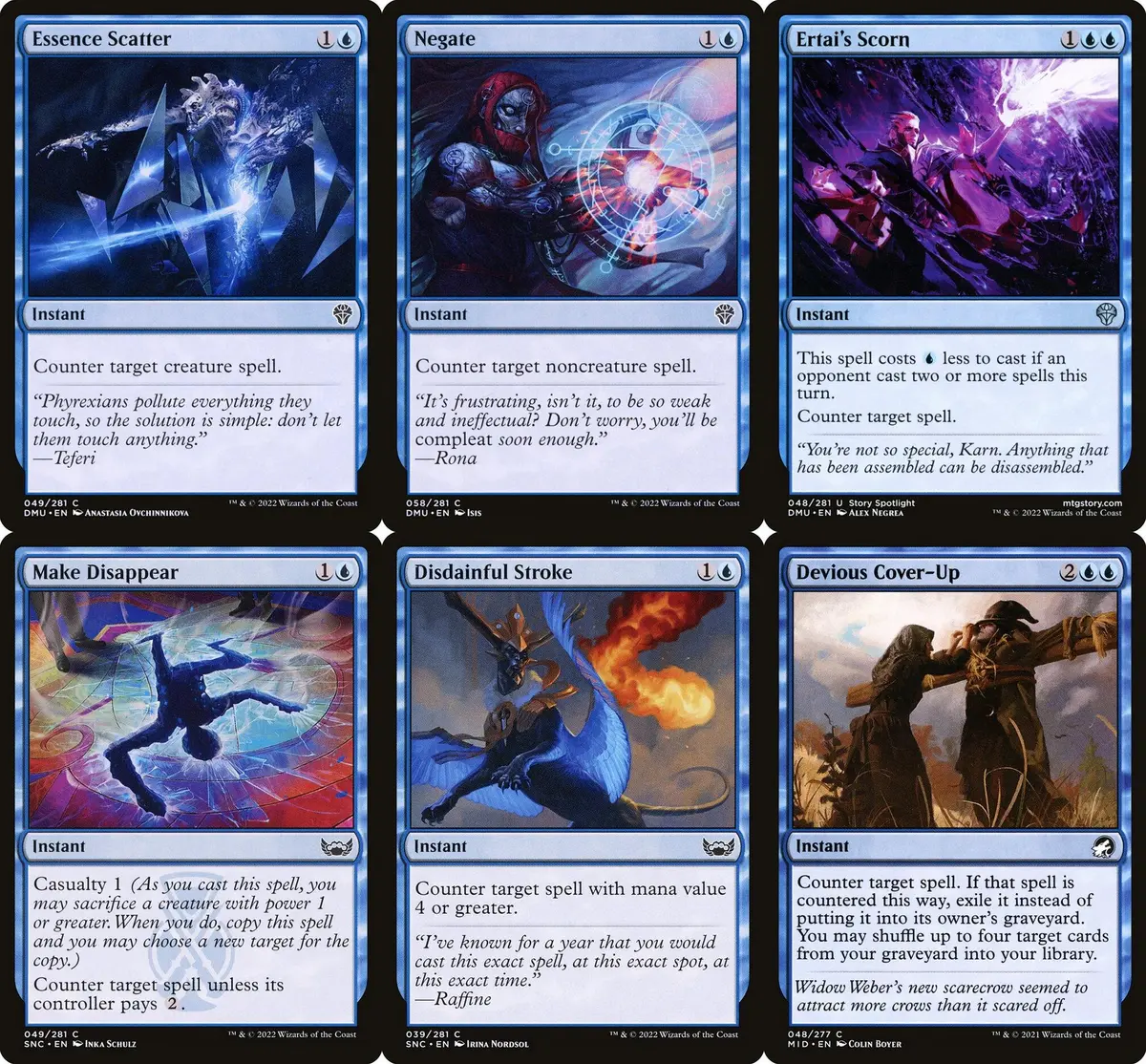
The two-mana counters are Essence Scatter, Negate, Make Disappear and Disdainful Stroke. Since each has blind spots, too many of one kind create the risk of a clunky hand, so they are mixed in very sparingly. Disdainful Stroke is not in the main deck, because counter slots are limited and overdoing it lowers the deck’s flexibility. Also, the targets of Disdainful Stroke are usually my favorable matchups in game one, so I don’t need to be so targeted, and I moved it to the sideboard.
Ertai’s Scorn is the only three-mana hard counter. It can become a Counterspell with a lighter color requirement, and it occasionally works wonders against opponents who try to bait counters with other cards, but given the shortage of counter slots I can only play one.
Devious Cover-Up is exactly what makes counter slots so tight. A four-mana hard counter seems too clunky, and with Dissipate already available in Standard for the exile-counter role, but this counter really does raise the ceiling of the whole deck. The ability to shuffle four cards from your graveyard back into your library delivers considerable value in extremely long games, and White-Blue Control is exactly the kind of deck that easily ends up in such games.
As the game enters the late stage and your library thins, the density of good cards in your library gradually rises. For a control deck that lacks win conditions, losing because all your finishers have been killed is a real risk, and Devious Cover-Up ensures you still have a way to win; two Devious Cover-Ups shuffling each other back in to save you from decking is also a hidden win-condition backup.
Finally, don’t forget that choosing the four cards in the graveyard to shuffle back is a targeted action, and you must declare the targets at the moment of casting.
Hand Refill
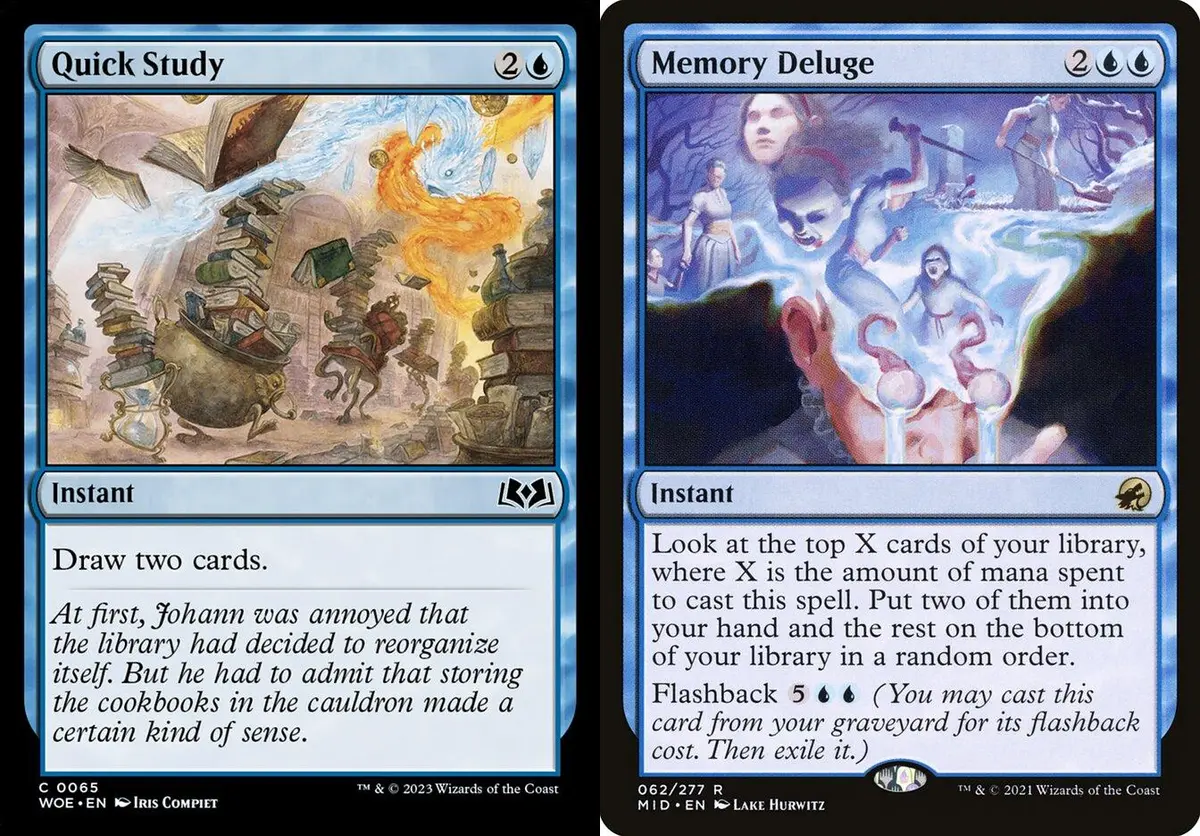
Memory Deluge is likewise a veteran that proved itself in every format early on. Drawing 2 cards for 4 mana is the standard benchmark for card-advantage spells; Memory Deluge’s depth of looking at 4 and taking 2 is first-rate in Standard, and flashback raises this card’s ceiling enormously. In terms of filtering depth and amount of card advantage it could be called super first-rate. I even doubt that within five years Standard will see a four-mana card-advantage spell that earns more than Memory Deluge. Also, because this action is not drawing cards, it can buy you more room to survive against Sheoldred, the Apocalypse.
Quick Study is another big boost given by Wilds of Eldraine. Drawing 2 at instant speed for 3 mana seems plain, but it is very solid. In the past Thirst for Discovery could also draw 2 at instant speed for 3 mana, with a higher ceiling, such as not fearing flooding or filtering out dead cards, but its floor is less stable. Control is the archetype with the highest demand for continuous land drops, and always being required to discard a basic land risks mana screw or being unable to gain card advantage. The stability that plain, unadorned Quick Study brings is actually what I crave most.
There is also a point about Quick Study worth discussing: whether this slot should hold a clunkier but card-advantage spell (such as Quick Study or Thirst for Discovery), or a cheaper filtering spell that doesn’t gain card advantage but adjusts your hand efficiently enough (such as Consider or Impulse). This deckbuilding logic isn’t limited to Standard; it applies all the way up to the choice between Preordain and Archmage’s Charm in Modern.
My basis for the decision is how proactive the deck is. A deck with a higher level of proactivity (such as Izzet Murktide) doesn’t need to truly exhaust the opponent’s resources; it only needs to make sure that until the opponent dies it has enough interaction. Clunky card advantage would leave it without the mana to use the many answers it draws, giving the opponent a chance to break its game plan, so it pursues the optimization of a limited hand more, which is also one of the core ideas of “tempo” decks. Conversely, for a completely passive deck like this one, the winning game plan is a war of attrition that thoroughly exhausts the opponent’s resources, and card advantage is the core of how I win. One-for-one cards, no matter how many I use, can’t create extra advantage for me, and at the same time I mostly just focus on the passive game plan without having to take the proactive side into account, so between tempo and resources I tend to choose the cards that help me gain more resources.
(You ask whether there are cards with both tempo and resources? You can find quite a few on the banned list.)
Others
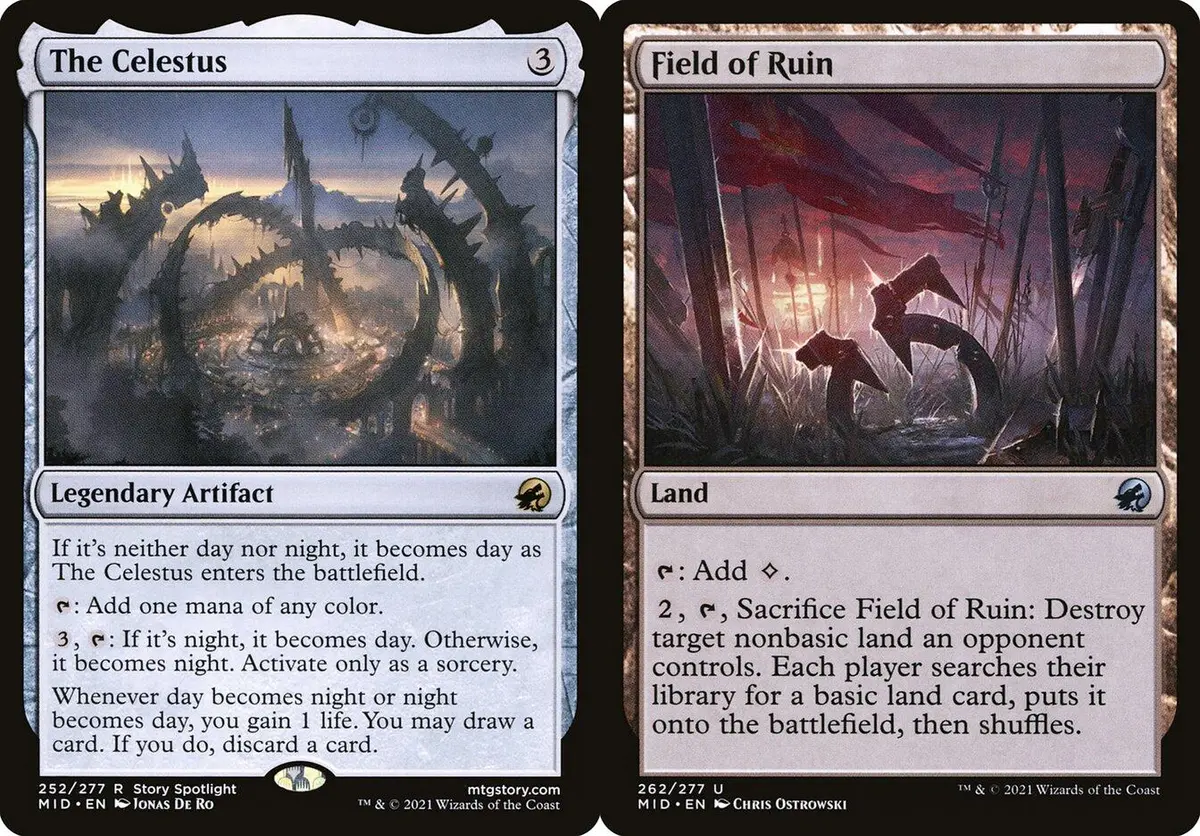
The Celestus is an excellent support card. Draw-Go control easily controls the day/night switch proactively, and the life gain and controllable looting that day/night switching brings deliver considerable value in long games. Having Sunfall one turn earlier also has a chance to completely derail the opponent’s attack tempo. Its legendary nature means you won’t play many; one is just right.
With colored manlands cycling back into Standard, the importance of Field of Ruin has also risen greatly, and Field of Ruin is also one of the biggest advantages of two-color decks. My color-fixing pressure is light and I have plenty of basic lands to support playing this card; against three-color decks short on basic lands, I even have a chance to destroy their land one-sidedly, and its forced-shuffle ability makes a small combo with Lagoon Breach. In addition, Demolition Field can achieve a similar effect, the only difference being that Demolition Field’s library search is optional, so if the opponent has seen the top of the library they can choose to painfully sacrifice a land to keep the top card order. If you’re worried about being targeted by Pithing Needle, you can also mix Field of Ruin and Demolition Field.
Card Analysis (Sideboard)
Plan B Finishers
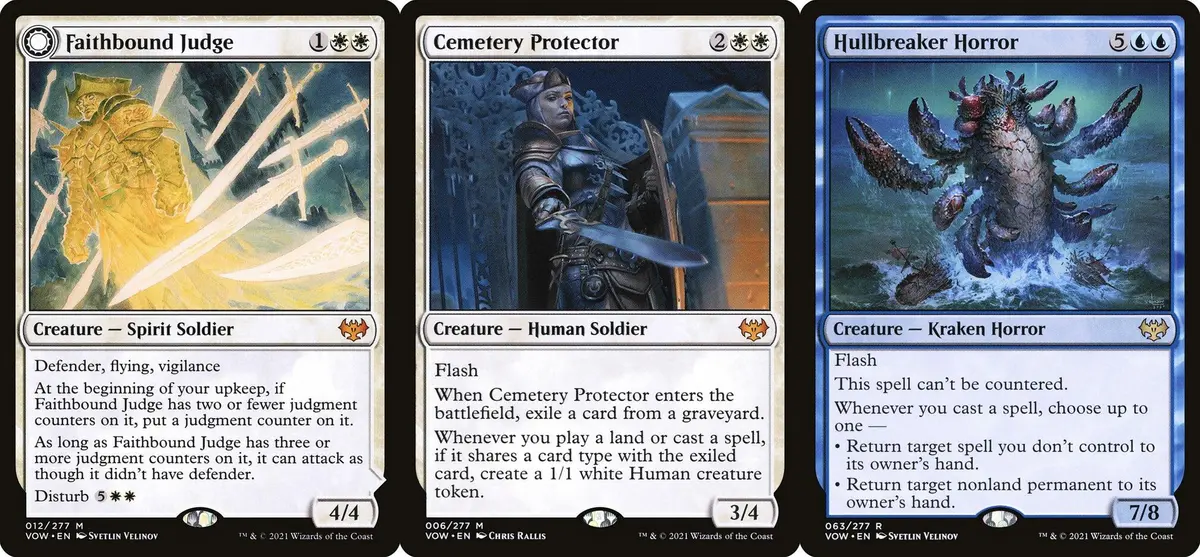
A feature of control is that the main deck is extremely short on creatures, so most opponents take quite a bit of removal out after game one when facing control, bringing in targeted cards such as Duress and Negate. Therefore creature cards that fit control’s game plan often work wonders in sideboarded games.
Faithbound Judge // Sinner’s Judgment, as a three-mana 4/4 flier, can block the vast majority of early-game damage, and with disturb it has a double win condition. However, when Farewell should exile the graveyard, don’t feel bad about your own Faithbound Judge in the graveyard. As long as, after weighing the pros and cons, the opponent loses more and you still have a way to win, just exile the graveyards along with it.
Cemetery Protector’s flash naturally matches Draw-Go needs, and its 3/4 body is also an excellent blocker. Unlike Faithbound Judge, Cemetery Protector can wait for the opponent to declare attackers before flashing in to block, which easily makes the opponent lose a wave of resources outright, and Thalia, Guardian of Thraben is relatively easy to trap this way. Cemetery Protector also offers another dimension of winning: going wide. In pure board-development terms, Monastery Mentor and Chrome Host Seedshark are both stronger, since any noncreature spell can trigger them, but Cemetery Protector’s flash and graveyard-exile ability have their own special value and better satisfy my preference for flexibility.
Hullbreaker Horror is one of traditional control’s big weapons, and a mirror-match trump card, but in fact this White-Blue Control has a low structural fit with Hullbreaker Horror. The reason is that the instants I can cast freely generally cost quite a lot: the removal spells require an attacking creature as a target, and the card-draw spells cost a lot, so I can’t trigger Hullbreaker Horror’s ability reliably. If I want to free up room in this build for other sideboard cards, Hullbreaker Horror would be the first thing I swap out.
More Counterspells
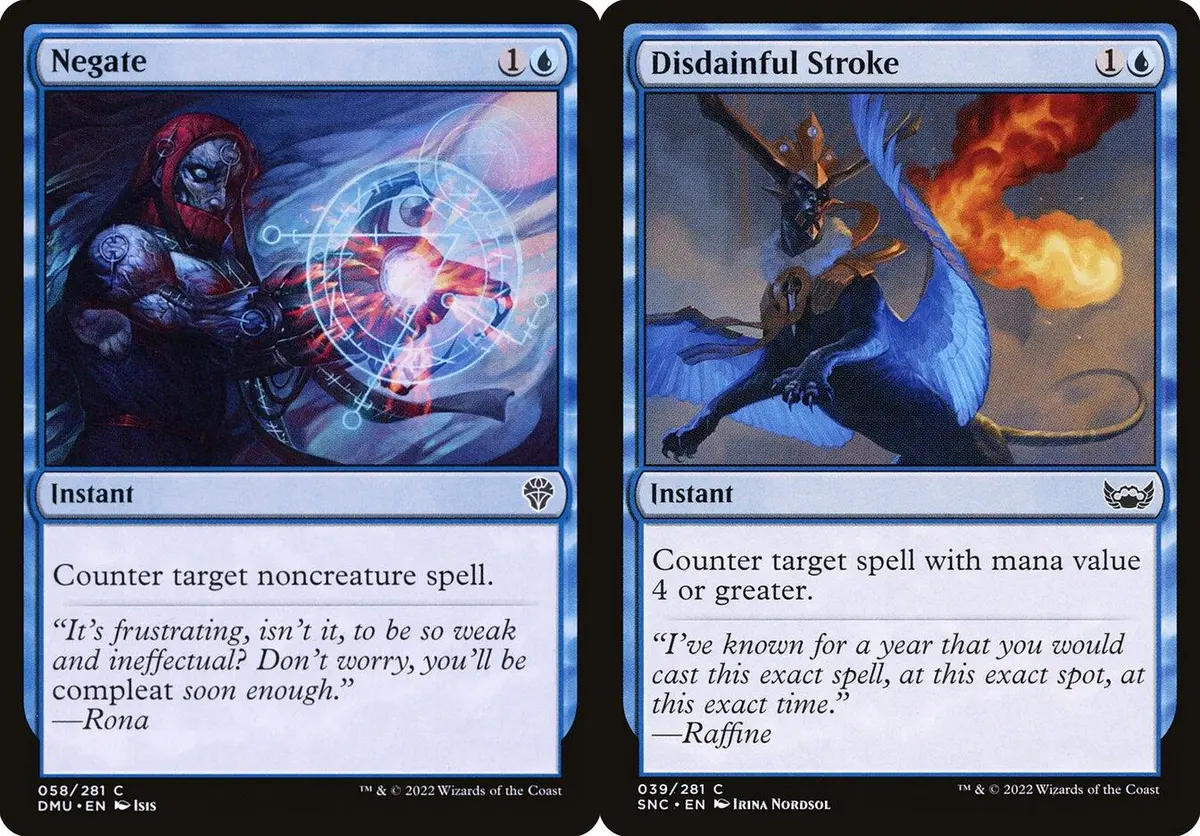
As mentioned above, Disdainful Stroke has no slot in the main deck and isn’t that necessary there, but it is undeniably a very useful counter in slow matchups, so it goes in the sideboard. Negate also supplements the main deck: in sideboarded games you may face far too many noncreature spells, including control killers like Liliana of the Veil.
Cheap Removal
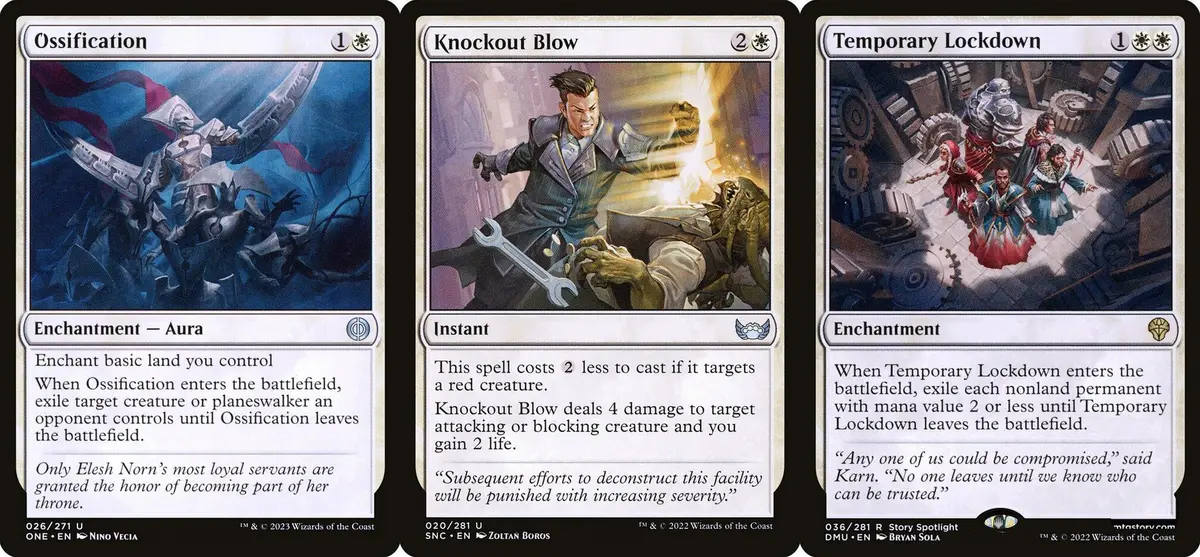
Slow matchups are White-Blue Control’s favorable matchups to begin with, so the removal supplements focus more on the aggro of the early game.
Ossification’s greatest value is against planeswalkers, which is also where my main deck’s defense is most fragile. In game one you need to worry more about clashing with your own Farewell, so I choose Fateful Absence, but the opponents that need Ossification in sideboarded games usually have no noncreature enchantments, so you can safely use it as hard removal. There is still a risk of clashing with another sideboard card, Temporary Lockdown, though, so if you plan to use both you still need to think carefully. If you want to avoid this concern, you can change Ossification to more Fateful Absence. The most important thing in this slot is the ability to remove planeswalkers, not preparing specifically against aggro.
Knockout Blow is there to respect White-Blue Control’s lifelong nemesis, red aggro. If the number of red aggro decks in the environment rises, increasing the number of Knockout Blow is absolutely reasonable.
Temporary Lockdown performs very well against cheap, extremely fast go-wide decks. Its exile nature makes protection spells like Tyvar’s Stand useless against it, and it can also handle cheap noncreature threats like Oni-Cult Anvil and Skrelv’s Hive. Just watch out for the risk of clashing with Ossification.
Others
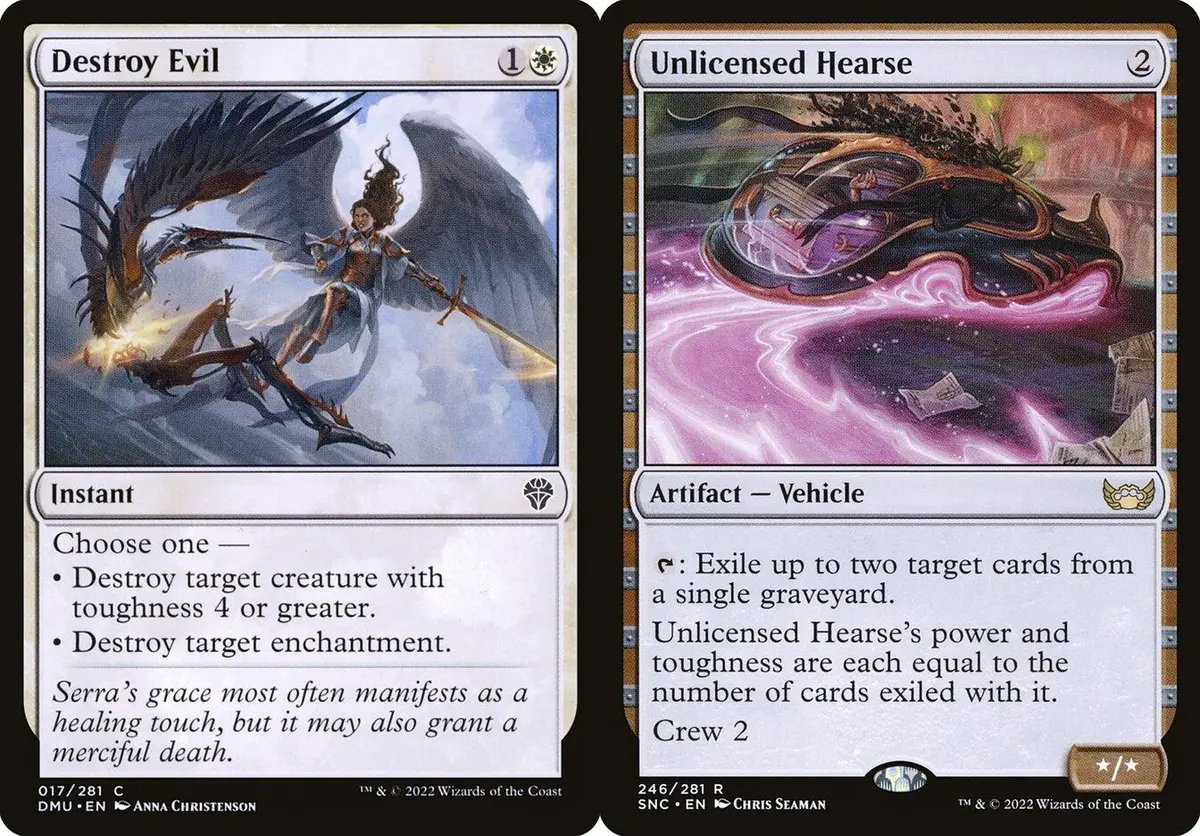
Destroy Evil is perfect when it meets the right targets, but those targets are neither narrow nor wide, with many blind spots; it’s a must against enchantment decks and big-creature decks, and in the remaining cases it depends quite a bit on the opponent’s build.
It’s never wrong to bring some graveyard hate in the sideboard, especially since graveyard usage in Standard has been extremely strong in recent years. Unlicensed Hearse takes on this job.
Other Unused Cards
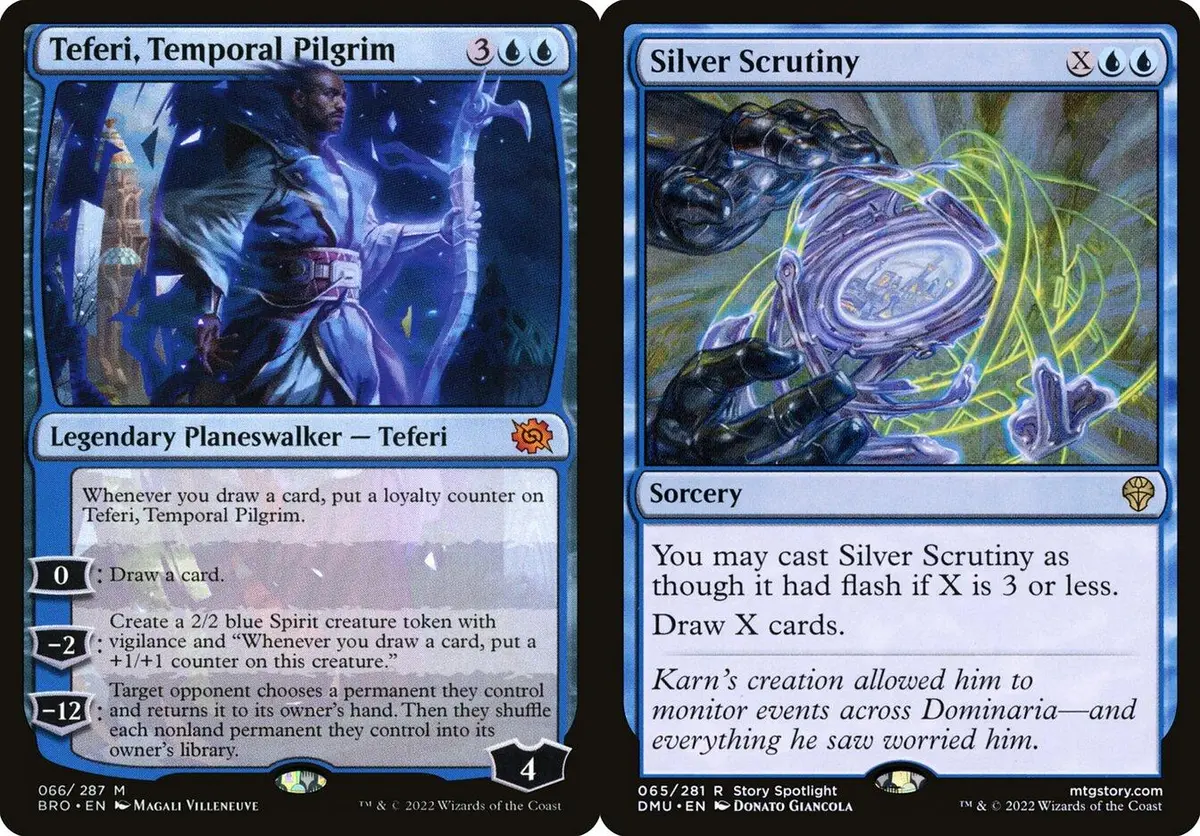
Teferi, Temporal Pilgrim is a very traditional control finisher, and its synergy with White-Blue Control goes without saying. However, with Horned Loch-Whale in use, it is hard to squeeze out space in the finisher slots, so I didn’t include it. If you did use Teferi, Temporal Pilgrim, the high-cost card-advantage spell could change from Memory Deluge to Silver Scrutiny, which fits Teferi’s ability better, but that also means resistance to Sheoldred, the Apocalypse would drop.
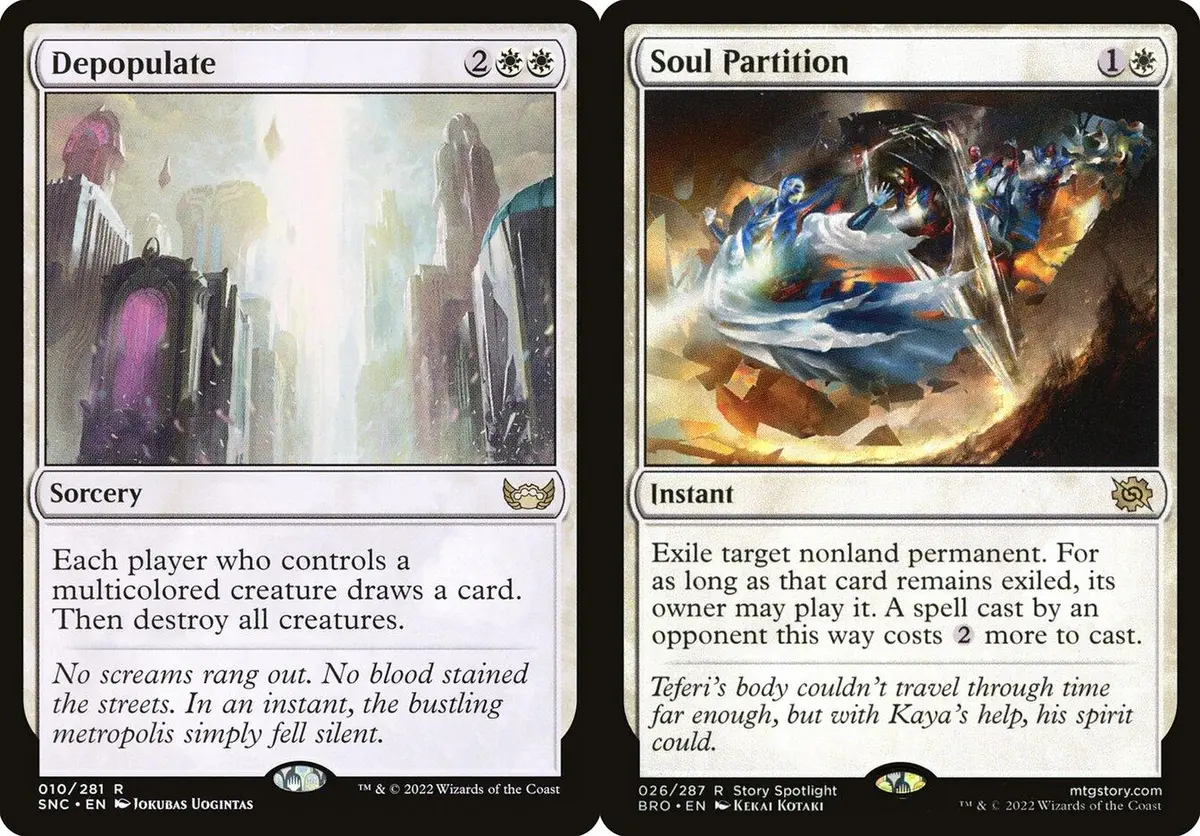
Depopulate and Soul Partition weren’t used because of the awkwardness of their roles.
Against slower matchups, Sunfall and Farewell have stronger removal power and a higher ceiling, and when you truly need to withstand extreme aggro, Temporary Lockdown is more timely, so Depopulate ends up in an awkward state where it seems able to handle everything yet handles nothing well. Such a card would normally be in the main deck, but since I don’t play it in the main deck, there is naturally no space for it.
Soul Partition looks like a catch-all at first glance, and can also save your own Horned Loch-Whale or The Wandering Emperor for repeated use, but it is actually more of a tempo card. Against a completely passive deck like mine, the opponent always has a chance to spend 2 more mana and cast the card again, so using it as removal only buys time and doesn’t really solve the problem. From a card-advantage perspective it is truly a card-disadvantage play; Fateful Absence also costs card advantage, but at least it solves the problem cleanly.
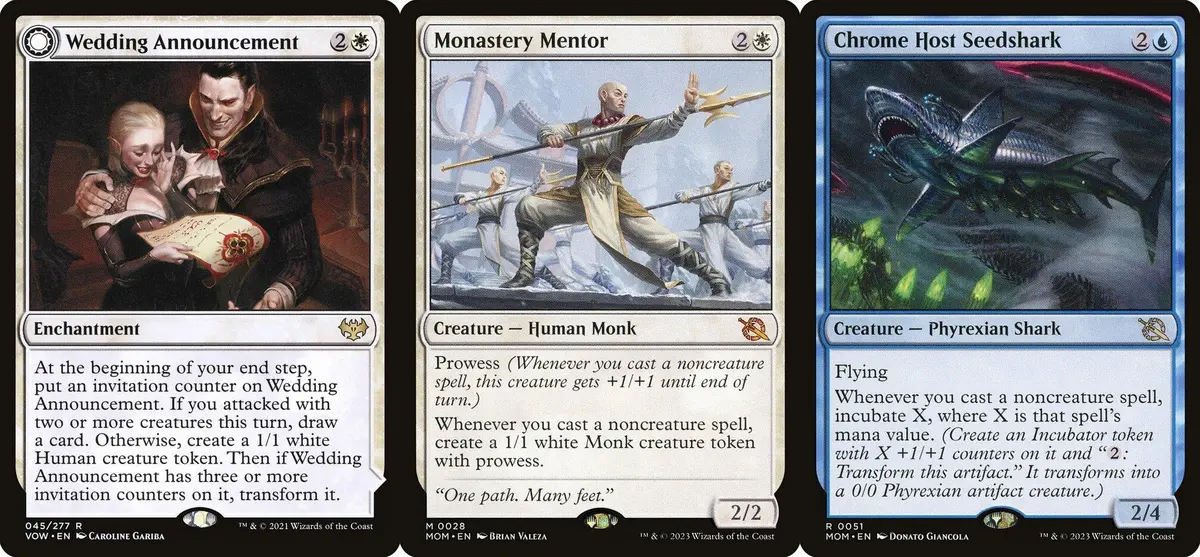
Wedding Announcement // Wedding Festivity, Monastery Mentor and Chrome Host Seedshark are all reasonable Plan B finishers for the sideboard. Which one to finally use is just a matter of personal preference, and readers can swap them according to their own understanding of the matchups.
Wedding Announcement already has the power to take over the game by itself. Against aggro, even if the tokens can’t survive until Wedding Announcement transforms, three tokens chump-blocking three attacks can still buy a lot of tempo. But if the role is anti-aggro, there are more cards that do it better, so it’s mostly a supplement to and a switch of win conditions. However, as a noncreature card, Wedding Announcement is also relatively easy to run into control-targeting cards (such as Duress and Negate) in sideboarded games.
Monastery Mentor was a common sideboard option in traditional control in the past, but like Hullbreaker Horror, Monastery Mentor expects to cast noncreature spells frequently. The best partners in Standard are cheap filtering spells like Consider and Impulse; if you can’t ensure the number of triggers, both the number of creatures and their size look rather weak, and this deck’s spell structure has trouble bringing out Monastery Mentor’s strengths.
Chrome Host Seedshark has good synergy with this deck. A three-mana 2/4 flier is a qualified blocker, and the fact that it creates Incubator tokens based on the spell’s cost also matches the deck’s characteristics. It is excellent both in defending against an assault and as a supplement to win conditions. Overall there is not much to complain about; if I must say something, it can hold off a 3/3 but cannot kill a 3/3, so against an opponent with multiple Graveyard Trespasser, Corpse Appraiser and similar attackers they can get damage through for free. Chrome Host Seedshark’s overall role is similar to Faithbound Judge, and which one to pick finally comes down to the author’s personal preference.
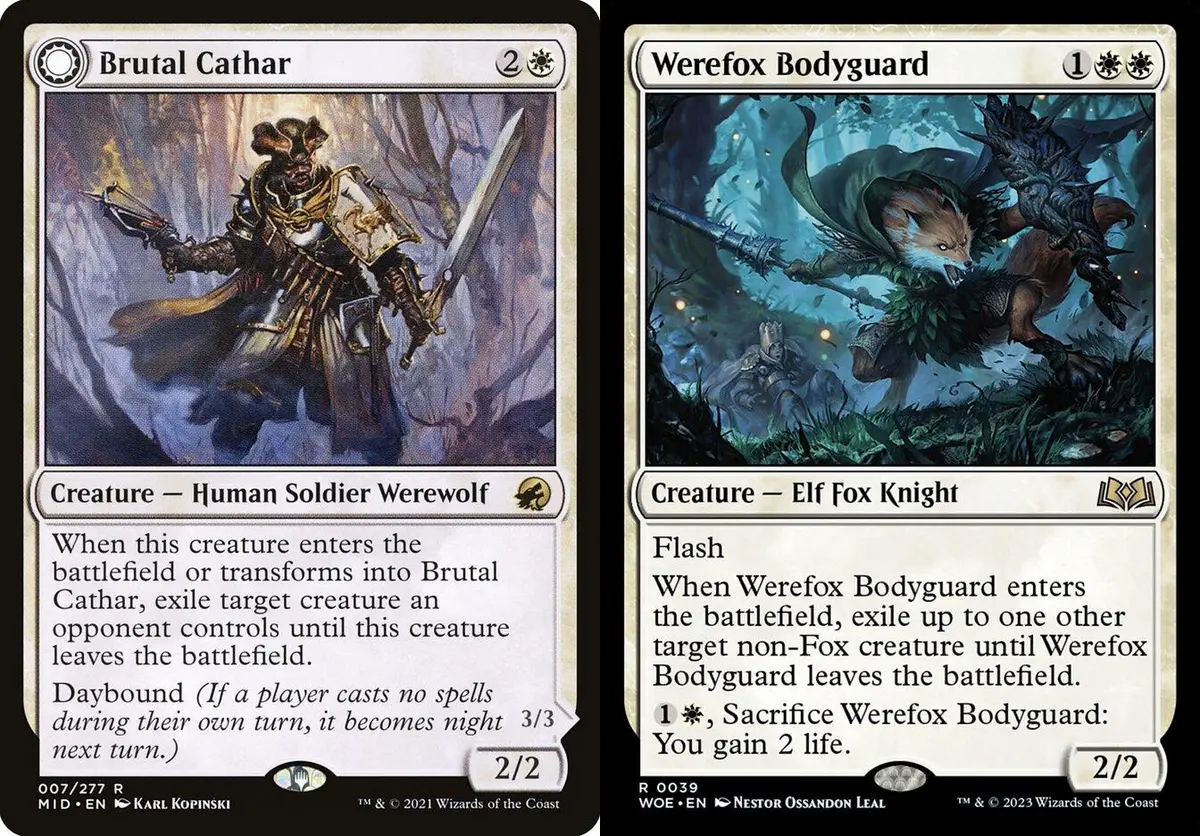
Brutal Cathar // Moonrage Brute and Werefox Bodyguard, as creature-type removal, also hold a role that can’t be ignored in sideboarded games. They perform excellently against decks that use Thalia, Guardian of Thraben as their main answer to control, and Brutal Cathar can gamble on the ceiling of one card removing multiple times through the day/night switch. Werefox Bodyguard’s flash provides more flexibility, and its ability to sacrifice itself to gain life works together with sweepers, avoiding the situation where after you cast a sweeper, a creature originally exiled by Werefox Bodyguard is left behind. Having an immediate follow-up threat after a sweeper is something control is very afraid of.
Although creature-type removal like Brutal Cathar and Werefox Bodyguard and Faithbound Judge can all play an anti-aggro role, the principle is completely different. Faithbound Judge only cares about the opponent’s combat ability and is simple size suppression, while Brutal Cathar and Werefox Bodyguard focus more on the opponent’s noncombat abilities, such as the mana-tax effect of Thalia, Guardian of Thraben. Depending on your understanding of the current environment, you can pick answer cards of different orientations to adapt to the environment.
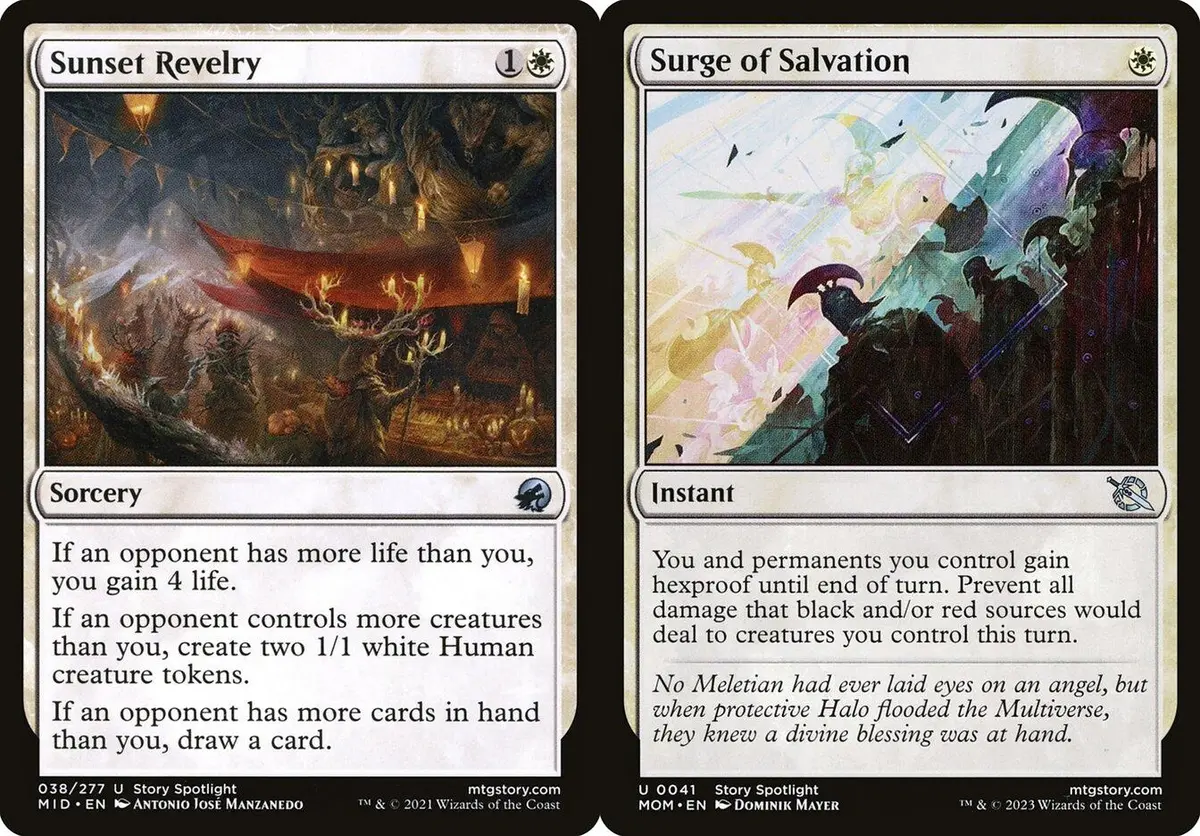
Sunset Revelry also performs excellently against aggro and is an option, though for now I mostly leave this job to Knockout Blow and Temporary Lockdown.
Although Surge of Salvation has a god-tier ceiling against red-black decks, after careful consideration I found my need for this card isn’t that high. I have almost no permanents to protect, so this card essentially protects myself, most notably against discard spells like Duress. Currently I choose the approach of raising the number of creatures in the sideboard, while against situations like red aggro’s burn, Sunset Revelry can be more targeted.
How to Play It
Control, as the name says, has a game plan of controlling the opponent until they can’t move, but in actual play it is obviously impossible to deal perfectly with every single card the opponent plays without exception, so the most important thing is to plan your interaction. These items can help you sort out your game plan:
Plan the Allocation of Removal and Counterspells
This is the most important and most basic point. Control is full of reactive spells, and the vast majority of this White-Blue Control’s spells have conditions or restrictions on valid targets. After confirming the opponent’s archetype, you should form an analytical blueprint in your head, and as the game goes on, this blueprint is constantly updated:
- What is the opponent’s win plan?
- What threats does the opponent have?
- Which answers deal best with each threat?
- Which answers deal poorly with this threat, or can’t deal with it at all?
- If I spend this answer now, will I be unable to respond to another real threat?
- What are the ways the opponent can counter my answers?
- When can a sweeper achieve maximum value?
- When is the time to switch from defense to offense?
For the pros and cons of each kind of spell, readers can look back at the individual card explanations above. What must be specially pointed out is none other than Sheoldred, the Apocalypse. This White-Blue Control’s removal relies heavily on the opponent attacking as a condition of use (such as Elspeth’s Smite, Lagoon Breach, The Wandering Emperor and Eiganjo, Seat of the Empire). Although the vast majority of attackers have to attack to apply pressure, so this problem isn’t big, Sheoldred, the Apocalypse happens not to be this kind. She only has to stand there to win efficiently, and experienced opponents also know the characteristics of White-Blue Control and know how to judge when to keep Sheoldred, the Apocalypse home to get around removal, so against black decks, making sure you can answer Sheoldred, the Apocalypse is especially important.
Trade Life to Maximize Resource Value
Not every creature of the opponent’s has poison 10 where one hit declares victory, and you don’t have to actively deal with the opponent’s every move. Your hand isn’t rich enough to be wasted without limit, so this is when you look at another important expendable resource: life.
Your life represents the extra room you have to take attacks. It’s like spending mana: you can take damage with your life to gain the timing to use card-advantage spells, or let the opponent commit extra to the board to maximize the value of a sweeper. During the game you need to plan your life-spending at all times and infer from it the upper limit of attacks you can bear, which will be one of the important bases for deciding how to allocate answers.
As long as your life doesn’t reach 0 you won’t die, and pursuing excessively low damage in the early game may lead to misallocated answers. The accumulation of such mistakes becomes a fatal cause of defeat in extremely long games. Of course, trading too much life may also cause a direct loss, especially against opponents with haste attackers or direct-damage spells, so when setting your life safety line, consider what the structure of the opponent’s threats is.
Watch Memory Deluge in the Graveyard
Memory Deluge’s flashback is the key to this deck building a winning resource gap, but it is also the pain point most easily hit by graveyard hate. Common graveyard hate includes Graveyard Trespasser and Unlicensed Hearse, and recently Lord Skitter, Sewer King has also seen increased play. In addition, your own Farewell may also exile the graveyard. Against opponents with graveyard-exiling abilities, if the game state still gives you flexibility, you can choose to prioritize the line that ensures a successful flashback. Likewise, when you need to use Farewell to exile graveyards, you need to weigh the timing of Memory Deluge.
Lagoon Breach Getting Countered on Resolution
If Lagoon Breach, the adventure side of Horned Loch-Whale, loses its target, it is countered by rules, and Horned Loch-Whale will not go to exile on an adventure but straight to the graveyard. Some opponents, when they meet Lagoon Breach in game one, will respond by using their own instant-speed removal to kill Lagoon Breach’s target, using this method to spend excess removal. From a card-advantage perspective, though, it is at least a one-for-two, and usually it’s not worth forcing a counter on this kill either. Don’t be too attached to that Horned Loch-Whale; just know this rule and don’t commit a rules violation in a tournament.
Beware The End
The End is a removal spell that needs special attention. Its ability to exile all cards with the same name from hand, library and graveyard is deadly for White-Blue Control, which lacks win conditions. This deck’s main deck finishers are only Horned Loch-Whale and The Wandering Emperor, and with half of them gone you may fall into the predicament of having no cards left to win with. There are ways to deal with it, though. Besides the all-purpose counterspell, after Horned Loch-Whale successfully goes on an adventure and hides in exile, The End can’t find it, so you can wait until there are enough backup attackers in exile before starting to flash it in. The Wandering Emperor can make use of the legend rule: flash in another The Wandering Emperor to make the originally targeted Wandering Emperor be sacrificed, avoiding the same-name exile effect through a state-based fizzle.
Using the Pass of Priority
During the combat phase, by understanding the complete combat process, you can sort out your decision points more clearly. Let’s first look at the following rules:
●509.1~3: Declare blockers, determine damage assignment order and other details.
●509.4: After that, the active player receives priority.
●117.3d: If a player has priority and chooses not to take any actions, that player passes. If that player has mana in their mana pool, they must announce what mana they are leaving there. Then the next player receives priority.
●117.4: If all players pass in succession (with no actions taken between the passes), the spell or ability on top of the stack resolves, or, if the stack is empty, the phase or step ends.
That is to say, after blockers are declared, the active player (the attacker) gets priority. Suppose the stack is empty at this point and the active player chooses to do nothing and pass priority. If you also choose to pass priority, you go straight to the combat damage step, and the opponent can’t decide, based on your reaction, whether to do an instant-speed thing (for example, using Play with Fire on you to trigger Monastery Swiftspear’s prowess). Against prowess and heroic decks this rule is especially important: it can force the opponent to decide how to act first, and then you make the most correct play based on the opponent’s choice.
The Definition of an Attacking Creature
Once a creature is declared as an attacker, until the end of that combat phase it is what’s called an attacking creature, and the combat damage step (after damage is dealt) and the end of combat step each give priority once more. Although damage has already been dealt by then, removal that targets attacking creatures can still be used at this point. Against opponents with protection spells that also pump, using this trick lets you trade a little life for lower-risk removal. Most readers probably still can’t picture this, so let’s give a rather complex scenario:
●Suppose the opponent controls a Generous Visitor with a current size of 3/3 attacking, and there is also a Calix, Guided by Fate on the battlefield. At this point you have only one white mana and an Elspeth’s Smite in hand. It is best to kill the Generous Visitor with Elspeth’s Smite, otherwise its size starting next turn will probably be out of Elspeth’s Smite’s range. But the opponent also has one green mana and is known to have Royal Treatment in their decklist. Taking 3 damage right now is still acceptable for you, but if you cast Elspeth’s Smite before damage and the opponent responds with Royal Treatment, you would not only take 1 more damage, but the Aura-like Role token created by Royal Treatment would also satisfy the trigger condition of Calix’s ability (an enchanted creature deals combat damage to a player), and if that ability triggers successfully it would be overwhelmingly bad for you. At this point you have an option: do nothing first and wait for damage, and at the timing before the end of the combat phase when you have priority, use Elspeth’s Smite on Generous Visitor. If the opponent doesn’t respond, it’s just removal that cost you 3 extra life, which is a bit of a loss but at least acceptable; if the opponent really does cast Royal Treatment to protect Generous Visitor, you still force out a protection spell while taking 1 less damage and leaving the opponent one fewer enchantment copy. In this scenario you are trading 3 life for lower risk.
It is indeed a very extreme scenario that rarely happens in practice, and it is more to show the principle behind the rule, but the longer the game, the more significant the accumulation of details, and a bit more knowledge in reserve never hurts.
Watch the Match Time
White-Blue Control can be considered the slowest archetype in all of Standard, and one of the accompanying risks is draws caused by games running too long. However, this isn’t an unsolvable problem. As long as you improve your play proficiency and greatly shorten your thinking time through training, finishing a best-of-three within 50 minutes is more than enough in most cases, which I can vouch for from my many years of experience with control decks. Conversely, if you meet an opponent who takes too long to think in a match, don’t hesitate to call a judge to handle it; this concerns your rights.
Adjusting to Your Local Environment
As a purely passive deck, White-Blue Control’s choice of answers is naturally deeply tied to the threats in the environment. Readers in different local environments each have their own suitable tweaked versions, and MTGA, regulars at physical stores, and large events each have their own unique metagame. Finally, here are a few suggestions on build adjustments:
Clarify the Line Between Main Deck and Sideboard
When a decklist is given, it’s not hard to see comments like “this is bad against XX deck.” Then you need to look at what share this so-called “XX deck” has in the environment, how many deckbuilding resources need to be spent to improve resistance to it, and whether this resistance needs to be strongly raised in the main deck, or whether the focus should be on sideboarded games. The main deck can’t have no blind spots at all, and there is no need to give up the other 80% of matchups for 20% of games. Otherwise, even if your main deck beats that 20% “XX deck” to death, your overall win rate will be very dismal. The deckbuilding idea of having interaction against the general environment in the main deck and building efficient hate in the sideboard is never wrong.
Adjusting Based on the Local Environment
Although I said above that the main deck doesn’t need to be overly targeted, that doesn’t mean the main deck is set in stone; you can still make moderate tweaks based on your local environment. For example, if your environment is fast-paced and has few noncreature artifacts, enchantments or graveyard usage, then Farewell looks too clunky, and you can change it to more Sunfall, or even Depopulate. If you feel Devious Cover-Up is too clunky in your environment and games that last forever are extremely rare, you can adjust it to a three-mana hard counter or a two-mana soft counter, or change counters to removal. These subtle adjustments can strengthen adaptability to the local environment while keeping the main structure, and how to define the characteristics of your local environment is also a skill worth honing.
Sideboard adjustments, compared with the main deck, are much more exciting. When introducing the sideboard and the unused cards above, I gave the roles of quite a few cards, and choosing sideboard cards of the corresponding roles based on your understanding of the environment is also part of the fun of deckbuilding. My sideboard design is not only a choice based on the current local environment, but also incorporates my personal habits and preferences. Different players in different environments will each have their own answers. For readers who are interested in this White-Blue Control and intend to put it into practice, feel free to blend in your own understanding to truly master this deck.
- Title
- Standard Deck Recommendation: Classic White-Blue Control
- Author
- Jru
- Created at
- September 26, 2023
- License
- This work is licensed under CC BY-NC-SA 4.0 .