Tarkir: Dragonstorm (TDM) Limited Guide — Red

Note: This article was translated from Chinese by AI and may contain errors. Read the original Chinese version.
Tarkir: Dragonstorm (TDM) prerelease events run on April 4, 2025, with the official release a week later on April 11, 2025. Want to know more about how individual cards rate in limited, with recommendations? Then check out this series of TDM limited guides!
- For the mechanics, see this article: Tarkir: Dragonstorm Mechanics Explained
Rating Scale
5.0: Unconditional must-pick, brings a near-winning advantage
4.5: Unconditional must-pick if you’re in the right colors, brings a huge advantage
4.0: First-pick quality, extremely good fit with the color pair’s theme, can be the deciding card to splash / switch colors or to move into the colors
3.5: Top uncommons and commons of the set and other sufficiently strong cards, good fit with the color theme, can be the key card for moving into the colors
3.0: Important cards for the color theme and other above-average cards, you want them in your final deck
2.5: Average, usually a decent curve filler
2.0 to 1.0: Below average, generally not played, can be used as filler if necessary but not too many
0.5 to 0.0: Unplayable, basically don’t play it, playing it will only make you lose
Ratings
This time the red ratings take the clan themes into account: Jeskai (BlueRedWhite), Mardu (RedWhiteBlack), and Temur (GreenBlueRed).
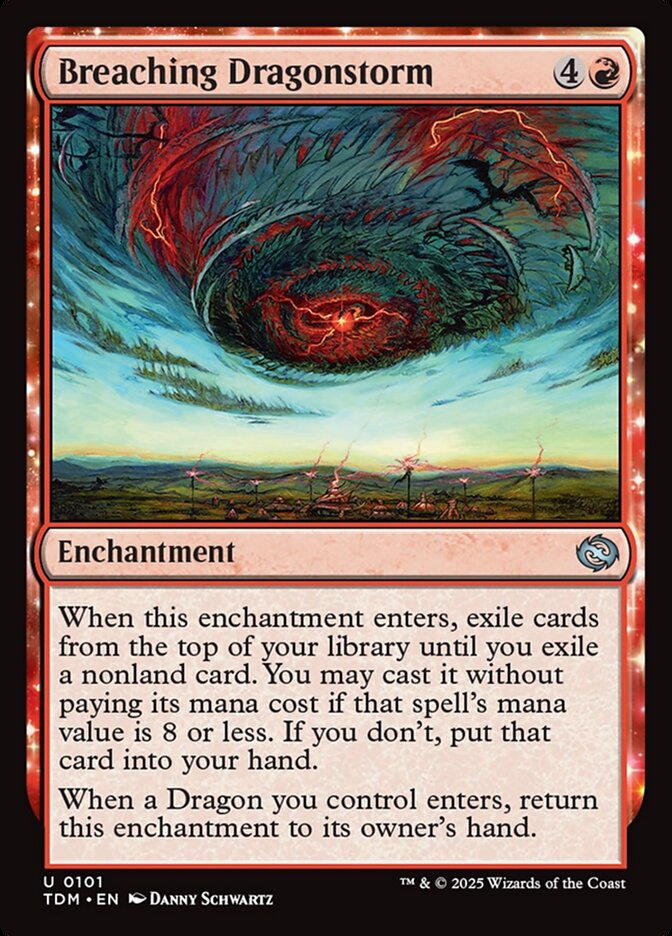
Rating: 1.5
Comment: This card works as a five-mana Discover 8, which in theory lets you pull a card of mana value 8 or less from your deck, like a gachapon machine. However, paying 5 mana just to draw one card is a bad deal, since the card you hit usually costs no more than 5 and you won’t stack many such cards in your deck. Furthermore, although it looks like card advantage on the surface, in practice it’s clunky and easily costs you tempo.
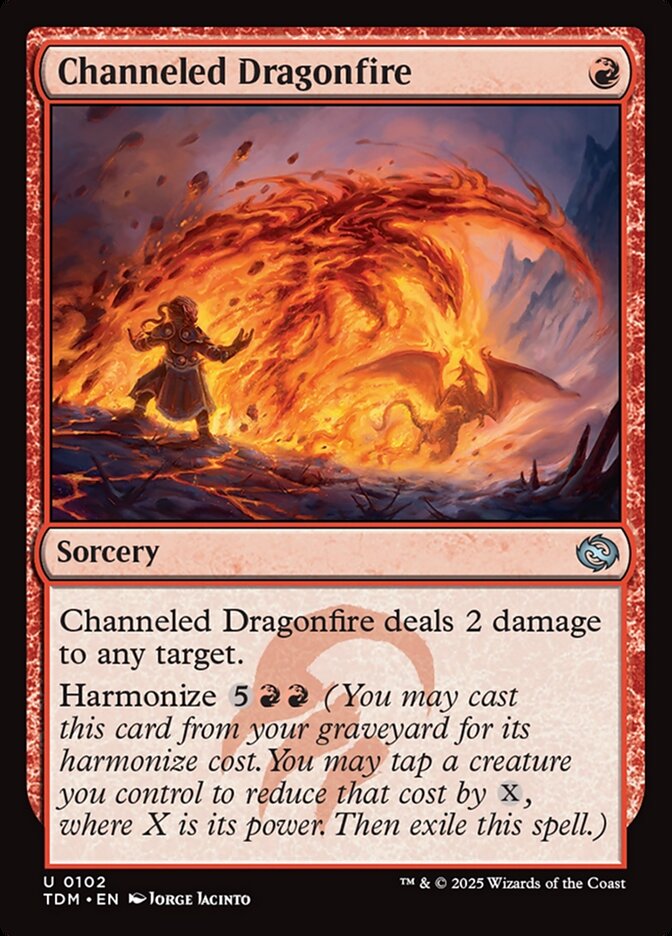
Rating: 2.5
Comment: This card is essentially a basic small removal spell: 2 damage for 1 mana. Its range is a bit limited, but it’s still enough to handle early threats and suits any red-based deck as curve filler. It works well with Flurry, interacting with both creature and noncreature spells, and in Mardu it can easily clear out the opponent’s small creatures. The effect itself is plain, but recasting it midgame or late with Harmonize gives some extra value if the cost reduction works out. Overall, one copy in the deck is enough, and I wouldn’t invest too heavily. It’s a competent average curve filler.
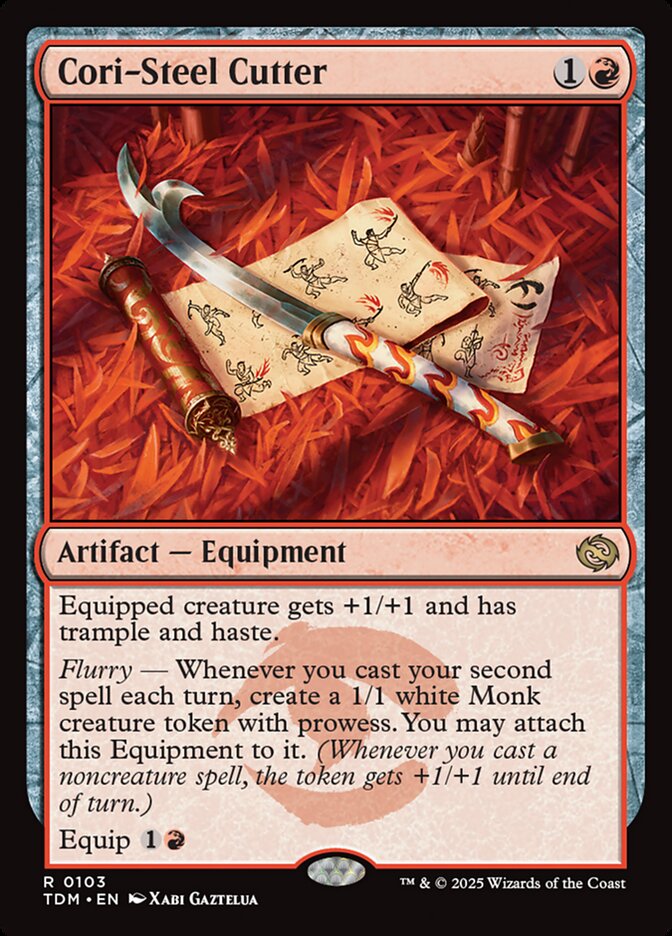
Rating: 4.0
Comment: This Equipment performs extremely well and has clear first-pick value. For 2 it gives +1/+1 along with trample and haste, letting a creature launch an assault right as it arrives and apply constant pressure. It has excellent synergy with Flurry in particular: it can make an extra creature, then be attached for free and thrown into combat at once, further boosting tempo. Moreover, its low cost of 2 makes it easy to trigger Flurry by itself, and paired with cards that fully exploit Flurry such as Equilibrium Adept, the in-game results are even more striking. Overall, in the right colors this card is almost a decisive single card and absolutely worth heavy investment.

Rating: 2.5
Comment: This is a typical curve-filler creature. A 2/1 for two isn’t impressive, but it still has some use early, especially in more aggressive aggro decks. Through Flurry it deals some extra damage, which can put pressure on early or trade with the opponent’s early creatures. Overall, though, its value drops quickly in the midgame and late game, and it usually plays a supporting role on the curve rather than being a core card.
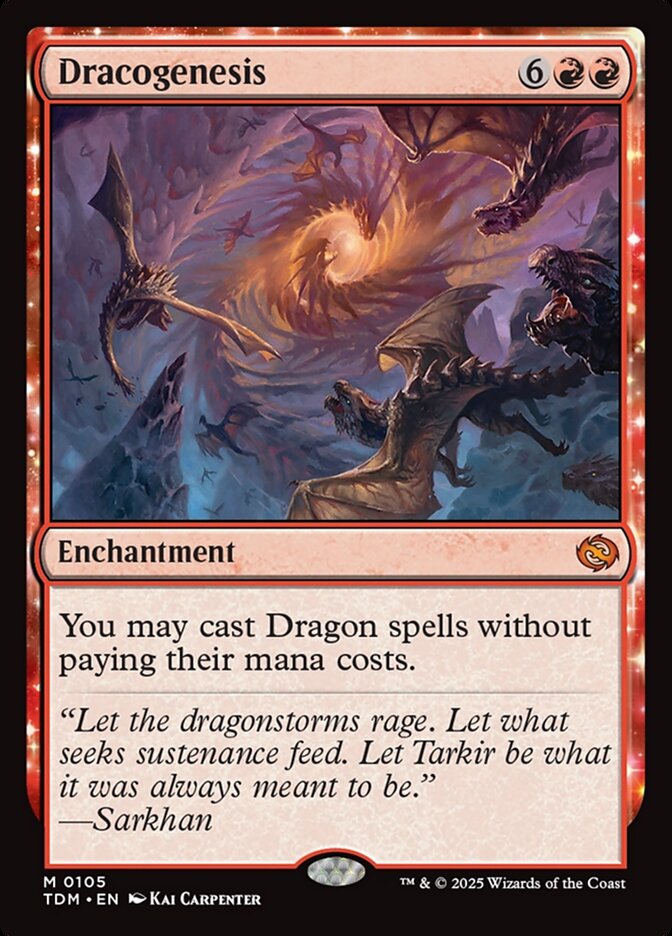
Rating: 0.0
Comment: This card looks flashy, but its effect is actually very limited and its real-game value is extremely low. When a game drags on to eight mana, players usually prefer to just cast a high-value Dragon or a finisher like Craterhoof Behemoth to win quickly, instead of using an effect that depends on specific cards in hand. Since hand sizes are often limited late in the game, it may not even trigger properly, making it more of a “win more” card that does nothing when you’re behind. Even the occasional ideal scenario can’t make up for how inefficient it is. I recommend not putting it in your deck so it doesn’t hurt your win rate.
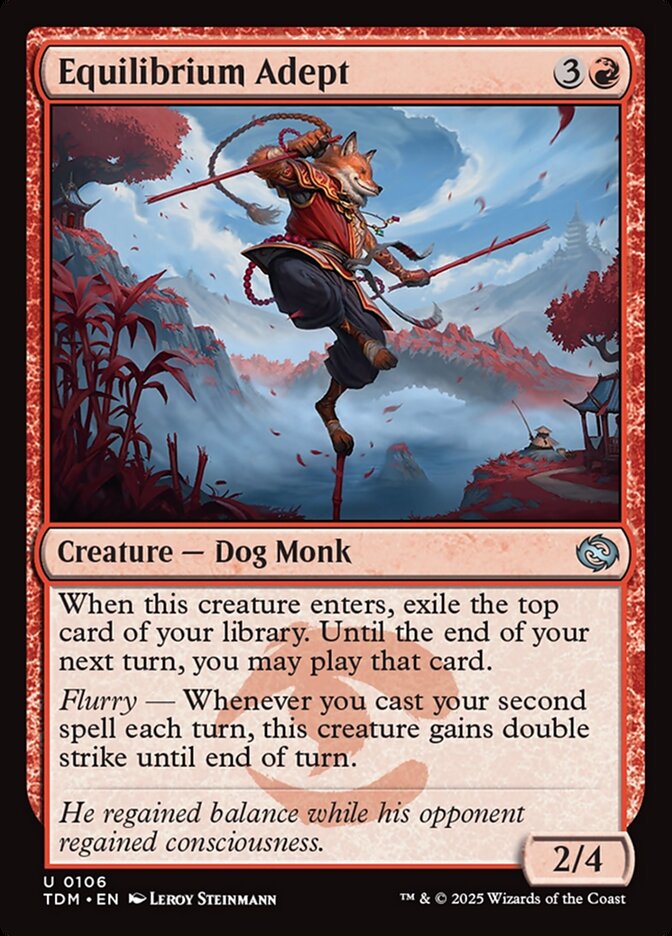
Rating: 3.0
Comment: As a four-drop this card is quite solid, and it can usually enter without costing you hand resources. Although its enter-the-battlefield ability only reaches full value in the midgame to late game (around six mana), it gains double strike through Flurry, which is extremely useful on both offense and defense and steadily raises your combat efficiency, with an especially notable synergy alongside Equipment. Overall, this is an above-average card and an important piece in its color pair, worth including in your final deck.
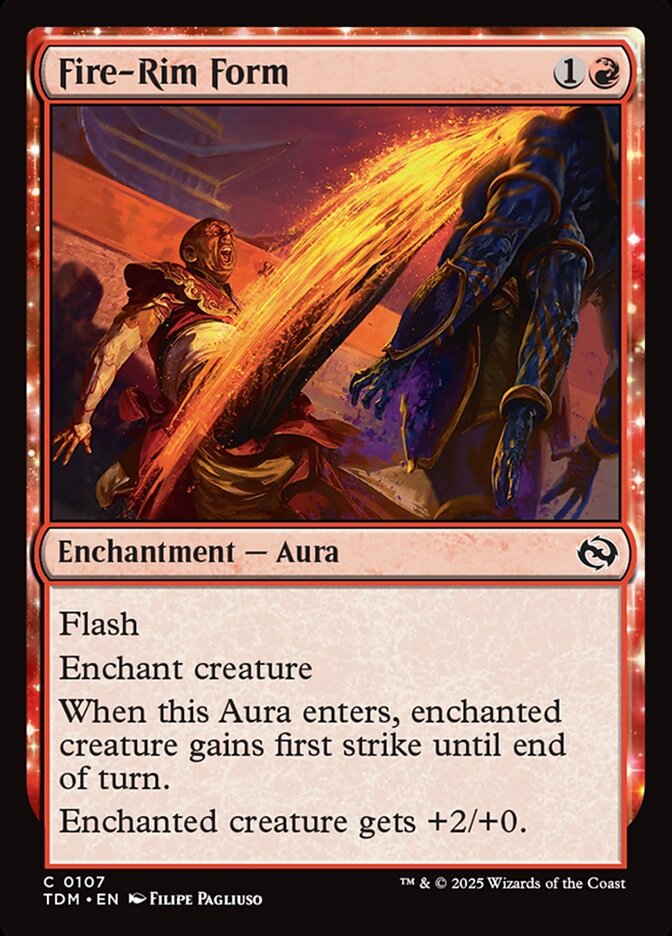
Rating: 2.5
Comment: This is a practical and decent combat trick. Compared with ordinary ways of boosting toughness, directly granting first strike better fits the proactive, aggressive play of red decks and clearly helps your attacking tempo. On its own, though, its performance is still average, and if you can find a specific powerful card or a suitable creature to pair it with, it has a better chance of exceeding expectations. Overall it’s still just a competent curve filler, but under certain conditions it has the potential to bring more value.

Rating: 2.0
Comment: This card needs only one mana and has 2 power, which looks quite attractive on the surface, especially since it can repeatedly trigger Flurry, giving it some theoretical potential in extreme aggro decks. However, the cost of its activated ability is too high, leaving the tempo poor in actual games, and it can’t effectively build a board or provide long-term value, so it underperforms in most decks. Overall, although it occasionally has special uses, its real-game payoff is low, and I generally lean toward not playing it. It’s only an occasional filler and shouldn’t be overused.
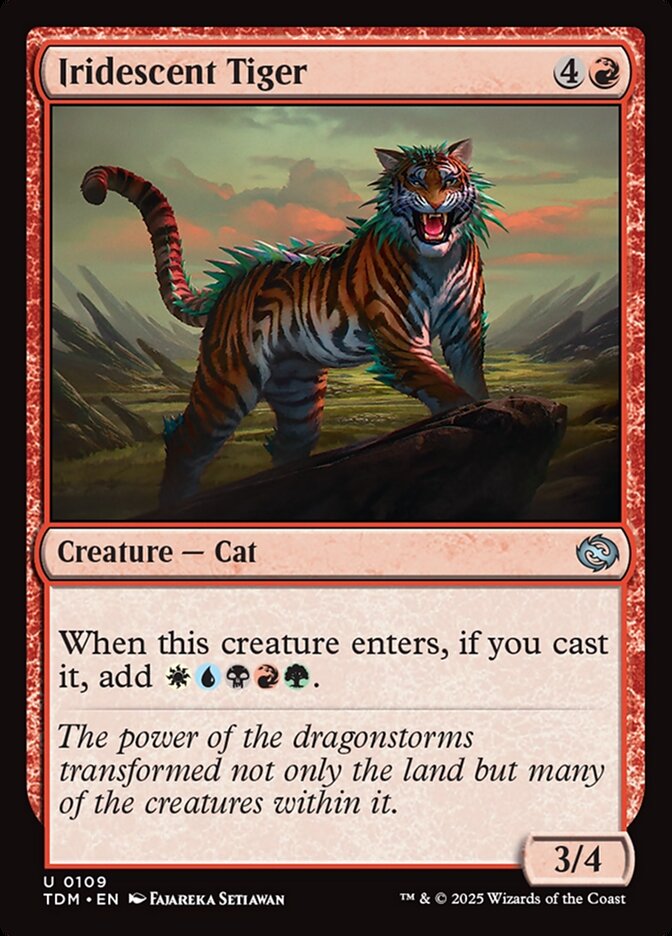
Rating: 3.0
Comment: Although this card is only a five-mana 3/4 with a somewhat ordinary body, the burst potential of its enter-the-battlefield ability shouldn’t be underestimated. If you happen to hold a high-cost creature in hand (such as a five-color Dragon!!!!!), it can achieve an astonishing board development or Flurry trigger in a single turn, with huge upside. Even without specific burst pieces, a free 3/4 creature still has decent baseline value, and in three-color decks it can help with color fixing and tempo, fitting the multicolor themes of the environment quite well. Its consistency is a bit low, limited by card order and pairing requirements, but overall it is an above-average card that can play an important role in the right deck.
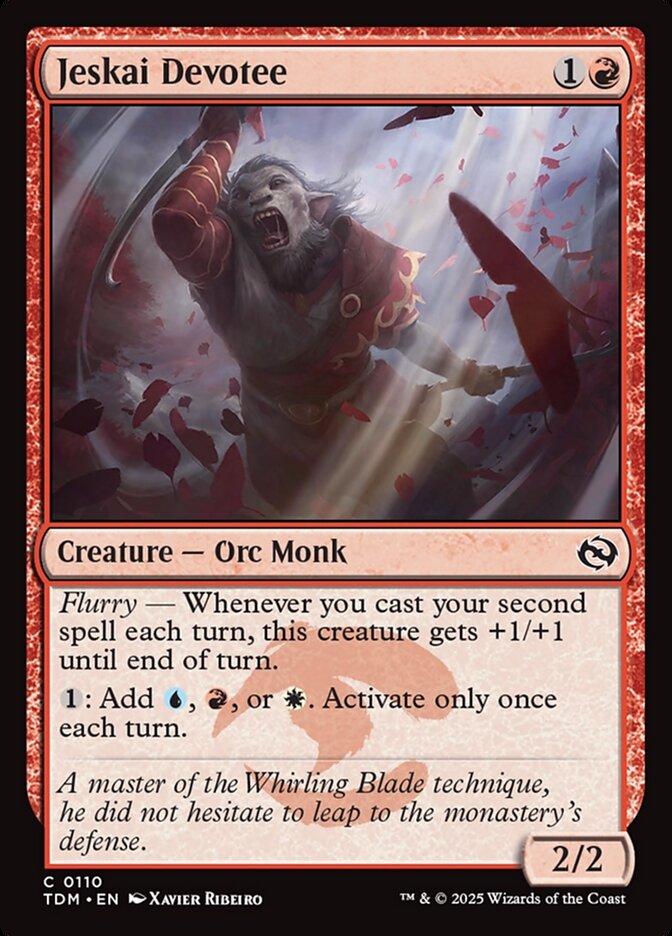
Rating: 2.5
Comment: As a basic two-mana 2/2, this card has a standard body and reliably fills the early curve, making it a quite practical choice for aggro or midrange decks. When Flurry triggers it gets +1/+1, giving it some trading ability and slightly above-average combat performance for an otherwise ordinary body. It also has the potential to help with fixing, which is an extra plus for decks that need a three-color or two-color transition. Overall, it’s a competent curve filler: reliably playable but not outstanding.
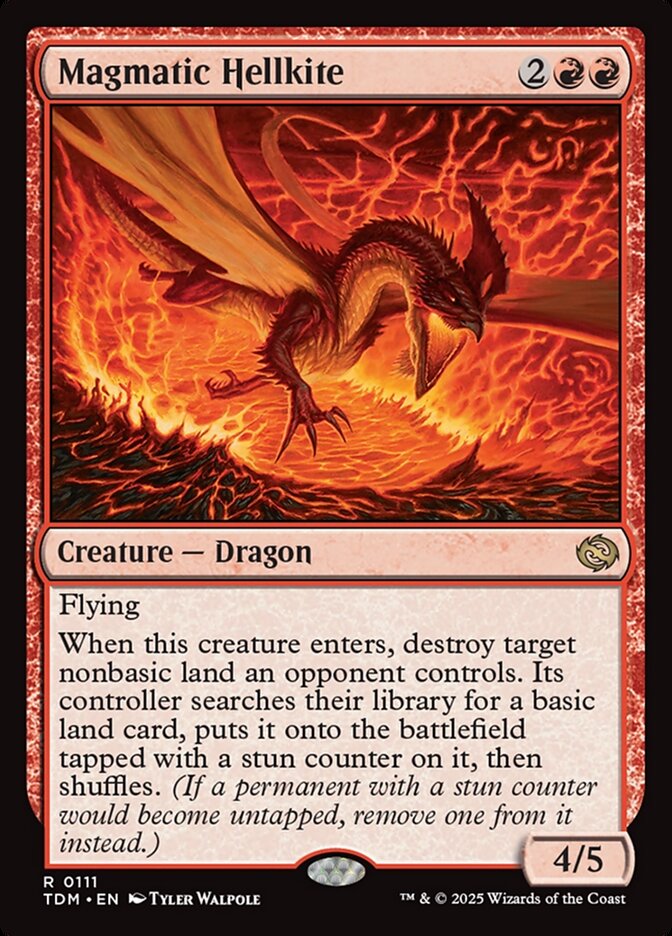
Rating: 4.5
Comment: This card is extremely disruptive and tempo-positive in a three-color environment, and it’s an unconditional first pick when your colors are right. A 4/5 for four is already an excellent body, and flying plus its role as a mid-size finisher give it a stable ability to hold the board, but what really makes its value skyrocket is the disruption it causes to the opponent’s nonbasic lands when it enters. Not only can it blow up one of the opponent’s key nonbasic lands, it also forces them to delay their use of a new land next turn, which directly slows the opponent’s development by a turn. In a three-color environment that relies heavily on fixing, this kind of disruption often tips a game instantly. Overall, this card combines stability, pressure, burst and disruption, and is a powerful pick you can’t ignore when your colors are right.
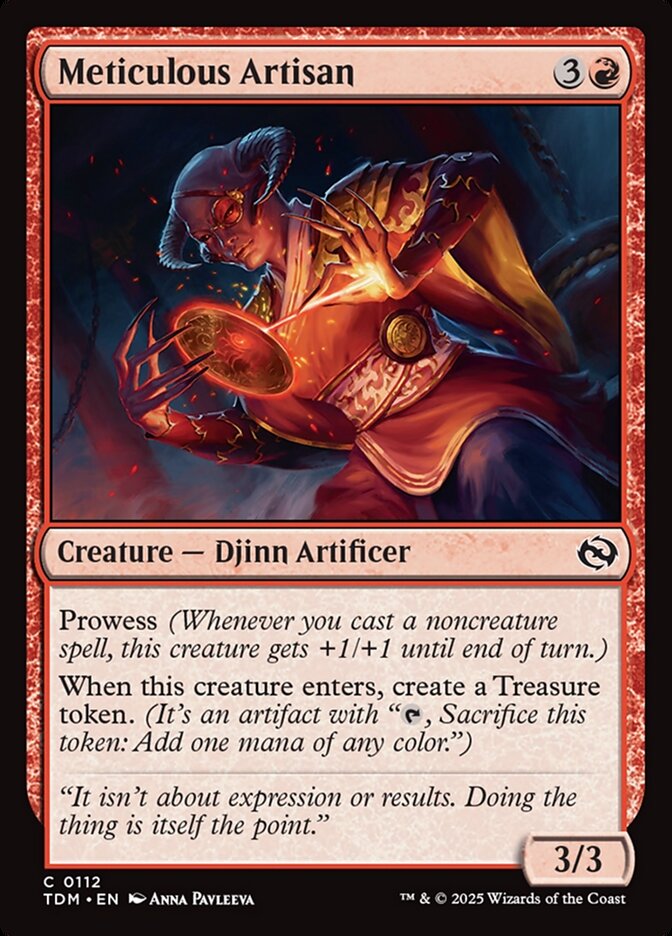
Rating: 3.0
Comment: This card has a fairly clear role in specific color groups such as Jeskai and Mardu. It may not be a powerful card everywhere, but within those color themes it can fully show its effect and mesh well with the overall strategy, often playing a key role in the curve and functionality of three-color decks. As an important card built for specific color pairs, its overall performance is above average and it’s worth including in your final deck.
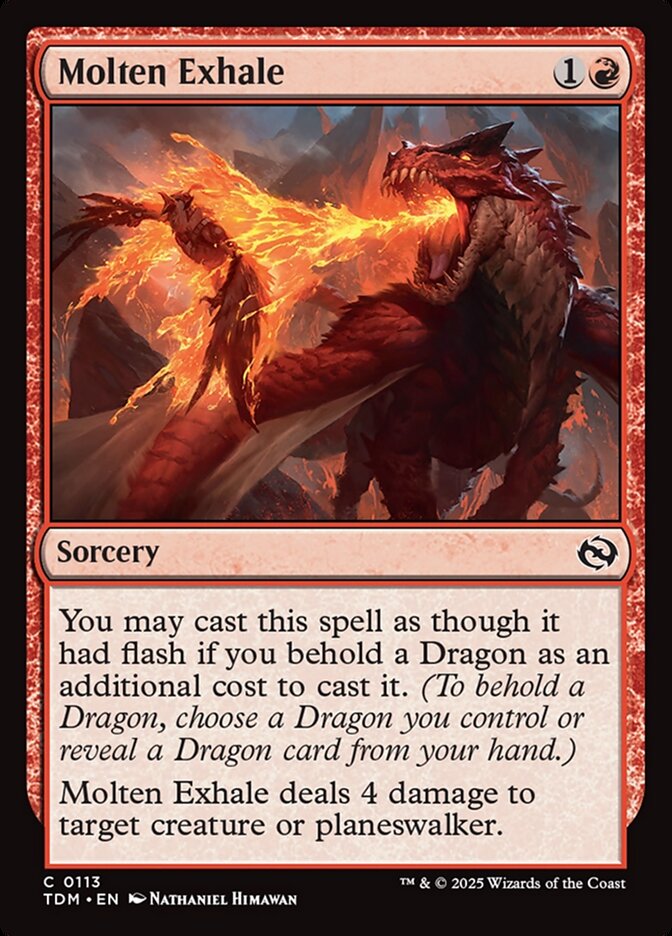
Rating: 3.0
Comment: As removal, dealing 4 for 2 mana is highly efficient and handles almost every creature threat. Its restriction for instant-speed casting is that you need a Dragon on the battlefield or in hand, which somewhat limits flexibility and timing, but even used only at sorcery speed it already has decent value. In a Dragon theme or color pairs that work well with Dragons, it can show its full strength and become a reliable removal spell worth playing. Overall, it’s an above-average card and quite key for deckbuilding.
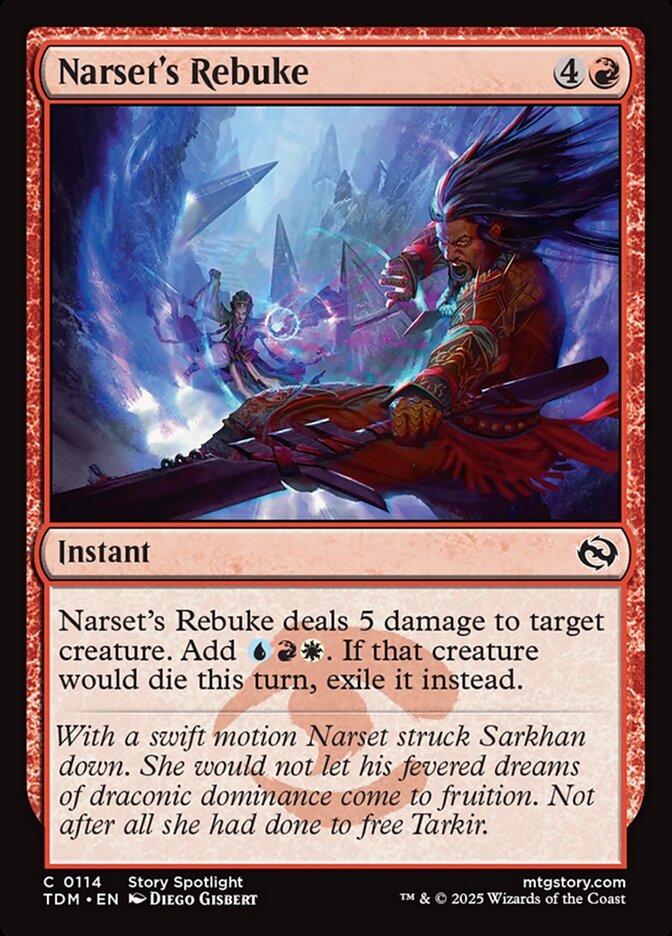
Rating: 2.5
Comment: This card plays a certain role in Jeskai Flurry decks. As a five-mana removal that deals 5 it’s on the heavy side, but it reliably deals with large threats, and its three-mana fixing effect not only helps with colors but also triggers Flurry for an extra, potential tempo advantage. Although the cost is high and it isn’t suited to multiple copies, it has functionality and synergy value, and you’d usually consider including one as a backup. Overall it’s a middling filler card that performs acceptably in the right color pair.
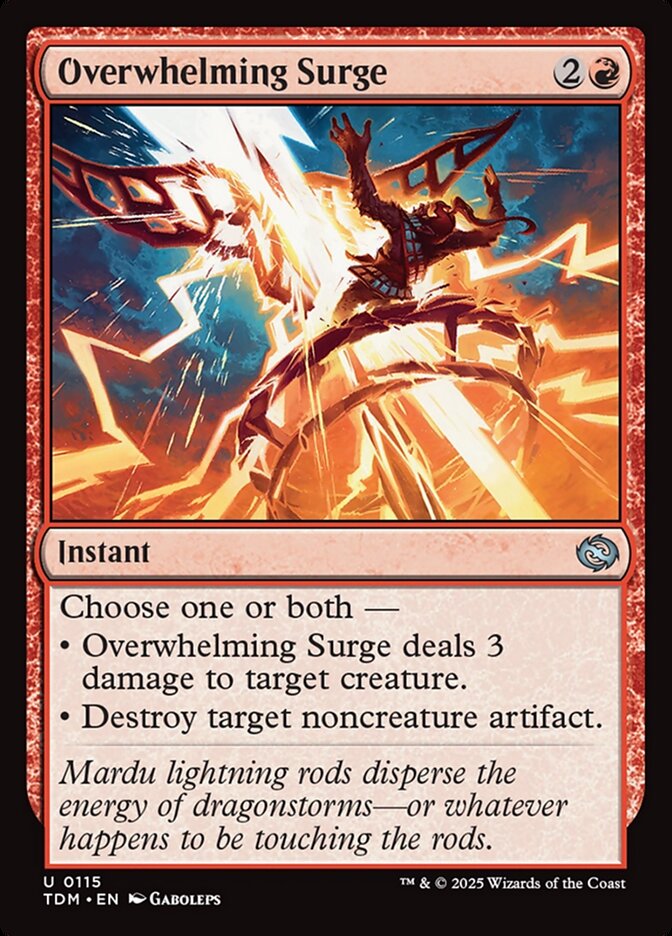
Rating: 2.5
Comment: The effect design has potential: for three mana it deals 3 damage to a creature and additionally destroys a noncreature artifact, which in other sets (such as DFT) might be a powerful card rated close to 4.0. In the TDM environment, however, noncreature artifacts show up only about 5% of the time, so the available targets are extremely limited, and only a few like Stormbeacon Blade and Dragonfire Blade are really worth destroying. So in most matchups this card probably can’t deliver its full benefit, and its main value comes as a somewhat heavy removal spell, with clear value in the sideboard against specific opponents. Taken together, it can still be considered a playable but unremarkable filler.
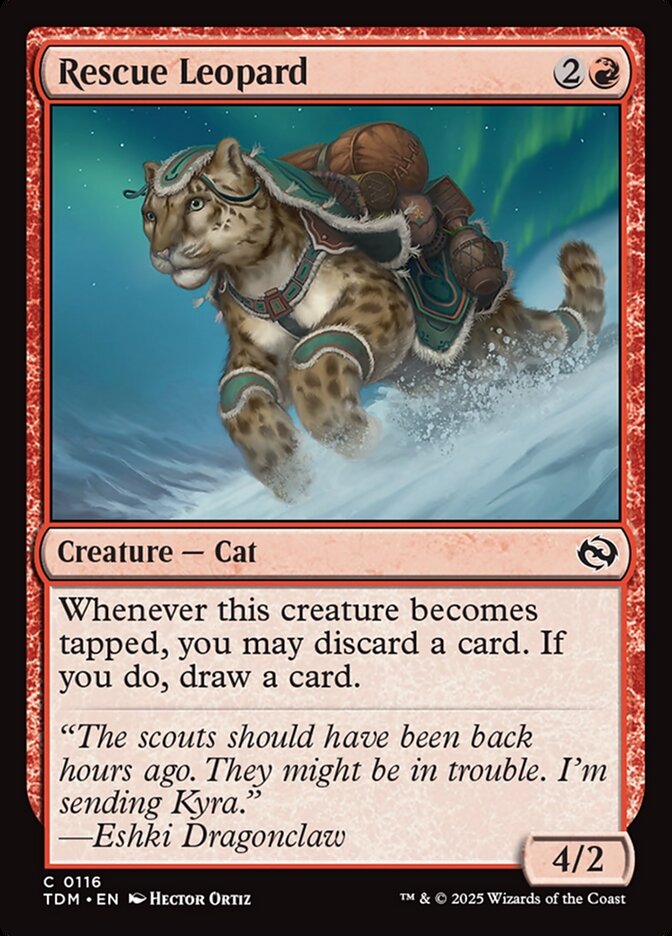
Rating: 2.5
Comment: This card performs acceptably as a curve filler. Its body is weak, and its toughness is so low that its ability is easily interrupted, so its survival rate in real games isn’t high. But its attack-trigger rummage still has some value, helping adjust hand quality and fill the early curve, and it can also serve as a resource source to trigger synergies like Mobilize. It isn’t a powerful threat, but it reliably plays a utility role in the overall deck, making it an average playable card.
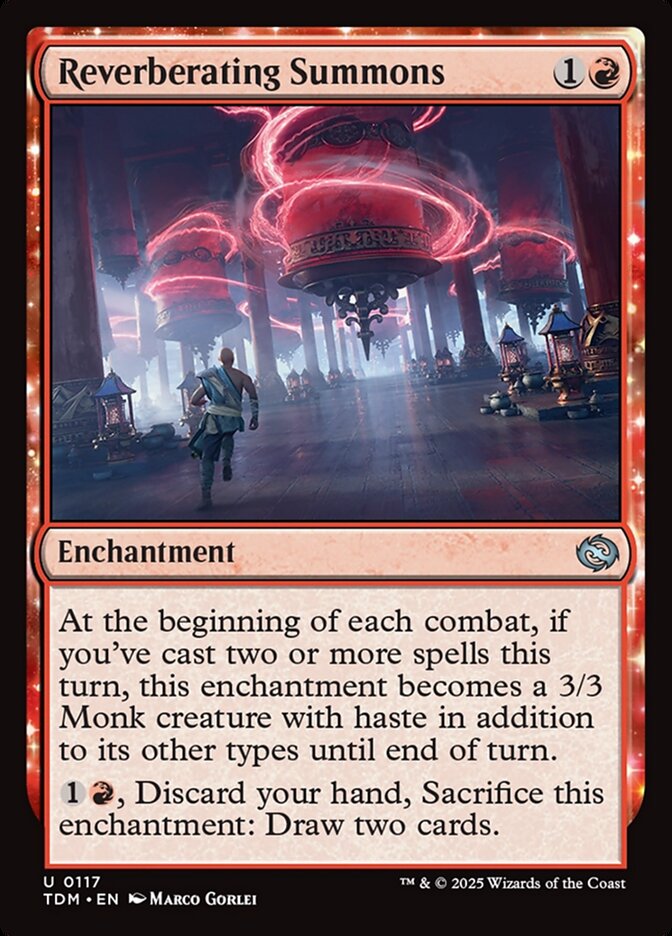
Rating: 2.5
Comment: This card’s strength varies noticeably, depending especially on whether you can trigger Flurry to turn it into a 3/3 creature. If it triggers, it applies real pressure on the board, and otherwise it looks plain. Also, its Flurry trigger point is before the beginning of combat, which limits when you can use instants and slightly reduces flexibility. Still, in the midgame and late game it can sustain resources through its card draw ability, so it isn’t a card disadvantage and reliably fills curve needs. Although it looks a bit inferior to strong cards at the same cost, it still has some usefulness in the right deck.
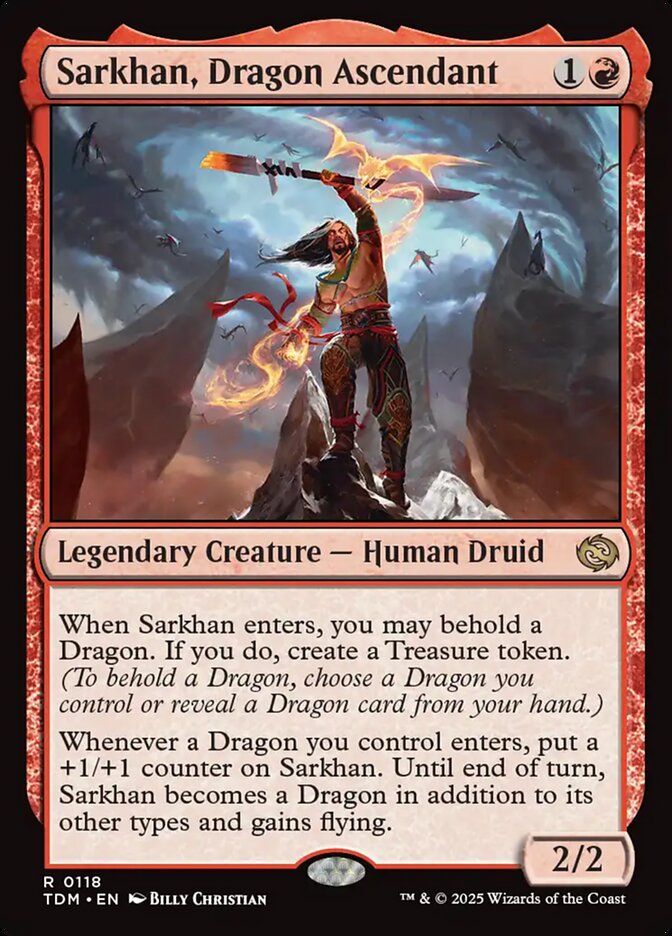
Rating: 3.0
Comment: This card’s strength depends heavily on the number and quality of Dragon cards in your deck. If your deck has a clear Dragon theme, it can be a reliable source of power, growing board pressure by repeatedly giving itself +1/+1 and flying, and having an impact beyond its curve. Without enough Dragon support, though, it’s at most an ordinary 2/2 creature with relatively limited function. So I don’t recommend committing to it too early, but once your deck direction is set, it’s a card tightly tied to the theme and performing above average, suitable for your final deck.
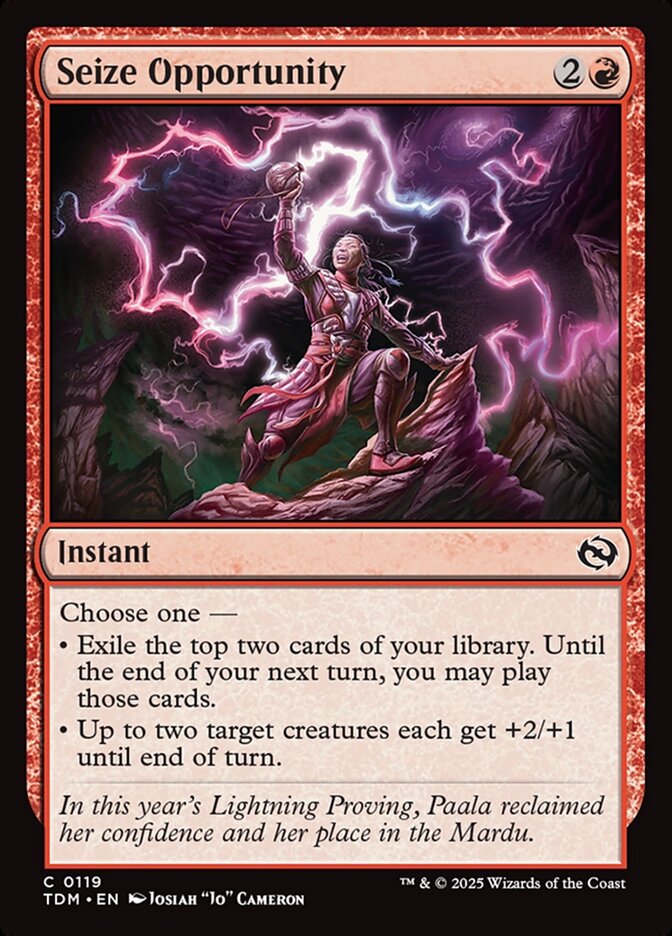
Rating: 3.5
Comment: This card provides two flexible effects and is useful whether you’re ahead or behind, and its instant speed gives it great tactical flexibility in combat. It effectively supports Temur’s noncreature spell theme, smoothly triggers Jeskai’s Flurry mechanic, and performs excellently in Mardu as well. Paired with the small creatures produced by the Enchantments and artifacts common to red in this set, a combat trick can create high damage or effective trades. Overall, this is a card with stable effect, high flexibility and good fit with multiple color themes, with above-average usefulness, suitable for your final deck.

Rating: 3.0
Comment: This card is especially good in aggro or Mardu, and it’s a key card well worth picking early. As a 1/3 menace creature, it deals damage reliably when the opponent’s board lacks high-power creatures, and almost every turn it lets you “freeload” a small creature into play to attack, gradually accumulating a damage advantage. Paired with combat tricks or effects that enlarge tokens, it often creates explosive board pressure. Although its body isn’t strong, its steady resource-snowballing ability makes it absolutely an important above-average card in its themed colors, worth including in your final deck.
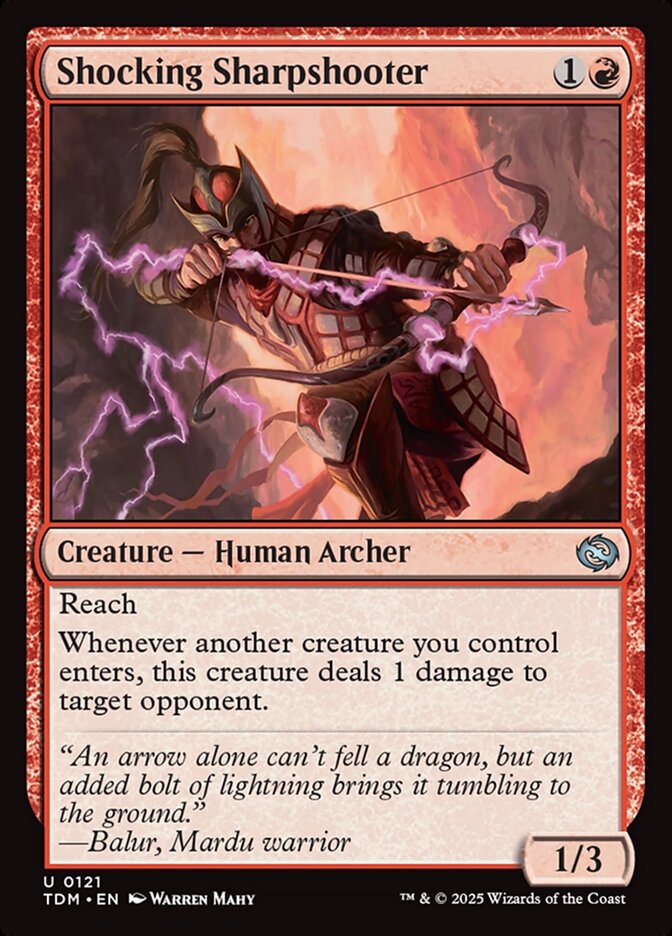
Rating: 3.0
Comment: This card is especially eye-catching in Mardu, with excellent synergy with the Mobilize mechanic. When your deck already includes two or three Mobilize-related cards, it can almost become a source of steady life loss every turn, posing a continuous threat to the opponent. Its value may be more limited in other color pairs, but in Mardu it not only effectively pushes the pace of victory but also strengthens the overall power of a Mobilize strategy. It’s a card closely fitting the theme and an above-average card worth including.
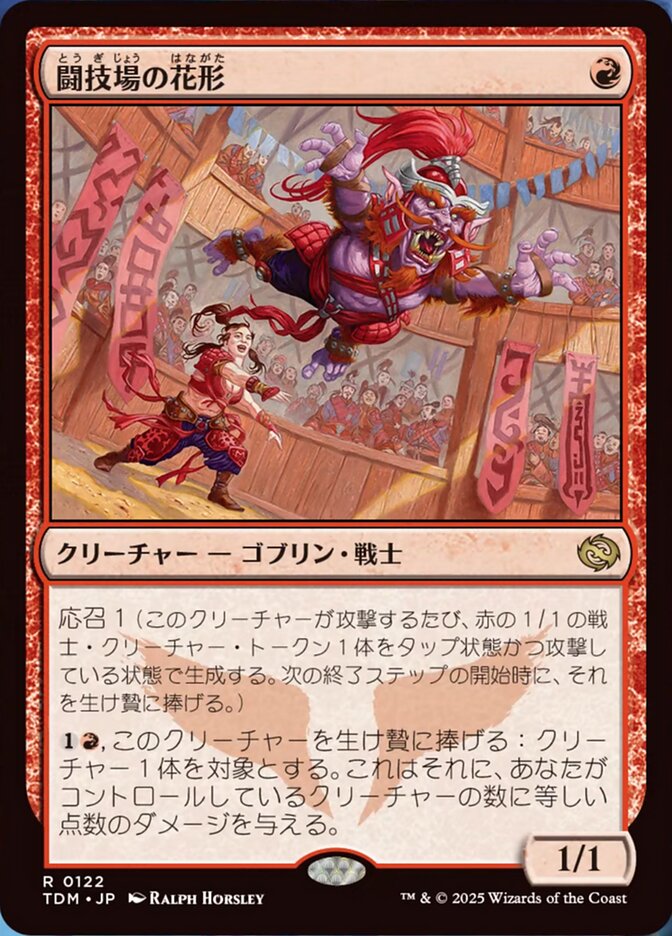
Rating: 2.5
Comment: As a rare one-mana Mobilize card in this set, it has special value in Mardu and is especially suited to being picked early during construction. Although it’s only a 1/1 body and attacking with it is almost giving away free points, there is still room for it to shine through the follow-up resources and synergy Mobilize brings. In addition, if you draw it in the midgame or late game, it can still be used as a three-mana removal spell, so it isn’t entirely card disadvantage. Paired with other Mobilize-related cards, it further strengthens overall tactical synergy. Overall, it’s a playable card that fills the curve and has thematic potential.
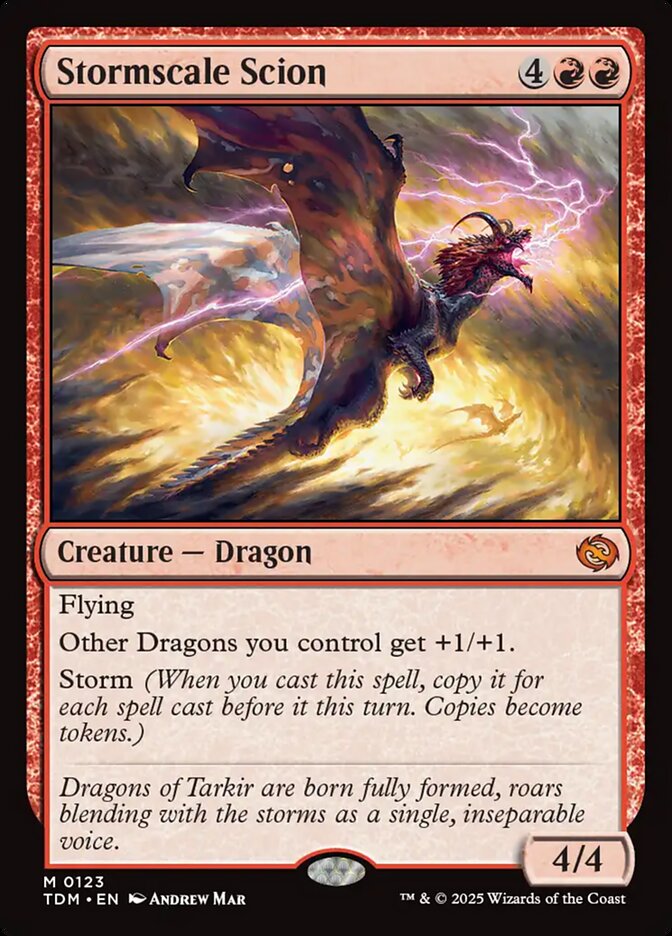
Rating: 3.5
Comment: This six-mana Dragon has a high casting cost and the conditions to trigger Storm aren’t easy either, but once it goes off, its burst potential is very threatening. In the ideal case, casting just 1 to 2 cheap spells before it enters can summon several flying Dragons, putting devastating pressure on the board. Even if it triggers only once, the body is still fine, and if you can pair it with copy effects, it might even swing the pace of the game in a single turn.
In addition, as a lord for Dragons, it also creates extra synergy value with other Dragons, and it’s the finisher many control and midrange decks dream of. Although the cost is high and it isn’t as consistent as a top-tier bomb, its ceiling is very high and it fits particular color pairs and themes (such as Jeskai Flurry) extremely well, so it should be treated as an important signal card for moving into the colors.
For the rules of Storm, see an earlier article: How Does Storm Work?
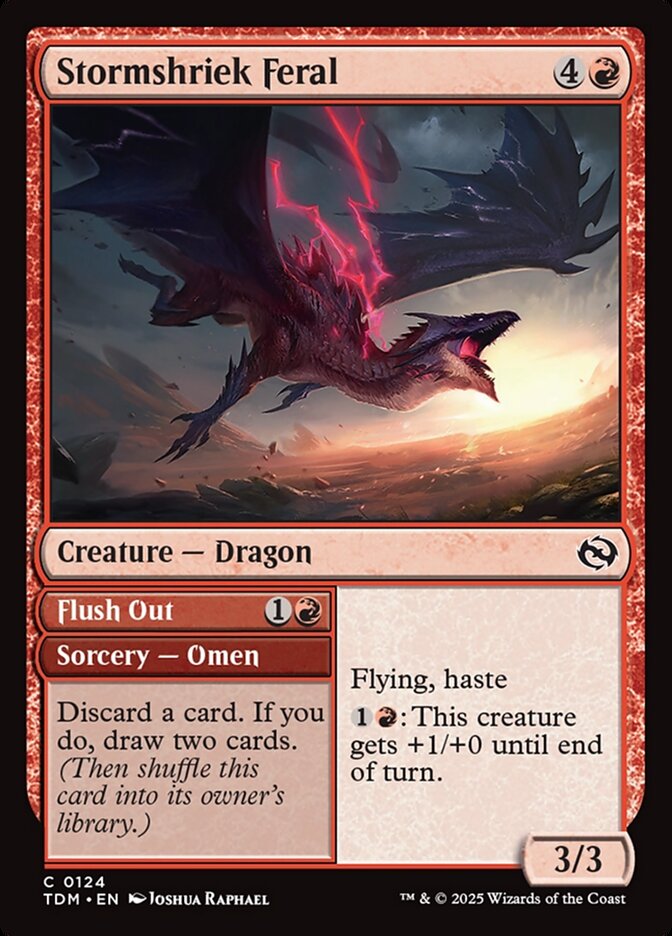
Rating: 3.0
Comment: As a dual-purpose tool, this card has card selection and the ability to grow itself, and in many sets it might be close to 3.5 to 4.0. In TDM, however, where Dragons fill the sky after five mana and fliers are everywhere, its real performance is significantly limited. Although it can grow and provide some pressure, its body is weak and the set has so many fliers that it often struggles to break through the opponent’s board, so there’s a worry that it can’t punch through.
Even so, it still reliably draws and adjusts hand resources and has potential output in certain situations. It’s an above-average functional card with synergy with the theme, suitable for your final deck but not in multiples.
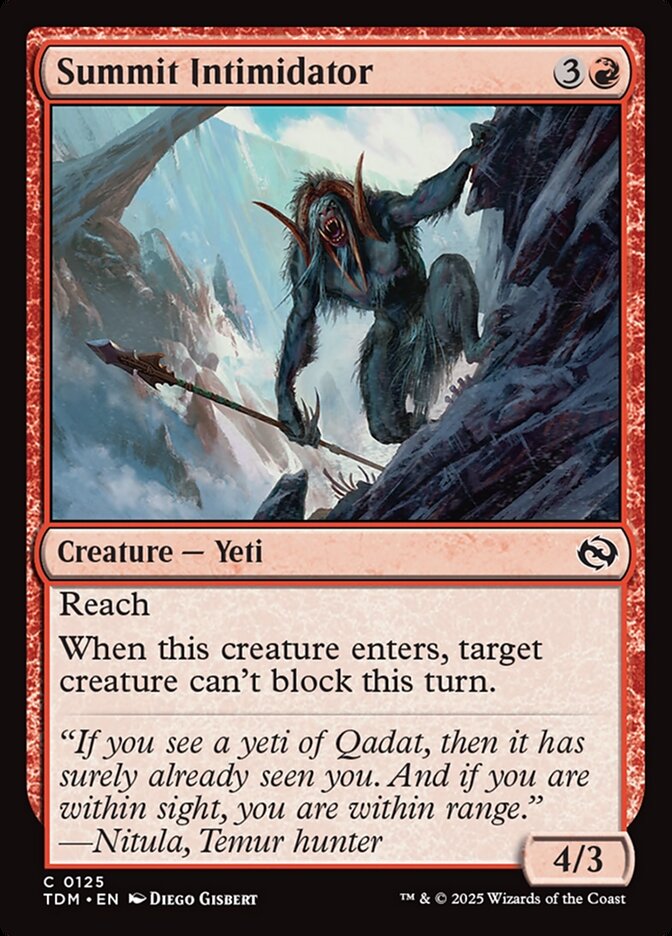
Rating: 3.0
Comment: As a four-mana creature, this card has a solid body, and when it enters it makes one of the opponent’s creatures unable to block, which is key to continuing an attack and pushing the pace of the board. It has good midrange curve strength, and in aggro or red-focused decks it can create plenty of damage opportunities. Even if the opponent already has fliers blocking the threat, its enter effect can help other creatures break through the defense and produce real results. With the common 3 to 4 mana board units in the environment, this card effectively expands attack gains, and it’s an above-average, high-quality card with a high fit with the color theme.

Rating: 3.5
Comment: This card is a highly functional all-purpose card that not only helps you skip ahead on mana and accelerate into the midgame and late game but also effectively answers the Dragon threats common in the environment, further suppressing the opponent’s tempo. It has both resource acceleration and targeted removal, making it a very valuable support choice for decks that rely on high-cost creatures or need tempo to push.
In addition, with big Dragons running rampant in this set, this card’s targeting is even more important, and it can have more than single-card-equivalent impact in matches. Almost any deck that touches red will want to include this card. With its excellent flexibility and adaptability to the environment, it’s one of the top uncommons/commons in the set and a key reason many decks choose to move into red.

Rating: 3.5
Comment: This card has a standard body and comes with haste and looting, so the baseline is already worth 3.0 or more. If its ability exiles enough nonland cards, it can bring extra casting value, with astonishing potential. However, getting 7 cards in the graveyard isn’t easy in limited and usually takes 10 or more turns, unless your deck has filtering or self-mill support. Although it’s somewhat unstable, the effect is controllable and the ceiling is high, making it a standout card in the set.
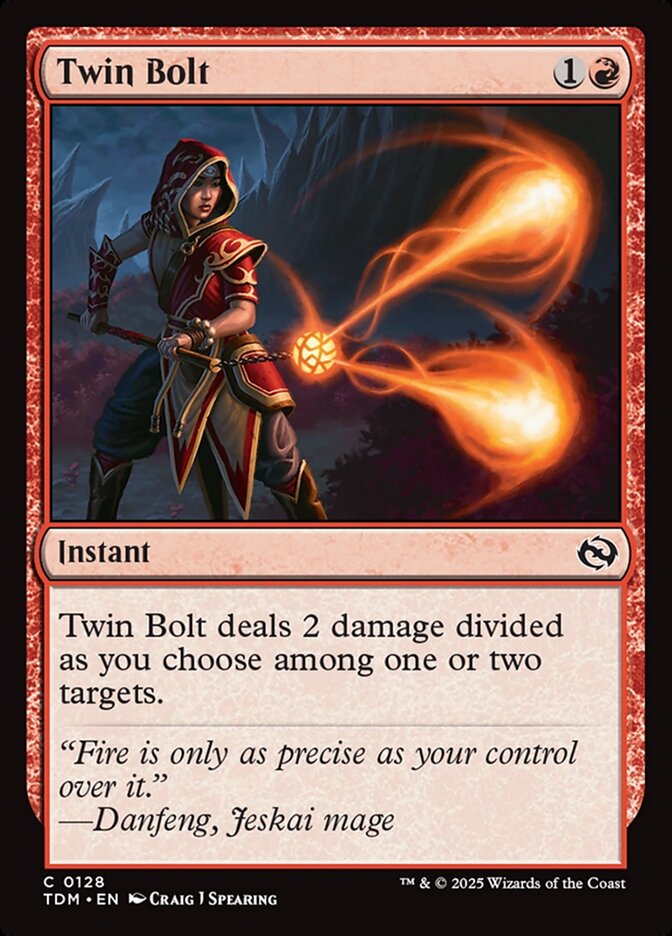
Rating: 2.0
Comment: This card’s range is short; it can usually only hit 1 to 2 small creatures, and its board-clearing ability is limited. However, if paired with specific cards (such as Unsparing Boltcaster), it can be upgraded to reliable removal. It can also be used to clear tokens or as a small-scale sweeper, a backup plan when you lack removal. Overall the effect is weak and it’s only suitable in small numbers.
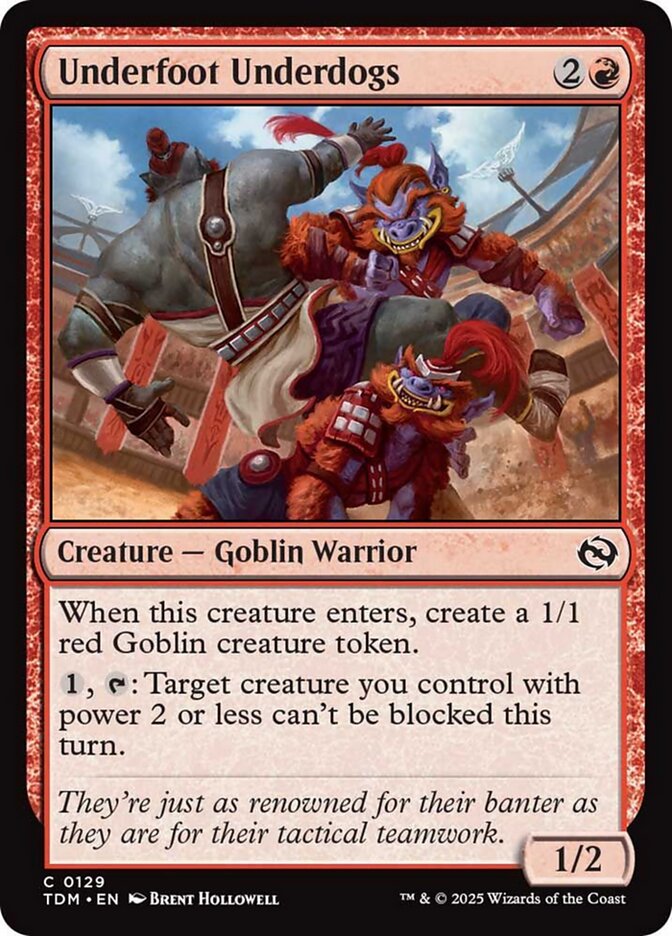
Rating: 2.0
Comment: Although this card splits into two creatures, getting a 1/2 and a 1/1 for three mana is a weak body, the tempo is too slow, and it’s hard to match aggro needs. Without strong Mobilize cards such as Zurgo, Thunder’s Decree, it’s usually just a filler. The only highlight is that one of them can’t be blocked, which works with certain tactics. Overall, though, it’s still a weak filler choice.
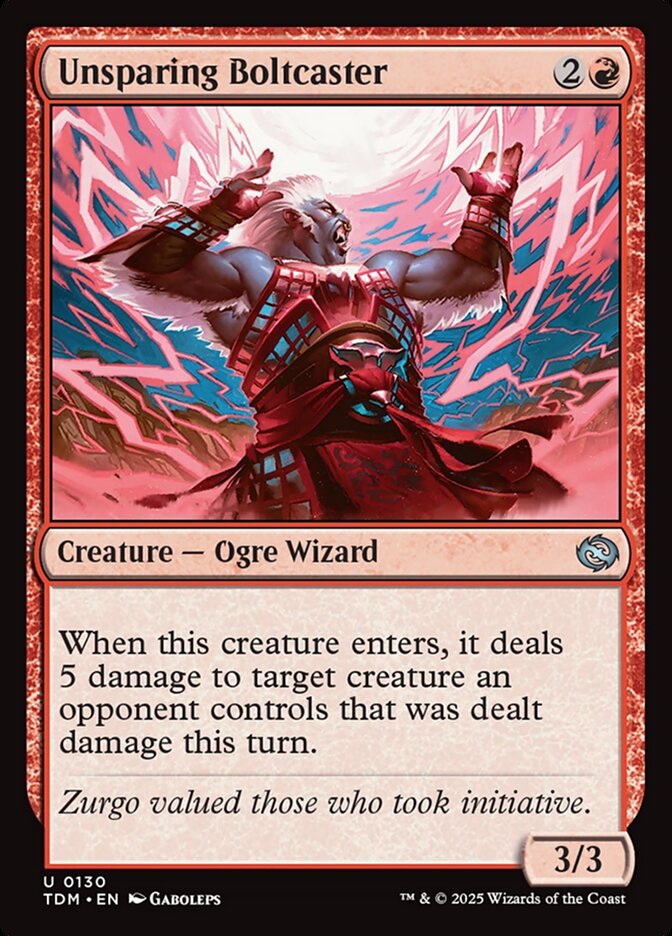
Rating: 3.0
Comment: This card is very practical in proactive Mardu, serving as a finisher after the combat step or combining with small burn spells to handle large creatures. Note that it doesn’t deal 5 on entering, so use its timing carefully. If your deck already has several small burn removal spells, it can effectively realize its synergy potential, and a 3/3 for three also performs reliably on its own, making it an above-average practical card.

Rating: 3.0
Comment: This card is a key Enchantment designed for Mardu Mobilize, greatly boosting the damage output of Mobilize creatures and with strong synergy. If you’ve locked into the Mobilize theme, it can be a core card to prioritize. In non-Mobilize color pairs, though, its effect drops sharply, and it alone isn’t worth switching colors for. Overall, it’s an important card that performs excellently in a specific theme.
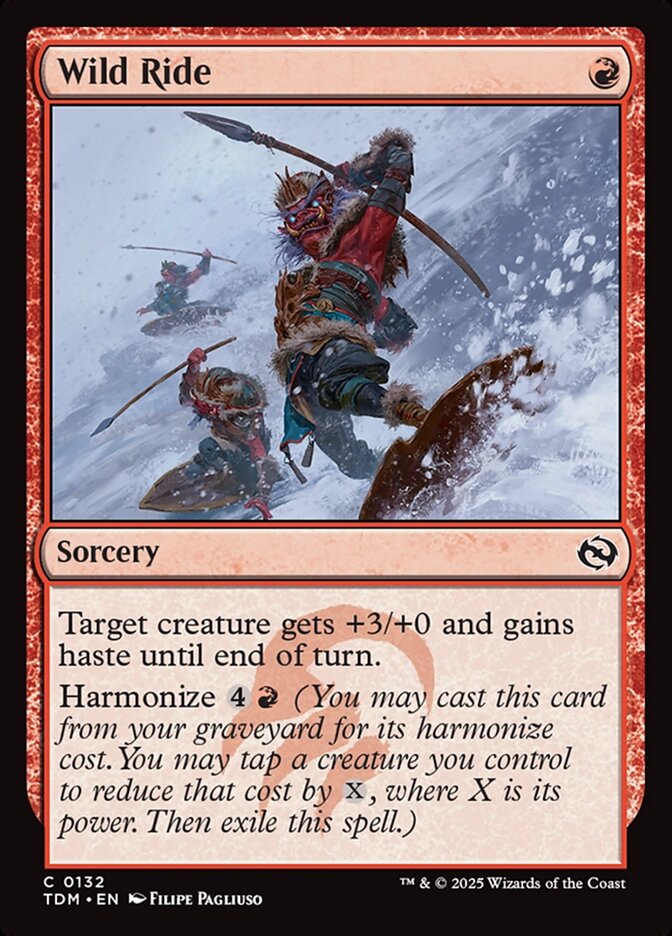
Rating: 2.0
Comment: Although this card needs only one mana to give +3 power and haste, being a sorcery limits its practical use. It only suits pairing with high-power evasive creatures or serving as a low-cost trigger in a Flurry theme, so its usage scenarios are very narrow. I usually don’t recommend putting it in the main deck, and it’s only for curve filling.
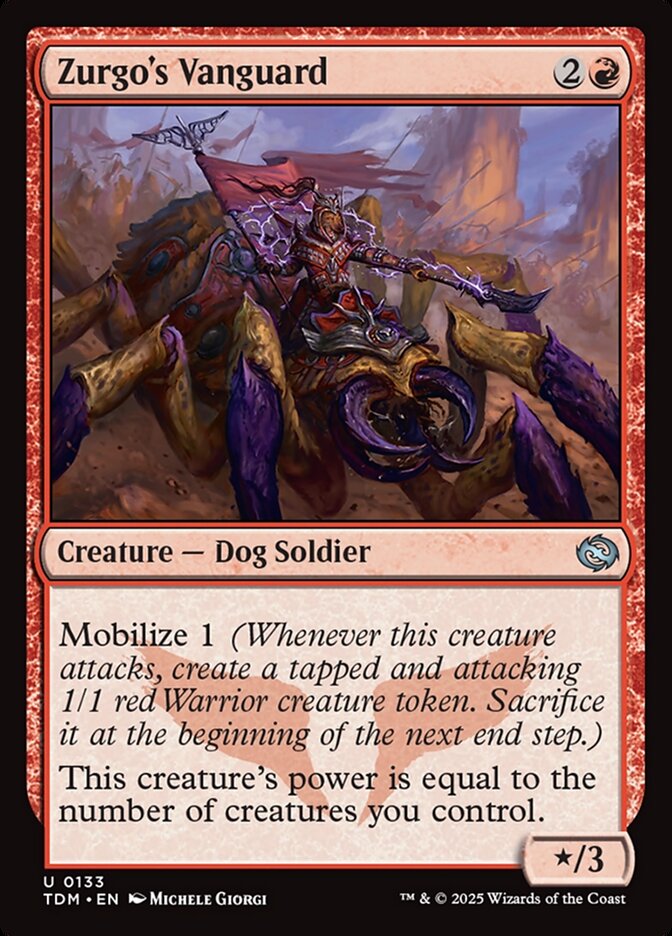
Rating: 2.5
Comment: Although this card can produce a steady Mobilize rhythm, its 3 toughness makes it easy to be traded off as soon as it enters, so the risk is on the high side. Only when other creatures are already on the board to support it, or when you have enough Mobilize cards, can it avoid card disadvantage. Overall it’s a playable curve filler but has no obvious advantage.
Conclusion
Red cards in TDM focus on offensive tempo and high mobility. Low-cost creatures have standard bodies and useful abilities, and combined with the two core mechanics, Flurry and Mobilize, they give red aggro and tempo decks a clear strategic direction.
Although many low-cost creatures are limited in power individually, they effectively apply pressure and trigger Flurry, bringing real-game value beyond the cost curve. Removal and combat tricks lean toward low cost and many restrictions, and need specific mechanics or deck configurations to pay off. The midgame and late game center on Dragons’ Storm effects and nonbasic land destruction. Although the activation threshold is high and consistency is slightly low, when it works it has strong suppression and burst, becoming the key to the endgame.
This is my first time writing a limited article, and I hoped to give those unfamiliar with limited more detailed guidance, so I wrote more text describing cards’ performance and application scenarios. It can also strengthen your understanding of how decks work before you take part in limited events, and I hope this article gives you a deeper understanding of red decks.
- Title
- Tarkir: Dragonstorm (TDM) Limited Guide — Red
- Author
- mm
- Created at
- April 3, 2025
- License
- This work is licensed under CC BY-NC-SA 4.0 .