Tarkir: Dragonstorm - Standard Preliminary

Note: This article was translated from Chinese by AI and may contain errors. Read the original Chinese version.
Deck Introductions
Mono White Artifact
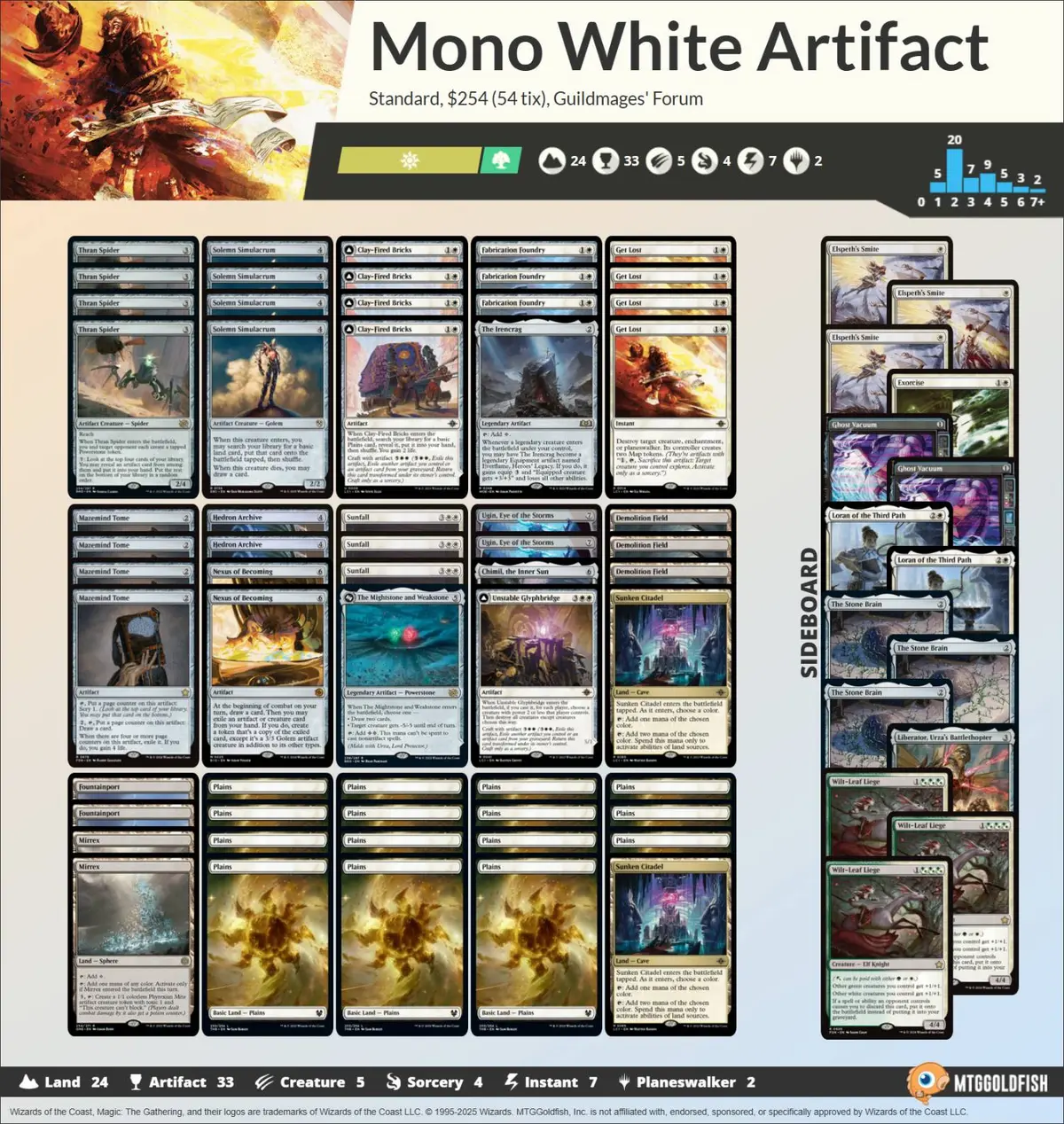
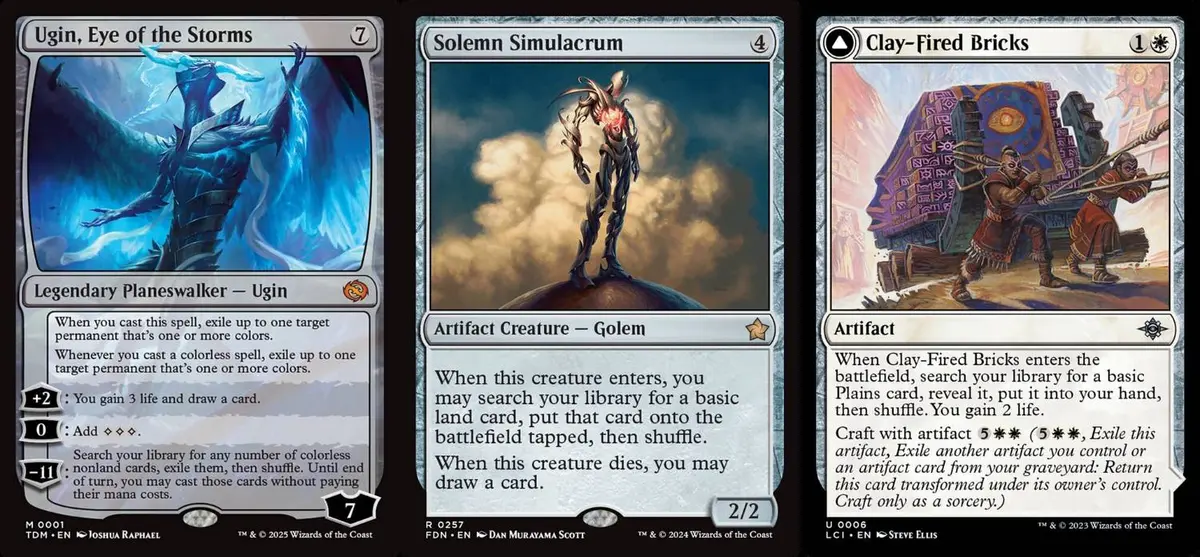
The starting point for this build is Ugin, Eye of the Storms. If you want to make the most of it, the most intuitive approach is obviously a ramp deck full of colorless artifacts. Since we need to guarantee a high count of colorless cards, a single supporting color is enough. I picked white here, since it answers the widest range of opposing decks and has plenty of artifact-synergy staples. If you want a higher ramp ceiling you could consider pairing it with green instead, but then removal and interaction would get very stiff.
Azorius Artifact
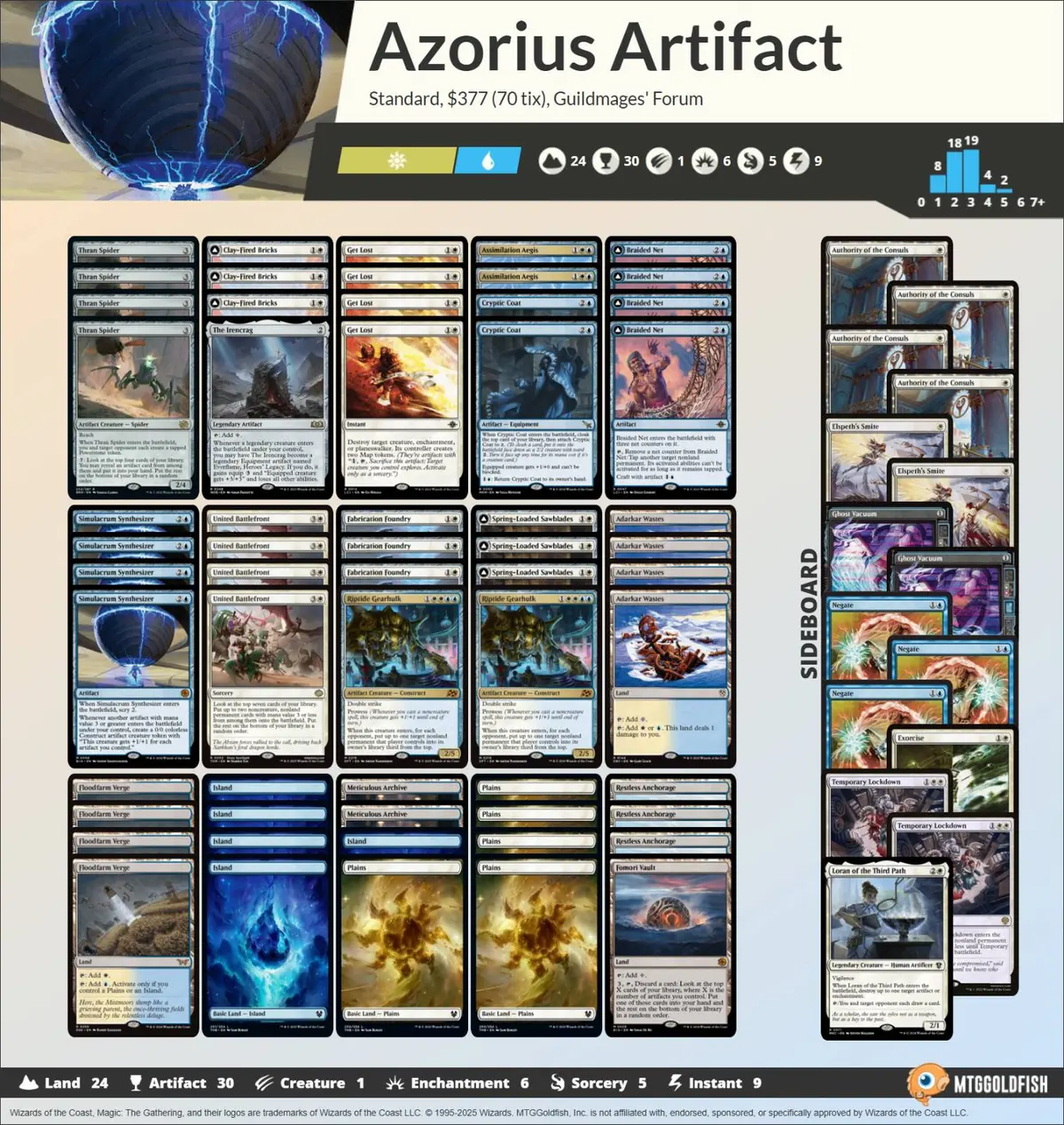
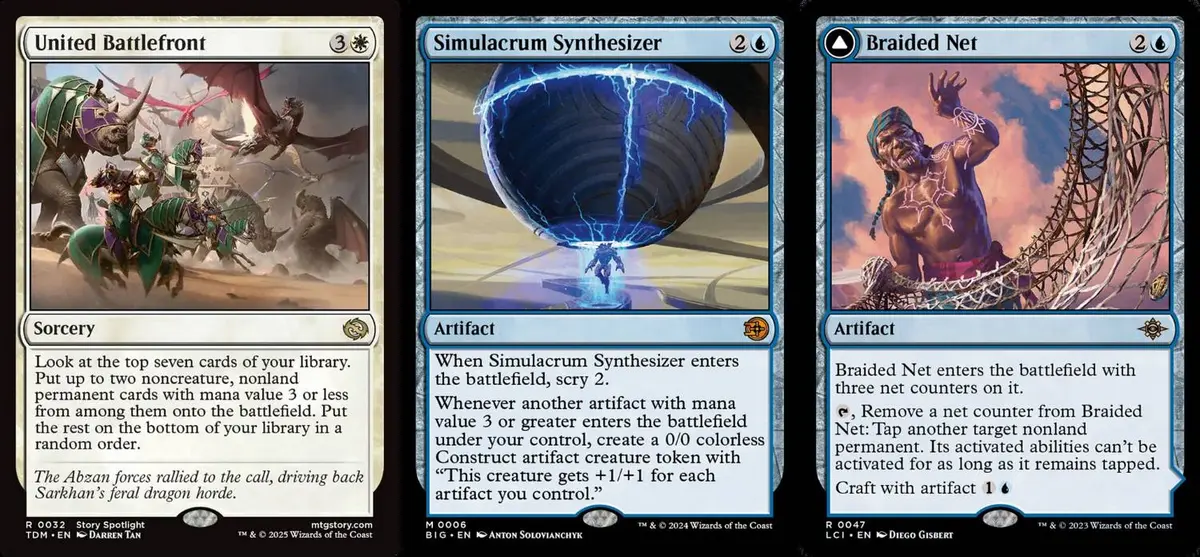
This set brought a functional homage to Collected Company: United Battlefront. It’s been changed to sorcery timing, looks at 7 cards, and puts up to two noncreature, nonland permanents with total mana value 3 or less onto the battlefield. Blue artifact decks fit this condition perfectly: the core cards Simulacrum Synthesizer and Braided Net // Braided Quipu happen to be 3-mana noncreature permanents, and most of the artifacts in the deck fall within the range of United Battlefront.
Gruul Ferocious
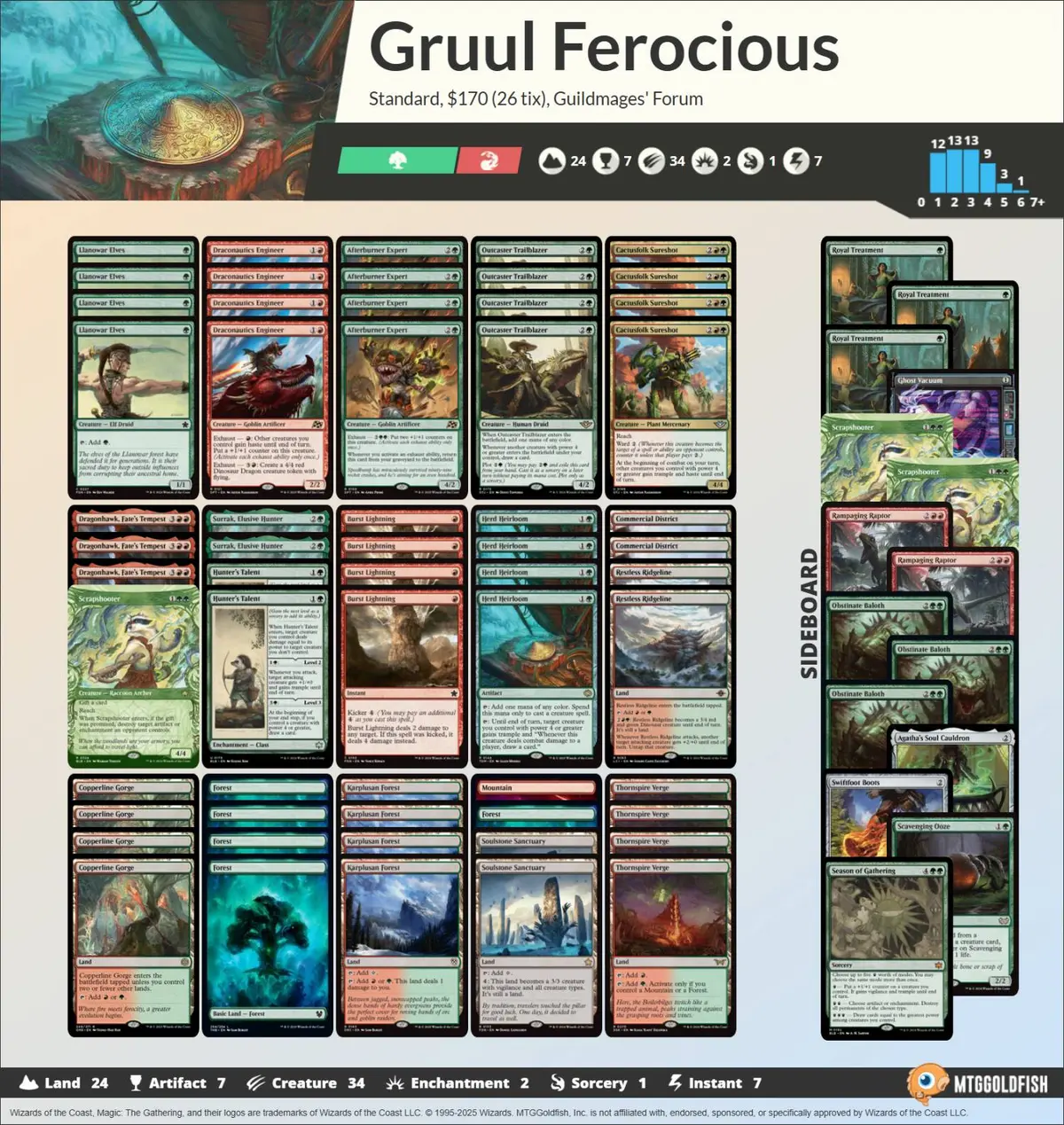
Ferocious was the signature mechanic of Temur in Khans of Tarkir. In Standard sets since then the word “ferocious” hasn’t been used again, but effects that care about creatures with power 4 or greater have shown up more and more often, and by now it’s practically a semi-evergreen design. Guildmages’ Forum has run an article on this theme before; see the earlier piece - Wild Awakening: Standard Gruul Ferocious
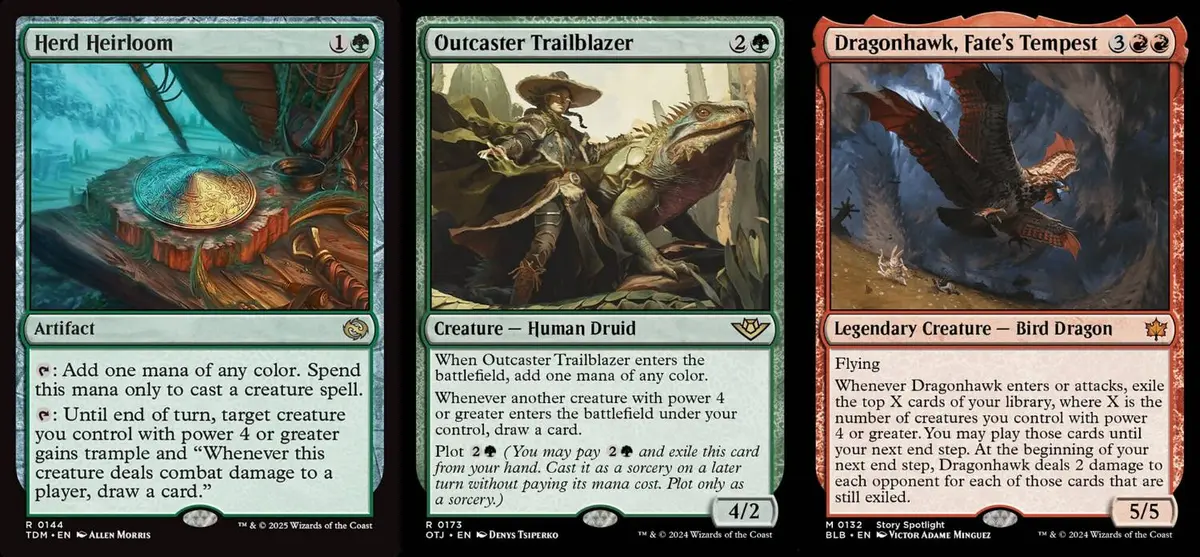
This set gave us a new ferocious card, Herd Heirloom, which provides both acceleration and card advantage and is a very practical addition. After all, the power-4 creatures that ferocious demands are hard to land on a 2-mana curve, so it’s better to swap in a useful ramp piece and give the deck more explosive power.
Gruul Dragon
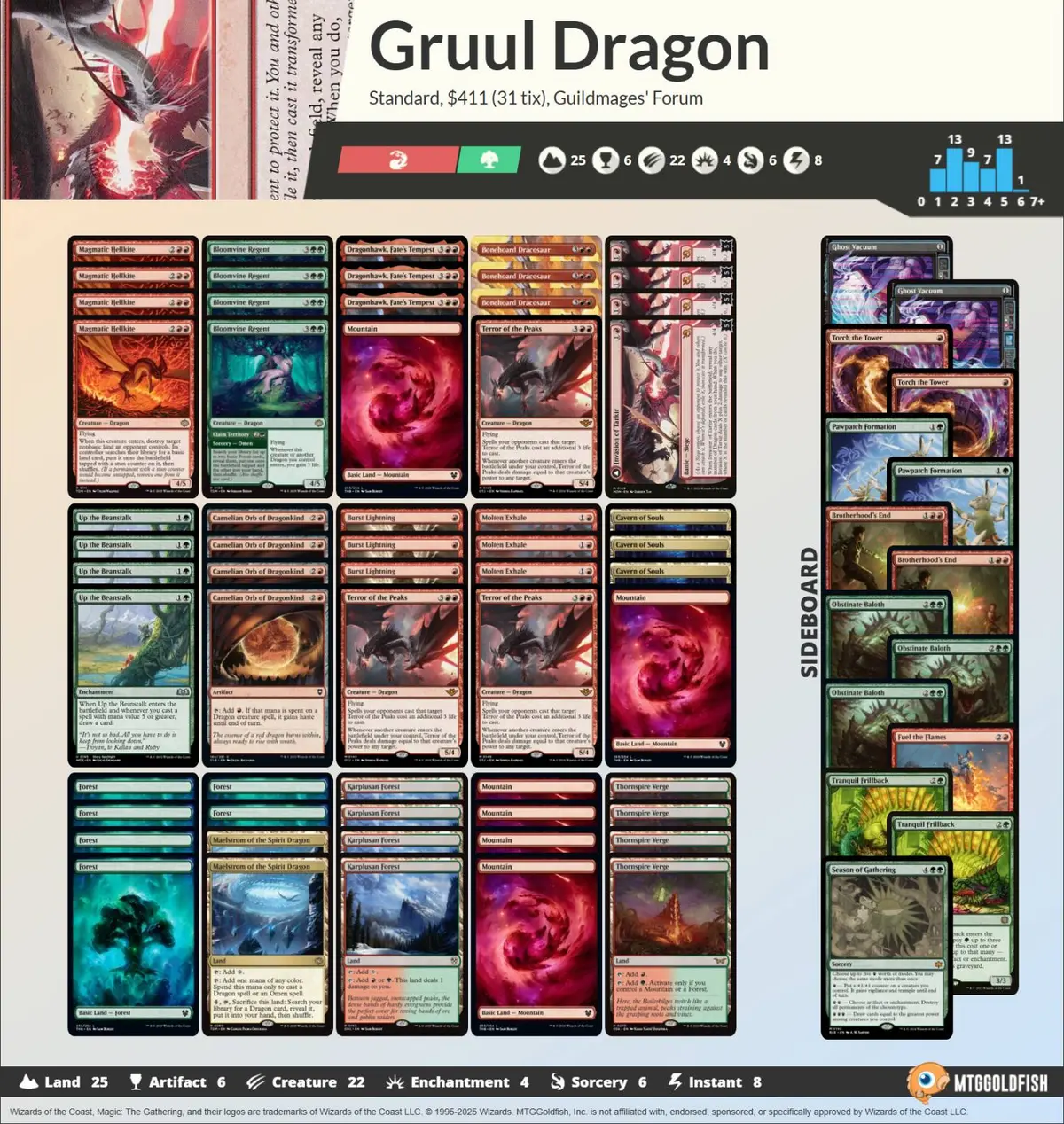
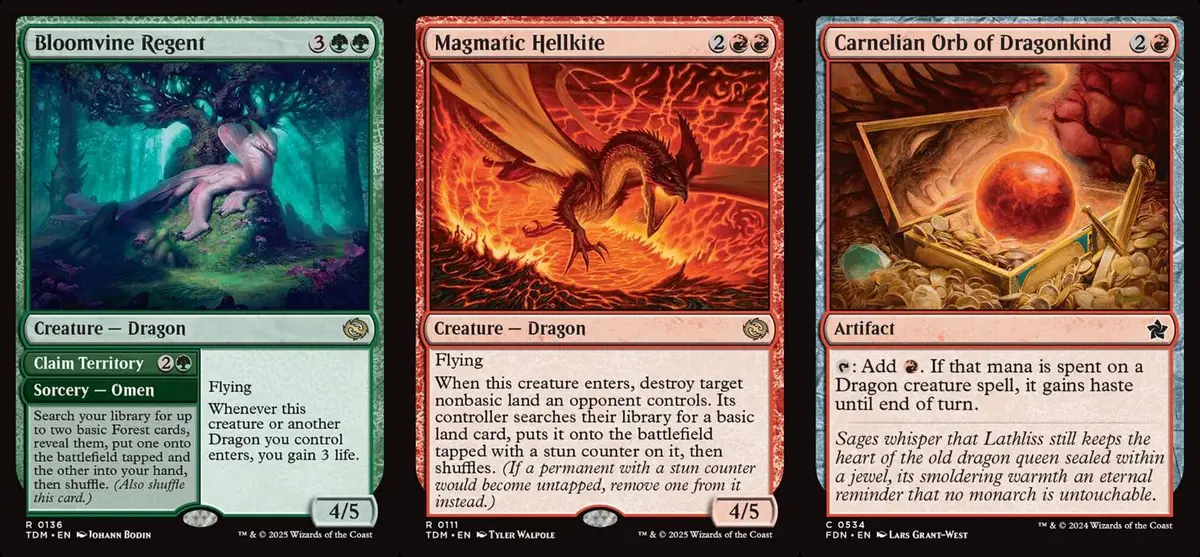
How could Tarkir go without Dragons? Ever since FDN reprinted Carnelian Orb of Dragonkind, Dragons have solved their most troublesome problem, clunky deployment, and have been a real contender; see the earlier article - Draconic Roar: Standard Mono-Red Dragons
Because many of the key Dragons sit at 5 mana, we splashed green and used Bloomvine Regent // Claim Territory, which can ramp via Omen and improves our ability to reach 5 mana. And once you get to higher mana, it’s a Dragon with plenty of combat power on its own, so you don’t need to worry about it being a dead draw in the mid to late game. Once we mention the keywords green and 5 mana, it’s naturally Up the Beanstalk’s turn to shine. The resource strength of Up the Beanstalk alone is worth splashing green for, and green also does reasonably well in sideboards in the current environment.
Another new Dragon that I personally love is Magmatic Hellkite. The body is sturdy enough, and there are so many utility lands these days that even if it blows up a land and gives back a basic, that’s still a gain. The tempo hit of the basic land entering tapped does have real impact in some situations, and many three-color decks right now have all kinds of rare fixing lands packed in with barely two basics, so an opponent hit by this might just stall out (readers who want to strengthen the land-destruction angle could consider swapping some utility lands for Demolition Field).
Azorius Control
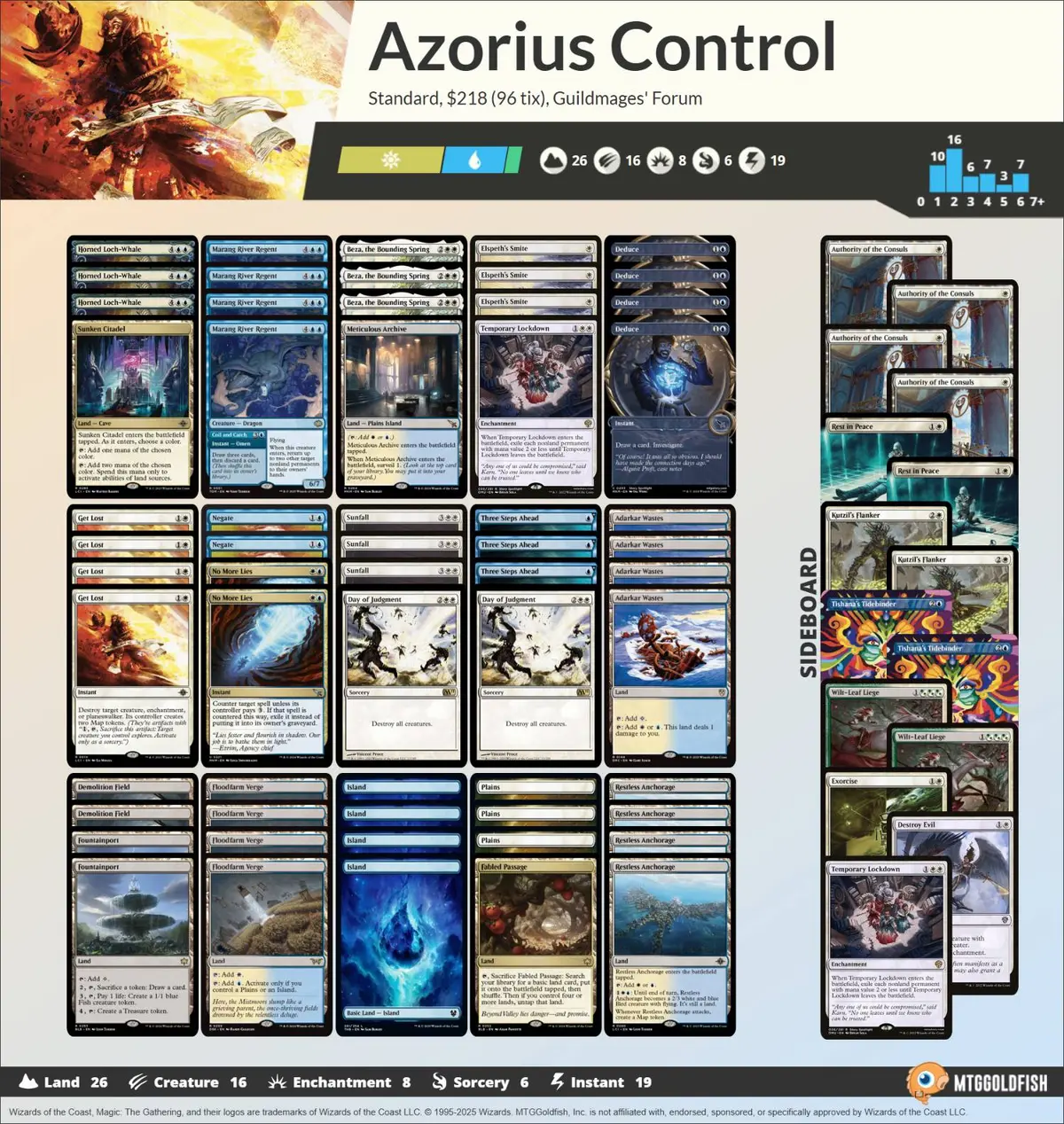
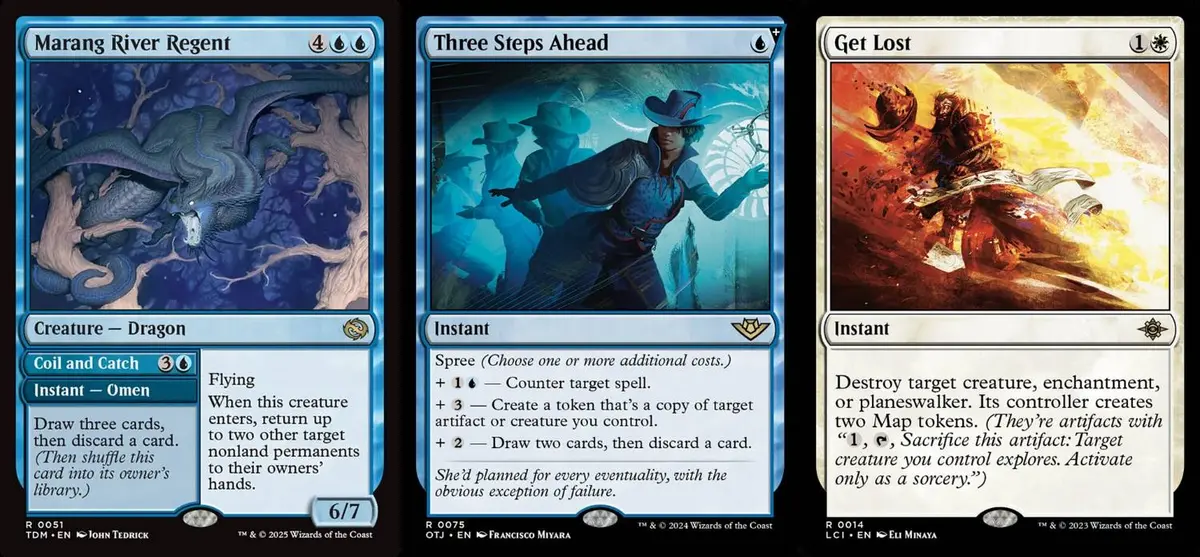
As a control enthusiast, I personally paid a lot of attention to Marang River Regent // Coil and Catch in this set. Draw-Go control decks of the past generally ran a 4-mana instant-speed card advantage spell. After Memory Deluge was born, you could say it monopolized that slot with overwhelming strength for a full three years, until it rotated out. Since then, nothing has really filled the gap. Of course there are still plenty of options if all you want is instant-speed card draw, but their power level is clearly a tier lower, which is why the recent meta evolved into the Stock Up version. If instant-speed options are awkwardly weak, you might as well switch partly to sorcery-speed card advantage with an acceptable mana cost and great depth. Back to Marang River Regent // Coil and Catch: its Omen side, draw three then discard one, isn’t actually strong, just usable. But the strength is that the body is a finisher that can win the game, which means we can get an extra win condition using only a looting-spell slot. For a control deck, a free win condition that doesn’t use up a card slot is extremely valuable, and lets us focus entirely on how to lock the opponent out when building.
Izzet Dragon Control
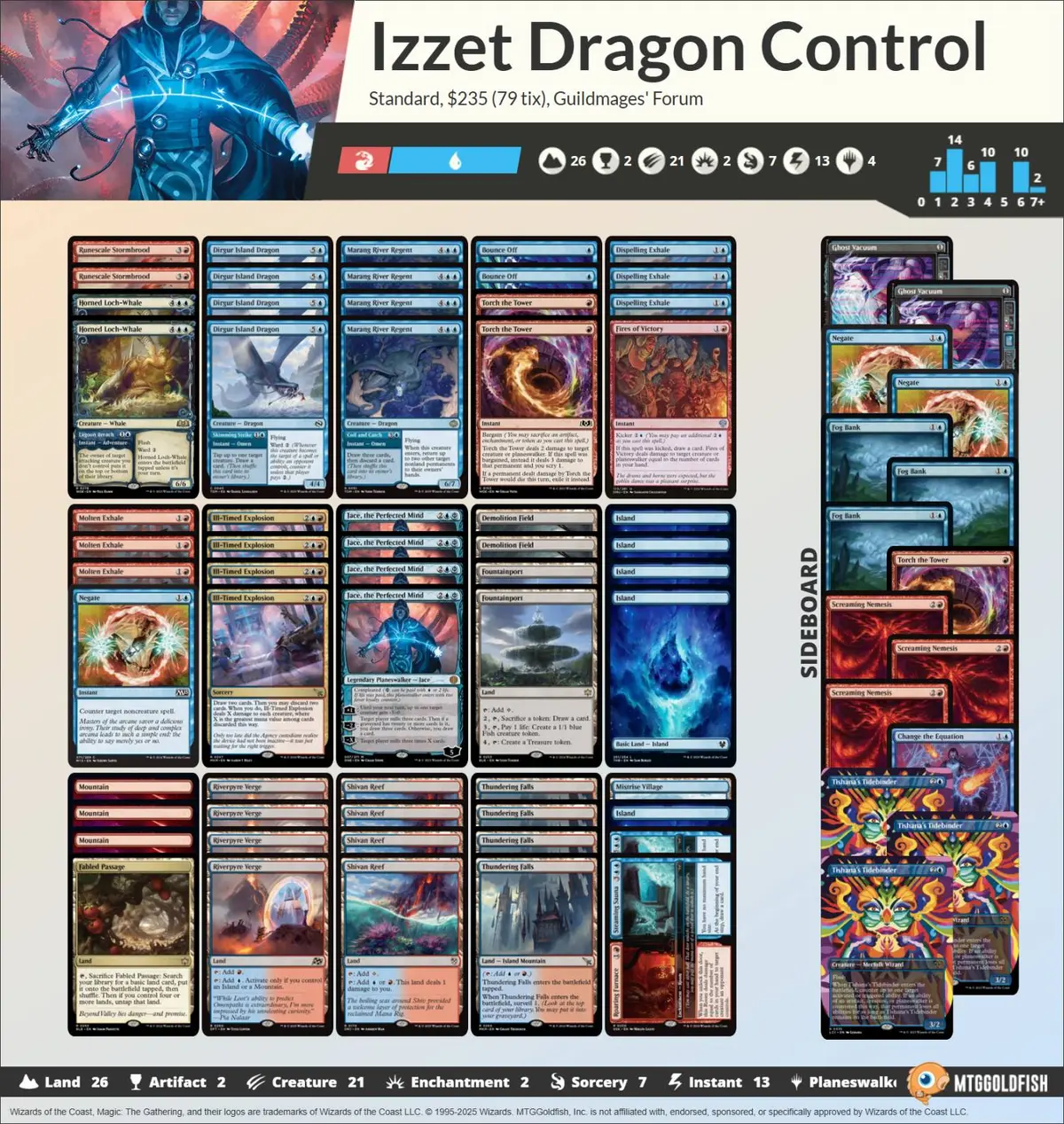
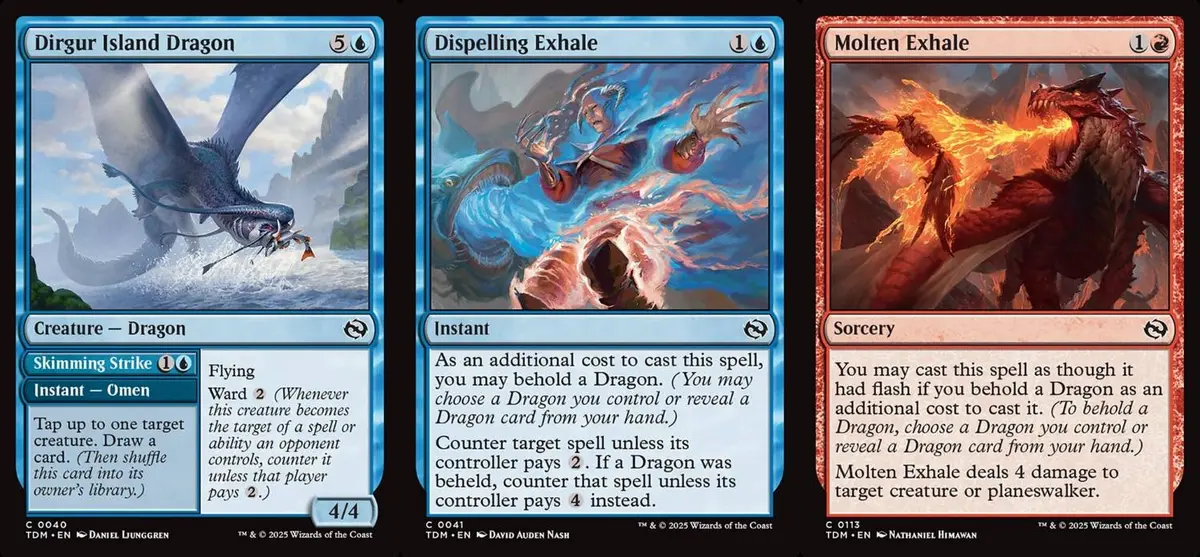
Compared with the above, which merely used Marang River Regent // Coil and Catch as a single card, this one emphasizes the supporting Dragon theme more. The deck uses quite a few Omen Dragons to boost the effectiveness of Dispelling Exhale and Molten Exhale, and to raise the mana value curve of the cards in the deck so that Ill-Timed Explosion has more reliable reach.
Dirgur Island Dragon // Skimming Strike is another Omen Dragon suited to control. In pure card-drawing ability it certainly can’t compare with Deduce, but it can neutralize one of the opponent’s creatures for a turn of attacking, which may make up for some of the board-clearing shortfall in the removal-light Izzet color pair. Of course, that only buys time and doesn’t solve the problem, so the win-con Plan B once again brings back Jace, the Perfected Mind. Sometimes Izzet’s removal can’t handle the opponent’s board, and then you just race tempo-wise and mill them out.
Ojer Pakpatiq Control (Dimir)
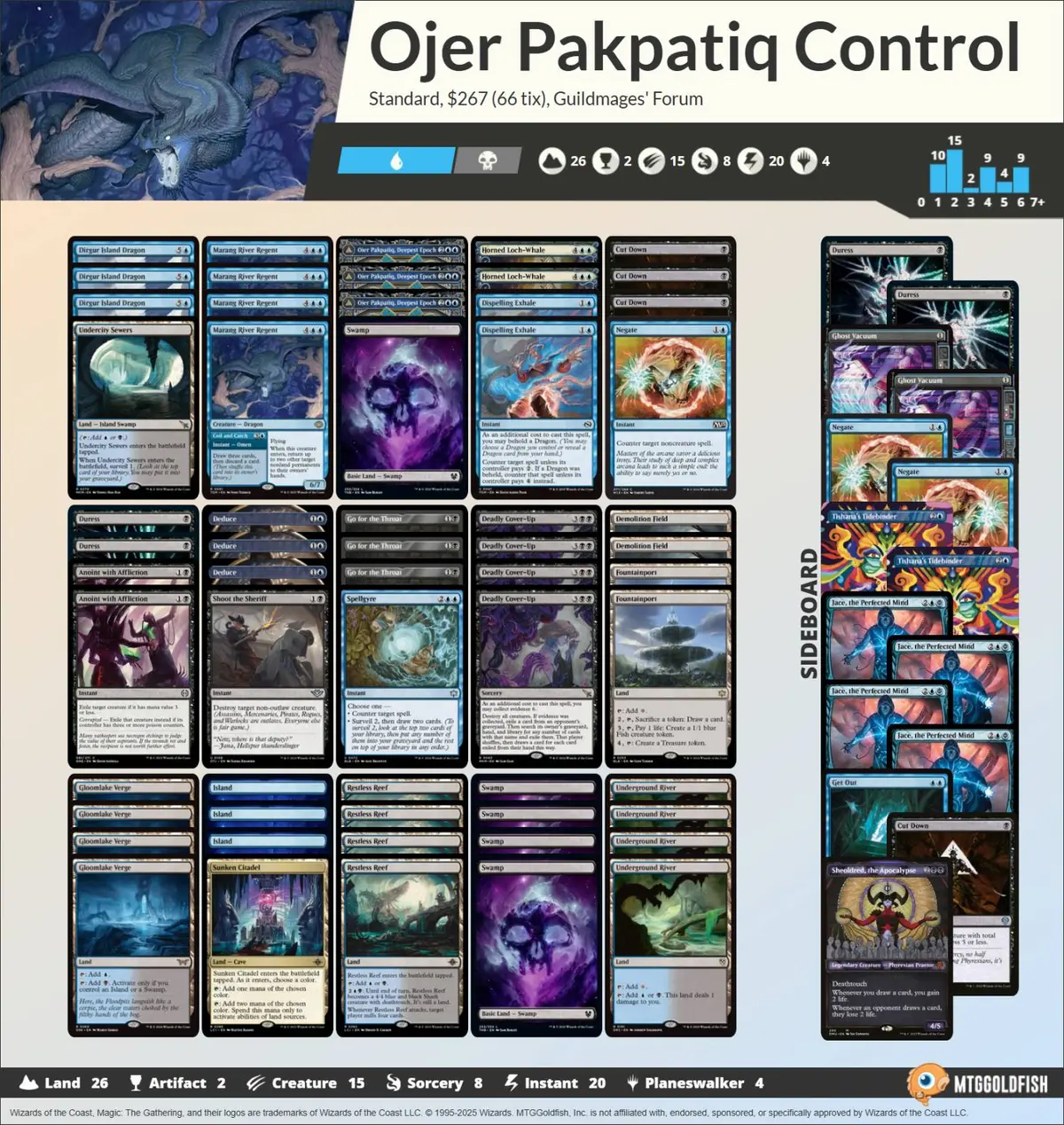
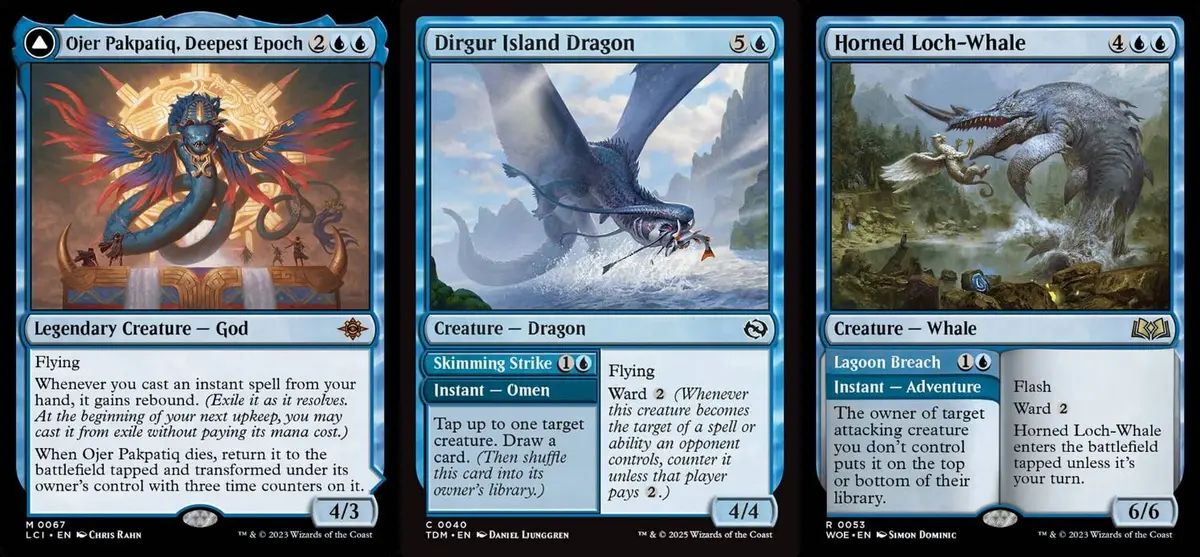
Let me first introduce the effect of Ojer Pakpatiq, Deepest Epoch // Temple of Cyclical Time (hereafter “Blue Ojer”):
Whenever you cast an instant spell from your hand, it gains rebound. (Exile it as it resolves. At the beginning of your next upkeep, you may cast this card from exile without paying its mana cost.)
When you cast the instant half of an Omen or Adventure card, it’s also an instant spell and can use Blue Ojer’s ability to gain rebound. When that spell resolves successfully, two replacement effects apply to it: Omen’s shuffle back into the library / Adventure’s exile and rebound’s exile. When multiple replacement effects would affect one object, its controller chooses the order in which they apply, so in this scenario you decide which effect to apply. You can let the Omen card shuffle into the library as normal, or let the Adventure card go to exile “on an adventure”, or apply rebound so that it gets exiled, and then cast it for free at the next upkeep, where you can freely choose either side to cast (though of course a spell with targets still needs a legal target).
Suppose Blue Ojer is on the battlefield and you cast the instant Omen of Dirgur Island Dragon // Skimming Strike from your hand (Skimming Strike: Tap up to one target creature. Draw a card.), then let it use Blue Ojer’s rebound to get exiled. At the beginning of your next upkeep, you can choose whether to cast the creature-side Dragon or the instant on the Omen side for free, and in this way you freeload a big creature.
You may also notice that the core pieces of this system are all in blue, so in theory the Azorius control and Izzet control above could also build a Blue Ojer control deck. In actual deckbuilding, however, I found that white’s removal has too many targeting restrictions and would likely have no target when it rebounds. Red doesn’t have that problem, and even has one more Omen Dragon, Runescale Stormbrood // Chilling Screech. In fact, I originally built the Izzet version first, but no matter how I looked at it, it felt like an inferior version of Dimir (much shorter removal reach, and no discard to use), and Blue Ojer also takes Jace, the Perfected Mind’s slot, so the Izzet version ended up scrapped.
Rakdos Demon
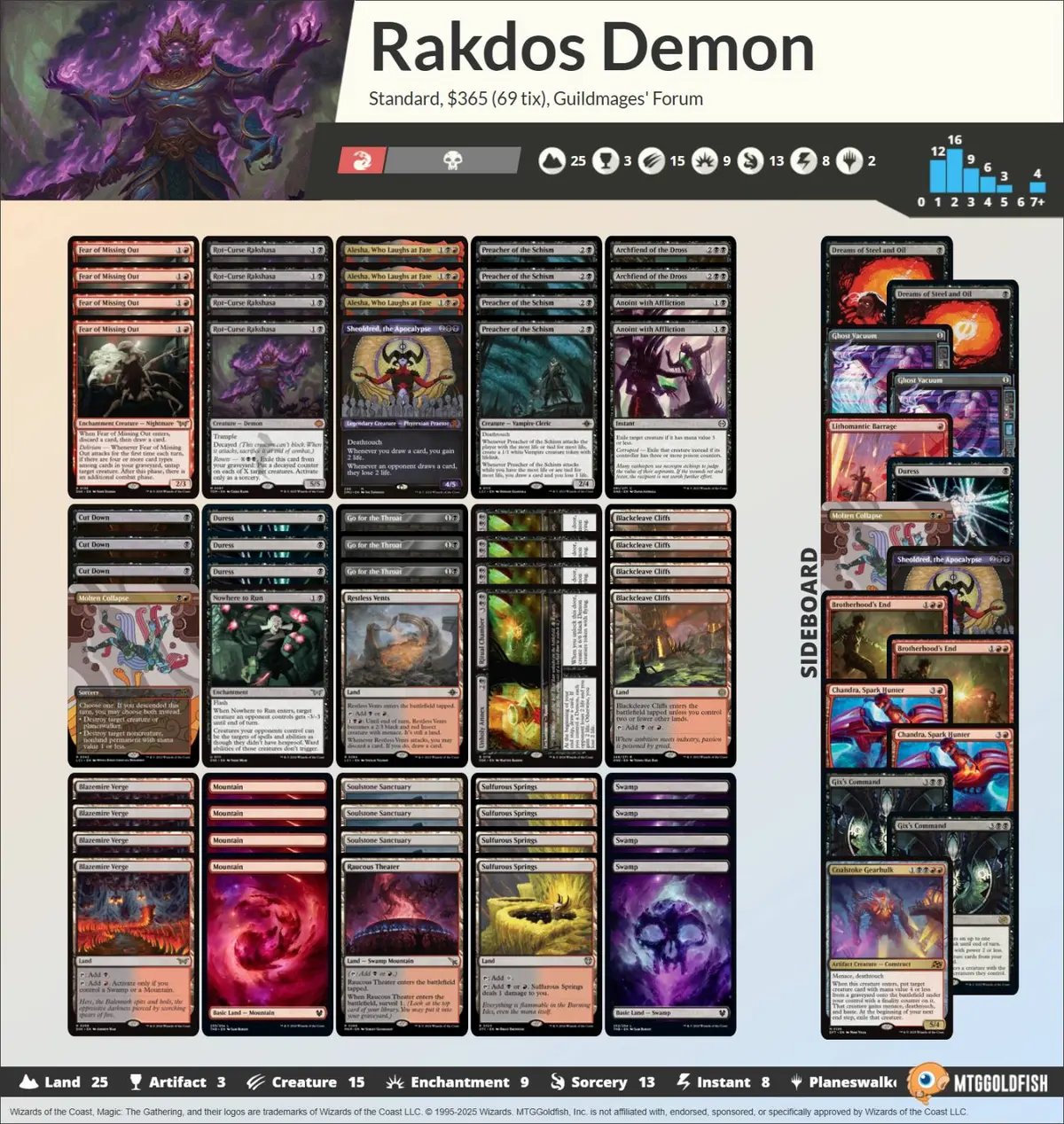
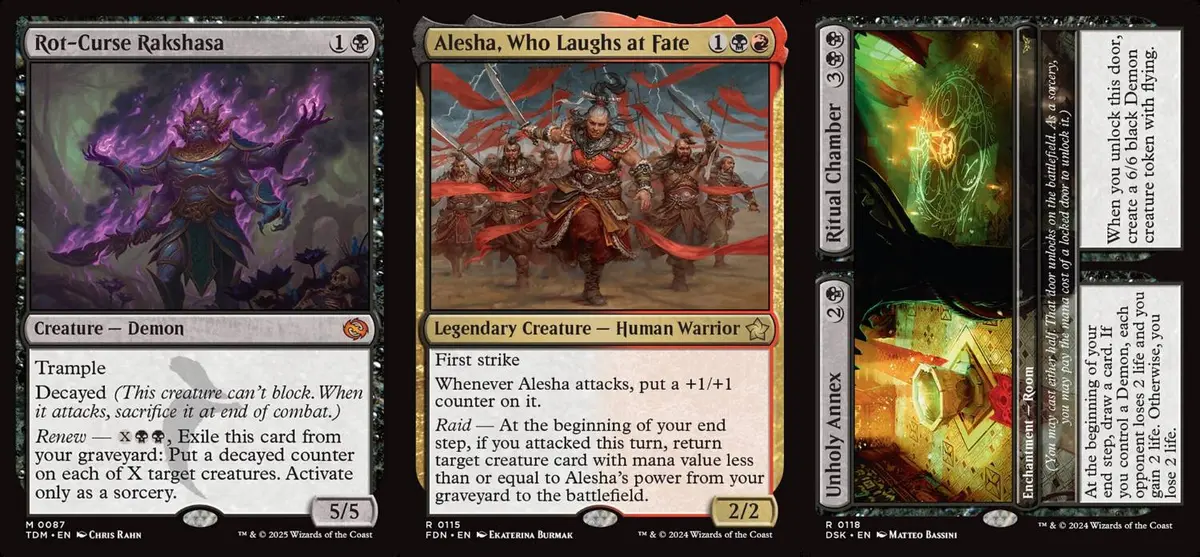
These days, thanks to Unholy Annex // Ritual Chamber, any creature with the Demon type gets extra attention. As a 2-mana Demon, Rot-Curse Rakshasa became a focus of discussion as early as the preview period. Turn-two Demon into turn-three Unholy Annex // Ritual Chamber is a delicious curve, sure, but Rot-Curse Rakshasa has a hard-to-ignore drawback: Decayed. That means most of the time it’s just a sacrifice to keep Unholy Annex // Ritual Chamber going, and the body itself does nothing.
This deck tries to rescue Rot-Curse Rakshasa with Alesha, Who Laughs at Fate. As long as you attacked this turn, Alesha can at minimum dig a 2-mana creature out of the graveyard and put it onto the battlefield, so at least Rot-Curse Rakshasa can boldly throw itself into trades and show off its 5/5 trample combat strength.
Orzhov Demon
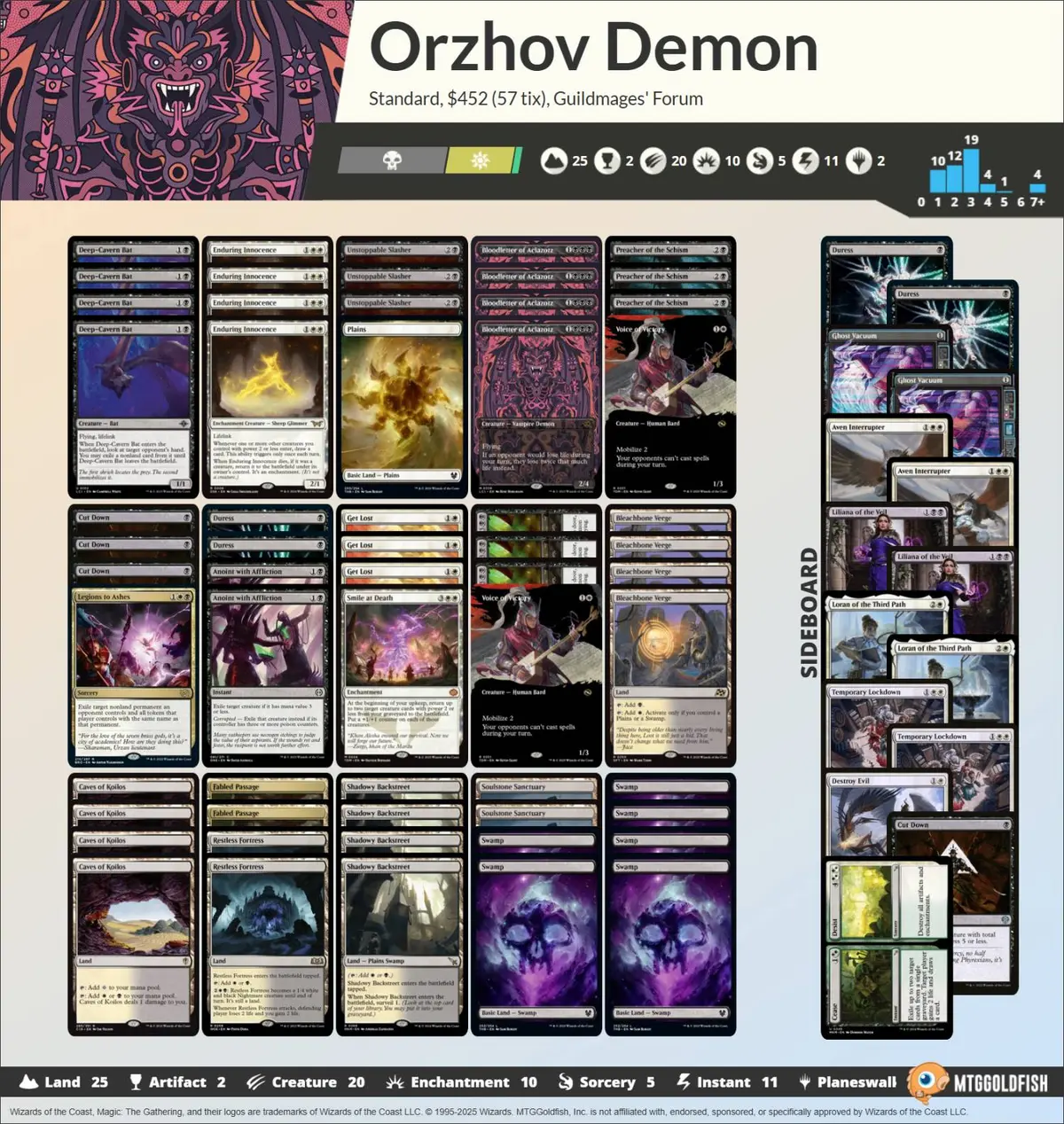
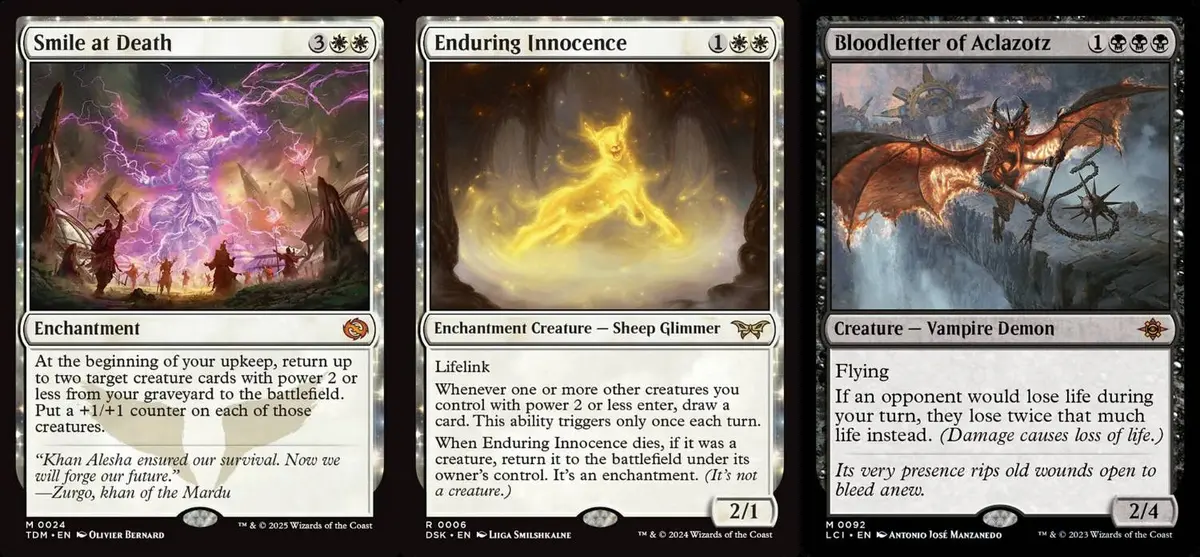
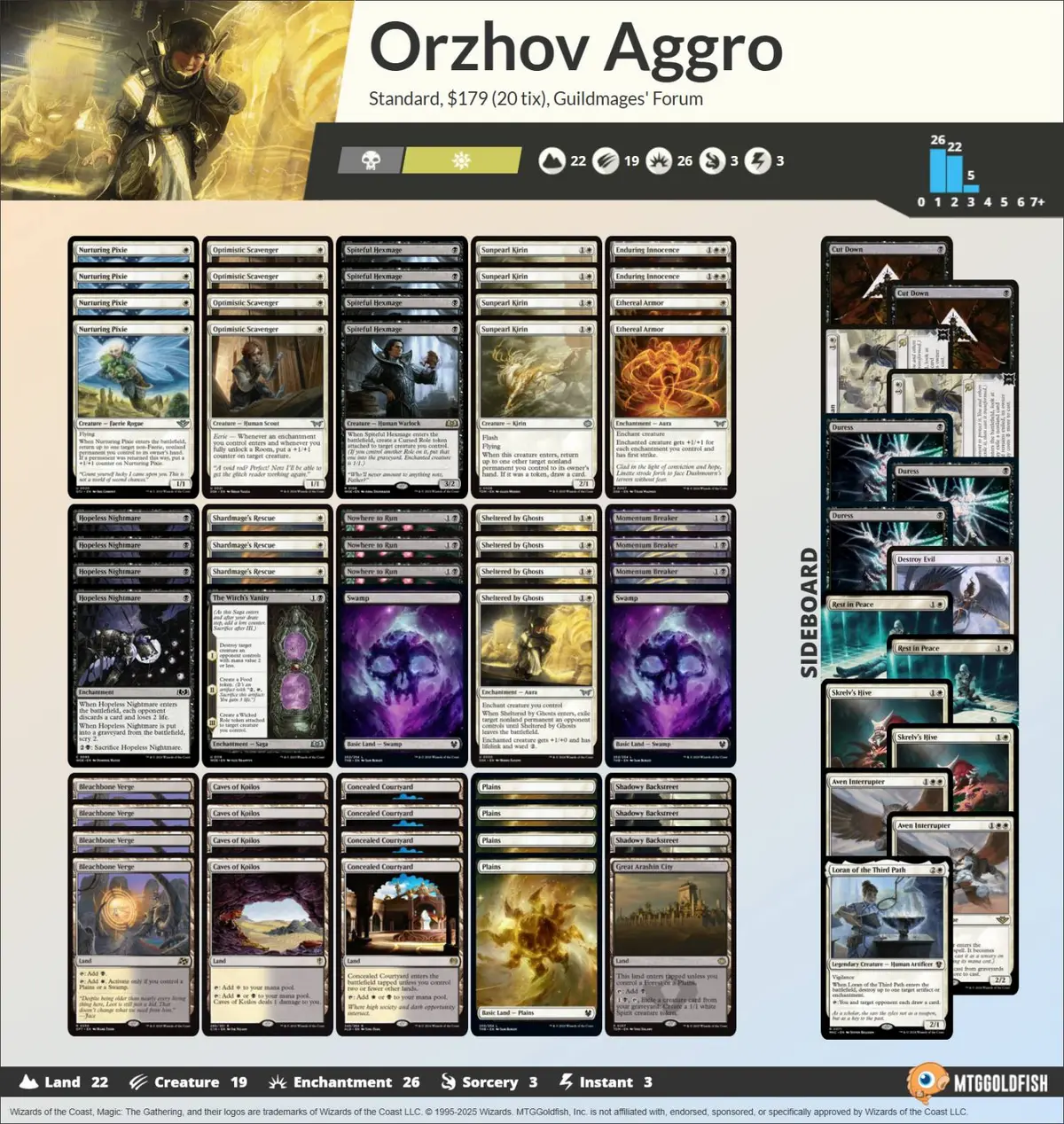
Although the deck is called Orzhov Demon and does use the Unholy Annex // Ritual Chamber package, it also mixes in a white power-2 creature core. The new card Smile at Death together with the existing Enduring Innocence forms the resource payoff for the power-2 theme. There’s the classic Bloodletter of Aclazotz + Unstoppable Slasher combination, and the generically good Preacher of the Schism also happens to be a power-2 creature. Because the Slasher and Bloodletter pairing is somewhat combo-like, the protection from Voice of Victory and the hand disruption from Deep-Cavern Bat are worth more here than in a typical midrange deck.
Orzhov Aggro
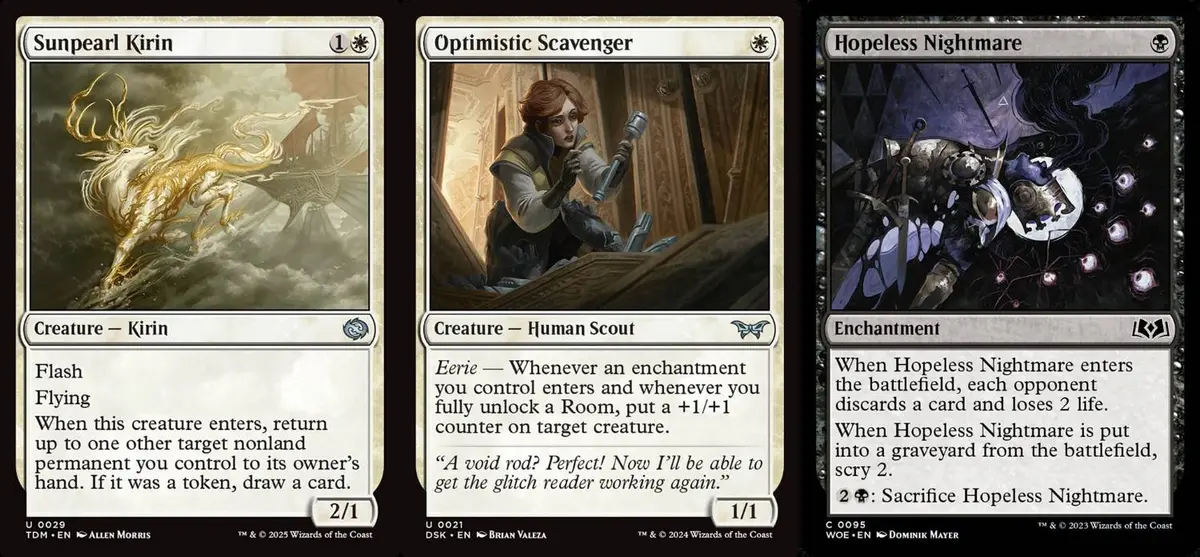
Sunpearl Kirin is basically Nurturing Pixie 2.0. It costs one more, but it has flash so it can act as a protection spell, and it draws a card when it bounces a token. Used to rebuy the hapless Cursed Role token that comes with Spiteful Hexmage, you grab both tempo and resources in one go, and even just rebuying that crowd of black ETB enchantments is plenty profitable.
Golgari Counters
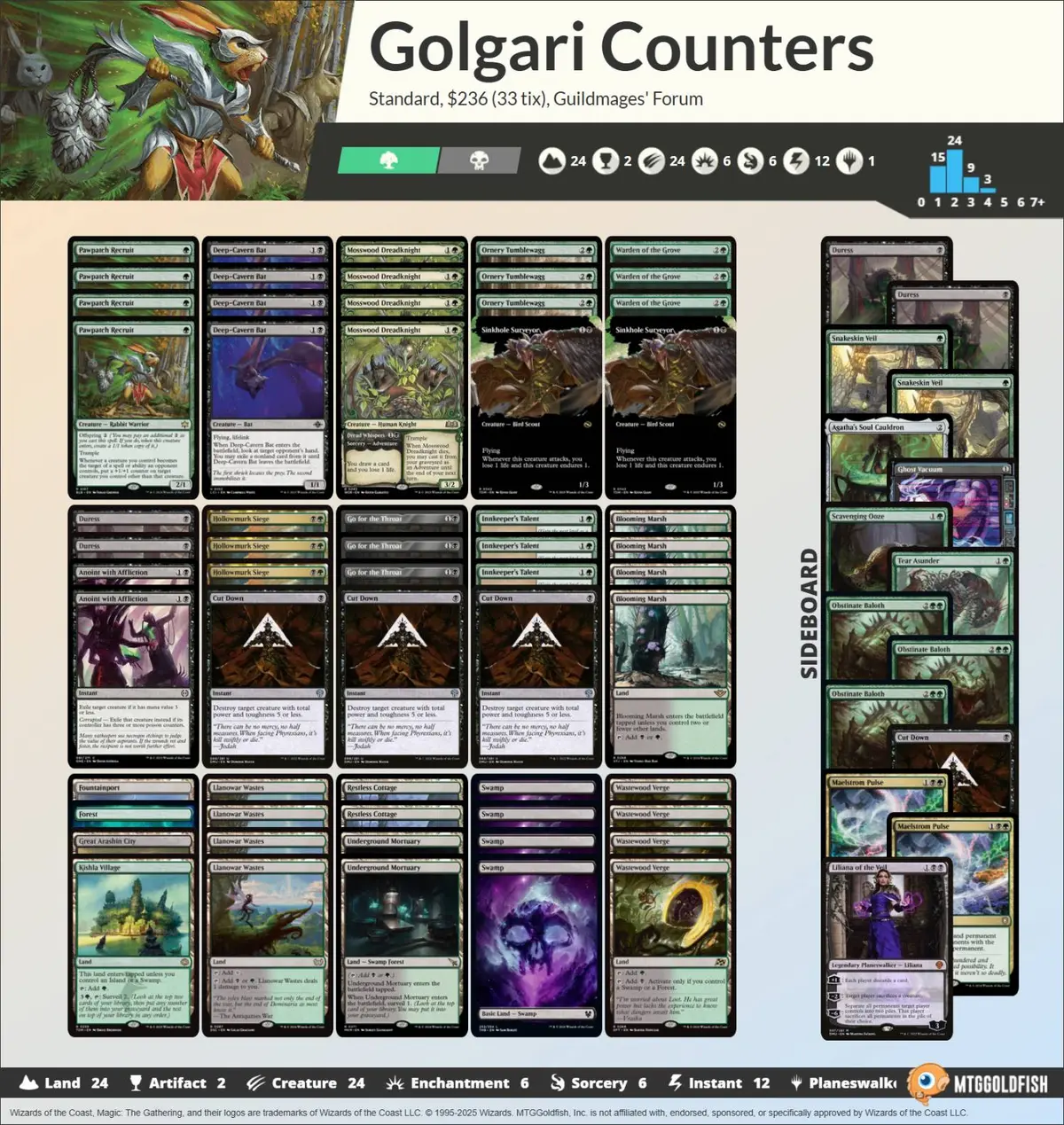
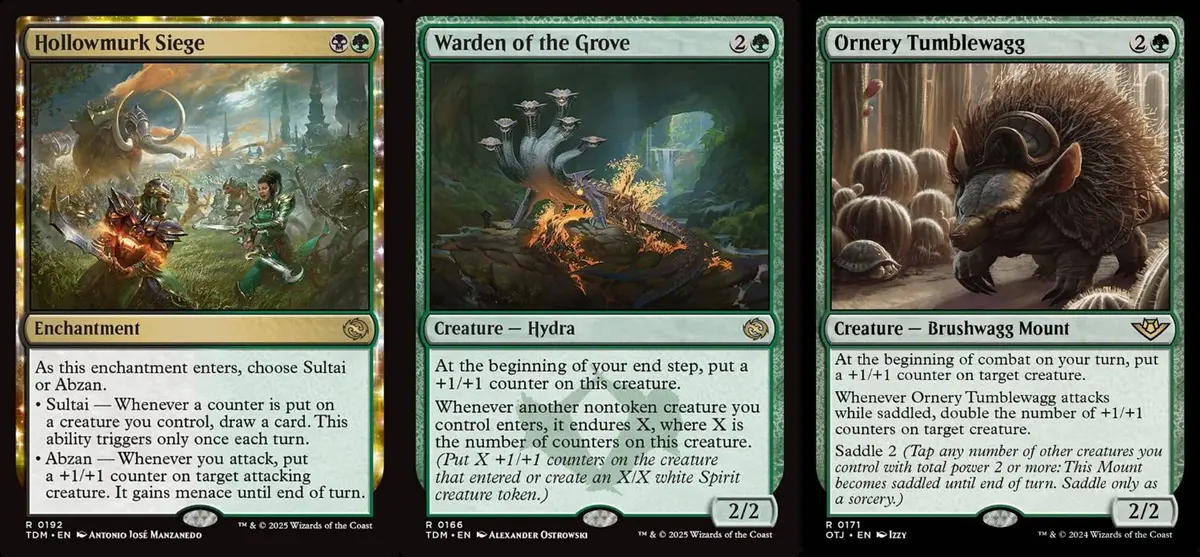
The two clans this time that include black and green (Abzan and Sultai) have Endure and Renew as their theme mechanics. Both are counter-related abilities, so Golgari has plenty of counters-synergy cards. In a deck with no shortage of ways to place counters, Hollowmurk Siege is practically a 2-mana enchantment that draws a card every turn. Counters-pumping decks of the past always feared having all their creatures killed, leaving a pile of support and nothing to put counters on, but Sinkhole Surveyor and Warden of the Grove both come with the ability to spread out wide, which boosts the deck’s staying power.
Boros Token Control
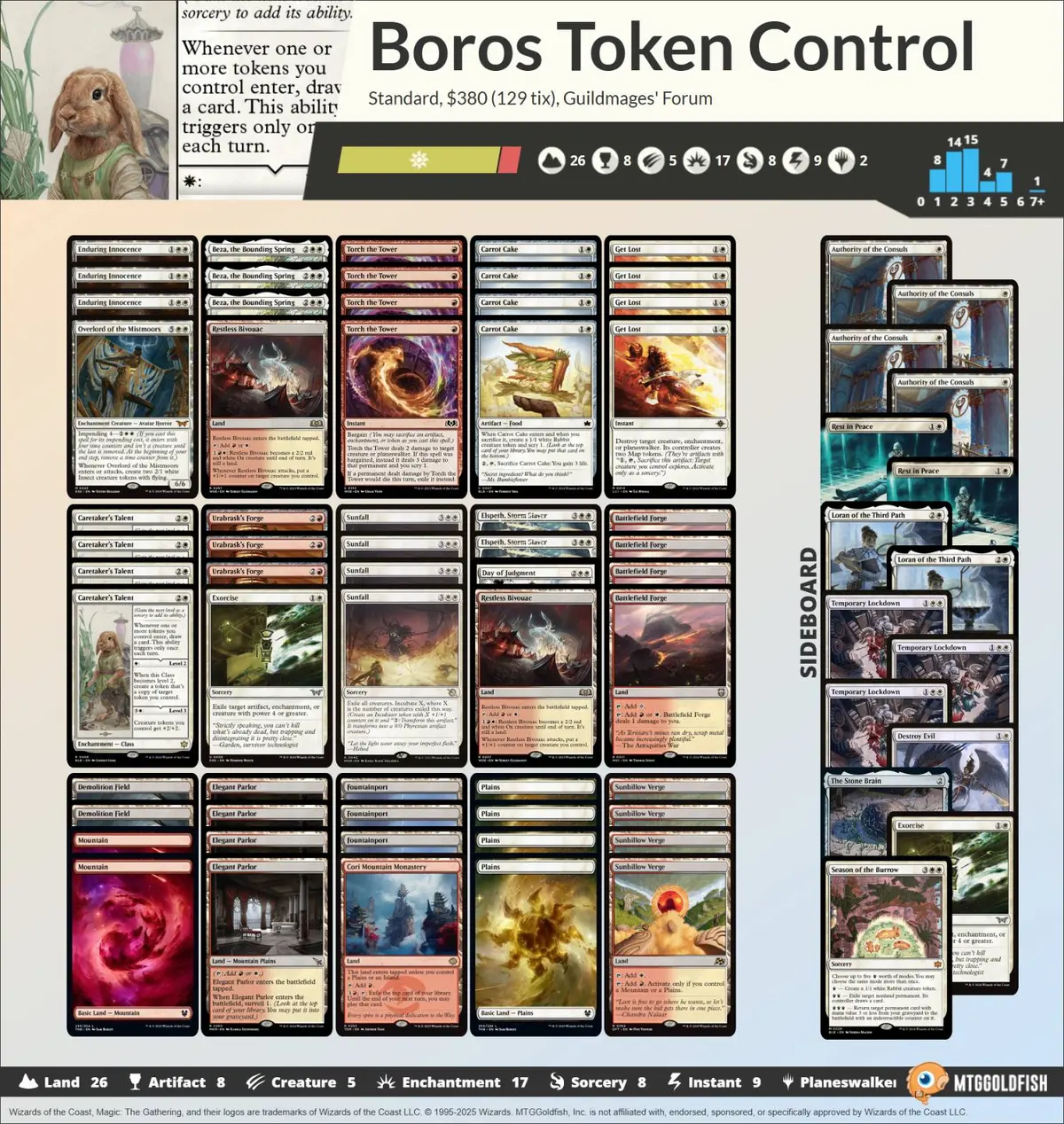
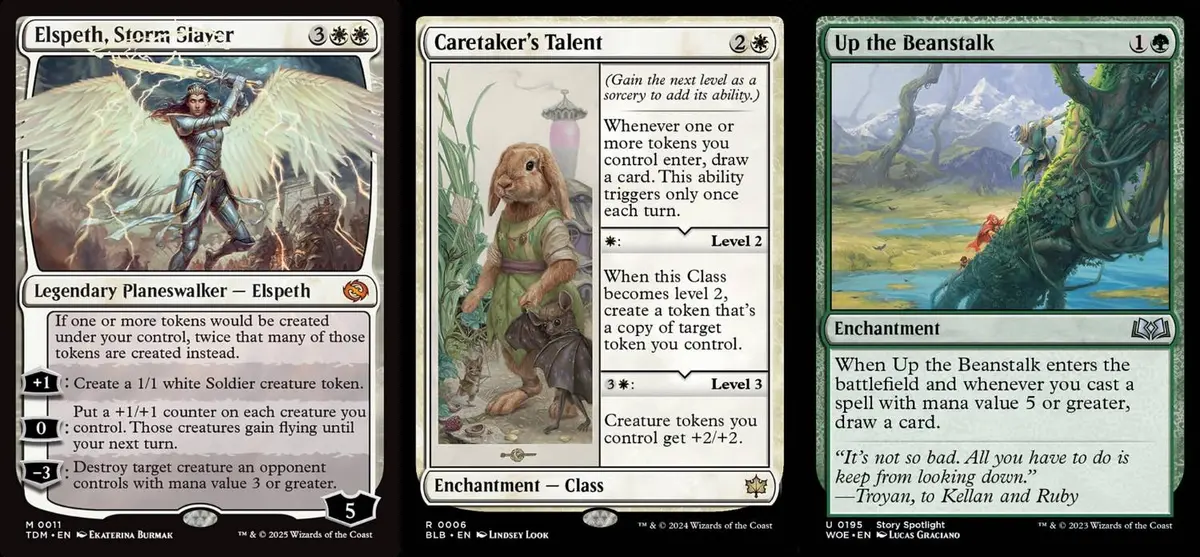
Putting Elspeth, Storm Slayer into a white token deck is obviously a match made in heaven. One of my main decks for the past half year has been Boros Token Control, and I just made small tweaks to the existing shell to add the new Elspeth.
Selesnya Control
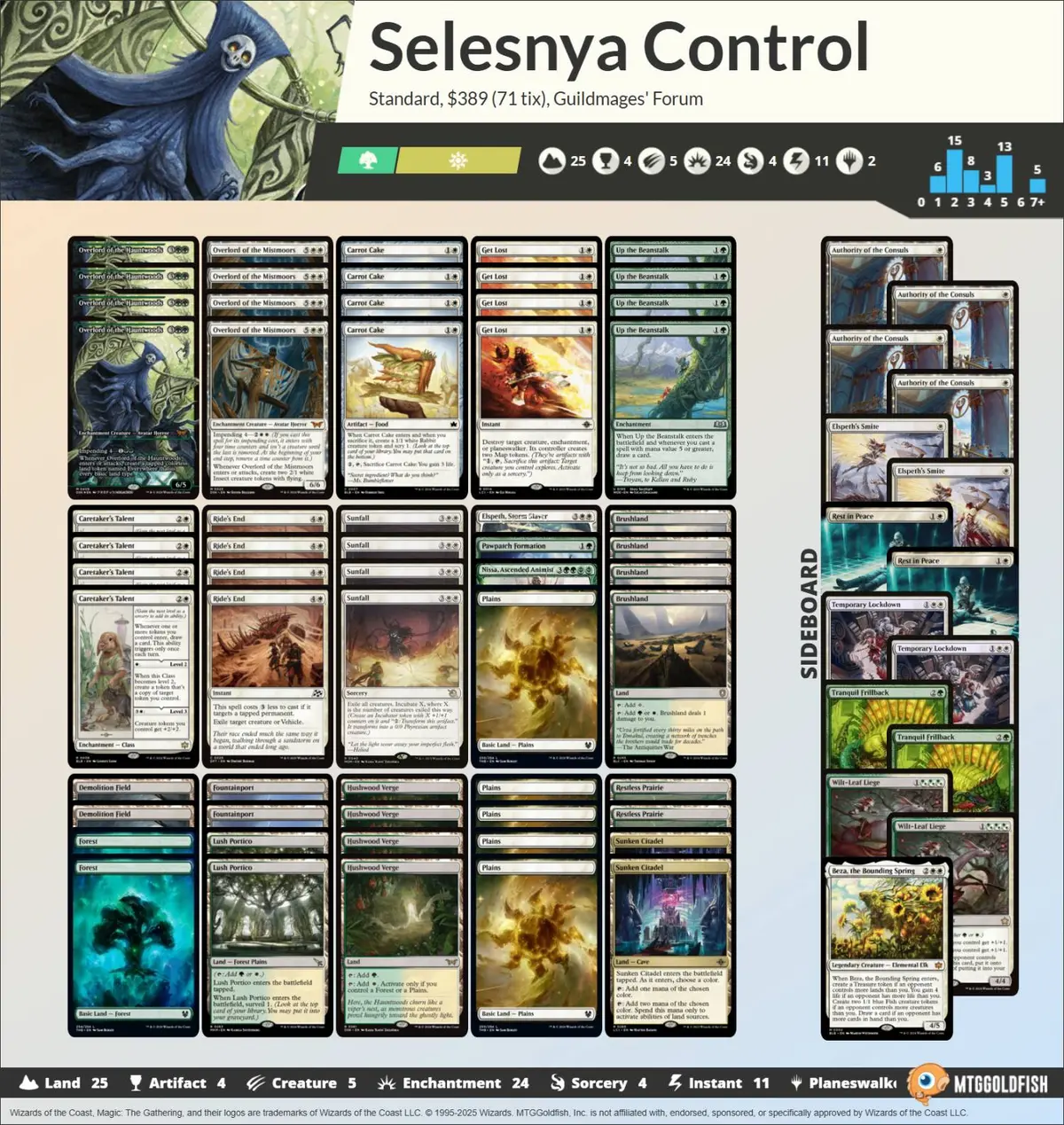
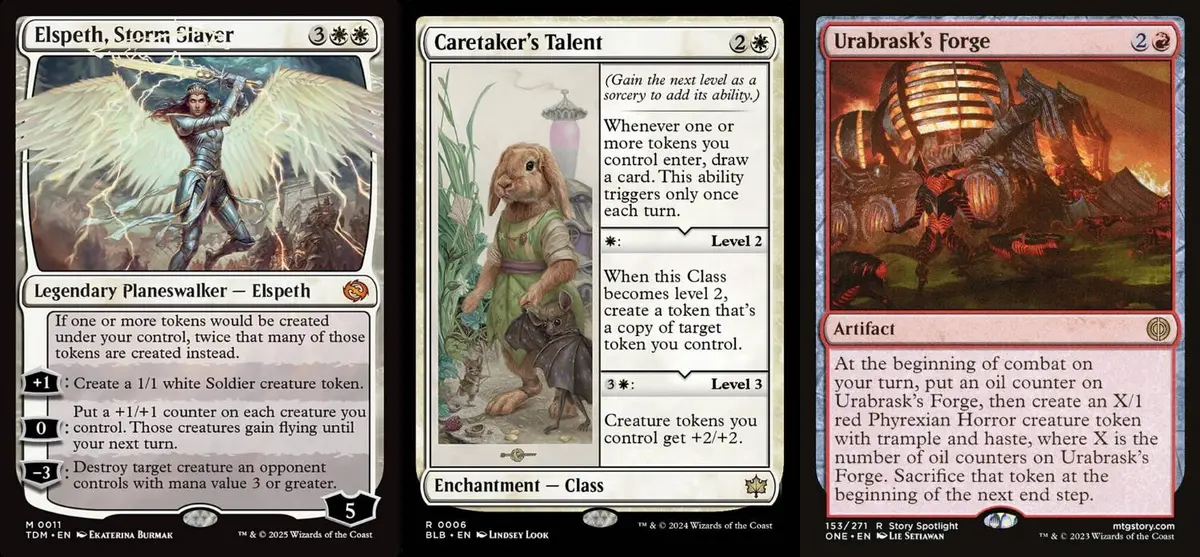
The card-advantage abilities of Up the Beanstalk and Caretaker’s Talent are both so good and so tempting, so why not put them together? After all, Overlord of the Mistmoors and Overlord of the Hauntwoods are both token-producing spells costing 5 or more, and Elspeth, Storm Slayer happens to be one too, so it all fits together seamlessly.
Boros Goblin
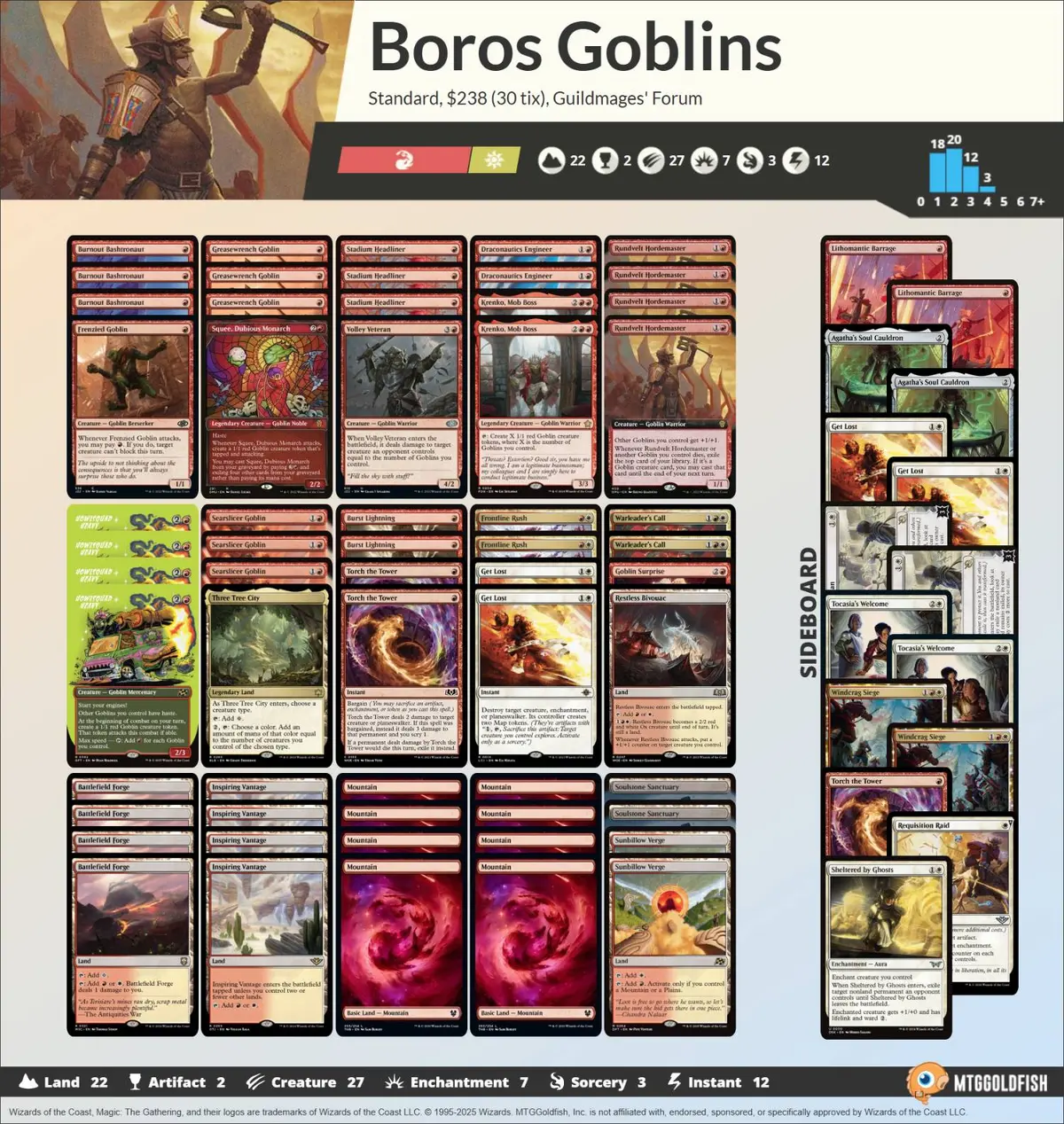
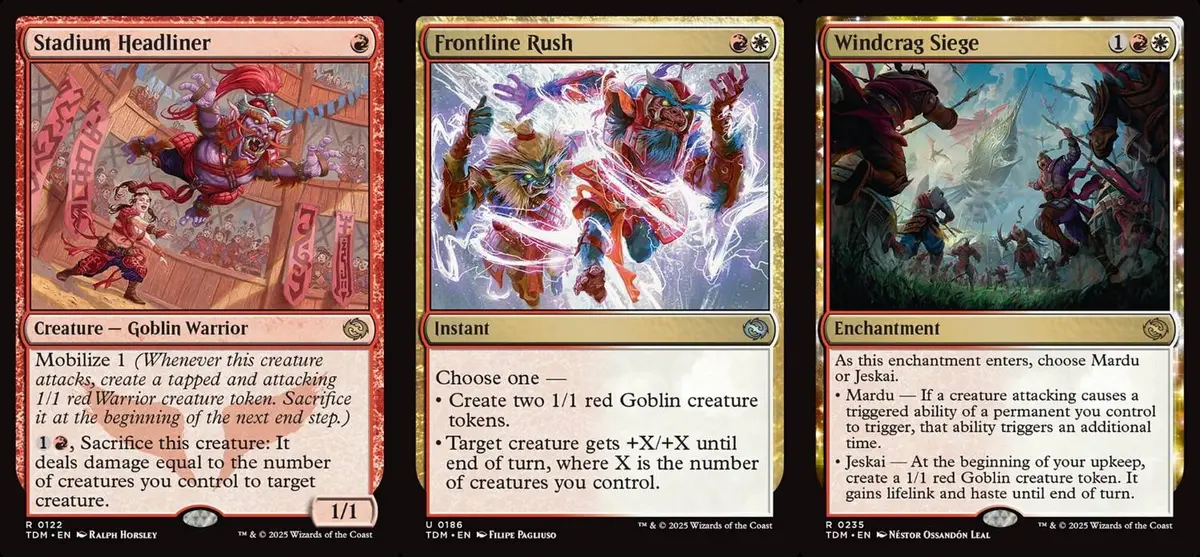
Krenko, Mob Boss leads his Goblin buddies into battle! Stadium Headliner lets the Goblins keep their board-building ability while gaining a removal spell with enough reach. Frontline Rush can be a flash 2-mana creature on the curve, or used as a combat trick, and considering how fast Goblins go wide, the expected value of pumping the team is actually not low either; but since you won’t necessarily have white on turn two, I’m testing just two copies for now. And since the deck makes this many Goblins, two Warleader’s Call can help you close out the game quickly.
In the sideboard, Agatha’s Soul Cauldron combined with a bunch of Goblins that have activated abilities lets you do graveyard hate and pump the team, both work! I also added Windcrag Siege. Usually you choose Jeskai to make a 1/1 Goblin for extra pressure when behind, and when the situation suits, you can choose Mardu too!
Izzet Prowess
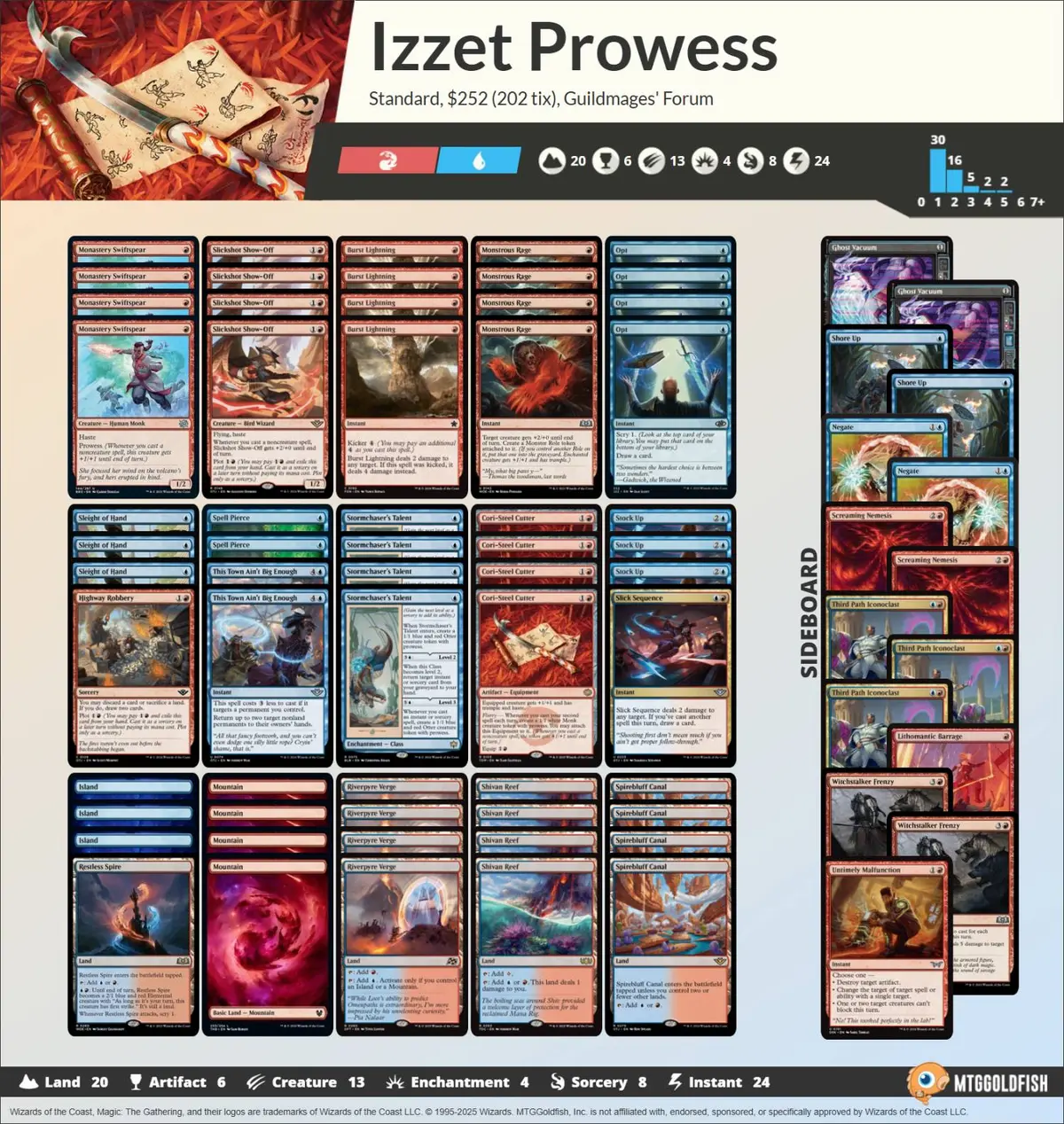
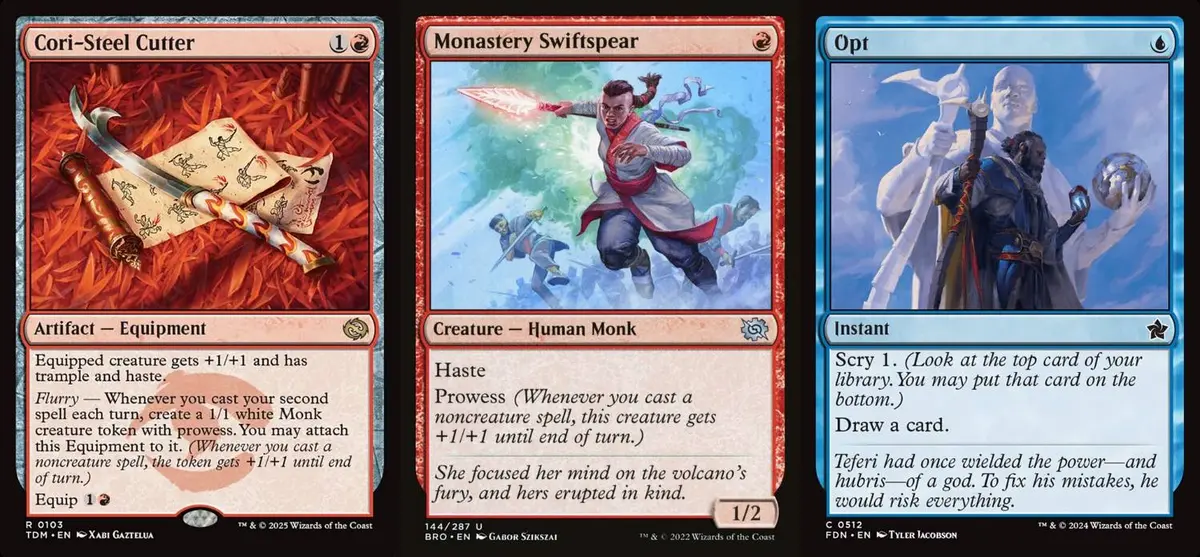
Since BLB, red-based aggro in Standard has been almost monopolized by the Mouse archetype, and its deck construction is tied to a large number of creature-buffing support cards. But this set has a new card that gives you enough incentive to abandon the Mouse archetype and return to the traditional spell-count Prowess deck: Cori-Steel Cutter. It’s just an Equipment itself, but through Flurry it keeps producing Monk creature tokens with prowess, and the Equipment’s own buff is very noticeable too, letting you have a strong enough offensive tempo while continuously replenishing sustained pressure.
Flurry requires you to cast multiple spells in a turn. To achieve that, besides using lots of card-draw spells, the Stormchaser’s Talent + This Town Ain’t Big Enough rebuy engine is another answer.
Jeskai Flurry Bounce
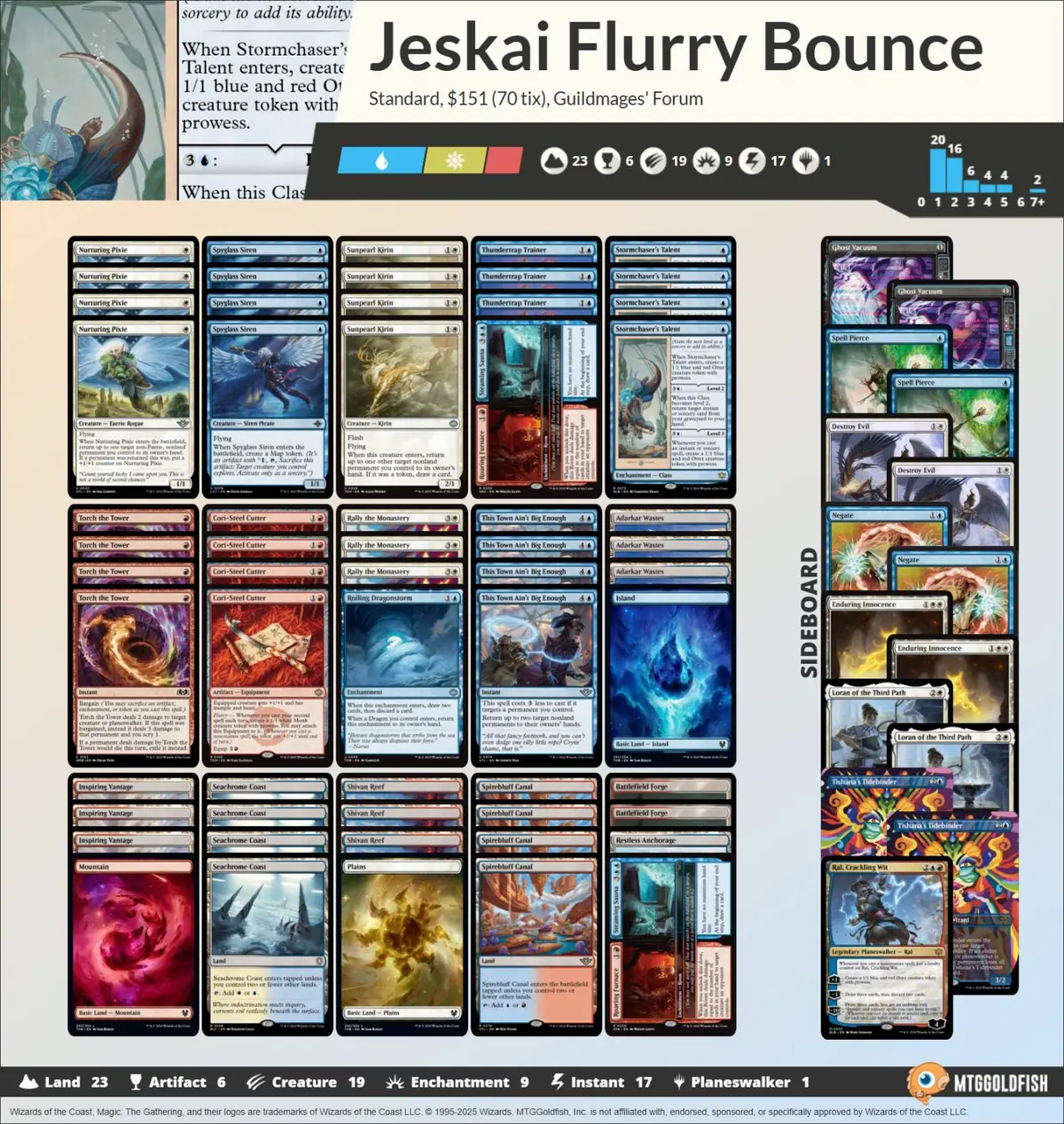
It’s still Cori-Steel Cutter’s turn, but this time it’s a proper Jeskai Flurry theme.
Compared with the Izzet Prowess list above, which mixes in lots of card-draw spells, this one focuses more on the rebuy engine led by Stormchaser’s Talent. Besides This Town Ain’t Big Enough, it adds plenty of other rebuy options like Nurturing Pixie and Sunpearl Kirin, along with enough cheap ETB permanents to keep the supply chain running.
Jeskai Convoke
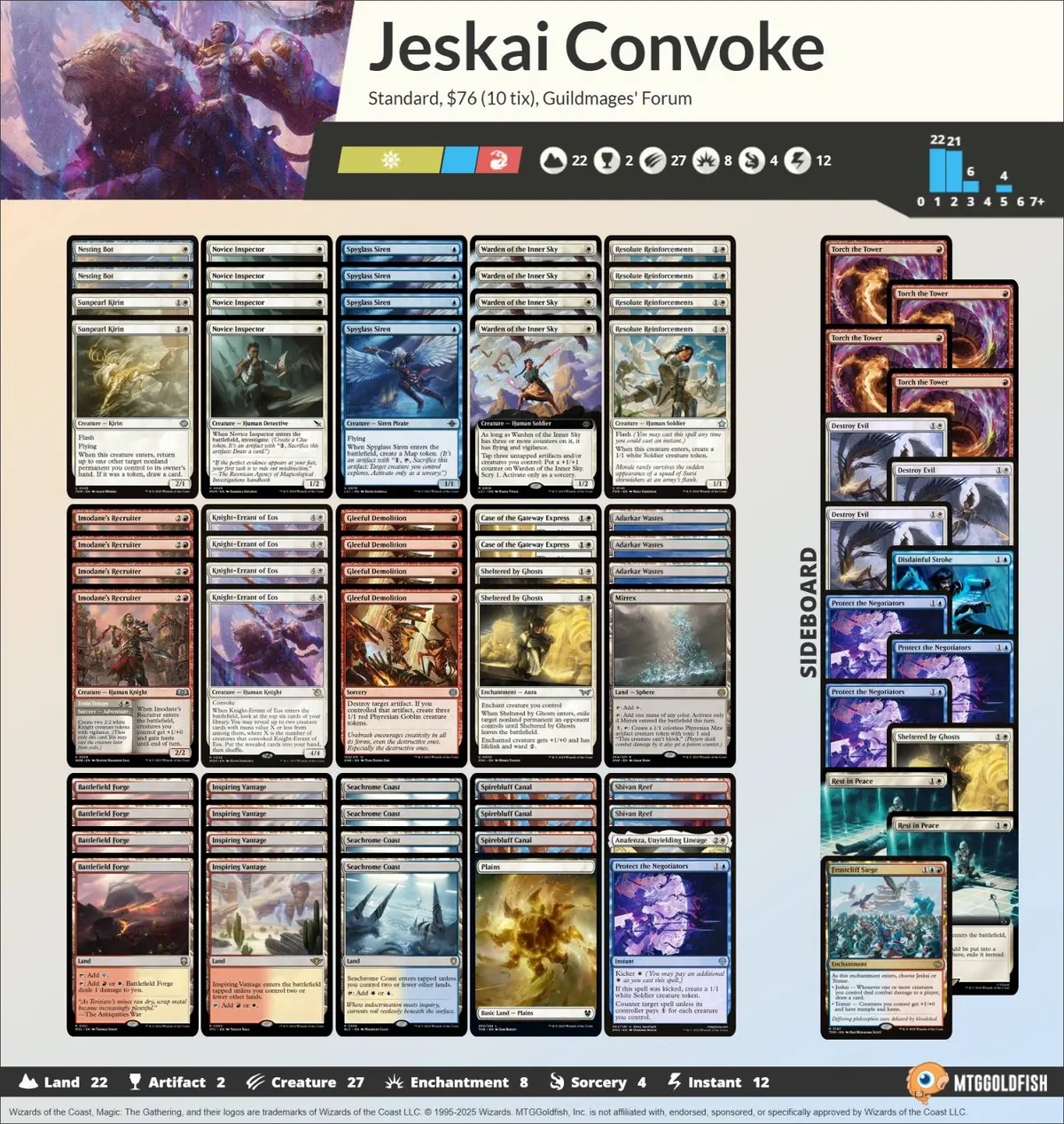
Only minor adjustments in the main deck, but they bring new variations in how it plays:
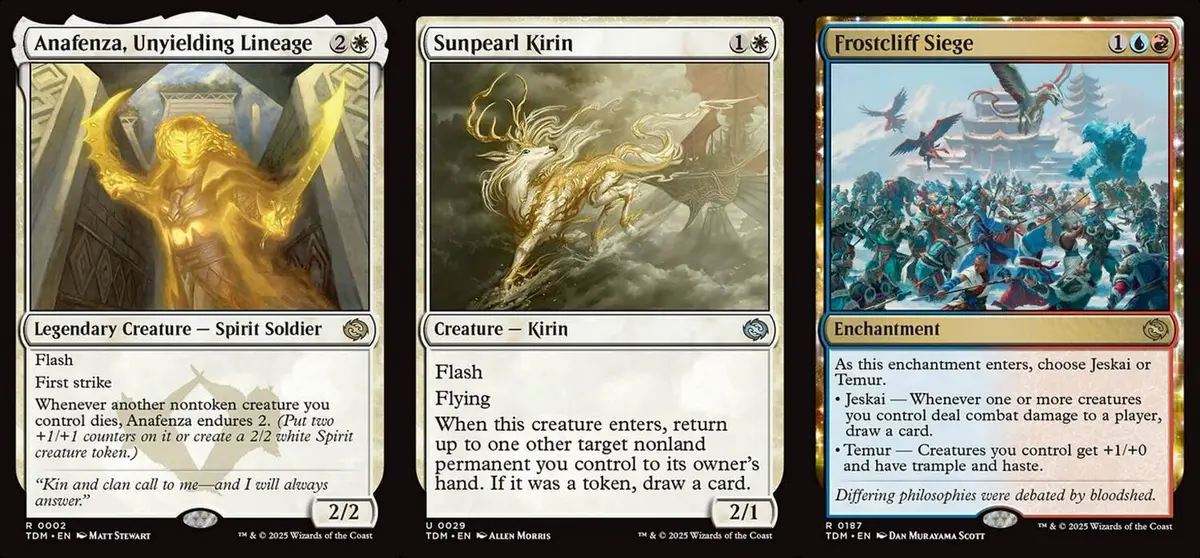
- Add 1 Anafenza, Unyielding Lineage to replace the original Sanguine Evangelist. On turn three we’d rather have the team-wide attack and haste of Imodane’s Recruiter // Train Troops; if you don’t have it, or the board isn’t big enough, making a Vampire is a bit awkward. In that case, flashing in Anafenza is more flexible, and we can also use our small creatures to chump block or make suicidal attacks to trigger Anafenza’s Endure ability. Or use Gleeful Demolition to blow up Nesting Bot and directly make 5 tokens that can convoke.
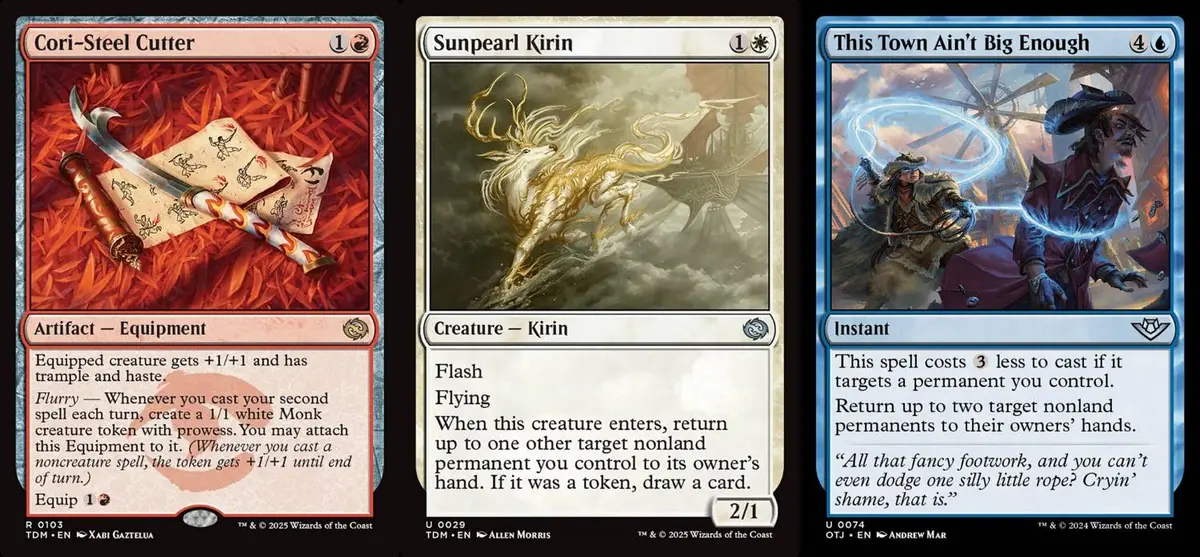
- Add 2 Sunpearl Kirin to replace the two counterspell slots (Protect the Negotiators moves to the sideboard). You can play a flash game, and bouncing a single Imodane’s Recruiter // Train Troops or Resolute Reinforcements brings huge value.
In the sideboard, I added one Frostcliff Siege to increase resource staying power, or to provide an extra burst of tempo.
Jeskai Oculus
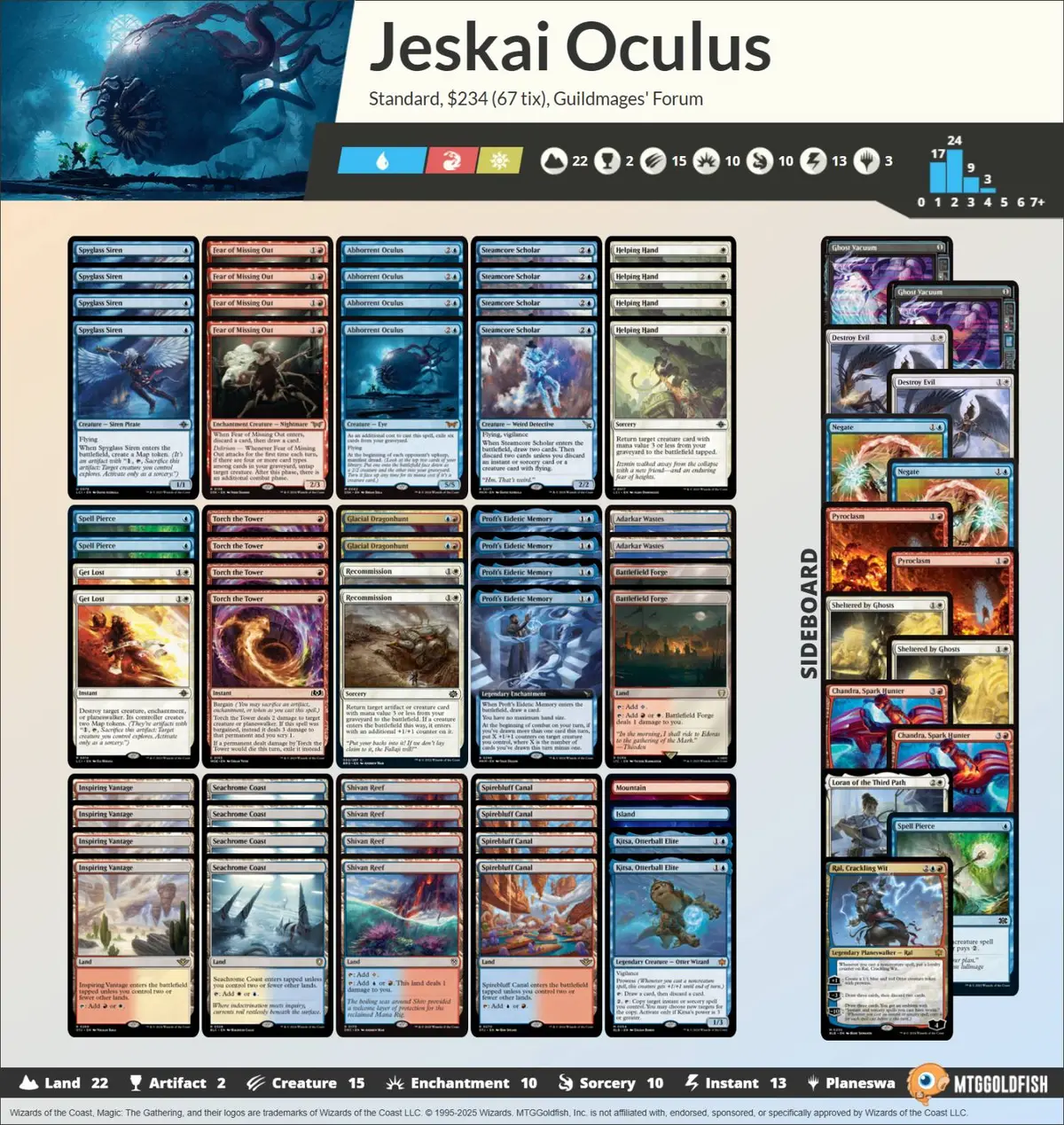
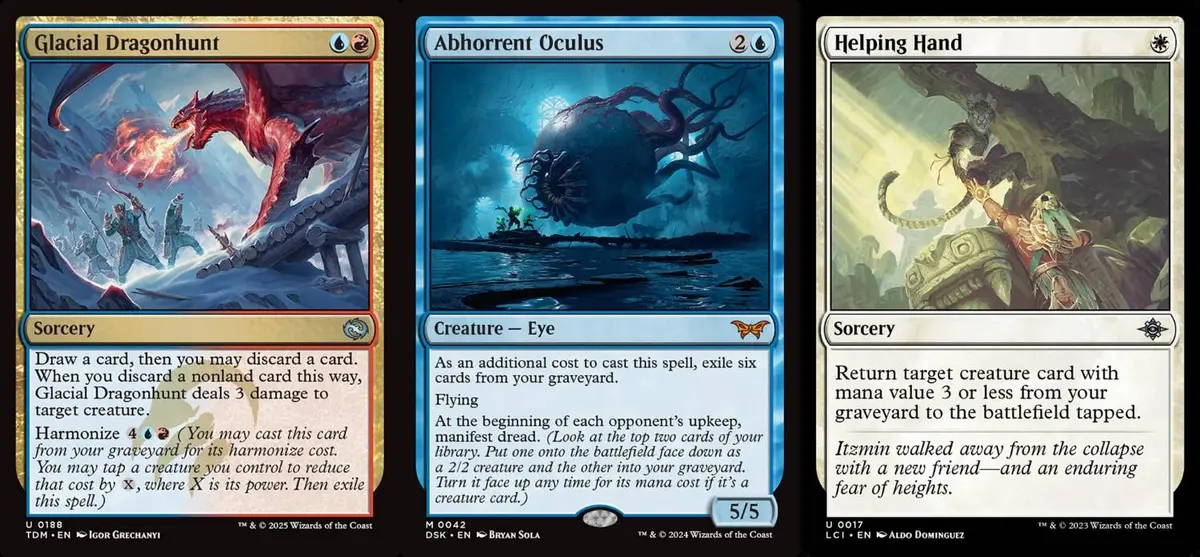
In the current Jeskai Oculus shell, Inti, Seneschal of the Sun has always felt awkward to me. Its floor and ceiling are very far apart. When tempo is in your favor it has a truly terrifying ceiling, and one card wrecking the opponent does happen now and then, but in many floor cases it’s close to a vanilla creature, or you’re discarding a specific card just to discard it, taking a card disadvantage that bankrupts you and discarding anyway. Here I tried swapping it for the more stable new card Glacial Dragonhunt. Its floor is a looting spell, it can even be cast later with Harmonize to become a card-advantage spell, and it has a good chance of becoming a board answer with built-in loot. That helps both with filling the graveyard and with pumping up Proft’s Eidetic Memory.
Mardu Prototype
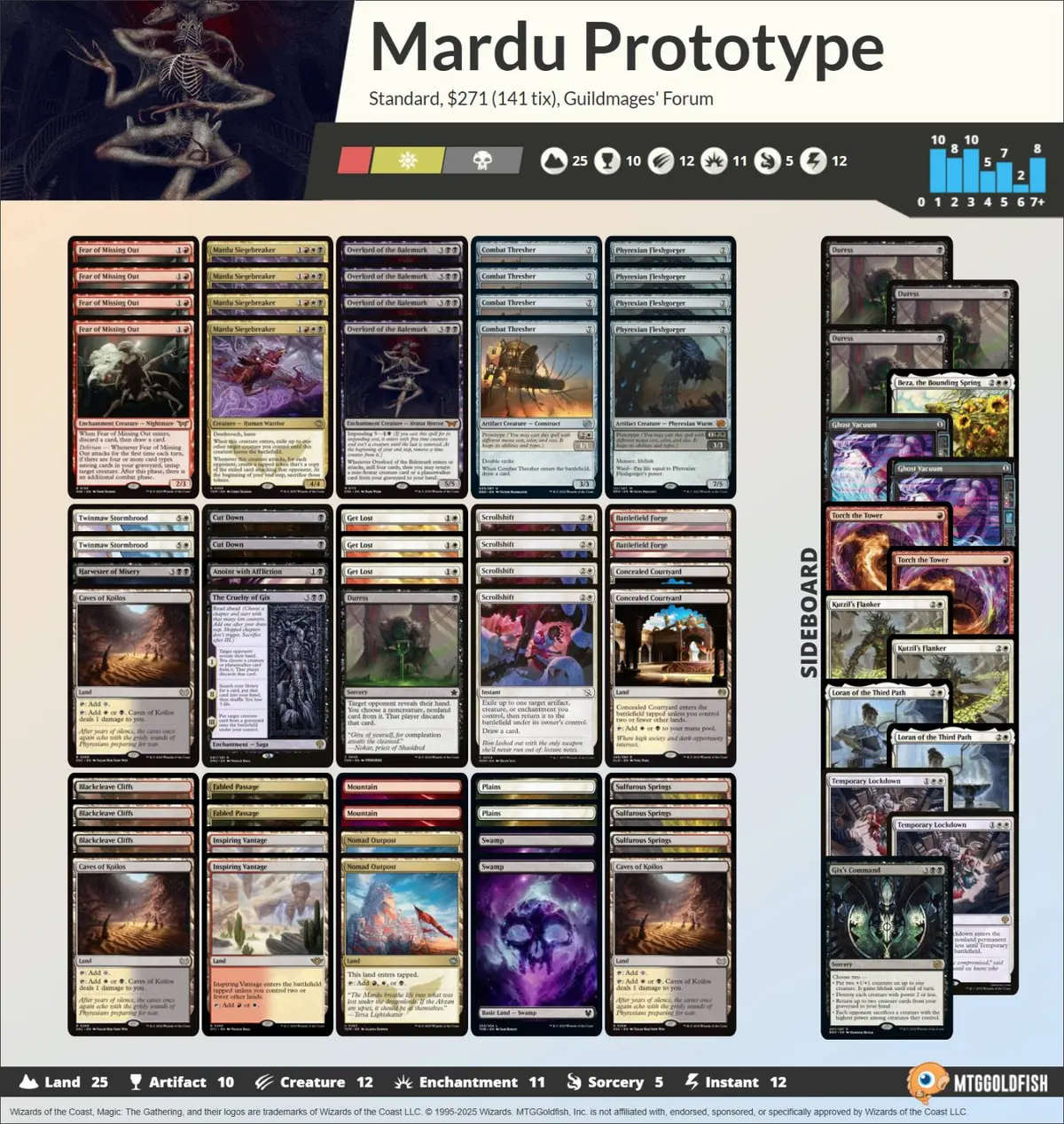
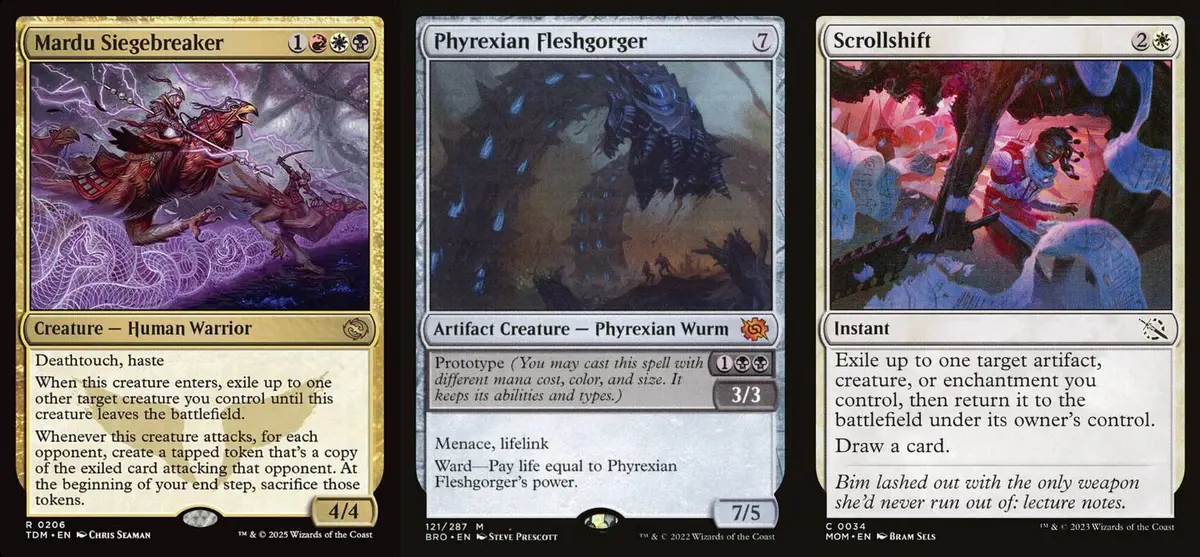
I personally think Mardu Siegebreaker is the most fun card in this set. It’s essentially a Cloudshift machine. Besides blinking creatures with ETB effects, Cloudshift-style effects also pair well with Prototype, so here I used two prototype creatures, Phyrexian Fleshgorger + Combat Thresher, along with Scrollshift to strengthen the proactive blink ability, which can also serve as a protection spell at the right moment. Scrollshift can also blink an impending Overlord of the Balemurk, and these tools help solve Mardu’s lack of resources. Normally, in white-based Cloudshift decks, some of the 2-mana removal slots can use Parting Gust, which can be an exile removal spell or a Cloudshift, but putting another instant with two white pips into this three-color deck would make the color requirements far too scary, so I dropped it.
Incidentally, when building a Mardu Siegebreaker deck, there’s one problem to watch out for: creatures it exiles will miss their attack triggers when it sends out copies attacking. Caustic Bronco and Preacher of the Schism both have this problem, for example.
Sultai Insidious Roots
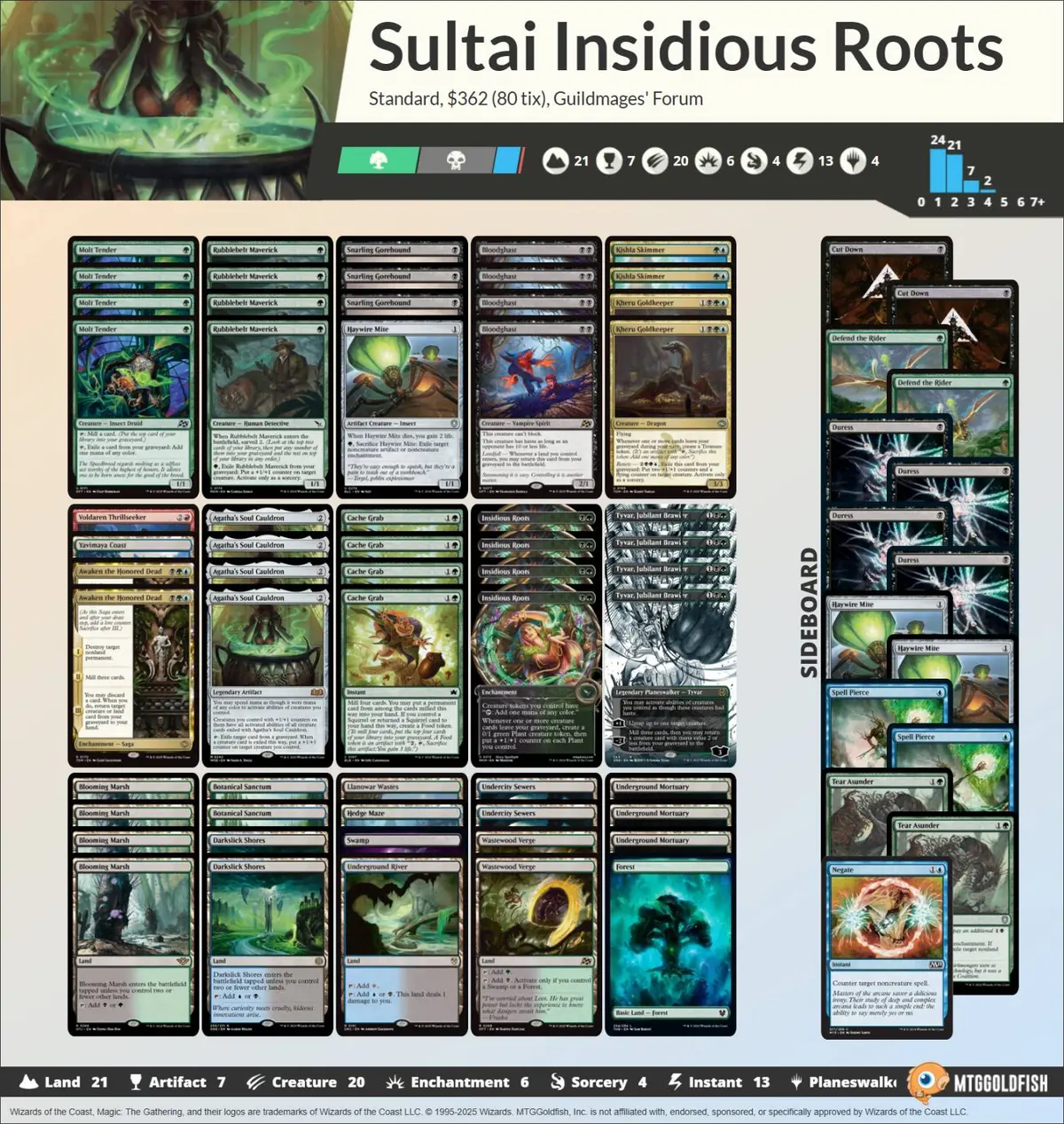
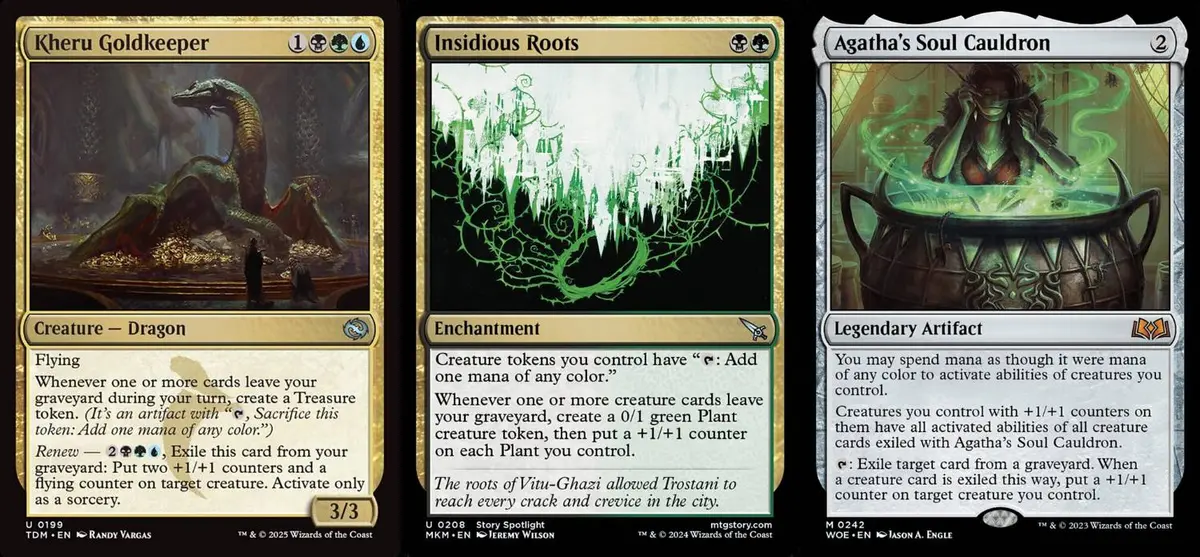
This set has a bunch of cards that trigger when cards leave the graveyard, which happen to support Insidious Roots decks, and Kheru Goldkeeper’s Treasure-making ability is quite intuitively helpful for an explosive go-wide deck.
Sultai Serpent
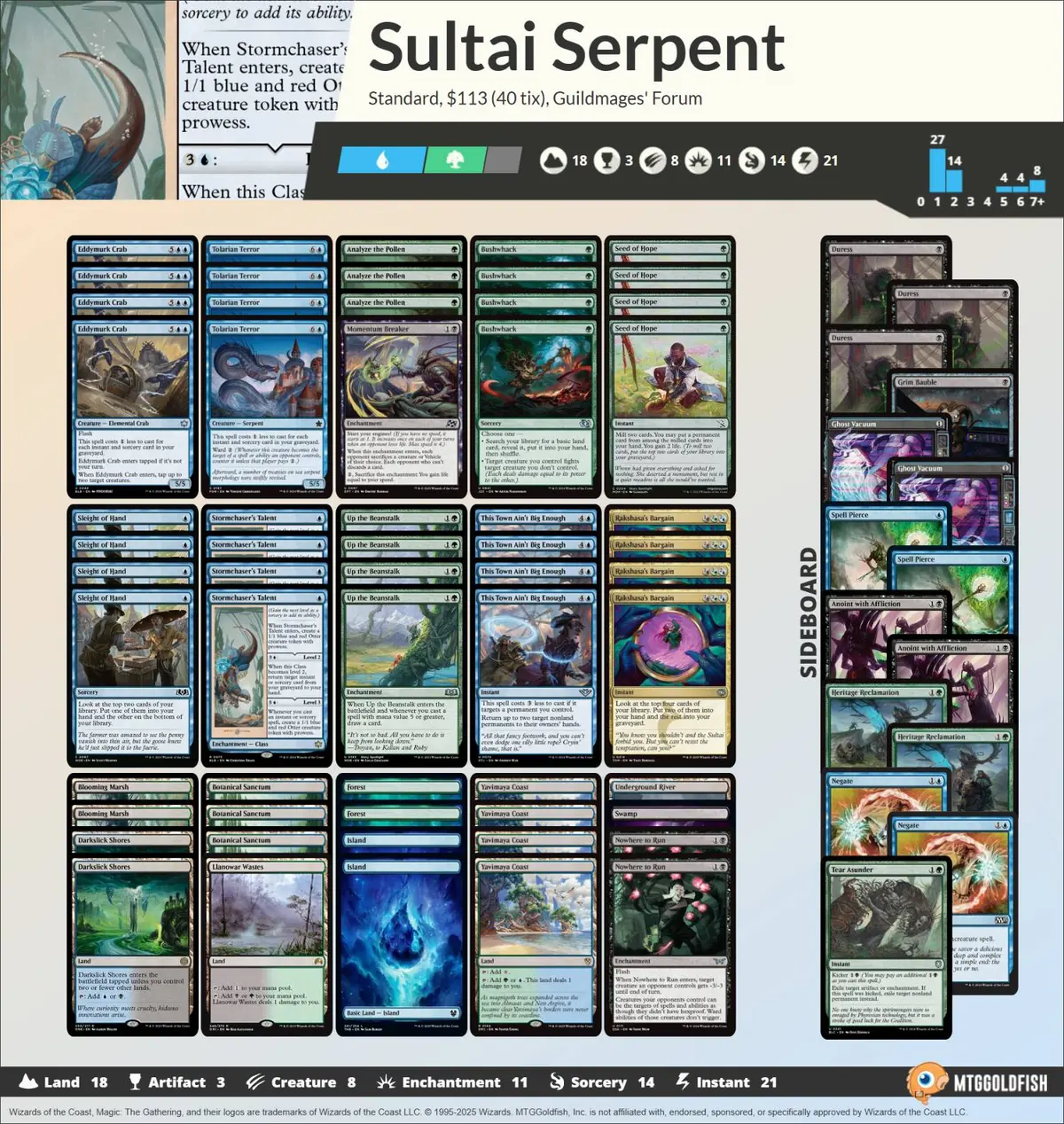
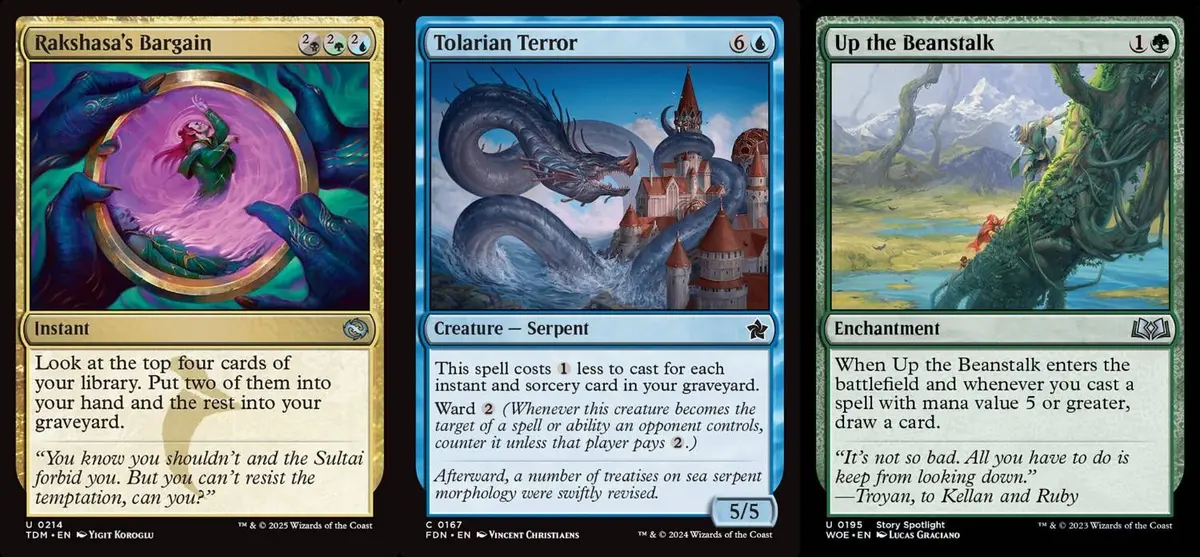
Although Tolarian Terror is commonly called a “sea serpent” by players, its official creature type is actually Serpent. But let’s keep calling it the sea serpent everyone is used to.
Some players were already lightly splashing black into Simic Serpent, mainly to boost Tear Asunder. Later, as black got more ETB removal enchantments, people started trying to raise the amount of black a little to pair with This Town Ain’t Big Enough. This set adds another incentive to splash black: the hybrid card Rakshasa’s Bargain. Although you use it as a 3-mana curve play, its total mana value as a spell/card is 6, so it can trigger Up the Beanstalk, is also great as collect-evidence fodder for Analyze the Pollen, and its graveyard-filling efficiency is passable, providing the graveyard fodder needed to reduce the cost of Tolarian Terror and Eddymurk Crab.
Abzan Rhino
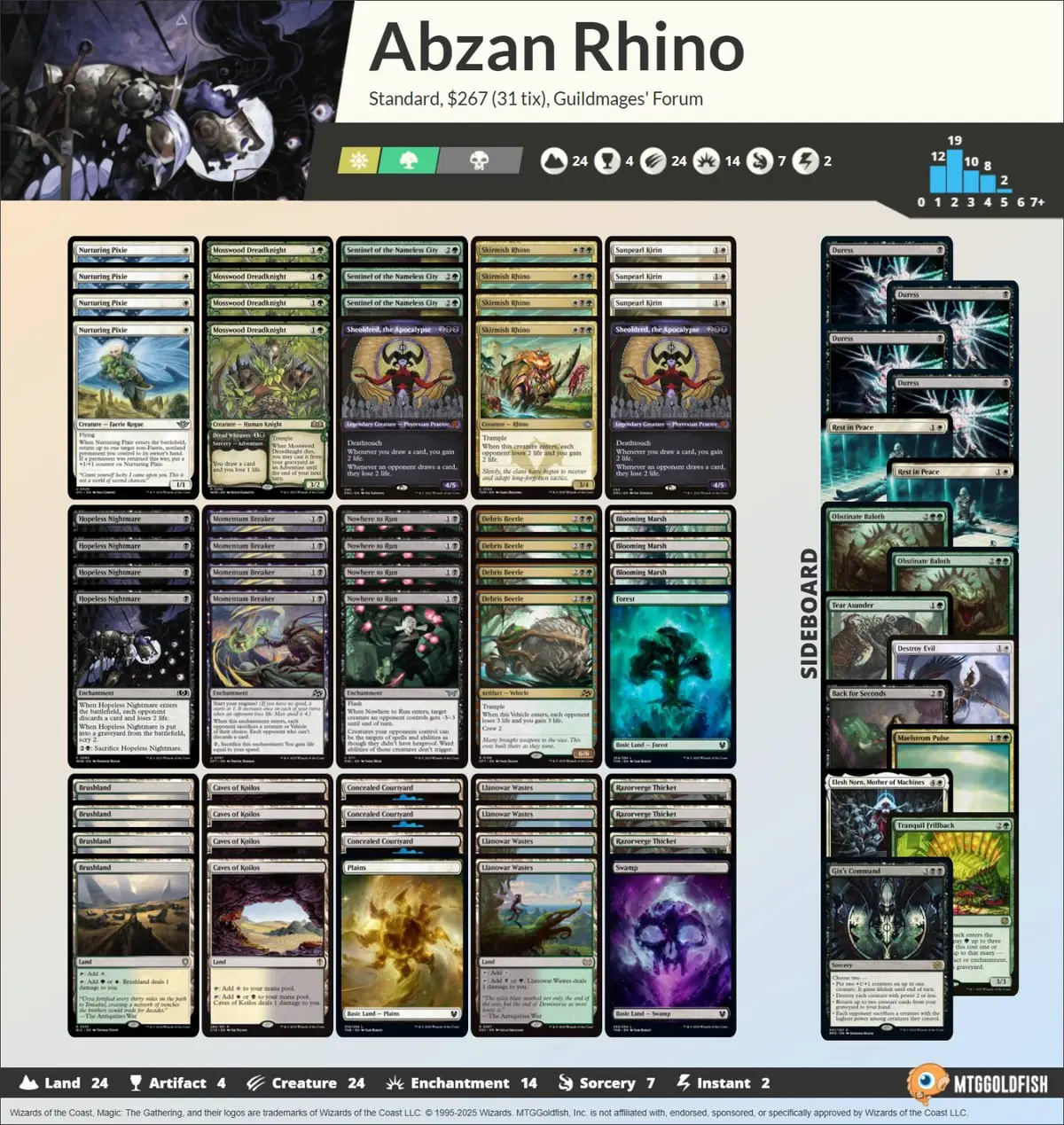
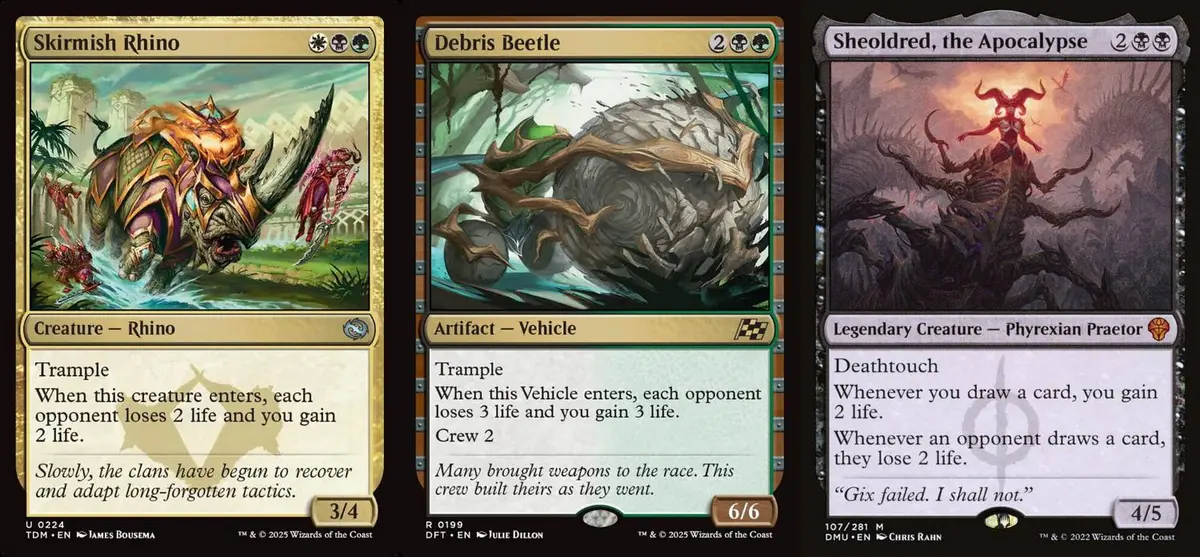
When it comes to the most iconic Abzan creature, it has to be Siege Rhino, which was practically the king of the environment back in the day. This set also has a slimmed-down homage card, Skirmish Rhino. Considering their respective mana curves, the two are about equal in strength.
However, even though the single-card power is on par, after ten years of power creep the Rhino is struggling badly to keep up with the current environment. When I was thinking about how to build this deck, my most intuitive idea was to pull Skirmish Rhino and swap in common Golgari staples like Preacher of the Schism, since a Golgari midrange deck seems more reasonable. The only reason I could force myself to find for splashing white is the synergy with rebuy cards (Nurturing Pixie, Sunpearl Kirin), with repeated ETB triggers as the selling point, but in the end it’s still a deck leaning toward memes and nostalgia.
Debris Beetle: a 4-mana trampler with an ETB that drains 3; Sheoldred, the Apocalypse: a 4-mana 4/5 that gains life. They count as a kind of Siege Rhino too, right? Nothing wrong with that.
Temur Ramp
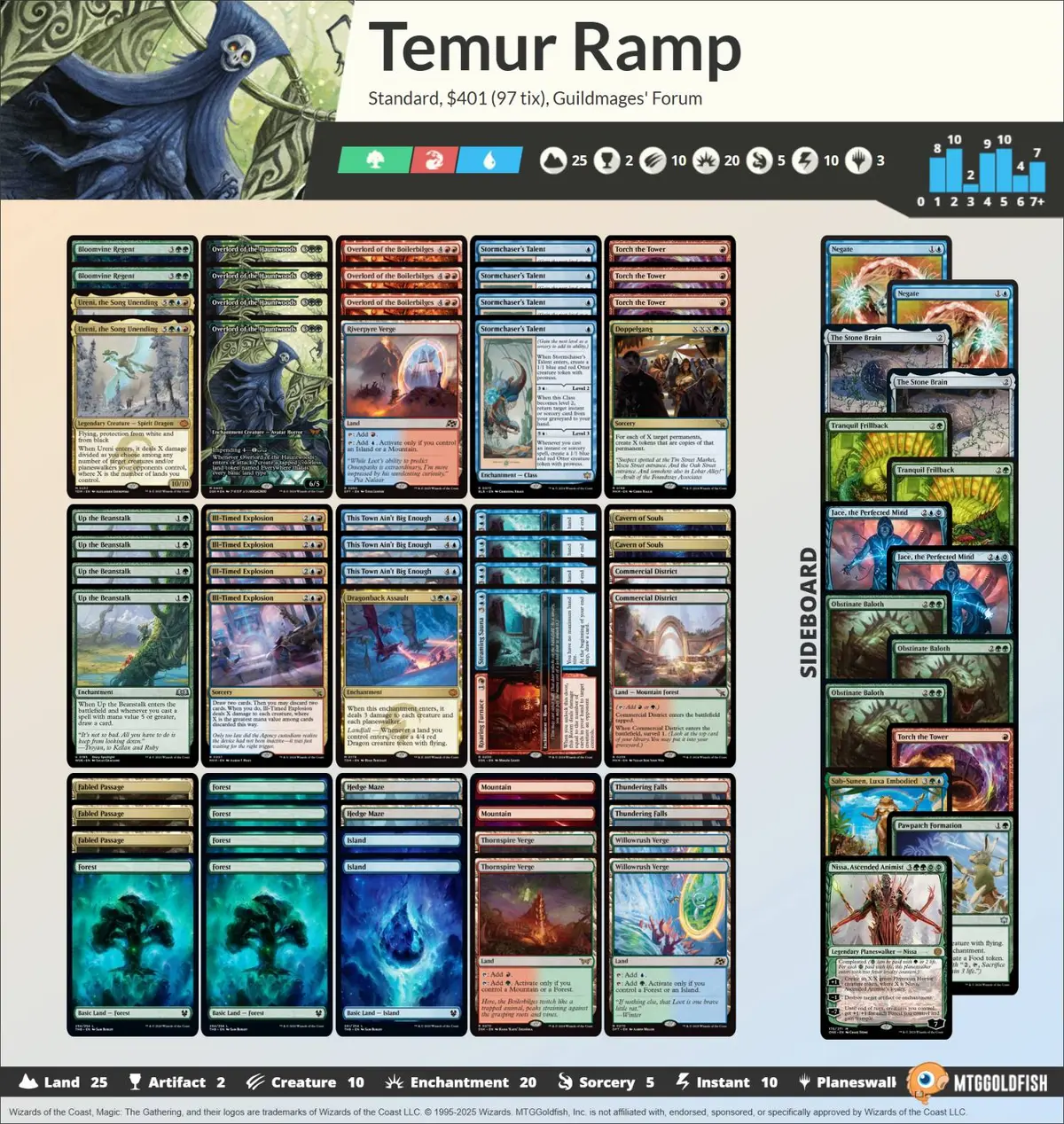
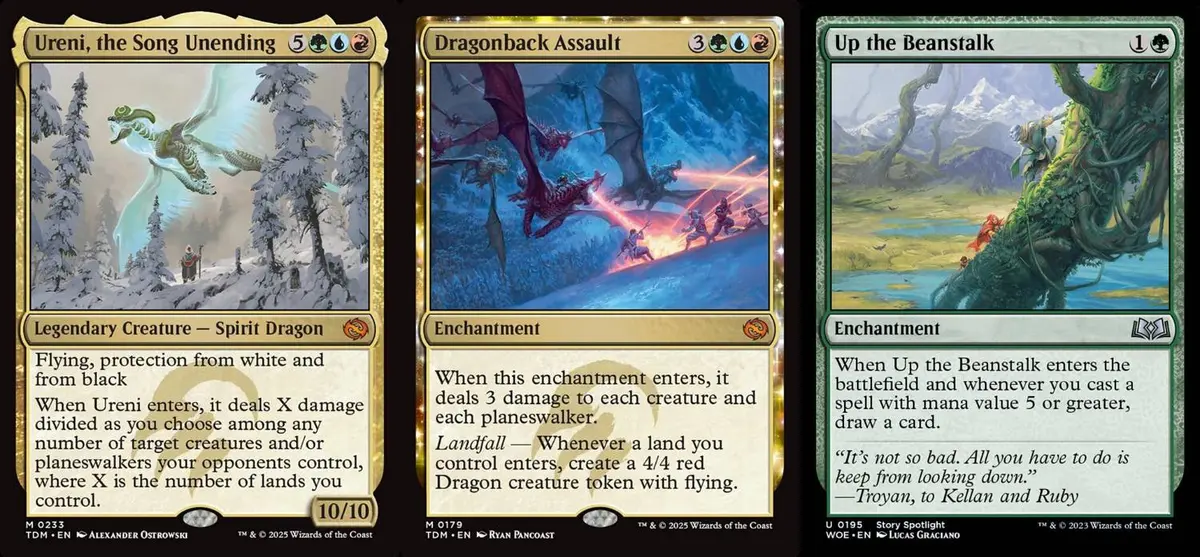
As long as you can get Ureni, the Song Unending (the Temur Dragon King) onto the battlefield, its strength is guaranteed, and Ramp decks built around the Up the Beanstalk shell are already very mature, so you can build a deck by making small tweaks on that foundation.
4C Control
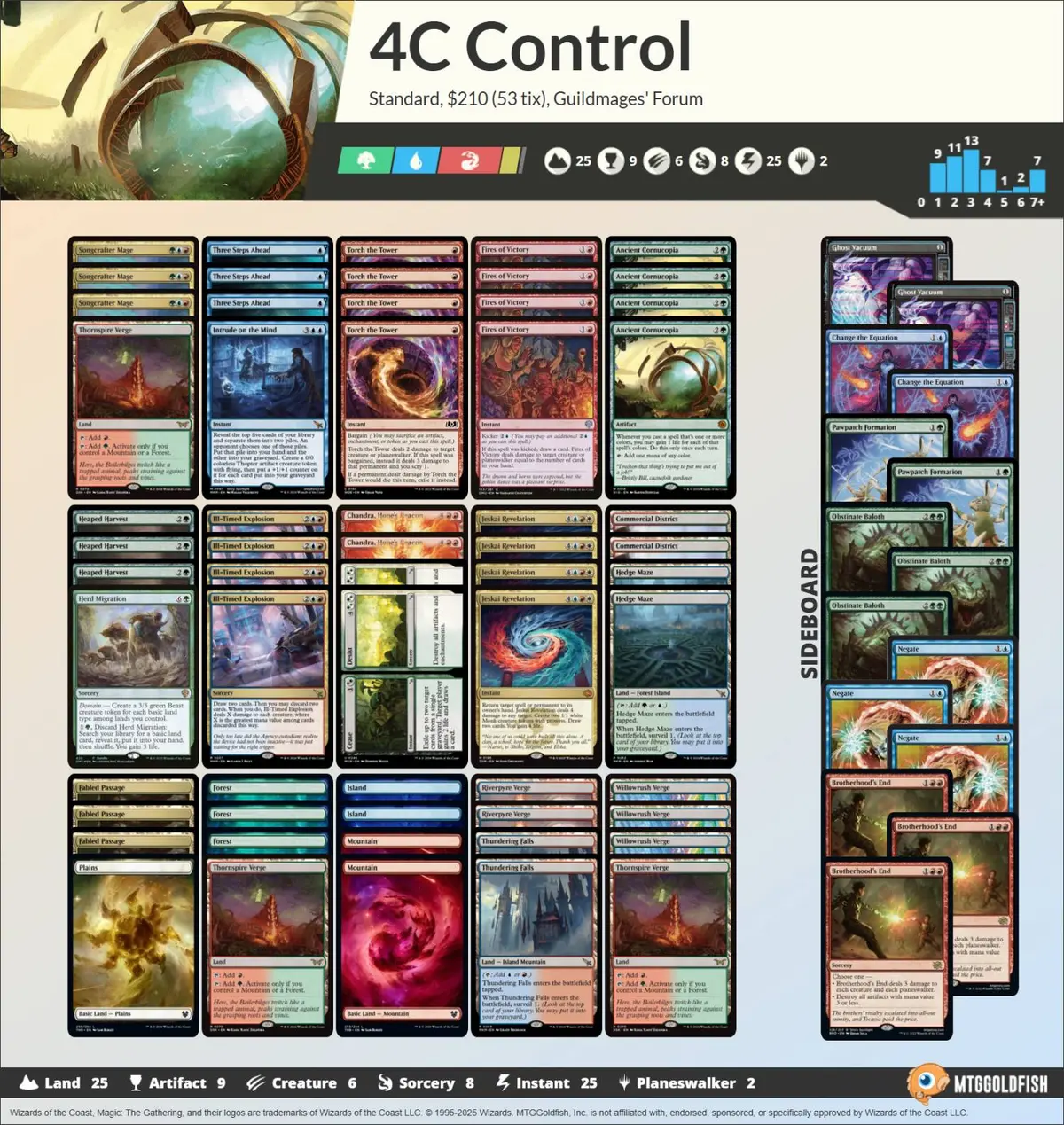
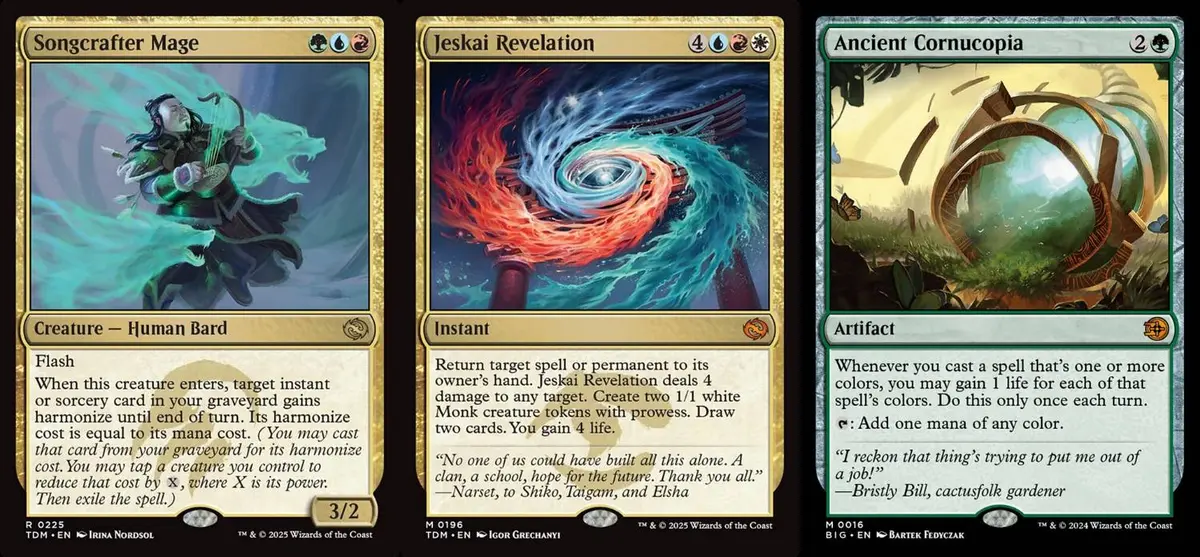
In terms of abilities, Songcrafter Mage is a full upgrade of Snapcaster Mage, but it’s also much clunkier in cost, and its colored requirements nearly tie it to Temur-based builds.
Temur has always had a big problem in control decks: not enough board-clearing ability. Many things that black or white removal handles easily become a problem for Temur, and without a counterspell the defensive line collapses. So Temur control isn’t built to be purely passive, and in the late game it still needs some ability to suppress the board with an explosive position. And since we’re playing Songcrafter Mage anyway, we want that late-game finisher to be an instant or sorcery, and an instant is even better since it works with Songcrafter Mage’s flash flexibility. This set really does have an instant-speed finisher that fits all of those conditions perfectly. May I present the finisher for our Temur control deck: Jeskai Revelation~~~
Yes, don’t doubt it, the card that best fits our Temur needs comes from Jeskai. Though it’s said to be a different color combination, it’s really just a light splash of white, and for a green deck, squeezing out a bit of white mana is no trouble at all. Heaped Harvest, Herd Migration, and Fabled Passage can all help us find the lone Plains splashed in the deck; Chandra, Hope’s Beacon and Ancient Cornucopia can also produce white mana, and considering how colorful our color requirements are, Ancient Cornucopia can gain a crazy amount of life to stall for time.
Izzet-based control decks using Ill-Timed Explosion also have a perennial problem: the deck needs enough high-cost cards, but can’t afford too many dead cards early on. Herd Migration & Cease // Desist are good cards that are essentially a 2-mana card-flow curve but can also serve as ammo for Ill-Timed Explosion, and can even be rebought late with Songcrafter Mage.
4C Otters
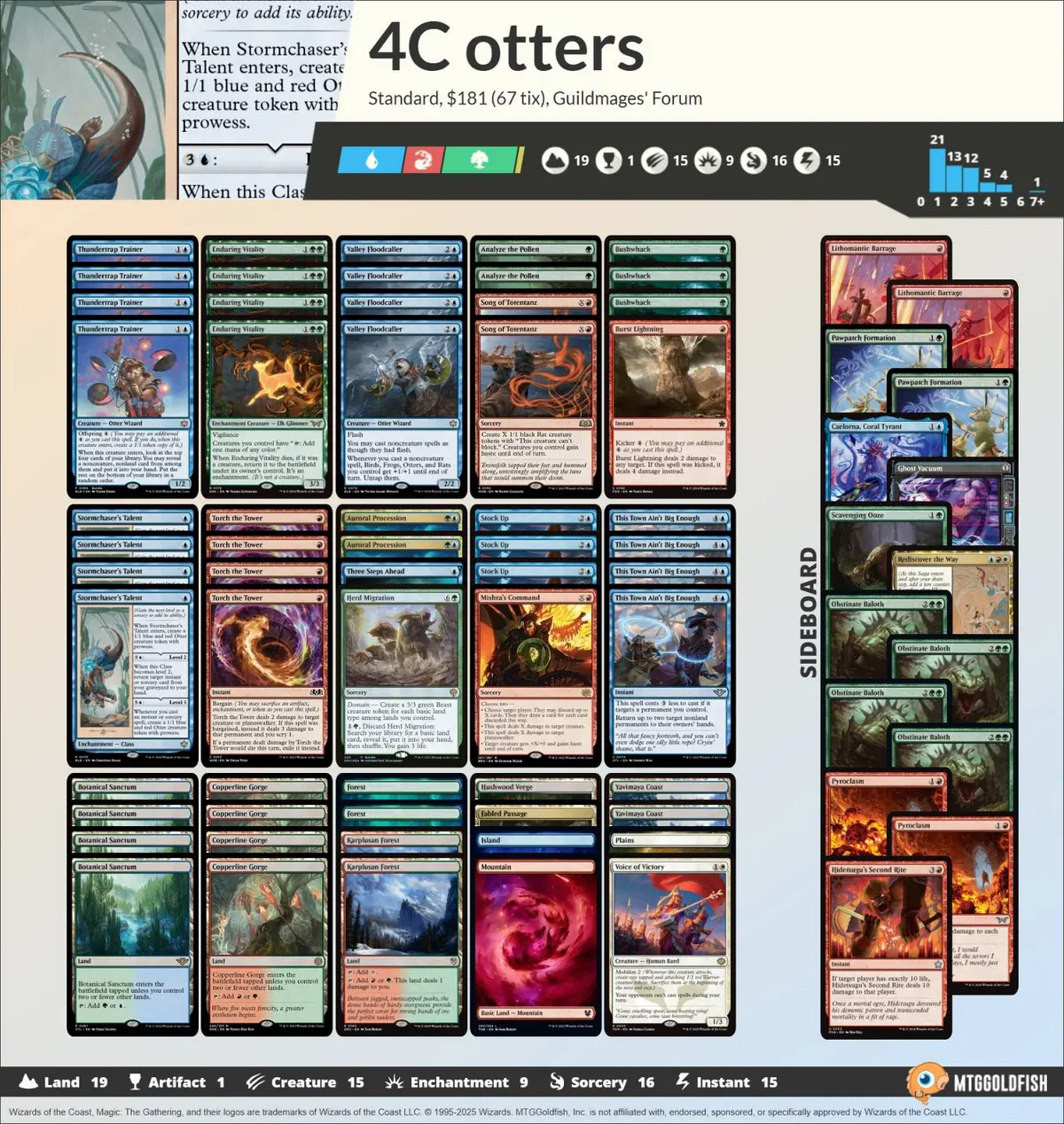
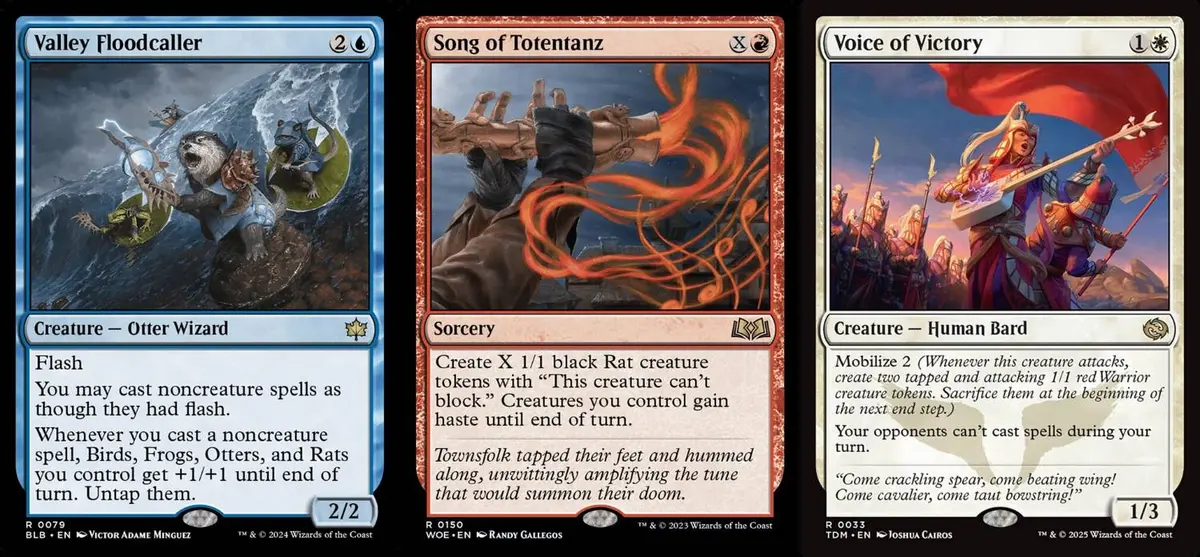
Add Voice of Victory to the existing Temur Otters as protection for the winning turn. Although it’s a forced fourth color, Temur Otters’ color fixing is strong to begin with, and since creatures can be tutored up with Analyze the Pollen, there’s room to squeeze one in.
Sibsig Ceremony Combo
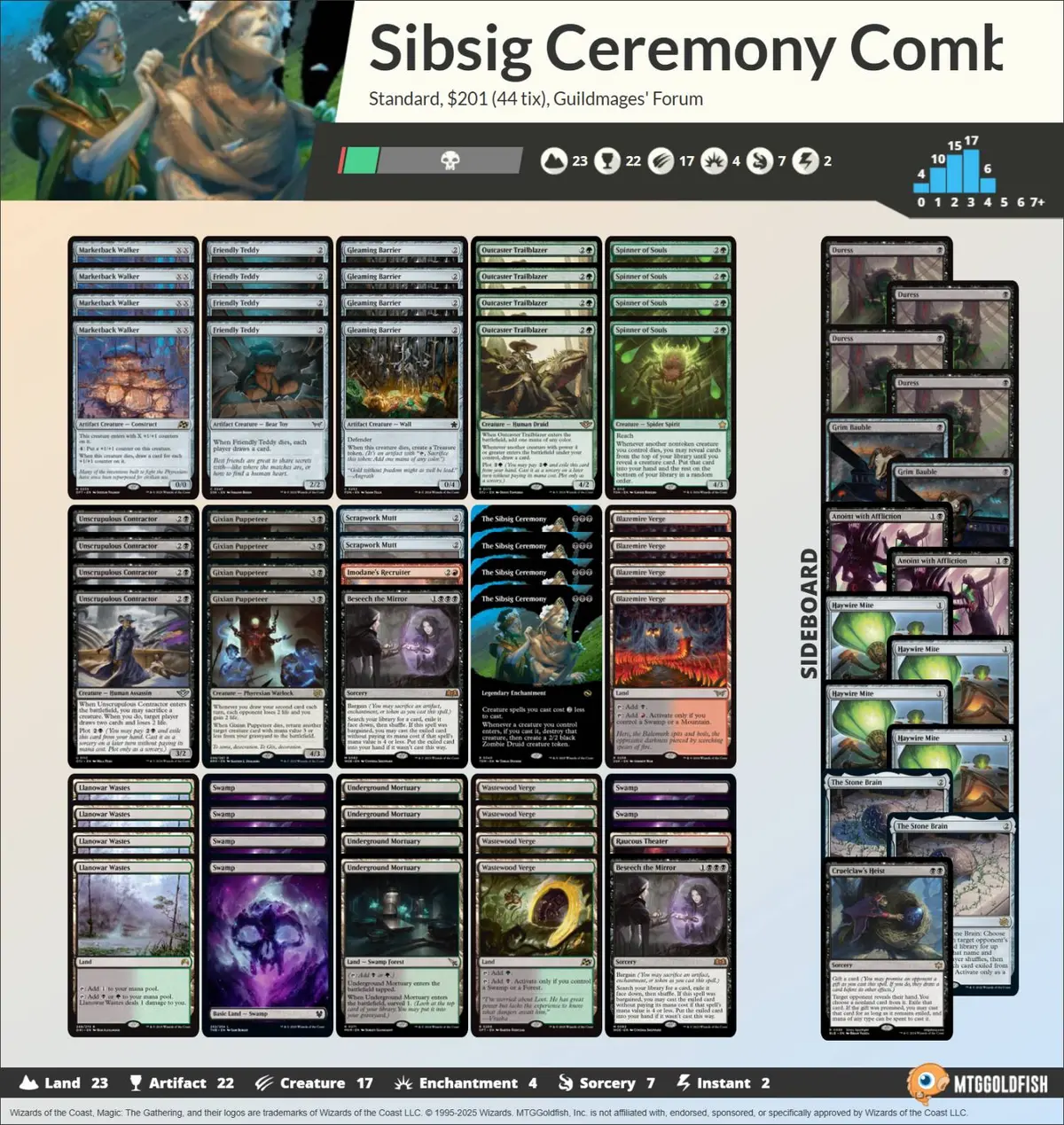
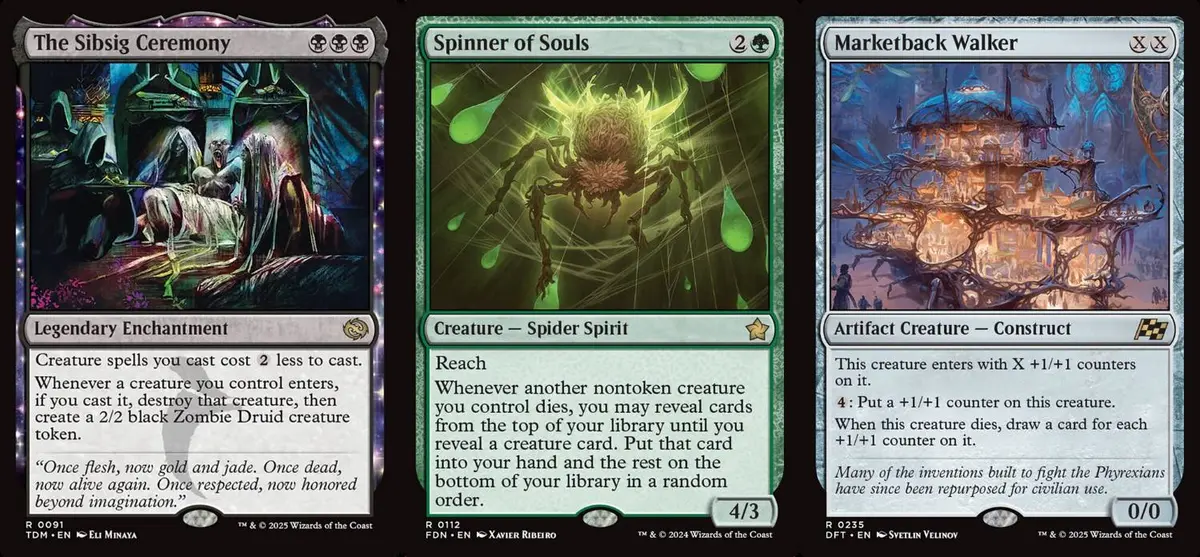
As long as The Sibsig Ceremony is on the battlefield, any 2-mana colorless creature can be cast for 0, then gets destroyed on entering and turns into a 2/2 Zombie, and each of these creatures leaves behind some extra resources when it enters or dies. When Spinner of Souls is on the battlefield, whenever your nontoken creatures die you can force-refill a new creature from your library into your hand, which serves as the core engine for chaining plays.
Outcaster Trailblazer can also generate a lot of resources if its timing is right. It makes one mana on entering, so after the cost reduction from The Sibsig Ceremony it’s effectively a free spell, and can even fix colors for free once. Unscrupulous Contractor is another resource source: The Sibsig Ceremony only triggers an ability that destroys the creature and makes a Zombie token when a creature enters, and there are no targets in this, nor does it check whether the creature was actually destroyed by that ability. So when Unscrupulous Contractor enters, by stacking the triggers correctly you can first have it eat itself to pay 2 life and draw 2, then make a Zombie token. In addition, both of these creatures have Plot, which lets us go explosive on the turn we need to execute the winning combo without wasting our early curve.
Once we’ve laid out enough creatures, we can use Imodane’s Recruiter // Train Troops to give the whole team haste and punch for lethal. Of course, against an opponent with no sweepers, just keeping this crowd on the board and swinging together next turn will also win.
Gixian Puppeteer is the key to rescuing mis-ordered pieces, because all the creatures listed above cost 3, so if one of the component creatures is already sitting in the graveyard, you can let Gixian Puppeteer blow itself up via The Sibsig Ceremony to pull the needed component back onto the battlefield; creatures that enter without being cast won’t trigger the destroy effect of The Sibsig Ceremony. Since we have a lot of artifact creatures and can easily produce plenty of tokens, we can use Beseech the Mirror to tutor out the puzzle pieces the combo needs.
This deck’s biggest natural enemy in operation is RIP, and Authority of the Consuls is quite annoying too, so the sideboard is all kinds of answers to combo answers (plus a few scattered anti-aggro cards). Remember that while The Sibsig Ceremony is on the battlefield, Haywire Mite can respond to its ETB trigger by sacrificing itself first to tear down something of the opponent’s.
Conclusion
While listing decks for this new set’s Standard preliminary, I felt very keenly that this was the hardest and most inspiration-starved time since Guildmages’ Forum was founded, but it won’t be the last. The challenge in the next set will probably be even higher, for the following two reasons:
1. Three-color mana bases
This problem isn’t actually limited to Tarkir: Dragonstorm; it’s just that since Tarkir is a three-color environment, it feels especially strong when thinking about how to put the new cards to work. The current Standard card pool has a large variety of multicolor lands, but when you rely only on lands for color fixing, the mana base is actually terrible. Of course, by terrible I don’t mean you can’t produce your colors, but that you pay too high a price for fixing. Let’s look at the dual lands in Standard that can enter untapped:
Fast lands:
They make the first three turns more comfortable, but afterward they start lying there tapped for the rest of the game. Also, normally, if you’ve made it to three colors, your tempo probably isn’t so sharp that you just need the first three turns to go smoothly to blow out the opponent (of course there are still exceptions like Jeskai Oculus with its extremely high winning-efficiency ceiling). Even as a control player who cares least about tempo, six tapped lands occasionally feel clunky, to say nothing of how awful it is for other decks to draw a fast land in the midgame or later.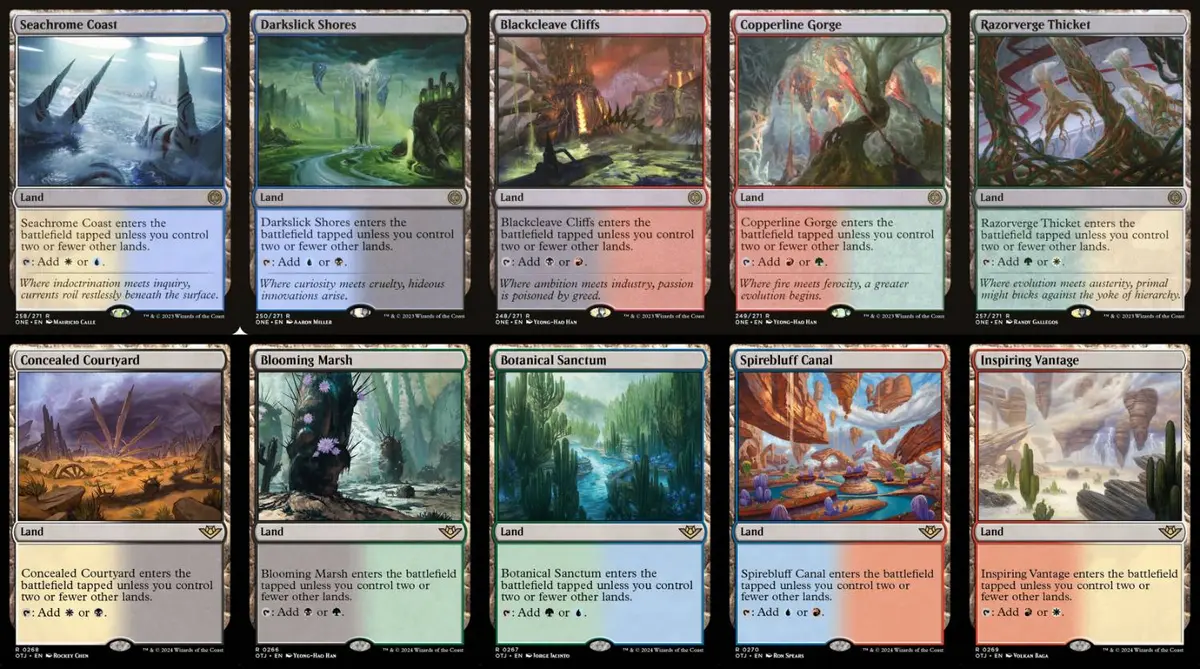
Pain lands:
Indeed the most stable multicolor lands, but in an era where offensive tempo keeps getting stronger and red aggro is a regular at the top of the meta, excessive life loss is truly dangerous. In two-color decks, pain lands mostly just help color stability a bit and the life cost isn’t outrageous, but in three-color decks they easily become a main part of the fixing.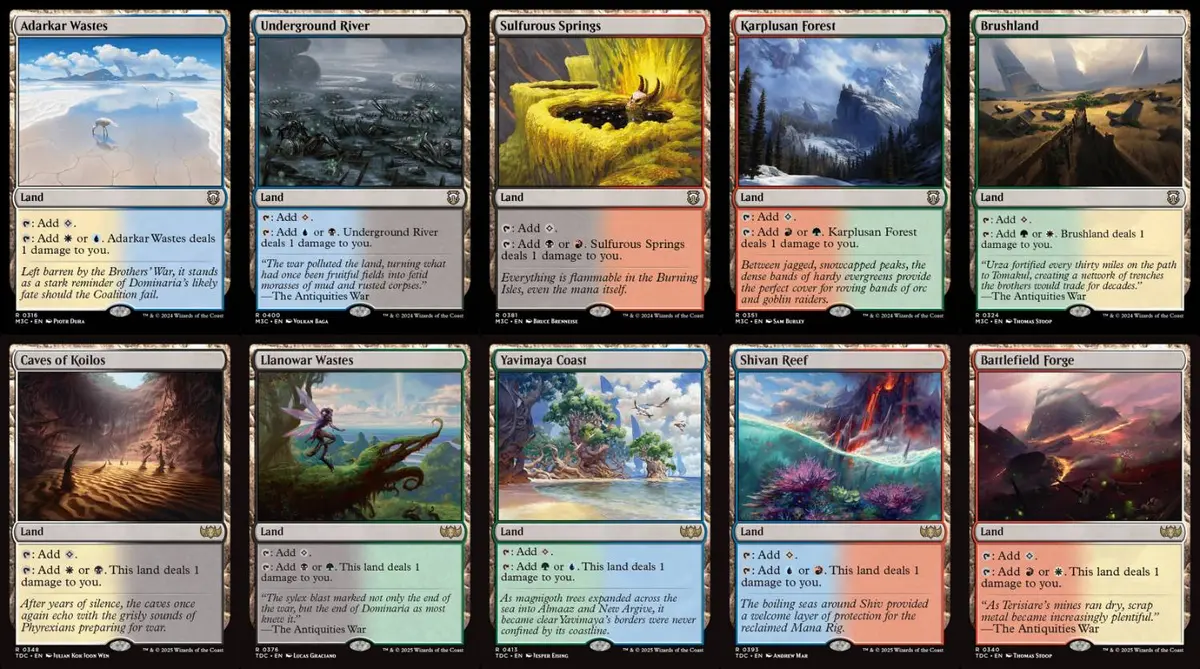
Verge lands:
Heaven and hell in one land. As long as you can assemble a land of the corresponding type on the battlefield, Verges are the most efficient multicolor lands with no side effects, provided you first assemble that first one. Two-color decks run a certain number of basics, so this is easy to achieve, but in three-color decks, unless you’re a green deck with lots of land-finding effects, you usually still need to include a certain number of surveil lands to keep Verges working, and in the end you still run quite a few tapped lands.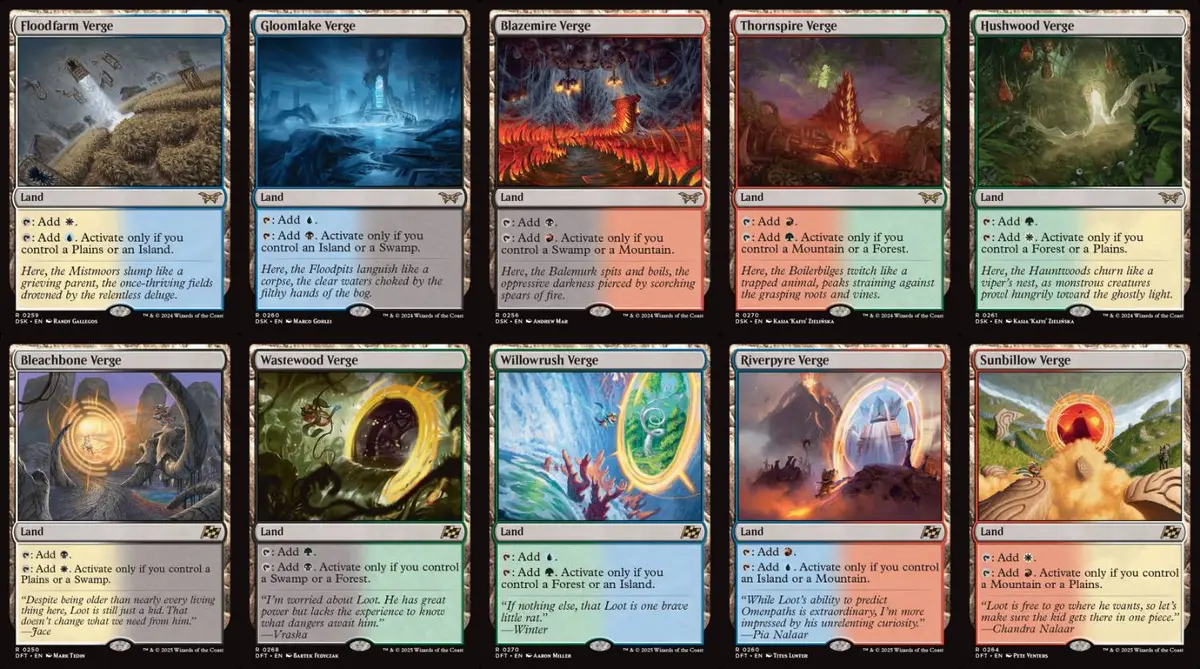
Of course, all the multicolor lands mentioned above, when built at the right ratios, can lower your chances of color screw or tempo loss, and three-color decks naturally have a certain number of tapped lands, which is understandable. The real difference is in the utility lands of two-color decks.
Besides all kinds of fixing lands, Standard today also has a huge number of utility lands, so while a three-color deck goes through enormous trouble to barely hold its mana base together, two-color decks can already comfortably enjoy the extra resources from various utility lands, and the longer the game goes, the more obvious this difference becomes. (And I just so happen to often end up in prison-style grindy games.)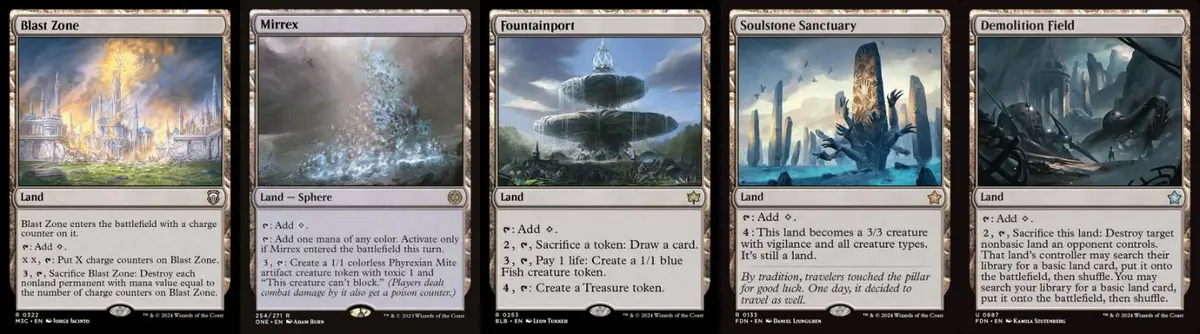
And even among tapped fixing lands, three-color decks may tie all their tapped-land quota to surveil lands for the sake of Verges, whereas two-color decks have the additional option of dual-color creature lands, which is a real extra threat. Of course, that’s not to say creature lands are necessarily better than surveil lands; in the end which to pick depends on the deck’s tempo and characteristics, but three-color decks really are easily deprived of one of the options.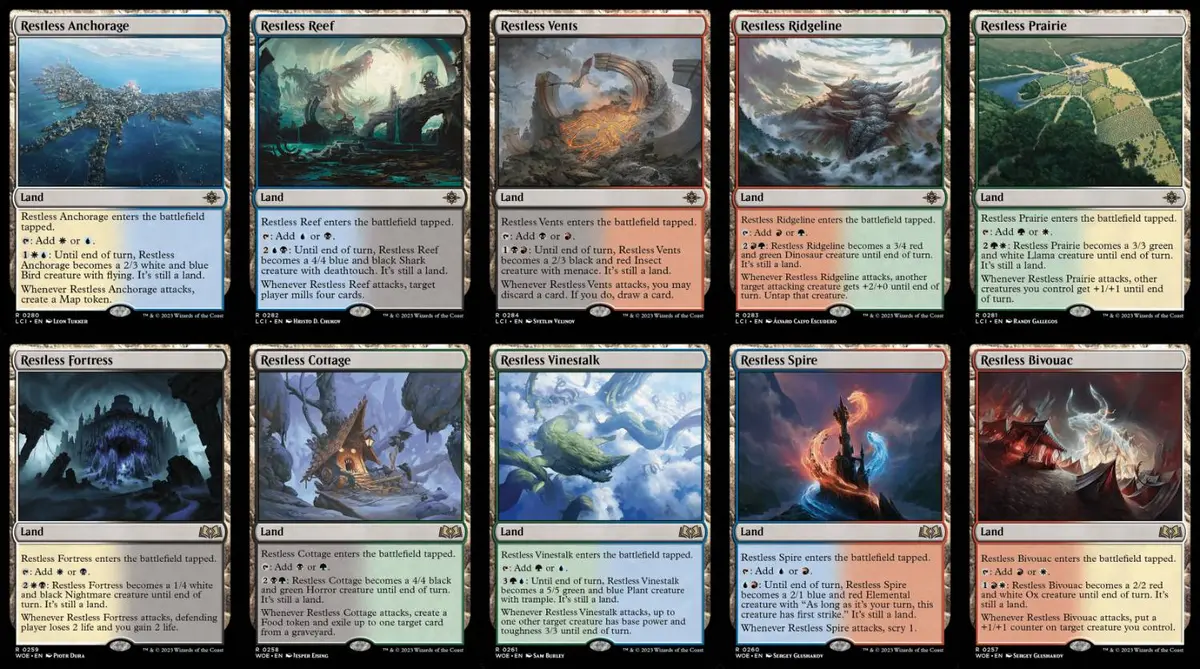
As for why this problem was less noticeable in the previous year: before the BLB rotation, the slow lands from MID & VOW were simply too strong, and you could truly mix three colors for free with no cost. Though running colorless utility lands was still tighter, at least there was plenty of room for creature lands, so apart from being punished by Field of Ruin when you had too few basics, three-color decks didn’t have much real risk back then.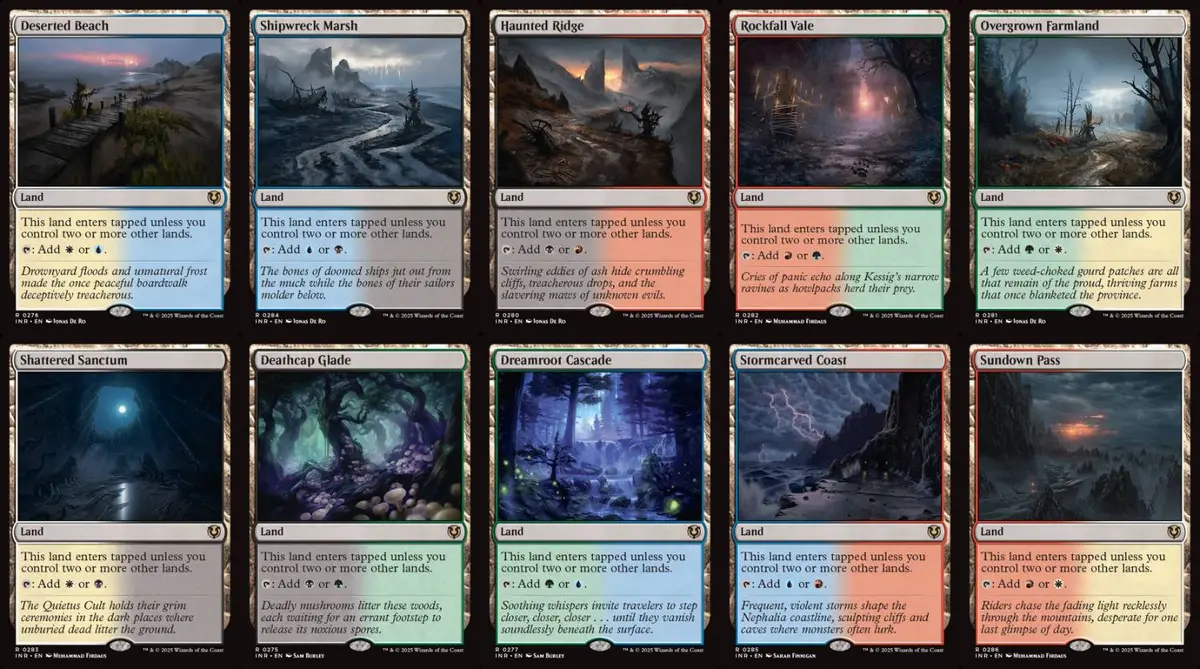
Since we’ve brought up Standard rotation, that leads to our second point:
2. Deck completeness in a three-year Standard card pool
Although I said a lot above about three-color mana bases and room for utility lands, this problem has actually been normal throughout Standard history and isn’t unique to recent years, so why does it feel so strong now?
The difference is that the incentive for three colors over two colors isn’t as strong anymore.
When Standard’s maximum card pool depth was only two years, three colors really did tend to have a more complete and powerful curve than two colors, but once the card pool expanded by a year, the materials in many two-color decks became complete enough that mixing in a third color was unnecessary. So now, unless there’s a very clear three-color single-card or combo incentive, I’ll always first consider whether a two-color build offers better stability.
Of course, my own deckbuilding habits play a part here too. My deckbuilding mindset has always leaned toward dropping various powerful single cards in proportion, and I care more about how to interact with the opponent than about how to synergize with the other cards in my own deck. This single-card mindset is naturally more affected by a big card pool.
In summary, there were quite a few three-color cards in this set that made my heart race, but most of them became scrapped during the building stage. This time the scrap rate even exceeded 70%, because after weighing the pros and cons of most builds, I found that two-color builds could offer similarly positioned options. Perhaps the three-color cards are a bit stronger on single-card performance, but paying that much stability for it really isn’t worth it.
- Title
- Tarkir: Dragonstorm - Standard Preliminary
- Author
- Jru
- Created at
- April 13, 2025
- License
- This work is licensed under CC BY-NC-SA 4.0 .